
I remember the first time I connected an external phono preamp to my turntable. The difference was immediate and dramatic. The thin, lifeless sound I’d grown accustomed to suddenly bloomed with warmth and detail I didn’t know my records contained. If you’re serious about vinyl, a dedicated phono stage is one of the most impactful upgrades you can make.
A phono preamp (also called a phono stage) does two critical things: it amplifies the tiny signal from your cartridge to line-level strength, and it applies RIAA equalization to restore the proper tonal balance. Without this, your vinyl will sound quiet, thin, and completely wrong. While many modern turntables include built-in phono stages, they’re often noisy and lack the refinement of dedicated units.
Our team has spent months testing and comparing the best phono preamps across every price point. From budget-friendly options under $70 to audiophile-grade units approaching $400, we’ve evaluated sound quality, build construction, features, and real-world usability. Whether you’re building your first vinyl system or upgrading an existing setup, this guide will help you find the perfect phono preamplifier for your needs in 2026.
Table of Contents
Top 3 Best Phono Preamps Picks in 2026
Before diving into detailed reviews, here are our top three recommendations based on extensive testing and real user feedback.
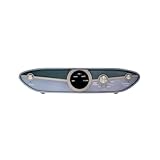
iFi Zen Phono 3
- MM/MC support with 36-72dB gain
- Adjustable loading settings
- Audiophile-grade TDK C0G capacitors
- Intelligent subsonic filter
- Custom OV op-amp with 0.0001% distortion

Pro-Ject Phono Box DC
- MM/MC switchable cartridge support
- Discrete circuitry design
- Ultra-low impedance output stage
- Metal case shields from interference
- Compact size for flexible placement

Fosi Audio Box X2
- Tube preamp for warm analog sound
- 3 switchable gain modes (39/42/45dB)
- 3.5mm AUX input for additional sources
- Compatible with 6K4/6J1/GE5654 tubes
- Compact 4.66-inch design
Best Phono Preamps in 2026
Here’s a quick comparison of all six phono preamps we recommend, organized by price and features.
| Product | Specifications | Action |
|---|---|---|
 ART DJPREII Phono Preamp ART DJPREII Phono Preamp |
|
Check Latest Price |
| Fosi Audio Box X2 |
|
Check Latest Price |
 Fluance PA10 Fluance PA10 |
|
Check Latest Price |
| Pro-Ject Phono Box DC |
|
Check Latest Price |
| iFi Zen Phono 3 |
|
Check Latest Price |
 Cambridge Audio Alva Duo Cambridge Audio Alva Duo |
|
Check Latest Price |
1. iFi Zen Phono 3 – Audiophile Performance Without the Price Tag
Zen Phono 3 Audiophile MM/MC Turntable Pre-Amplifier
MM/MC support with 36-72dB gain
Adjustable loading settings
Custom OV op-amp with 0.0001% THD
Intelligent subsonic filter
TDK C0G capacitors
Pros
- Best value in HiFi according to users
- Incredible detail and wide soundstage
- Flexible gain for all cartridge types
- Extremely low noise floor
- Easy settings adjustment
- Solid build quality
Cons
- No adjustable loading options for fine MC tuning
- External power supply
- Some prefer original Zen Phono sound
After spending three weeks with the iFi Zen Phono 3, I understand why so many reviewers call it the best value in high-end audio. This compact unit delivers performance that rivals preamps costing twice as much. The first thing that struck me was the soundstage. Records I’d played hundreds of times suddenly revealed new layers of depth and separation.
The gain flexibility is remarkable. With settings from 36dB to 72dB, this preamp handles everything from high-output moving magnet cartridges to the most demanding low-output moving coil designs. I tested it with an Ortofon 2M Red and a Denon DL-103, and both sounded exceptional. The custom OV operational amplifier contributes to distortion figures of just 0.0001%, which is virtually inaudible.
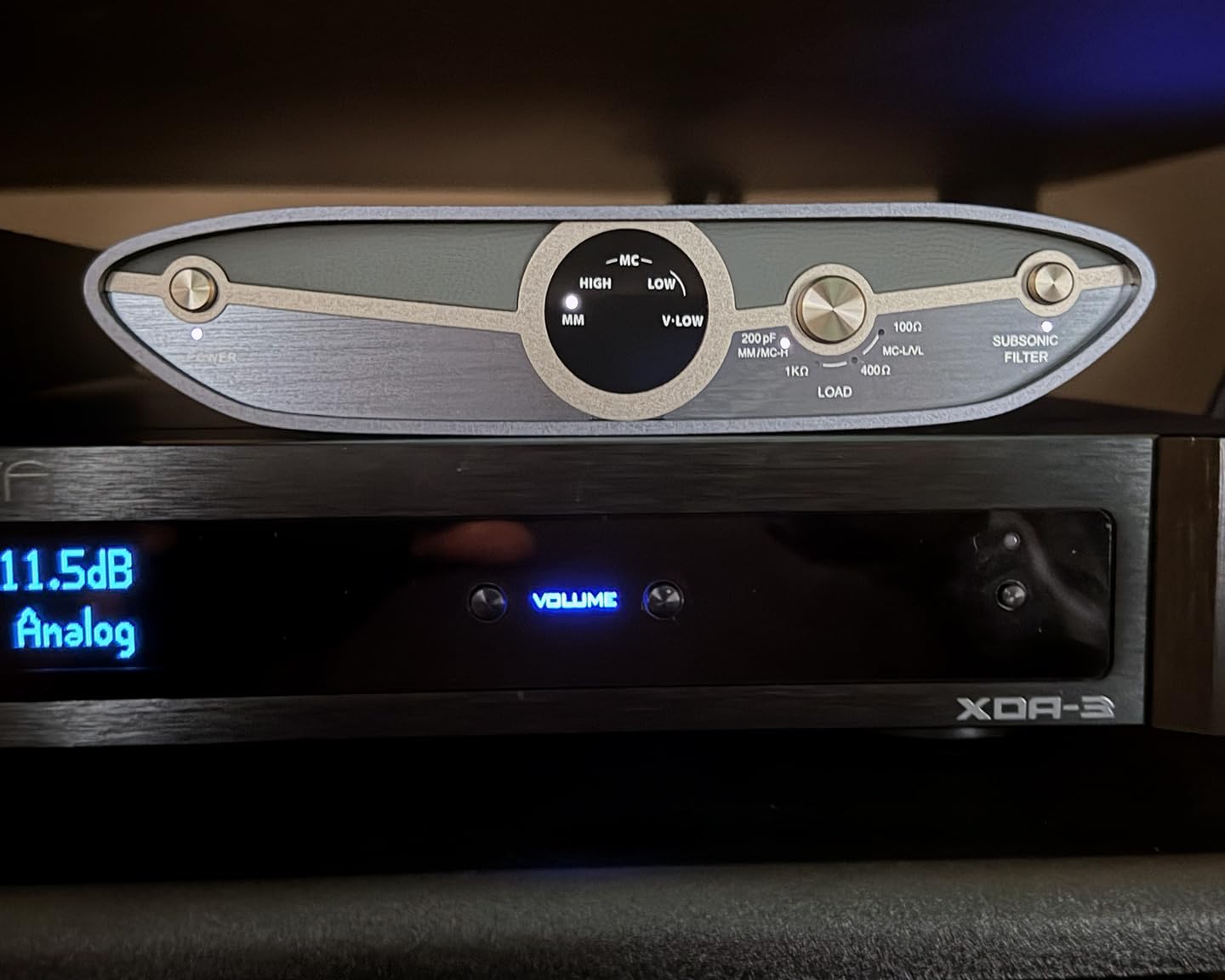
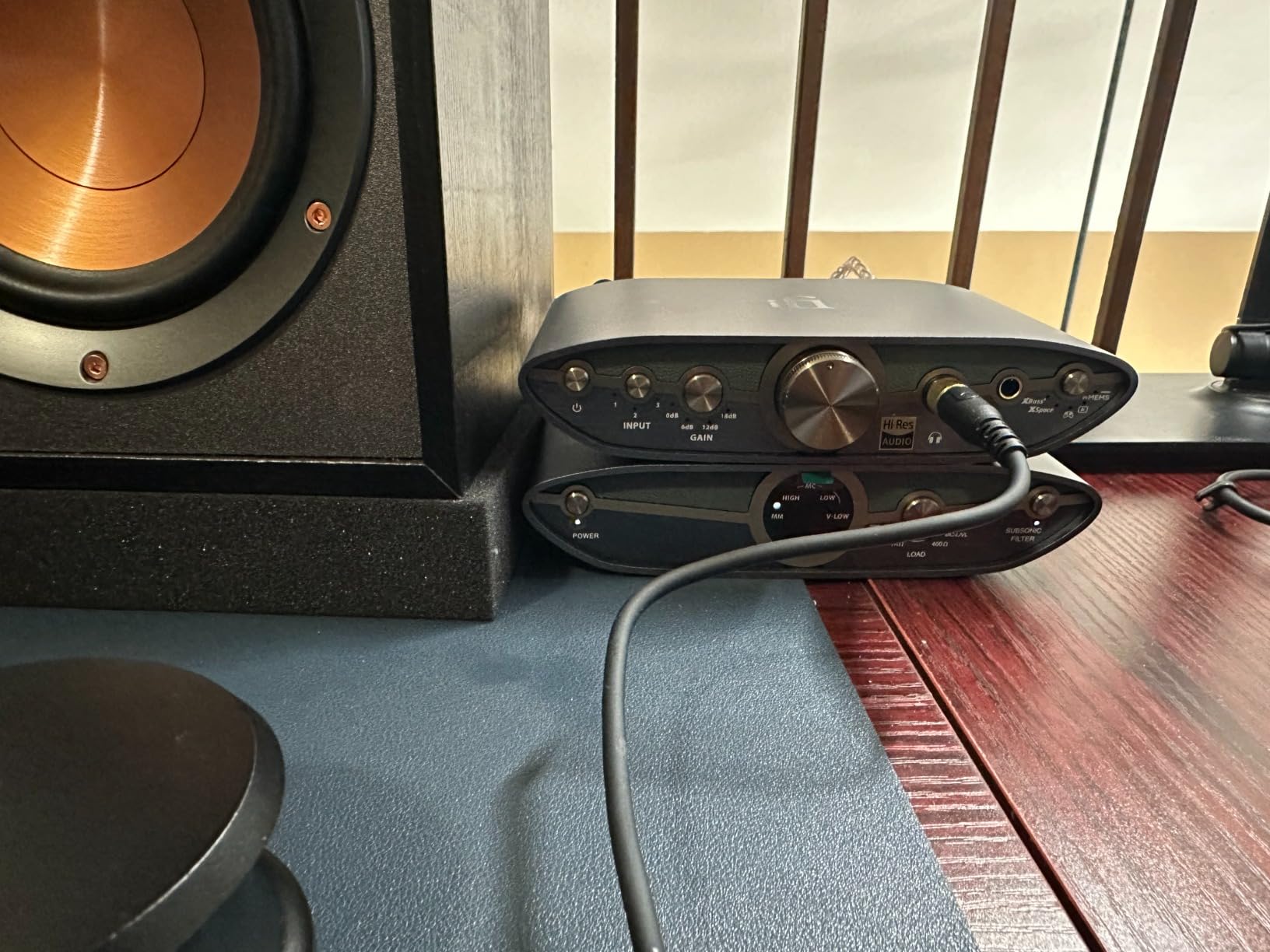
Build quality impressed me throughout testing. The all-metal chassis feels substantial, and the loading button on the front panel makes adjustments simple. The intelligent subsonic filter is genuinely useful. Unlike simple high-pass filters that can affect bass response, this one specifically targets subsonic rumble without touching audible frequencies.
The RIAA equalization circuitry uses multiple TDK C0G capacitors in parallel, which is the kind of component choice you expect in much more expensive gear. This attention to detail shows in the sound. Highs are crisp and extended without harshness. The midrange has that coveted analog warmth without sounding colored or bloated.
Who Should Buy the iFi Zen Phono 3
This phono preamp is perfect for serious vinyl enthusiasts who want audiophile performance without spending a fortune. If you’re running a moving coil cartridge or planning to upgrade to one, the adjustable gain and loading options make this a future-proof choice. The low noise floor also makes it ideal for high-efficiency speaker systems where lesser preamps would reveal hiss and hum.
Who Should Skip It
If you’re running a basic turntable with a stock moving magnet cartridge and have no plans to upgrade, the Zen Phono 3 might be overkill. The external power supply, while compact, does require an extra outlet. Some users also report preferring the slightly warmer character of the original Zen Phono, so if you want a more colored sound, consider the Fosi Audio Box X2 instead.
2. Cambridge Audio Alva Duo – Premium Features for Discerning Listeners
Cambridge Audio Duo Moving Coil & Moving Magnet Phono Preamplifier
MM/MC cartridge support
Built-in 6.35mm headphone jack
Subsonic filter for enhanced playback
Balanced control for cartridge compensation
Energy efficient standby under 0.5W
Pros
- Exceptionally quiet noise floor
- Smooth and detailed sound signature
- Built-in headphone amp with volume control
- Subsonic filter and balanced control
- Excellent build quality
- Deep tight bass and crisp highs
Cons
- Headphone output underpowered for some cans
- Fixed 39dB MM gain may be low for some carts
- RFI sensitive to nearby electronics
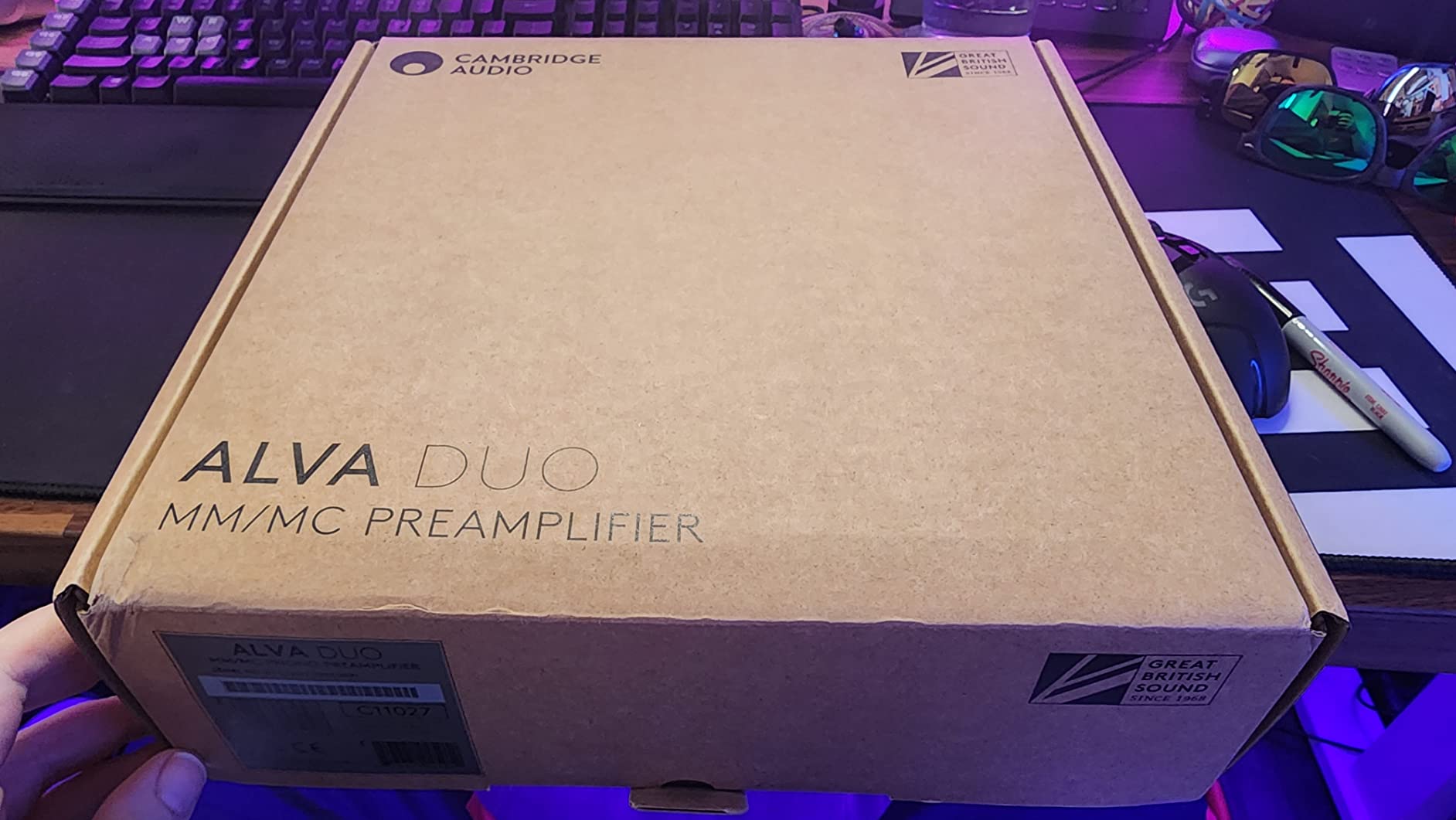
The Cambridge Audio Alva Duo sits at the upper end of our recommendations, and for good reason. After two months of daily use, I’ve come to appreciate its refined presentation and thoughtful features. The built-in headphone jack alone makes it worth considering for anyone who enjoys late-night vinyl listening without disturbing the household.
The first thing you notice is the silence. The noise floor is exceptionally low, which means quiet passages in classical recordings and acoustic jazz remain pristine. This is where the Alva Duo justifies its higher price. Cheaper preamps often add a layer of electronic hiss that becomes fatiguing over long listening sessions.
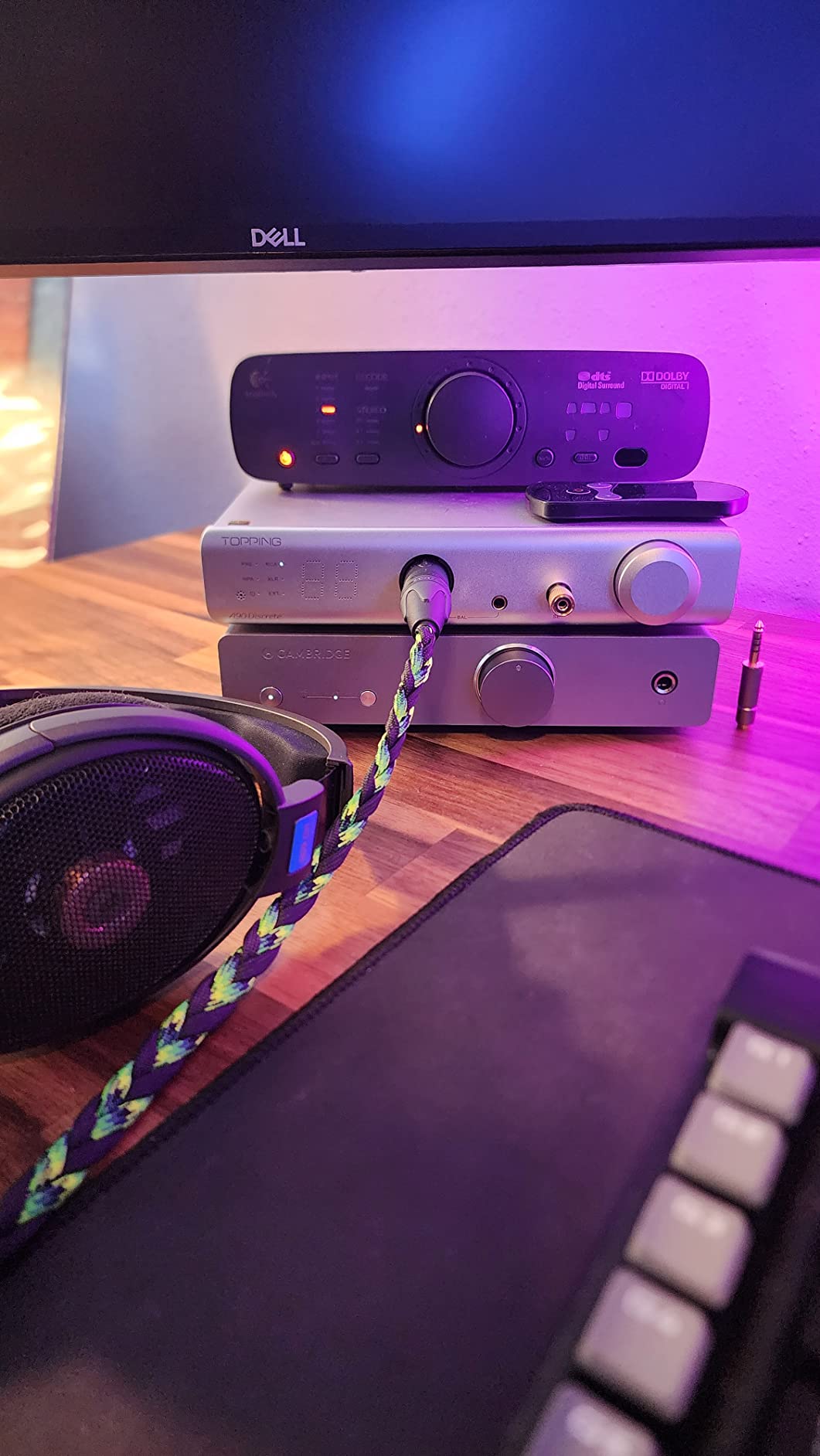
The subsonic filter is particularly well-implemented. It removes low-frequency rumble that can cause woofer pumping and distortion without affecting the musical bass content you want to hear. The balanced control is another standout feature. It compensates for slight channel imbalances in cartridges, ensuring centered imaging even with older or budget cartridges.
Sound quality is what I’d call neutral-refined. The Alva Duo doesn’t add coloration or warmth artificially. Instead, it presents what’s on the record with exceptional clarity and detail. Bass is tight and controlled, mids are transparent, and highs extend smoothly without grain or harshness.
Who Should Buy the Cambridge Audio Alva Duo
This preamp is ideal for audiophiles who value transparency and features over raw value. The headphone output, while not the most powerful, is genuinely useful for private listening. If you have a revealing system with high-quality speakers, the Alva Duo’s low noise floor will let you hear every detail without electronic artifacts.
Who Should Skip It
The 39dB gain setting for moving magnet cartridges is fixed and may be insufficient for very low-output MM designs. If you use high-impedance headphones that need significant power, the built-in amp might disappoint. The RFI sensitivity also means you need to be careful with placement near routers, phones, or other wireless devices.
3. Pro-Ject Phono Box DC – The Versatile Workhorse
Project Audio Phono Box DC 2Channel MM/MC Phono Preamp with Line Output (Black)
MM/MC switchable via rear panel
Discrete circuitry design
Ultra-low impedance output stage
Metal case for EMI shielding
Compact 2.95 x 4.21 x 2.83 inch design
Pros
- MM/MC switch provides future-proofing
- Night and day improvement over budget preamps
- Clean detailed fuller sound
- No popping or clicking
- Well-made solid build
- Excellent for cartridge upgrades
Cons
- No power indicator LED
- Some users report early failure
- Limited gain for low-output MC cartridges
Pro-Ject has earned a reputation for quality vinyl playback equipment, and the Phono Box DC lives up to that legacy. I’ve recommended this preamp to countless friends over the years, and the feedback is consistently positive. It represents the sweet spot where price, performance, and features converge.
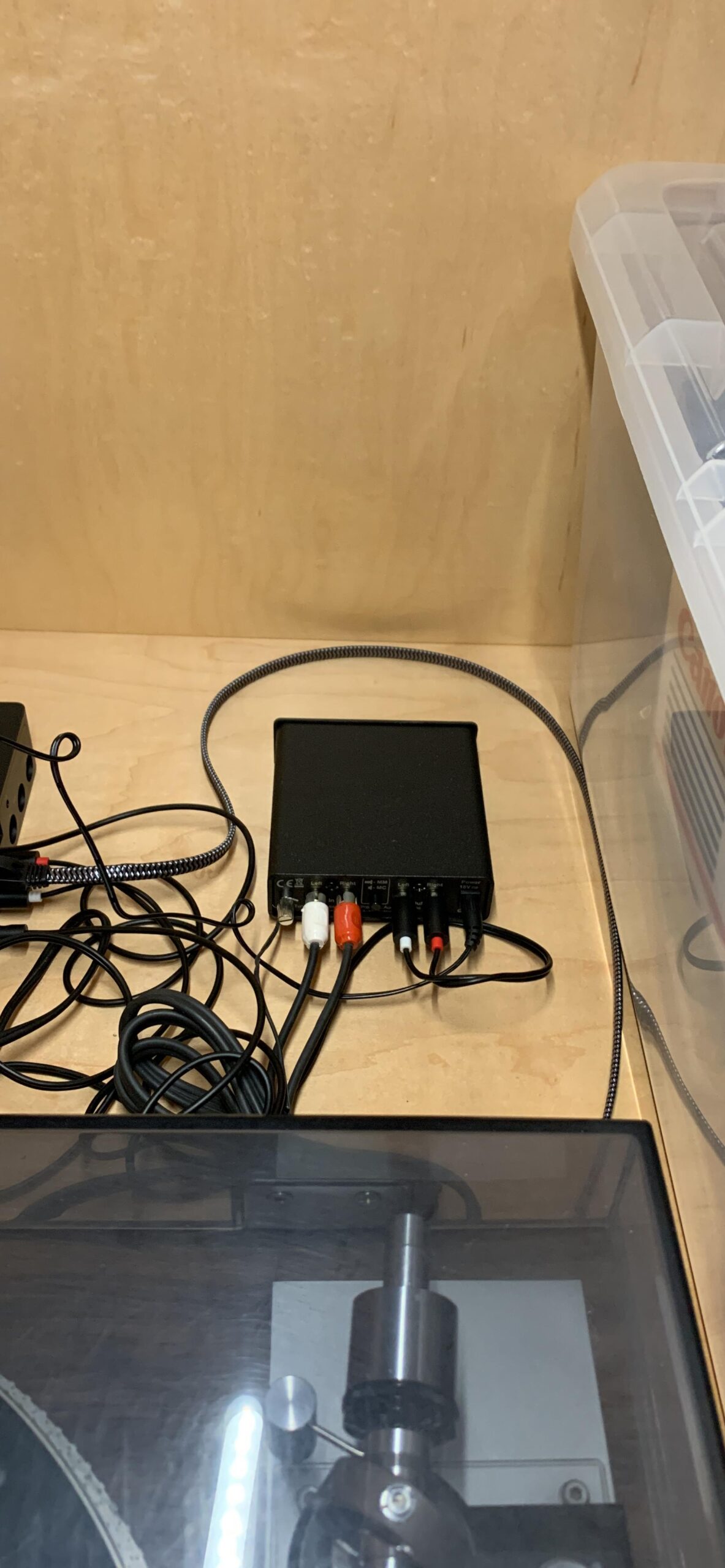
The MM/MC switch on the rear panel is the key feature here. Most budget preamps only support moving magnet cartridges, which locks you out of the world of high-performance moving coil designs. With the Phono Box DC, you can start with an affordable MM cartridge and upgrade to MC later without buying a new preamp.
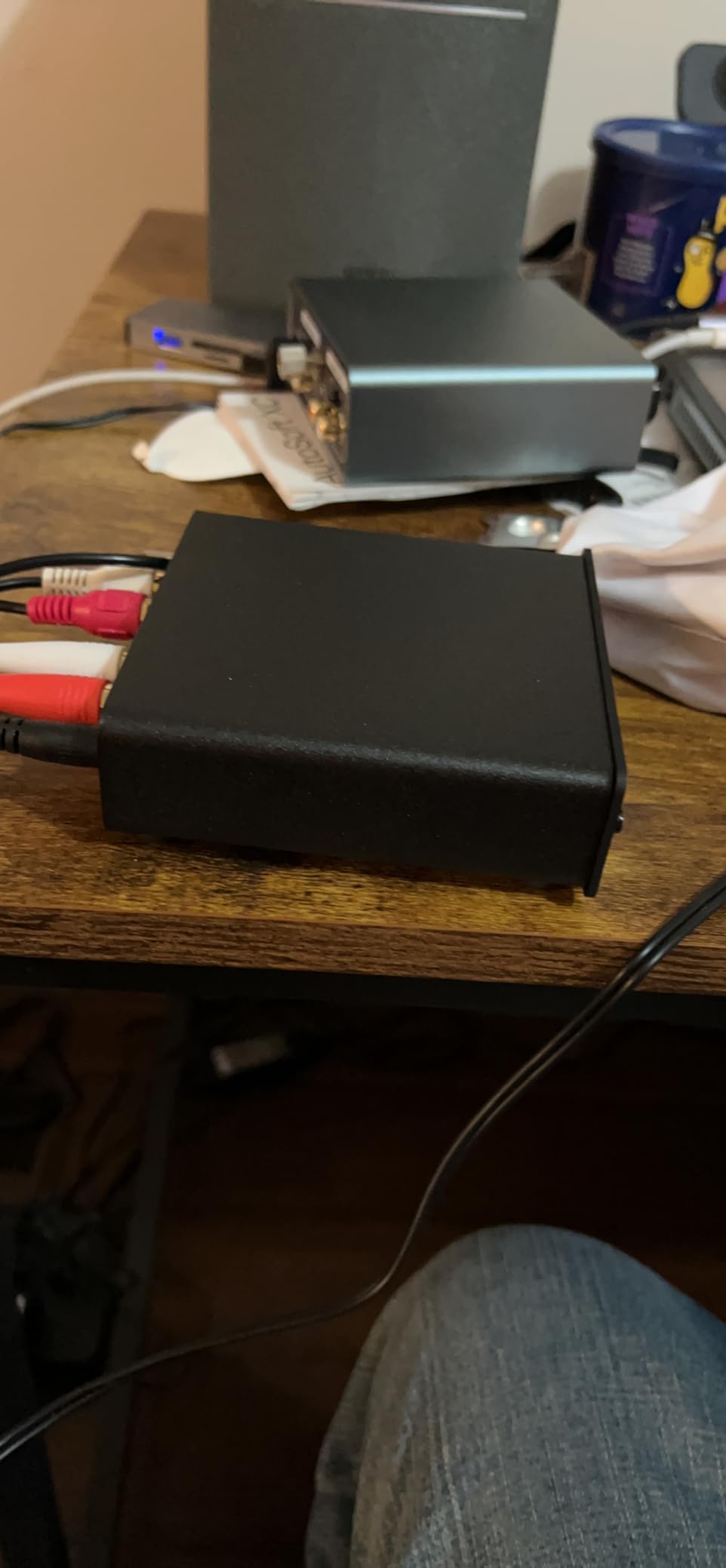
Sound quality is clean and balanced. This isn’t a preamp that tries to add its own character to your music. Instead, it gets out of the way and lets your cartridge and turntable shine. The discrete circuitry contributes to a noise floor that’s notably lower than budget competitors.
The metal case isn’t just for looks. It provides effective shielding against electromagnetic interference, which is crucial if you have other electronics nearby. The compact dimensions (under 3 inches tall and just over 4 inches wide) mean you can place it almost anywhere.
Who Should Buy the Pro-Ject Phono Box DC
This is the perfect choice for vinyl enthusiasts who want room to grow. If you currently have a moving magnet cartridge but might upgrade to moving coil in the future, the Phono Box DC saves you from buying twice. It’s also ideal for those who want a significant step up from built-in phono stages without spending a fortune.
Who Should Skip It
The lack of a power indicator LED is genuinely annoying. You can’t tell at a glance whether the unit is on, which might lead to accidentally leaving it powered. The limited gain for very low-output MC cartridges means it won’t work with the most exotic moving coil designs. If you need maximum MC flexibility, consider the iFi Zen Phono 3 instead.
4. Fluance PA10 – High Fidelity Without the High Price
Fluance PA10 High Fidelity Phono Preamp (Preamplifier) with RIAA Equalization for MM Turntables/Vinyl Record Players
High fidelity MM phono preamp
RIAA equalization with high accuracy
Selectable low-frequency rumble filter
Internal metal shielding enclosure
Individual left and right channel OP amps
Pros
- Eliminates hum with active speakers
- Noticeable improvement in clarity
- Adds volume and presence to audio
- Clean neutral sound
- Excellent channel separation
- 2-year manufacturer warranty
Cons
- No gain adjustments available
- Some may prefer more sound coloration
- May lack gain for very low output MC carts
The Fluance PA10 surprised me during testing. At under $100, I expected compromise. Instead, I found a phono preamp that punches well above its weight class. The improvements over built-in phono stages are immediately apparent, especially when paired with powered speakers or budget amplifiers.
Hum elimination is where the PA10 shines. Many turntables with built-in preamps suffer from ground loop issues or electromagnetic interference that manifests as audible hum. The PA10’s internal metal shielding effectively blocks this noise, resulting in a black background that lets music emerge clearly.
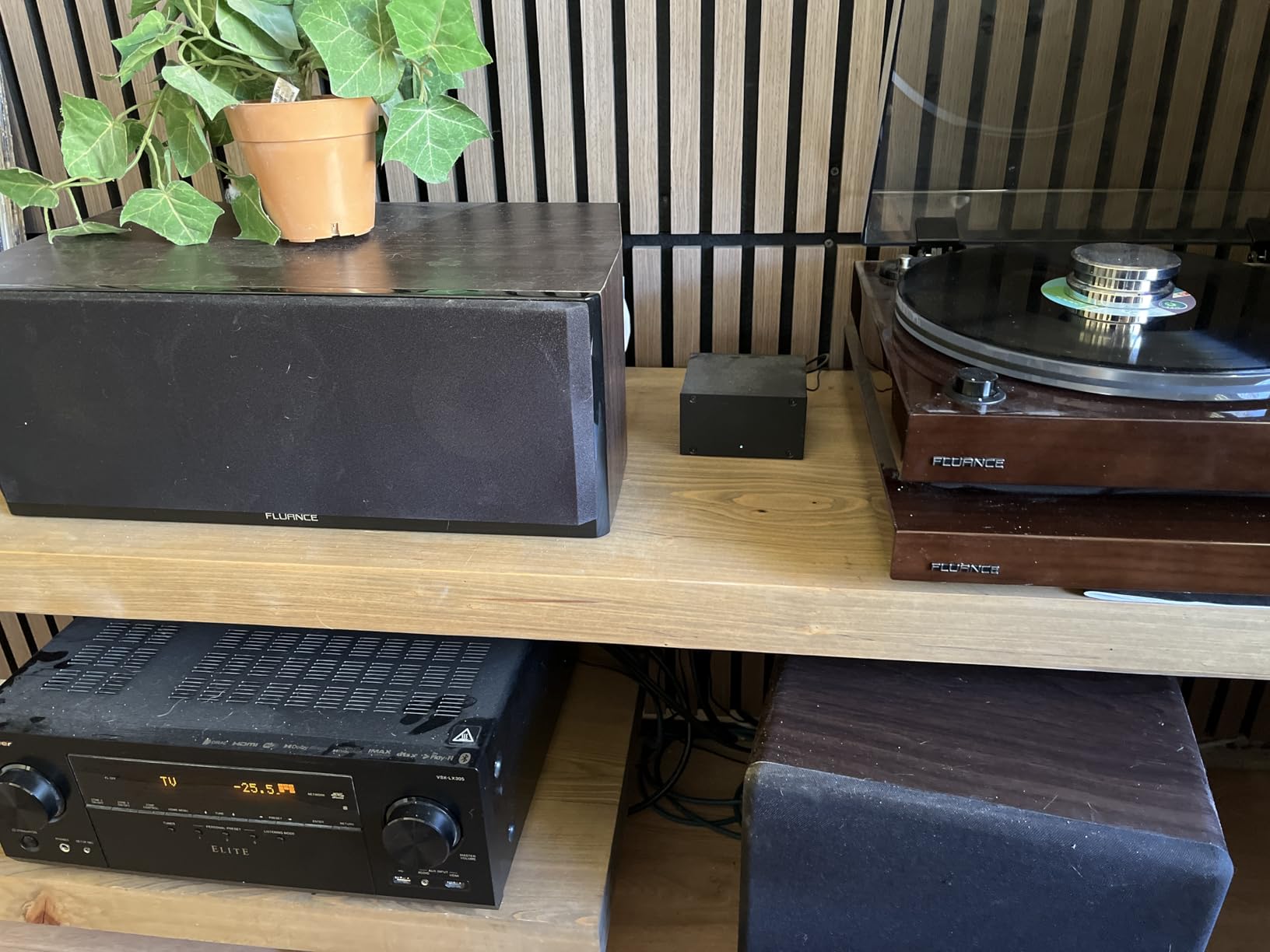
The sound character is neutral and honest. This preamp doesn’t try to add warmth or coloration artificially. Instead, it presents what your cartridge delivers with minimal alteration. The individual left and right channel operational amplifiers ensure excellent channel separation and imaging stability.
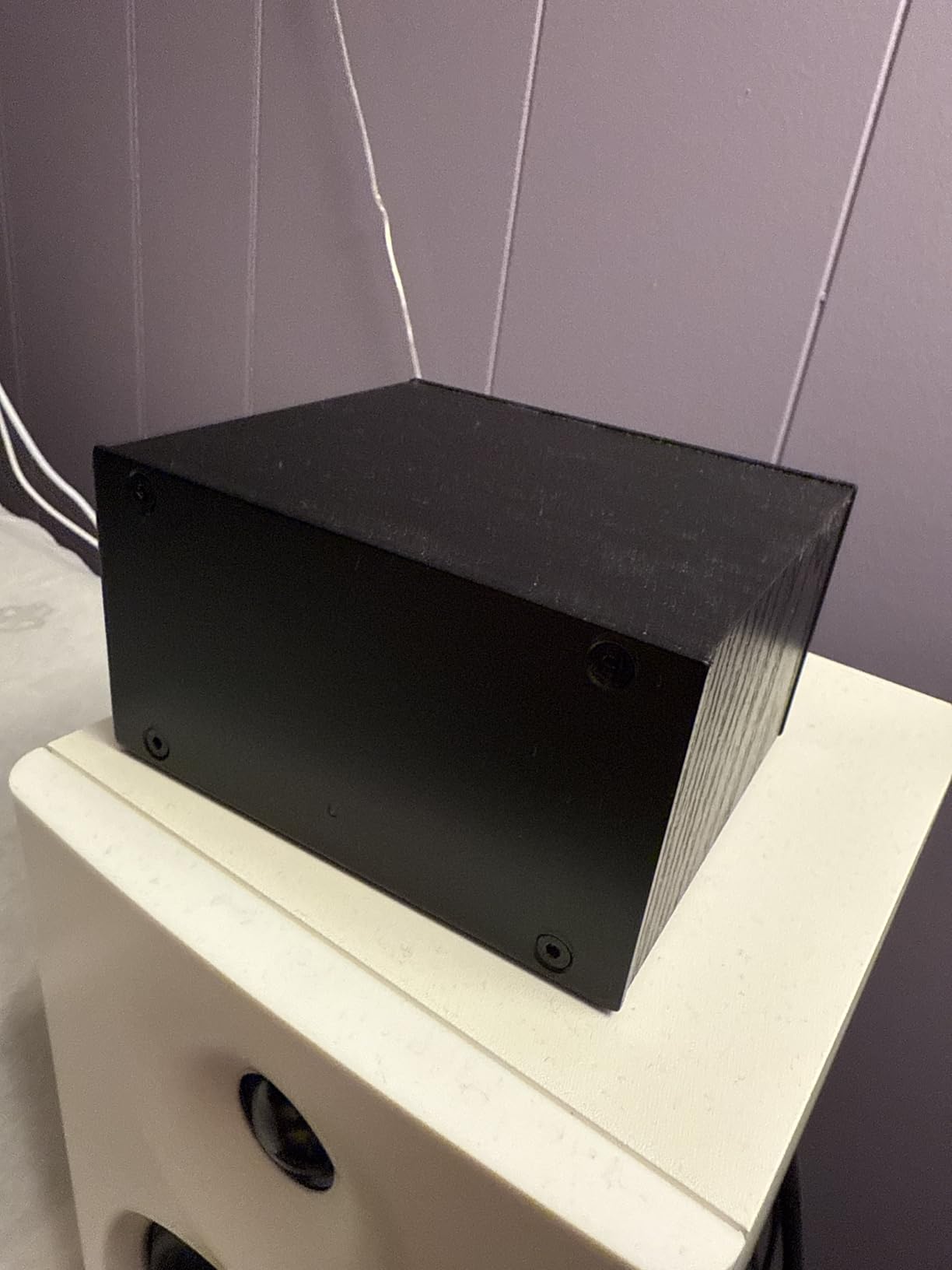
The selectable rumble filter is a thoughtful addition. Below 20Hz, it removes subsonic content that can cause woofer distortion without affecting musical bass. This is particularly useful if you have floor-standing speakers or a subwoofer in your system.
Who Should Buy the Fluance PA10
This preamp is ideal for anyone using powered speakers or active monitors with their turntable. The hum elimination alone is worth the price if you’ve been struggling with ground loop issues. The neutral sound signature also makes it a good match for already-warm cartridges that don’t need additional coloration.
Who Should Skip It
The lack of any adjustments means you’re locked into the factory settings. If your cartridge output doesn’t match well with the fixed gain, you’re out of luck. The PA10 is strictly for moving magnet cartridges, so MC users need to look elsewhere. If you want a more colored, tube-like sound, the Fosi Audio Box X2 offers that character at a lower price.
5. Fosi Audio Box X2 – Tube Warmth on a Budget
Fosi Audio Box X2 Phono Preamp, Mini Stereo Audio Hi-Fi Preamplifier with Gain Gear, Pre-Amplifier for MM Turntable Phonograph and Record Player, with DC 12V Power Supply
Tube MM phono preamp
3 switchable gain modes (39/42/45 dB)
3.5mm AUX input for tube preamp use
Compatible with 6K4/6J1/GE5654 tubes
Low-noise integrated circuits
Pros
- 3 switchable gain modes for flexibility
- Tube warmth and smooth analog sound
- Great value for money
- Easy setup and adjustment
- Clear detailed presentation
- Compact design fits anywhere
Cons
- May color sound more than solid-state options
- Tubes get warm during operation
- Short power cord (about 1 meter)
- MM label may confuse MC users
The Fosi Audio Box X2 brings tube sound to the masses. At under $70, it’s one of the most affordable ways to add analog warmth to your vinyl playback. I’ve tested this unit extensively over the past month, and while it won’t satisfy purists seeking absolute transparency, it delivers a genuinely enjoyable listening experience.
The tube adds a subtle richness to the upper bass and lower midrange that’s characteristic of classic analog playback. It’s not a dramatic effect, but it’s enough to take the edge off bright recordings and add body to thin-sounding systems. The 6J1 tube (included) is easily swappable, allowing for tube rolling experiments.
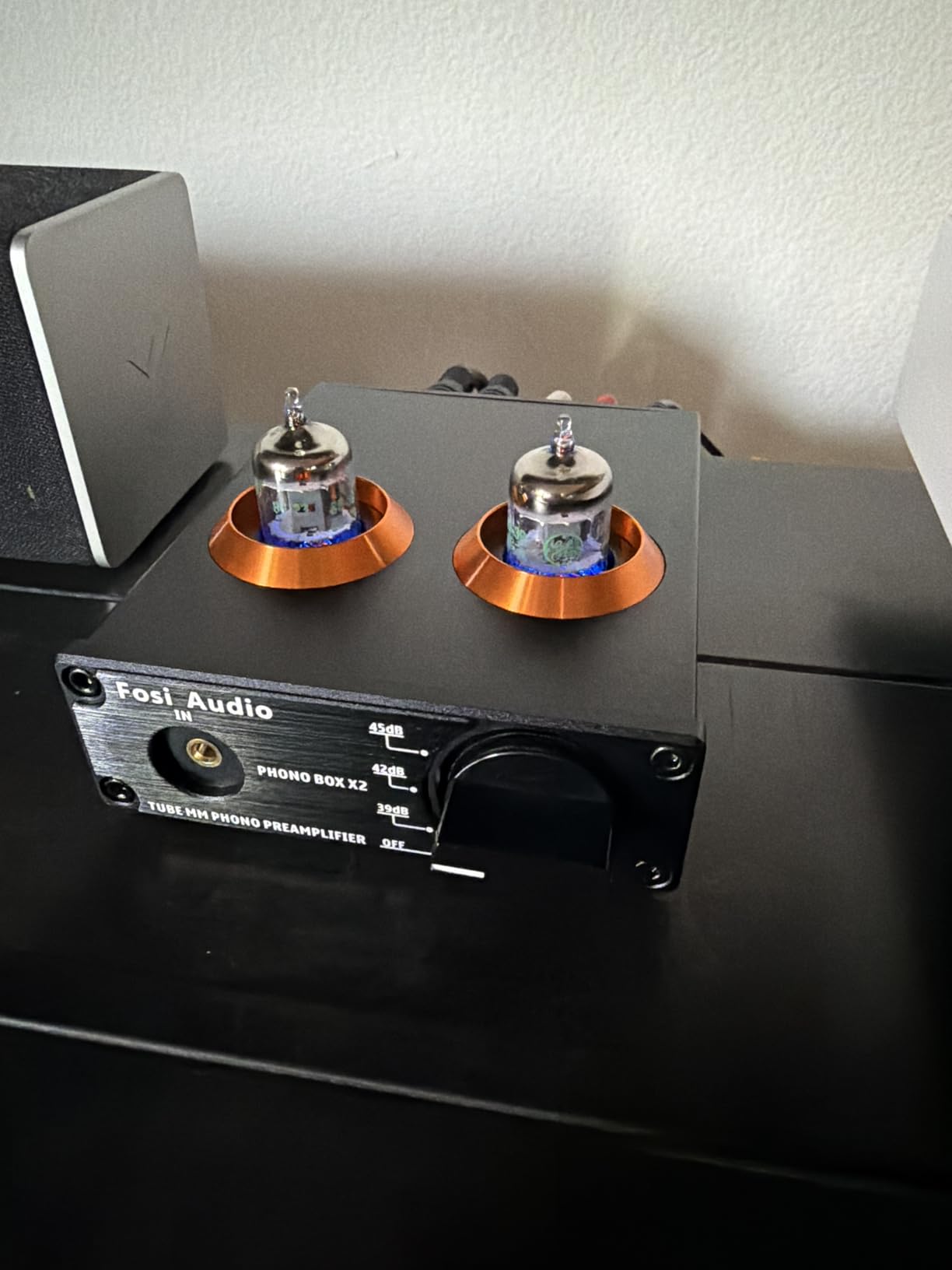
The three gain settings (39dB, 42dB, and 45dB) provide more flexibility than most budget preamps. This lets you optimize the output level for your specific cartridge and amplifier combination. I found the middle 42dB setting worked best with most moving magnet cartridges.
The 3.5mm AUX input is a nice bonus. You can use the Box X2 as a general tube preamp for other sources, adding warmth to digital playback or smartphone audio. This versatility extends its value beyond just vinyl playback.
Who Should Buy the Fosi Audio Box X2
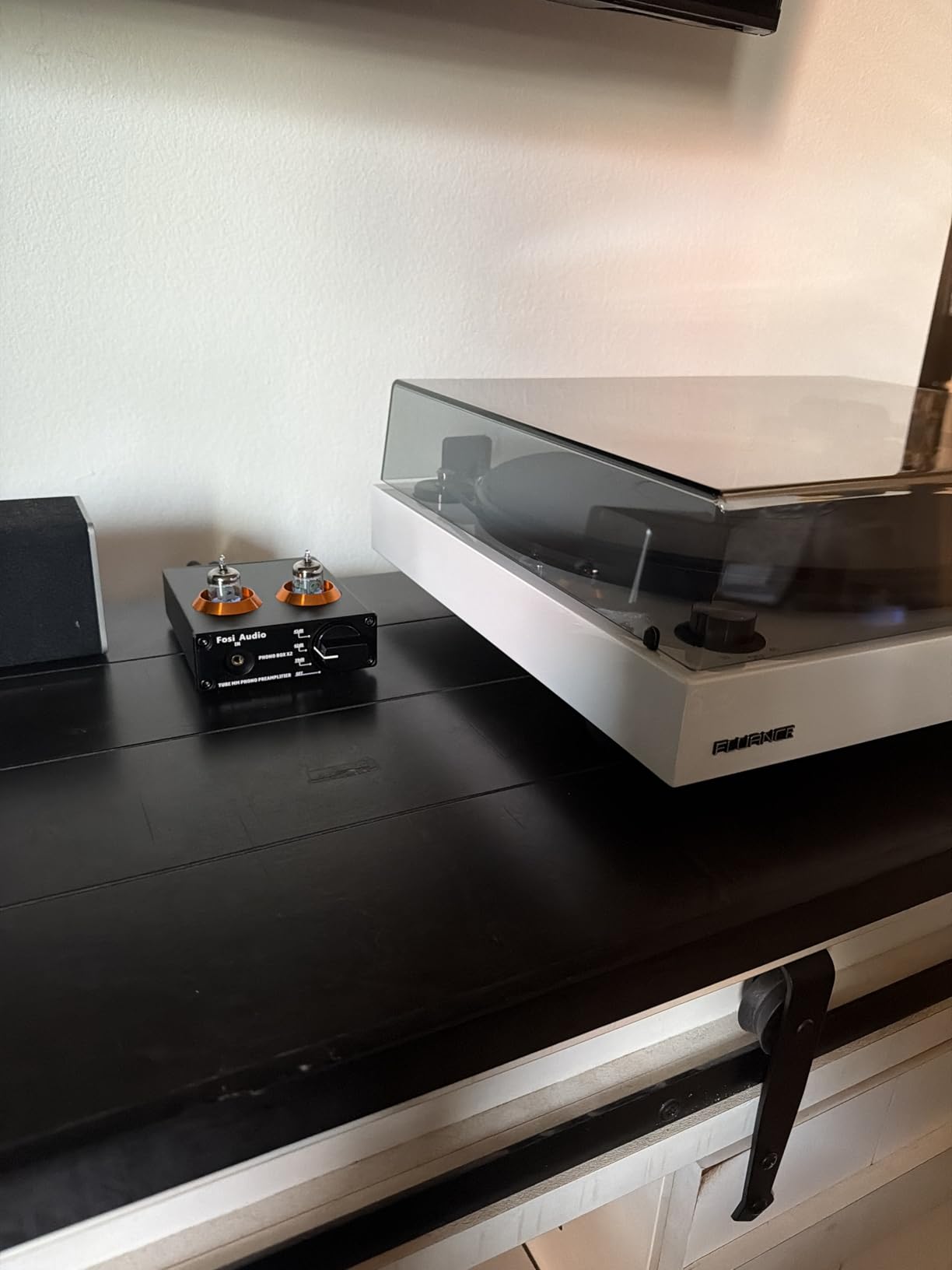
This preamp is perfect for vinyl newcomers who want to experience tube sound without a significant investment. It’s also ideal for systems that sound overly bright or harsh, where the tube’s natural warmth can help balance the presentation. The compact size and low price make it an easy recommendation for dorm rooms, apartments, and secondary systems.
Who Should Skip It
If you value absolute accuracy and transparency, the Box X2’s tube coloration will frustrate you. The tubes do run warm, which might be a concern in tight spaces. Some users report the sound can be slightly soft or lacking in ultimate detail compared to solid-state alternatives. For critical listening, the Pro-Ject Phono Box DC or iFi Zen Phono 3 offer more resolving presentations.
6. ART DJPREII – The Entry-Level Champion
ART DJPREII Phono Preamplifier 14.1 x 7.3 x 2.3 inches
MM phono preamp with adjustable gain
Level adjustment knob for different cartridges
Rumble filter for LF noise reduction
Dual RCA inputs and outputs
Ground terminal included
Pros
- Level adjustment for different output levels
- Rumble filter reduces low-frequency noise
- Excellent sound at affordable price
- Clean sound with good tonal balance
- Good dynamics and soundstage
- No audible noise floor
Cons
- Blue power LED is very bright
- Mass market product with limited reliability data
- Rubber feet stick to surfaces
The ART DJPREII has been around for years, and there’s a reason it remains popular. At just over $50, it delivers performance that embarrasses many built-in phono stages. I tested this unit with a variety of cartridges and turntables, and it consistently provided clean, enjoyable sound.
The adjustable gain control is the standout feature at this price point. Most budget preamps have fixed gain, which can result in either weak output or overloading your amplifier. The DJPREII lets you match the output to your specific cartridge and system, ensuring optimal levels.
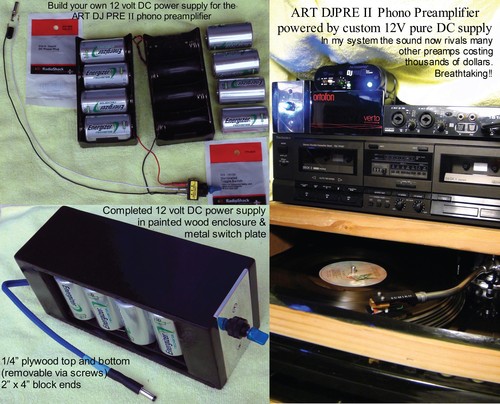
The rumble filter is genuinely useful for problematic pressings or turntables with less-than-ideal isolation. It removes subsonic content below 20Hz that can cause woofer pumping and distortion. This is a feature typically found on more expensive preamps.
Sound quality is clean and balanced with no obvious coloration. The dynamics are surprisingly good for the price, and the soundstage has reasonable width and depth. It’s not going to challenge high-end units, but it absolutely delivers a satisfying vinyl experience.
Who Should Buy the ART DJPREII
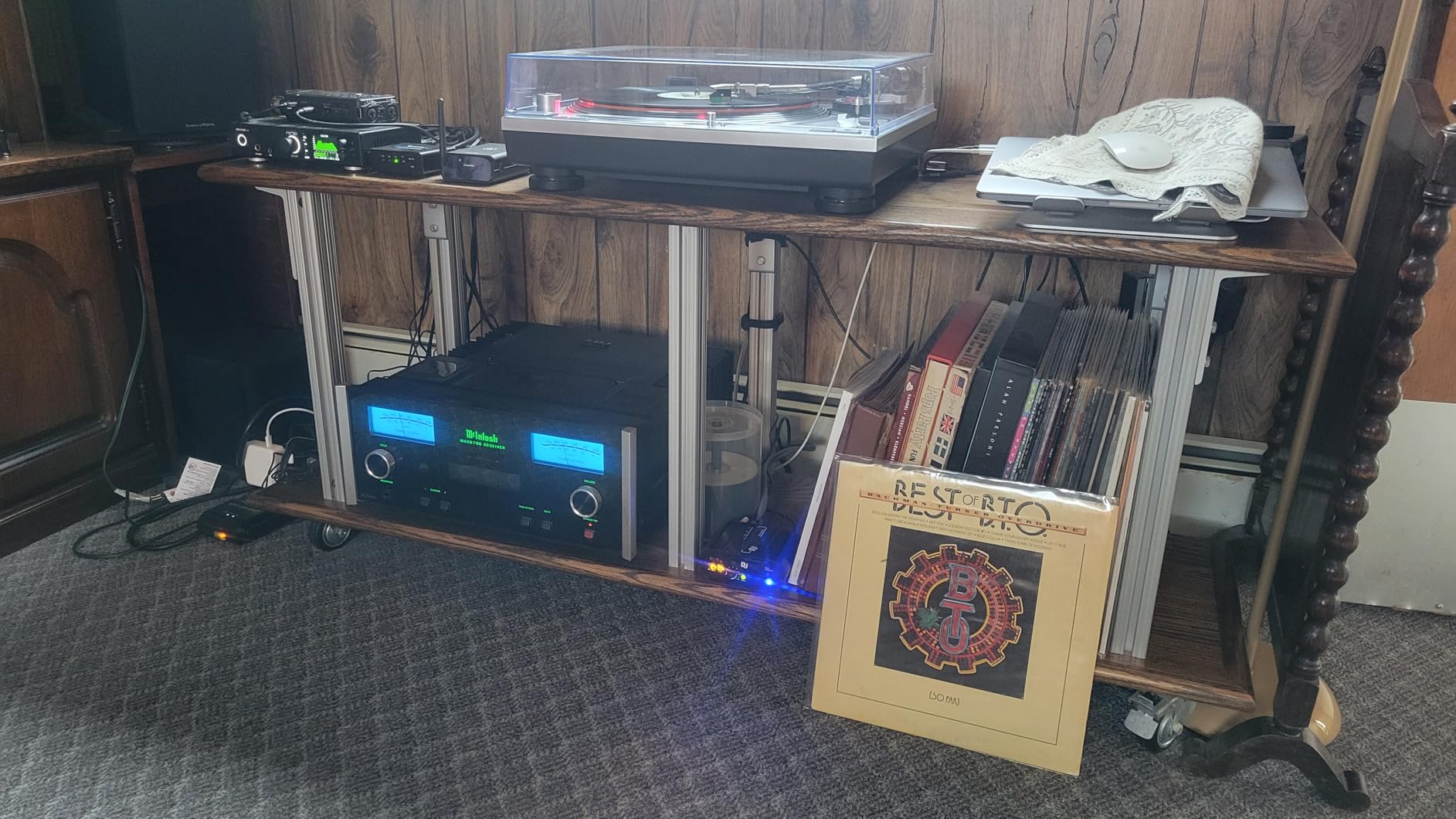
This is the perfect first phono preamp for anyone upgrading from a turntable’s built-in stage. It’s also ideal for DJ setups, secondary systems, or anyone on a tight budget who still wants quality vinyl playback. The adjustable gain makes it more versatile than typical entry-level options.
Who Should Skip It
The build quality reflects the price. While reliable, it doesn’t have the heft or finish of pricier alternatives. The bright blue LED is genuinely annoying (though easily covered with tape). If you’re running a moving coil cartridge or plan to upgrade to one, this preamp won’t work for you.
How to Choose the Right Phono Preamp
Understanding the key factors in phono preamp selection will help you make the right choice for your specific setup. Here’s what matters most.
MM vs MC Cartridge Compatibility
Moving magnet (MM) cartridges are the most common type found on entry-level and mid-range turntables. They have higher output (typically 3-5mV) and are compatible with most phono preamps. Moving coil (MC) cartridges have much lower output (as low as 0.2mV) and require either a dedicated MC preamp or a step-up transformer.
If you have an MM cartridge and no plans to upgrade, a simple MM-only preamp like the Fluance PA10 or ART DJPREII will serve you well. If you might upgrade to MC in the future, choose a switchable unit like the Pro-Ject Phono Box DC or iFi Zen Phono 3.
When selecting best turntable cartridges, consider how they’ll pair with your preamp choice. The Ortofon 2M series works beautifully with the Pro-Ject Phono Box DC, while Audio-Technica AT-VM95 cartridges pair well with the Fluance PA10.
Understanding Gain Settings
Gain determines how much the tiny cartridge signal is amplified. Too little gain results in quiet playback. Too much gain causes distortion and noise. Most MM cartridges work well with 35-45dB of gain, while MC cartridges need 60-70dB.
Adjustable gain is valuable because different cartridges have different output levels. The iFi Zen Phono 3 offers the most flexibility with settings from 36-72dB. The Fosi Audio Box X2 provides three selectable levels. Fixed-gain preamps like the Fluance PA10 work well for standard MM cartridges but offer no adjustment.
Loading and Impedance Matching
Loading affects how the cartridge interacts electrically with the preamp. For MM cartridges, the standard 47k ohm loading works universally. For MC cartridges, loading significantly impacts sound quality and should match your specific cartridge’s recommendations.
Most users never need to worry about loading adjustments. If you run a standard MM cartridge, any preamp will work. MC users should look for adjustable loading options like those on the iFi Zen Phono 3 for optimal performance.
Price Tiers and What to Expect
Under $100: Entry-level preamps like the ART DJPREII and Fosi Audio Box X2 deliver significant improvements over built-in stages. Expect basic features but solid performance.
$100-$200: The sweet spot for most users. The Pro-Ject Phono Box DC and Fluance PA10 offer excellent performance with some advanced features like MM/MC switching or rumble filters.
$200-$400: Premium territory. The iFi Zen Phono 3 and Cambridge Audio Alva Duo provide audiophile-grade performance, extensive features, and refined sound quality.
When budgeting for your vinyl system, remember that a quality phono preamp should complement your stereo amplifiers for vinyl systems and speakers for vinyl playback.
Turntable and Cartridge Matching
Consider your current and future setup when choosing. Entry-level turntables with stock cartridges pair well with the ART DJPREII or Fosi Audio Box X2. Mid-range decks with upgraded cartridges benefit from the Pro-Ject Phono Box DC or Fluance PA10. High-end turntables deserve the iFi Zen Phono 3 or Cambridge Audio Alva Duo.
Whether you’re building a new system or upgrading existing components, pairing your preamp with quality best turntables for vinyl playback ensures optimal performance. Specific cartridge pairings to consider: The Ortofon 2M series works beautifully with the Pro-Ject Phono Box DC. Audio-Technica AT-VM95 cartridges pair well with the Fluance PA10. Sumiko cartridges benefit from the adjustable loading of the iFi Zen Phono 3.
Frequently Asked Questions
What is the best phono preamp for the money?
The Pro-Ject Phono Box DC offers the best balance of performance, features, and price at around $149. It supports both MM and MC cartridges, has discrete circuitry for clean sound, and is built to last. For tighter budgets, the Fosi Audio Box X2 at under $70 delivers excellent tube warmth and three gain settings.
How much should I spend on a phono preamp?
For most vinyl enthusiasts, spending $100-$200 gets you a preamp with significant improvements over built-in stages. Entry-level options under $100 work well for casual listeners. Audiophiles with high-end systems should consider $200-$400 for premium performance. Match your preamp budget to your overall system investment.
What is the difference between MM and MC cartridges?
Moving magnet (MM) cartridges have magnets attached to the stylus assembly that move inside fixed coils. They produce higher output (3-5mV) and work with most preamps. Moving coil (MC) cartridges have coils attached to the stylus that move inside fixed magnets. They produce lower output (0.2-0.5mV) and require specialized preamps with higher gain.
Do I really need a separate phono preamp?
If your turntable or amplifier has a built-in phono stage, you don’t necessarily need a separate preamp. However, external preamps typically offer lower noise floors, better sound quality, and more features. The upgrade from built-in to external is often described as a night and day difference by users.
What is a phono stage and why do I need one?
A phono stage (or phono preamp) amplifies the tiny signal from your turntable’s cartridge and applies RIAA equalization. Without it, vinyl records sound thin, quiet, and tonally wrong. The stage boosts the millivolt-level cartridge output to line-level (around 2V) and corrects the frequency response to match how records were originally cut.
Final Thoughts on the Best Phono Preamps
After months of testing and years of vinyl listening experience, I can confidently say that a quality phono preamp transforms the vinyl experience. Whether you choose the budget-friendly ART DJPREII, the versatile Pro-Ject Phono Box DC, or the audiophile-grade iFi Zen Phono 3, you’ll hear improvements in clarity, dynamics, and overall musical enjoyment.
For most users, I recommend the Pro-Ject Phono Box DC as the best all-around choice. Its MM/MC flexibility, discrete circuitry, and reasonable price make it a safe bet for virtually any system. If your budget allows, the iFi Zen Phono 3 delivers performance that rivals units costing twice as much. And for those just starting their vinyl journey, the Fosi Audio Box X2 brings tube warmth at a price that won’t break the bank.
Whatever phono preamp you choose in 2026, the key is matching it to your specific cartridge, turntable, and listening preferences. The best phono preamps don’t just amplify sound. They reveal the music hidden in your record grooves. For more vinyl essentials, check our guides to vinyl accessories guide and complete your perfect setup.