
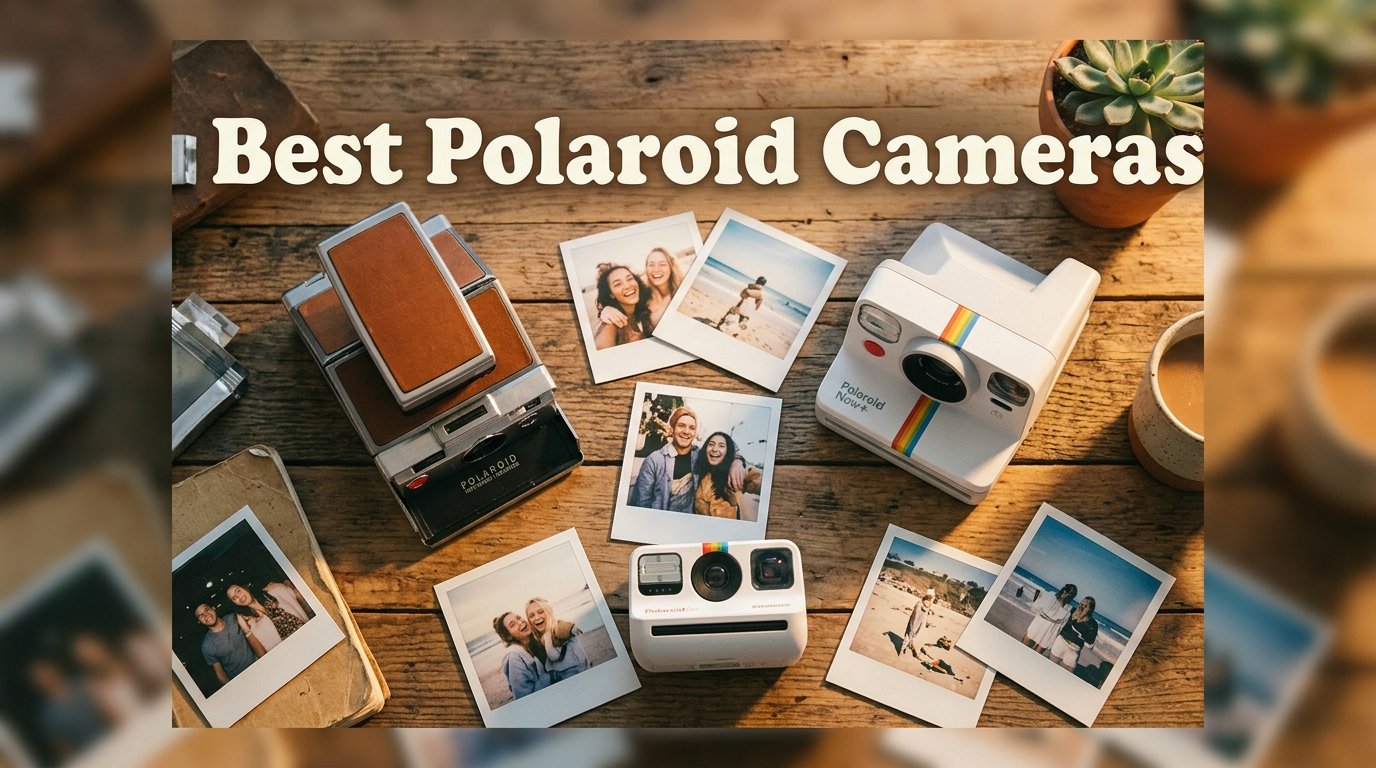
There is something genuinely magical about watching a photo develop right in your hand. I have been shooting with instant cameras for over six years, and that feeling never gets old. Whether you are looking for the best Polaroid cameras for a wedding guestbook, a travel companion, or just a fun gift, this guide covers every option worth your money in 2026.
The instant camera market has exploded recently. Polaroid, Fujifilm Instax, and Kodak all make compelling options at different price points. But not every camera is worth the investment, especially when you factor in the ongoing cost of film. Our team tested and compared 10 of the most popular instant cameras across multiple shooting scenarios to help you make the right call.
Finding the best Polaroid camera depends heavily on your experience level and what you plan to shoot. A beginner wants something simple and foolproof. An experienced photographer might want manual controls and creative flexibility. We break down each camera by who it serves best, what film it uses, and whether the long-term costs make sense for your budget.
Table of Contents
Top 3 Picks for Best Polaroid Cameras (September 2026)

Fujifilm Instax Mini 12
- Automatic exposure
- Built-in selfie mirror
- Close-up mode
- Compact design

Polaroid Now Gen 3
- Twin-lens autofocus
- Double exposure
- USB-C rechargeable
- i-Type and 600 film

Best Polaroid Cameras in 2026
| Product | Specifications | Action |
|---|---|---|
| Fujifilm Instax Mini 12 |
|
Check Latest Price |
 Polaroid Go Gen 2 Polaroid Go Gen 2 |
|
Check Latest Price |
 KODAK Printomatic KODAK Printomatic |
|
Check Latest Price |
 Polaroid Go Gen 3 Polaroid Go Gen 3 |
|
Check Latest Price |
 Fujifilm Instax Mini 41 Fujifilm Instax Mini 41 |
|
Check Latest Price |
 KODAK Mini Shot 2 ERA KODAK Mini Shot 2 ERA |
|
Check Latest Price |
| Polaroid Now Gen 3 |
|
Check Latest Price |
| Polaroid Now+ Gen 3 |
|
Check Latest Price |
 Fujifilm Instax Mini EVO Fujifilm Instax Mini EVO |
|
Check Latest Price |
 Polaroid Flip Polaroid Flip |
|
Check Latest Price |
1. Fujifilm Instax Mini 12 – Best Overall Instant Camera
Fujifilm Instax Mini 12 Instant Film Camera, Clay White
Instax Mini film
Automatic exposure
Selfie mirror
Close-up mode
AA batteries
Pros
- Compact and lightweight with cute retro design
- Built-in selfie mirror with parallax correction
- Automatic exposure and flash control
- Fast film development in about 90 seconds
- Easy to use for beginners and kids
Cons
- Film can get expensive over time
- Photos can come out dark in low light
I picked up the Fujifilm Instax Mini 12 for a friend’s birthday party last year, and it immediately became the most popular thing on the table. Everyone wanted a turn. The twist-on lens mechanism is satisfying and simple, and the automatic exposure handles most lighting situations without any fuss.
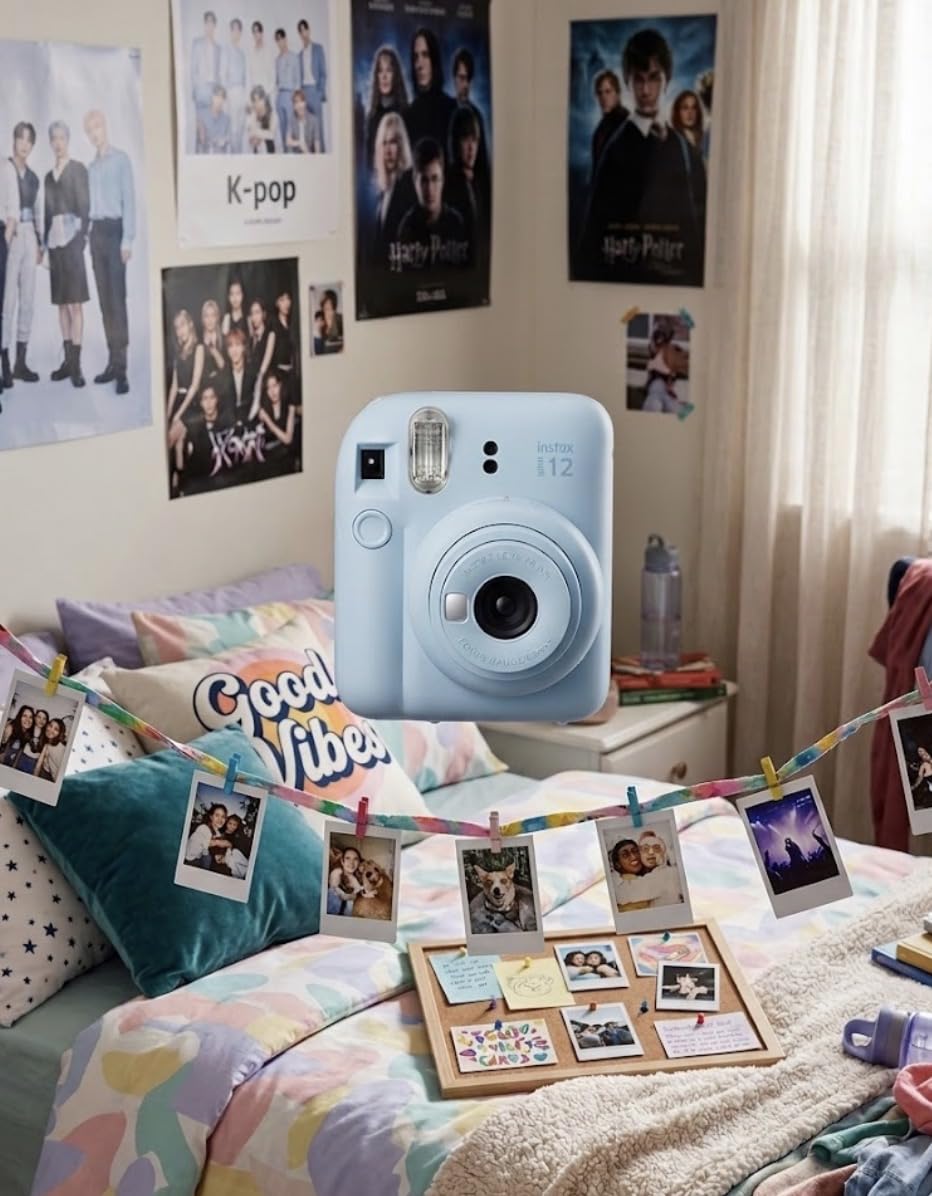
The close-up mode with parallax correction is a nice touch for selfies and small group shots. I was surprised at how well the built-in selfie mirror frames the shot. You just look down, line up your face, and hit the shutter. Photos develop in about 90 seconds, which feels almost instant compared to full-size Polaroid film.
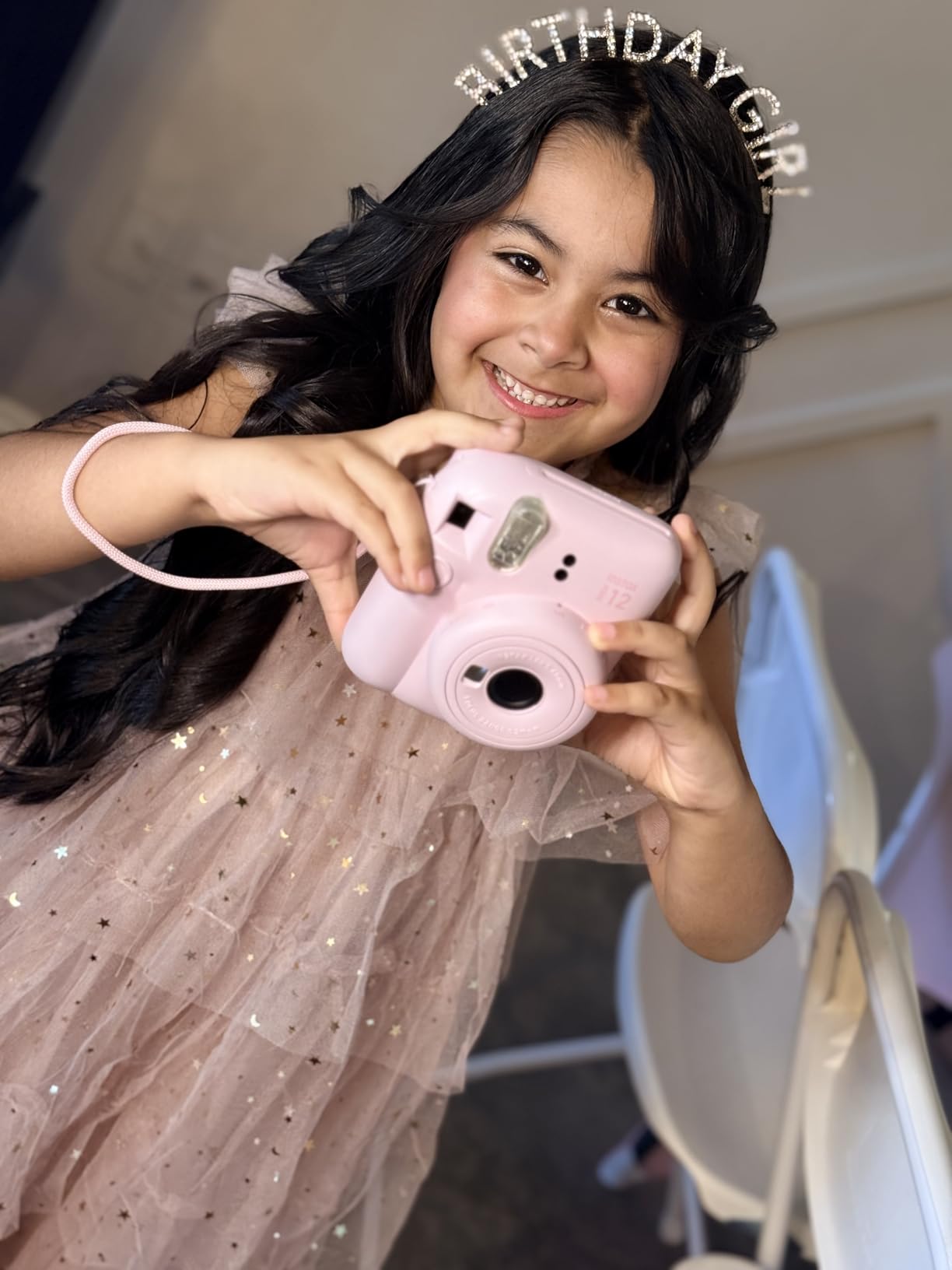
Where this camera really shines is film cost. Instax Mini film runs about 75 cents per print, which is dramatically cheaper than Polaroid i-Type film at roughly $3 per shot. Over a year of casual shooting, that difference adds up fast. I shot through about 200 prints at various events, and the consistency was impressive.
The Instax Mini 12 does have limitations. Indoor shots without good lighting can come out dark. The camera is analog only, so there is no digital backup if a print goes wrong. But for most casual users, these tradeoffs are easy to accept given the price and simplicity.
Best For Beginners and Party Use
If you have never used an instant camera before, the Instax Mini 12 is the easiest entry point. No settings to configure, no app to download, no learning curve. Just load film, twist the lens, and start shooting. Kids and grandparents can use it equally well.
The camera runs on two AA batteries, which last a surprisingly long time. I took it on a three-day trip without needing a swap. The compact size means it fits in a jacket pocket or small purse without any trouble.
Film Cost Over Time
Instax Mini film is the cheapest instant film on the market at roughly 75 cents per print. A twin pack of 20 sheets costs around $15. Compare that to Polaroid i-Type film at about $2 to $3 per print, and the savings compound quickly if you shoot regularly.
For a casual user shooting one pack per month, expect to spend about $15 monthly on film. That is very manageable and makes this one of the most affordable instant cameras to own long-term.
2. Polaroid Go Generation 2 – Best Compact Polaroid
Polaroid Go Generation 2 – Mini Instant Camera + Film Bundle (16 Photos Included) – Black (6280)
Polaroid Go film
Double exposure
Self-timer
Selfie mirror
Rechargeable battery
Pros
- Smallest instant camera available
- Fits in almost any pocket or bag
- Double-exposure mode for creative shots
- Built-in selfie mirror
- 15 film packs per single charge
Cons
- Film is expensive at about $1 per shot
- Only 8 photos per film pack
- Image quality inconsistent in some lighting
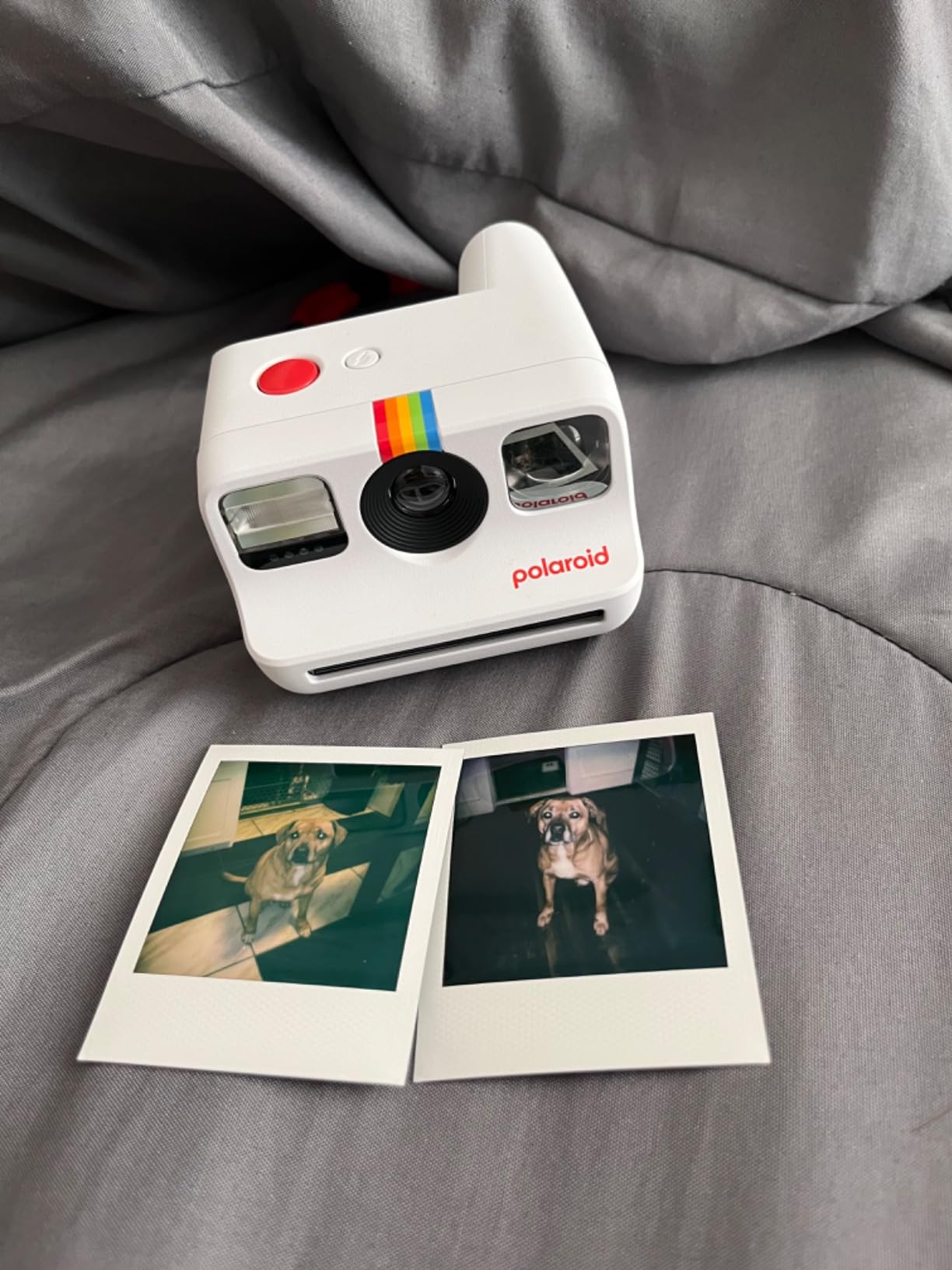
The Polaroid Go Gen 2 is the camera I throw in my bag when I do not want to carry anything bulky. It is genuinely pocket-sized, smaller than my phone in some dimensions. The nostalgic Polaroid aesthetic in miniature form is irresistible for anyone who loves the classic look.
I tested this camera over a weekend trip to the coast, and the portability was the standout feature. I could pull it out, snap a shot, and slip it back in my pocket in seconds. The double-exposure mode let me create some artistic layered shots that turned out better than I expected from such a small camera.

The improved light sensor and larger aperture over the previous generation do make a difference in image clarity. Photos are sharper and better exposed than what the original Go produced. The built-in selfie mirror works well for self-portraits, though the viewfinder is not perfectly accurate for close-up framing.
The biggest drawback is the film cost. Polaroid Go film runs about $1 per shot, and you only get 8 photos per pack. That is significantly more expensive than Instax Mini film. The shutter button is also very sensitive, and I accidentally wasted a couple of shots just by pressing too lightly.
Best For Travel and On-the-Go Shooting
If portability is your top priority, nothing beats the Polaroid Go Gen 2. It is the only instant camera that truly fits in a pocket without compromise. The rechargeable battery lasts for up to 15 film packs per charge, so you will not be hunting for a charger mid-trip.
The tiny prints are charming and fit perfectly in phone cases, on bookmarks, or in small photo albums. They make great little gifts and keepsakes from trips and outings.
How It Compares to Full-Size Polaroids
The tradeoff for the small size is smaller prints and fewer controls. You get automatic exposure and basic creative modes like double exposure, but no manual settings. Image quality is good for the size but not on par with full-size Polaroid i-Type prints from the Now or Now+.
If you want the authentic Polaroid experience in the smallest possible package, this is your camera. Just budget for the film costs, which add up faster than you might expect.
3. KODAK Printomatic – Best Budget Instant Camera
KODAK Printomatic Full-Color Instant Print Digital Camera, Zink 2×3″ (5.1×7.5 cm) Sticky-Back Photo Paper, 5MP, Portable, Creative Fun Gift for Birthday, Christmas, Holiday, Blue
Zink 2x3 paper
No ink needed
5MP sensor
MicroSD storage
Sticky-back prints
Pros
- No ink cartridges or film chemistry needed
- Prints are water-resistant and smudge-free
- Saves digital copies to MicroSD card
- Sticky-back prints great for journaling
- Very affordable camera price
Cons
- Photo quality is subpar compared to film cameras
- Shutter button overly sensitive causing wasted prints
- Every shot prints automatically with no preview
The KODAK Printomatic takes a completely different approach to instant photography. Instead of traditional film, it uses Zink (zero-ink) thermal paper that costs about 40 cents per sheet. That makes it the cheapest instant camera to operate by a wide margin.
I tested this camera at a family gathering, and the kids loved it. The sticky-back prints were an instant hit for decorating notebooks and scrapbooks. The ability to save photos to a MicroSD card means you get a digital backup, which is something no traditional Polaroid or Instax camera offers.
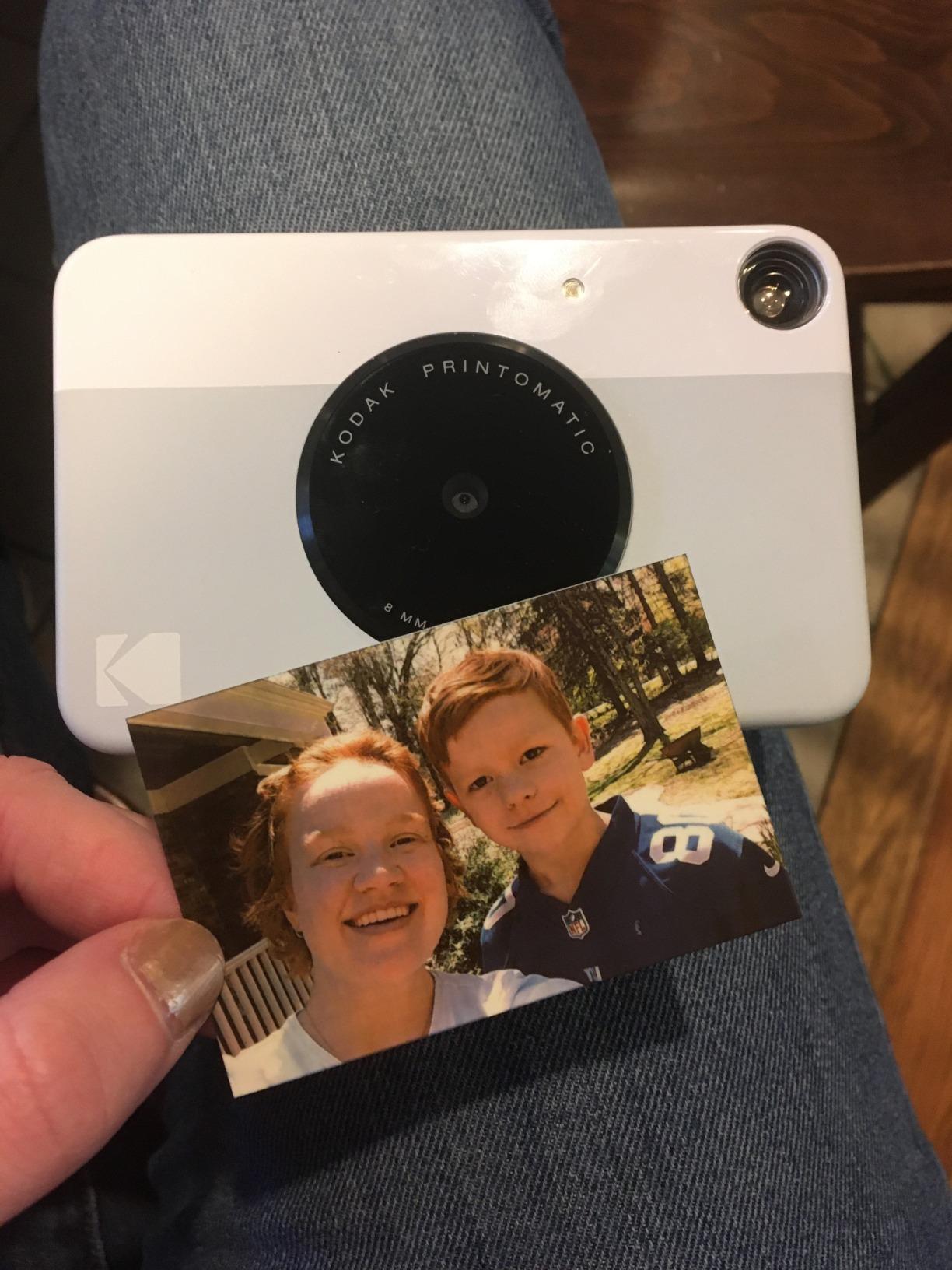
The tradeoff is image quality. Zink prints are noticeably lower quality than traditional instant film. Colors can look washed out, and the flash tends to overexpose indoor shots. The 5MP sensor captures decent images in good lighting, but do not expect the rich, nostalgic look of real Polaroid film.
The biggest frustration is the automatic printing. Every shot you take prints immediately, with no option to preview or delete. The overly sensitive shutter button means accidental prints are common, and at 40 cents per sheet, those mistakes add up.

Best For Kids and Casual Fun
If you want a fun, low-cost instant camera for kids or casual party use, the Printomatic delivers. The Zink prints are durable and water-resistant, which is great for younger users who might be rough with traditional film. The sticky-back feature adds a creative element that kids especially enjoy.
The camera is incredibly simple to operate. Point, shoot, and the print comes out. No settings, no modes, no learning curve. This simplicity is both its strength and its limitation.
Zink Paper vs Traditional Film
Zink paper costs about 40 cents per print compared to 75 cents for Instax Mini and $2 to $3 for Polaroid i-Type. The savings are substantial if you shoot frequently. However, the print quality and color accuracy are noticeably inferior to both Instax and Polaroid film.
Zink prints are also smaller and thinner than traditional instant film. They lack the weight and tactile feel that makes instant photography special. For some users that is a fair tradeoff for the cost savings.
4. Polaroid Go Generation 3 – Best Travel Polaroid
Polaroid Go Generation 3 Bundle – Mini Instant Film Camera + 16 Color Photos – Light Blue (6653) – Only Compatible with Go Film
Polaroid Go film
USB-C charging
Double exposure
Self-timer
Selfie mirror
Pros
- USB-C charging for modern convenience
- Battery lasts months on one charge
- Double-exposure and self-timer modes
- Ultra-compact pocketable design
- Bundle includes 16 color photos
Cons
- Film costs about $1 per shot
- Development takes 10 to 15 minutes
- Photo quality can be inconsistent
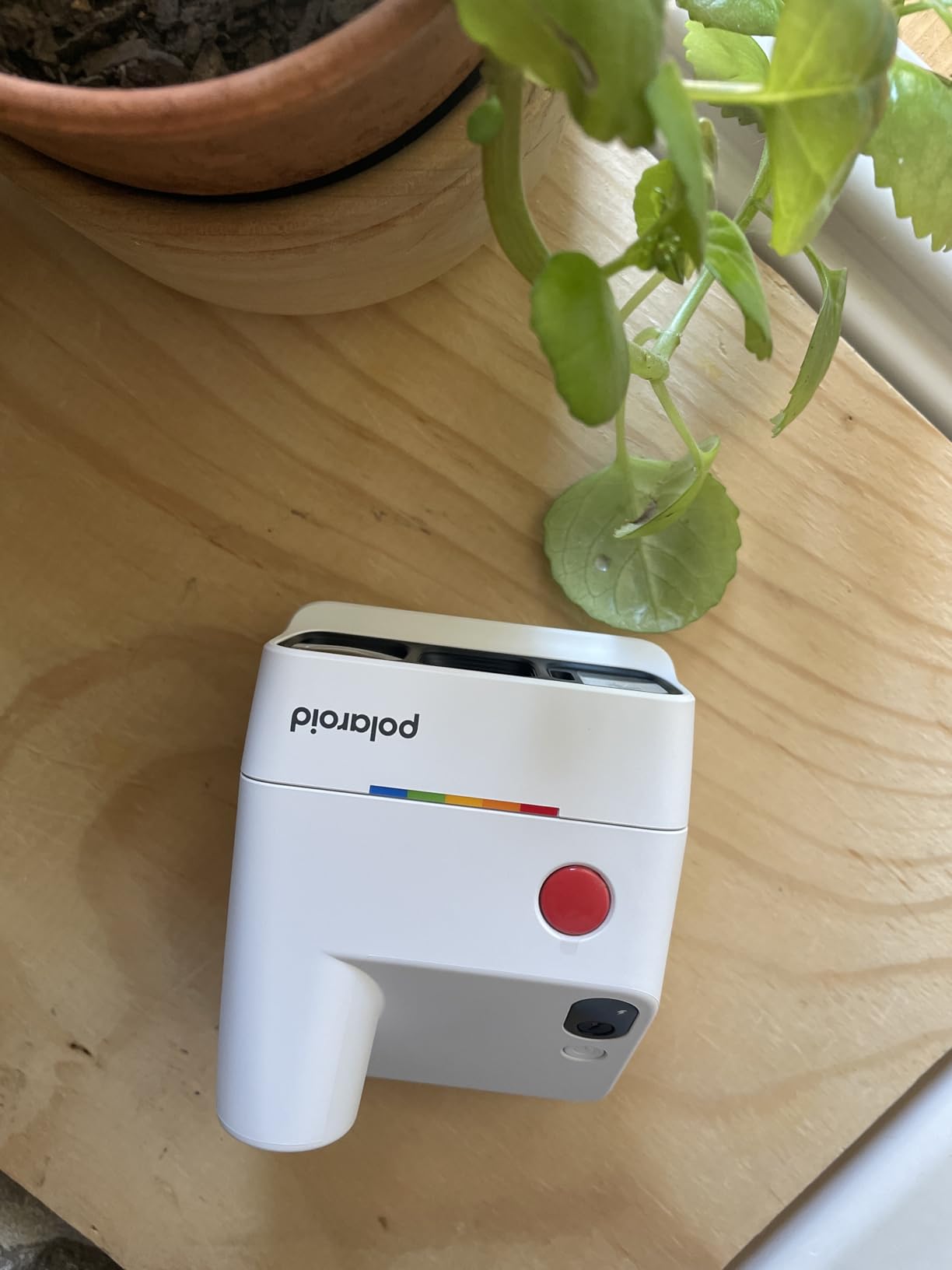
The Polaroid Go Gen 3 is the newest entry in the Go lineup, and the improvements over Gen 2 are meaningful. The switch to USB-C charging is the upgrade I was waiting for. I charged it once and shot for over two months without needing to plug it back in.
The bundle includes 16 color photos, which gives you two full packs of film to start with right out of the box. That is a nice touch for a camera at this price point. The minimalist controls (power, flash, shutter) keep things simple and approachable for new users.
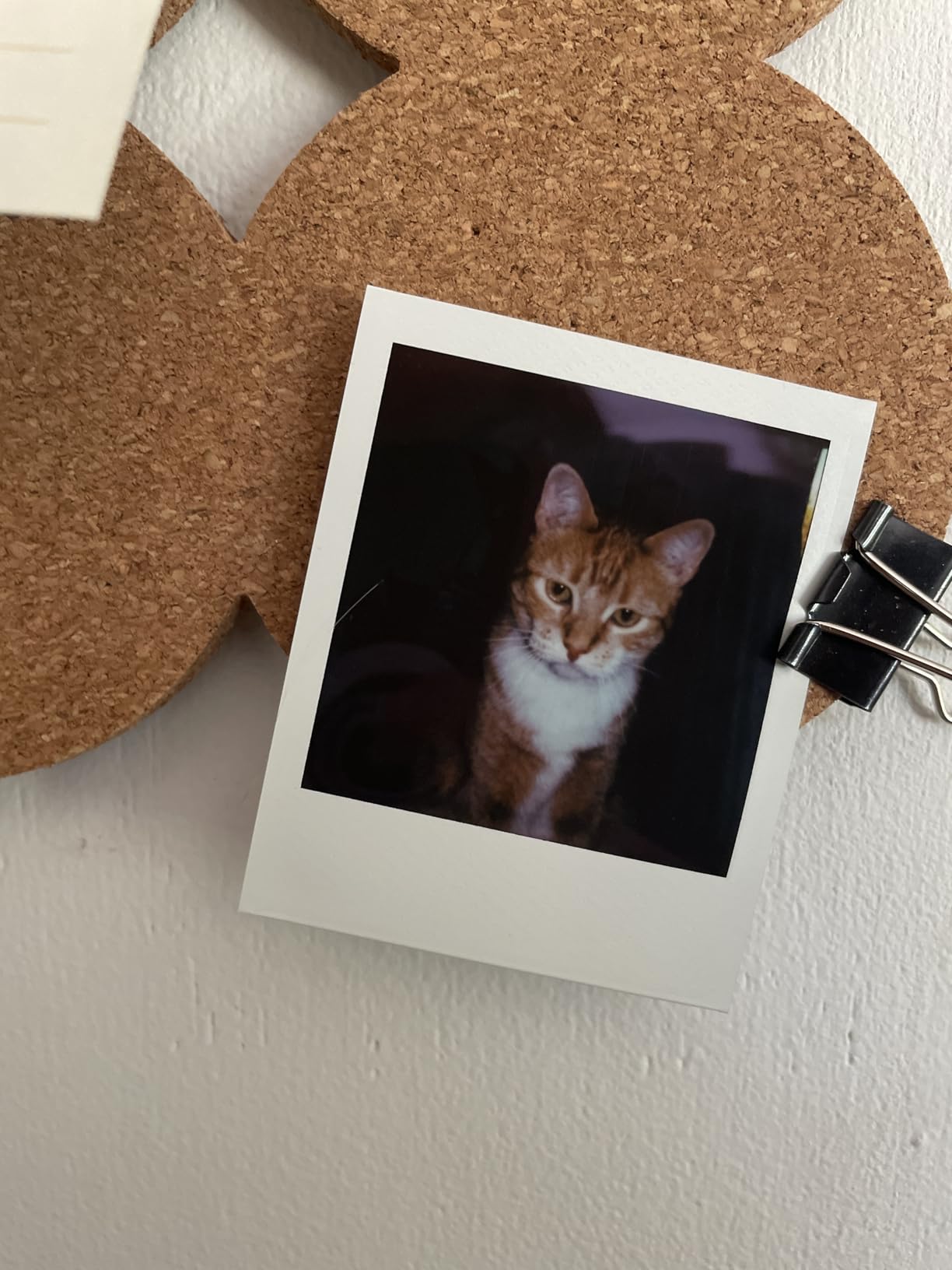
The double-exposure and self-timer modes give you some creative flexibility without overwhelming beginners. I used the self-timer for group shots during a picnic, and the results were fun and nostalgic. The tiny prints fit perfectly inside phone cases, which is a neat detail that the Gen 3 marketing emphasizes.
The main downside remains the film cost and development time. Photos take 10 to 15 minutes to fully develop, and each shot costs about $1. The shutter also has a noticeable delay of about 5 seconds, which takes some getting used to. Color rendering tends to lean warm overall.
Best For Slow Intentional Photography
The Polaroid Go Gen 3 is not about capturing fast action. It rewards a slow, intentional approach to photography. Each shot costs money, so you think before you press the shutter. That mindfulness is part of the appeal for many instant camera enthusiasts.
If you enjoy the ritual of composing a shot, waiting for it to develop, and having a physical keepsake, this camera delivers that experience in the most portable form factor available.
Gen 3 vs Gen 2: Worth the Upgrade?
The Gen 3 adds USB-C charging, improved battery life, and refined exposure over the Gen 2. If you already own the Gen 2, the upgrades are nice but not essential. If you are buying new, the Gen 3 is worth the extra cost for the USB-C convenience alone.
Both generations use the same Polaroid Go film, so your ongoing costs remain identical. The choice comes down to whether USB-C charging and incremental improvements justify the price difference for your needs.
5. Fujifilm Instax Mini 41 – Best Bundle Value
Fujifilm Instax Mini 41 Instant Camera Vintage Black. + Fujifilm Value Pack (40 Sheets) + Shutter Accessories Bundle, Includes Vintage Style Compatible Carrying Case, Black Photo Album 64 Pockets
Instax Mini film
40 sheets included
Smart auto exposure
Selfie mirror
Close-up mode
Pros
- Complete bundle with 40 film sheets and accessories
- Retro-inspired vintage black design
- Automatic smart exposure control
- Built-in selfie mirror and close-up mode
- Compact and lightweight
Cons
- Batteries not included in the box
- Higher upfront cost due to bundle
- No digital backup option
The Fujifilm Instax Mini 41 bundle is the best value package I have tested. You get the camera, 40 sheets of Instax Mini film, a protective case with strap, and a 64-pocket photo album. Everything you need to start shooting is in the box, minus the batteries.
I used this camera at a wedding reception, and it performed beautifully. The smart automatic exposure adapted to the mixed indoor lighting, and the selfie mirror was a hit with guests. The vintage black finish looks premium and pairs well with any outfit or decor.

The close-up mode frames subjects accurately at arm’s length, which is perfect for selfies and couple shots. Film develops in about 90 seconds, faster than any Polaroid camera on this list. The print quality is vibrant and consistent, with better color accuracy than Polaroid film in my testing.
The only real downside is the upfront cost. At this price point, you are paying for the bundle rather than the camera alone. If you already have Instax Mini film stocked up, the basic Instax Mini 12 might be a better deal. But if you want everything included from day one, this bundle is hard to beat.

Best For Wedding Guestbooks and Events
Wedding photographers on Reddit consistently recommend Instax Mini cameras for guestbooks. The film is affordable enough that guests can shoot freely, and the reliable development means fewer wasted prints. One user noted that spending $30 on a pack of Polaroid film that does not turn out is not fun, and Instax avoids that problem.
The 64-pocket album included in the bundle is perfect for a wedding guestbook setup. Guests snap a photo, slip it into the album, and write a message next to it. It creates a keepsake that lasts forever.
What Makes the Mini 41 Different From the Mini 12
The Mini 41 has a more premium build quality and a vintage-inspired design compared to the Mini 12. The smart exposure system is slightly more advanced, handling tricky lighting situations with better consistency. However, both cameras use the same Instax Mini film and produce similar print quality.
The Mini 41 is worth the upgrade if you want the better build and the included bundle. The Mini 12 is the smarter pick if you just want the camera body and will buy film separately.
6. KODAK Mini Shot 2 ERA – Best Hybrid Instant Camera
KODAK Mini Shot 2 ERA 2×3” Instant Digital Camera & Photo Printer, 38 Sheets, 2-in-1 Portable Print Camera, Bluetooth Smartphone Printer for iPhone & Android, 4PASS Dye Sublimation, Black
4PASS dye sublimation
Bluetooth printing
16.7MP sensor
Water-resistant prints
USB-C charging
Pros
- 2-in-1 camera and smartphone printer
- 4PASS dye sublimation for durable prints
- Bluetooth connectivity to print from phone
- Screen preview before printing
- Refill cartridges cheaper than Polaroid film
Cons
- Built-in camera quality not as sharp as smartphones
- One-shot digital memory limitation
- Refill needed after every 10 prints
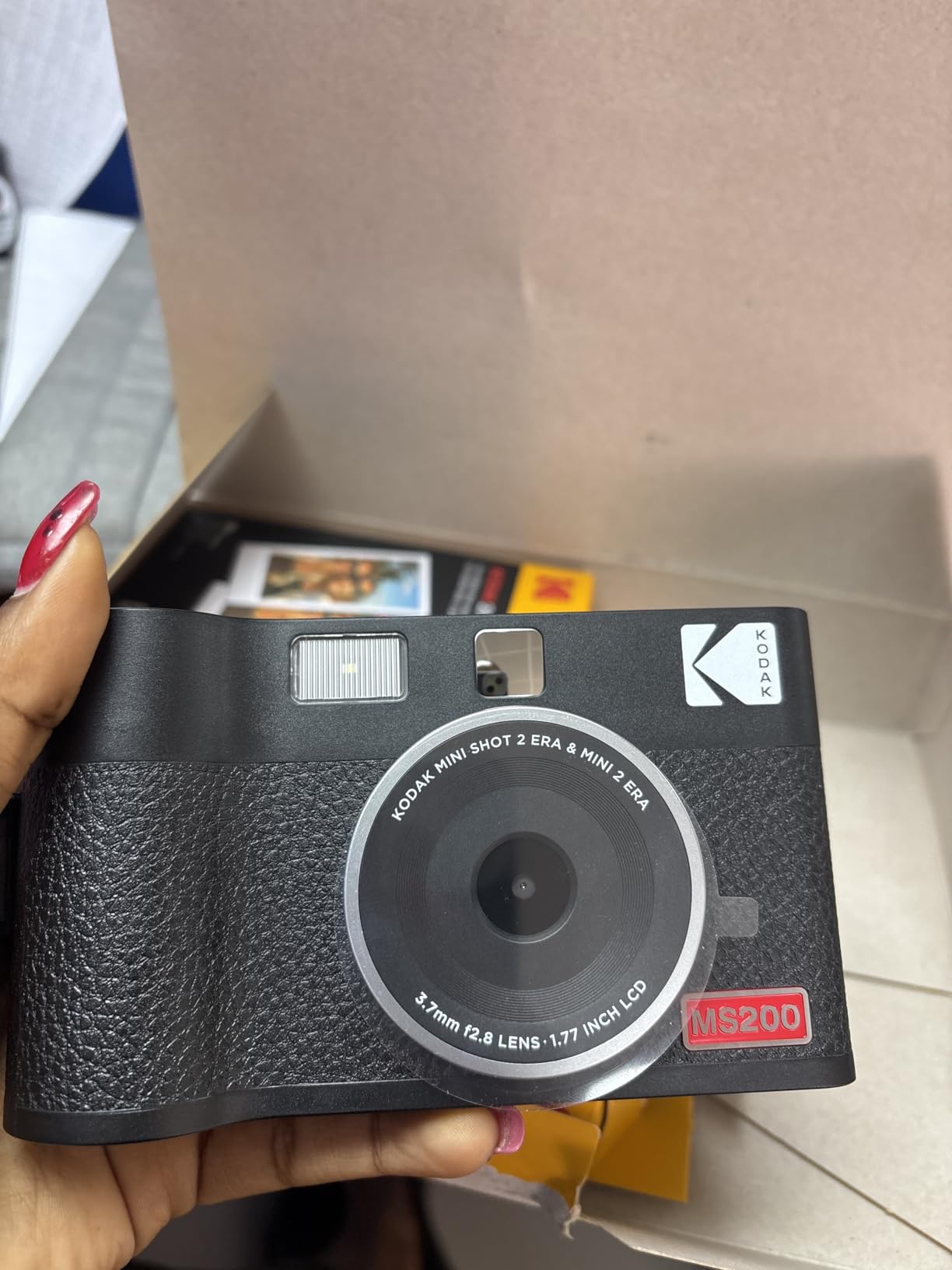
The KODAK Mini Shot 2 ERA is a hybrid device that works as both a standalone instant camera and a Bluetooth photo printer for your smartphone. That dual functionality makes it one of the most versatile instant cameras on the market.
I tested both modes extensively. As a standalone camera, the 16.7MP sensor captures decent images, though they fall short of smartphone quality. As a smartphone printer, it shines. I connected via Bluetooth, selected photos from my phone using the KODAK Photo Printer app, and printed in about 55 seconds.
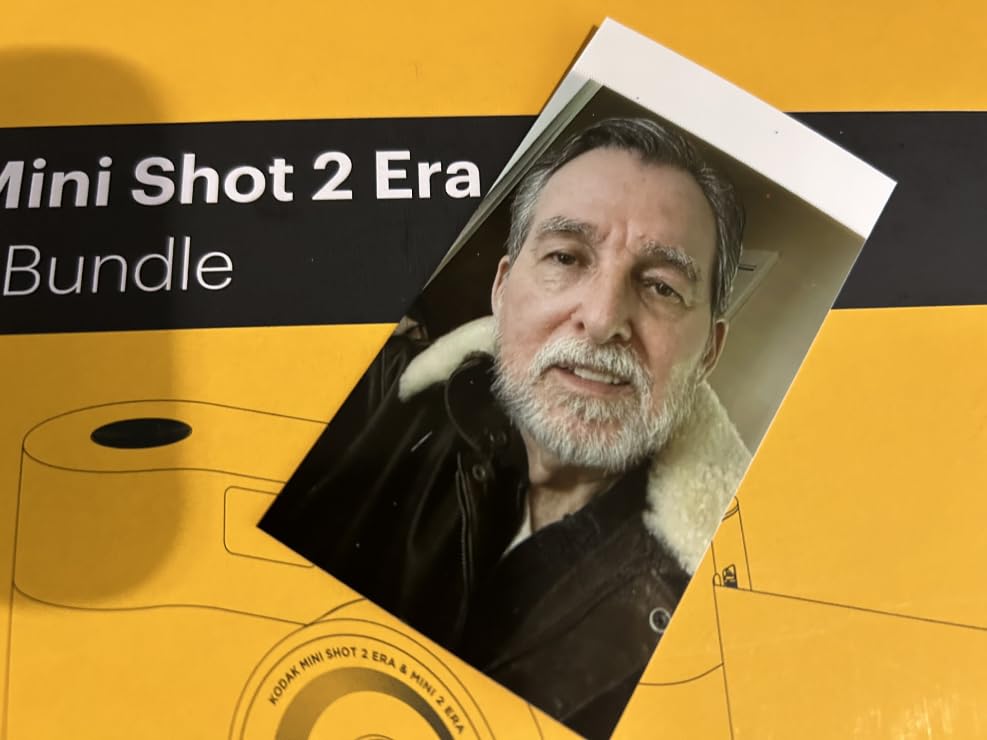
The 4PASS dye sublimation printing produces water-resistant, fingerprint-proof prints that feel more durable than Zink or even traditional instant film. The app offers creative filters and frames that add a fun element before printing. You can preview every shot on the LCD screen before committing to a print, which eliminates waste.
The main limitation is the one-shot memory. The camera does not store images digitally for later printing. If you take a photo and do not print it immediately, the file is lost. This design keeps the device simple but limits flexibility. The built-in camera also cannot match smartphone quality, so most users end up using it primarily as a printer.
Best For Smartphone Photographers
If you take most of your photos on a phone and want physical prints without sacrificing image quality, this is the device to get. You can capture great shots on your smartphone, edit them in the app, and print durable 2×3-inch photos that look better than anything a standalone instant camera produces.
The refill cartridges are also cheaper than Polaroid film, making this a cost-effective option for frequent printers. Each cartridge yields about 10 prints, and you can find multipacks at reasonable prices.
4PASS vs Traditional Film Chemistry
4PASS dye sublimation uses a thermal printing process with colored dye ribbons to produce prints. The result is smoother gradients, better color accuracy, and water resistance compared to Zink or traditional instant film. Prints also resist fading over time.
The tradeoff is that 4PASS prints lack the nostalgic, organic look of real instant film. They look more like mini photo lab prints. For some users that is preferable. For others who want the authentic Polaroid aesthetic, traditional film remains the better choice.
7. Polaroid Now Generation 3 – Best Full-Size Polaroid
Polaroid Now 3rd Generation I-Type Instant Camera + Film Bundle – Now Black Camera + 16 Color Photos (6560)
i-Type and 600 film
Twin-lens autofocus
Double exposure
USB-C rechargeable
Tripod mount
Pros
- Sharp twin-lens autofocus system
- Shoots both i-Type and 600 film
- USB-C rechargeable battery for over 15 packs
- Double-exposure and self-timer modes
- Classic iconic Polaroid design
Cons
- Film costs about $3 per photo
- Indoor shots often come out dark
- Film development takes 30 minutes
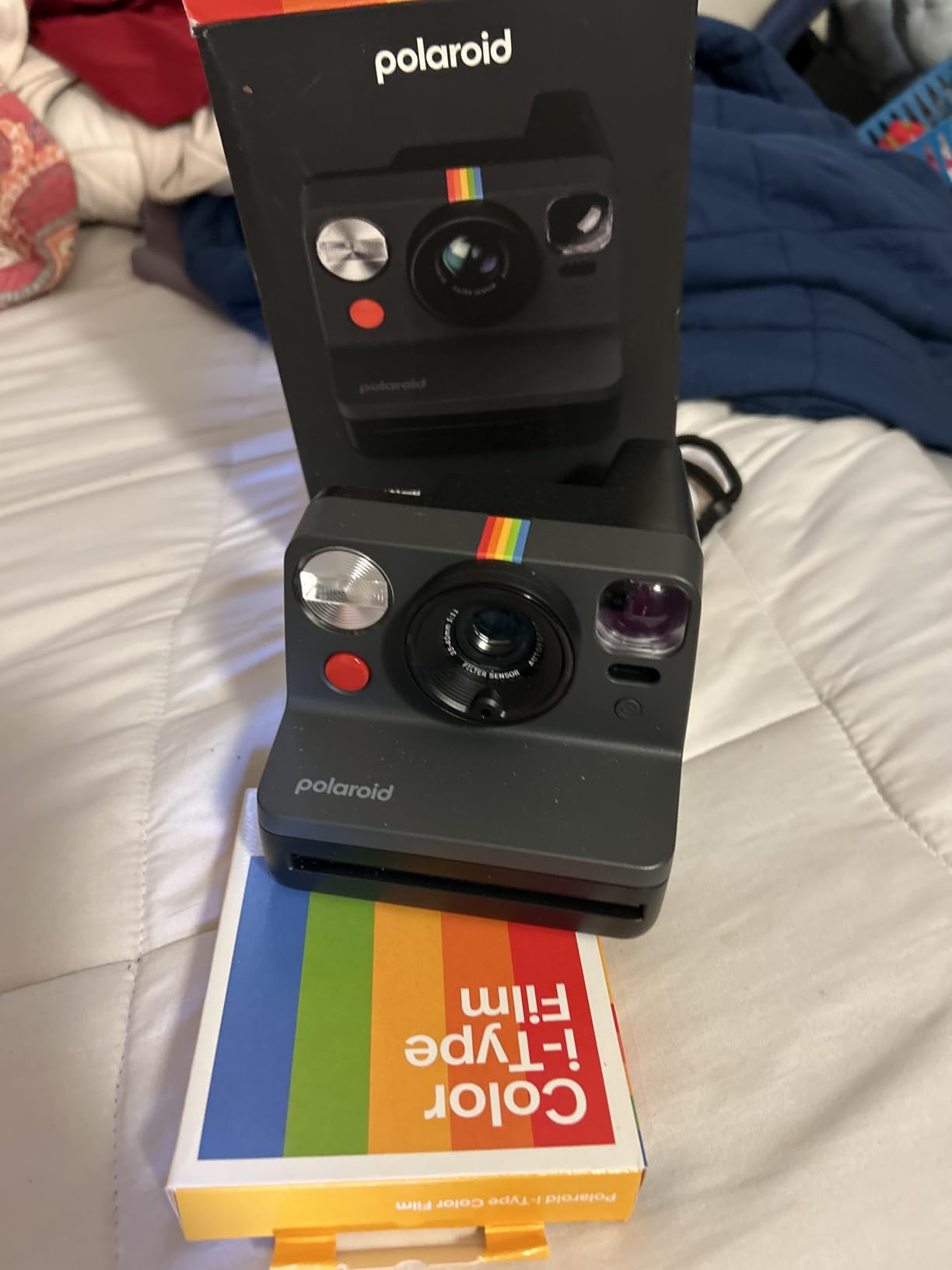
The Polaroid Now Gen 3 is the camera I recommend when someone specifically wants the authentic, full-size Polaroid experience. The classic square format prints are instantly recognizable, and the twin-lens autofocus system does a respectable job of keeping subjects sharp at various distances.
I carried this camera to a weekend barbecue, and the prints generated the most conversation of any camera I tested. The large format makes each photo feel like a genuine keepsake. The double-exposure mode created some of my favorite artistic shots from the entire testing period.
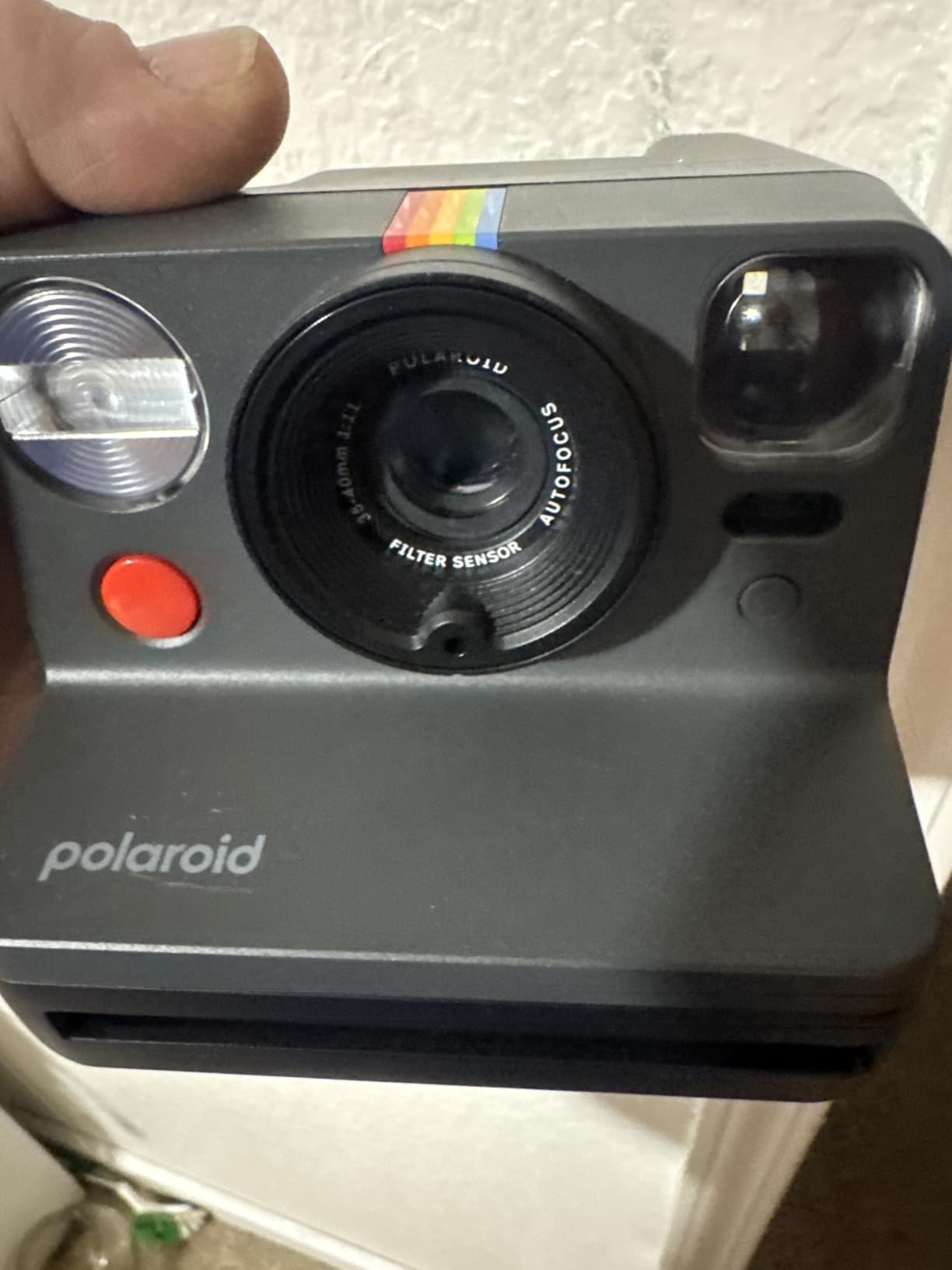
The USB-C rechargeable battery is a major improvement over older Polaroid cameras that used disposable batteries. A single charge lasts for over 15 film packs, which is approximately 120 photos. The built-in tripod mount is handy for group shots and long exposures.
The reality check is the film cost. At roughly $3 per photo, the Now Gen 3 is the most expensive camera on this list to operate. Indoor shots frequently come out dark because the film needs abundant light. Development takes a full 30 minutes, which requires patience. I also experienced occasional film jamming after several months of regular use.
Best For the Authentic Polaroid Experience
If you want real Polaroid film with the classic white border and square format, this is the camera. Nothing else on the market replicates that specific look and feel. The Now Gen 3 nails the aesthetic while adding modern touches like USB-C charging and autofocus.
The camera is compatible with both i-Type and 600 film. i-Type is slightly cheaper and lacks a battery pack (the camera provides power). 600 film includes a battery in each cartridge, which is necessary for vintage Polaroid 600 cameras but works fine in the Now as well.
Managing Film Costs and Quality
To get the most from your film investment, shoot outdoors in natural light whenever possible. The Now Gen 3 struggles indoors unless you have very bright lighting. Store film in the refrigerator to extend its shelf life and prevent the magenta cast that warm temperatures can cause.
A pack of 8 i-Type color photos costs around $20 to $25. Budget accordingly, and treat each shot as a deliberate creative choice rather than a casual snap. This mindset shift is what makes Polaroid photography special.
8. Polaroid Now+ Generation 3 – Best App-Controlled Polaroid
Polaroid Now+ 3rd Generation I-Type Instant Camera + Film Bundle – Now+ Bluetooth App Controlled Black Camera + 16 Color Photos (6562)
i-Type and 600 film
Bluetooth app control
Manual mode
Aperture priority
Remote shooting
Pros
- Bluetooth app unlocks manual controls
- Aperture priority and manual mode
- Remote shooting from your phone
- App scans and downloads Polaroid photos
- Upgraded autofocus system
Cons
- Film remains expensive per photo
- Film storage issues can cause color casts
- App can be finicky at times
The Polaroid Now+ Gen 3 takes everything great about the Now Gen 3 and adds Bluetooth app connectivity that unlocks a whole new level of creative control. This is the camera for photographers who want manual settings on an instant film platform.
The Polaroid app connects via Bluetooth and gives you access to manual mode, aperture priority, remote shooting, and even the ability to scan and download your physical Polaroid photos at high quality. I used the remote shooting feature for a group family photo, and being able to trigger the shutter from my phone was genuinely useful.
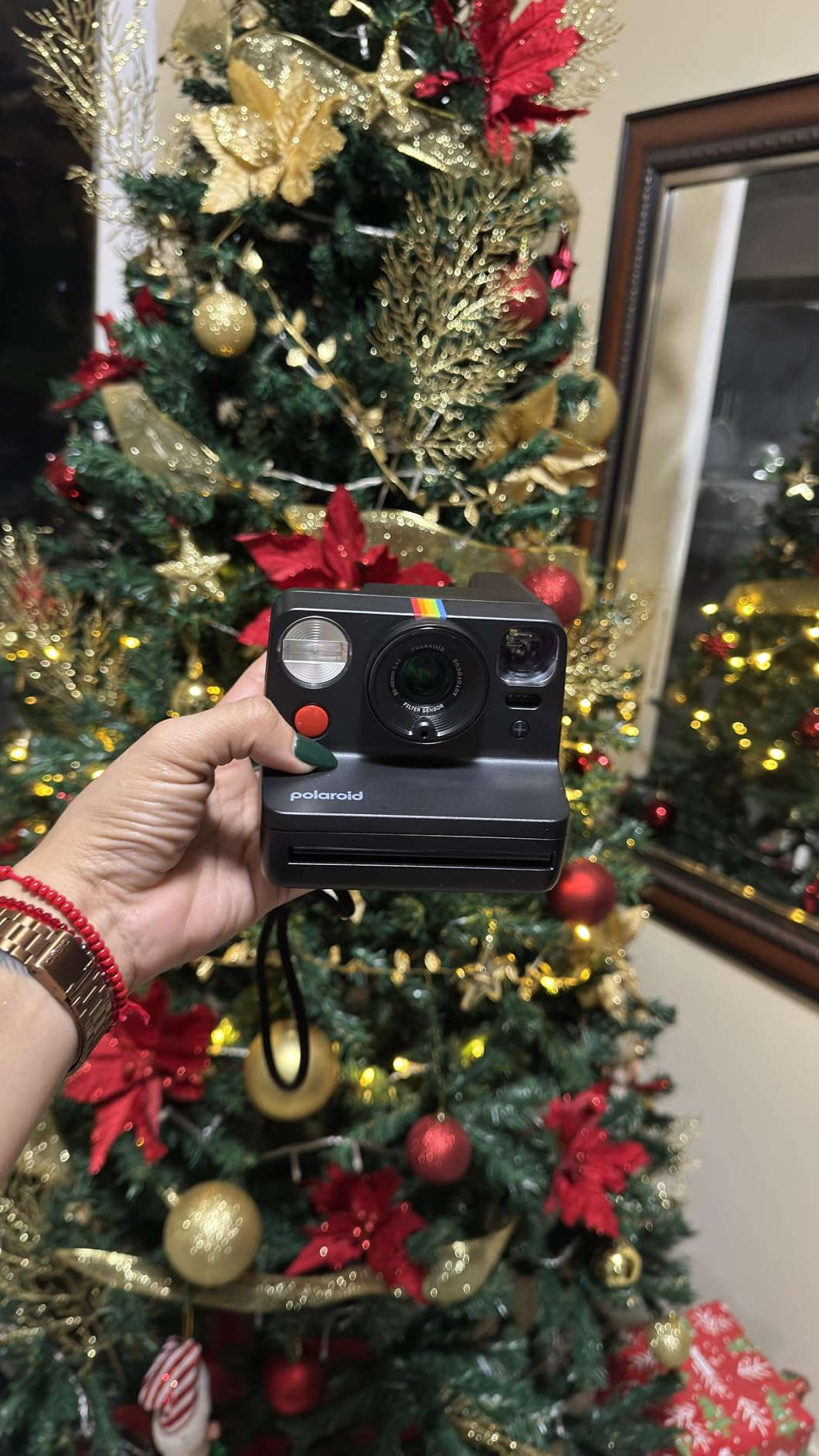
Aperture priority mode lets you control depth of field, which is something no other instant camera on this list offers. The upgraded autofocus system is noticeably more accurate than the standard Now, especially with closer subjects. The app also includes creative tools like light painting and double-exposure assist.
The tradeoffs are the same as the standard Now: expensive film, long development times, and the need for good lighting. The app can also be finicky, with occasional connection drops and slow response times. Reddit users praise the creative flexibility but note the app experience needs polish.

Best For Creative Photographers
If you understand exposure, aperture, and shutter speed, the Now+ Gen 3 gives you more creative tools than any other instant camera available. The manual mode lets you override automatic settings for artistic effect. Aperture priority helps you control how much of your scene is in focus.
The remote shooting capability solves the problem of self-portraits and group shots. You set up the camera on a tripod, frame the shot, and trigger it from your phone. No more guessing with a self-timer.
Now+ vs Now: Is the App Worth It?
The Now+ costs about $20 more than the standard Now. For that premium, you get Bluetooth connectivity, manual mode, aperture priority, remote shooting, photo scanning, and upgraded autofocus. If you are a creative photographer who will actually use these features, the upgrade is absolutely worth it.
If you just want a point-and-shoot Polaroid and will never touch the app, save the money and get the standard Now. The core shooting experience and image quality are essentially the same.
9. Fujifilm Instax Mini EVO – Best Premium Hybrid
Fujifilm Instax Mini EVO Instant Camera
Instax Mini film
Hybrid digital camera
100 creative effects
Bluetooth printing
microSD storage
Pros
- Hybrid design lets you preview before printing
- 100 creative lens and film effect combinations
- Bluetooth printing from smartphone
- microSD card slot for digital backup
- Highest rated camera at 4.6 stars
Cons
- Low 1MP sensor resolution
- Cannot transfer digital files without printing first
- microSD card not included
The Fujifilm Instax Mini EVO is the instant camera I keep reaching for. It solves the biggest problem with instant photography: wasted film. The hybrid design captures photos digitally, lets you preview them on the 2-inch LCD screen, and only prints the ones you want to keep.
The 100 creative expression options (10 lens effects times 10 film effects) are not a gimmick. I spent an afternoon experimenting with different combinations, and some of the results were genuinely beautiful. The vintage film effects add character that would be impossible to achieve with standard instant film chemistry.
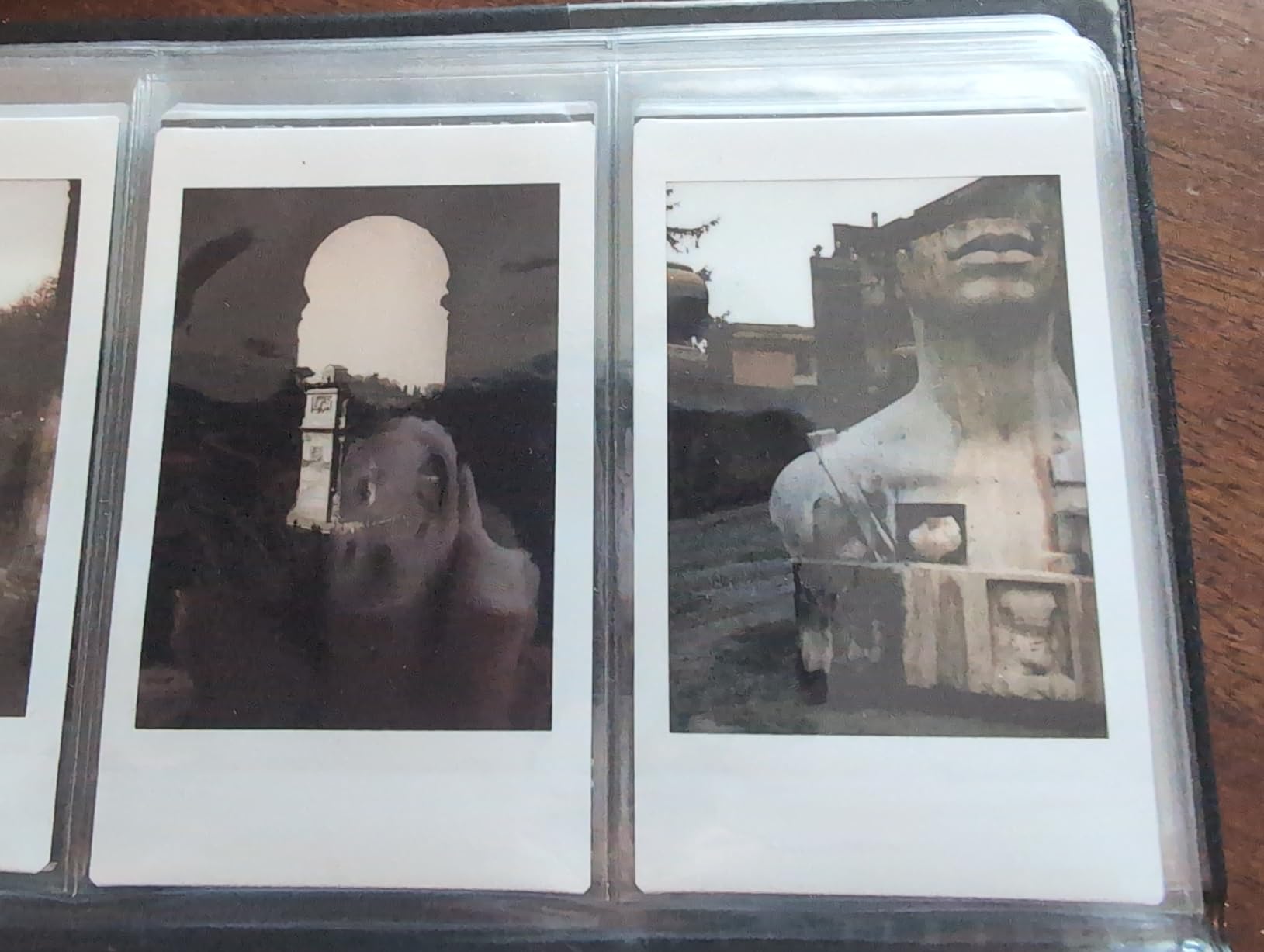
Bluetooth connectivity means you can also print photos from your smartphone. This effectively turns the EVO into a portable Instax printer. I printed some of my favorite phone photos and the results were excellent, with better detail and color than shots from the built-in camera.
The main limitation is the 1MP sensor. Images look fine on the small Instax Mini prints but lack resolution for anything larger. You also cannot transfer digital files to your phone unless you print them first, which is a frustrating design choice. A microSD card (not included) is required for digital storage.
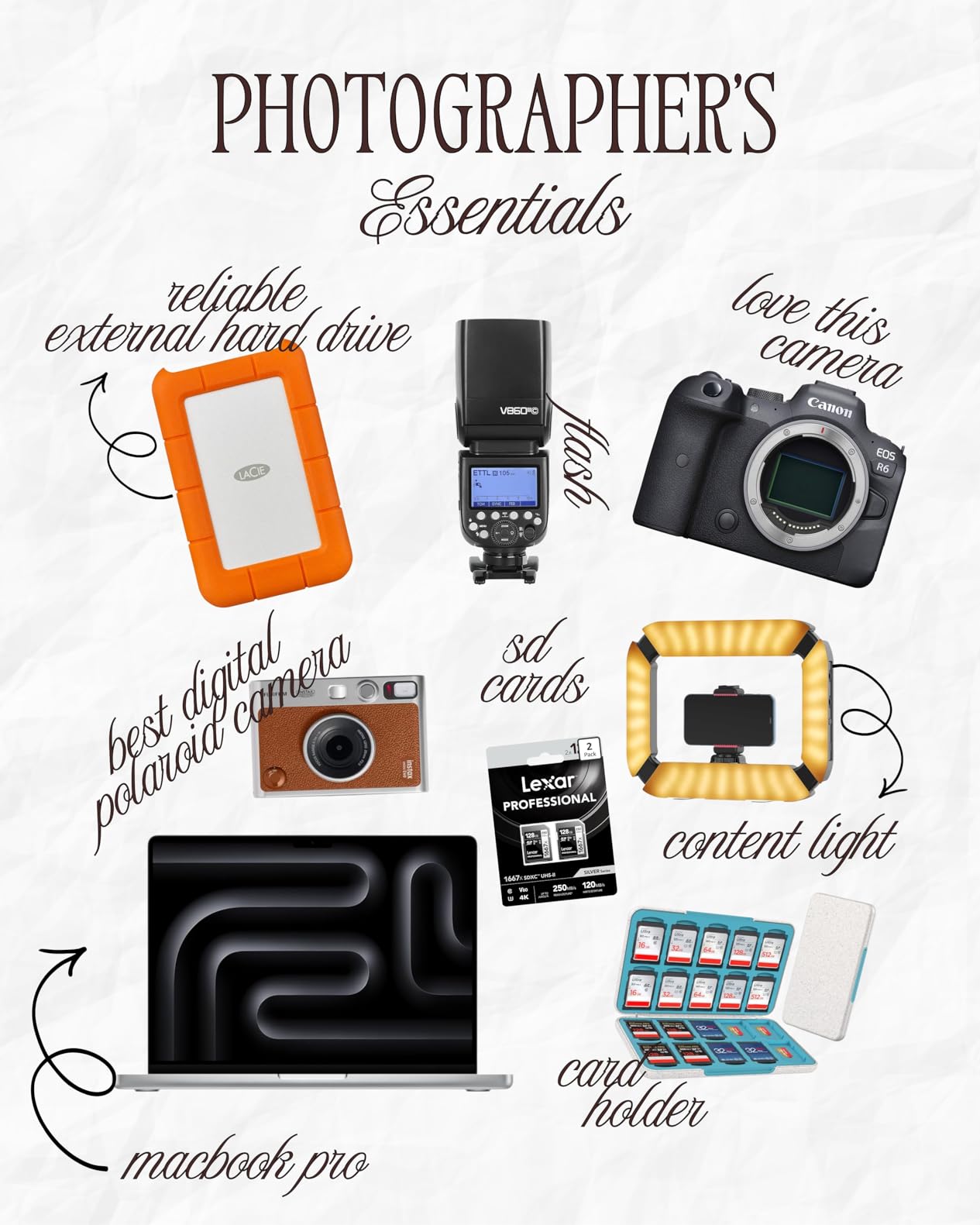
Best For People Who Hate Wasting Film
The preview-before-print feature alone justifies the premium price for many users. On a traditional instant camera, every shot costs money whether it turns out good or not. The EVO lets you take risks, experiment with effects, and only commit film to the shots you actually want.
Over a year of use, the film savings from not printing bad shots can partially offset the higher upfront cost. If you shoot frequently and value control over your output, the EVO is the smartest investment.
How the Hybrid System Works
The EVO captures photos using a digital sensor and stores them in internal memory or on a microSD card. You then select which photos to print on Instax Mini film. The printing process uses the same film chemistry as other Instax cameras, so print quality is consistent with the Instax Mini 12 and Mini 41.
The digital effects are applied before printing, baked into the final physical print. This gives you creative control that traditional analog instant cameras simply cannot match.
10. Polaroid Flip – Best Pro-Grade Polaroid
Polaroid Flip Instant Camera + Color Film Bundle (16 Photos Included) – Black (6565) – Hyperfocal 4-Lens System, Sonar autofocus, and Sence Analysis with Bluetooth paired Companion app
i-Type and 600 film
Sonar autofocus
4-lens hyperfocal system
Scene analysis LED
Bluetooth companion app
Pros
- Hyperfocal 4-lens system for sharp focus at any distance
- Sonar autofocus works in dark and bright conditions
- Most powerful Polaroid flash effective up to 4.5 meters
- Scene analysis LED viewfinder prevents bad exposures
- Companion app with full manual mode
Cons
- Steep learning curve for analog photography
- Expensive ongoing film costs
- Film jamming issues reported by some users
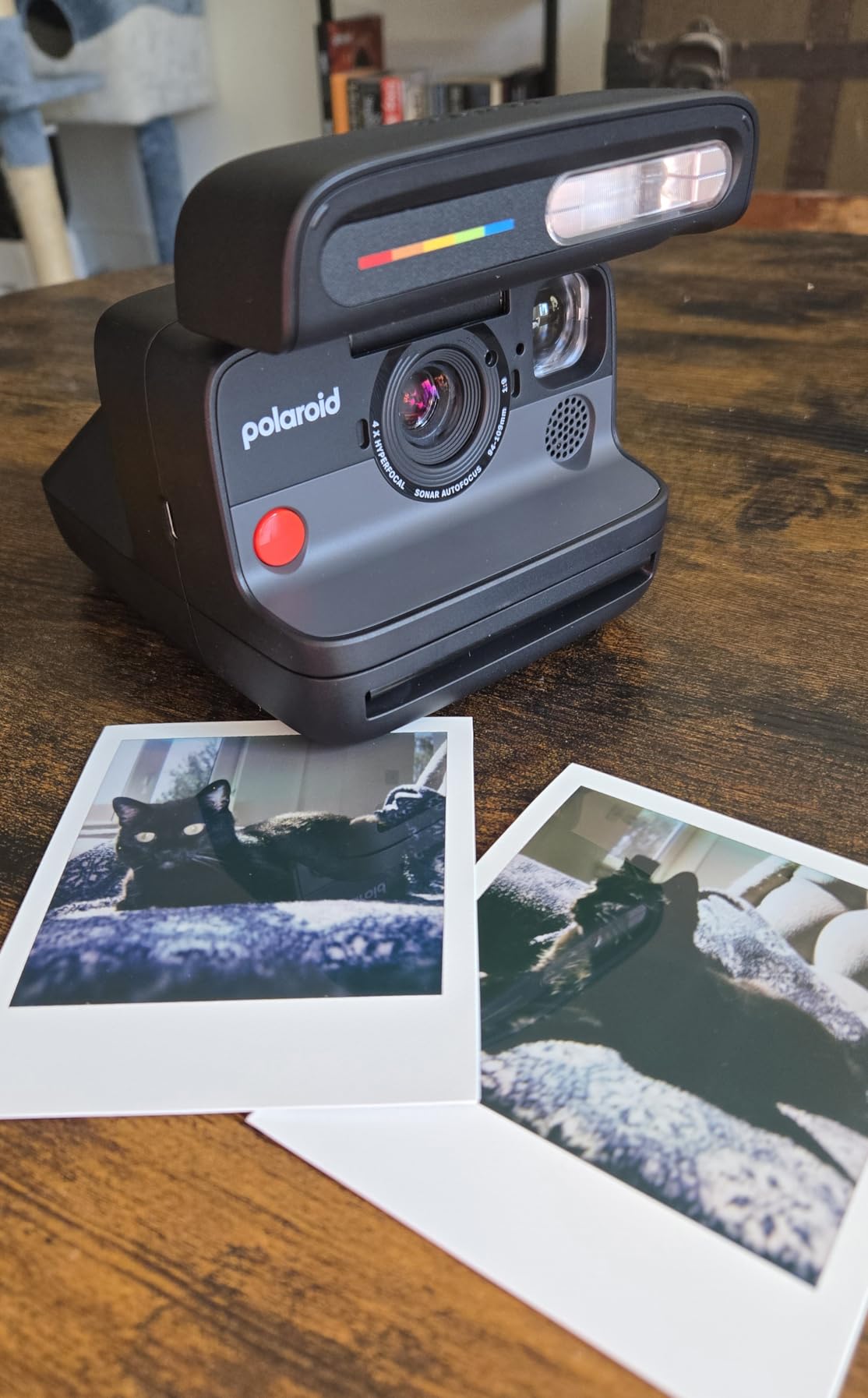
The Polaroid Flip is the most technically advanced instant film camera Polaroid has ever made. The hyperfocal 4-lens system automatically selects the right lens based on subject distance, and the sonar autofocus works reliably even in challenging lighting conditions. This is a camera designed for serious instant photographers.
The scene analysis LED viewfinder is a feature I did not know I needed. It alerts you when a shot will be overexposed or underexposed before you press the shutter. This single feature saved me from wasting multiple prints during testing, especially in tricky backlit situations.
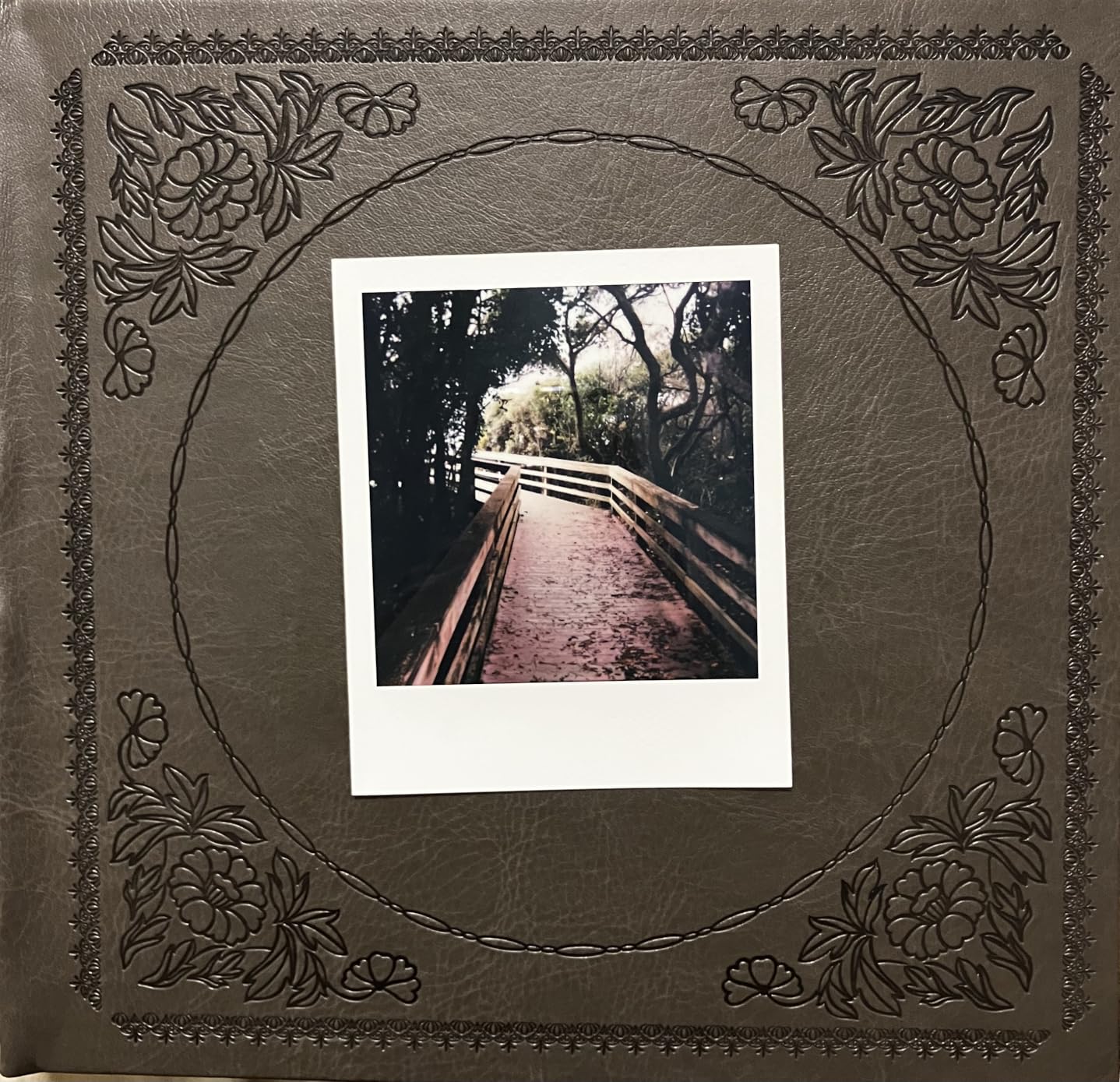
The flash on this camera is extraordinary. It is the most powerful Polaroid flash ever made, adapting its output up to 4.5 meters. I tested it in a dimly lit restaurant and the results were properly exposed, something no other instant camera on this list could achieve in the same conditions.
This is not a point-and-shoot camera. The Flip demands understanding of analog film behavior, proper lighting, and correct film storage. Many negative reviews come from users who expected smartphone-level simplicity. When used correctly, the Flip delivers the best image quality of any Polaroid camera available.
Best For Experienced Instant Photographers
If you already understand exposure, focus distance, and film handling, the Flip rewards that knowledge with consistently better results than any other Polaroid. The sonar autofocus and 4-lens system handle technical challenges that would ruin shots on simpler cameras.
The companion app unlocks full manual mode with a built-in exposure meter, double exposures, and remote control. For photographers who want analog output with digital precision, the Flip is the ultimate tool.
Is the Flip Worth the Premium?
The Flip is the most expensive camera on this list. Combined with i-Type film costs, it represents a significant investment. But for photographers who are serious about instant film and want the best possible image quality, there is no better option on the market.
The scene analysis feature alone saves enough wasted film to partially justify the premium over time. If you shoot regularly and care about results, the Flip pays for itself in print quality and reduced waste.
How to Choose the Best Polaroid Camera in 2026
Choosing the right instant camera comes down to three main factors: film type, ongoing cost, and your skill level. Let me break down each one so you can make an informed decision.
Film Type and Compatibility
Film type is the single most important decision because it affects both image quality and ongoing costs. Instax Mini film produces small rectangular prints (about 2 x 3 inches) at roughly 75 cents each. Polaroid i-Type film produces larger square prints at about $2 to $3 each. Polaroid Go film produces miniature square prints at about $1 each. Zink paper produces small prints at about 40 cents each but with lower quality.
Film types are not interchangeable. You cannot use Instax film in a Polaroid camera or vice versa. Once you choose a camera, you are locked into that film ecosystem for as long as you own the camera. This makes the film cost decision more important than the camera cost.
Film Cost Per Print Breakdown
Here is what you can expect to pay per print for each film type: Instax Mini at about 75 cents, Polaroid Go at about $1, Zink at about 40 cents, and Polaroid i-Type at about $2 to $3. Over a year of shooting one pack per month, the difference between Instax Mini and Polaroid i-Type amounts to hundreds of dollars.
For budget-conscious buyers, Instax Mini cameras offer the best balance of quality and affordability. For those who want the authentic Polaroid look, i-Type film is the price of admission. For casual fun, Zink cameras are the cheapest to operate but sacrifice quality.
Polaroid vs Instax: Which Should You Choose?
This is the most common question on Reddit and photography forums. Polaroid cameras (Now, Now+, Go, Flip) produce the iconic square format with the thick white border. The film has a distinctive look with rich colors and a characteristic warmth. However, Polaroid film is expensive, development takes 15 to 30 minutes, and results can be unpredictable.
Fujifilm Instax cameras (Mini 12, Mini 41, Mini EVO) produce smaller rectangular prints with more consistent color accuracy and faster development. Instax film is cheaper and more reliable, with fewer wasted shots. The tradeoff is that Instax prints lack the nostalgic Polaroid aesthetic.
Reddit users overwhelmingly recommend Instax for beginners due to reliability and cost. Polaroid is favored by enthusiasts who value the aesthetic and are willing to accept unpredictability.
Key Features to Look For
Autofocus is important if you shoot at varying distances. The Polaroid Now, Now+, and Flip all have autofocus systems, while the Instax Mini cameras use fixed focus with close-up mode. Bluetooth app connectivity adds creative controls like manual mode and remote shooting, available on the Polaroid Now+ and Flip.
A selfie mirror is essential if you plan to take self-portraits. Every camera on this list includes one except the Kodak Printomatic. Double-exposure mode allows creative layered shots and is available on the Polaroid Go, Now, Now+, and Flip. USB-C charging is a modern convenience available on the Polaroid Go Gen 3, Now, Now+, Flip, and Kodak Mini Shot 2 ERA.
Use Case Recommendations
For weddings and events, I recommend the Fujifilm Instax Mini 41 bundle. The affordable film and reliable development mean guests can shoot freely without wasting expensive Polaroid film. For travel, the Polaroid Go Gen 3 is the most portable option. For creative photography, the Polaroid Now+ Gen 3 with its app-based manual controls is unmatched. For kids and casual fun, the Kodak Printomatic or Instax Mini 12 are the best picks.
For experienced photographers who want the best image quality, the Polaroid Flip with its sonar autofocus and 4-lens system is the top choice. For people who hate wasting film, the Fujifilm Instax Mini EVO with its preview-before-print feature solves that problem completely.
FAQs
Is the Polaroid Go Gen 2 worth it?
The Polaroid Go Gen 2 is worth it if you prioritize portability above all else. It is the smallest instant camera available and fits in almost any pocket. However, the film costs about $1 per shot with only 8 photos per pack, making it more expensive to operate than Instax Mini cameras. If portability is your top priority and you accept the film costs, the Go Gen 2 delivers a fun, authentic Polaroid experience in miniature form.
What is the best vintage Polaroid camera?
The Polaroid SX-70 is widely considered the best vintage Polaroid camera. It features a folding design, high-quality glass lens, and manual focus control. However, vintage SX-70 cameras require SX-70 film which is expensive and less reliable than modern i-Type film. For most users, a refurbished Polaroid 600 camera from a trusted source like Retrospekt offers a more practical vintage experience with more reliable film options.
What is the best Polaroid camera to buy for your wedding?
For wedding guestbooks, the Fujifilm Instax Mini 41 bundle is the best choice. Instax Mini film is affordable at about 75 cents per print, reliable, and develops in about 90 seconds. Wedding photographers consistently recommend Instax over Polaroid for events because film is cheaper and results are more consistent. The Mini 41 bundle includes 40 film sheets and a photo album, making it a complete wedding guestbook solution.
What Polaroid camera should I get as a beginner?
For beginners, the Fujifilm Instax Mini 12 is the best starting point. It has automatic exposure, a built-in selfie mirror, close-up mode, and requires zero configuration. Just load film, twist the lens to turn it on, and start shooting. The film is the cheapest available at about 75 cents per print, so beginners can practice freely without worrying about expensive mistakes.
Is the Polaroid Now+ Gen 3 worth it?
The Polaroid Now+ Gen 3 is worth it if you want creative control over your instant photography. The Bluetooth app unlocks manual mode, aperture priority, remote shooting, and photo scanning features that the standard Now does not offer. If you understand photography basics and will use these tools, the upgrade is absolutely worth the additional cost. If you just want point-and-shoot simplicity, the standard Now is the better value.
Is the Polaroid I-2 worth it?
The Polaroid I-2 is a professional-grade instant camera with manual controls, aperture priority, shutter priority, and a high-quality glass lens. It is worth it for serious instant film photographers who want maximum creative control. However, at nearly $600, it is a significant investment aimed at enthusiasts and professionals rather than casual users. Most casual photographers will be better served by the Now+ Gen 3 or Flip at a fraction of the cost.
Are Polaroid cameras worth it?
Polaroid cameras are worth it if you value the tangible, physical photo experience that digital cameras cannot replicate. They produce one-of-a-kind prints instantly, with a distinctive aesthetic that has become culturally iconic. However, they require accepting ongoing film costs, unpredictable results, and slower development times compared to digital alternatives. For events, gifts, and creative photography, the unique experience justifies the investment for many users.
Final Thoughts on the Best Polaroid Cameras
After testing all 10 cameras, the Fujifilm Instax Mini 12 remains my top pick for most people. The combination of affordable film, reliable performance, and simple operation makes it the best overall value. For the authentic Polaroid experience with full-size prints, the Polaroid Now Gen 3 delivers that classic look and feel at a reasonable camera price.
The best Polaroid cameras in 2026 cover a wide range of needs and budgets. Whether you want the cheapest prints, the most creative control, or the most portable design, there is an instant camera on this list that fits your situation. Consider the ongoing film costs as carefully as the camera price, because that is where the real money goes over time.
Take your time choosing, pick the camera that matches how you actually plan to use it, and start creating physical memories that will last a lifetime. There is nothing quite like handing someone a photo you just took and watching their face light up.