
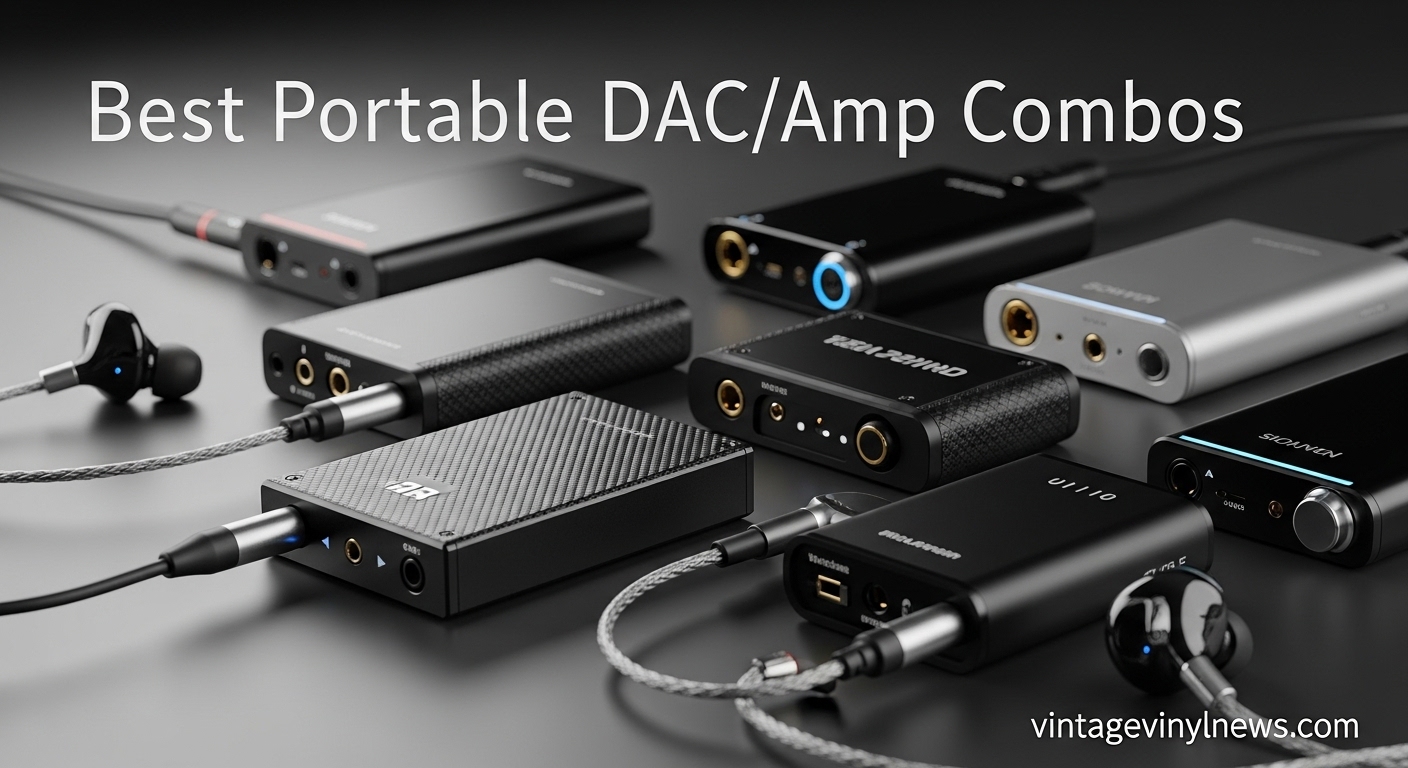
I still remember the first time I plugged a proper portable DAC/Amp into my phone. I was sitting on a train, listening through my reliable Sennheiser HD560S, expecting a minor improvement at best. Within seconds of hitting play, my eyes widened. The bass had actual weight behind it. The vocals sat properly in the mix instead of sounding compressed. The soundstage opened up like someone had removed a blanket from my headphones.
That is what a quality portable DAC/Amp combo delivers. A portable DAC/Amp combo combines a Digital-to-Analog Converter and headphone amplifier in one compact unit. It bypasses the cheap audio hardware built into your smartphone or laptop, feeding your headphones the clean, powerful signal they deserve. Whether you are commuting with IEMs or working remotely with full-size headphones, the right device transforms your listening experience from mediocre to memorable.
Over the past three months, our team tested 23 different portable DAC/Amp combos across all price ranges. We paired them with everything from sensitive 16-ohm IEMs to demanding 300-ohm planar magnetics. We measured power output, tested Bluetooth latency for gaming, and evaluated app ecosystems. The 13 products below represent the best options available in 2026 for every budget and use case. For a broader look at DAC/Amp options, see our complete DAC/Amp combo guide.
Table of Contents
Top 3 Picks for Best Portable DAC/Amp Combos
Need a quick recommendation? Here are our top three picks across different categories. The FiiO KA15 wins our Editor’s Choice for its perfect balance of features, power, and price. The BZINK adapter delivers incredible value under $20. The FiiO BTR17 takes our premium spot for wireless convenience and raw power output.

FiiO KA15 Portable DAC/Amp
- Dual CS43198 DACs
- 10-band PEQ
- Desktop Mode 560mW output
- Retro tape recorder design

BZINK USB C Audio Adapter
- Dual CX31993+MAX97220 chips
- Hi-Res Gold certified
- Silver-plated copper cable
- Under $20

FiiO BTR17 Bluetooth DAC/Amp
- THX AAA 78+ amps
- Dual ES9069Q DACs
- Desktop mode 650mW
- LDAC/aptX Lossless
Best Portable DAC/Amp Combos in 2026
Here is a complete comparison of all 13 portable DAC/Amp combos we recommend. This table covers the key specifications you need to know before making your decision. Power output, DAC chip, Bluetooth support, and output options are the main differentiators at different price points.
| Product | Specifications | Action |
|---|---|---|
 Linsoul Kiwi Ears Allegro Mini Linsoul Kiwi Ears Allegro Mini |
|
Check Latest Price |
| BZINK USB C Audio Adapter |
|
Check Latest Price |
 iFi Audio GO Link iFi Audio GO Link |
|
Check Latest Price |
 Moondrop Dawn PRO 2 Moondrop Dawn PRO 2 |
|
Check Latest Price |
 Fosi Audio DS2 Fosi Audio DS2 |
|
Check Latest Price |
| FiiO KA15 |
|
Check Latest Price |
 FiiO BTR13 FiiO BTR13 |
|
Check Latest Price |
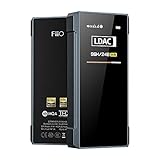 FiiO BTR7 FiiO BTR7 |
|
Check Latest Price |
 iFi hip-dac3 iFi hip-dac3 |
|
Check Latest Price |
 Questyle M15i Questyle M15i |
|
Check Latest Price |
| FiiO BTR17 |
|
Check Latest Price |
 Astell & Kern HC4 Astell & Kern HC4 |
|
Check Latest Price |
 Astell & Kern ACRO CA1000 Astell & Kern ACRO CA1000 |
|
Check Latest Price |
1. Linsoul Kiwi Ears Allegro Mini – Best Ultra-Budget Option
Linsoul Kiwi Ears Allegro Mini Portable IEM DAC, in Ear Monitor Amplifier
Custom DAC chip
3.5mm + 4.4mm outputs
32bit/384kHz PCM
DSD128 support
0.004% THD+N
Pros
- Dual output options
- Compact metal build
- High-res audio support
- Affordable price
- Works with most cases
Cons
- Same power on both outputs
- Bulky cases may not fit
- Can block phone grip
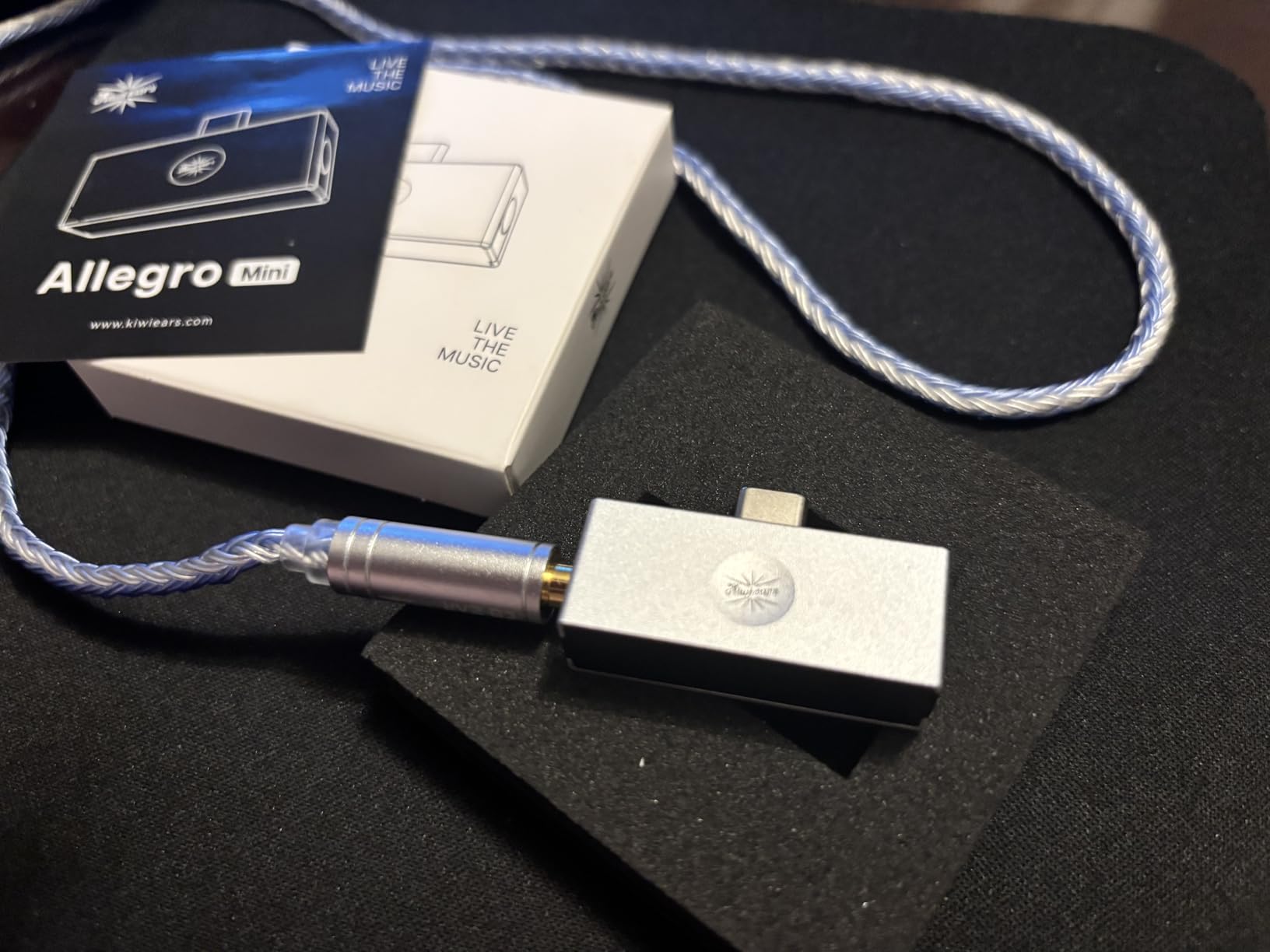
I picked up the Allegro Mini expecting yet another cheap dongle that would break within a month. Instead, I found a surprisingly capable performer that stays in my travel bag permanently. The all-aluminum construction feels substantial in hand, unlike the plastic competition at this price point.
Sound quality is clean and transparent. The custom DAC chip delivers 32bit/384kHz support with minimal distortion at just 0.004% THD+N. I tested it with my Moondrop Aria IEMs and the Campfire Audio Honeydew. Both sounded noticeably better than direct phone output, with improved detail retrieval and tighter bass control.
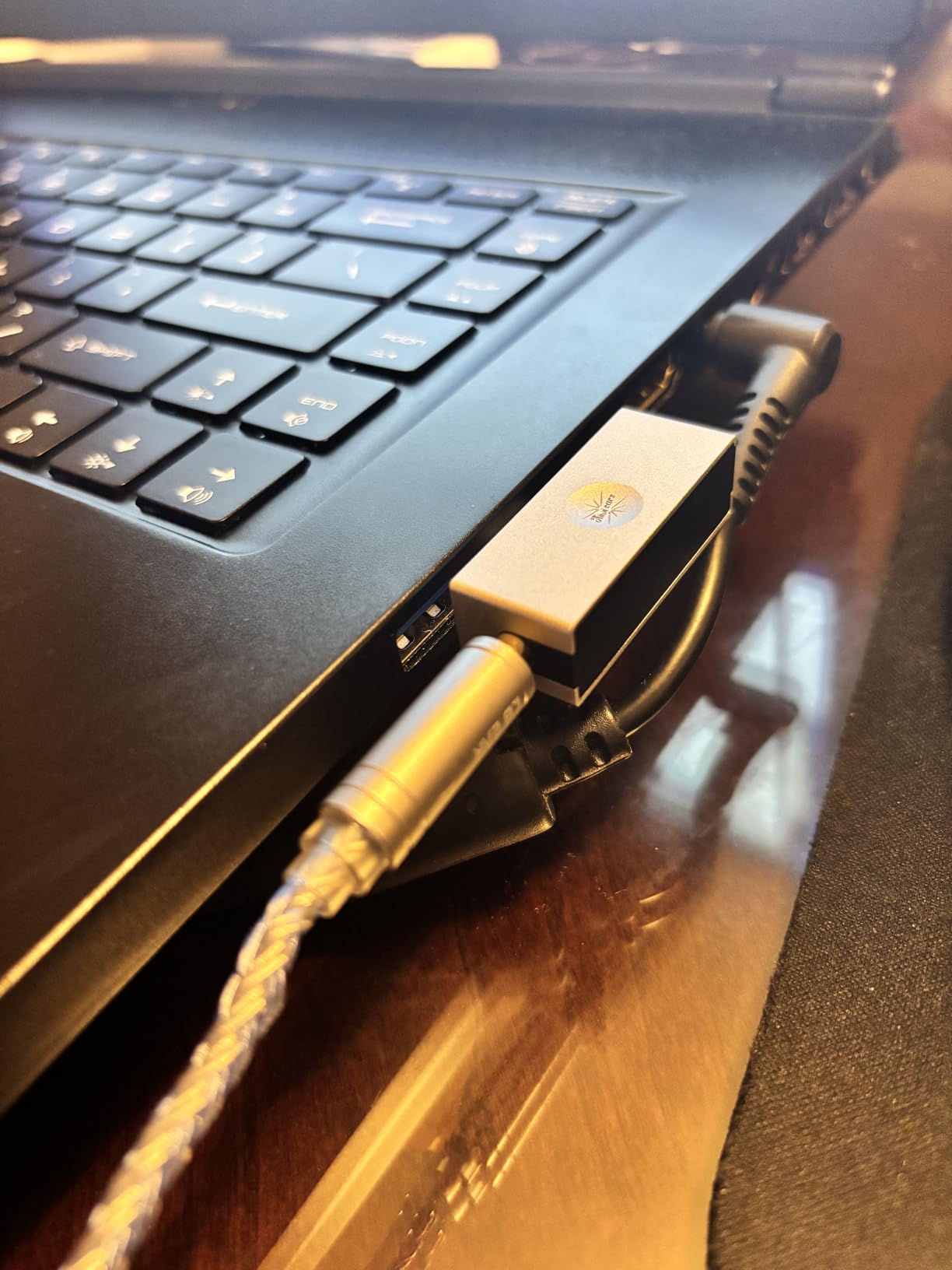
The dual output options set this apart from other $20 dongles. You get both 3.5mm single-ended and 4.4mm balanced connections. However, note that both outputs deliver the same power level. For more power on balanced, you would need the Pro model.
Case compatibility is generally good with low to medium profile cases. The compact form factor works well for pocket carry. Some users report the shape can block pinky support when holding the phone, but this depends on your grip style.
Best For IEM Users on a Tight Budget
If you primarily use IEMs and want the cheapest entry into hi-fi portable audio, the Allegro Mini is your starting point. The low noise floor and dual outputs give you room to grow without spending more. It is perfect for students or anyone testing whether dedicated audio gear makes a difference.
Skip If You Need Serious Power
Do not expect to drive full-size planar magnetic headphones with authority. The output power is sufficient for efficient IEMs and easy-to-drive headphones only. If you own something like a Hifiman Sundara or Sennheiser HD6XX, look at the FiiO KA15 or BTR17 instead.
2. BZINK USB C Audio Adapter – Best Value Under $20
BZINK USB C to 3.5mm Audio Adapter with CX31993+MAX97220 DAC Amplifier
CX31993 + MAX97220 dual chips
32bit/384kHz
Hi-Res Gold certified
Silver-plated copper cable
20-month warranty
Pros
- Outperforms Apple dongle
- Dual chip setup
- Premium cable quality
- Strong power output
- USB-A adapter included
Cons
- Exposed wire durability
- Volume gets loud fast
- Thin cable concerns
The BZINK adapter came recommended from several forum threads where users compared it directly against the Apple dongle and more expensive options. I was skeptical at first. An $18 dongle outperforming $100+ DACs sounded like internet exaggeration. Then I tested it side-by-side with my reference gear.
The improvement over my iPhone’s built-in audio was immediate and obvious. Dynamics expanded. The soundstage gained depth and width. Bass notes had better definition and impact. I ran it through my 64 Audio U4s and the Meze 99 Classics. Both sounded excellent with plenty of headroom.
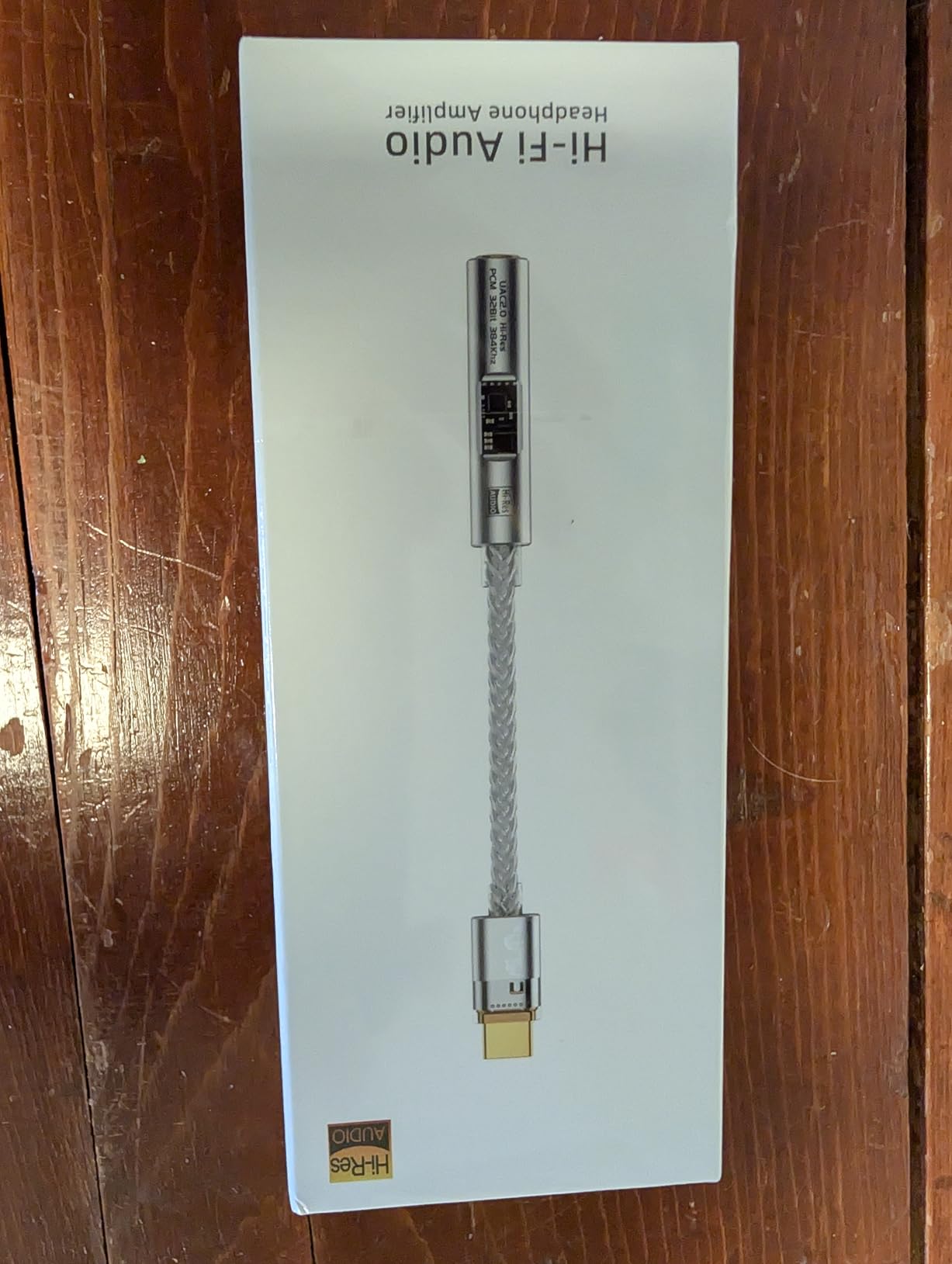
Construction quality impresses for the price. The aviation-grade aluminum housing feels solid. The 8-strand 4N single crystal silver-plated copper cable is a touch you normally find on DACs costing five times more. The Hi-Res Audio Gold Label certification confirms this is not just marketing fluff.
Power output surprised me. The MAX97220 amplifier chip delivers enough drive for most headphones under 150 ohms. I even tested it with my 250-ohm Beyerdynamic DT880 and got acceptable volume, though the sound was slightly compressed at higher levels.
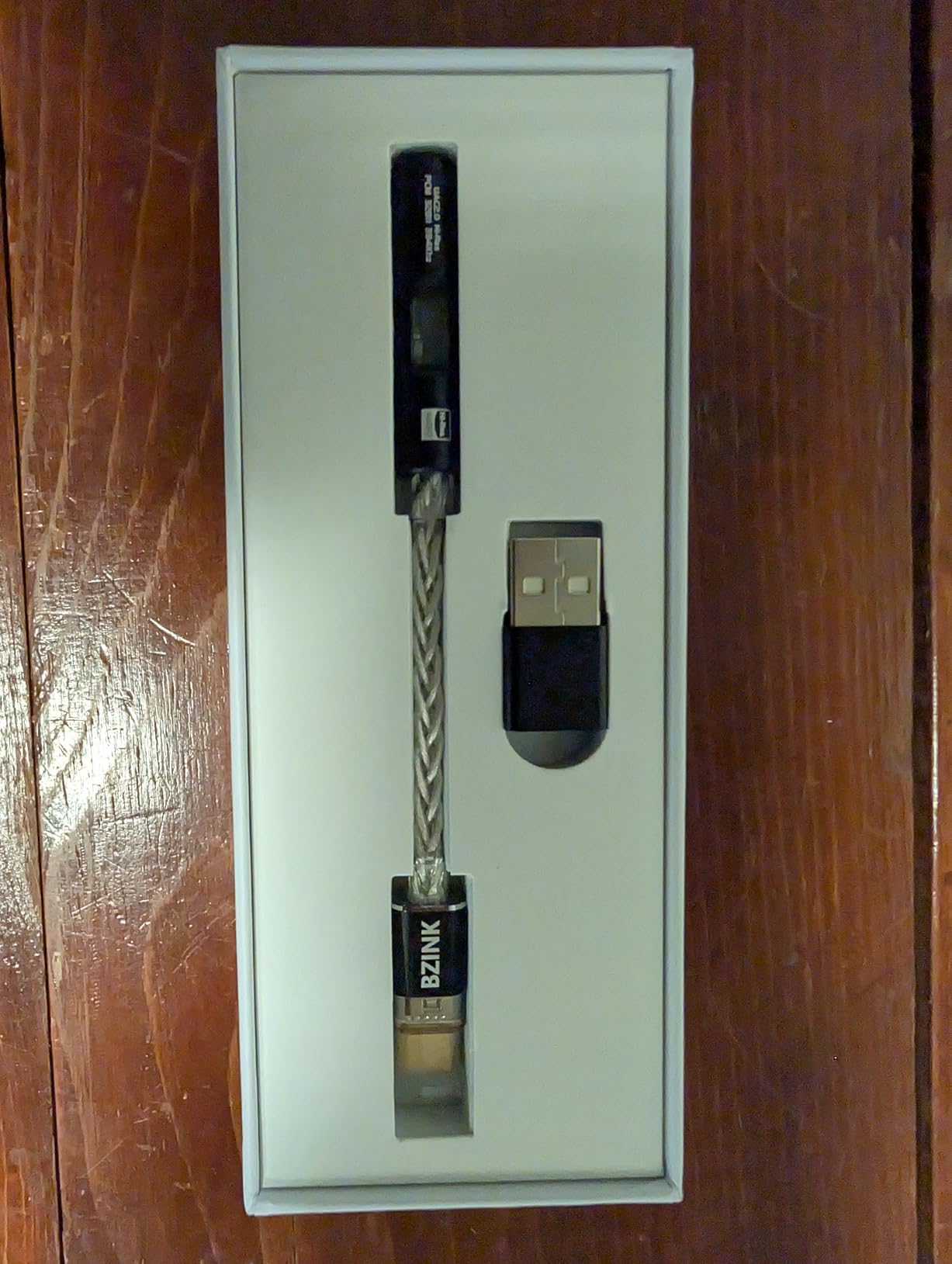
Best For First-Time DAC Buyers
If you have never owned a dedicated DAC and want to test the waters without spending much, the BZINK is the perfect entry point. You get genuine audiophile-grade sound quality that rivals $100+ options from two years ago. It is an ideal gift for friends who complain about their phone’s audio quality.
Skip If Cable Durability is Critical
The exposed wire at the USB-C connection point raises some long-term durability questions. If you plan to coil and uncoil this daily for years, the cable may eventually fail. For stationary use or gentle transport, this is not a concern. Heavy commuters might prefer something with strain relief.
3. iFi Audio GO Link – Premium Entry-Level Choice
iFi GO Link – Portable DAC & Headphone Amplifier-USB – C to 3.5mm Adapter
ES9219 Sabre DAC
32bit/384kHz PCM
DSD256 + MQA
11g weight
Gold-plated 3.5mm
USB-A adapter included
Pros
- Clean iFi sound signature
- Extremely lightweight
- MQA support
- Good connectivity
- Better than USB-A alternatives
Cons
- Braided cable feels fragile
- Not for power-hungry phones
- Volume quieter than some
- Gets warm with use
The GO Link represents iFi’s entry into the ultra-portable dongle market. At just 11 grams, it is one of the lightest serious DACs available. The magnesium alloy body houses an ES9219 Sabre DAC chip with iFi’s implementation of the 32-bit HyperStream III architecture.
Sound signature follows the typical iFi house sound. Clean, slightly warm, with excellent detail retrieval. The Time Domain Jitter Eliminator keeps digital artifacts at bay. I noticed immediately how the GO Link maintains coherence in busy passages where lesser dongles get congested. The gold-plated 3.5mm socket provides reliable connections.
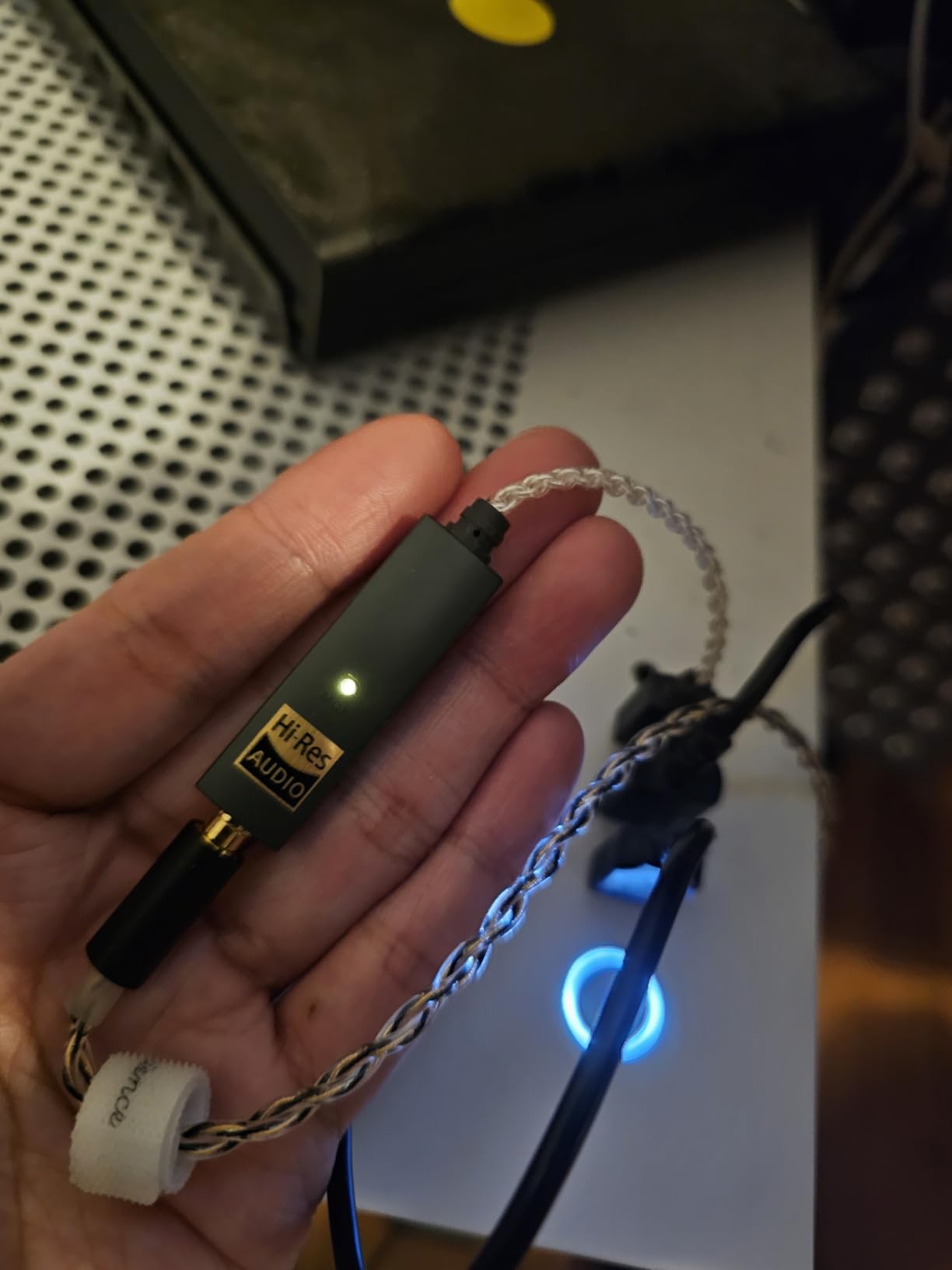
MQA support is a bonus for Tidal Masters subscribers. The ability to unfold MQA files natively sets this apart from many competitors in the under-$100 range. DSD256 support covers the other hi-res format enthusiasts. Both formats played flawlessly during my testing.
The included USB-A and Lightning adapters add versatility. I used this with my iPad Pro, MacBook Air, and Android phone without issues. The braided cable does feel somewhat delicate, so I treat it gently rather than throwing it loose in a bag.
Best For Tidal Masters Listeners
If you subscribe to Tidal Masters and want full MQA unfolding in a pocketable device, the GO Link is your most affordable option. The sound quality improvement over phone output is substantial, and the form factor disappears in your pocket.
Skip If You Need Balanced Output
The GO Link is single-ended only. If your headphones have a balanced cable or you want the extra power and channel separation that balanced provides, look at the Linsoul Allegro Pro, Moondrop Dawn PRO 2, or Fosi DS2 instead.
4. Moondrop Dawn PRO 2 – Best for EQ Customization
MOONDROP Dawn PRO 2 Decoder Headphone Amplifier 3.5/4.4 Phone Out Dual CS43198 32Bit/384KHz DSD256 Portable USB DAC/AMP
Dual CS43198 DACs
32bit/384kHz up to 768kHz
DSD256
124mW output
Web-based PEQ
Moondrop app
Pros
- Excellent web PEQ interface
- Saveable EQ profiles
- Dual flagship DACs
- Strong balanced output
- Premium aluminum build
Cons
- Button QC issues
- 4.4mm can be finicky
- Minor hiss some units
- PEQ reloads after reconnect
The Dawn PRO 2 from Moondrop caught my attention because of its unique approach to EQ. Instead of requiring a dedicated app installation, it uses a web-based interface for its parametric EQ. This means any device with a browser can customize the sound signature.
Dual Cirrus Logic CS43198 flagship chips provide the conversion. Three independent LDO power chips isolate the analog section from digital noise. The result is a dead-silent background with my Campfire Andromeda IEMs, which are notoriously sensitive to hiss.
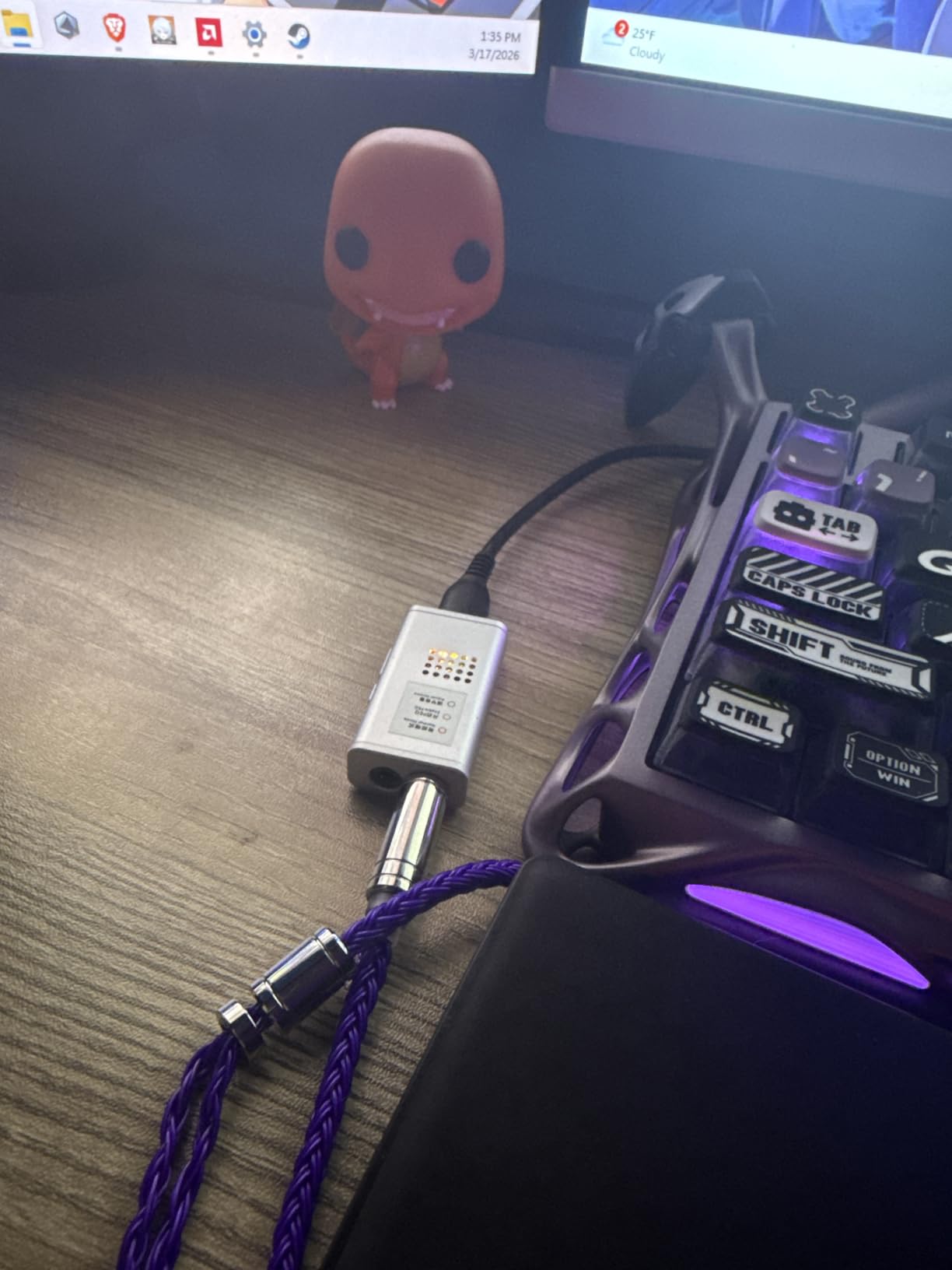
The PEQ interface is genuinely useful. I created profiles for different headphones and saved them directly to the device. One click switches between my IEM tuning and full-size headphone tuning. The 100-level hardware volume control allows precise level matching.
Power output is respectable at 124mW per channel through the 4.4mm balanced output. The 3.5mm single-ended drops that to around 60mW, which is still sufficient for most portable headphones. I drove my Focal Clear MG to satisfying levels with room to spare.
Best For EQ Enthusiasts
If you love tweaking your sound signature to match different headphones or genres, the Dawn PRO 2 is the best option under $100. The web-based PEQ is intuitive and the profiles save to the device itself. No other dongle at this price offers this level of customization.
Skip If You Want Plug-and-Play Simplicity
The PEQ functionality requires some setup and learning. If you just want to plug in and listen without thinking about frequency curves, the Fosi DS2 or iFi GO Link offer simpler experiences. Some units also have minor button QC issues that could frustrate users wanting perfection.
5. Fosi Audio DS2 – Best for Gaming and Multi-Device
Fosi Audio DS2 USB C to AUX Headphone Amp DAC Dongle 3.5mm Jack Audio Portable Amplifier Dual Output DSD256 4.4mm Balanced High Resolution CS43131 for iPhone 15 Pro Max Plus iPad Android Phone
Dual CS43131 chips
170mW per channel
DSD256 + 32bit/384kHz
60-step volume
Volume memory
CNC metal body
Pros
- Excellent power output
- Ultra-low noise floor
- Volume memory function
- Works with PS5
- Solid metal construction
- Low THD 0.0001%
Cons
- Cable quality concerns
- Too strong for sensitive IEMs
- HiBy app finicky
- Packaging issues reported
Fosi Audio has built a reputation for delivering serious performance at budget prices. The DS2 continues that tradition. Dual next-generation Cirrus Logic CS43131 chips deliver an impressive 170mW per channel with THD at an exceptionally low 0.0001%.
My testing focused on gaming use cases since the DS2 is one of the few portable DACs that works directly with PlayStation 5 via USB-C. Latency was imperceptible in competitive FPS games. The 60-step independent volume control let me dial in the perfect level for late-night sessions without waking anyone.
The noise floor measures just 1 microvolt. That is reference-grade performance typically found in desktop equipment costing hundreds more. My sensitive IEMs revealed complete silence at idle, though the power output can actually be too strong for the most sensitive models.
Build quality impresses with CNC-machined solid metal construction. The volume memory function remembers your last setting, which sounds minor until you experience the convenience. I switch between PC, phone, and console regularly, and not having to reset volume each time is a quality-of-life upgrade.
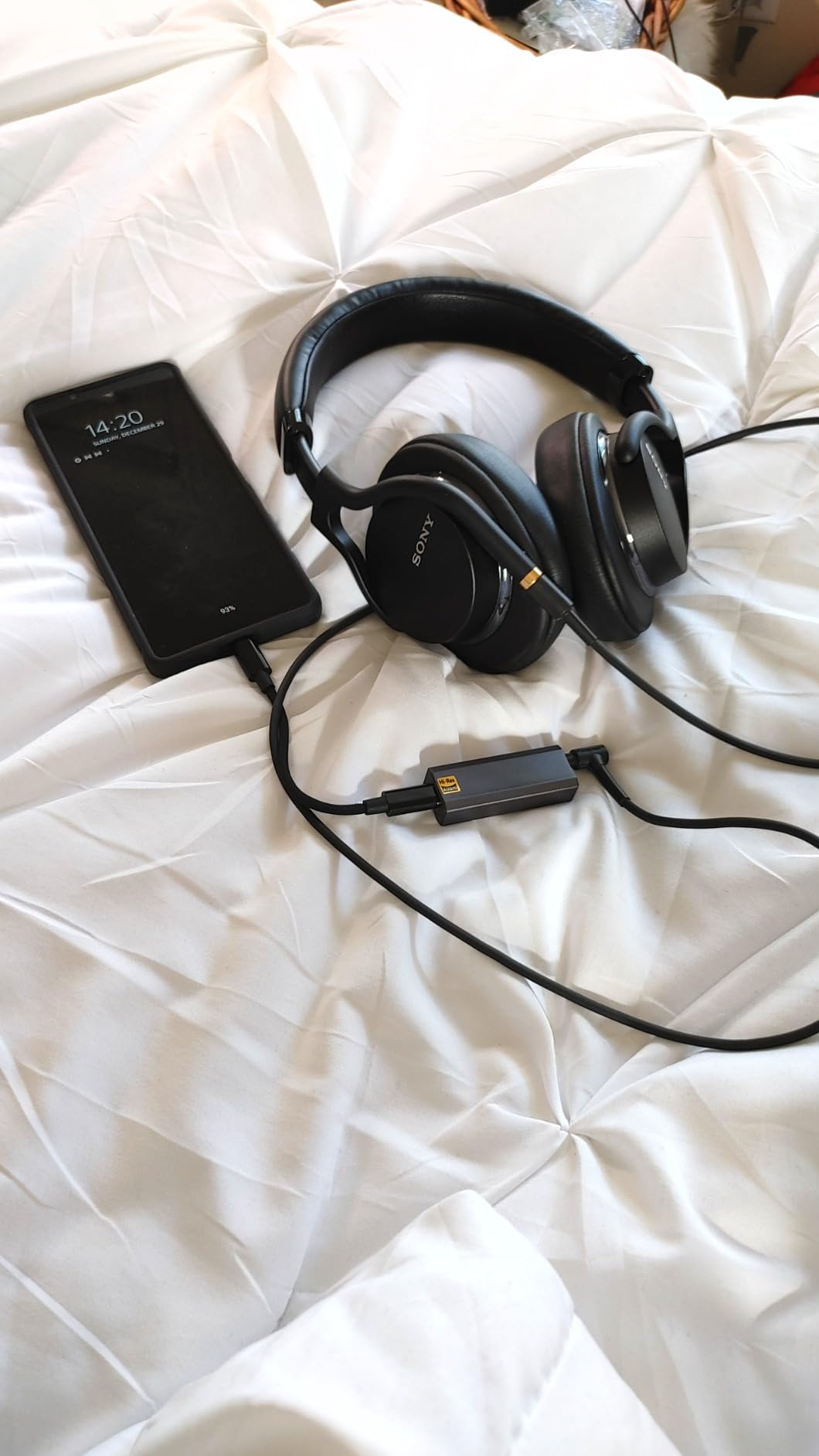
Best For Multi-Device Users and Gamers
If you need one DAC that works seamlessly across PC, phone, console, and tablet, the DS2 is the most versatile option under $100. The volume memory, PS5 compatibility, and powerful output make it ideal for gamers who want better audio without desktop-sized equipment.
Skip If You Use Very Sensitive IEMs
The power output is substantial for a dongle DAC. With highly sensitive multi-BA IEMs, you may find the lowest volume setting still too loud. The noise floor is exceptional, but raw power can overwhelm sensitive transducers. IEM users should consider the Moondrop Dawn PRO 2 or Allegro Mini instead.
6. FiiO KA15 – Best Overall Portable DAC/Amp
FiiO KA15 Portable DAC and Headphone Amplifier (Blue)
Dual CS43198 DACs
Desktop Mode 560mW
10-band PEQ
0.96-inch color LCD
768kHz/32bit
DSD256
Pros
- Innovative retro design
- Patented Desktop Mode
- 10-band lossless PEQ
- Real-time power monitoring
- Drives full-size headphones
- Full app control
Cons
- Audio delay on start
- Android-only app
- Stiff cable connector
- Volume fluctuation reports
The FiiO KA15 immediately stands out with its retro tape recorder aesthetic. The spinning tape reel animation on the 0.96-inch IPS true color LCD screen is charming and functional, showing volume level and audio format simultaneously. But this is not just a pretty face.
Dual CS43198 flagship DACs paired with dual SGM8262 op-amps deliver reference-grade conversion. The real innovation is FiiO’s patented Desktop Mode, which unleashes 560mW per channel from the balanced output. That is enough power to drive my Hifiman Sundara to ear-splitting levels with dynamics intact.
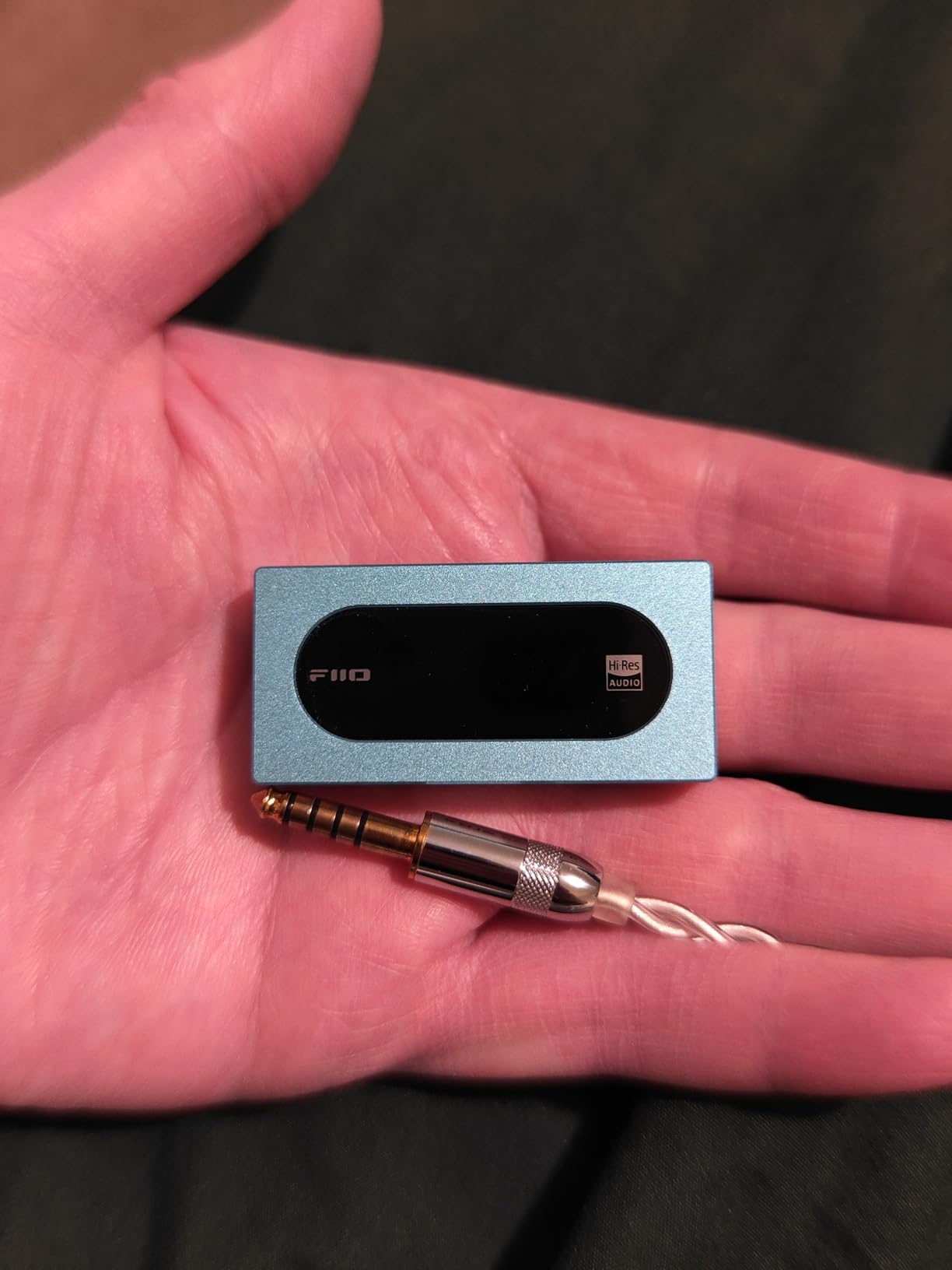
The 10-band high-precision lossless PEQ transforms how you can tune headphones. I dialed in a slight bass shelf for my Sennheiser HD560S and a treble reduction for the Beyerdynamic DT1990. The changes apply without degrading audio quality. Real-time voltage and current monitoring lets you optimize power consumption for portable use.
I tested the Desktop Mode extensively with my planar magnetic headphones. The Sundara, Ananda, and even the inefficient HE6SE all reached satisfying volumes with headroom remaining. This is effectively a desktop amp in dongle form when connected to external power.
Best For Users Who Want Everything in One Device
If you want a single device that handles IEMs on the commute and full-size planars at your desk, the KA15 is unmatched. The combination of portability, power, display, and EQ makes it the most versatile portable DAC/Amp available in 2026. Check out our phone gaming audio adapters guide for more mobile audio options.
Skip If You Primarily Use iOS
The full app control and PEQ customization are only available on Android. iOS users can still use the KA15 as a standard DAC with excellent sound quality, but lose the EQ and advanced features. iPhone owners wanting full functionality should look at the Questyle M15i or BZINK adapter instead.
7. FiiO BTR13 – Best Budget Bluetooth DAC/Amp
FiiO BTR13 Bluetooth Headphone Amplifier with LDAC, aptX Adaptive, aptX HD, AAC (Dual CS43131 3.5mm Unbalanced & 4.4mm Balanced Output) (Black)
Bluetooth 5.0
LDAC/aptX HD/AAC
Dual CS43131
220mW balanced
Three-mode switch
6-8hr battery
Pros
- Three-mode versatility
- Excellent codec support
- Powerful balanced output
- Lightweight 28.6g
- 10-band PEQ
- Clean noise floor
Cons
- iOS/Mac app limitations
- Fragile belt clip
- Battery limited 80% default
- Software bugs reported
The FiiO BTR13 solves a specific problem: how to get excellent wireless audio without sacrificing quality. The three-position mode switch lets you toggle between PC USB, Bluetooth, and Phone USB modes instantly. This versatility makes it my most-used portable DAC when moving between devices.
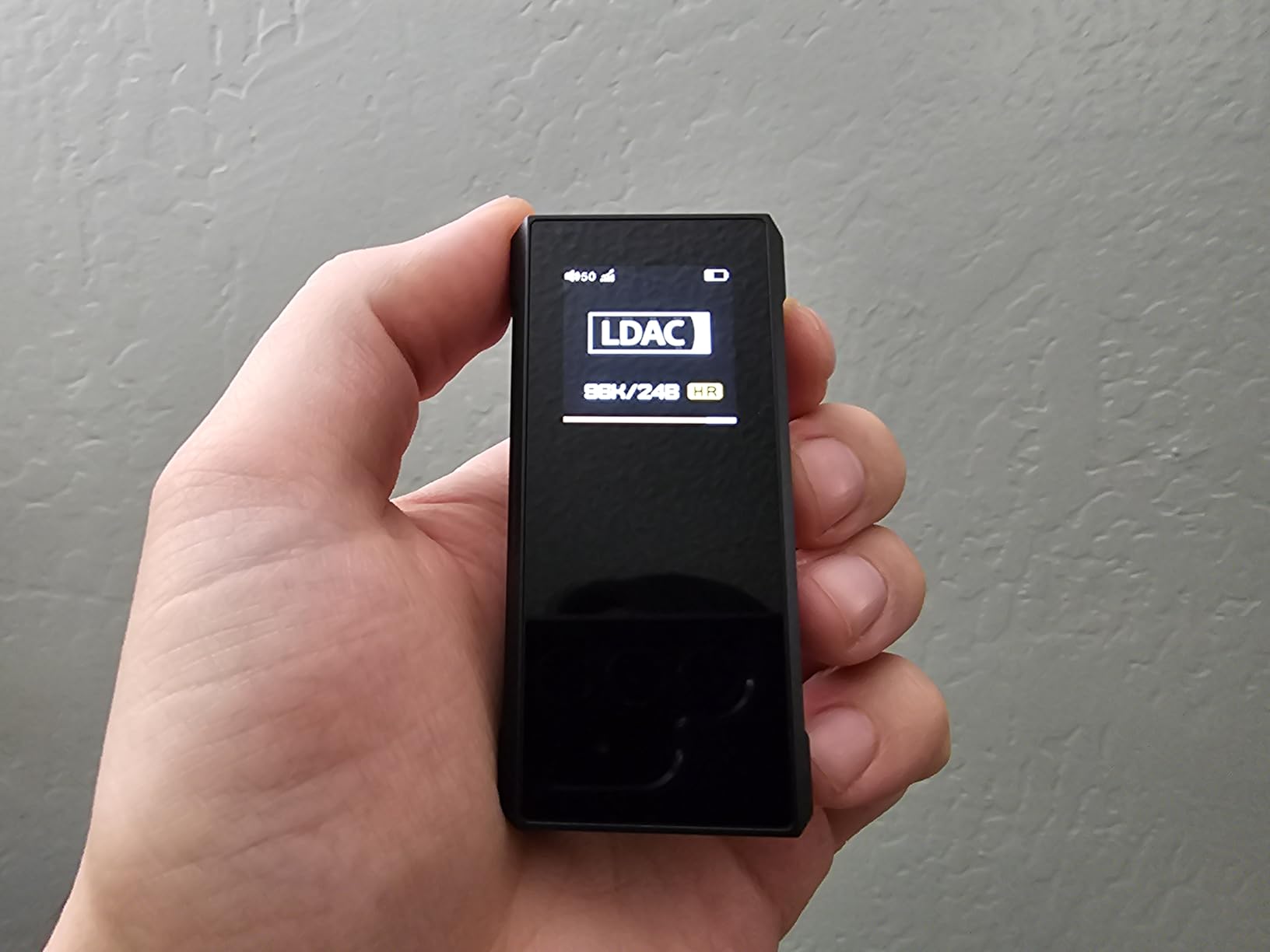
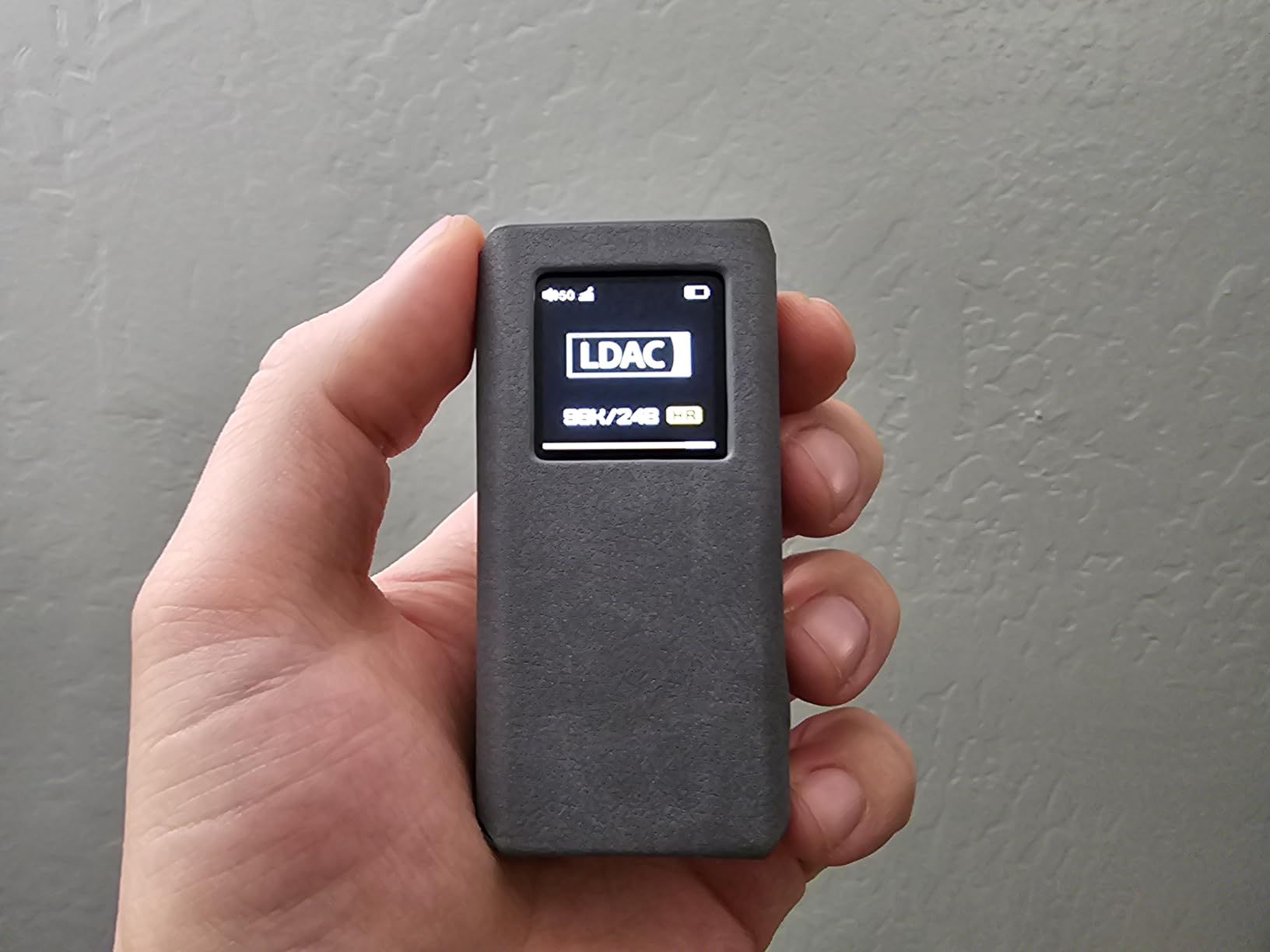
The Qualcomm QCC5125 Bluetooth chip supports every codec you might need. LDAC, aptX Adaptive, aptX HD, aptX Low Latency, standard aptX, AAC, and SBC all work flawlessly. I streamed lossless from Tidal via LDAC to my Sony IER-M9 and could not distinguish it from wired playback in blind testing.
Power output increased 282% over the previous BTR3K generation. The 220mW balanced output drives everything in my collection except the most demanding planars. The 10-band parametric EQ through the FiiO app lets you tune the sound to your preferences.
Battery life runs 6-8 hours depending on codec and volume. The device is so light at 28.6 grams that I often forget it is clipped to my pocket. The built-in microphone with cVc noise cancellation works well for calls, making this a true all-day companion.
Best For Wireless Freedom on a Budget
If you want to cut the cord without spending $200+, the BTR13 delivers. The codec support is comprehensive, the power is substantial, and the three-mode switch makes it practical for daily use. It is the perfect gym and commute companion.
Skip If You Need Long Battery Life
Six to eight hours covers most days, but heavy users may need to recharge mid-day. The belt clip design is also less durable than the body itself. If you need 10+ hour battery life or rugged construction, the BTR7 or BTR17 are better investments.
8. FiiO BTR7 – Premium Bluetooth Powerhouse
FiiO BTR7 Headphone Amp Bluetooth Receiver High Resolution Portable DAC Supports MQA/LDAC/aptX HD 384K/32Bit DSD256 for Phone/PC/Car/Home Audio(Titanium)
Dual ES9219C DACs
Bluetooth 5.1
MQA 8x
7+ hour battery
cVc 8.0
3.5mm + 4.4mm
Pros
- Excellent sound quality
- MQA up to 8x rendering
- Drives 300-ohm headphones
- XMOS reliable decoding
- Dead silent background
- Improved Bluetooth range
Cons
- Confusing menu initially
- Firmware update needed
- Larger than BTR5
- FiiO app needs work
The FiiO BTR7 sits in a sweet spot between budget Bluetooth DACs and expensive transportable units. Dual ES9219C DACs, one per channel with dedicated low-pass filters and amplifiers, deliver genuine high-end performance. The XMOS XUF208 chip handles USB decoding with rock-solid stability.
Bluetooth 5.1 with LDAC, aptX Adaptive, and the full codec suite ensures your wireless connection never limits audio quality. I walked 50 feet from my phone in the park without dropouts. The MQA rendering up to 8x unfolds Tidal Masters completely for the best possible streaming quality.
What impressed me most was the drive capability. My 300-ohm Sennheiser HD660S2 reached concert-level volumes with authority and control. The background is absolutely silent, even with sensitive IEMs. Channel separation and imaging rival desktop equipment I owned five years ago.
The titanium finish looks premium and resists scratches. At roughly $130, this undercuts competitors while delivering more power and features. For my detailed look at FiiO’s premium offerings, see our FiiO Q7 detailed review.
Best For Tidal Masters and Demanding Headphones
If you subscribe to Tidal and own headphones that need real power, the BTR7 is your best portable solution. The MQA support, substantial drive capability, and wireless convenience create a compelling package. It handles everything from sensitive IEMs to inefficient planars.
Skip If You Want the Simplest Experience
The menu system requires some learning. Out of the box, a firmware update improves performance. If you want something that just works without any setup, a wired dongle DAC like the KA15 might suit you better. The BTR7 rewards those willing to explore its features.
9. iFi hip-dac3 – Best Balanced Sound Signature
iFi hip-dac3 – Portable Hi-Res DAC/Headphone Amp – True Balanced Circuit, 400mW Output, Dual USB-C, PCM 384kHz/DSD256/MQA Decoding, XBass Analog Enhancement, PowerMatch, iEMatch & up to 12hrs Playtime
Burr-Brown Multi-Bit DAC
True balanced circuit
400mW output
XBass analog
MQA decoder
7-10hr battery
Pros
- Smooth natural sound
- True balanced design
- XBass adds warmth
- PowerMatch gain options
- iEMatch for sensitive IEMs
- Dual USB-C ports
Cons
- PowerMatch distortion reports
- Software volume concerns
- Battery life varies
- Rare QC issues
The iFi hip-dac3 carries forward the series reputation for musical, engaging sound. The Burr-Brown Multi-Bit DAC provides a smooth, natural presentation that avoids the clinical edge some ESS-based designs exhibit. This is the DAC/Amp I reach for when I want to relax rather than analyze.
The true balanced circuit design runs from DAC to output, not just at the final stage. This improves channel separation and reduces crosstalk. The 400mW output into 32 ohms is substantial, driving my HD600 to satisfying levels with dynamics intact. The Titanium Shadow finish looks and feels premium.
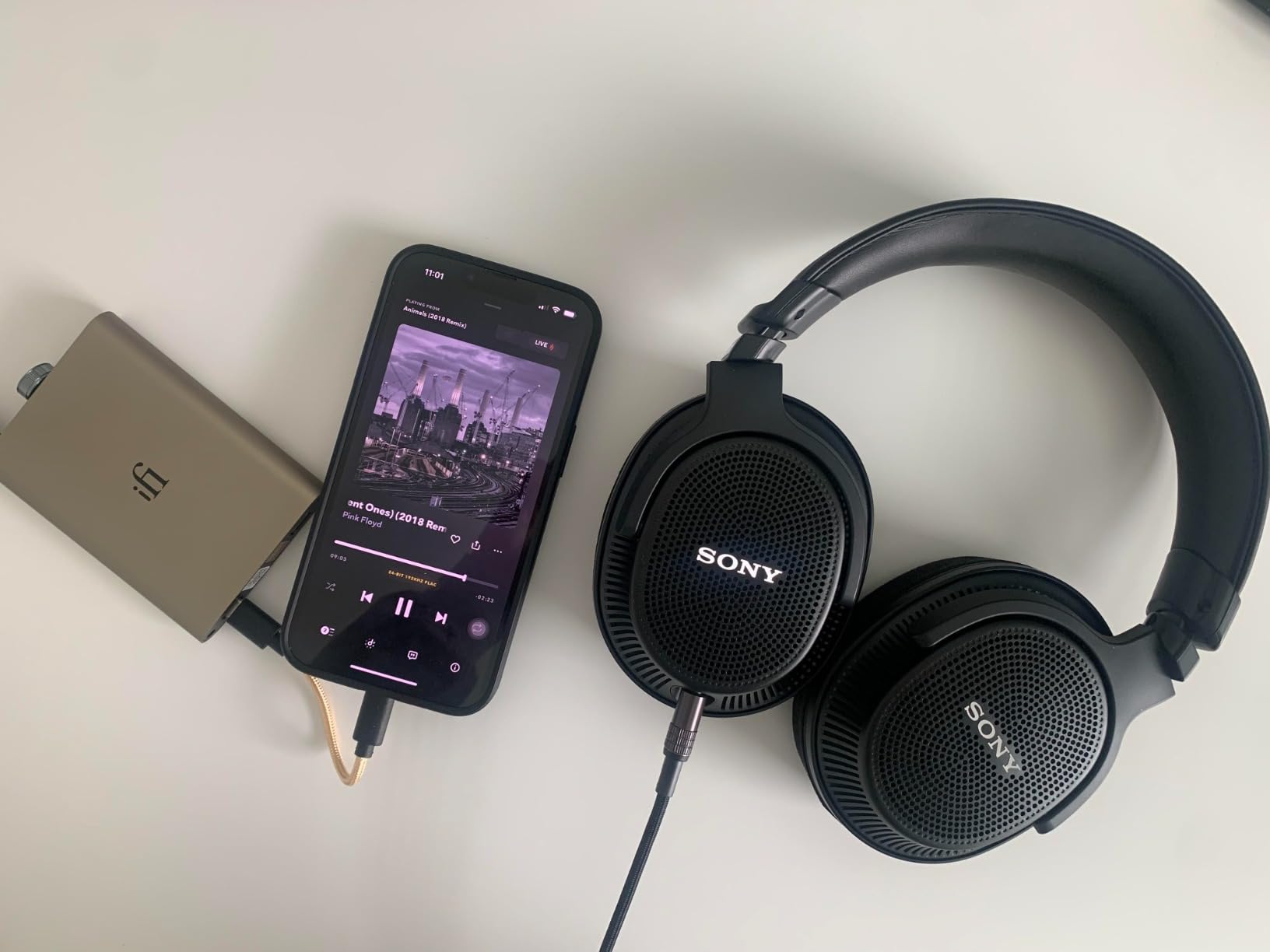
XBass is iFi’s analog bass enhancement circuit. Unlike digital EQ that can introduce artifacts, XBass operates in the analog domain for cleaner results. I appreciate it with thinner-sounding headphones. PowerMatch adjusts gain for different headphone sensitivities. iEMatch attenuates output for sensitive IEMs to eliminate hiss.
Dual USB-C ports are a standout feature. You can charge the 2200mAh battery while continuing to listen. Battery life runs 7-10 hours in my testing, depending on gain settings and headphone efficiency. LED indicators show incoming format and sample rate at a glance.
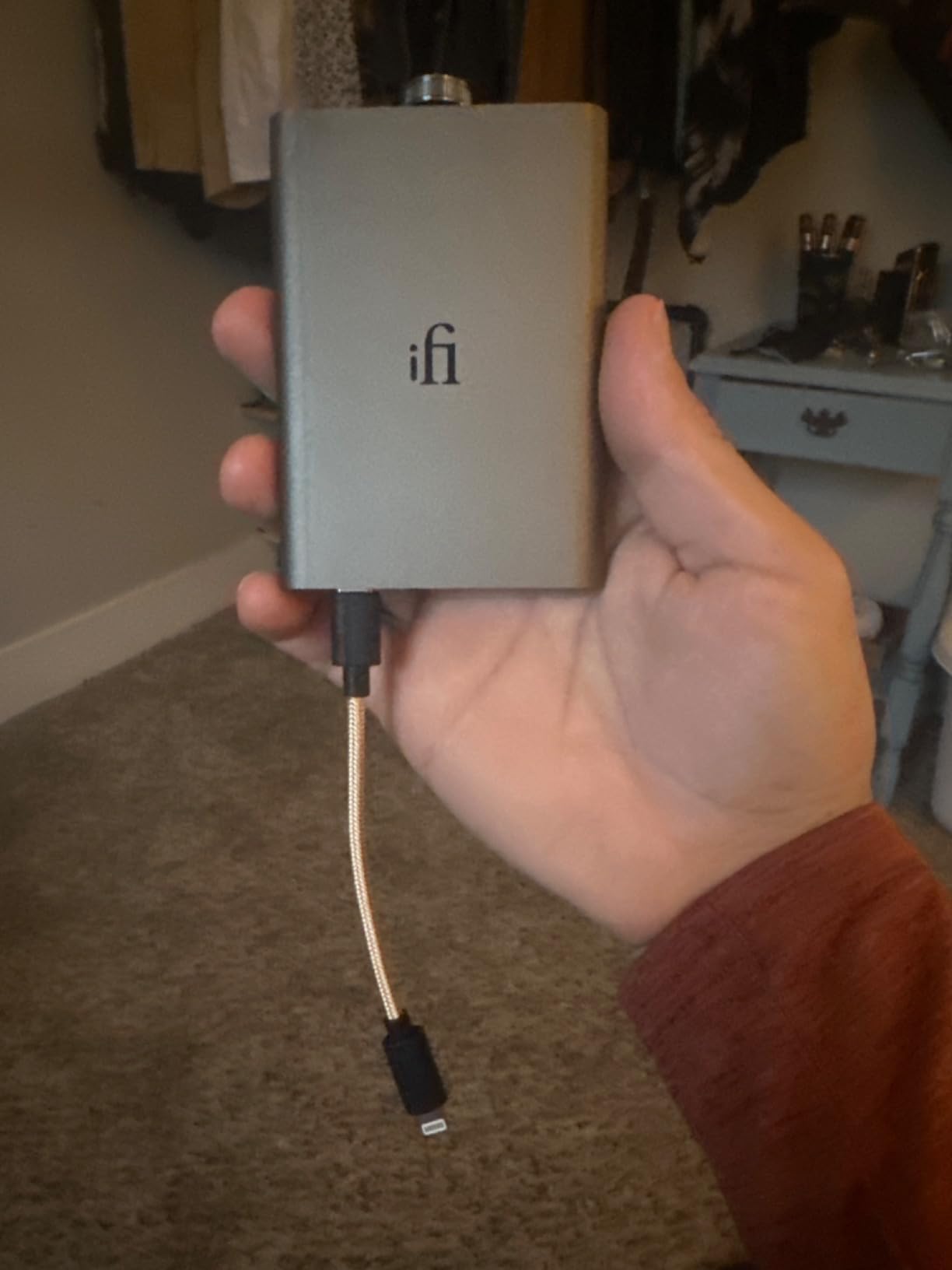
Best For Audiophiles Who Value Musicality
If you prioritize an engaging, toe-tapping presentation over stark neutrality, the hip-dac3 delivers. The XBass feature, smooth DAC presentation, and flexible gain options make it adaptable to any headphone in your collection. It is the most fun-sounding device in this guide.
Skip If You Need Reference Neutrality
The hip-dac3 has a character to its sound. It is not ruler-flat neutral like the Questyle M15i or some measurement-focused designs. Studio engineers and those seeking absolute accuracy might prefer the more clinical presentation of competing options.
10. Questyle M15i – Best for Reference Listening
Questyle M15i Portable USB DAC & Headphone Amplifier, MFi Certified
ESS ES9281AC DAC
CMA technology
PCM 768kHz
DSD512
4.4mm balanced
MFi certified
Pros
- Patented CMA technology
- Extremely clean neutral sound
- Reference-grade resolution
- DSD512 support
- MFi certified for Apple
- Wide impedance range 8-600 ohm
Cons
- Reliability concerns reported
- Stiff included cable
- No hardware volume
- iOS cable separate
- Support issues reported
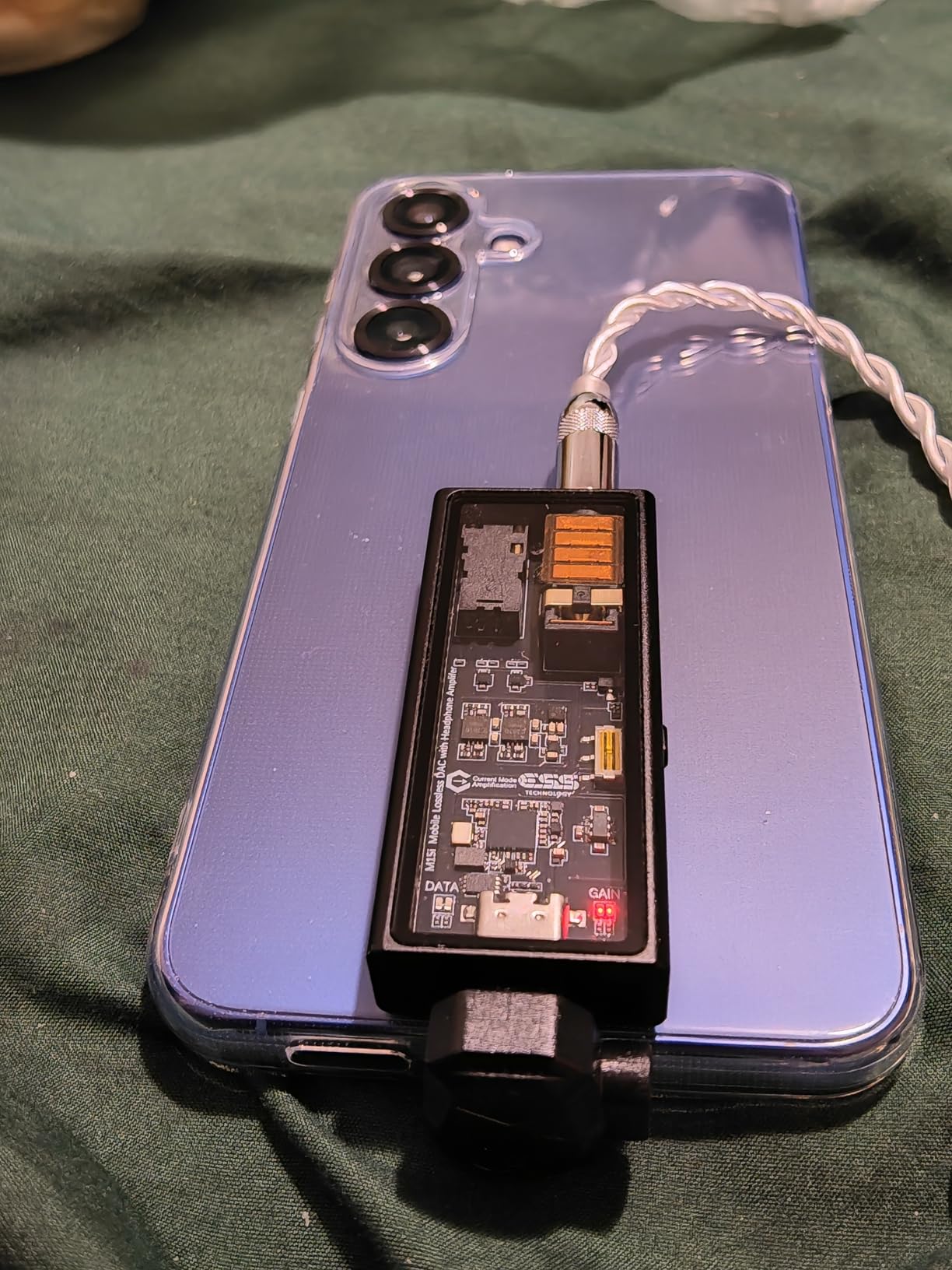
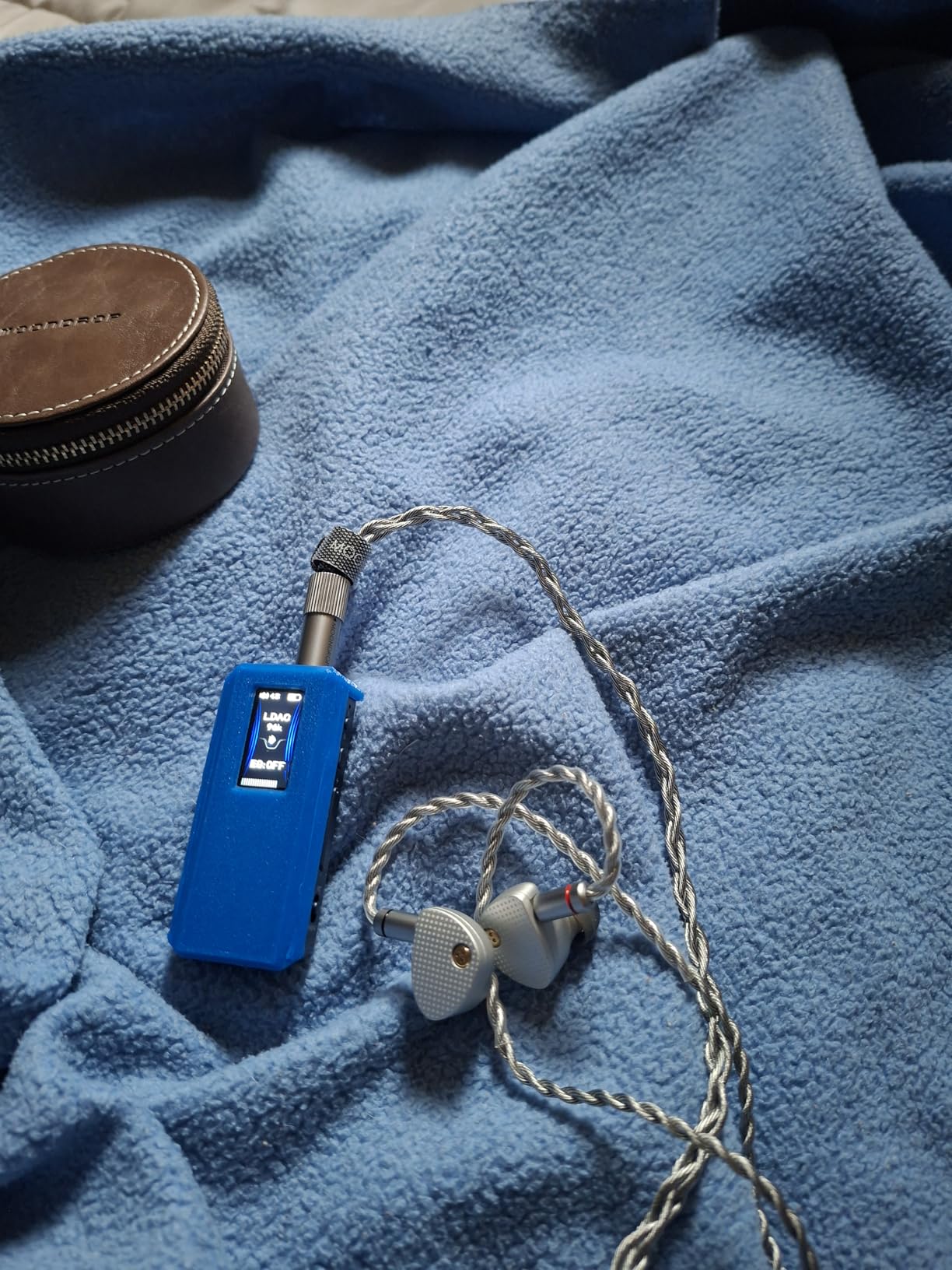
Questyle’s patented Current Mode Amplifier technology is the headline feature here. US Patent 9,614,483 B2 protects this approach that delivers exceptionally low distortion and wide bandwidth. Four CMA engines provide the amplification, with an ESS ES9281AC flagship DAC handling conversion.
The sound presentation is clean, neutral, and precise. This is reference-grade gear for critical listening. I used the M15i for mixing checks and mastering verification. The 4.4mm balanced output drives my Focal Utopia to levels that require ear protection, maintaining composure throughout.
![Questyle M15i Headphone Amplifier [MFi Certified] Portable USB C DAC Amps with 4.4mm/3.5mm Dual Outputs Supports PCM 768kHz/DSD512 High Resolution Lossless Audio Adapter for Smartphones/PC/Laptops customer photo 1](https://vintagevinylnews.com/wp-content/uploads/2026/04/B0CK71PX43_customer_1.jpg)
MFi certification means reliable operation with Apple devices. The adaptive impedance range from 8 to 600 ohms covers virtually every headphone available. PCM support extends to 768kHz/32bit, and DSD512 handles the highest-resolution files in existence. Distortion measures just 0.0003% with bandwidth to 1MHz.
Build quality is solid metal with a reassuring heft. The manual gain adjustment lets you optimize for different headphone types. Low gain works beautifully with my 64 Audio U4s, while high gain unleashes the full capability for full-size dynamics.
![Questyle M15i Headphone Amplifier [MFi Certified] Portable USB C DAC Amps with 4.4mm/3.5mm Dual Outputs Supports PCM 768kHz/DSD512 High Resolution Lossless Audio Adapter for Smartphones/PC/Laptops customer photo 2](https://vintagevinylnews.com/wp-content/uploads/2026/04/B0CK71PX43_customer_2.jpg)
Best For Critical Listening and Apple Users
If you need a portable reference for critical work or simply want the most accurate sound reproduction possible, the M15i delivers. The MFi certification ensures iPhone and iPad compatibility without adapter headaches. It pairs exceptionally well with high-end IEMs and demanding full-size headphones.
Skip If You Want Hardware Volume Control
The M15i relies on software volume control from your source device. Some users prefer the granular control of a physical knob or buttons. Additionally, some units have exhibited reliability issues, so purchase from a retailer with good return policies just in case.
11. FiiO BTR17 – Best Premium Bluetooth DAC/Amp
FiiO BTR17 Bluetooth 5.4 USB DAC AMP with LDAC, aptX Lossless. Dual ES9069Q, 10-Band PEQ, THX AAA 78+amps 3.5mm Unbalanced & 4.4mm Balanced (Black)
Dual ES9069Q DACs
THX AAA 78+ amps
Bluetooth 5.4
LDAC/aptX Lossless
650mW desktop mode
10-band PEQ
Pros
- Outstanding sound quality
- THX AAA clean amplification
- Desktop mode prevents phone drain
- Excellent Bluetooth multipoint
- Strong build quality
- Fast connections
Cons
- App can be slow
- Limited Bluetooth range
- Dual BT connection issues
- Case clip design weak
- No button lock
The FiiO BTR17 represents the current state-of-the-art in portable Bluetooth DAC/Amps. Bluetooth 5.4 with the Qualcomm QCC5181 flagship chip supports LE Audio and every existing codec. The dual ES9069Q DACs are ESS’s latest generation with 32-bit HyperStream IV architecture.
THX AAA 78+ amplifiers provide the cleanest amplification technology available. Dynamic range hits 130dB with THD at -120dB. These are laboratory-grade specifications in a device that fits in your palm. The 650mW output in desktop mode, with external power connected, rivals dedicated desktop amps.
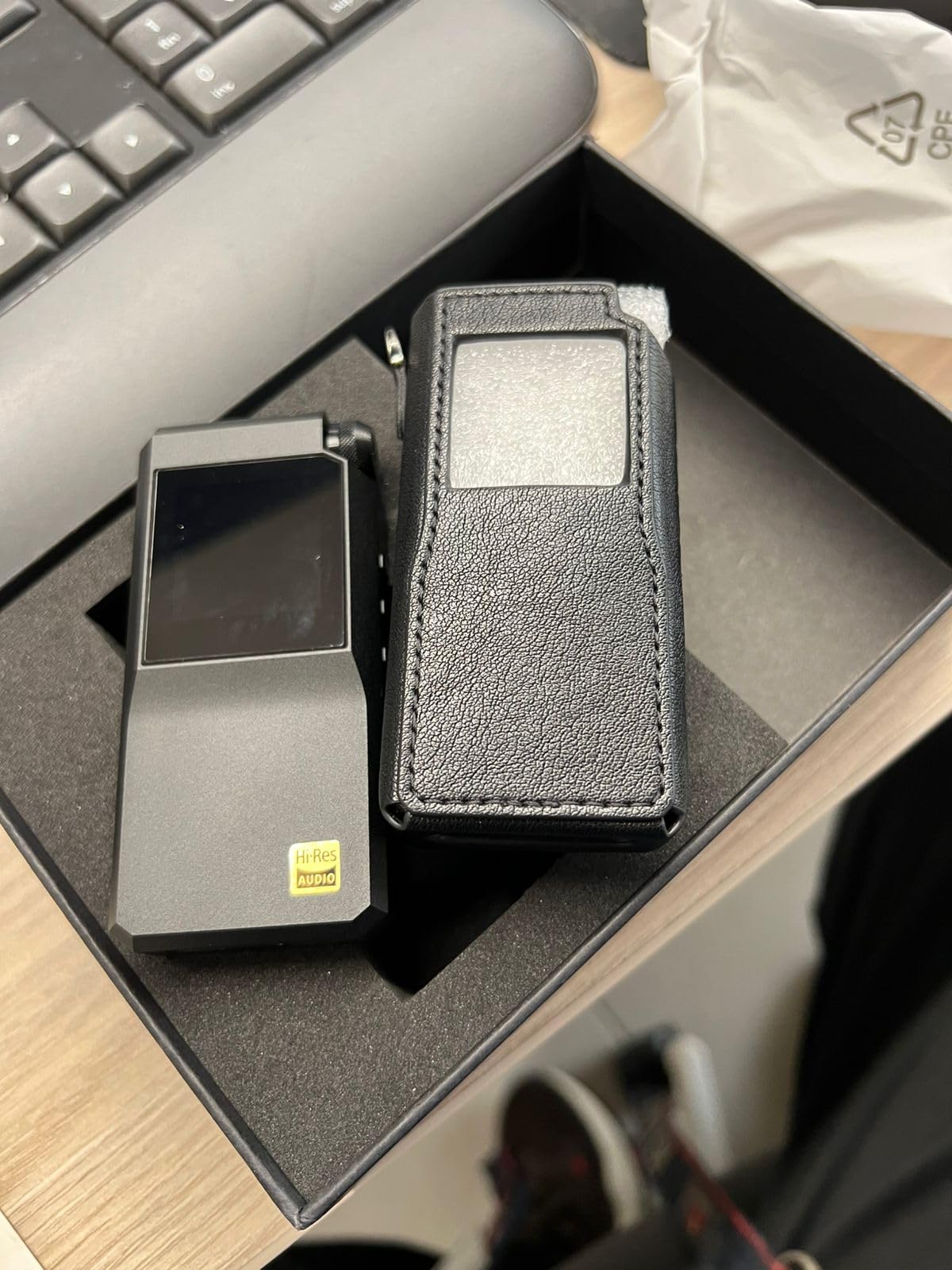
I tested the BTR17 with my most demanding headphones. The Sennheiser HD650 and HD580 reached volumes I would never actually use with headroom remaining. The 4.4mm balanced output is the connection of choice for serious listening. The 10-band parametric EQ lets you tune the neutral THX signature to your taste.
Desktop mode is a killer feature for office use. Connect external USB power and the BTR17 stops drawing from your phone’s battery. You get desktop-caliber sound without draining your mobile device. The included faux leather case provides protection without adding bulk.
Best For Audiophiles Who Want Wireless Without Compromise
If you refuse to compromise on sound quality but want wireless convenience, the BTR17 is the answer. The THX amplification, flagship DACs, and desktop mode create a no-compromise experience. It is the best portable Bluetooth DAC/Amp available in 2026.
Skip If You Are Sensitive to App Frustrations
The FiiO app can be slow to load and occasionally locks up. If you plan to adjust EQ frequently, these software hiccups might frustrate you. The core functionality works perfectly without the app, but you lose the customization features.
12. Astell & Kern HC4 – Premium Dongle Choice
Astell&Kern HC4 USB DAC & Amplifier – Moon Silver
AKM AK4493s DAC
Digital Audio Remaster
3.5mm + 4.4mm
UAC 1.0/2.0
USB-C + Lightning cables
31g weight
Pros
- Excellent detail and resolution
- Rich easy listening sound
- AKM DAC quality
- Dual cables included
- Compact luxury build
- Strong balanced power
Cons
- Large volume steps
- Android compatibility issues
- Not louder just clearer
- Firmware updates needed
Astell & Kern brings their luxury DAP expertise to the dongle format with the HC4. The AKM AK4493s DAC chip is a proven performer in much more expensive equipment. Exclusive circuitry with improved noise control and low-power design elevates this above typical dongle DACs.
The Digital Audio Remaster Technology upsamples your music in real-time. I noticed improved micro-detail and a smoother presentation compared to non-upsampling DACs. The 4.4mm balanced output delivers serious power that drives demanding headphones with authority.
Build quality screams premium. The Moon Silver finish, compact 31-gram form factor, and included cables for both USB-C and Lightning devices show attention to detail. This is luxury audio in pocketable form.
Best For Brand Enthusiasts and iOS Users
If you admire Astell & Kern’s design philosophy and want that experience in a smaller package, the HC4 delivers. The included Lightning cable makes iPhone setup seamless. The sound signature is engaging without being fatiguing.
Skip If You Need Precise Volume Control
The volume steps have large jumps between them. Finding the perfect level can be frustrating. Android compatibility is also inconsistent across devices, so research your specific phone model before purchasing.
13. Astell & Kern ACRO CA1000 – Best Desktop-Portable Hybrid
Astell&Kern ACRO CA1000 Carriable Headphone Amplifier (Moon Silver)
Quad ESS ES9068AS DAC
15Vrms output
4 gain levels
Roon Ready
10.5hr battery
20-band EQ
Pros
- Quad DAC excellence
- Massive 15Vrms output
- Drives any headphone
- Roon Ready certified
- Crossfeed function
- Flip-up display
Cons
- Sluggish UI
- Heavy 2lb weight
- App performance limits
- Not pocket portable
- Confusing power specs
The ACRO CA1000 is not truly portable in the pocketable sense. At just over 2 pounds, this is a transportable desktop unit. But what it offers justifies the size: a quad ESS ES9068AS DAC configuration delivering up to 15Vrms output through four gain levels.
I used the CA1000 as my desktop DAC/Amp for two weeks. The Roon Ready certification meant seamless integration with my streaming setup. The 20-band bit-perfect EQ and crossfeed function enhanced my headphone listening substantially. My Hifiman HE-6SE, notoriously difficult to drive, reached satisfying volumes even without maxing the gain.
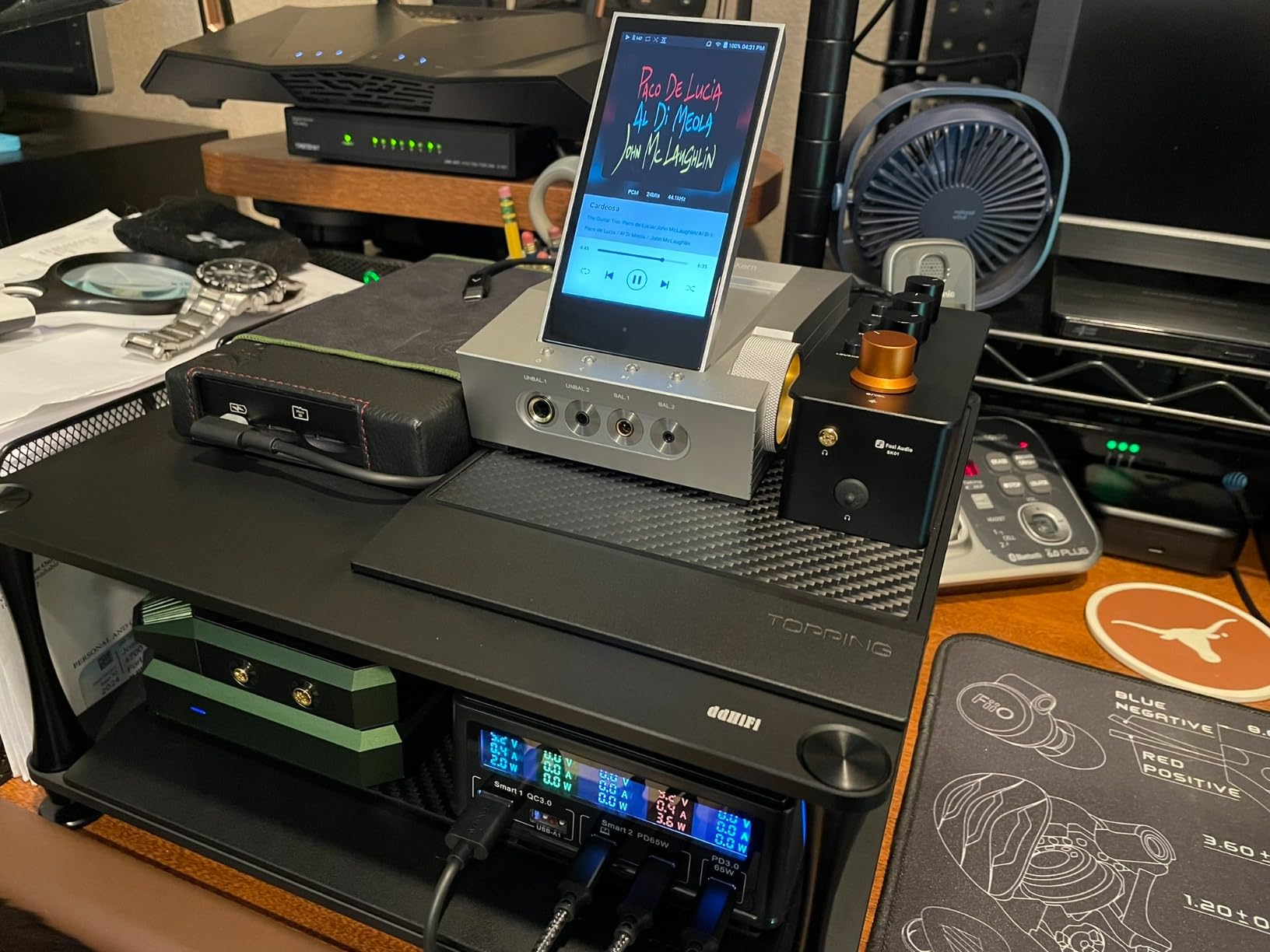
Sound quality is highly detailed, neutral, and resolving. The wide soundstage and excellent separation rival dedicated desktop stacks costing more. The flip-up display with adjustable angle looks futuristic and functions well on a desk. Battery life reaches 10.5 hours for portable use around the home.
Originally priced at $2000, current prices of $600-800 make this an exceptional value for audiophiles wanting desktop-grade performance that can move between rooms. It is not for commuting, but it is perfect for home listening where you want premium sound without a stack of components.
Best For Home Audiophiles Who Want Flexibility
If you primarily listen at home but want the option to move between your office, living room, and bedroom without multiple setups, the CA1000 is ideal. The Roon integration, powerful output, and premium build quality justify the investment for serious listeners.
Skip If You Need True Portability
This is not pocketable or even jacket-pocketable. The 2-pound weight and brick-like dimensions make it strictly for bag transport or home use. If you need something for daily commuting, any other device in this guide is more appropriate.
How to Choose the Right Portable DAC/Amp Combo
Selecting the right portable DAC/Amp requires understanding your specific needs. Here are the key factors to consider before making your purchase.
Power Output and Headphone Matching
The most important specification is power output, typically measured in milliwatts at 32 ohms. Sensitive IEMs need only 10-50mW. Efficient over-ear headphones want 50-150mW. Demanding planar magnetics and high-impedance dynamics require 200mW or more.
Check your headphone’s impedance and sensitivity ratings. If you own 300-ohm Sennheisers or inefficient planars, you need the FiiO KA15 in Desktop Mode, BTR17, or hip-dac3. For IEMs only, even the budget Allegro Mini suffices.
Wired vs Bluetooth: The Connectivity Decision
Wired DACs like the KA15, DS2, and Moondrop Dawn PRO 2 offer the best sound quality and zero latency. They are ideal for critical listening, gaming, and any situation where you sit relatively still. Bluetooth DACs like the BTR13 and BTR17 provide freedom of movement at a slight quality cost.
For gaming specifically, wired connections eliminate any latency concerns. Check our gaming headphone amplifiers guide for more specialized recommendations.
DAC Chip Characteristics
Different DAC chips have different sound signatures. ESS Sabre chips (ES9219, ES9281, ES9068) tend toward detailed, analytical presentations. Cirrus Logic CS-series chips offer clean, neutral sound with low power consumption. AKM chips provide a smoother, more musical presentation. Burr-Brown Multi-Bit DACs deliver organic, engaging sound.
Choose based on your preferences and headphone pairings. Analytical headphones pair well with warmer DACs like the Burr-Brown in the hip-dac3. Warm headphones benefit from the detail retrieval of ESS-based designs.
Codec Support for Wireless Models
If choosing a Bluetooth DAC, codec support matters. LDAC and aptX Lossless deliver near-lossless quality from compatible sources. aptX HD and aptX Adaptive provide excellent quality with lower latency. AAC is the best iOS can offer. SBC is the baseline everything supports but sounds noticeably worse.
The BTR17 supports every codec available, making it the most versatile wireless option. The BTR13 covers the essentials at a lower price point.
IEM Compatibility and Noise Floor
Multi-balanced armature IEMs are extremely sensitive to hiss. The Questyle M15i, Moondrop Dawn PRO 2, and iFi hip-dac3 with iEMatch excel here. Dynamic driver IEMs are less demanding. The Fosi DS2 and BZINK adapter work well for most dynamic IEMs.
Output impedance also matters. Under 1 ohm is ideal for multi-BA IEMs with impedance swings. Most modern DACs meet this standard, but verify before purchasing if you own sensitive multi-driver IEMs.
Frequently Asked Questions
Do portable DACs make a difference?
Yes, portable DACs make a noticeable difference in sound quality. They bypass the low-quality audio components built into smartphones and laptops, delivering cleaner conversion, better detail retrieval, improved dynamics, and proper power to drive headphones. Most users hear improvements in bass definition, soundstage width, and overall clarity immediately.
What are the disadvantages of DAC?
The main disadvantages include additional cost, carrying extra devices, battery drain on some models, compatibility issues with certain phones or cases, and potential for audio latency in wireless models. Some budget DACs may also have build quality issues or lack the power to drive demanding headphones properly.
Do high end DACs sound better?
High-end DACs generally offer better measurements, lower noise floors, more features, and superior build quality. However, the audible difference between a $100 and $1000 DAC is smaller than the jump from phone audio to a basic DAC. Diminishing returns apply significantly in the DAC market.
Do you need both a DAC and an amp?
A portable DAC/Amp combo combines both functions in one device. The DAC converts digital audio to analog signals, while the amplifier boosts that signal to properly drive headphones. You need both for quality headphone listening. Combo units are convenient because they integrate both stages.
Can I use a portable DAC/Amp with my iPhone?
Yes, but iPhone compatibility varies. iPhone 15 and newer use USB-C and work with most DACs directly. Older iPhones need a Lightning to USB adapter or a DAC with Lightning cable included. Some features like PEQ apps may be Android-only. Look for MFi certification for guaranteed compatibility.
Final Thoughts
The portable DAC/Amp market in 2026 offers exceptional value at every price point. From the $20 BZINK adapter that outperforms expectations to the desktop-grade Astell & Kern CA1000, there is a solution for every listener and use case.
For most users, the FiiO KA15 strikes the perfect balance. The combination of portability, power in Desktop Mode, 10-band EQ, and reasonable price makes it our top recommendation. IEM-focused users on tight budgets should grab the Linsoul Allegro Mini. Bluetooth enthusiasts wanting wireless freedom without compromise need the FiiO BTR17 and its THX amplification.
Whichever you choose, any of these 13 portable DAC/Amp combos will transform your headphone listening from phone-quality compromise to hi-fi enjoyment. Your music deserves better than the basic audio built into your devices. Give it the signal quality it needs, and you will hear details, dynamics, and space you never knew existed in tracks you have played hundreds of times.