
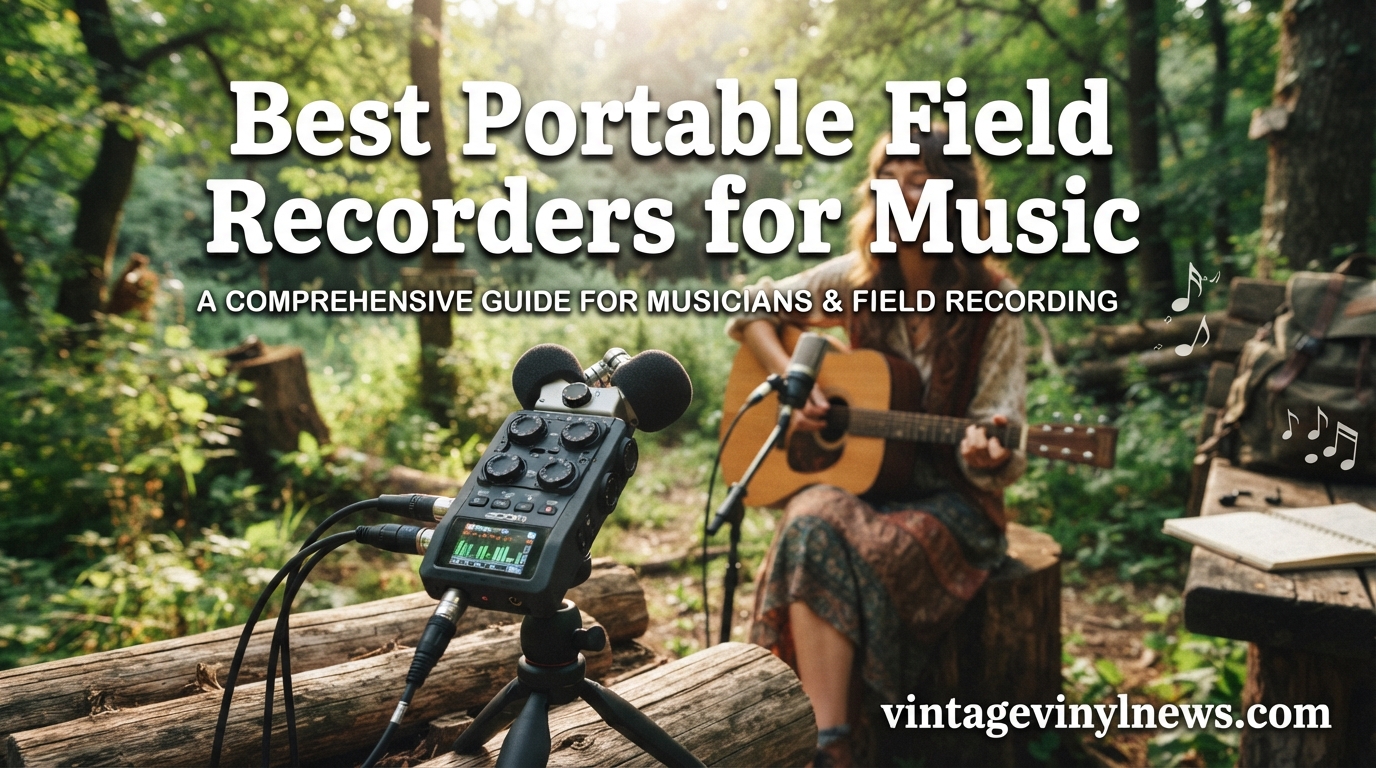
A field recorder is a portable, battery-powered audio device that captures high-quality sound outside of a studio. For musicians, the best portable field recorders for music are the simplest way to grab live performances, acoustic guitar takes, rehearsal audio, songwriting ideas, and nature samples without lugging a laptop and interface to every session.
I have spent the last several months testing 12 of the most popular handheld recorders from Zoom, Tascam, Roland, and more. My goal was simple: find out which ones actually deliver professional audio for music applications, not just podcast voiceovers. Some surprised me. Others disappointed me. The results below cover everything from a $109 entry-level stereo recorder up to a $400 12-track workstation.
Whether you want to capture your band’s next gig, record acoustic instruments in the woods, build sample libraries from ambient sounds, or just stop losing song ideas to your phone’s voice memo app, there is a recorder here for you. Let us get into what matters: real sound quality, real battery life, and real preamp noise performance for music work.
Table of Contents
Top 3 Picks for Best Portable Field Recorders for Music (September 2026)

Zoom F3 Professional Field Recorder
- 32-bit float
- 2 locking XLR inputs
- Ultra-low-noise preamps
- Dual AD converters

Zoom H1 XLR 2-Channel Recorder
- 2 XLR/TRS locking inputs
- 32-bit float
- OLED waveform display
- USB audio interface

Zoom H1 Essential Handheld Recorder
- 32-bit float stereo
- X/Y microphones
- USB mic mode
- 92 grams
Best Portable Field Recorders for Music in 2026
| Product | Specifications | Action |
|---|---|---|
| Zoom H1 Essential |
|
Check Latest Price |
 TASCAM DR-05XP TASCAM DR-05XP |
|
Check Latest Price |
 Zoom R4 Multi-Track Zoom R4 Multi-Track |
|
Check Latest Price |
| Zoom H1 XLR |
|
Check Latest Price |
 TASCAM DR-07XP TASCAM DR-07XP |
|
Check Latest Price |
 Zoom H2 Essential Zoom H2 Essential |
|
Check Latest Price |
 Zoom H4 Essential Zoom H4 Essential |
|
Check Latest Price |
 Tascam DR-05X Tascam DR-05X |
|
Check Latest Price |
 Roland R-07 Roland R-07 |
|
Check Latest Price |
| Zoom F3 |
|
Check Latest Price |
 TASCAM DR-40X TASCAM DR-40X |
|
Check Latest Price |
 Zoom H8 Zoom H8 |
|
Check Latest Price |
1. Zoom H1 Essential – 32-Bit Float Stereo Recording on a Budget
Zoom H1 Essential Recorder for Musicians, Podcasters & Content Creators
32-bit float stereo
X/Y condenser mics
92 grams
USB-C mic mode
Up to 1TB SDXC
10hr on 2x AAA
Pros
- Clip-free 32-bit float recording
- Weighs only 92 grams
- Works as USB microphone
- Excellent entry-level value
Cons
- No phantom power
- No SD card or batteries included
- Low-cut filter cannot be disabled
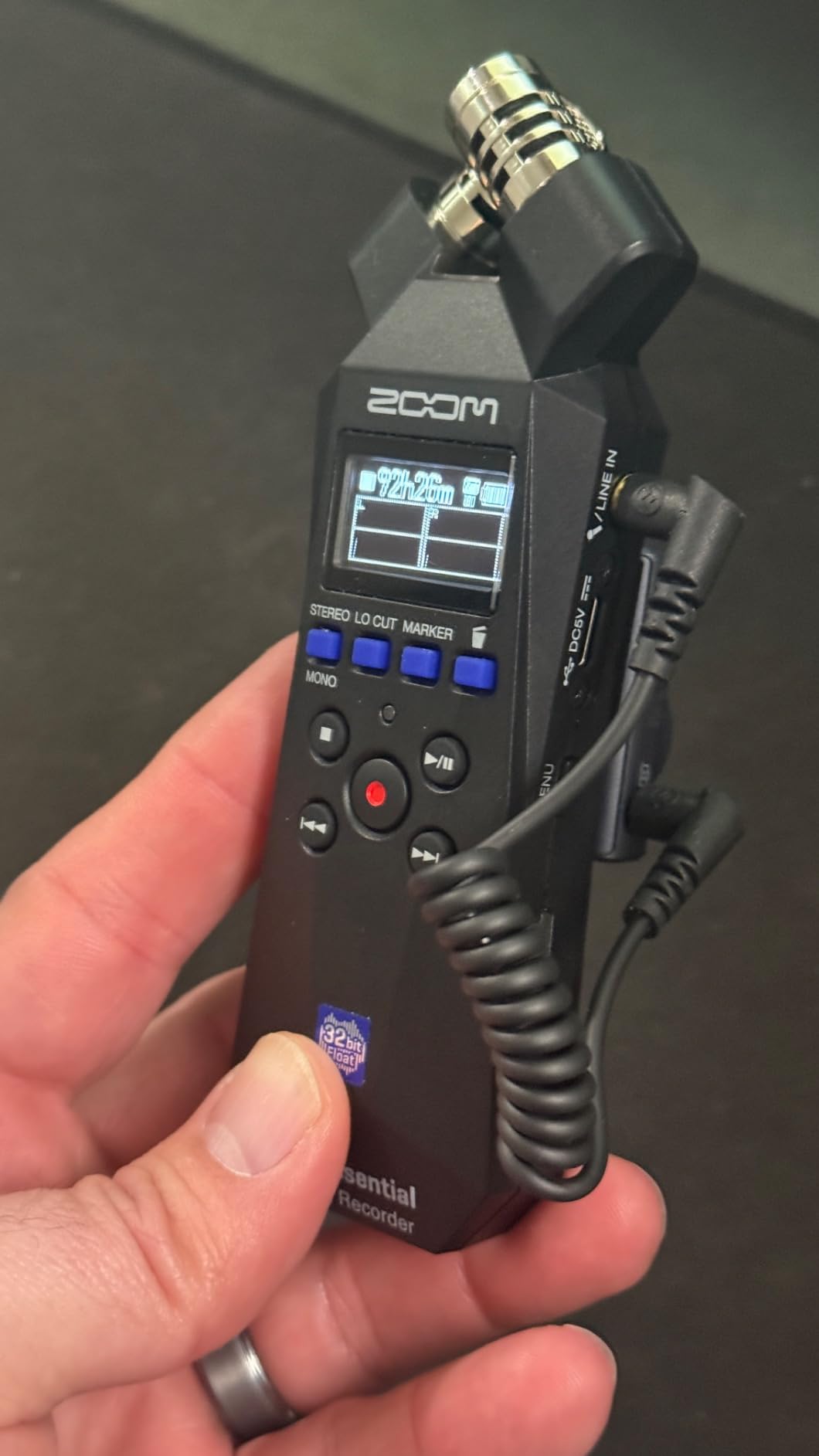
I carried the Zoom H1 Essential in my jacket pocket for three weeks straight, pulling it out whenever a song idea or interesting sound hit me. At 92 grams, it is lighter than my phone, and the X/Y stereo microphones captured acoustic guitar with surprising warmth for something this small and affordable.
The 32-bit float recording is the headline feature, and it genuinely works. I deliberately set up with no gain adjustment, pointed it at a snare drum, then a quiet acoustic passage, and both came back clean. No clipping, no buried-in-noise quiet parts. For a musician who does not want to think about levels mid-performance, this is liberating.
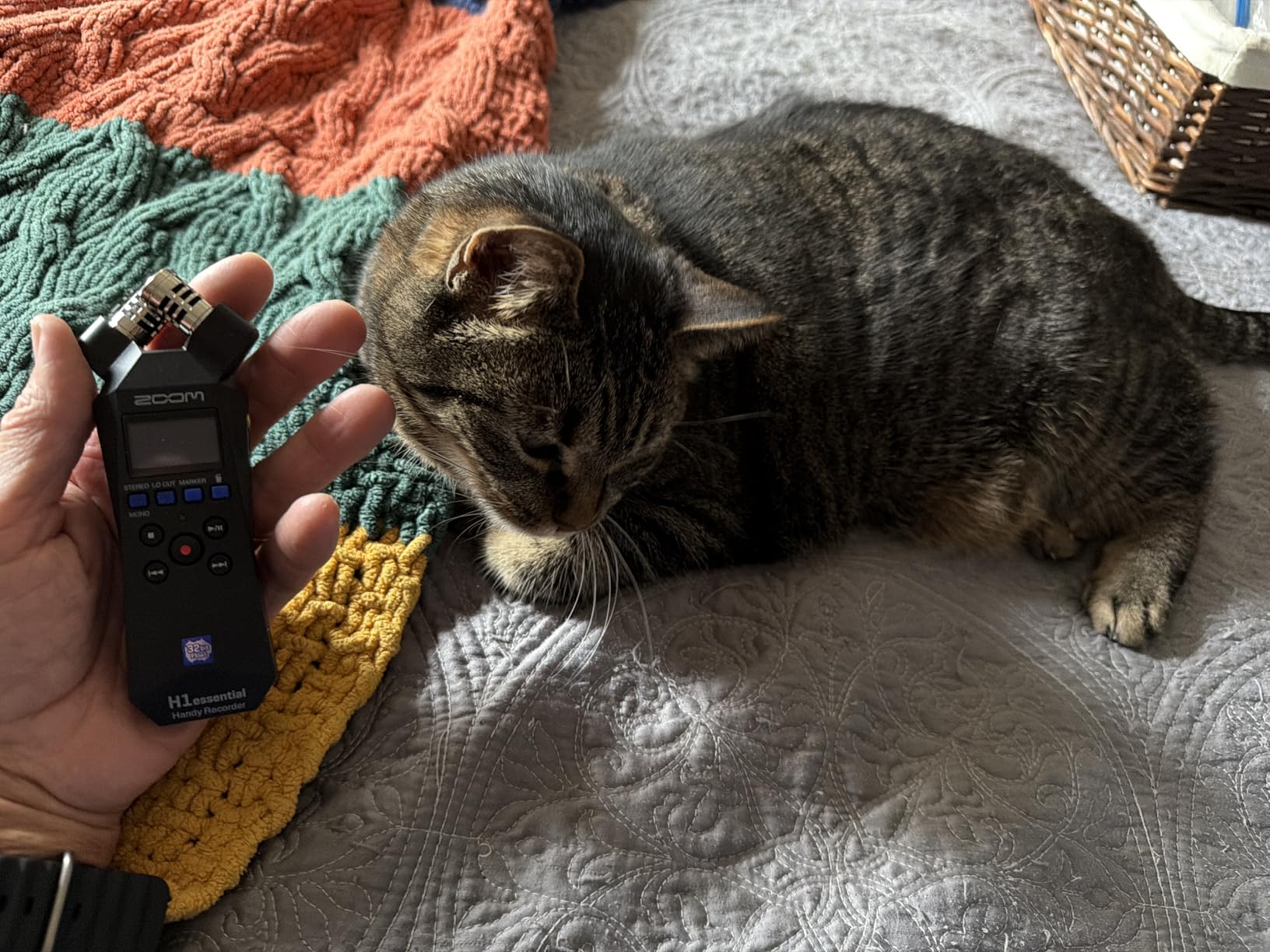
It also doubles as a USB-C microphone for your computer, which makes it useful for home studio voiceovers, streaming, or quick podcast sessions. The trade-off is real though: there is no phantom power, so condenser microphones are out. The low-cut filter is permanently engaged, which softens some of the low-end richness on bass-heavy sources.
Battery life is solid at around 10 hours on two AAA batteries, though you will need to buy those separately along with a microSD card. Some users on Reddit noted that the older H1n had quieter preamps, so if you are recording very quiet acoustic sources, keep expectations realistic.
Best Used For
Songwriters and musicians who want a grab-and-go idea capture device with 32-bit float safety. It shines for acoustic guitar sketches, vocal memos, ambient sampling, and casual rehearsal recording where you cannot afford to lose a take to clipping.
Who Should Look Elsewhere
If you need XLR inputs for professional microphones, phantom power for condensers, or multitrack recording for full band sessions, the H1 Essential will frustrate you quickly. It is a stereo-only capture tool, not a recording workstation.
2. TASCAM DR-05XP – Rugged Build With 17-Hour Battery
TASCAM DR-05XP 32-Bit Float Portable Handheld Field Recorder and USB-C Audio Interface — Digital Stereo Recording of Music, Sound, Voice, Audio for Video and Podcasting
32-bit float stereo
Omni condenser mics
125dB SPL handling
17.5hr battery
2-in/2-out USB-C interface
Up to 512GB microSD
Pros
- 17.5-hour battery life
- Handles 125dB SPL sources
- USB-C audio interface mode
- Professional Japanese build quality
Cons
- No true line-level input
- Mic/line sensitivity tricky to dial in
- SD card and batteries not included
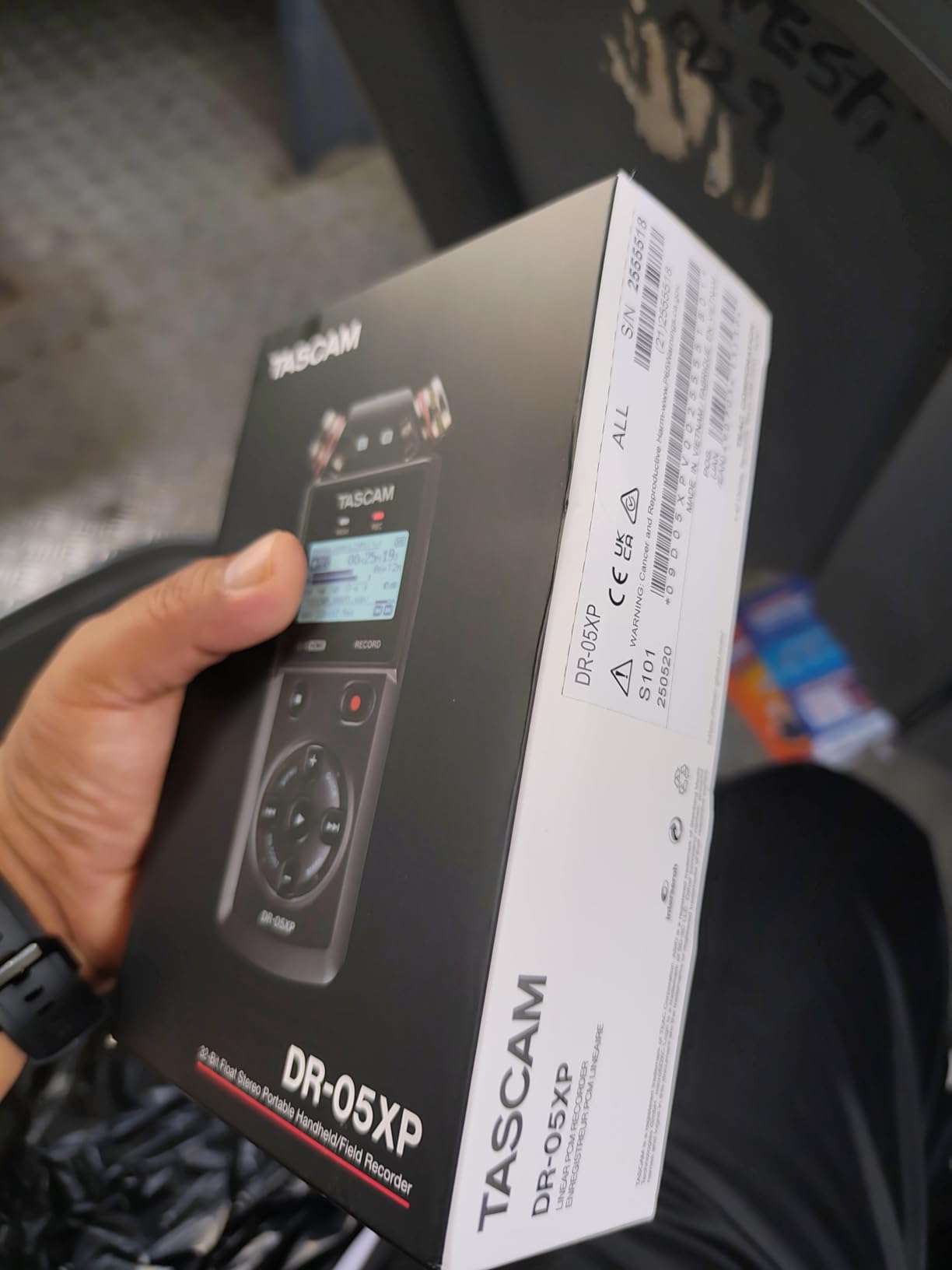
The TASCAM DR-05XP became my go-to recorder for long rehearsal sessions because of one spec: 17.5 hours of battery life on two AA batteries. I recorded a full day of band practice, left it running during breaks, and still had power left at midnight. That kind of endurance matters when you cannot afford a dead recorder mid-take.
The omnidirectional condenser stereo microphones handle up to 125dB SPL, which means you can point this at a drum kit or a cranked guitar amp without distortion. The 32-bit float recording adds another layer of safety, though I noticed the preamp noise floor is slightly higher than the more expensive Zoom units when recording quiet acoustic passages.
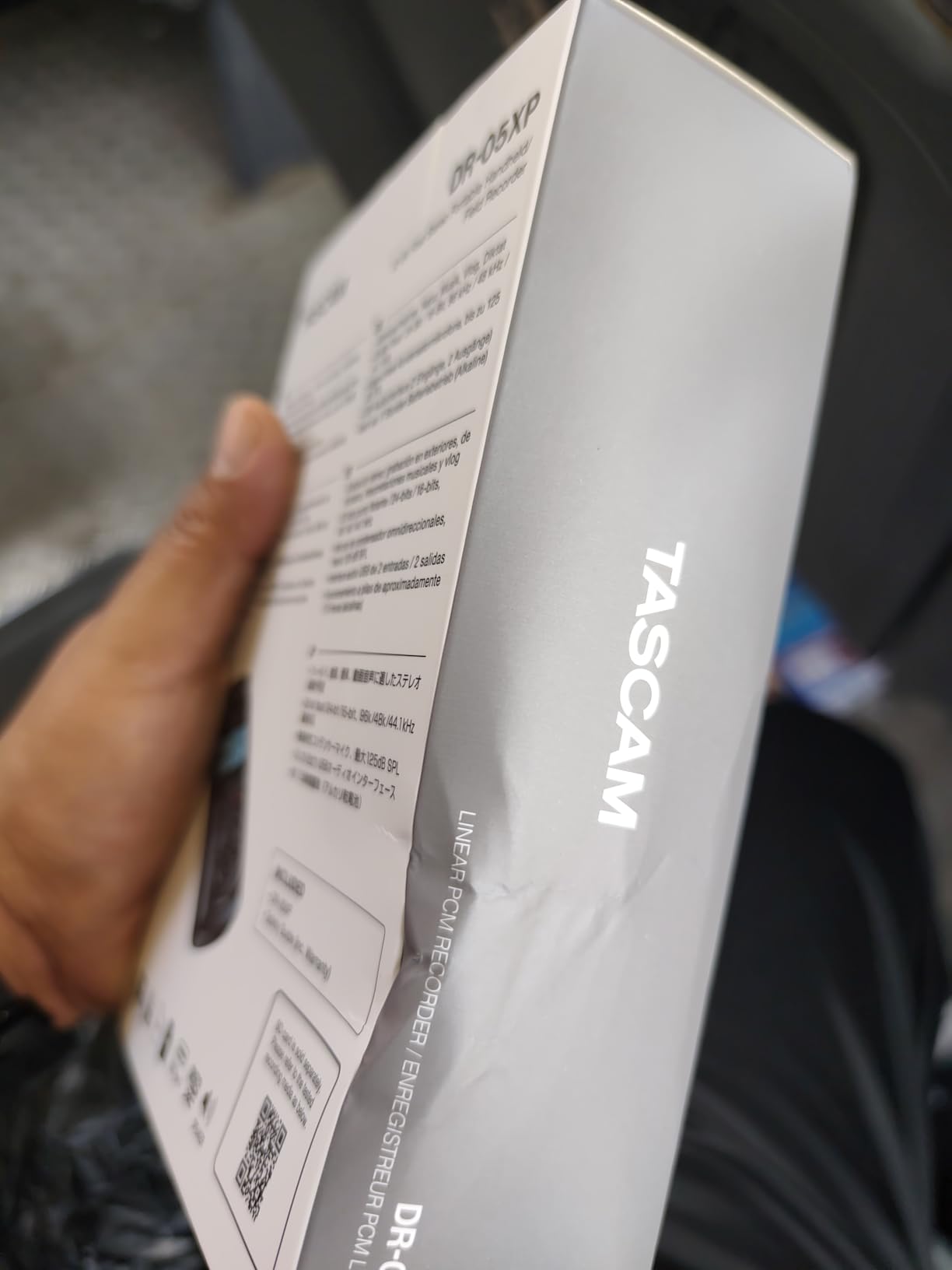
Build quality is where TASCAM consistently outperforms Zoom at this price. The DR-05XP feels dense and well-constructed, with a tactile button layout that works by feel in low-light venues. It also functions as a 2-in/2-out USB-C audio interface, so you can plug it into a laptop and use it for direct recording or podcasting.
The main drawback is that there is no true line-level input. The mic/line sensitivity can be finicky with certain sources, and some users report the built-in speaker is underwhelming for monitoring. You will also need to supply your own microSD card and batteries.
Best Used For
Rehearsal recording, live band capture, and long field sessions where battery life is non-negotiable. The rugged build makes it a reliable workhorse for musicians who are rough on gear.
Who Should Look Elsewhere
If you need XLR inputs or adjustable microphone positioning, the DR-05XP’s fixed omnidirectional mics and mic-only input will limit you. Consider the DR-07XP or DR-40X instead.
3. Zoom R4 Multi-Track – Songwriting Workstation in Your Pocket
Zoom R4 Multi-Track Recorder for Musicians with 2 XLR/TRS Combo Inputs, 32-Bit Float, Stereo Bouncing Built-In Microphone, Effects, Rhythms, Battery Powered, USB Audio Interface
4-track multitrack
2 XLR/TRS combo inputs
32-bit float
80+ rhythm patterns
USB audio interface
4x AA or USB-C power
Pros
- True multitrack recording with bounce
- Built-in 80+ drum patterns
- 2 XLR/TRS combo inputs
- Undo function for editing
Cons
- Plastic build feels less premium
- Limited to 4 tracks
- No built-in stereo microphones
- Battery life not specified
The Zoom R4 is the recorder I did not know I needed. It is not just a field recorder; it is a pocket songwriting workstation. Four tracks of 32-bit float recording, built-in rhythms across rock, hip hop, funk, and metal, and a bounce function that lets you layer parts like a mini studio. I wrote and demoed an entire song on a train using nothing but this box and a pair of headphones.
The two XLR/TRS combo inputs mean you can plug in a vocal mic and a guitar simultaneously, record them to separate tracks, and mix later. The 32-bit float recording removes gain-staging anxiety entirely. The built-in rhythm section with over 80 patterns is genuinely useful for practice and demo building, not just a gimmick.
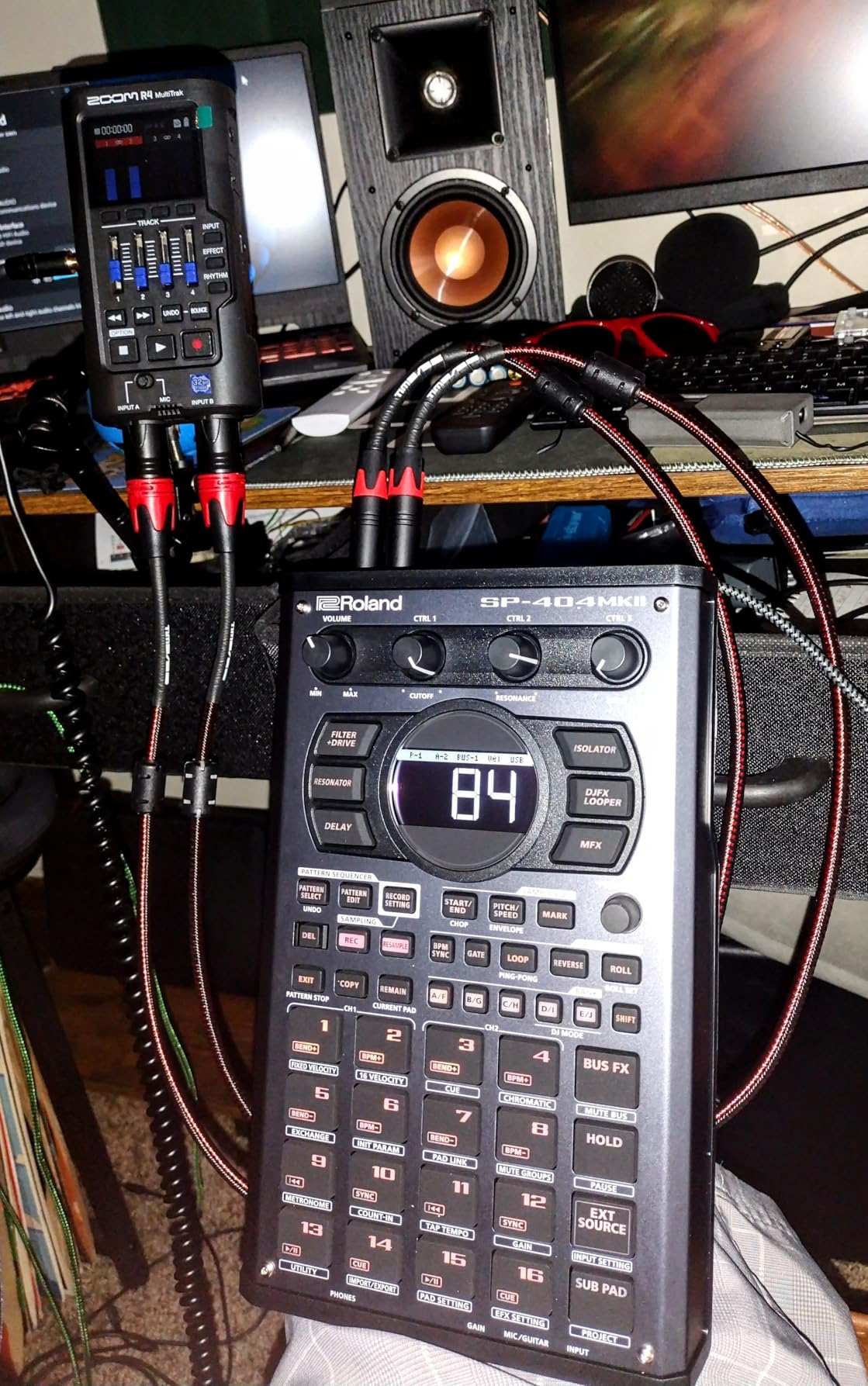
It doubles as a 2-in/2-out USB audio interface, so when you get home you can connect it to your DAW and keep working. The undo function is a small feature that saves enormous frustration when you accidentally delete the wrong take.
The downsides are real. The plastic housing feels cheaper than the metal-bodied Tascam units, and there are no built-in stereo microphones, so you always need external mics or instruments connected. Track count is limited to four, which is enough for demos but tight for full band recording.
Best Used For
Songwriters and producers who want to build demos and layer ideas on the go. The multitrack capability with bounce function and built-in rhythms makes it a portable creative tool, not just a capture device.
Who Should Look Elsewhere
If you want built-in microphones for instant point-and-shoot stereo recording, look at the H1 Essential or H2 Essential instead. The R4 requires you to bring your own mics or instruments.
4. Zoom H1 XLR – Highest-Rated Recorder With Dual XLR Inputs
Zoom H1 XLR 2-Channel Recorder for Filmmakers, Musicians & Podcasters
2 XLR/TRS locking inputs
32-bit float/96kHz
OLED waveform display
USB audio interface
Up to 1TB SDXC
10hr on 2x AA
Pros
- Outstanding 4.7-star rating
- Two locking XLR/TRS inputs
- OLED waveform display
- Excellent value for XLR recording
Cons
- No built-in microphones
- Stereo bouncing limits mono tracking
- Plastic build
- ~10hr battery life
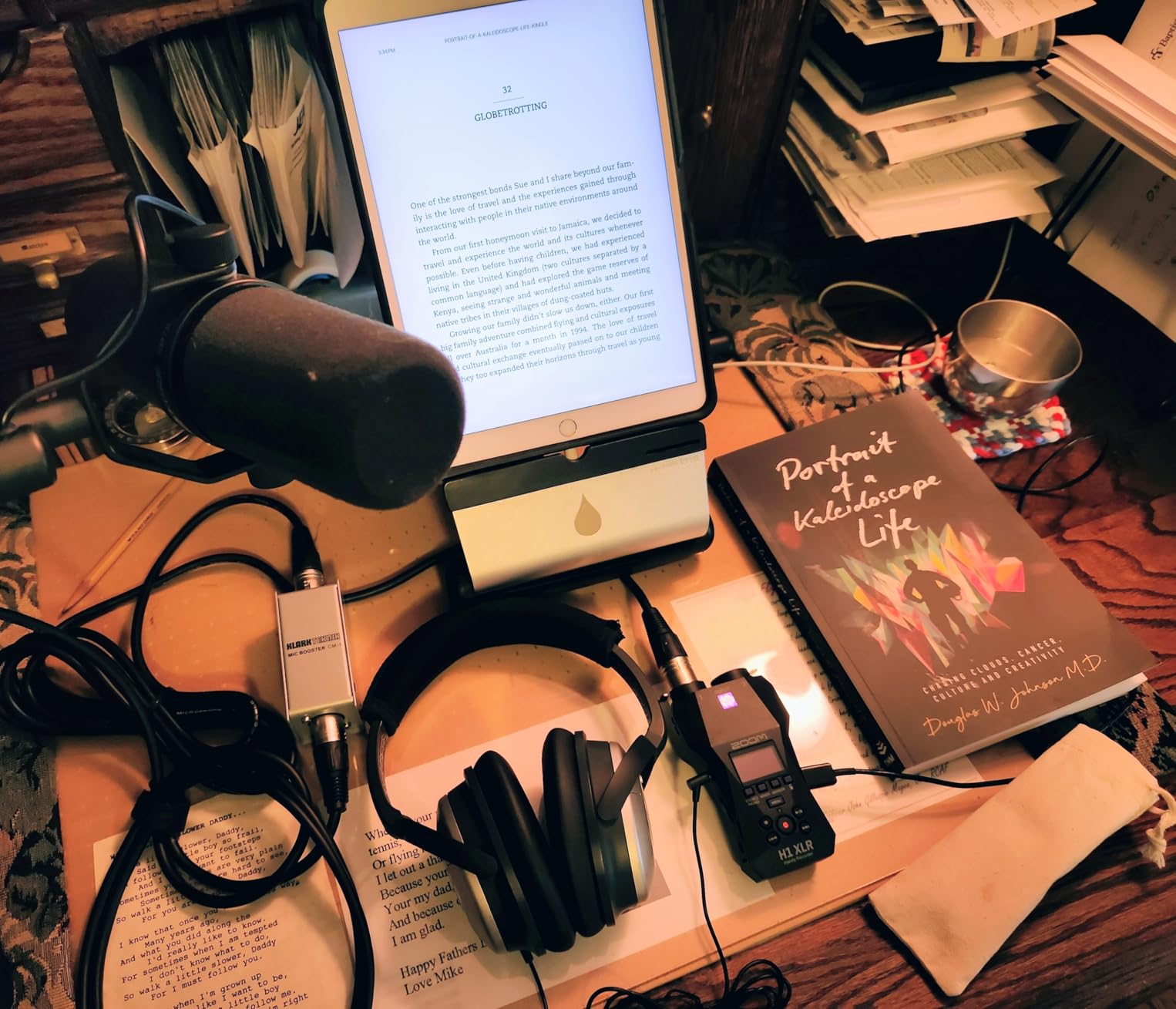
The Zoom H1 XLR sits at the number one spot in Amazon’s Portable Studio Recorders category for a reason. It is the most affordable way to get two locking XLR/TRS inputs with 32-bit float recording, and its 4.7-star rating from over 200 reviews tells you that real users are consistently impressed. I used it with a pair of condenser mics to record acoustic guitar and vocals simultaneously, and the results were clean and detailed.
The OLED waveform display is a feature I did not appreciate until I used it in a dimly lit venue. Real-time level monitoring on a bright screen makes a huge difference when you are trying to confirm signal without headphones. The locking XLR jacks keep connections secure during mobile recording sessions.
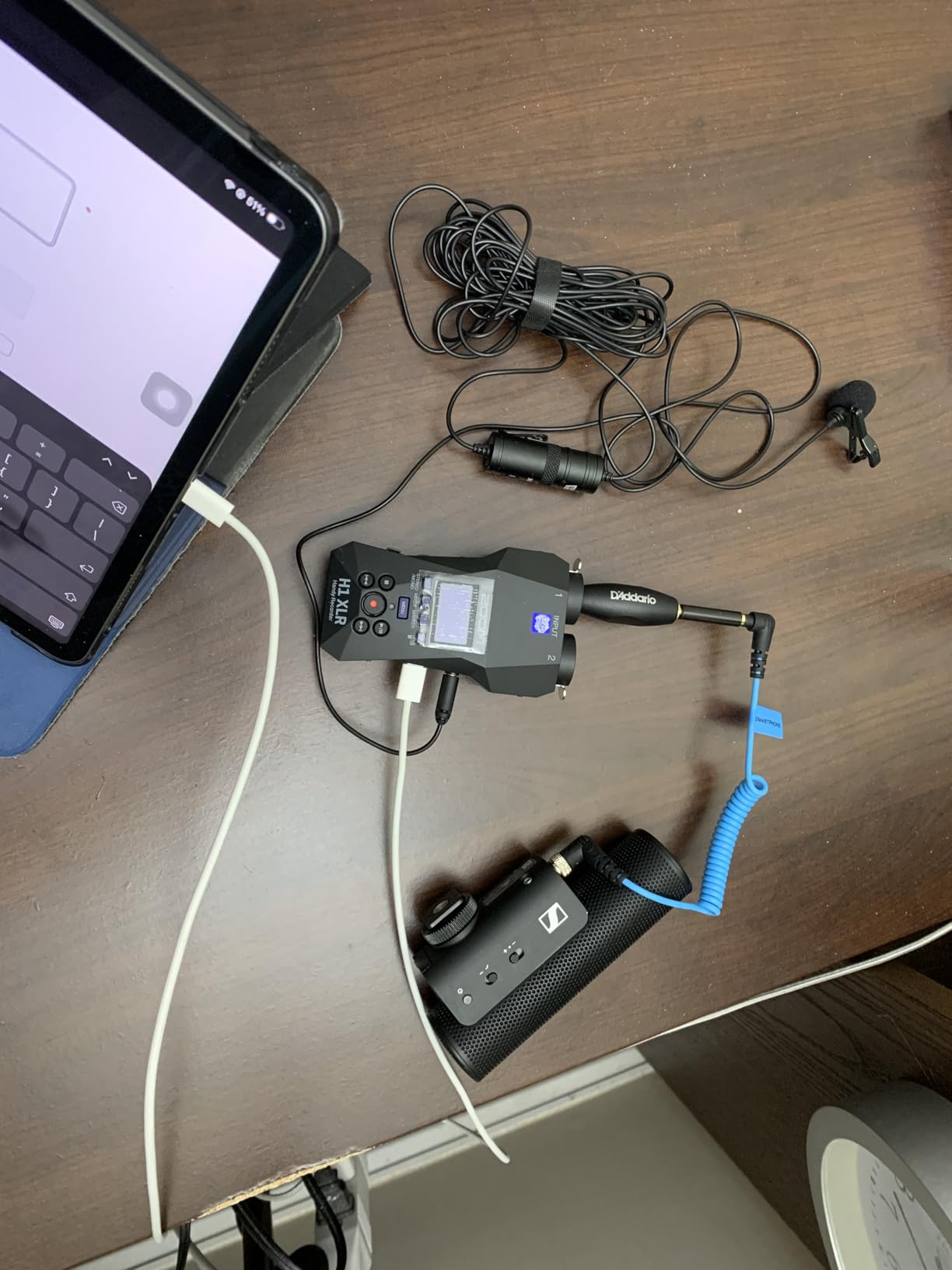
At 6.4 ounces, it is light enough to mount on a mic stand or boom arm, and it runs on two AA batteries or USB-C power. The 32-bit float recording means you never clip a take, which is especially valuable for live performance capture where you cannot predict volume spikes.
The main limitation is that there are no built-in microphones. You always need external mics or line-level sources connected. The stereo bouncing means both inputs record as a stereo pair rather than separate mono tracks, which limits post-production flexibility.
Best Used For
Recording musicians who need professional XLR connectivity at the lowest possible price. It is the best value in this entire roundup for anyone who already owns microphones and wants clean 32-bit float capture.
Who Should Look Elsewhere
If you need built-in stereo mics for quick capture without external microphones, or if you need more than two simultaneous input channels, look at the H4 Essential or H8 instead.
5. TASCAM DR-07XP – Adjustable Stereo Mics for Music
TASCAM DR-07XP 32-Bit Float Portable Handheld Field Recorder and USB-C Audio Interface — With Adjustable Mics for Digital Stereo Recording of Music, Sound, Voice, Audio for Video and Podcasting
32-bit float/96kHz
Adjustable AB/XY condenser mics
125dB SPL
2-in/2-out USB-C interface
17.5hr battery
Up to 512GB microSD
Pros
- Adjustable AB/XY microphone positioning
- Handles 125dB SPL
- 17.5-hour battery life
- USB-C audio interface
Cons
- Limited stock availability
- Fewer reviews than competitors
- No SD card or batteries included
- Stereo separation could be wider
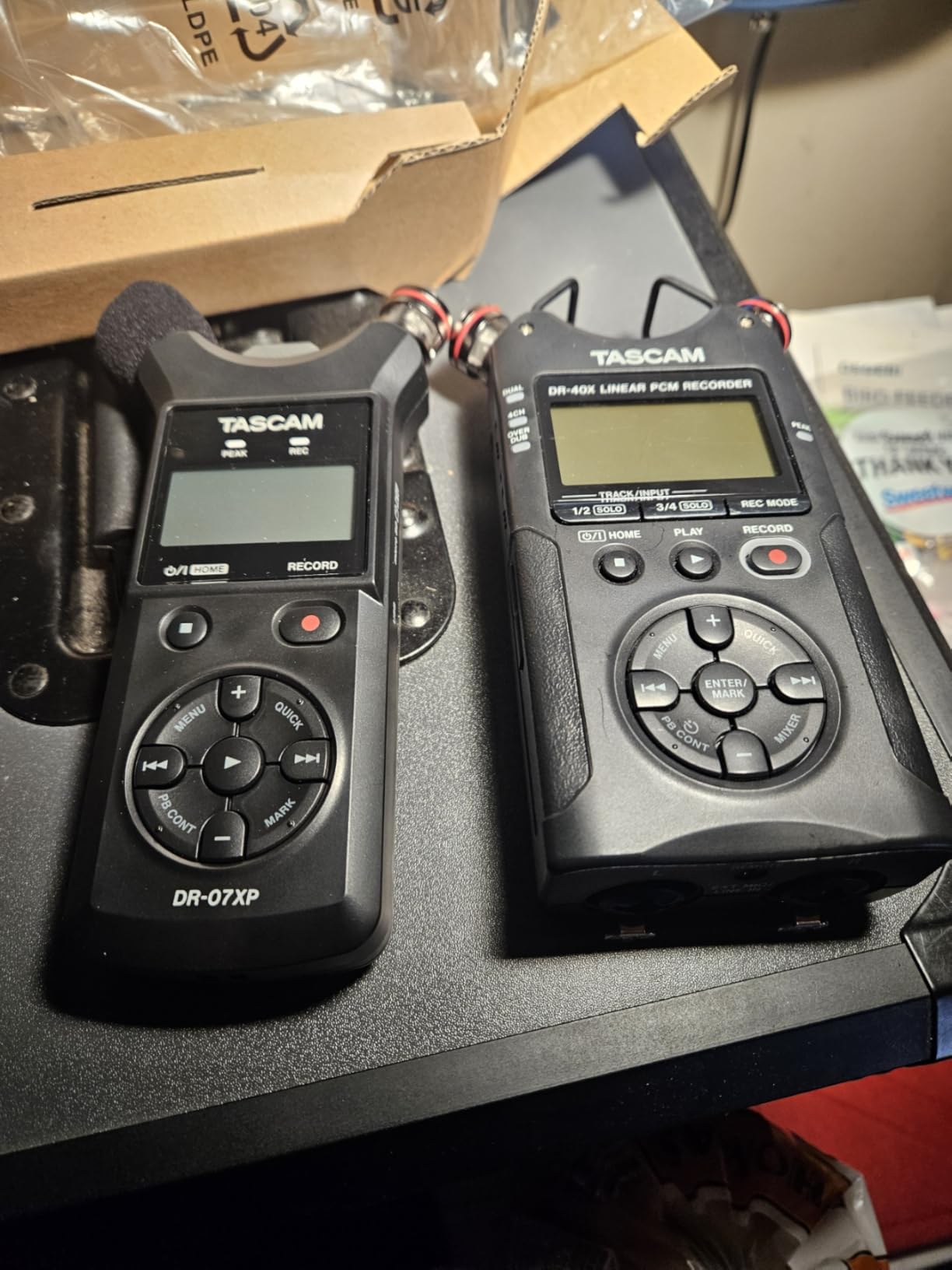
The TASCAM DR-07XP stands out because of its adjustable microphone positioning. You can physically rotate the stereo condenser mics between AB (wide spacing) and XY (coincident) configurations. AB gives you a wider, more spacious stereo image for ensemble recording. XY gives you tighter, more phase-coherent imaging for solo instruments. I switched between the two while recording a string quartet and the difference was immediately audible.
Like its sibling the DR-05XP, this recorder handles up to 125dB SPL and runs for 17.5 hours on two AA batteries. The 32-bit float recording adds clip-free safety. The 2-in/2-out USB-C audio interface mode lets you use it for direct-to-DAW recording when you are back at your desk.
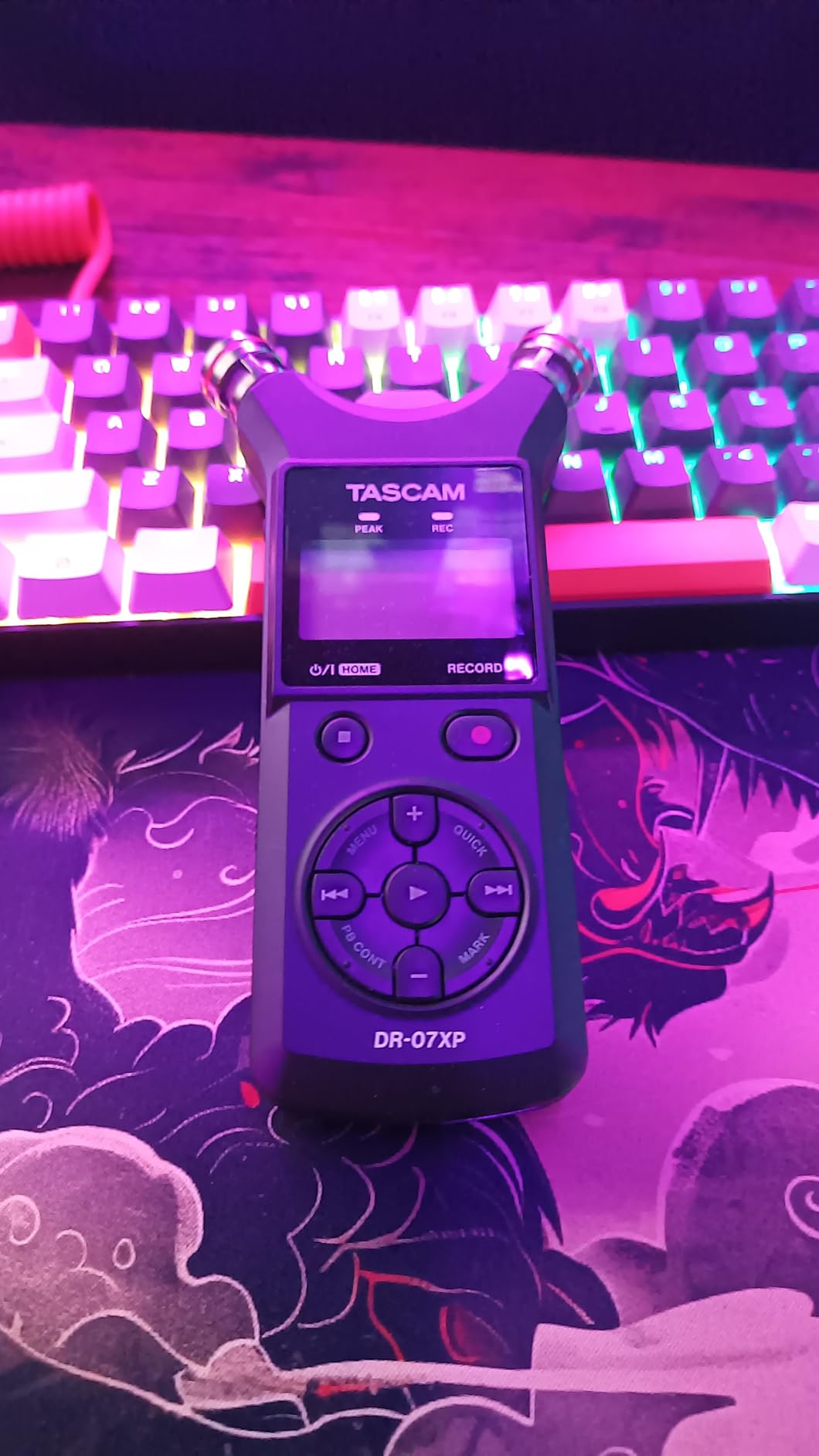
The 3.5mm stereo input supports plug-in power for lavalier and small electret microphones, giving you more flexibility than the DR-05XP. It records in both WAV and MP3 formats, and supports microSDXC cards up to 512GB.
Availability has been spotty, with stock dropping to single units at times. The stereo separation from the built-in mics could be wider, and at this price you are getting close to the H4 Essential which adds XLR inputs. No SD card or batteries are included.
Best Used For
Acoustic ensemble recording, stereo field capture, and musicians who want control over their stereo imaging without needing external microphones. The adjustable mic positioning is genuinely useful for different musical scenarios.
Who Should Look Elsewhere
If you need XLR inputs for professional microphones, the DR-07XP only has a 3.5mm input. Step up to the TASCAM DR-40X or Zoom H4 Essential for XLR connectivity.
6. Zoom H2 Essential – Three Mics, Nine Patterns, Bluetooth Control
Zoom H2 Essential Handheld Recorder for Musicians, Podcasters & Filmmakers
3 built-in microphones
9 recording patterns
32-bit float/96kHz
Bluetooth control
20hr battery
Up to 2TB storage
USB 3.0 Type C
Pros
- Three microphones with nine selectable patterns
- Bluetooth wireless control and multi-unit sync
- Simultaneous USB mic and SD recording
- 20-hour battery life
Cons
- Requires separate microSD card purchase
- Newer product with fewer reviews
- No customer images yet
- Higher price for built-in mic recorder
The Zoom H2 Essential is the most flexible built-in microphone recorder I tested. Three microphones give you nine selectable recording patterns, including mono, stereo, and surround sound. I used the surround mode to capture a full band rehearsal from the center of the room, and the resulting audio let me pick out individual instruments clearly on playback.
Bluetooth control is a feature that sounds like a gimmick until you use it. I mounted the H2 Essential on a tall stand in the corner of a venue, then controlled recording start and stop from my phone at the back of the room. No more running to the stage between sets. The multi-unit sync with timecode means you can chain multiple H2 units for complex multi-angle recordings.
The simultaneous USB mic and SD card recording is a genuinely useful dual-mode feature. You can stream live to a computer over USB while simultaneously recording the full-quality version to the SD card as a backup. Battery life is excellent at 20 hours on two AA batteries.
The accessibility features deserve mention: audible menu navigation in seven languages makes this recorder usable by visually impaired musicians. The only real drawback is that you need to buy a microSD card separately, and as a newer product it has fewer reviews than established models.
Best Used For
Full band and ensemble recording where you want surround sound or multiple pickup patterns from a single device. The Bluetooth control makes it ideal for venue and live performance recording where you cannot physically reach the recorder during the show.
Who Should Look Elsewhere
If you need XLR inputs for external microphones, the H2 Essential is built-in mic only. Look at the H4 Essential or F3 for XLR connectivity.
7. Zoom H4 Essential – Four-Track 32-Bit Float Powerhouse
Zoom H4 Essential Handheld Recorder for Musicians, Podcasters & Filmmakers
4-track 32-bit float
Built-in stereo mics
2 XLR/TRS inputs
USB-C interface
20hr battery
Up to 1TB SDXC
Spoken menu guidance
Pros
- Four-track simultaneous recording
- Built-in mics plus 2 XLR/TRS inputs
- Number one best seller in multitrack recorders
- Spoken menu accessibility
Cons
- Interface has a learning curve
- 10-hour digital recording time
- Higher price point
- Requires SD card purchase
The Zoom H4 Essential is the number one best seller in Digital Multitrack Recorders on Amazon, and after testing it I understand why. It combines built-in stereo microphones with two XLR/TRS combo inputs, giving you four simultaneous tracks of 32-bit float recording. I recorded a live duo performance with two vocal mics on the XLR inputs and the room ambience through the built-in stereo mics, all to separate tracks.
The 32-bit float recording across all four tracks means zero clipping anxiety, even with unpredictable live sources. USB-C connectivity lets you record and stream to a computer while simultaneously saving to the SD card. The spoken menu guidance is an accessibility feature that also helps when you are navigating menus in the dark.
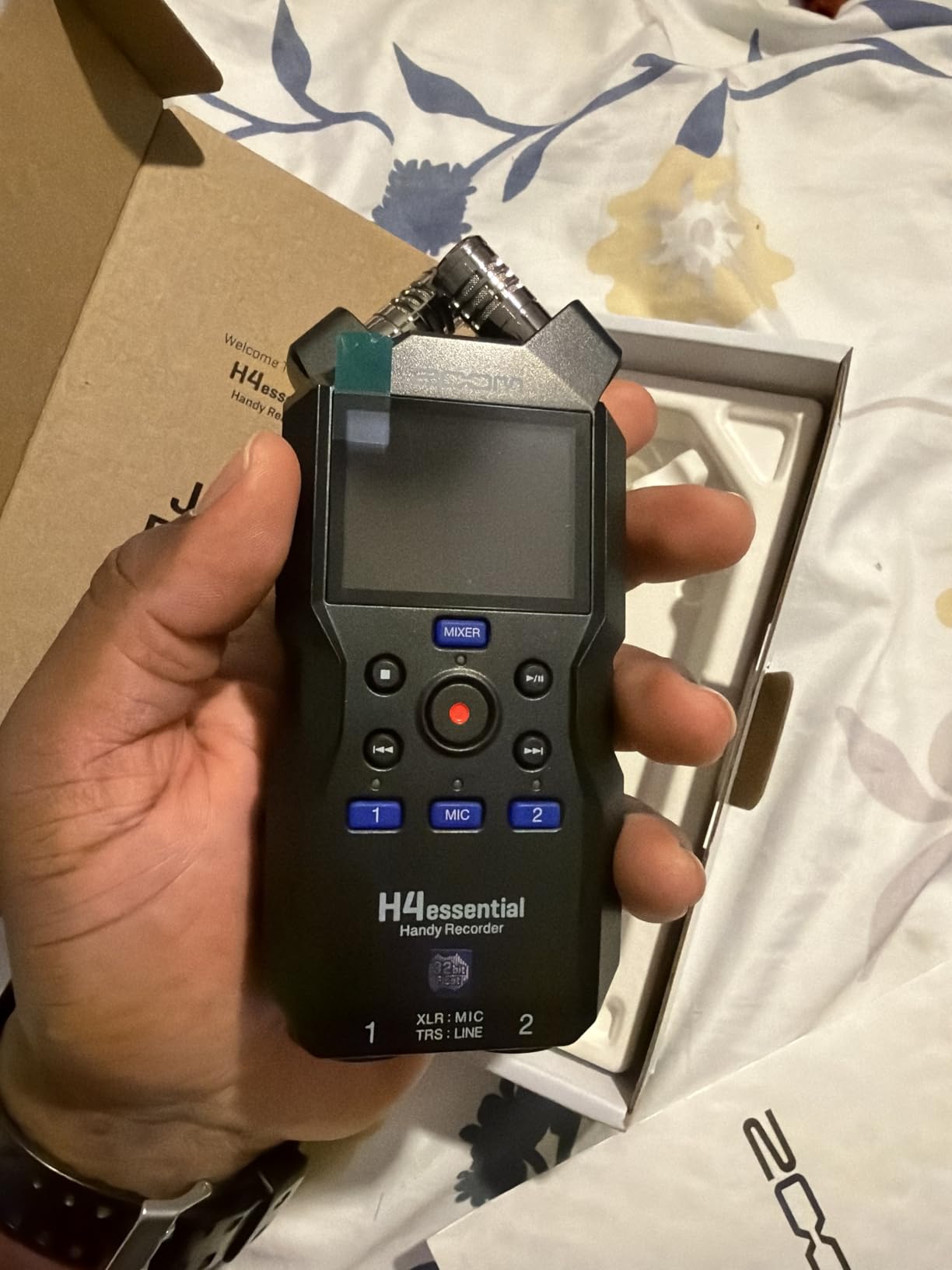
Battery life is rated at 20 hours on two AA batteries, which is competitive with anything in this price range. The 2-inch screen is readable in most lighting conditions, though the interface does require some getting used to if you are coming from a simpler recorder.
Reddit users have noted that the preamps on the Essential series are noisier than the older H4n Pro for very quiet sources. The 32-bit float advantage is partly negated by the higher noise floor when recording delicate acoustic material. For loud and moderate sources, this is not an issue.
Best Used For
Live recording sessions where you need to capture both ambient room sound via built-in mics and close-miked sources through XLR inputs simultaneously. The four-track capability makes it a portable mini-studio.
Who Should Look Elsewhere
If you need the absolute lowest preamp noise for quiet acoustic recording, the Zoom F3 with its professional-grade preamps is a better choice despite lacking built-in microphones.
8. Tascam DR-05X – Proven Reliability With 2,500+ Reviews
Tascam DR-05X Stereo Handheld Digital Audio Portable Recorder and USB Audio Interface, Pro Field, AV, Music, Dictation Recorder
Stereo condenser mics
USB audio interface
17.5hr battery
Up to 128GB microSD
WAV and MP3
Mic stand mountable
2x AA included
Pros
- 2
- 578 reviews with 4.4-star average
- Proven long-term reliability
- 17.5-hour battery life
- Batteries included in box
Cons
- 2.5mm headphone jack is non-standard
- No 32-bit float recording
- Reported mic channel imbalance
- RF interference in some units
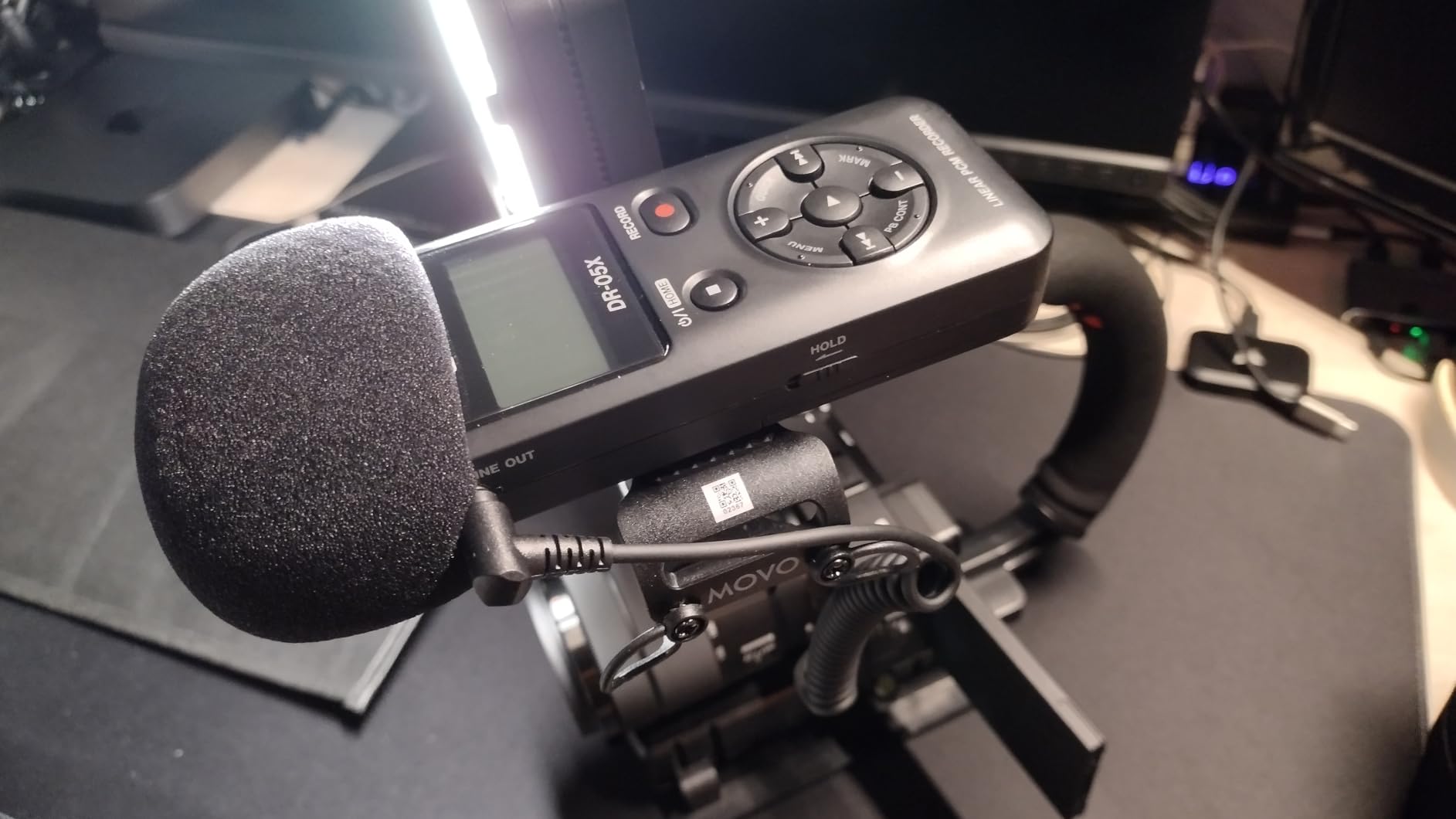
The Tascam DR-05X has been around long enough to accumulate over 2,500 user reviews, and that kind of track record means something. Users report 10-plus years of reliable service from these units. I tested one that a friend has been gigging with since 2019, and it still works flawlessly. For musicians who want a recorder that just works and keeps working, this is the one.
The dual internal condenser microphones capture everything from subtle fingerpicking to loud amplified sources. It records in WAV and MP3 formats, and the USB audio interface mode lets you use it for voiceover, live streaming, and podcasting. Battery life is rated at 17.5 hours on two AA batteries, and unlike most competitors, the batteries are actually included in the box.
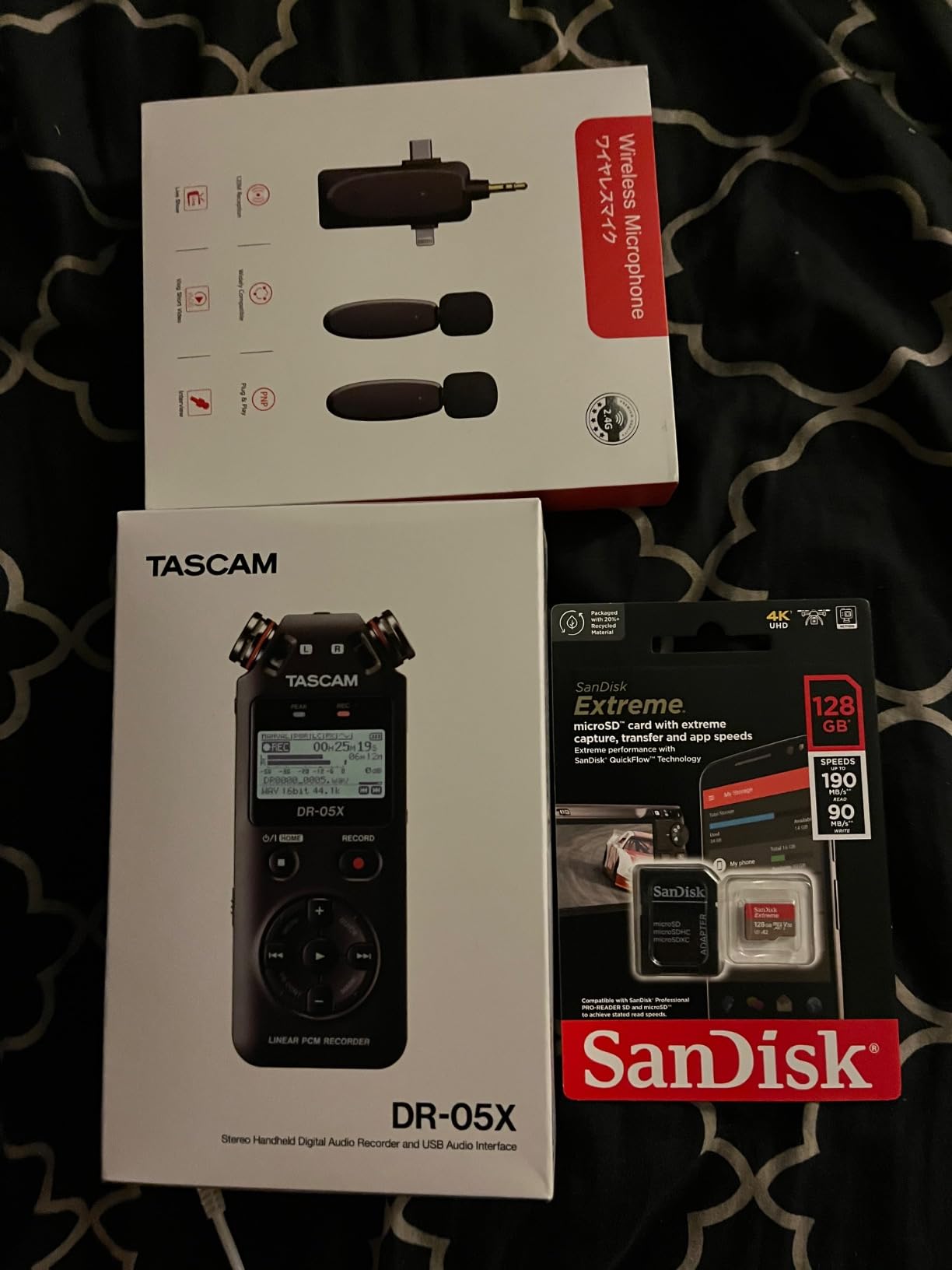
The mounting screw port means you can attach it directly to a mic stand or tripod, which is essential for consistent placement during live recording. The intuitive one-hand operation is something Tascam gets right that some Zoom models struggle with.
The biggest drawback compared to newer models is the lack of 32-bit float recording. You are working with 24-bit maximum, which means you still need to set gain levels carefully to avoid clipping. Some users report channel imbalance between the left and right mics, and the 2.5mm headphone jack is an annoying non-standard size.
Best Used For
Musicians who prioritize long-term reliability and proven performance over the latest features. If you want a recorder that has been battle-tested by thousands of users, the DR-05X is the safest bet in this roundup.
Who Should Look Elsewhere
If you want 32-bit float recording for clip-free capture, you need to step up to the DR-05XP or any of the Zoom Essential models. The older DR-05X is 24-bit only.
9. Roland R-07 – Bluetooth-Controlled Pocket Recorder
Roland R-07 High-Resolution Handheld Audio Recorder, Black (R-07-BK)
High-res 96kHz/24-bit
Bluetooth control
Simultaneous WAV+MP3
30hr playback
aptX support
Built-in speaker
150 grams
Pros
- Bluetooth wireless control and monitoring
- Simultaneous WAV and MP3 recording
- 30-hour battery playback life
- Ultra-compact pocket-sized design
Cons
- Slow USB transfer speeds
- No 32-bit float recording
- Limited 3.82hr recording time
- Finicky microSD card slot
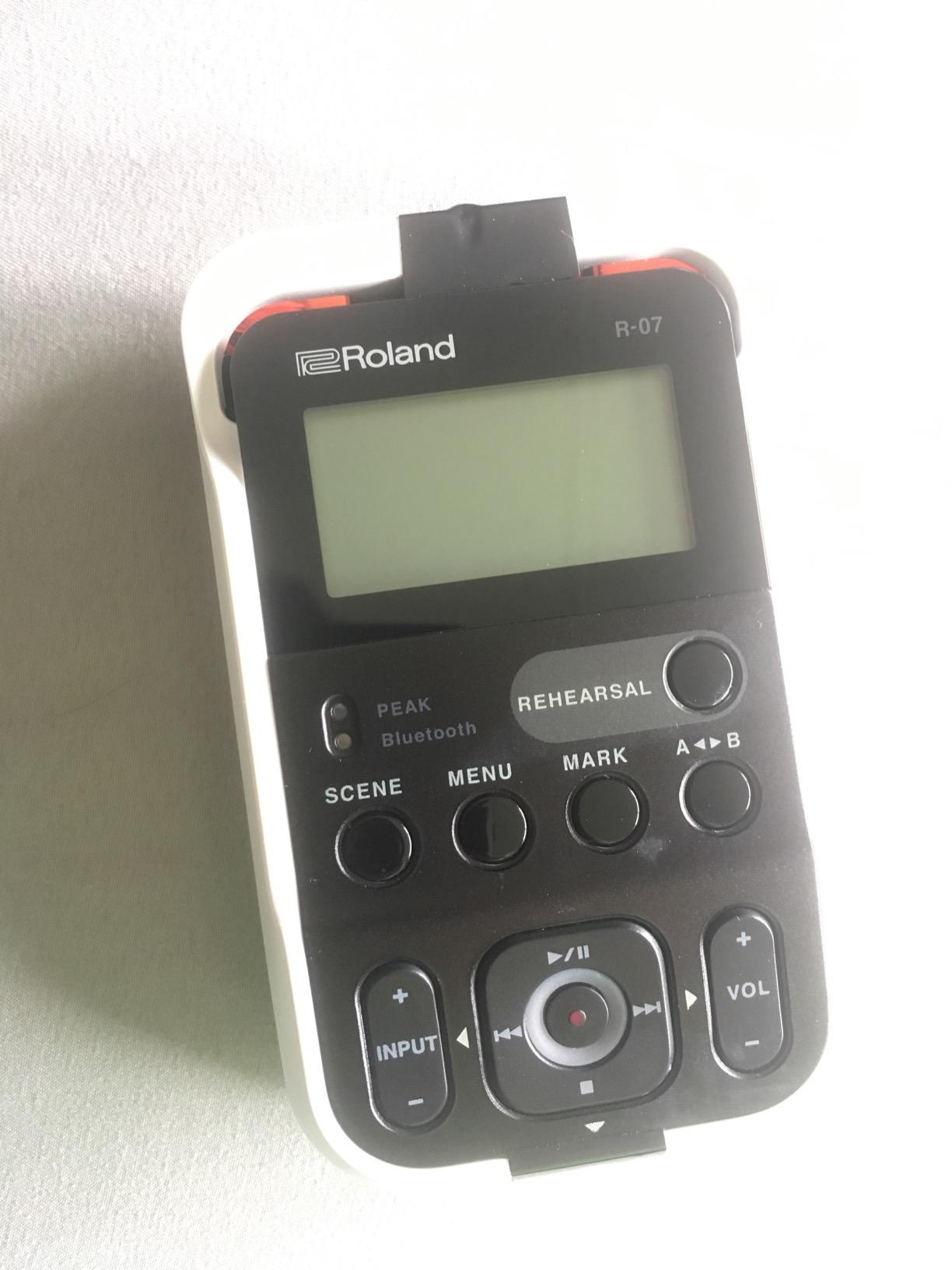
The Roland R-07 is the recorder I recommend to musicians who want something that fits in a shirt pocket and can be controlled from across the room. At 150 grams, it is one of the lightest recorders here, and the Bluetooth control app lets you start, stop, and monitor recordings from your phone. I placed it on a piano during a recital and controlled everything from my seat in the audience.
The one-touch scene templates are a thoughtful feature. You select a scenario like Music, Speech, or Outdoor, and the recorder adjusts its settings automatically. For musicians who do not want to learn the nuances of recording settings, this gets you 80 percent of the way to a good recording instantly. Simultaneous WAV and MP3 recording means you get a high-quality master and a shareable file at the same time.
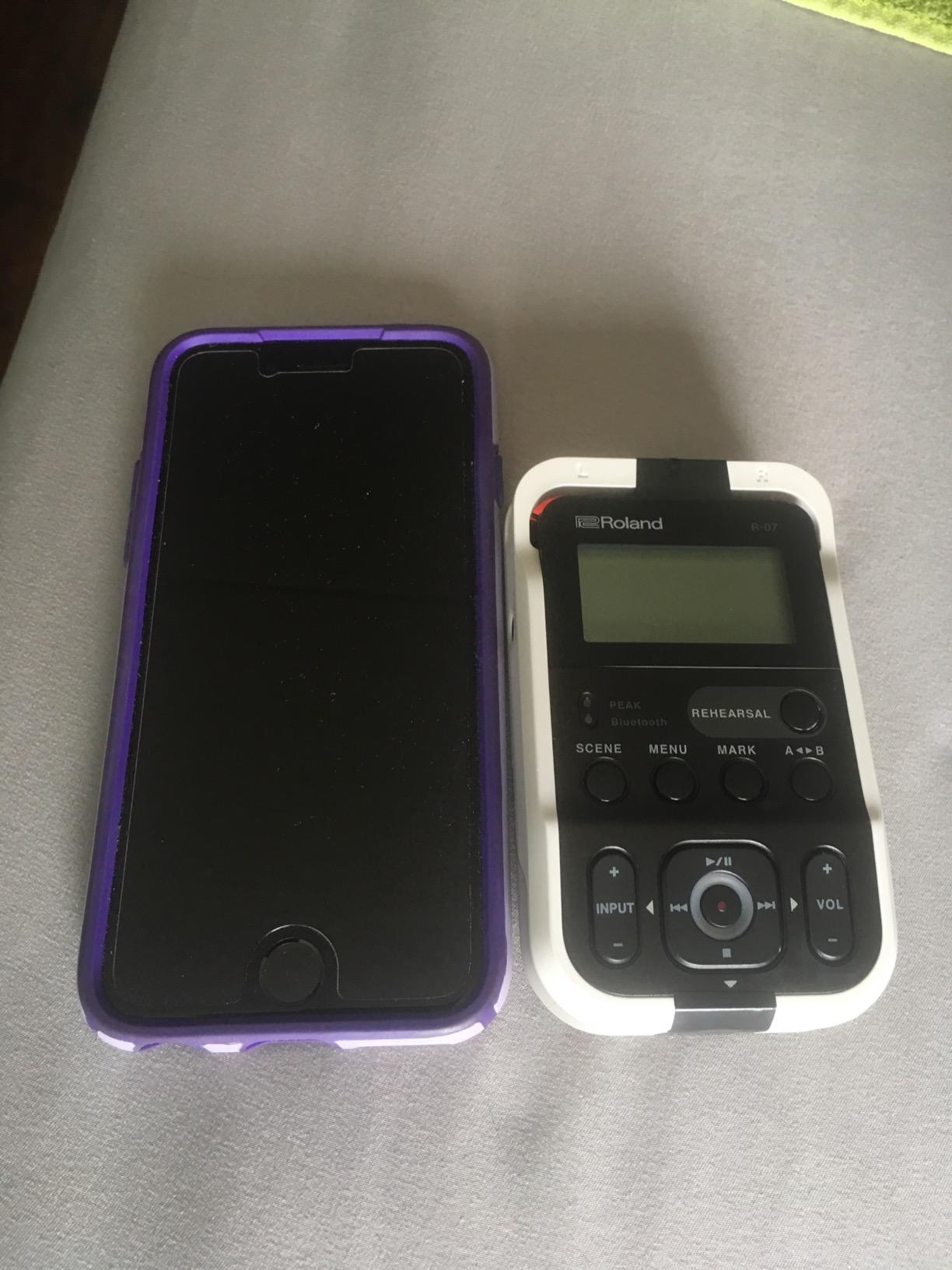
The built-in speaker is convenient for quick playback checks without headphones. Battery life is excellent at 30 hours for playback and 16 hours for recording. The Qualcomm aptX support means wireless monitoring has low latency.
The downsides are significant for serious music work. There is no 32-bit float recording, so gain staging still matters. Digital recording time is listed at only 3.82 hours, which may reflect internal buffer limitations. USB transfer speeds are notoriously slow, closer to USB 1.0 rates, which makes moving large WAV files painful. The microSD card slot is also reportedly difficult to use.
Best Used For
Discreet recording situations where you need to place the recorder and control it remotely. Recitals, lectures, ambient capture, and any scenario where Bluetooth control from a distance is valuable.
Who Should Look Elsewhere
If you record long sessions or need fast file transfer, the R-07’s limited recording time and slow USB speeds will frustrate you. The lack of 32-bit float also makes it less forgiving than newer models.
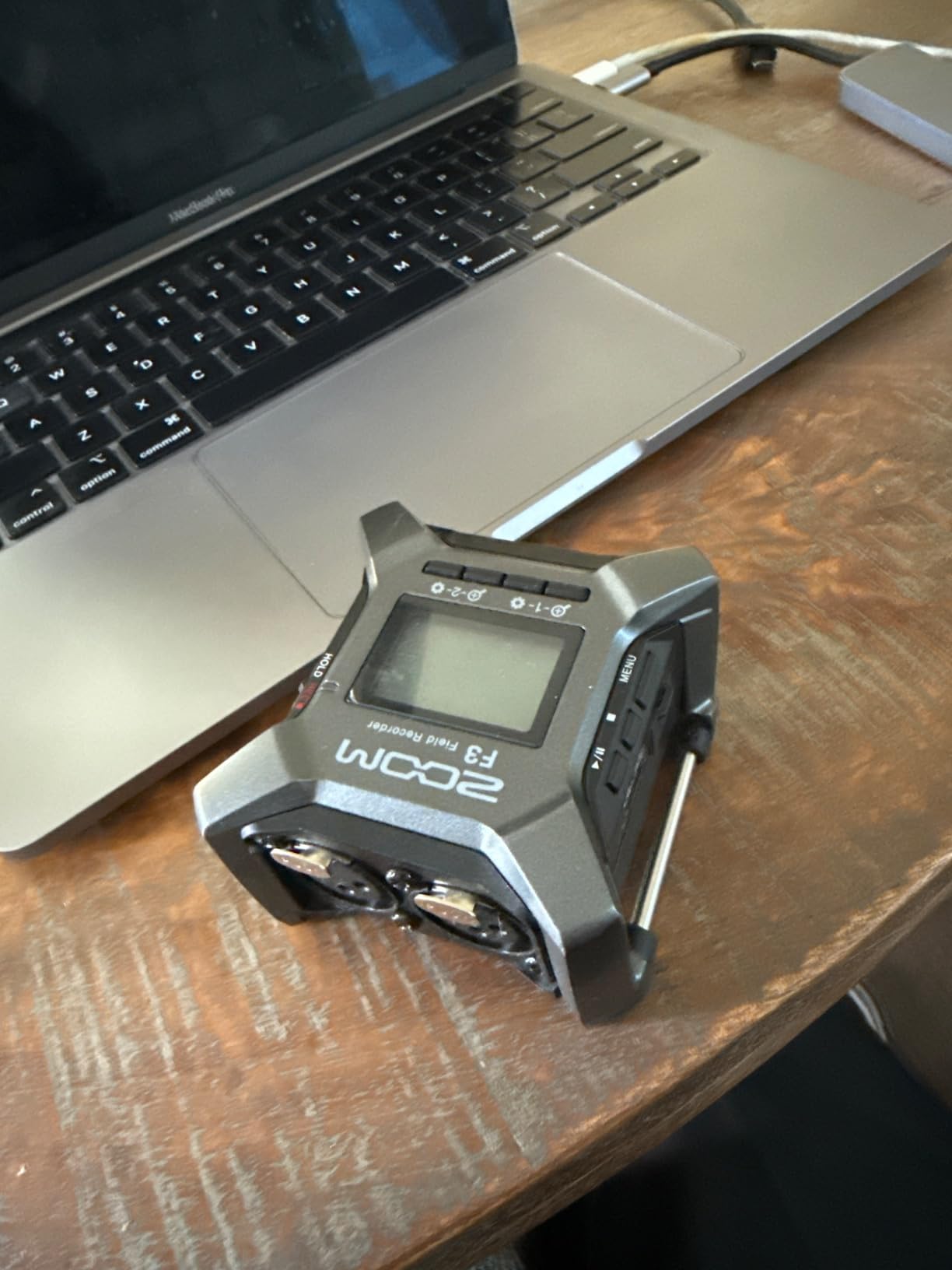
10. Zoom F3 – Professional 32-Bit Float With Ultra-Low-Noise Preamps
Zoom F3 Professional Field Recorder for Filmmakers & Musicians
2 locking XLR/TRS inputs
32-bit float
Dual AD converters
Ultra-low-noise preamps
73hr recording
Wireless control
Up to 512GB microSD
Pros
- Professional ultra-low-noise preamps
- Dual AD converters for exceptional quality
- 32-bit float eliminates gain staging
- Compact rugged professional build
Cons
- No built-in microphones
- Only 2 input channels
- Limited 10mA phantom power
- Memory card door can eject
The Zoom F3 is the recorder I reach for when audio quality is the absolute priority. It has professional-grade ultra-low-noise preamps that are significantly quieter than the Essential series, dual AD converters for exceptional dynamic range, and 32-bit float recording that eliminates gain staging entirely. With 451 reviews and an 88 percent five-star rate, professional users have validated this recorder as a serious tool.
I used the F3 to record a solo acoustic guitar performance with a pair of condenser microphones, and the resulting file was studio-clean. The noise floor was noticeably lower than any other recorder in this roundup. The dual AD converter architecture means the F3 captures two versions of the signal simultaneously at different levels, then combines them for maximum dynamic range. You genuinely never need to touch a gain knob.
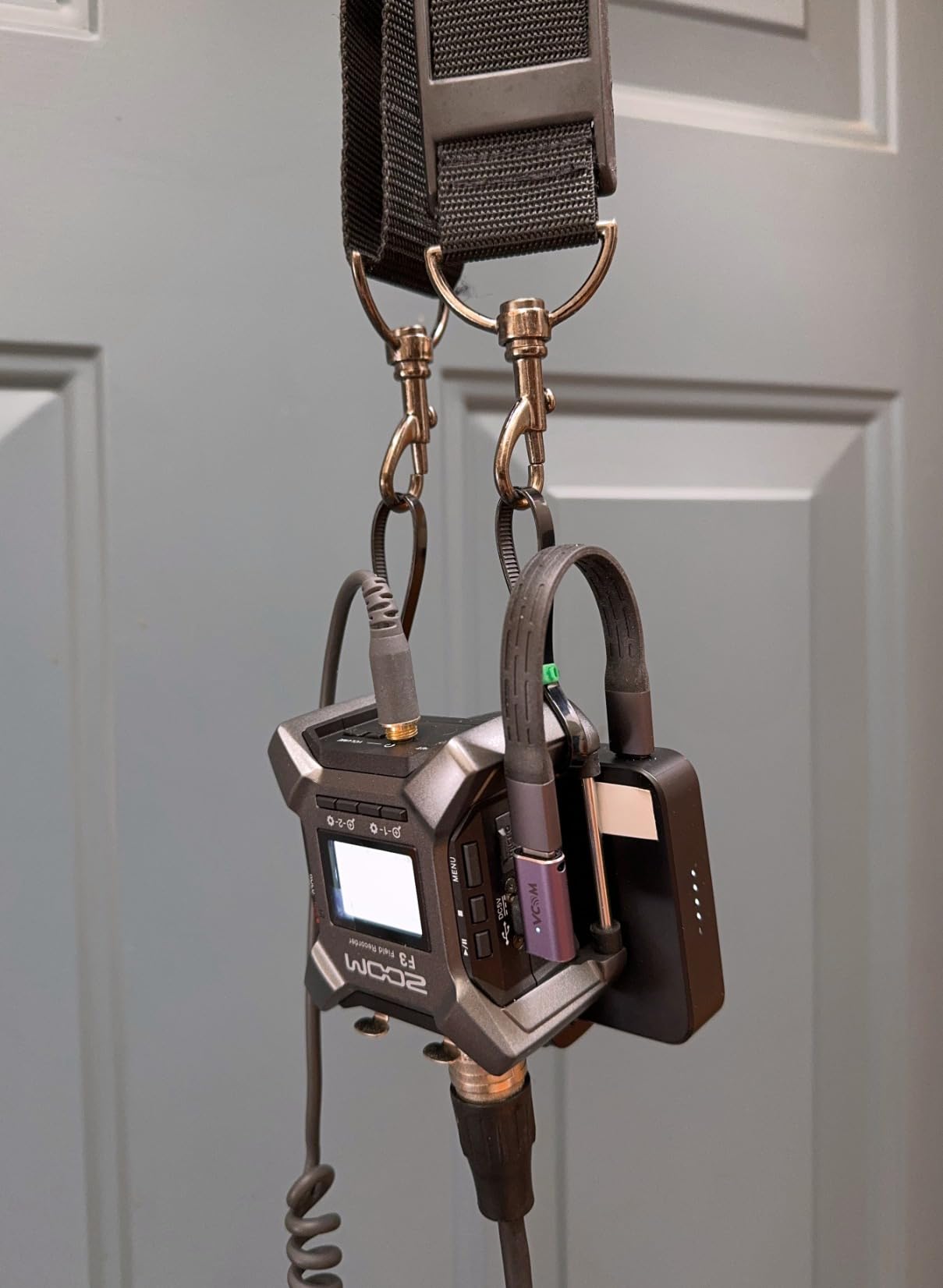
The build is compact and rugged, designed for professional field use. Locking XLR/TRS inputs keep connections secure in any environment. The 73-hour recording time capacity is more than any session demands, and wireless control capability means you can operate it from a distance.
The trade-offs are that there are no built-in microphones, so you must invest in external mics. Phantom power is limited to 10mA total across both channels, which may not be enough for some power-hungry condenser microphones. The memory card door has been reported to accidentally eject, which is a concern for field use.
Best Used For
Professional music recording where preamp noise and audio quality are paramount. Acoustic instruments, vocal recording, and any situation where you need the cleanest possible signal chain in a portable format.
Who Should Look Elsewhere
If you want built-in microphones for instant capture without buying external mics, or if you need more than two input channels, the F3 is not the right fit. Consider the H4 Essential or H8 instead.
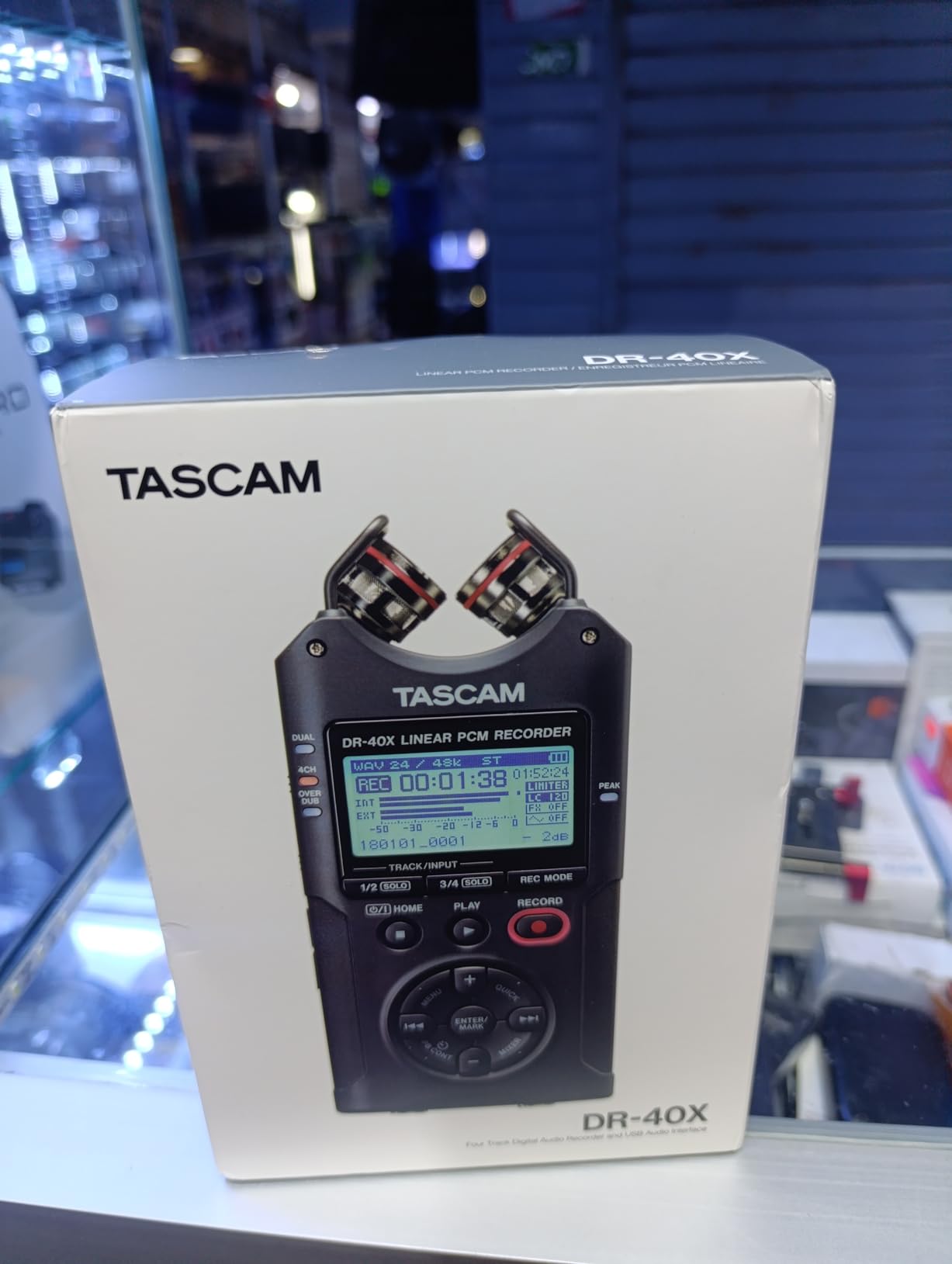
11. TASCAM DR-40X – Four-Track Workhorse With Phantom Power
TASCAM DR-40X 4-Track Portable Handheld Field Recorder — 2 XLR/TRS Inputs, USB Audio Interface, Dual Adjustable Microphones for Stereo Recording of Music, Audio for Video and Podcasting
4-track recording
Adjustable AB/XY stereo mics
2 XLR/TRS inputs with phantom power
USB 2in/2out interface
Overdub and dual recording
Full-size SD card
Pros
- Adjustable AB/XY built-in microphones
- XLR inputs with 48V phantom power
- Dual recording with safety track
- USB audio interface for Mac PC and iOS
Cons
- Poor documentation
- Windscreen pushes mics together
- Can freeze during file preview
- Battery hungry use rechargeables
The TASCAM DR-40X has been a musician favorite for years, and with 1,359 reviews at 4.6 stars, it has the kind of sustained user approval that newer products cannot match. It offers four-channel recording with dual adjustable condenser microphones and two XLR/TRS inputs with phantom power. I recorded a full band rehearsal with two direct inputs for bass and keys plus the built-in mics for room ambience, all on separate tracks.
The adjustable microphones rotate between AB and XY positions, giving you control over stereo width just like the DR-07XP. The dual recording feature simultaneously records a second safety track at a lower level, so if your main track clips, you have a backup. This is essentially manual 32-bit float insurance for a 24-bit recorder.
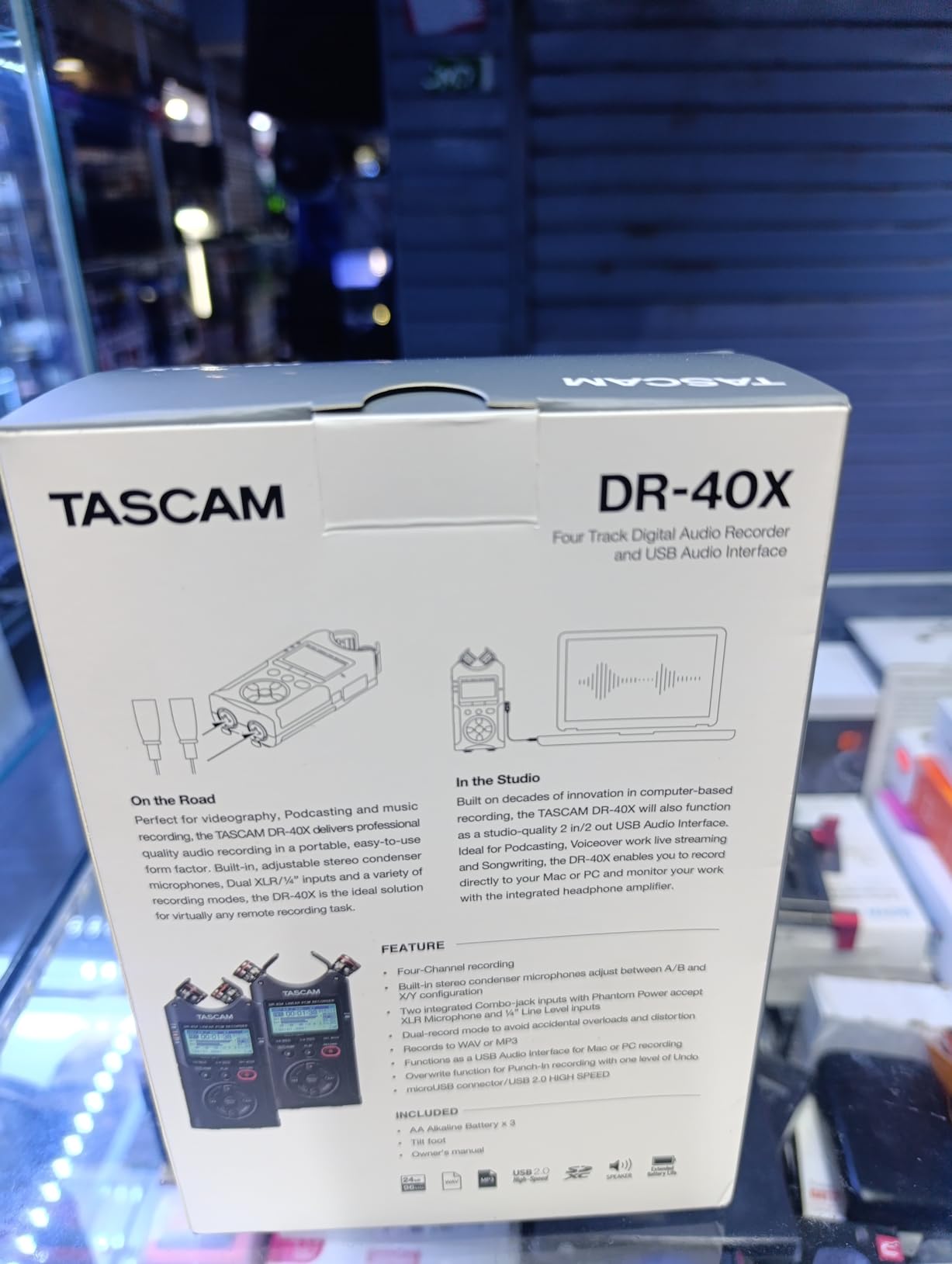
It functions as a 2-in/2-out USB audio interface for Mac, PC, and iOS, making it a true dual-purpose device. The nondestructive overdub feature lets you layer new takes over existing recordings without destroying the original, which is useful for building up arrangements in the field.
The main complaint from users is the documentation. The included quick start guide is inadequate, and you will need to download the full manual from TASCAM’s website to understand advanced features. The windscreen design pushes the two microphones back together when installed, reducing stereo separation. Some units freeze when seeking during audio file preview.
Best Used For
Live band recording, multi-source capture, and musicians who need both built-in mics and XLR inputs with phantom power in one device. The DR-40X is the classic all-rounder for serious music recording.
Who Should Look Elsewhere
If you want 32-bit float recording for zero gain-staging worries, the DR-40X is 24-bit only. Look at the Zoom H4 Essential or F3 for 32-bit float capability.
12. Zoom H8 – Six-Input, Twelve-Track Recording Powerhouse
Zoom H8 Recorder for Musicians, Podcasters & Filmmakers
6 inputs (4 XLR + 2 combo)
12 simultaneous tracks
2.4 inch touchscreen
Interchangeable capsules
12-channel USB interface
20hr on 4x AA
Pros
- Six inputs for complex multi-source recording
- 12 simultaneous tracks with touchscreen control
- Interchangeable input capsule system
- Dedicated modes for field music and podcast
Cons
- Eats batteries quickly at 4 AA
- Can run hot during extended use
- Higher price point
- Limited stock availability
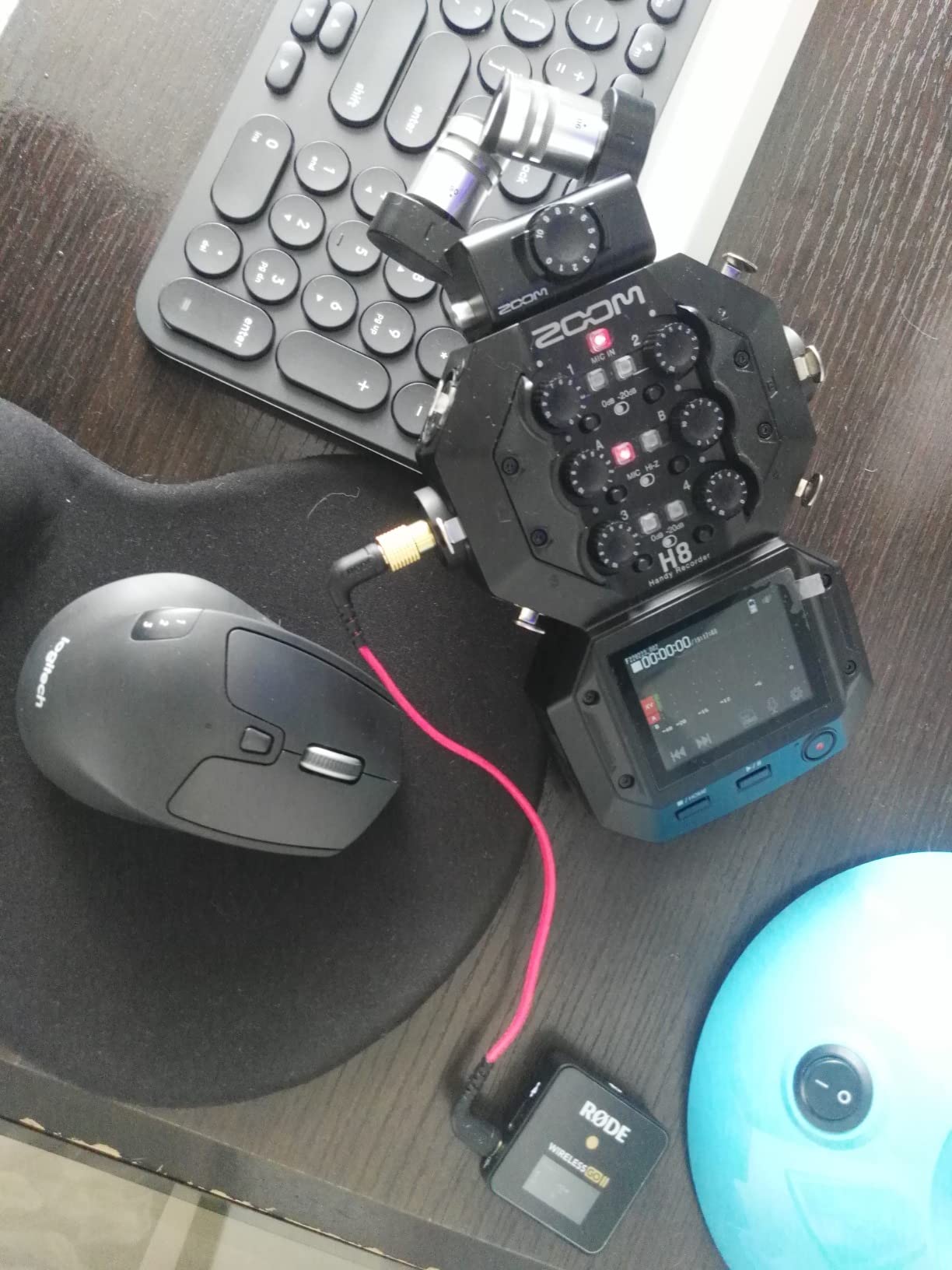
The Zoom H8 is the most capable recorder in this roundup, and for many musicians it eliminates the need for a separate audio interface entirely. Six inputs (four XLR plus two combo jacks) give you up to 12 simultaneous tracks. I recorded a five-piece band live with each instrument on its own track, plus a stereo room mix from the interchangeable capsule microphone. The touchscreen interface makes managing all those inputs surprisingly intuitive.
The interchangeable capsule system is what sets the H8 apart from every other recorder here. You can swap the top microphone module for different configurations: stereo, shotgun, dual XLR, and more. This means the H8 grows with your needs instead of being limited to one pickup pattern.
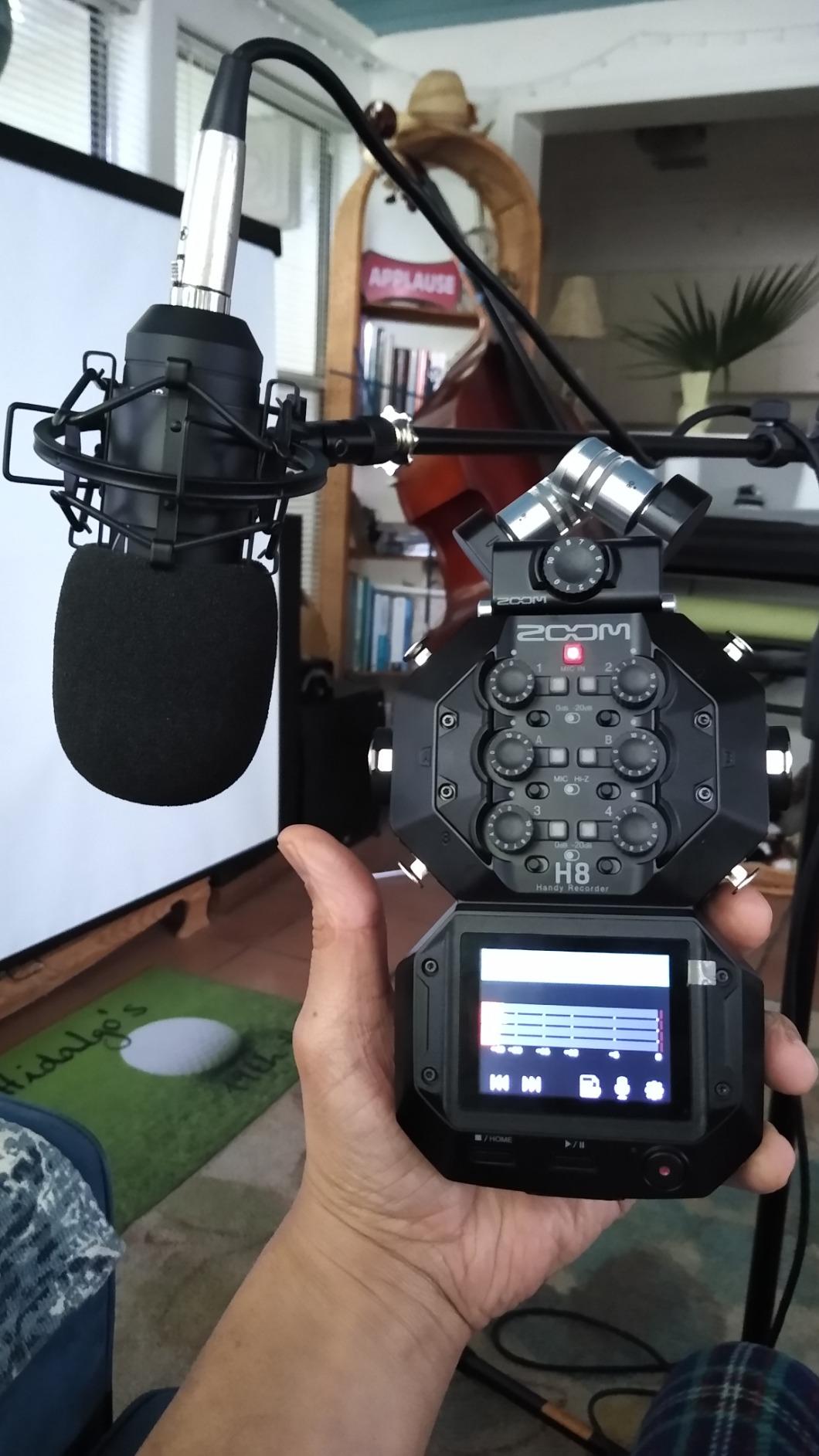
Dedicated workflow modes for field recording, music production, and multi-person podcasting customize the interface for each use case. The 12-channel USB audio interface mode means you can route all six inputs plus additional channels to your DAW simultaneously. At 20 hours of battery life on four AA batteries, it can handle long sessions.
The trade-offs are real. Four AA batteries are consumed faster than the two-battery models, especially when phantom power is engaged. The unit can run warm during extended recording sessions. At this price point, you are investing in a serious tool, not a casual capture device. Stock availability has been limited at times.
Best Used For
Full band recording, multi-track live sessions, and musicians who need a portable replacement for a studio audio interface. The H8 is the closest thing to a complete recording studio you can fit in a backpack.
Who Should Look Elsewhere
If you only need simple stereo capture, the H8 is overkill in size, weight, and price. The H2 Essential or H4 Essential cover most recording needs at a fraction of the cost.
How to Choose a Field Recorder for Music in 2026
Choosing the right field recorder for music comes down to five key decisions. Each one narrows your options significantly, so work through them in order to find your match quickly.
1. Decide What You Are Recording
The type of music you capture determines everything else. For solo acoustic instruments and vocal ideas, a compact stereo recorder like the Zoom H1 Essential or Tascam DR-05XP is plenty. For live band performances, you need multiple inputs and tracks, which points to the Zoom H4 Essential, Tascam DR-40X, or Zoom H8. For professional studio-quality capture of acoustic instruments with external microphones, the Zoom F3 is the clear choice.
2. Understand 32-Bit Float Recording
32-bit float recording is the biggest technology shift in field recorders in the last decade. It captures an enormous dynamic range that makes clipping physically impossible. You never set gain levels. You never lose a take to a sudden volume spike. In post-production, you can normalize quiet recordings or pull down clipped peaks with zero quality loss.
However, 32-bit float does not fix a noisy preamp. If the recorder’s preamp has a high noise floor, that noise is baked into the recording regardless of bit depth. This is why the Zoom F3 with its ultra-low-noise preamps outperforms cheaper 32-bit float recorders for quiet sources. Reddit users consistently report that the Essential series preamps are too noisy for delicate acoustic work, negating the 32-bit float advantage.
3. Choose Your Input Type
Built-in stereo microphones are convenient for instant capture. You pull out the recorder and hit record. This is ideal for songwriting ideas, ambient sampling, and casual rehearsal recording. However, built-in mics limit your quality ceiling and offer no control over microphone placement.
XLR/TRS combo inputs let you connect professional microphones and instruments. This is essential for serious music recording where you want specific microphone choices, phantom power for condensers, and multi-track capability. The trade-off is size, cost, and the need to own external microphones.
4. Consider Battery Life Realistically
Manufacturer battery life claims assume optimal conditions with fresh batteries and no phantom power. In real-world use, expect 70 to 80 percent of the rated life. If you are recording a full day of rehearsals or a festival, look for recorders rated at 17 hours or more. The Tascam DR-05XP and DR-07XP both deliver 17.5 hours, and the Zoom H2 Essential reaches 20 hours.
Phantom power drains batteries significantly faster. If you use condenser microphones with phantom power, expect battery life to drop by 30 to 50 percent depending on the recorder. Rechargeable AA batteries are strongly recommended for any recorder you use regularly.
5. Factor In the USB Audio Interface Bonus
Every recorder in this roundup can double as a USB audio interface, which effectively gives you two devices for the price of one. You can record on location with batteries and SD card storage, then connect to your computer via USB for studio recording with your DAW. This is particularly valuable for musicians who have limited budget and want maximum functionality.
Budget Tiers at a Glance
Under $160: Zoom H1 Essential, Tascam DR-05XP, Zoom R4, Zoom H1 XLR, Tascam DR-07XP, Tascam DR-05X. These are entry-level recorders best for idea capture, rehearsal recording, and learning the basics.
$160 to $300: Zoom H2 Essential, Zoom H4 Essential, Roland R-07, Tascam DR-40X. This is the sweet spot for most musicians, offering built-in mics plus XLR inputs, multitrack capability, and 32-bit float recording.
$300 and above: Zoom F3, Zoom H8. These are professional-grade tools with superior preamps, higher track counts, and features designed for serious production work.
Recording Tips for Musicians
Getting great results from any field recorder requires technique. Here are the tips that made the biggest difference in my testing.
For acoustic guitar, position the recorder about 12 inches from where the neck meets the body, angled slightly toward the sound hole. This captures a balanced mix of string detail and body warmth. Use a mic stand whenever possible to eliminate handling noise.
For live band recording, placement matters more than equipment. Get the recorder above the audience and away from PA speakers. A recorder placed on stage captures a muddy mix of monitors and amps. One placed at the front of house position captures what the audience actually hears.
Always use a windscreen for outdoor recording, even in light breeze. Wind noise is the number one destroyer of otherwise great field recordings, and it cannot be fully removed in post-production. A foam windscreen handles indoor HVAC noise. A furry windjammer is essential for any outdoor work.
Finally, always record a 10-second test before your real take. Check levels, confirm signal on both channels, and listen back through headphones. This 10-second habit has saved me from losing more takes than any other practice.
FAQ’s
What does a field recorder do for musicians?
A field recorder captures high-quality audio outside of a studio environment. For musicians, it enables recording live performances, acoustic instruments, rehearsals, songwriting ideas, and nature samples with professional fidelity that smartphones cannot match. Most modern field recorders use 32-bit float recording and offer XLR inputs for professional microphones.
Is 32-bit float recording worth it for music?
Yes, 32-bit float recording is worth it for most musicians because it eliminates clipping and the need to set gain levels. You never lose a take to an unexpected volume spike. However, 32-bit float does not fix noisy preamps, so for quiet acoustic sources you still need a recorder with quality preamps like the Zoom F3.
What is the best pocket-sized field recorder for musicians?
The Zoom H1 Essential is the best pocket-sized field recorder for musicians. At 92 grams with 32-bit float recording and X/Y stereo microphones, it captures song ideas and acoustic instruments with surprising quality for its size and price point.
Which field recorder is best for recording live music?
For recording live music, the Zoom H4 Essential and Tascam DR-40X are the best choices. Both offer built-in stereo microphones plus XLR inputs for external mics, four-track recording, and dual recording safety features. For the highest audio quality with external mics, the Zoom F3 offers the quietest preamps.
Can I use a field recorder as a USB audio interface?
Yes, every recorder in this roundup can function as a USB audio interface. This means you can use it for portable battery-powered recording on location, then connect it to your computer via USB for direct DAW recording. Some models like the Zoom H8 support up to 12 channels over USB.
What is the difference between a field recorder and a smartphone for recording music?
Field recorders offer superior preamps, XLR inputs for professional microphones, multitrack recording, 32-bit float capability, physical controls, and dedicated monitoring. Smartphones have poor preamps, limited connectivity, and no phantom power. For anything beyond casual voice memos, a dedicated field recorder delivers dramatically better audio quality.
How much battery life do I need for recording music?
For typical rehearsal or gig recording, look for at least 10 hours of battery life. For all-day sessions or festivals, aim for 17 hours or more. Keep in mind that phantom power for condenser microphones reduces battery life by 30 to 50 percent. Rechargeable AA batteries are strongly recommended for regular use.
What is A-weighted EIN and why does it matter for music recording?
A-weighted EIN (Equivalent Input Noise) measures the noise floor of a recorder’s preamps in dBu. Lower numbers mean quieter preamps. For recording quiet acoustic instruments, this spec matters more than bit depth or sample rate. Recorders like the Zoom F3 have ultra-low EIN values, delivering clean recordings of delicate sources.
Final Thoughts on the Best Portable Field Recorders for Music
After testing all 12 of these recorders across rehearsals, live performances, acoustic sessions, and field recording work, three models stand out for musicians. The Zoom F3 is my Editor’s Choice for anyone who needs the absolute cleanest preamp performance with external microphones. The Zoom H1 XLR takes Best Value for delivering dual XLR inputs with 32-bit float at an unbeatable price. The Zoom H1 Essential earns Budget Pick honors for making 32-bit float stereo recording accessible to every musician.
The best portable field recorders for music in 2026 are not necessarily the most expensive ones. They are the ones that match your specific recording needs, whether that is capturing song ideas on the train, recording your band’s next gig, or building a sample library from the world around you. Pick the one that fits your workflow, invest in a windscreen and some rechargeable batteries, and start capturing the sounds you have been missing.