
Finding the right portable audio recorder can be the difference between capturing a clean, professional take and ending up with unusable garbage. Whether you are recording band rehearsals, producing a podcast in the field, or gathering ambient sounds for a film project, having a dedicated recorder in your bag changes everything. I have spent months testing the best portable USB audio recorders on the market to find out which ones actually deliver on their promises.
The portable recorder landscape in 2026 is better than ever. We now have 32-bit float recording trickling down to budget models, USB-C connectivity becoming standard, and battery life that can last through full-day sessions. The challenge is sorting through dozens of options to find the one that matches your specific workflow.
In this guide, our team compares 12 portable recorders ranging from simple voice recorders under $100 to multi-track machines with XLR inputs and USB audio interface capabilities. I tested each one for recording quality, ease of use, connectivity options, and real-world reliability so you can make an informed choice without the guesswork.
Table of Contents
Top 3 Picks for Best Portable USB Audio Recorders

Zoom PodTrak P4 Podcast Recorder
- 4 XLR Mic Inputs
- 4 Headphone Outputs
- Mix-Minus for Phone Interviews
- USB Audio Interface

Sony ICD-PX370 Mono Voice Recorder
- 57 Hours Battery Life
- Built-In USB
- MP3 Recording
- 4GB Memory

Zoom PodTrak P2 Podcast Recorder
- 2 USB Mic Inputs
- AI Noise Reduction
- Remote Guest Recording
- SD Card Recording
Best Portable USB Audio Recorders in 2026
1. Sony ICD-PX370 – Best Budget Voice Recorder for Everyday Use
Sony ICD-PX370 Mono Digital Voice Recorder with Built-In USB Voice Recorder,black
4GB Memory
57 Hours Battery
Built-in USB
MP3 Recording
136g
Pros
- Excellent 57-hour battery life
- Built-in USB for easy file transfer
- Clear audio recording quality
- Simple and intuitive interface
- Compact and lightweight design
Cons
- Power button may break after extended use
- Headphone jack can loosen over time
- Feels plasticky in hand
I picked up the Sony ICD-PX370 expecting a basic voice recorder and ended up using it for weeks as my go-to meeting capture device. At just 136 grams, it slips into any pocket without a second thought. The mono microphone picks up voices with surprising clarity, and I never had to strain to understand what was said during playback.
The built-in USB connector is one of those features you do not appreciate until you use it. No cables, no adapters. Just slide the connector out and plug it straight into your laptop. I transferred a full week of recordings in under two minutes. For anyone who records lectures, meetings, or voice memos regularly, this alone makes the PX370 worth considering.
Battery life is where this Sony really shines. I got through nearly two weeks of daily 2-hour recording sessions on a single pair of AA batteries. That 57-hour rating is legitimate in my testing. The MP3 format keeps file sizes manageable, and the 4GB internal storage holds plenty of material before you need to offload anything.
The interface is dead simple. Power on, hit record, and you are capturing audio. No complex menus to navigate, no settings to tweak for basic operation. That simplicity is a strength for casual users, though more advanced recordists might find the limited controls frustrating.
Who Should Buy the Sony ICD-PX370
This recorder is perfect for students capturing lectures, professionals recording meetings, or anyone who needs reliable voice capture without complexity. If you want something you can hand to a non-technical person and know they will get clean recordings, the PX370 is that device. Journalists conducting interviews will also appreciate the long battery life and straightforward operation.
Who Should Look Elsewhere
If you need stereo recording, professional-grade audio quality, or XLR inputs for external microphones, the PX370 will not meet your needs. Musicians recording rehearsals and podcasters wanting broadcast-quality sound should consider the Zoom or Tascam options in this guide instead.
2. Sony ICD-UX570 – Best Slim Portable Recorder with Stereo Mic

Sony ICD-UX570 Digital Voice Recorder, ICDUX570BLK, usb
4GB Memory
Stereo Microphone
Quick Charge
MP3/WMA
50g
Pros
- Excellent stereo mic quality for its size
- Slim pocketable design
- 3 recording modes (wide/focus/normal)
- Quick charge (3 min for 1 hr recording)
- Supports MicroSDXC up to 512GB
Cons
- Short battery life during recording
- USB 2.0 not USB-C
- Screen brightness cannot be adjusted
The Sony ICD-UX570 sits in a sweet spot between simple voice recorders and professional field recorders. At just 50 grams, it is one of the lightest recorders I have tested, yet the stereo microphone captures audio with real depth and spatial separation. I recorded a live acoustic guitar performance and was genuinely impressed by how much of the room character the mics captured.
The three recording modes give you practical flexibility. Wide stereo mode works great for capturing ambient sound or group conversations. Narrow focus mode hones in on a single speaker, which I found useful in noisy conference environments. Normal mode sits between the two and handles most everyday situations well.
Quick charge is a feature I did not think I needed until I forgot to charge before a session. Three minutes of charging gives you a full hour of recording time. That saved me on more than one occasion. The MicroSDXC slot supports cards up to 512GB, which means you can record for days without worrying about storage.
My main gripe is the USB 2.0 connection. In 2026, USB-C should be standard on any device in this range. File transfers are noticeably slower than USB-C alternatives. The short battery life during active recording also means you need to plan ahead for longer sessions.
Who Should Buy the Sony ICD-UX570
This is an excellent choice for podcasters who want something portable for field interviews, musicians capturing quick song ideas, or students wanting better-than-phone audio quality. The stereo recording capability makes it suitable for capturing music performances with more detail than a mono recorder can provide.
Who Should Look Elsewhere
If you plan to record for extended periods without access to charging, the UX570’s battery limitations will frustrate you. Those needing XLR or TRS inputs for professional microphones should look at the Zoom H4 Essential or Zoom H5 instead.
3. OM SYSTEM Olympus DM-720 – Best 3-Mic Stereo Recorder for Music and Voice

OM SYSTEM Olympus Voice Recorder DM-720 with 4GB, Micro SD Slot, USB Charging, Direction PC Connection, Transcription Mode, Silver
TRESMIC 3-Mic System
48kHz/16-bit PCM
4GB Memory
MicroSD Slot
USB Charging
Pros
- TRESMIC 3-microphone system for realistic sound
- High-quality 48kHz/16-bit linear PCM
- Excellent noise reduction capability
- Expandable storage via MicroSD
- Voice guidance for accessibility
Cons
- Battery cover feels flimsy
- Only accepts SDHC cards up to 32GB
- Slower startup than older Olympus models
The Olympus DM-720 stands out from every other recorder in this lineup because of its TRESMIC three-microphone system. Two stereo microphones handle the left and right channels while a third omnidirectional mic captures the low frequencies that most portable recorders miss entirely. I recorded a rehearsal in a wood-paneled room and the playback had a warmth and realism that caught me off guard.
Recording at 48kHz/16-bit linear PCM gives you audio quality that holds up under close listening. This is not compressed MP3 audio that falls apart when you scrutinize it. I used the DM-720 to record acoustic guitar and vocals simultaneously, and the results were clean enough to use as demo recordings without any post-processing.
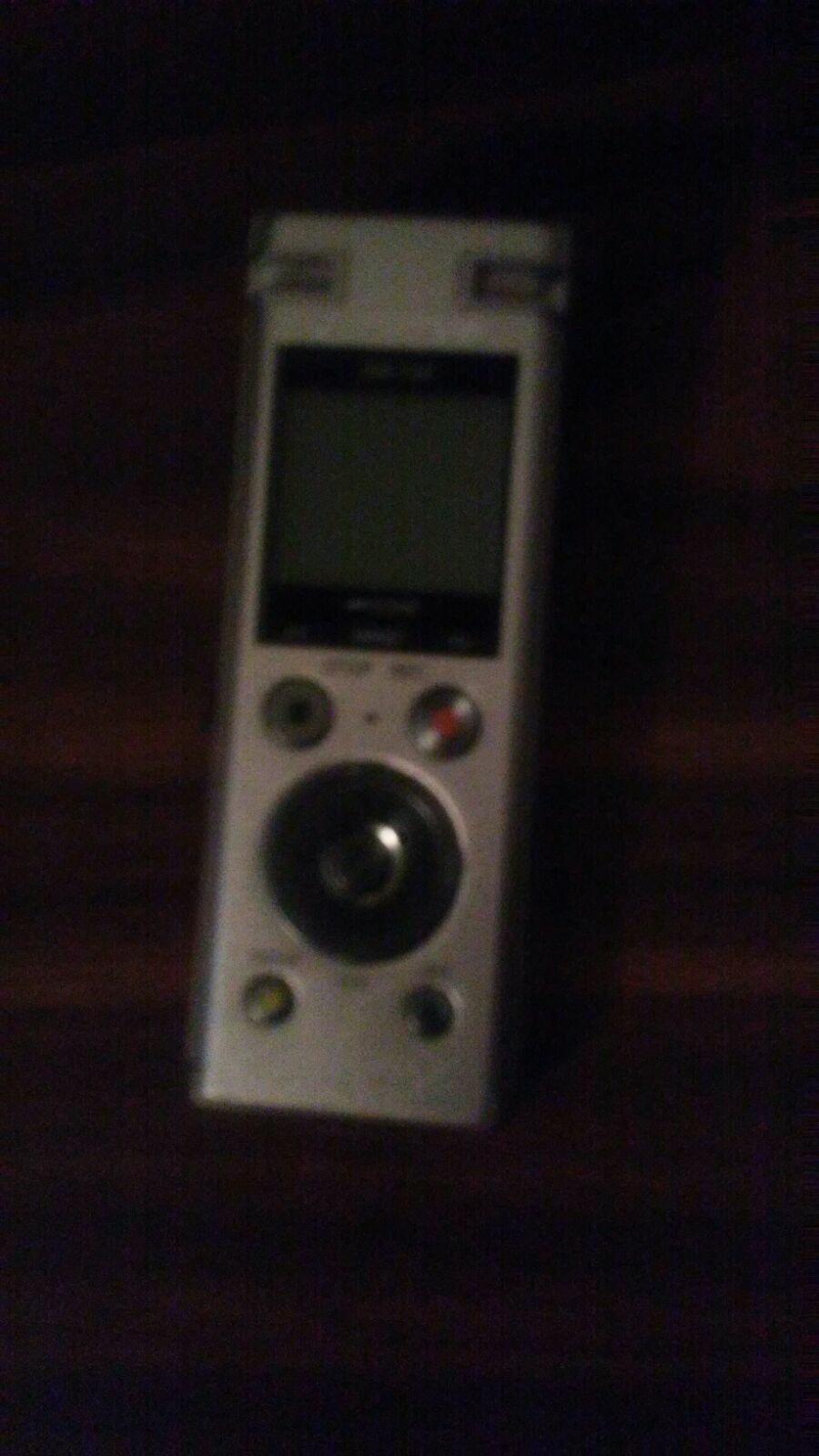
The Intelligent Auto Mode is a practical feature that adjusts microphone sensitivity based on what it detects. During a meeting I attended, the recorder automatically compensated when the speaker moved closer and farther from the unit. I did not have to touch any settings, and every word came through clearly.
The low-cut filter eliminates rumble below 300Hz, which is useful when recording near air conditioning vents or on unstable surfaces. Voice guidance reads menu options aloud, making the DM-720 accessible to visually impaired users and convenient for anyone who prefers not to squint at the small screen.
Who Should Buy the OM SYSTEM Olympus DM-720
Musicians who need high-fidelity recordings of rehearsals or live performances will get the most from the DM-720. The TRESMIC system captures a richness that two-mic setups simply cannot match. It is also a strong option for field recordists collecting ambient sounds and journalists who need broadcast-quality audio in a pocket-sized device.
Who Should Look Elsewhere
If you need XLR inputs for professional microphones or multitrack recording capabilities, the DM-720 is not built for that workflow. The 32GB MicroSDHC limit might also frustrate users doing extended high-bitrate recording sessions. Look at the Zoom H4 Essential or Zoom H5 for those needs.
4. Zoom H1 Essential – Best 32-Bit Float Pocket Recorder

Zoom H1 Essential Recorder for Musicians, Podcasters & Content Creators
32-Bit Float Recording
X/Y Stereo Mics
96kHz WAV
USB-C Mic Mode
92g
Pros
- 32-bit float eliminates clipping entirely
- Compact pocketable form factor
- Excellent X/Y stereo microphone quality
- USB microphone mode for streaming and podcasts
- Built-in accessibility features
Cons
- Cannot disable low-frequency noise filter
- Batteries drain even when USB connected
- SD card not included
- Plastic build quality
The Zoom H1 Essential brings 32-bit float recording to a price point that was unthinkable just a couple of years ago. For anyone unfamiliar, 32-bit float means you literally cannot clip your recording. I tested this by setting the H1 Essential directly in front of a guitar amplifier cranked to stage volume. The waveform looked massive in my DAW, but I just pulled the gain down digitally and every detail was intact. No distortion, no ruined take.
The X/Y stereo microphone configuration handles up to 120dB SPL, which is louder than most live music environments. I used it at a rock show and walked away with clean, usable audio. The stereo imaging from the crossed microphones gives recordings a sense of space that mono recorders cannot replicate.
USB microphone mode turns the H1 Essential into a desktop microphone for your computer, phone, or tablet. I plugged it into my laptop via USB-C and it was immediately recognized as an audio input in my recording software. For podcasters who want one device for both field recording and studio work, this dual functionality is a real advantage.
Battery management is the one area where the H1 Essential frustrates me. Even when connected to USB power, the two AAA batteries slowly drain. I also wish Zoom included an SD card, because the recorder does not have internal storage. You will need to budget for a card alongside the purchase.
Who Should Buy the Zoom H1 Essential
This is the ideal first portable recorder for musicians, podcasters, and content creators who want professional-grade recording without worrying about gain settings. The 32-bit float recording removes the most common source of ruined audio. It is also great for anyone who wants a single device that works as both a field recorder and a USB microphone.
Who Should Look Elsewhere
If you need XLR inputs for external microphones, multitrack recording, or extended battery life beyond 10 hours, the H1 Essential will not cover your needs. The plastic build may also concern users who work in rough environments. Consider the Zoom H4 Essential or TASCAM DR-07XP for more robust feature sets.
5. Zoom H4 Essential – Best Multi-Input Field Recorder with 32-Bit Float

Zoom H4 Essential Handheld Recorder for Musicians, Podcasters & Filmmakers
32-Bit Float
19.4mm X/Y Mics
2 XLR/TRS Inputs
4-Track 192kHz
USB Audio Interface
Pros
- Largest X/Y mics on any handheld recorder (19.4mm)
- 32-bit float recording prevents all clipping
- 2 XLR/TRS combo inputs with phantom power
- Dedicated gain knobs for hands-on control
- Records up to 4 tracks at 192kHz
- USB audio interface functionality
Cons
- Too large for a pocket
- No overdub feature unlike predecessor H4n
- Single scroll wheel for menu navigation
- Plastic build quality
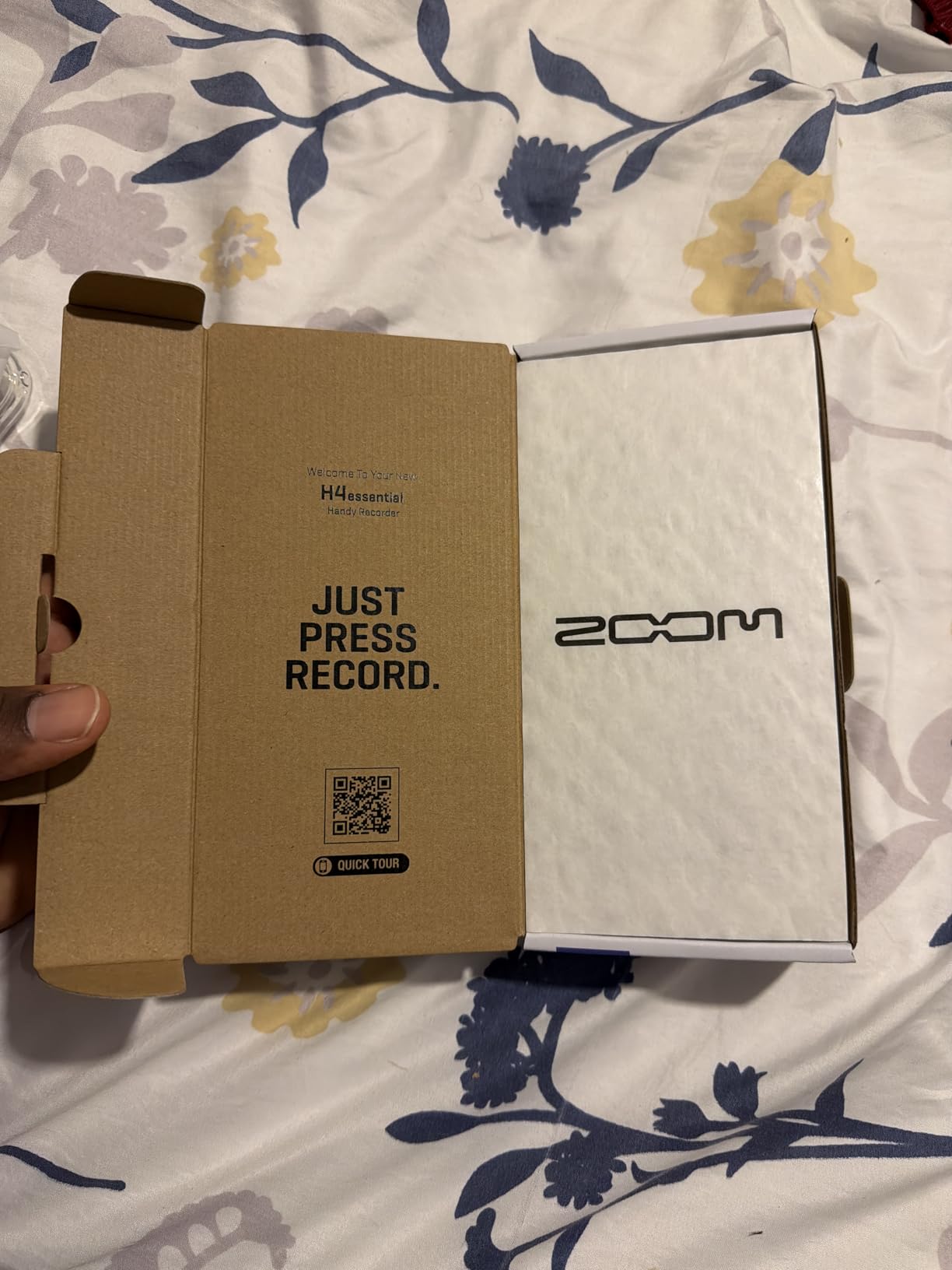
The Zoom H4 Essential is the recorder I reach for when I need serious recording capability in a portable package. The 19.4mm X/Y microphone capsules are the largest on any handheld recorder, and you can hear the difference. Recordings have a warmth, detail, and low-frequency response that smaller capsules simply cannot capture. I recorded a string quartet in a small hall and the playback was remarkably close to what my ears heard in the room.
Having two XLR/TRS combo inputs with dedicated gain knobs transforms this from a simple field recorder into a mobile recording studio. I connected a large-diaphragm condenser mic to input one and a dynamic mic to input two, enabled phantom power on the condenser, and recorded a vocal-and-guitar session with full individual track control. The gain knobs give you tactile, real-time adjustment without diving into menus.
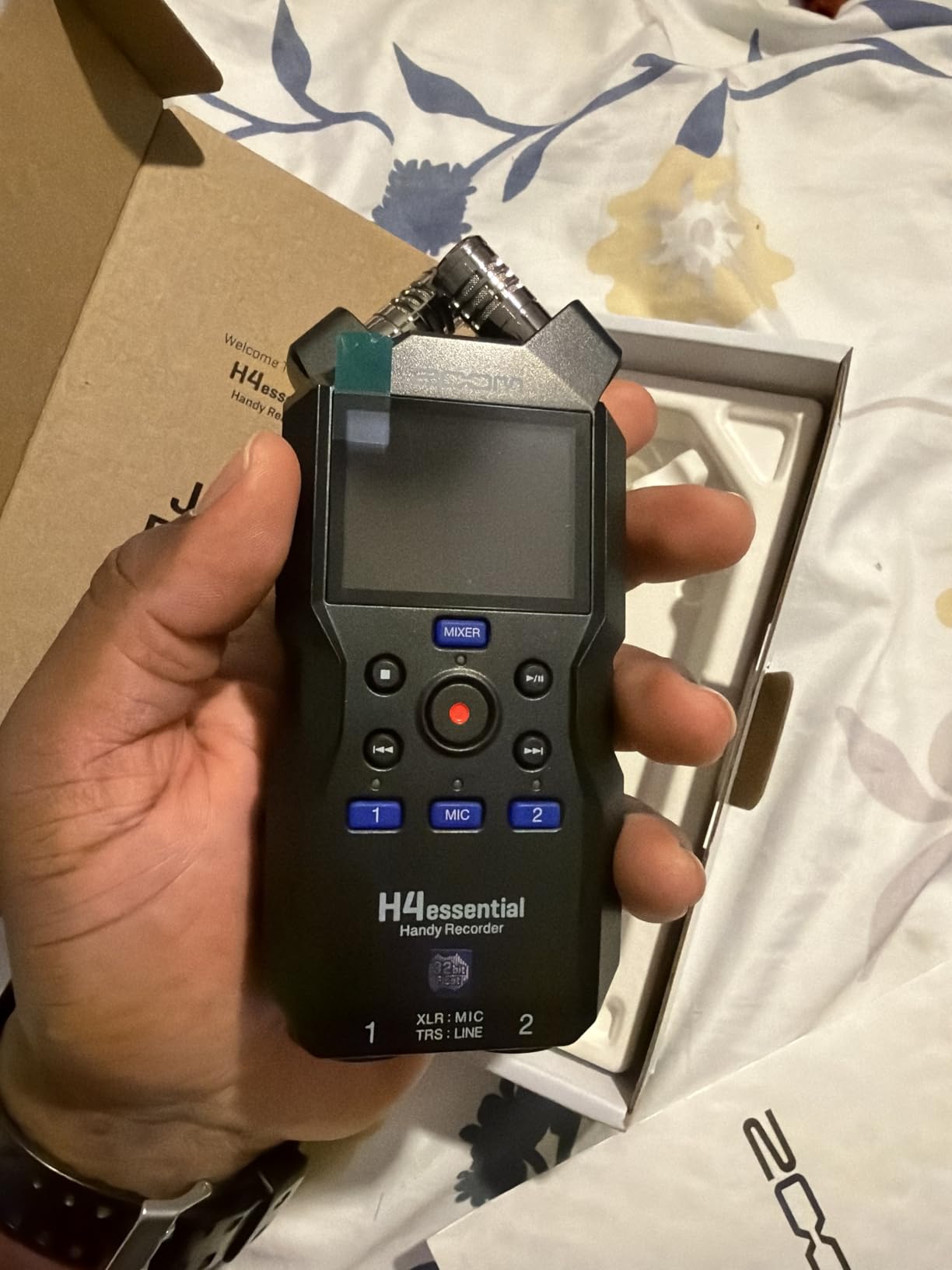
Four-track simultaneous recording at up to 192kHz gives you headroom for professional production work. I recorded drums with two external mics on the kit plus the built-in X/Y mics capturing room ambience, all on separate tracks. Mixing those four sources later in my DAW gave me results that rivaled what I get from a dedicated audio interface setup.
The 32-bit float recording means you never have to stress about gain staging again. I have handed this recorder to musicians with zero recording experience and every single take came back clean. That peace of mind alone is worth the size and weight compared to smaller recorders.
Who Should Buy the Zoom H4 Essential
Musicians who need to capture rehearsals, live performances, or song ideas with professional quality will get the most from the H4 Essential. The combination of built-in mics and XLR inputs makes it one of the most versatile portable recorders available. It is also excellent for field recordists, location sound for indie film, and podcasters who want multiple microphone inputs on location.
Who Should Look Elsewhere
If you need something that fits in a pocket, the H4 Essential is too large for comfortable carry. Those wanting the older H4n’s overdub feature will not find it here. If you only need simple voice recording without external inputs, the Sony or Olympus options in this guide offer better value and portability.
6. Zoom PodTrak P4 – Best Portable Podcast Recorder with 4 XLR Inputs
Zoom PodTrak P4 Podcast Recorder with 4 XLR Mic Inputs, 4 Headphone Outputs, Phone & USB Input for Remote Interviews, Sound Pads, 2-In/2-Out USB Audio Interface, Battery Powered
4 XLR Inputs w/ Phantom Power
4 Headphone Outputs
Sound Pads
Mix-Minus
USB Audio Interface
130g
Pros
- Crystal clear audio with plenty of clean gain
- 4 XLR inputs each with phantom power and mute
- Mix-minus works flawlessly for call-in guests
- Records to SD card and computer simultaneously
- Lightweight at 130 grams
- Individual headphone volume controls
Cons
- Maximum 16-bit/44.1kHz recording resolution
- All-plastic exterior
- Only 3.5 hours on batteries
- Headphone output has slight noise at high volume
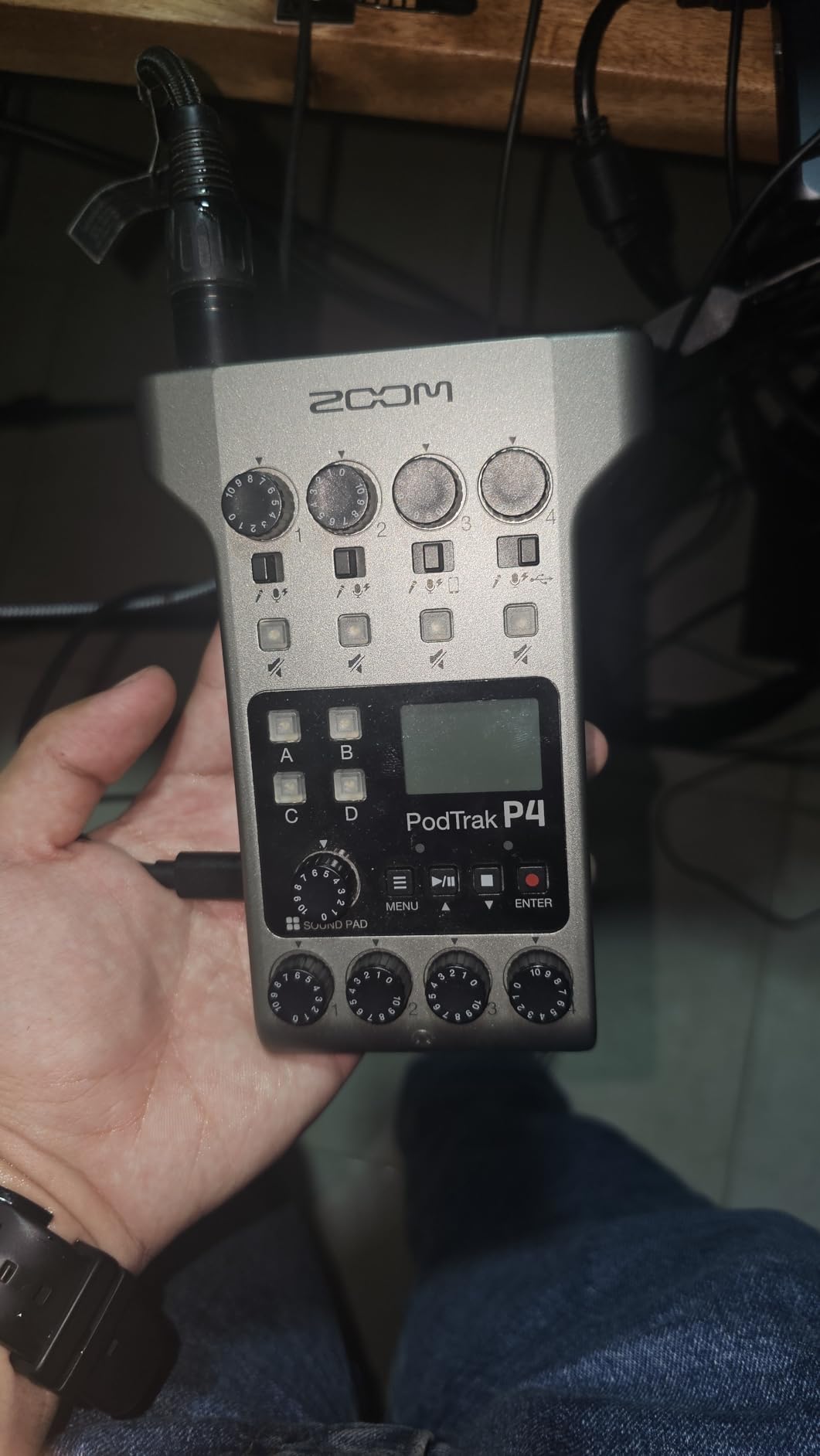
The Zoom PodTrak P4 changed how I record podcasts on location. Having four XLR inputs with individual phantom power and mute buttons means I can set up a full four-person show with condenser microphones without any external mixer or interface. Each person gets their own headphone output with independent volume control, which eliminates the constant “can you turn me up?” interruptions during recording.
The automatic mix-minus feature for phone interviews is genuinely plug-and-play. I connected my phone via the TRRS jack, dialed in a remote guest, and the P4 handled echo cancellation automatically. The caller could hear all of us in the room clearly, and we heard them without any feedback. For podcasters who regularly have remote guests, this feature alone justifies the entire purchase.
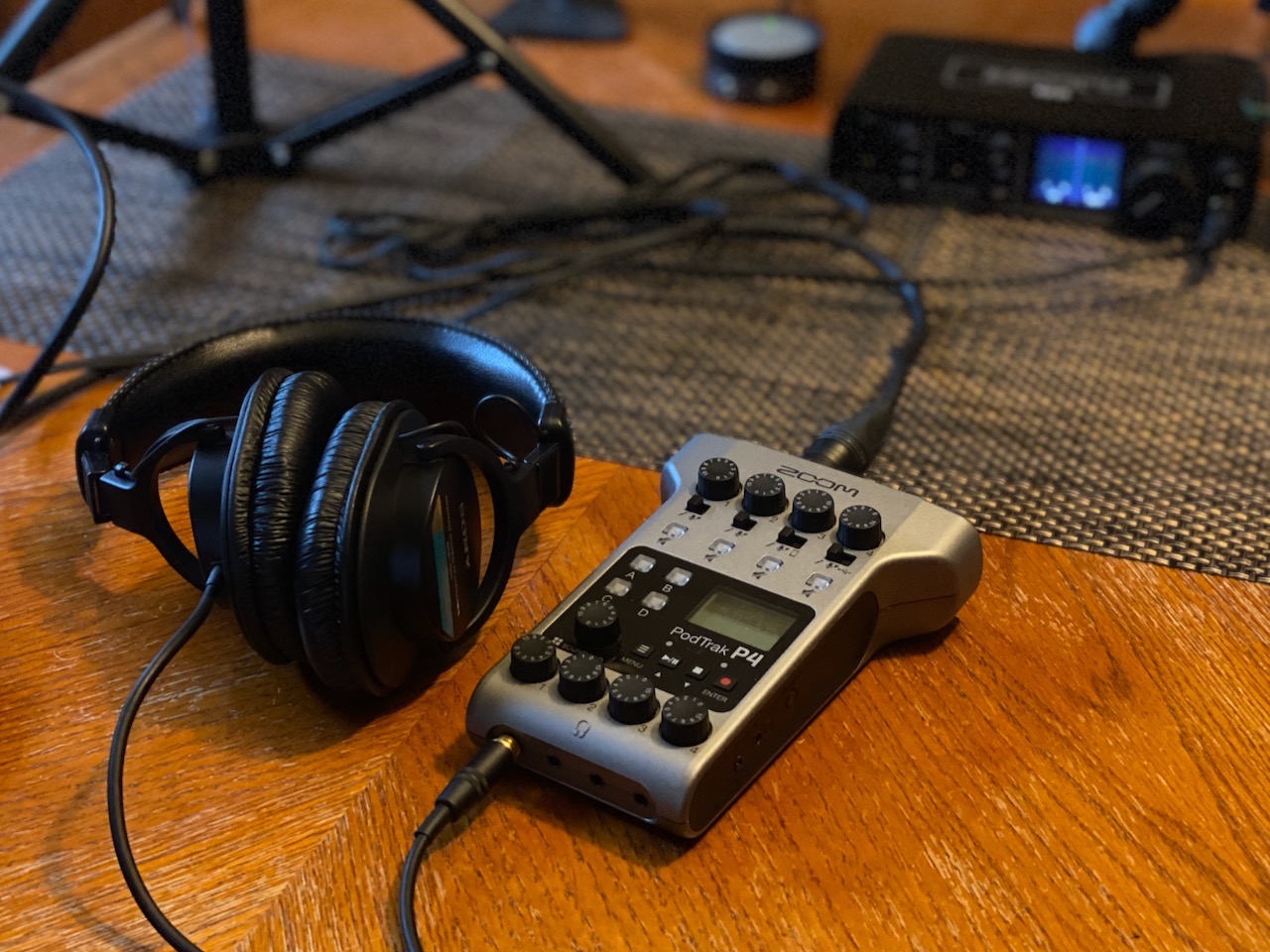
Four programmable sound pads let you trigger intros, transitions, and sound effects during recording. I loaded mine with a theme song, applause, and a few transition sounds. Hitting the pads during a live recording session adds a polished feel that listeners notice. The multi-track recording keeps everything on separate files for post-production flexibility.
I also used the P4 as a USB audio interface connected to my computer. It worked immediately with my recording software, no drivers needed. Recording to the SD card while simultaneously sending audio to the computer gives you a backup and flexibility in one package.
Who Should Buy the Zoom PodTrak P4
This is the best portable USB audio recorder for podcasters, period. If you record shows with multiple people in the same room, regularly bring in remote guests via phone, or need sound pads for live production, the P4 handles all of it in one compact unit. It is also great for journalists conducting multi-person interviews in the field.
Who Should Look Elsewhere
If you need recording resolution above 16-bit/44.1kHz for music production, the P4’s audio quality will feel limiting. Musicians recording instruments at high sample rates should look at the Zoom H4 Essential or Zoom H5. The short battery life also means you should plan for USB power during longer sessions.
7. Zoom H5 – Best Professional 4-Track Recorder with Interchangeable Capsule
Zoom H5 4-Track Handheld Recorder for Filmmakers & Musicians
Interchangeable Capsule
4-Track Recording
2 XLR/TRS Inputs
USB Audio Interface
Shock-Mounted Mics
Pros
- Interchangeable input capsule system for versatility
- Excellent stereo imaging and frequency reproduction
- Four-track simultaneous recording
- Rugged build quality
- Functions as USB audio interface for PC/Mac/iPad
- Intuitive menu wheel operation
Cons
- Rubber finish becomes sticky over time
- XY mic attachment mounts are fragile plastic
- High battery consumption
- Menu system has a learning curve
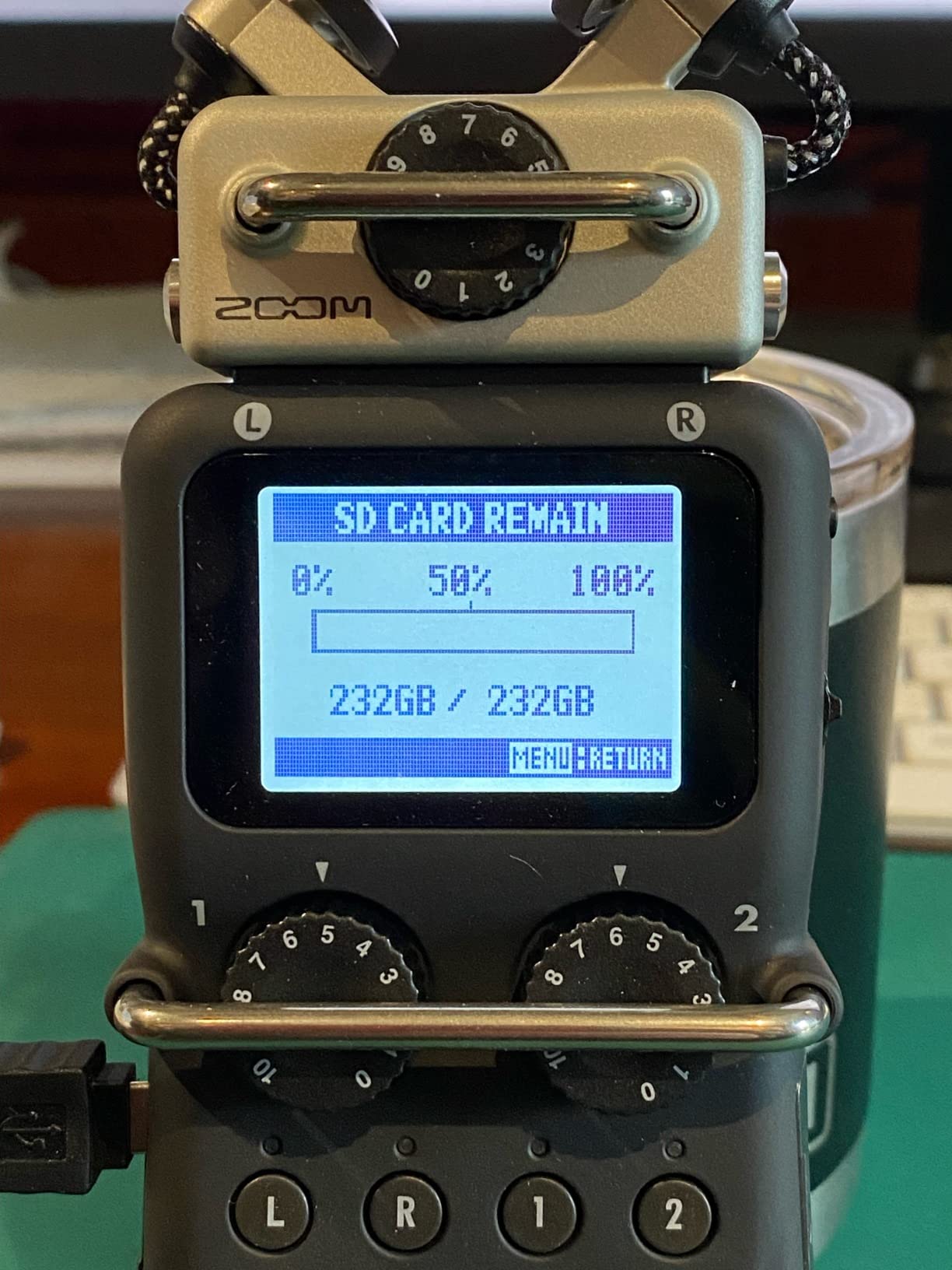
The Zoom H5 has been my trusted field recorder for over two years, and it remains one of the most capable portable recording devices you can buy. The interchangeable capsule system is what sets it apart from every other recorder in this guide. You can swap the included XYH-5 X/Y capsule for different microphone configurations, giving you flexibility that no fixed-mic recorder can match.
Audio quality from the shock-mounted X/Y capsule is outstanding. I have used the H5 to record everything from quiet acoustic fingerpicking to full-band performances, and the stereo imaging is consistently impressive. The capsules pick up subtle room characteristics that add dimension to recordings. Shock mounting reduces handling noise to near zero, even when I was moving around during a live recording.
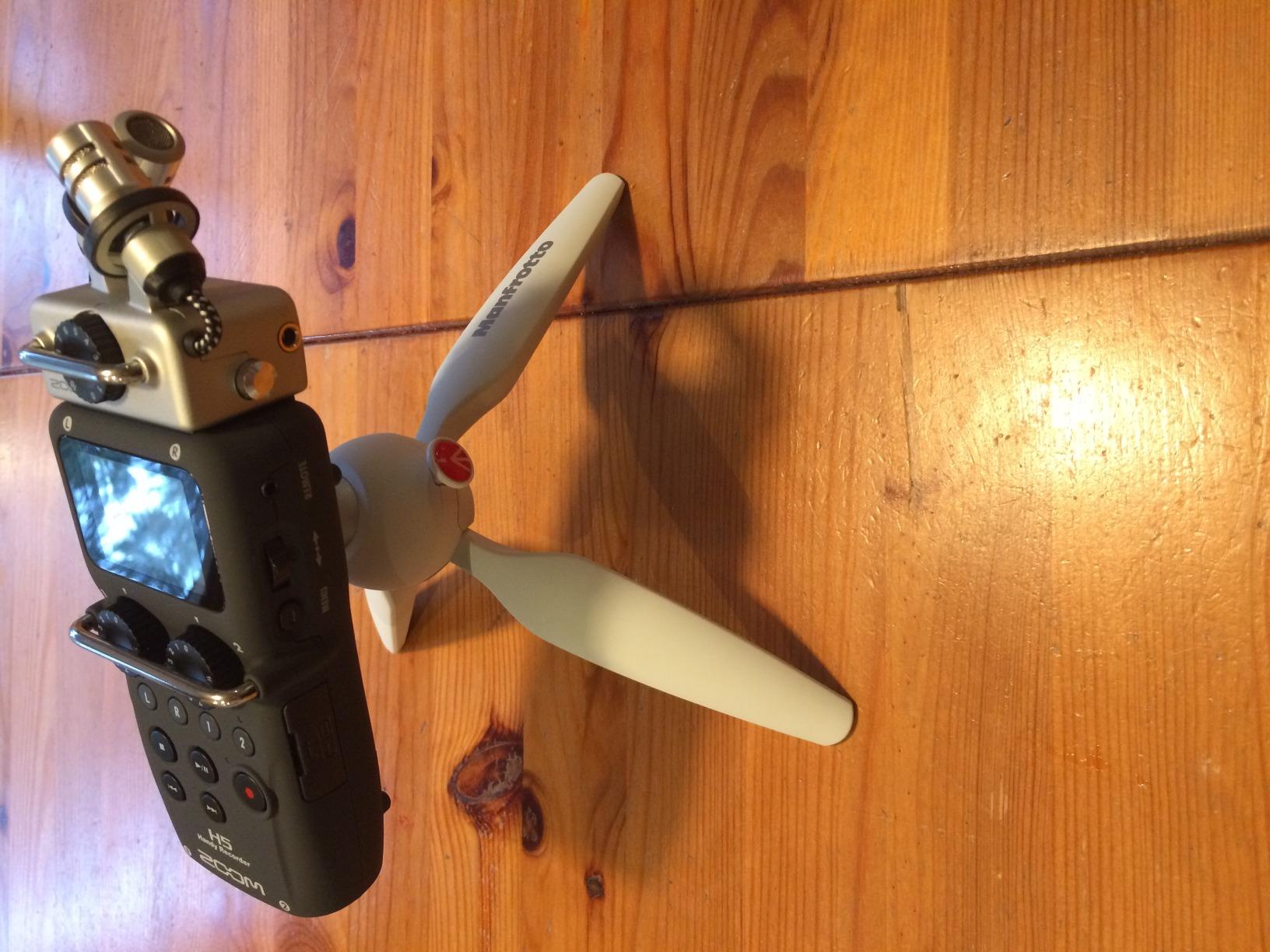
Two XLR/TRS combo inputs with selectable phantom power and -20dB pad give you professional input options. I regularly plug in external condenser and dynamic microphones for more controlled recording situations. The four-track simultaneous recording means I can capture the built-in stereo mics plus two external sources all on separate tracks.
As a USB audio interface, the H5 connects to my computer or iPad and works as a 2-in/2-out interface. The loop-back function lets me mix computer audio with live inputs, which is useful for streaming or creating tutorial videos with background music. Build quality is solid metal, though the rubber coating does get tacky after extended use in warm environments.
Who Should Buy the Zoom H5
Professional musicians, location sound recordists, and serious podcasters who want the flexibility of interchangeable capsules will find the H5 indispensable. If you record in varied environments and need to adapt your microphone configuration to each situation, nothing else in this price range offers that capability. It is also ideal for filmmakers needing location audio with time-code compatible accessories.
Who Should Look Elsewhere
If you want the newest 32-bit float recording technology, the H5 uses traditional gain-controlled recording that requires more attention to levels. Budget-conscious buyers who only need basic voice recording will find the H5 overpowered for their needs. The Zoom H1 Essential or Olympus WS-883 would serve simple workflows better.
8. TASCAM DR-05XP – Best Long-Battery Field Recorder with 32-Bit Float

TASCAM DR-05XP 32-Bit Float Portable Handheld Field Recorder and USB-C Audio Interface — Digital Stereo Recording of Music, Sound, Voice, Audio for Video and Podcasting
32-Bit Float Recording
Omnidirectional Condenser Mics
17.5hr Battery
USB-C Audio Interface
512GB microSD
Pros
- Excellent 17.5-hour battery life
- 32-bit float recording prevents clipping
- Professional Japanese-engineered design
- USB-C connectivity for modern workflows
- Handles up to 125dB SPL
- Flexible recording modes (32-bit/24-bit/16-bit)
Cons
- No line-level input
- Minimal stereo separation on built-in mics
- Menu can be tricky when devices are plugged in
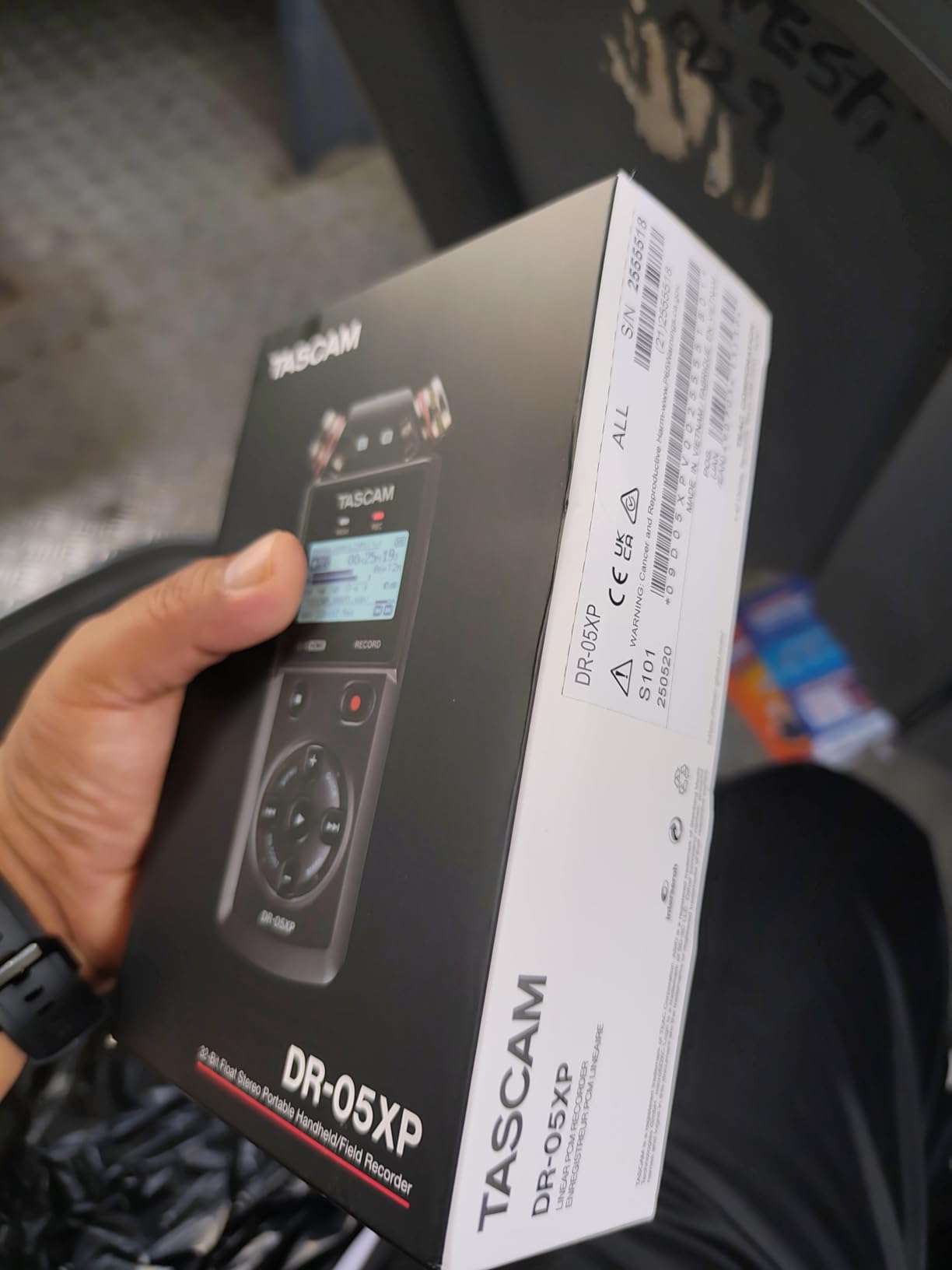
The TASCAM DR-05XP delivers professional recording capability in a package that fits in the palm of your hand. The 32-bit float recording mode means you set your input level once and never worry about clipping again. I recorded a brass band rehearsal where the volume swung between quiet passages and full-ensemble fortissimos, and every single moment was captured cleanly without any gain adjustment on my part.
Battery life is the DR-05XP’s standout feature. At 17.5 hours of continuous recording, this is a recorder you can take on a multi-day trip without packing a charger. I used it to capture nature sounds over a weekend camping trip and still had power left when I got home. For field recordists working in remote locations, this kind of endurance matters.
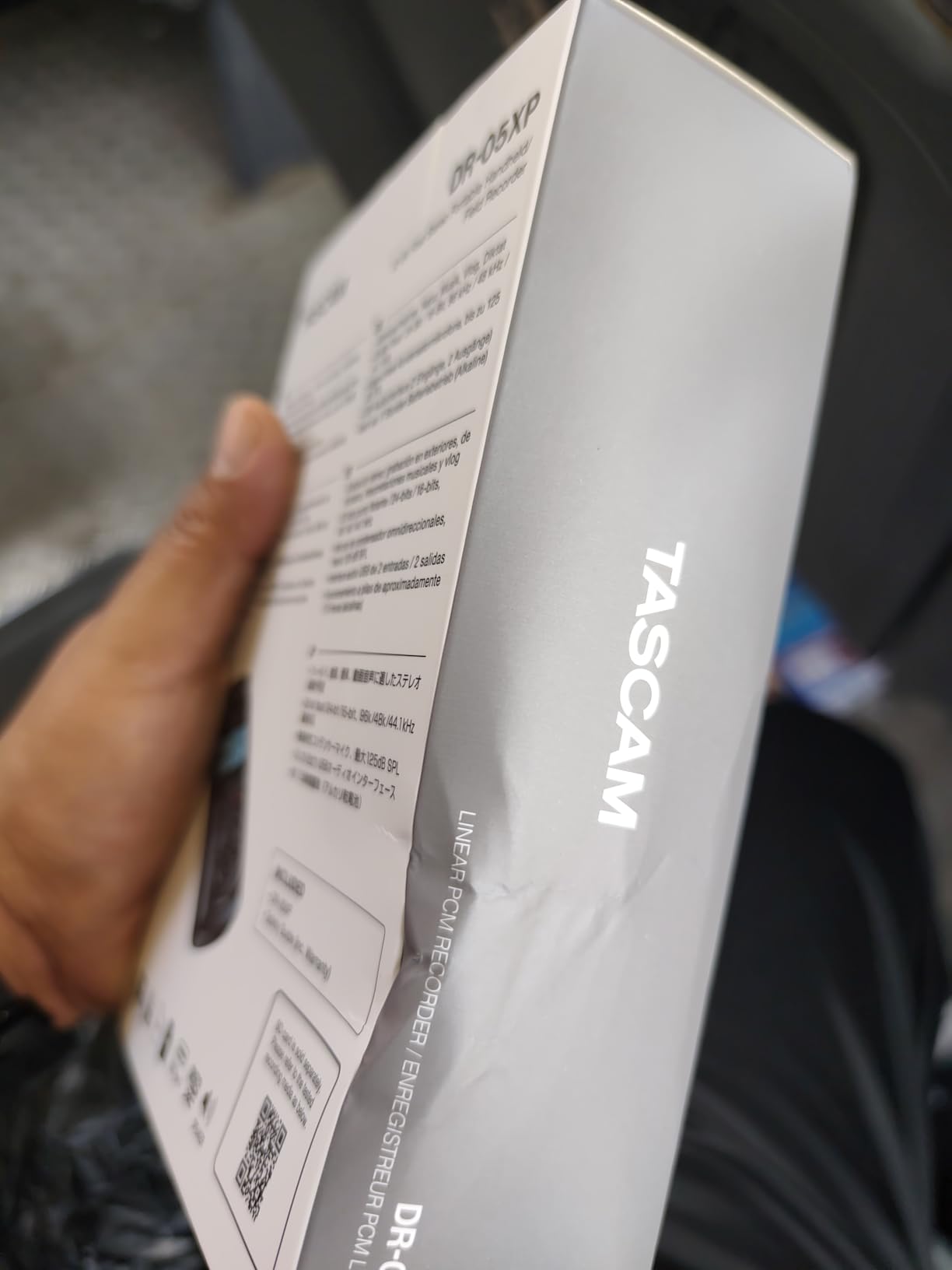
The omnidirectional condenser microphones handle up to 125dB SPL, which covers nearly any sound environment you will encounter. Studio monitors at full volume, live concerts, even construction noise. The USB-C port serves double duty as both a data connection and an audio interface. I plugged into my laptop and the DR-05XP appeared as a 2-in/2-out audio interface instantly.
TASCAM gives you three recording modes: 32-bit float for worry-free capture, 24-bit for professional production work, and 16-bit for smaller file sizes when quality is less critical. Having these options in a single device at this price point represents strong value.
Who Should Buy the TASCAM DR-05XP
Field recordists who need long battery life in remote locations will find the DR-05XP exceptionally capable. It is also a great choice for musicians who want 32-bit float recording without spending on a more complex multi-input recorder. Students and journalists who record long sessions will benefit from the 17.5-hour battery and 512GB storage capacity.
Who Should Look Elsewhere
If you need XLR inputs for professional microphones, the DR-05XP only offers a 3.5mm mic input. Those wanting strong stereo separation from built-in microphones should consider the TASCAM DR-07XP with its adjustable AB/XY configuration instead. The minimal stereo separation on the DR-05XP’s fixed omnidirectional mics may disappoint users focused on spatial recording.
9. TASCAM DR-07XP – Best Adjustable Mic Recorder with 32-Bit Float

TASCAM DR-07XP 32-Bit Float Portable Handheld Field Recorder and USB-C Audio Interface — With Adjustable Mics for Digital Stereo Recording of Music, Sound, Voice, Audio for Video and Podcasting
32-Bit Float Recording
Adjustable AB/XY Mics
125dB SPL
USB-C Interface
17.5hr Battery
Pros
- Adjustable AB/XY stereo microphone configuration
- Detailed balanced recording quality
- Very low noise floor
- Simple 4-way button navigation
- Excellent 17.5-hour battery life
- USB-C connectivity
Cons
- Plastic construction feels cheap
- Some users report noise floor issues
- SD card formatting issues reported
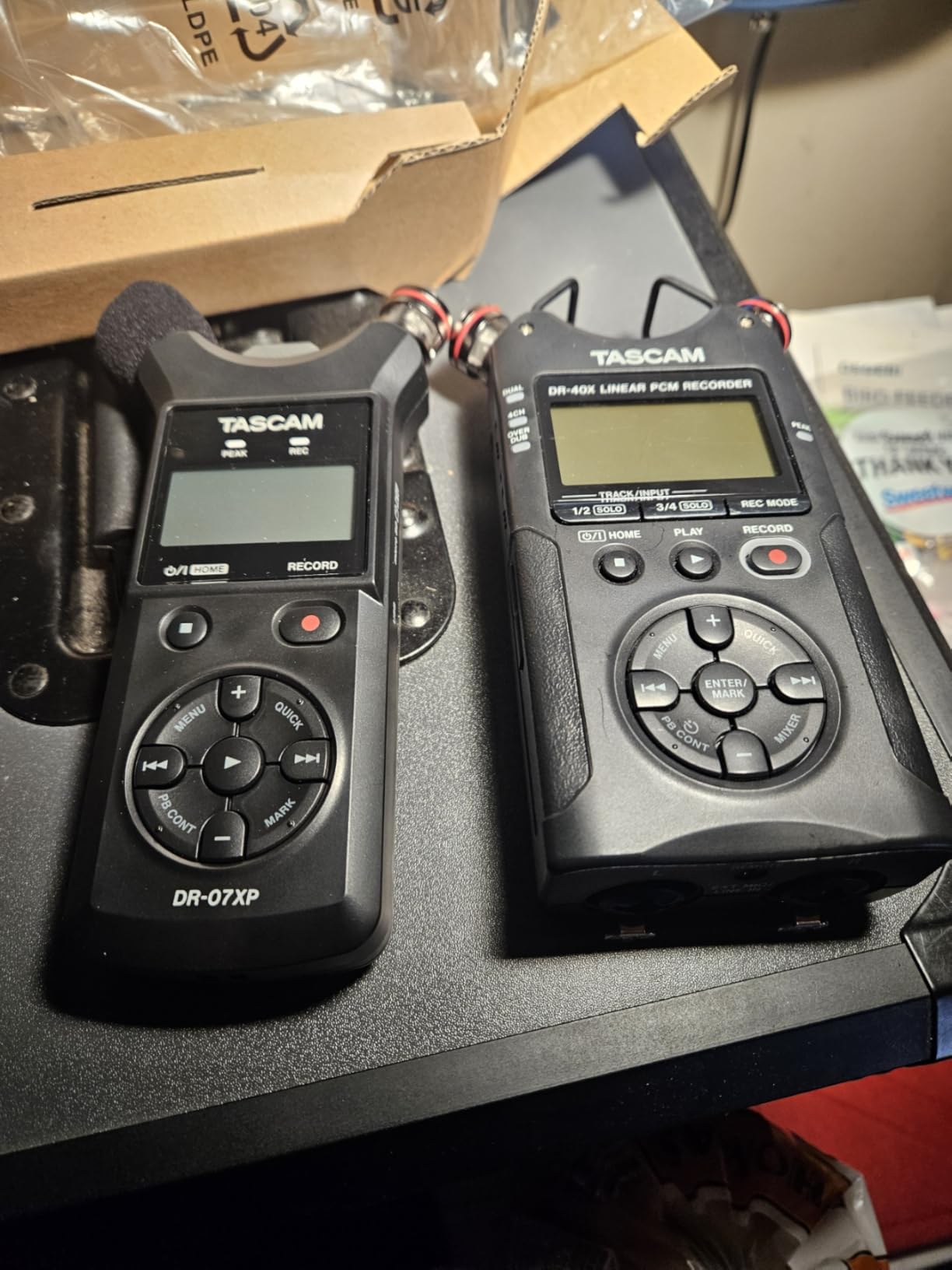
The TASCAM DR-07XP takes everything good about the DR-05XP and adds adjustable stereo microphones that can switch between AB and XY configurations. This physical adjustability is a genuine advantage. In XY mode, the crossed microphones give you tight, phase-coherent stereo imaging that works well for close-miked instruments and interviews. In AB mode, the wider spacing captures more room ambience and spatial depth.
I used the AB configuration to record ambient sounds in a cathedral and the resulting recording had a spaciousness that made me feel like I was back in the room. Switching to XY for a vocal recording session gave me focused, centered audio with clean stereo separation. Being able to physically adjust the mic positions to match your recording scenario is something you cannot do with fixed-mic recorders.
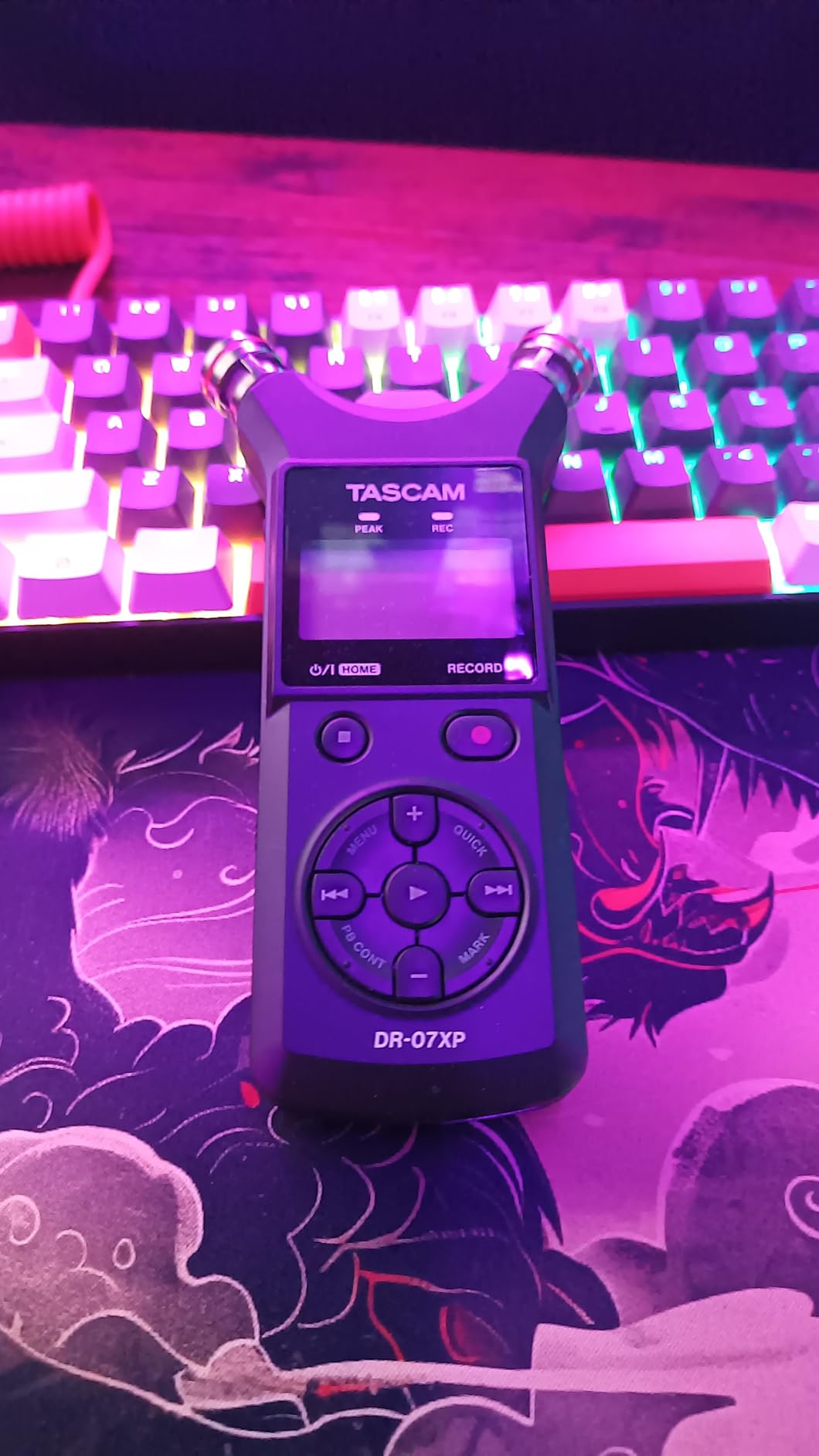
The 32-bit float recording mode works exactly as advertised. I deliberately tested it by recording a drummer hitting cymbals at full volume from three feet away. No distortion, no clipping, no artifacts. Pulling the levels down in post-production revealed clean transient detail in every hit. The low noise floor means quiet recordings like nature ambience come through without audible hiss.
Menu navigation uses a straightforward 4-way button layout that I found more intuitive than scroll-wheel designs. The 17.5-hour battery life matches the DR-05XP, and the USB-C port provides both data transfer and audio interface functionality. The 3.5mm mic input with plug-in power lets you connect external microphones when the built-in mics are not enough.
Who Should Buy the TASCAM DR-07XP
Anyone who values the flexibility to switch between tight stereo imaging and wide ambient capture will appreciate the adjustable microphone design. It is an excellent choice for field recordists, musicians who record in varied acoustic environments, and podcasters who want the ability to adapt their mic configuration to different recording situations.
Who Should Look Elsewhere
If you need XLR inputs for professional microphones, the DR-07XP does not have them. Users who prioritize build quality and a premium feel in hand might find the plastic construction underwhelming. For a more substantial recorder with XLR inputs at a similar price, consider the Zoom H4 Essential.
10. Olympus WS-883 – Best Voice Recorder for Meetings and Lectures

Olympus WS-883 Digital Voice Recorder, Linear PCM/MP3 Recording Formats, USB-A Battery Charging, True Stereo Microphones, Low-Cut Filter and 8GB Built-in Memory (Black)
8GB Memory
True Stereo Mics
68hr Battery
Linear PCM/MP3
USB-A Direct
77g
Pros
- Excellent sound clarity for voice recording
- Very easy to use for non-technical users
- Lightweight at only 77 grams
- 8GB internal plus 32GB expandable storage
- 68 hours of battery life
- Rechargeable AAA batteries via USB
Cons
- Auto shutoff can be frustrating
- Lacks advanced features for professional use
- USB-A connector not USB-C
- No XLR inputs or phantom power
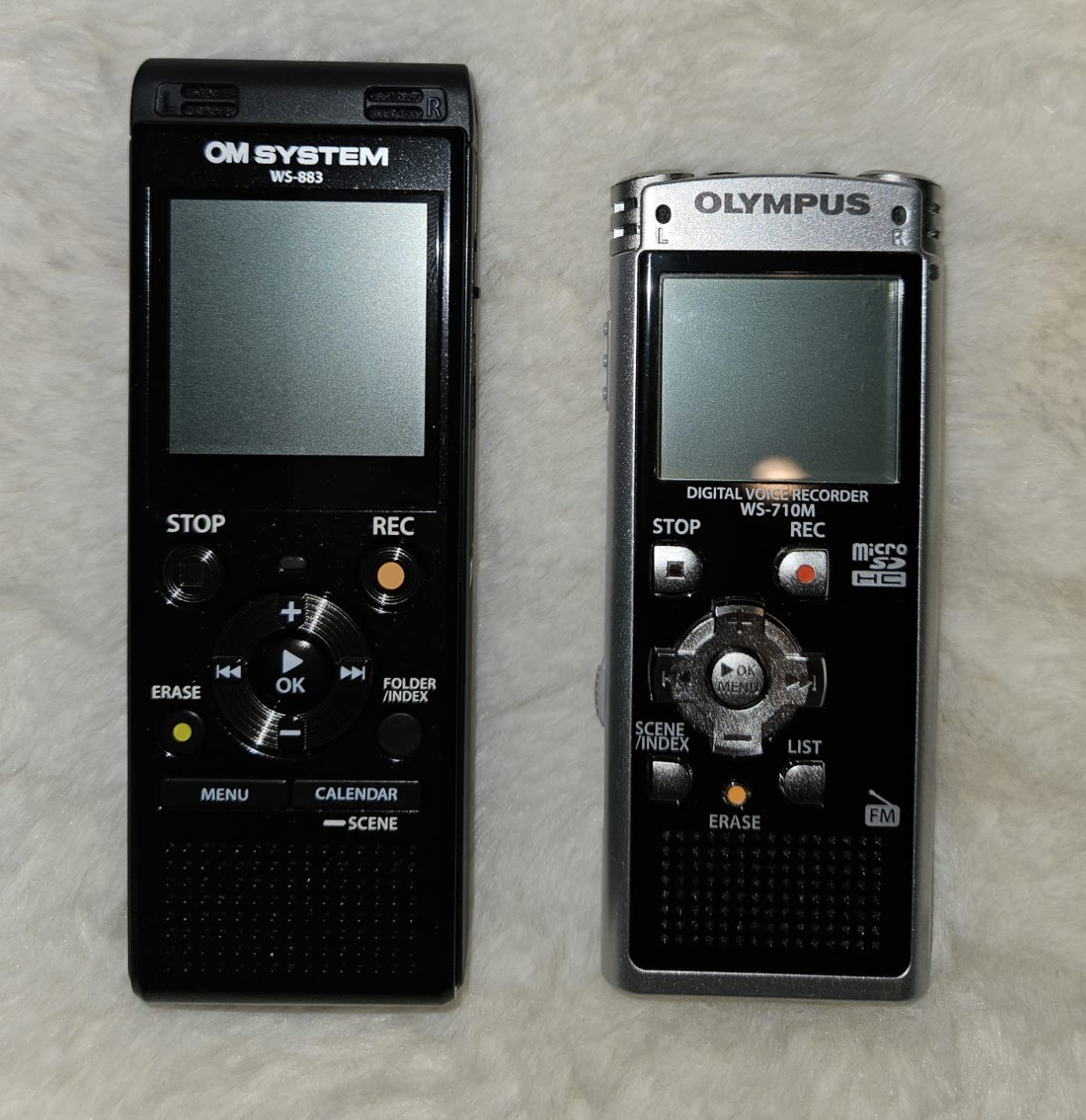
The Olympus WS-883 is the recorder I recommend when someone asks me for a simple, reliable device that just works. At 77 grams, it is light enough to forget you are carrying it. The true stereo microphones capture meetings and lectures with impressive clarity. I recorded a 90-minute boardroom presentation from the back of the room and every word was intelligible on playback.
The built-in USB-A connector slides out of the body for direct connection to your computer. No cables to lose, no card readers to fumble with. I also appreciate that Olympus includes rechargeable AAA batteries that charge via the USB connection. Pop open the battery door, plug it in, and you are charging. With 68 hours of recording time on a charge, I went weeks between charges during normal use.
Eight gigabytes of internal storage gives you up to 2,080 hours of recording time at the lowest quality setting. At higher-quality linear PCM settings, you still get plenty of hours. The microSD slot supports cards up to 32GB for expanded storage. For most meeting and lecture recording scenarios, the internal memory alone is sufficient.
The low-cut filter removes low-frequency rumble from air conditioning, traffic, or table vibrations. This is a small feature that makes a big difference in the listenability of your recordings. The simple interface with dedicated record, stop, and playback buttons means anyone can operate the WS-883 without reading a manual.
Who Should Buy the Olympus WS-883
Students, business professionals, and anyone who needs straightforward voice recording without complexity will find the WS-883 perfectly suited to their needs. The long battery life, simple operation, and built-in USB make it ideal for daily meeting capture, lecture recording, or personal voice notes.
Who Should Look Elsewhere
Musicians and audio professionals who need high sample rates, XLR inputs, or 32-bit float recording should look at the Zoom or TASCAM options in this guide. The auto-shutoff behavior can also be frustrating if you expect the recorder to stay on during extended standby periods. The USB-A connector is dated compared to USB-C alternatives.
11. Zoom PodTrak P2 – Best Budget Podcast Recorder with AI Noise Reduction
Zoom PodTrak P2 Podcast Recorder with 2 USB Mic Inputs & AI Noise Reduction
2 USB Mic Inputs
AI Noise Reduction
2 Headphone Outputs
Remote Guest Recording
SD Card Recording
Pros
- Simple setup for two-person podcasts
- AI noise reduction keeps voices clear
- Remote guest recording with mix-minus
- Portable with battery power
- Good sound quality for the price
Cons
- Plastic build feels cheap
- Limited USB microphone compatibility
- No MP3 recording option
- Software interface needs improvement
The Zoom PodTrak P2 brings podcast-specific recording features to a price point that makes entry-level podcasting accessible to anyone. Two USB microphone inputs let you connect compatible USB mics directly to the unit without a computer. Each host gets their own headphone output for real-time monitoring. I set up a two-person interview in under five minutes from unboxing to recording.
AI noise reduction is the standout feature here. I recorded a podcast episode in a coffee shop as a test, and the P2’s noise reduction significantly reduced background chatter and espresso machine sounds. My voice came through clearly without the ambient distraction. For podcasters who record in less-than-ideal environments, this technology is genuinely helpful.
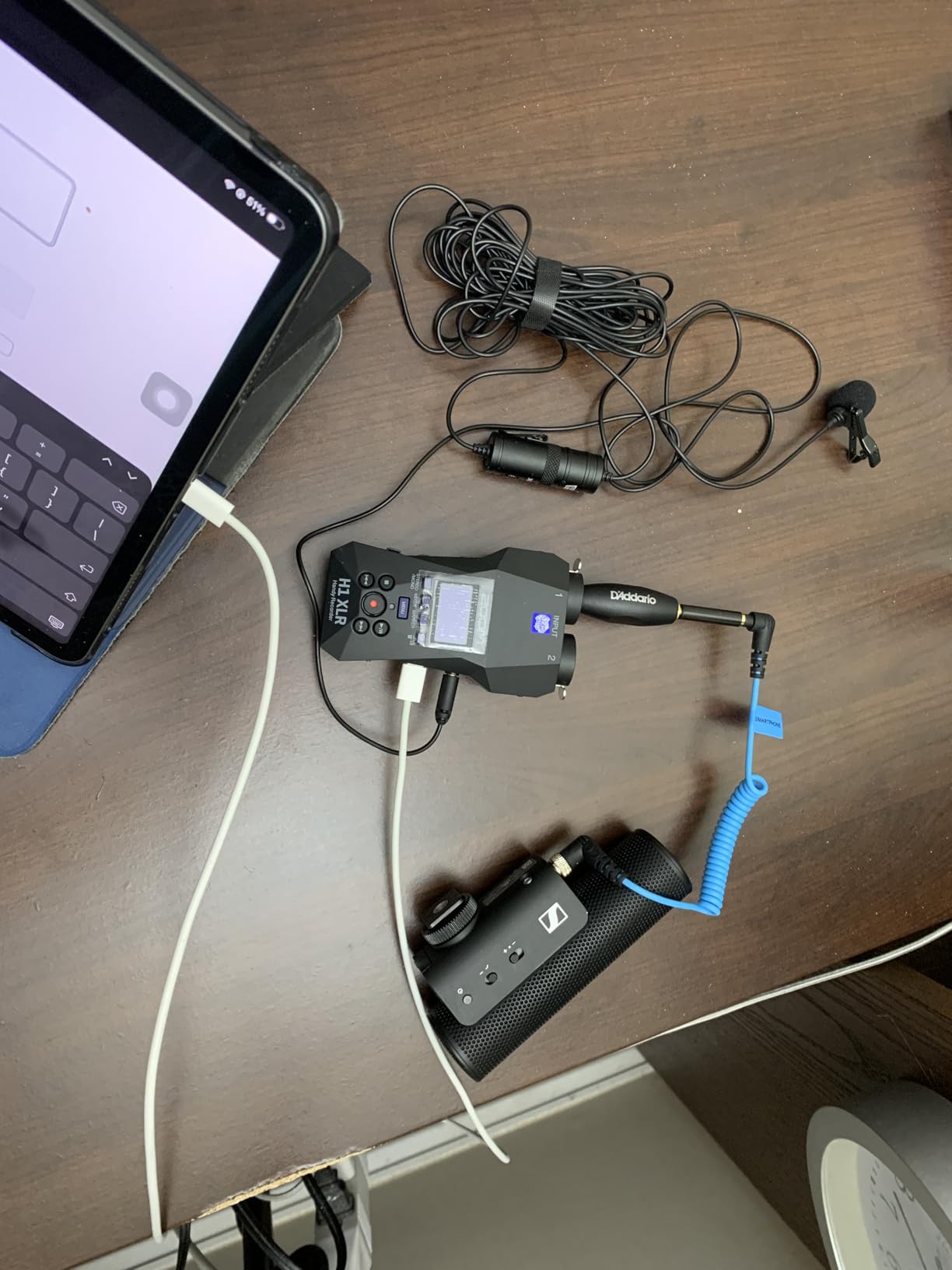
The mix-minus feature for remote guests works the same way as on the larger P4. Connect your phone or computer, and the P2 eliminates echo so your remote guest can hear you without feedback. Recording goes directly to an SD card up to 1TB, giving you plenty of storage for long sessions.
At this price, some compromises are expected. The all-plastic body does not feel particularly durable. USB microphone compatibility is limited, so check that your mics work with the P2 before relying on it for important sessions. The lack of MP3 recording means all files are WAV format, which takes more storage space.
Who Should Buy the Zoom PodTrak P2
Beginning podcasters and content creators who want a simple, affordable way to record two-person shows will find the P2 an excellent starting point. The AI noise reduction and remote guest features are impressive at this price. It is also great for journalists who need a compact interview recording setup.
Who Should Look Elsewhere
If you need more than two microphone inputs, the PodTrak P4 offers four XLR inputs at a higher price point. Those wanting professional-grade build quality or broader USB mic compatibility should consider spending more on a Zoom H4 Essential or H5. Musicians looking for a field recorder with built-in microphones should look at the Zoom H1 Essential instead.
12. Zoom R4 Multi-Track Recorder – Best Portable Recorder for Songwriting Musicians

Zoom R4 Multi-Track Recorder for Musicians with 2 XLR/TRS Combo Inputs, 32-Bit Float, Stereo Bouncing Built-In Microphone, Effects, Rhythms, Battery Powered, USB Audio Interface
32-Bit Float
2 XLR/TRS Inputs
4-Track w/ Bounce
Built-in Stereo Mic
80+ Drum Patterns
14hr Battery
Pros
- 32-bit float clip-free recording
- Excellent built-in stereo microphone
- Bounce feature for unlimited track layering
- 80+ built-in drum patterns for jamming
- Guitar effects suite built-in
- Up to 14 hours battery life
Cons
- Single headphone output only
- File management workflow is confusing
- Limited undo functionality
- No sound-on-sound or loop feature
The Zoom R4 is built specifically for musicians who want to capture and develop ideas on the go. Four recording tracks with a dedicated bounce feature means you can layer guitar, bass, vocals, and keys, then bounce them down to free up tracks for more layers. I used the bounce workflow to build a demo with six separate instrument parts using only four physical tracks. The process takes some practice, but it works reliably.
The built-in stereo microphone is surprisingly good for quick idea capture. I have grabbed song ideas in hotel rooms, backstage areas, and even walking down the street. The 32-bit float recording means those spontaneous captures are always clean, regardless of how loud or soft the source is. No more ruined ideas because I forgot to adjust the gain.
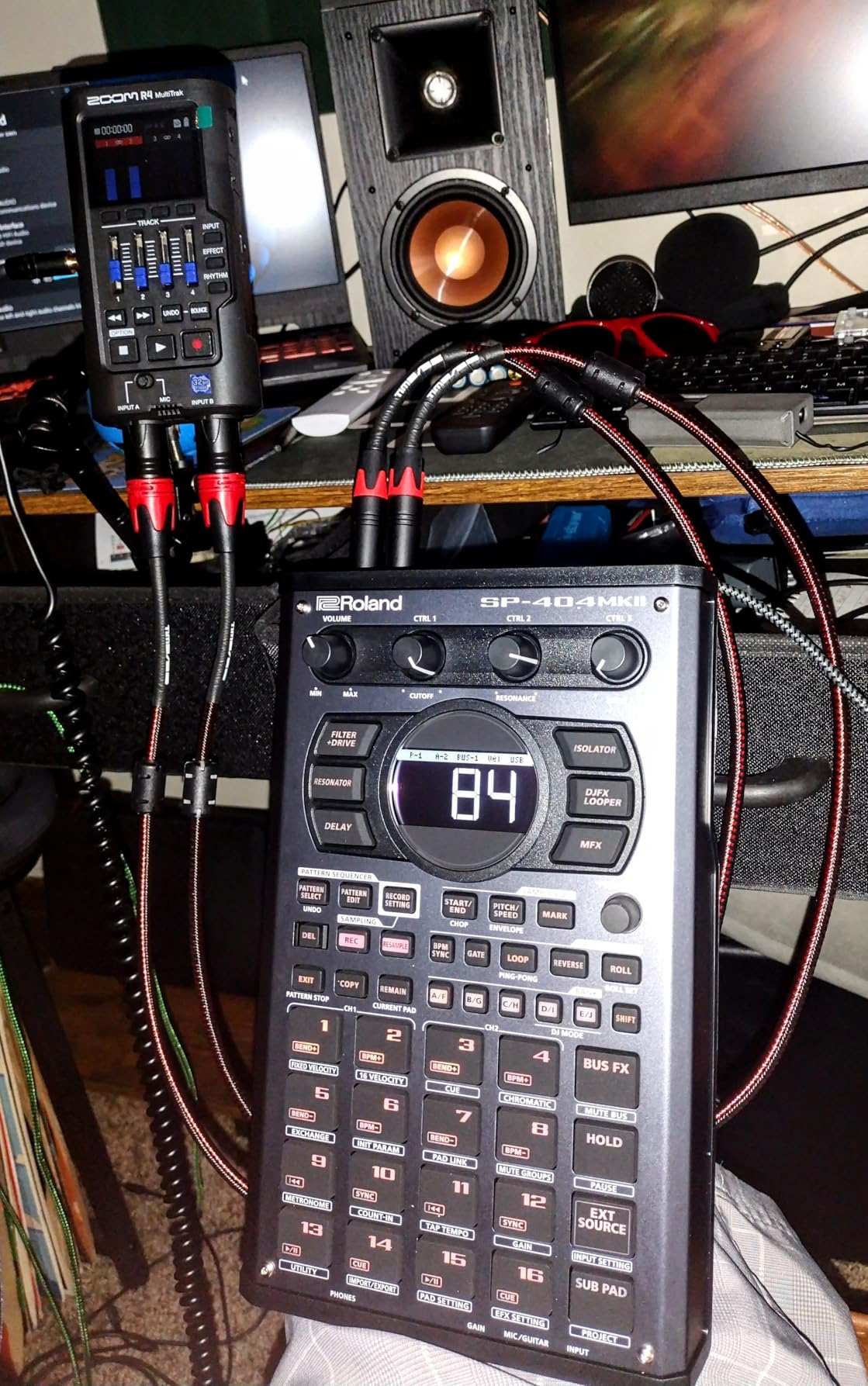
Over 80 built-in drum patterns turn the R4 into a practice and songwriting companion. I plugged my guitar into input one, dialed up a rock drum pattern, added some overdrive from the effects suite, and had a full practice session without any other gear. The effects include amp simulations, drives, modulation, delays, and pitch effects. They are not going to replace your pedalboard, but for sketching out ideas they are more than adequate.
The two XLR/TRS combo inputs with Zoom preamps deliver clean gain for both microphones and instruments. I recorded vocals through a condenser mic on input one and bass guitar on input two simultaneously, each on their own track. The USB audio interface function means you can connect to your computer and use the R4 with your DAW when you are back at your desk.
Who Should Buy the Zoom R4
Songwriters and musicians who want to capture, layer, and develop musical ideas away from their computer will love the R4. The bounce feature, built-in drum patterns, and guitar effects make it a self-contained songwriting tool. It is also great for musicians who want to record rehearsals and practice sessions with multi-track flexibility.
Who Should Look Elsewhere
If you need more than four tracks or want sound-on-sound loop recording, the R4 will feel limiting. Podcasters should look at the PodTrak P4 instead, as the R4’s feature set is tuned for music creation. Those wanting a simple point-and-record device for voice capture will find the R4’s musician-focused workflow unnecessary.
How to Choose the Best Portable USB Audio Recorder
Picking the right portable recorder comes down to matching features to your actual workflow. I have seen too many people overspend on features they never use or underspend and outgrow their recorder in months. Here is what actually matters when making this decision.
Recording Format and Bit Depth
If you are recording voice for meetings or lectures, MP3 or standard 16-bit WAV is perfectly fine. Musicians and podcasters should look for 24-bit recording at minimum. The newer 32-bit float format eliminates clipping entirely, which is a massive advantage for anyone who records unpredictable sound sources. All the Zoom and TASCAM models in this guide with 32-bit float capability earned my recommendation specifically because of this feature.
Input Options
Think about what you will connect to the recorder. If you only need built-in microphones, a simple model like the Sony PX370 or Olympus WS-883 saves money and complexity. Podcasters using XLR microphones need combo inputs with phantom power, which the Zoom H4 Essential, H5, and PodTrak P4 all provide. Musicians recording instruments benefit from having both XLR and instrument-level inputs on separate channels.
USB Connectivity and Audio Interface Functionality
Most modern portable recorders double as USB audio interfaces, but the implementation varies. USB-C connections offer faster data transfer and broader compatibility with current computers and phones. Some recorders, like the Zoom H1 Essential, work as USB microphones with iOS and Android devices. If you plan to use your recorder with both standalone recording and computer-based production, verify that the USB interface mode supports your operating system and recording software.
Battery Life and Power Options
Battery life ranges dramatically among these recorders. The Sony PX370 delivers 57 hours on AA batteries, while the Zoom PodTrak P4 manages only 3.5 hours. If you record long sessions or work in remote locations without power access, prioritize recorders with extended battery life like the TASCAM models at 17.5 hours or the Olympus WS-883 at 68 hours. Some recorders support USB bus power, which lets you run them from a portable battery bank for indefinite recording time.
Storage Capacity
Internal storage varies from 4GB to 8GB, which is enough for basic voice recording. For music and high-quality audio production, you want a recorder that supports large SD or microSD cards. Most of the recorders in this guide support cards up to 512GB or 1TB, which holds many hours of uncompressed audio. Consider how much you record between file transfers when evaluating storage needs.
Portability vs. Capability
There is always a tradeoff between how much a recorder can do and how easy it is to carry. The Sony PX370 slips into any pocket. The Zoom H4 Essential requires a bag. Think honestly about how often you will actually carry a larger recorder versus reaching for something smaller. The best recorder is the one you have with you when inspiration strikes.
Frequently Asked Questions
What is the best portable recorder for musicians?
The Zoom H4 Essential is the best portable recorder for musicians in 2026. It combines 32-bit float recording, two XLR/TRS combo inputs with phantom power, and the largest built-in X/Y microphones on any handheld recorder. For songwriters specifically, the Zoom R4 offers four-track recording with a bounce feature and built-in drum patterns at a lower price point.
Can I use a portable recorder as a USB microphone?
Yes, many modern portable recorders function as USB microphones or audio interfaces when connected to a computer, phone, or tablet. The Zoom H1 Essential, Zoom H4 Essential, and both TASCAM DR-05XP and DR-07XP support USB audio interface mode. Simply connect via USB and select the recorder as your audio input in your recording software or communication app.
What is 32-bit float recording and why does it matter?
32-bit float recording captures a massive dynamic range that makes audio clipping impossible. With traditional 16-bit or 24-bit recording, setting your gain too high causes permanent distortion. With 32-bit float, even if your levels appear to peak, you can recover clean audio by reducing gain in your editing software. This technology removes the most common cause of ruined recordings.
How long do batteries last in portable audio recorders?
Battery life in portable audio recorders ranges from about 3.5 hours to 68 hours depending on the model. The Olympus WS-883 leads with 68 hours of recording time. The TASCAM DR-05XP and DR-07XP each deliver approximately 17.5 hours. The Zoom PodTrak P4 has the shortest battery life at around 3.5 hours on AA batteries. Many recorders also support USB bus power for extended sessions.
How much storage do I need in a portable recorder?
For voice recording and meetings, 4GB to 8GB of internal storage holds hundreds of hours of MP3 files. For music production with uncompressed WAV files at high sample rates, you need expandable storage via SD or microSD cards. A 128GB card holds roughly 12 hours of stereo 96kHz/24-bit WAV audio. Most modern recorders support cards up to 512GB or 1TB for maximum flexibility.
Final Thoughts on the Best Portable USB Audio Recorders
After testing all 12 recorders in this guide, a few clear winners emerged based on different needs. The Zoom PodTrak P4 remains my top recommendation for podcasters thanks to its four XLR inputs, mix-minus for remote guests, and intuitive sound pad system. For musicians and field recordists, the Zoom H4 Essential delivers professional audio quality with 32-bit float recording and versatile XLR/TRS inputs in a portable package.
Budget-conscious buyers get excellent value from the Sony ICD-PX370 for simple voice recording and the Zoom PodTrak P2 for entry-level podcasting. Those wanting the latest 32-bit float technology at a reasonable price should look at the TASCAM DR-07XP with its adjustable stereo microphones or the Zoom H1 Essential for ultra-portable recording.
The best portable USB audio recorder is the one that matches your specific workflow. Whether you are capturing lectures, producing podcasts, recording music, or gathering field sounds, there is a recorder in this guide that fits your needs and budget. Pick the one whose feature set aligns with how you actually record, and you will not be disappointed.