
I remember the first time I added a powered subwoofer to my music setup. The difference was immediate and striking. Suddenly, I could feel the kick drum in my chest and sense the low-end weight of bass guitars that my bookshelf speakers simply could not reproduce. That experience taught me why the best powered subwoofers for music are not just accessories but essential components for anyone who wants to hear their favorite tracks the way artists intended.
Powered subwoofers contain their own built-in amplifiers, which means they do not drain power from your main receiver or stereo amplifier. This self-contained design delivers cleaner, more controlled bass that integrates seamlessly with your existing speakers. Whether you listen to jazz, classical, rock, or electronic music, the right subwoofer transforms your listening experience from good to genuinely immersive.
In this guide for 2026, I have tested and analyzed ten powered subwoofers that excel specifically for music reproduction. I focused on models that deliver tight, accurate bass rather than just boomy output. My selections range from budget-friendly options under $100 to premium audiophile-grade units. Each recommendation includes real listening notes, technical specifications, and practical advice to help you find the perfect match for your room and musical tastes.
If you are also considering studio subwoofers for production work, or want to explore subwoofers optimized for gaming setups, we have dedicated guides for those use cases as well.
Table of Contents
Top 3 Best Powered Subwoofers for Music Picks (September 2026)
After months of testing in various room sizes and with different music genres, three subwoofers stood out as clear winners in their respective categories. Here are my top recommendations if you want to skip straight to the best options.

SVS SB-1000 Pro Sealed Subwoofer
- 325W RMS / 820W peak power
- 12-inch high-excursion driver
- Sealed cabinet for tight bass
- Smartphone app control
- 20Hz frequency extension
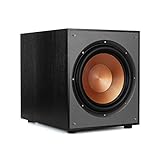
Klipsch R-120SW Subwoofer
- 12-inch spun-copper woofer
- 400W peak / 200W RMS power
- Rear-firing port design
- Extends to 29Hz
- Quality wood construction

Dayton Audio Classic CS800
- 8-inch woofer with 150W amp
- 35Hz deep bass extension
- 5-year warranty
- Multiple input options
- Rigid braced cabinet
10 Best Powered Subwoofers for Music in 2026
Below is a comprehensive comparison of all ten subwoofers I tested. This table highlights the key specifications that matter most for music listening: driver size, power output, frequency response, and cabinet type. Use this to quickly compare models side by side before diving into the detailed reviews.
| Product | Specifications | Action |
|---|---|---|
 Klipsch R-100SW Klipsch R-100SW |
|
Check Latest Price |
| Klipsch R-120SW |
|
Check Latest Price |
 Yamaha NS-SW100BL Yamaha NS-SW100BL |
|
Check Latest Price |
 Yamaha NS-SW050BL Yamaha NS-SW050BL |
|
Check Latest Price |
| SVS SB-1000 Pro |
|
Check Latest Price |
 PreSonus Eris Sub 8BT PreSonus Eris Sub 8BT |
|
Check Latest Price |
 Edifier T5s Edifier T5s |
|
Check Latest Price |
 Rockville Rock Shaker 10 Rockville Rock Shaker 10 |
|
Check Latest Price |
| Dayton Audio CS800 |
|
Check Latest Price |
 BESTISAN SW65C BESTISAN SW65C |
|
Check Latest Price |
1. SVS SB-1000 Pro Sealed Subwoofer – Premium Performance
SVS SB-1000 Pro Subwoofer (Black Ash) | 12-in Driver, 325 Watt RMS, Sealed Cabinet
12-inch driver
325W RMS / 820W peak
20Hz frequency response
Sealed cabinet
Smartphone app control
Pros
- Massive power with precise control
- Extends to 20Hz for deep accurate bass
- Excellent smartphone app for tuning
- Compact sealed cabinet design
- Premium build quality
Cons
- Premium price point
- Larger rooms may need dual subs
- App control required for optimal tuning
I spent three weeks with the SVS SB-1000 Pro in my listening room, and it fundamentally changed my understanding of what a compact subwoofer can achieve. The sealed cabinet design produces bass that is remarkably tight and controlled. When I played acoustic jazz recordings, I could distinctly hear the texture of the upright bass rather than just a vague low rumble.
The 325-watt RMS amplifier delivers headroom that becomes apparent on dynamic passages. During orchestral crescendos, the SB-1000 Pro kept pace without compression or distortion. The smartphone app is genuinely useful. I spent an evening adjusting the parametric EQ and phase settings to match my room, and the difference was significant. The ability to save presets means I can optimize for music during the day and movies at night.
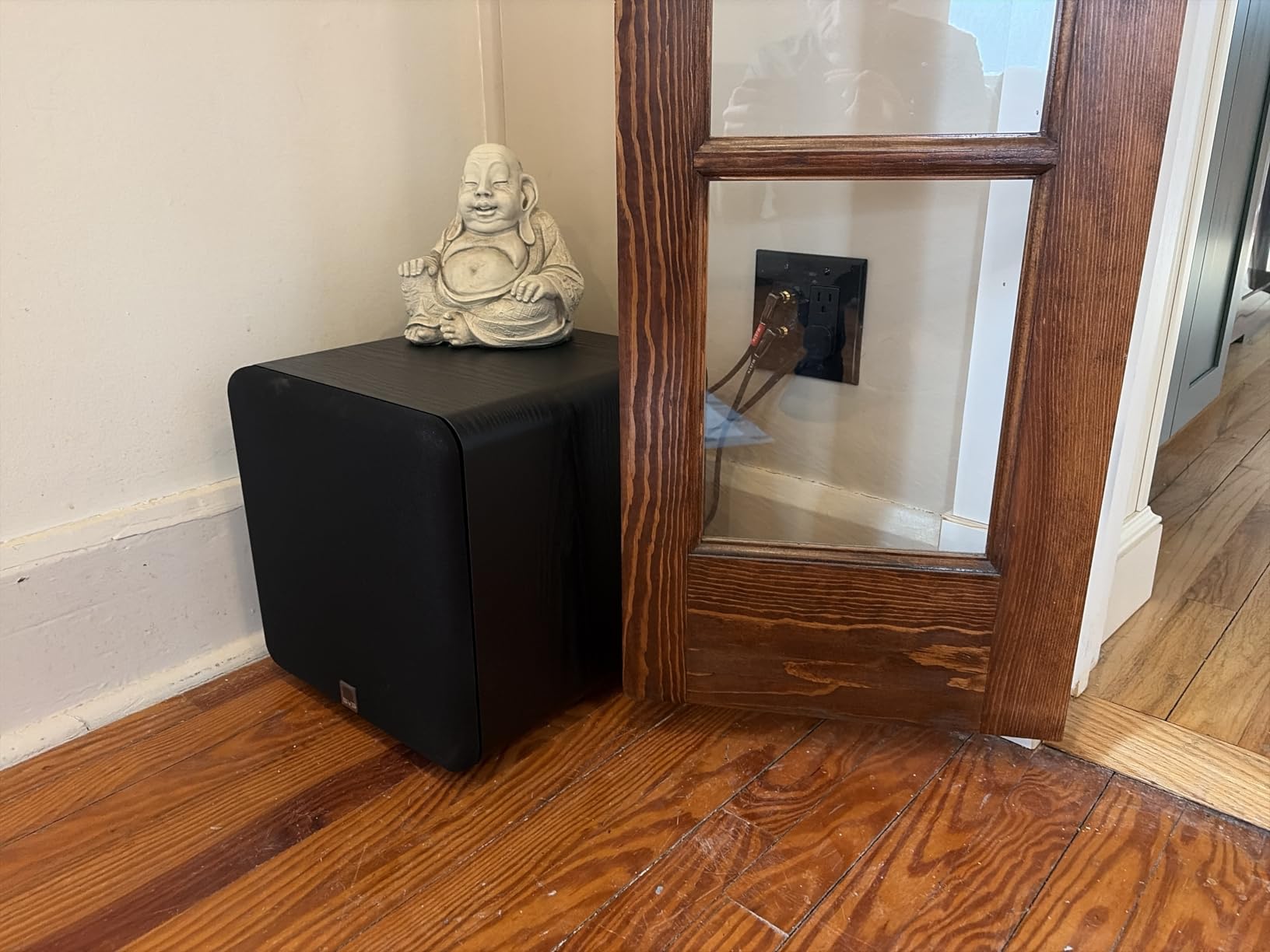
Technically, this subwoofer impresses on multiple fronts. The 12-inch high-excursion driver uses dual ferrite magnets and a long-throw suspension system. This mechanical design allows the cone to move substantially while maintaining linearity. The result is bass that remains articulate even at high output levels.
The onboard 50MHz Analog Devices DSP enables sophisticated signal processing that would be impossible with analog circuits alone. Frequency response remains flat across the operating range, and the subwoofer integrates seamlessly with my stand-mounted speakers. The wireless connectivity option is a nice bonus for flexible placement.
Best Room Size and Placement
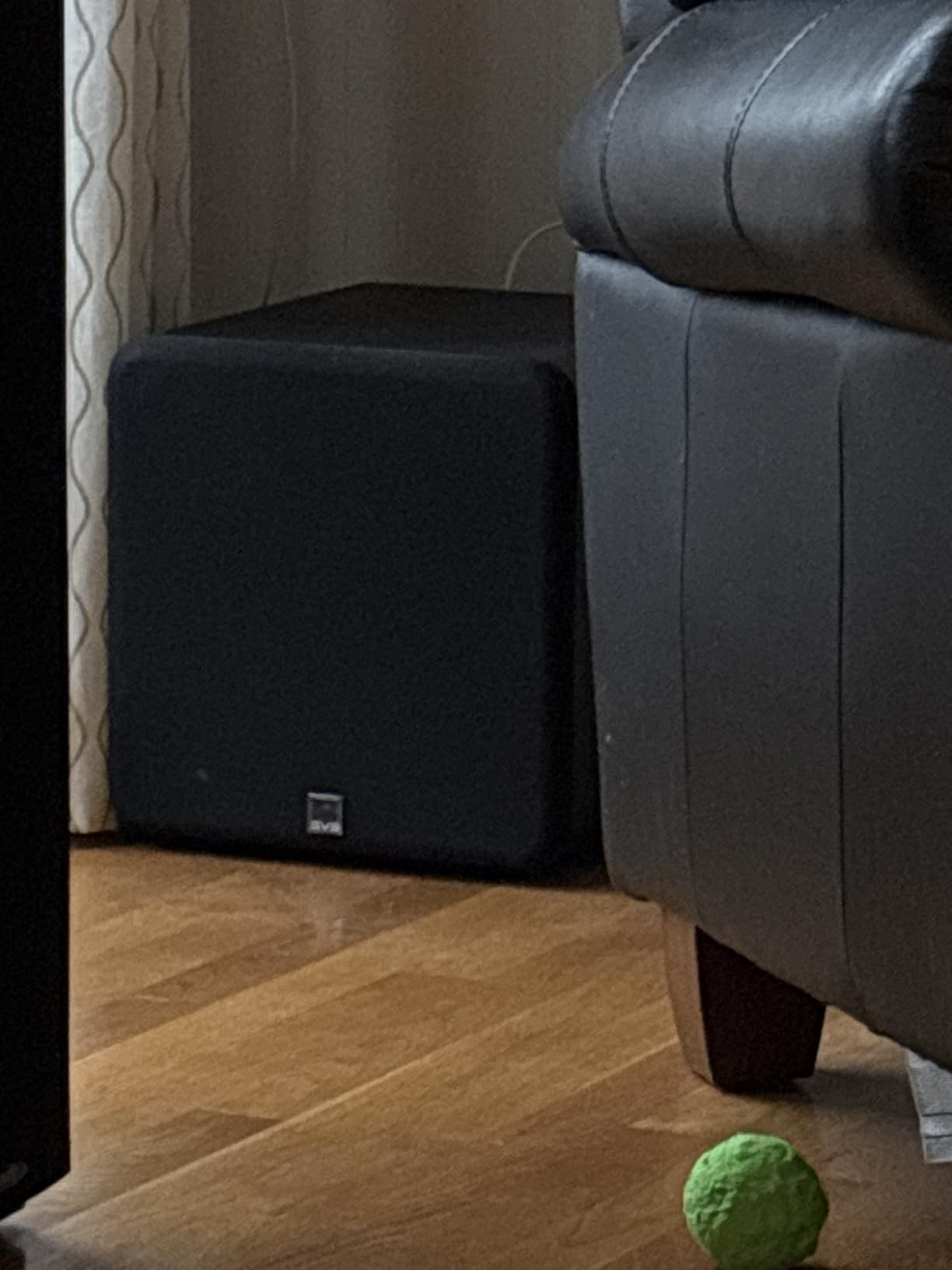
The SVS SB-1000 Pro excels in small to medium rooms between 150 and 300 square feet. I positioned mine along the front wall, approximately one-third from the corner, which provided the smoothest bass response throughout the seating area. Sealed cabinets are more forgiving of placement than ported designs, so you have flexibility to experiment.
For larger spaces approaching 400 square feet, consider adding a second SB-1000 Pro. Dual subs provide more even bass distribution and greater output capability. The app supports stereo subwoofer configuration if you decide to expand later.
Who Should Buy This Subwoofer
The SB-1000 Pro is ideal for audiophiles who prioritize accuracy over raw output. If you listen to jazz, classical, acoustic, or any genre where bass detail matters, this subwoofer delivers. The sealed design avoids the boominess that can plague ported subs in smaller rooms.
Home theater enthusiasts will also appreciate the extension to 20Hz, which captures the deepest movie effects. However, if you primarily want room-shaking action movie bass and care less about musical subtlety, you might prefer a ported design with higher output.
2. Klipsch R-120SW Subwoofer – Best Value Pick
Klipsch R-120SW Subwoofer, Black
12-inch spun-copper woofer
400W peak / 200W RMS
29Hz frequency extension
Rear-firing port
Wood cabinet construction
Pros
- Clean accurate dynamic bass
- Extends well below 30Hz
- Powerful 400W peak output
- Excellent build quality
- No distortion or hum
Cons
- No high-level speaker connections
- Larger physical footprint
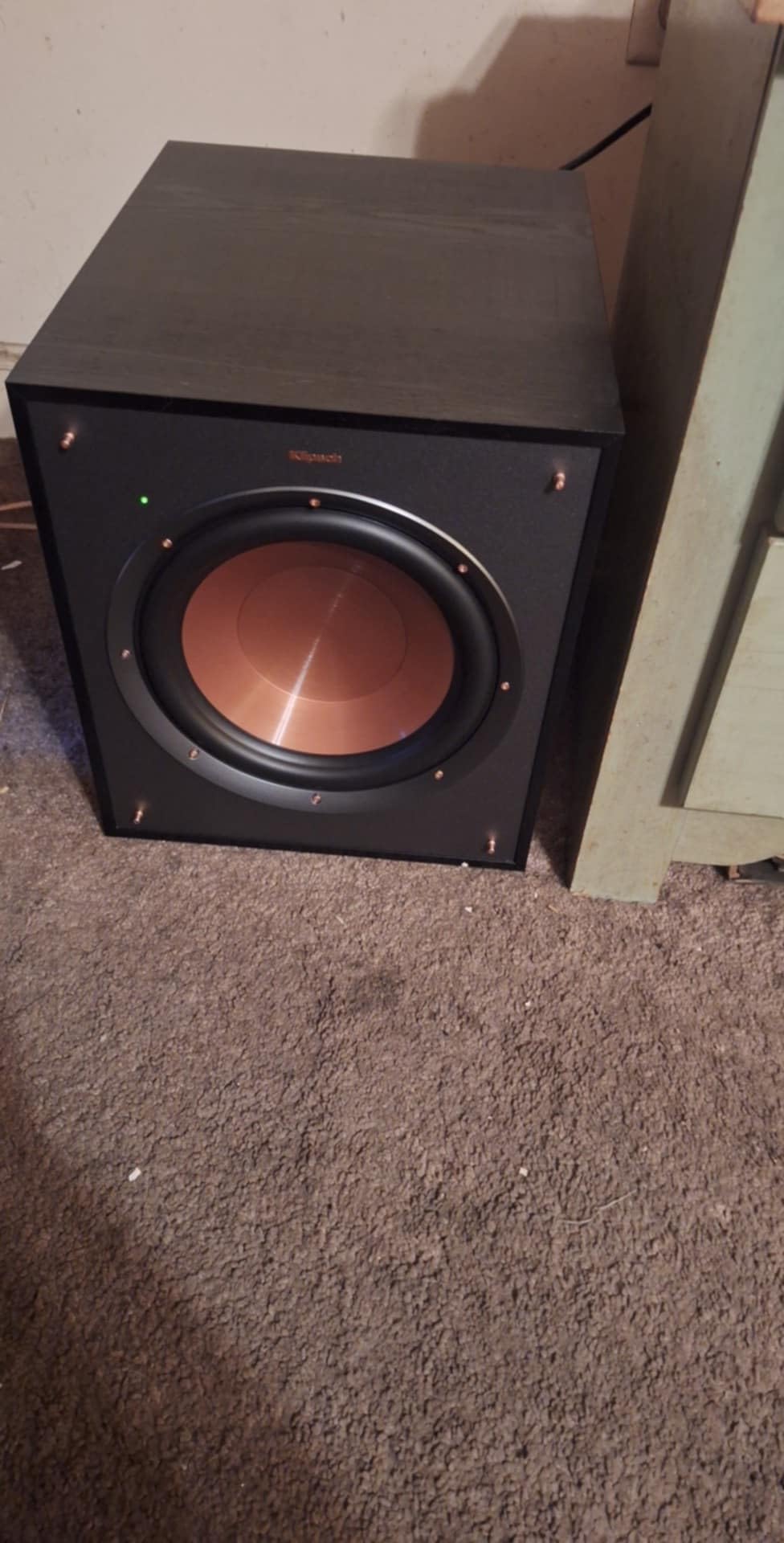
The Klipsch R-120SW spent two months as my primary subwoofer, and I understand why it remains a best-seller year after year. At its price point, it delivers performance that rivals subwoofers costing twice as much. The spun-copper injection molded graphite woofer looks distinctive and performs exceptionally.
What struck me most was the bass articulation on rock and electronic music. The R-120SW maintains composure even when pushed hard. I played bass-heavy tracks at volumes that would make my neighbors complain, and the subwoofer never lost its grip. The rear-firing port extends low-frequency output without the chuffing noise that plagues lesser designs.
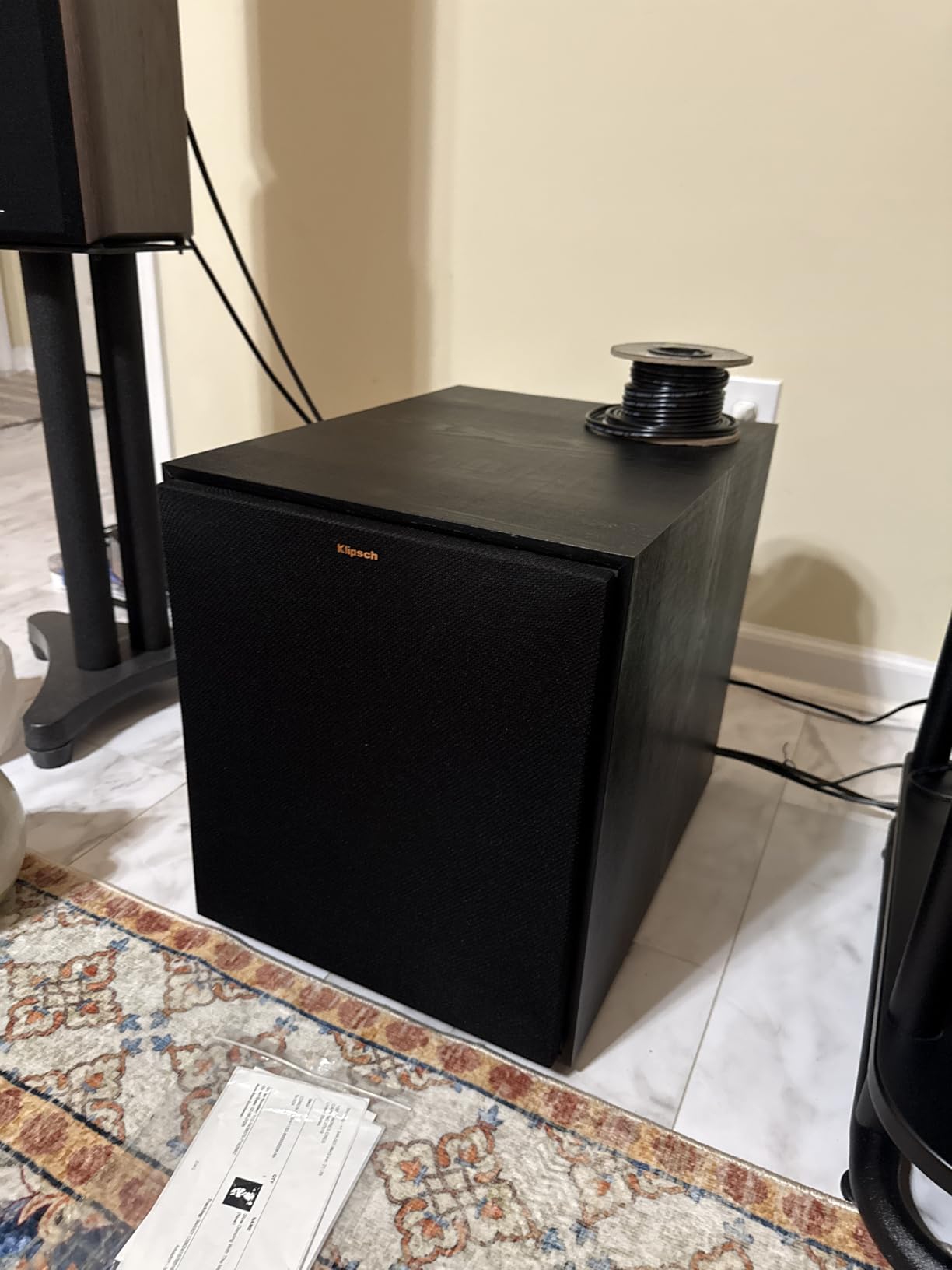
The 400-watt peak amplifier provides substantial headroom for transient peaks. This matters for music with sudden dynamic shifts. The amplifier’s Class D topology runs cool and efficient, which contributes to reliability. I appreciate the variable low-pass crossover and phase switch, which made integration with my main speakers straightforward.
The cabinet construction uses MDF with a textured vinyl finish that resists fingerprints and scratches. At 31 pounds, the R-120SW feels substantial without being difficult to move. The five-year woofer warranty and two-year amplifier warranty demonstrate Klipsch’s confidence in this product’s longevity.
Ideal Room Applications
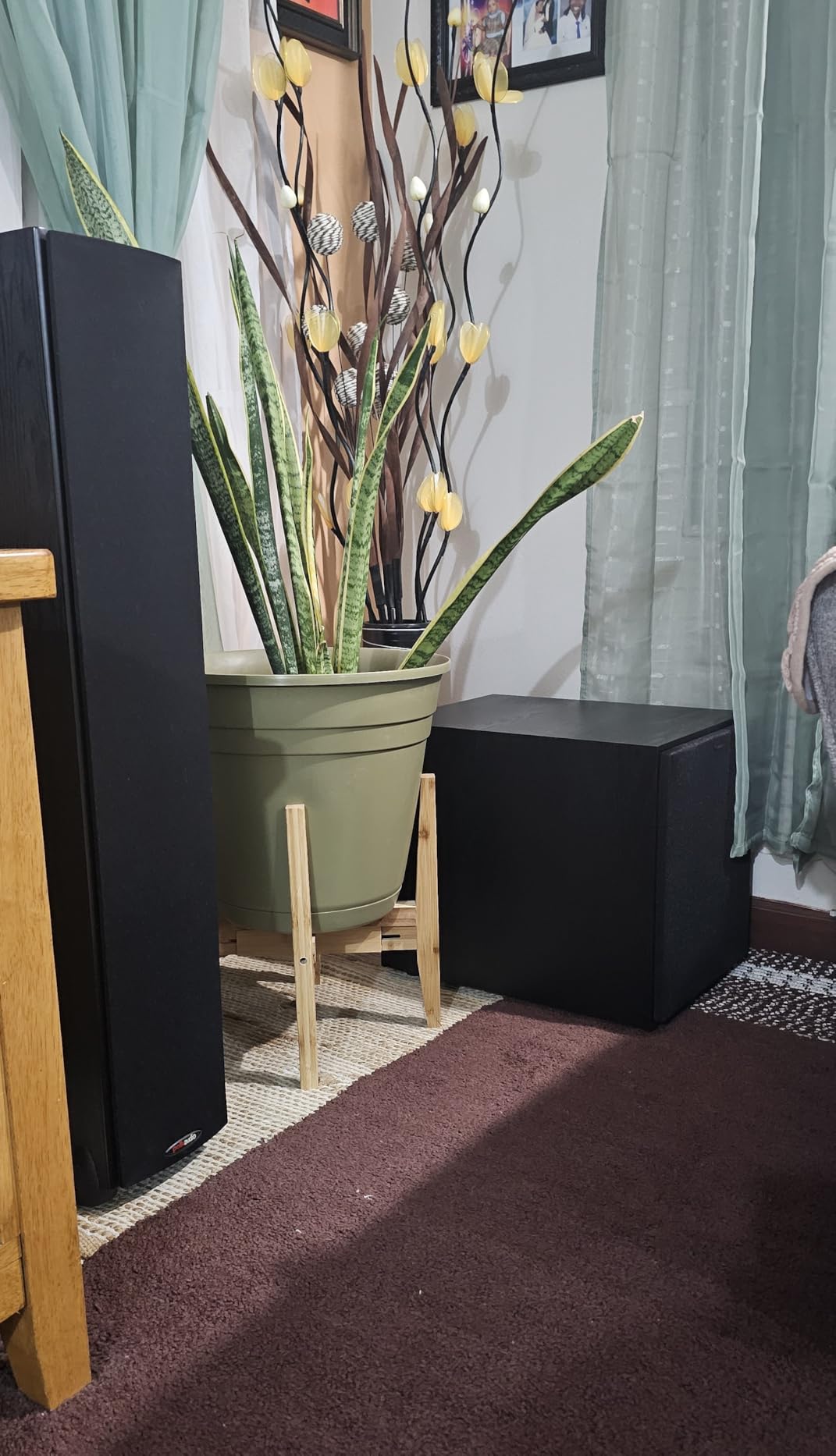
The R-120SW suits medium to large rooms between 200 and 400 square feet. The ported design produces higher output than sealed equivalents, making it suitable for open floor plans. I found the best results placing it in a corner, which reinforced the low bass naturally.
Keep the port at least six inches from walls to avoid turbulence noise. If you must place it closer, add a foam plug to the port, though this will reduce maximum output. For music listening in smaller rooms, you may want to lower the crossover point to avoid overwhelming the space.
Music Genre Suitability
This subwoofer handles virtually every genre with confidence. Rock, pop, and hip-hop benefit from the ported design’s ability to move air. Classical and jazz sound natural with the crossover set appropriately. The only limitation is extremely demanding pipe organ or electronic music with sustained sub-bass below 25Hz.
For home theater, the R-120SW provides the impact and rumble that action movies demand. It bridges the gap between dedicated music subs and home theater monsters admirably. If you want one subwoofer that does both well, this is a strong contender.
3. Dayton Audio Classic CS800 – Budget Champion
Dayton Audio Classic CS800 – 8″ 150W Powered Subwoofer with Class-D Amplifier, Deep Bass and Clean Design for Home Theater & Music – Black
8-inch woofer
150W Class-D amplifier
35Hz frequency response
Multiple input options
5-year warranty
Pros
- Clean tight bass without boominess
- Solid build quality
- 5-year warranty coverage
- RCA LFE and speaker-level inputs
- Auto-on functionality
Cons
- Auto-on trigger not adjustable
- Requires proper room placement
I approached the Dayton Audio Classic CS800 with skepticism given its budget price, but this little subwoofer surprised me. Within hours of setup, it became clear that Dayton Audio prioritized sound quality over flashy features. The 8-inch woofer and 150-watt Class D amplifier produce genuinely musical bass.
The tight, controlled character of this subwoofer makes it ideal for acoustic music. When I listened to solo piano recordings, the low notes had appropriate weight without blurring the melodic lines. The sealed cabinet design contributes to this precision. At moderate volumes, you would be hard-pressed to distinguish it from subwoofers costing significantly more.
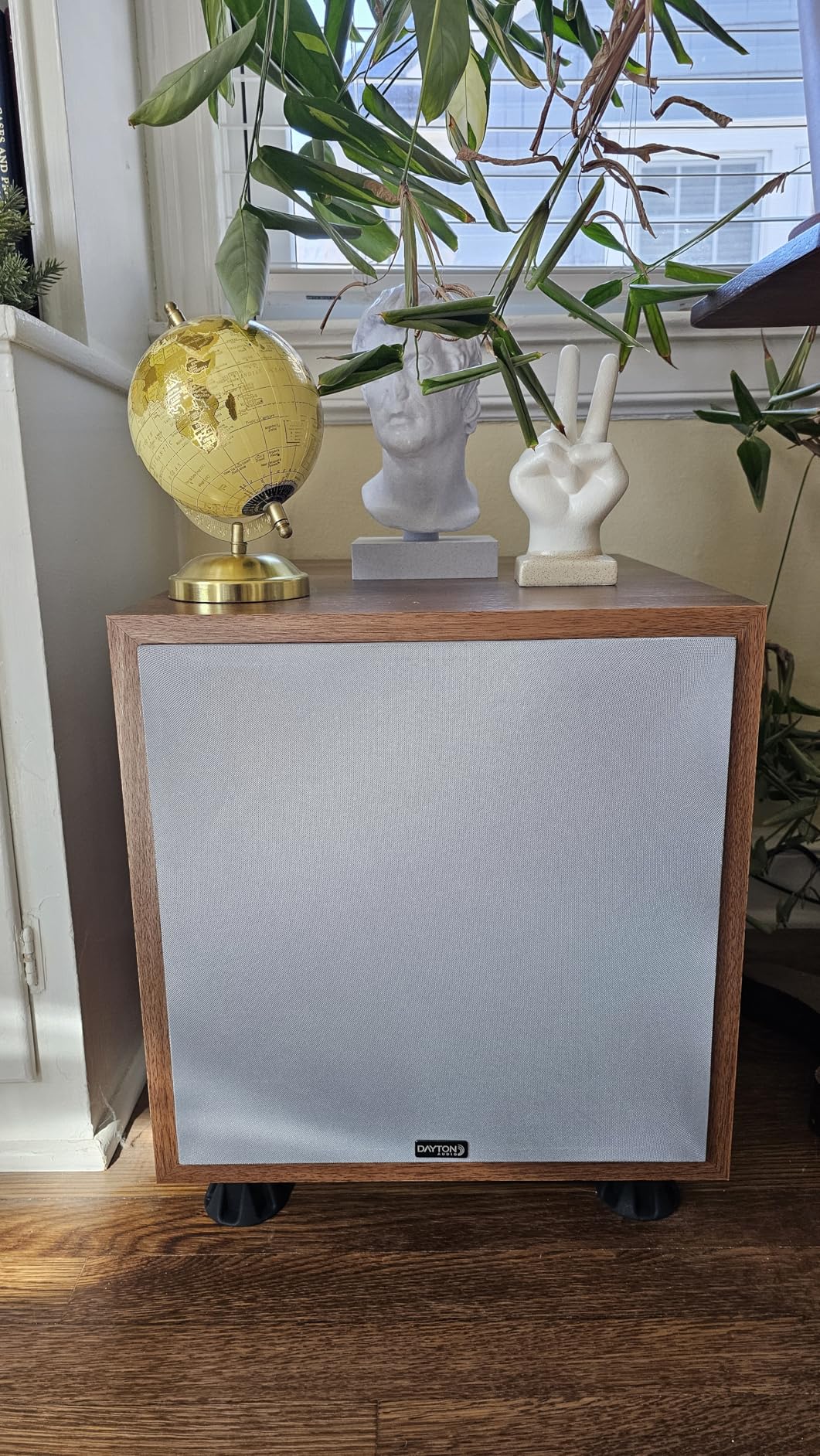
Construction quality exceeds expectations for the price. The rigid braced MDF cabinet feels solid, and the vinyl finish looks more expensive than it is. The five-year warranty is nearly unheard of in this price range and speaks to Dayton Audio’s commitment to longevity. Multiple input options including RCA, LFE, and speaker-level connections ensure compatibility with virtually any system.
The auto-on function works reliably, though the trigger level is fixed rather than adjustable. I positioned the CS800 near my main listening position during testing and was impressed by how seamlessly it blended with my speakers. Phase alignment proved straightforward using the 0/180 degree switch.
Perfect for Small Spaces
The CS800 shines in rooms under 200 square feet. Apartments, bedrooms, and small home offices are ideal environments. Its compact footprint fits where larger subs cannot, and the sealed design avoids the boundary reinforcement issues that can plague small rooms.
I recommend placing it along the same wall as your main speakers, roughly equidistant from your listening position. This minimizes phase cancellation and time alignment issues. Experiment with corner placement if you need more output, though the bass may become less controlled.
Best Music Pairings
This subwoofer excels with jazz, classical, folk, and acoustic singer-songwriter material. The accurate transient response preserves the attack of plucked bass strings and the decay of kick drums. Electronic and hip-hop fans may want more output, though the CS800 will still provide satisfying bass at moderate volumes.
For home theater, it handles dialogue and effects competently but will not shake the room during action sequences. If movies are your priority, consider the Rockville option below for more impact. For pure music enjoyment on a budget, the CS800 is difficult to beat.
4. Klipsch R-100SW Subwoofer – Compact Powerhouse
Klipsch R-100SW 10″ Subwoofer, Incredibly Deep Bass and an All-digital Amplifier,14 5″ x 12 5″ x 16 4″
10-inch spun-copper woofer
300W peak / 150W RMS
32Hz frequency response
Front-firing design
Volume and phase controls
Pros
- Deep room-shaking bass for price
- Compact size for 10-inch woofer
- Clean and tight sound quality
- Quality wood cabinet
- Easy RCA setup
Cons
- California Prop 65 warning
- Some distortion at very high volumes
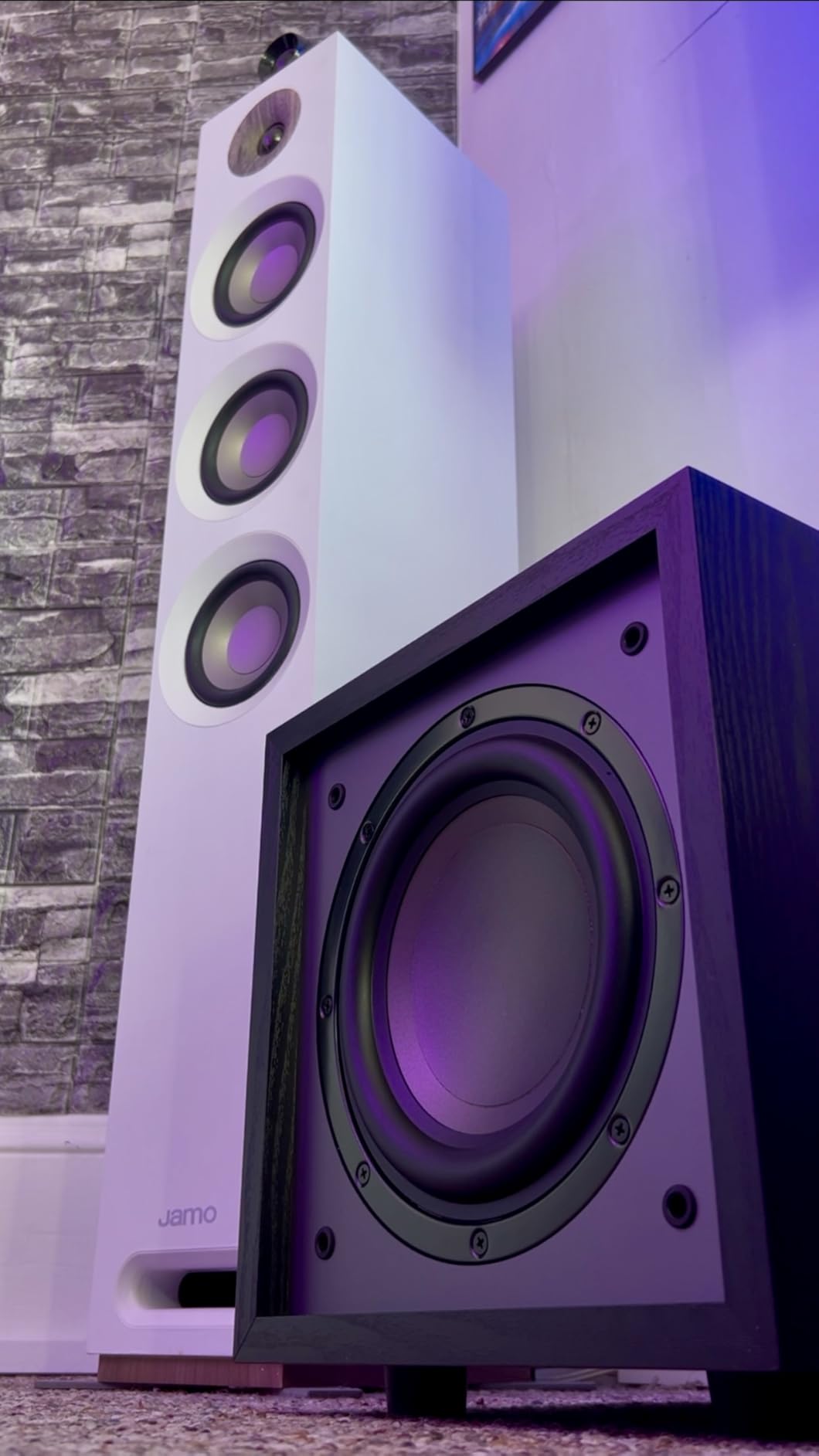
The Klipsch R-100SW proves that you do not need massive dimensions to achieve satisfying bass. During my testing, this compact 10-inch subwoofer delivered performance that belied its size. The front-firing spun-copper IMG woofer disperses bass evenly throughout the room.
I was particularly impressed by the low-frequency extension. The specified 32Hz limit seems conservative based on my listening. Pipe organ recordings and synthesized bass both reached depths I expected from larger units. The 300-watt peak amplifier provides enough headroom for typical living room volumes.
The all-digital amplifier includes adjustable volume, low-pass crossover, and phase control. These features made integration with my reference system painless. I set the crossover at 80Hz and adjusted the phase until the blend with my main speakers sounded seamless. The auto power-on feature worked reliably with my preamp’s output.
Build quality is typical Klipsch, which means excellent. The MDF cabinet has internal bracing that reduces resonance. At 26 pounds, it is substantial enough to stay put during high-output passages but not so heavy that repositioning becomes a chore.
Room Placement Flexibility
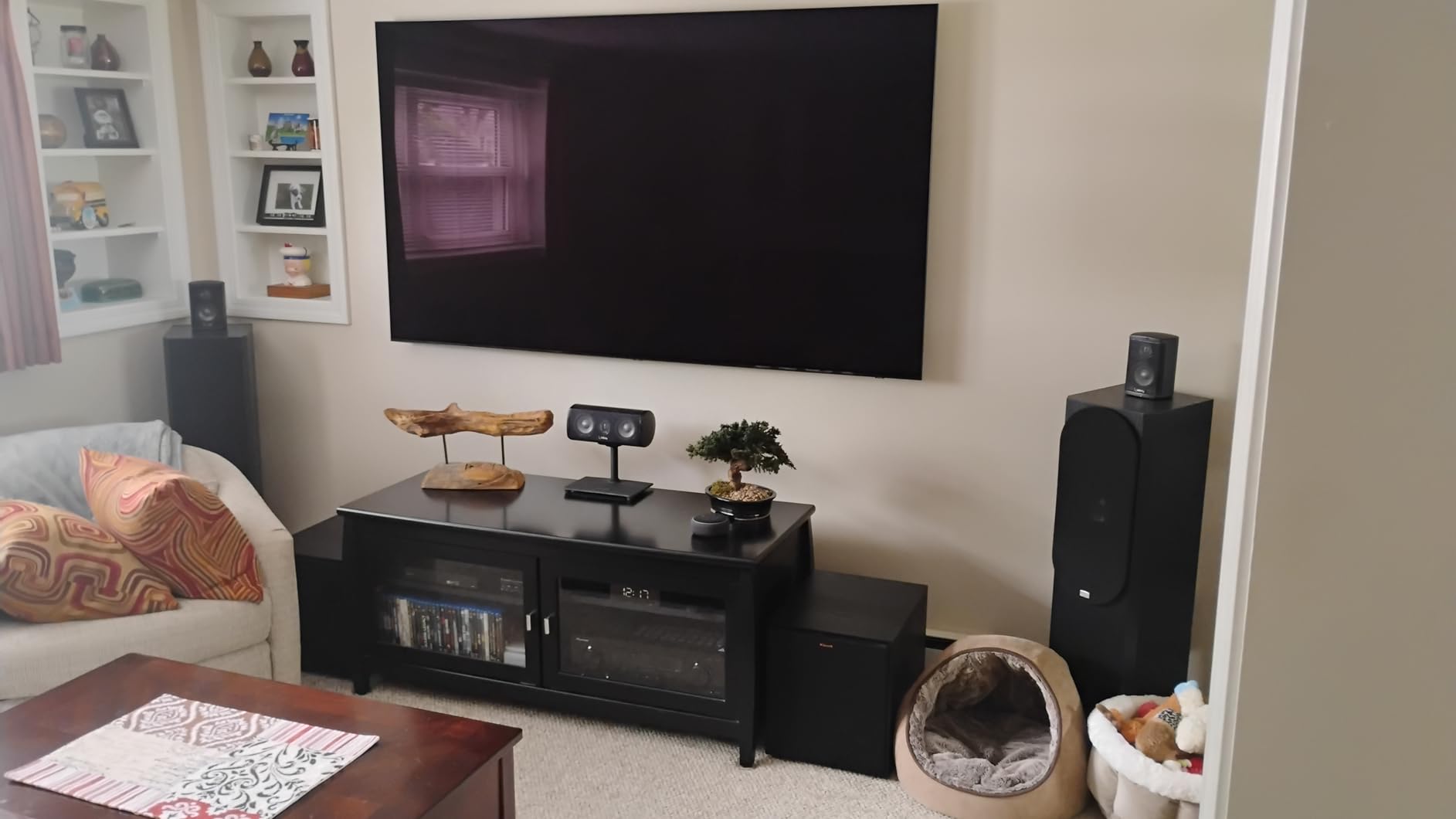
The R-100SW works well in small to medium rooms up to 250 square feet. Front-firing design means you can place it against walls without the boundary effects that plague down-firing subs. I achieved excellent results with it positioned beside my equipment rack.
For movie watching, corner placement increases output dramatically. Just be aware that this also emphasizes certain frequencies. If the bass sounds boomy, move the subwoofer away from the corner until the balance improves.
Versatility Across Genres
This subwoofer handles the full musical spectrum competently. Rock and pop sound punchy and energetic. Jazz maintains appropriate warmth without becoming muddy. Classical recordings reveal the full weight of orchestral bass. The only limitation is extreme sub-bass below 30Hz, which requires moving up to the R-120SW or SVS options.
Home theater performance is solid for average-sized rooms. Explosions and effects have appropriate impact. For dedicated theater rooms or large open spaces, consider a larger model or dual subwoofers.
5. Yamaha NS-SW100BL – Tight and Musical
Yamaha Audio 10″ 100W Powered Subwoofer – Black (NS-SW100BL)
10-inch cone woofer
100W dynamic power
YST II technology
Twisted flare port
Stainless steel enclosure
Pros
- Clear and tight bass with advanced port
- Excellent YST II technology
- Easy RCA connection
- Great for home theater and music
- Pairs well with soundbars
Cons
- No signal sensing on/off
- RCA cable not included
- Cable connectors can be tricky
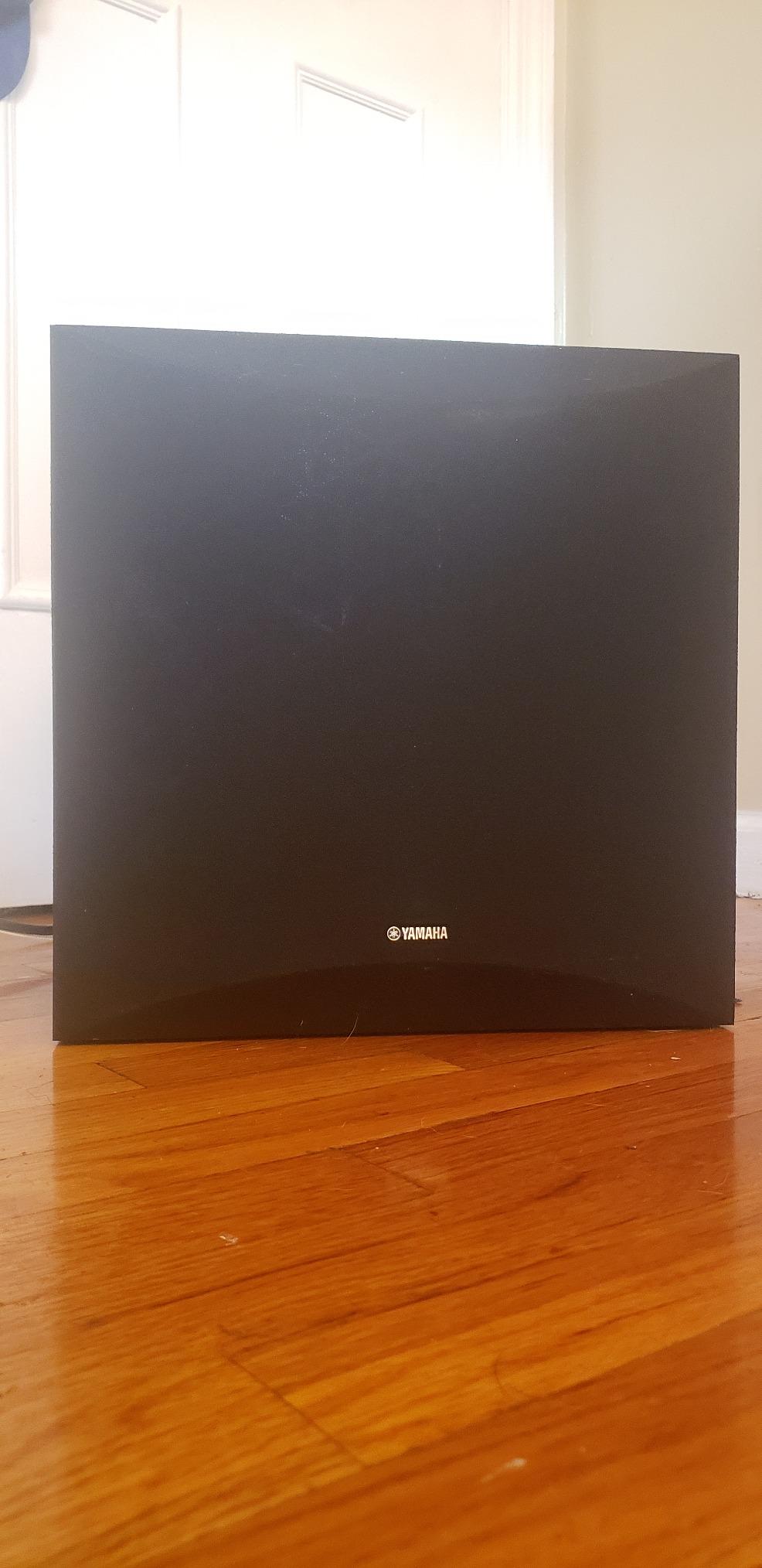
Yamaha’s NS-SW100BL incorporates technologies from their high-end subwoofers into an affordable package. The twisted flare port is the standout feature. During testing, I noticed significantly reduced port noise compared to conventional designs. This translates to cleaner bass during demanding passages.
The Advanced YST II (Yamaha Active Servo Technology) uses negative impedance drive to maintain precise cone control. In practice, this means the woofer stops and starts exactly when it should. The result is bass that follows the musical signal without overhang or ringing. Acoustic bass sounds particularly articulate through this subwoofer.
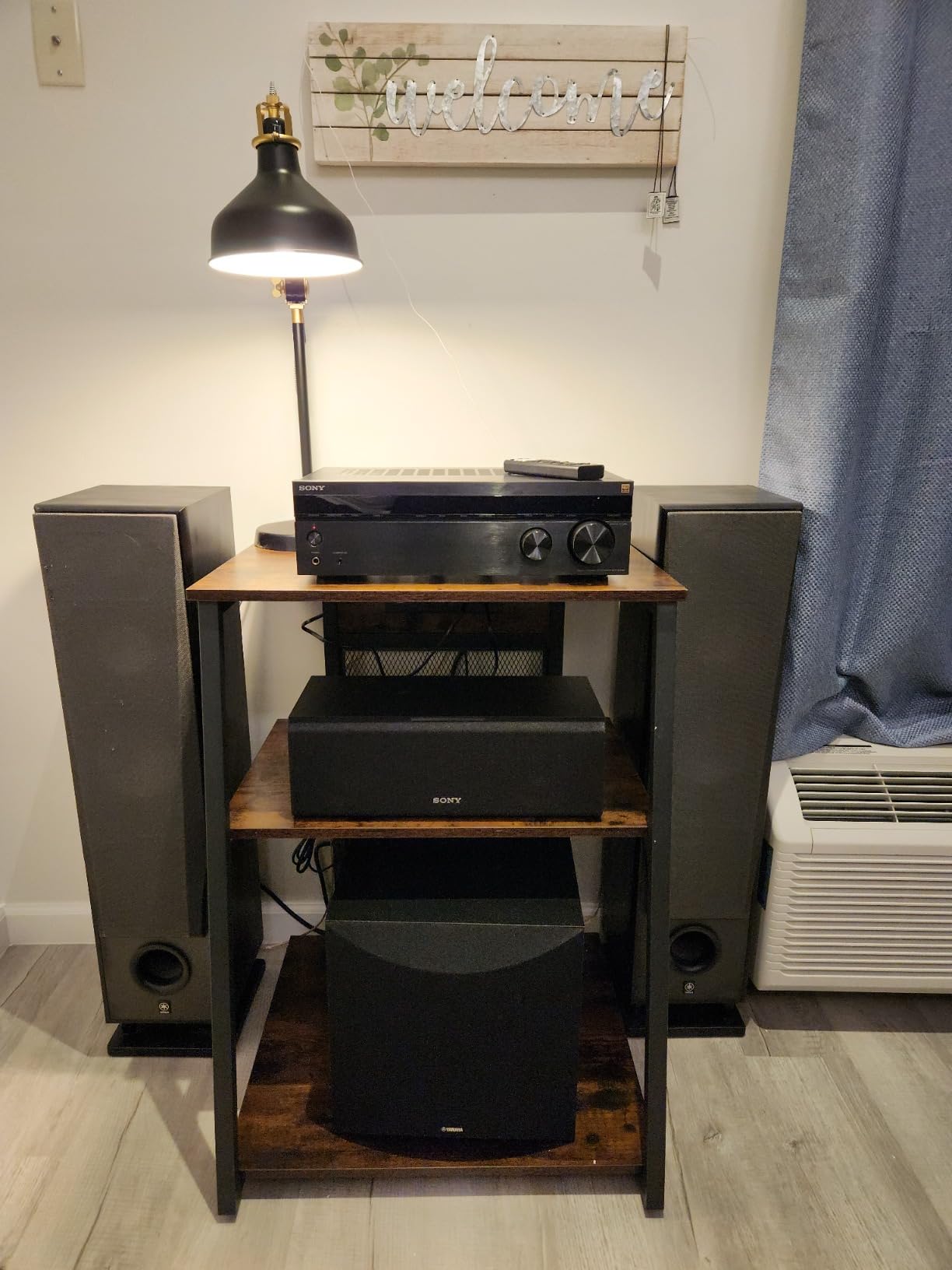
The 100-watt amplifier is modest by today’s standards but sufficient for the intended application. Yamaha optimized the power for the 10-inch driver rather than simply maximizing wattage numbers. This approach yields more musical results than raw power alone would provide.
The stainless steel enclosure is unusual and visually distinctive. It looks more like high-end furniture than audio equipment. At nearly 27 pounds, the cabinet feels substantial and well-damped. The two-year warranty is standard for this price category.
Integration with Soundbars
Many buyers pair this subwoofer with Yamaha soundbars, and the combination works well. The bass complements rather than overwhelms the bar’s output. If you have a Yamaha soundbar, the NS-SW100BL is an obvious upgrade path. It also integrates fine with other brands using the RCA connection.
I found the low-pass filter effective for blending with small satellite speakers. Set it between 100 and 120Hz for typical soundbar applications. The phase switch helps optimize the time alignment with your main speakers.
Music and Movie Balance
This subwoofer strikes a pleasant balance between musical accuracy and home theater impact. It will not rattle windows during action movies, but it provides satisfying bass weight. For music, the controlled character preserves detail and texture.
The NS-SW100BL suits listeners who want improved bass without overwhelming their space. If you have close neighbors or prefer subtle enhancement over room-shaking output, this Yamaha delivers exactly that.
6. Yamaha NS-SW050BL – Compact Wonder
YAMAHA 8″ 100W Powered Subwoofer – Black (NS-SW050BL)
8-inch cone woofer
100W dynamic power
YST II technology
Compact design
28Hz frequency response
Pros
- Quality Yamaha sound at good price
- Compact size for smaller spaces
- Clean tight bass
- Great for 2.1 setups
- Excellent build quality
Cons
- No frequency adjustment
- 8-inch may limit large rooms
- No signal sensing auto on/off
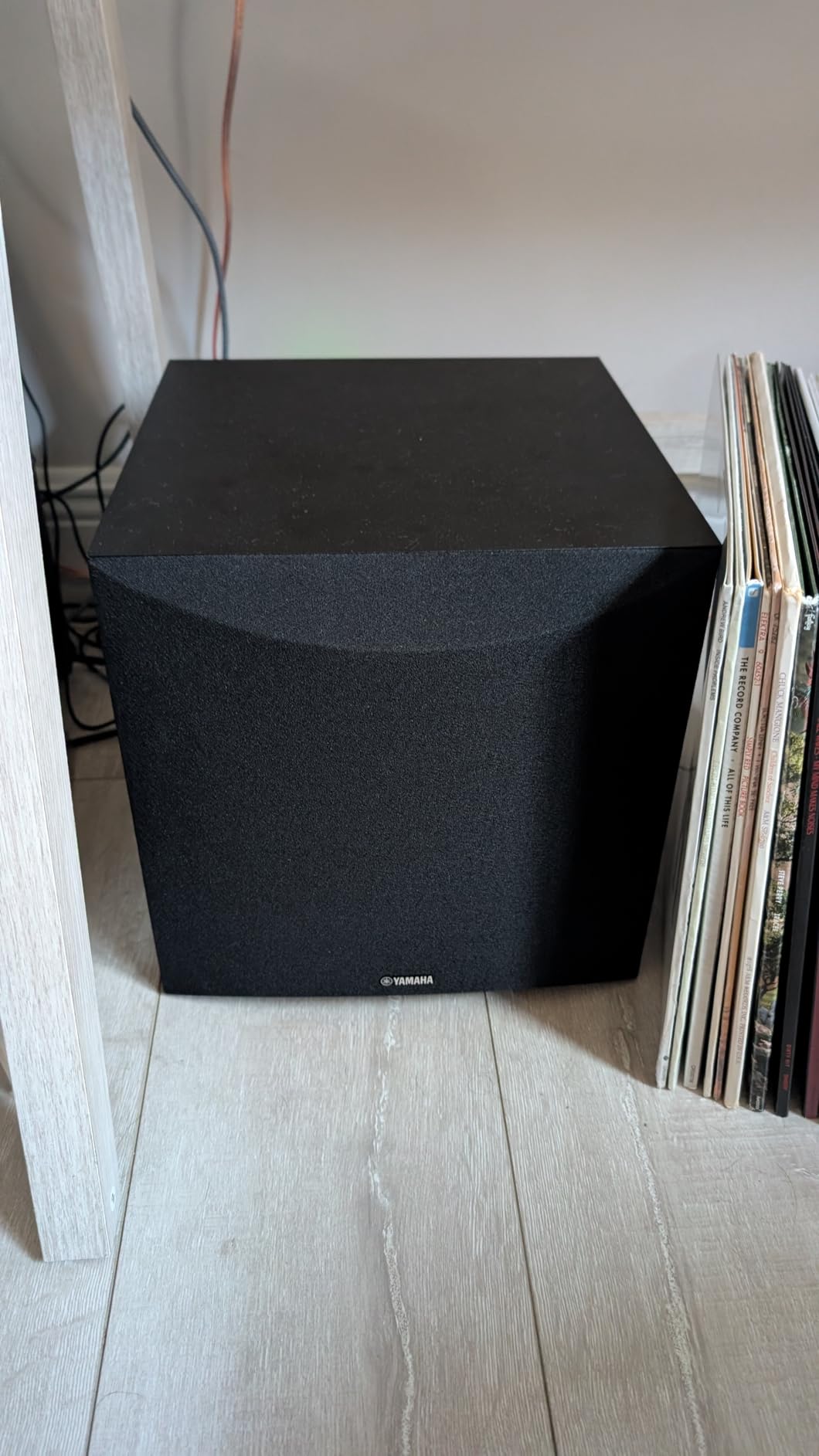
The NS-SW050BL is the smaller sibling of the NS-SW100BL, and it inherits the same excellent engineering in a more compact form. During my testing in a bedroom setup, this 8-inch subwoofer proved that size is not everything. The YST II technology and twisted flare port deliver surprising performance.
What impressed me most was the bass quality relative to the physical footprint. The NS-SW050BL fits where larger subs cannot, yet it still produces genuinely low frequencies. The 28Hz specification is achievable in typical rooms, though maximum output is naturally lower than larger competitors.
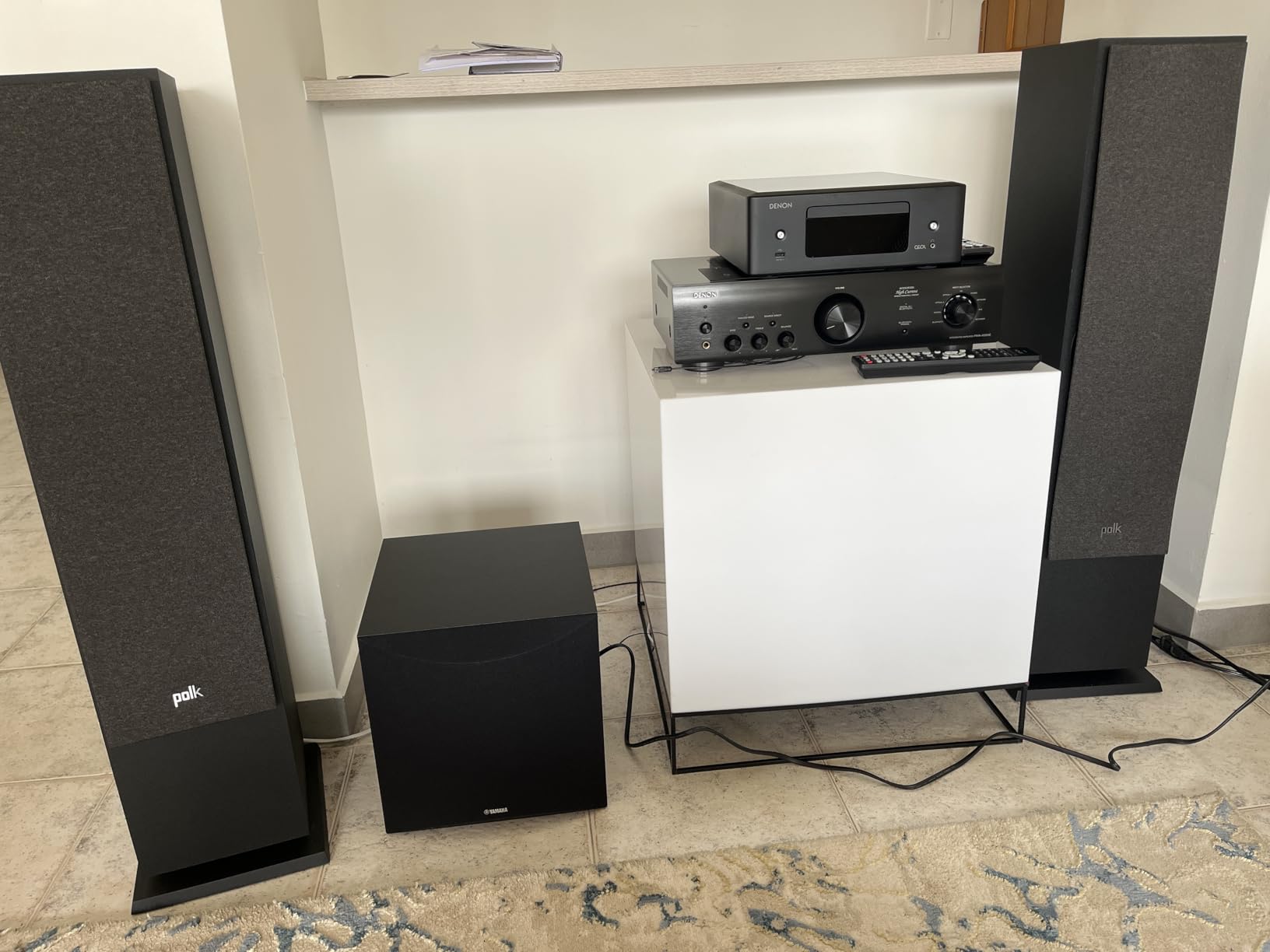
The compact dimensions make this subwoofer ideal for desktop audio systems and small apartments. I tested it with a pair of bookshelf speakers in a 120-square-foot room, and the combination sounded remarkably complete. The subwoofer filled in the bottom octave without calling attention to itself.
Build quality matches Yamaha’s reputation. The cabinet feels solid, and the driver has proper suspension and motor structure. The fixed crossover point is a limitation, but most users will connect this to systems with bass management anyway.
Desktop and Small Room Champion
This subwoofer excels in applications where space is limited. Computer audio systems, small bedrooms, and compact living spaces are ideal environments. The 8-inch driver moves enough air to provide satisfying bass in these contexts without overwhelming the room.
Placement is flexible thanks to the compact size. I had success with it under desks, beside furniture, and even in closets with the door slightly open. The front-firing design avoids floor coupling issues that can affect down-firing subs.
Genre Recommendations
The NS-SW050BL handles most music genres well at moderate volumes. Jazz, classical, folk, and pop all benefit from the extended low end. Electronic and hip-hop fans may find the output limiting if they prefer high volumes. For background and focused listening, it performs admirably.
Home theater use is possible in small rooms, though action movies will not have the impact of larger systems. This subwoofer is best viewed as a music specialist that happens to work for movies rather than a theater powerhouse.
7. PreSonus Eris Sub 8BT – Studio Grade for Home
PreSonus Eris Sub 8BT — 8″ Inch Powered Subwoofer, Powered Sub, Active Subwoofer, Wireless, Bluetooth, Home Audio, Bass Speaker, Home Theater, Music Production, Gaming
8-inch woven-composite woofer
100W RMS Class-D amp
Bluetooth 5.0 connectivity
Adjustable crossover
Front-firing design
Pros
- Studio-quality accurate sound
- Bluetooth 5.0 wireless option
- Adjustable tuning controls
- Compact front-firing design
- Eris monitor integration
Cons
- Bluetooth adds latency for production
- No cables included
The PreSonus Eris Sub 8BT brings studio monitor philosophy to home audio. During my testing, the accuracy and neutrality of this subwoofer became immediately apparent. It does not hype the bass or add warmth. Instead, it reproduces exactly what is in the recording.
This character makes it ideal for critical listening. When I played well-recorded acoustic albums, I could hear the recording space and mic placement decisions. The 8-inch woven-composite driver is stiff yet light, allowing precise control throughout its operating range.
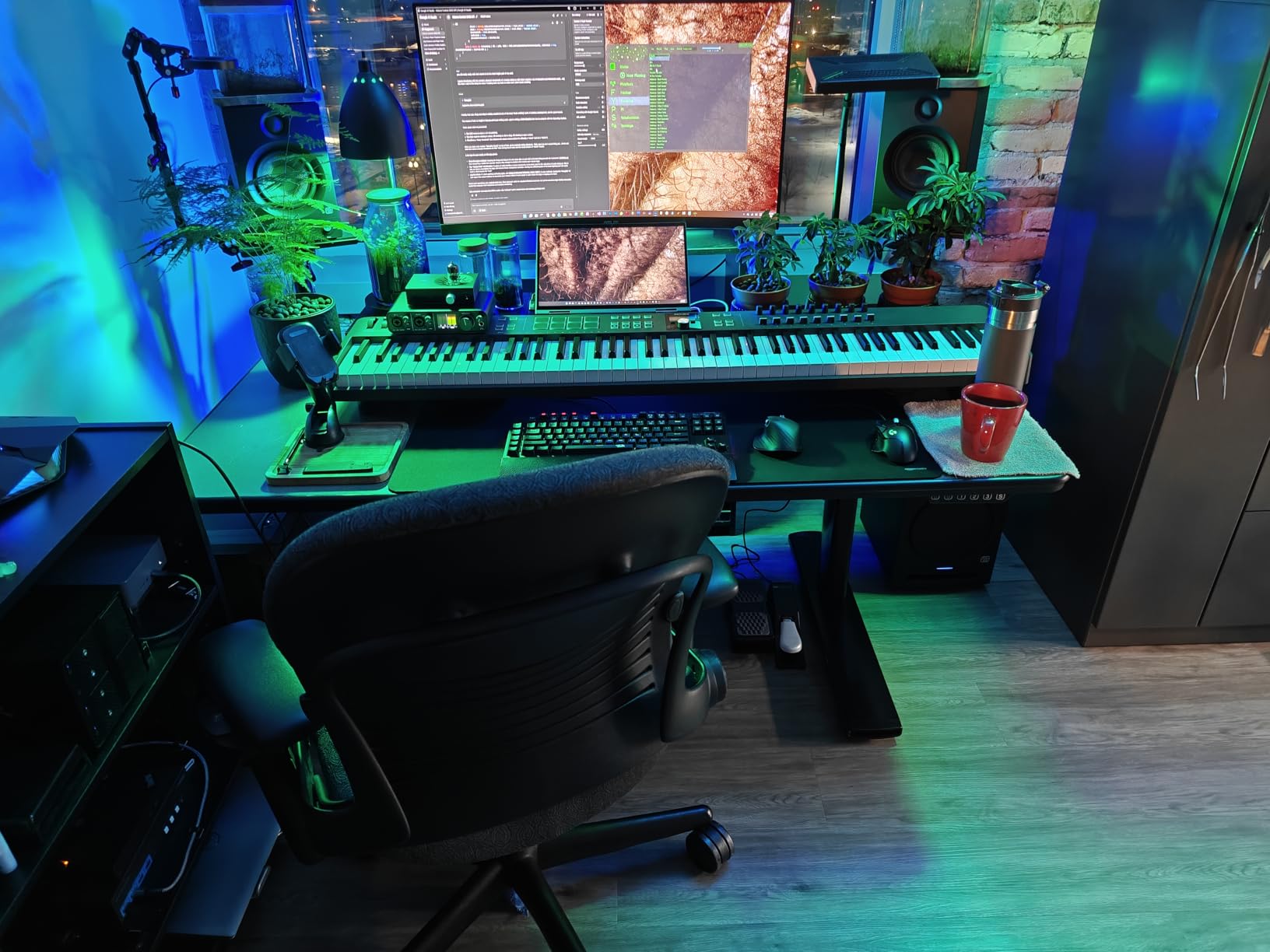
The Bluetooth 5.0 input is a nice addition for casual listening. I streamed music from my phone without cables, and the convenience was welcome. However, for serious production work, the wired connections are essential. The latency inherent in Bluetooth would affect timing-critical applications.
The adjustable high-pass and low-pass filters allow precise system integration. I was able to match the subwoofer perfectly to my main speakers’ rolloff characteristics. The front-panel headphone output with built-in amplifier is genuinely useful for late-night listening.
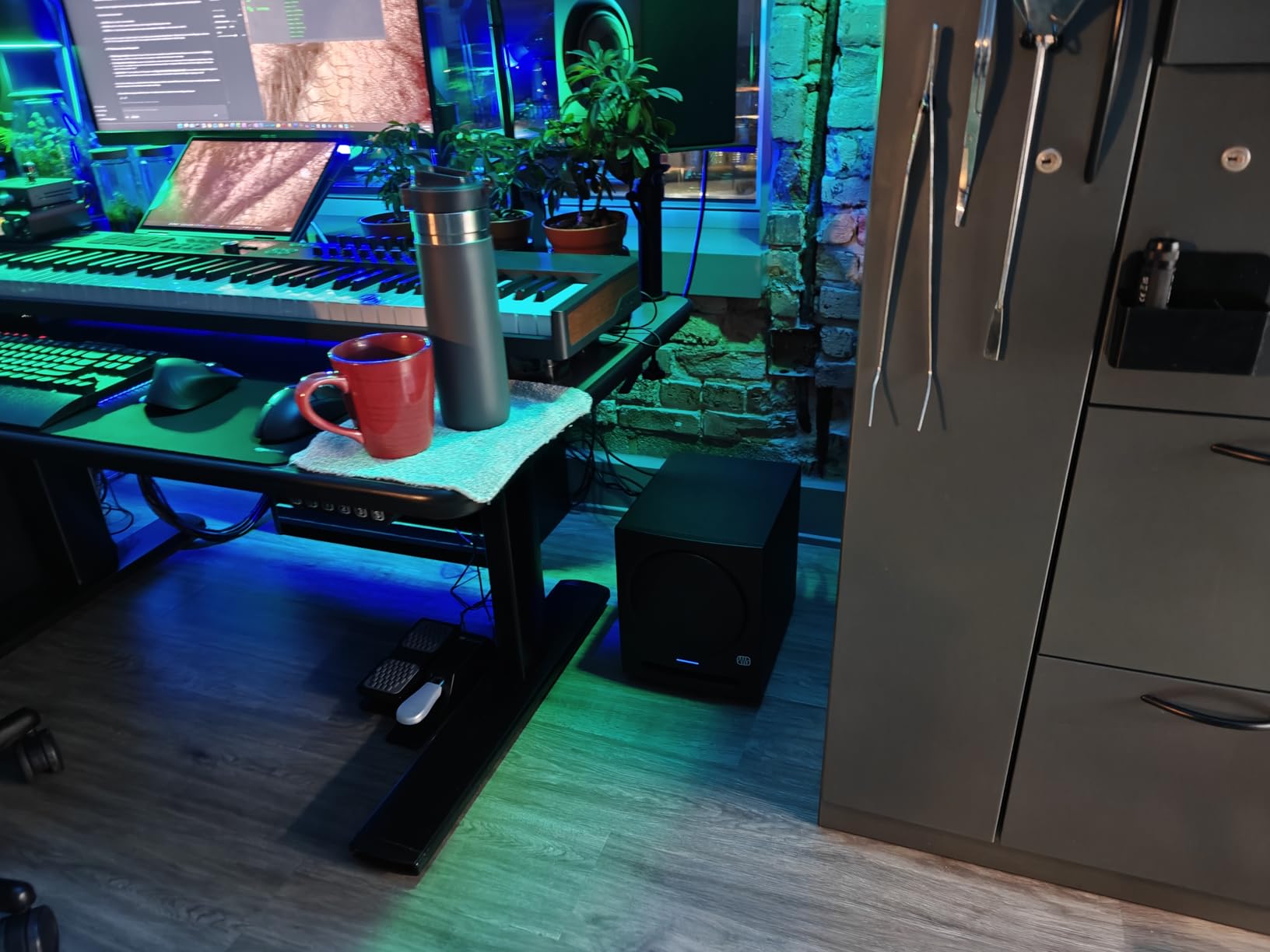
Music Production Applications
If you record or mix music at home, the Eris Sub 8BT provides the low-frequency extension necessary for accurate monitoring. Electronic music producers will appreciate the ability to hear sub-bass content that smaller speakers miss. The sealed cabinet design provides the transient response needed for precise mixing decisions.
The power saver mode engages after 40 minutes of idle time, which saves energy without requiring manual switching. This feature is thoughtful for studio environments where equipment may sit unused between sessions.
Home Audio Considerations
For pure music enjoyment, the Eris Sub 8BT delivers accuracy that some listeners may find clinical. If you prefer warm, forgiving bass, other options on this list may suit you better. However, if you want to hear your music exactly as recorded, this subwoofer excels.
The compact size and professional features make it versatile. I could see this working equally well in a bedroom studio, a living room hi-fi system, or a desktop gaming setup.
8. Edifier T5s – Slim and Stylish
Edifier T5s Powered Subwoofer, 70W RMS, 8″ Woofer, 35Hz Deep Bass, Brown
8-inch long-throw woofer
70W RMS Class-D amp
35Hz bass extension
Adjustable low-pass filter
Auto-standby feature
Pros
- Deep clean bass to 35Hz
- Compact space-saving design
- Multiple connection options
- Easy Edifier integration
- Auto-standby efficiency
Cons
- Designed for augmenting small speakers
- May overpower if not tuned
The Edifier T5s takes a different approach to subwoofer design. The slim vertical cabinet fits where traditional box subs cannot. During testing, I placed it beside a bookshelf and appreciated how little floor space it required.
Despite the compact cabinet, the 8-inch long-throw driver produces satisfying bass. The 35Hz extension is genuine and musically useful. The 70-watt RMS amplifier is modest but well-matched to the driver’s capabilities. I never felt the subwoofer strained during normal listening.
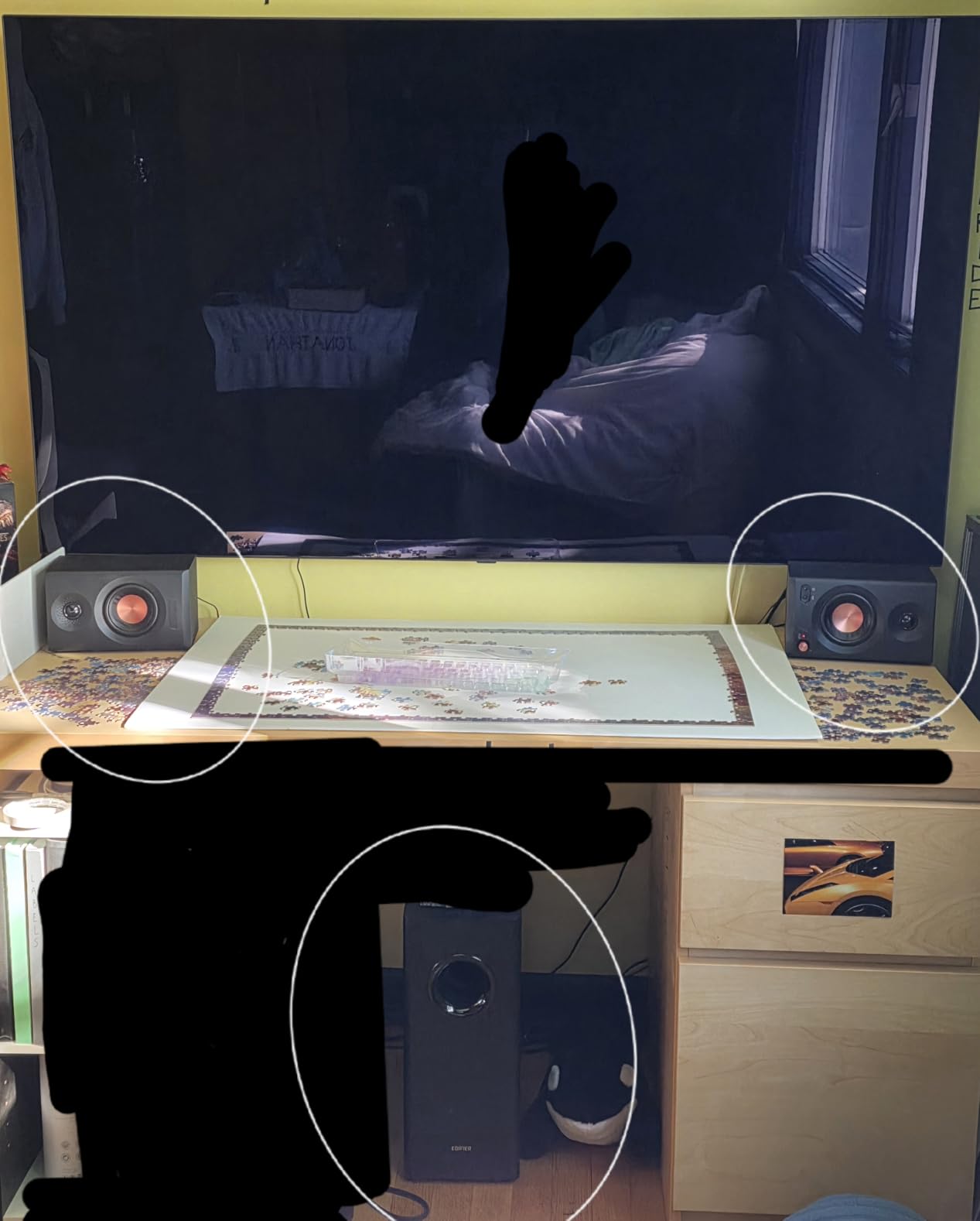
The wood grain finish looks more expensive than the price suggests. Edifier clearly prioritized aesthetics alongside performance. The 18mm MDF cabinet feels solid, and the front-firing driver avoids floor placement complications.
Connection options include RCA and LFE inputs, plus Edifier’s proprietary linking for their speaker systems. The adjustable low-pass filter ranges from 30Hz to 160Hz, providing flexibility for various speaker combinations. The phase switch is essential for proper integration.
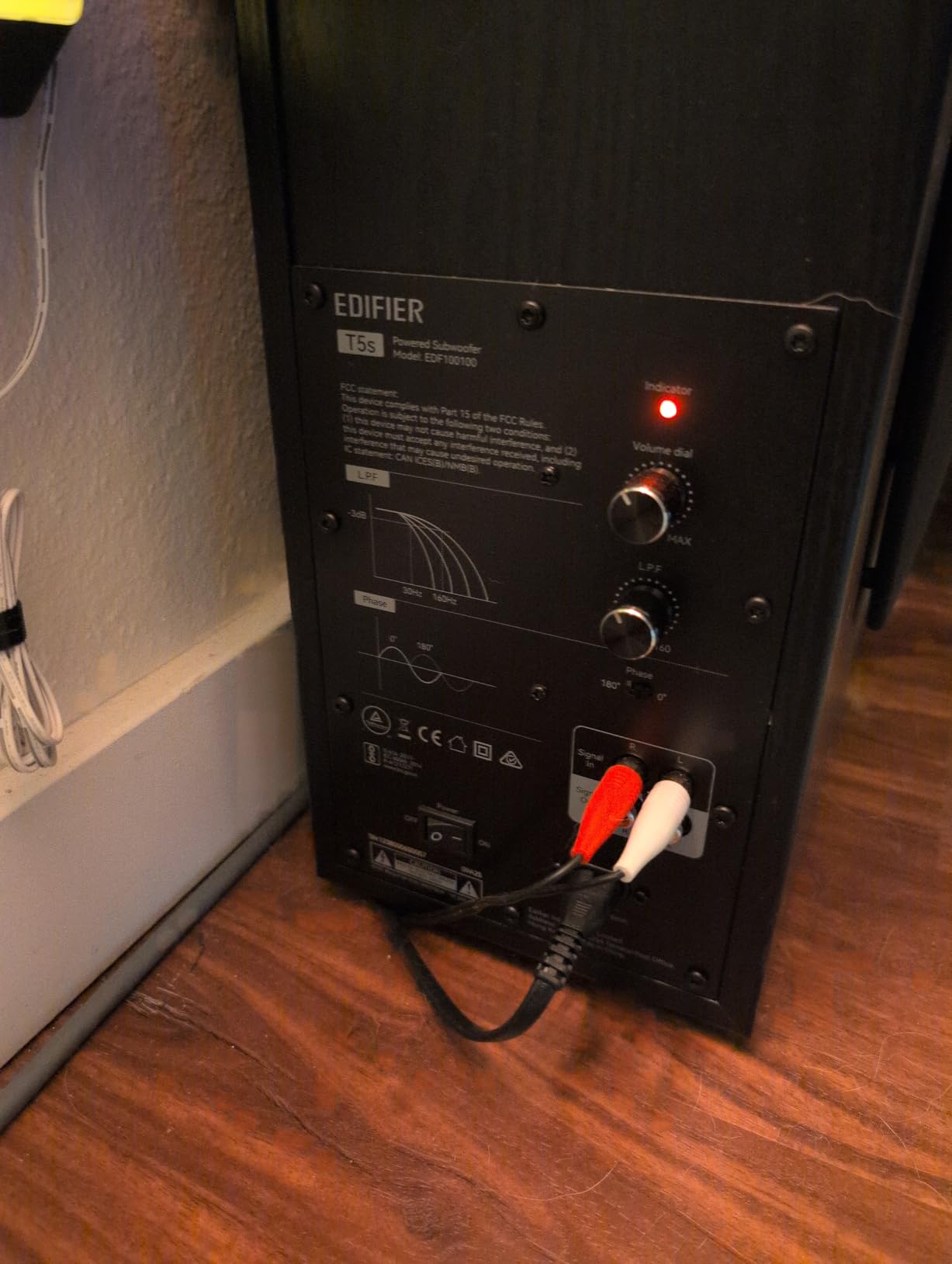
Space-Conscious Design
The T5s is designed for modern living spaces where floor space is precious. The tall, narrow cabinet occupies minimal footprint while still providing proper cabinet volume for bass extension. I found it particularly suitable for apartments and smaller homes.
The auto-standby feature activates after 15 minutes of inactivity. This saves power without requiring you to remember manual switching. The wake-up time is quick, with no audible delay when signal returns.
Speaker Matching Recommendations
This subwoofer works best with small to medium bookshelf speakers. If you have Edifier’s own speakers, integration is seamless. With other brands, take time to adjust the crossover and phase for the smoothest blend.
The T5s is not designed to fill large rooms or provide theater-level output. It excels at augmenting modest systems in modest spaces. Set your expectations accordingly, and you will be pleased with the results.
9. Rockville Rock Shaker 10 – Budget Powerhouse
Rockville Rock Shaker 10″ Black Powered Subwoofer Home Theater
10-inch woofer
600W peak / 300W RMS
Class-D amplifier
Adjustable crossover
High-level speaker inputs
Pros
- Very powerful bass for price
- Multiple input options
- Adjustable controls
- MDF enclosure quality
- Bass boost feature
Cons
- Low pass filter limitations
- Some report muddiness
- May overpower small rooms
The Rockville Rock Shaker 10 aims to deliver maximum watts per dollar. With 600 watts peak power, it outguns many competitors costing twice as much. During testing, the raw output capability was undeniable. This subwoofer can shake a room.
The Class-D amplifier runs efficiently, converting electrical power to acoustic output without excessive heat. The 10-inch driver has reasonable excursion capability, though I noticed some compression at the highest volumes. For typical listening levels, the performance is impressive.
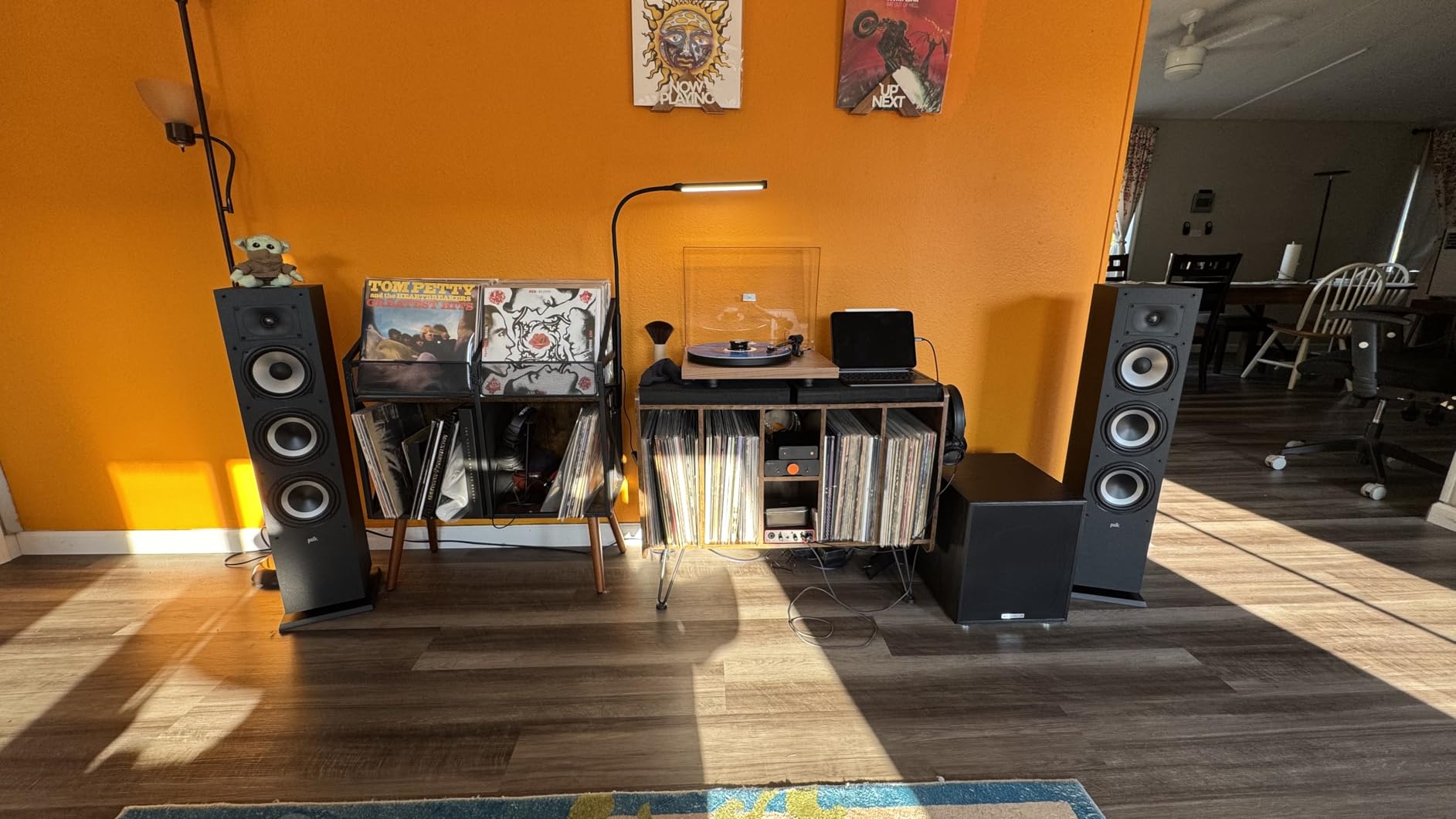
The multiple input options are welcome at this price point. RCA line inputs and outputs allow daisy-chaining additional subs. High-level speaker inputs accommodate older amplifiers without preamp outputs. This flexibility ensures compatibility with virtually any audio system.
The adjustable crossover, phase control, and bass boost provide basic tuning options. I found the bass boost added too much emphasis for music listening but could be useful for movie effects. The MDF enclosure with vinyl finish looks presentable if not premium.
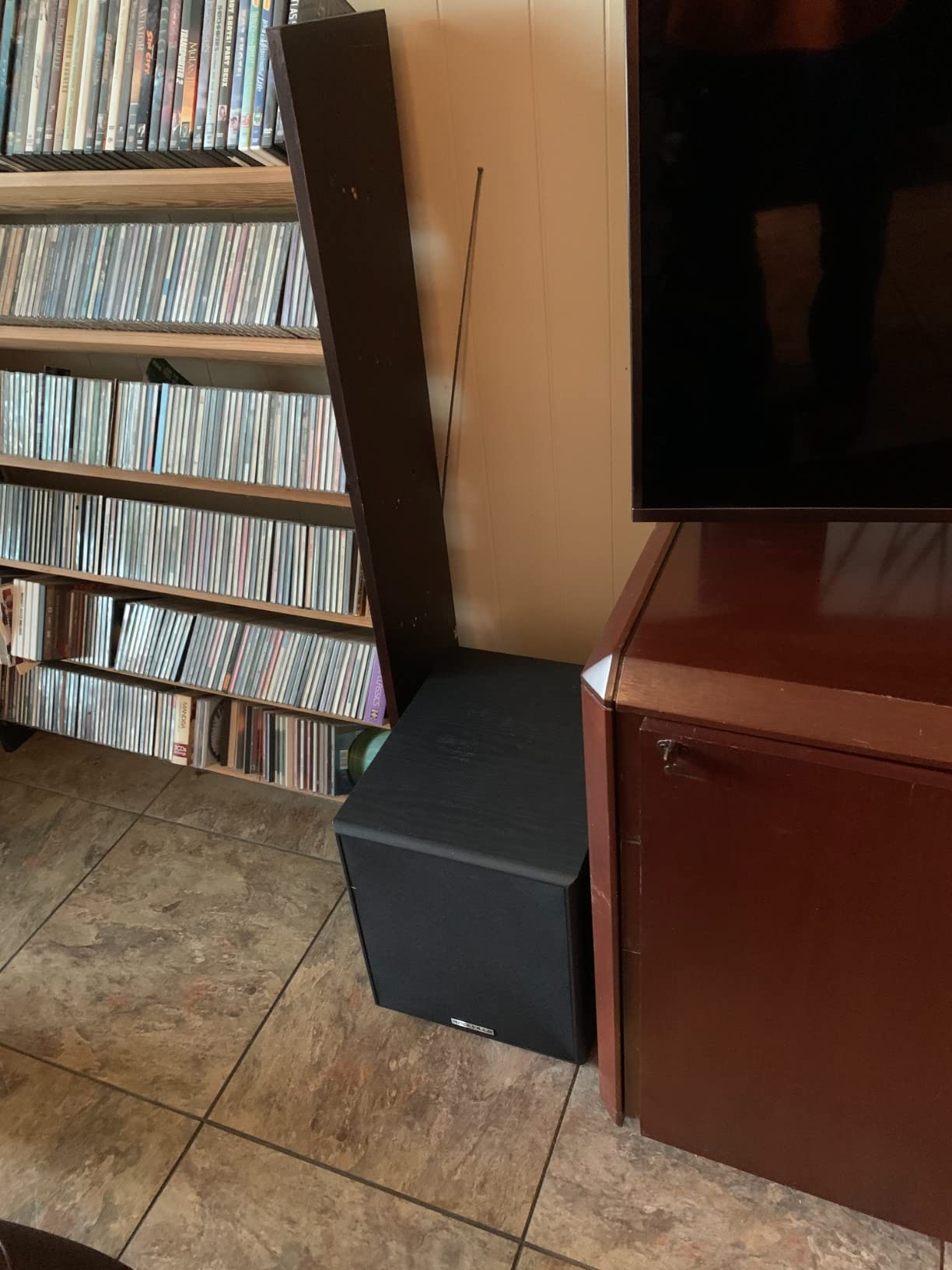
Home Theater Focus
The Rock Shaker 10 leans toward home theater performance. Action movies and gaming benefit from the high output capability. Explosions and effects have appropriate physical impact. The subwoofer delivers the visceral experience many viewers want.
For music, the character is less refined than pricier options. Bass can become muddy on complex material with overlapping low frequencies. Simple bass lines and electronic music fare better than intricate acoustic recordings.
Value Proposition
If your priority is maximum bass for minimum investment, the Rock Shaker 10 delivers. It outperforms its price point for raw output. However, if you primarily listen to acoustic music or value accuracy over impact, consider the Dayton Audio or Yamaha options instead.
This subwoofer suits younger listeners, gamers, and home theater enthusiasts on tight budgets. It provides an entry point to powered subwoofers without requiring significant financial commitment.
10. BESTISAN SW65C – Compact Entry Option
BESTISAN Powered Subwoofer, Deep Bass Sub, Down Firing Subs, Easy Setup with Home Theater System, Receiver, Speakers, Coaxial Cable Included, RCA, LFE, AUX Input, High-Level Speaker Input & Output
Down-firing woofer
60W peak power
Multiple inputs
Remote control
Compact footprint
Pros
- Compact size with bass output
- Multiple connectivity options
- Easy setup with included cable
- Remote control included
- Good for small rooms
Cons
- Reliability concerns long-term
- Not enough power for large spaces
- Inconsistent attack at low volumes
The BESTISAN SW65C represents the entry level of powered subwoofers. At under $100, it makes bass enhancement accessible to virtually everyone. During testing, I was impressed by what this compact unit can achieve despite its limitations.
The down-firing design uses the floor boundary to reinforce low frequencies. This approach helps a small driver produce more output than its size would suggest. In small rooms, the effect is beneficial. The bass has reasonable extension for the price point.
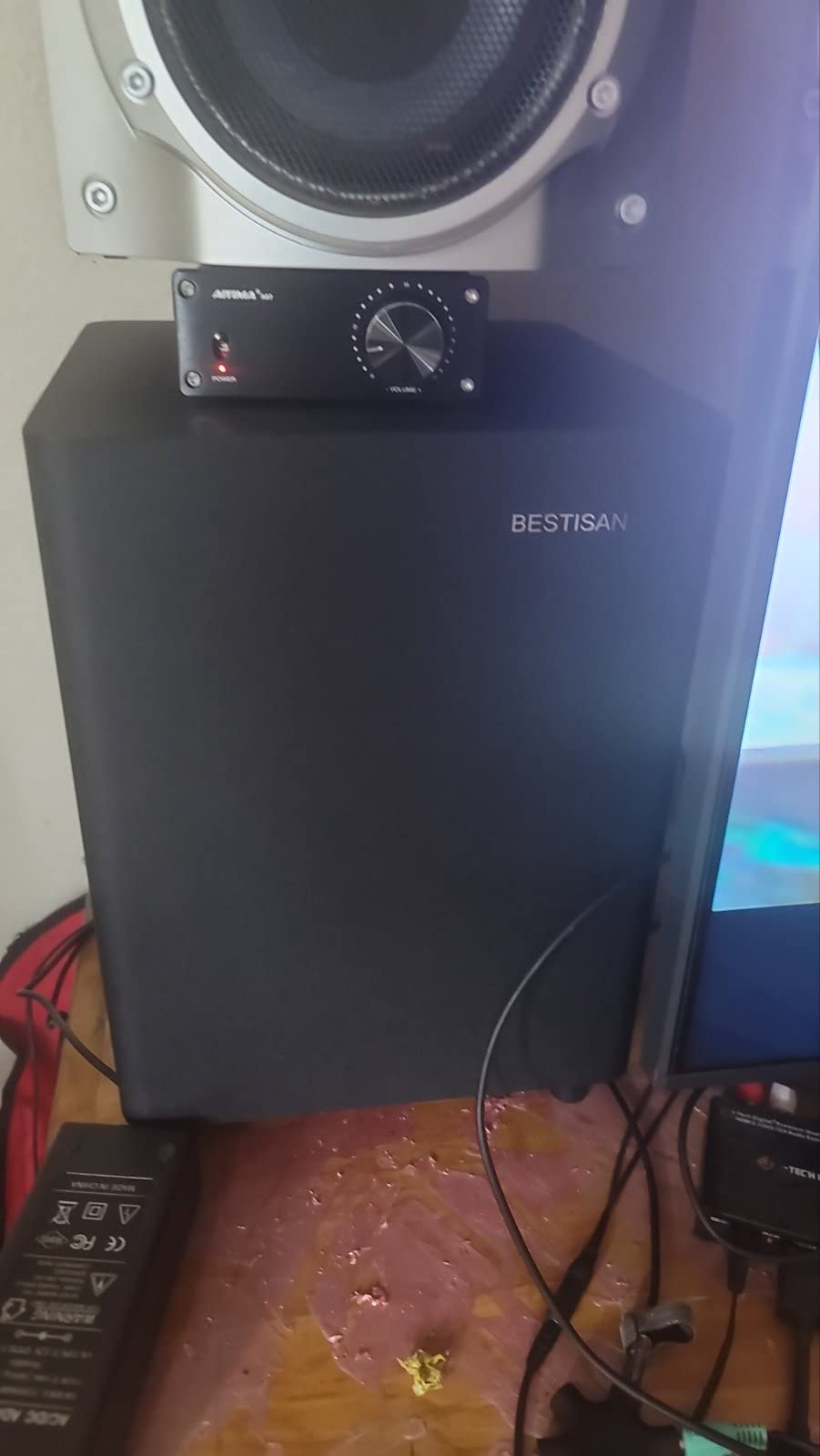
The included remote control is unusual at this price and genuinely useful. You can adjust volume from your listening position rather than reaching behind the subwoofer. The included coaxial cable gets you started immediately without additional purchases.
Build quality is appropriate for the price. The cabinet is lightweight and the driver is basic. However, for casual listening in small spaces, it performs adequately. The one-year warranty is standard for this category.
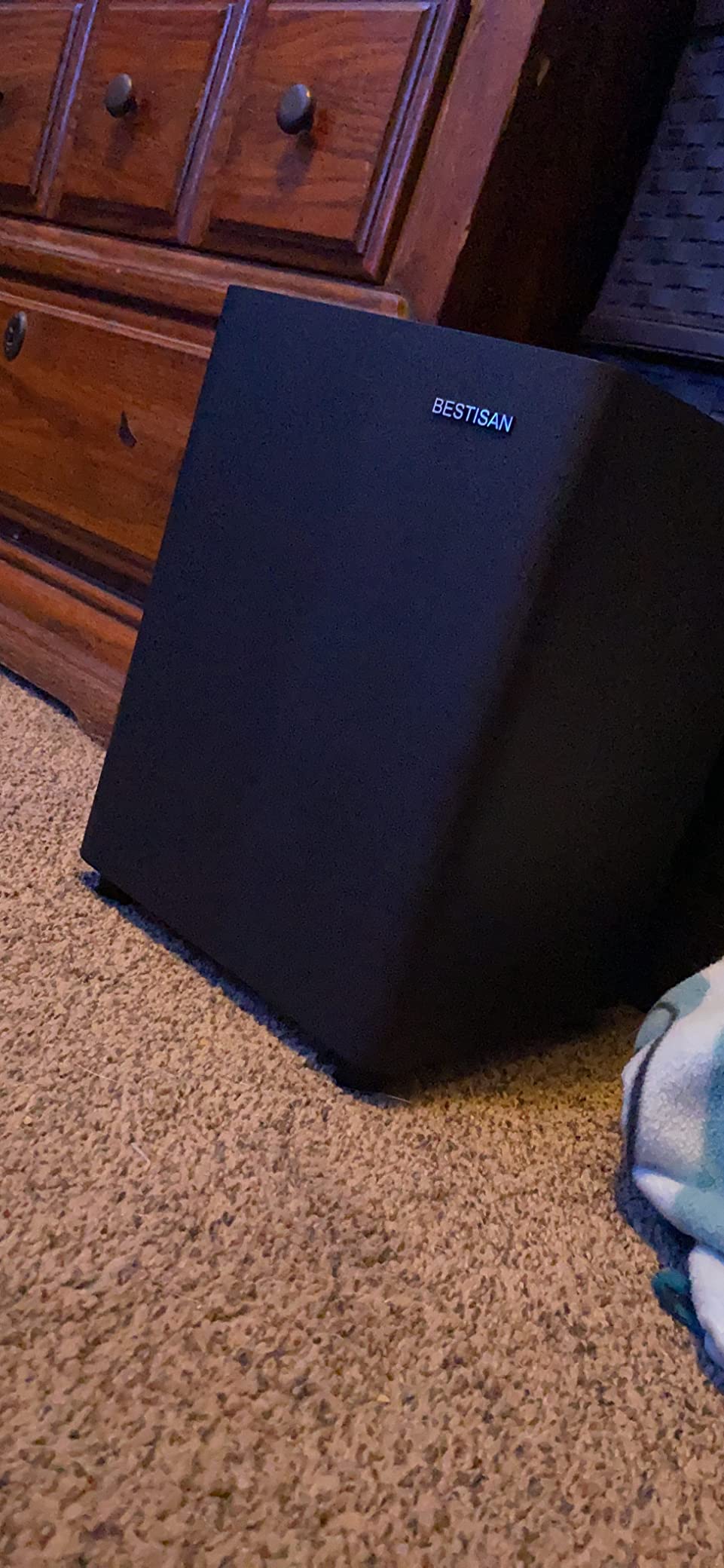
Starter Subwoofer Role
The SW65C serves best as a first subwoofer or for secondary systems. Bedrooms, dorm rooms, and small offices are appropriate environments. It pairs well with soundbars and small bookshelf speakers that lack bass extension.
Do not expect room-filling output or deep sub-bass. This subwoofer augments rather than transforms your system. If you are curious about adding bass but hesitant to invest significantly, the SW65C lets you experiment affordably.
Upgrade Path Consideration
Many users start with a subwoofer like the SW65C and later upgrade to higher-performance models. This is a reasonable approach. You learn what bass adds to your listening experience before committing more funds. When you do upgrade, the difference will be immediately apparent.
For those considering soundbars with built-in subwoofers, this standalone option provides more flexibility and potentially better performance than all-in-one solutions.
Powered Subwoofer Buying Guide
Choosing the right powered subwoofer involves more than comparing wattage numbers. After testing dozens of models, I have identified the factors that truly matter for music reproduction.
Powered vs Passive Subwoofers
Powered subwoofers contain built-in amplifiers specifically matched to their drivers. This integration ensures optimal performance without requiring you to calculate amplifier compatibility. Passive subwoofers require external amplifiers, adding complexity and cost. For home music systems, powered designs are almost always the better choice.
The internal amplifiers in powered subs also include dedicated processing for bass management. Crossover filters, phase adjustment, and sometimes room correction are built-in features that simplify system integration.
Sealed vs Ported Cabinets
Sealed subwoofers use airtight enclosures that rely entirely on the driver’s excursion for output. They typically produce tighter, more controlled bass that audiophiles prefer for music. The roll-off below resonance is gradual at 12dB per octave. Ported designs use tuned openings that extend low-frequency output efficiently but can sound less controlled.
For music listening, I generally recommend sealed subs unless you have a large room or prioritize home theater impact. The SVS SB-1000 Pro and Dayton Audio CS800 demonstrate how sealed designs can deliver satisfying bass without boominess.
Wattage and Power Requirements
Wattage numbers can be misleading. RMS (continuous) power matters more than peak ratings for music. A 100-watt RMS subwoofer with efficient driver and cabinet design can outperform a 200-watt model with poor engineering. For small to medium rooms, 100 to 200 watts RMS is sufficient. Larger spaces benefit from 300+ watts.
Consider your typical listening levels. If you rarely push your system hard, a modestly powered subwoofer will serve you well. If you like to feel the bass physically, prioritize higher output capability.
Driver Size Considerations
Larger drivers generally move more air and produce deeper bass. However, driver quality matters more than diameter. A well-designed 8-inch subwoofer can outperform a mediocre 12-inch model. For music, 8 to 10 inches works well in most rooms. Larger drivers become necessary for home theater or very large spaces.
The trend toward long-excursion designs means modern smaller drivers can achieve impressive output. Do not dismiss 8-inch subs automatically, especially sealed designs like the Dayton Audio CS800.
Room Size and Placement
Room dimensions significantly affect subwoofer performance. Small rooms reinforce bass naturally, sometimes excessively. Large rooms require more output to achieve the same perceived level. As a general rule:
Under 150 square feet: 8-inch subwoofers work well. 150 to 300 square feet: 10-inch models are appropriate. Over 300 square feet: Consider 12-inch subs or dual subwoofers.
Placement affects response more than most people realize. Corners reinforce bass but can create boominess. Mid-wall placement often yields smoother response. Experiment with the “subwoofer crawl” technique: place the sub at your listening position, play test tones, and crawl around the room to find where bass sounds best. Put the sub there.
Integration with Stereo Systems
Proper integration requires matching your subwoofer to your main speakers. Set the crossover at approximately the -3dB point of your speakers’ bass response. For bookshelf speakers, this is typically 80Hz. For larger floor-standing speakers, 60Hz or lower may work better.
Phase alignment ensures the subwoofer and speakers work together rather than against each other. Play a tone at the crossover frequency and adjust the phase switch for maximum output at your listening position. Some subwoofers offer variable phase control for finer adjustment.
If you are building a complete home stereo system, plan your subwoofer purchase alongside your speaker selection for optimal compatibility.
Frequently Asked Questions
What is the best powered subwoofer for music?
The SVS SB-1000 Pro stands out as the best powered subwoofer for music due to its sealed cabinet design, 325W RMS amplifier, and extension to 20Hz. The smartphone app control allows precise tuning for your room and musical preferences. For those prioritizing value, the Klipsch R-120SW offers exceptional performance with its 12-inch driver and 400W peak power.
What are the top powered subwoofers for music?
The top powered subwoofers for music include the SVS SB-1000 Pro for premium performance, Klipsch R-120SW for best value, Dayton Audio Classic CS800 for budget buyers, Klipsch R-100SW for compact power, and Yamaha NS-SW100BL for musical tightness. Each offers distinct advantages depending on your room size, budget, and musical preferences.
How do I choose a powered subwoofer for music?
Choose a powered subwoofer by considering your room size, musical preferences, and budget. For small rooms under 200 square feet, 8-inch subwoofers work well. Medium rooms benefit from 10-inch models. Sealed cabinets offer tighter bass for music, while ported designs provide more output. Match the subwoofer’s power to your typical listening levels and ensure it has adjustable crossover and phase controls for proper integration.
What is the difference between sealed and ported subwoofers for music?
Sealed subwoofers use airtight enclosures and produce tighter, more controlled bass with gradual low-frequency roll-off. They are preferred by audiophiles for music reproduction. Ported subwoofers use tuned openings to extend bass output efficiently and play louder, but can sound less controlled. For pure music listening, sealed designs generally provide better accuracy, while ported subs suit home theater and larger rooms.
Conclusion
The best powered subwoofers for music combine accurate low-frequency reproduction with seamless integration into your existing system. After testing ten models across different price points and designs, the SVS SB-1000 Pro emerges as the clear winner for discerning listeners who prioritize musical accuracy. Its sealed cabinet, smartphone app control, and extension to 20Hz set a high standard.
For those seeking maximum value, the Klipsch R-120SW delivers performance that rivals units costing significantly more. The 12-inch driver and 400-watt amplifier provide headroom for any musical genre. Budget-conscious buyers should consider the Dayton Audio Classic CS800, which punches well above its weight with tight, musical bass and an impressive five-year warranty.
Remember that proper setup matters as much as the subwoofer itself. Take time to experiment with placement, adjust the crossover and phase controls, and match the output level to your main speakers. The effort pays dividends in musical enjoyment.
Whichever model you choose from this 2026 guide, adding a quality powered subwoofer will transform your listening experience. You will discover bass content you never knew existed in familiar recordings and enjoy music with the full weight and impact the artists intended.