
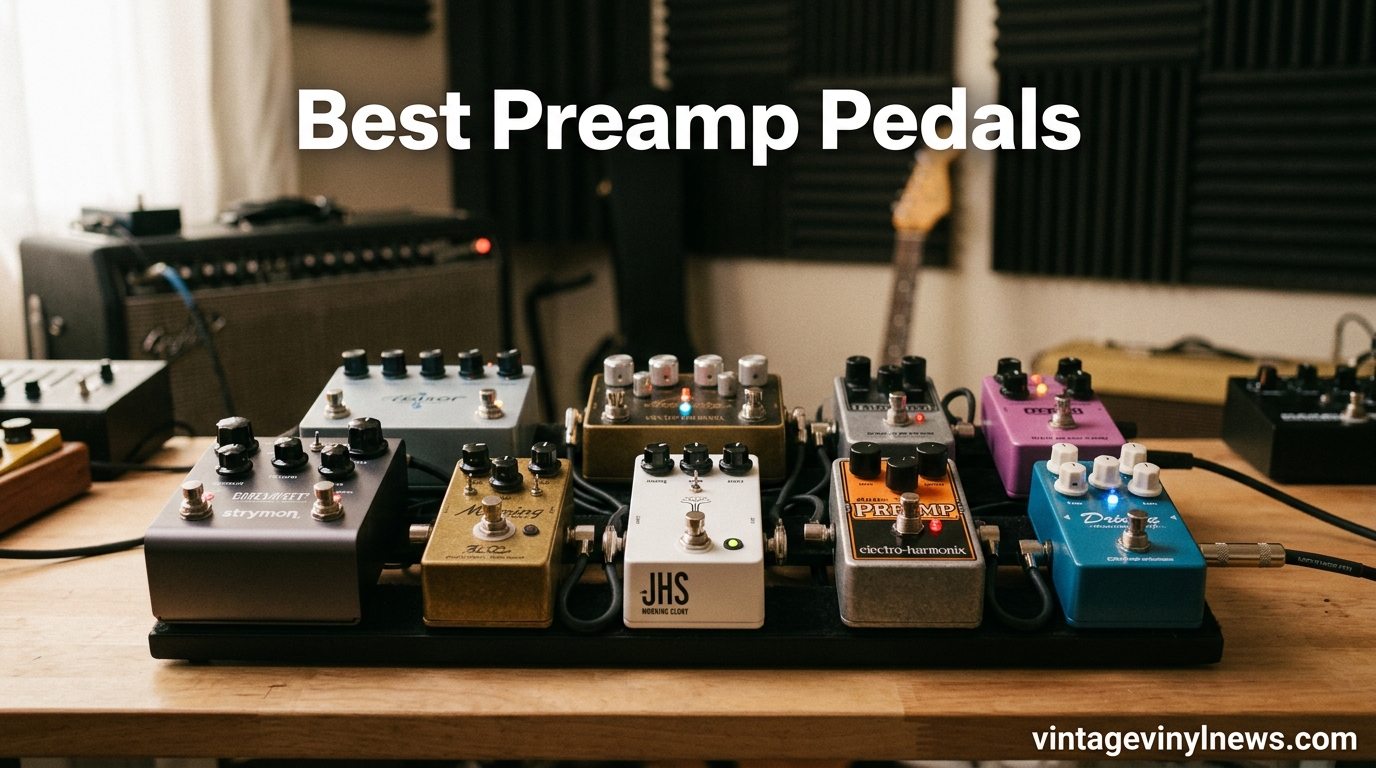
I have spent the better part of three years building pedalboards for studio sessions, live gigs, and home recording setups. Through all of that, one thing has become clear: the right preamp pedal can completely transform your tone. Whether you are chasing the warm breakup of a vintage tube amp, looking for a clean platform to push your overdrives, or building an amp-less rig for silent practice, finding the best preamp pedals for your specific needs matters more than almost any other piece of gear on your board.
The best preamp pedals do something pretty special. They take your raw guitar signal and shape it into something musical before it ever hits your amplifier or audio interface. Some recreate the preamp section of iconic amplifiers. Others function as transparent boosters that add warmth and dimension. A few even include built-in cabinet simulation so you can record directly without ever needing a real amp in the room.
Our team tested 10 of the most popular preamp pedals on the market for this guide. We ran them through tube amps, solid-state amps, modelers like the Helix, and straight into audio interfaces for direct recording. We evaluated tone quality, versatility, build construction, ease of use, and value for money. We also paid close attention to what real users on forums like Reddit’s guitarpedals community had to say about long-term reliability and everyday gigging performance.
One thing we noticed during testing is that the preamp pedal market has exploded with options in 2026. You can spend under $50 or over $300, and the gap between budget and premium is narrowing in surprising ways. Some of the most affordable pedals on our list punch well above their price tag, while some expensive units offer features that justify every penny.
We organized these reviews to help you find the right match quickly. Each review covers what makes the pedal special, who it is built for, and the kind of signal chain where it shines. We also included a buying guide at the end covering tube versus solid-state designs, signal chain placement, buffered versus true bypass, and direct recording workflows. Let us get into the picks.
Table of Contents
Top 3 Picks for Best Preamp Pedals in 2026

BOSS BP-1W Booster Preamp
- Three voicing modes
- Premium Waza Craft analog circuitry
- Clean boost with minimal coloration

JHS Clover Preamp Boost
- 3-band EQ with sweepable mids
- XLR output for DI recording
- Three EQ modes
JOYO American Sound JF-14
- Built-in cabinet simulation
- Six control knobs
- Under $50 price point
Best Preamp Pedals in 2026 – Quick Overview
| Product | Specifications | Action |
|---|---|---|
| BOSS BP-1W Booster Preamp |
|
Check Latest Price |
| JHS Clover Preamp Boost |
|
Check Latest Price |
 Fishman Platinum Pro EQ DI Fishman Platinum Pro EQ DI |
|
Check Latest Price |
| JOYO American Sound JF-14 |
|
Check Latest Price |
 MOOER Preamp Model X2 MOOER Preamp Model X2 |
|
Check Latest Price |
 TC Electronic Ampworx Dual Wreck TC Electronic Ampworx Dual Wreck |
|
Check Latest Price |
 MXR Bass Preamp M81 MXR Bass Preamp M81 |
|
Check Latest Price |
 Dunlop Echoplex EP101 Preamp Dunlop Echoplex EP101 Preamp |
|
Check Latest Price |
 Xotic BB Preamp V 1.5 Xotic BB Preamp V 1.5 |
|
Check Latest Price |
 Diezel VH4-2 Preamp Pedal Diezel VH4-2 Preamp Pedal |
|
Check Latest Price |
1. BOSS BP-1W Booster/Preamp – Premium Waza Craft Tone Shaping
BOSS BP-1W Booster/Preamp Guitar Effect Pedal
Waza Craft analog circuitry
Three voicing modes: CE, RE, NAT
Selectable vintage input buffer
9V DC powered
Pros
- Clean boost with minimal sound coloration
- Three distinct voicing modes
- Premium BOSS build quality
- Drives amps and pedals effectively
- Five-year warranty
Cons
- Premium price for a boost pedal
- Requires experimentation to find ideal settings
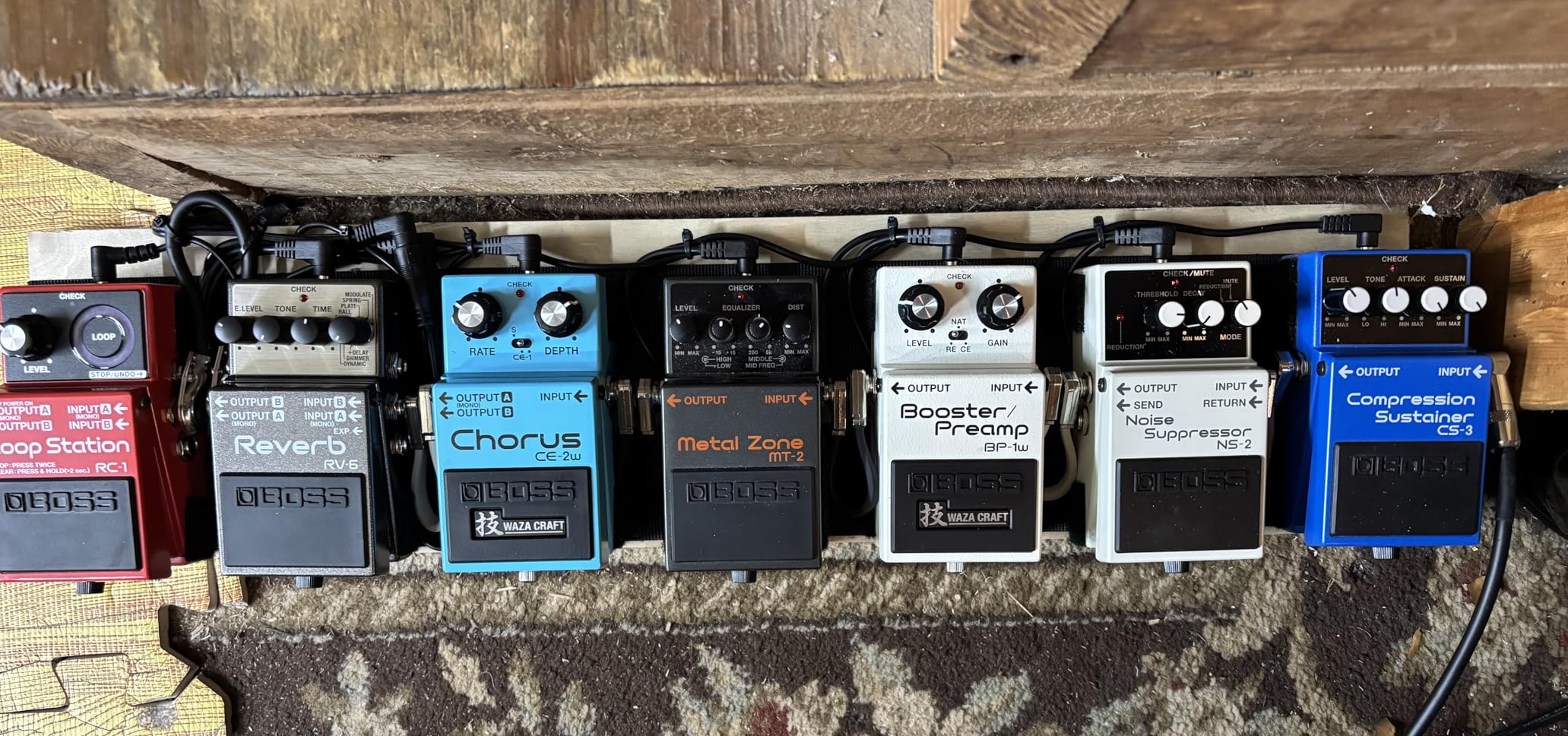
The BOSS BP-1W comes from the Waza Craft line, which is BOSS’s premium handmade series built in Japan. Right out of the box, you can feel the quality. The enclosure is solid, the knobs have a smooth resistance, and the footswitch has that satisfying BOSS click. I plugged this into a Fender Deluxe Reverb and was immediately struck by how transparent the clean boost was.
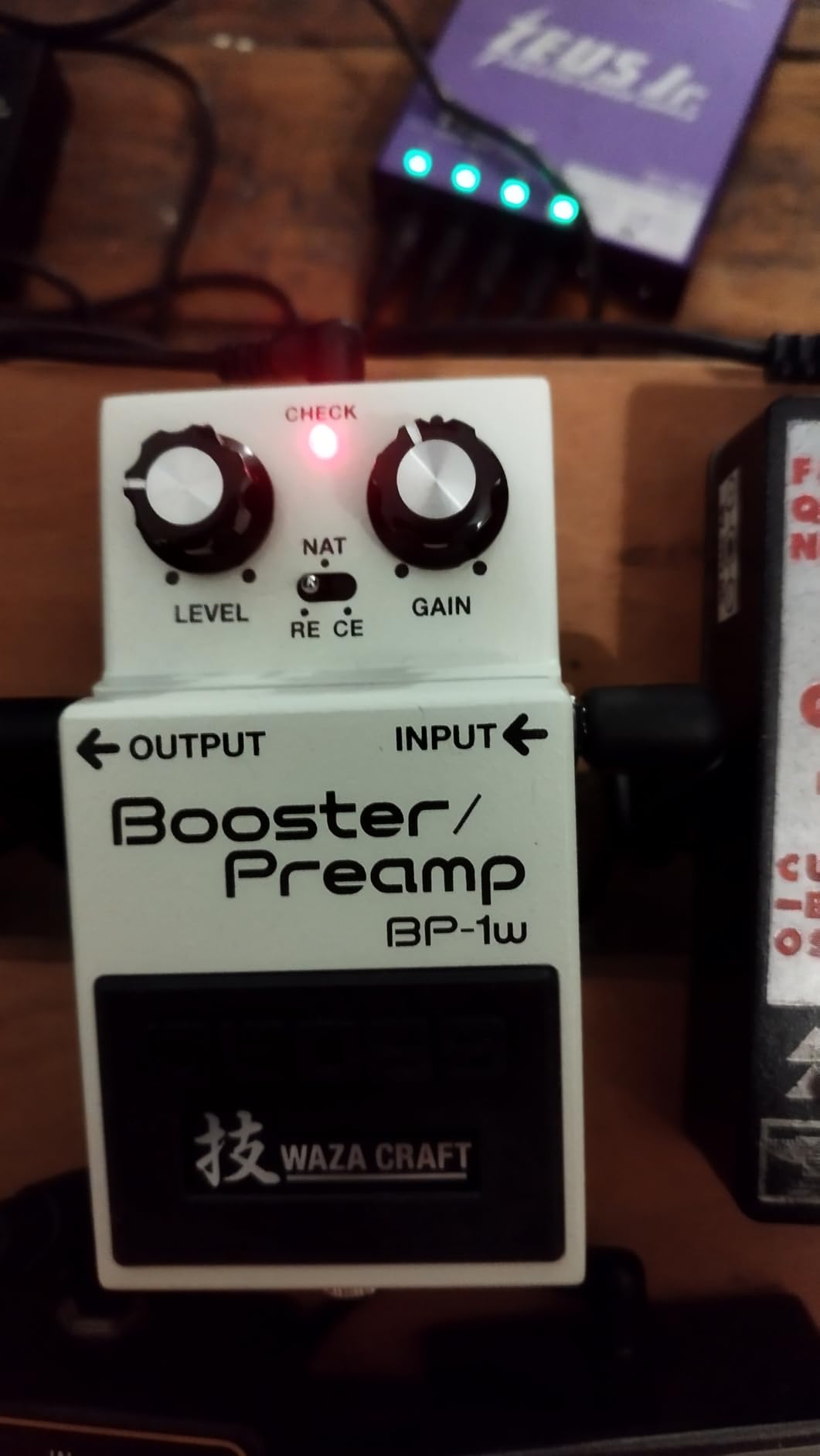
What makes this pedal special is the three selectable voicing modes. CE mode is based on the legendary BOSS CE-1 chorus preamp, RE mode captures the Roland RE-201 Space Echo preamp character, and NAT provides a clean natural boost. Each mode colors your tone in a subtle but distinct way, giving you three different preamp characters in one compact pedal.
I found the CE mode particularly magical with single coil guitars. It adds a thickness and dimension that makes a Stratocaster sound like it is running through a vintage rack system. The RE mode has a slightly warmer, more compressed feel that worked beautifully with humbuckers. NAT mode is the cleanest of the three, perfect when you just need to push your signal without any coloration.
The Gain knob controls saturation while the Level knob handles output volume. You can dial in everything from a completely transparent unity boost to a slightly saturated preamp grind. The selectable input buffer lets you switch between a standard modern buffer and a vintage-style buffer, which changes how the pedal interacts with the rest of your chain.
Who This Pedal Shines For
This is the pedal for players who want premium tone shaping without any harshness or artificial coloration. If you run a complex pedalboard and need a boost that respects your existing tone while adding dimension, the BP-1W is exceptional. It works beautifully in effects loops and as the final pedal before your amp.
Studio players will appreciate how it interacts with different amplifiers. I tested it with a Vox AC30, a Fender Deluxe, and a clean pedal platform, and it sounded musical through all three. The Waza Craft build quality means this pedal will last decades.
Things to Consider Before Buying
The price point is higher than most boost pedals, and you need to spend time experimenting with the three modes to find your sweet spot. Some players may find the differences between modes subtle at first. There is also no EQ control, which means you rely entirely on the voicing modes for tone shaping.
If you need detailed EQ control, look at the JHS Clover instead. But if you want a beautifully crafted boost preamp with vintage character, the BP-1W is hard to beat. The five-year warranty from BOSS adds serious peace of mind.
2. JHS Pedals Clover Preamp/Boost – Versatile EQ Powerhouse
JHS Pedals JHS Clover Preamp/Boost Guitar Effects Pedal
3-band EQ with sweepable mids
Three EQ modes
XLR DI output
Low cut dip switch
9V DC powered
Pros
- Excellent 3-band EQ with sweepable mids
- Multiple EQ modes
- XLR output for DI recording
- Clean transparent boost
- Lifetime warranty
Cons
- Premium pricing
- DIP switches are recessed and hard to access
- Slight hiss at high boost levels
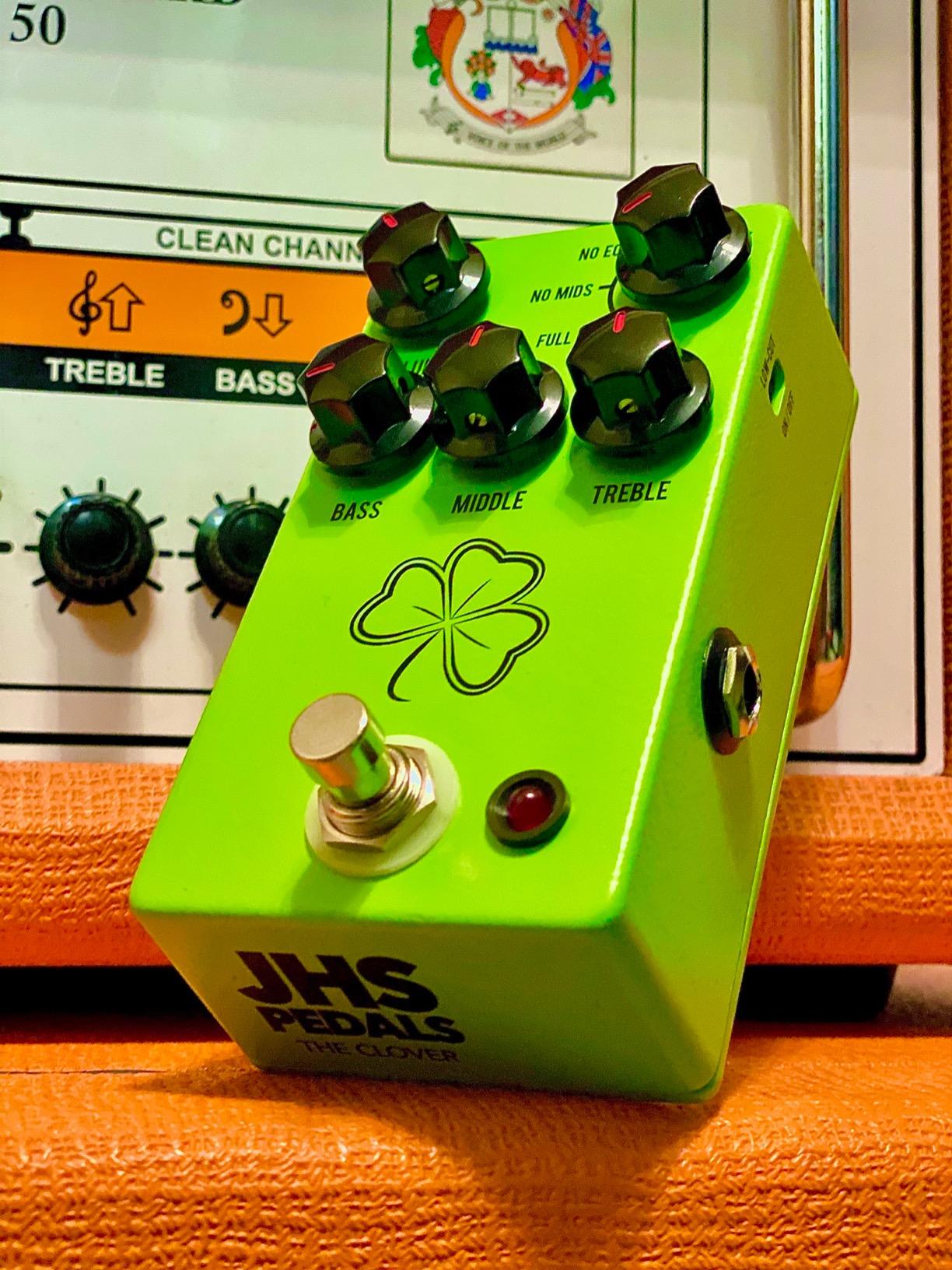
The JHS Clover is the preamp pedal I recommend most often when someone asks me what to buy. It earned the highest user rating on our list at 4.8 stars across 146 reviews, and after testing it extensively, I understand why. This pedal combines a clean boost with a genuinely useful 3-band EQ and an XLR output for direct recording. That combination makes it one of the best preamp pedals for players who need versatility.
The EQ section is where the Clover really separates itself. You get Bass, Mid, and Treble controls with a rotary switch that offers three modes. Full EQ mode engages all three bands. No Mid mode removes the mid control for a flatter response. No EQ mode bypasses the EQ entirely for a pure clean boost. This flexibility means the Clover can function as three different pedals depending on how you set it.
I ran the Clover into a clean pedal platform amp and was able to sculpt tones ranging from scooped modern metal to mid-forward blues crunch. The sweepable midrange is genuinely useful for finding the sweet spot in a band mix. The Low Cut dip switch helps remove muddiness, especially helpful when recording direct.
The XLR output is a feature that elevates this pedal above most competitors. You can run a quarter inch output to your amp while simultaneously sending an XLR signal to a mixing console or audio interface. This makes the Clover an excellent choice for acoustic guitarists, bass players, and anyone who needs a DI solution.
Signal Chain Placement Tips
The Clover works brilliantly at the end of your pedal chain, right before your amp or interface. Placed here, it acts as a final tone shaper and boost that can compensate for any frequency imbalances from your other pedals. The EQ lets you cut problem frequencies or boost the ones that help your tone cut through.
You can also place it at the start of your chain to shape your core tone before it hits drive pedals. This is where the No EQ mode shines, giving you a clean boost that pushes your overdrives harder without changing your EQ curve.
Who Should Consider the Clover
If you play multiple genres, use both electric and acoustic guitars, or need a pedal that can pull double duty as a live boost and a studio DI, the Clover is the most versatile option on this list. The limited lifetime warranty from JHS is a strong trust signal. The recessed DIP switches for Low Cut and Ground Lift can be annoying to access, so set those once and leave them.
3. Fishman Platinum Pro EQ DI – Acoustic Guitar Preamp King
Fishman Platinum Pro EQ/DI Analog Preamp Pedal
5-band EQ with sweepable mids
Built-in compression
Balanced XLR output
Phase control
Built-in tuner
9V battery powered
Pros
- Professional 5-band EQ
- Built-in compression
- XLR DI output for PA connection
- Phase control eliminates feedback
- Built-in tuner
- Designed for acoustic instruments
Cons
- No power LED indicator
- Battery rattles inside enclosure
- Large footprint on pedalboard
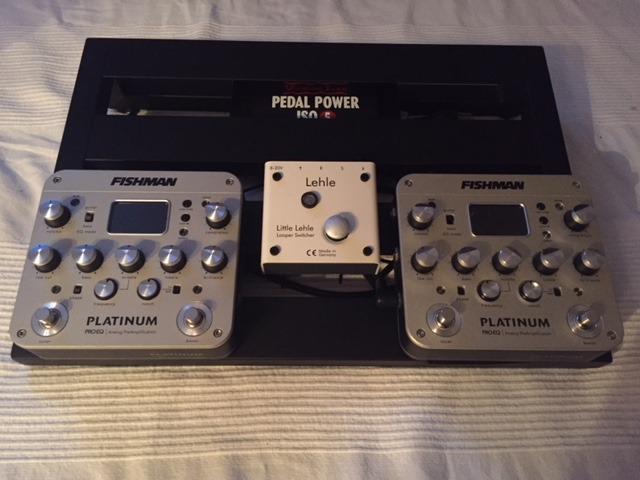
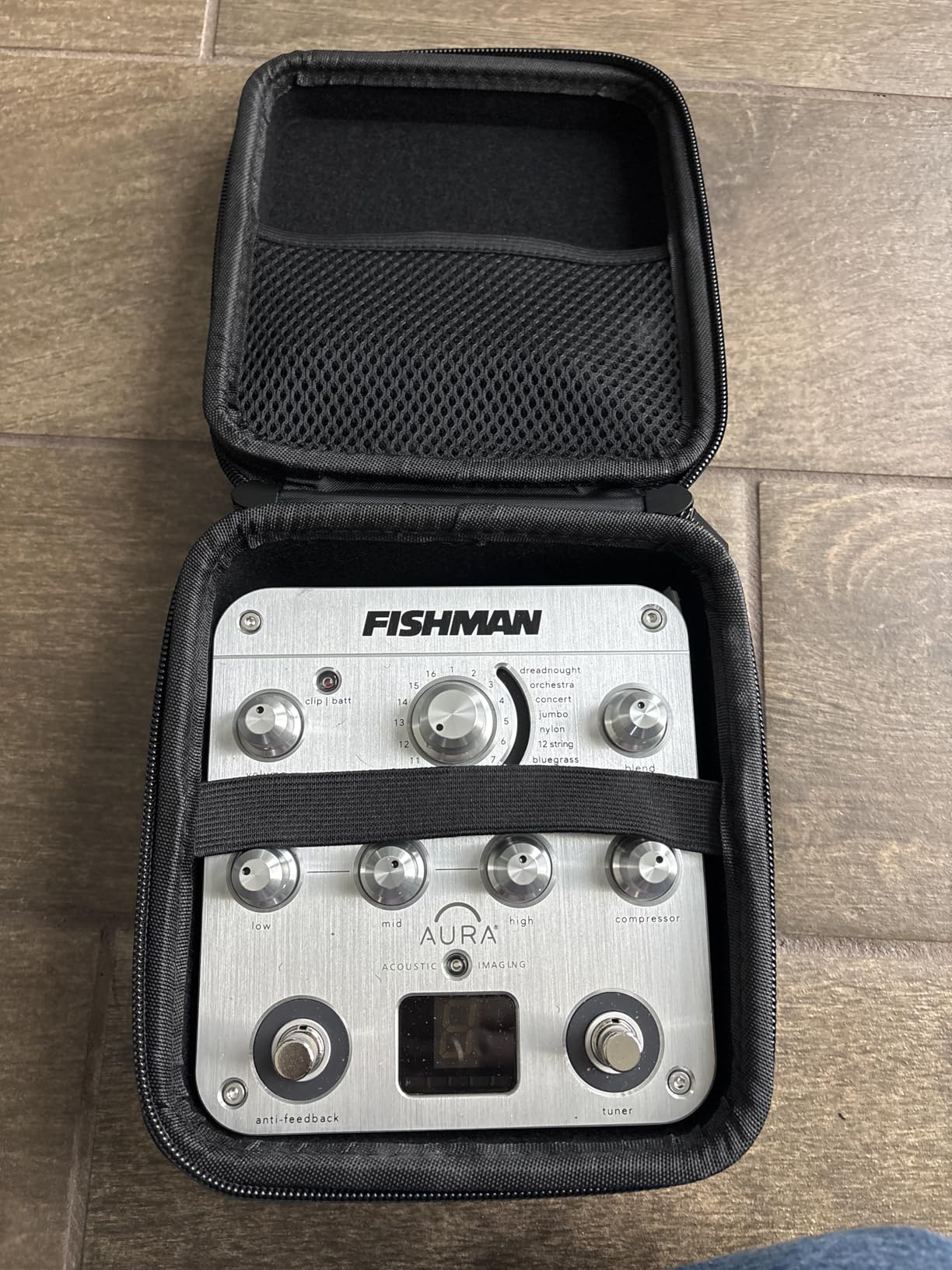
The Fishman Platinum Pro EQ DI sits at number one on Amazon’s acoustic guitar preamp bestseller list, and it earned that position through years of proven performance. I tested this with a Taylor acoustic-electric fitted with an undersaddle pickup, and the difference between plugging straight into a PA versus running through the Fishman was night and day. The pedal adds body, warmth, and definition that piezo pickups typically lack.
The 5-band EQ gives you Bass, Low Mid, Mid (sweepable), High Mid, and Treble controls. Having that much tonal control is essential for acoustic players dealing with feedback issues on stage. The sweepable midrange lets you target and cut the exact frequency that is feeding back, which is something you simply cannot do with a basic 3-band EQ.
Built-in compression is a feature acoustic players will love. It evens out your picking dynamics and prevents sudden peaks from overwhelming the PA system. The Phase control is another feedback-fighting tool that inverts the phase of your signal to cancel out resonant frequencies. In a live setting with a monitor wedge, these features are genuinely problem-solving.
The balanced XLR output means you can run a long cable to the mixing console without signal degradation. There is a Pre/Post EQ switch that lets you choose whether the XLR signal includes your EQ settings or sends a dry signal. The footswitchable Boost with its own Level control is perfect for solo sections.
Ideal Use Cases
This is the best preamp pedal for acoustic guitarists who play live. If you have struggled with thin sounding piezo pickups, feedback on stage, or inconsistent levels between strumming and fingerpicking, the Fishman Platinum Pro solves all three problems. It also works well for violin, mandolin, and other acoustic instruments with pickups.
Bass players who use upright bass will also find this pedal valuable. The EQ range and compression handle the low frequencies of a double bass beautifully. The built-in tuner means one less thing to carry to gigs.
What Holds It Back
The main drawbacks are physical. The enclosure is larger than most guitar pedals, taking up significant pedalboard real estate. There is no power LED, so you cannot tell at a glance whether the pedal is on. The 9V battery can rattle inside the enclosure, which is annoying during quiet passages.
Also note that this pedal is designed specifically for acoustic instruments. Electric guitarists should look elsewhere on this list. But for the acoustic player who needs a complete tone shaping and DI solution, nothing beats the Fishman Platinum Pro.
4. JOYO American Sound JF-14 – Budget Amp Simulator Champion
JOYO American Tube Amp Simulator & Preamp Guitar Pedal, 6-Knob Control with Built-in Cab Sim for Electric Guitar, Bypass (JF-14)
American tube amp simulation
Built-in cabinet simulation
6-knob control
Aluminum alloy housing
9V DC powered
Pros
- Incredible value under $50
- Built-in cab sim for direct recording
- Six control knobs for precise shaping
- Authentic Fender-style tones
- Road-ready aluminum housing
Cons
- Hiss at higher drive settings
- Possible reliability issues over time
- Power supply not included
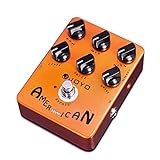
The JOYO American Sound is the number one bestseller in Amazon’s guitar distortion and overdrive category, and the price explains why. At under $50, this pedal delivers American tube amp tones that genuinely sound like a Fender clean channel. I was skeptical when I first plugged it in, but after running it direct into an audio interface with the cab sim engaged, I was impressed by how amp-like the tone was.
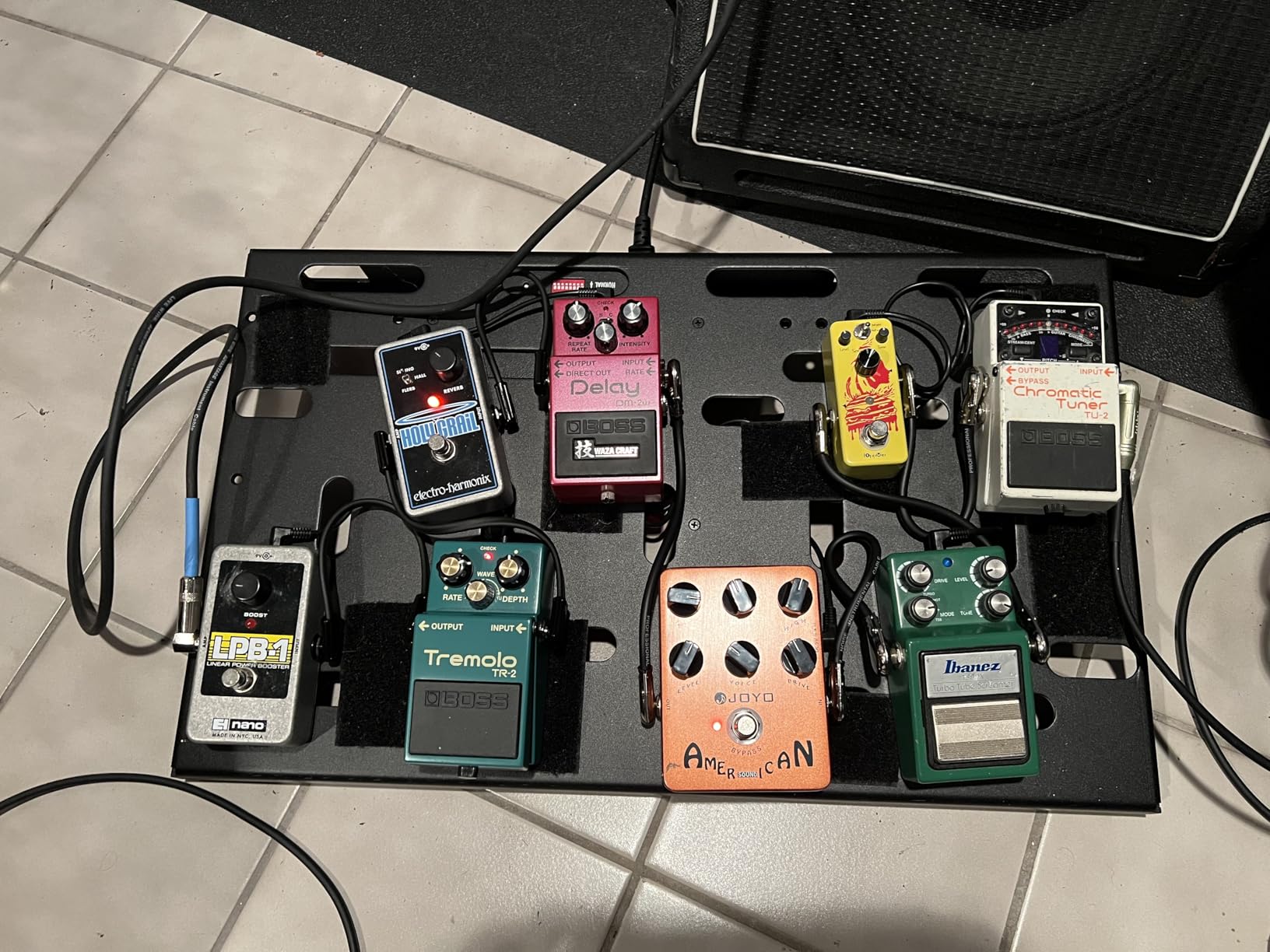
The six knobs give you Level, Drive, Low, Mid, High, and Voice controls. The Voice knob is the secret weapon here. It shifts the overall character from scooped and clean to mid-rich and gritty. This gives you far more tonal variety than you would expect from a pedal in this price range.
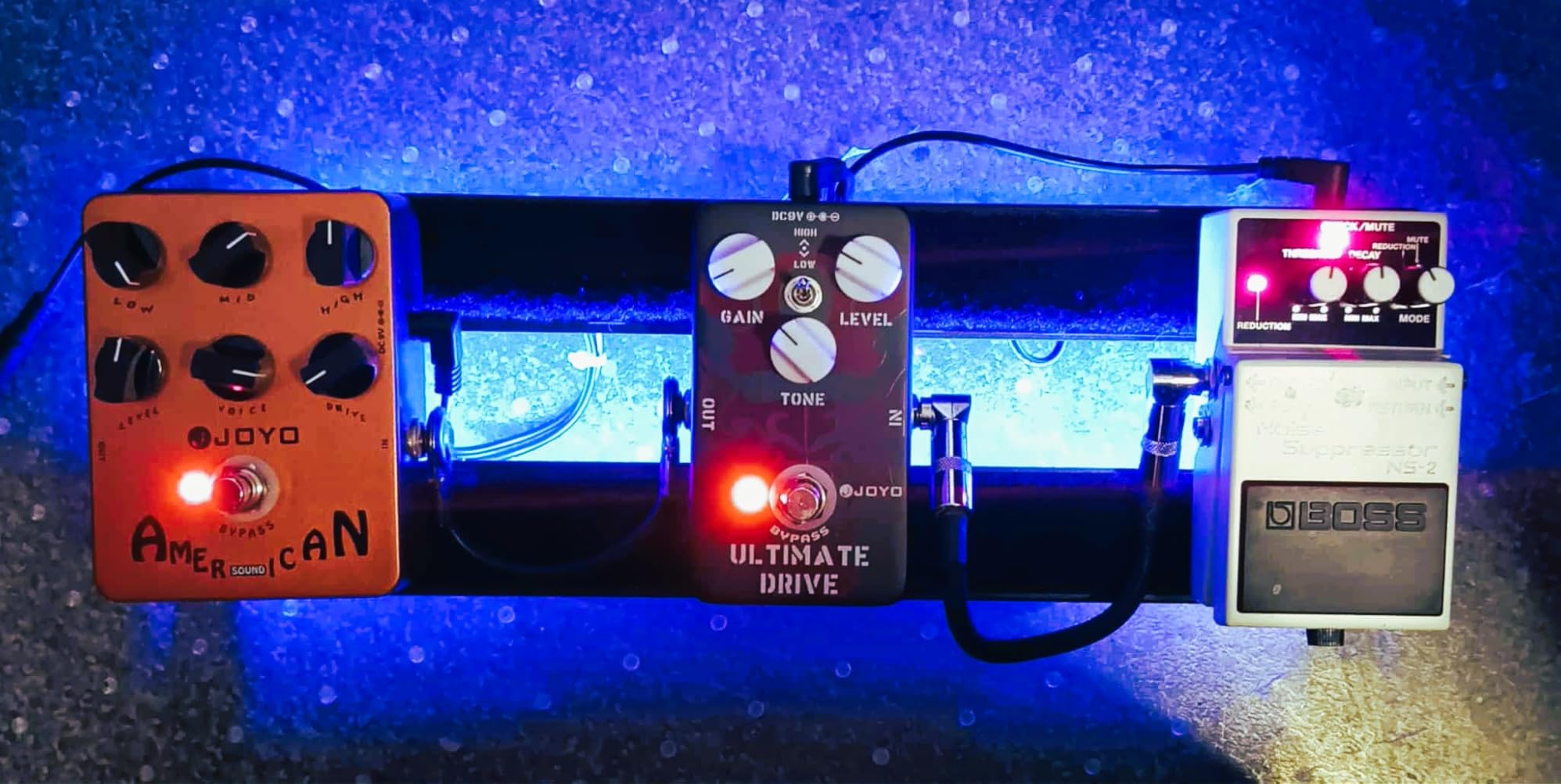
The built-in cabinet simulation means you can plug directly to a PA system, audio interface, or headphone amplifier without needing a real speaker cabinet. For silent practice and home recording, this feature alone makes the pedal worth every penny. I recorded a full demo track using nothing but the JOYO American Sound straight into my interface, and the results were surprisingly professional.
The aluminum alloy housing feels solid enough for gigging. At 390 grams, it is lightweight but sturdy. The pedal runs on 9V DC, though you will need to supply your own power adapter or battery since neither is included.
Best Uses for This Pedal
Home recorders on a budget will get the most value from the JOYO American Sound. If you do not have a tube amp or a treated recording space, this pedal gives you amp-like tones direct to your interface. It is also excellent as a backup for gigging musicians who need a reliable secondary tone source.
Players building their first pedalboard will appreciate the simplicity. Six knobs are easy to understand, and the pedal sounds good with minimal tweaking. It pairs well with most guitars and works in front of any clean amplifier.
Managing the Limitations
The most common complaint is a slight hiss at higher drive settings. This is normal for budget pedals and can be managed with a noise gate or by keeping the Drive knob below 70 percent. Some users report reliability issues after extended use, so consider this an entry-level option rather than a lifetime investment.
The power supply is not included, which adds a small additional cost. Despite these caveats, the JOYO American Sound remains one of the best values in the entire preamp pedal market. You are getting cab simulation and amp modeling for less than the cost of a single premium patch cable.
5. MOOER Preamp Model X2 – Digital Powerhouse with IR Loading
MOOER Dual-Channel Digital Preamp Pedal Guitar Effects Pedal
14 preamp models with dual channels
Third-party IR loading
Stereo inputs and outputs
MNRS sampling technology
9V DC powered
Pros
- 14 preset slots with dual channels
- Supports third-party impulse responses
- Stereo inputs and outputs
- High and low cut filters
- MOOER STUDIO software compatible
- Excellent cab sim quality
Cons
- Not intuitive for beginners
- No power switch or display
- Preset management requires software
- Pattern knob alignment issues
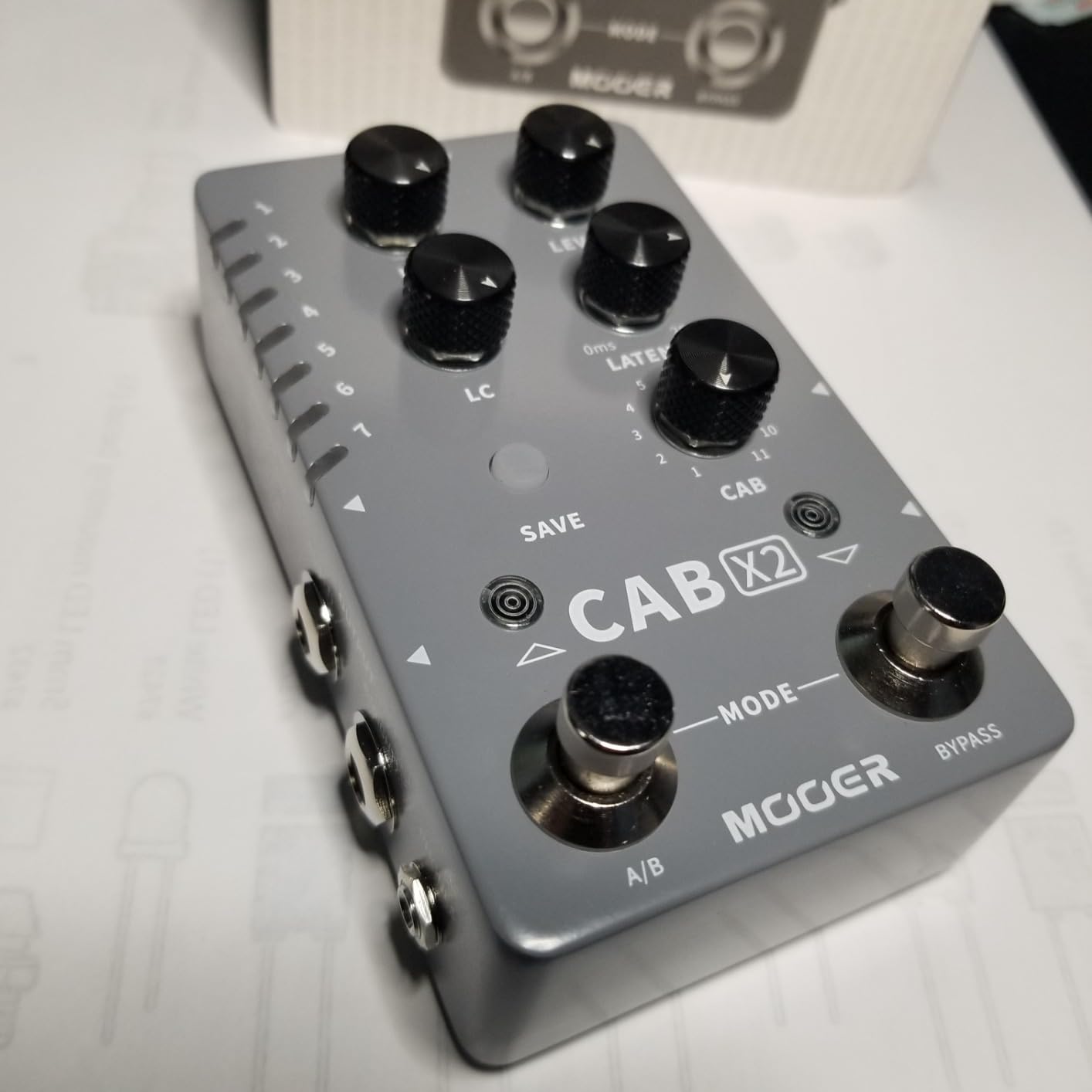
The MOOER Preamp Model X2 is a digital preamp pedal that packs an absurd amount of functionality into a compact enclosure. With 14 preamp models, dual-channel settings, and support for third-party impulse responses, this pedal can cover virtually any genre. I loaded it with some of my favorite third-party IR files and was blown away by how realistic the amplified tones sounded through studio monitors.
The MNRS sampling technology is MOOER’s proprietary system for capturing amp and cab characteristics. The 14 built-in preamp models cover everything from vintage American cleans to modern British high-gain. Each preset has two channels, effectively giving you 28 different sounds accessible from a single pedal.
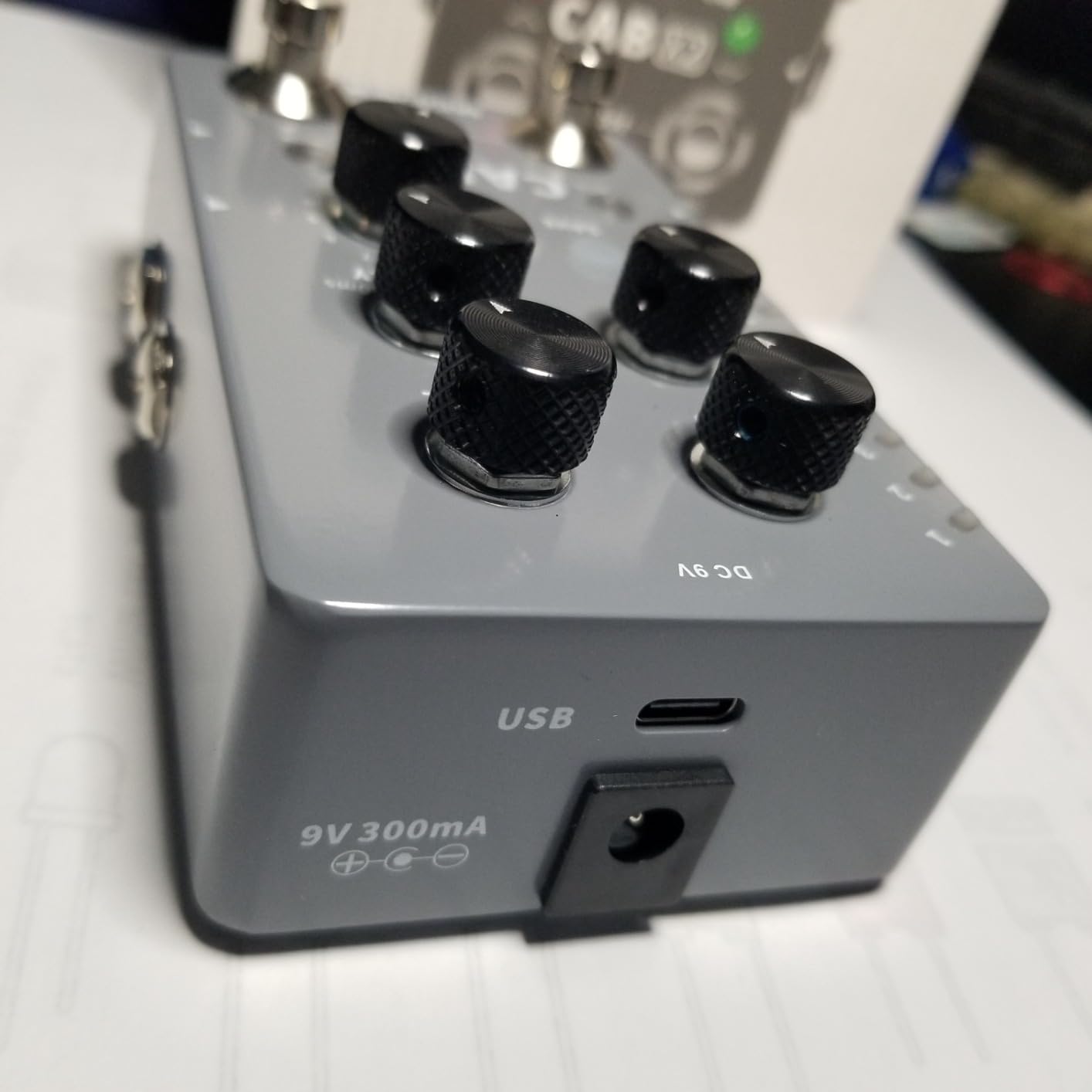
Stereo inputs and outputs make this pedal perfect for players who run stereo rigs or want to send signals to multiple destinations simultaneously. The high and low cut filters let you shape the overall frequency response, which is essential when working with different IR files that may have varying tonal characteristics.
I found the latency control feature particularly interesting. It allows you to introduce a slight delay between the left and right outputs, creating a stereo widening effect that makes your tone feel huge through headphones or stereo monitors. This is a feature typically found on much more expensive processing units.
Integration with Modern Modelers
The MOOER X2 works exceptionally well alongside modelers like the Line 6 Helix and HX Stomp. Many players on the gear forums use it as an IR loader at the end of their signal chain, bypassing the modeler’s built-in cab simulation. This gives them access to a wider library of impulse responses and more control over the final tone.
The MOOER STUDIO software lets you manage presets, load IR files, and fine-tune settings from your computer. While the pedal works standalone, the software dramatically improves the user experience. Plan to spend some time learning the software to get the most out of this pedal.
Who Will Love This Pedal
Players who want maximum versatility in a small footprint should seriously consider the MOOER X2. It is perfect for direct recording, amp-less rigs, and players who need multiple amp tones on a single pedalboard. The learning curve is steeper than analog pedals, but the payoff is enormous.
Beginners may find the interface overwhelming. There is no display screen, and preset management without the software is confusing. But if you are comfortable with technology and want a digital preamp that can do almost anything, the MOOER X2 delivers exceptional value.
6. TC Electronic Ampworx Dual Wreck – High-Gain Monster
TC Electronic Ampworx Dual Wreck Preamp Pedal
Dual Rectifier tone recreation
Two independent channels
Celestion cab sim IR
5dB integrated boost
Headphone output
XLR DI output
Pros
- Authentic Mesa Boogie Dual Rectifier tone
- Two channels for clean and lead
- Built-in 5dB boost with Pre/Post options
- DI output with Celestion IR
- Headphone output for practice
- Global presence control
Cons
- Not true bypass
- Limited channel switching options
- No custom IR loading capability
The TC Electronic Ampworx Dual Wreck faithfully recreates the legendary Mesa Boogie Dual Rectifier Revision G tone in a pedal format. With a 4.8-star rating from early adopters, this pedal has quickly gained a reputation as one of the best preamp pedals for high-gain tones. I ran it through a clean amplifier and was genuinely shocked by how closely it matched the punch and aggression of a real Rectifier.
Two independent channels give you clean and lead tones accessible from a single footswitch. The clean channel has surprising headroom and warmth, while the lead channel delivers that saturated, punchy high-gain sound that defined modern metal and hard rock. The transition between channels is smooth, making this viable for live performance.
The integrated booster adds 5dB of gain with switchable Pre or Post placement. Placing the boost before the preamp gives you more saturation and sustain. Placing it after gives you a volume boost for solos. This dual functionality eliminates the need for a separate boost pedal on your board.
Recording and Output Options
The DI output includes a built-in Celestion cabinet simulation IR, which means you can record directly without needing a real cabinet or external IR loader. The headphone output is perfect for silent practice sessions. I recorded several tracks using just the DI output into my interface, and the results were impressively close to a mic’d amplifier.
The global presence control on the rear panel lets you dial in the perfect amount of high-end sparkle. This is a small detail that makes a big difference when matching the pedal to different guitars and amplifiers.
Things to Know Before Buying
The Dual Wreck is not true bypass, which means it will affect your signal even when disengaged. Some players see this as a dealbreaker, while others appreciate the consistent buffered tone. If you need true bypass, look at the Xotic BB or Dunlop Echoplex instead.
You cannot load custom IR files, which limits flexibility compared to the MOOER X2. However, the built-in Celestion IR is well-chosen and sounds professional. For players who want authentic Rectifier tones without buying the full amplifier, this pedal is the most cost-effective path.
7. MXR Bass Preamp M81 – The Bass Player’s Secret Weapon
MXR® Bass Preamp
3-band EQ with sweepable midrange
Studio-quality DI output
True bypass
Multiple power options
Compact Phase 90 size
High headroom design
Pros
- Separate input and output level controls
- Sweepable midrange frequency
- Studio-quality DI with pre/post switch
- True bypass design
- Runs on battery phantom power or AC adapter
- Works with active and passive basses
Cons
- Battery access requires unscrewing the case
- Battery drains when plugged in
- No included manual
The MXR Bass Preamp M81 is the most popular bass preamp pedal on the market, and after testing it extensively, I understand the hype. This pedal provides the same transparent tone shaping that made MXR famous, packaged in a compact enclosure roughly the size of a Phase 90. I tested it with both an active Music Man StingRay and a passive Fender Precision, and it handled both beautifully.
The standout feature is the separate input and output level controls. The input control lets you match the pedal to your bass’s output level, preventing clipping from hot active pickups. The output control then sets your final volume. This two-stage approach gives you precise control over gain staging that single-knob preamps simply cannot match.
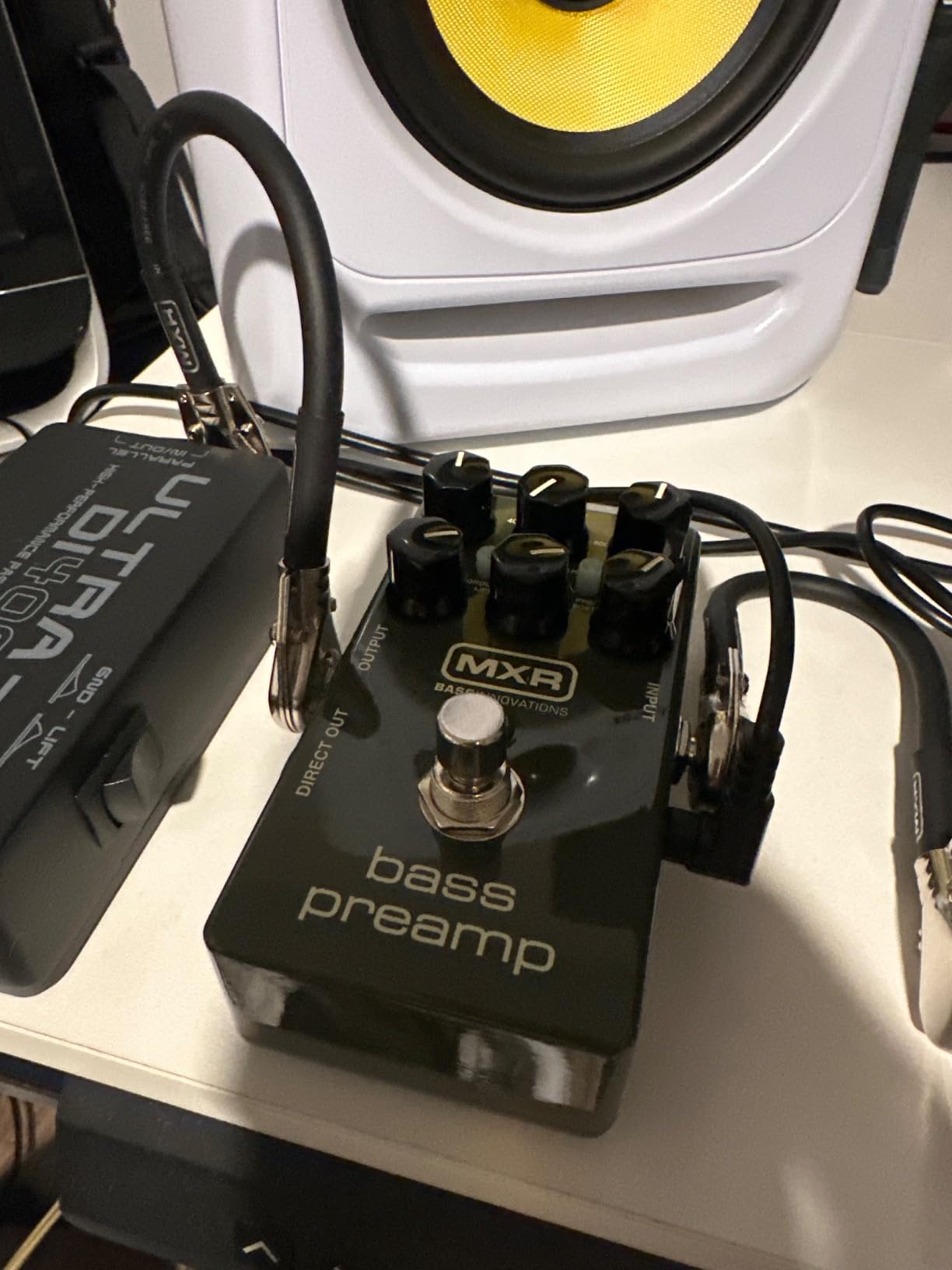
The 3-band EQ includes a sweepable midrange, which is essential for bass players. Being able to target specific mid frequencies lets you carve out space in a dense mix, boost your presence for solos, or cut frequencies that are clashing with the kick drum. The EQ is musical and responsive, never sounding harsh or clinical.
The studio-quality DI output is what makes this pedal a gigging essential. With a Pre/Post EQ switch and ground lift, you can send a professionally shaped signal directly to the mixing console. The true bypass design means your tone is completely unaffected when the pedal is off.
Power Options and Versatility
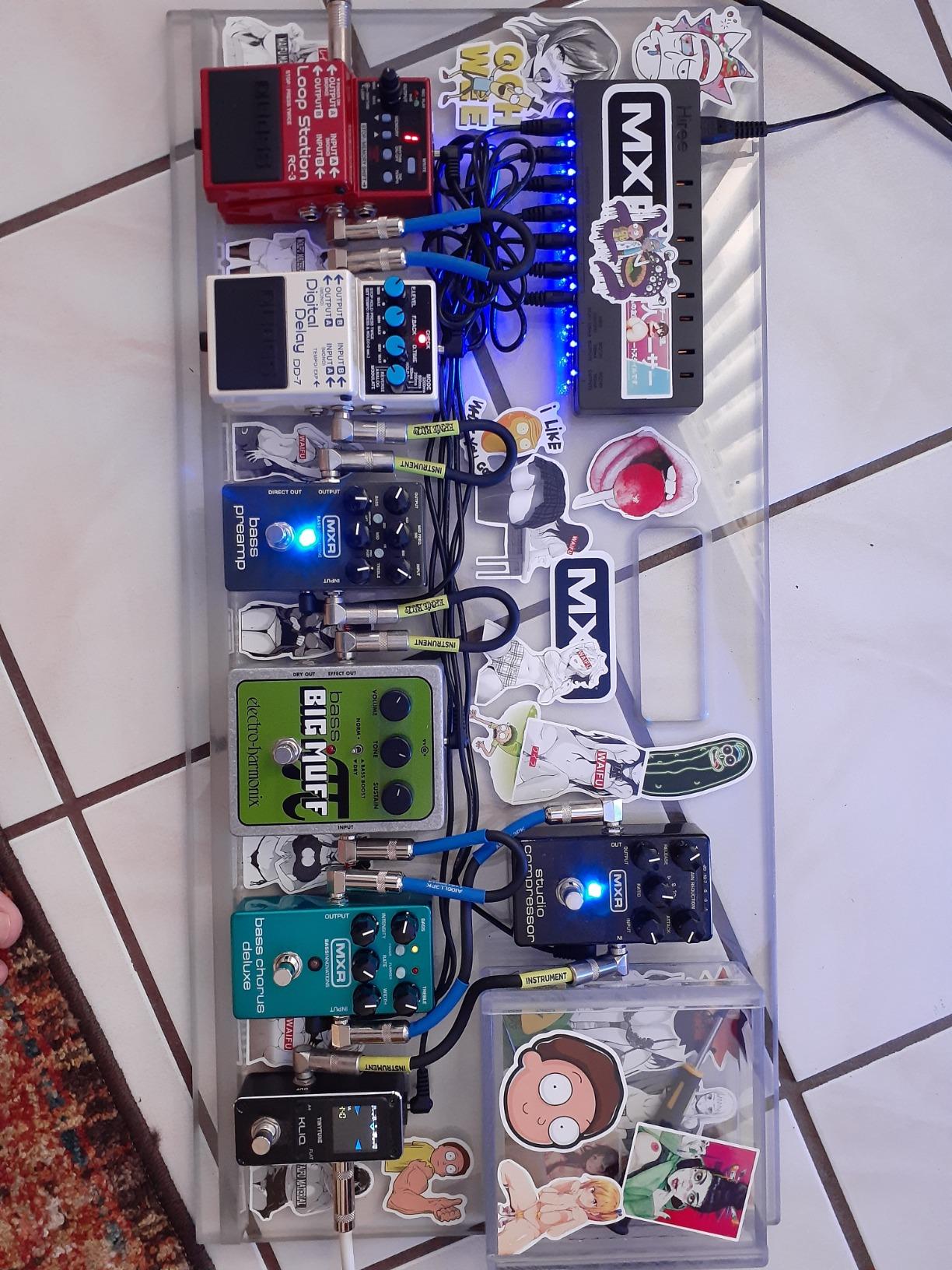
One of the most appreciated features is the triple power option. The M81 runs on a 9V battery, phantom power from a mixing console, or a standard AC adapter. This flexibility means you are never caught without power at a gig. The high headroom design ensures clean performance even with aggressive playing styles.
Bass players who double on upright bass will find this pedal equally useful. The transparent EQ works beautifully with piezo pickups, and the DI output eliminates the need for a separate DI box.
Minor Drawbacks
Accessing the battery requires unscrewing the bottom plate, which is inconvenient. The battery also drains when cables are plugged in, even in bypass mode. Most players will want to power this pedal with an AC adapter or phantom power to avoid these issues.
No manual is included, which is frustrating for a pedal at this price point. However, the controls are intuitive enough that most players will figure them out quickly. These are minor complaints about what is otherwise an outstanding preamp pedal.
8. Dunlop Echoplex EP101 Preamp – The Magic Dust Pedal
Dunlop Echoplex® Preamp
EP-3 preamp reproduction
Gain boost up to +11dB
True bypass
Constant Headroom technology
9V battery powered
Analog signal path
Pros
- Faithful EP-3 preamp recreation
- Adds warmth and dimension to tone
- Subtle enhancing effect
- Works well with volume control
- True bypass
- Constant Headroom technology
Cons
- Power supply connector can be unreliable
- May require battery for proper operation
- Effect can be very subtle
The Dunlop Echoplex EP101 Preamp is a cult favorite that faithfully reproduces the preamp section of the legendary Echoplex EP-3 tape echo unit. What made the original EP-3 special was not just its delay but the magical preamp circuit that guitarists fell in love with. Players like Eddie Van Halen and Jimmy Page ran their signals through an EP-3 just for that preamp character. Dunlop captured that magic in a compact pedal.
I was initially skeptical about how much difference a preamp pedal could make. The effect of the EP101 is subtle, but once you hear it, you cannot unhear it. It adds a warmth, thickness, and dimension to your tone that players describe as magic dust. Single coil guitars particularly benefit, gaining a roundness and sustain that fills out the sound beautifully.
The Gain knob provides up to +11dB of clean boost. Unlike many boost pedals, the EP101 maintains constant headroom, meaning your tone stays clean even at high gain settings. The pedal never gets harsh or compressed. It simply makes your guitar sound bigger and more present.
How to Use It in Your Signal Chain
The EP101 works best at the beginning of your signal chain, right after your guitar. Placed here, it shapes your core tone before any other pedals process it. The warmth and dimension it adds will then carry through your entire rig, making all your other pedals sound better.
You can also place it at the end of your chain as a final sweetener before your amplifier. In this position, it adds the finishing touch of warmth that glues your tone together. Both placements work well, so experiment to find which sounds better with your specific setup.
Understanding the Subtlety
The most common criticism of the EP101 is that the effect is almost too subtle. Some players plug in, strum a few chords, and conclude that nothing has changed. This is a pedal that rewards attentive listening. Play for an extended period, then bypass it, and you will notice the difference immediately.
The power supply connector has been reported as unreliable by some users. Many players report that the pedal works best when powered by the included 9V battery rather than an external power supply. This is worth knowing before you integrate it into a powered pedalboard. The lifetime warranty provides confidence in the long-term value.
9. Xotic BB Preamp V 1.5 – Blues and Rock Tone Machine
Xotic BB Preamp V 1.5 Pedal
Overdrive and preamp pedal
Active 2-band EQ
True bypass
Touch sensitive analog circuitry
9V DC powered
Pros
- Clean boost with neutral frequency response
- Touch sensitive to picking dynamics
- Active 2-band EQ for tone shaping
- Works well with any amplifier
- True bypass design
- Sits well in band mix
Cons
- Not suited for high-gain metal
- Requires DC power supply with no battery option
- Premium pricing
The Xotic BB Preamp V 1.5 has earned a cult following among blues and rock players, and after living with it for several weeks, I am a convert. This pedal does something special: it responds to your playing dynamics in a way that makes it feel like an extension of your fingers. Light picking produces a clean, warm tone. Dig in harder and the pedal rewards you with a creamy, sustained overdrive that sounds like a cranked tube amp.
The active 2-band EQ gives you Bass and Treble controls that boost or cut frequencies. Unlike passive EQs that only cut, active EQs let you add more of specific frequencies. This makes the BB Preamp versatile enough to work with any amplifier, from dark British stacks to bright American combos.
I tested this pedal with a Fender Blues Junior, a Marshall JCM800, and a clean pedal platform. In every case, the BB Preamp added something valuable. With the Blues Junior, it pushed the amp into a singing overdrive that was perfect for lead work. With the clean platform, it provided the entire overdrive character. With the Marshall, it thickened the midrange and added sustain.
Gain Staging and Tone Settings
The key to getting the most from the BB Preamp is understanding gain staging. The Gain knob controls the amount of overdrive, while the Volume knob sets your output level. Setting the Gain low and the Volume high gives you a clean boost that pushes your amplifier’s preamp harder. Setting both higher gives you overdrive directly from the pedal.
For blues tones, try Gain at 9 o’clock, Volume at unity, and both EQ knobs at noon. This gives a warm, slightly compressed clean tone that responds beautifully to volume knob adjustments on your guitar. Roll your guitar volume back and the tone cleans up. Push it up and the overdrive kicks in.
Who This Pedal Is For
Blues, classic rock, and country players will find their ideal tones in the BB Preamp. The touch sensitivity is what sets it apart from other overdrive and preamp pedals. It responds to your pick attack and volume control changes in real time, giving you a wide range of expression from a single pedal.
Metal players should look elsewhere. The maximum gain is not sufficient for modern metal tones, and the pedal’s character is better suited to low and medium gain applications. But for players who want a touch-responsive overdrive that also functions as a clean preamp boost, the Xotic BB Preamp is exceptional.
10. Diezel VH4-2 Preamp Pedal – Professional High-Gain Tone
Diezel VH4-2 2-Channel Overdrive Distortion & Preamp Guitar Effects Pedal
Based on Diezel VH4 channel 3
Two channels with independent gain
Presence and depth controls
12-18V DC powered
Includes power supply and splitter cable
Pros
- Authentic Diezel VH4 channel 3 tone
- Two channels with wide gain range
- Presence and depth controls
- Highly responsive to dynamics
- Built in USA
- Includes 12V power supply and splitter cable
Cons
- Requires 12-18V power with no battery option
- Large footprint
- Dead spot in presence control
- Requires significant tweaking
- Better with Marshall and Orange amps
The Diezel VH4-2 brings the legendary channel 3 tone from the Diezel VH4 amplifier into a pedal format. This is the sound that defined albums by Tool, Metallica, and countless modern metal bands. Adam Jones of Tool has used Diezel amplifiers as his primary tone source for decades, and this pedal captures that character with remarkable accuracy.
Two channels with independent gain stages give you an enormous range of saturation options. Channel one can deliver everything from sparkling cleans to classic rock crunch. Channel two goes from hard rock to full modern metal high-gain. The transition between channels is controlled via footswitch, making this viable as your primary tone source for live performance.
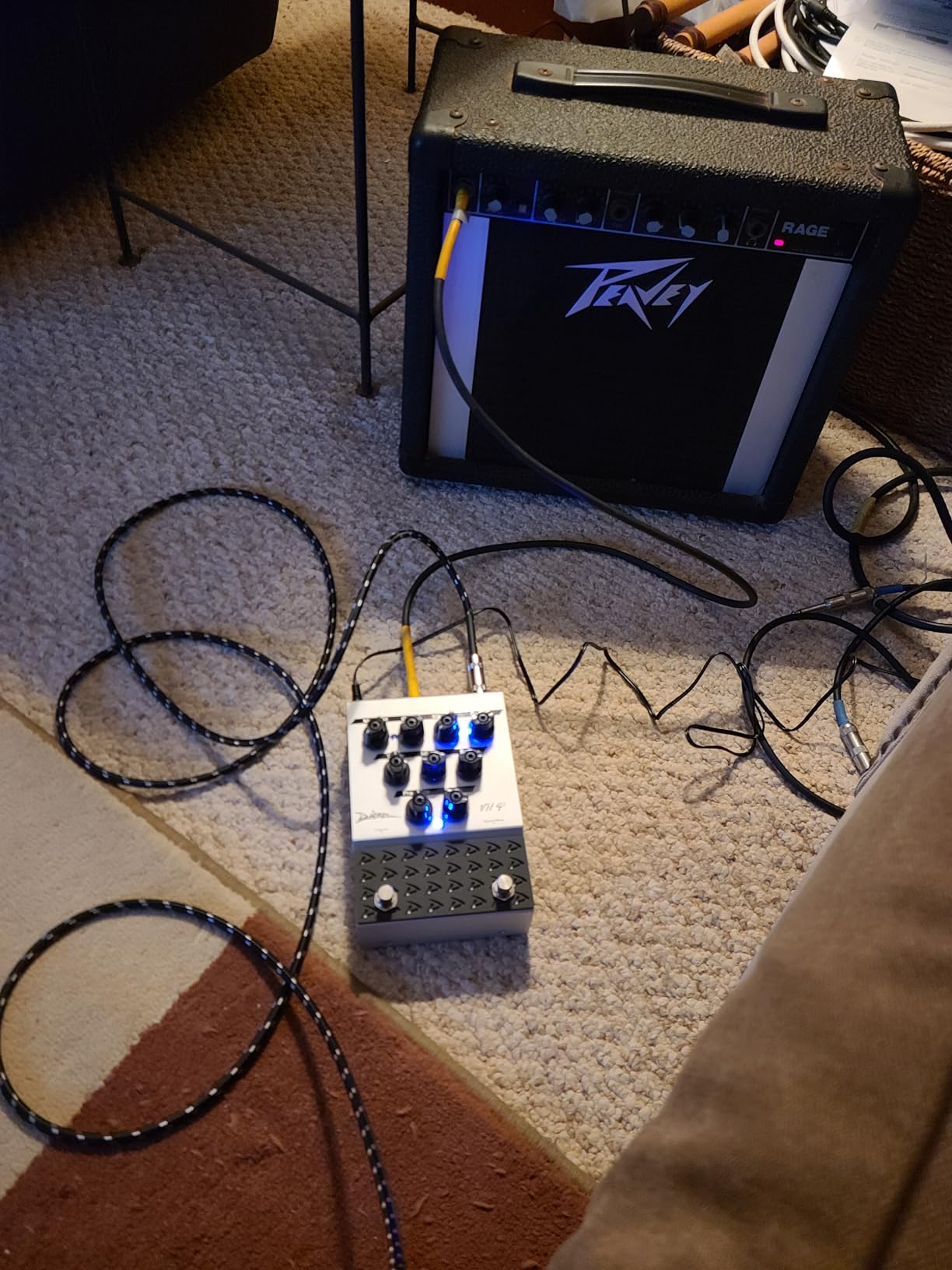
The control layout is comprehensive: Volume, Gain, Bass, Middle, Treble, Presence, and Depth. The Presence and Depth controls are what give this pedal its distinctive character. Presence adjusts the high-frequency resonance, while Depth shapes the low-end tightness. These controls let you fine-tune the pedal to work with different amplifiers and cabinets.
I tested this with a Marshall JCM800 and an Orange Rockerverb, both of which paired beautifully. The pedal pushed the Marshall into territory that sounded enormous. With a clean Fender amp, the results were less convincing, suggesting that the VH4-2 works best when paired with amplifiers that share its British voicing character.
Power Requirements and Setup
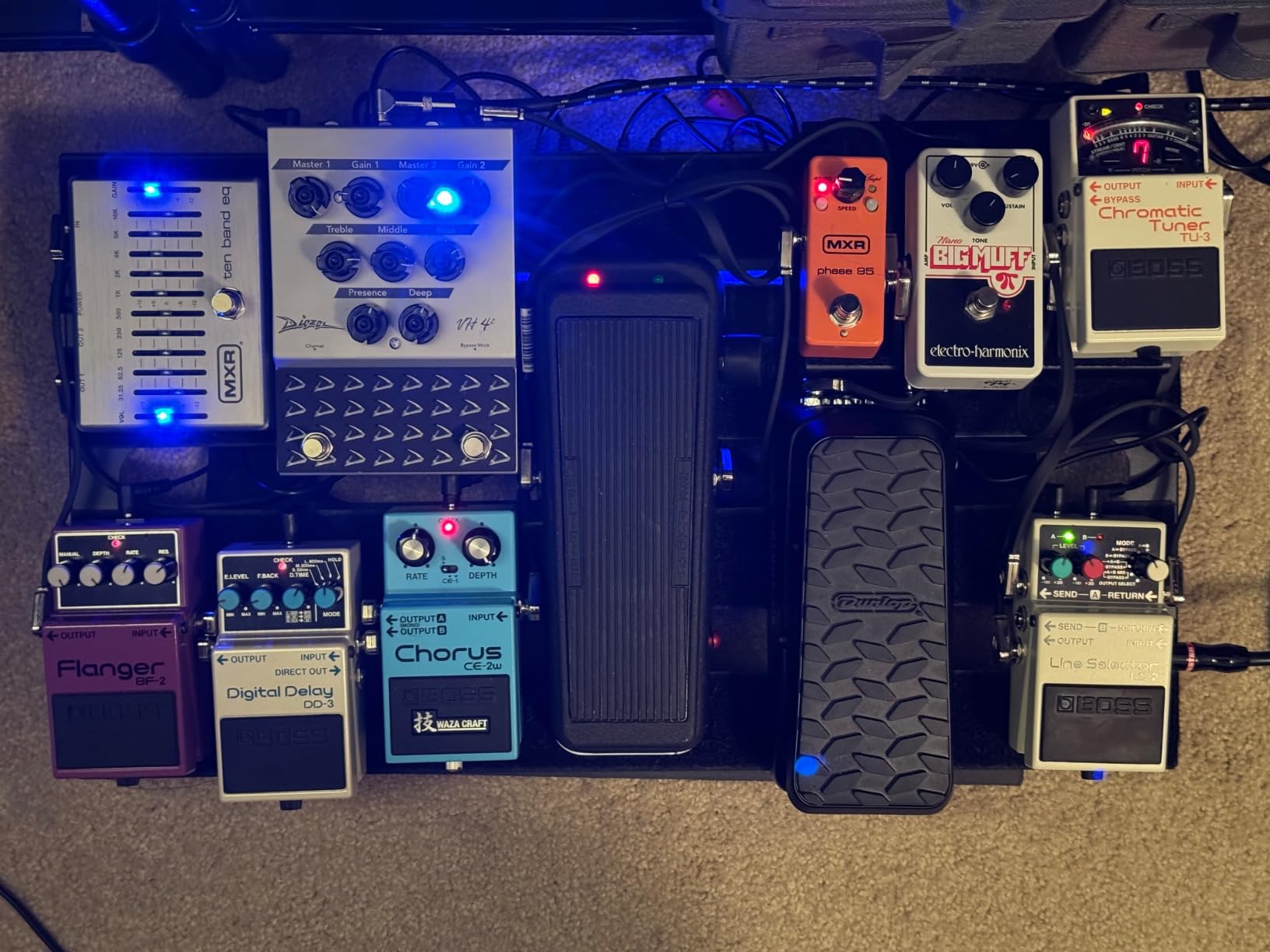
The VH4-2 requires 12-18V DC power, which is non-standard for most pedalboards. Fortunately, Diezel includes a 12V power supply and an 18V splitter cable in the box. This means you can power the pedal without purchasing additional equipment, but you will need a dedicated power outlet or an isolated output on your power supply that can handle 12-18V.
The pedal is assembled in the USA with high-quality components. The build feels substantial and professional. The larger footprint means you will need to plan your pedalboard layout accordingly. This is not a compact pedal by any means.
Is It Worth the Investment
The Diezel VH4-2 is one of the most expensive pedals on this list, and it is not for everyone. But for players specifically chasing that Diezel high-gain character, it is far more affordable than buying a full VH4 amplifier. The two-channel design, comprehensive EQ, and authentic tone make it a professional-grade tool.
Be prepared to spend time dialing in your tone. The Presence control has a dead spot around the 12:30 to 1:00 position where the sound thins out noticeably. Finding the sweet spots on each control takes patience, but the reward is a tone that few other pedals can match.
How to Choose the Best Preamp Pedal for Your Needs
Choosing among the best preamp pedals requires understanding your specific needs. The right pedal for a bedroom recording setup is very different from what a touring metal guitarist needs. This buying guide breaks down the key factors you should consider before making your purchase.
Tube Versus Solid-State Versus Digital
The first decision is the underlying technology. Tube preamp pedals use actual vacuum tubes (typically 12AX7) to shape tone, providing the most authentic amp-like warmth and compression. They also require more power and generate more heat. Solid-state pedals use analog circuitry to emulate tube characteristics without actual tubes. They are more reliable, consume less power, and are typically less expensive.
Digital preamp pedals like the MOOER X2 use DSP processing to model amplifier sounds. They offer the most versatility, often including multiple amp models and IR loading capabilities. The trade-off is that some players feel digital pedals lack the organic response of analog designs. All three approaches can produce excellent results, so the choice comes down to your priorities.
Signal Chain Placement
Where you place your preamp pedal in your signal chain dramatically affects its behavior. Placing it at the start of your chain shapes your core tone before it hits any other effects. This is ideal for pedals like the Echoplex EP101 that add subtle warmth. Placing it at the end of your chain, just before your amplifier, lets it function as a final tone shaper and master boost.
If you are using the preamp pedal as an amp replacement for direct recording, placement does not matter since the pedal is your entire signal path. For live use with a real amplifier, experiment with both the input and the effects loop to find the placement that sounds best with your specific rig.
Buffered Bypass Versus True Bypass
True bypass pedals completely disconnect their internal circuitry when bypassed, preserving your original tone. This is ideal for short cable runs and simple pedalboards. However, with long cable runs or many true bypass pedals in series, you can experience signal degradation and treble loss.
Buffered bypass pedals maintain a low-impedance signal even when bypassed, which preserves tone over long cable runs and through complex pedal chains. The BOSS BP-1W uses a selectable buffer system that lets you choose between vintage and modern buffer characteristics. Most players with pedalboards of five or more pedals benefit from at least one buffered pedal in their chain.
EQ and Tone Shaping Controls
The amount of EQ control you need depends on your use case. If you are happy with your core tone and just need a boost, a simple pedal with Gain and Volume controls will serve you well. The Echoplex EP101 and Xotic BB Preamp are excellent examples of this minimalist approach.
If you need to sculpt your tone significantly, look for pedals with 3-band or 5-band EQ. The JHS Clover with its sweepable mids and three EQ modes offers exceptional tone shaping flexibility. The Fishman Platinum Pro goes even further with a 5-band EQ designed specifically for acoustic instruments.
Direct Recording and DI Capabilities
For direct recording, you need a preamp pedal with built-in cabinet simulation or IR loading capability. Without cab simulation, a direct signal sounds harsh and unpleasant. The JOYO American Sound and TC Electronic Dual Wreck both include built-in cab sims. The MOOER X2 supports loading third-party IR files for maximum flexibility.
Pedals with XLR DI outputs like the JHS Clover, Fishman Platinum Pro, and MXR M81 are ideal for live situations where you need to send a signal to a mixing console. These outputs are balanced, meaning they can travel long cable distances without noise or signal loss.
Genre-Specific Recommendations
For blues and classic rock, the Xotic BB Preamp and JHS Clover are outstanding choices. Both offer touch-sensitive overdrive that responds to your playing dynamics. For metal and high-gain styles, the Diezel VH4-2 and TC Electronic Dual Wreck deliver the saturated, aggressive tones these genres demand.
Jazz players benefit from clean preamps that add warmth without distortion. The BOSS BP-1W in NAT mode and the Echoplex EP101 are both excellent for jazz applications. For acoustic guitar, the Fishman Platinum Pro is the clear winner with its feedback-fighting features and acoustic-optimized EQ.
Power Supply Considerations
Most preamp pedals run on standard 9V DC power, which is compatible with virtually all pedal power supplies. However, some pedals have specific requirements. The Diezel VH4-2 requires 12-18V power, while the JHS Clover draws 45.5 milliamps, which is higher than average. Always check the power requirements before purchasing to ensure compatibility with your existing power supply.
Daisy-chaining pedals from a single power supply can introduce noise, especially with preamp pedals that amplify any interference. For the cleanest results, use an isolated power supply where each output is electrically separated. This is particularly important for high-gain pedals like the Diezel VH4-2.
Budget Versus Premium Value Analysis
The price range for preamp pedals is remarkably wide. At the budget end, the JOYO American Sound delivers exceptional value under $50 with built-in cab simulation. In the mid-range, the MOOER X2 and TC Electronic Dual Wreck offer professional features at accessible prices. At the premium end, the Diezel VH4-2 and BOSS BP-1W justify their cost through superior build quality and authentic tone.
Consider how the pedal fits into your long-term rig plans. A budget pedal may serve you well for years if your needs are simple. But if you are building a professional rig for studio work or regular gigging, investing in a premium pedal often pays off through better reliability, superior tone, and higher resale value.
FAQ’s
Are preamp pedals worth it?
What does a preamp pedal do?
Where should I place a preamp pedal in my signal chain?
Can you use a preamp pedal without an amplifier?
What is the difference between a preamp pedal and an overdrive pedal?
What 5 pedals should every guitarist have?
Final Thoughts on the Best Preamp Pedals in 2026
Finding the best preamp pedals for your rig comes down to understanding what your tone needs. If you want premium analog tone shaping with vintage character, the BOSS BP-1W is our editor’s choice. For unmatched versatility with EQ control and DI output, the JHS Clover delivers exceptional value. And for budget-conscious players who need cab simulation and amp modeling, the JOYO American Sound punches far above its price.
The preamp pedal market in 2026 offers something for every player and every budget. From the acoustic-focused Fishman Platinum Pro to the high-gain Diezel VH4-2, these pedals solve real problems for working musicians. They enable direct recording, silent practice, feedback control, and tone shaping that simply was not possible from a single pedal a decade ago.
Take your time, consider your specific use case, and choose the pedal that addresses your actual needs. The right preamp pedal will become a permanent fixture on your pedalboard, shaping your tone for years to come.