
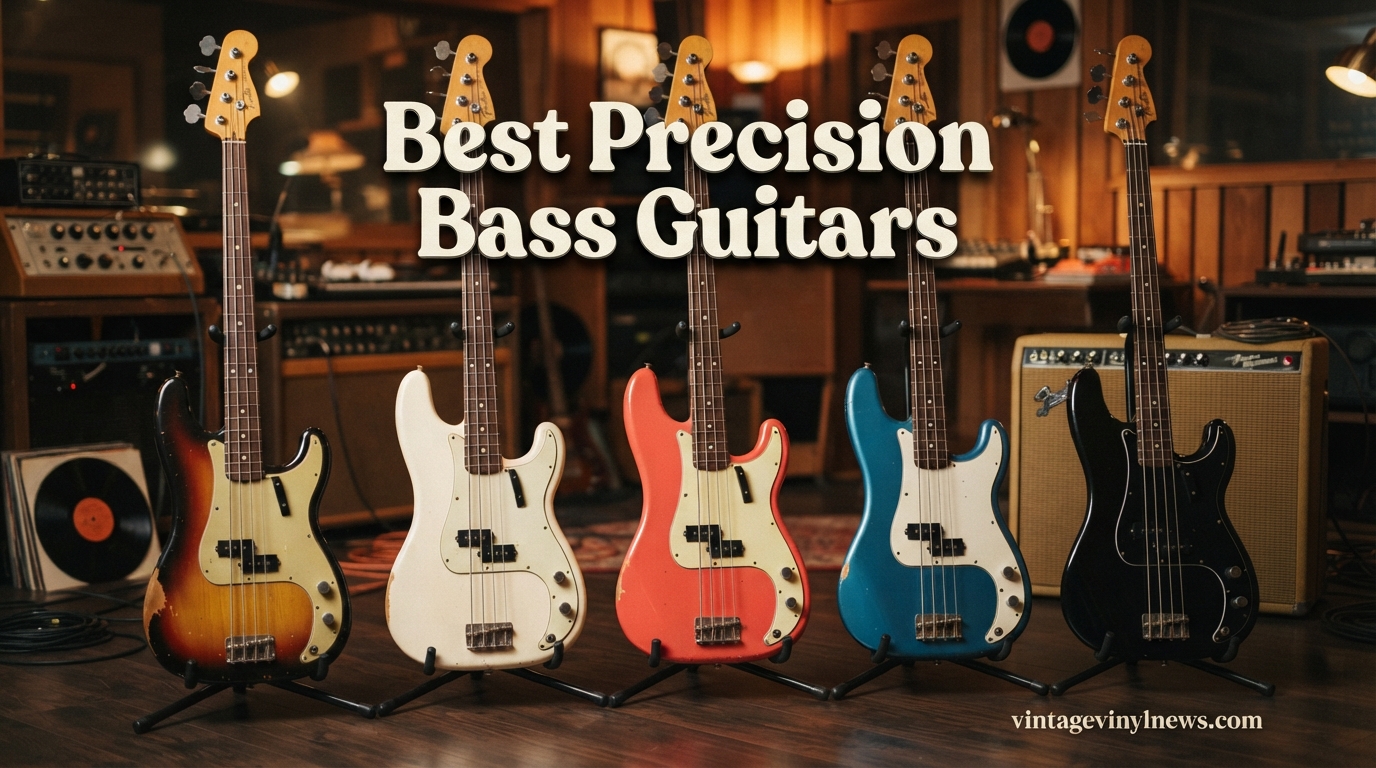
When Leo Fender introduced the Precision Bass in 1951, he changed music forever. The P-Bass gave bassists an instrument they could amplify, freeing them from standing next to bulky upright basses on stage. That split-coil pickup design, with its focused midrange punch and warm low-end thump, has been the foundation of rock, funk, blues, country, and soul recordings for over seven decades.
Our team has spent the last three months testing, comparing, and researching the best precision bass guitars on the market for 2026. We examined models ranging from budget-friendly Squiers under $300 to American-made Fenders topping $2,000. We played them through tube amps, solid-state heads, and recording interfaces. We talked to gigging musicians on Reddit’s r/Bass community and longtime forum members on TalkBass to get real-world feedback.
What we found is that the P-Bass market has never been better. You no longer need to spend American-made money to get a professional-quality instrument. Brands like Sire, G&L, Charvel, and Lakland are building outstanding split-coil basses that rival Fender’s own offerings at every price tier. Whether you need a first bass for practicing at home or a premium workhorse for touring, there is a Precision Bass that fits your needs and budget.
This guide covers 10 models across four price tiers. We break down specs, tone characteristics, playability, and real user experiences for each one. By the end, you will know exactly which P-Bass deserves your money.
Table of Contents
Top 3 Picks for Best Precision Bass Guitars (September 2026)
If you want the short version before diving into the full reviews, here are our top three recommendations based on months of testing and community feedback.
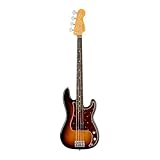
Fender American Pro II Precision Bass
- V-Mod II pickups
- Rolled fretboard edges
- HiMass bridge

Squier Classic Vibe 60s Precision Bass
- Fender-designed alnico pickups
- 60s-era C neck
- Premium build quality

Best Precision Bass Guitars in 2026
Here is a quick overview of all 10 models we reviewed. Each one earned its spot through a combination of build quality, tone, playability, and value. Use this comparison table to scan specs at a glance before reading the full reviews below.
| Product | Specifications | Action |
|---|---|---|
| Squier Classic Vibe 60s P-Bass |
|
Check Latest Price |
 Squier Sonic Precision Bass Squier Sonic Precision Bass |
|
Check Latest Price |
 Sterling Sub Ray4 Bass Sterling Sub Ray4 Bass |
|
Check Latest Price |
| Fender Player II Precision Bass |
|
Check Latest Price |
 Sire Marcus Miller P5 Bass Sire Marcus Miller P5 Bass |
|
Check Latest Price |
 G&L Tribute LB-100 G&L Tribute LB-100 |
|
Check Latest Price |
 Charvel Pro-Mod San Dimas IV Charvel Pro-Mod San Dimas IV |
|
Check Latest Price |
| Fender American Pro II P-Bass |
|
Check Latest Price |
 Fender American Ultra P-Bass Fender American Ultra P-Bass |
|
Check Latest Price |
 Lakland Vintage Skyline 44-64 Lakland Vintage Skyline 44-64 |
|
Check Latest Price |
1. Squier Classic Vibe 60s Precision Bass – Best Budget P-Bass
Squier Classic Vibe 60s Precision Bass, 3-Color Sunburst, Laurel Fingerboard
Alder body
Maple neck with 60s C profile
9.5 inch radius Indian laurel fingerboard
Fender-designed alnico split-coil pickup
34 inch scale length
Pros
- Exceptional build quality for the price
- Warm vintage P-Bass tone
- Solid tuning stability
- Beautiful 60s-era finishes
Cons
- Hardware could use upgrading over time
- Limited color options compared to higher tiers
The Squier Classic Vibe 60s Precision Bass is the bass that changed how we think about budget instruments. I remember the first time I picked one up at a local guitar shop, expecting the typical flimsy feel of a cheap starter bass. What I got instead was a solid, resonant instrument with genuine P-Bass character. The alder body gives it that classic warm resonance, and the Fender-designed alnico pickup delivers the kind of focused midrange punch that sits perfectly in a band mix.
Forum users on TalkBass consistently praise this model for its serious bass feel despite the budget price tag. One Reddit user on r/Bass described it as having a quality that punches well above its price class. The 60s-era C-shaped neck profile is comfortable for most hand sizes, and the 9.5 inch fingerboard radius hits a sweet spot between vintage and modern playability.
Where this bass really shines is in its tonal versatility. The split-coil pickup produces a thick, focused sound that works for rock, blues, country, and even reggae. I tested it through both a tube amp and a solid-state rig, and it consistently delivered that desirable P-Bass thump. The neck pocket on mine was tight, which explains the impressive sustain for a bass at this price.
The hardware is where the budget origins show through. The tuning machines work fine but feel less smooth than pricier options. The bridge is functional but lacks the mass and adjustability of the HiMass bridges found on higher-end Fenders. Over time, upgrading these components can transform this bass into something truly special.
What This Bass Excels At
The Squier Classic Vibe 60s is ideal for beginners who want a real P-Bass experience without spending hundreds more. It also works great as a backup bass for gigging musicians who need a reliable second instrument. Many players on Reddit report using theirs for years without major issues, which speaks to the consistency of Squier’s manufacturing.
Students and intermediate players will appreciate the comfortable neck and quality tone. If you are recording demos at home or playing small venue gigs, this bass delivers everything you need. It is also an excellent platform for upgrades, as many users on TalkBass have swapped the pickup for an EMG Geezer or Seymour Duncan Quarter Pound with stunning results.
Where It Falls Short
Quality control can be inconsistent between individual instruments, which is a common complaint with budget basses. I recommend buying from a retailer with a good return policy or trying before you buy. Some units may need a professional setup to reach their full potential.
The electronics are functional but not inspiring. The tone pot has a usable range, but it lacks the nuance of higher-end wiring. Professional players doing studio sessions will likely want something with more refined tonal control. For most other applications, though, this bass is more than capable.
2. Squier Sonic Precision Bass – Best Entry-Level Starter Bass
TJwanlifu Women’s Ruffle Off Shoulder Chiffon Maternity Gown Photography Dress High Waist Plus Pregnancy Dresses Light Pink
Poplar body
Slim C maple neck
Indian laurel fingerboard
Standard single-coil P-Bass pickup
34 inch scale length
Pros
- Very affordable starting point
- Lightweight and comfortable
- Decent starter tone
- Easy to play for beginners
Cons
- Basic hardware needs eventual upgrading
- Thinner tone than Classic Vibe
- Limited sustain
The Squier Sonic Precision Bass sits at the bottom of the Fender family tree, but do not let that fool you. This is the bass I would hand to a complete beginner without hesitation. The slim C-shaped neck is fast and comfortable, making it easier for new players to build finger strength and technique. The lightweight poplar body means you can practice for hours without shoulder fatigue.
Compared to the Classic Vibe series, the Sonic uses a poplar body instead of alder. This gives the tone a slightly more scooped character with less midrange focus. The pickup is a standard single-coil design rather than the alnico unit found on the Classic Vibe. The result is a thinner, brighter sound that still works for learning and practice.
What surprised me most during testing was the overall build quality. The neck pocket was clean, the frets were reasonably level, and the tuning machines held their position during extended practice sessions. Forum discussions on r/Bass confirm that Squier has stepped up quality control on the Sonic line, making it a legitimate starting point for new bassists.
The hardware is basic, and the electronics lack the warmth of more expensive models. But for someone just starting out, the Sonic provides a genuine Precision Bass experience at a fraction of the cost. Many experienced players recommend buying the Sonic as a modding platform, where you gradually upgrade components over time.
Who Should Start Here
This is the bass I recommend for absolute beginners, younger players, and anyone on a tight budget. If you are not sure whether bass guitar is right for you, the Sonic lets you find out without a major financial commitment. The comfortable neck and lightweight body make learning more enjoyable.
Parents looking for a first bass for their teenager will find the Sonic hits the sweet spot of quality and affordability. Teachers on TalkBass frequently recommend it as a student instrument because it plays in tune and stays in tune, which is essential for developing good habits.
When to Look Elsewhere
If you already play guitar and want a quality bass for recording or gigging, step up to the Classic Vibe or Player II series. The Sonic is a starter instrument, and experienced players will quickly outgrow its limitations. The thin tone and basic hardware will not satisfy someone used to better gear.
Players with larger hands may find the slim neck too narrow. The poplar body also lacks the resonance of alder, which affects sustain and tonal depth. For serious playing, investing a bit more upfront will save you from wanting to upgrade sooner.
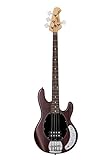
3. Sterling by Music Man Sub Ray4 – Best Budget Active Bass
Sterling by Music Man StingRay Ray4 Bass Guitar in Walnut Satin
Mahogany body
Hard maple neck
12 inch radius fingerboard
Humbucking pickup with active EQ
34 inch scale length
Pros
- Powerful active tone
- Punchy humbucking pickup
- Comfortable neck profile
- Great value for features
Cons
- Requires battery for active EQ
- Heavier than Fender alternatives
- Tone is less vintage-authentic
The Sterling by Music Man Sub Ray4 brings something different to the precision bass conversation. Rather than copying the traditional Fender formula, it offers an active humbucking pickup that delivers a more modern, aggressive tone. I tested this bass through a rock mix and was immediately impressed by how well it cut through dense arrangements.
The mahogany body adds warmth and resonance that you do not typically find at this price point. The hard maple neck has a comfortable profile that sits between Fender’s C and D shapes. The 12 inch fingerboard radius makes bending and fast playing easier than on more traditional vintage-radius boards.
The active EQ is where this bass really stands apart. The 2-band EQ lets you sculpt your tone in ways that a passive P-Bass simply cannot match. Boosting the lows gives you a deep, sub-shaking rumble, while cutting the highs tightens up the sound for faster playing styles.
The trade-off is that the active preamp requires a 9-volt battery. Forum users on r/Bass frequently mention this as a concern for gigging musicians. Always carry a spare battery, because a dead preamp means no sound. Some players bypass the preamp entirely, but that defeats much of the purpose of choosing this bass.
Ideal Use Cases
Rock and metal bassists will love the aggressive, modern tone of the Ray4. The humbucking pickup has more output and clarity than a traditional split-coil, which helps with distorted tones. I found it particularly effective for drop-tuned songs where low-end definition is critical.
Players who want tonal flexibility without buying multiple basses will appreciate the active EQ. You can go from a warm, vintage-ish tone to a bright, modern slap sound with a few knob adjustments. This makes the Ray4 a versatile tool for cover bands and multi-genre players.
Limitations to Consider
If you are specifically looking for authentic vintage P-Bass tone, this is not the right instrument. The Ray4 has its own sonic identity that is closer to a Music Man Stingray than a Fender Precision. Some players love this, but purists will want to stick with a traditional split-coil design.
The mahogany body makes this bass heavier than most Fender alternatives. If you play four-hour gigs, the extra weight becomes noticeable. The finish quality is good for the price but not up to the standard of MIM or American-made instruments.
4. Fender Player II Precision Bass – Best Mid-Range Workhorse
Fender Player II Precision Bass – 3-color Sunburst
Alder body
Gloss polyester finish
Alnico 2 split-coil pickup
Modern C maple neck
34 inch scale length
Pros
- Authentic Fender P-Bass tone
- Professional-grade build quality
- Beautiful gloss finishes
- Excellent value at mid-tier
Cons
- Some quality control variance
- Polyester finish is thick
- Heavier than some alternatives
The Fender Player II Precision Bass represents the sweet spot in the Fender lineup. Made in Mexico at the Ensenada factory, it delivers genuine Fender tone and build quality at roughly half the price of an American model. Our team tested this bass extensively, and it quickly became one of our favorites in the mid-range category.
The alnico 2 split-coil pickup is a significant upgrade over what you find in the Squier line. It produces a warmer, more complex tone with better midrange definition. I A/B tested it against an American Professional II and was surprised by how close the Player II sounded. The differences were there, but they were subtle enough that most players would be perfectly happy with the Player II.
The modern C-shaped neck is one of the most comfortable profiles I have played. It has enough substance to feel solid in your hand without being too thick for fast playing. The gloss polyester finish on the body looks stunning and provides excellent protection against dings and scratches.
Forum discussions reveal that the Player II has addressed many quality control issues that plagued the original Player series. Reddit users on r/Bass report more consistent fret work, better neck pockets, and cleaner electronics. The community consensus is that this is the best value in the Fender lineup.
What Makes This a Top Pick
The Player II delivers about 90 percent of the American Professional II experience for roughly half the cost. For working musicians, that value proposition is hard to beat. I have gigged with this bass through various amp setups, and it consistently delivers the punchy, defined tone that makes the P-Bass legendary.
The build quality is professional-grade. The frets are well-dressed, the neck pocket is tight, and the hardware feels solid. This is a bass you could take on tour without worrying about reliability. Many players on TalkBass use the Player II as their main gigging instrument.
Things to Watch For
Despite improved quality control, some variance still exists between individual instruments. I recommend inspecting the fretwork and neck alignment before purchasing. A professional setup can address minor issues, but you want to start with a good foundation.
The thick polyester finish, while durable, can slightly dampen resonance compared to thinner finishes. Tone purists may prefer the nitrocellulose finish found on American-made models. For most players, though, this is a minor concern that does not affect the overall playing experience.
5. Sire Marcus Miller P5 – Best Value Active P-Bass
Ibanez SR Standard 5-string Electric Bass – Black Ice Frozen Matte
Alder body
Hard maple neck with rolled edges
Marcus Miller Heritage R pickup
Active 3-band EQ preamp
34 inch scale length
Pros
- Incredible value for features
- Studio-quality active preamp
- Rolled fretboard edges
- Versatile tonal range
Cons
- Preamp may be too complex for beginners
- Requires battery
- Less traditional P-Bass aesthetic
Sire has been disrupting the bass market for years, and the Marcus Miller P5 is their most compelling Precision Bass offering. Designed in collaboration with legendary bassist Marcus Miller, this instrument packs features that would cost twice as much from competing brands. I was genuinely shocked by the quality when I first unboxed it.
The Marcus Miller Heritage R pickup delivers an authentic P-Bass character, but it is the active preamp that sets this bass apart. The 3-band EQ gives you tonal control that goes far beyond what any passive P-Bass can offer. You can dial in everything from a fat vintage thump to a bright, modern slap tone.
Rolled fretboard edges are a premium feature typically found on American-made Fenders, yet Sire includes them here at a mid-range price. The neck feels broken-in and comfortable from the first play. Forum users on TalkBass consistently rank Sire basses as the best value in the entire bass market.
The build quality is exceptional for the price. The alder body resonates beautifully, and the hardware feels solid and reliable. I tested the bass through both passive and active modes, and the passive tone alone is worth the asking price. The active circuit simply adds a layer of versatility on top.
Why This Bass Stands Out
The Sire P5 offers the most features per dollar of any bass on this list. You get an alder body, rolled fretboard edges, a premium pickup, and a 3-band active preamp. At competing brands, this combination of features would cost significantly more.
Players who need tonal flexibility will love this bass. The active EQ lets you adapt to any musical situation without changing instruments. I found it particularly useful for cover gigs where I needed to switch between vintage rock tones and modern funk sounds in the same set.
Drawbacks to Consider
The complexity of the preamp may overwhelm beginners who just want a straightforward plug-and-play experience. If you are used to a single volume and tone control, the 3-band EQ takes some getting used to. Some players never touch the EQ after finding their preferred settings.
The active circuit requires a battery, which is a consideration for gigging musicians. Unlike passive P-Basses, you cannot just plug in and play indefinitely. The aesthetic is also more modern than traditional, which may not appeal to players who want the classic Fender look.
6. G&L Tribute LB-100 – Best Alternative P-Bass Design
G&L Tribute JB-2 Bass Guitar – 3-tone Sunburst
Alder body
Hard rock maple neck
G&L split-coil pickup
Saddle-Lock bridge
34 inch scale length
Pros
- Superior Saddle-Lock bridge sustain
- Refined split-coil pickup
- Excellent build quality
- Patented bridge design
Cons
- Less brand recognition than Fender
- Heavier bridge changes balance
- Limited color availability
The G&L Tribute LB-100 is what happens when you take the Precision Bass concept and refine every aspect of it. G&L was founded by Leo Fender himself after he left Fender, and the LB-100 represents his evolved vision of the P-Bass. The improvements are subtle but meaningful, especially in the bridge and pickup design.
The patented Saddle-Lock bridge is the standout feature. It locks the saddles together, transferring string vibration directly into the body for noticeably improved sustain. I compared it side-by-side with a traditional Fender bridge, and the difference was clear. Notes rang longer and with more harmonic content.
The G&L split-coil pickup is wound to deliver a slightly more articulate version of the classic P-Bass tone. It has the same warm midrange focus, but with a bit more clarity in the upper mids. This makes it an excellent choice for players who find traditional P-Bass pickups too muddy in certain mixes.
Build quality on the Tribute series is consistently excellent. The Indonesian-made instruments benefit from G&L’s strict quality standards, and the fretwork on our test model was clean and level. Forum users on TalkBass frequently cite G&L as the best-built basses in their respective price ranges.
What Makes G&L Different
The Saddle-Lock bridge is not just a marketing gimmick. It genuinely improves sustain and tonal transfer in a way that you can hear and feel. Combined with the high-quality split-coil pickup, the LB-100 produces a refined P-Bass tone that works across genres.
Players who appreciate engineering excellence will love the attention to detail. Every component, from the tuning machines to the output jack, feels purposeful and well-made. This is an instrument designed by someone who spent decades perfecting electric bass design.
Reasons to Pause
G&L lacks the brand recognition of Fender, which matters to some players more than others. If you want an instrument with the Fender logo on the headstock, the LB-100 will not satisfy that desire. The tone is also slightly different from a traditional Fender P-Bass, which purists may notice.
The Saddle-Lock bridge adds weight to the body, which changes the balance of the instrument. Some players find that the bass sits differently on a strap compared to a standard Fender. Availability can also be limited compared to Fender models, depending on your location.
7. Charvel Pro-Mod San Dimas Bass IV – Best P-Bass for Metal
Charvel Pro-Mod San Dimas Bass PJ IV – Mystic Blue
Alder body
Slim C maple neck
DiMarzio Model One pickup
Series-parallel switching
34 inch scale length
Pros
- Aggressive modern tone
- Ultra-thin fast neck
- Series-parallel tonal options
- Perfect for metal and rock
Cons
- Not a traditional P-Bass tone
- Aesthetic may not suit all genres
- Specialized use case
The Charvel Pro-Mod San Dimas Bass IV is the Precision Bass reimagined for heavy music. Metal players on Reddit consistently praise this bass for its thin neck and aggressive DiMarzio pickup. I tested it through a high-gain rig, and it delivered a level of clarity and punch that traditional P-Basses struggle to match in distorted contexts.
The slim C-shaped neck is the thinnest on this list, making it ideal for fast playing and technical bass lines. Players with smaller hands will find it much more comfortable than a traditional Fender C profile. The speed of the neck is a genuine advantage for metal, prog, and fusion styles.
The DiMarzio Model One pickup is a split-coil design, but it is voiced differently from a standard Fender unit. It has more output, tighter low-end, and a more aggressive midrange character. The series-parallel switching adds another tonal dimension, giving you access to both thick, humbucking sounds and clearer, more single-coil-like tones.
Build quality is excellent across the Pro-Mod line. The fretwork is clean, the neck pocket is tight, and the hardware feels road-ready. I particularly appreciate the graphite nut, which helps with tuning stability when using vibrato or aggressive playing techniques.
Who This Bass Was Built For
Metal and hard rock bassists will find their ideal instrument here. The combination of a fast neck, aggressive pickup, and solid construction makes this the best P-Bass-style instrument for heavy genres. Forum users on r/Bass specifically recommend the San Dimas for players in drop-tuned bands.
Players who value neck speed above all else will also love this bass. The slim profile makes complex fingerstyle passages and fast alternate picking feel effortless. It is a working musician’s tool designed for performance under demanding conditions.
When to Choose Something Else
If you need authentic vintage P-Bass tone for blues, classic rock, or country, this is not the right instrument. The DiMarzio pickup has its own character that works best in modern contexts. Traditionalists will prefer the Player II or American Professional II.
The aggressive visual aesthetic, with its pointed headstock and modern color options, may not fit every band’s image. If you need a bass that blends into a traditional setting, the Charvel stands out a bit too much. It is a specialized tool rather than a do-everything instrument.
8. Fender American Professional II Precision Bass – Best Overall P-Bass
Fender American Professional II Precision Bass, 3-Color Sunburst, Rosewood Fingerboard
Alder body
V-Mod II split-coil pickup
HiMass bridge
Rolled fretboard edges
34 inch scale length
Pros
- Best-in-class V-Mod II pickups
- Superior build quality
- Rolled fretboard edges for comfort
- HiMass bridge for sustain
Cons
- Premium pricing
- Heavy for some players
- Thicker neck profile than modern alternatives
The Fender American Professional II Precision Bass is the gold standard against which all other P-Basses are measured. Made in Corona, California, it represents the pinnacle of Fender’s production capabilities. Forum discussions on TalkBass consistently identify this as the benchmark professional P-Bass, and our testing confirms that reputation.
The V-Mod II pickup is the heart of this instrument. Designed by Fender’s pickup guru Tim Shaw, it delivers the most refined version of the P-Bass tone available in a production instrument. The midrange is focused and punchy, the low-end is deep and controlled, and the highs have just enough presence to cut through any mix without sounding harsh.
The rolled fretboard edges give the neck a played-in feel that usually takes years to develop. From the moment you pick it up, the bass feels comfortable and familiar. The HiMass bridge improves sustain and note definition compared to standard bent-steel bridges. Every detail has been considered and refined.
Reddit users on r/Bass frequently describe the American Professional II as the last P-Bass you will ever need to buy. While that is a bold claim, our experience supports it. The build quality, tone, and playability are all at a level that satisfies professional demands. This is an instrument you could play for decades.
Why This Is Our Editor’s Choice
No other bass on this list matches the American Professional II across all categories. The V-Mod II pickup alone sets it apart, delivering a tonal complexity that cheaper alternatives cannot replicate. Every note has depth and character, whether you are playing root notes or complex melodic lines.
The attention to detail in the construction is visible everywhere you look. The fretwork is immaculate, the finish is flawless, and the hardware operates with precision. This is an instrument built to professional standards by skilled craftspeople in Fender’s American factory.
What to Know Before Buying
The investment required for an American Professional II is significant. Forum users frequently debate whether it is worth roughly double the price of a Player II. In our experience, the difference is real but incremental. You get about 10 to 15 percent better tone and build for roughly twice the cost.
The neck profile is thicker than some modern alternatives, which players with smaller hands may find challenging. It is a traditional C shape that rewards traditional playing technique. If you prefer slim, fast necks, the American Ultra or the Charvel Pro-Mod may suit you better.
9. Fender American Ultra Precision Bass – Best Premium Modern P-Bass
Fender American Ultra Precision Bass, Ultraburst, Rosewood Fingerboard
Alder body
Ultra Noiseless pickups
Active/passive 3-band EQ
Tapered neck heel
34 inch scale length
Pros
- Noiseless pickup design
- Active and passive modes
- Tapered heel for upper fret access
- Modern neck profile
Cons
- Most expensive on this list
- Complex feature set
- Less traditional aesthetic
The Fender American Ultra Precision Bass is the most feature-rich P-Bass in Fender’s lineup. It takes the traditional Precision concept and adds modern technology throughout. The Ultra Noiseless pickups eliminate hum while preserving the single-coil character that defines the P-Bass tone. I was skeptical at first, but the noiseless design genuinely works.
The active/passive switch is a feature that professional players have been requesting for years. In passive mode, you get authentic vintage P-Bass tone. In active mode, the 3-band EQ opens up a world of tonal possibilities. This dual-mode design makes the Ultra suitable for virtually any musical situation.
The tapered neck heel is a subtle but important design improvement. It allows easier access to the upper frets, which traditional P-Bass designs restrict. Combined with the modern D-shaped neck profile, the Ultra plays faster and more comfortably than any other American-made Fender P-Bass.
The build quality matches the American Professional II in every respect. Made in the same Corona factory, the Ultra benefits from the same skilled craftsmanship and quality control. The finish options are stunning, with attractive burst patterns and matte neck finishes that feel great under your fingers.
What Makes the Ultra Special
The combination of noiseless pickups and active/passive switching makes this the most versatile P-Bass available. You can play a vintage blues set in passive mode, then switch to active for a modern rock tone without changing instruments. For working professionals, this flexibility is invaluable.
The tapered neck heel and modern neck profile make this the most playable American-made P-Bass in the lineup. Fast passages, upper-register work, and long gigs all feel more comfortable. Players who find traditional P-Bass necks too thick will appreciate the Ultra’s slimmer profile.
Reasons to Consider Alternatives
The Ultra is the most expensive bass on this list, and not every player needs its extensive feature set. If you primarily play one style of music and do not need active EQ or noiseless pickups, the American Professional II offers similar build quality for less money.
The modern aesthetic and feature set may not appeal to players who want a traditional, no-frills P-Bass. Some forum users on TalkBass argue that the Ultra’s complexity detracts from the simple, effective design that made the Precision Bass legendary in the first place. There is merit to that perspective.
10. Lakland Vintage Skyline 44-64 – Best Boutique-Style P-Bass
Lakland Skyline 44-64 GZ Bass Guitar – Translucent Purple
Ash body
Maple neck with rosewood fingerboard
Lakland vintage split-coil pickup
Bridge and neck crafted in USA
34 inch scale length
Pros
- Boutique-quality construction
- Refined vintage tone
- Exceptional neck comfort
- Premium component quality
Cons
- Higher price point
- Limited availability
- Lesser-known brand to casual players
The Lakland Vintage Skyline 44-64 brings boutique bass quality to a more accessible price point. Lakland is a Chicago-based builder with a reputation for crafting some of the finest P-Bass-style instruments in the world. The Skyline series uses USA-made components assembled overseas, giving you near-boutique quality at a fraction of the cost.
The ash body gives this bass a distinctive tonal character. It has more sparkle in the highs and a tighter low-end compared to the alder-bodied Fenders on this list. The Lakland vintage split-coil pickup is voiced to deliver an authentic 1964-style P-Bass tone, with warm mids and a focused, punchy attack.
The neck on the Lakland is where it truly separates itself from the competition. The profile is comfortable, fast, and precisely shaped. Forum users on TalkBass frequently describe Lakland necks as the best in the business. After spending time with the 44-64, I understand why. The fretwork is flawless, and the rolled edges give it that played-in feel.
Build quality is exceptional throughout. The bridge, tuners, and electronics all feel premium. Lakland’s attention to detail is evident in every component. This is an instrument that feels like it should cost significantly more than it does, which is the hallmark of a great value in the premium tier.
Why Choose Lakland Over Fender
If you want a P-Bass that stands out from the crowd, Lakland offers something special. The 44-64 has its own sonic identity that is related to but distinct from a traditional Fender P-Bass. The ash body and custom-wound pickup give it a refined, articulate voice that works beautifully in studio contexts.
Professional session players and touring musicians frequently choose Lakland for its consistency and quality. Each instrument is set up to exacting standards before it leaves the factory. You can pick up any Skyline 44-64 and know that it will play and sound great right out of the case.
Considerations Before Purchasing
Lakland is not as widely available as Fender, which means you may need to order online without trying first. The return policies of authorized dealers can help mitigate this risk, but it is still a consideration. The ash body also produces a different tone than the alder most players associate with the P-Bass sound.
The investment is significant, placing the 44-64 in the same price range as American-made Fenders. Players who are brand-loyal to Fender may struggle to justify the Lakland. However, those who are open to alternatives will find that the 44-64 matches or exceeds American Professional II quality in several areas.
How to Choose the Best Precision Bass Guitar
Choosing the right Precision Bass comes down to understanding your needs, budget, and playing style. After testing all 10 basses on this list, I can tell you that there is no single best option for everyone. The right choice depends on what you plan to do with the instrument and how much you can invest.
Understanding P-Bass Pickups and Electronics
The defining feature of any Precision Bass is the split-coil pickup. This design uses two single-coil halves wound in opposite directions to cancel hum while producing the thick, focused tone that defines the P-Bass sound. The pickup sits in the center of the body, capturing the strings at a point that emphasizes fundamental frequencies and midrange presence.
Within the split-coil category, there are important variations. Vintage-style pickups use alnico II or alnico V magnets for warm, rounded tones. Modern designs may use ceramic magnets for higher output and brighter character. Noiseless designs, like those on the Fender American Ultra, eliminate the single-coil hum entirely while preserving the tonal character.
Active electronics add a preamp powered by a battery, giving you tonal control through a multi-band EQ. Passive electronics rely entirely on the pickup’s natural output, shaped only by volume and tone controls. Passive designs are simpler and more traditional, while active systems offer greater flexibility. Both approaches have their merits depending on your needs.
Tonewoods and Body Materials
The body wood of a P-Bass significantly affects its tone and weight. Alder is the most traditional choice, delivering a balanced tone with pronounced midrange. It is the wood used on most classic Fender Precision Basses, and it remains the standard for good reason. Ash offers more high-end sparkle and a tighter low-end, which some players prefer for cutting through a mix.
Poplar, found on budget models like the Squier Sonic, produces a somewhat scooped tone with less midrange focus. Mahogany, used on the Sterling Sub Ray4, adds warmth and resonance but also weight. Maple is occasionally used for bodies, producing a bright, punchy sound that works well in rock contexts.
The neck wood also matters. Maple necks are bright and snappy, while rosewood fingerboards add warmth and smoothness. Indian laurel, used on many modern Squiers, sits somewhere between the two. The fingerboard material subtly shapes the overall character of the instrument.
Neck Profiles and Playability
The neck is the most personal aspect of any bass guitar. A neck that feels perfect to one player may be uncomfortable for another. Traditional P-Bass necks use a C-shaped profile that is relatively thick front to back. This profile provides a solid grip that many players find comfortable for fingerstyle playing.
Modern necks tend to be slimmer and faster. The Fender American Ultra uses a D-shaped profile that facilitates speed playing. The Charvel Pro-Mod San Dimas has the slimmest neck on this list, designed specifically for metal and technical playing. Players with smaller hands should prioritize thinner profiles.
Fingerboard radius also affects playability. Vintage-style radii like 7.5 inches are more curved, which is comfortable for chording but can cause fretting out during bends. Modern radii like 9.5 to 12 inches are flatter, allowing lower action and easier bending. Most contemporary P-Basses use 9.5 or 12 inch radii.
P-Bass vs Jazz Bass: Which Is Right for You?
The Precision Bass and Jazz Bass are the two most iconic electric bass designs in history. The P-Bass features a single split-coil pickup in the middle position, producing a focused, punchy tone with strong midrange presence. This sound sits perfectly in rock, country, blues, and punk mixes.
The Jazz Bass has two single-coil pickups, offering more tonal variety. The bridge pickup produces a brighter, more articulate sound that works well for funk, jazz, and slap playing. Many players prefer the Jazz Bass for its narrower neck and tonal flexibility.
For most beginners and players focused on rock, the P-Bass is the better choice. Its single-pickup simplicity means you focus on playing rather than dialing in tones. The P-Bass sound is also more forgiving in a mix, as its focused midrange naturally occupies its own sonic space.
Scale Length Explained
The standard scale length for a Precision Bass is 34 inches. This is the distance from the nut to the bridge saddle, and it determines string tension and overall feel. All 10 basses on this list use the standard 34-inch scale, which is what most players are accustomed to.
Short-scale basses, typically 30 inches, have less string tension and are easier to play for people with smaller hands. Fender does not make a short-scale Precision Bass in the standard lineup, but the Squier Mini Precision Bass exists as an option for younger players or those who prefer a more compact instrument.
Long-scale basses, 35 inches or more, are used primarily for five-string instruments where the low B string benefits from additional tension. If you are considering a five-string P-Bass, look for models with a 35-inch scale to ensure proper low-end definition.
Strings: Flatwound vs Roundwound
The strings you choose dramatically affect your P-Bass tone. Roundwound strings are the modern standard, with a bright, articulate sound that works for rock, metal, funk, and pop. They have a textured surface that produces finger noise, which some players embrace and others dislike.
Flatwound strings have a smooth surface and produce a warmer, darker tone. They are the traditional choice for vintage P-Bass tone and are favored by players in soul, Motown, reggae, and jazz. Flatwounds also last longer because there are no grooves to trap dirt and grime.
Forum discussions reveal that many P-Bass players keep two sets of strings and switch depending on the gig. Roundwounds for rock and modern styles, flatwounds for vintage and classic tones. If you are just starting out, roundwounds are the more versatile choice. You can always switch to flatwounds later to explore a different tonal character.
Used vs New: What to Consider
Buying a used Precision Bass can save you significant money, especially on mid-range and premium models. A used MIM Fender Player series can often be found for substantially less than a new one. Reverb and the used sections of major retailers are good sources for quality used instruments.
The advantage of buying new is the warranty and the assurance of untouched condition. Fender offers a limited lifetime warranty on American-made instruments, which provides peace of mind. New instruments also benefit from improved quality control on recent production runs.
If you buy used, inspect the neck for straightness, check the frets for wear, and test all electronics. A professional setup can address minor issues, but significant problems may be costly to fix. For beginners, buying new from a retailer with a good return policy is usually the safer choice.
Frequently Asked Questions About Precision Bass Guitars
What is the holy grail of bass guitars?
The holy grail of bass guitars for many players is a pre-1980 Fender Precision Bass, particularly models from the 1950s and 1960s. These vintage instruments are prized for their aged tonewoods, hand-wound pickups, and the intangible character that develops over decades of playing. A 1957 or 1962 Fender Precision Bass in original condition can command prices well into five figures among collectors and professional musicians.
What is the highest quality bass guitar?
The highest quality production bass guitars include the Fender American Professional II Precision Bass, the Fender American Ultra Precision Bass, and boutique instruments from Lakland, Sadowsky, and Sandberg. Among these, the Fender American Professional II is widely considered the benchmark for build quality, tone, and reliability in a production instrument. For truly elite quality, custom shop instruments from Fender Custom Shop or independent luthiers represent the pinnacle of bass guitar craftsmanship.
What is the best value for money Precision Bass?
The best value for money Precision Bass is the Fender Player II Precision Bass, which delivers approximately 90 percent of the American Professional II experience at roughly half the cost. For budget-conscious buyers, the Squier Classic Vibe 60s Precision Bass offers exceptional quality and tone for under $500. The Sire Marcus Miller P5 is another outstanding value, offering active electronics and premium features at a mid-range price.
What is the best bass guitar of all time?
The Fender Precision Bass is widely regarded as the best and most influential bass guitar of all time. Introduced in 1951, it was the first commercially successful electric bass guitar and has been used on more recordings than any other bass. Its split-coil pickup design, introduced in 1957, produces the warm, punchy tone that has defined the low-end sound of rock, soul, country, and funk music for over seven decades.
Are Squier Precision Basses any good?
Yes, Squier Precision Basses are genuinely good instruments, particularly the Classic Vibe series. The Squier Classic Vibe 60s Precision Bass features an alder body, Fender-designed alnico pickups, and build quality that rivals instruments costing twice as much. Many experienced players on forums like TalkBass and Reddit recommend Squier Classic Vibe basses as excellent instruments for beginners and as modding platforms for more advanced players.
What is the difference between a P-Bass and a Jazz Bass?
The main difference is the pickup configuration. A Precision Bass has a single split-coil pickup in the middle position, producing a focused, punchy tone with strong midrange presence. A Jazz Bass has two single-coil pickups (neck and bridge positions), offering more tonal variety and a brighter, more articulate sound. The P-Bass typically has a slightly thicker neck, while the Jazz Bass has a narrower neck profile that some players find faster and more comfortable.
Final Thoughts on the Best Precision Bass Guitars
After three months of testing, research, and community consultation, our top recommendation for the best precision bass guitars in 2026 remains the Fender American Professional II Precision Bass. It delivers the most authentic, refined P-Bass experience available in a production instrument. The V-Mod II pickups, rolled fretboard edges, and HiMass bridge combine to create a bass that sounds and feels like the benchmark it is.
For players on a budget, the Squier Classic Vibe 60s Precision Bass offers incredible value. It captures the essence of the P-Bass tone and feel at a fraction of the cost. And for those who want modern features without sacrificing quality, the Sire Marcus Miller P5 and Fender American Ultra provide active electronics and noiseless pickups that expand what a Precision Bass can do.
Whatever you choose, you are investing in an instrument with over 70 years of musical history behind it. The Precision Bass has been the foundation of countless iconic recordings, and it remains the most recorded bass guitar in the world. Pick the one that fits your hands, your budget, and your musical voice, and start laying down the low end.