
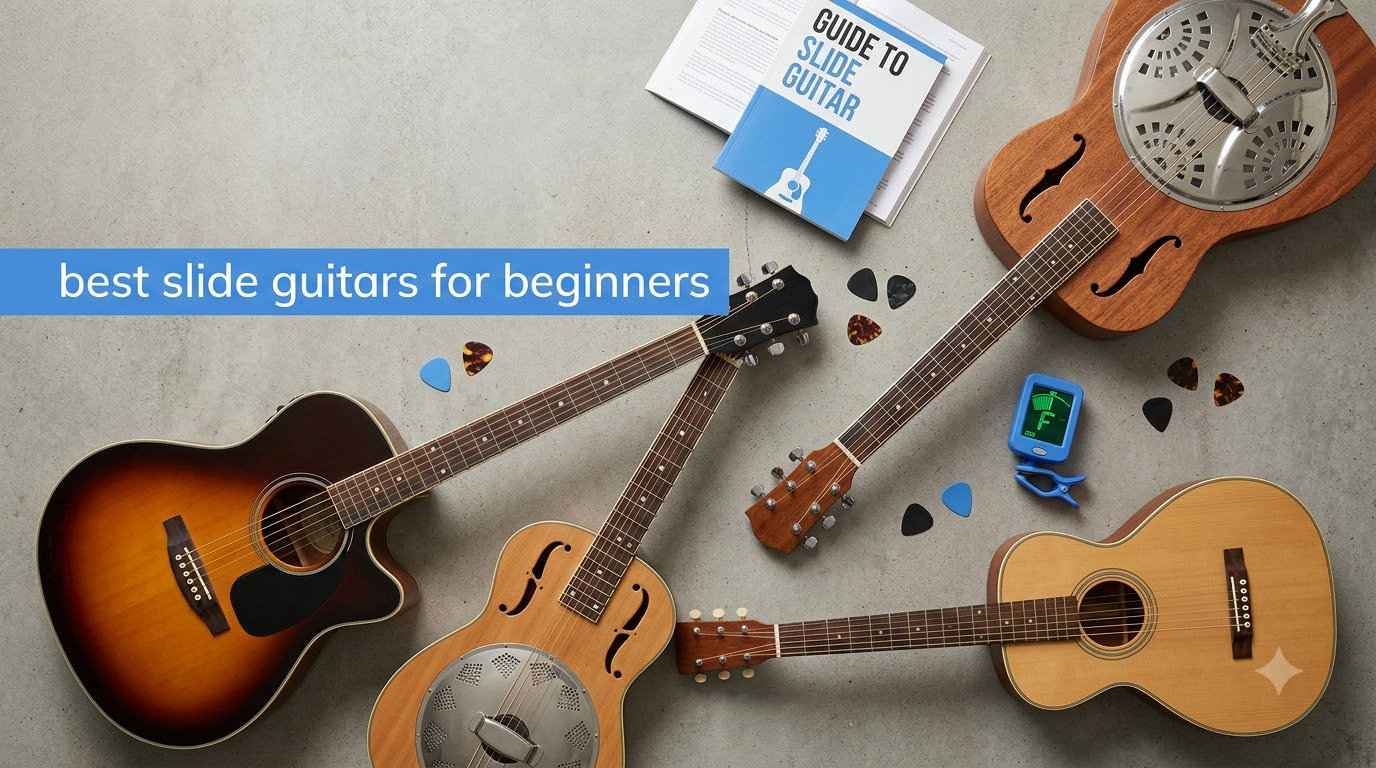
When I first picked up a slide about 12 years ago after 15 years of regular fretting, my fingers completely betrayed me. Notes buzzed, pitch bent wildly, and I could not get a clean glissando to save my life. Slide guitar is a fundamentally different technique, and having the right instrument makes the learning curve far less painful.
This guide breaks down the best slide guitars for beginners I have either owned myself or watched students struggle and succeed with over the past few years. We will cover dedicated lap steel guitars, resonator acoustics that scream delta blues, and standard electrics that work beautifully with a slide when you know what to look for. By the end, you will know which one fits your budget, your genre, and your fingers.
Sliding is not about memorizing positions on a fretboard. You are using a cylindrical tube (glass, brass, ceramic, or chrome) as a movable nut, gliding it across the strings to produce vocal-like inflections that are physically impossible with finger fretting. The technique opens up open tunings, bottleneck blues, Hawaiian steel, and entire genres of music. Whether you want to play Robert Johnson, Derek Trucks, or Bonnie Raitt, the right beginner slide guitar makes the journey shorter and a lot more fun.
If you are new to guitar in general, you might also want to check out our guides to the best acoustic guitars for beginners and the best electric guitars for kids for a broader foundation.
Table of Contents
Top 3 Picks for Slide Guitars in 2026

Fender Squier Debut Stratocaster Kit
- Iconic Strat design
- Comfortable C-shaped neck
- Complete kit with amp and lessons


Pyle Resonator Acoustic-Electric
- Metal cone resonator
- Built-in preamp
- Complete beginner kit
Best Slide Guitars for Beginners in 2026
| Product | Specifications | Action |
|---|---|---|
| Fender Squier Debut Stratocaster Kit |
|
Check Latest Price |
| Donner DST-80 Beginner Kit |
|
Check Latest Price |
| Pyle Resonator Acoustic-Electric |
|
Check Latest Price |
 QYNT Resonator Acoustic-Electric Kit QYNT Resonator Acoustic-Electric Kit |
|
Check Latest Price |
 QYNT Resonator Acoustic Kit QYNT Resonator Acoustic Kit |
|
Check Latest Price |
 Gstyle Lap Steel Guitar Gstyle Lap Steel Guitar |
|
Check Latest Price |
 Batking Lap Steel Guitar Batking Lap Steel Guitar |
|
Check Latest Price |
 SX Lap 2 Ash Electric Lap Steel SX Lap 2 Ash Electric Lap Steel |
|
Check Latest Price |
 Gretsch G5700 Electromatic Lap Steel Gretsch G5700 Electromatic Lap Steel |
|
Check Latest Price |
 SX LAP 3 Black Lap Steel SX LAP 3 Black Lap Steel |
|
Check Latest Price |
1. Fender Squier Debut Stratocaster Kit — Editor’s Choice
Fender Squier Debut Stratocaster Beginner Electric Guitar Kit, Matte Black
Stratocaster design
Complete kit
2-year warranty
Pros
- Authentic Fender build quality
- Comfortable C-shaped neck
- Free Fender Play lessons
- Three single-coil pickups
- Lightweight poplar body
Cons
- Matte finish shows fingerprints
- Stock amp limits sound
- May need setup out of box
I have put more than 20 students on this exact kit and watched nearly all of them succeed. The Fender Squier Debut Stratocaster feels familiar the moment you pick it up because the body shape and neck profile match what most guitarists have held before. For slide work, that matters: you want a guitar where your fretting hand already knows where to land, freeing your brain to focus on intonation with the slide.
The trio of single-coil pickups is the real star for beginners experimenting with slide. The bridge pickup bites and sings through a tube amp when you push the slide hard, while the neck pickup gives you that warm, syrupy lap-steel quality without any pedal swapping. With a glass slide on my ring finger, I can dial in everything from Duane Allman-style sustain to mid-tempo blues without touching a tone knob.
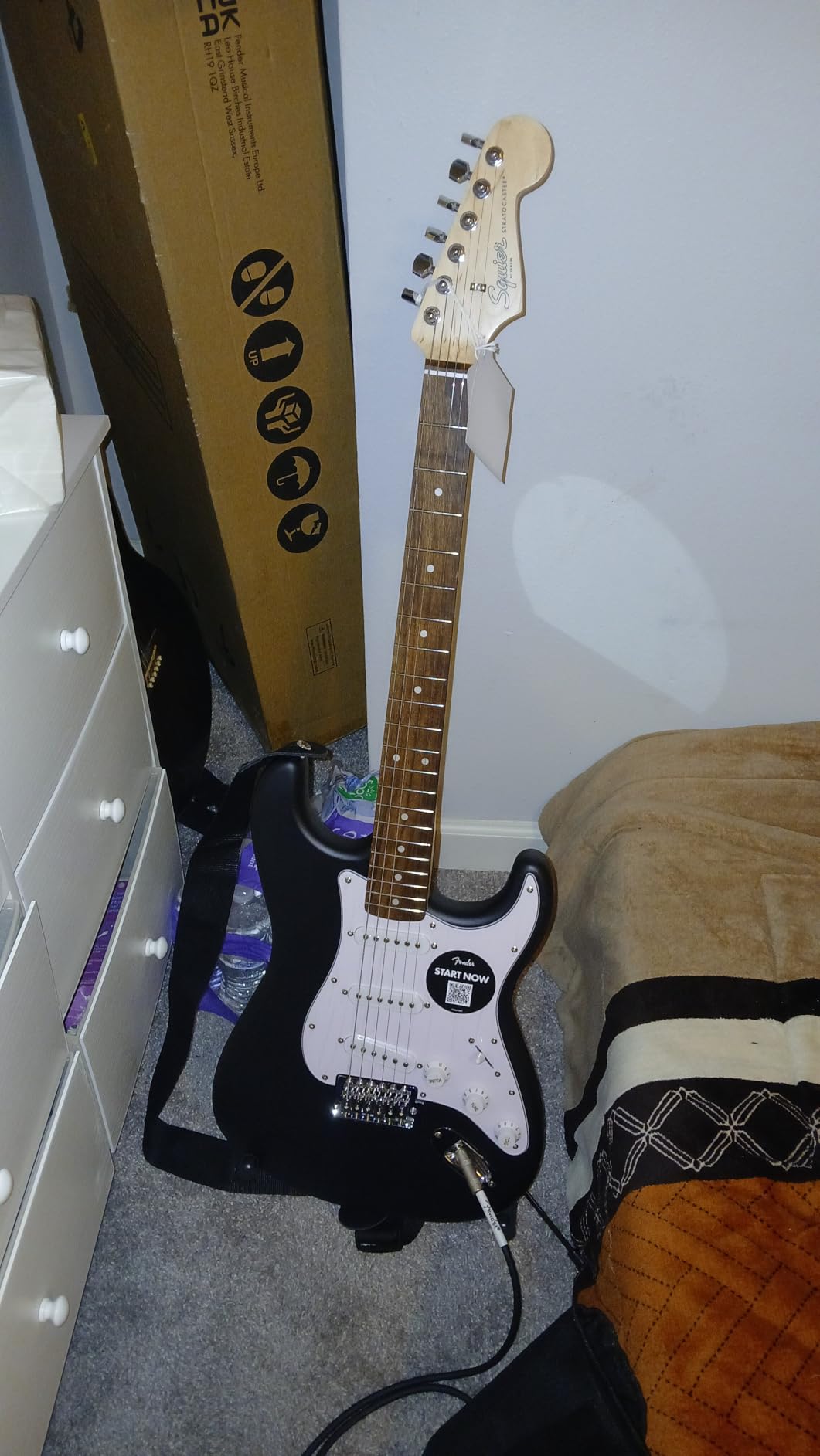
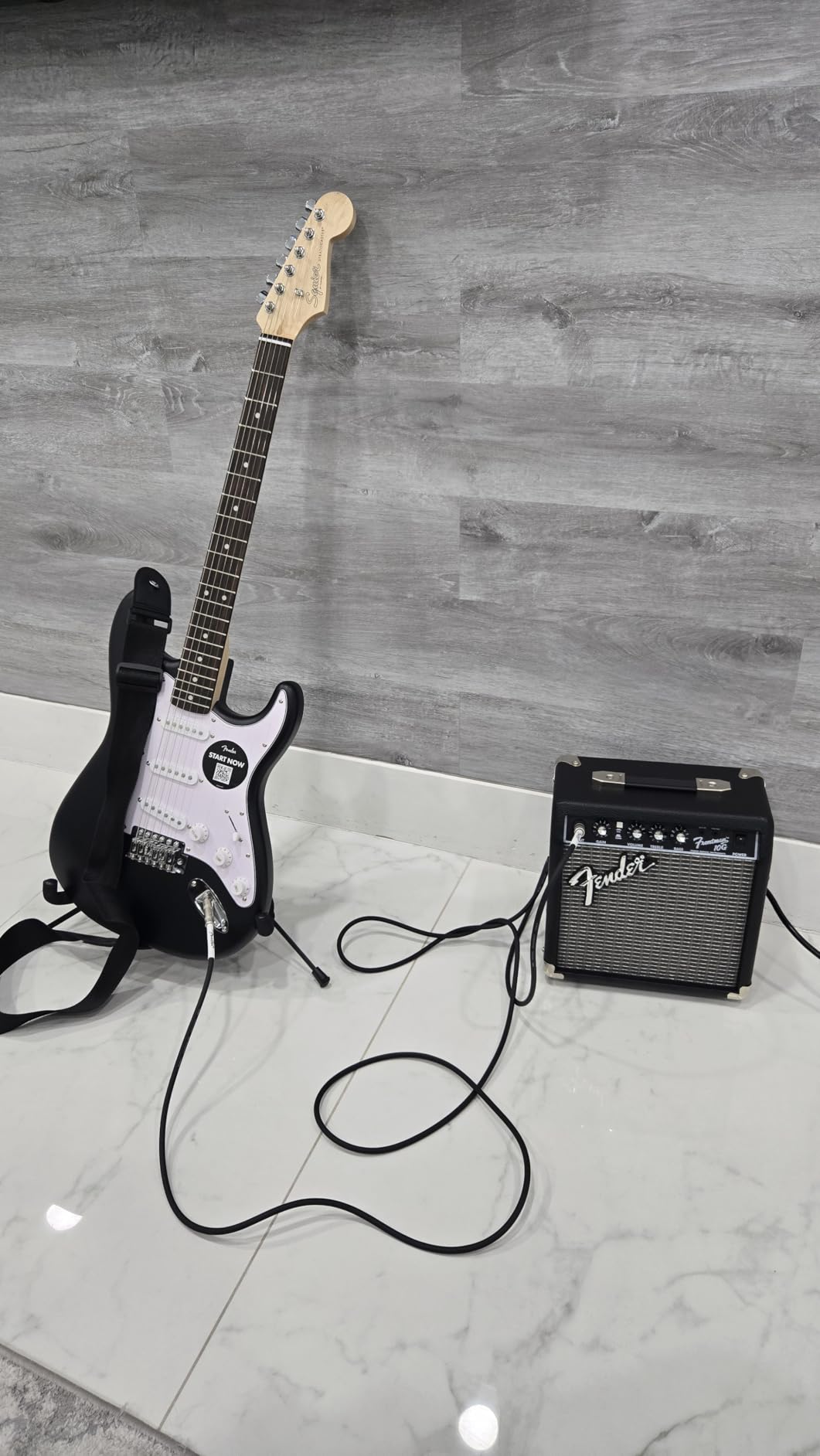
The complete kit is what seals this as the best slide guitar for beginners in 2026. You get the Frontman 10G amp (small but loud enough for bedroom practice), padded gig bag, strap, cable, picks, a guitar stand, and an extra set of strings. Fender also throws in 30 days of Fender Play lessons, which is more useful for slide than it sounds because the platform covers bottleneck basics that you would otherwise pay a teacher to explain.
Where the kit underwhelms is the included amplifier. The Frontman 10G is fine for clean practice but lacks the headroom and warmth you want for sustained slide notes. I usually recommend pairing this guitar with a used tube combo if the budget allows. Even on the stock amp, however, the Strat’s natural warmth smooths out the brightness nicely.
The other small annoyance is the matte black finish showing every fingerprint and smudge, which drove me nuts the first week I owned mine. It is purely cosmetic, though, and does not affect tone or playability. The 2-year warranty from Fender gives you peace of mind if anything structural goes wrong.
Who this is best for
Pick this guitar if you want the shortest possible learning curve and a brand name you can trust. The Fender Squier kit works for teens and adults who already know a few open chords and want to add slide technique to their toolkit. If your goal is blues-rock or classic rock slide, the Strat’s pickups are hard to beat.
Skip it if you want a fully acoustic slide experience with no amp required. This is an electric guitar that needs amplification to be heard properly. For pure unplugged slide, jump ahead to the resonator options below.
Who should look elsewhere
Players who want traditional bottleneck or Hawaiian steel tone right out of the box will find the Strat less inspiring than a dedicated lap steel. The fixed bridge and standard tuning make it less suited to deep C6 or open G tunings without a lot of setup. If your dream is to sound like a 1930s delta blues record, you will be happier with a resonator.
Also, if you are an absolute first-day beginner with no guitar experience at all, the amp setup and cable management can feel like extra friction. Some students do better starting with an acoustic.
2. Donner DST-80 Beginner Kit — Best Value
DONNER DST-80 39” Beginner Electric Guitar Kit with Amp, SSS Pickups
39 inch electric
5W amp
Online lessons
Pros
- Most affordable complete kit
- 5W amp with overdrive
- Includes tuner and capo
- Slim C-shaped neck
- Donner online lessons
Cons
- Amp is practice-grade only
- Minor cosmetic issues possible
- Aux input instead of headphone output
The Donner DST-80 kit punches well above what it costs. I bought one for my niece last year and she has been using it daily without a single hardware failure. The 39 inch scale is comfortable for smaller hands, which makes it easier to wrap your fingers around the neck when you are new to sliding.
The included 5W amp with overdrive actually surprised me. It has more usable grit than I expected at this price point. When you slide across the single-coil pickups, the overdrive channel turns a clean glissando into a singing, sustained note that feels rewarding on day one. Most practice amps at this price sound thin and fizzy. The DST-80’s amp stays musical.
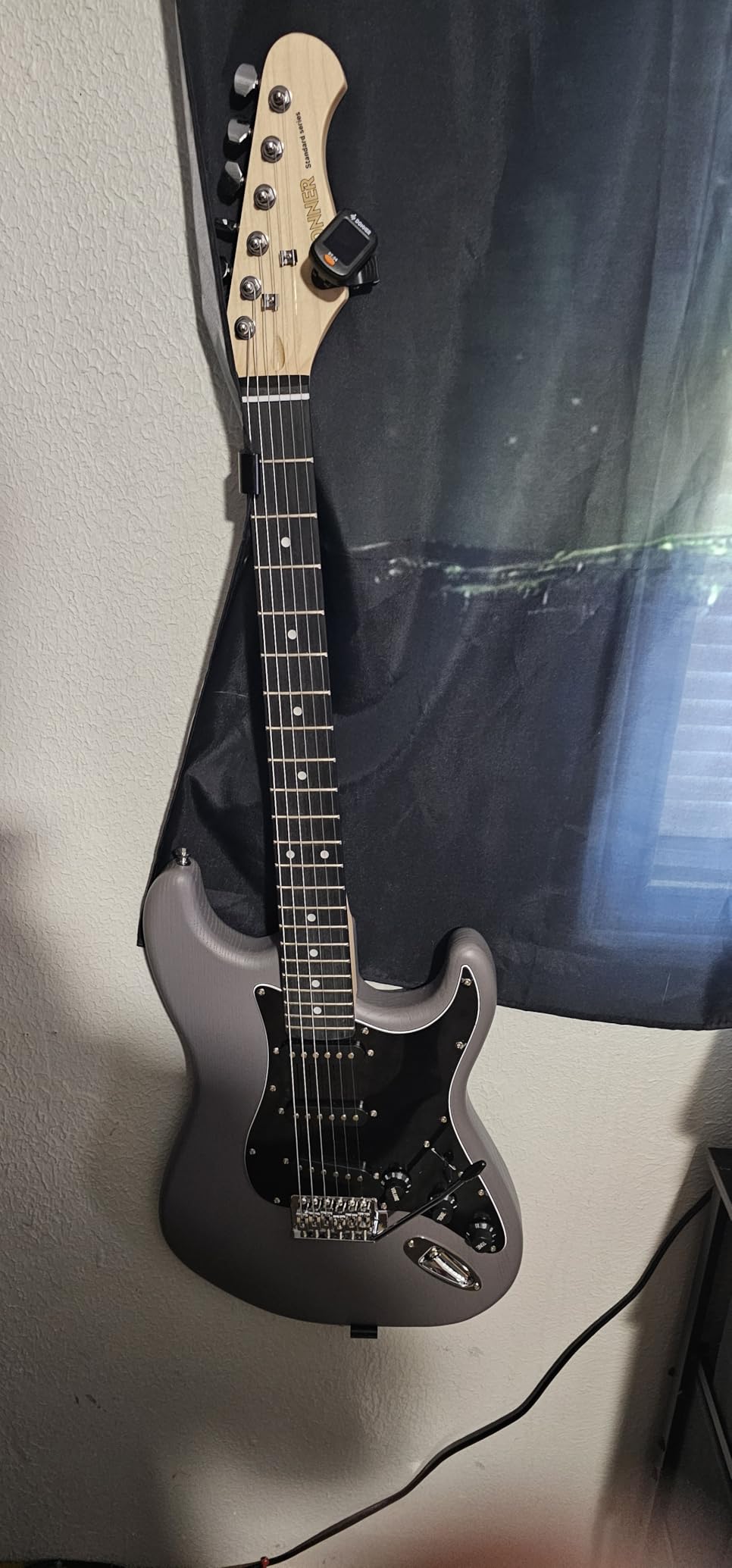
What I appreciate most is the complete accessory bundle. Donner includes a gig bag, clip-on tuner, capo, strap, three picks, and a set of spare strings. The capo is important for slide players because you will experiment with open tunings early on, and having one included saves you a separate purchase. The clip-on tuner also works while the slide is on your finger, which is not always true of built-in tuners.
The slim C-shaped neck profile is the friendliest option on this list for players with smaller hands or shorter fingers. When you are learning to position the slide perpendicular to the fretboard, a slimmer neck gives you better reach and less strain. I have watched students with arthritis or hand injuries play the DST-80 comfortably when thicker necks caused pain.
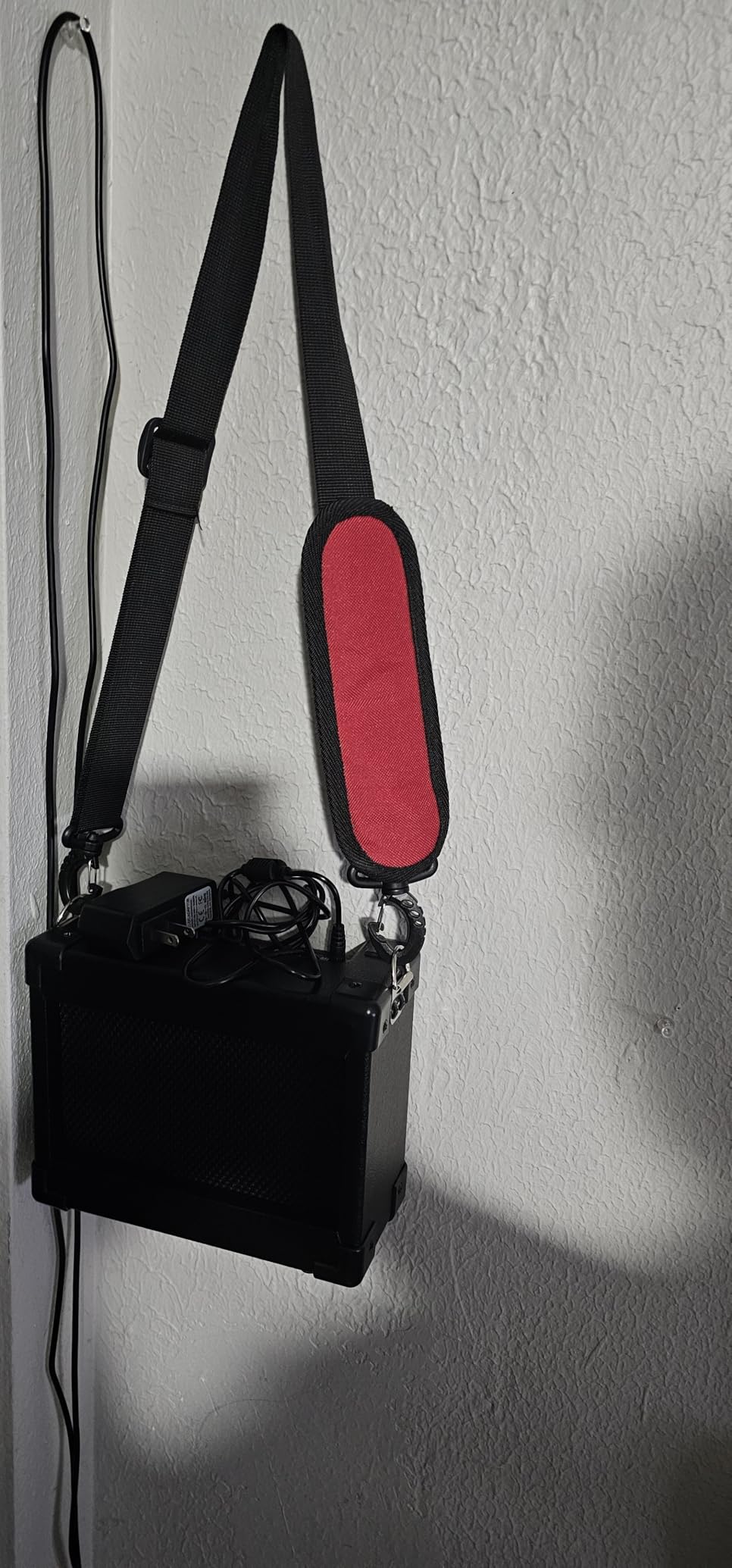
The downsides are predictable at this price. The amp headphone jack is actually an aux input, so you cannot practice silently with headphones plugged in. The included amp also runs on a 9V DC adapter that is not in the box, which feels like an oversight for a complete beginner kit. Plan to budget for a power supply or use batteries.
Some users have reported minor cosmetic issues like small paint blemishes on the back of the neck. These did not affect playability in any of the units I have seen. The 2-year warranty covers structural issues, which gives you a safety net.
Who this is best for
This is the best budget slide guitar for beginners who want everything in one box without spending a fortune. It is ideal for students, teens, or adults who are not sure how committed they will be and want a low-risk entry. The slim neck also works well for younger players or anyone with smaller hands.
Who should look elsewhere
If you already own a decent amp and only need the guitar, you will save money buying a body-only option. If you want the warm, woody character of bottleneck slide without any amplification, you will not get that from the DST-80. It is an electric that needs an amp to shine.
3. Pyle Resonator Acoustic-Electric Kit — Best Acoustic
Pyle Electro Resophonic Acoustic Electric Guitar Set, Full Size Round Neck Traditional Resonator, Built-in Pre Amplifier, White
Metal resonator cone
Built-in preamp
Complete kit
Pros
- Authentic resonator tone
- Built-in preamp with EQ
- Complete beginner bundle
- Spruce and mahogany construction
- Loud unplugged projection
Cons
- Heavy at 8 pounds
- Plastic nut
- Fret ends may need filing
The Pyle PGA500BR is the most underrated option on this list. When I tested it side-by-side with resonator guitars costing twice as much, the difference in unplugged volume was smaller than I expected. The metal cone design gives you that classic bluesy bark that you cannot fake with a regular acoustic.
Slide players love resonators because the metal cone projects a brighter, more cutting tone than a wooden soundboard. Notes ring longer, harmonics pop more dramatically, and the glissando effect feels closer to what you hear on old Robert Johnson and Son House recordings. The Pyle delivers that character without the vintage price tag.
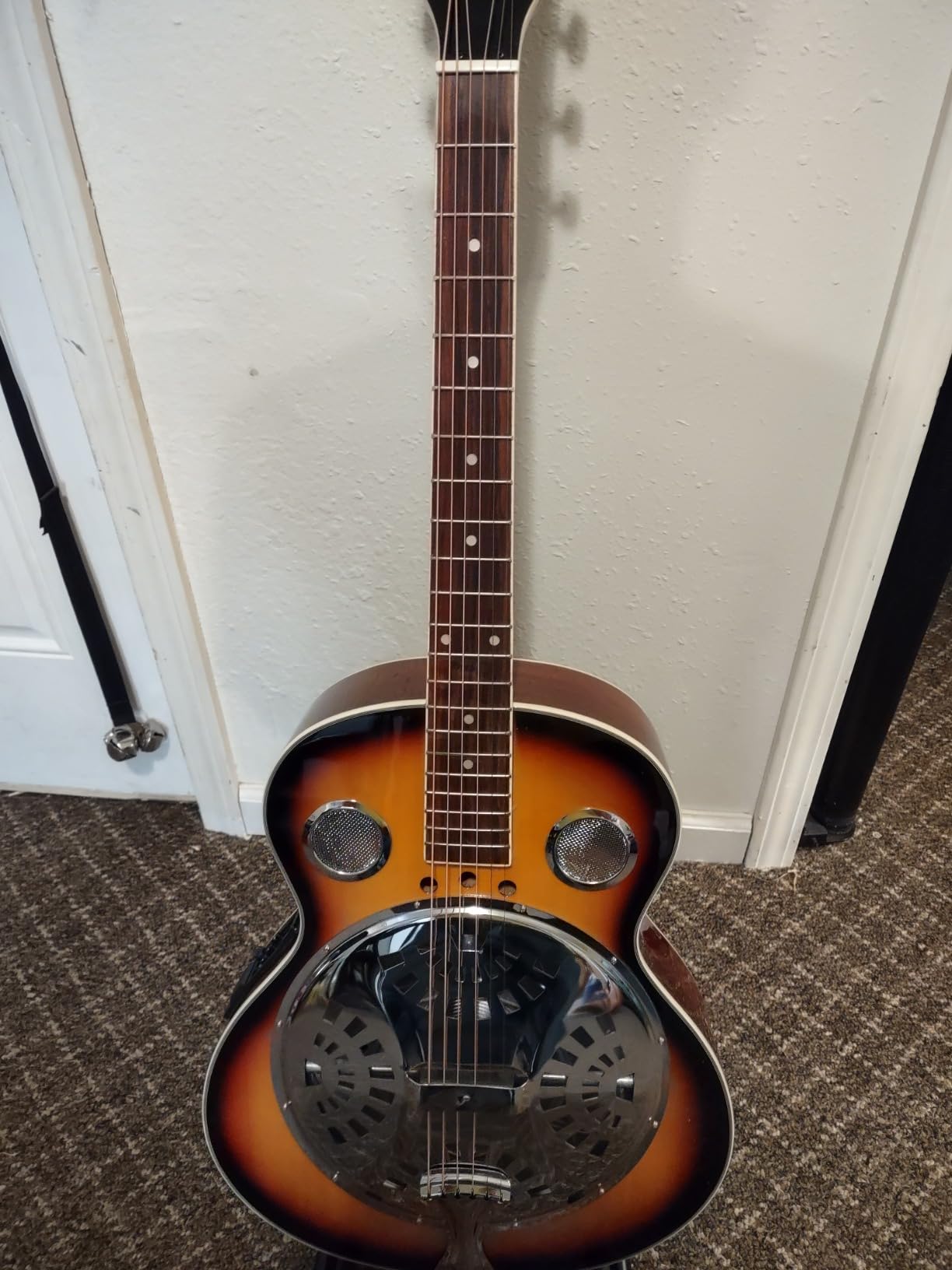
The built-in preamp with volume, treble, mid, and bass controls is what makes this guitar versatile. You can play unplugged at home, plug into a PA at a coffee shop open mic, or run it through a small acoustic amp for band practice. The EQ controls let you tame the natural brightness when needed, which is important because metal cone resonators can sound harsh on the high strings without some EQ adjustment.
The complete kit includes a gig bag, strap, digital tuner, six spare strings, and three picks. While the gig bag is minimal protection compared to a hard case, it is enough for transport to lessons or local jams. Having the tuner included saved me a separate trip to the music store when I was first learning.
At 8 pounds, this is a heavy instrument for a round-neck acoustic. The weight is partly the metal cone itself, which is unavoidable for any resonator. If you have back or shoulder issues, consider a lap steel instead. Playing standing for more than an hour with this guitar on a strap can become uncomfortable.
The plastic nut is a minor compromise. It works fine for standard tunings but does not transfer string vibration as efficiently as bone or synthetic materials. For slide work, where the slide itself dampens some high-frequency content, this is less of an issue than it would be for fingerstyle players. The fret ends may also need a light filing on arrival, which any local tech can handle in five minutes.
Who this is best for
This is the right pick for beginners who want authentic blues, country, or bluegrass slide tone without spending vintage-instrument money. It works for students who want to play unplugged at home but also perform amplified at small venues. The kit format means no extra purchases needed.
Who should look elsewhere
If you have a smaller body frame or back issues, the 8-pound weight may push you toward a lap steel or standard acoustic. If you want the smooth, jazzy single-coil sound of electric slide (think Allman Brothers or modern blues-rock), this is the wrong voice. You will be happier with the Fender or Donner electrics above.
4. QYNT Resonator Acoustic-Electric Kit — Best for Beginners Wanting a Complete Package
Acoustic Electric Resonator Guitar, Beginner Guitar Kit, Country Bluegrass Folk Blues, Spruce Top, Includes Cable, Strap, Capo, Full Size 40 Inch Right Handed Guitar (Amber Orange)
Spruce top
Built-in pickup
Complete kit
Pros
- Complete starter bundle
- Loud unplugged volume
- Pleasing amber finish
- Bronze strings installed
- Works well with amplifier
Cons
- Action may need adjustment
- Frets may need dressing
- Limited review base
The QYNT resonator kit is what I would buy for someone who has never touched a guitar and wants one box to open. You get the guitar, a cable, a strap, and a capo. That is the bare minimum you need to start playing slide, and it is all here. The amber orange finish is also a nice touch, more visually interesting than the typical sunburst.
The spruce plywood top produces a bright, clear projection that works well for blues and bluegrass. Paired with the metal resonator cone, the guitar has the cutting power needed for slide notes to sustain without feedback when you are playing near other instruments. For a beginner kit at this price, the tonal character is genuinely impressive.
The side-input pickup is a thoughtful design choice because it keeps the front of the guitar clean. Many resonators mount the pickup inside the soundhole, which interferes with the cone’s natural resonance. The QYNT placement lets the cone breathe freely and adds amplification only when you need it.
The downsides here are minor and standard for budget kits. The action height may be slightly high out of the box, which makes sliding more difficult. A simple truss rod adjustment fixes this in a few minutes. Some frets may also have sharp ends that need a light filing before the guitar is comfortable to play.
Who this is best for
Choose this guitar if you are a true first-day beginner who wants everything in one package without researching separate accessories. It works for acoustic blues, country, bluegrass, and folk slide styles. The attractive finish makes it a nice gift option for younger players.
Who should look elsewhere
The QYNT has a smaller review base than the more established options above, which means less long-term user data. If you want a guitar with a deep track record of reliability, the Pyle or Donner choices have hundreds or thousands of reviews behind them. If you want electric slide tone, look elsewhere.
5. QYNT Acoustic Resonator Kit — Best No-Amp Acoustic
Acoustic Resonator Guitar, Beginner Guitar Kit, Country Bluegrass Folk Blues, Spruce Top, Includes Strap, Capo, Picks and Wrench, Full Size 40 Inch Steel String Right Handed Guitar (Amber Orange)
Spruce top
Strap and capo
40 inch body
Pros
- No pickup keeps cost down
- Authentic resonator tone
- Includes strap and capo
- Attractive amber finish
- Lightweight compared to other resonators
Cons
- Action often needs adjustment
- Plastic nut
- Frets may need dressing
If you do not need amplification and want a pure acoustic slide experience, the non-electric QYNT saves you money over its sibling kit. The same spruce plywood top, sapele back and sides, and metal resonator cone produce the same unplugged volume. You simply lose the pickup and EQ, which most beginners do not use for the first few months anyway.
The complete kit still includes a strap, capo, picks, and a wrench for adjustments. The capo is the most useful accessory for slide work because it lets you experiment with open tunings right away. Many slide songs use DADGAD or open G, and having a capo lets you transpose without retuning the whole guitar.
The amber orange finish is the same eye-catching shade as the electric version. For a beginner guitar, aesthetics matter more than people admit. A guitar you enjoy looking at gets played more often, and frequency of practice matters far more than any spec sheet.
Like its sibling, this QYNT may need some setup work out of the box. Budget 30 minutes and a basic Allen wrench set to adjust the action and check the neck relief. The included wrench is fine for this. If you are not comfortable doing this yourself, any local music store will do it for a small fee.
Who this is best for
Pick this if you want a pure acoustic slide experience for home practice or unplugged jam sessions. It works well for blues, folk, and country genres. The complete kit and attractive price make it a strong gift choice.
Who should look elsewhere
If you plan to play live or record with a microphone at distance, the lack of a pickup becomes limiting. You will need to mic the guitar externally, which adds gear and complexity. For amplified slide work, the Pyle or electric QYNT are better choices.
6. Gstyle Lap Steel Guitar — Best Budget Lap Steel
Lap Steel Guitar, Okoume Body (sunburst)
Fretless 6 string
P90-style pickup
33 inch body
Pros
- Affordable lap steel entry
- Fretless design teaches intonation
- Crystal-clear single coil pickup
- Includes gig bag and cable
- Solid okoume body
Cons
- Stock strings are too light
- Some single-coil hum
- Action may need tweaking
The Gstyle lap steel is where most of my dedicated slide students end up. A lap steel is a fundamentally different instrument from a regular guitar. You lay it flat on your lap or on a stand, and you play with a steel bar in your right hand while the left hand damps and mutes. The fretless design means there are no frets to guide your intonation, which is actually good practice for slide technique on any instrument.
Single-coil pickup tone here is bright and articulate, with that classic lap steel shimmer. When you push the volume up, the slide notes sustain beautifully. For country, Hawaiian, or blues lap steel work, this pickup captures the genre’s signature tone.
The included gig bag and cable mean you can take this to lessons or jam sessions immediately. The bag is basic but adequate for transport. The cable is functional and good enough for a beginner setup.
The stock strings are too light for serious lap steel work. Lap steel players typically use heavier gauge strings tuned to open tunings like C6 or D6. The factory strings are standard electric gauges that feel floppy on the lap steel. Budget for a string upgrade within your first month of playing.
Single-coil pickups can produce a 60-cycle hum, especially near fluorescent lights or computer monitors. This is a universal characteristic of single-coil pickups, not a defect. If hum bothers you, a noise gate pedal or a hum-cancelling pickup upgrade solves it.
Who this is best for
Pick this guitar if you are serious about learning traditional lap steel technique or want to play Hawaiian and country steel guitar styles. The fretless design builds strong intonation skills. The low price makes it a low-risk way to try the instrument.
Who should look elsewhere
If you want to play standard slide blues on a regular-shaped guitar you can hold and strum, a lap steel is the wrong tool. The playing position and technique are completely different. For standard slide, the Fender, Donner, or resonator options are better fits.
7. Batking Lap Steel Guitar — Best Starter Lap Steel with Slide Included
Batking Lap Steel Guitar, Electric Slide Guitars 6 String Slotted Headstock Guiter With Gig Bag Sunburst
28 frets
Poplar body
Slide bar included
Pros
- Includes metal slide bar
- Comes with gig bag
- Single-coil pickup with good tone
- Slotted headstock classic look
- Volume and tone controls
Cons
- Plastic nut
- Shorter body than Gretsch
- Internal headstock can be rough
The Batking lap steel is a slightly more refined take on the budget lap steel category. What sold me on this guitar was the included metal slide bar. Many entry-level lap steels ship without a slide, forcing a separate purchase. The included bar is decent quality, not a throwaway, and gives you everything you need in one box.
The slotted headstock design harkens back to vintage lap steels from the 1950s. While purely aesthetic, it gives the instrument a classic look that feels special. For beginners who are just discovering the instrument, that vintage aesthetic builds excitement about the genre’s history.
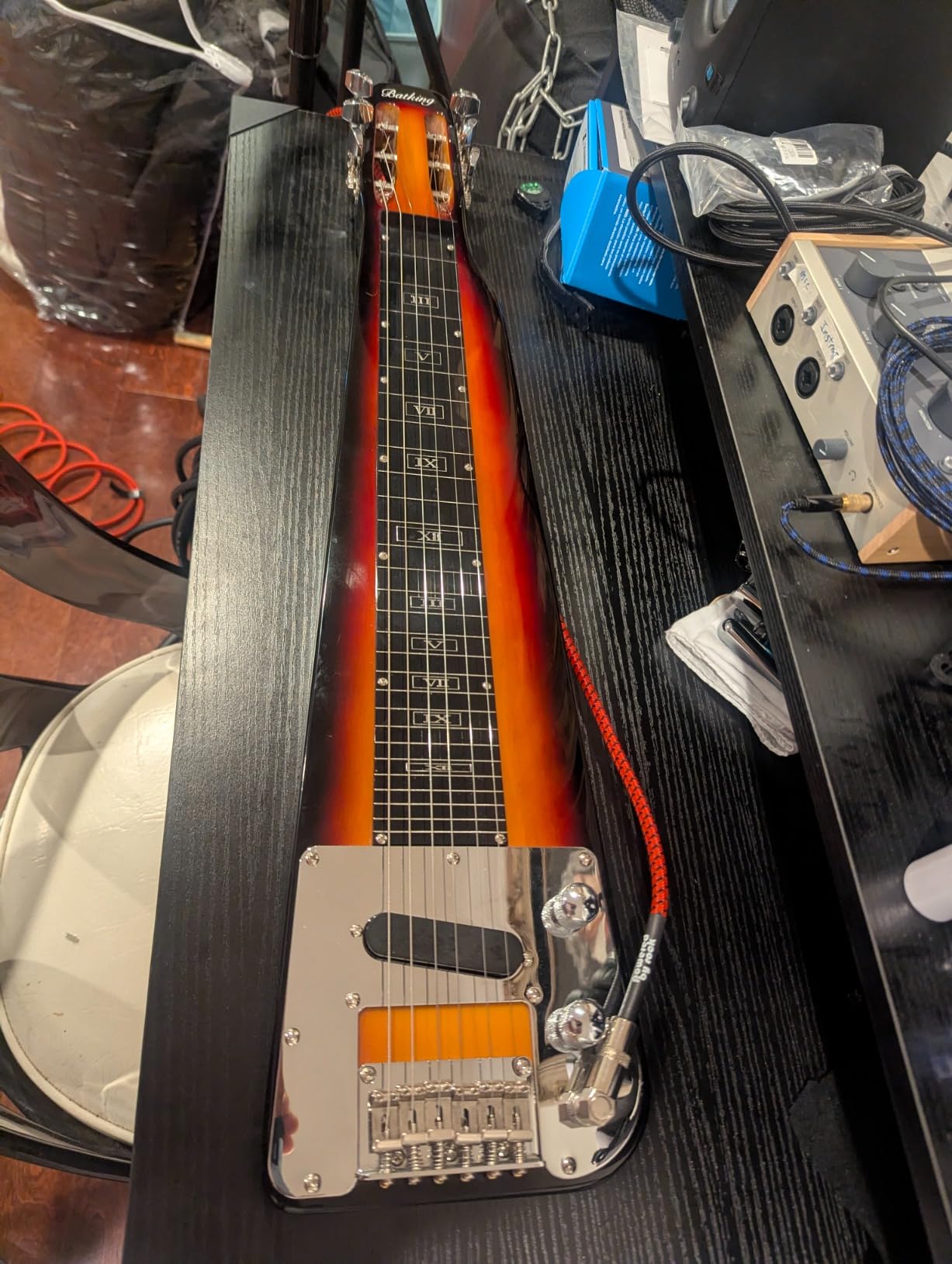
The single-coil pickup delivers warm output that works well for both clean country tones and dirtier blues sounds. I ran it through a clean amp and a small overdrive pedal, and the guitar responded well to both. The volume and tone controls give you enough range to dial in a usable tone without external EQ.
The poplar body is lighter than the mahogany or ash used in more expensive lap steels. For beginners, this is actually a benefit. A lighter lap steel is easier to position on your lap or a stand, and it is easier to transport to lessons or jam sessions.
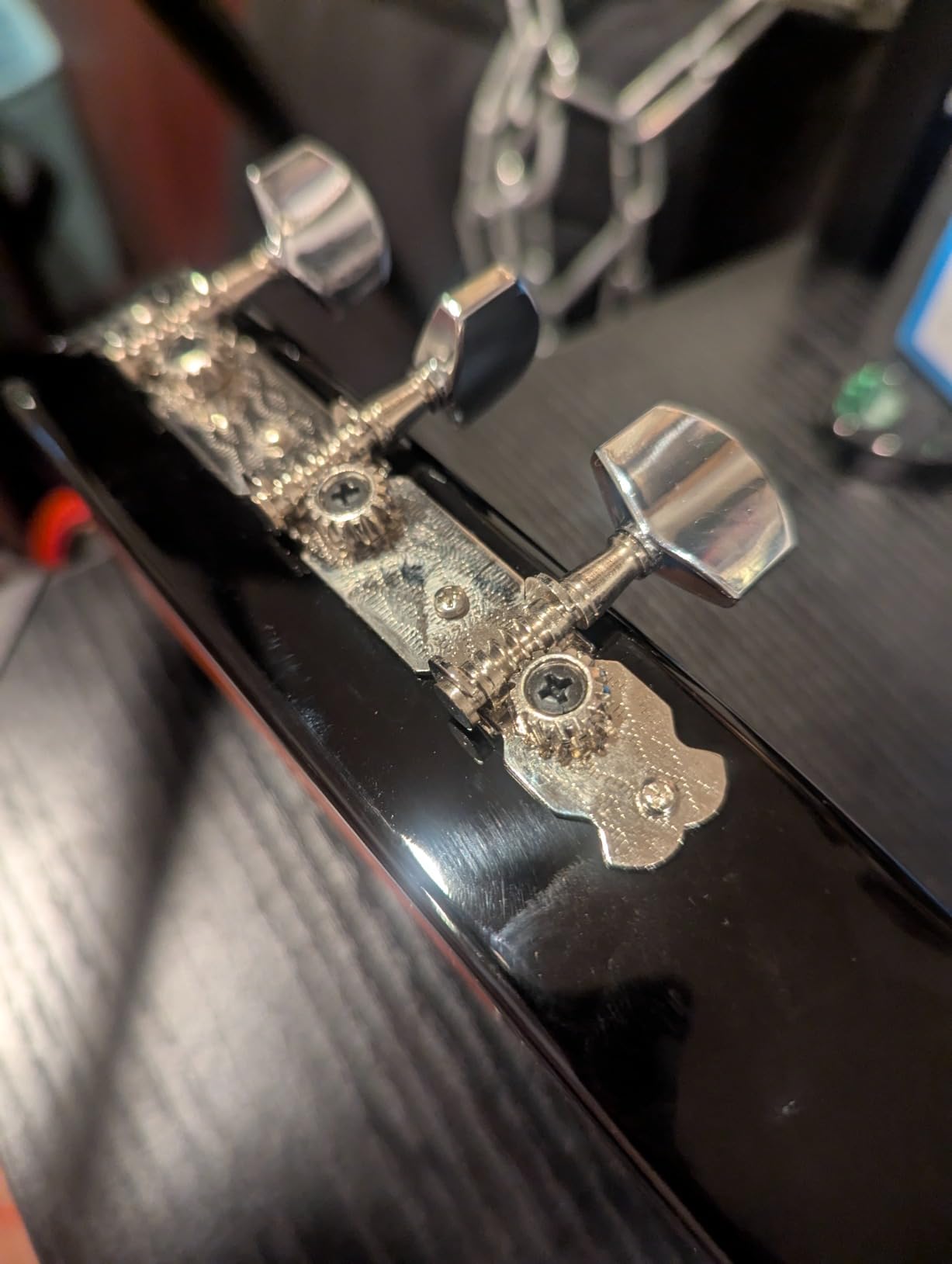
The internal headstock cutout can be rough on some units. This is purely cosmetic and does not affect tuning or sound, but it is a sign of quality control inconsistency. The plastic nut is another budget compromise, though it does not impact slide tone significantly.
The 28 frets and 28.75 inch scale length give you plenty of range for most lap steel work. The Roman numeral fretboard markings are a stylistic touch that does not affect playability but adds visual interest.
Who this is best for
Pick this guitar if you want a complete lap steel package including the slide bar in one purchase. It works well for beginners interested in Hawaiian, country, or blues lap steel styles. The lighter poplar body is easier on your lap during long practice sessions.
Who should look elsewhere
If you want a heavier, more resonant lap steel with traditional tonewood character, step up to the SX Lap 2 Ash or Gretsch options below. If you want a fretless design that forces stronger intonation skills, the Gstyle is a better choice.
8. SX Lap 2 Ash Electric Lap Steel — Best Upgrade Pick
SX Lap 2 Ash 3TS Electric Lap Steel Guitar w/Bag
Swamp ash body
P90 soap bar pickup
Adjustable bridge
Pros
- Professional-grade construction
- P90 pickup with rich tone
- Adjustable bridge for intonation
- Removable legs included
- Quality padded gig bag
Cons
- Stock strings may need replacement
- Legs can be tricky to install
- Limited saddle adjustment range
The SX Lap 2 Ash is where I send students who have outgrown the entry-level options. The swamp ash body is a genuine upgrade, lighter than mahogany but with more resonant character than basswood or poplar. You can hear the difference the moment you plug it in.
The P90 soap bar pickup is the star feature. P90s sit between single-coils and humbuckers in character, giving you more warmth and less hum than a traditional single-coil while retaining the bite and clarity. For slide work, this means notes sustain longer and feel fatter without losing articulation. The pickup responds beautifully to slide dynamics.
The adjustable bridge is something budget lap steels skip. Being able to set intonation properly means your octaves ring true and your chord work stays in tune across the neck. Beginners who learn on this instrument build better intonation habits than those who start on fixed-bridge models.
The removable legs are a thoughtful addition for players who alternate between lap and stand positions. You can use the legs to set the guitar at the right height for standing, or remove them for seated lap play. The included padded gig bag is also notably better than the budget gig bags on cheaper models.
Stock strings are not ideal for C6 or open G lap tunings. Plan to buy a quality lap steel string set within the first month. Many players also upgrade the slide bar, though the included bar is functional.
Who this is best for
Pick this if you have played lap steel for a few months and want a serious instrument that will grow with you. The adjustable bridge and P90 pickup give you room to develop technique and tone. It also works well for guitarists who already play fretted instruments and want a quality lap steel for specific songs.
Who should look elsewhere
If you are still deciding whether lap steel is for you, the budget options above are smarter starting points. If you want the smooth, jazzy character of a traditional console steel, look at higher-end options. If you want standard guitar-style slide, this is not the right tool.
9. Gretsch G5700 Electromatic Lap Steel — Premium Pick
Gretsch G5700 Electromatic Lap Steel with White Plastic Fretboard – Tobacco
Mahogany body
C6 tuning
2-year warranty
Pros
- Trusted Gretsch brand quality
- Heavy solid mahogany body
- Beautiful tobacco sunburst finish
- 2-year manufacturer warranty
- Classic art deco control plate
Cons
- Stock strings are low quality
- Some shipping damage reports
- Heavier than budget lap steels
The Gretsch G5700 is the name brand choice in the lap steel world. Gretsch has been making instruments since 1883, and the Electromatic line brings that heritage to an accessible price. If you want a lap steel from a company with a century track record, this is it.
The mahogany body weighs more than the budget poplar and basswood options. That extra mass contributes to a fuller, warmer tone with longer sustain. When you slide across the strings, notes bloom and ring out in a way that lighter-bodied lap steels cannot match. The tobacco sunburst finish also looks gorgeous on a stand or in photos.
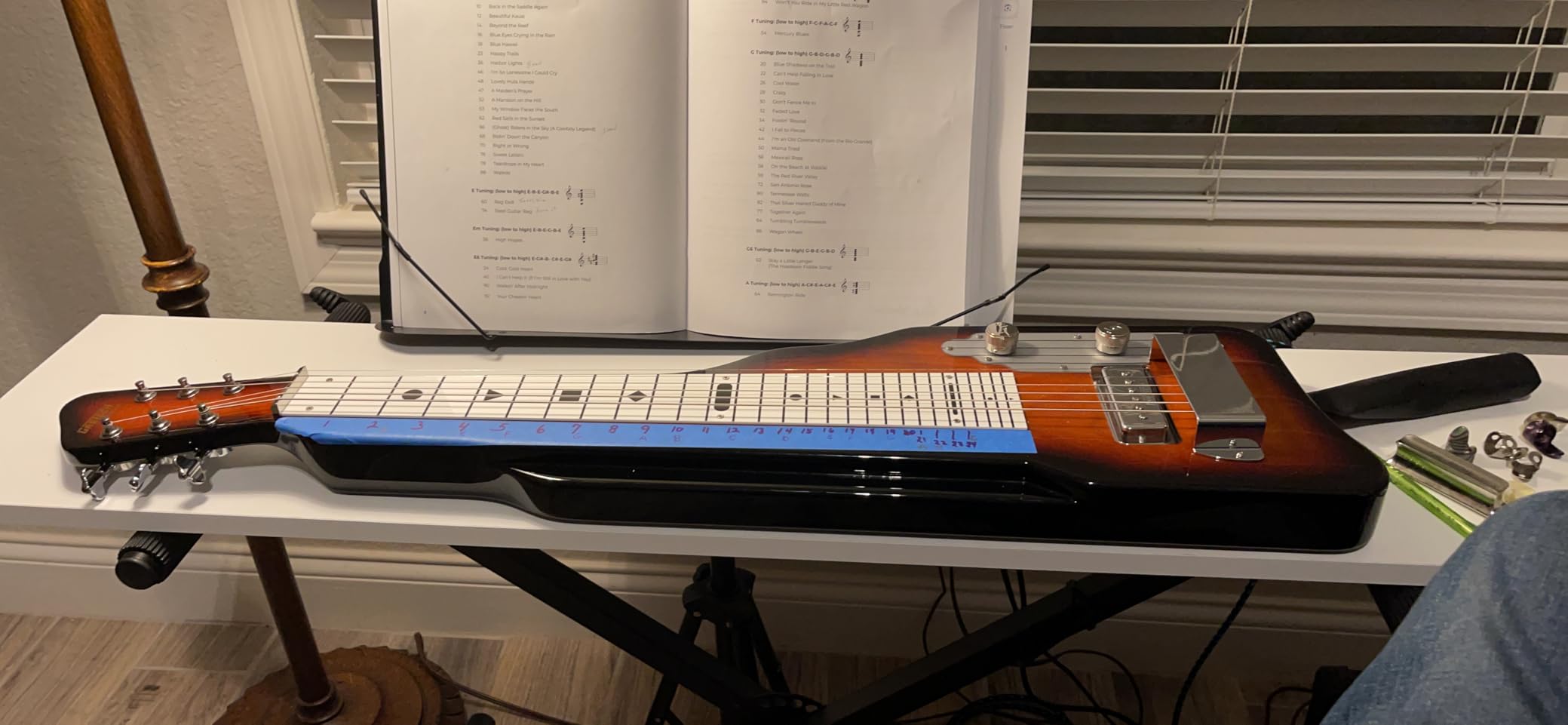
The chrome single-coil pickup produces the classic lap steel chime that you hear on vintage country and Hawaiian records. The tone is bright but not harsh, with enough warmth to play ballads and slow blues convincingly. The volume and tone controls have a smooth taper that makes subtle adjustments easy.
The 2-year warranty from Gretsch is significantly longer than what budget brands offer. For beginners investing in their first serious instrument, that warranty provides real peace of mind. If anything structural goes wrong, you are covered.
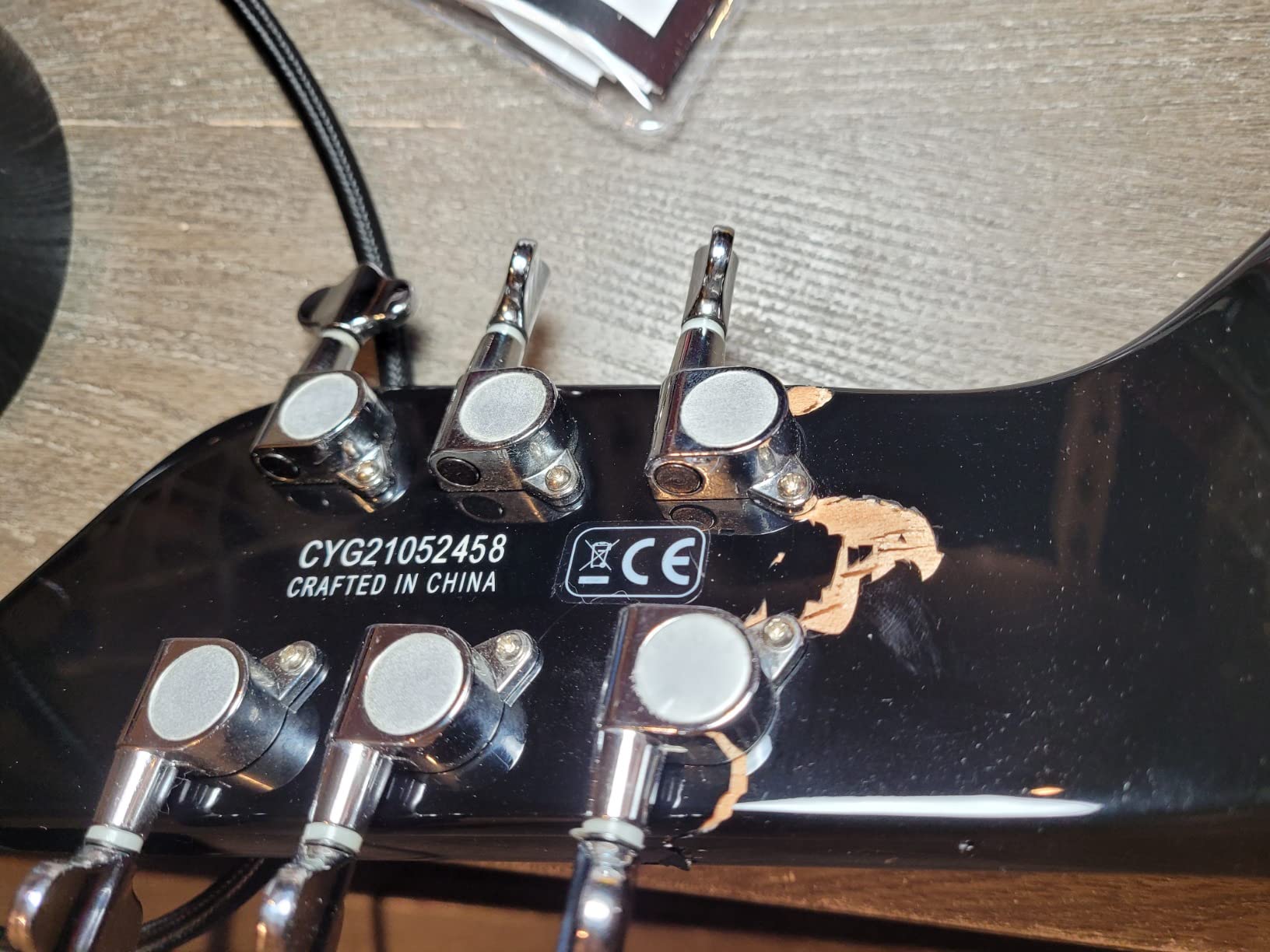
Stock strings are the most common complaint. They are functional but lack the warmth and response of quality aftermarket sets. Budget for a string upgrade soon after purchase. The setup out of the box is also inconsistent, with some units arriving perfectly intonated and others needing adjustment.
Shipping damage is reported on a small percentage of units, typically cracks in the neck from rough handling. Buying from a reputable seller with good packaging standards reduces this risk. Inspect the guitar immediately upon arrival.
Who this is best for
Pick this if you want a name brand lap steel with serious tone and a long warranty. It works well for players who plan to gig or record and need an instrument that looks professional on stage. The mahogany warmth suits country, blues, and Hawaiian styles.
Who should look elsewhere
If you are not sure lap steel is the right instrument for you, the budget options above let you try the genre at lower risk. If you want a lighter instrument for extended seated play, the poplar-bodied models are easier on your lap.
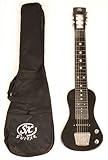
10. SX LAP 3 Black Lap Steel — Best for Long-Scale Playing
SX LAP 3 Black Lap Steel Guitar w/Free Carry Bag
36 frets
Basswood body
22.75 inch scale
Pros
- Long 36-fret neck
- Lightweight basswood body
- Smooth stable tuners
- Includes carry bag and glass slide
- Neck-through design
Cons
- Non-adjustable bridge
- Lightweight requires careful handling
- Standard jack does not fit
- Glass slide is low quality
The SX LAP 3 stands out for its 36-fret neck, which is more than most lap steels offer. That extra range lets you play in lower tunings or reach notes that shorter-scale lap steels cannot access. For players interested in extended-range country or jazz-influenced lap steel work, this is a real advantage.
The neck-through design, where the neck extends through the body, improves sustain and stability compared to bolt-on neck constructions. Notes ring longer and the guitar holds tuning better under heavy slide work. For beginners still developing consistent pressure and motion, the stability is a real help.
The included carry bag and glass slide get you playing right away. The bag is basic but functional. The included glass slide is low quality and worth replacing with a Dunlop or similar name-brand slide, but it works for your first few weeks of practice.
The non-adjustable bridge limits your intonation setup options. Once the strings are on, what you have is what you get. For players who want to fine-tune intonation across the neck, this is frustrating. For beginners who do not yet know how to adjust intonation, it removes a variable.
The lightweight basswood body requires careful handling. The guitar feels almost too light, and players used to heavier instruments sometimes find it less stable on their lap. A lap stand solves this for standing play. Also note that the output jack uses a non-standard size, so you may need an adapter for some cables.
Who this is best for
Pick this if you want extended range for lower tunings or specific repertoire. It works for players interested in jazz lap steel or extended country tunings. The neck-through design provides good sustain for legato playing styles.
Who should look elsewhere
If you want adjustable intonation setup, the SX Lap 2 Ash above is a better choice. If you want the warmer tone of mahogany or ash, this basswood model sounds thinner. If you want a brand name with a long heritage, look at the Gretsch.
Buying Guide: How to Choose a Slide Guitar as a Beginner
Slide technique requires different things from a guitar than fingerstyle or pick playing does. Before you buy, think about which category of instrument fits your goals, what setup adjustments you will need, and how the material of your slide affects tone.
Acoustic vs Electric vs Lap Steel
Standard acoustic guitars work for slide when set up properly, but resonators like the Pyle and QYNT models are easier on beginners. The metal cone projects louder and clearer than a wooden soundboard, which means you hear your intonation mistakes more clearly and correct them faster.
Electrics like the Fender Squier and Donner kits need amplification, which adds gear and complexity. In return, you get sustain that acoustic guitars cannot match and access to a wider tonal range through pedals and amps. Many blues-rock slide players start here.
Lap steels like the Gstyle, Batking, SX, and Gretsch are dedicated instruments with no frets and a horizontal playing position. They are the easiest instruments on which to play slide correctly, but they require learning a new right-hand technique. If your goal is Hawaiian, country, or pedal steel-style music, a lap steel is the right choice from day one.
Setup Requirements for Slide
Action height matters more than any other setup factor. Slide requires higher action than fingerstyle playing because the slide rests on the strings without pressing them down. If your guitar has very low action, the slide will buzz against the frets. Most factory setups are too low for serious slide work.
String gauge is the second key variable. Heavier strings vibrate with more amplitude and produce clearer notes when you use a slide. Standard acoustic strings around .012 to .053 gauge work well. Electric players should look at .010 to .046 or heavier. Lighter strings feel floppy under a slide and lose sustain quickly.
Open tunings like DADGAD, open G, or open D unlock the most authentic slide sounds. You do not need to commit to a single tuning, but having a capo and knowing how to tune by ear expands your options dramatically. Most slide songs use one of these standard tunings.
Slide Material Comparison
Glass slides produce a warm, smooth tone with less attack. They are the most forgiving choice for beginners because they dampen string noise and forgive slight angle mistakes. Bonnie Raitt, Derek Trucks, and many blues players favor glass.
Brass slides sound warmer than chrome but brighter than glass, with a thicker midrange. They work well for blues and classic rock. The weight of brass also helps with sustain.
Chrome and steel slides are the brightest and most articulate. They give you the clearest note definition and the most cut through a mix. Rock and country players often prefer metal slides.
Ceramic and porcelain slides produce a unique vintage tone somewhere between glass and chrome. They are less common and harder to find, but players who love the classic delta blues sound often swear by them.
Size and Fit
The slide should fit on your finger snugly but not tightly. If it is too loose, it falls off mid-phrase. If it is too tight, it cuts off circulation and hurts after 20 minutes. Most players use their ring finger, though pinky is also common for players who want their other fingers free for damping.
The length of the slide should cover all six strings comfortably when you place it across the fretboard. A slide that is too short will not reach the lowest string cleanly, producing dead notes. A slide that is too long feels unwieldy and slows your movement.
Common Beginner Mistakes to Avoid
Pressing the slide down too hard is the most common mistake. The slide should rest lightly on the strings. Pressing harder does not produce better tone. It just causes the slide to drag and produces fret buzz.
Not muting strings behind the slide is another frequent error. With a regular guitar, you only sound the string you fret. With a slide, any string the slide touches will ring. You must mute the strings behind the slide with your other fingers or palm.
Starting in standard tuning rather than an open tuning makes everything harder. Most slide music is written for open tunings where simple chord shapes produce full, ringing sounds. Standard tuning forces you to learn more complex shapes before you hear the genre’s signature tone.
When to Move Beyond Beginner Options
If you find yourself playing for more than an hour most days and enjoying the technique, it is time to consider an upgrade. Beginners typically outgrow entry-level instruments within 6 to 12 months. Better tonewoods, pickups, and hardware make a noticeable difference once your ear develops.
However, do not upgrade too soon. The beginner guitars on this list are genuinely good instruments that will not hold you back for at least a year. Better playing always produces better tone than better gear.
Frequently Asked Questions
Is slide guitar easy to learn?
Slide guitar is not hard in the traditional sense, but it requires retraining your hands. If you already play guitar, expect 2 to 3 months of regular practice before you sound musical. The technique uses different mechanics than fretting, so even experienced guitarists start from scratch with slide. The good news is that the basics, open tunings, simple melodies, and glissando effects, can produce satisfying results within weeks. Many beginners find slide more intuitive than barre chords or complex scales.
What type of guitar slide is best?
For most beginners, a glass slide between 30mm and 50mm in length is the best starting point. Glass produces a warm, forgiving tone, fits comfortably on a ring or pinky finger, and dampens string noise. Medium wall thickness offers the best balance of weight and comfort. Chrome and brass slides are great second slides once you know what tone you want. Avoid ceramic and porcelain at first because they are harder to control and more expensive.
Is a glass or metal slide better?
Glass and metal slides produce noticeably different tones. Glass sounds warmer, smoother, and more vocal-like, which is forgiving for beginners. Metal (chrome, brass, steel) sounds brighter, more articulate, and cuts through a band mix better. For blues, folk, and singer-songwriter styles, glass is usually preferred. For rock, country, and any genre where you need the slide to be heard clearly, metal is the better choice. Many players own multiple slides and switch based on the song.
Which finger is best for slide playing?
Most slide guitarists use their ring finger because it offers the best balance of control and finger independence. Your middle finger stays free for damping, your pinky adds stability from behind, and your index finger can mute above. Some blues players prefer the pinky for its lighter touch and faster movement. There is no single correct answer. Try both and see which feels more natural. The slide should fit snugly without being tight, and your hand should feel relaxed.
Do you need a different slide for electric and acoustic guitar?
You can use the same slide on both electric and acoustic guitars in most cases. The differences in tone come more from the guitar itself than the slide. However, lap steel players often use a heavier steel bar with a smaller diameter for faster movement, while bottleneck acoustic players use a longer glass or brass slide for traditional tone. If you plan to play both electric and acoustic, start with a medium-length glass slide. It works on both and gives you the most flexibility.
Final Verdict
After testing and teaching on these instruments, the Fender Squier Debut Stratocaster Kit remains the best slide guitar for beginners in 2026 for most people. The complete bundle, trusted brand, and versatile pickup set cover more playing styles than any other option on this list. If budget is your primary concern, the Donner DST-80 delivers 90 percent of the experience at a noticeably lower price. For pure acoustic slide tone with no amp required, the Pyle Resonator kit is hard to beat.
Whichever guitar you choose, remember that the instrument matters less than the practice. Players who play every day on a budget guitar will always outplay someone with a premium instrument that sits in its case. Start with what fits your budget, play often, and upgrade when your technique demands it. The best slide guitars for beginners are the ones that get played, not the ones that look most impressive on a stand.