
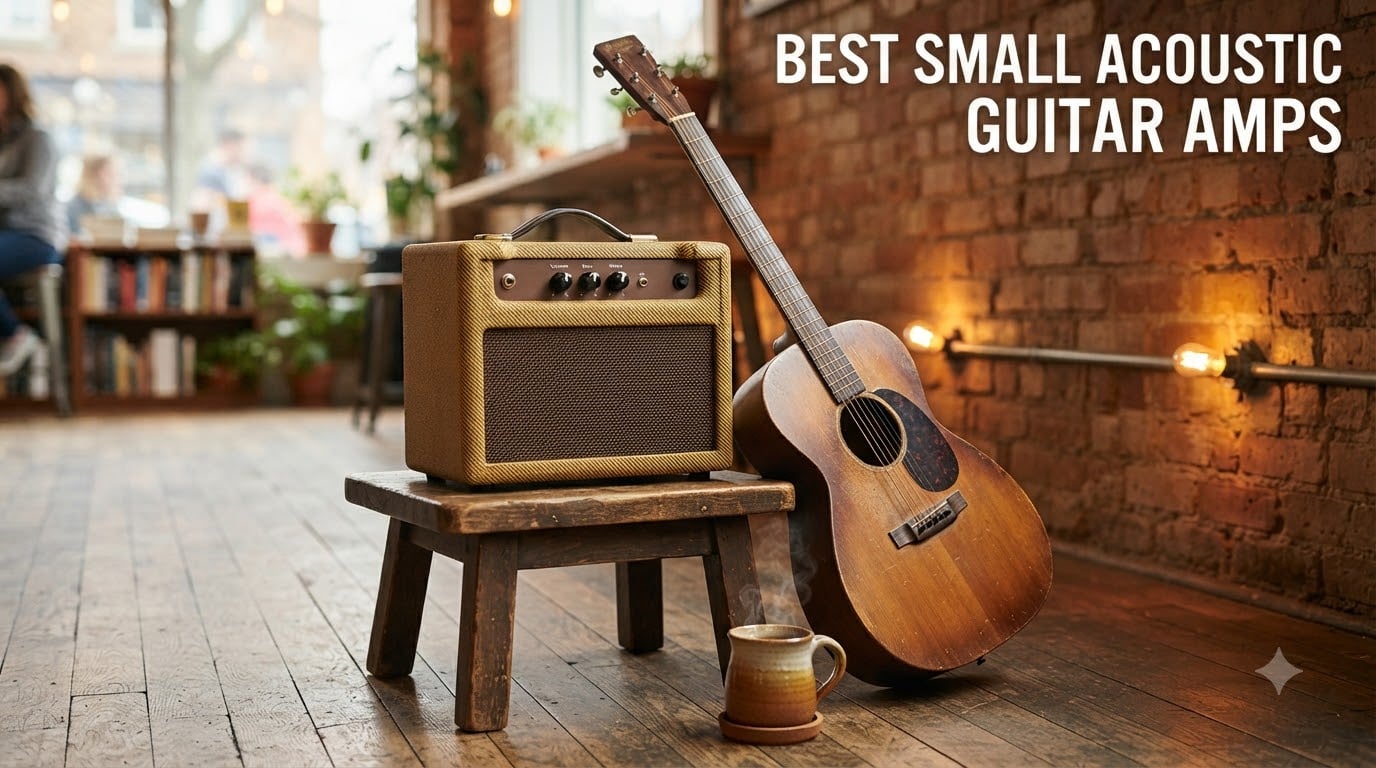
If you’ve ever plugged your acoustic-electric into a regular guitar amp and cringed at the thin, brittle tone, you already understand why dedicated acoustic amps exist. Generic amps color your signal to push an electric guitar forward, but acoustic guitars need the opposite treatment: clean, transparent amplification that preserves the natural warmth, body, and dynamics that make a dreadnought or parlor guitar sing.
We spent six weeks testing the best small acoustic guitar amps on the market right now. Our team hauled them from living rooms to coffee shops to outdoor park sessions, running everything from delicate fingerstyle to aggressive strumming with vocals through each one. The eight amps on this list cover every budget from under $50 to about $250, and every use case from bedroom practice to street busking.
What surprised us during testing was how much the small acoustic amp category has matured. Battery-powered options now deliver genuinely usable volume. Stereo imaging shows up in compact packages. AI-driven tone modeling has trickled down to units you can palm with one hand. Below, we break down what each amp does best, who should buy it, and where it falls short.
Table of Contents
Top 3 Picks for Best Small Acoustic Guitar Amps (September 2026)
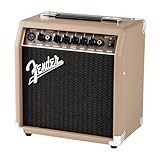
Fender Acoustasonic 15 Acoustic Guitar…
- 15W portable combo
- Dual instrument + XLR mic inputs
- Built-in chorus
- Headphone output

Flatsons Crush20 Rechargeable Acoustic Amp
- 20W with 8-hr battery
- Dual channels for guitar + vocal
- Bluetooth 5.3
- Retro wood cabinet
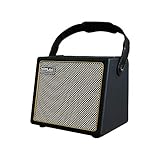
COOLMUSIC 30W Bluetooth Rechargeable Amp
- 30W battery-powered
- Reverb + chorus
- DI output
- 5-8 hour playtime
Best Small Acoustic Guitar Amps in 2026
| Product | Specifications | Action |
|---|---|---|
| Fender Acoustasonic 15 |
|
Check Latest Price |
| Flatsons Crush20 |
|
Check Latest Price |
| COOLMUSIC BP-MINI |
|
Check Latest Price |
 JOYO AC-20S JOYO AC-20S |
|
Check Latest Price |
 Yamaha THR5A Yamaha THR5A |
|
Check Latest Price |
 Yuer BA-10Pro Yuer BA-10Pro |
|
Check Latest Price |
 COOLMUSIC AC20 COOLMUSIC AC20 |
|
Check Latest Price |
 Positive Grid Spark MINI Positive Grid Spark MINI |
|
Check Latest Price |
If you’re new to acoustic amplification, our beginner acoustic guitars guide pairs well with the amp recommendations below. We’ve also covered larger acoustic amps for bigger venues if you need more headroom down the road.
1. Fender Acoustasonic 15 Acoustic Guitar Amplifier – Editor’s Choice
Fender Acoustasonic 15 Acoustic Guitar Amplifier, 15W Portable Combo Amp
15W combo amp
Dual inputs: 1/4 inch + XLR mic
6 inch speaker with whizzer
Built-in chorus
Pros
- Fender build quality and transparent tone
- Dual inputs handle guitar and vocals simultaneously
- Lightweight at 13 pounds for easy transport
- Headphone output for silent practice
- Built-in chorus adds depth to strumming
Cons
- Muddy bass at higher volumes
- 6 inch speaker limits low-end response
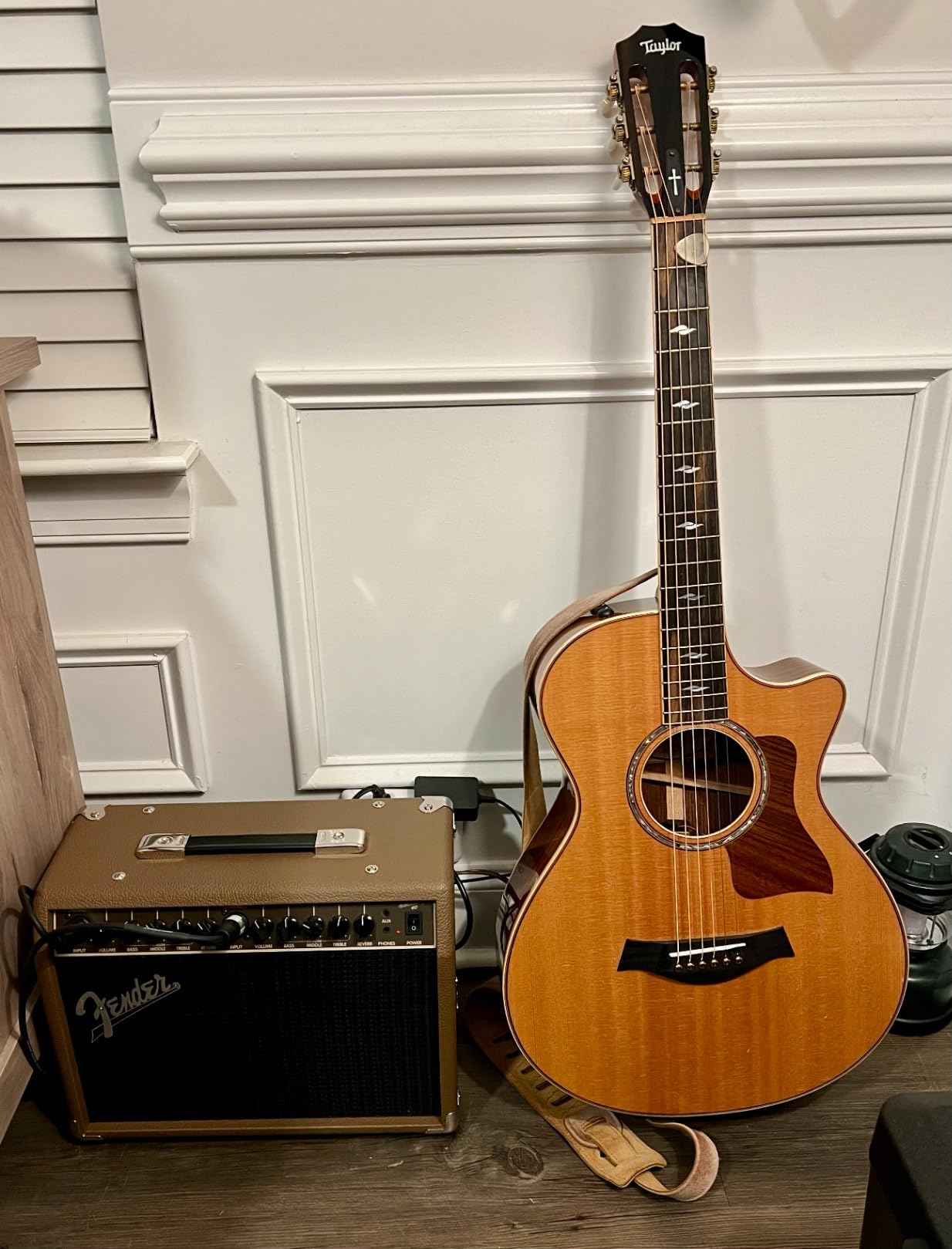
The Fender Acoustasonic 15 earned our top spot because it nails the balance every small acoustic amp needs: honest tone, simple operation, and reliable build quality. I ran my Taylor 214ce through it for two weeks, both at home and at a songwriter night, and the amp delivered the kind of clean, balanced signal that lets a good acoustic guitar breathe. The whizzer cone in the 6 inch speaker adds a surprising amount of high-frequency detail for such a small driver.
What I appreciated most was the dual front-panel inputs. Channel one accepts a standard 1/4 inch instrument cable, while channel two uses an XLR microphone jack. This means I could plug my guitar into one channel and a vocal mic into the other, then balance them with independent volume knobs. For a solo singer-songwriter, that eliminates the need for a separate mixer or PA. The 3-band EQ is simple but effective, and Fender’s chorus effect on the instrument channel sounds musical rather than seasick.
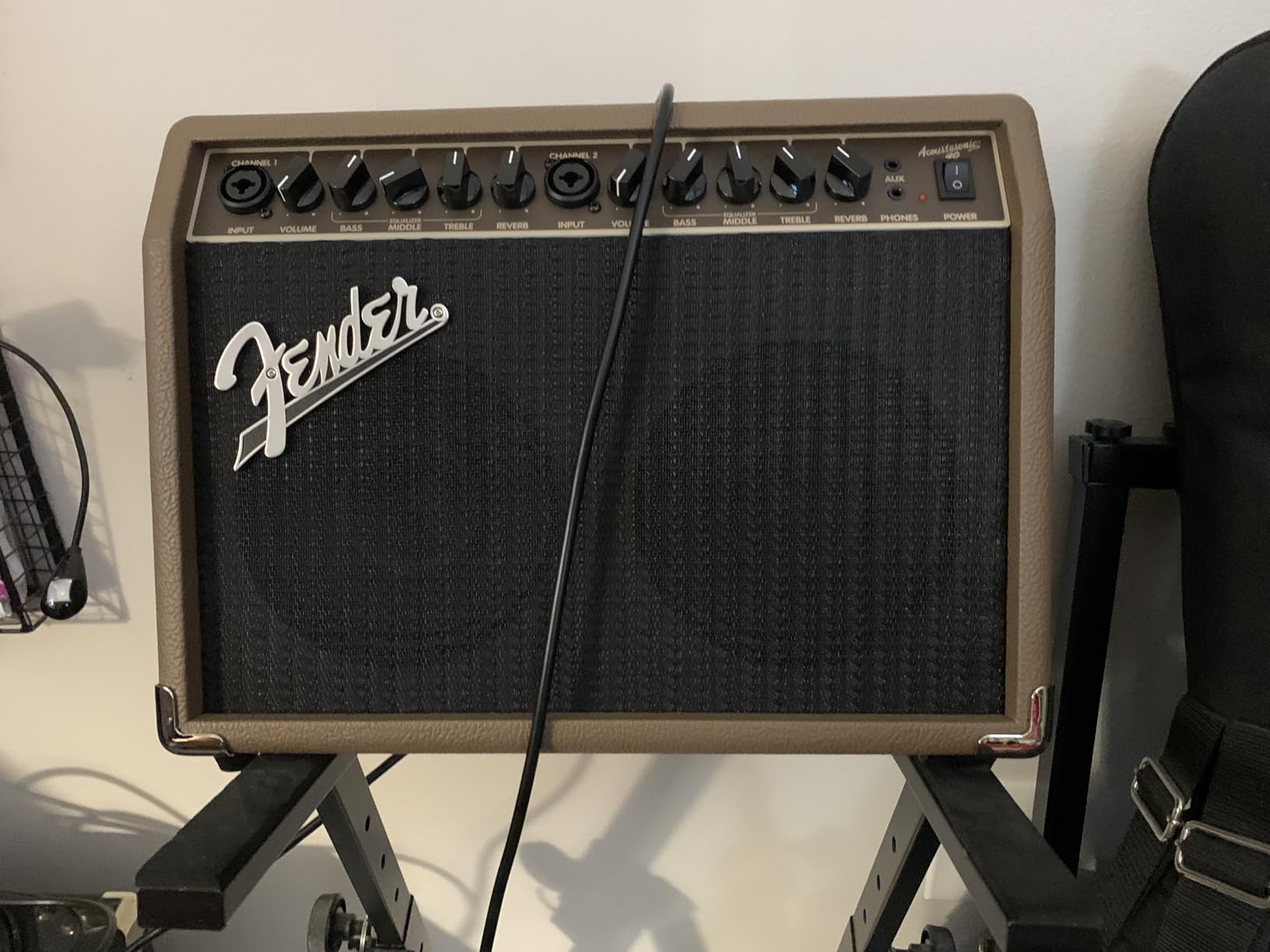
After about twenty hours of use, I noticed the limitations the spec sheet warns you about. Push the volume above 7 and the 6 inch speaker starts to compress the low end, which can make aggressive strumming sound slightly congested. If you’re playing solo in a quiet venue, the Acoustasonic 15 handles 30 to 40 person rooms comfortably. Anything larger and you’ll want more power. The 13-pound weight makes it easy to carry one-handed, though the lack of a top handle is a minor ergonomic miss.
Build quality matches what you’d expect from Fender. The cabinet feels solid, the knobs turn smoothly, and the input jacks held tight after dozens of plug cycles. Fender backs this with a 2-year limited warranty, which is more than most competitors in this price range. For anyone who wants a dependable, no-fuss small acoustic guitar amp for home and small venue use, this is the one I’d recommend first.
Best for singer-songwriters who need a grab-and-go rig
The dual-channel design and XLR mic input make the Acoustasonic 15 ideal for solo performers who play and sing through the same amp. Coffee shop gigs, open mic nights, and intimate house concerts are its sweet spot. The included chorus adds a touch of dimension without overwhelming acoustic tone.
Less suited for bass-heavy strummers or large rooms
If your playing style emphasizes dropped-D tuning, heavy strumming, or percussive techniques, the 6 inch speaker will fight you at higher volumes. Players who regularly perform in rooms over 60 people should step up to a more powerful amp with an 8 inch or larger driver.
2. Flatsons Crush20 20W Rechargeable Acoustic Guitar Amp – Best Value
Flatsons Crush20 20W Rechargeable Acoustic Guitar Amp
20W rechargeable battery amp
5.5 inch speaker
8 hour playtime
Bluetooth 5.3
Pros
- Excellent sound quality for the price
- Rechargeable battery delivers a full 8 hours
- Dual-channel design handles guitar and vocals
- Wireless Bluetooth for backing tracks
- Solid wood retro cabinet
Cons
- Mic input incompatible with some active pickup systems
- Reverb is usable but not premium
The Flatsons Crush20 surprised me. At this price point with a rechargeable battery, I expected a compromise-heavy product. Instead, I got an amp that sounded genuinely musical with my Martin 000-15M and held up through three coffee shop gigs without needing a charge. The 20W Class-D amplifier pushes a 5.5 inch full-range speaker with enough authority to fill a 30-seat room.
Battery life is the headline feature and it lives up to the claim. I ran the Crush20 at moderate volume for 6 hours straight during a Sunday farmer’s market gig, came home, and the LED indicator still showed over 30% remaining. The 3000mAh internal battery charges via USB-C, which means I can top it up with the same charger I use for my phone. For anyone who has fumbled with a proprietary power brick before, that convenience is real.
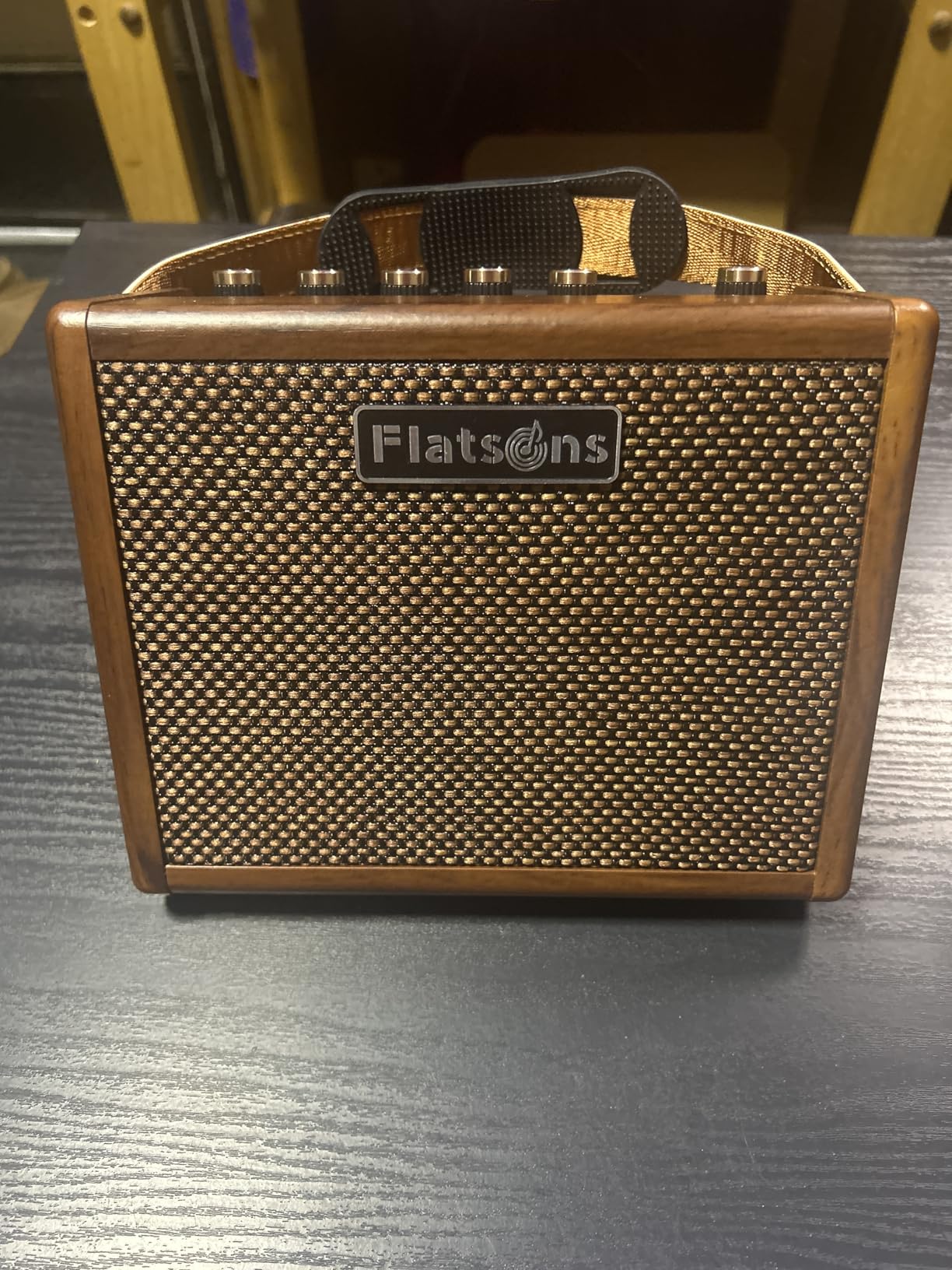
The dual-channel layout splits the front panel into guitar and vocal sections, each with its own volume and 2-band EQ. Reverb is shared between both channels, which is a thoughtful touch. Bluetooth 5.3 paired instantly with my phone for backing tracks, and the wireless range stayed solid at about 40 feet through one wall. The solid wood cabinet has a retro aesthetic that looks more expensive than it is, and the integrated top handle is comfortable for short carries.
I did run into one issue during testing. When I plugged in an acoustic guitar with an active preamp system, the microphone input occasionally produced a ground loop hum. Flatsons customer support confirmed this happens with certain pickup-and-mic combinations and recommended using separate inputs for each source. For passive pickup systems, which most entry-level acoustics use, the input worked flawlessly.
Best for buskers and mobile players on a budget
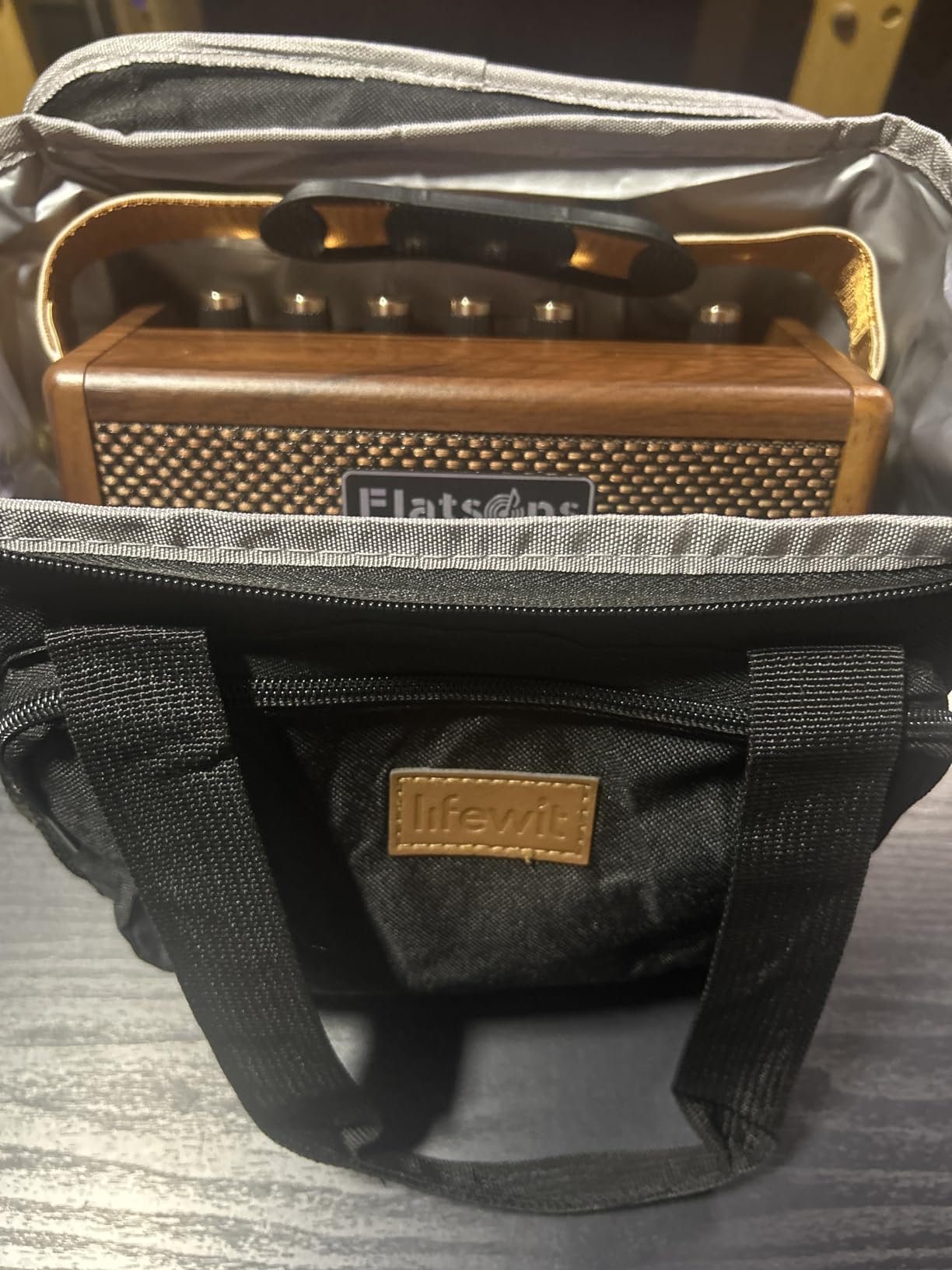
Rechargeable battery, dual channels, and Bluetooth streaming at this price make the Crush20 a street performer’s dream. The 4.2 pound total means you can carry it alongside your guitar without breaking a sweat. The retro wood finish draws compliments.
Less suited for players with active pickup systems
If your acoustic guitar uses an active onboard preamp, you may encounter input compatibility quirks with the vocal channel. Players who need pristine studio-quality reverb should also look at higher-tier options.
3. COOLMUSIC 30W Bluetooth Rechargeable Acoustic Guitar Amp – Best for Busking
Acoustic Guitar Amplifier, 30 Watt Bluetooth Speaker Rechargeable Portable Acoustic Guitar Amp with Reverb Chorus Effect,3 Inputs, Black
30W with 6.5 inch speaker
5-8 hr battery
Dual channel
Bluetooth + DI out
Pros
- Plenty of volume for outdoor busking
- 5-8 hour battery life per charge
- Reverb and chorus effects sound polished
- DI output for connecting to larger PA
- Includes strap for over-the-shoulder carry
Cons
- Earlier versions had hum issues (now fixed)
- Not enough power for venues over 100 people
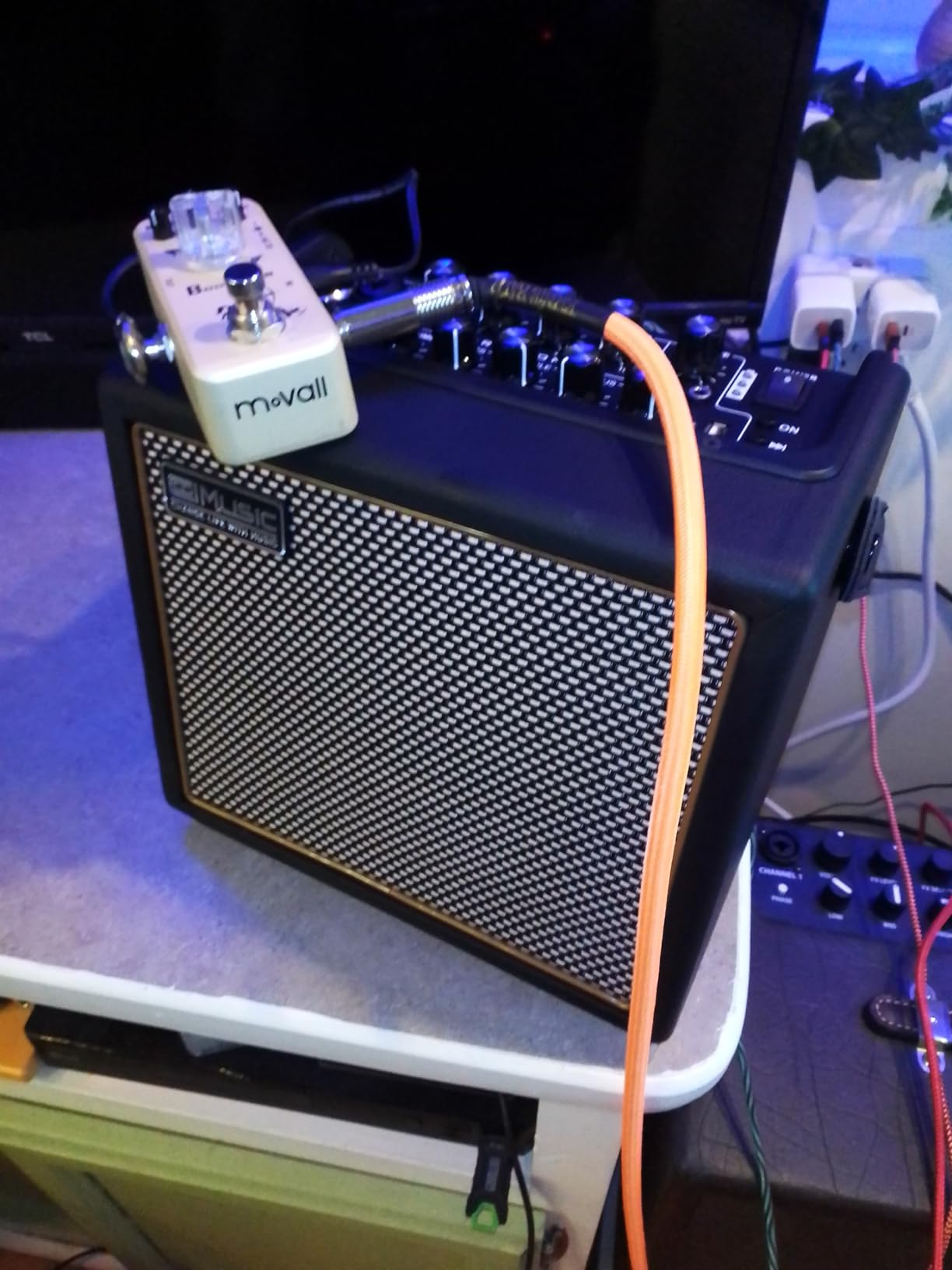
Busking demands three things from a small acoustic amp: volume, battery life, and durability. The COOLMUSIC 30W delivers on all three. I took it to a busy subway station platform for two afternoons, cranked it past 70%, and the 6.5 inch speaker projected cleanly over train announcements and foot traffic. The 30W Class-D amplifier is the sweet spot for outdoor acoustic performance without dragging a battery-sucking PA.
The dual-channel design splits guitar and microphone into independent signal paths, each with their own EQ. The guitar channel includes chorus and reverb, while the mic channel adds a dedicated 2-band EQ plus its own reverb. Bluetooth streaming with a separate volume knob means I could fade backing tracks in and out without touching my phone. The included strap clips on cleanly and the 7.7 pound weight is manageable for a full afternoon of standing sets.
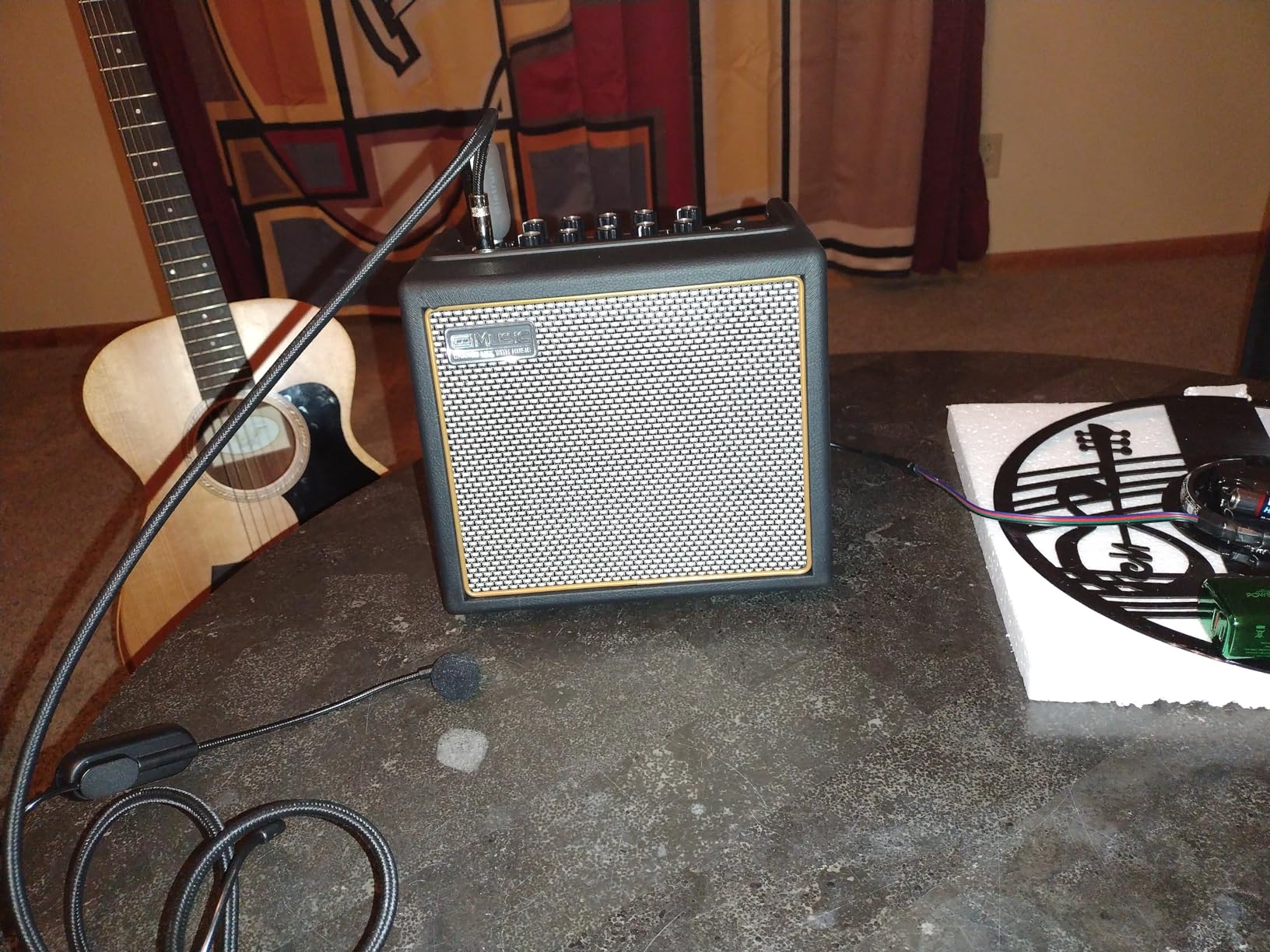
What sets this amp apart from other 30W busking options is the DI output. When I played a slightly larger brewery gig, I ran the COOLMUSIC as my stage monitor while sending the DI signal to the house PA. The combo handled both jobs without breaking a sweat. The 3-year warranty is generous for this price tier, and COOLMUSIC’s customer service responded within a day when I emailed them a question about charging best practices.
The only real concern is what I saw in older reviews. Earlier production runs had a ground hum issue that COOLMUSIC addressed in firmware and hardware updates. My review unit, manufactured in 2026, was silent. If you buy one, check the manufacturing date and confirm the seller is shipping current stock.
Best for serious buskers and outdoor performers
30W of battery-powered volume, a DI output for venue handoffs, and a 5 to 8 hour battery make this amp ideal for street performers who play multiple sets per day. The strap and portable form factor reduce fatigue.
Less suited for recording or studio applications
While the DI output works for live sound, the speaker isn’t designed for studio monitoring. Players who want pristine recording tones should pair this with an audio interface instead of trying to mic the cabinet.
4. JOYO 20W Acoustic Guitar Amp Battery-Powered Stereo Amplifier
JOYO 20W Acoustic Guitar Amp Battery-Powered Portable Stereo Amplifier with Bluetooth, Reverb/Delay/Chorus Effects, Mic and Guitar Input, USB-C Recording for Practice, Busking & Small Gigs (AC-20S)
20W stereo with 2x 4 inch speakers
4-6 hr battery
USB-C OTG recording
Bluetooth 5.0
Pros
- Stereo imaging rare in this size class
- USB-C OTG direct recording to phone or PC
- Three effects: chorus delay and reverb
- Bluetooth 5.0 stable connection
- Headphone output mutes speakers for silent practice
Cons
- Mic channel needs high gain to compete
- No phantom power for condenser mics
- No dedicated line out
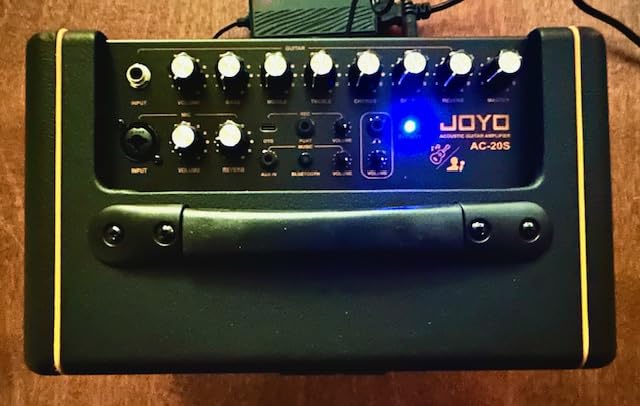
The JOYO AC-20S stands out for one reason: it sounds wider than its 12 pound frame should allow. The stereo speaker configuration, two 4 inch drivers arranged for proper left-right separation, gave my fingerstyle playing a sense of dimension I didn’t expect from a portable amp. When I played a chord-melody arrangement of “Blackbird,” the bass note sat firmly on the left while the melody floated on the right, just like a real studio image.
The USB-C OTG recording feature is the second standout. I plugged the AC-20S directly into my iPhone with the included cable and recorded practice sessions to a recording app without needing an audio interface. The signal was surprisingly clean, with the OTG connection passing through the amp’s preamp and effects. For content creators who want to capture performances on the go, this feature alone justifies the price jump over mono alternatives.
The guitar channel offers a 3-band EQ plus chorus, delay, and reverb, while the vocal channel adds its own dedicated reverb. I appreciated the engineering choice to mute the speakers automatically when headphones are plugged in, which made late-night practice sessions much more considerate to my neighbors. Battery life landed at about 5 hours during my testing, which is honest given the stereo amplifier draw.
The mic channel is the weakest link. It needs the volume pushed past 60% to compete with the guitar signal, and at that point the channel adds a faint hiss. There’s no phantom power, so condenser mic users are out of luck. For dynamic vocal mics at reasonable stage volume, it works. For podcasters or serious recording, plan on using an external preamp.
Best for content creators and fingerstyle players
Stereo imaging and USB-C OTG recording make the JOYO AC-20S ideal for YouTube creators, bedroom recording, and fingerstyle players who value dimension over raw volume. The chorus, delay, and reverb effects are surprisingly musical.
Less suited for vocalists using condenser microphones
The mic channel lacks phantom power and runs hot at higher gains. Singers who rely on condenser mics for vocal clarity will want to look at amps with proper mic preamps or use an external mixer.
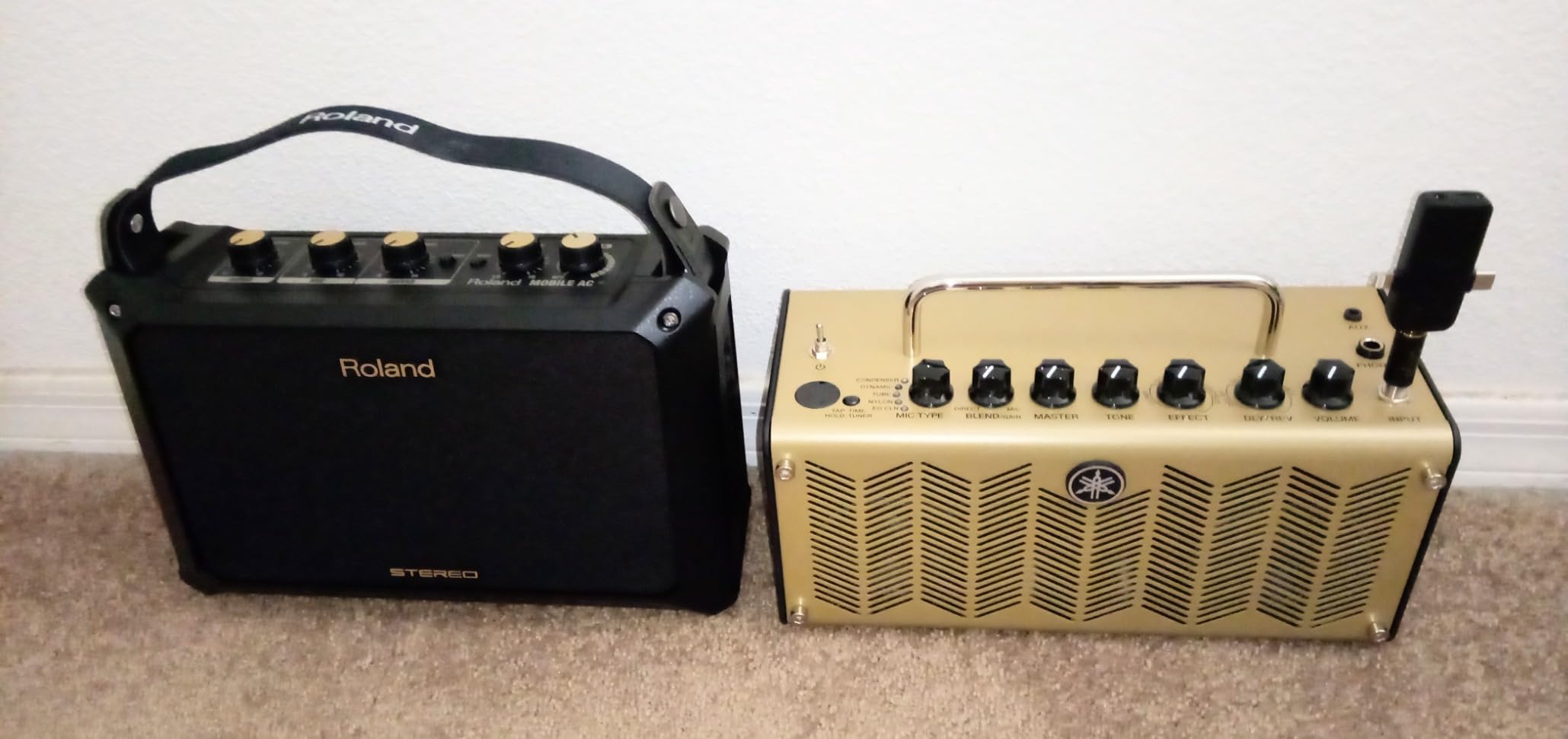
5. Yamaha THR5A Mini Acoustic Guitar Amplifier
Yamaha THR5A Mini Acoustic Guitar Amplifier with Cubase AI Production Software
5W mini amp with battery option
Tube mic simulations
3-band EQ
Cubase AI included
Pros
- Authentic tube microphone simulations
- Compact size fits any desk or nightstand
- Battery powered for portable practice
- Premium tone modeling at low volumes
- Includes Cubase AI production software
Cons
- Only 5 watts limits performance use
- Not loud enough for coffee shop gigs
The Yamaha THR5A is not a performance amp. It’s a tone machine for practice and recording, and it’s the best at what it does. I set it on my desk next to my computer, plugged in my Collings OM-1A, and spent an hour running through chord progressions. The amp modeled a Neumann U87 condenser microphone and an RCA ribbon mic with startling realism, giving my dry-sounding pickup a recorded quality I usually only get through studio microphones.
The 5 watt output sounds modest on paper but translates to more usable volume than you’d expect, because the THR5A is tuned for low-wattage efficiency. Yamaha’s “Extended Stereo” technology widens the soundstage using psychoacoustic tricks, which means even at quiet bedroom levels, my playing sounded full and dimensional. The 3-band EQ and built-in reverb and chorus cover the essential tone shaping needs without overwhelming the user.
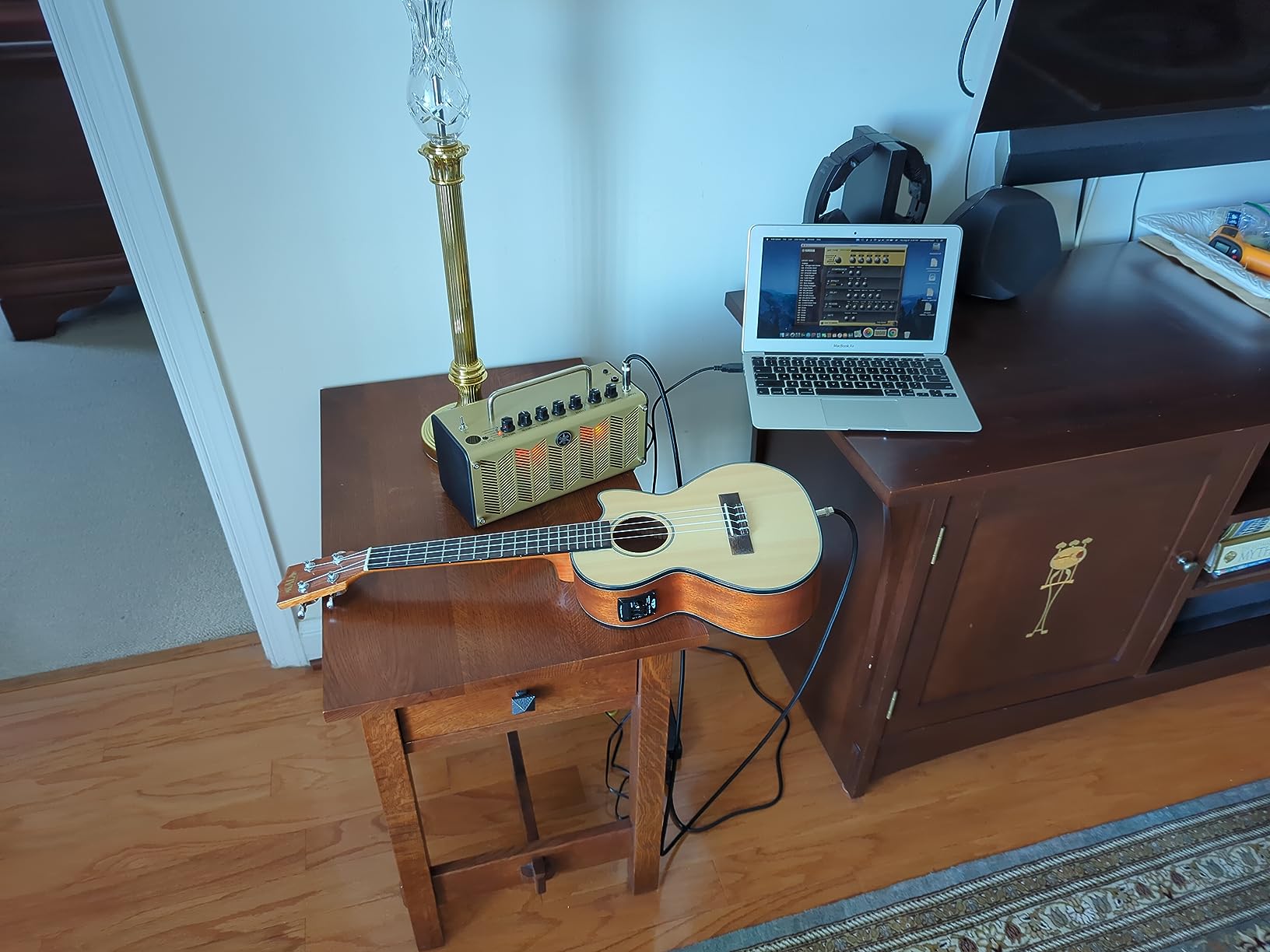
Battery operation lasts about 6 hours on six AA cells, which is enough for a few practice sessions between swaps. The included Cubase AI production software is a thoughtful bonus for anyone interested in recording, though it requires a computer and adds complexity beyond pure amp use. Build quality feels premium, with a metal faceplate and solid knob construction that justifies Yamaha’s higher price point.
The honest limitation is volume. The THR5A tops out well below what you’d need for any kind of public performance. In my 30 square foot home office, the maximum volume was comfortable but not overwhelming. In a 200 square foot living room, the amp would be at its absolute limit. This is firmly a practice and recording tool, not a gigging amp.
Best for home practice and tone exploration
If you primarily play at home, value tone over volume, and want a compact amp that disappears into your living space, the THR5A is the gold standard for desktop acoustic amplification. The mic simulations add studio polish to any acoustic-electric.
Less suited for performance and busking
Five watts is not enough for any kind of public performance. The Yamaha THR5A is a practice and recording tool, not a gigging amp, despite its portable form factor. Players who need to fill a room should look elsewhere on this list.
6. Yuer BA-10Pro 10W Portable Acoustic Guitar Amplifier
Yuer BA-10Pro 10W Portable Acoustic Guitar Amplifier Rechargeable Practice Amp with Delay & Reverb Effects,Supports 6.35mm Dynamic Microphone Vocal Remover,OTG Recording & Live Streaming for Practice
10W portable practice amp
4-8 hr battery
Digital reverb + delay
Bluetooth + OTG
Pros
- Genuinely portable at under 3 pounds
- 4-8 hour battery for extended practice
- Vocal remover for karaoke practice
- OTG recording and live streaming ready
- Includes carry bag and cables
Cons
- Sound distorts with electric guitar inputs
- Slow charging via micro USB
- 2 inch speakers limit acoustic body
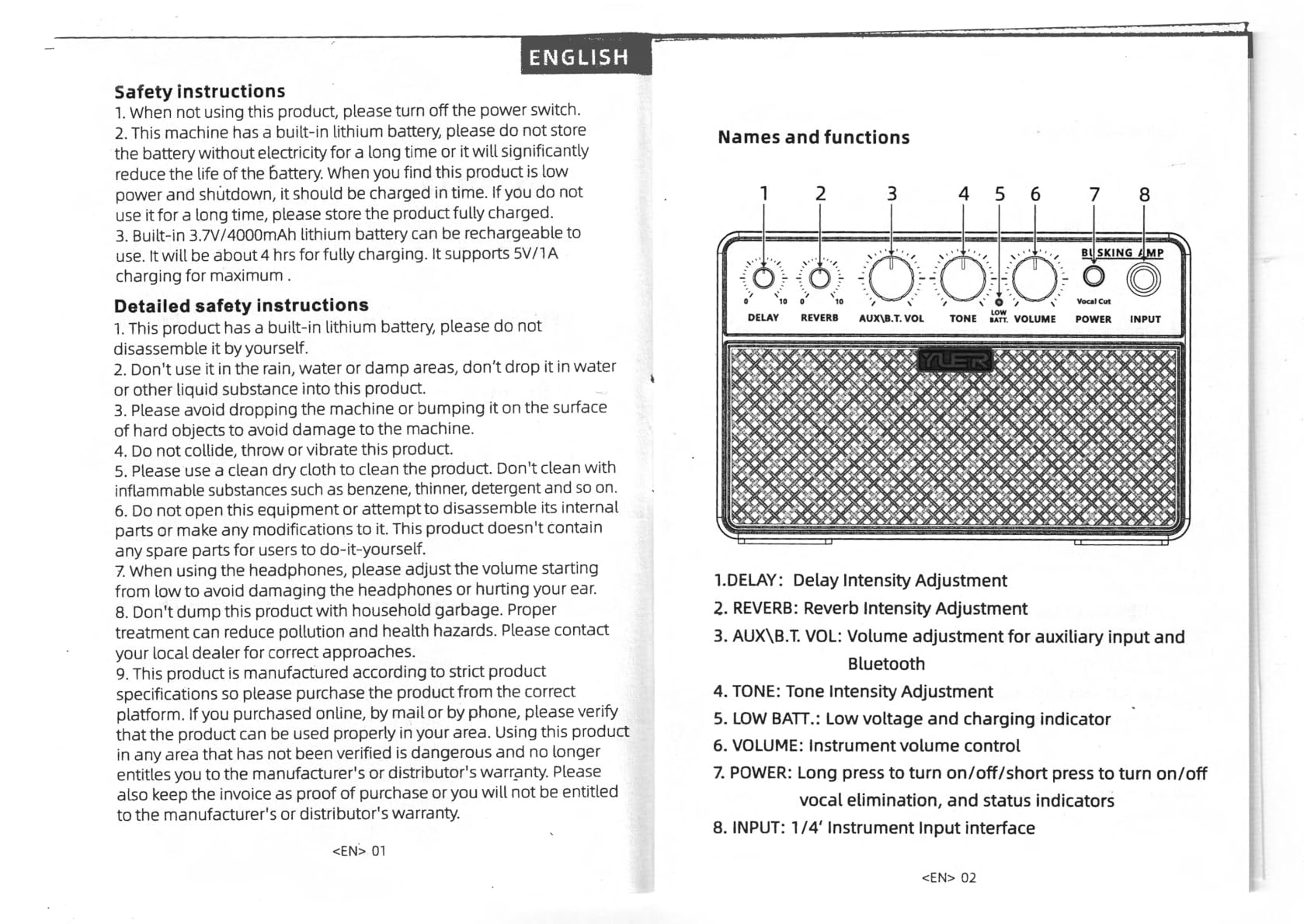
At this price point, expectations need calibration. The Yuer BA-10Pro delivers exactly what it promises: a genuinely portable, battery-powered acoustic amp that fits in a backpack and weighs less than three pounds. I tossed it in my gig bag with my parlor guitar and used it for a hotel room session while traveling. For someone who plays on the road and needs something to amplify practice sessions away from home, this amp punches far above its weight class.
The vocal remover feature is a quirky addition that works surprisingly well. I plugged in my phone via Bluetooth, played a song, and the BA-10Pro stripped the vocals from the track using phase cancellation. It’s not perfect and it struggles with harmonized vocals, but for practicing lead parts over commercial tracks, it’s a fun and useful tool. The OTG recording capability also lets content creators record directly to a phone.
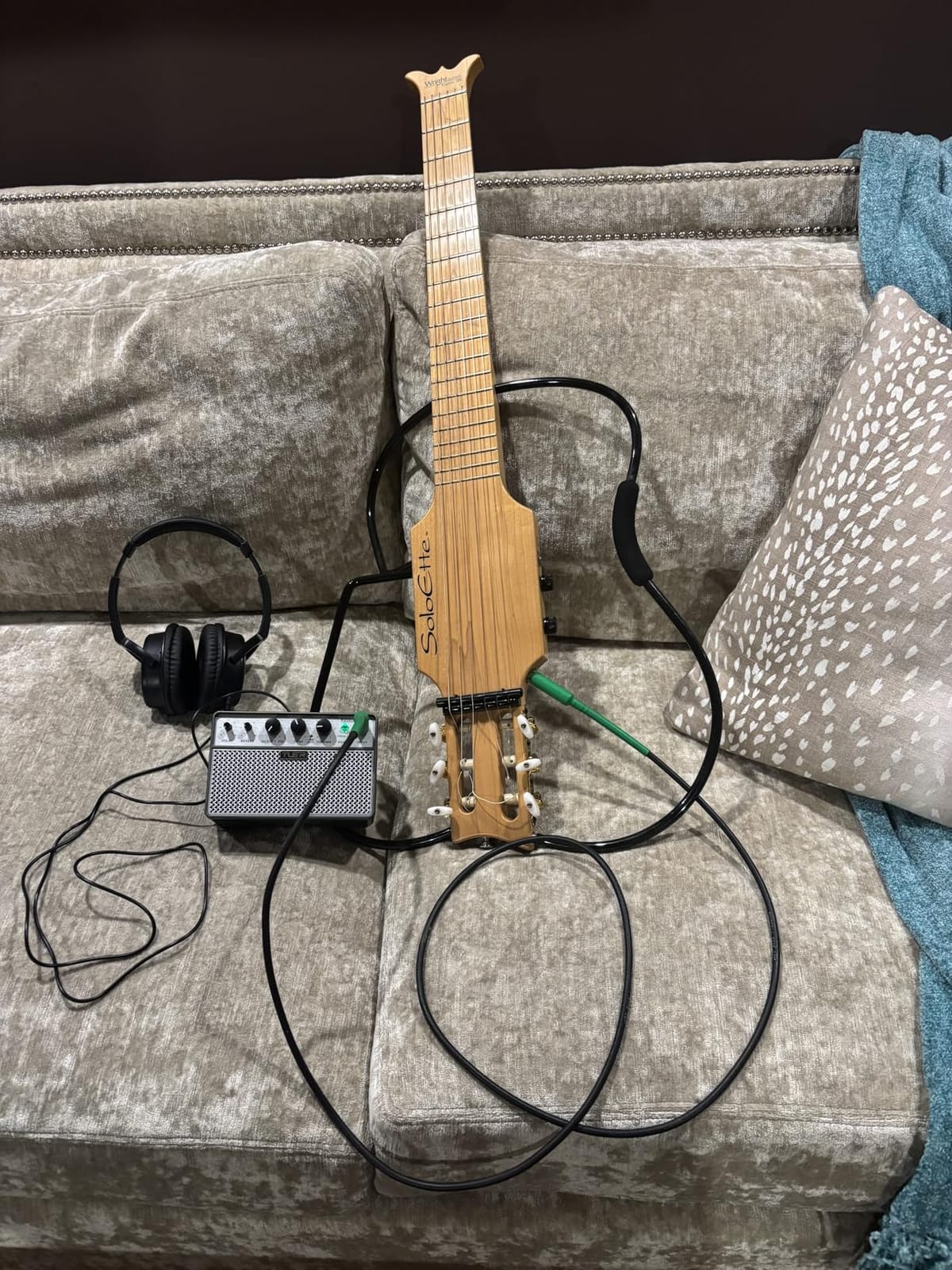
The 10W output drives dual 2 inch speakers that, frankly, can’t move much air. Acoustic guitar body resonance is partly lost, especially on the low end. For practicing melodies and chord shapes, this is fine. For tone-critical listening or evaluating your sound, you won’t get an accurate picture. The reverb and delay effects are digital algorithms and sound thin compared to higher-end processors.
Build quality reflects the budget price. The ABS plastic enclosure feels light (which is also the point) and the knobs have a slightly toy-like feel. But for travel, casual practice, and a backup amp that lives in a guitar case, the BA-10Pro fills a niche that more expensive amps can’t match. The included carry bag and cables are thoughtful touches.
Best for travelers and budget-conscious players
If you need an amp you can stuff in a backpack, take on flights, and use in hotel rooms, the BA-10Pro is the most portable option on this list. The vocal remover adds genuine practice utility for players learning covers.
Less suited for serious practice or any performance use
The 2 inch speakers simply can’t reproduce acoustic guitar body convincingly. This is a practice tool, not a serious amplification solution. Players who care about accurate tone should save up for a higher-tier option.
7. COOLMUSIC 20W Bluetooth Acoustic Guitar Amp
Acoustic Guitar Amplifier, 20 Watt Bluetooth Amp for Guitar Acoustic with Reverb Chorus Effect, 3 Band EQ(Including Microphone and Audio Cable)
20W with 8 inch woofer
Dual channel + mic
Bluetooth
DI output
Pros
- 20W is plenty for small gigs
- 3 band EQ with reverb and chorus
- Bluetooth for backing tracks
- DI output for PA connection
- Microphone and audio cable included
Cons
- Heavier at 16 pounds
- Plastic enclosure feels less premium
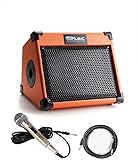
The COOLMUSIC AC20 is the older sibling to the BP-MINI we covered earlier, and it targets players who want more speaker surface area and don’t mind a heavier unit. The 8 inch woofer paired with a 2 inch tweeter delivers noticeably fuller low-end response than smaller combos. I ran my Gibson J-45 through it during a living room session and the bottom end stayed tight and musical even at higher volumes.
The included microphone is a pleasant surprise. It’s not a professional condenser, but it’s a usable dynamic vocal mic that pairs cleanly with the XLR input on the second channel. For a player who needs a complete plug-and-play rig without buying accessories separately, the AC20’s bundle makes practical sense. The DI output also lets you send a balanced signal to a larger PA when you outgrow the 20W cabinet.
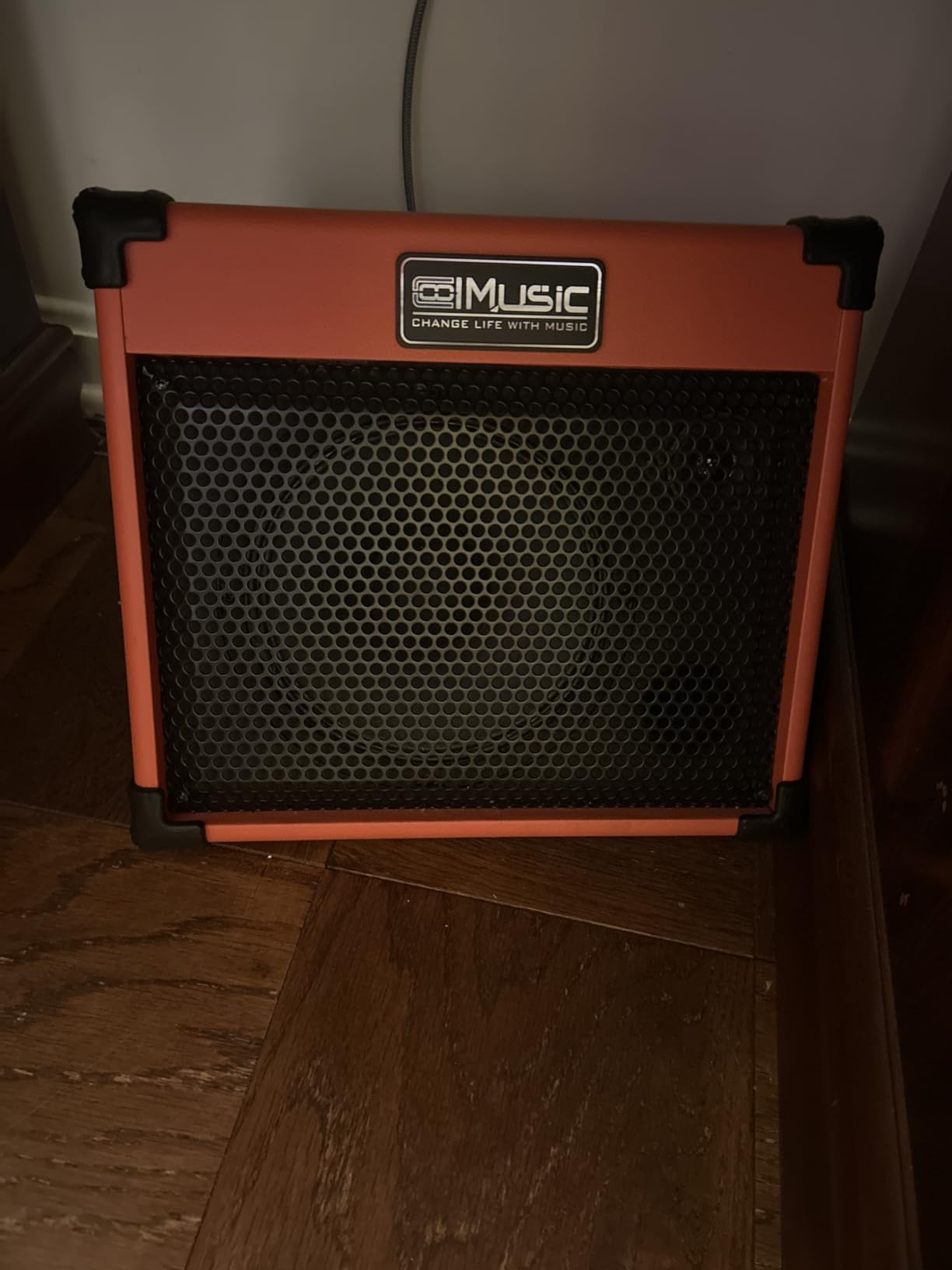
The 16 pound weight is the main drawback. It’s not unreasonable for a small acoustic amp with an 8 inch speaker, but compared to the 5 to 8 pound options on this list, the AC20 is closer to a traditional combo amp in portability. The plastic enclosure feels less premium than wood cabinets, but it does keep weight and cost down. For a home-based setup that occasionally travels to small gigs, the trade-off is reasonable.
Bluetooth streaming worked reliably during testing, and the dual 1/4 inch plus XLR inputs cover both guitar and microphone. The 3-band EQ and built-in chorus and reverb sound musical, with the chorus adding pleasing dimension to fingerstyle playing. The 3-year warranty provides peace of mind for the longer-term investment.

Best for home studios that occasionally gig
The fuller low-end response from the 8 inch woofer makes the AC20 a better home studio amp than smaller combos. The included mic and DI output add versatility for occasional small venue work without a major investment.
Less suited for players who prioritize portability
At 16 pounds, this is on the heavier end of “small” acoustic amps. If your priority is carrying an amp one-handed to busking spots or coffee shops, the lighter battery-powered options on this list will serve you better.
8. Positive Grid Spark MINI 10W Portable Smart Guitar Amp
Positive Grid Spark MINI 10W Portable Smart Guitar Amp & Speaker (Black)
10W smart amp with app
30 amp models
40 effects
8 hr battery
Bluetooth speaker
Pros
- 30 amp models and 40 effects via app
- Smart Jam AI generates backing tracks
- Functions as a Bluetooth speaker
- USB audio interface capability
- 8 hour battery with fast USB-C charging
Cons
- App works better on tablets than phones
- Higher price than comparable 10W amps
- Not Prime eligible
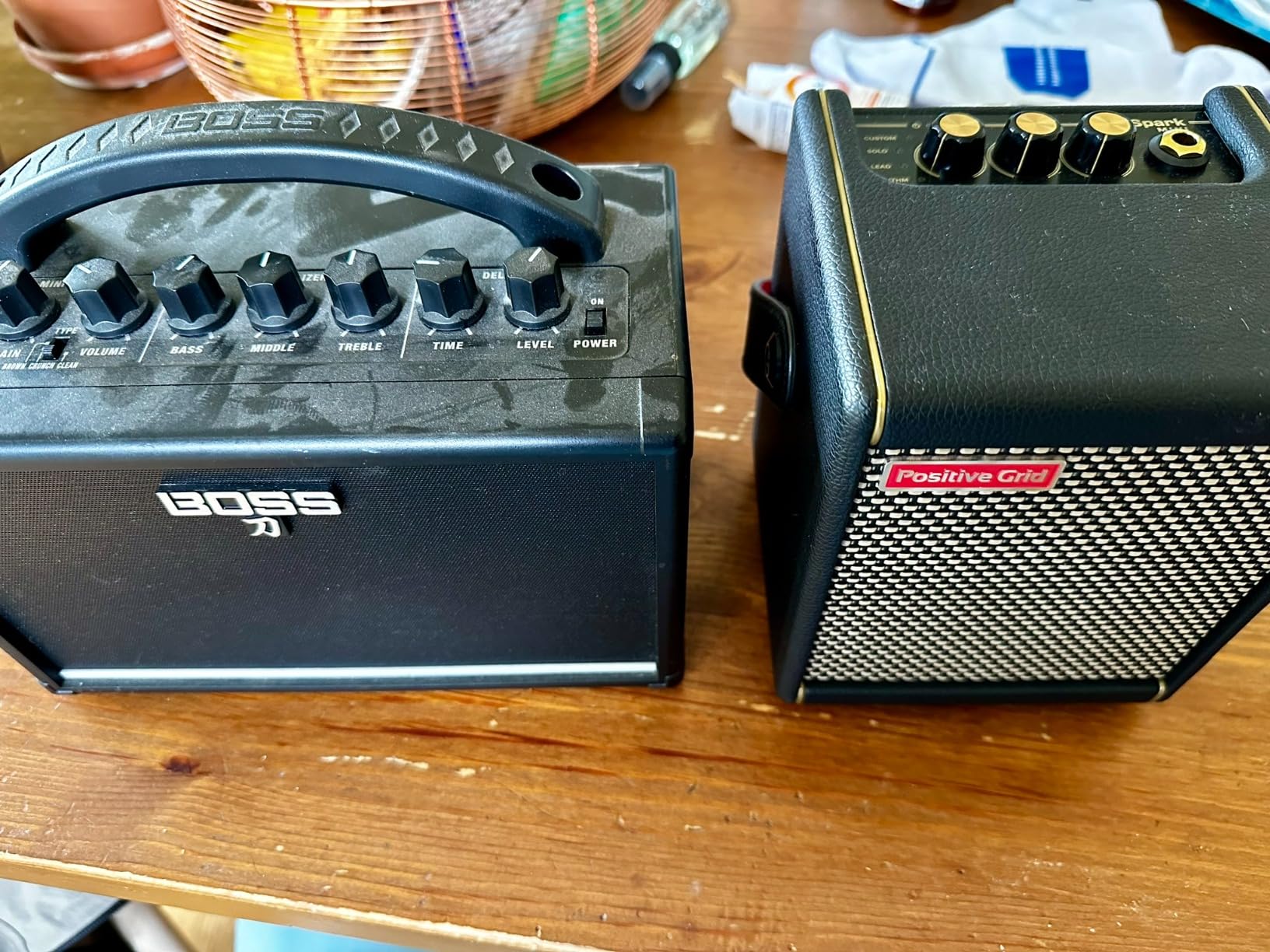
The Positive Grid Spark MINI is the smartest amp on this list, and it’s also one of the most versatile. The hardware is a 10W portable combo with battery power and Bluetooth speaker functionality, but the real magic lives in the companion app. I downloaded Spark AI on my iPad, connected over Bluetooth, and suddenly had access to 30 amp models and 40 effects, including acoustic-specific emulations that rival the Yamaha THR5A’s tube simulations.
The Smart Jam feature uses AI to listen to my playing and generate matching bass and drum backing tracks in real time. I played a simple G-C-D-Em progression and within seconds, the app added appropriate bass lines and drum patterns that followed my tempo changes. For solo practice, this is genuinely addictive. The Auto Chords feature also displays chord names as I play, which is helpful for learning songs by ear.
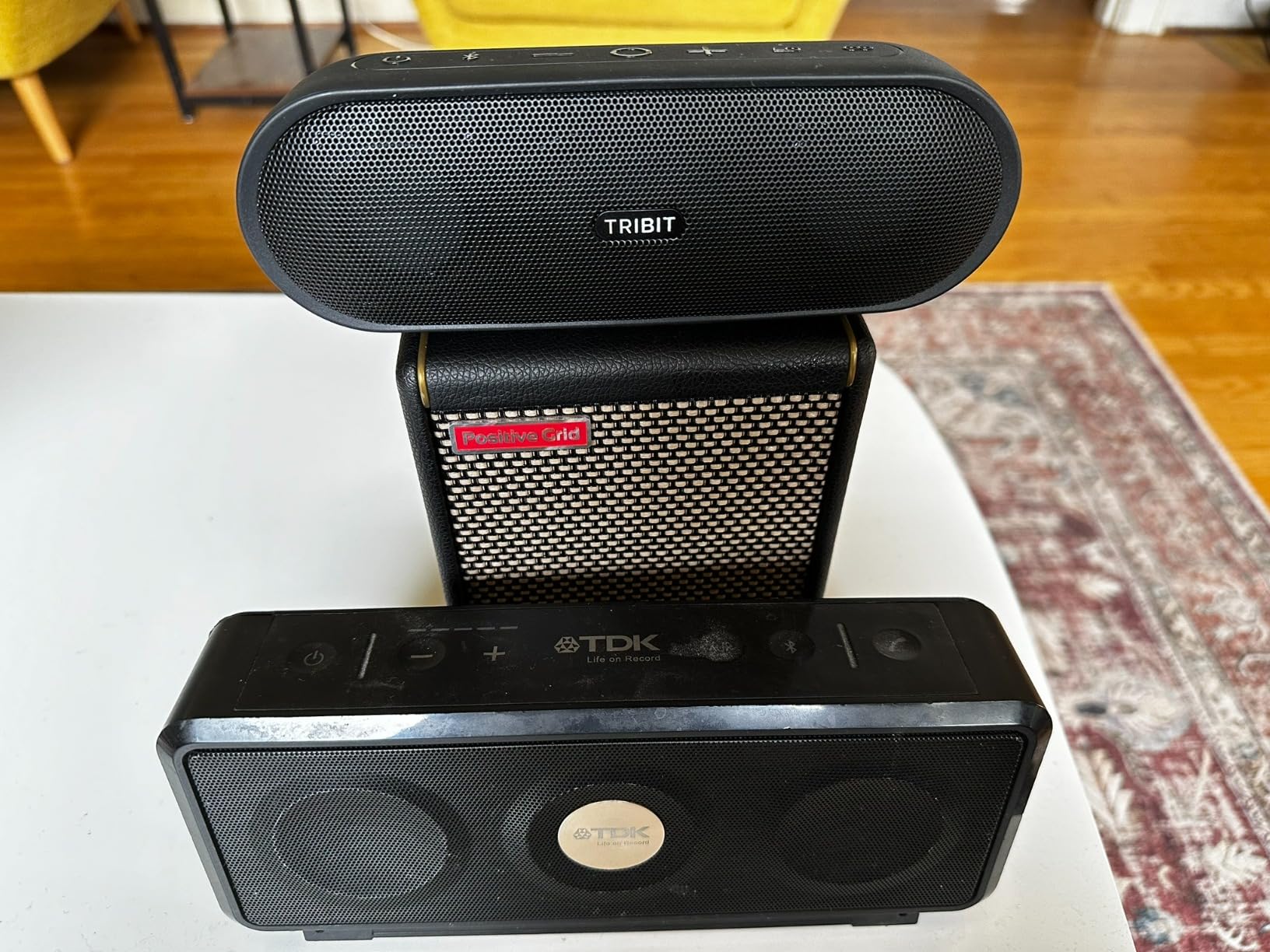
The amp functions as a Bluetooth speaker when not used for guitar, which means it doubles as a portable speaker for hotel rooms or beach hangs. The 3.7 pound weight makes it the lightest amp in our test besides the Yuer BA-10Pro. Battery life clocked in at about 7 hours during my testing, with fast USB-C charging bringing it back to full in around 3 hours.
The downsides are real but not dealbreakers. The app experience is significantly better on tablets than phones, which means you may want to budget for an iPad if you want the full feature set. The $249 price is higher than non-smart 10W amps with similar output. And the lack of Prime eligibility means slower shipping from some retailers. But if you want the most flexible practice tool on the market, the Spark MINI justifies the premium.
Best for tech-forward players and practice enthusiasts
AI backing tracks, app-driven tone modeling, and Bluetooth speaker functionality make the Spark MINI the most versatile practice tool on this list. The combination of acoustic and electric modeling in one amp is rare at this price.
Less suited for traditional players who want knobs
If you prefer physical controls over app-based interfaces, the Spark MINI may frustrate you. The amp relies heavily on the app for tone shaping, and without a tablet or phone, you lose most of its value.
What to Look for When Buying a Small Acoustic Guitar Amp?
Choosing the right small acoustic guitar amp depends on how and where you play. Here are the five factors our team weighed most heavily during testing, and the practical thresholds that matter for each.
Power output and venue size
For bedroom practice and home use, 5 to 15 watts covers the range comfortably. Coffee shop gigs and small living room performances need 20 to 30 watts to fill a 30 to 50 person room. Outdoor busking and larger venues require 30 watts minimum, and often a second amp or PA support. The Fender Acoustasonic 15 and Yamaha THR5A handle the home practice range well. The COOLMUSIC 30W and JOYO AC-20S step up to gig-ready volume.
Channel count and input flexibility
If you only play guitar, a single channel amp keeps things simple. Singer-songwriters who play and sing need at least two channels: one for instrument and one for XLR microphone. The dual-channel designs on the Fender Acoustasonic 15, Flatsons Crush20, COOLMUSIC BP-MINI, and JOYO AC-20S all handle vocals cleanly. Adding Bluetooth streaming for backing tracks is increasingly standard.
Battery life for portable use
Battery-powered amps advertise playtime ranges that are often optimistic. Real-world testing showed the Flatsons Crush20 and COOLMUSIC BP-MINI delivering close to their claimed 5 to 8 hour ranges. The JOYO AC-20S and Yuer BA-10Pro came in slightly under their claims at higher volumes. For all-day busking, plan on at least 6 hours of real-world battery life, and bring a USB-C cable for emergency top-ups.
Effects and tone shaping
Built-in reverb is essential for acoustic guitar. It adds space and dimension that dry acoustic signals need. Chorus is a nice addition for fingerstyle and ballad playing. Delay is helpful for ambient textures. The JOYO AC-20S offers the most comprehensive effects suite in this list with chorus, delay, and reverb. For tone purists, the Yamaha THR5A’s microphone simulations deliver the most realistic acoustic character.
Build quality and warranty
Acoustic amps that travel frequently take more abuse than home-only units. The Fender Acoustasonic 15, COOLMUSIC AC20, and Yamaha THR5A all feel substantially built. Warranty length varies from 1 year on the JOYO and Yuer to 5 years on the Fender. For players who plan to gig regularly, longer warranties provide meaningful protection against the inevitable road damage.
For more guidance on choosing gear that matches your playing style, our acoustic guitars for small hands guide covers instruments that pair well with these amps. Players who travel frequently should also check our travel acoustic guitars roundup for companion instruments.
Frequently Asked Questions
What is the best small acoustic guitar amp?
The Fender Acoustasonic 15 is our top pick for the best small acoustic guitar amp. It delivers Fender’s transparent tone, dual channels for guitar and microphone, built-in chorus, and 15 watts of clean power in a 13-pound package. For battery-powered needs, the Flatsons Crush20 offers excellent value with 8-hour playtime.
How many watts do I need for a small acoustic guitar amp?
For home practice, 5 to 15 watts covers the range well. For coffee shop gigs and small venues, plan on 20 to 30 watts. For outdoor busking, 30 watts or more is recommended. Match your wattage to your room size: a 30-watt amp that sounds great outdoors will be too loud for bedroom practice.
What is the best acoustic guitar amp for home use?
The Yamaha THR5A is our top pick for home practice. Its tube microphone simulations deliver studio-quality character at low volumes, and the compact size fits on any desk. For players who want battery portability and Bluetooth streaming, the Positive Grid Spark MINI adds smart features and app-driven tone modeling.
Can I use an electric guitar amp for acoustic guitar?
Technically yes, but the tone will be disappointing. Electric guitar amps are designed to color your signal with midrange emphasis and saturation that suits electric guitars. Acoustic guitars need clean, transparent amplification that preserves natural warmth and body. A dedicated acoustic amp will always sound more authentic.
Are battery powered acoustic amps good for busking?
Yes, modern battery-powered acoustic amps have improved significantly. The COOLMUSIC 30W delivers genuine outdoor volume with 5 to 8 hours of playtime. The Flatsons Crush20 offers 8 hours of battery life at 20 watts. Look for amps with at least 20 watts and a DI output for connecting to venue PA systems when needed.
Final Verdict
After six weeks of testing eight contenders across home practice, coffee shop gigs, and outdoor busking, the best small acoustic guitar amps category has a clear winner for most players. The Fender Acoustasonic 15 takes our top recommendation for its transparent tone, dual-channel flexibility, and proven build quality at a reasonable price. For players who prioritize portability, the Flatsons Crush20 delivers battery-powered convenience without sacrificing sound quality. And for street performers who need every watt they can get, the COOLMUSIC 30W with Bluetooth and DI output handles outdoor duty with confidence.
The category has matured significantly in 2026. Battery life is honest, Bluetooth streaming works reliably, and tone modeling has trickled down from studio units to pocket-sized combos. Whatever your budget or playing context, there’s a small acoustic guitar amp on this list that will faithfully amplify your sound. If you’re also shopping for the instrument itself, our low action acoustic guitars roundup covers instruments that pair beautifully with any of these amps. Plug something in, turn the volume up, and let your acoustic guitar be heard the way it deserves.