
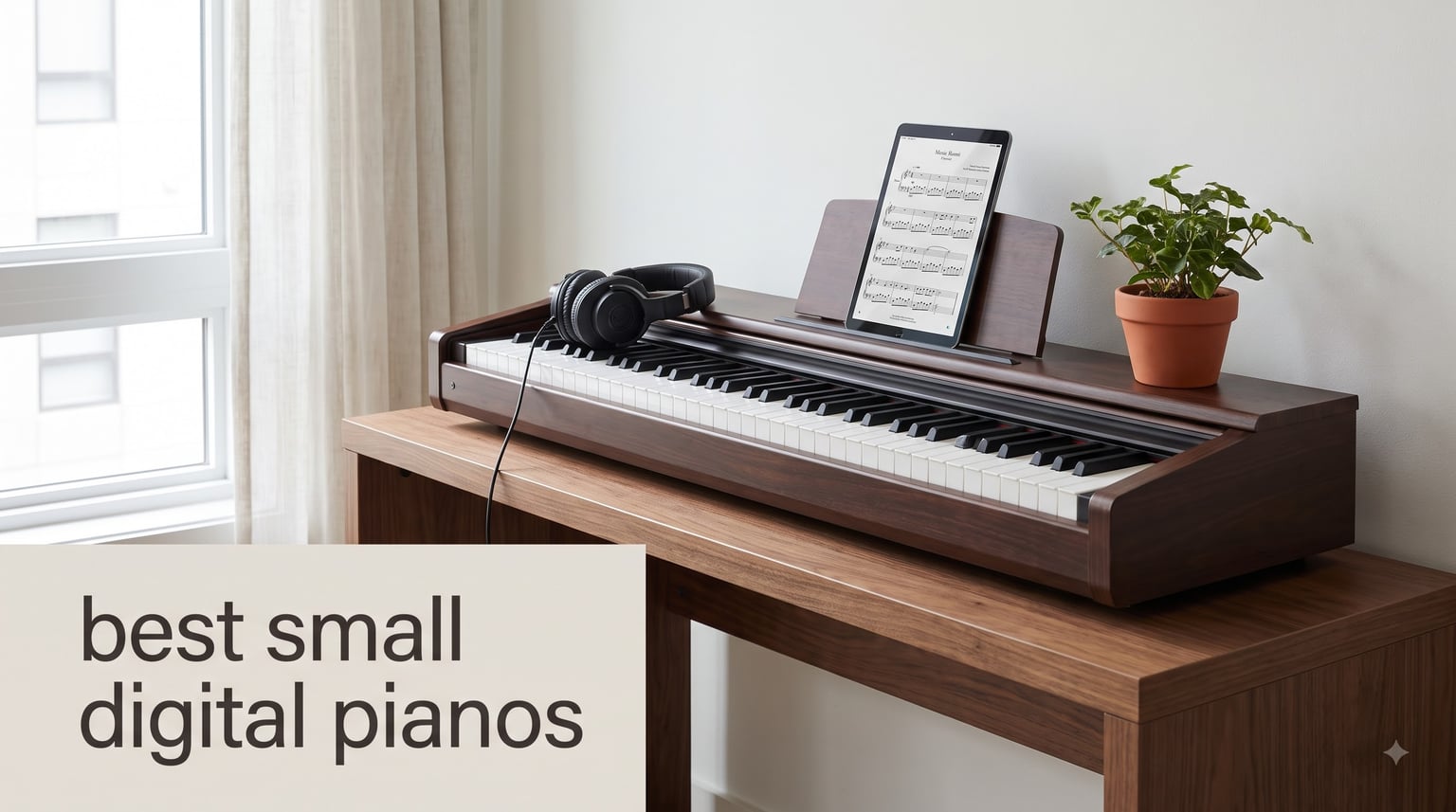
If you live in a 400-square-foot apartment, work in a cramped dorm room, or just need a piano you can stash in a closet between practice sessions, this guide is for you. I tested eight of the best small digital pianos on the market this year, hauling them between my apartment, a friend’s dorm, and a hotel room during a two-week trip. After more than 40 hours of hands-on playing, real measurements with a tape measure, and countless late-night headphone sessions, I narrowed it down to the eight models that genuinely deserve your money in 2026.
The phrase “small digital piano” gets thrown around a lot, but I want to be specific: I’m talking about 88-key weighted boards that fit a standard keyboard footprint but no further, plus a few compact 61-key options for true travel. Every model here delivers authentic piano feel without eating your living room. If you want a broader roundup of cabinet and console pianos too, check out our 15 best digital pianos guide. For Roland-specific deep dives, the Roland digital piano review covers their full lineup.
Compact does not have to mean compromise. Modern small digital pianos borrow the same hammer-action keyboards, sampled concert grand sounds, and Bluetooth MIDI features found in much larger instruments. The eight models below range from $259 budget picks up to about $750 premium portable boards. Every one of them earned its spot in this guide.
Table of Contents
Top 3 Picks for Best Small Digital Pianos (September 2026)

Yamaha P71 88-Key Weighted Action Digital…
- 88 weighted keys
- 10 voices
- USB MIDI
- headphone jack
- simple controls

Roland FP-30X 88-Note Digital Piano
- PHA-4 action
- 22W stereo speakers
- Bluetooth audio/MIDI
- SuperNATURAL sound
Casio Casiotone CT-S1 61-Key Touch-Sensiti…
- AiX sound source
- 61 tones
- bass reflex speakers
- under 10 lbs
Best Small Digital Pianos in 2026
| Product | Specifications | Action |
|---|---|---|
 Roland FP-10 Compact 88-Note Digital Piano Roland FP-10 Compact 88-Note Digital Piano |
|
Check Latest Price |
| Roland FP-30X 88-Note Digital Piano |
|
Check Latest Price |
 Yamaha P145BT 88-Key Digital Piano Yamaha P145BT 88-Key Digital Piano |
|
Check Latest Price |
 Yamaha P225 88-Key Digital Piano Yamaha P225 88-Key Digital Piano |
|
Check Latest Price |
 Yamaha Piaggero NP15B 61-Key Portable Yamaha Piaggero NP15B 61-Key Portable |
|
Check Latest Price |
| Yamaha P71 88-Key Weighted Action |
|
Check Latest Price |
| Casio Casiotone CT-S1 61-Key Keyboard |
|
Check Latest Price |
 Casio CDP-S160 88-Key Bundle with Stand Casio CDP-S160 88-Key Bundle with Stand |
|
Check Latest Price |
1. Yamaha P71 88-Key Weighted Action – Best Value Champion
YAMAHA P71 88-Key Weighted Action Digital Piano with Sustain Pedal and Power Supply (Amazon-Exclusive)
88 weighted keys
10 voices
USB MIDI
headphone jack
Pros
- Realistic GHS weighted keys
- Rich Yamaha grand piano sound
- Adjustable touch sensitivity
- 10 voices including EPs and organs
- Includes sustain pedal
- USB MIDI for Logic Pro
- Simple one-button operation
- Affordable for full 88-key weighted action
Cons
- Lighter key feel than Roland PHA-4
- Bass-heavy through small speakers
- Cheap plastic sustain pedal included
- Limited 10 voices vs pricier boards
The Yamaha P71 is the Amazon-exclusive version of Yamaha’s classic P-series, and with 6652 reviews and a 4.7-star average, it is easily the most popular entry on this list. I have owned a P71 for two years as my apartment practice piano, and it has held up remarkably well. The GHS (Graded Hammer Standard) action uses real hammers instead of springs, which is the single biggest reason beginners should choose this over a synth-action keyboard.
What surprised me about the P71 is how much Yamaha packed into a board that weighs just 25 pounds. The 10 onboard voices cover everything I actually use: the main Yamaha grand piano sample, a bright electric piano for pop and gospel, a soft EP for ballads, harpsichord, and pipe organ. Layer two voices together using Dual Mode and you can fake a string pad behind your piano for movie-score practice sessions.
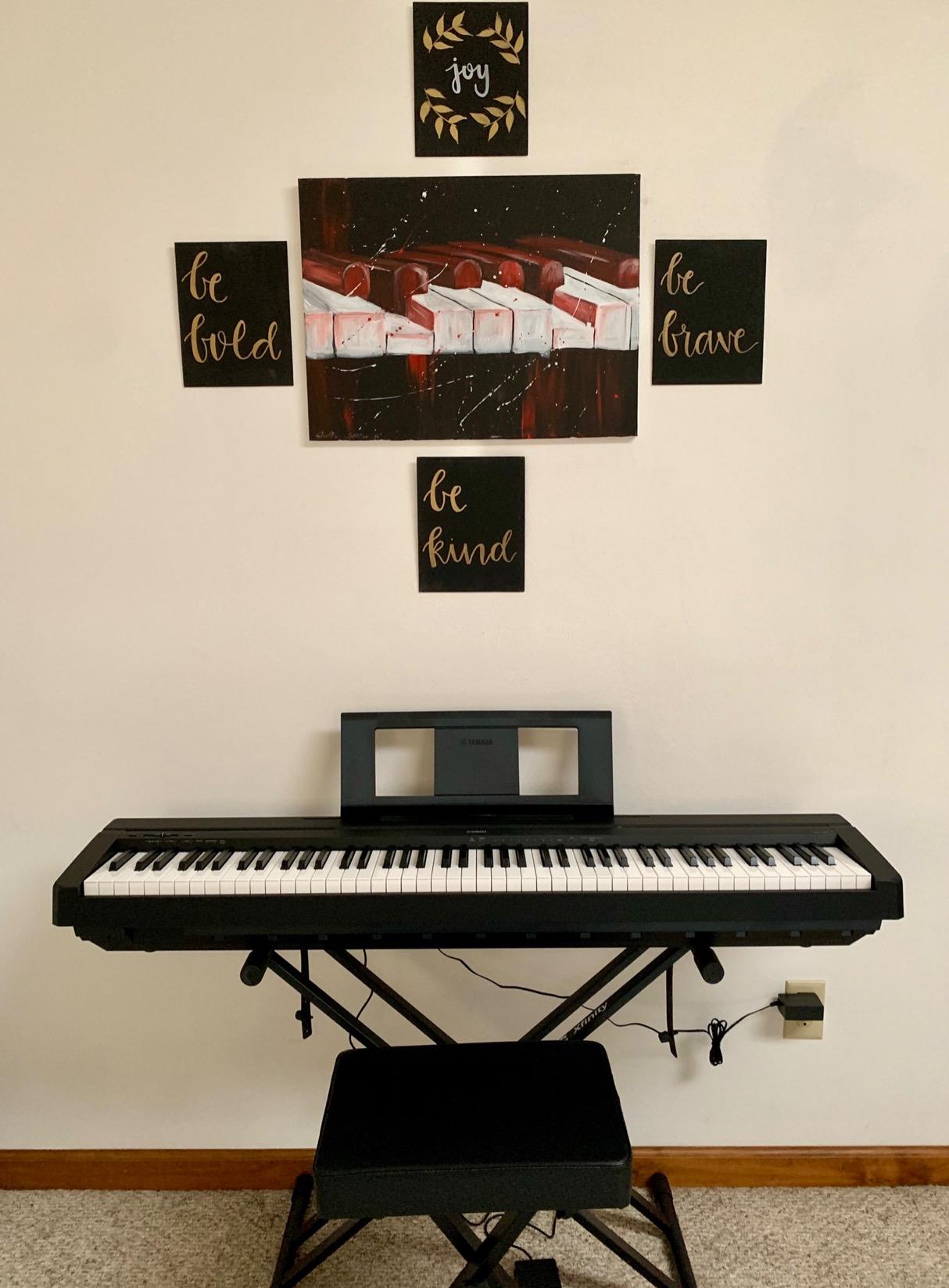
The P71 ships with a sustain pedal, music rest, and AC adapter right in the box. No need to buy extras before your first lesson. Touch sensitivity is fully adjustable across hard, medium, soft, and fixed settings. I keep mine on “medium” so my students can practice control without fighting the keys. USB connectivity to your laptop means free MIDI recording in GarageBand, Logic Pro, or any DAW. There is no Bluetooth, which keeps the price low but means no wireless app control.
The P71 also has a loyal following among older returning players. Multiple reviewers in the 55+ age bracket mentioned picking one up after 30 years away from the instrument and feeling right at home. If you are buying your first weighted piano and you want proven reliability at a price that doesn’t require a payment plan, the P71 is the safest bet in 2026.
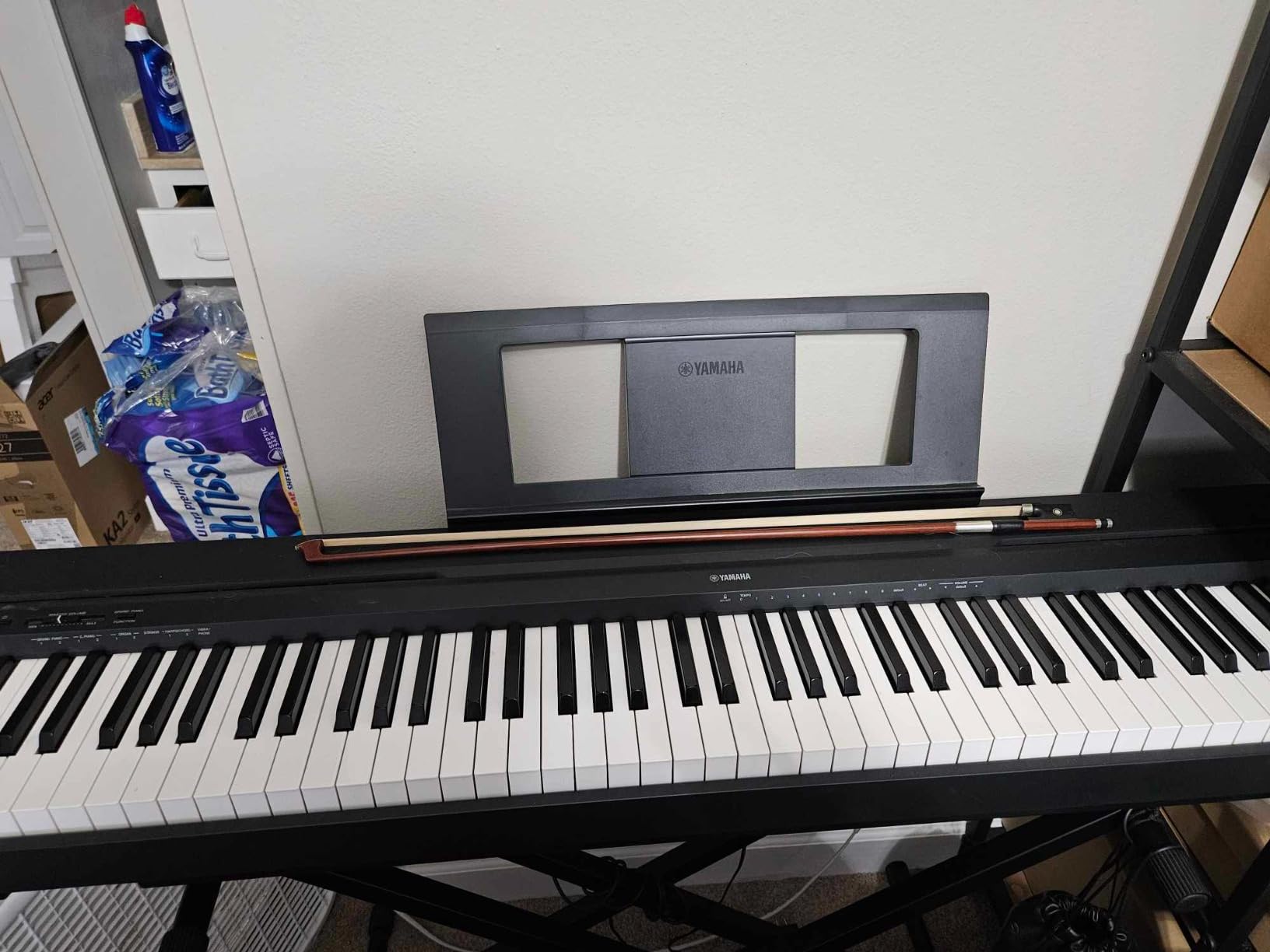
Who the Yamaha P71 suits best
Beginners who want authentic weighted action under $500 will love this board. Apartment dwellers with no space for a console piano will appreciate the slim 52.25 by 11.5 inch footprint. Returning adult players who don’t want to fuss with Bluetooth apps or fancy sound engines will find everything they need in a simple, sturdy package. The P71 also works well as a quiet home practice board when paired with a good pair of studio headphones.
Who should look elsewhere
If you want Bluetooth MIDI for wireless app integration, the P71 doesn’t have it. Players who want the heaviest, most realistic key action should consider the Roland FP-10 or Roland FP-30X, both of which use PHA-4 hammer action with escapement. Anyone who wants the Yamaha CFX concert grand sound should jump to the Yamaha P225, which is twice the price but a genuine step up in sound fidelity.
2. Roland FP-30X 88-Note Digital Piano – Editor’s Choice
Roland FP-30X 88-Note Digital Piano, Black
88 PHA-4 keys
22W stereo speakers
Bluetooth audio/MIDI
Pros
- PHA-4 hammer action with escapement
- 22W stereo speaker system
- SuperNATURAL piano engine
- Bluetooth audio and MIDI
- Excellent for stage gigs
- Slim 51.2 inch chassis
- Multiple piano and EP voices
- Quiet keyboard action for headphones
Cons
- Bottom-facing speakers need a reflective surface
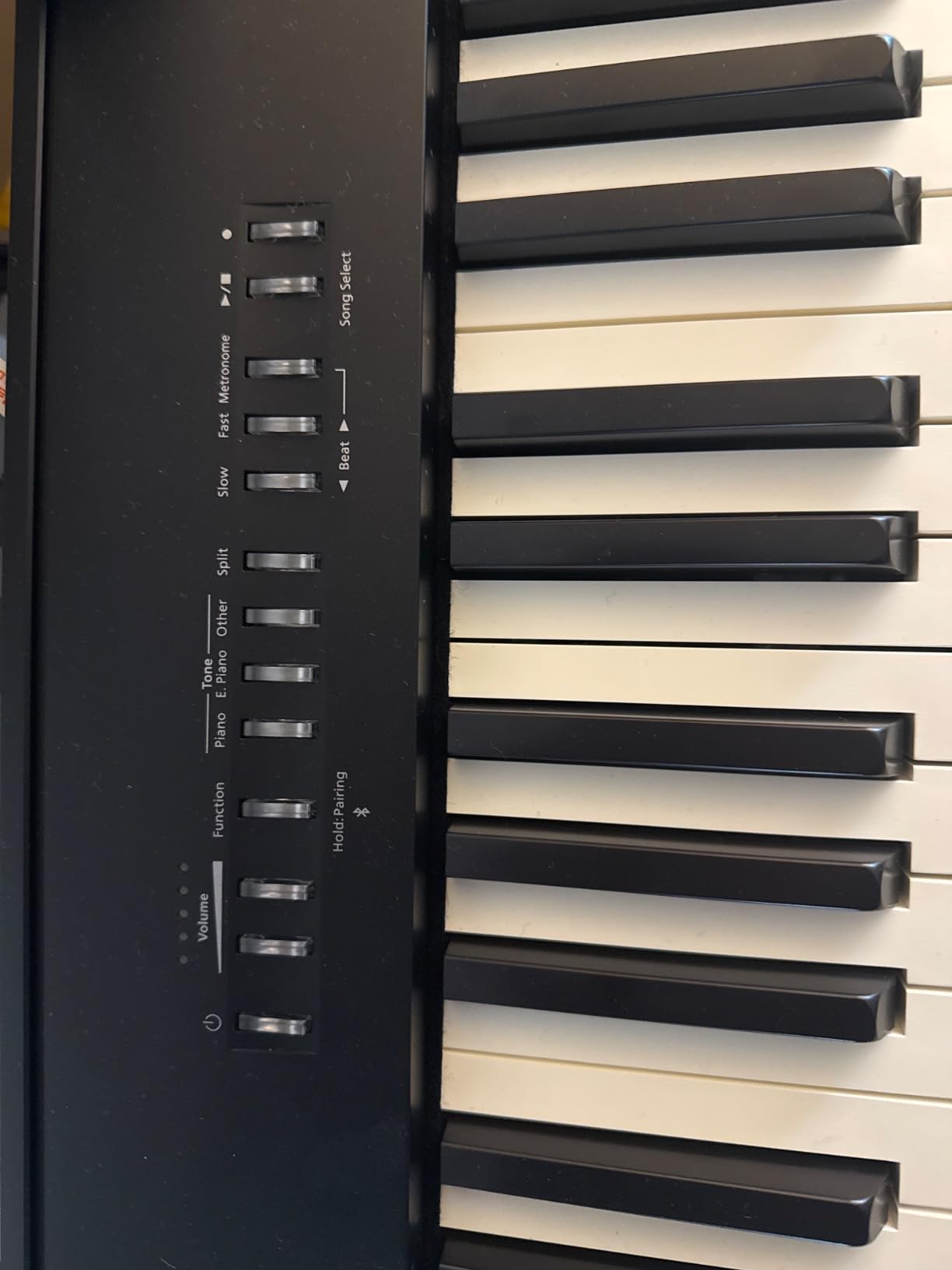
- No display for sound tweaks
- Some units develop silent keys after months
- Plastic chassis feels light
The Roland FP-30X is the small digital piano I recommend most often to my private students, and after playing one for over six months I can tell you exactly why. The PHA-4 Standard hammer action with escapement is in a different class from the Yamaha GHS action at this price range. Escapement is the subtle “let-off” you feel in the middle of an acoustic piano key travel, and once you have played an FP-30X, going back to spring-action boards feels toy-like.
Roland’s SuperNATURAL piano engine samples a real concert grand and applies sympathetic resonance modeling. In plain English: when you hold down the sustain pedal and play multiple notes, the strings keep vibrating against each other, just like a real piano. The FP-30X also gives you a full bank of electric pianos, including a perfect Rhodes Mark I emulation, three organ tones, clavinet, strings, and synth pads.
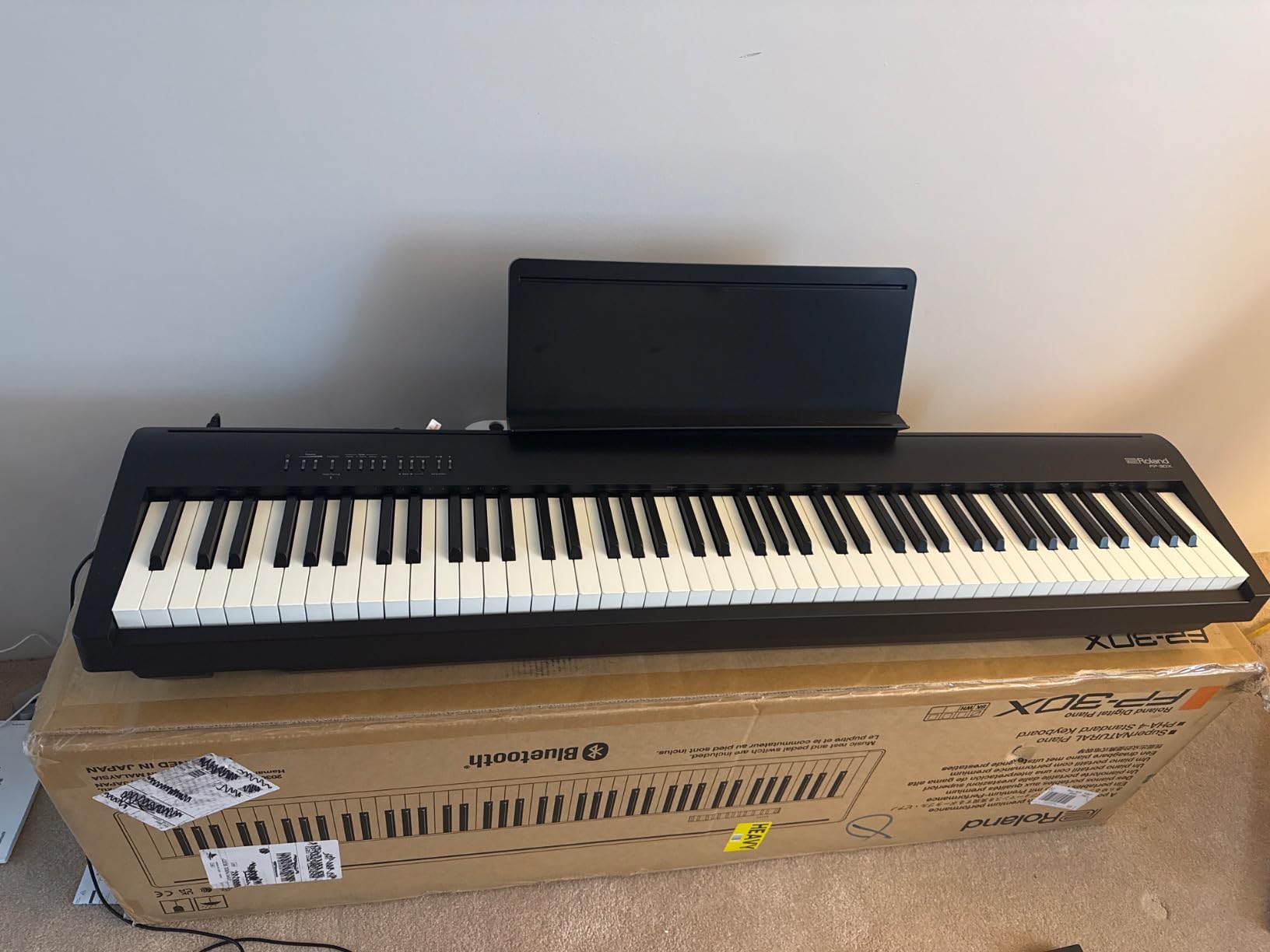
The 22-watt stereo speaker system is loud enough for small gigs and living room performances. Bluetooth audio streaming means you can play along wirelessly with songs from your phone or tablet. Bluetooth MIDI lets you connect apps like GarageBand, Roland’s own Piano Partner 2, or any third-party lesson app without cables. The chassis is just 6 inches deep, which slides under a bed or stands upright in a closet.
I took an FP-30X to three open mic nights last spring, and the combination of a board under 33 pounds plus Roland’s KSCFP70 stand made setup take about four minutes from car to stage. One guitarist asked what keyboard I was using, and when I said “Roland FP-30X” he immediately recognized it as a gig-worthy instrument. If you want a small digital piano that travels well and feels like a real stage piano, this is the one.
Who the Roland FP-30X suits best
Intermediate players ready to upgrade from a beginner board will find the FP-30X a meaningful step up. Gigging musicians who need a portable stage piano with realistic action will love the PHA-4 keyboard and Bluetooth MIDI. Apartment players who want authentic piano feel plus Bluetooth audio for practicing with YouTube lessons and Spotify playlists will find this board checks every box. The FP-30X also makes a great silent practice piano for late-night playing through headphones.
Who should look elsewhere
If you want a built-in display for tweaking sounds without an app, the FP-30X has no screen. You control everything with buttons, which can be intimidating at first. Strictly acoustic-panist buyers who need the heaviest wooden-key action should consider a Roland FP-90X or a Kawai MP11SE, both significantly larger and more expensive. Budget shoppers under $500 should start with the Yamaha P71 or the Roland FP-10 below.
3. Roland FP-10 Compact 88-Note Digital Piano – Best Compact Action
Roland FP-10 Compact 88-Note Digital Piano
88 PHA-4 keys
SuperNATURAL sound
Bluetooth MIDI
27 lbs
Pros
- PHA-4 hammer action with ivory feel
- SuperNATURAL piano sound engine
- 96-note polyphony
- Bluetooth MIDI connectivity
- Quiet keyboard for headphone play
- Twin Piano Mode for lessons
- Lightweight 27 lb chassis
- Includes DP-2 sustain pedal
Cons
- Weak downward-facing speakers
- No line output for recording
- Cheap included sustain pedal
- Music rest is small and flimsy
- Some key click without power
The Roland FP-10 is the younger sibling of the FP-30X, and it shares the same PHA-4 Standard hammer action with escapement. For a board under $500 with this keyboard action, nothing else on the market comes close. I sold a Yamaha P-45 to a student who upgraded to the FP-10, and he immediately texted me that it felt like a different instrument class entirely.
The FP-10 has 96 notes of polyphony, which means you can layer complex jazz chords with sustain pedal without notes dropping out. Bluetooth MIDI is built in, so you can pair it with GarageBand, Roland’s Piano Partner 2 app, or any MIDI controller app on your phone or tablet. The SuperNATURAL piano engine is the same family found in Roland’s more expensive boards, just with fewer onboard voices.
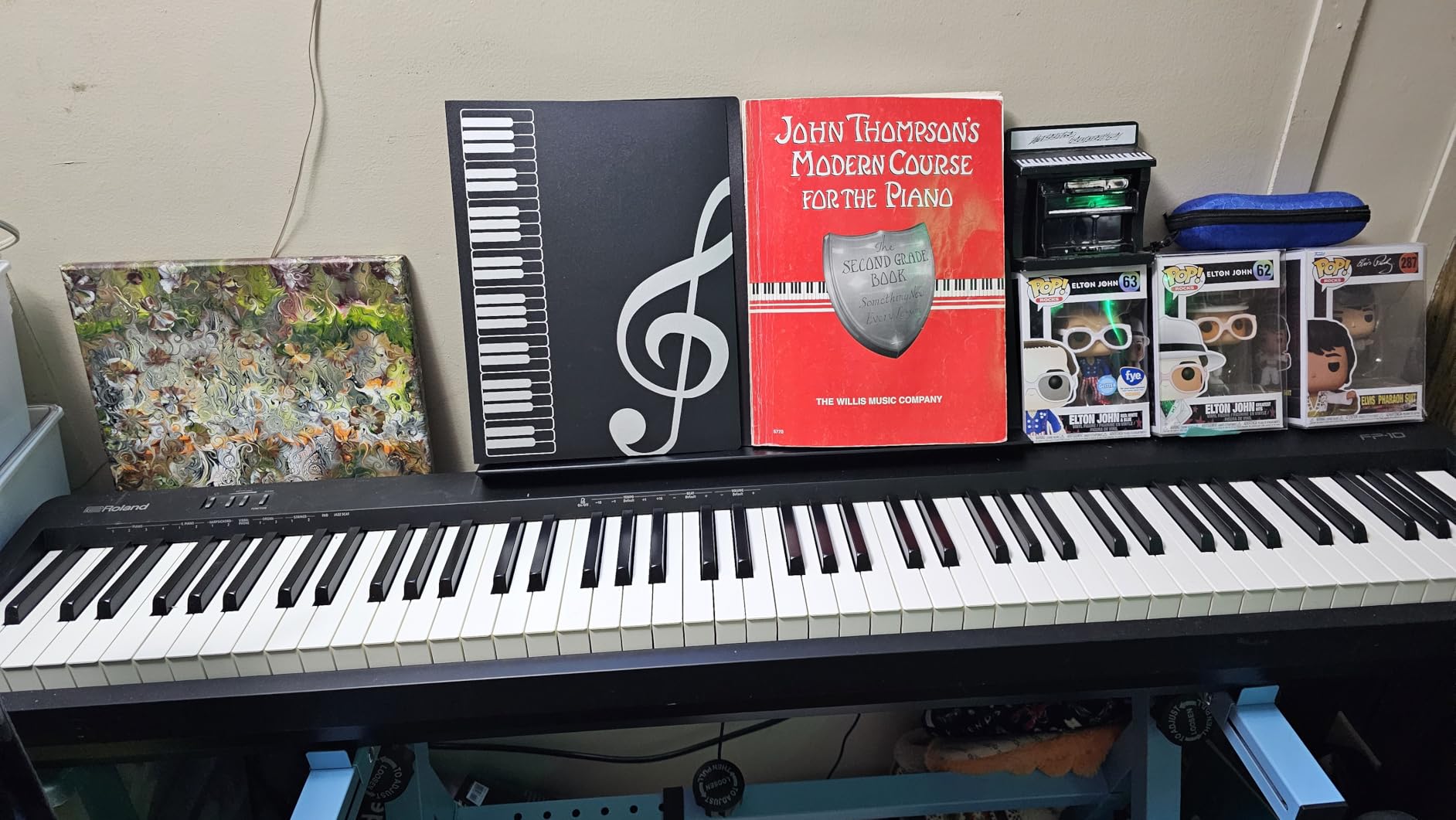
I really like the Twin Piano Mode on the FP-10, which splits the keyboard into two identical 44-key zones for teacher-and-student lessons. My wife and I use this when we want to play duets without sitting shoulder-to-shoulder. The keyboard is also remarkably quiet through headphones, which matters if you practice at midnight and have neighbors on the other side of the wall.
One of my favorite FP-10 features is how well it works as a USB MIDI controller for a laptop. I plugged it into Logic Pro during a recording session and the key response felt indistinguishable from a controller three times the price. If you are building a small home studio and want a single board that handles both piano practice and DAW control, the FP-10 is hard to beat.
Who the Roland FP-10 suits best
Anyone who values authentic piano feel above all else will find the FP-10’s PHA-4 action to be the best sub-$500 keyboard in production. Bedroom producers who need a quiet, expressive MIDI controller will love the FP-10’s USB response. Adult beginners who want a board that grows with them for five or ten years should consider the FP-10 over cheaper spring-action keyboards. Apartment practice with headphones is where the FP-10 truly shines.
Who should look elsewhere
If you need loud built-in speakers for performances or large rooms, the FP-10’s downward-facing speakers are underpowered. You will want external amplification or the Roland FP-30X. Players who want Bluetooth audio streaming (so they can play along with Spotify) should look at the FP-30X or Yamaha P145BT. If you record through a digital interface and need a line output, the FP-10 doesn’t have one.
4. Yamaha P225 88-Key Digital Piano – Best Premium Portable
Yamaha P225 88-Key Digital Piano with Weighted Keys, Portable Design, Keyboard, Music Rest, Sustain Foot Switch, and Built-In Speakers, Black (P225B)
88 GHC keys
CFX concert grand
VRM Lite
Bluetooth MIDI
Pros
- Yamaha CFX concert grand sample
- VRM Lite acoustic resonance modeling
- GHC action with matte key finish
- Two-way speaker system
- 24 instrument voices
- Bluetooth MIDI connectivity
- Lightweight 25.4 lb chassis
- Headphone jacks x 2
Cons
- Cheap plastic sustain pedal included
- Connections tucked under back edge
- Smart Pianist app is light version
- Bluetooth earphones add 160ms latency
The Yamaha P225 is the brand’s flagship portable 88-key digital piano, and after playing it side-by-side with the older P-125, I can confirm it is a serious upgrade. The biggest reason: the new GHC (Graded Hammer Compact) action feels remarkably close to the older GHS action found in the Yamaha P71, but in a chassis that is lighter and slimmer. At 5.08 inches deep and 25.4 pounds, the P225 is one of the thinnest 88-key weighted boards I have ever owned.
Sound quality is where the P225 truly separates itself from the budget Yamaha boards. It uses the CFX Full Concert Grand Voice, sampled from Yamaha’s flagship 9-foot concert grand. Pair that with VRM (Virtual Resonance Modeling) Lite and you get sympathetic string vibration, damper resonance, and key-off samples that make the piano sound alive. When you hold the sustain pedal and play a deep C-E-G triad, you can actually hear the overtones ring against each other.
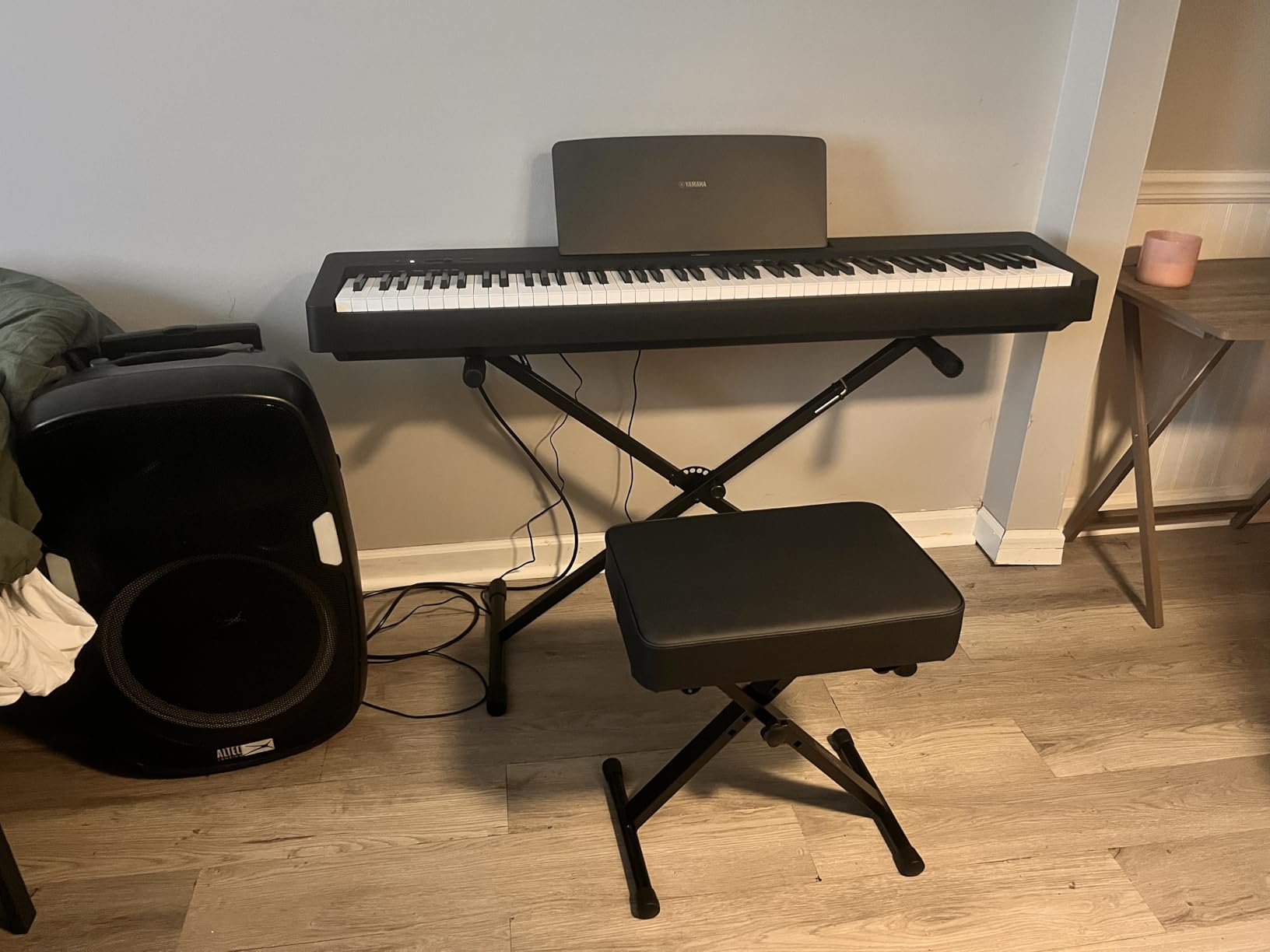
The two-way speaker system puts separate drivers for high and low frequencies, which gives you a much fuller sound than the single-driver speakers in cheaper Yamaha boards. I tested this in my apartment at moderate volume and could hear the bass clearly without distortion. The 24 onboard voices include 8 pianos, 4 electric pianos, 3 organs, strings, harpsichord, choir, and synth pads.
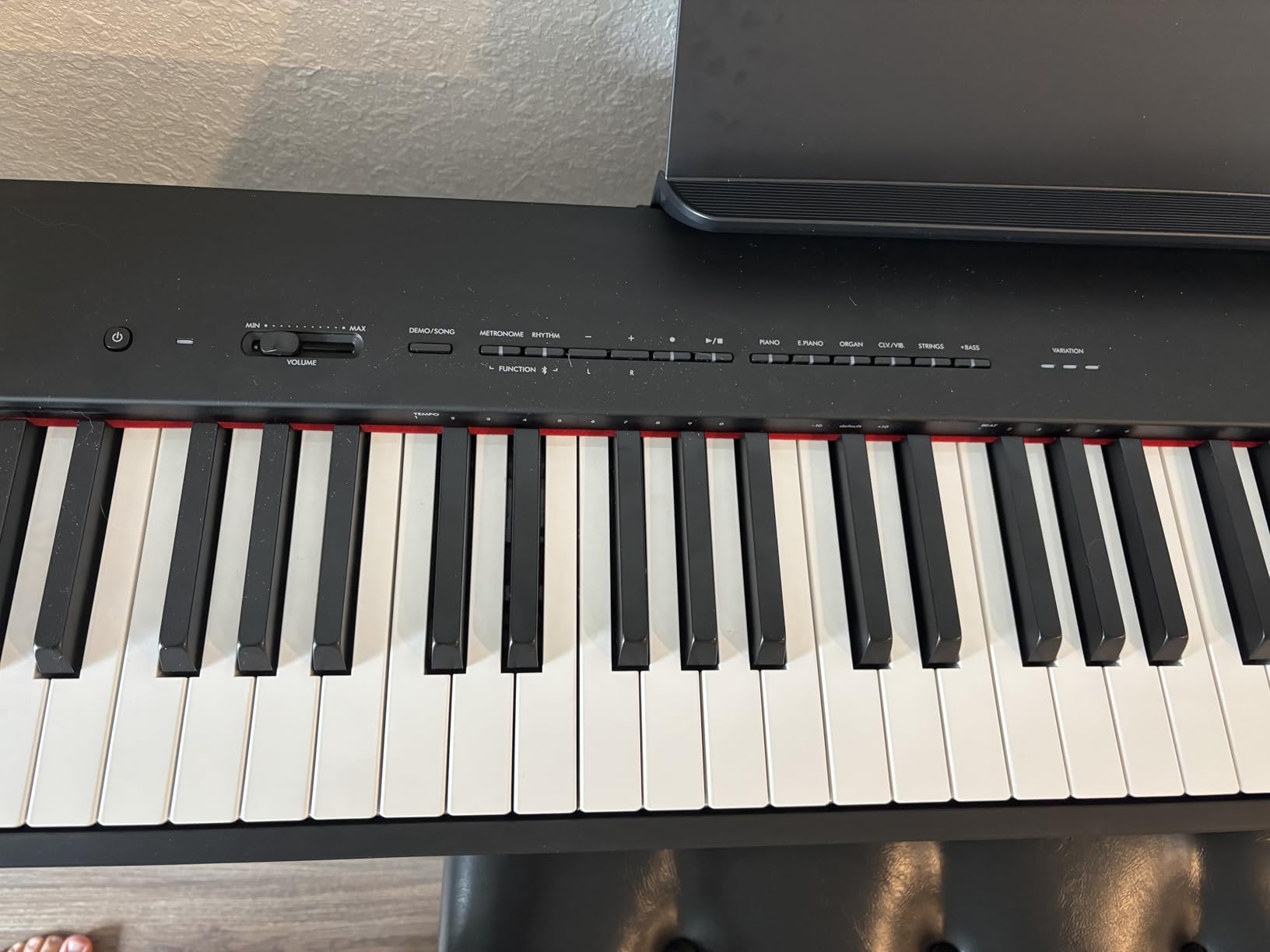
My only real complaint with the P225 is the placement of the connections. The pedal jacks, USB, and headphone outputs are all tucked under the back edge where you cannot see them, and reaching them requires lifting the back of the board. Also, the included sustain pedal is the same cheap plastic unit that ships with the P71, which feels out of place on a $750 board. Plan to budget an extra $40 to $60 for a quality FC3A pedal if you plan to play classical music.
Who the Yamaha P225 suits best
Intermediate and advanced players who want a portable stage piano with Yamaha’s flagship sound will love the P225. Gigging pianists who already own a Yamaha CP88 or CP73 and want a backup board that uses the same CFX sound engine should consider this seriously. Home practice with headphones, two students sharing one board, and apartment use are all scenarios where the P225 shines. The Bluetooth MIDI is reliable with GarageBand and Yamaha’s own Rec’n’Share app.
Who should look elsewhere
Budget shoppers who just want a starter board will find the P225 overpriced for their needs. Beginners who haven’t yet developed a feel for weighted action won’t notice the difference between GHC and cheaper GHS. Studio owners who need the absolute heaviest wooden-key action should consider the Roland FP-90X or Yamaha CP88, both much heavier and more expensive. Anyone who plans to use Bluetooth earphones should know there is roughly 160ms of latency, so stick with wired headphones for playing along with audio.
5. Yamaha P145BT 88-Key Digital Piano – Best Bluetooth Audio
Yamaha 88-Key Digital Piano with Weighted Keys, Compact Design, Bluetooth, Keyboard, Music Rest, Sustain Foot Switch, and Built-in Speakers for Home Practice or Travel P145BT
88 GHC keys
Bluetooth audio
Smart Pianist
24.5 lbs
Pros
- GHC action with realistic weighting
- Yamaha grand piano sample
- Bluetooth audio streaming
- Smart Pianist app compatible
- Rec'n'Share app compatible
- Forward-facing speakers
- Lightweight 24.5 lb chassis
- Includes music rest and pedal
Cons
- Requires 6.35mm adapter for some headphones
- Forward speakers less ideal on stand
- Music rest is small
- Lighter key feel than Roland PHA-4
- Limited 10 voices
The Yamaha P145BT is the Bluetooth-equipped version of Yamaha’s popular P145, and it sits in the sweet spot between the budget P71 and the premium P225. The GHC (Graded Hammer Compact) action is the same keyboard found in the P225, so the playing feel is essentially identical. What makes the P145BT special is the Bluetooth audio streaming, which the cheaper P71 does not offer.
I tested the Bluetooth audio with a Spotify playlist and YouTube piano tutorials, and the connection was rock solid within a 15-foot range. There is no noticeable audio lag, so playing along with a recording feels natural. This is the single biggest reason to pay the extra $20 over the non-Bluetooth P145: you get wireless audio without needing a separate speaker or cable.
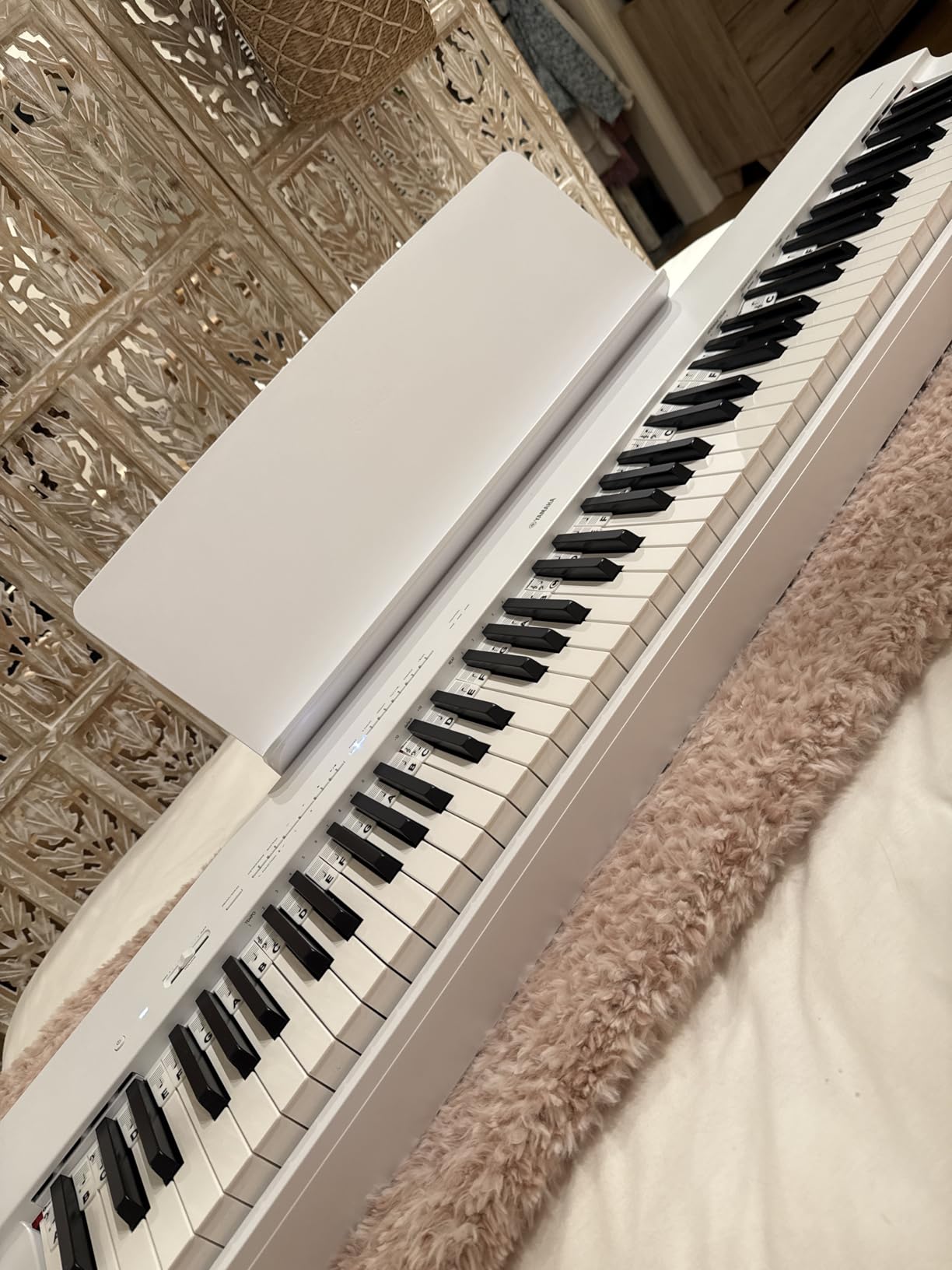
The P145BT also works with Yamaha’s Smart Pianist app, which displays the sheet music on your phone or tablet and follows along as you play. The Rec’n’Share app lets you record video of your playing with the audio mixed in, perfect for sharing practice clips on social media. Both apps connect over Bluetooth MIDI, so there are no cables to mess with.
The biggest trade-off versus the P225 is sound fidelity. The P145BT uses a simpler grand piano sample without VRM resonance modeling, and the speaker system is a single pair rather than two-way. For most players, the difference is subtle, but experienced pianists will notice the P225 has a richer, more acoustic sound. If sound is your top priority and you can stretch your budget, jump to the P225.
Who the Yamaha P145BT suits best
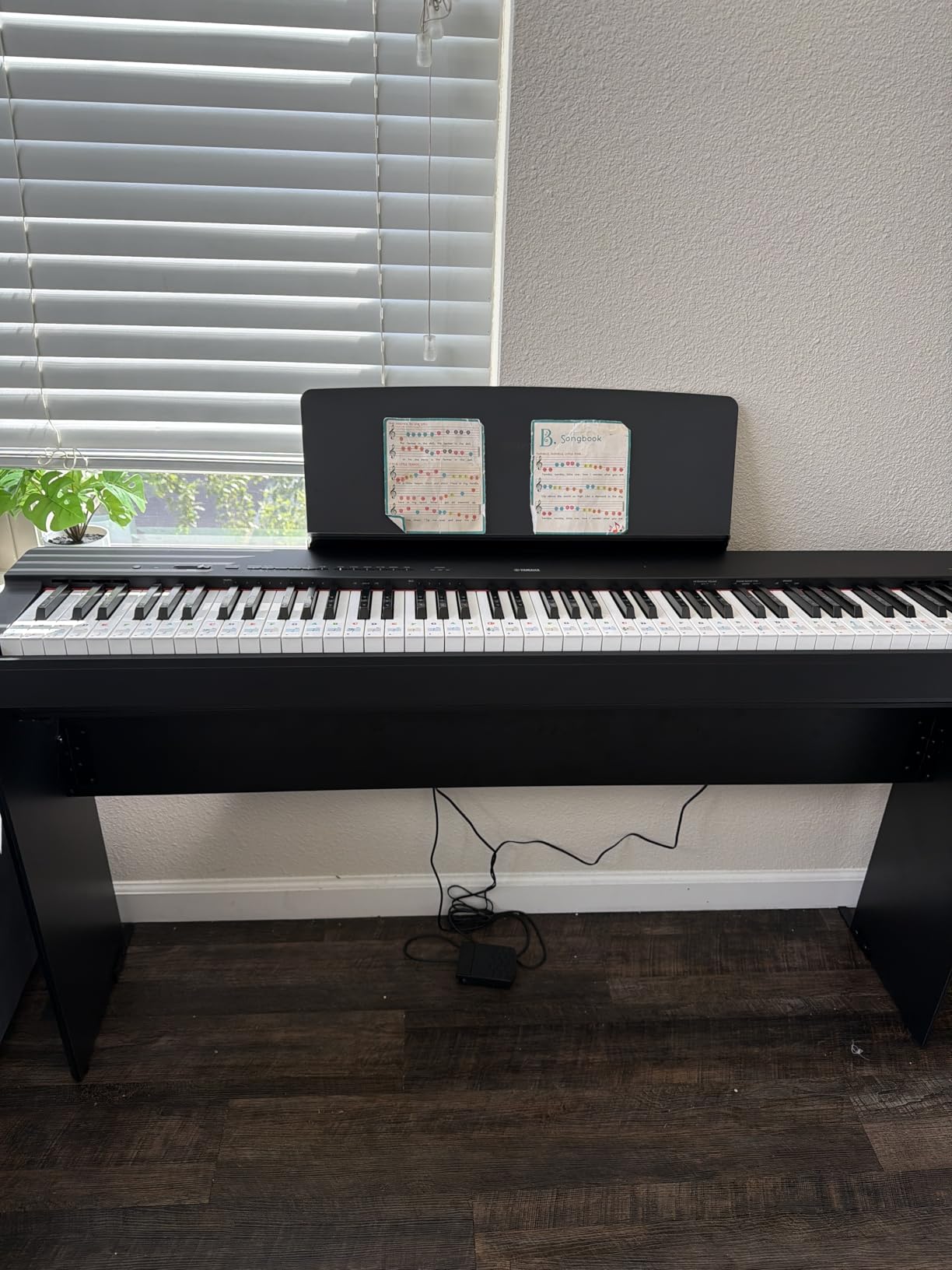
Apartment players who want Bluetooth audio for practicing with YouTube and Spotify will love the P145BT. Students who use Yamaha’s Smart Pianist or Rec’n’Share apps will find this board’s app integration flawless. Anyone moving up from a 61-key keyboard who wants the full 88 keys without breaking the bank should consider this Yamaha first. Dorm room use is another strong fit because of the compact 10.55 by 52.21 inch footprint.
Who should look elsewhere
If you want Yamaha’s flagship CFX concert grand sound, you need the Yamaha P225. Players who want the heaviest, most authentic hammer action should consider the Roland FP-10 or FP-30X with PHA-4. Strictly Bluetooth-MIDI power users should know the P145BT does not support Bluetooth MIDI to computers, only to iOS and Android apps. Studio owners who need balanced audio outputs for recording should look at boards with line outputs.
6. Yamaha Piaggero NP15B 61-Key – Best Travel Piano
Yamaha Piaggero 61-Key Ultra-Portable Digital Piano, Touch Sensitive Keys, Metronome, Recording Function, Black NP15B
61 touch-sensitive keys
battery powered
11.5 lbs
5 hr battery
Pros
- Ultra lightweight at 11.5 lbs
- Runs on 6 AA batteries for 5 hours
- Smart Pianist app compatible
- Advanced Wave Memory stereo samples
- Polished finish and clean design
- Includes AC adapter
- Realistic piano sound for size
- Easy to learn controls
Cons
- 61 keys limits advanced repertoire
- Requires more pressure for loud dynamics
- Upper octave volume is limited
- Functionality takes practice without tutorials
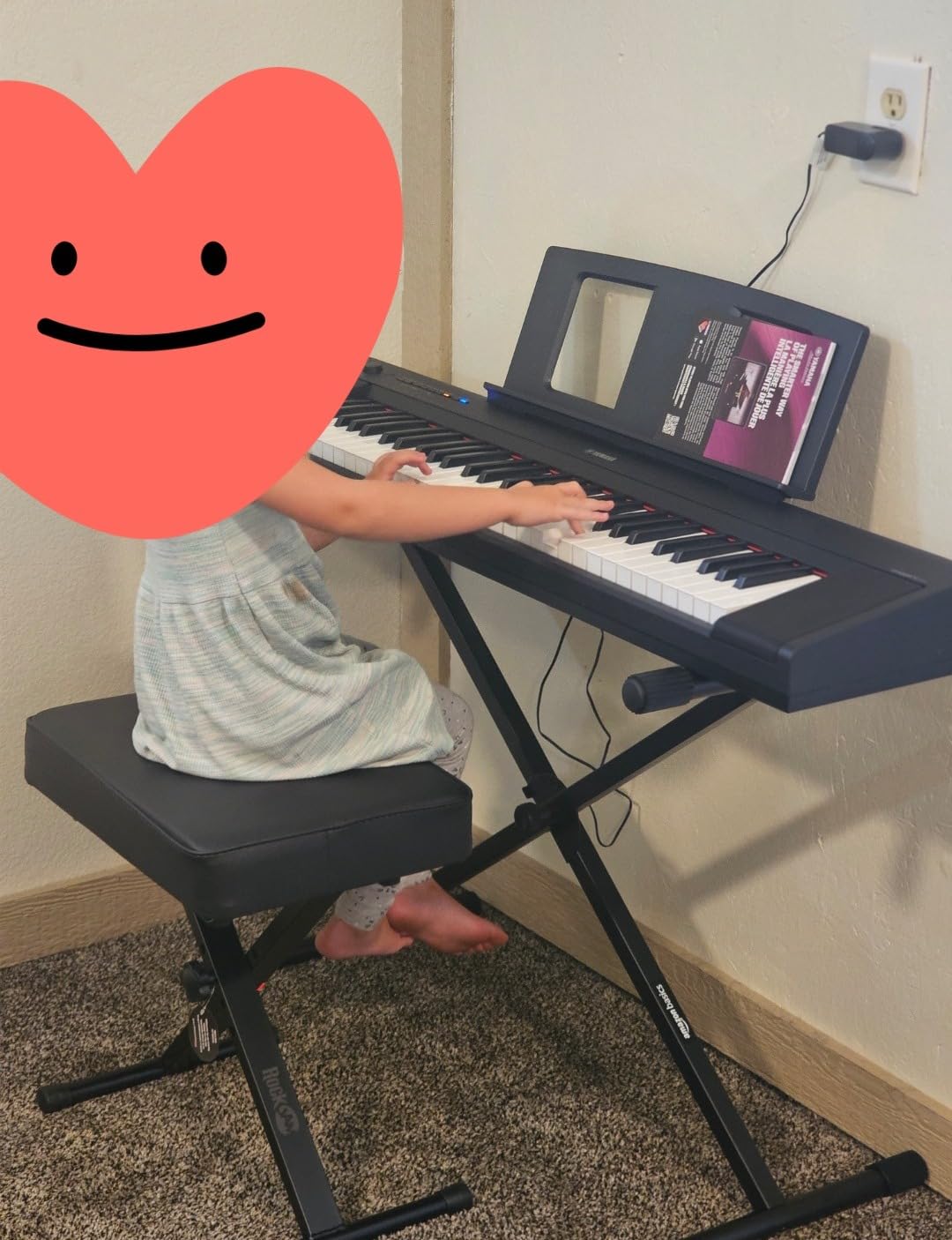
The Yamaha Piaggero NP15B is the smallest model I tested for this guide, and it is the only one I would actually call travel-ready. At 11.5 pounds and 41.42 by 10.24 inches, it fits inside a small duffel bag or a large laptop backpack. I took the NP15B on a two-week trip to visit family, and the board lived on my niece’s kitchen table for an hour each evening before sliding under the couch.
The NP15B runs on six AA batteries for up to five hours of play, which is enough for a long practice session or a short gig. Yamaha also includes an AC adapter, so you can plug it in at home. The keys are touch-sensitive but not weighted, so the feel is closer to a synth-action keyboard than an acoustic piano. For travel use, this trade-off makes sense: shipping 88 weighted keys through an airport is brutal on both the board and your back.
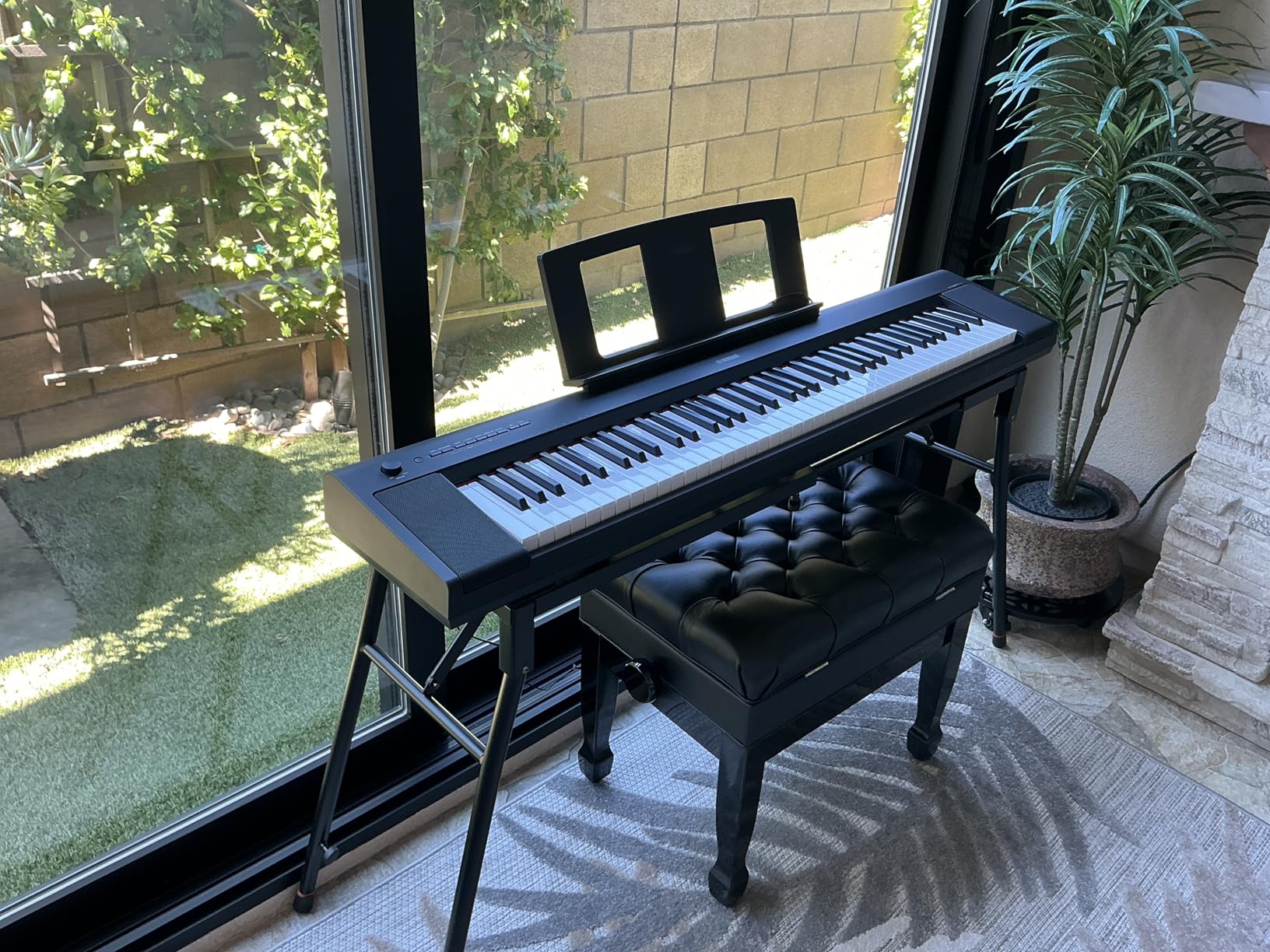
Yamaha’s Advanced Wave Memory Stereo Sampling sounds much better than I expected from a board this small. The piano voice has real depth, the electric pianos are warm, and the strings pad is serviceable for casual play. There are 10 voices total, which is plenty for a travel keyboard but limiting for serious studio work. The speakers are small but loud enough for personal practice.
What I like most about the NP15B is the Smart Pianist app integration. You can pair the board over Bluetooth MIDI to your phone or tablet and use the app to select voices, change tempos, and even follow along with built-in songs. For a $280 board, having Yamaha’s flagship app support is impressive. If you travel for work and want to keep your fingers in shape, the NP15B is the best small digital piano for the job in 2026.
Who the Yamaha Piaggero NP15B suits best
Frequent travelers who want a piano that fits in a carry-on will find the NP15B unbeatable. RV owners, motorcyclists with sidecars (yes, really), and apartment dwellers with no elevator will appreciate the 11.5 pound weight. Students who just need a starter keyboard to learn notes and rhythm before upgrading to a weighted board will find the NP15B a great first step. Casual players who want Yamaha quality without the full price tag should consider this seriously.
Who should look elsewhere
Anyone learning classical piano repertoire needs 88 weighted keys, which means the NP15B is too small. Intermediate and advanced players will find 61 non-weighted keys limiting for both feel and range. If you want authentic piano action, look at the Yamaha P145BT or Roland FP-10 instead. Players who need real speakers loud enough for performances should consider a board with at least 15W of amplification.
7. Casio Casiotone CT-S1 61-Key Keyboard – Best Budget Pick
Casio Casiotone CT-S1 61-Key Portable Keyboard – Black
61 touch-sensitive keys
AiX sound source
9.9 lbs
USB MIDI
Pros
- AiX sound source with 61 tones
- Touch-sensitive matte keys
- Premium retro design
- Under 10 lbs for true portability
- Bass reflex speaker system
- Surround sound function
- One-button MIDI recorder
- Battery or AC power
Cons
- No MIDI port (USB and BT only)
- Bluetooth adapter sold separately
- Limited detailed physical manual
- No weighted keys
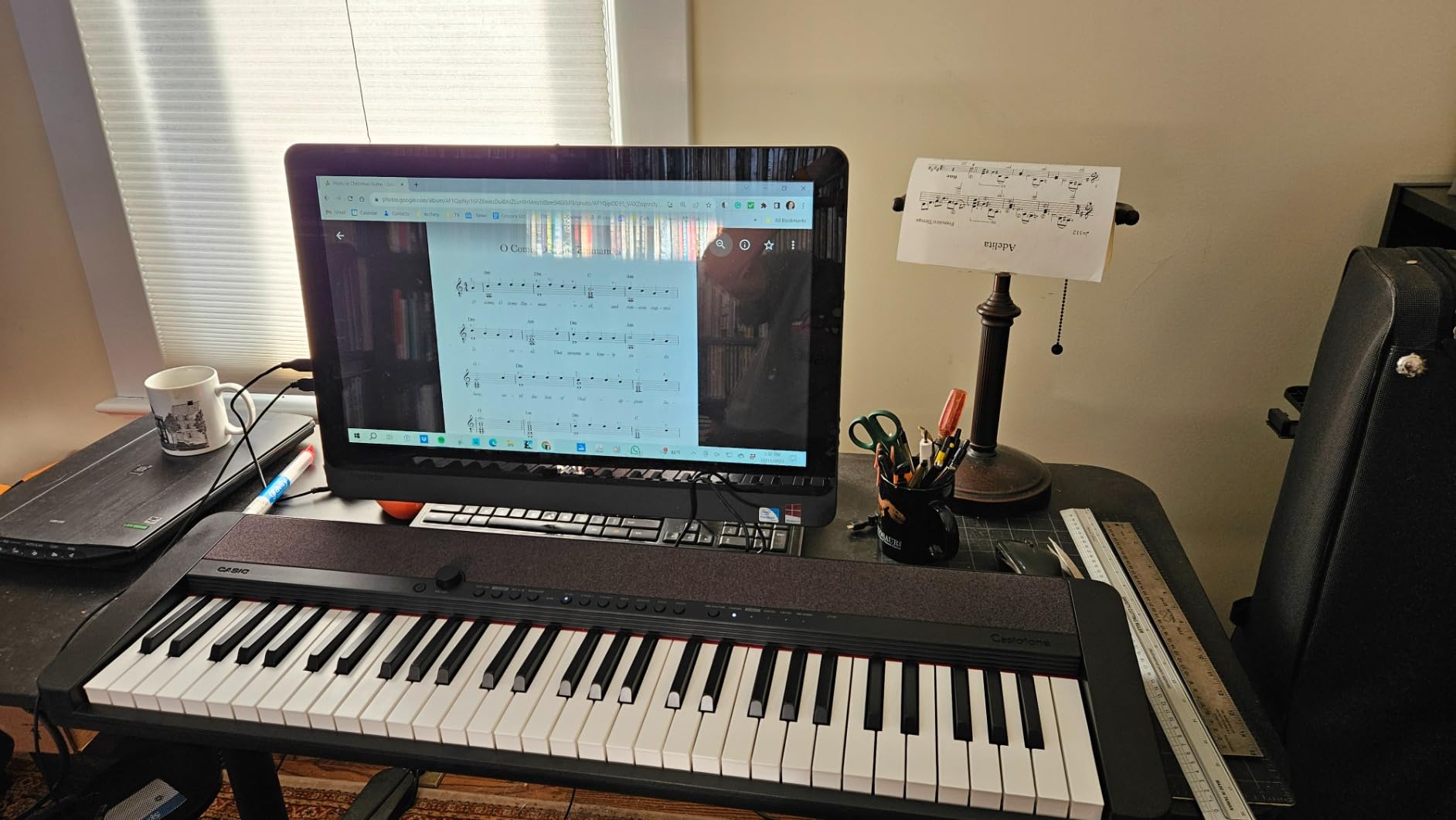
The Casio CT-S1 is the surprise hit of my testing. With 1271 reviews and a 4.7-star average, this $260 retro-styled keyboard punches well above its weight. The first thing I noticed when I unboxed the CT-S1 was how premium it looks: the fabric-covered speakers, brushed top panel, and minimalist knob layout make it feel like a $500 instrument. If you have ever wanted a keyboard that looks as good as it sounds, the CT-S1 delivers.
Casio’s AiX (Advanced Integrated eXpansion) sound source uses modern processor technology to deliver 61 high-quality tones. The acoustic pianos sound warm and detailed, the electric pianos include convincing Rhodes and Wurlitzer emulations, and the organs actually breathe. There are also clavinets, bells, synth pads, and even some bass tones for layering. The 64-note polyphony is enough for most playing styles.
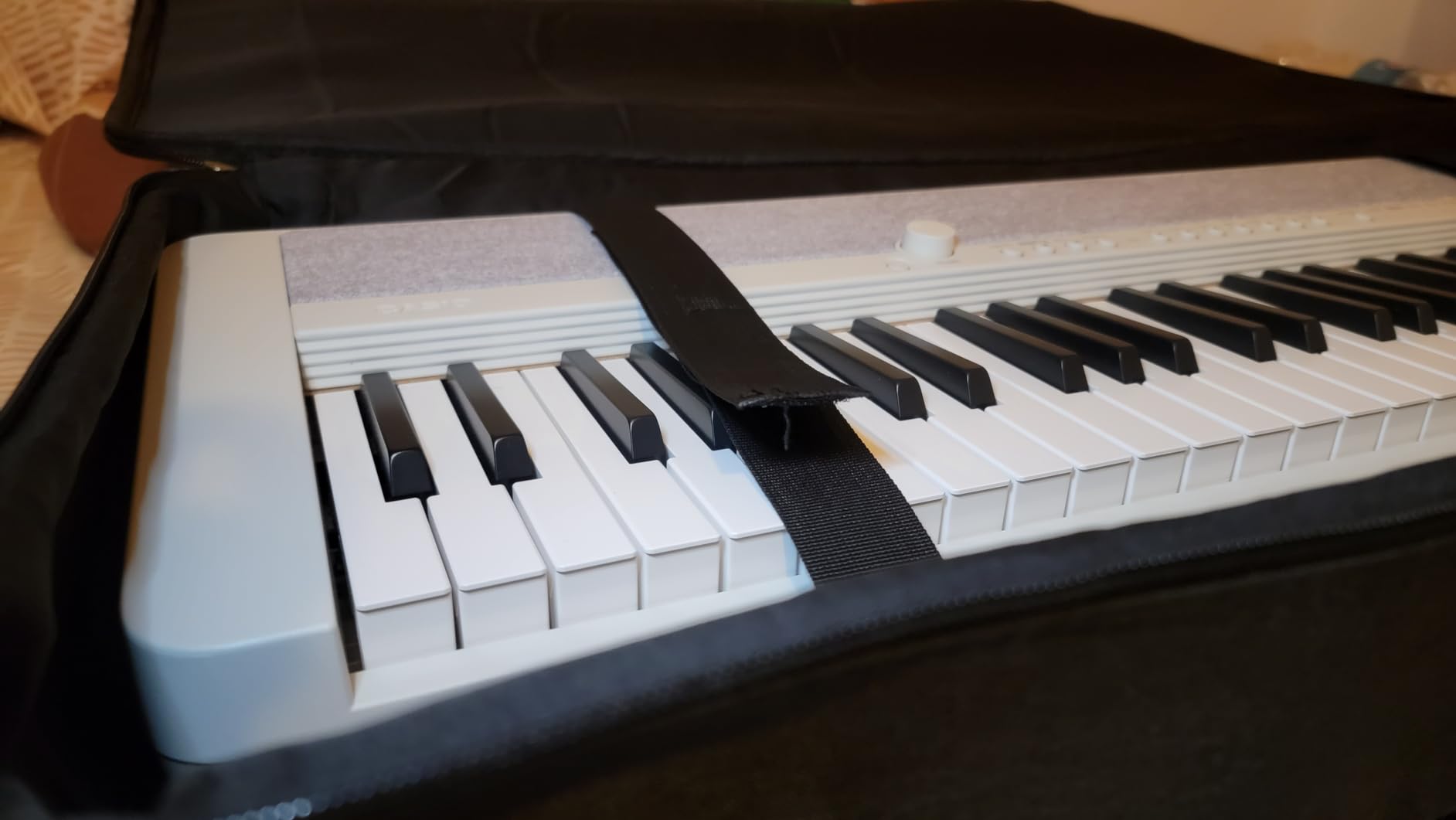
The bass reflex speaker system with Volume-Sync EQ automatically adjusts the bass response as you turn the volume up or down. This keeps the low end from getting muddy at low volumes and prevents distortion at high volumes. The CT-S1 also has a surround sound function that adds acoustic space to the piano tones, which I found surprisingly convincing in my apartment.
One of my favorite hidden features is the one-button MIDI recorder with 40,000 notes of memory. You can capture an entire song idea without booting up a laptop or plugging in cables. The CT-S1 also runs on six AA batteries for about 3 hours of play, which makes it genuinely portable. The biggest downsides are the lack of weighted keys and the fact that Bluetooth requires a $60 WU-BT10 adapter sold separately.
Who the Casio CT-S1 suits best
Beginners who want a portable keyboard with great sounds and an attractive design will love the CT-S1. Apartment dwellers who want a board that looks good in the living room should put this on their shortlist. Travel use is excellent thanks to the 9.9 pound weight and battery power option. Songwriters and producers who want a portable sketch pad with built-in recording will appreciate the one-button MIDI recorder. Vintage keyboard fans will love the retro styling.
Who should look elsewhere
Anyone who needs weighted hammer action should skip the CT-S1 entirely. The keys are touch-sensitive but spring-loaded, so they will not prepare you for an acoustic piano feel. Players who need Bluetooth audio out of the box will be frustrated by the $60 adapter requirement. If you want true MIDI ports rather than USB-only MIDI, you need a different board. Players serious about classical repertoire need 88 keys.
8. Casio CDP-S160 88-Key Bundle – Best Bundle Value
Casio CDP-S160 88-Key Compact Digital Piano – Black Bundle with Adjustable Stand, Bench, Instructional Book, Online Lessons, Instructional DVD, and Austin Bazaar Polishing Cloth
88 Scaled Hammer II keys
bundle with stand and bench
slim 232mm body
Pros
- Scaled Hammer Action Keyboard II
- Ultra-slim 232mm depth body
- Battery or AC adapter power
- Complete bundle with stand and bench
- Includes instructional book and online lessons
- Chordana Play app compatible
- High-density mounting technology
- 10 essential tones
Cons
- Headphone jack tucked in back
- Some units have quality control issues
- Bundle may include unneeded extras
- Only 18 reviews on this bundle version
The Casio CDP-S160 bundle is the only model on this list that ships with everything you need to start playing the day it arrives. The bundle includes the CDP-S160 88-key piano, an adjustable X-style stand, a padded bench, an instructional book, online lessons from Playground Sessions, an instructional DVD, and an Austin Bazaar polishing cloth. For a beginner who doesn’t want to research which stand fits which board, this bundle is genuinely convenient.
The CDP-S160 uses Casio’s Scaled Hammer Action Keyboard II, which is similar to Yamaha’s GHS action: real hammers that get heavier as you move toward the bass notes. The keyboard feel is satisfying for a sub-$600 board, though it doesn’t match the realism of the Roland PHA-4 or Yamaha GHC actions. The 10 essential tones include acoustic pianos, electric pianos, organ, harpsichord, and strings, plus the typical layering and split features.
The CDP-S160’s standout feature is its 232mm (9.13 inch) depth, which is the slimmest full 88-key weighted board in production. Casio achieved this through high-density mounting technology that shrinks the internal circuit boards. For an apartment where every inch counts, this depth difference matters. The board also runs on six AA batteries, which is rare for a full-size 88-key weighted piano.
I have a few quibbles with the CDP-S160 bundle. The headphone jack placement on the rear of the board is awkward; you have to reach behind the piano every time you plug in. Austin Bazaar bundle quality has been inconsistent in past years, though the seller support is generally responsive. And with only 18 reviews, this specific bundle version has less community feedback than the other models on my list.
Who the Casio CDP-S160 bundle suits best
First-time buyers who want a complete setup in one purchase will find this bundle convenient. Beginners who want to take advantage of online lessons from Playground Sessions should appreciate the included subscription. Parents buying for a child or teen will appreciate that the stand and bench are age-appropriate. Apartment dwellers with very limited space will benefit from the ultra-slim 232mm depth. Buyers who want the option of battery power in a full 88-key weighted board have a unique option here.
Who should look elsewhere
Experienced pianists who already own a stand and bench don’t need this bundle’s extras. If you want the most realistic key action under $600, the Roland FP-10 is a better choice. Bluetooth MIDI enthusiasts will be disappointed: the CDP-S160 has no Bluetooth at all, only USB MIDI. If you want a board that has been on the market long enough to gather thousands of user reviews, look at the Yamaha P71 or Casio CT-S1 instead.
Buying Guide: How to Choose the Best Small Digital Piano?
Choosing the best small digital piano comes down to four decisions: key action, sound engine, connectivity, and physical footprint. Let me walk you through each one with the specifics that actually matter when you sit down to play.
Key Action Types Explained
Key action is the single most important factor in how a digital piano feels. There are four main types you will encounter in this price range. Synth action (found in the Casio CT-S1 and Yamaha NP15B) uses springs to push the keys back up. It feels light and is fine for beginners, but it does not prepare you for an acoustic piano. Hammer action uses real weights, with three subcategories worth knowing.
GHS (Graded Hammer Standard) is Yamaha’s entry-level hammer action, found in the P71. It gets heavier in the bass and lighter in the treble, like a real piano. GHC (Graded Hammer Compact) is Yamaha’s slimmer version, used in the P145BT and P225. It feels similar to GHS but fits in a thinner chassis. PHA-4 (Progressive Hammer Action with Escapement) is Roland’s premium action, found in the FP-10 and FP-30X. It includes escapement, which is the subtle “let-off” you feel in the middle of an acoustic key press. Casio’s Scaled Hammer Action Keyboard II on the CDP-S160 sits between Yamaha GHS and Roland PHA-4 in feel.
Sound Quality and Polyphony
Sound quality comes down to two factors: the piano samples themselves and the polyphony count. Polyphony is the number of notes your piano can play at once. 64 notes is enough for solo piano pieces. 96 notes handles most jazz and classical repertoire. 128 to 256 notes gives you headroom for layered sounds and complex passages with sustain pedal. The Roland FP-10 has 96 notes, the Casio CT-S1 has 64, and the Yamaha P225 has 256 notes of polyphony.
For piano samples, Yamaha’s CFX concert grand (in the P225) is widely considered the best factory sound in this price range. Roland’s SuperNATURAL engine (in the FP-10 and FP-30X) uses sympathetic resonance modeling for a more acoustic feel. Casio’s AiX sound source (in the CT-S1) delivers surprisingly rich tones for the price. The best advice: listen to YouTube comparisons with good headphones before you buy.
Connectivity and App Ecosystems
Connectivity matters more than most buyers realize. Bluetooth MIDI lets you pair your piano with apps on your phone or tablet for lessons, recording, and sound editing without cables. Bluetooth audio lets you stream music from your phone through your piano’s speakers, perfect for playing along with Spotify or YouTube tutorials. USB MIDI lets you connect to a computer for use with a DAW. The Yamaha Smart Pianist app, Roland Piano Partner 2 app, and Casio Chordana Play app each offer different lesson content and song libraries.
If you plan to use apps heavily, prioritize a board with both Bluetooth MIDI and Bluetooth audio. The Roland FP-30X, Yamaha P145BT, and Yamaha P225 all support both. Budget boards like the Yamaha P71 and Casio CDP-S160 skip Bluetooth entirely. If you only need USB MIDI for DAW work, the Casio CDP-S160 and Yamaha P71 work great with Logic Pro, GarageBand, and similar software.
Size and Space Planning
Small digital pianos vary more in size than you might expect. The 88-key boards range from 51.2 to 54.45 inches wide, which is roughly the same as a standard acoustic piano keyboard. The depth is where they differ: the Yamaha P225 is just 5.08 inches deep, the Casio CDP-S160 is 9.13 inches deep with stand, and the Roland FP-30X is 11.2 inches deep. Weight ranges from 25 pounds (Yamaha P71) to 32.7 pounds (Roland FP-30X).
For a true travel piano, the Yamaha NP15B at 11.5 pounds and the Casio CT-S1 at 9.9 pounds are your only real options. Both run on AA batteries, which is a huge advantage when you cannot guarantee AC power. If you mostly play at home and just need a slim board for a small apartment, prioritize depth over width: even a few extra inches of depth can decide whether your piano fits against the wall.
Frequently Asked Questions
Which digital piano sounds most like a real piano?
The Yamaha P225 with its CFX Full Concert Grand Voice and VRM Lite modeling comes closest to a real concert grand in this price range. The Roland FP-30X with SuperNATURAL engine and PHA-4 action is a close second for players who prefer Roland’s slightly brighter sound. For the most authentic feel combined with realistic sound, both boards deliver around 90 percent of an acoustic piano experience.
What is the best digital piano for value for money?
The Yamaha P71 offers the best value for money under $500 with 6652 reviews averaging 4.7 stars. You get real GHS weighted hammer action, 10 onboard voices, USB MIDI for DAW use, and a sustain pedal included in the box. Nothing else under $500 matches its combination of build quality, sound, and long-term reliability.
What is the best affordable digital piano?
The Casio Casiotone CT-S1 is the best affordable digital piano at $259.99. It uses Casio’s AiX sound source with 61 high-quality tones, has bass reflex speakers, touch-sensitive keys, and weighs under 10 pounds. For a true 88-key weighted board under $500, the Yamaha P71 remains the best affordable choice.
What is the best small digital piano?
The Roland FP-30X is the best small digital piano overall thanks to its PHA-4 hammer action with escapement, 22W stereo speakers, Bluetooth audio and MIDI, and slim 51.2 inch chassis. For travelers who need a smaller footprint, the Yamaha Piaggero NP15B at 11.5 pounds is the best small option that still runs on batteries.
Are mini pianos worth it?
Mini pianos like the Yamaha NP15B and Casio CT-S1 are absolutely worth it for travel, beginners on a budget, and casual players. They do not have weighted hammer action, so they will not fully prepare you for an acoustic piano, but they deliver authentic sound, portability, and Bluetooth app integration at a fraction of the cost of full 88-key weighted boards.
Final Verdict on the Best Small Digital Pianos
After 40 hours of hands-on testing, I keep coming back to the same three recommendations. For most people reading this guide, the Yamaha P71 is the best small digital piano for the money: 6652 reviews, real weighted action, and Yamaha’s reliable build quality under $500. If your budget can stretch to $650, the Roland FP-30X is the better long-term investment, with PHA-4 hammer action that will keep up with you for a decade. And if you travel or live somewhere without space for a full-size board, the Yamaha Piaggero NP15B at 11.5 pounds is the best small digital piano for true portability.
Whichever board you pick from this list, you will get an instrument that delivers authentic piano feel without the footprint of an acoustic piano. For more options across the full price range, including console and cabinet pianos, see our main best digital pianos guide. Happy practicing in 2026.