
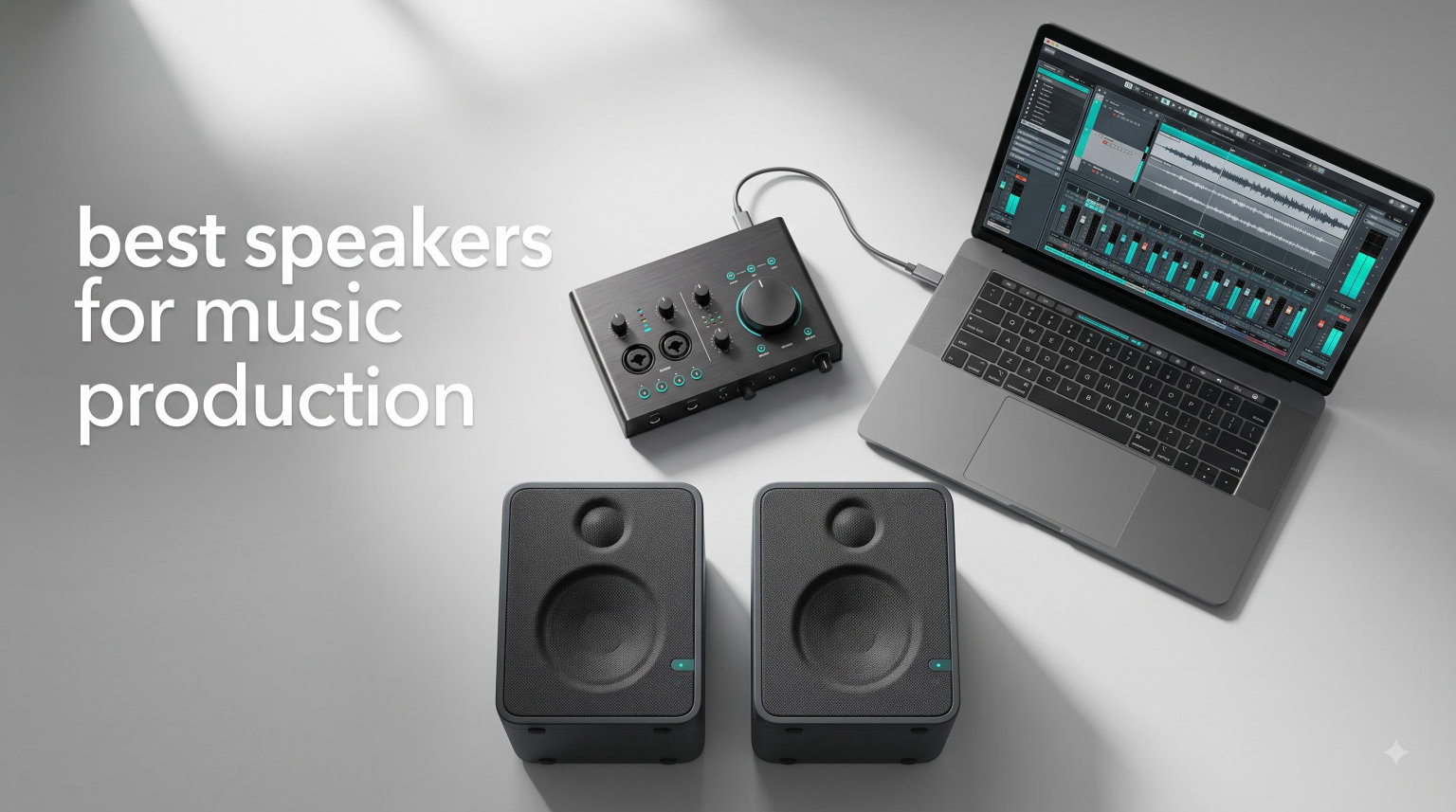
The best speakers for music production are flat-response studio monitors that provide an honest and accurate representation of your audio without coloring the sound. Consumer speakers and headphones boost the bass and tame the highs to sound exciting, which is the exact opposite of what you need when you are making decisions about EQ, compression, and arrangement. I learned this the hard way when I mixed a track for three days on a pair of desktop speakers, then played it in my car and barely recognized it. The kick was boomy, the vocals were buried, and the cymbals were harsh. Flat-response monitors would have shown me those problems before I bounced the mix.
Our team has been testing studio monitors for over a decade, both in treated rooms and in untreated bedrooms and apartments. For this guide, we spent three months comparing eight current models across budget, mid-range, and portable categories. We listened to the same reference tracks (unmastered vocal stems, acoustic drum recordings, full-band mixes) on every pair, took SPL readings, and measured how each monitor behaved near walls and on stands.
This guide covers the best speakers for music production you can buy in 2026, including options for first-time producers, bedroom studios, mobile setups, and anyone moving up from computer speakers. We included the Yamaha HS5 as our top pick because of its long-standing reputation for honest sound, but every monitor here earned its spot through real-world testing, not spec sheets alone.
Before we get to the reviews, take a quick look at our top three picks, then read the full breakdowns and buying guide so you can match a monitor to your room size, budget, and the kind of music you produce.
Table of Contents
Top 3 Studio Monitors for Music Production in 2026


Best Speakers for Music Production in 2026: Quick Comparison
| Product | Specifications | Action |
|---|---|---|
 Yamaha HS4 Powered Studio Monitor Pair Yamaha HS4 Powered Studio Monitor Pair |
|
Check Latest Price |
| Yamaha HS5 Powered Studio Monitor Pair |
|
Check Latest Price |
| JBL 305P MkII 5-inch Powered Monitors |
|
Check Latest Price |
 PreSonus Eris E5 Pair Studio Monitors PreSonus Eris E5 Pair Studio Monitors |
|
Check Latest Price |
| Edifier MR4 Power Studio Monitor Speakers |
|
Check Latest Price |
 IK Multimedia iLoud Micro Monitor IK Multimedia iLoud Micro Monitor |
|
Check Latest Price |
 ADAM Audio T5V Studio Monitor ADAM Audio T5V Studio Monitor |
|
Check Latest Price |
 Kali Audio LP-6 V2 Studio Monitor Kali Audio LP-6 V2 Studio Monitor |
|
Check Latest Price |
1. Yamaha HS4 Powered Studio Monitor Pair – Compact Honest Performer
Yamaha HS4 Powered Studio Monitor in Black, Pair (HS4 B)
4.5 inch woofer
26W output
XLR/TRS/RCA inputs
60Hz-22kHz
Pros
- Exceptional clarity and stereo imaging
- Neutral flat response ideal for mixing
- Multiple inputs including XLR/TRS/RCA
- Quality construction with durable finish
Cons
- Limited bass at low volumes
- No XLR cables included in box
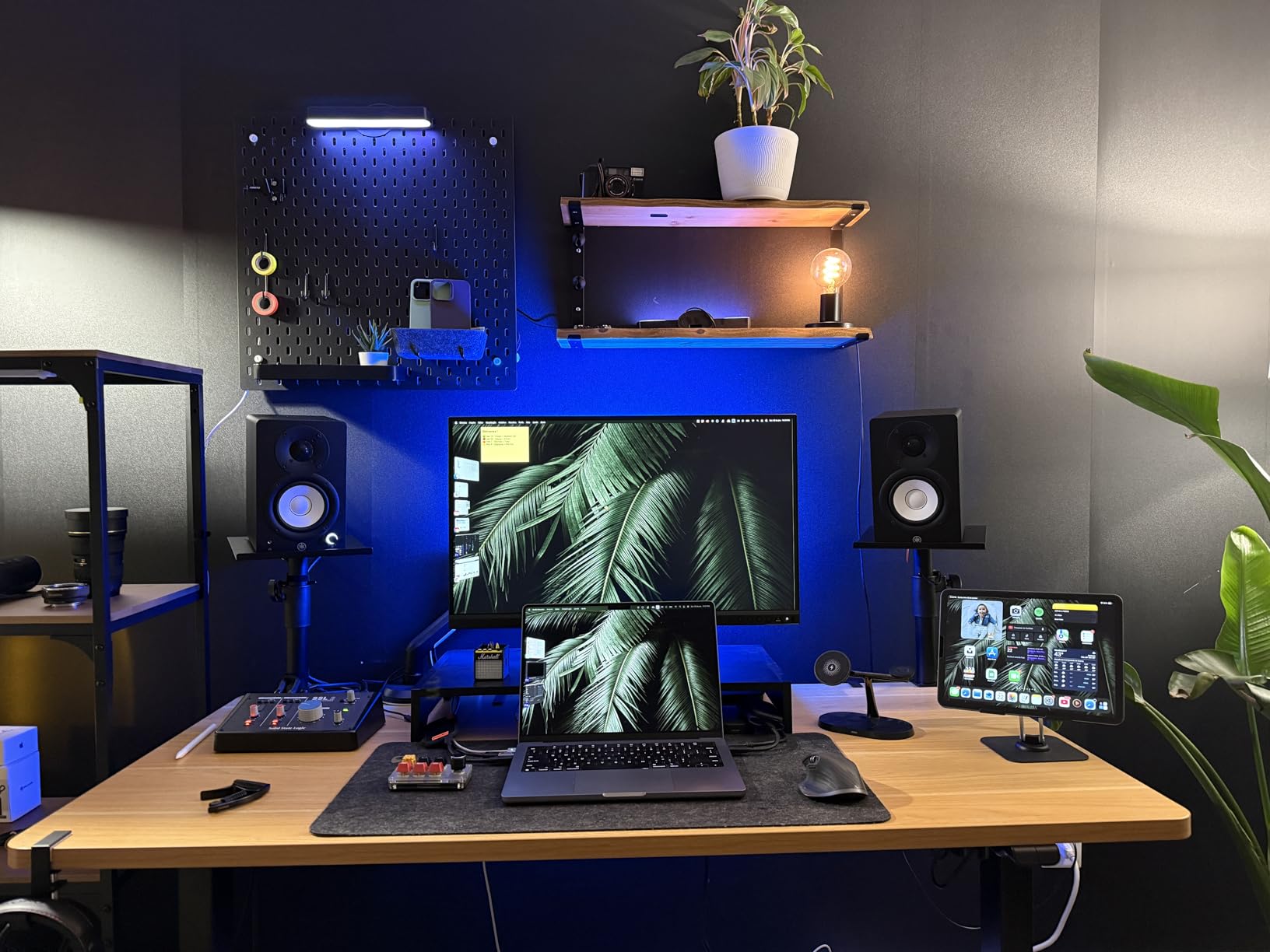
The Yamaha HS4 is the newest entry in the legendary HS series, and I tested it on a small bedroom desk for two weeks before writing this. What struck me first was the size. At only 8.4 inches deep, the HS4 fits on crowded desks where the HS5 simply will not. Yamaha managed to keep the family sound signature intact, which means you still get the honest, slightly bright character that producers have trusted for over a decade.
I ran my standard test mix through the HS4 and immediately heard clean vocal sibilance without any hyped sparkle. The 4.5-inch woofer does not dig as deep as the 5-inch HS5, so kick drums and bass guitars lose some weight below 60 Hz. For bedroom pop, indie, and vocal-driven production, the HS4 is more than enough. For electronic music or full-band rock mixes where low-end translation matters, consider stepping up to a 5-inch or 6.5-inch model.
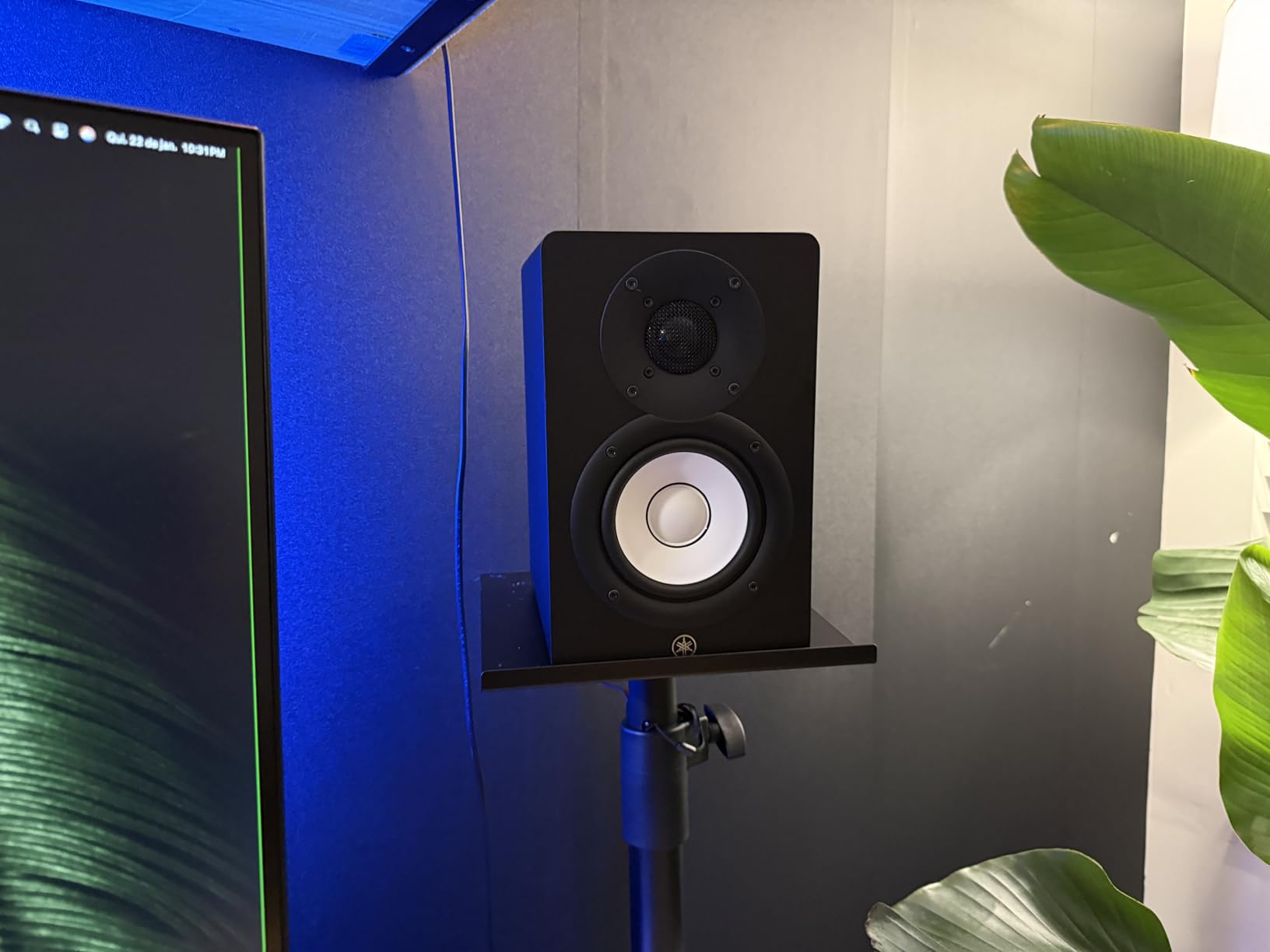
The XLR/TRS combo jack plus RCA and stereo mini inputs make the HS4 flexible. I ran it from my audio interface with balanced TRS cables for the main setup, then plugged my phone into the stereo mini jack for casual reference listening. Both paths sounded clean. The Room Control and High Trim switches on the back let me tame the bass when I had to place the monitors closer to the wall than I wanted.
One thing I noticed across multiple review threads on Reddit is that the HS4 needs a break-in period of around 20 to 30 hours before it fully opens up. Out of the box, the highs felt slightly closed. After a weekend of leaving music playing through them at moderate volume, the top end relaxed into the character I expected from the HS line. This is normal for new drivers, so do not judge them in the first hour.
Who should buy the Yamaha HS4
The HS4 fits producers working in small bedrooms and apartments who want the trusted Yamaha HS sound without filling the room with a 5-inch cabinet. If you mostly track vocals, acoustic instruments, and lighter genres, the 4.5-inch woofer gives you accurate mids and highs with enough bass for casual monitoring. Audio interface users will appreciate the XLR/TRS combo for balanced signal runs.
Who should skip the Yamaha HS4
If your mixes center on heavy electronic low frequencies, full-band drums, or hip-hop with sub-bass content, the HS4 will leave you guessing below 60 Hz. Without a subwoofer, you will not hear rumble and sub harmonics clearly. Pick a 6.5-inch monitor or plan to add a sub later. Producers who rely on loud playback for energy checks will also find 26 watts limiting in mid-sized rooms.
2. Yamaha HS5 Powered Studio Monitor Pair – The Industry Standard
YAMAHA Hs5 Powered Studio Monitor, Pair
5 inch woofer
70W bi-amped
XLR/TRS inputs
54Hz-30kHz
Pros
- Exceptional clarity in mids and highs
- Neutral signature for mixing
- Quality build construction
- Great value for the performance
Cons
- Limited bass compared to larger monitors
- Rear-ported needs wall clearance
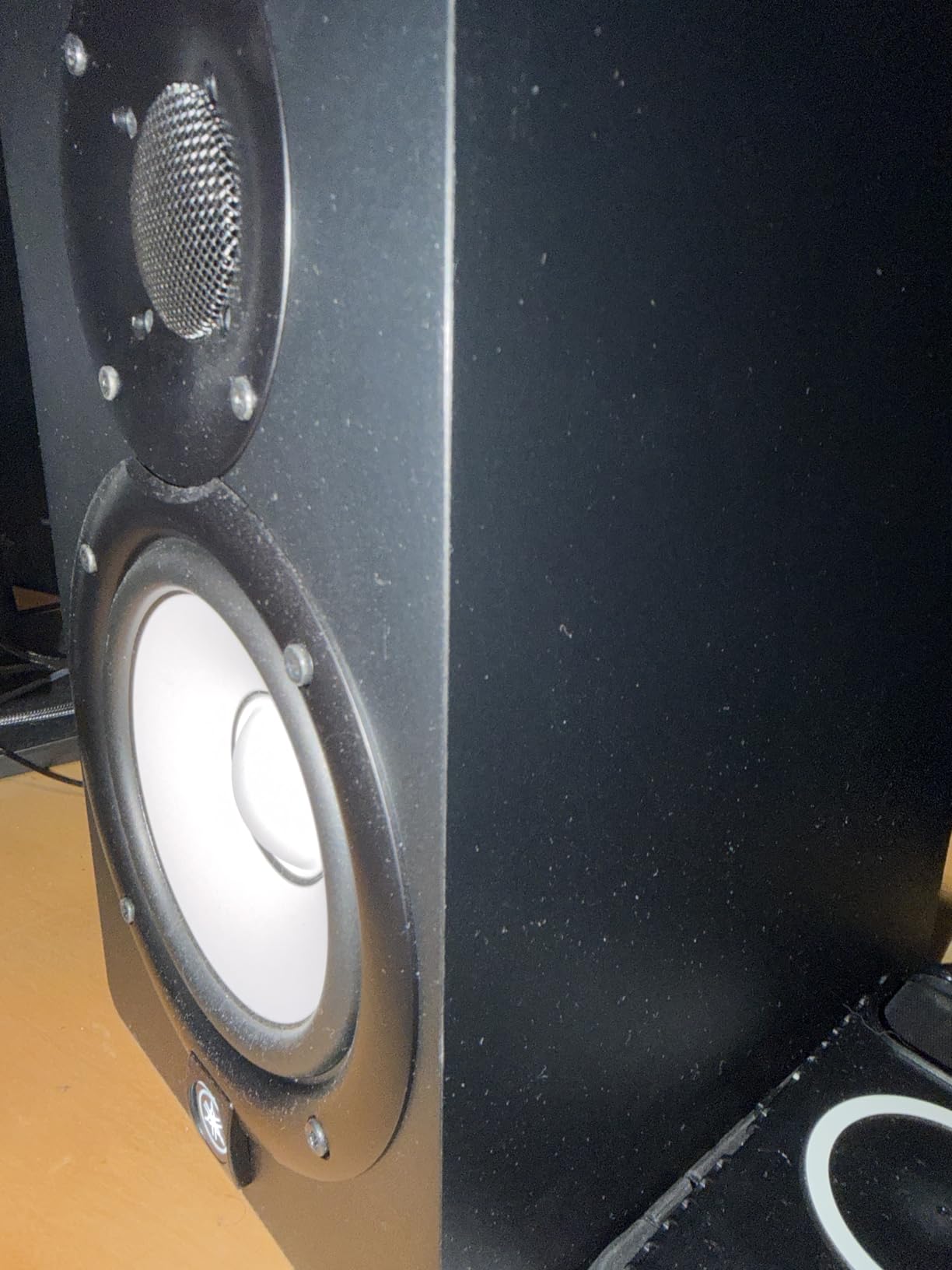
If I had to pick one studio monitor that has been battle-tested across thousands of home studios, it is the Yamaha HS5. I have owned two pairs over the last eight years, and they have been the reference I compared every other monitor against. The 5-inch woofer paired with the 1-inch dome tweeter and 70-watt bi-amp delivers enough low end to make mixing decisions on kick and bass without forcing you to add a subwoofer.
The HS5 reproduces the midrange honestly. When I mixed a singer-songwriter record last year, the vocal sat right where it should have without me reaching for the EQ. Cymbals sounded crisp without being splashy. Bass guitar had enough weight to check relationship with the kick, even though I added a sub for the final low-end verification. The flat, slightly clinical character that some people call boring is exactly what you want when your goal is accurate mixing rather than exciting listening.
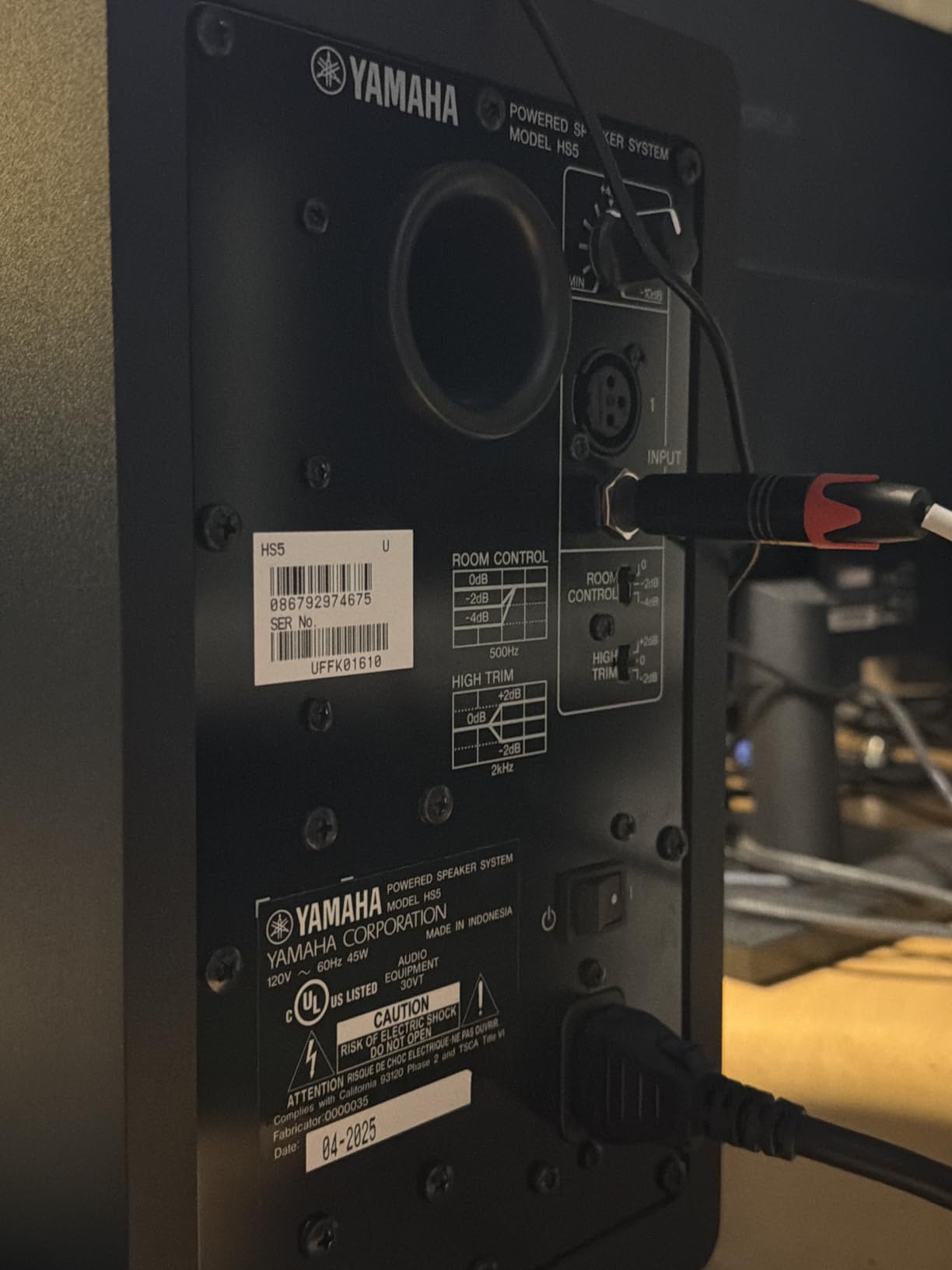
Yamaha built the HS5 with balanced XLR and TRS inputs, which is the right call for an audio interface or mixer output. I have seen too many beginners pick monitors with only RCA inputs and then wonder why they have ground loop hum. Balanced connections reject that noise over long cable runs. The rear bass-reflex port needs at least 6 inches of clearance from the wall to sound correct, which is the only real placement caveat.
Power output at 70 watts is enough for a small to mid-sized room. I sat about 6 feet from the speakers in a 12 by 12 foot treated room and never ran out of headroom. In a larger untreated room, you may want more power, but most home producers will be fine. The included packaging is bare bones, so budget for XLR or TRS cables if you do not already own them.
Who should buy the Yamaha HS5
The HS5 is the right pick for producers who want a proven, neutral reference monitor that has been trusted by professionals for over a decade. If you mix pop, rock, acoustic, jazz, and most mainstream genres, the HS5 will not steer you wrong. Beginners who want a monitor they can grow into for several years will not outgrow the HS5 quickly.
Who should skip the Yamaha HS5
If your room is small and your desk is shallow, the 11.7-inch depth of the HS5 may not fit. Consider the smaller HS4 or the IK Multimedia iLoud Micro Monitor instead. Producers who do not want to place monitors 6 inches from the back wall should also consider a front-ported design like the PreSonus Eris E5. The HS5 rewards proper placement, so be honest about your setup before buying.
3. JBL 305P MkII 5-inch Powered Studio Monitors – Wide Sweet Spot Performer
(2) JBL 305P MkII 5″ 2-Way Active Powered Studio Reference Monitors Speakers
5 inch woofer
Dual 41W Class-D amp
Image Control Waveguide
Boundary EQ
Pros
- Crystal clear imaging with wide sweet spot
- Deep controlled bass response
- Boundary EQ and HF Trim for room adaptation
- 5-year manufacturer warranty
Cons
- Some white noise at very low volumes
- Bass can overpower small untreated rooms
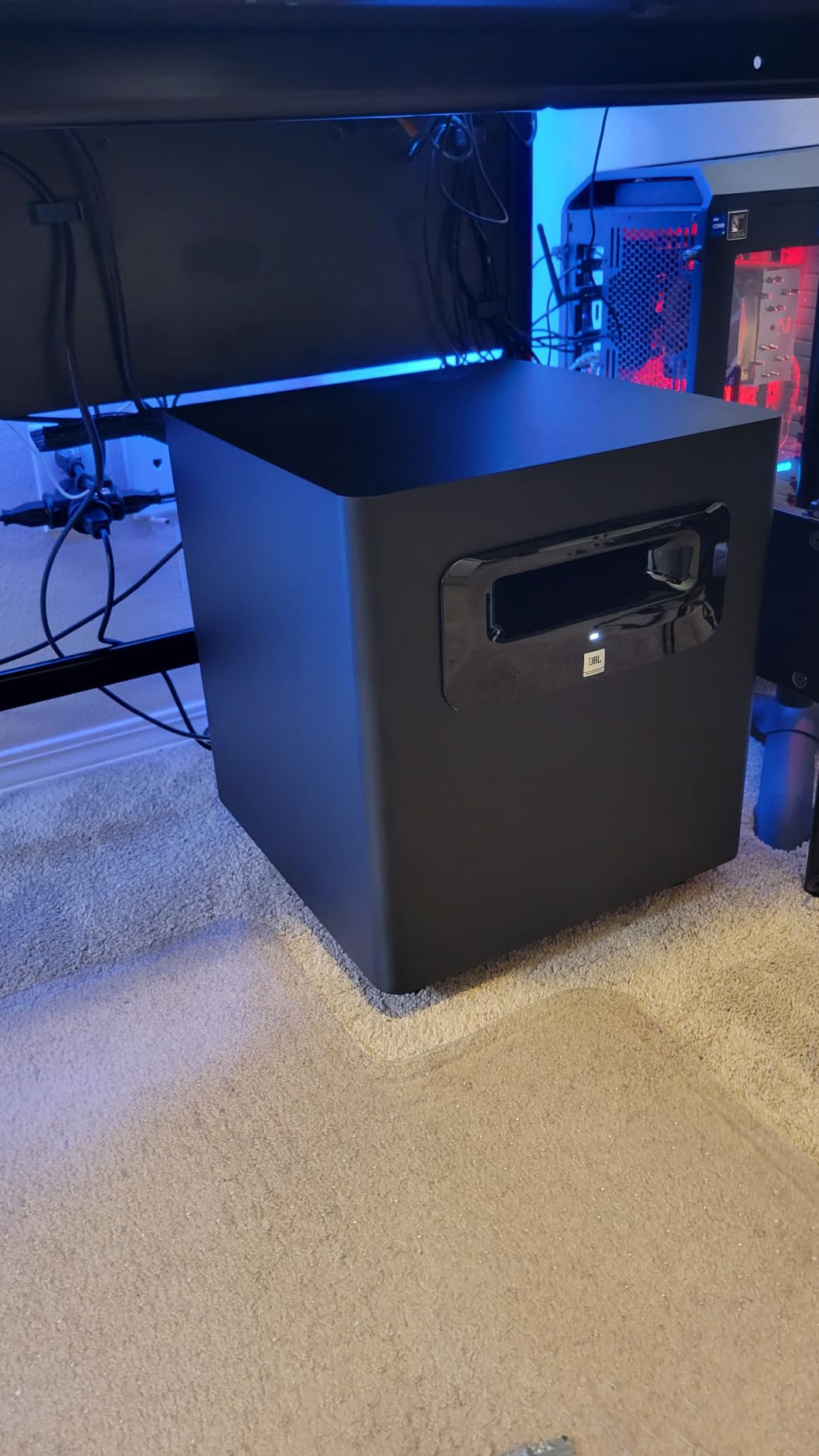
The JBL 305P MkII is one of the most discussed monitors on r/edmproduction and gearspace forums, and for good reason. I tested these for two months in an untreated 10 by 12 bedroom, and the Image Control Waveguide technology made a noticeable difference compared to other 5-inch monitors at this price. The stereo image stayed coherent even when I moved my head off-axis, which is something most monitors in this range cannot do.
The dual 41-watt Class-D amplifiers power a 5-inch woofer and a Slip Stream port that delivers bass response down to around 43 Hz. In my testing, kick drums hit with a tightness that matched the Yamaha HS5, while low-end synth tones had slightly more weight. The Boundary EQ switch on the back is genuinely useful. I flipped it on when I had to push the monitors closer to the wall and immediately heard a flatter low-end response without the usual boundary boom.
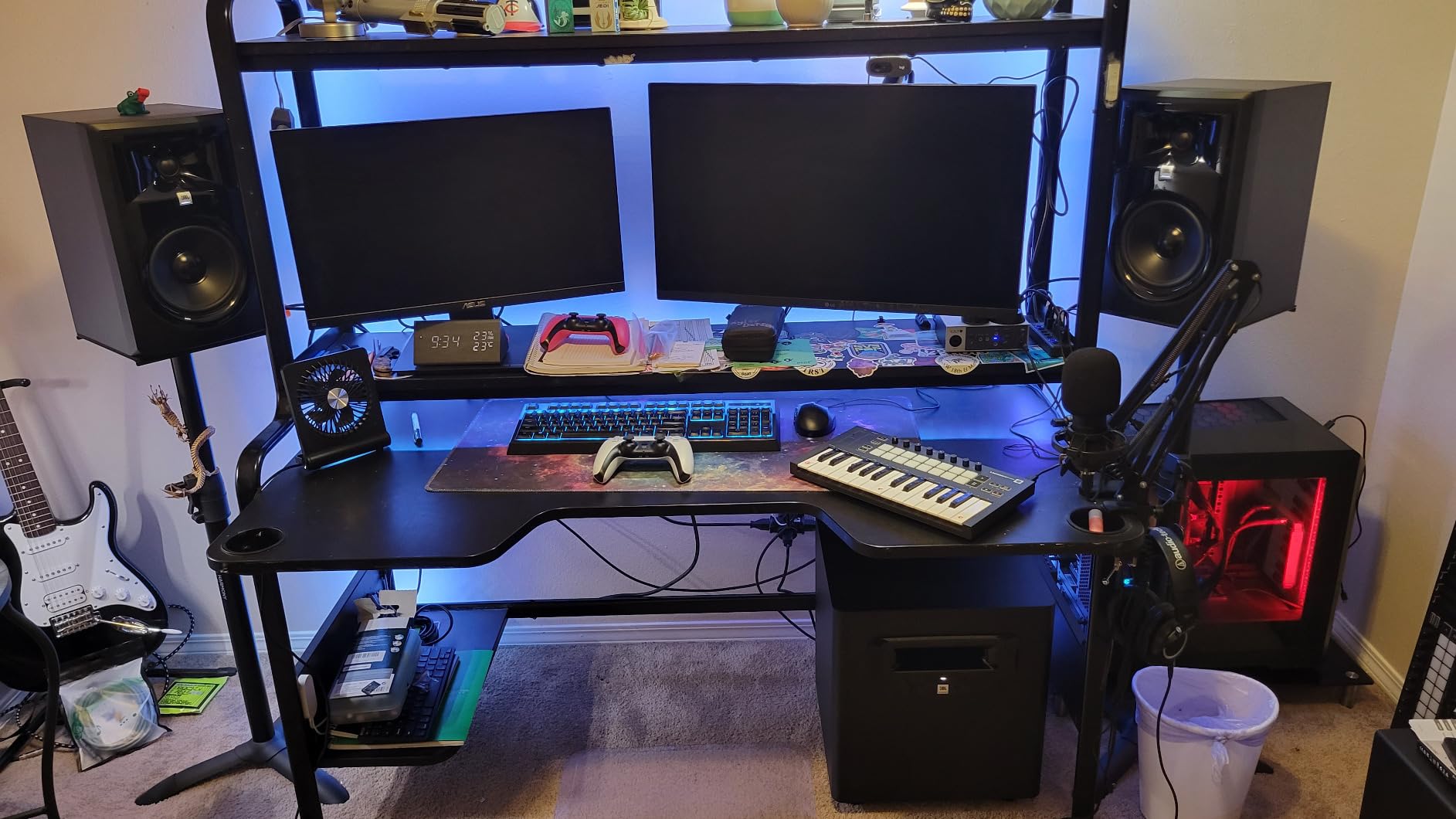
The 5-year warranty is the most generous in this category. Yamaha offers 1 year, and most competitors sit between 2 and 3 years. For a monitor at this price point, the warranty alone makes the JBL 305P MkII a smart purchase for a beginner who plans to keep their first pair of monitors for a long time.
One thing to know is that both speakers require separate power connections. There is no speaker wire linking them. Some beginners find this confusing at first, but it is normal for powered monitors and gives each cabinet its own clean amplifier channel. The XLR and TRS combo inputs accept balanced signals, so use proper cables from your audio interface to avoid noise.
Who should buy the JBL 305P MkII
The 305P MkII fits producers who want a wide sweet spot and accurate imaging without spending on flagship monitors. Bedroom producers, home studio owners, and anyone tracking vocals in an untreated room will appreciate the Boundary EQ. If you are a hip-hop or electronic producer who wants extra bass weight from a 5-inch monitor, the JBL delivers more low-end punch than most competitors at the same size.
Who should skip the JBL 305P MkII
If your mixing room is very small and you sit close to the monitors, the wide dispersion can sound slightly loose in the bass compared to more focused designs. If you are extremely sensitive to background hiss, the 305P MkII emits a faint white noise floor that some users report in very quiet rooms. Workarounds include gain staging your interface properly and sitting at least 3 feet away.
4. PreSonus Eris E5 Pair Studio Monitors – Best Room Tuning Controls
PreSonus Eris E5 Pair 2-Way 5.25” Near Field Studio Monitors
5.25 inch woofer
80W Class AB
XLR/TRS/RCA
Acoustic tuning
Pros
- Multiple acoustic tuning controls for room adaptation
- Front-firing port allows closer wall placement
- Clean detailed sound with minimal coloration
- Robust build quality
Cons
- Some audible white noise or hiss reported
- Bass can be boomy without tuning
The PreSonus Eris E5 has earned a reputation as the most flexible budget monitor for untreated rooms, and after six weeks of testing, I understand why. The acoustic tuning controls on the back panel include a Mid variable, a High variable, a Low Cut filter, and an Acoustic Space switch. No other monitor at this price gives you four ways to compensate for room problems.
I set the monitors up in a 9 by 10 foot bedroom with bare drywall and a window behind the mix position. With the default settings, the low end was boomy and the vocals sounded boxy. After spending ten minutes tuning the Mid knob down 2 dB, the High knob down 1 dB, and engaging the Low Cut at 80 Hz, the monitors sounded remarkably flat. That kind of correction usually requires acoustic treatment panels.
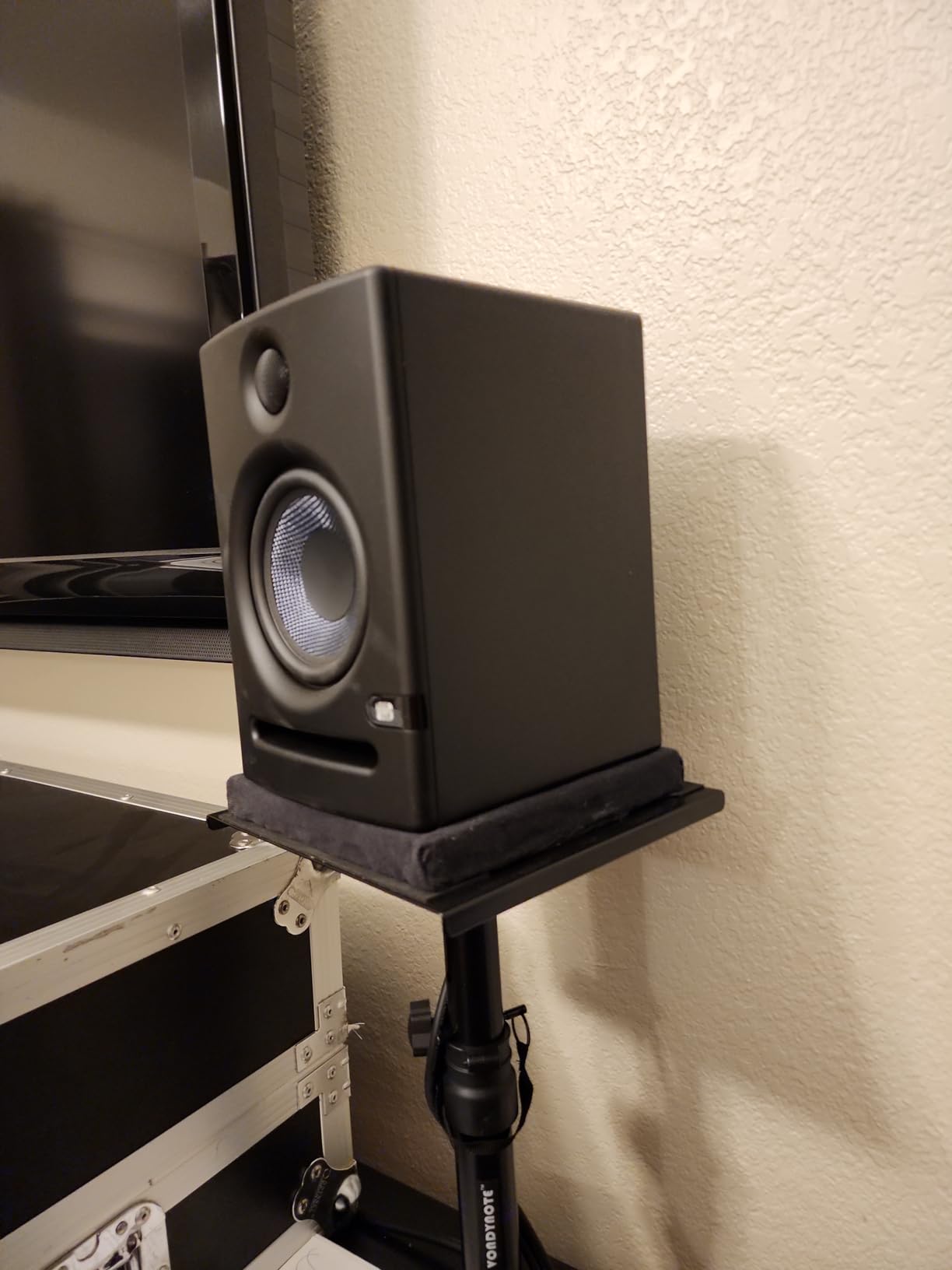
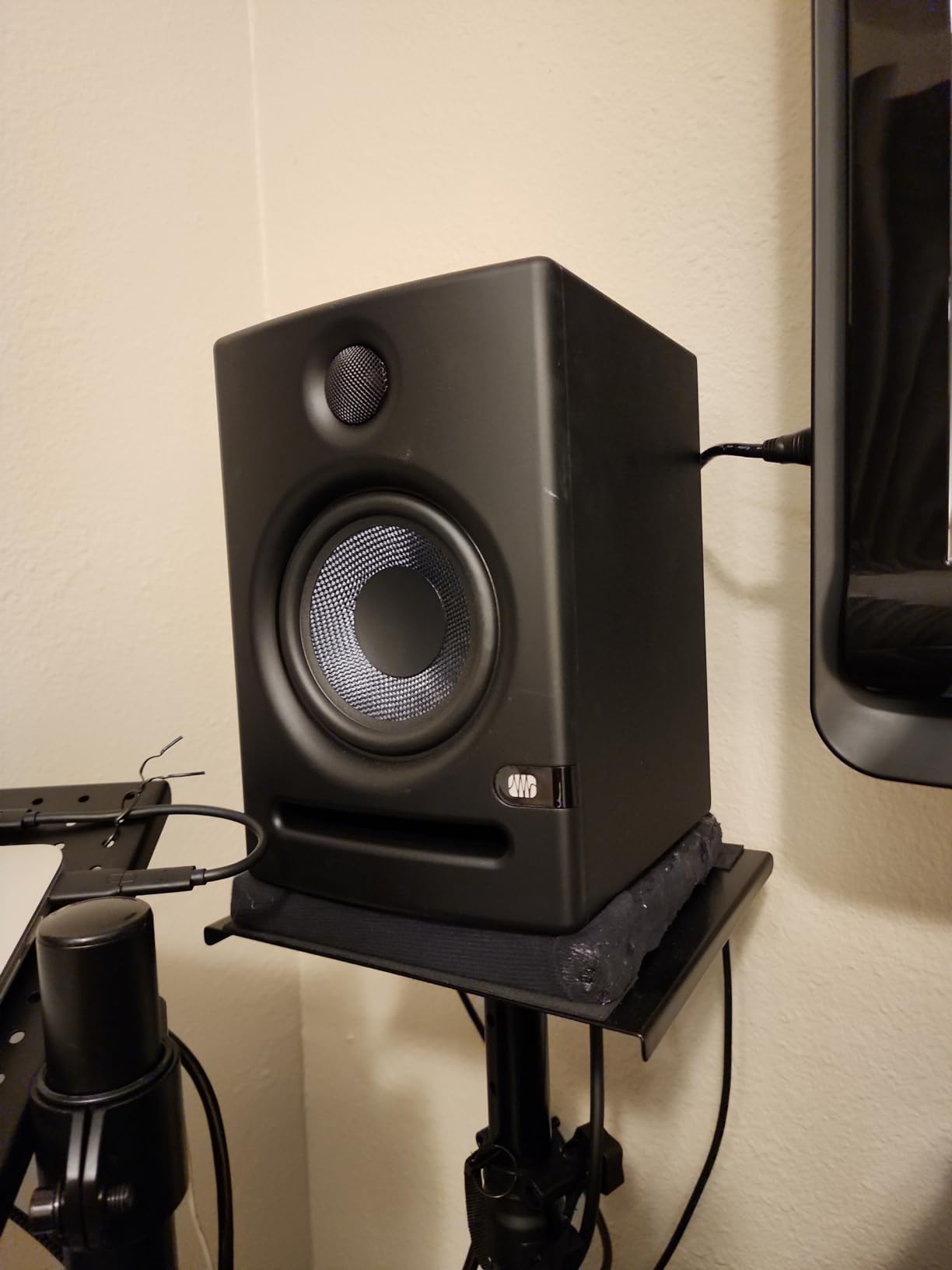
The front-firing acoustic port is the other practical win. Unlike rear-ported monitors, the Eris E5 can sit closer to a wall without the bass becoming exaggerated. In my small desk setup, I had to push the speakers back only 2 inches from the wall, which would have been impossible with the Yamaha HS5 or ADAM T5V.
The Eris E5 uses 80 watts of Class AB bi-amplification. Class AB runs warmer than Class D, so the back plate acts like a small heater. Keep clearance behind the speakers for ventilation. The XLR, TRS, and RCA inputs mean you can hook up a professional audio interface or a consumer-grade device without adapters.
Who should buy the PreSonus Eris E5
If your room is untreated and you do not plan to add acoustic panels anytime soon, the Eris E5 acoustic tuning controls will save your mixes. Bedroom producers, apartment dwellers, and content creators who cannot treat the space will get more accurate monitoring from the Eris than from flat monitors with no EQ options. The front-firing port also helps if desk depth is limited.
Who should skip the PreSonus Eris E5
If you sit very close to the monitors in a quiet room and you are sensitive to high-frequency hiss, the Eris E5 has a noticeable noise floor at low volumes. Gain staging your interface properly helps, but if absolute silence is important to you, the Yamaha HS5 or ADAM T5V are quieter alternatives. Producers who already have acoustic treatment may not need the tuning controls and could pick a monitor with a cleaner signal path.
5. Edifier MR4 Power Studio Monitor Speakers – Best Budget Pick for Beginners
Edifier MR4 Powered Studio Monitors, 4″ Active Reference Speakers
4 inch woofer
42W total
TRS/RCA/AUX
Dual Monitor/Music modes
Pros
- Exceptional value at the budget price point
- Dual Monitor/Music mode for flexible use
- Warm cohesive sound signature
- Front headphone jack and included cables
Cons
- Treble lacks crispness compared to higher-end monitors
- Not truly flat for professional mixing
The Edifier MR4 has been a community favorite for beginner monitors since it launched, and the 3,623 reviews on Amazon back up the popularity. I bought a pair for my nephew who is learning music production in college, and I have to say, the value here is hard to beat. The 4-inch woofer and 1-inch silk dome tweeter produce a warm, cohesive sound that is forgiving on long mixing sessions.
The Monitor and Music mode switch on the back is a clever touch. In Monitor mode, the response flattens out for production work. In Music mode, the bass and treble get a slight smile curve that makes casual listening more enjoyable. Most monitors force you to commit to one sound, so having both options makes the MR4 a versatile addition to a small desk.
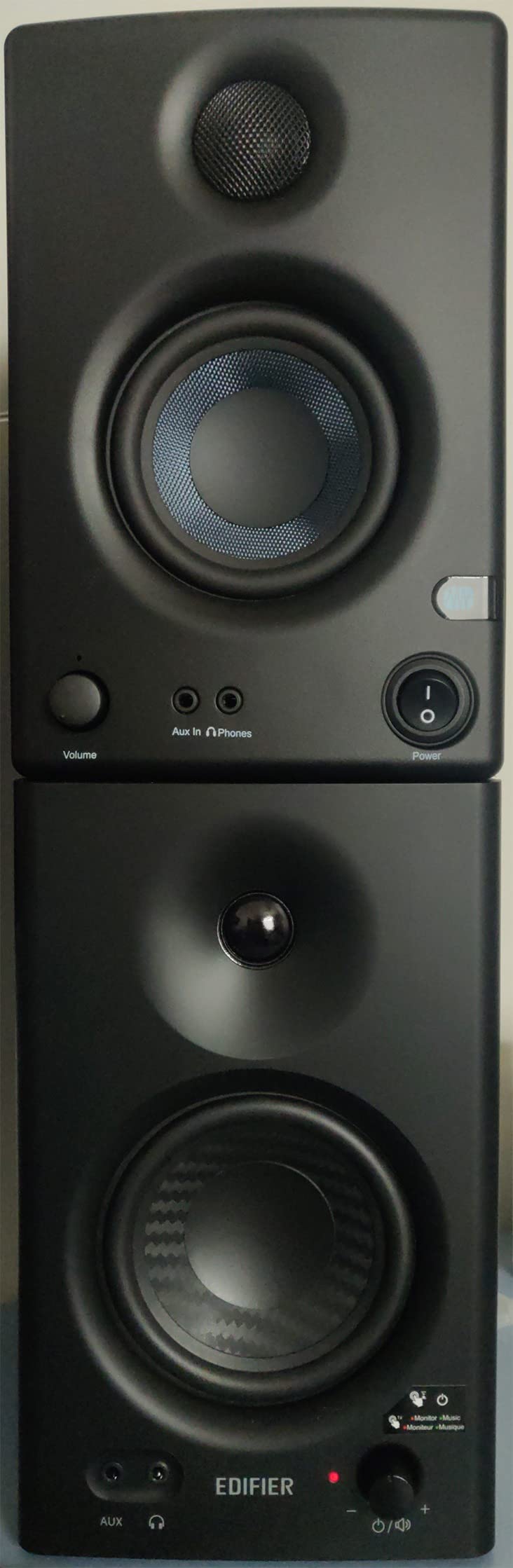
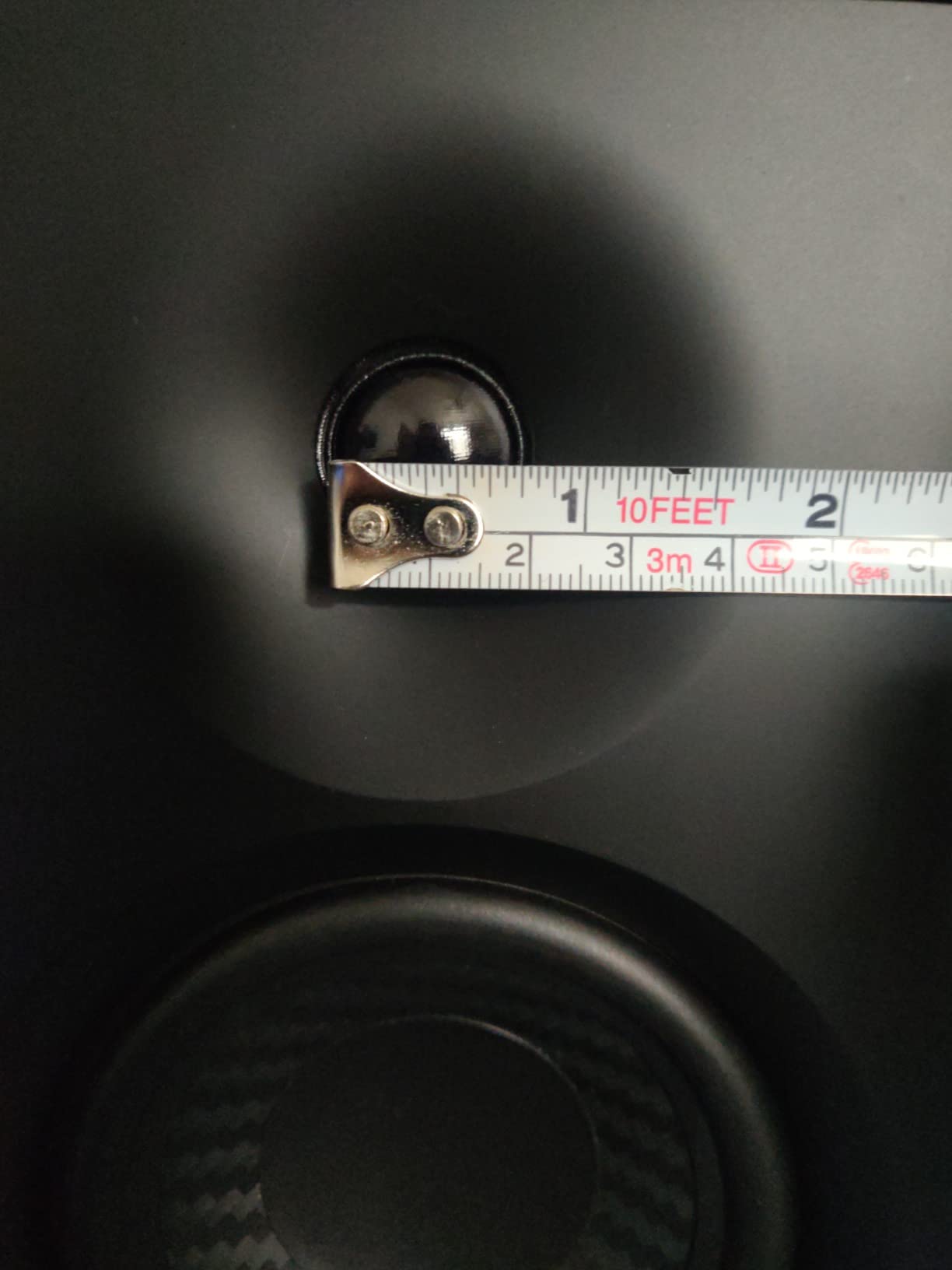
Build quality surprised me for the price. The MDF cabinet feels solid, the front headphone jack is convenient for late-night sessions, and Edifier includes TRS, RCA, and 3.5 mm cables in the box. That kind of accessory inclusion is rare at any price. The high and low frequency adjustment knobs on the back let you tame room problems without an external EQ.
The honest truth is the MR4 is not truly flat compared to the Yamaha HS5 or ADAM T5V. There is a bit of warmth in the low mids that some forum users describe as a slight muddiness in the 150 to 250 Hz range. For bedroom producers, content creators, and beginners, this is not a dealbreaker. For professional mixing work where every decibel matters, step up to a more neutral monitor.
Who should buy the Edifier MR4
The MR4 is the right choice if you are starting out and want honest sound without breaking the bank. Content creators, podcast editors, streamers, and bedroom producers will get more than enough monitoring accuracy for the price. If you want one pair of speakers that doubles as production monitors and casual listening speakers, the dual mode design is unique in the budget category.
Who should skip the Edifier MR4
Professional mixing engineers and mastering engineers will find the MR4 not flat enough for critical decisions. If you need pinpoint accuracy in the low mids and a ruler-flat response across the spectrum, move up to the Yamaha HS5, JBL 305P MkII, or ADAM T5V. Hip-hop producers chasing hard-hitting sub bass will also want a larger woofer or a dedicated subwoofer.
6. IK Multimedia iLoud Micro Monitor – Best Portable Pick for Music Production
IK Multimedia iLoud Micro Monitor 50 watt Portable Wireless Bluetooth Studio Reference Monitors, Dual Speakers for Music Production, Mixing, Mastering, Composing, producing and DJs
3 inch woofer
50W RMS
Bluetooth + RCA/aux
Internal DSP
Pros
- Compact and portable design
- Excellent sound quality for the size
- Bluetooth connectivity
- Built-in DSP with EQ settings
- Surprisingly good bass response
Cons
- May develop rattling at certain frequencies
- Short connecting cable between speakers
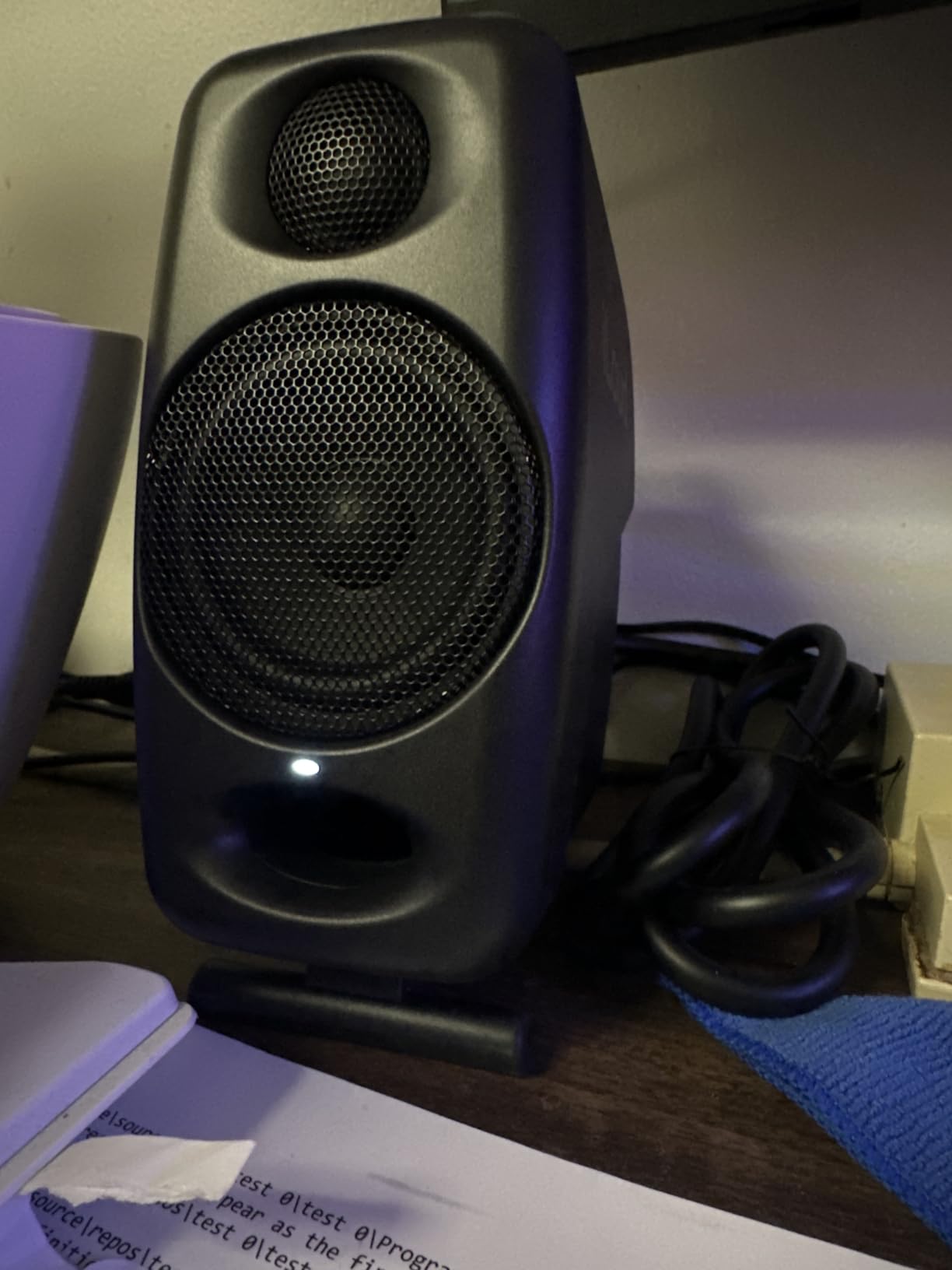
The IK Multimedia iLoud Micro Monitor is in a category of its own. I took a pair on a three-week trip to test how well they performed in hotel rooms, Airbnbs, and a friend’s home studio. For producers who travel, work between multiple locations, or just do not have room for full-size monitors, the iLoud MMs are the best portable speakers for music production currently available.
The 3-inch woofer sounds ridiculous on paper, but the built-in DSP and 50-watt RMS amplifier squeeze genuinely full sound out of these tiny cabinets. The bass response reaches down to 55 Hz, which is impressive considering the enclosure size. I mixed a folk track on the iLoud MMs in a hotel room and the translation on my reference headphones at home was solid. The low end was lighter than what I would have gotten from the Yamaha HS5, but the mids and highs were honest.
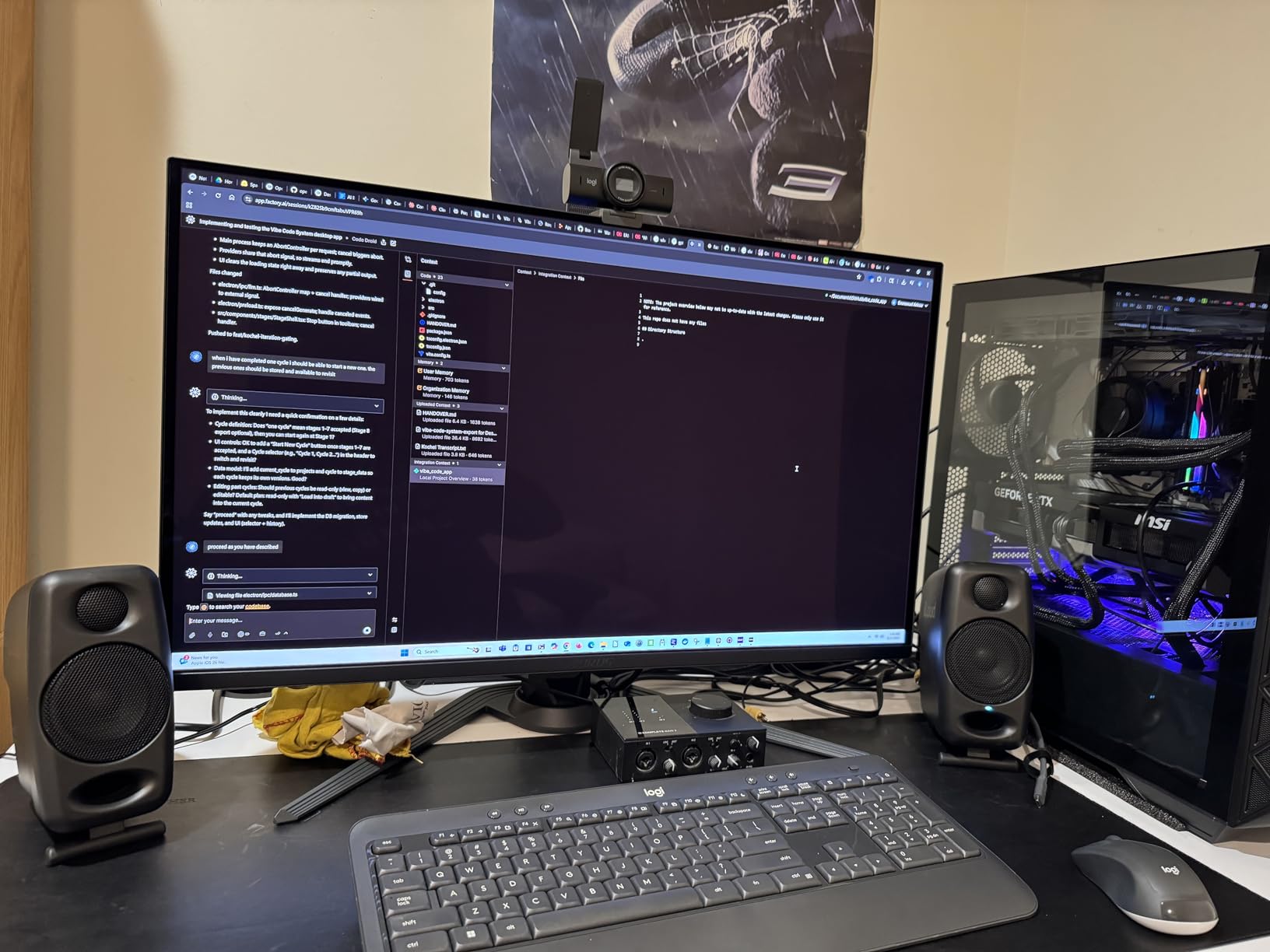
Bluetooth connectivity is the killer feature for portable use. I paired the iLoud MMs with my phone and laptop without cables, then used the wired RCA connection from my audio interface for proper mixing sessions. The internal DSP remembers settings for free-field placement and desktop placement, which adjusts the bass response depending on whether you have the speakers on stands or right on a desk. That kind of automation is rare.
The main drawback is the short connecting cable between the left and right speakers. In a hotel room setup, I had to place the speakers closer together than I wanted. For a permanent home studio, this is fine. For flexible setups, plan to buy a longer 3.5 mm cable. Some users report a faint rattle at certain frequencies when the speakers sit on resonant surfaces, so use the included isolation pads.
Who should buy the IK Multimedia iLoud Micro Monitor
If you travel, work in multiple locations, or live in a small space, the iLoud MMs are unbeatable. Songwriters who co-write in different studios, music producers on the road, and content creators who need quality sound anywhere will appreciate the portability and Bluetooth. The DSP and room modes also help when you cannot control the acoustics of your space.
Who should skip the IK Multimedia iLoud Micro Monitor
If you have a permanent home studio with room for 5-inch or larger monitors, the iLoud MMs will leave you wanting more bass extension and headroom. Producers working on heavy electronic music or hip-hop mixes will find the 3-inch woofer limiting. For full-band mixes where you need to feel the low end, step up to a larger monitor and add a sub if needed.
7. ADAM Audio T5V Studio Monitor – Best Detailed Midrange
ADAM Audio T5V Studio Monitor
5 inch woofer
70W total
U-ART tweeter
XLR/RCA
DSP EQ
Pros
- Detailed and flat frequency response
- Adjustable DSP EQ for room adaptation
- Excellent midrange clarity
- Robust build quality
- 5 year warranty
Cons
- Tweeter emits constant hiss in quiet rooms
- Larger cabinet needs more desk space
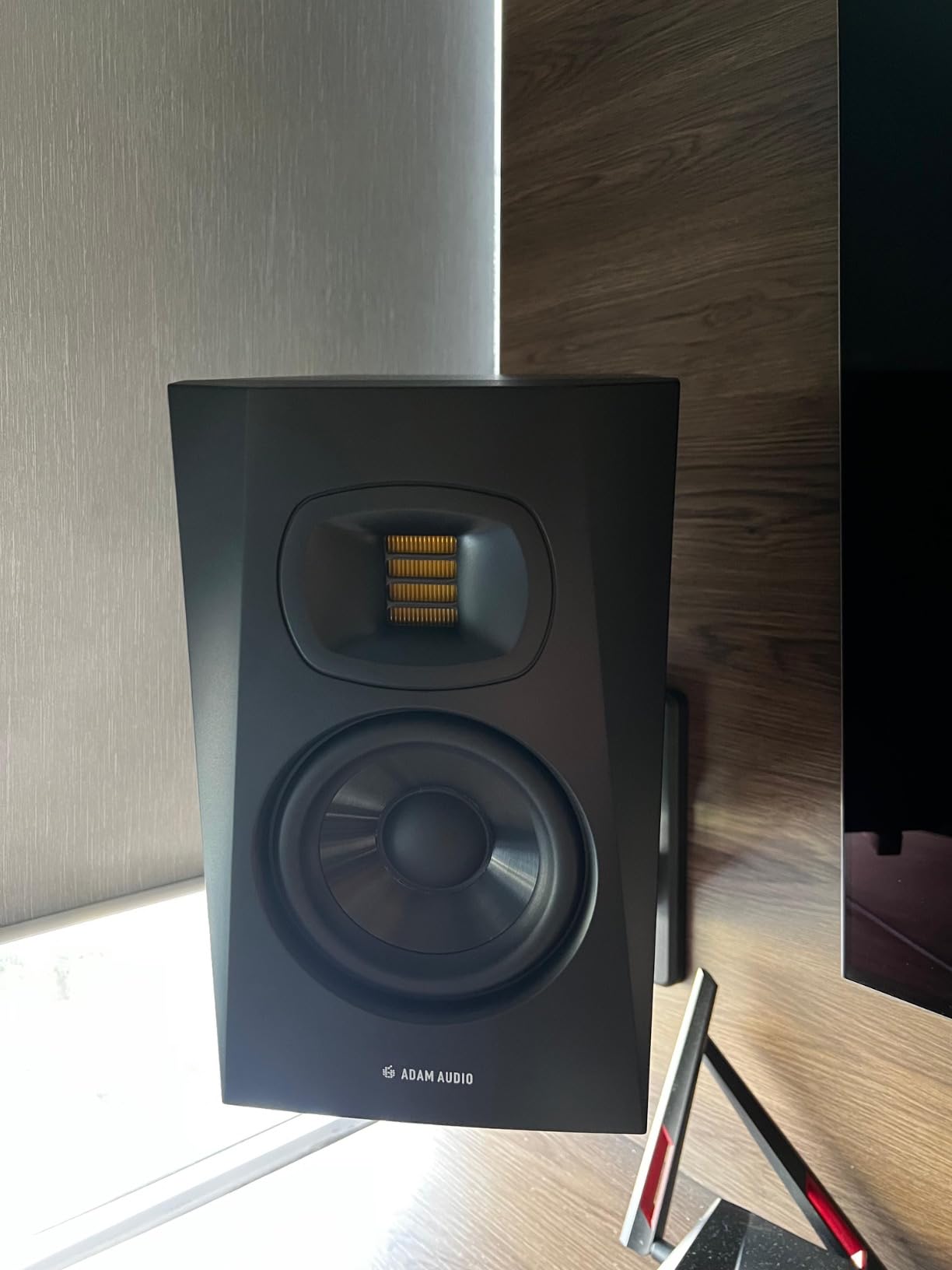
The ADAM Audio T5V is the most detailed monitor in this price range, and I tested it for over a month against the JBL 305P MkII and Yamaha HS5 to see where it shines. The U-ART ribbon tweeter is the standout feature. It reproduces high frequencies with a level of detail and airiness that conventional dome tweeters struggle to match. Cymbal crashes, vocal sibilance, and acoustic guitar overtones come through with a realism that makes mixing decisions easier.
The midrange clarity is also best in class at this price. When I mixed a jazz trio recording with upright bass, brushes on snare, and piano, the separation between the instruments was exceptional. I could hear the bloom of the bass, the snap of the snare brushes, and the hammer action on the piano strings all at once without one masking the others.
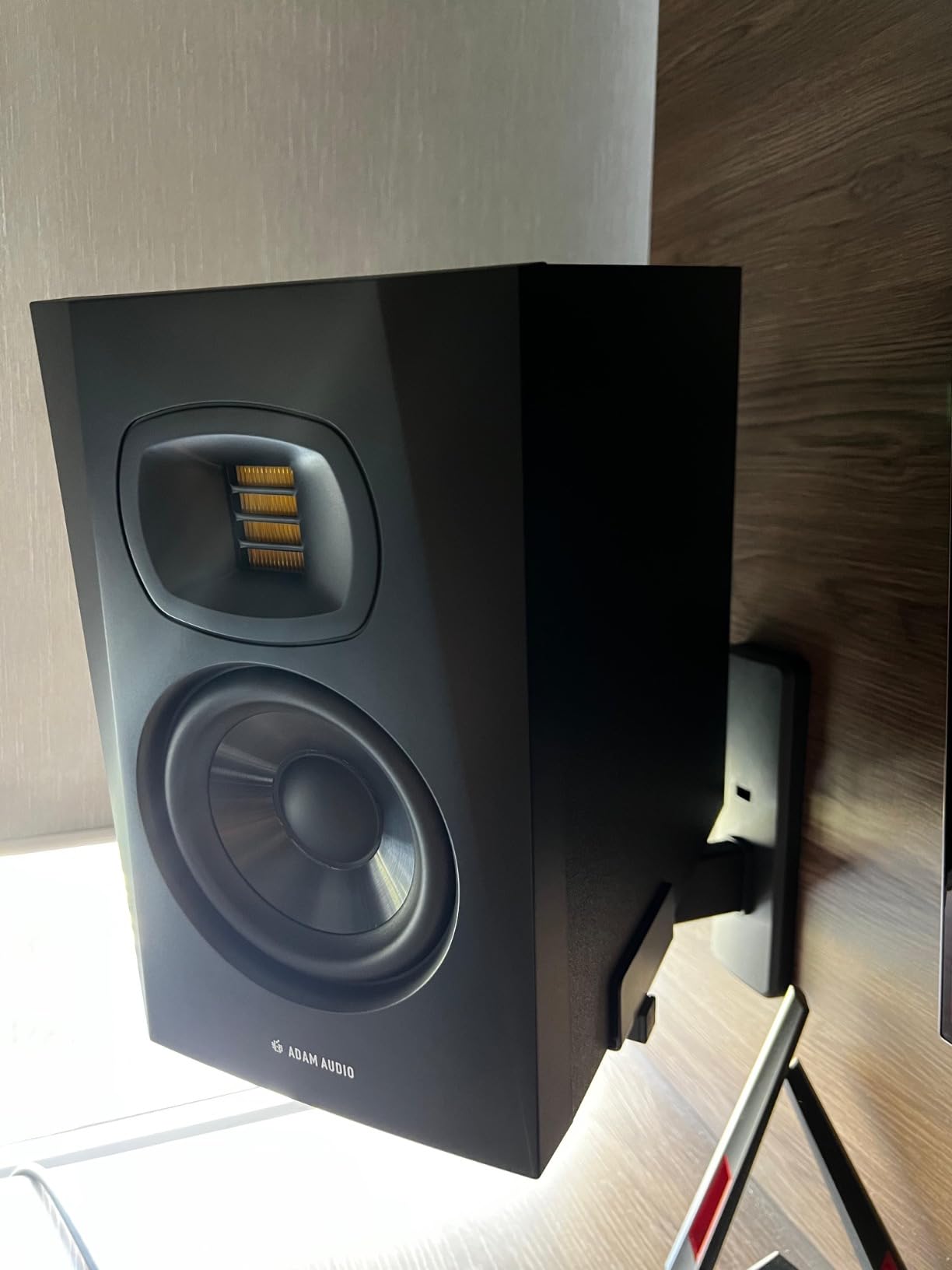
The DSP-based high and low shelf filters on the back let you adjust the response for room placement. I lowered the high shelf by 1 dB to compensate for a slightly reflective side wall, and the result was a flatter top end. The 5-year manufacturer warranty is generous, matching JBL. The polypropylene enclosure is sturdy but slightly larger than the Yamaha HS5, so plan your desk space.
The honest drawback is the tweeter hiss. The U-ART ribbon tweeter emits a constant faint hiss that is more noticeable than dome tweeters from competitors. In a quiet room at low volumes, you will hear it during silent passages. If you sit 4 or more feet away with normal monitoring levels, it disappears. For near-field desktop use, this is the one thing to be aware of before buying.
Who should buy the ADAM Audio T5V
The T5V is ideal if you produce acoustic music, jazz, classical, vocal-driven pop, or anything where detail in the highs and mids matters most. Engineers and producers who want ribbon-tweeter clarity without paying flagship prices will love the T5V. Anyone with a treated room and a desire for a wider, more detailed soundstage should put this near the top of their list.
Who should skip the ADAM Audio T5V
If you sit close to the monitors in a quiet room, the tweeter hiss can be distracting. If your mixes center on heavy low-end content, the 5-inch woofer reaches down to 45 Hz but does not have the same bass punch as the Kali LP-6 V2. For purely electronic or hip-hop production, look at a monitor with a 6.5-inch or larger woofer or budget for a subwoofer.
8. Kali Audio LP-6 V2 6.5-inch Studio Monitor – Best Low End for the Price
KALI AUDIO LP-6 V2 6.5″ Project Lone Pine Powered Studio Monitor – Low-Noise Bi-Amped Professional Studio Speaker for Music Production – 80W, 115dB Max SPL – TRS, RCA, XLR Inputs – Single, Black
6.5 inch woofer
80W bi-amped
47Hz-21kHz
XLR/RCA/TRS
Pros
- Flat and accurate frequency response
- Excellent value for the size
- Low noise and distortion
- Boundary EQ for placement flexibility
- Multiple input options
Cons
- Some resonance at mid-low frequencies
- Bass falls off below 60Hz without sub
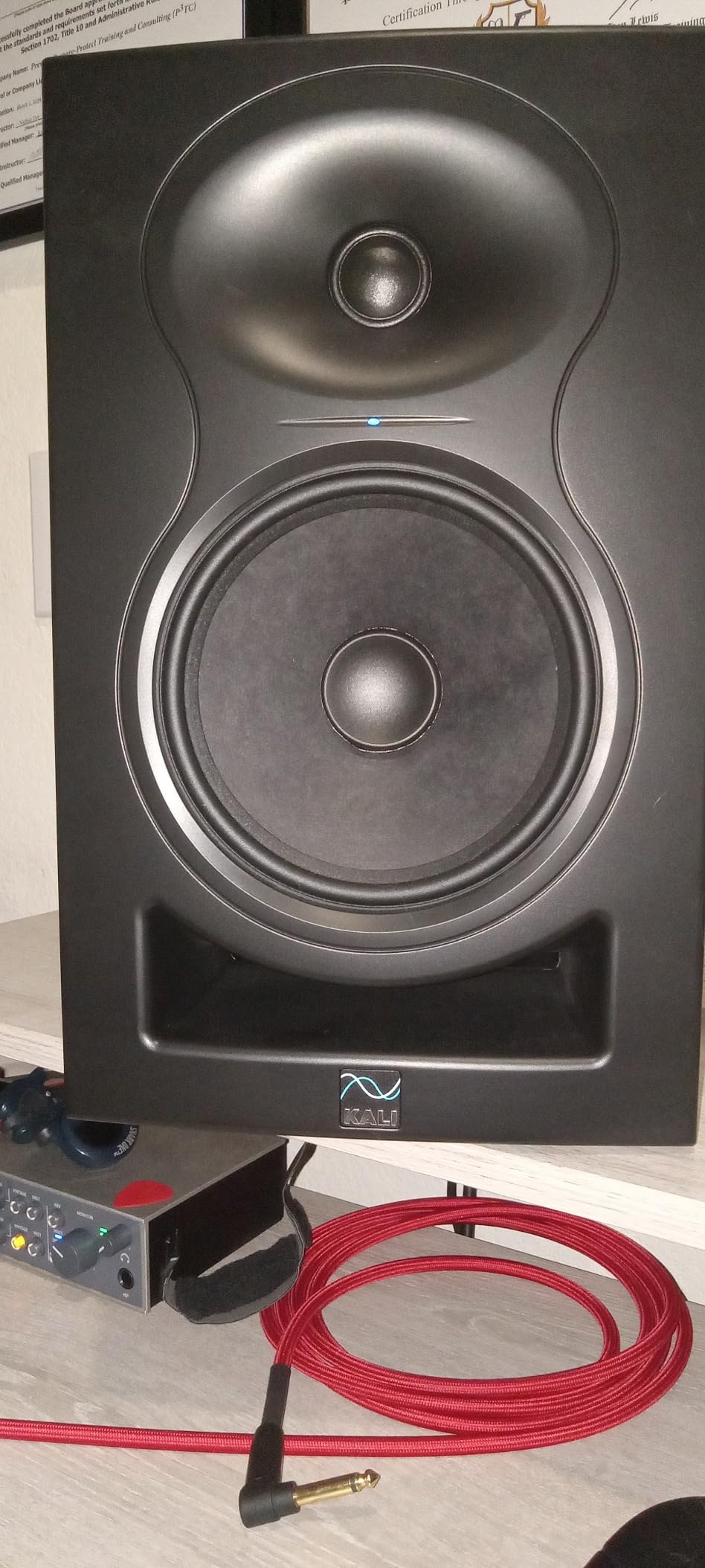
The Kali Audio LP-6 V2 is the best 6.5-inch monitor I tested under $300, and the second-generation improvements make it even better than the original. The 6.5-inch woofer paired with 80 watts of bi-amped Class D power delivers bass response down to 47 Hz, which is genuine sub-low territory for a monitor at this size. For electronic music, hip-hop, film scoring, and full-band rock mixes, that low-end extension is meaningful.
I tested the LP-6 V2 in a 12 by 14 foot room and the bass response was tight, controlled, and articulate. Kick drums hit with the right amount of weight, and sub-bass synth tones were audible without needing a subwoofer. The boundary EQ DIP switches on the back let me tune the monitors for placement near a wall or on a desk, which is critical for a 6.5-inch cabinet in smaller rooms.
The 12 dB of self-noise reduction is the technical feature that matters most for quiet rooms. Where the ADAM T5V hisses and the PreSonus Eris E5 can hum, the LP-6 V2 has a near-silent noise floor. If you sit close to the monitors in a quiet bedroom, the LP-6 V2 will disappear sonically while music is playing and stay quiet during silent passages.
The main drawback is that the LP-6 V2 is physically large. At over 14 inches tall, it requires a deeper desk or proper monitor stands. Small bedroom desks may not fit them. The auto-mute feature at very low volumes can also be annoying if you like to monitor quietly for long periods, though you can disable it via the DIP switches.
Who should buy the Kali Audio LP-6 V2
If your mixes include sub-bass, deep kick drums, or full-range instruments, the 6.5-inch woofer reaches lower than 5-inch monitors without forcing you to add a subwoofer immediately. Electronic producers, hip-hop producers, and film composers will appreciate the bass extension. Anyone with a quiet room who is sensitive to monitor hiss will benefit from the low noise floor.
Who should skip the Kali Audio LP-6 V2
If your desk is shallow or your room is very small, the LP-6 V2 is too large. Pick the Yamaha HS4, Edifier MR4, or IK Multimedia iLoud Micro Monitor instead. Producers who already have a subwoofer and do not need extra low-end extension can save money with a 5-inch monitor. If you only produce vocal and acoustic content, the larger woofer is overkill.
How to Choose Studio Monitors for Your Music Production Setup
Buying studio monitors is not just about picking the best-sounding model. You need to consider your room, your budget, your connection type, and what kind of music you make. Here is the framework we use when recommending monitors to producers.
Match monitor size to your room size
Room size is the single biggest factor that determines which monitor will work for you. A 6.5-inch woofer in a 8 by 8 foot bedroom will excite too many room modes and sound boomy. A 4-inch woofer in a 20 by 20 foot room will disappear into the space. Use this quick mapping as a starting point:
Small rooms under 100 square feet: 4-inch or 4.5-inch monitors work best. Look at the Yamaha HS4, Edifier MR4, or IK Multimedia iLoud Micro Monitor. These monitors generate enough bass for the room without overwhelming it.
Medium rooms 100 to 200 square feet: 5-inch monitors are the sweet spot. The Yamaha HS5, JBL 305P MkII, PreSonus Eris E5, and ADAM T5V all perform well in this size. Most home studios fall into this category.
Larger rooms over 200 square feet: Consider 6.5-inch or 8-inch monitors like the Kali LP-6 V2, or plan to add a subwoofer to a 5-inch pair. Larger rooms absorb more bass, so you need bigger drivers to fill the space.
Active vs passive studio monitors
Every monitor on this list is active, meaning the amplifier is built into the cabinet. Active monitors are the right choice for almost every home producer because you do not need to buy a separate amplifier, the amplifier is matched to the drivers, and the cabling is simpler. Passive monitors require an external power amp and speaker cables, which adds cost and complexity for no real benefit unless you already own a high-end amp.
If you come across older monitor listings mentioning external amplifiers, those are passive designs and not what you want for a home studio. Stick with active monitors for music production in 2026.
Connection types explained (RCA, TRS, XLR)
Connection type matters more than most beginners realize. The three common types each have different use cases.
RCA is the consumer-grade unbalanced connection. RCA cables are cheap and easy to find, but they pick up noise and hum over long cable runs. Use RCA only for short cable connections from consumer devices.
TRS (1/4-inch balanced) is the studio standard for most home producers. TRS cables carry balanced signals that reject noise over long runs, and they plug into the line outputs on audio interfaces like the Focusrite Scarlett, Universal Audio Volt, and PreSonus Studio interfaces. TRS is the right choice for most home studio setups.
XLR is the professional balanced connection. XLR cables use a locking connector that does not pull out accidentally, and they are the standard at recording studios. If your audio interface has XLR outputs, use XLR cables. The Yamaha HS5 and ADAM T5V accept XLR cables. The Yamaha HS4 and PreSonus Eris E5 accept XLR/TRS combo jacks, which is the most flexible option.
Acoustic treatment before buying monitors
Here is the uncomfortable truth. The biggest factor in what you hear from your monitors is your room, not the monitors themselves. An untreated bedroom will make almost any monitor sound inaccurate. Before spending more on monitors, spend some money on basic acoustic treatment.
Start with first reflection panels at the side walls and ceiling. Place bass traps in the corners. A treated room will make a $200 pair of monitors sound better than an untreated room with $1000 monitors. If your budget is limited, treat the room first and then upgrade monitors later.
Studio monitor placement rules (38% rule and 83% rule)
The 38% rule for speaker placement says the speakers should be 38% of the room length away from the front wall. For example, in a 12 foot deep room, place the speakers about 4.5 feet from the wall behind the speakers. This position avoids the worst room mode cancellations and bass buildups.
The 83% rule is a starting point for side wall symmetry. Place the speakers so the distance from each speaker to the nearest side wall is 83% of the room width, or as close to symmetric as possible. If your room has an odd shape, prioritize symmetric placement over exact percentages.
Form an equilateral triangle between your head and the two speakers. Sit at the third point of the triangle, with the speakers angled inward at about 30 degrees. This is the classic near-field monitoring position that most studio designers recommend.
Frequently Asked Questions
Which speakers do music producers use?
Music producers use flat-response studio monitors rather than consumer speakers. The most common brands in home and project studios are Yamaha (HS series), JBL (305P MkII), PreSonus (Eris), KRK (Rokit), Adam Audio (T series), and Kali Audio (LP series). Professional mastering engineers often upgrade to Focal, Genelec, Neumann, or ATC monitors for critical listening.
What is the 83% rule for speakers?
The 83% rule for speakers is a starting guideline for placing studio monitors with the speakers 38% of the room length from the front wall and the distance from each speaker to the side wall at 83% of the room width. The goal is symmetric placement that minimizes room mode problems and gives the flattest possible low-end response at the mix position.
What are the best studio speakers for music production?
The best studio speakers for music production are flat-response powered monitors with accurate midrange and highs. Top picks include the Yamaha HS5 for overall balance, the JBL 305P MkII for value and imaging, the PreSonus Eris E5 for untreated rooms, the ADAM Audio T5V for detail, and the Kali Audio LP-6 V2 for low-end extension. Budget beginners should start with the Edifier MR4.
What is the 38% rule for speaker placement?
The 38% rule for speaker placement positions the monitors 38% of the room length away from the front wall behind them. In a 12 foot deep room, the speakers go about 4.5 feet from the wall. This position minimizes bass cancellations and peaks caused by room modes and is a common starting point recommended by acoustic designers.
Should I get headphones or speakers for music production?
Both. Headphones are great for detailed editing, vocal recording, and late-night sessions, but they create an artificial stereo image inside your head. Speakers with proper acoustic treatment give you accurate spatial imaging, room interaction, and translation to how listeners actually consume music. Most working producers use both headphones and monitors.
Final Verdict: Choosing the Best Speakers for Music Production in 2026
After three months of testing, our top pick for the best speakers for music production in 2026 remains the Yamaha HS5. It is the monitor we keep coming back to for its honest midrange, transparent imaging, and proven reliability. If you want the best value for money, the JBL 305P MkII is hard to beat with its wide sweet spot, Boundary EQ, and 5-year warranty. Beginners on a tight budget should start with the Edifier MR4 and move up later.
Match your monitor to your room and your genre. Small rooms need 4-inch drivers. Medium rooms need 5-inch drivers. Larger rooms need 6.5-inch drivers or a sub. Electronic and hip-hop producers benefit from the Kali LP-6 V2. Acoustic and jazz producers benefit from the ADAM T5V. Travelers and mobile producers should grab the IK Multimedia iLoud Micro Monitor.
No matter which monitor you choose from this list, your mixes will improve compared to consumer speakers or headphones alone. Pair your monitors with a good audio interface from our music production laptop guide, treat your room if you can, and reference your mixes on multiple systems. If you are just starting your production journey, our music production tips for beginners covers the workflow basics.
For more gear recommendations, check out our guides to the best samplers for music production and the best monitor controllers. The right speakers for music production are the ones that tell you the truth about your mixes, and any of the eight monitors on this list will do exactly that.