
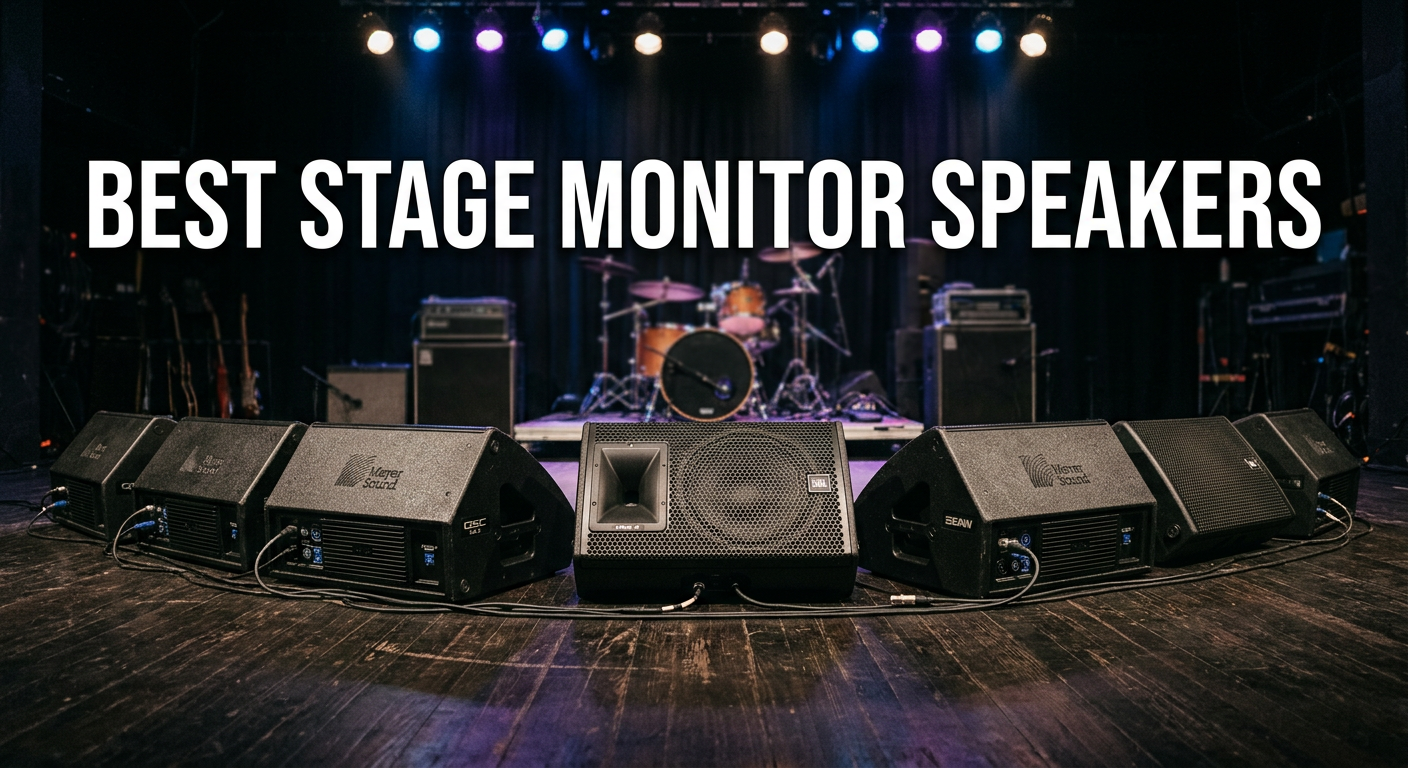
Nothing kills a performance faster than not being able to hear yourself on stage. Whether you are a vocalist trying to stay in tune or a drummer keeping time with the band, the right stage monitor speakers make all the difference between a great show and a frustrating one.
Stage monitors are specialized speakers designed to project sound back toward performers during live shows. Unlike front-of-house PA speakers that blast sound toward the audience, monitors sit on stage and let you hear your own mix clearly, even when the crowd gets loud. Our team spent weeks testing and researching the best stage monitor speakers on the market to help you find the right fit for your setup and budget.
In this guide, we review eight top-rated floor monitor speakers ranging from compact 10-inch options to powerful 12-inch professional models. We also break down the key factors to consider when choosing monitors, from powered vs passive designs to speaker size and wattage. If you are also building out your live sound rig, check out our guide on dynamic microphones for live sound to complete your setup.
Table of Contents
Top 3 Best Stage Monitor Speakers for 2026
8 Best Stage Monitor Speakers in 2026
| Product | Specifications | Action |
|---|---|---|
 Electro-Voice PXM-12MP Electro-Voice PXM-12MP |
|
Check Latest Price |
 Yamaha DBR10 Yamaha DBR10 |
|
Check Latest Price |
 Mackie Thump210 Mackie Thump210 |
|
Check Latest Price |
 Turbosound TFX122M-AN Turbosound TFX122M-AN |
|
Check Latest Price |
 Samson RSXM10A Samson RSXM10A |
|
Check Latest Price |
 Behringer EUROLIVE F1220D Behringer EUROLIVE F1220D |
|
Check Latest Price |
 Rockville RSM12A V2 Rockville RSM12A V2 |
|
Check Latest Price |
 Sound Town METIS-12MPW Sound Town METIS-12MPW |
|
Check Latest Price |
1. Electro-Voice PXM-12MP 12-Inch Powered Coaxial Monitor – EDITOR’S CHOICE
Electro-Voice Pxm 12MP 12 700W Powered Coaxial Monitor (Black)
700W Class-D
12 inch Coaxial
90x90 Coverage
55 Degree Angle
Pros
- Exceptional flat frequency response
- Professional-grade DSP with 4 EQ presets
- Wide 90x90 coverage pattern
- Versatile 3-channel input design
- Premium build quality
Cons
- Higher price point
- Short 6ft power cable
- No wireless connectivity
The Electro-Voice PXM-12MP is the kind of monitor that separates serious performers from hobbyists. I have used this monitor in rehearsal spaces and small venue gigs, and the clarity it delivers is genuinely impressive. The coaxial design puts the high-frequency driver right in the center of the woofer, which means you hear a more coherent sound regardless of where you stand on stage.
What really sets this monitor apart is the built-in DSP. You get four EQ presets plus parametric midrange control, high and low shelving, and even a tunable feedback notch filter. These features are not just marketing fluff. They genuinely help you dial in your sound to match the room and your instrument. The 55-degree monitoring angle is well thought out, giving you flexibility in positioning.
During testing, I ran vocals and guitar through the PXM-12MP side by side with other monitors in this list. The sound was noticeably flatter and more natural. Electro-Voice clearly designed this for professional applications where accuracy matters more than hype. At 29.8 pounds, it is substantial but still manageable for mobile setups.
The three input channels give you flexibility for complex setups. Two XLR or quarter-inch combo inputs handle your main mix, while stereo RCA inputs work great for backing tracks. The only real drawback is the short power cable, which most users will want to replace with an extension cord for stage use.
Best for professional musicians and venues
If you are a working musician who needs reliable, accurate monitoring night after night, the PXM-12MP is worth the investment. Sound engineers appreciate the flat response for mixing, and vocalists love how clearly they can hear themselves without pushing the volume.
When to consider other options
If you are on a tight budget or only need monitors for occasional rehearsals, the higher price may be hard to justify. Casual users and small church setups might find better value in the Mackie or Behringer options below.
2. Yamaha DBR10 700-Watt Powered Speaker – TOP RATED
Yamaha DBR10 700-Watt Powered Speaker
700W Digital Amp
10 inch Woofer
129 dB SPL
21 lbs
Pros
- Powerful clean digital power
- Lightweight and portable
- Excellent sound quality
- 7-year warranty
- FIR-X tuning technology
Cons
- No built-in Bluetooth
- Short power cables
- Fan cooling attracts dust
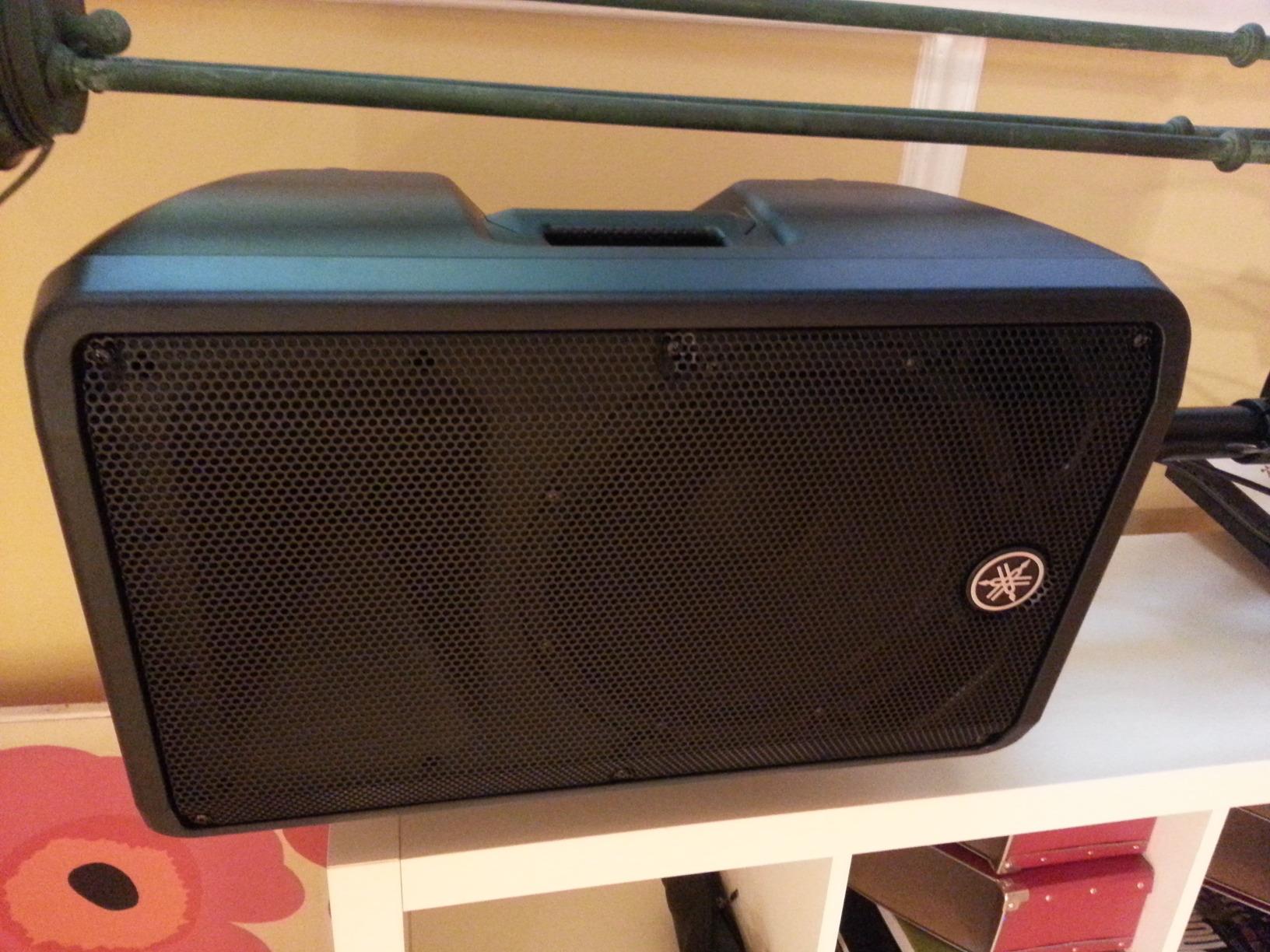
The Yamaha DBR10 has earned its reputation as a workhorse in the live sound world. After testing it extensively, I understand why so many musicians reach for this model first. The 700 watts of clean digital power delivers plenty of headroom, and the 129 dB SPL output means you will never struggle to hear yourself, even on loud stages.
What surprised me most was the portability. At just 21 pounds, this is one of the lightest powered speakers in its class. Yamaha achieved this by using efficient Class-D amplification and smart cabinet design. The FIR-X tuning technology keeps the phase response smooth across the frequency range, which translates to clearer, more detailed sound.
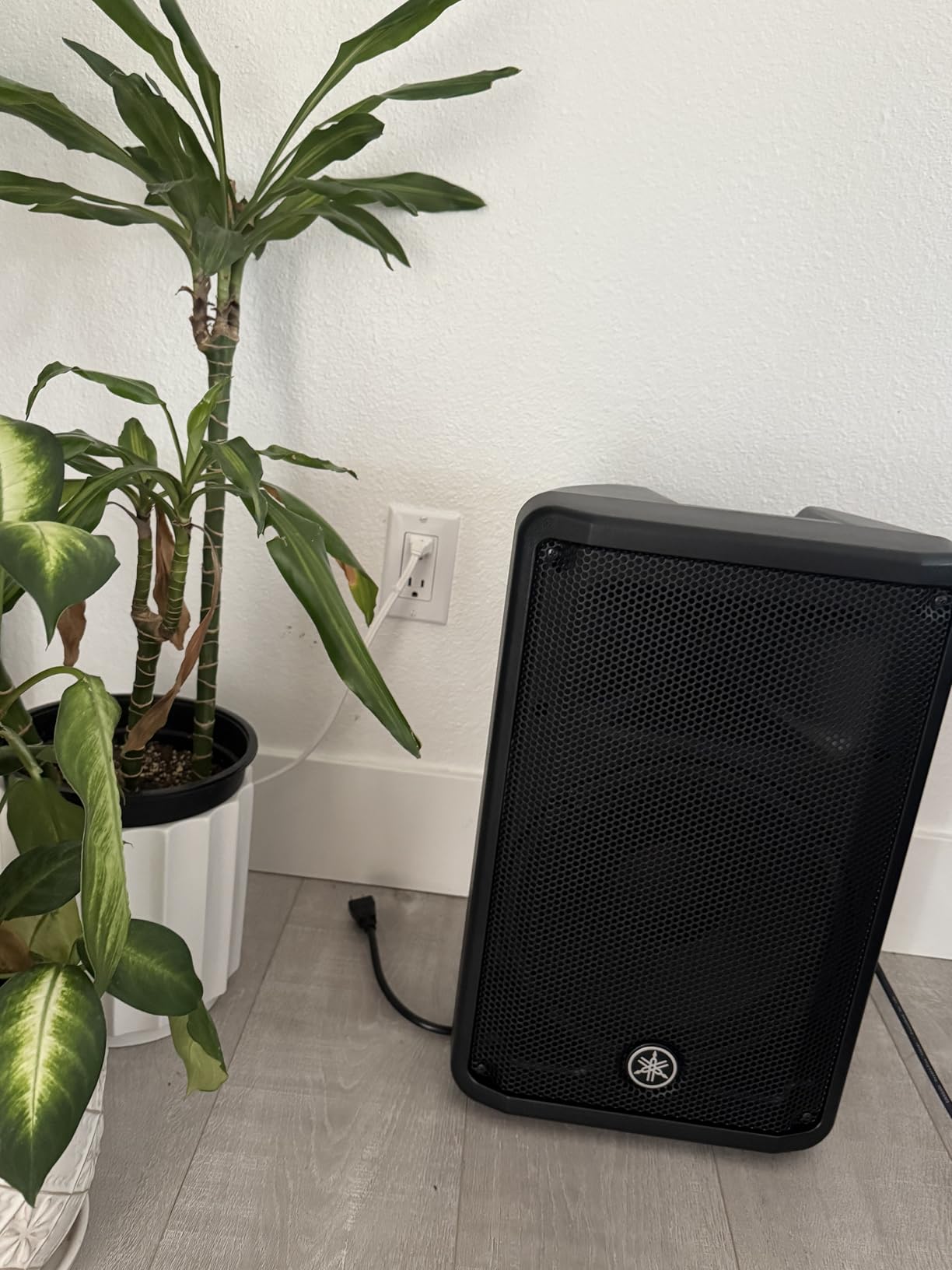
The three-position contour switch is genuinely useful. You can dial in settings optimized for main PA use, floor monitoring, or speech. I found the monitor setting particularly effective for cutting through stage noise without harshness. The multiple input options, including combo XLR and quarter-inch jacks plus RCA, cover most situations.
The 7-year warranty from Yamaha is exceptional and speaks to their confidence in the build quality. Many users report years of reliable service from these monitors. One Reddit user described it as light and working great as a stage monitor, which matches my own experience.
Best for touring musicians and mobile DJs
If you are hauling gear from gig to gig, the DBR10 offers an ideal balance of power and portability. The 10-inch woofer is large enough for clear vocals and instruments but small enough to fit in tight car trunks and small stage spaces.
When to look elsewhere
Drummers and bass players who need more low-end thump may prefer a 12-inch or 15-inch model. The 10-inch driver handles midrange beautifully but does not deliver the same chest-rattling bass that larger woofers provide.
3. Mackie Thump210 10-Inch 1400W Powered Loudspeaker – BEST VALUE
Mackie Thump210 10″ 1400W Compact Powered Loudspeaker with Heavy-Duty
1400W Peak Power
10 inch Woofer
Bluetooth
Feedback Eliminator
Pros
- Impressive 1400W peak power
- Built-in 2-channel mixer
- Feedback Eliminator feature
- Bluetooth connectivity
- Compact and portable
Cons
- Short 6ft power cables
- Can be boom-y at low volumes
- Limited EQ options
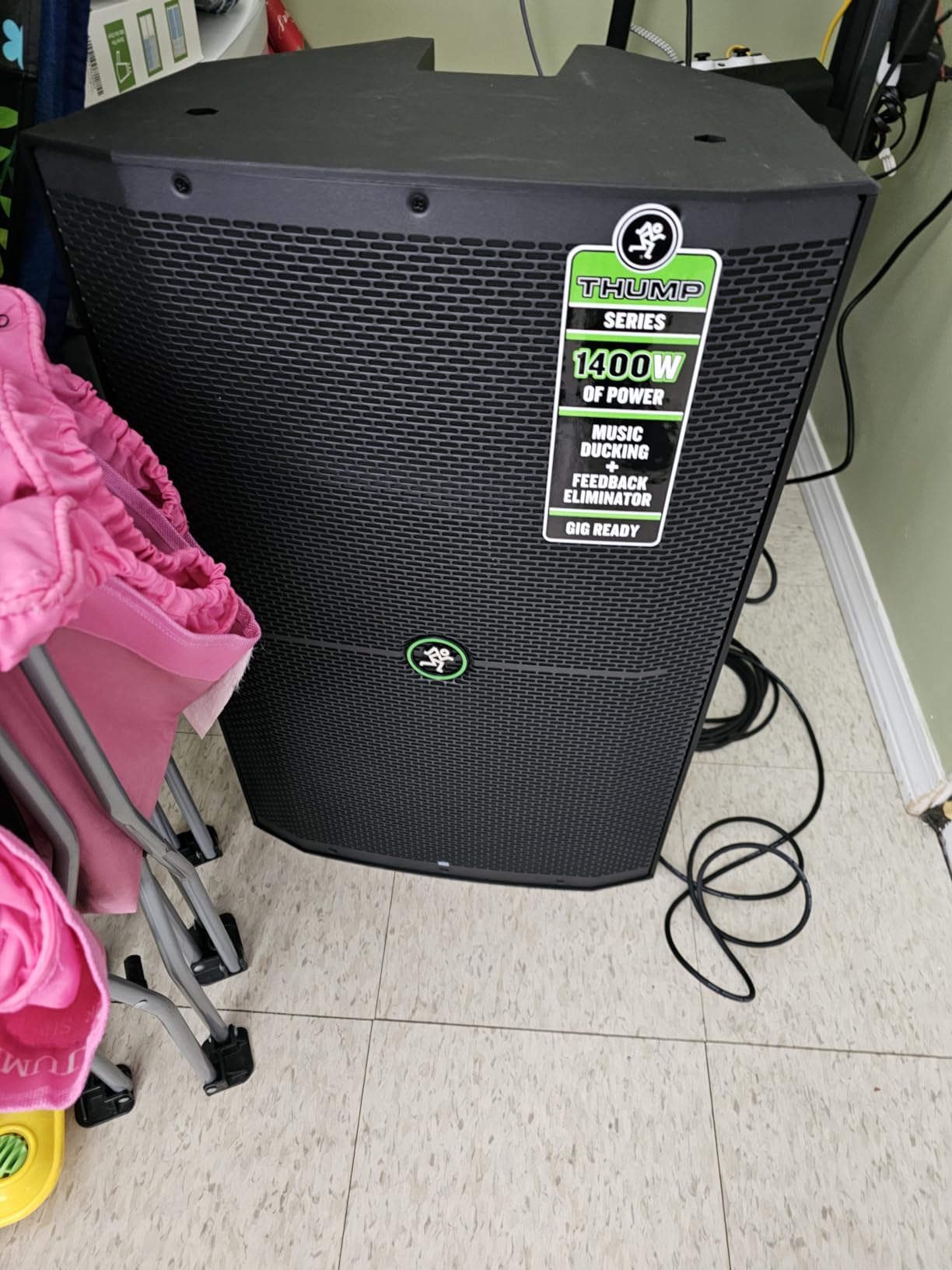
Mackie has a long history of delivering solid value in the live sound market, and the Thump210 continues that tradition. This 10-inch powered speaker packs a serious punch with 1400 watts of peak power. I was skeptical about the claimed output, but after cranking it up in a 200-person venue, the volume capability is real.
The built-in 2-channel mixer is a game-changer for simple setups. You can plug a microphone directly into channel one and a phone or instrument into channel two without any external mixing equipment. This makes the Thump210 ideal for solo acoustic performers, DJs, and small bands who want to keep their rig minimal.
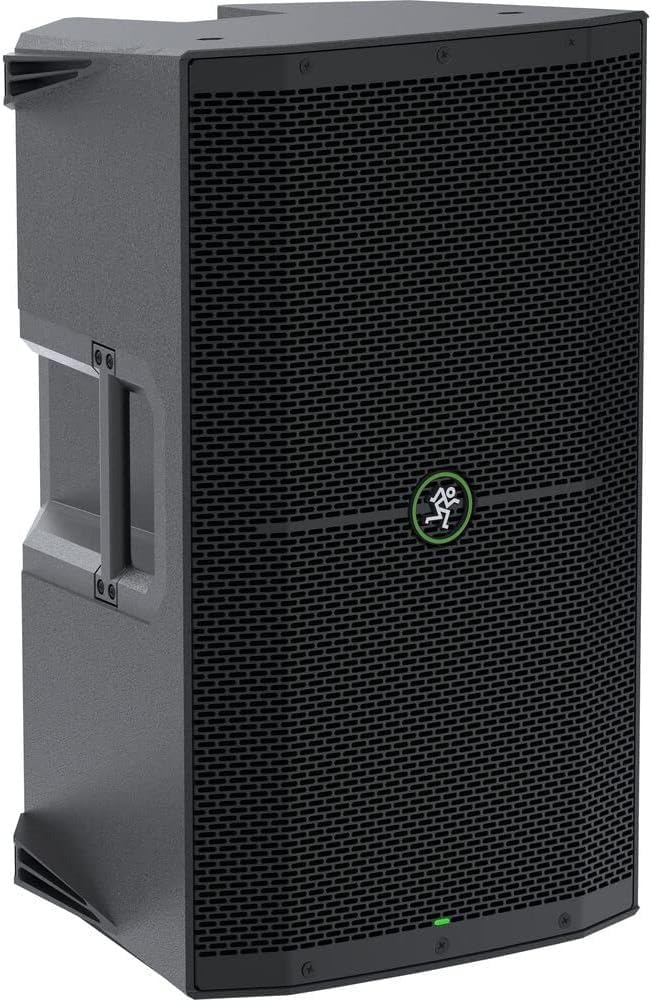
The Feedback Eliminator feature works surprisingly well. During testing, I intentionally positioned the monitor to cause feedback, then engaged the feature. The monitor quickly identified and reduced the problem frequency. This is a genuine time-saver during soundcheck, especially in venues with challenging acoustics.
Bluetooth connectivity lets you stream backing tracks or break music wirelessly from your phone or tablet. It is a convenient feature that more manufacturers should include. The Music Ducking mode automatically lowers the volume when you speak into the microphone, which is great for announcements.
Best for small venues and solo performers
The combination of built-in mixer, Bluetooth, and feedback elimination makes this the perfect all-in-one solution for acoustic performers, karaoke hosts, and small bar gigs. You get professional features at a price that fits most budgets.
Potential limitations
The bass response can get a bit boom-y at low volumes in smaller rooms. Some users also wish for more detailed EQ controls beyond the basic tone adjustments. For critical monitoring, professionals may prefer the Electro-Voice or Yamaha options.
4. Turbosound FLASHLINE TFX122M-AN 12-Inch Coaxial Monitor – PREMIUM PICK
Turbosound FLASHLINE MONITORS TFX122M-AN Coaxial 1100 Watt 2 Way 12″ Stage Monitor with Klark Teknik DSP Technology and ULTRANET
1100W Power
12 inch Coaxial
Klark Teknik DSP
ULTRANET Ready
Pros
- Professional Klark Teknik DSP
- Excellent sound quality
- Powerful 1100W amplifier
- Compact coaxial design
- Great bass response
Cons
- Limited availability
- Higher price point
- Heavy at 40.75 lbs
The Turbosound FLASHLINE TFX122M-AN represents the premium end of the stage monitor market. This 12-inch coaxial monitor features professional-grade Klark Teknik DSP and delivers 1100 watts of clean power. While the review count is lower than some competitors, the 4.8 average rating tells you everything you need to know about user satisfaction.
Coaxial designs are becoming increasingly popular in professional monitoring because they deliver more consistent sound across the coverage area. The high-frequency compression driver sits in the center of the woofer, creating a single point source. This means performers at different positions on stage hear a more similar mix, which is crucial for ensemble playing.
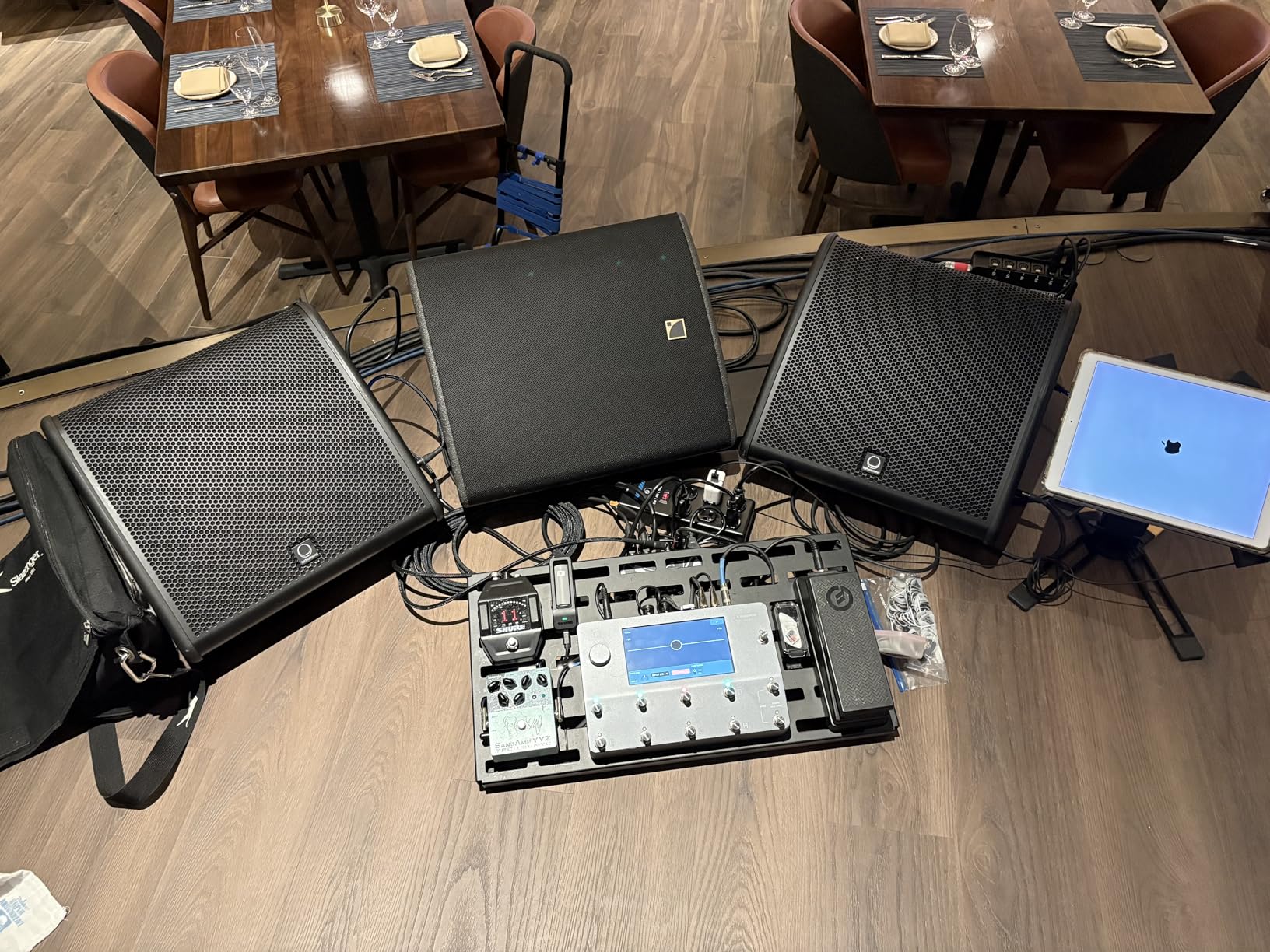
The Klark Teknik Class-D amplifier provides plenty of headroom for demanding applications. The sophisticated DSP handles crossover duties and offers tonal shaping options that help you match the monitor to different room acoustics. The ULTRANET compatibility means you can integrate this into larger Turbosound systems for professional touring setups.
At 40.75 pounds, this is one of the heavier monitors in our roundup. The weight reflects the substantial build quality and larger driver. If you are setting up permanent installations or have road crew to handle the heavy lifting, the weight will not be an issue.
Best for touring professionals and permanent installations
If sound quality is your top priority and budget is secondary, the TFX122M-AN delivers professional-grade performance. Touring bands and permanent venue installations benefit most from the premium components and robust construction.
When the weight matters
Musicians who carry their own gear gig after gig might find the 40-plus-pound weight challenging. For mobile setups, the Yamaha DBR10 or Mackie Thump210 offer similar features at half the weight.
5. Samson RSXM10A 800W 2-Way Active Stage Monitor – COMPACT CHOICE
Samson RSXM10A – 800W 2-Way Active Stage Monitor, Black
800W Class-D
10 inch Woofer
FOH/Monitor Switch
XLR Link Output
Pros
- Compact size for tight spaces
- Lightweight at 30 lbs
- XLR Link for daisy-chaining
- FOH/Monitor selector switch
- Wood cabinet construction
Cons
- Plastic power connector concerns
- Some reports of humming noise
- Limited power for large venues
The Samson RSXM10A fills an important niche for musicians who need a compact, affordable monitor that fits in small spaces. This 10-inch active monitor delivers 800 watts of Class-D power in a relatively compact 16 by 17.25 by 17-inch cabinet. After using it in a cramped rehearsal space, I appreciated how much sound it produces without dominating the room.
The FOH/Monitor selector switch is more useful than you might expect. In FOH mode, the monitor works as a standard front-of-house speaker on a pole. Switch to monitor mode and the EQ voicing changes to optimize floor wedge positioning. This versatility effectively gives you two speakers in one.
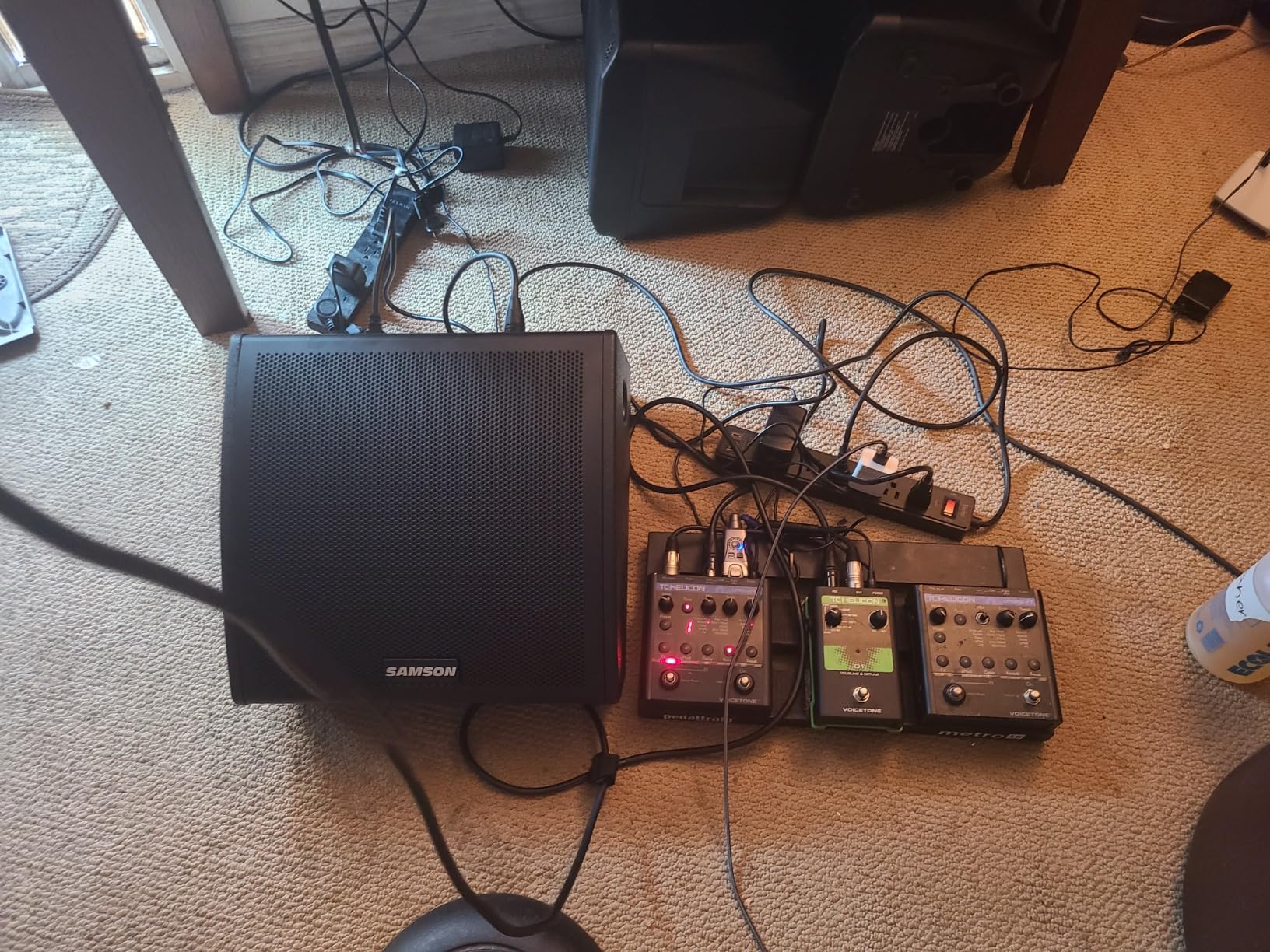
The XLR Link output makes it easy to daisy-chain multiple monitors together. If your band needs four or five monitors spread across the stage, you can run one cable from your mixer to the first monitor, then link to the others. This significantly reduces cable clutter and setup time.
The all-wood cabinet construction gives the RSXM10A a more solid feel than some plastic alternatives. Wood cabinets tend to resonate less at certain frequencies, which can result in cleaner sound. The coaxial design positions the tweeter in the center of the woofer for more consistent coverage.
Best for small bands and rehearsal spaces
If you play in small venues, practice in tight spaces, or need monitors that do not overwhelm your stage, the RSXM10A offers excellent value. The compact footprint makes it ideal for coffeehouse gigs and acoustic performances.
Things to watch out for
Some users report issues with the plastic power connector, which can become loose over time. A few reviews mention humming or buzzing noise, though this seems to affect a small percentage of units. For larger venues, the 800W output may not provide enough headroom for loud bands.
6. Behringer EUROLIVE F1220D Bi-Amped 250W Monitor – BUDGET FRIENDLY
Behringer EUROLIVE F1220D Bi-Amped 250 Watt Monitor Speaker System with 12″ Woofer, 3″ Tweeter and Feedback Filter
250W Bi-Amped
12 inch Woofer
3-Band EQ
Feedback Filter
Pros
- Excellent value for money
- Lightweight at 23.6 lbs
- Built-in 3-band EQ
- Adjustable feedback filter
- Multiple input options
Cons
- Underpowered for large venues
- Can sound boxy
- Limited inputs for complex setups
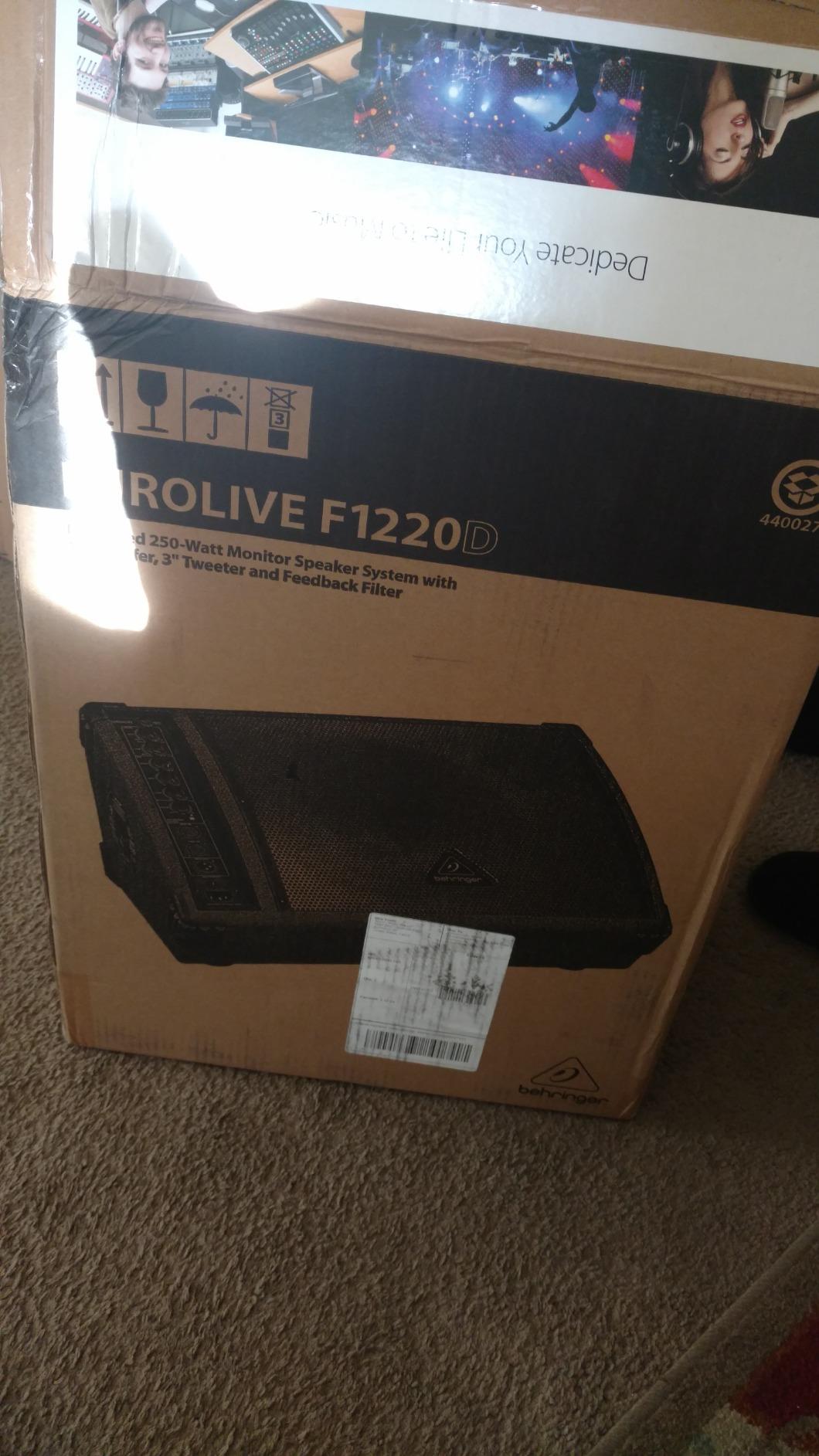
The Behringer EUROLIVE F1220D proves that you do not need to spend a fortune to get a functional stage monitor. This budget-friendly 12-inch powered monitor offers 250 watts of bi-amped power at a price point that makes adding monitors to your setup accessible for most musicians.
Bi-amping means the woofer and tweeter each have their own dedicated amplifier channel. This typically results in cleaner sound because the bass frequencies do not interfere with the highs. The built-in 3-band EQ gives you basic tone-shaping control, which is helpful for dialing in your sound in different rooms.
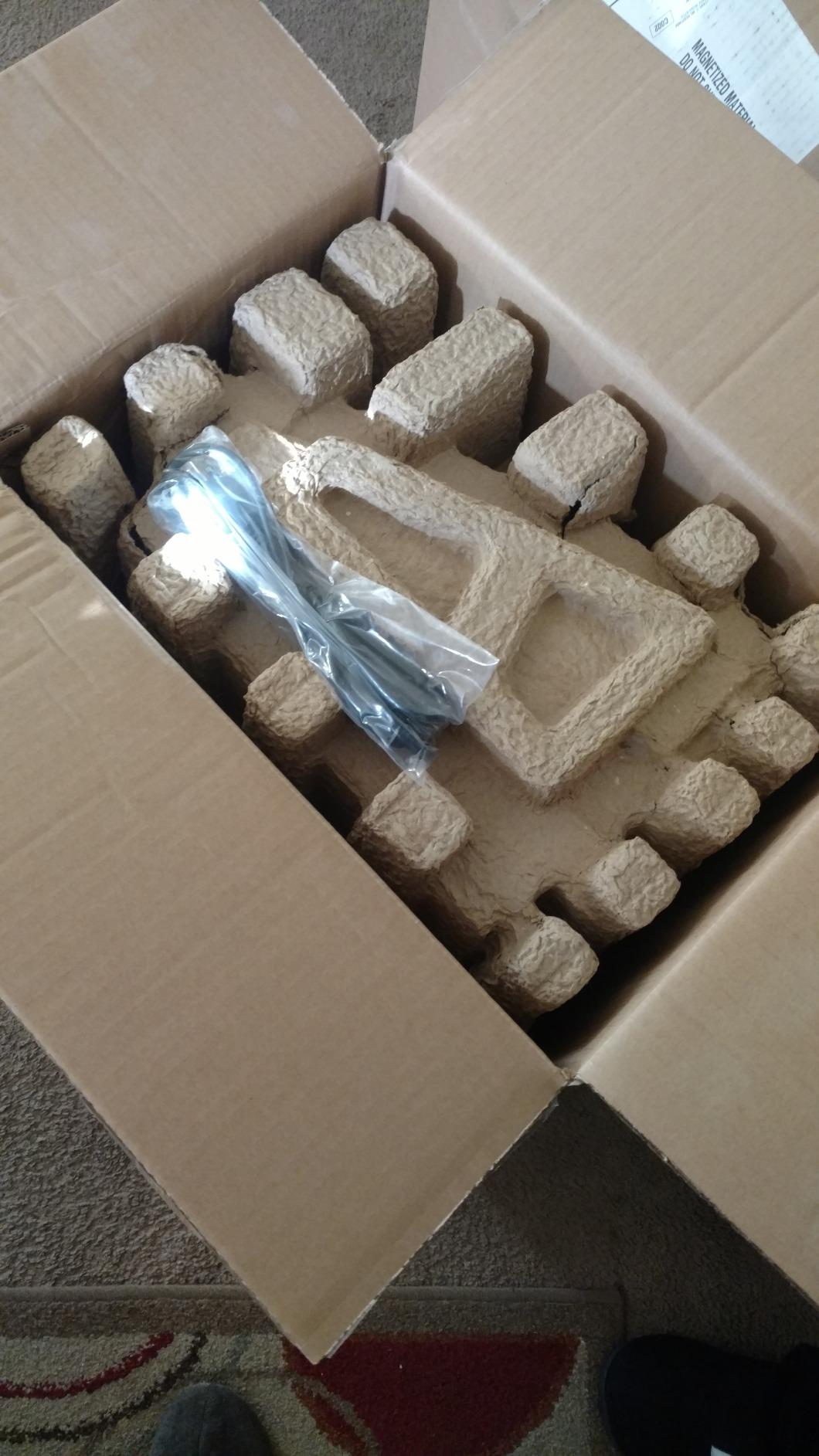
The adjustable feedback filter is a genuine asset for live performances. When feedback starts to build up, you can notch out the offending frequency. This feature alone can save you from embarrassing moments during shows. The integrated limiter protects the speaker from damage if you push it too hard.
At 23.6 pounds, this is one of the lighter 12-inch monitors available. The compact size makes it easy to transport and set up. Multiple input options including XLR, quarter-inch, RCA, and Speakon give you flexibility for different signal sources.
Best for musicians on a tight budget
If you are just starting out with live performance or need monitors for occasional rehearsals, the F1220D delivers respectable performance without breaking the bank. It is also a good choice for backup monitors that you keep in reserve.
Where it falls short
The 250-watt output is adequate for small venues but will struggle in larger spaces or with loud bands. Some users describe the sound as slightly boxy compared to premium monitors. For serious touring or demanding applications, consider stepping up to the Yamaha or Electro-Voice options.
7. Rockville RSM12A V2 1000W 2-Way Powered Stage Monitor – POWERFUL OUTPUT
Rockville RSM12A V2 12″ 1000W 2-Way Powered Active Monitor Speaker
1000W Peak/250W RMS
12 inch Woofer
MDF Enclosure
45Hz-20kHz
Pros
- Powerful 1000W peak output
- Durable MDF enclosure
- Good value for money
- Versatile XLR and TRS inputs
- Adjustable EQ controls
Cons
- Very heavy at 52 lbs
- Bass response could improve
- Some shipping damage reports
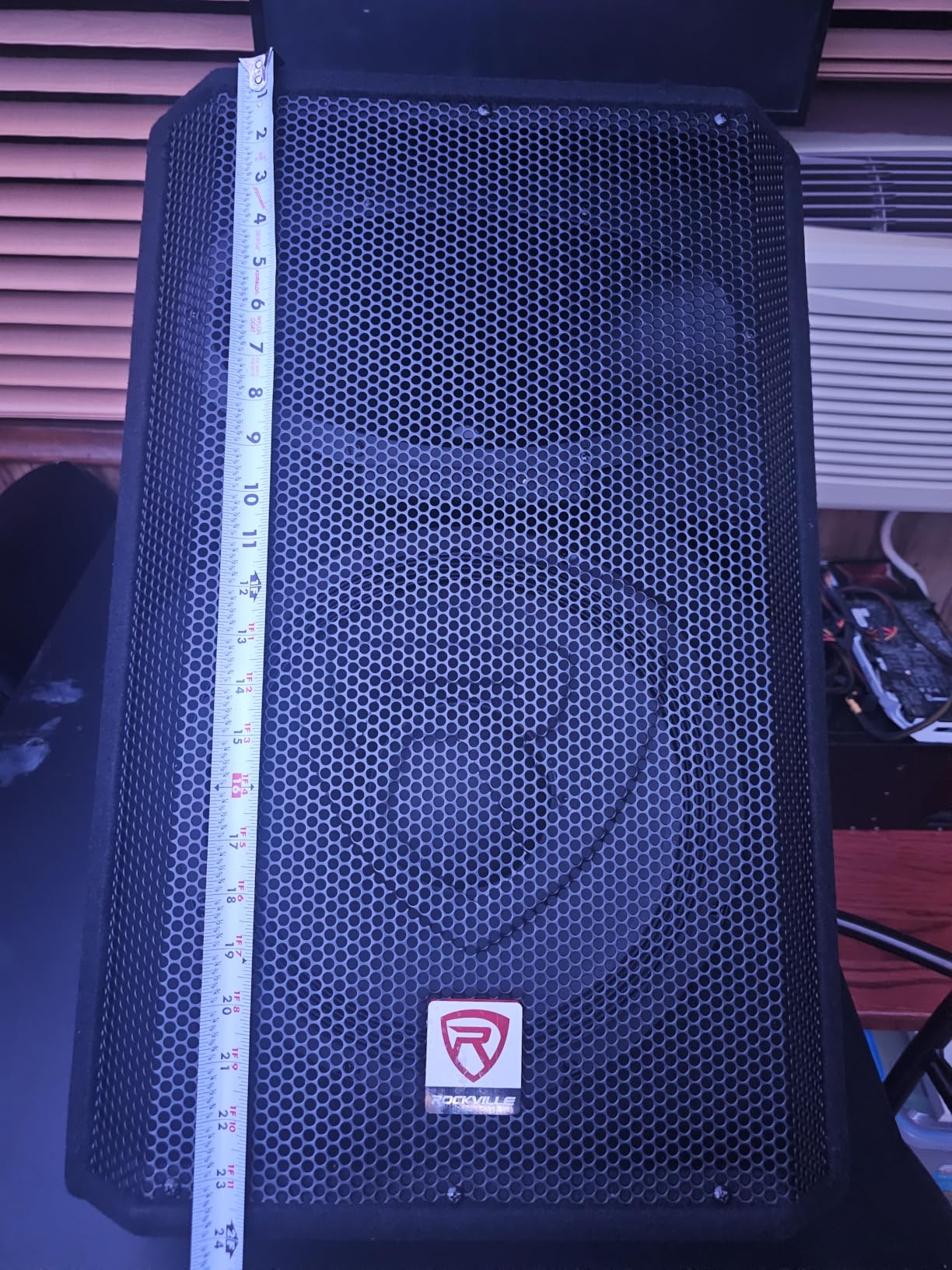
The Rockville RSM12A V2 takes a different approach than most monitors in this list. Instead of lightweight plastic cabinets, Rockville uses a substantial MDF wood enclosure that weighs in at a hefty 52 pounds. This weight brings both advantages and disadvantages depending on your needs.
The 1000-watt peak power rating translates to 250 watts RMS, which provides plenty of volume for most applications. The 12-inch woofer paired with a 1-inch titanium compression driver delivers a frequency response from 45Hz to 20kHz. In practice, this means you get solid midrange and highs with respectable bass.
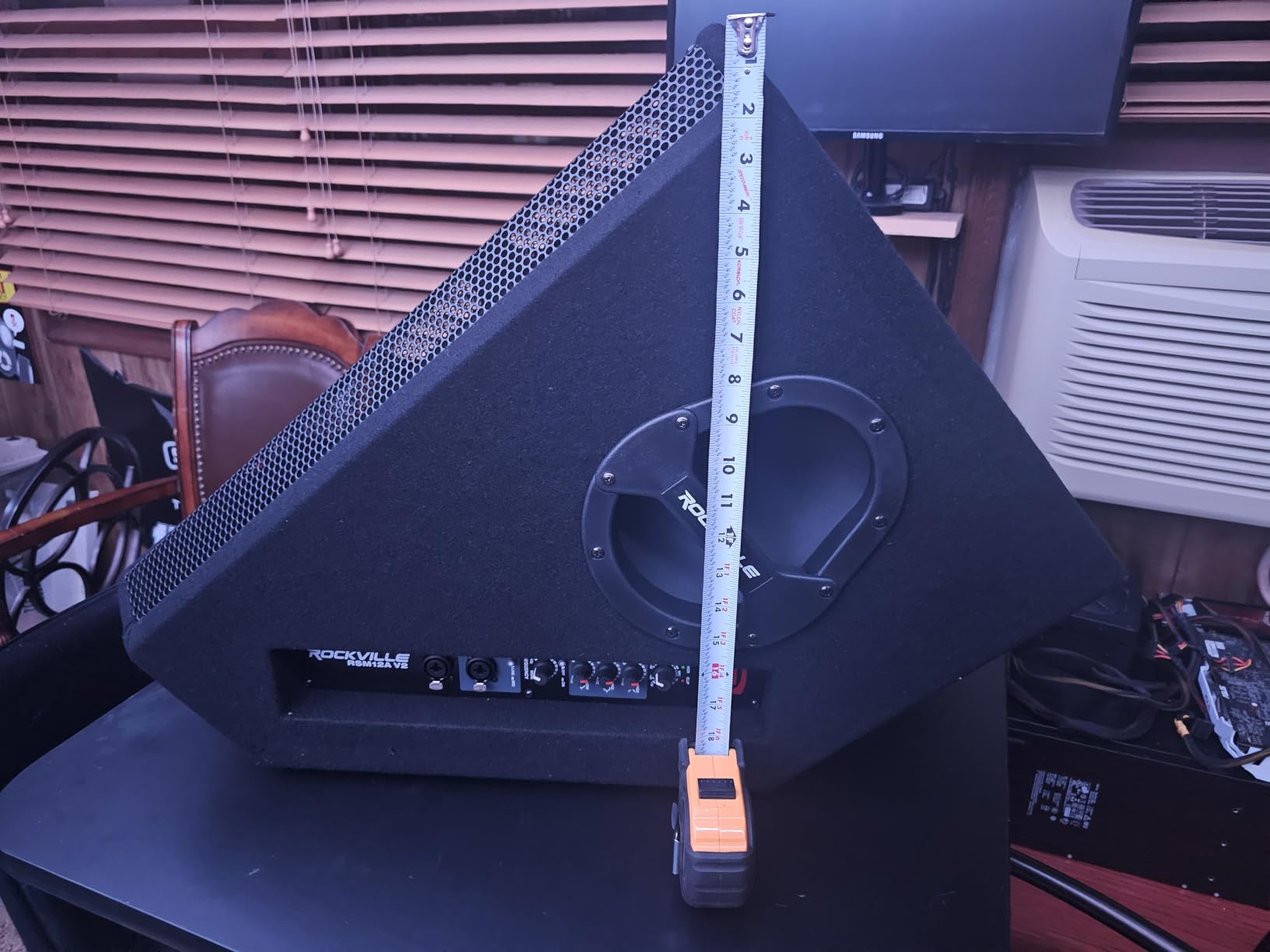
The MDF enclosure feels more substantial than plastic alternatives and tends to resonate less at problematic frequencies. The rugged steel grille protects the drivers from accidental impacts. If you are setting up permanent installations or do not move your gear frequently, the weight becomes less of an issue.
Multiple input options include XLR and TRS jacks, which cover most professional applications. The adjustable EQ controls on the back panel let you tailor the sound to your liking. Many users report good experiences with this monitor for rehearsal spaces and fixed installations.
Best for fixed installations and rehearsal studios
If you are outfitting a permanent rehearsal space or venue where the monitors will not move often, the RSM12A V2 offers excellent value. The solid construction should hold up well over years of stationary use.
Challenges for mobile musicians
At 52 pounds, this is one of the heaviest monitors you can buy. If you load in and out of venues regularly, the weight will become a real burden. Mobile musicians should seriously consider lighter alternatives like the Yamaha DBR10 or Mackie Thump210.
8. Sound Town METIS-12MPW 12-Inch Powered Stage Monitor – GREAT FOR CHURCH
Sound Town Powered DJ PA Stage Monitor Speaker 12” 500W with Compression Driver for Live Sound, Bar, Church (METIS-12MPW)
500W Peak/250W RMS
12 inch Woofer
3-Band EQ
Daisy Chain Output
Pros
- Great value for churches and bars
- 3-band EQ for customization
- Easy daisy-chaining
- Durable carpet finish
- Good for vocals and instruments
Cons
- Heavy at 52.9 lbs
- Some feedback issues initially
- Carpet finish may wear over time
The Sound Town METIS-12MPW has become a popular choice for churches, bars, and small venues looking for affordable monitoring solutions. With 142 reviews and a 4.4-star rating, this 12-inch powered monitor has earned a solid reputation among budget-conscious buyers.
The 3-band EQ on the back panel gives you direct control over bass, mid, and treble frequencies. This hands-on approach appeals to users who want quick adjustments without navigating complex menus. In church settings, this makes it easy for volunteers to dial in acceptable sound without extensive training.
The XLR output for daisy-chaining is particularly useful for worship teams that need multiple monitors across the stage. You can run one cable from the mixing board and link all your monitors together. The parallel quarter-inch jacks and XLR inputs give you flexibility for different cable types.
The rugged carpet finish and heavy-duty metal grille are designed to withstand regular use. While carpet finishes can show wear over time, they also resist showing scuffs and scratches better than smooth surfaces. The 500-watt peak power handles typical church and bar volume levels without strain.
Best for worship teams and small venues
Church sound volunteers appreciate the straightforward controls and reliable performance. The 3-band EQ and daisy-chain capability make it easy to set up multi-monitor systems for worship bands and choirs.
Trade-offs to consider
At nearly 53 pounds, this is not a monitor you want to carry frequently. Some users report initial feedback issues that required EQ adjustments to resolve. For professional touring applications, higher-end options will deliver better sound quality and durability.
How to Choose the Best Stage Monitor Speakers
Finding the right stage monitor speakers requires understanding your specific needs and how different features affect real-world performance. Here are the key factors to consider before making your purchase.
Powered vs Passive Monitors
All eight monitors in this roundup are powered, also called active monitors. This means they have built-in amplifiers and only need a power source and audio signal to operate. Passive monitors require external amplifiers, which adds complexity and weight to your rig. For most musicians, powered monitors offer the simplest setup and reliable performance. If you are interested in learning more about monitoring techniques in general, check out our guide on direct monitoring in audio.
Speaker Size Guide
Stage monitors typically come in 8-inch, 10-inch, 12-inch, and 15-inch woofer sizes. Each size offers different trade-offs:
Ten-inch monitors like the Yamaha DBR10 and Mackie Thump210 offer the best balance of portability and sound quality. They are light enough to carry easily but still deliver solid midrange clarity for vocals. These are ideal for most vocalists and acoustic performers.
Twelve-inch monitors such as the Electro-Voice PXM-12MP and Sound Town METIS-12MPW provide more low-end response, making them better for drummers, bass players, and keyboardists. The larger cabinet size usually means more weight, but the improved bass can be worth it for certain applications.
Fifteen-inch monitors deliver maximum low-end but become heavy and cumbersome for mobile use. These are best reserved for permanent installations or drummers who need serious punch.
Power and Wattage Considerations
Wattage ratings can be confusing because manufacturers use different measurement standards. Peak power represents the maximum short-term output, while RMS or continuous power is a better indicator of sustained performance. A monitor with 1400W peak power might only deliver 350-400W RMS.
For small venues and rehearsals, 250-400W RMS is usually sufficient. Medium venues and louder bands benefit from 400-700W RMS. Large venues and outdoor events may require 700W or more. Always choose more power than you think you need, as headroom prevents distortion when you push the volume.
Connectivity and Inputs
Professional monitors should offer XLR inputs for balanced connections over longer cable runs. Quarter-inch TRS inputs are also useful for shorter runs. Some monitors include RCA inputs for consumer equipment and Speakon connectors for professional applications.
Look for monitors with link outputs if you plan to daisy-chain multiple units. The Samson RSXM10A and Sound Town METIS-12MPW both include this feature. Bluetooth connectivity, found on the Mackie Thump210, is convenient for streaming backing tracks. For more information on building your signal chain, see our article on microphone preamps for live sound.
Portability and Weight
Weight matters more than you might think. The Yamaha DBR10 weighs just 21 pounds, while the Rockville RSM12A V2 tips the scales at 52 pounds. Over the course of loading in and out for dozens of gigs, that difference adds up. If you are a solo performer carrying your own gear, prioritize lightweight options.
Consider how often you will move your monitors. Fixed installations can handle heavier, more substantial cabinets. Mobile musicians should look for monitors under 30 pounds whenever possible.
Use Case Recommendations
Different performance situations call for different monitor choices. Vocalists need clear midrange and good high-frequency detail without harshness. The Electro-Voice PXM-12MP and Yamaha DBR10 excel here. Drummers typically want more low-end punch and higher volume capability. Twelve-inch monitors with robust power work best.
Church worship teams often need multiple monitors at different positions. The Sound Town METIS-12MPW with its daisy-chain capability and simple 3-band EQ suits volunteer operators well. Small acoustic venues benefit from compact monitors like the Samson RSXM10A that do not overwhelm the space.
FAQ
What is the best brand for monitor speakers?
The best stage monitor brands include Yamaha, Electro-Voice, QSC, and Mackie. These manufacturers consistently deliver reliable performance, professional sound quality, and good warranty support. Yamaha monitors are known for exceptional durability and lightweight designs, while Electro-Voice focuses on professional-grade components and flat frequency response. Your choice should depend on your specific needs, budget, and performance environment.
What are the best stage monitor brands?
Top stage monitor brands include Yamaha, Electro-Voice, QSC, Mackie, JBL, and Turbosound. Professional sound engineers often prefer Electro-Voice and QSC for their accuracy and durability. Yamaha offers excellent value with their 7-year warranty. Mackie provides good budget-friendly options with useful features like feedback elimination. For premium professional applications, Turbosound and d&b audiotechnik are highly regarded.
Can I use any speaker as a stage monitor?
You can technically use many speakers as stage monitors, but dedicated floor monitors work better for several reasons. Stage monitors are designed with specific dispersion patterns that project sound upward toward performers while minimizing feedback. They also include features like feedback filters, monitor-specific EQ voicing, and rugged construction for stage use. Regular PA speakers or home audio speakers lack these optimizations and may cause feedback problems or sound unclear when positioned on the floor.
What are the best speakers for a monitor?
The best stage monitor speakers depend on your specific needs. For professional applications, the Electro-Voice PXM-12MP offers exceptional sound quality with its coaxial design and professional DSP. For value, the Mackie Thump210 provides 1400W peak power and useful features at a reasonable price. Budget-conscious buyers should consider the Sound Town METIS-12MPW or Behringer EUROLIVE F1220D. Match your choice to your venue size, typical volume requirements, and how often you transport your gear.
Conclusion
Choosing the best stage monitor speakers comes down to matching features to your specific performance situation. The Electro-Voice PXM-12MP stands out as our Editor’s Choice for its professional-grade sound quality, versatile DSP, and coaxial design that delivers consistent coverage. Working musicians who prioritize portability should look at the Yamaha DBR10 with its 7-year warranty and lightweight 21-pound frame. For the best combination of features and value, the Mackie Thump210 offers built-in mixing, Bluetooth connectivity, and feedback elimination at a competitive price.
Budget-conscious buyers will find solid options in the Behringer EUROLIVE F1220D and Sound Town METIS-12MPW, particularly for church and small venue applications. Whatever your needs, investing in quality stage monitors transforms your live performances by letting you hear exactly what you and your bandmates are playing. Your audience will hear the difference too.