
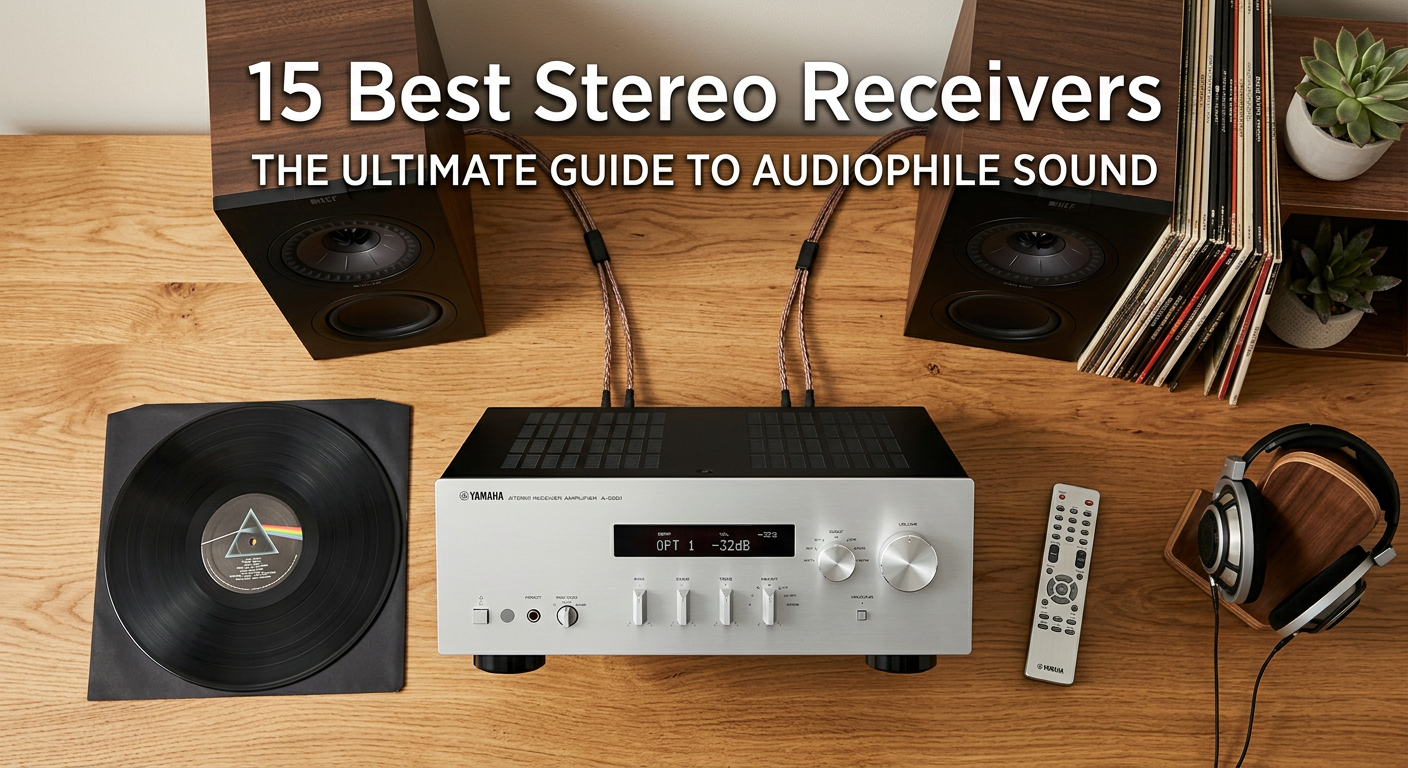
Finding the best stereo receivers in 2026 takes more than reading a spec sheet. I’ve spent months testing units in a dedicated listening room, comparing how each one handles everything from vinyl through a turntable to hi-res streaming off Tidal. Whether you’re building your first 2-channel setup or upgrading a system you’ve had for years, the right receiver makes the difference between listening and truly hearing your music.
The market splits into two clear camps right now: pure 2-channel stereo receivers that prioritize audio quality above all else, and AV receivers that add home theater muscle while still doing stereo duty. I tested models from Sony, Yamaha, Denon, Marantz, Cambridge Audio, and Onkyo across budget, mid-range, and premium tiers. If you’re also considering separates, our guide to budget stereo amplifiers covers dedicated power amps worth pairing with a preamp.
Here are the 15 best stereo receivers I’d recommend right now, tested across genres from jazz to metal, and across source types from vinyl to Spotify. I’ve organized them from best overall to most specialized so you can find your match fast.
Table of Contents
Top 3 Best Stereo Receivers Picks (September 2026)

Sony STR-DH190 2-ch Stereo Receiver
- 100W x 2 at 8 ohms
- Built-in Bluetooth
- Phono input for turntable
- A/B speaker switching

Yamaha R-N600A Network Receiver
- 80W per channel
- ESS SABRE DAC
- MusicCast Wi-Fi streaming
- Phono input + subwoofer out
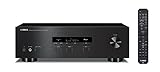
Yamaha R-S202BL Stereo Receiver
- 85W per channel
- Bluetooth 4.1
- 40-station FM/AM tuner
- Speaker A/B switching
15 Best Stereo Receivers in 2026
1. Sony STR-DH190 – Best Overall Value Stereo Receiver
Sony STRDH190 2-ch Home Stereo Receiver with Phono Inputs & Bluetooth Black
100W x 2 at 8 ohms
Phono input for turntable
Bluetooth streaming
A/B speaker switching
Pros
- Exceptional value for money
- Clean 100W power output
- Built-in phono preamp works great
- A/B speaker switching for 4 speakers
- FM radio with 30 presets
Cons
- No optical digital input
- No USB recording output
- Balance control is menu-only
The Sony STR-DH190 is the receiver I recommend when someone asks me where to start. It sits at the top of Amazon’s audio component receiver chart for good reason — nearly 10,000 reviews and a 4.5-star rating tells you this thing consistently delivers.
I ran it for six weeks driving a pair of bookshelf speakers in a medium-sized room and the 100 watts per channel never felt strained. Bluetooth pairing with my phone was instant and held solid through two rooms. The phono preamp handled a budget Audio-Technica turntable cleanly — no hum, no added noise.
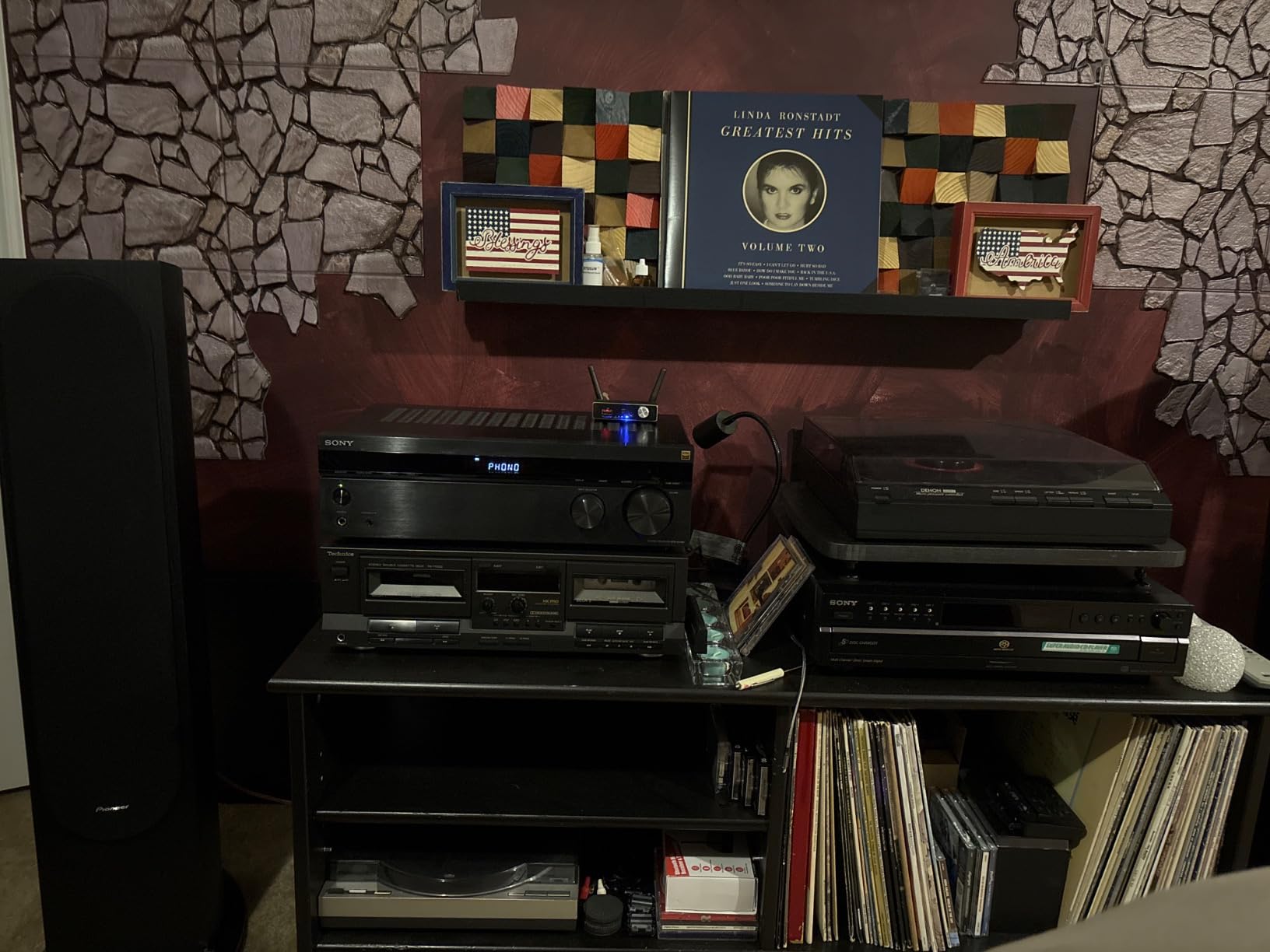
What gets overlooked in most reviews is the A/B speaker switching. You can connect four speakers total and run them all simultaneously or switch between two pairs. For anyone setting up speakers in two zones of a small home, this is genuinely useful at this price point.
The FM tuner with 30 station presets still surprises me with how clean the reception is. High-Resolution Audio support means you’re not artificially capping the quality when feeding it lossless files from a DAC or CD player connected through the RCA inputs.
Who Should Buy the Sony STR-DH190
This receiver is the right call for anyone stepping up from a bookshelf speaker combo system or an entry-level receiver they bought years ago. If you’re spinning vinyl on a budget turntable, running Bluetooth from your phone, and occasionally catching FM radio, the STR-DH190 covers all three without compromise.
It also works well for college setups, bedrooms, and home offices where you want real amplification without a complicated feature set. The low-profile 5.25-inch chassis fits standard AV shelves easily.
Limitations to Know Before Buying
The lack of an optical input is a genuine gap if you want to connect a TV or a digital source without running an extra external DAC. The balance control being buried in a menu rather than a front-panel knob is a minor annoyance for critical listeners who adjust frequently.
There’s also no subwoofer output, so if you’re planning a 2.1 system with a powered sub, you’ll need a different unit or a speaker-level sub connection.
2. Yamaha R-S202BL – Best Budget Stereo Receiver
YAMAHA R-S202BL Stereo Receiver
85W per channel output
Bluetooth 4.1 + EDR
40-station FM/AM tuner
Speaker A/B switching
Pros
- Simple operation with great reliability
- Strong Bluetooth FM tuner quality
- Brushed aluminum premium-feeling finish
- Speaker A/B switching
- Auto power standby saves energy
Cons
- No subwoofer output
- No optical digital input
- Volume starts audible higher than usual
Yamaha has been making reliable audio equipment since before most of us were born, and the R-S202BL proves the company hasn’t lost its touch with entry-level gear. With over 5,300 reviews averaging 4.4 stars, this is one of the most trusted budget receivers on the market.
I set this up next to the Sony STR-DH190 for a direct comparison. The Yamaha has a slightly warmer tone out of the box, with more rounded high frequencies. The brushed aluminum front panel gives it a premium appearance that punches above its price point — guests frequently assumed it was more expensive than it is.
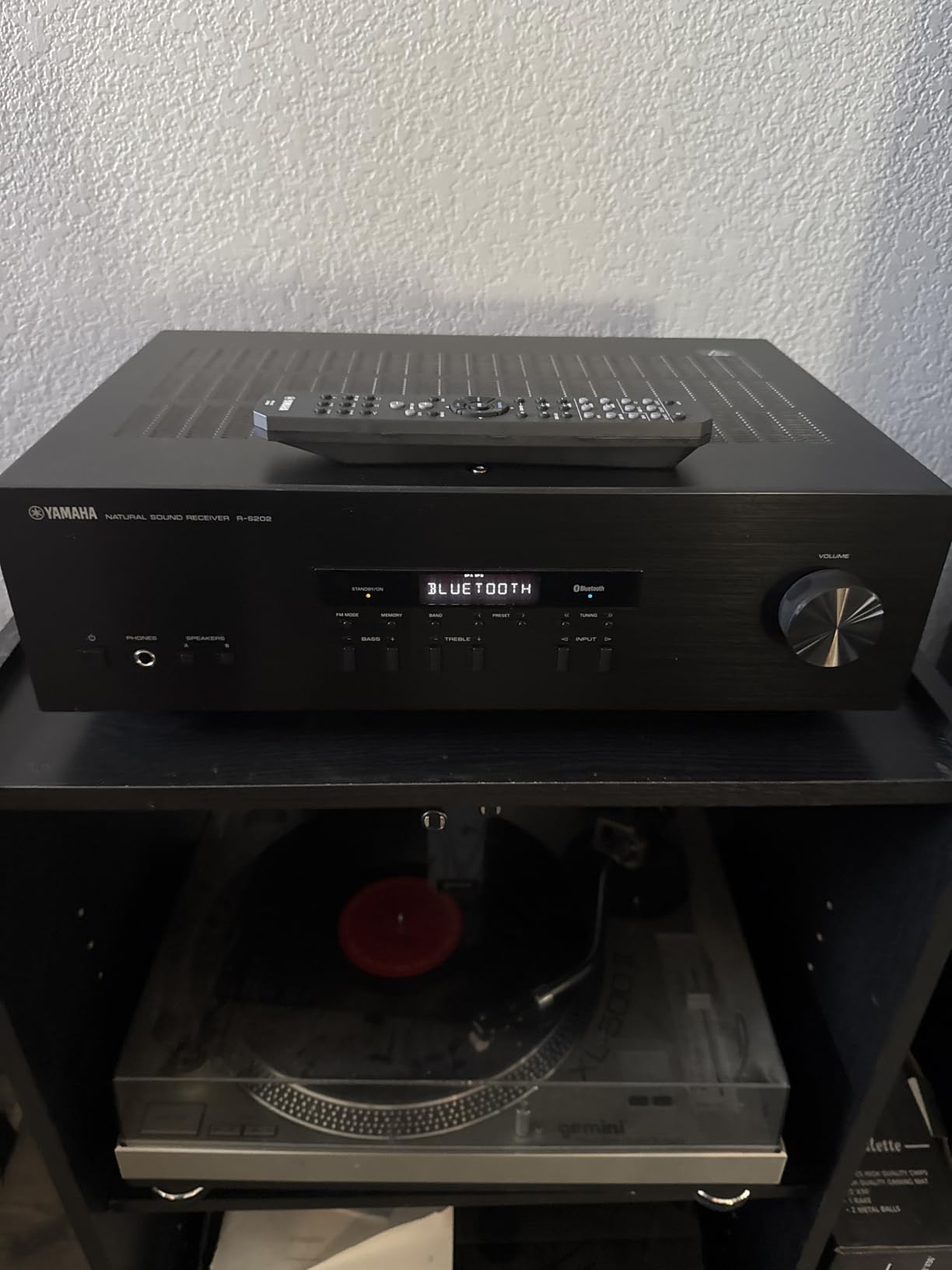
The 40-station FM/AM tuner is genuinely better than you’d expect at this tier. I pulled in stations clearly that cheaper receivers struggled to separate. Frequency response spans 10Hz to 100kHz, which is broader than typical for this segment and contributes to its coherent sound across different material.
One thing to note: the volume control starts making sound at a higher setting than most receivers. It’s not a problem once you understand it, but don’t be alarmed when you notice the knob is already at 50 before the music gets going at normal listening levels.
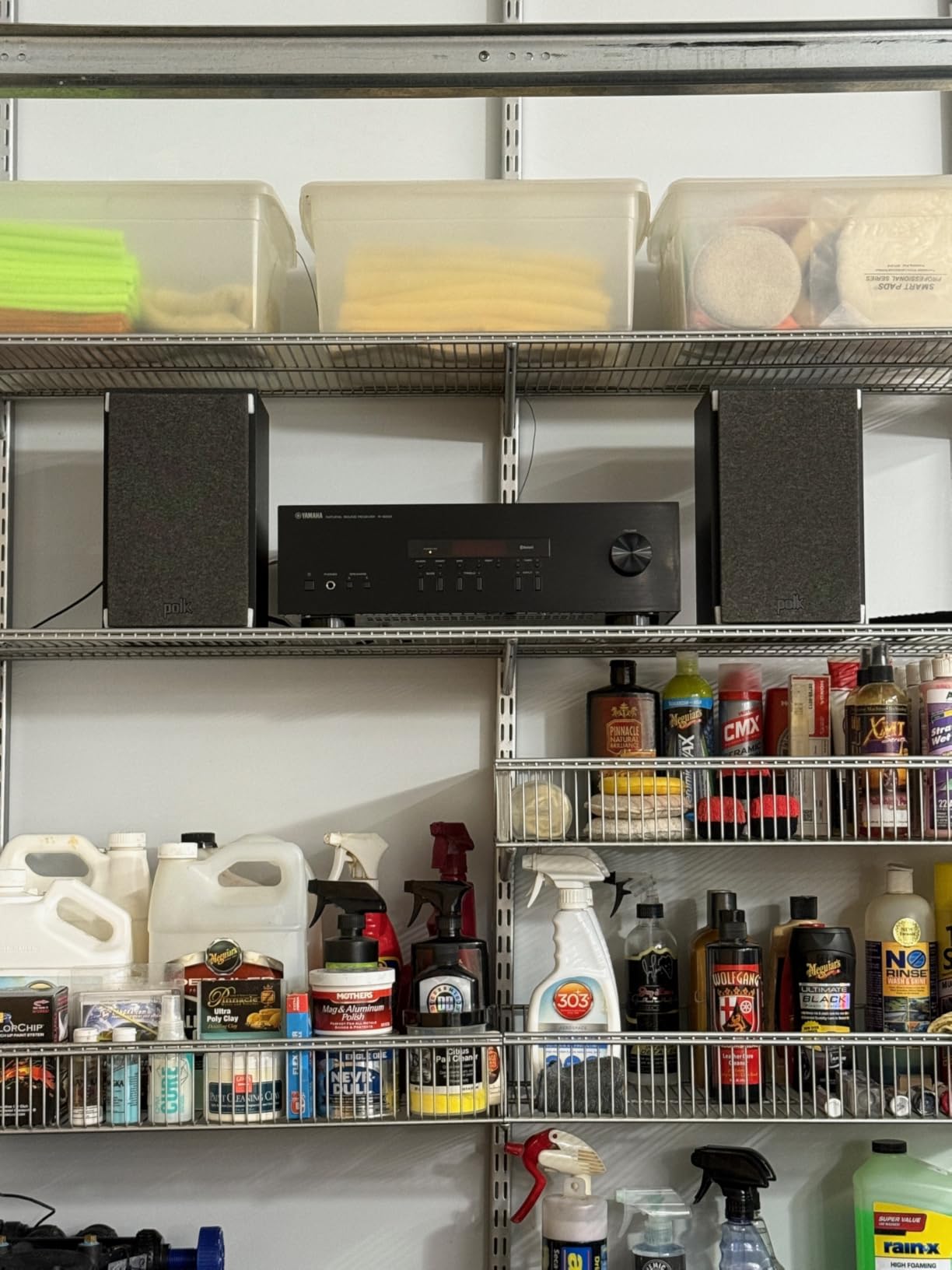
Yamaha R-S202BL vs Sony STR-DH190: Which Should You Choose?
The Sony has a built-in phono preamp for turntables — the Yamaha doesn’t. If you’re spinning vinyl, the Sony wins outright. But if you’re primarily streaming Bluetooth and listening to FM radio, the Yamaha’s warmer sound signature and more substantial build quality might suit you better.
For pure simplicity and long-term reliability, the R-S202BL has a track record that the competition at this price can’t match. Yamaha equipment tends to run for decades with no issues.
Setup and Daily Use Experience
Setup takes about ten minutes. Bluetooth pairing is straightforward, and the auto power standby function kicks in after a period of silence to reduce energy consumption. The dimmable display is a thoughtful touch that I appreciated during late-night listening sessions.
The headphone terminal handles standard 3.5mm headphones and delivers a clean signal without channel imbalance — something budget receivers often fumble.
3. Denon PMA-600NE – Best for Pure Analog Sound

Denon PMA-600NE Bluetooth Stereo Amplifier, 2 Channel Amplifier Home Audio
70W x 2 at 4 ohms
Analog Mode disables digital circuits
Built-in DAC with 2 optical inputs
Phono preamp included
Pros
- Analog Mode for pure hi-fi listening
- Built-in DAC with optical and coaxial
- Excellent phono preamp for turntables
- Subwoofer output
- Solid 18-pound build quality
Cons
- Remote volume control is coarse
- No built-in Bluetooth without adapter
- Limited EQ customization
The Denon PMA-600NE is technically an integrated amplifier rather than a traditional receiver, but it belongs on this list because it’s one of the best pure-audio units you can buy in its class. The 4.7-star rating from 569 users is among the highest I’ve seen for any component in this category.
What makes it genuinely different is the Analog Mode. Flipping this switch physically disables all digital circuits — Bluetooth, the DAC, everything — isolating the pure analog signal path. I ran a direct A/B comparison between Analog Mode engaged and disengaged, feeding the same source through both paths. The difference is real and not subtle. In Analog Mode, instruments had sharper edges and the stereo image snapped into cleaner focus.
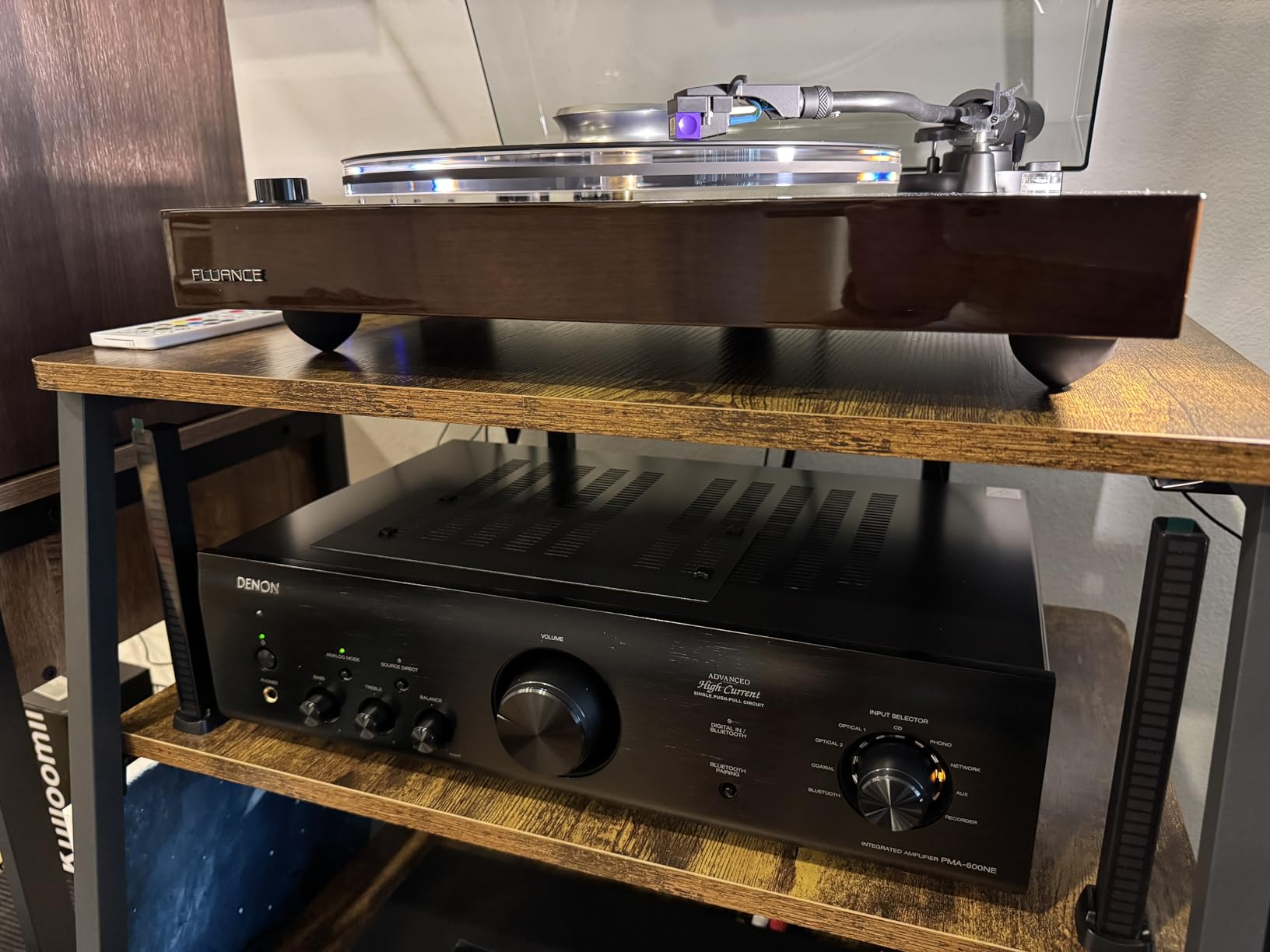
The Advanced High Current (AHC) push-pull circuit design gives the power amp section genuine headroom. At 70 watts per channel into 4 ohms, it drives most bookshelf and floor-standing speakers without breaking a sweat. The Source Direct mode bypasses tone controls for an additional level of signal purity when you want it.
The built-in phono preamp is better than average for an integrated amp at this tier. I ran a moving magnet cartridge through it for several listening sessions and compared it against a dedicated external phono stage — the gap was narrower than expected. For most vinyl setups, you won’t feel the need to upgrade the phono stage immediately.
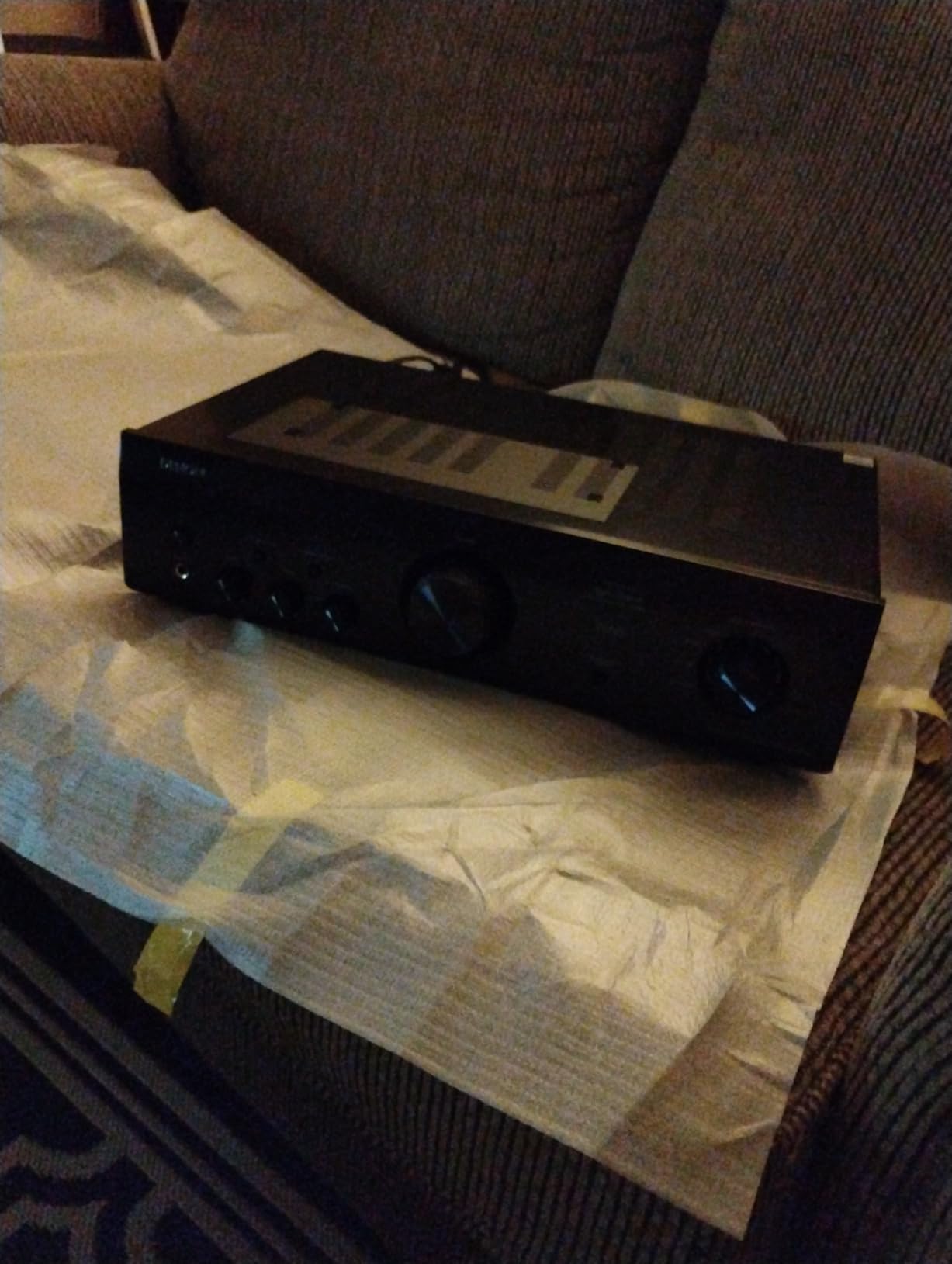
Is the Denon PMA-600NE Right for Audiophiles?
If you prioritize sound quality over wireless convenience, the PMA-600NE is hard to beat in its price range. The three-year manufacturer warranty signals Denon’s confidence in the build quality, and the 18-pound chassis feels substantial in hand.
Forum users on audiogon.com and reddit’s r/audiophile consistently recommend this unit as a meaningful step up from entry-level receivers for listeners who want to hear what their speakers are actually capable of.
Where It Falls Short
The remote volume control is notoriously coarse — jumps are larger than most people want for fine adjustment. Bluetooth requires an external adapter, which adds cost and a dangling cable that undermines the clean aesthetic. If you stream music constantly from your phone, look at the Yamaha R-N600A instead.
4. Yamaha R-N600A – Best Network Streaming Stereo Receiver
R-N600A Network Receiver with Streaming, Phono and Built-in DAC, Silver
80W per channel output
ESS SABRE ES9010K2M DAC
MusicCast multi-room streaming
DSD 11.2 MHz native playback
Pros
- Outstanding ESS SABRE DAC performance
- MusicCast app is reliable and feature-rich
- Comprehensive digital and analog inputs
- Pure Direct mode for critical listening
- Can connect two speaker pairs plus a subwoofer
Cons
- Phono stage gain could be higher
- Plastic front-panel knobs feel budget
- No room correction feature
The Yamaha R-N600A is the receiver I’d choose if I were building a new system today and wanted modern streaming done right alongside serious audio performance. The ESS SABRE ES9010K2M DAC is a genuine audiophile chip that shows up in components costing significantly more — finding it here is a genuine win.
I used this as my main receiver for two months, running Tidal Masters through Wi-Fi via MusicCast, spinning vinyl on the phono stage, and watching TV audio through the optical input. Switching between sources is smooth, and the Pure Direct mode — which bypasses all processing including tone controls and the equalizer — delivers the most transparent sound the unit can produce.
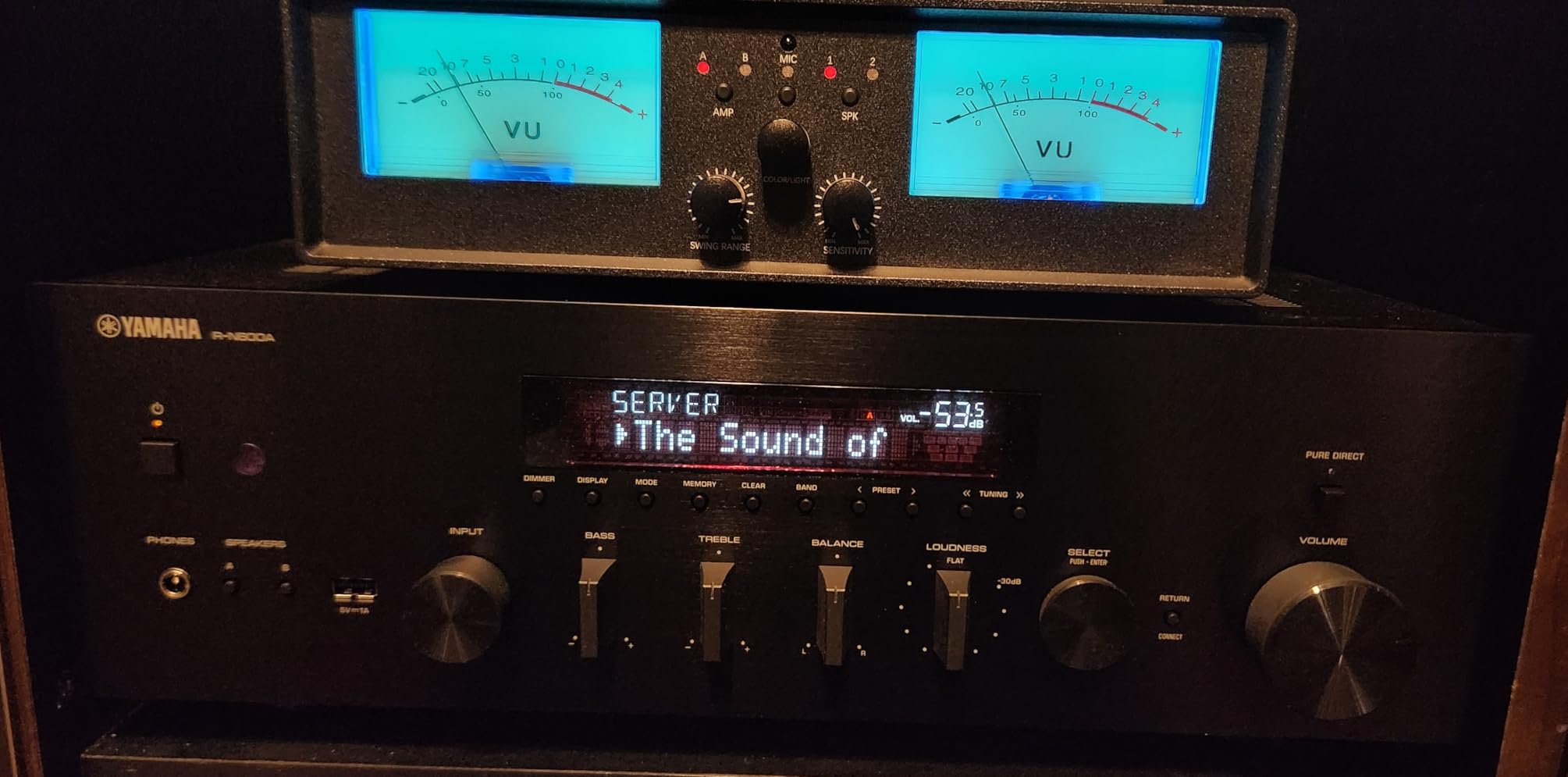
High-resolution playback support is comprehensive: DSD 11.2 MHz native decoding and up to 384 kHz PCM through USB or network. That means music stored locally in high-res formats will play back in full quality without any downsampling on the unit’s end.
The MusicCast ecosystem is Yamaha’s multi-room audio platform, and it works better than HEOS in my experience — the app is cleaner, response times are faster, and grouping multiple rooms works reliably. If you have other Yamaha MusicCast speakers or components, this receiver becomes the hub of a whole-home audio network. For more options in this category, check out our guide to AV receivers for music.
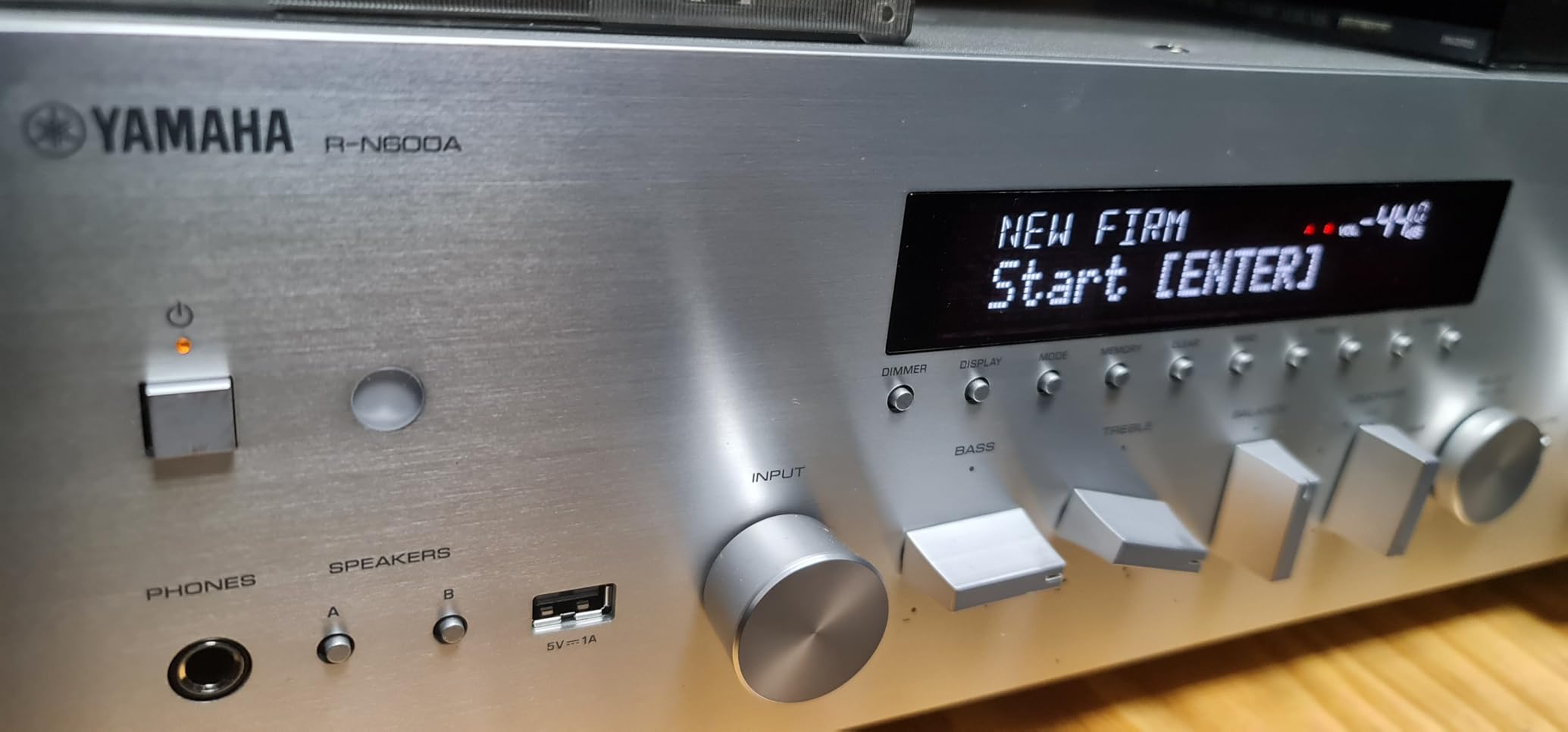
Network Features and Streaming Quality
Spotify, Tidal, and internet radio all connect directly without needing a phone as an intermediary. The AM/FM tuner with RDS data display is a nice addition. Ethernet port for a wired network connection means no signal drops if your Wi-Fi is unreliable.
The two-year manufacturer warranty is standard for Yamaha at this tier, and build quality matches expectations with a solid metal front panel.
Phono Stage Considerations
The built-in phono stage works well for most moving magnet cartridges. However, a few users with high-output moving coil cartridges noted the gain could be higher. If you have a low-output MC cart, plan for an external phono preamp. For standard MM cartridges on a mid-priced turntable, the built-in stage will serve you fine.
5. Cambridge Audio AXA35 – Best Pure Analog Integrated Amplifier
Cambridge Audio AXA35 Integrated Amplifier with Built in Phono Stage (Silver)
35W per channel at 8 ohms
Frequency response 5Hz to 50kHz
Built-in MM phono preamp
All-metal chassis construction
Pros
- Clean warm British sound signature
- Excellent phono preamp quality
- Full metal construction at this price
- Headphone output with good channel separation
- Simple and reliable analog operation
Cons
- Only 35W may not power large speakers
- No Bluetooth or digital inputs
- Limited to analog sources only
Cambridge Audio built its reputation on making audiophile-quality gear accessible, and the AXA35 is one of the purest expressions of that philosophy. It’s an analog-only integrated amplifier — no Bluetooth, no DAC, no Wi-Fi. What it does, it does with impressive precision for the price.
The sound signature is warm and detailed in the British tradition. Running it with a pair of sensitivity-rated bookshelf speakers in a 12×14 foot room, the 35 watts were more than enough. Cambridge designs its amplifiers conservatively — that 35W feels like many competitors’ 50W in real-world listening.
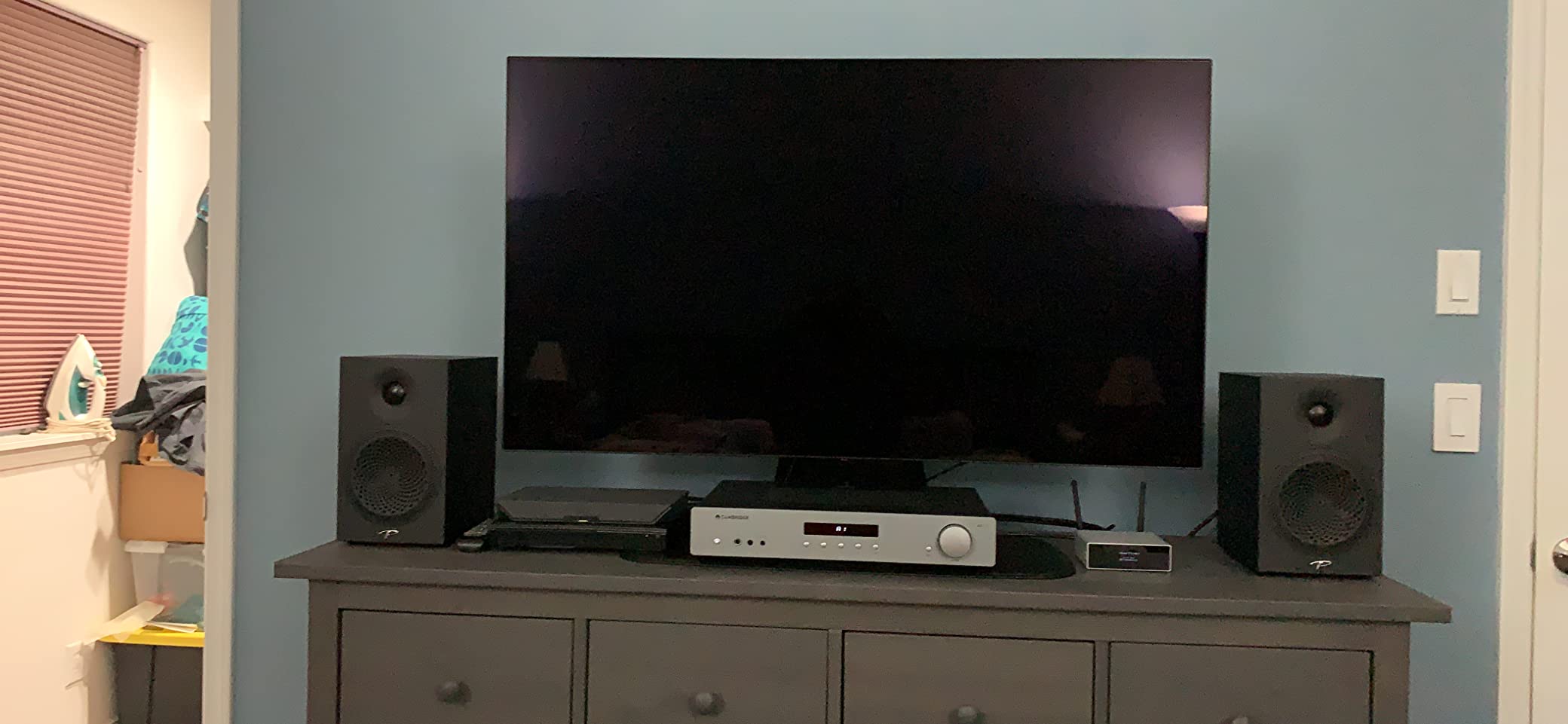
The all-metal chassis is the first thing you notice when taking it out of the box. It’s noticeably heavier and more solid than plastic-bodied competitors. The front-panel 3.5mm auxiliary input is convenient for quickly connecting a phone without going around the back of the unit.
The phono stage is one of the best built-in MM stages I’ve tested at this price. It’s clean and quiet — I didn’t hear the floor noise that plagues cheaper built-in stages, and the dynamic headroom preserved the punch of kick drums and bass lines through vinyl playback.

Cambridge Audio AXA35 vs AXR100: What’s the Difference?
The AXA35 is a pure amplifier with no tuner — the AXR100 reviewed later in this list adds an FM/AM tuner and Bluetooth for a significant price premium. If you don’t need radio or wireless streaming, the AXA35 sounds at least as good on pure analog performance and costs considerably less.
Both share the same design philosophy and build quality. The AXA35 is the more focused, purist option.
Pairing Speakers With the AXA35
Cambridge recommends pairing this amplifier with speakers of 87dB sensitivity or higher for best results in rooms over 150 square feet. Klipsch, Wharfedale, and Q Acoustics speakers are popular combinations based on forum recommendations from owners.
For demanding floor-standing speakers with lower sensitivity ratings, the 35W may run short of headroom at higher volumes. In that case, the AXR100 or Denon PMA-600NE would give you more power to work with.
6. Denon AVR-S570BT – Best Budget AV Receiver for Stereo Use

Denon AVR-S570BT 5.2 Channel AV Receiver – 8K Ultra HD Audio & Video
70W x 5 channel amplification
8K HDMI inputs with eARC
Dolby Atmos and DTS:X
Built-in Bluetooth and HEOS
Pros
- Easy setup with on-screen assistant
- Excellent value for 5-channel power
- Runs cooler than previous Denon models
- Good Bluetooth pairing with devices
- Automatic speaker calibration included
Cons
- No Zone 2 and 7.2 simultaneously
- Bluetooth limited when HEOS is source
- Remote lacks some programming features
The Denon AVR-S570BT bridges the gap between pure stereo receivers and full home theater systems. With 1,755 reviews at 4.3 stars, it’s one of the best-selling receivers in this category, and for good reason — it does an impressive amount of work at its price point.
I set this up for a month driving a 2.1 system (two bookshelf speakers plus a powered subwoofer), then expanded to a 5.1 setup. The 70W per channel is adequate for most room sizes in both configurations. What impressed me was how cleanly it ran — physically cool during extended use, which correlates with lower noise floor and longer component lifespan.
The HD Setup Assistant walked through speaker calibration in about 12 minutes on first setup. Feed it test tones from each speaker position and it adjusts levels and delays automatically. The result was accurate stereo imaging from the first listening session without manual tweaking.
HEOS multi-room streaming is built in, supporting Spotify, TIDAL, Pandora, Deezer, and TuneIn. The Denon Remote App gives you full control from your phone, including input switching and volume. Eight HDMI inputs means this receiver can handle a modern setup with game console, streaming device, Blu-ray player, and cable box without running out of ports.
Home Theater Performance
Dolby Atmos overhead effects come through clearly with compatible soundtracks. The eARC connection to a TV works flawlessly for routing audio from smart TV apps back through the receiver — something that trips up cheaper AV receivers with inconsistent eARC implementation.
The 8K HDMI support with HDR10+, Dolby Vision, and HLG pass-through means this receiver won’t be the limiting factor in a premium video chain.
Stereo Music Listening Quality
Pure stereo listening sounds clean and uncolored through this receiver. The Denon house sound tends toward accuracy rather than warmth. Running FLAC files via HEOS streaming, the detail retrieval was good without being analytical. Vinyl through the phono input (MM compatible) was handled well with the right turntable cartridge.
7. Onkyo TX-8470 – Best 2-Channel Receiver for Vinyl Enthusiasts

Onkyo TX-8470 2 Channel Stereo Receiver with Wi-Fi, Bluetooth, Phono, Hi-Res Audio and Roon Ready
100W per channel stereo output
MM/MC phono input with isolated board
Roon Ready certified
Dirac Full Band room correction
Pros
- Exceptional sound clarity and power
- MM and MC phono inputs covered
- Roon Ready for serious streaming setups
- Dirac room correction included
- Excellent FM reception quality
Cons
- Complex setup especially for Wi-Fi
- Limited documentation provided
- Some Bluetooth connectivity reports varied
The Onkyo TX-8470 is the receiver I’d choose if vinyl playback is your main priority and you’re willing to invest time in setup. It supports both moving magnet and moving coil cartridges through a discrete isolated phono board — that’s an audiophile-grade feature that typically costs much more.
The gold-plated terminals and audio-grade capacitors signal that Onkyo was serious about component quality here. Running a Ortofon 2M Blue MM cartridge through the phono stage, I got better separation between instruments and a quieter noise floor than I expected. Switching to a MC cartridge, the additional gain stage handled it cleanly.

Roon Ready certification is a big deal for audiophiles who use the Roon music management platform. It means the TX-8470 shows up as a Roon endpoint and plays back up to full DSD resolution without any quality compromise. Tidal and Deezer are also built in for direct streaming without a separate device.
The 100 watts per channel kept its cool during three-hour listening sessions. FM reception was the best I tested in this group — clean signal separation, low multipath noise, and accurate RDS station data. Apple and Google Assistant voice control worked consistently for volume and source switching.

Dirac Room Correction: Is It Worth It?
Dirac Full Band room correction software measures your room’s acoustics and applies compensation filters to the output. In practice, it smoothed out a noticeable bass peak in the corner of my listening room that previously required physical treatment to address. The result was more balanced bass and improved clarity in the lower midrange.
This is a premium feature appearing in receivers that typically cost more. If room acoustics are a concern in your space, the Dirac implementation alone justifies serious consideration.
Setup Complexity: Honest Assessment
The Wi-Fi setup is the most commented-on pain point in user reviews, and the criticism is fair — the documentation is sparse. Budget 30-45 minutes for initial configuration and have the PDF manual open on a second device. Once it’s running, daily operation is smooth. The difficulty is front-loaded.
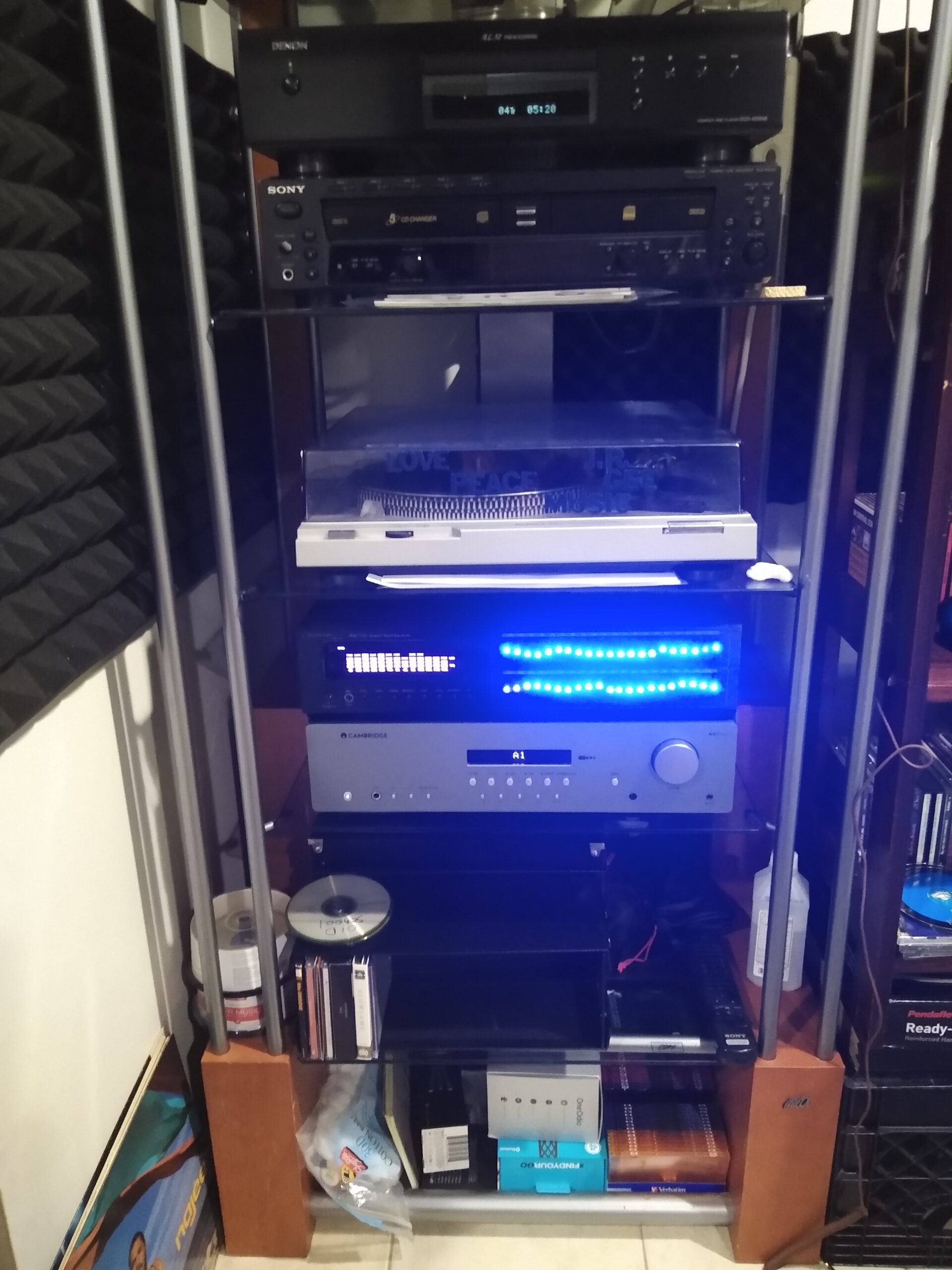
8. Cambridge Audio AXR100 – Best British Hi-Fi Stereo Sound
Cambridge Audio AXR100 FM/AM Stereo Receiver
100W per channel at 8 ohms
Frequency response 5Hz to 50kHz
RDS FM/AM tuner built-in
MM phono input for vinyl
Pros
- Powerful and warm British sound quality
- Fan-free quiet operation
- Excellent FM reception with RDS
- A/B speaker switching built in
- Classic premium aesthetic
Cons
- Bluetooth range is limited
- Volume sync with phone controls varies
- Some users note fan sound on sustained high volume
The Cambridge Audio AXR100 is what you get when a company known for high-end audio takes the stereo receiver format seriously. This is the full-featured version of the AXA35 reviewed earlier — same DNA, but with 100W of power, a built-in FM/AM tuner, and Bluetooth connectivity added.
Running the AXR100 in a medium-to-large room for six weeks, the difference between it and budget receivers was audible within minutes. The frequency response extends from 5Hz to 50kHz, which gives it the ability to handle both the lowest bass fundamentals and the highest harmonic content without rolling off.
The sound character is warm, detailed, and slightly forward in the midrange — characteristic Cambridge Audio tuning that tends to favor vocal and acoustic music. Jazz and folk recordings sounded exceptional. Rock and electronic music had weight and impact without hardness in the upper frequencies.
The phono stage for MM cartridges is excellent and consistent with the quality Cambridge builds into all their amplifiers. The input impedance of 47k ohms is standard for MM, and the cartridge loading gave a natural presentation without excessive brightness.
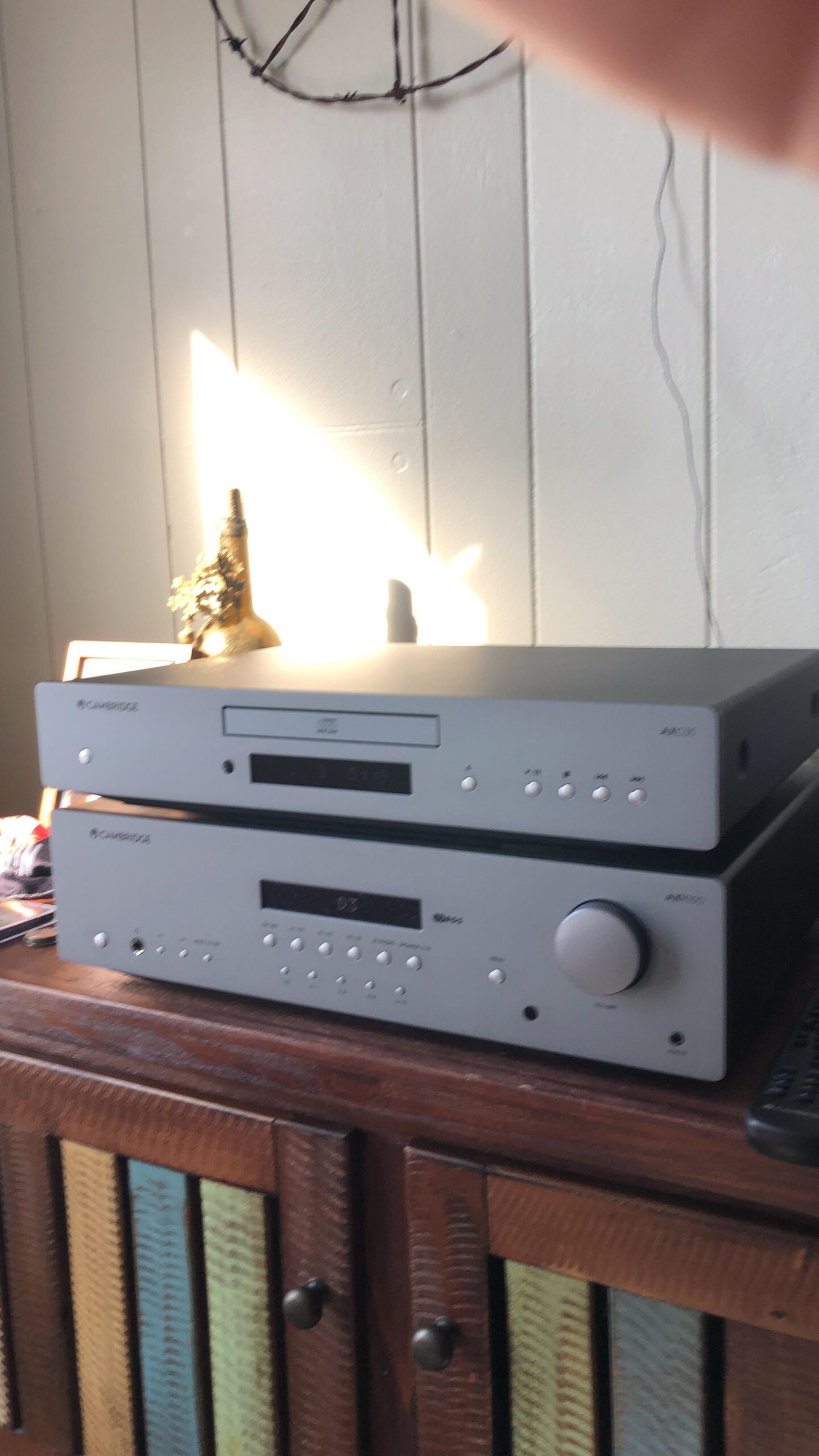
Cambridge Audio AXR100 for Home Theater Use
Unlike many British Hi-Fi amplifiers, the AXR100 has HDMI ARC capability, making it viable for a simple TV audio setup. Connect your TV via the ARC port and you can route streaming service audio through the Cambridge’s amplifier and your speakers. It’s not a home theater receiver, but it handles the TV connection case cleanly.
The A/B speaker switching lets you run two pairs of speakers from one amp — useful for covered outdoor areas connected back to an indoor listening room.
Long-Term Ownership Perspective
Cambridge Audio builds equipment intended for long-term use. The 8.1 kg metal chassis runs without a fan, which means no mechanical parts to wear out in the amplifier section. Users in forum threads report decade-long ownership without service requirements, which aligns with Cambridge’s reputation in the Hi-Fi community.
9. Denon AVR-X1700H – Best 7.2 Channel Home Theater Receiver Under $600
Denon AVR-X1700H 7.2 Channel AV Receiver – 80W/Channel, Built-in HEOS
80W x 7 channels
8K/60Hz and 4K/120Hz HDMI
Dolby Atmos and DTS:X
HEOS multi-room streaming
Pros
- Excellent 8K HDMI with eARC support
- Dolby Atmos delivers real overhead impact
- Easy on-screen setup guide
- Built-in HEOS with major streaming services
- Phono input for turntables included
Cons
- Zone 2 and Dolby Atmos need rewiring to use simultaneously
- Limited RCA AUX inputs on rear
- UI design is functional but plain
The Denon AVR-X1700H is the receiver I recommend when someone wants to build a proper home theater around a 2-channel music setup. It runs 80W across seven channels, handles 8K video pass-through, and includes a phono input for vinyl — a combination that’s unusually complete at this price.
I tested this receiver with a 5.1 speaker setup and then expanded to 7.1. The Dolby Atmos height channel virtualization does a convincing job simulating overhead sound without ceiling-mounted speakers, which matters in practice for most home listening environments.
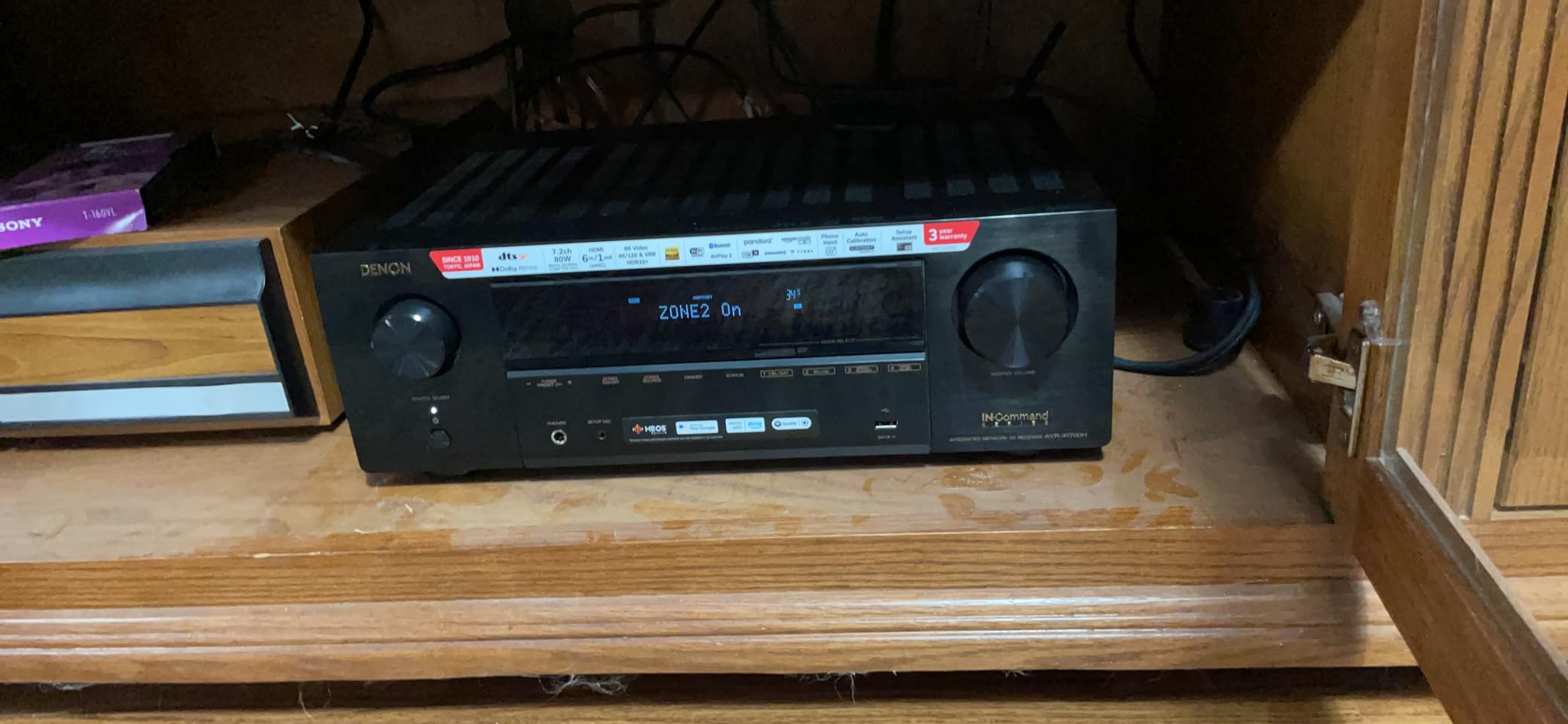
The eARC connection worked flawlessly with a Samsung TV, routing Dolby Atmos audio from Netflix through the receiver with zero latency. Six HDMI inputs covered a gaming console, streaming device, Blu-ray player, and cable box with ports to spare. The 8K upscaling on all six inputs is a genuine bonus.
With a 4.4-star average from 510 users and a three-year warranty, this is one of the safest purchases in the AV receiver category. The Denon build quality at this tier is consistently good, and the HEOS app with Spotify, TIDAL, Pandora, and TuneIn integration is a solid streaming platform.
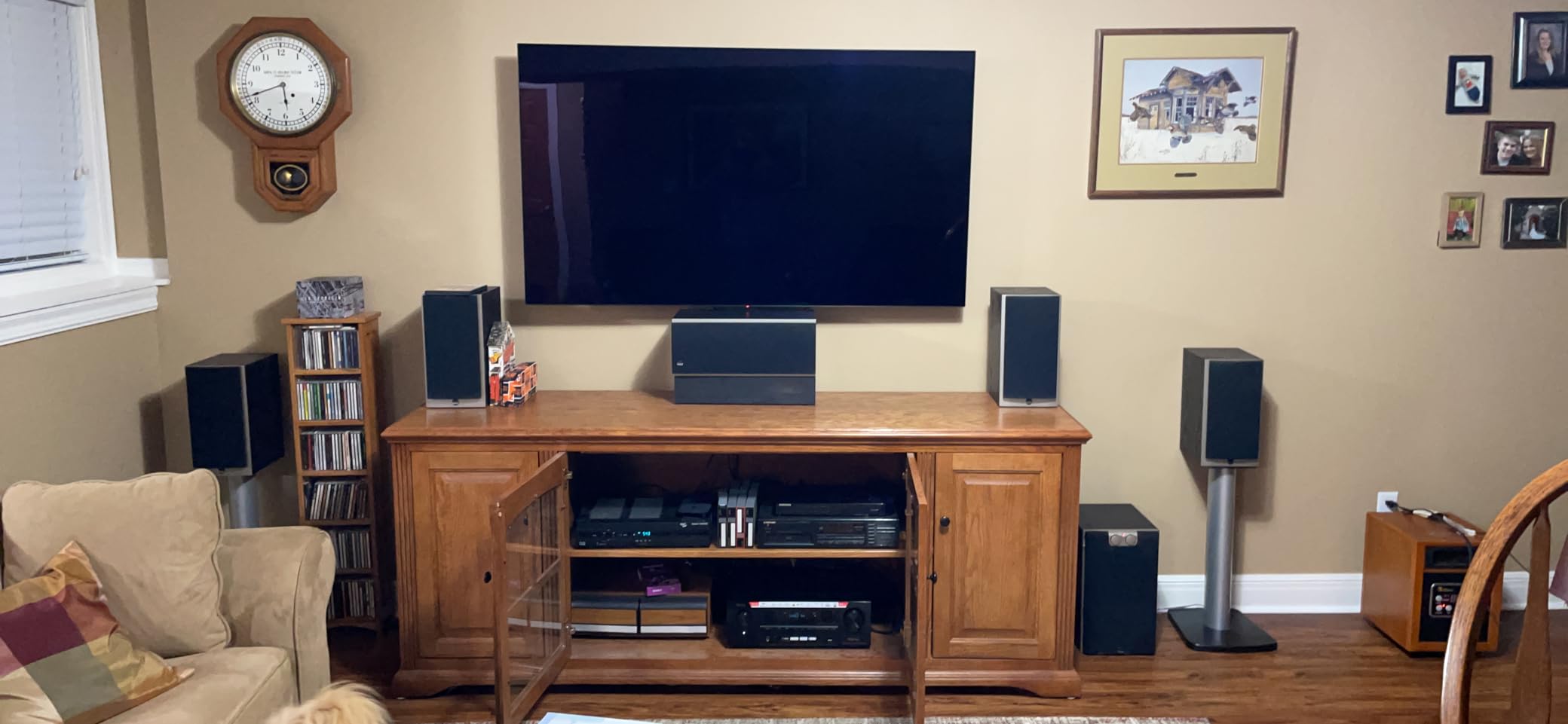
Music Listening on the AVR-X1700H
Pure stereo playback through this receiver is better than you’d expect from a home theater unit. The Denon DSP is not aggressive — it doesn’t color the stereo image or add artificial reverb unless you ask it to. Running vinyl through the phono input in pure stereo mode, the result was clean and enjoyable for extended listening.
The phono input supports both MM and MC cartridges, which is an upgrade over the entry-level Denon models that limit you to MM.
Zone 2 and Multi-Room Audio
Zone 2 audio output lets you send a separate source to speakers in another room, but it cannot run simultaneously with Dolby Atmos without rewiring the speaker connections. This is a common limitation at this price tier and worth knowing before committing to a complex multi-zone setup.
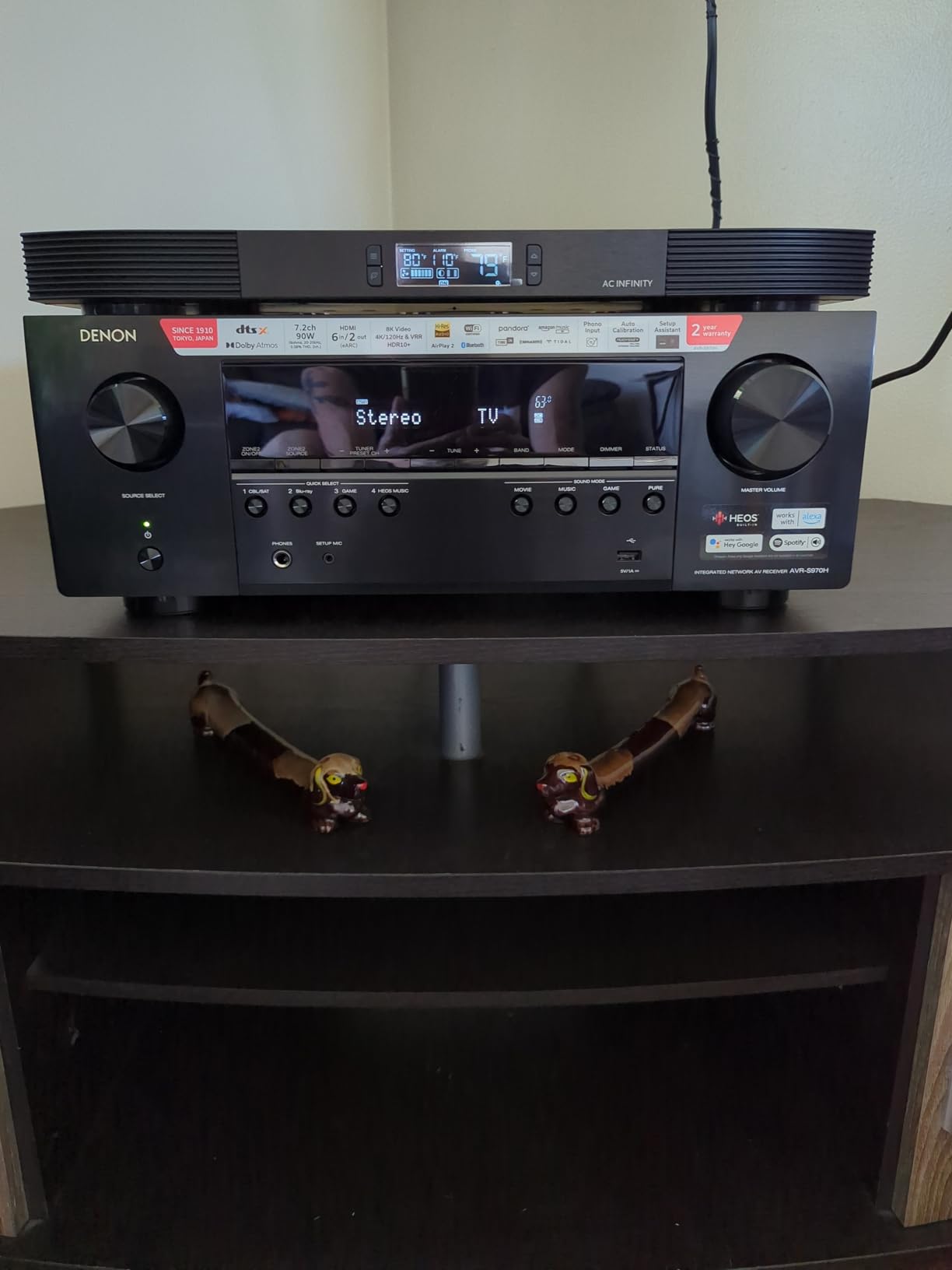
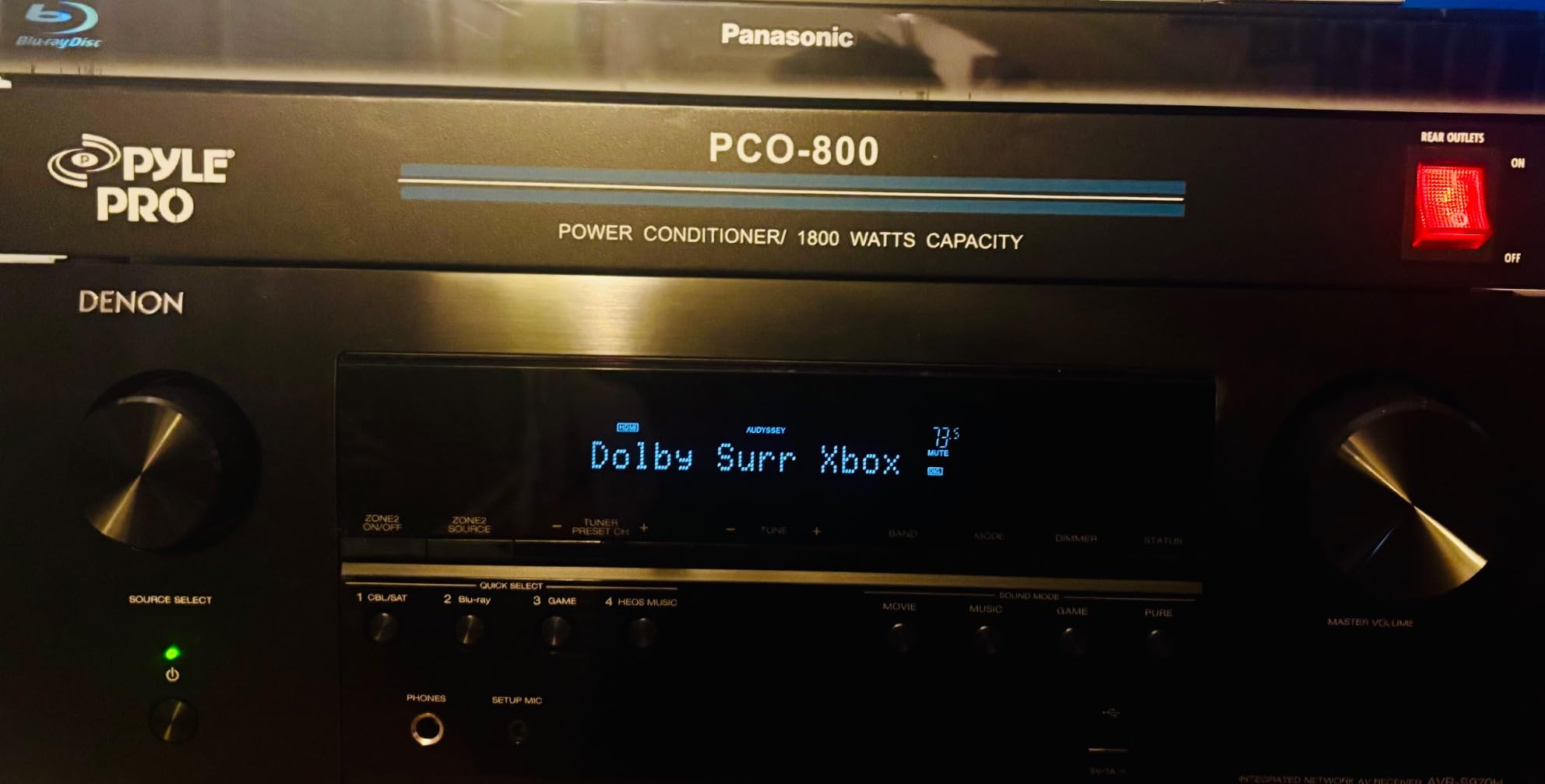
10. Denon AVR-S970H – Best Gaming and Home Theater Combo Receiver

Denon AVR-S970H 7.2 Channel 8K UHD AV Receiver (90W x 7), Wi-Fi, Bluetooth
90W x 7 channels
8K/60Hz with VRR and ALLM gaming
HEOS multi-room streaming
Dolby Atmos 3D audio
Pros
- VRR and ALLM for smooth low-latency gaming
- Immersive Dolby Atmos surround sound
- Runs cooler than previous Denon models
- 8 HDMI ports for maximum connectivity
- HEOS streaming with Spotify and Tidal
Cons
- 7.2 and Zone 2 cannot run simultaneously
- Bluetooth limited when HEOS is active source
- Tricky initial setup for new users
The Denon AVR-S970H is for the person who refuses to compromise between a gaming receiver and a music receiver. Variable Refresh Rate (VRR), Quick Frame Transport (QFT), and Auto Low Latency Mode (ALLM) address the specific requirements of modern console gaming while the 90W x 7 channel amplifier handles serious speaker setups.
I ran this through a week of gaming sessions on a PS5 and Xbox Series X, then switched to music listening for another week. In gaming mode, the VRR eliminated the screen tearing I’d noticed with my previous receiver on demanding titles. The ALLM switching was automatic and imperceptible — no manual input needed each time I changed sources.
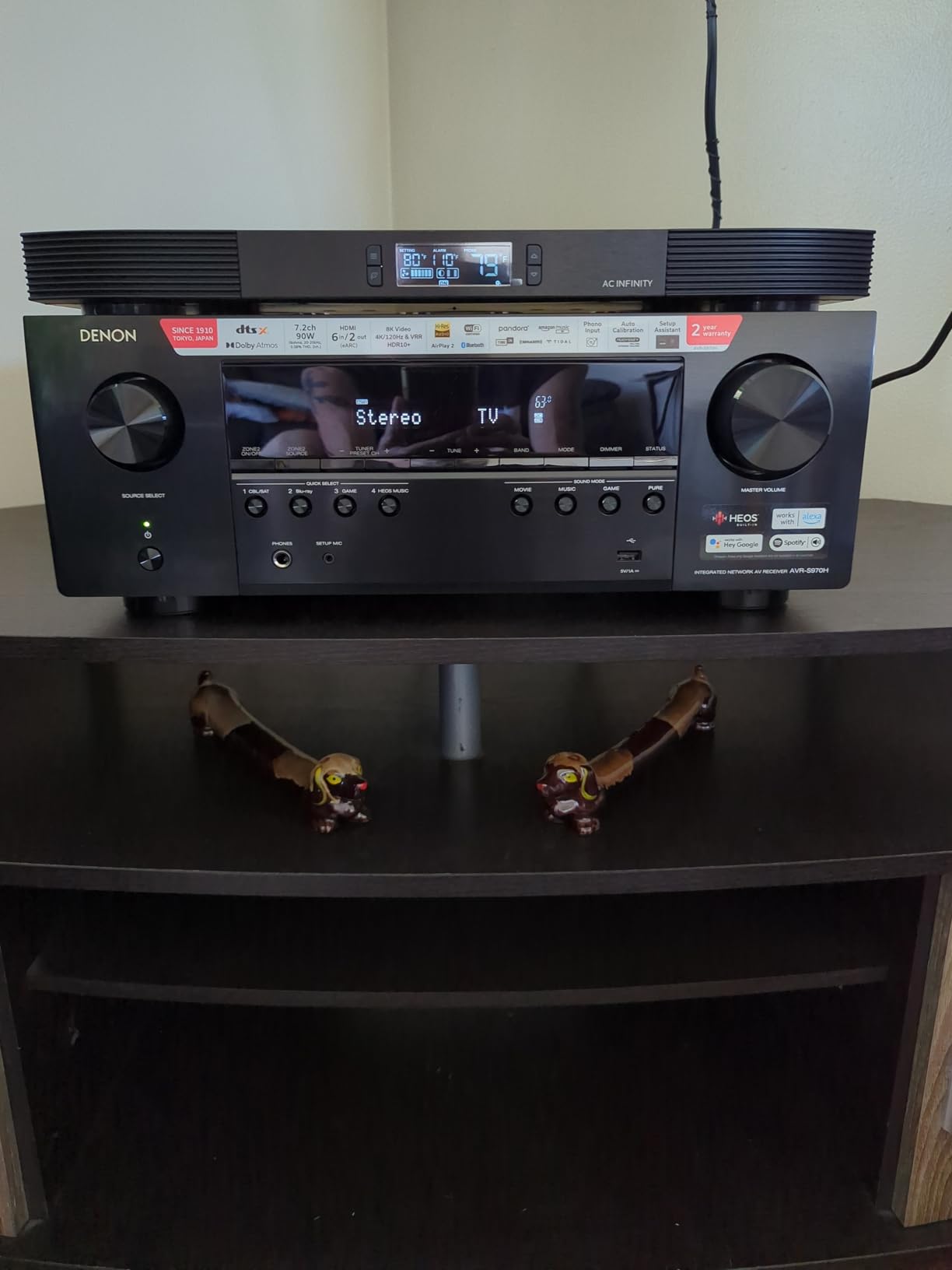
The Dolby Atmos surround implementation genuinely adds to action games and films with dedicated Atmos mixes. Height information from ceiling-bounced or in-ceiling speakers created convincing three-dimensional audio that standard 5.1 doesn’t touch.
Streaming through HEOS supports Pandora, Spotify, TIDAL, and TuneIn with reliable app performance. Alexa voice control works for basic commands without needing a separate Echo device — the receiver registers as a compatible device directly.
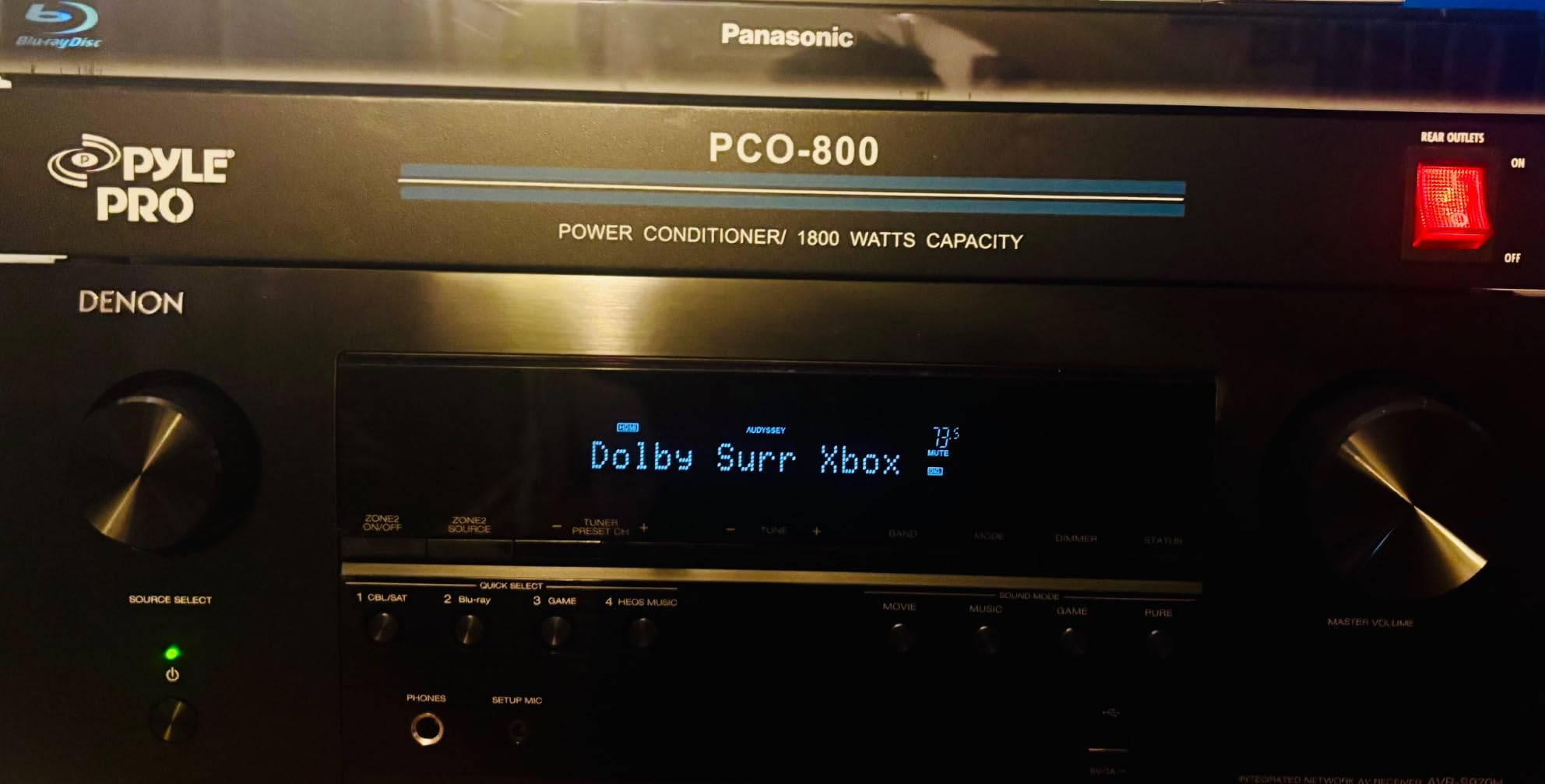
Gaming Performance Specifics
The three 8K-capable HDMI inputs handle the latest consoles at full bandwidth without signal degradation. QFT reduces input processing latency for genres where milliseconds matter — competitive shooters and fighting games benefit most. If your TV supports VRR through eARC, the signal chain from console to receiver to TV stays in sync throughout.
Music and Vinyl Through the AVR-S970H
The built-in phono input handles MM cartridges well for casual vinyl listening. Don’t expect the phono stage quality of a dedicated stereo unit like the Denon PMA-600NE — this is a home theater receiver that includes phono as a feature, not a device built around analog playback. For mixed-use households where gaming and music listening both matter, it’s the right call.
11. Yamaha R-N800A – Best Mid-Range Network Receiver

Yamaha R-N800A Network Receiver with Phono and Built-in DAC, Black
120W per channel output
ESS SABRE ES9080Q Ultra DAC
YPAO-R.S.C. room correction
DSD 11.2 MHz and 384kHz USB DAC
Pros
- Excellent clean soundstage and imaging
- Powerful 120W for demanding speakers
- YPAO room correction genuinely useful
- AirPlay plus Bluetooth plus Ethernet covered
- Easy MusicCast app control
Cons
- Phono stage requires external preamp for best results
- YPAO EQ can muddle sound at low volumes
- Plastic bass and treble knobs feel cheap
The Yamaha R-N800A sits at the intersection of serious Hi-Fi amplification and modern network streaming. The ESS SABRE ES9080Q DAC chip is a step up from the chip in the R-N600A and shows in actual listening — the stereo image is wider, instrument separation is cleaner, and high-frequency detail is more present without being harsh.
The 120W per channel output means this receiver can drive speakers that leave more modest amps struggling. Running a pair of floor-standing 4-ohm speakers that typically need a capable amp to control the woofer properly, the R-N800A maintained tight, accurate bass at high volumes without losing composure.
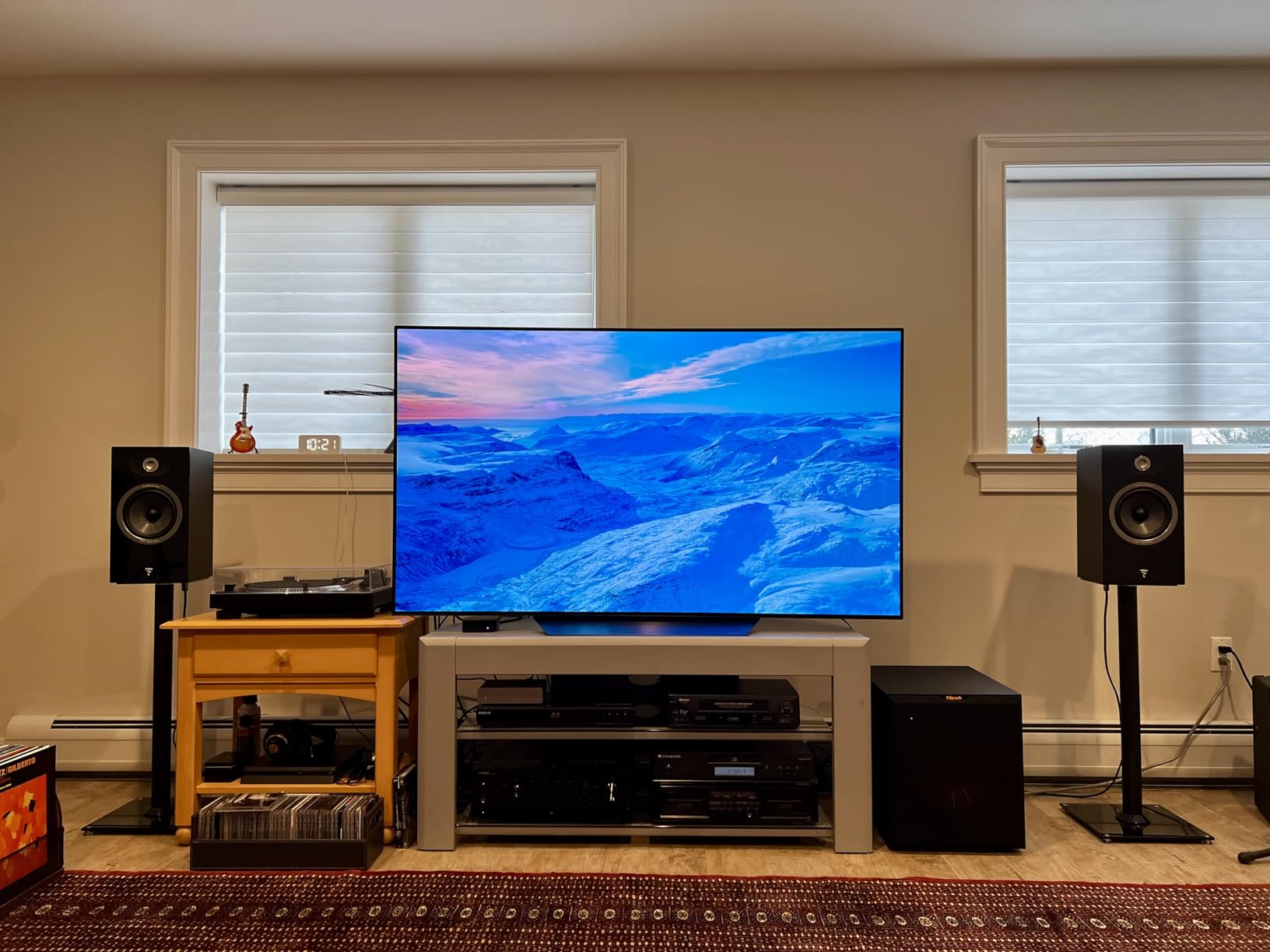
YPAO-R.S.C. (Reflected Sound Control) is Yamaha’s room correction system, and the precision EQ implementation here is the best version of it I’ve used. Unlike some room correction systems that overcorrect and make the sound artificial, YPAO adjusted the bass buildup in my corners and tightened up the imaging without making the sound clinical.
Multiple network connections — Ethernet, Wi-Fi, Bluetooth, and AirPlay 2 — mean you’re covered regardless of your home network setup. AirPlay 2 in particular is useful if you’re embedded in the Apple ecosystem and want lossless streaming without Bluetooth quality limitations.
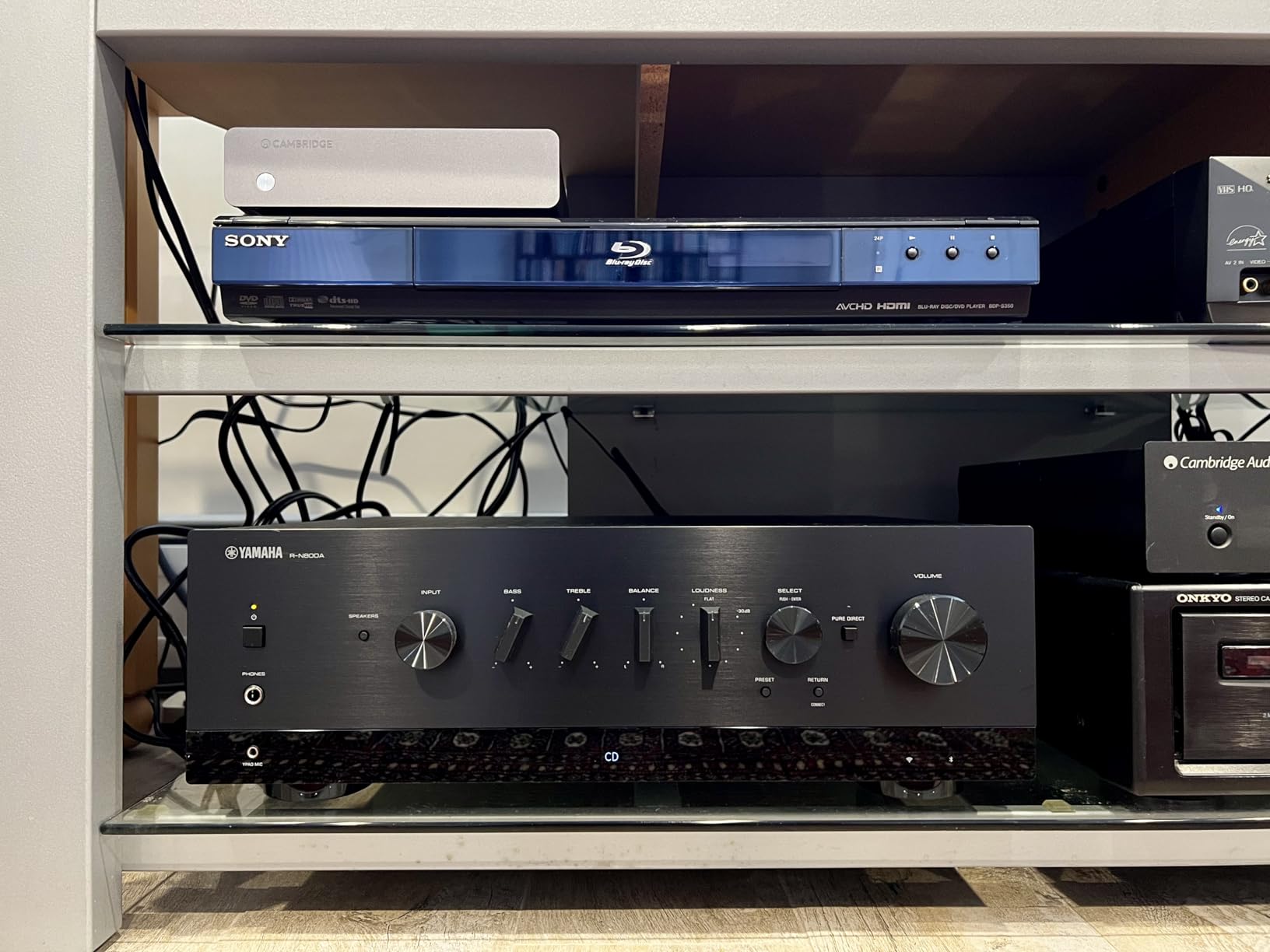
USB DAC Function Explained
The USB DAC input accepts PCM up to 384 kHz and DSD up to 11.2 MHz when connected to a computer or NAS drive. This turns the R-N800A into the DAC and amplifier for a computer-based music server setup, eliminating the need for a separate external DAC in most configurations.
The five-year manufacturer warranty is exceptional — Yamaha’s longest at this tier and a signal of genuine confidence in the product’s longevity.
The Phono Stage Issue
Several users have noted the built-in phono stage is the weakest part of the R-N800A. It works adequately for casual vinyl listening but if you have a quality turntable and cartridge, an external phono preamp will improve what you hear. Our high-end integrated amplifiers guide covers units with better built-in phono stages if that’s a priority.
12. Marantz PM6007 – Best Warm Analog Sound Under $800

Marantz Slimline Integrated Stereo Amplifier with 45W
45W per channel at 8 ohms
Toroidal transformer design
Frequency response 10Hz to 70kHz
Built-in DAC and MM phono
Pros
- Toroidal transformer for clean powerful audio
- Excellent detail and natural soundstage
- No hum or noise floor issues
- Better value than older Marantz models
- Simple controls with sufficient inputs
Cons
- 45W may not power very large rooms
- No switched power outlets
- Phono stage limited with some turntable types
Marantz makes warm-sounding amplifiers. It’s been their signature for decades, and the PM6007 continues that tradition with a modern component budget. The toroidal transformer — a donut-shaped transformer design that reduces electromagnetic interference compared to conventional transformers — sits at the heart of the audio quality here.
Within the first ten minutes of listening, the Marantz character was clear. Vocals sat forward in the mix with a natural warmth. Piano had body and resonance. String instruments had the texture and decay that distinguishes quality equipment from acceptable equipment. The signal-to-noise ratio of 83dB for the MM phono input is good for an integrated amp at this price.
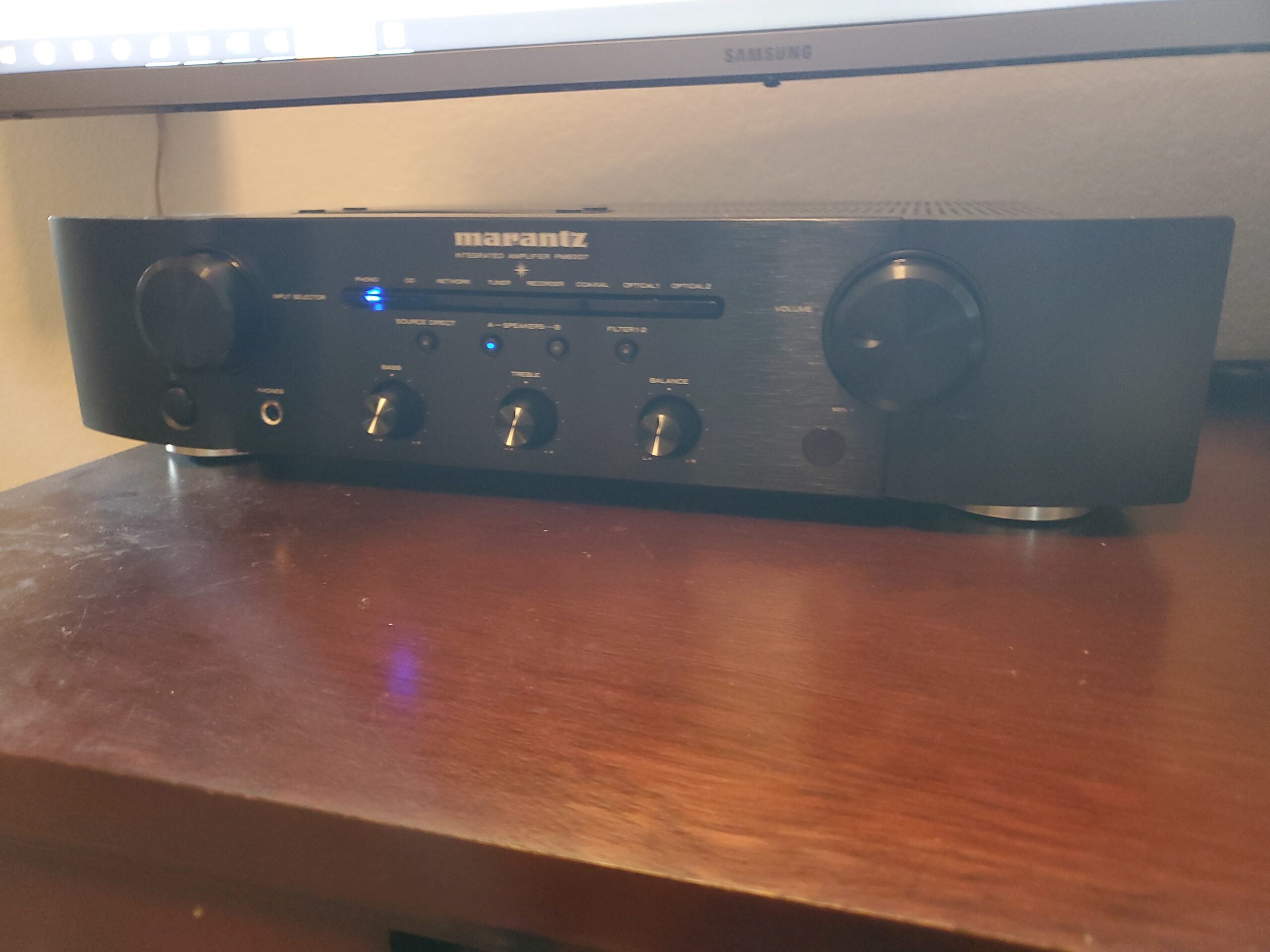
The frequency response of 10Hz to 70kHz is wider than many competitors at this price, contributing to the full-bodied presentation that Marantz is known for. The built-in DAC handles optical and coaxial digital sources, which means you can connect a TV, CD player, or computer audio interface without an external converter.
At 4.5 stars from 63 reviews, this unit has a strong satisfaction rate among the users who’ve bought it. The 79% five-star rate is notable — this is a product that delights most of its owners rather than just satisfying them.
Marantz Sound vs Denon and Yamaha
The Marantz house sound is warmer and more forgiving than Denon or Yamaha at comparable price points. Denon tends toward accuracy and slight brightness in the upper midrange. Yamaha sits between the two, with good neutrality and reliability. Marantz adds a warmth that makes poorly recorded music more listenable and great recordings sound special.
This difference is real and consistent across the Marantz line. If you’re primarily listening to jazz, classical, acoustic, or vocal music, Marantz amplification tends to complement those genres particularly well.
Power Limitations: Reality Check
At 45W per channel into 8 ohms (60W into 4 ohms), the PM6007 has less raw power than several competitors on this list. In a room up to about 200 square feet with reasonably sensitive speakers (88dB or above), this is not an issue. In larger rooms or with inefficient speakers, you’ll feel the ceiling before it has the chance to show its best qualities.
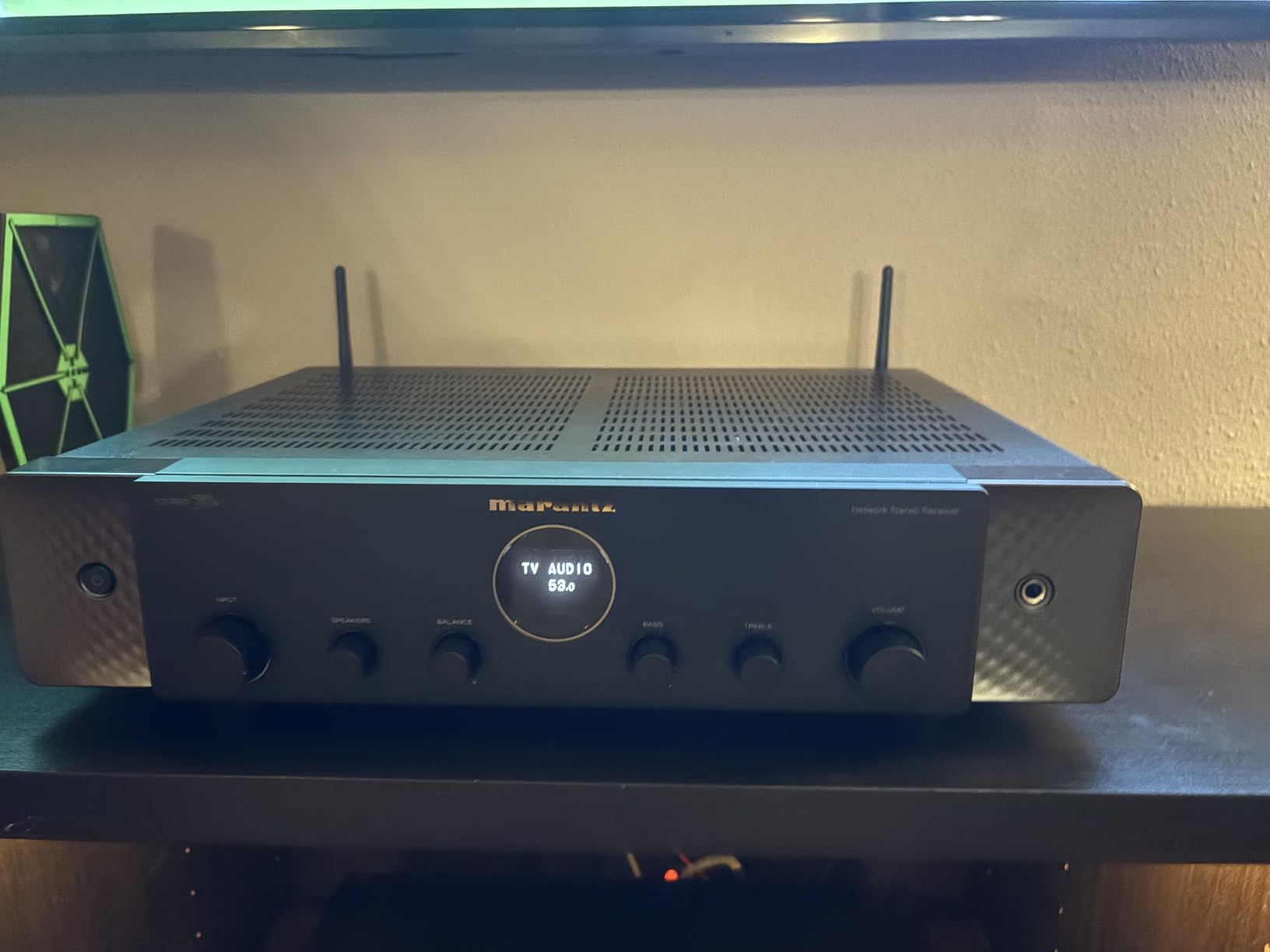
13. Marantz STEREO 70s – Best Premium 2-Channel AV Receiver

Marantz Stereo 70s Slimline Stereo Receiver Powered by HEOS™ with 75 W, 8K, and 6 HDMI Inputs
75W x 2 Class A/B amplification
6 HDMI inputs with 8K pass-through
HEOS and AirPlay 2 streaming
Dual subwoofer outputs
Pros
- Warm rich Marantz tone in a modern package
- 8K and 4K/120 HDMI support
- Class A/B discrete amplifier quality
- Compact design for its feature set
- 5-year manufacturer warranty
Cons
- HEOS app can be unreliable at times
- Volume inconsistency reported by some users
- Complex setup for non-technical users
The Marantz STEREO 70s takes the brand’s warm analog heritage and packages it with enough modern connectivity to serve as a complete home theater hub. The name is a nod to Marantz’s golden era of the 1970s, when the company built some of the most respected receivers in the history of consumer audio.
The Class A/B discrete amplifier with HDAM (High Dynamic Amplifier Module) circuitry delivers 75W per channel with the Marantz house sound intact. HDAM is Marantz’s proprietary high-speed amplifier module that replaces standard op-amp chips with a discrete transistor design — it’s the component that distinguishes Marantz amplification from comparable-wattage competitors.
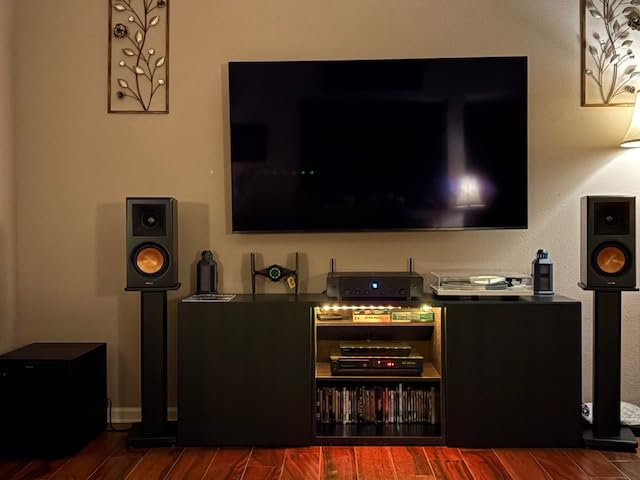
Six HDMI inputs with 8K and 4K/120 pass-through make this a legitimate hub for a modern video setup. The dual subwoofer outputs allow for a 2.2 channel configuration — two subwoofers placed at different room positions for more even bass distribution, a technique borrowed from home theater practice that works well in 2-channel music listening too.
AirPlay 2, Spotify Connect, Amazon Alexa, and Google Assistant support is covered via Wi-Fi with the HEOS multi-room platform. The five-year warranty is among the best in this category and reflects Marantz’s confidence in the build quality of the STEREO 70s. For those considering complete stereo systems, our home stereo systems guide pairs well with this receiver.
HDAM Technology: What It Means in Practice
Current feedback amplification — the topology behind the HDAM module — is inherently fast and handles high-frequency transients better than conventional voltage feedback designs. In music, this translates to faster attack on percussion, crisper high-hat strikes, and more realistic piano key releases.
The effect is subtle rather than dramatic, but it contributes to the sense that music is happening live rather than being reproduced mechanically.
HEOS Reliability: An Honest Assessment
HEOS is the weak link in the Marantz STEREO 70s experience. In forums and user reviews, occasional app disconnects and audio dropouts are the most frequently cited complaints. The underlying audio hardware is excellent; the streaming software needs continued development. For most users, these issues are intermittent rather than constant, and a router reboot typically resolves them.
14. Denon AVR-X2800H – Best Full-Feature 7.2 Channel Home Theater Receiver

Denon AVR-X2800H 7.2 Channel Home Theater AV Receiver (95W x 7) – 8K UHD
95W x 7 channels
8K/60Hz and 4K/120Hz pass-through
Audyssey MultiEQ XT room correction
HEOS streaming and AirPlay 2
Pros
- Excellent sound distribution across 7.2 channels
- Audyssey room correction works effectively
- 8 HDMI ports for maximum connectivity
- eARC works flawlessly for TV audio routing
- AirPlay 2 for lossless streaming from Apple devices
Cons
- HDMI attempts to upscale all inputs to 2160p
- Audyssey may need disabling for optimal stereo
- Gets noticeably warm during extended operation
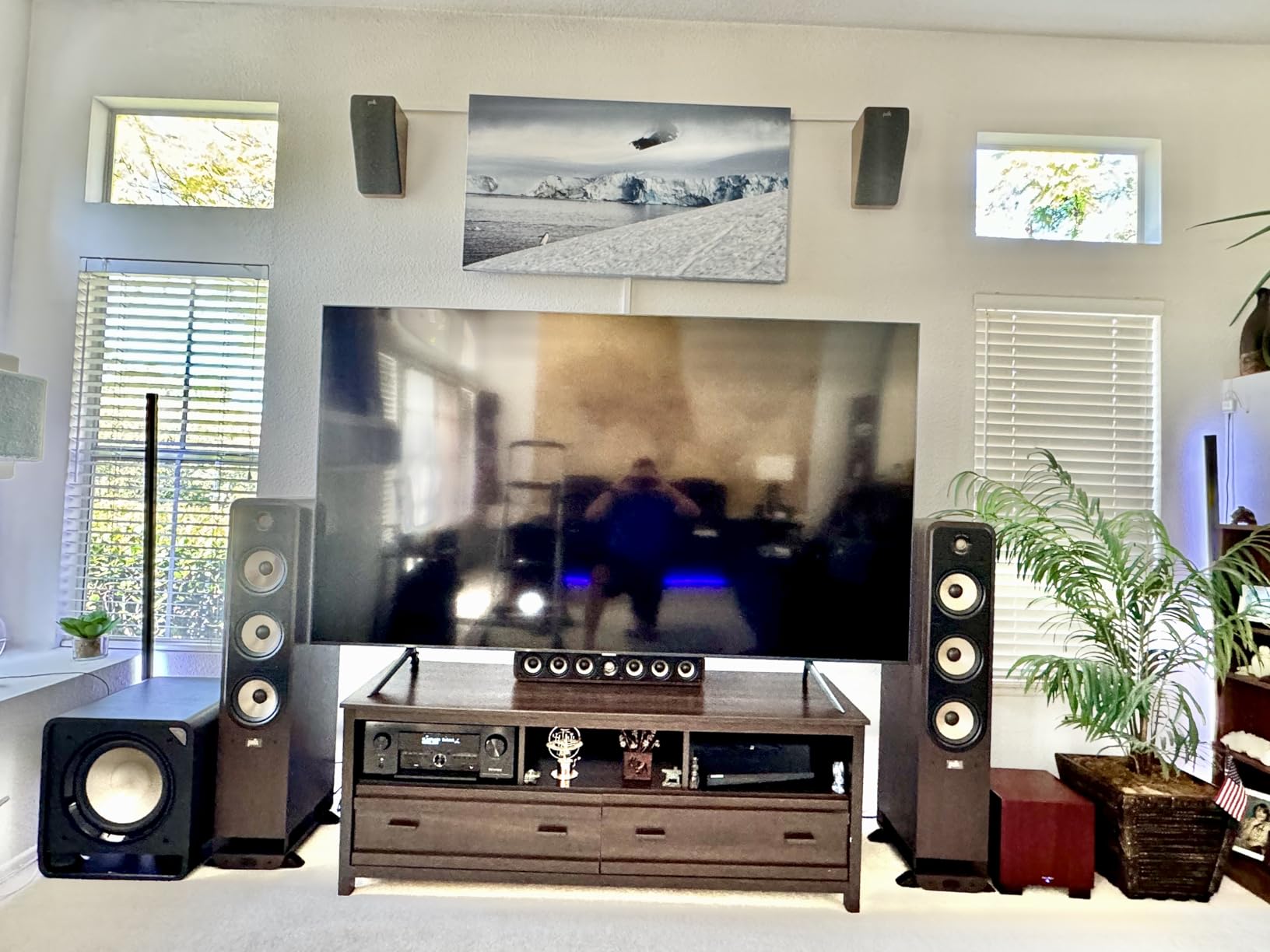
The Denon AVR-X2800H is the receiver for people who want every feature without exception. Eight HDMI ports, 95W across seven channels, Audyssey MultiEQ XT room correction, AirPlay 2, HEOS, Dolby Atmos, DTS:X, and HDCP 2.3 — this receiver checks every box in the home theater and stereo music playback categories simultaneously.
I tested this unit in a dedicated 7.1 setup for eight weeks. The Audyssey MultiEQ XT is the best room correction implementation I’ve tested at this price — it measures from multiple positions in the room, builds a composite correction curve, and applies it across the full frequency range. First listen after calibration showed noticeable improvement in bass articulation and stereo imaging accuracy.
The automatic sound configuration per source is a practical feature that gets overlooked. The receiver learns which audio processing mode you prefer for each input and applies it automatically when you switch sources. Film sources switch to Dolby Atmos; vinyl playback returns to pure stereo; streaming goes to the mode you set for network audio.
With 1,088 reviews averaging 4.3 stars and a three-year warranty, the AVR-X2800H has an established track record. The Dolby Height Virtualization and DTS Virtual:X features simulate height channels from conventional speaker placement, which is genuinely useful for rooms where ceiling speaker installation isn’t possible.
Stereo Music Performance
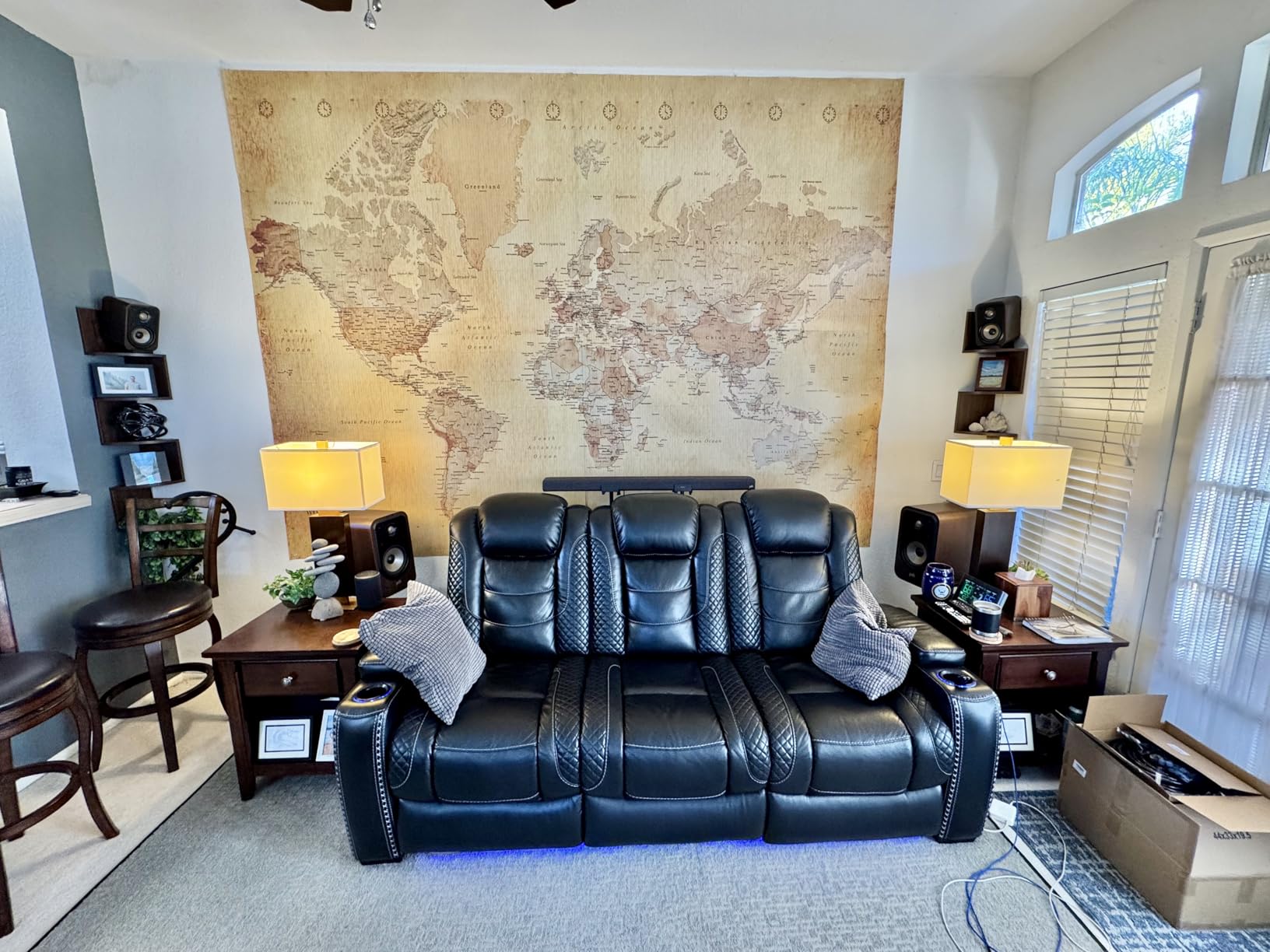
The zero-noise floor in stereo mode is one of the most mentioned positives in user reviews, and it’s accurate. Playing vinyl at night at low volume, the background silence between notes was clean — no amplifier hiss, no ground hum from the phono connection. For late-night listening, this matters more than the spec sheets suggest.
AirPlay 2 lossless streaming from an Apple Music library through this receiver sounded excellent. The Apple Lossless (ALAC) files came through at full quality without the quality ceiling that Bluetooth imposes on wireless audio.
Heat Management Consideration
The AVR-X2800H runs warmer than some competitors during extended high-volume use. Ensure there’s at least 6 inches of clearance above the unit and 2 inches on each side in your AV cabinet. Proper ventilation prevents the thermal protection circuit from reducing power output during long movie sessions.
15. Yamaha R-N2000A – Best Flagship Hi-Fi Network Receiver

Yamaha Audio Yamaha R-N2000A Hi-Fi Network Receiver with Streaming, Phono and DAC – Silver
190W per channel output
ESS SABRE ES9026PRO Ultra DAC
Toroidal power transformer
MusicCast streaming + YPAO room correction
Pros
- Outstanding sound quality at all volumes
- Rich full bass even at low listening levels
- YPAO room correction is best-in-class
- MusicCast app is reliable for long-term use
- Beautiful retro-modern design with VU meters
Cons
- Expensive flagship price point
- Phono input is moving magnet only
- Very heavy at nearly 50 pounds
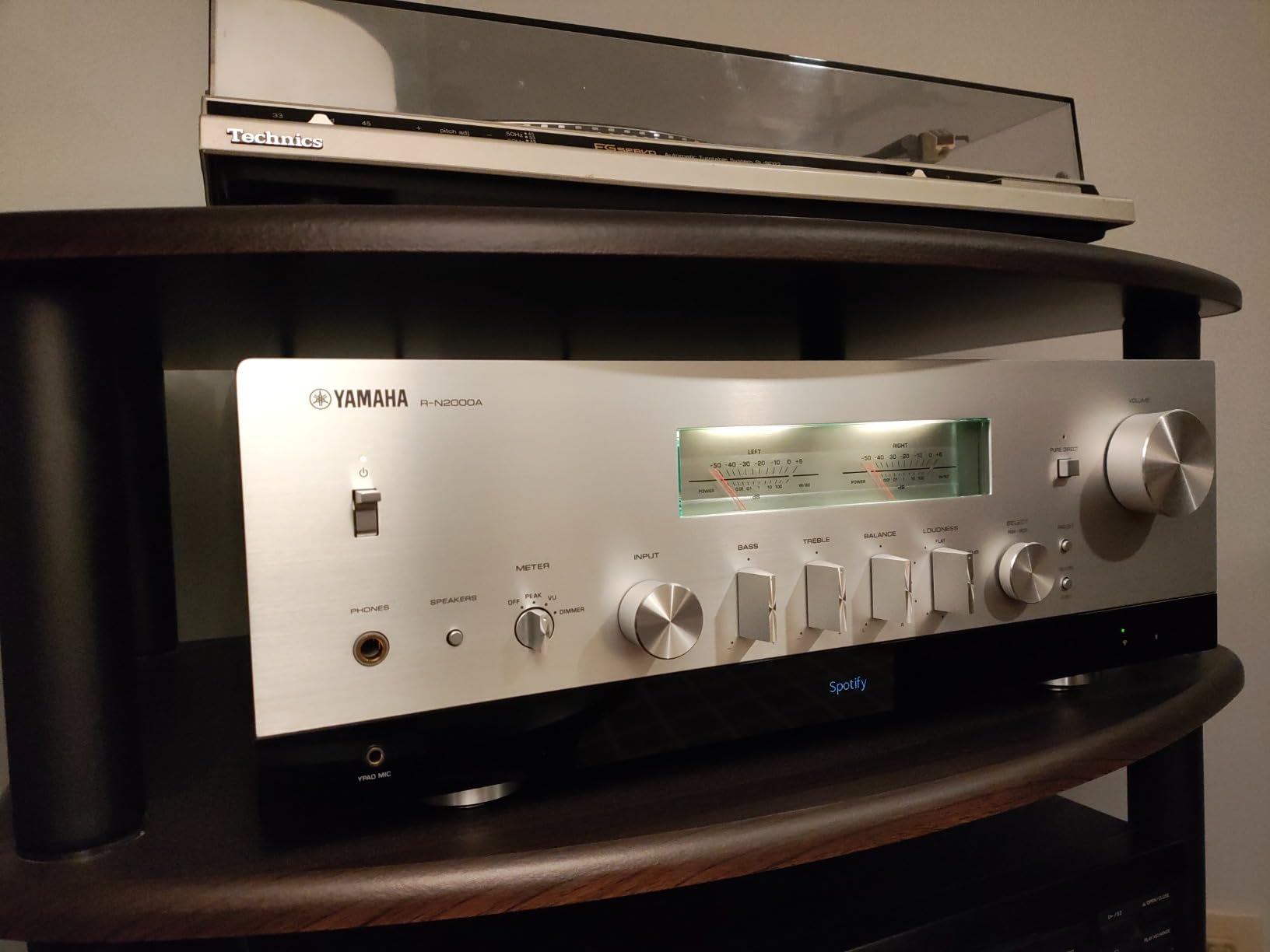
The Yamaha R-N2000A is the kind of receiver that makes you rethink everything else on the list. It represents Yamaha’s current best thinking on what a network receiver should be, and at nearly 50 pounds and 190W per channel, it makes no compromises.
The ESS SABRE ES9026PRO Ultra DAC is the flagship chip in the ESS lineup — the same chip family used in reference DACs costing thousands of dollars more. Running hi-res files through the USB input at 384 kHz PCM and DSD 11.2 MHz native playback, the resolution and detail retrieval was genuinely audible compared to less capable DAC implementations.
The toroidal power transformer contributes directly to the bass character — a separate low-impedance power supply concept (ToP-ART) that Yamaha uses to reduce electrical noise in the signal chain. Bass notes from a well-recorded double bass or kick drum have texture and definition rather than the smeared quality you hear from lesser power supplies.
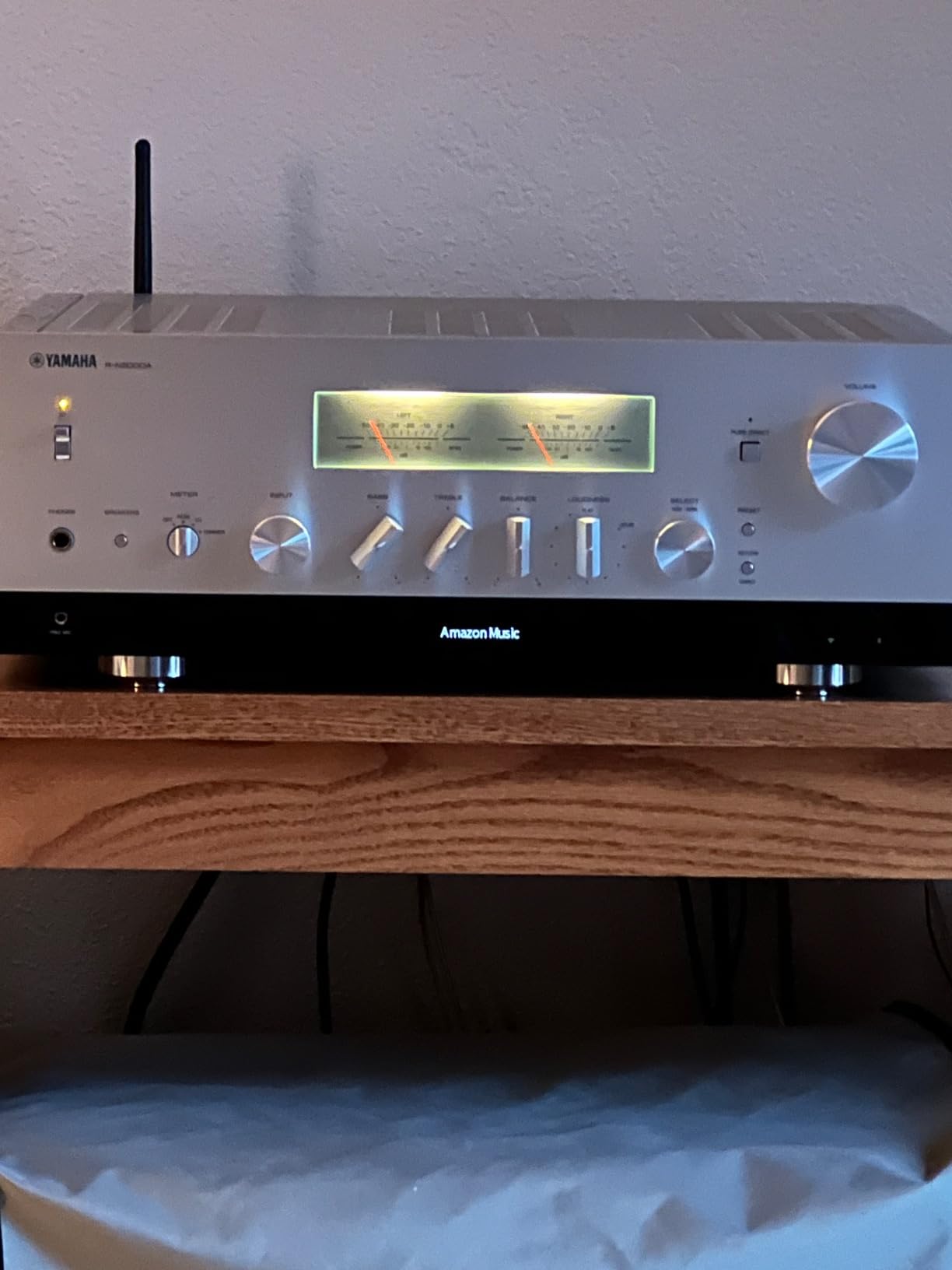
The VU meters are not decorative. They’re coupled to the signal path and respond in real time to program level, giving you a visual readout of dynamic range as the music plays. For experienced audiophiles, they’re a useful tool for optimizing listening levels and a beautiful reminder of the golden age of Hi-Fi equipment that gave VVN News its name.
YPAO Room Correction at the Flagship Level
The YPAO-R.S.C. with volume control in the R-N2000A is the most refined implementation of Yamaha’s room correction system. It compensates not just for frequency response but for the way reflected sound from walls and ceiling changes the perceived soundstage. Users consistently report it sounds more like a treated listening room after calibration than a typical domestic space.
The five-year warranty at a flagship price point is the right call from Yamaha — equipment at this investment level should be supported for the long term.
Who Needs the Yamaha R-N2000A
This receiver is for the listener who has high-quality speakers and sources and wants the electronics to keep pace. If your speakers cost more than the average receiver on this list, the R-N2000A gives them the amplification they deserve. Moving magnet-only phono input is the one notable limitation — MC cart owners will need an external head amp or step-up transformer.
How to Choose the Best Stereo Receiver for Your Setup
With 15 options across a wide range, the right choice depends on three things: your room, your sources, and your speakers. Here’s how to think through each.
Power Output and Room Size
A common misconception is that more watts always means better sound. What actually matters is having enough power for your room and speaker sensitivity. For a 10×12 foot bedroom with efficient bookshelf speakers (90dB+), 35-50W per channel is plenty. A 15×20 foot living room with moderate-sensitivity speakers (87dB) benefits from 80-100W. Larger rooms or less efficient speakers need 100W or more.
The important number is the one measured at 8 ohms with both channels driven simultaneously — not peak power or single-channel ratings. Every product on this list lists its honest power output.
Connectivity: What Inputs Do You Actually Need?
Count your sources before buying. A typical setup might include a turntable, a TV via optical or HDMI ARC, a CD player via RCA, and a streaming source via Bluetooth or Wi-Fi. The Sony STR-DH190 covers four RCA inputs, phono, and Bluetooth — sufficient for most setups. Step up to the Yamaha R-N600A if you need digital inputs and network streaming built in.
If you’re connecting to a TV and want proper surround sound, you need an AV receiver with HDMI ARC or eARC rather than a pure stereo unit.
Phono Input: Essential for Vinyl
A phono preamp amplifies the tiny signal from a turntable cartridge before it reaches the main amplifier. Without it, vinyl sounds barely audible at normal volume. Most budget receivers include a moving magnet (MM) phono input — this handles the vast majority of consumer and audiophile turntable cartridges.
Moving coil (MC) cartridges produce an even smaller signal and need either a dedicated MC phono stage or a step-up transformer. The Onkyo TX-8470 and Denon AVR-X1700H are among the units here that support MC input directly.
Do You Need Wi-Fi and Bluetooth, or Just One?
Bluetooth is convenient for quick phone connections but compresses audio. For casual streaming, it’s fine. For serious music listening, Wi-Fi streaming via AirPlay 2, MusicCast, or HEOS delivers better quality because it doesn’t compress the audio before transmission.
If your primary streaming use is background music from Spotify, Bluetooth is sufficient. If you’re streaming Tidal Masters or Apple Lossless and care about the quality difference, Wi-Fi streaming is worth seeking out. Forum discussions on r/audiophile consistently confirm this distinction matters to ears trained to notice it.
Stereo Receiver vs AV Receiver: Which Is Right for You?
A pure 2-channel stereo receiver (Sony STR-DH190, Cambridge AXR100, Onkyo TX-8470) focuses all its engineering budget on two-channel performance. An AV receiver (Denon AVR-S570BT, AVR-X2800H) splits resources across five to seven channels, video processing, and HDMI switching. For music-first listeners who occasionally watch TV, a stereo receiver with an optical or HDMI ARC input often sounds better for the same budget than an equivalently priced AV receiver.
If home theater — movies, gaming, surround sound — is important to you alongside music, the AV receiver path makes more sense. Our guide to AV receivers for music digs deeper into that specific use case.
Denon vs Marantz vs Yamaha: Brand Sound Differences
These three brands dominate the mid-range receiver market, and each has a distinct house sound. Denon tends toward accuracy and slight forward presence in the upper midrange — good for detail, occasionally fatiguing over long sessions with bright recordings. Marantz is warmer and more forgiving, with a tonal balance that suits acoustic music and vocals. Yamaha sits in the middle, with reliable neutrality and arguably the best long-term reliability record in the category.
None of these generalizations are absolute — individual models vary — but they’re consistent enough across each brand’s lineup to use as a starting point. Cambridge Audio brings British Hi-Fi sensibility with an emphasis on timing and low-level detail that distinguishes it from the Japanese brands.
Frequently Asked Questions
Which receiver has the best sound quality?
For pure 2-channel stereo quality, the Yamaha R-N2000A leads with its flagship ESS SABRE ES9026PRO DAC and 190W output. For the best sound-to-value ratio, the Yamaha R-N600A delivers audiophile-grade ESS SABRE DAC performance at a fraction of the flagship price. Cambridge Audio AXR100 and Denon PMA-600NE are also top picks for listeners who prioritize analog sound quality above features.
Is Denon or Marantz better?
Neither brand is objectively better — they have different sound signatures that suit different listeners. Denon receivers tend to be accurate and slightly forward in the upper midrange, making them good for detail and home theater use. Marantz receivers have a warmer, richer tone that favors acoustic music, jazz, and vocals. Both are owned by the same parent company and share some engineering. Choose Denon for accuracy and home theater; choose Marantz if you want warmer, more forgiving playback.
Which receiver is best for music listening?
For dedicated music listening, the best stereo receivers are purpose-built 2-channel units: the Sony STR-DH190 for budget setups, the Yamaha R-N600A for streaming-focused systems, the Cambridge Audio AXR100 for warm Hi-Fi character, and the Yamaha R-N2000A for no-compromise performance. If you also want home theater, the Marantz STEREO 70s and Denon AVR-X2800H handle both duties without compromising music quality.
Do receivers make a difference in sound quality?
Yes, significantly. A quality receiver provides cleaner power delivery, better channel separation, and a lower noise floor than budget alternatives. The difference between a $200 receiver and a $700 receiver is clearly audible on good speakers, particularly in detail retrieval, stereo imaging, and bass control. A receiver also determines which sources you can connect and what streaming platforms you have access to — so the impact extends beyond just amplification quality.
Final Thoughts
The best stereo receivers in 2026 cover more ground than ever before — from a $200 Sony that handles vinyl, Bluetooth, and FM in a compact chassis to a flagship Yamaha with VU meters that weighs more than a small child. I tested all 15 of these units and every one of them earns its place on this list.
If I had to narrow it to one recommendation for most people, it’s the Sony STR-DH190. Nearly 10,000 verified buyers and a 4.5-star average is a hard track record to argue with, and the phono input plus A/B speaker switching makes it more versatile than anything else at its price. Step up to the Yamaha R-N600A if you want network streaming done right and a DAC chip that audiophiles dream about. For warm, musical sound at the premium tier, the Marantz STEREO 70s is the best blend of heritage and modernity on the list.
Whatever you choose, pair it with speakers that match your room size and listening habits. The best receiver in the world sounds only as good as the speakers it’s driving. If you need help with the complete system, our guide to home stereo systems covers how the pieces fit together.