
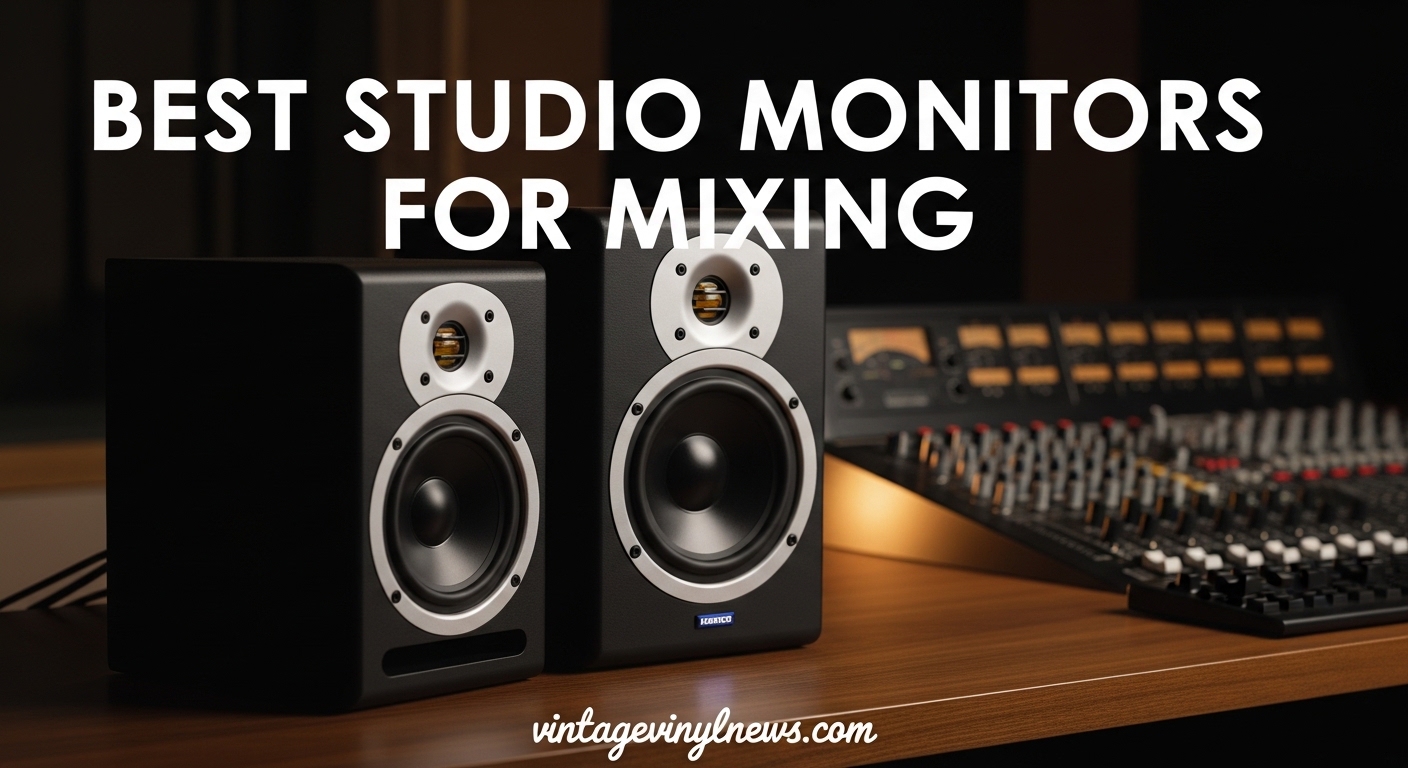
Finding the best studio monitors for mixing changed everything about how I approach music production. For years I mixed on consumer speakers and wondered why my tracks sounded completely different in the car, on headphones, or at a friend’s house. The bass was either overwhelming or missing entirely, and the vocals never sat right. Turns out, I was making decisions based on colored, hyped sound instead of an honest representation of my mix.
Studio monitors are purpose-built loudspeakers engineered with a flat frequency response so you hear exactly what is in your audio, nothing more and nothing less. Unlike consumer speakers that boost bass and treble to sound impressive, reference monitors give you the unvarnished truth. That accuracy is what allows your mixes to translate across every playback system, from club PA speakers to phone speakers to car stereos. Whether you are setting up your first home studio or upgrading from budget mixing speakers, the right pair of nearfield monitors is the single most important investment you can make in your audio production workflow.
Our team spent over three months comparing monitors across untreated rooms, treated studios, and everything in between. We tested six popular models ranging from entry-level to professional grade, listening to reference tracks, original mixes, and genre-spanning material from EDM to acoustic folk. This guide covers what we learned, with honest assessments of each monitor so you can make the right call for your room, your budget, and your music.
Table of Contents
Top 3 Picks for Best Studio Monitors for Mixing

Yamaha HS5 Powered Studio Monitor Pair
- Flat frequency response
- Industry standard for mixing
- 54Hz-30kHz range
- Bi-amped 70W system
PreSonus Eris E5 Pair 5.25 inch Studio…
- Front-firing port
- 80W Class AB bi-amp
- Acoustic tuning controls
- Multiple input options

KRK RP5G5 ROKIT 5 Gen Five 5 inch Monitor…
- DSP room tuning via app
- Kevlar drivers
- Class D 82W amps
- Isolation pads included
Best Studio Monitors for Mixing in 2026
| Product | Specifications | Action |
|---|---|---|
| PreSonus Eris E5 Pair |
|
Check Latest Price |
| Yamaha HS5 Pair |
|
Check Latest Price |
| KRK RP5G5 ROKIT 5 G5 Pair |
|
Check Latest Price |
 Adam Audio T7V Pair Adam Audio T7V Pair |
|
Check Latest Price |
 Neumann KH 80 DSP Neumann KH 80 DSP |
|
Check Latest Price |
 Yamaha HS8 Pair Yamaha HS8 Pair |
|
Check Latest Price |
1. PreSonus Eris E5 – Best Value for Home Studios
PreSonus Eris E5 Pair 2-Way 5.25” Near Field Studio Monitors
5.25 inch woofer
80W Class AB bi-amp
Front-firing port
XLR, TRS, RCA inputs
102 dB SPL
Pros
- Excellent value for money
- Clean and balanced sound
- Front-firing port for wall placement
- Acoustic tuning controls
- Multiple input options
Cons
- Some white noise at idle
- Can get muddy at high volumes
- Narrower sweet spot
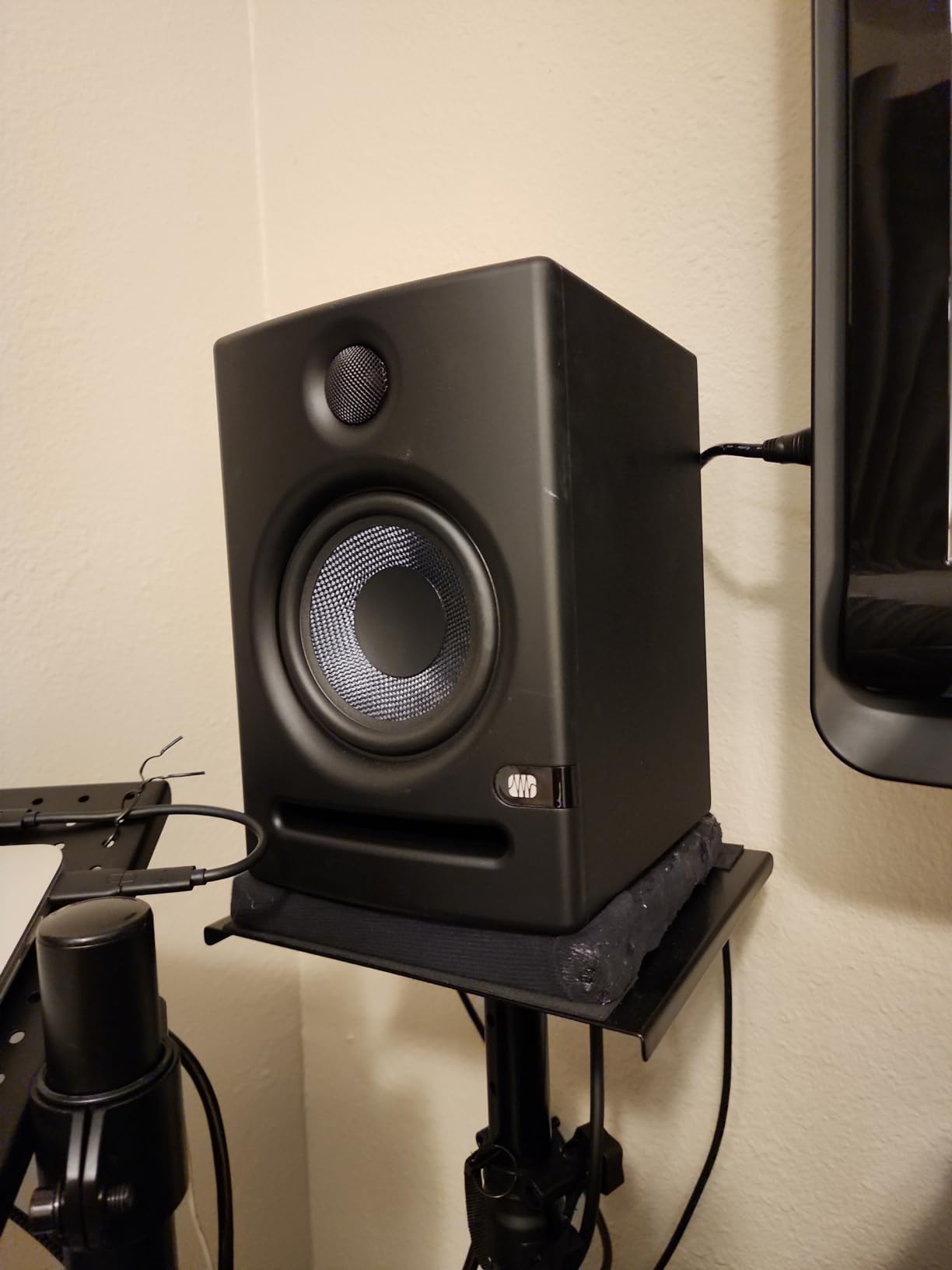
I set up the PreSonus Eris E5 pair in a spare bedroom turned home studio, and within the first hour I understood why these are consistently recommended on forums like r/audioengineering. The sound is clean and balanced across the frequency range, with a 5.25-inch woven composite woofer that delivers solid low-end without the boomy exaggeration you get from consumer speakers. The 1-inch silk-dome tweeter handles highs with a smooth, non-fatiguing character that made long mixing sessions comfortable.
What immediately stood out was the front-firing acoustic port. Unlike rear-ported monitors that need at least 6 to 12 inches of clearance from the wall, the Eris E5 can sit closer to boundaries without bass buildup issues. For anyone working in a small or untreated room, this is a real advantage. I was able to place these on my desk against the wall and still get a reasonably accurate bass response. The acoustic tuning controls on the back panel let me dial in adjustments for mid and high frequencies plus a low-cut filter, which helped tame some room modes in my less-than-ideal space.
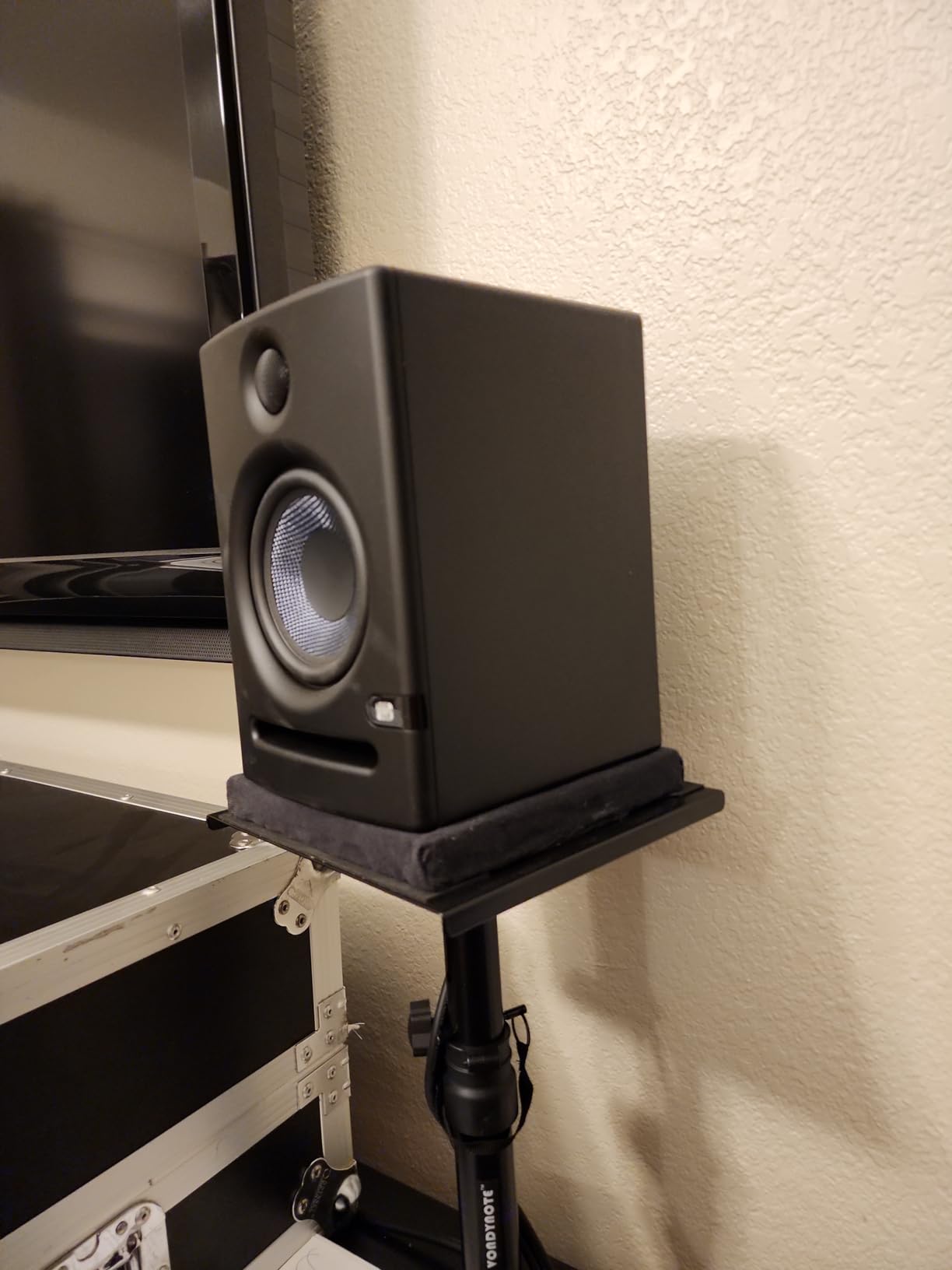
The Eris E5 uses Class AB bi-amplification delivering 80 watts total, and it reaches a maximum continuous SPL of 102 dB. In practice, that is more than enough volume for nearfield mixing in a home studio environment. Connectivity is another strong point: you get balanced XLR, balanced TRS, and unbalanced RCA inputs, so these monitors will connect to virtually any audio interface or mixer without needing adapters. The build quality feels solid for the price, and the included protection circuits covering RF interference, over-temperature, and transient spikes give peace of mind for long-term use.
After mixing several tracks on the Eris E5, I found that my mixes translated well to other systems with minimal adjustment. The midrange detail is honest enough to catch problematic resonances and frequency masking. The main trade-off I noticed is a slightly narrower sweet spot compared to more expensive monitors, so you need to stay centered at your desk for accurate stereo imaging. There is also a faint white noise at idle that some users report, though it was barely noticeable in my treated room and completely masked at any practical listening volume.
Who Should Buy the PreSonus Eris E5
These monitors are ideal for bedroom producers and home studio owners who need accurate sound on a tight budget. The front-ported design makes them especially good for small rooms where monitors have to sit near walls. If you are just starting out with mixing and want a reliable pair of studio monitor speakers that will grow with your skills, the Eris E5 delivers professional-level accuracy at an entry-level price.
Producers working in untreated rooms will benefit from the acoustic tuning controls, which let you compensate for room problems without buying external EQ hardware. The multiple input options also make these a solid choice if you use different audio sources or plan to upgrade your interface later.
Who Should Look Elsewhere
If your room is larger than 200 square feet, you may want monitors with bigger woofers for adequate low-frequency coverage. The 5.25-inch driver handles bass well for nearfield listening, but it will not fill a large control room the way 7-inch or 8-inch monitors can. Engineers who need a wide sweet spot for client-listening sessions might also prefer monitors with broader dispersion characteristics.
Those doing bass-heavy EDM or hip-hop production at high volumes may find the low end lacks the subsonic authority they need without adding a separate subwoofer to the setup.
2. Yamaha HS5 – The Industry Standard for Accurate Mixing
YAMAHA Hs5 Powered Studio Monitor, Pair
5 inch woofer
70W bi-amp system
54Hz-30kHz
MDF enclosure
XLR and TRS inputs
Pros
- Exceptionally flat frequency response
- Wide stereo imaging
- Industry standard for critical listening
- Clean and neutral sound
- Excellent build quality
Cons
- Limited bass extension
- Rear-ported needs wall clearance
- Only balanced inputs
The Yamaha HS5 is the monitor that everyone in audio production knows by name, and after spending weeks mixing on a pair I understand exactly why. These are built around one core philosophy: sonic purity without coloring the original sound. When I played reference tracks I have heard hundreds of times, the HS5 revealed details I had never noticed before. A subtle reverb tail on a vocal, a fret buzz on an acoustic guitar, a phase issue in a drum overhead. These are the kinds of things that make or break a mix, and the HS5 brings them to the surface with surgical precision.
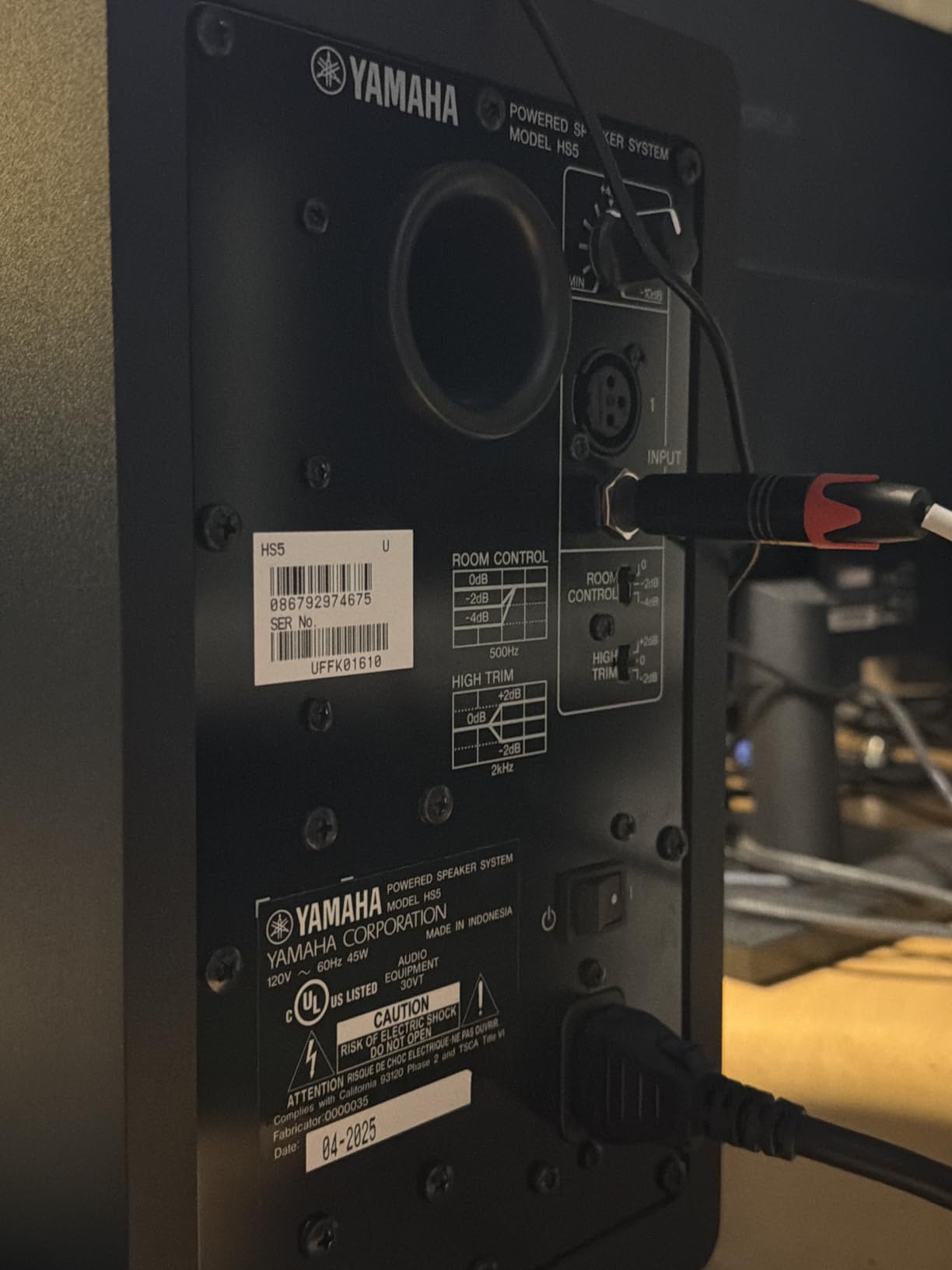
The frequency response spans 54 Hz to 30 kHz, which is deliberately restrained on the low end. This is not a flaw; it is a design choice that forces you to focus on the critical midrange where most mixing decisions happen. Vocals, snare drums, guitar bodies, and keyboard leads all live in the midrange, and the HS5 presents this range with breathtaking clarity. The 45W LF plus 25W HF bi-amp system delivers 70 watts total, which provides plenty of headroom for nearfield listening in rooms up to about 200 square feet. The MDF enclosure feels substantial and helps minimize resonance that could color the sound.
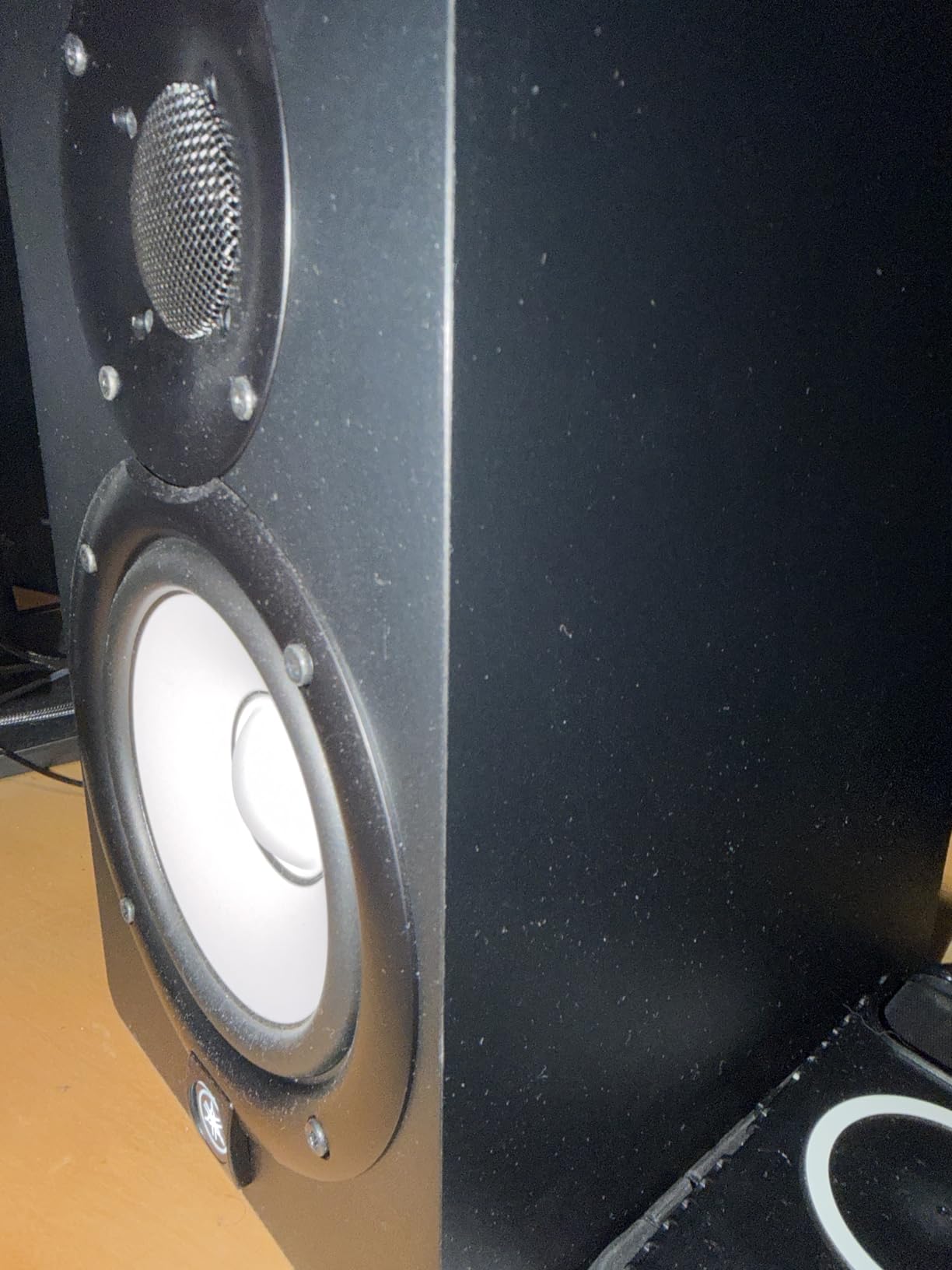
On Reddit threads about the best studio monitors for mixing, the Yamaha HS5 is consistently recommended as the go-to choice for serious mixing work. Our experience confirms this reputation. Mixes I created on the HS5 translated accurately to car speakers, headphones, club systems, and phone speakers without requiring extensive correction. That translation accuracy is the whole point of buying reference monitors, and the HS5 delivers it better than anything else at this price point. The stereo imaging is wide and precise, making it easy to place elements in the soundstage and hear panning decisions clearly.
The main thing to know is that these are rear-ported monitors. You need at least 6 inches of clearance behind them, and ideally more like 12 inches, to avoid bass buildup from the port reflecting off the wall. In my treated studio this was not an issue, but in a cramped bedroom setup it could be a constraint. The inputs are balanced XLR and TRS only, with no unbalanced RCA option, so you will need a decent audio interface with balanced outputs. These monitors are also sold as a pair, which is convenient since matched pairs ensure consistent stereo imaging.
Who Should Buy the Yamaha HS5
If you are serious about mixing accuracy and want monitors that will serve you for years, the HS5 is the safest bet in this price range. The flat frequency response and honest midrange make these perfect for critical mixing and mastering work where translation matters most. They are the industry standard for a reason, found in professional studios, broadcast facilities, and educational institutions worldwide.
Anyone transitioning from headphones or consumer speakers to their first pair of proper nearfield monitors will immediately hear the difference the HS5 makes in their mixing decisions. The neutral sound signature helps you develop better mixing habits from day one.
Who Should Look Elsewhere
Producers working primarily with bass-heavy genres like EDM, trap, or reggae may find the low-end response too restrained for their needs. The 54 Hz low-frequency cutoff means you will miss sub-bass content below that point, which is critical for electronic music. Pairing the HS5 with a subwoofer solves this, but that adds cost and complexity.
If your monitoring position has to be very close to a wall and you cannot pull the speakers forward, the rear port design may cause bass accuracy problems. In that scenario, a front-ported monitor like the PreSonus Eris E5 would be a better fit.
3. KRK RP5G5 ROKIT 5 Gen 5 – Smart DSP Room Tuning on a Budget
KRK RP5G5 ROKIT 5 Generation Five 5″ Powered Studio Monitor Pair
5 inch Kevlar woofer
82W Class D amps
DSP room tuning app
XLR and TRS combo input
Isolation pads included
Pros
- DSP-driven room tuning with app
- Clean and detailed sound
- Excellent bass response
- App EQ customization
- Isolation pads included
Cons
- Plastic enclosure feels less premium
- Limited warranty
- App may be overkill for some users
The KRK ROKIT series has been a staple in home studios for over a decade, and the Generation Five represents the biggest leap forward in the line’s history. What caught my attention immediately was the DSP-driven room tuning system controlled through a companion app. For producers working in untreated rooms, which describes the majority of home studio setups according to forum discussions on r/mixingmastering, this feature alone makes the RP5G5 worth serious consideration. The app walks you through a measurement process and then applies correction EQ to compensate for your room’s acoustic problems.
Sound-wise, the RP5G5 delivers clean and detailed audio with notably better bass response than previous ROKIT generations. The custom-designed Class D amplifiers push 82 watts through 5-inch Kevlar drivers, and the new 1-inch silk dome tweeter design produces smooth highs without the harshness that plagued older KRK models. The low diffraction baffle design reduces distortion at the cabinet edges, which translates to cleaner imaging and less coloration. KRK also includes acoustic foam wedge isolation pads in the box, a nice touch that saves you from buying them separately and helps decouple the monitors from your desk surface.
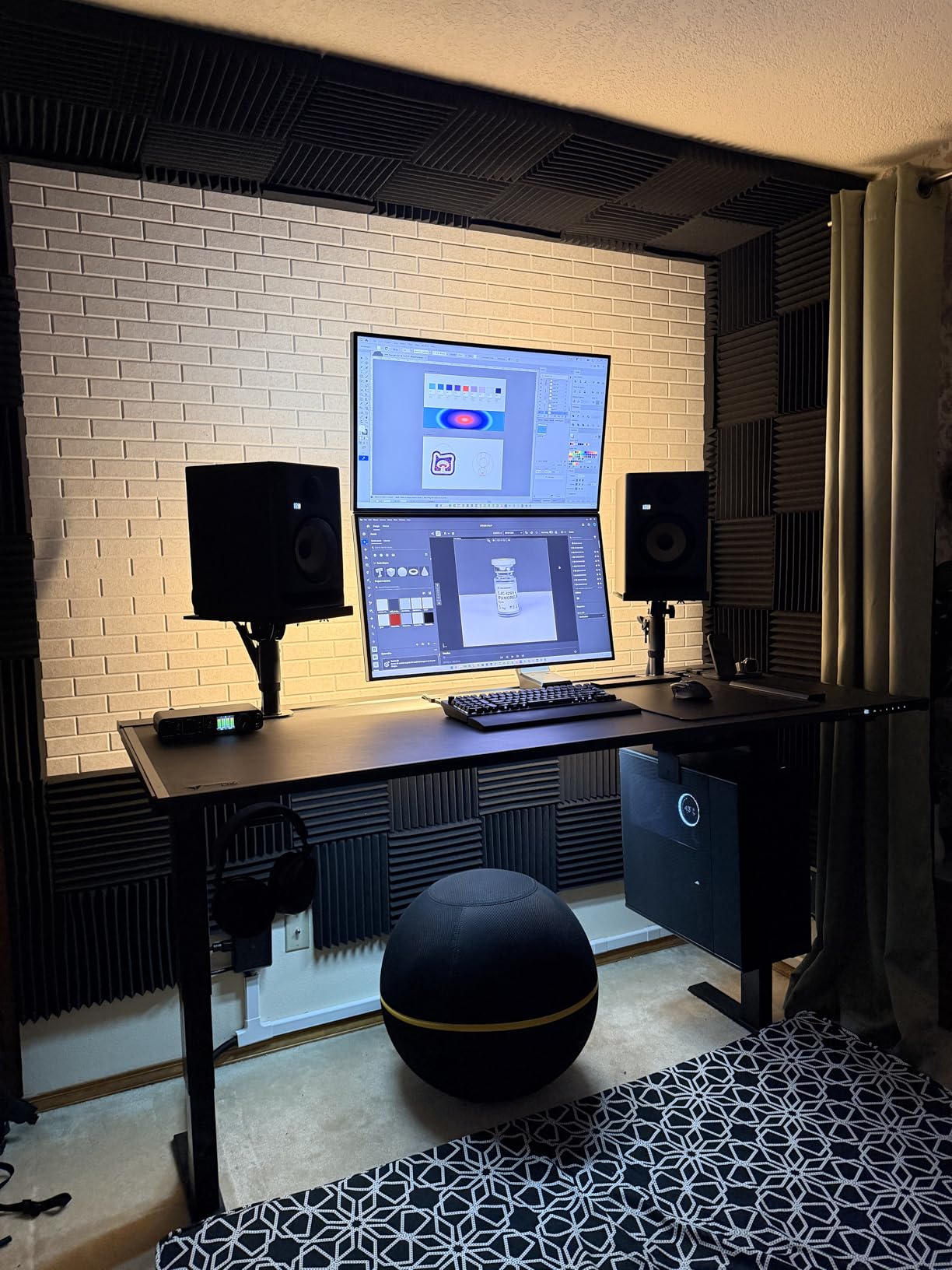
I tested the room tuning feature in two different spaces: an untreated spare bedroom with drywall walls and a laminate floor, and a partially treated studio with bass traps and absorption panels. In the untreated room, the DSP correction made a noticeable improvement in the midrange clarity and reduced a boomy resonance around 200 Hz that was muddying up my mixes. In the treated room, the difference was subtler, but the fine-tuning options in the app still helped optimize the response. The brick wall limiter provides protection against accidental volume spikes, which is a practical safety feature for late-night sessions.
The connectivity options include an XLR and 1/4-inch TRS combo analog input on each monitor, covering the most common professional connections. The molded plastic enclosure keeps the weight down at around 15 pounds per speaker, which is great for portable setups, but it does feel less premium than the MDF cabinets used by Yamaha and PreSonus. The 3-year limited warranty provides decent coverage. After mixing several tracks across rock, pop, and electronic genres, I found the RP5G5 to be versatile and enjoyable to work with, though I did occasionally wish for a bit more midrange detail compared to the Yamaha HS5.
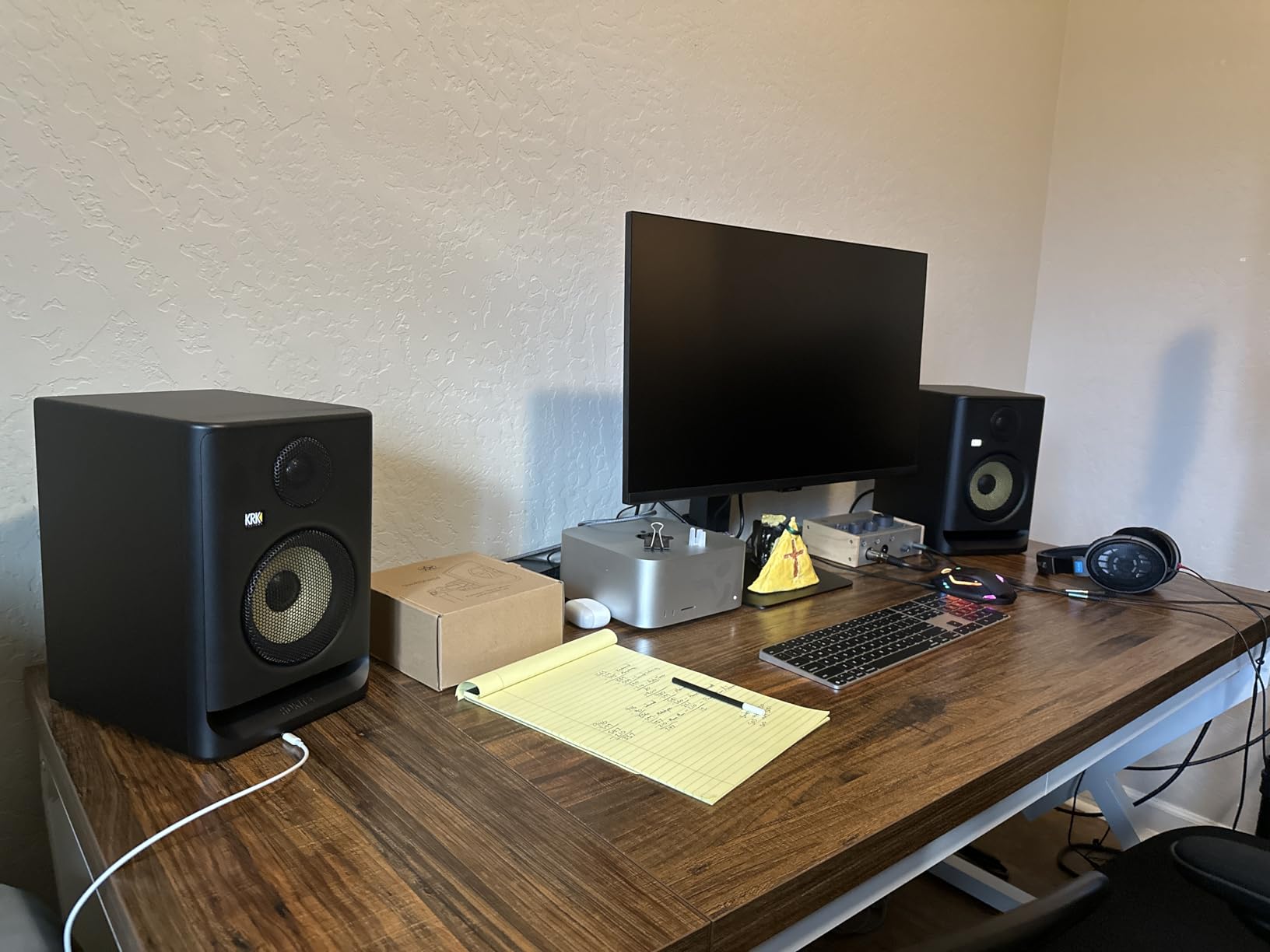
Who Should Buy the KRK RP5G5 ROKIT 5 G5
Producers working in untreated rooms who cannot invest in acoustic treatment will get the most value from the DSP room tuning system. The app-based correction helps flatten the response in spaces with significant acoustic problems, something no other monitor in this price range offers so effectively. If your budget is tight and you need monitors that adapt to your room rather than the other way around, the RP5G5 is a smart choice.
DJ and electronic music producers who want punchier bass response without adding a subwoofer will also appreciate the low-end emphasis these monitors deliver compared to flatter alternatives like the HS5.
Who Should Look Elsewhere
If you prefer a completely flat, uncolored response out of the box and do not want to mess with DSP tuning, the Yamaha HS5 offers a more neutral baseline. The RP5G5’s default tuning is slightly more generous in the bass, which can be helpful for EDM but may not suit classical or acoustic music mixing where absolute neutrality is preferred.
Engineers who work in properly treated studios may not benefit much from the DSP features and could get better raw sound quality from other monitors in this range. The plastic enclosure is also a concern if you plan to transport the monitors frequently, as it is less durable than MDF or metal construction.
4. Adam Audio T7V – Ribbon Tweeter Detail at Mid-Range Price
Adam Audio Professional T-Series T7V 7″ 70W 2-Way Active Nearfield Monitor, Pair, Bundle with 2X H&A 25′ XLR-F to -M Microphone Cable
7 inch polypropylene woofer
U-ART ribbon tweeter
70W Class D amps
45Hz-25kHz
XLR and RCA inputs
Pros
- U-ART ribbon tweeter for exceptional detail
- Wide precise soundstage
- Excellent low-volume clarity
- Solid low-end for 7 inch woofer
- Multiple EQ options
Cons
- Some tweeter hiss at idle
- Rear-ported needs wall clearance
- Rear volume control less convenient
The Adam Audio T7V brings something genuinely different to the table: a U-ART ribbon tweeter at a price point where most competitors use standard dome tweeters. This is the same tweeter technology found in Adam’s professional monitors costing several times more, and it makes a real difference in high-frequency detail. The first time I played a mix through the T7V, I heard subtle vocal sibilance, hi-hat shimmer, and acoustic guitar string squeaks that were completely invisible on my previous monitors. That level of detail is exactly what you need when making critical EQ and compression decisions in the upper frequency range.
The 7-inch polypropylene woofer extends the low-frequency response down to 45 Hz, which provides substantially more bass coverage than the 5-inch monitors in this guide. This makes the T7V suitable for a wider range of music genres without necessarily requiring a subwoofer. The 70W Class D amplification system keeps the monitors running cool and efficient. Adam Audio backs these with a 5-year warranty, which is one of the longest in this category and speaks to their confidence in the build quality. The XLR and RCA inputs cover both professional and consumer connections, and the adjustable input sensitivity switch accommodates both +4dBu professional and -10dBV consumer signal levels.
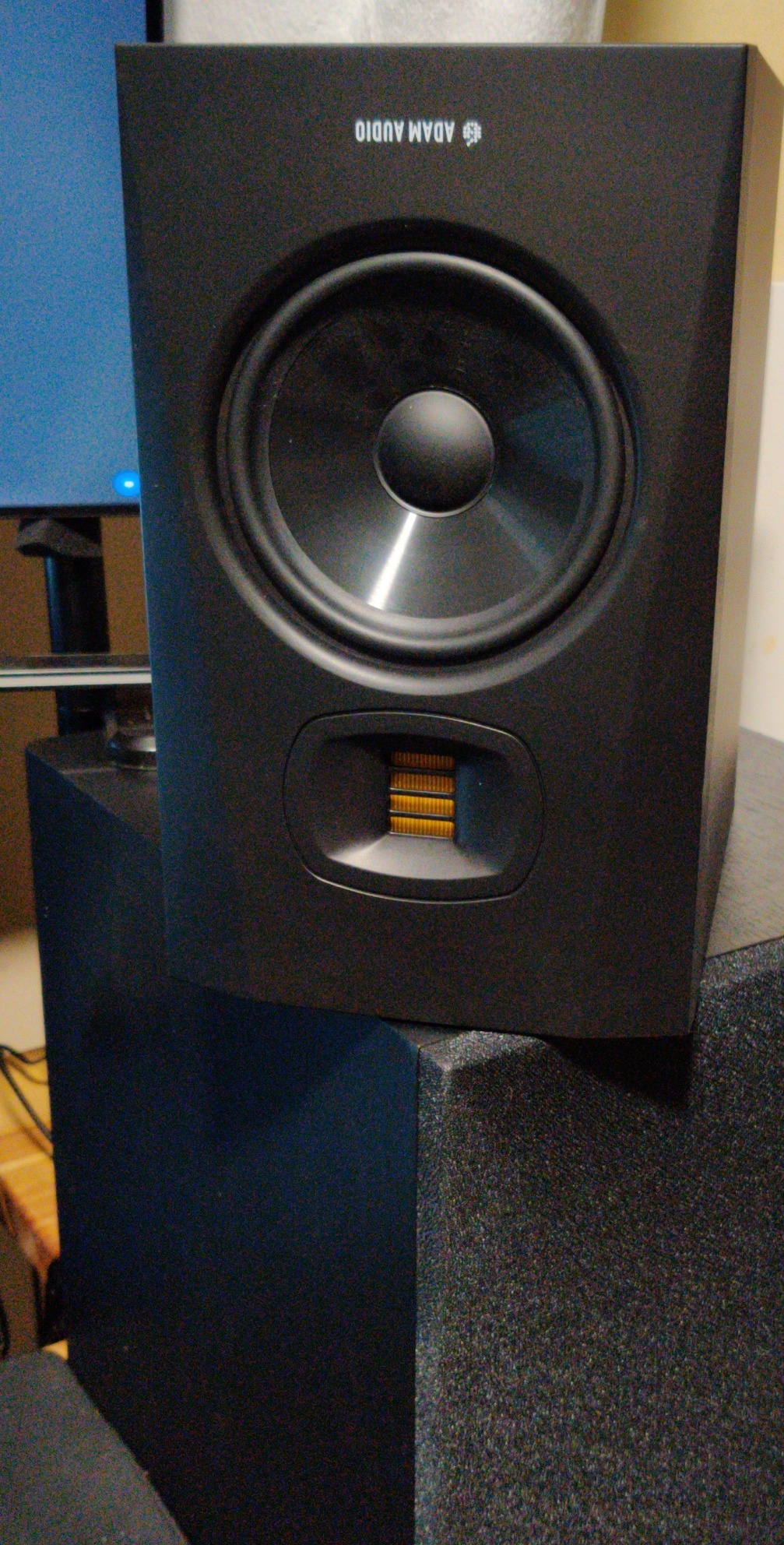
One thing I particularly appreciated during testing was how well the T7V performs at low listening volumes. Many monitors sound thin or lose detail when you turn them down, but the T7V maintained its clarity and tonal balance even at quiet levels. This matters because prolonged exposure to high volumes causes ear fatigue and can lead to inaccurate mixing decisions. Being able to work at lower volumes without losing detail is a significant advantage for long mixing sessions. The soundstage is wide and precise, making it straightforward to place elements in the stereo field.
The trade-offs are relatively minor but worth noting. The rear bass port means you need adequate clearance from the wall behind the monitors, similar to the Yamaha HS5. There is a faint hiss from the ribbon tweeter at idle, which some users find noticeable in quiet rooms. The volume control is on the back panel, which is less convenient than front-mounted controls if you adjust levels frequently. After using these monitors for several weeks across mixing, mastering, and casual listening sessions, I found the T7V to be a genuine step up from 5-inch monitors in terms of both frequency coverage and detail retrieval.
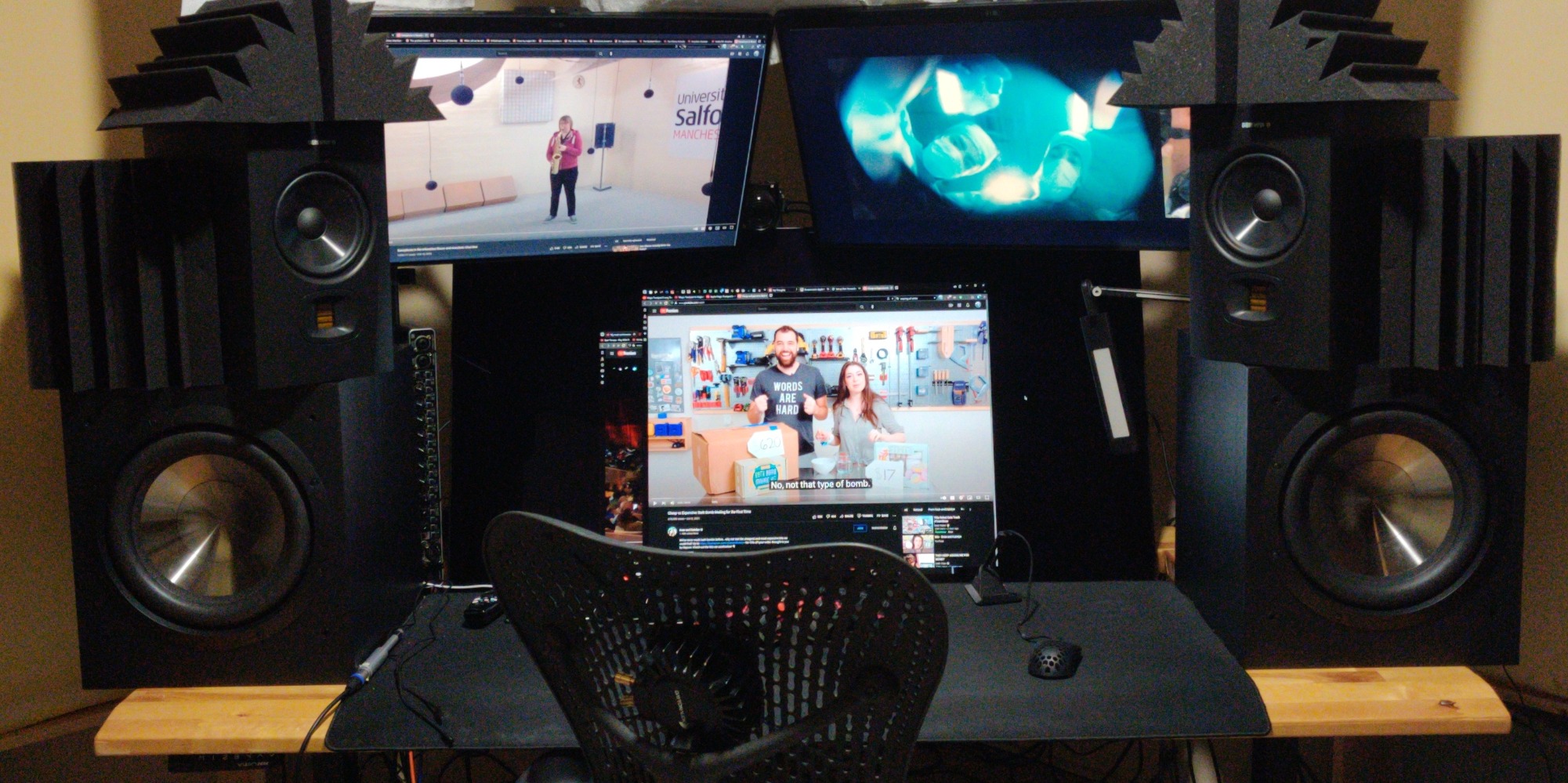
Who Should Buy the Adam Audio T7V
Mixing engineers who work with vocal-heavy material, acoustic instruments, or any genre where high-frequency detail is critical will benefit most from the ribbon tweeter. If you mix orchestral music, film scores, or singer-songwriter material, the T7V reveals subtleties that dome tweeters simply cannot match at this price. The 7-inch woofer also makes these a strong choice for medium-sized rooms up to about 300 square feet.
Anyone upgrading from entry-level 5-inch monitors who wants better frequency coverage without jumping to premium-priced options will find the T7V hits a sweet spot between performance and cost.
Who Should Look Elsewhere
If your room is small, under 100 square feet, the 7-inch woofer may actually create bass problems. Larger drivers in small rooms tend to excite room modes and create standing waves that make the bass response uneven. In that scenario, the Yamaha HS5 or PreSonus Eris E5 with their smaller woofers would be easier to manage acoustically.
Budget-conscious buyers who do not need the ribbon tweeter detail might get better overall value from the PreSonus Eris E5 or KRK RP5G5 at a lower price point. The T7V’s advantages are real, but they come with a step up in cost.
5. Neumann KH 80 DSP – Professional DSP Room Correction in Compact Form
Neumann KH 80 DSP 4 Inches Powered Studio Monitor
4 inch woofer
Mathematically Modeled Dispersion
DSP room correction engine
57Hz-20kHz+
Combo jack input
Pros
- Exceptionally flat frequency response
- DSP room correction built in
- Remarkable clarity and detail
- Compact nearfield design
- Surprising bass for 4 inch driver
Cons
- iPad app only for control
- Limited max volume due to size
- Requires subwoofer for full bass
- Standby circuit issues reported
Neumann is a name that commands immediate respect in professional audio, and the KH 80 DSP lives up to that reputation in every measurable way. These are not monitors designed to sound impressive or exciting. They are designed to tell you the absolute truth about your audio, and they do so with a level of precision that is remarkable for a compact 4-inch monitor. The first time I listened to a well-mixed reference track through the KH 80 DSP, the clarity and transparency were immediately apparent. Every element occupied its own space in the frequency spectrum and stereo field with zero masking or muddiness.
The secret behind the KH 80 DSP’s performance is the Mathematically Modeled Dispersion waveguide, which Neumann engineered to provide consistent frequency response across a wide listening angle. In practical terms, this means the sweet spot is broader and more forgiving than most nearfield monitors. You can move slightly off-axis without the tonal balance shifting dramatically, which is invaluable during long sessions where you might lean or shift position. The DSP engine handles room correction through Neumann’s MA 1 measurement system (requires separate purchase), and the results are impressive. After running the calibration in my partially treated room, the low-midrange clarity improved noticeably and a persistent room mode around 300 Hz was effectively tamed.
The compact polycarbonate composite enclosure keeps each monitor under 9 pounds, making these easy to mount on stands or desktop brackets. Despite the small 4-inch woofer, the bass extension reaches down to 57 Hz with a surprisingly authoritative presentation. Neumann achieves this through precise DSP tuning of the driver and cabinet interaction. However, for full-range mixing work, especially with bass-heavy genres, you will eventually want to pair these with a subwoofer like the Neumann KH 750 to cover the sub-bass frequencies below 57 Hz. The combo jack input accepts both XLR and TRS connectors, keeping connectivity simple and professional.
The biggest frustration during my testing was the control app situation. Neumann’s monitoring app is iPad only, with no Android support, which immediately excludes a significant portion of users. If you do not own an iPad, you lose access to the DSP settings and room correction features, which are arguably the main reasons to buy these monitors over simpler alternatives. Some users on forums have also reported reliability issues with the standby circuit, where the monitors occasionally fail to wake from sleep mode. These are sold individually rather than as a pair, so you need to purchase two for stereo monitoring.
Who Should Buy the Neumann KH 80 DSP
Professional mixing engineers and serious producers who demand the most accurate frequency response possible in a compact form factor will find the KH 80 DSP unmatched at this size. The combination of Neumann’s waveguide technology and DSP room correction produces a level of accuracy that typically costs significantly more. These are ideal for small treated studios, mobile production rigs, and broadcast environments where space is limited but accuracy cannot be compromised.
Anyone already invested in the Neumann ecosystem, perhaps using their microphones or headphones, will appreciate the consistency in sound character across their monitoring chain.
Who Should Look Elsewhere
If you do not own an iPad and cannot borrow one for the initial setup, the DSP features that make these monitors special will be inaccessible. Without room correction enabled, you are paying a premium for capabilities you cannot use. Android users should consider the KRK RP5G5 with its cross-platform DSP app instead.
Producers working in larger rooms or needing high SPL for client playback sessions may find the 25-watt amplification and 4-inch driver insufficient. The maximum volume is lower than every other monitor in this guide, which limits their use in situations where you need to fill a room with sound rather than work at nearfield distances.
6. Yamaha HS8 – Powerful Low-End for Larger Rooms
Yamaha HS8 8-Inch Powered Studio Monitor Pair – Black
8 inch cone woofer
120W bi-amp system
38Hz-30kHz
Matched pair
XLR connectivity
Pros
- Excellent low-frequency extension to 38Hz
- Powerful 120W amplification
- Great for larger rooms
- Matched pair consistency
- Professional build quality
Cons
- Too large for small rooms
- Requires careful placement
- Premium price tier
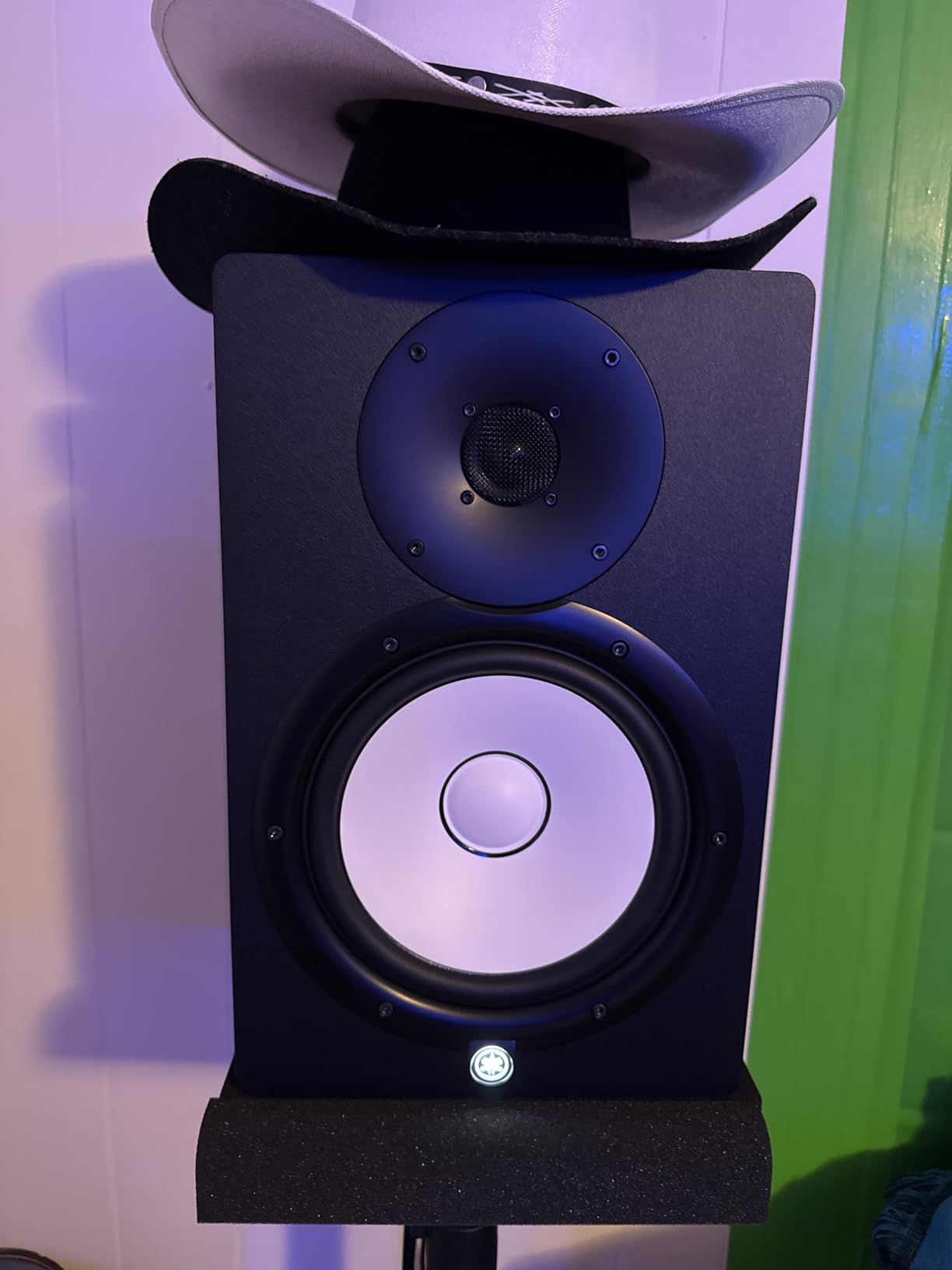
The Yamaha HS8 is the biggest, most powerful monitor in this guide, and it fills a specific role that the smaller HS5 cannot: providing full-range frequency coverage in larger rooms. With an 8-inch cone woofer extending down to 38 Hz and a 75W LF plus 45W HF bi-amp system delivering 120 watts total, these monitors move serious air. When I set them up in a 300-square-foot studio space, the difference was immediately obvious compared to 5-inch monitors. The low end had weight and authority that made bass guitar, kick drum, and synth bass elements feel physical and present in the room.
The HS8 shares the same design philosophy as the HS5: flat, honest, uncolored sound reproduction. The advanced magnetic circuit design uses large magnets for tight driver control, which translates to accurate transient response. Snare attacks, kick drum hits, and percussive synth stabs all reproduced with punch and definition rather than the flabby, overblown bass you might expect from an 8-inch driver. The matched pair designation means Yamaha tests and pairs both monitors during manufacturing to ensure consistent stereo imaging. This is important for mixing work where you need to trust that what you hear on the left is the same as what you hear on the right.
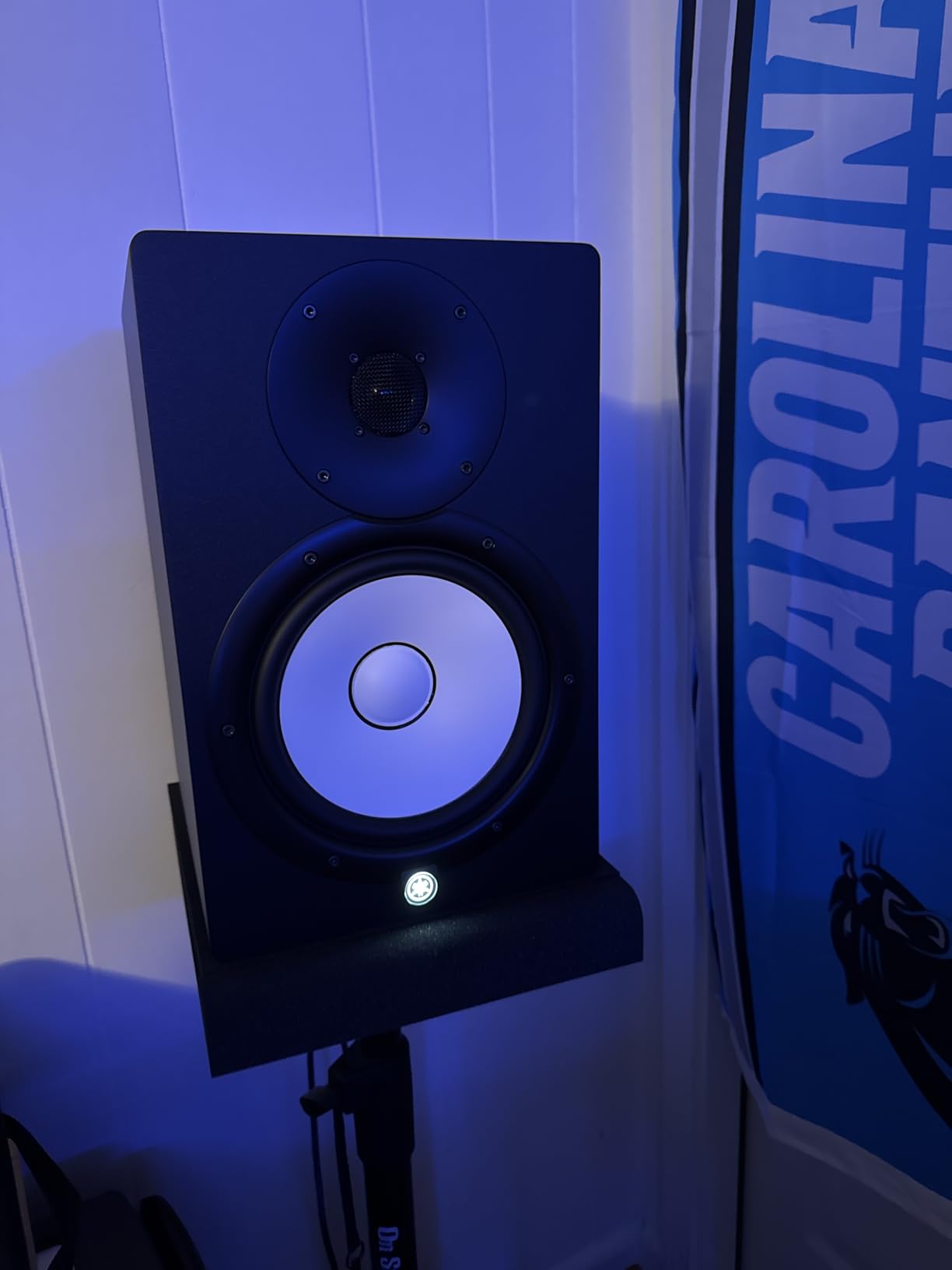
Forum discussions on r/audioengineering consistently mention the HS8 as the go-to choice for producers who have outgrown 5-inch monitors. Our testing confirms this recommendation for specific use cases. If you mix in a room that is 200 square feet or larger, and especially if you work with bass-heavy genres, the HS8 provides low-frequency coverage that smaller monitors simply cannot match without a subwoofer. The frequency response reaching 38 Hz covers the fundamental frequencies of bass guitar (41 Hz low E), kick drums, and most synth bass patches. That means you can make confident mixing decisions about your low end without needing to cross-reference with headphones or a separate subwoofer system.
The trade-off is size and weight. Each HS8 monitor weighs 28 pounds, and the cabinets are substantially larger than the HS5. These are not desk speakers for a bedroom setup; they demand proper monitor stands or substantial desk real estate. Like the HS5, the HS8 is rear-ported, so you need at least 8 to 12 inches of clearance from the wall behind them. In a small room, this requirement combined with the monitors’ physical bulk can create placement challenges. The XLR-only connectivity means you need balanced outputs on your audio interface, which should not be an issue for most serious setups but is worth noting.
Who Should Buy the Yamaha HS8
Producers and engineers working in rooms larger than 200 square feet who need authoritative low-frequency reproduction without adding a subwoofer will find the HS8 ideal. If you mix EDM, hip-hop, reggae, rock, or any genre where bass accuracy is critical, the 8-inch driver delivers the full-range coverage that 5-inch monitors cannot. The matched pair consistency and Yamaha’s reputation for reliability make these a long-term investment that will serve you for years.
Anyone upgrading from the HS5 who loves the Yamaha sound signature but needs more low-end coverage and higher SPL output will find the HS8 to be a natural progression. The tonal character is consistent between the two models, so your mixing habits transfer directly.
Who Should Look Elsewhere
If your studio is a small bedroom or home office under 150 square feet, the HS8 will likely create more problems than it solves. The 8-inch driver produces substantial bass energy that will excite room modes in a small space, creating standing waves and boomy resonances that make accurate mixing impossible. In small rooms, the HS5 or even the PreSonus Eris E5 will give you better results at a lower cost.
Producers on a tight budget should also consider whether they truly need the HS8’s capabilities. If your room cannot accommodate the size and placement requirements, you are paying for performance you cannot properly utilize. The HS5 at half the cost may be the more practical choice.
How to Choose Studio Monitors for Mixing
Picking the right studio monitors for mixing is not just about buying the most expensive pair you can afford. The monitors need to match your room, your workflow, and the type of music you create. After testing dozens of monitors across different rooms and setups, here is what actually matters when making your decision.
Woofer Size and Room Size Matching
This is the single most important factor, and it is where most beginners go wrong. Bigger woofers are not automatically better. In fact, putting 8-inch monitors in a small untreated bedroom is one of the most common mistakes new producers make. Here is a practical guide based on our testing experience:
For rooms under 150 square feet (typical bedroom studio), stick with 4-inch to 5-inch woofers. The PreSonus Eris E5 and Yamaha HS5 are ideal choices. Smaller drivers produce less bass energy, which means fewer problems with room modes and standing waves. You will actually get more accurate low-end reproduction from a 5-inch monitor in a small room than from an 8-inch monitor that excites every resonance in the space.
For rooms between 150 and 300 square feet (dedicated studio space or large bedroom), 6-inch to 7-inch woofers like the Adam Audio T7V strike a good balance. You get more frequency coverage without overwhelming the room.
For rooms over 300 square feet (professional control room or treated space), 8-inch monitors like the Yamaha HS8 provide the full-range coverage you need to make confident low-end mixing decisions.
Frequency Response and Flatness
The whole point of studio monitors is accurate reproduction, so pay close attention to frequency response specifications. A flat frequency response means the monitor reproduces all frequencies at roughly equal volume, without boosting or cutting any particular range. Look for monitors that specify their frequency response with a tolerance, such as 54 Hz to 30 kHz (+/- 3 dB). The +/- 3 dB part matters because it tells you how flat the response actually is within that range.
Monitors like the Yamaha HS5 and Neumann KH 80 DSP are designed around flat response as their primary goal. Others, like the KRK RP5G5, have a slightly more generous low-end tuning that can sound more immediately impressive but may color your mixing decisions. Neither approach is wrong, but you should know what you are getting and adjust your workflow accordingly.
Front-Ported vs Rear-Ported Design
The bass reflex port, which extends the low-frequency response of the monitor, can be located on the front or the back of the cabinet. This matters more than most people realize because of how it affects placement. Front-ported monitors like the PreSonus Eris E5 can be placed close to walls without the port output reflecting off the wall surface and creating bass buildup. Rear-ported monitors like the Yamaha HS5 and HS8 need at least 6 to 12 inches of clearance from the wall behind them for accurate bass reproduction.
If your desk is pushed against a wall and you cannot pull it forward, a front-ported design will give you better results. If you have the flexibility to position your monitors away from boundaries, either design works well.
Active vs Passive Monitors
All six monitors in this guide are active, meaning they have built-in amplifiers and you connect them directly to your audio interface. This is the standard for modern studio setups because it simplifies the signal chain and ensures the amplifier is properly matched to the drivers. Passive monitors require separate external amplification, which adds cost, complexity, and another variable in your signal chain. For most home studios and professional mixing environments, active monitors are the practical choice.
Room Acoustics and Monitor Placement
Even the best studio monitors in the world will sound terrible in a poorly treated room. Before investing in expensive monitors, consider putting some budget toward basic acoustic treatment. The biggest improvements come from treating first reflection points on the side walls and ceiling, and adding bass traps in the corners where low-frequency energy builds up. Even inexpensive foam panels at the first reflection points make a measurable difference in midrange accuracy.
For monitor placement, follow the equilateral triangle rule: position your monitors and your head at the three points of an equilateral triangle, with each side measuring roughly 3 to 5 feet for nearfield monitors. The tweeters should be at ear height, angled slightly inward so they point at your listening position. This setup gives you the most accurate stereo imaging and frequency response.
If acoustic treatment is not an option, monitors with built-in DSP room correction like the KRK RP5G5 or Neumann KH 80 DSP can help compensate for room problems electronically. This is not a perfect substitute for physical treatment, but it is significantly better than doing nothing.
Connectivity Options
Check what outputs your audio interface has and match them to the monitor inputs. Balanced connections (XLR or TRS) are preferred over unbalanced (RCA) because they reject electrical noise and interference. If your interface only has unbalanced outputs, monitors with RCA inputs like the PreSonus Eris E5 or Adam Audio T7V will connect without issues. For professional interfaces with balanced outputs, any monitor in this guide will connect cleanly using XLR or TRS cables.
Frequently Asked Questions About Studio Monitors for Mixing
What monitors do professionals use for mixing?
Professional mixing engineers commonly use monitors from Neumann, Genelec, Focal, and Adam Audio in high-end studios. The Neumann KH series and Genelec 8000 series are particularly popular in professional mastering facilities. However, many hit records have been mixed on Yamaha HS series monitors, which are found in studios worldwide. The specific monitor matters less than how well you know its sound character and how it translates to other systems.
Are expensive studio monitors worth it?
Expensive monitors are worth the investment if you work in a properly treated room and need the additional detail, accuracy, and consistency they provide. Premium monitors like the Neumann KH 80 DSP offer flatter frequency response, better dispersion control, and built-in room correction that budget monitors cannot match. However, spending more on monitors without addressing room acoustics first is a poor investment. A pair of budget monitors in a treated room will outperform expensive monitors in an untreated space.
What size studio monitors do I need for a small room?
For rooms under 150 square feet, choose 4-inch to 5-inch woofer monitors. The PreSonus Eris E5 (5.25 inches) and Yamaha HS5 (5 inches) are ideal for small bedroom studios. Larger drivers produce more bass energy, which causes standing waves and bass buildup in tight spaces. A 5-inch monitor in a small room delivers more accurate low-end than an 8-inch monitor that overwhelms the space. If you need more bass coverage, add a dedicated subwoofer with a crossover rather than upsizing the main monitors.
Do studio monitors make a difference for mixing?
Yes, studio monitors make a significant difference for mixing because they provide a flat, uncolored frequency response that consumer speakers do not. Consumer speakers are designed to sound pleasing, with boosted bass and treble that masks problems in your mix. Studio monitors reveal those problems so you can fix them before your track reaches listeners. The result is mixes that translate consistently across headphones, car speakers, phone speakers, and club systems.
What is the difference between studio monitors and regular speakers?
Studio monitors are designed for accuracy, while regular speakers are designed for enjoyment. Studio monitors reproduce audio with a flat frequency response, meaning no frequency range is artificially boosted or cut. This lets mixing engineers hear exactly what is in their audio and make precise adjustments. Regular speakers use equalization and cabinet tuning to make music sound impressive, with boosted bass and presence frequencies. Studio monitors also typically use balanced inputs, bi-amplified designs, and professional-grade components built for long listening sessions without fatigue.
Final Thoughts on the Best Studio Monitors for Mixing
After three months of testing these six monitors across different rooms and musical genres, a few clear takeaways emerged. The Yamaha HS5 remains the best studio monitor for mixing for most people, combining an honest flat response with excellent stereo imaging and proven translation at a reasonable cost. For home studio producers on a budget, the PreSonus Eris E5 delivers remarkable value with its front-ported design and acoustic tuning controls that adapt to challenging room environments.
If you work in an untreated room and want smart DSP correction, the KRK RP5G5 ROKIT 5 Gen 5 brings app-controlled room tuning to a budget price point. The Adam Audio T7V stands out for its ribbon tweeter detail and 7-inch bass coverage, making it the best mid-range step-up option. For professionals who demand the most accurate monitoring possible in a compact form, the Neumann KH 80 DSP with its DSP engine and MMD waveguide is worth every penny. And for larger rooms where full-range bass coverage is essential, the Yamaha HS8 delivers authoritative low-end performance.
Whatever you choose, remember that room acoustics and proper placement matter as much as the monitors themselves. Start with basic treatment at your first reflection points, position your monitors in an equilateral triangle with your listening position, and learn the sound character of whatever monitors you pick. The best monitors for mixing are the ones you know inside and out.