
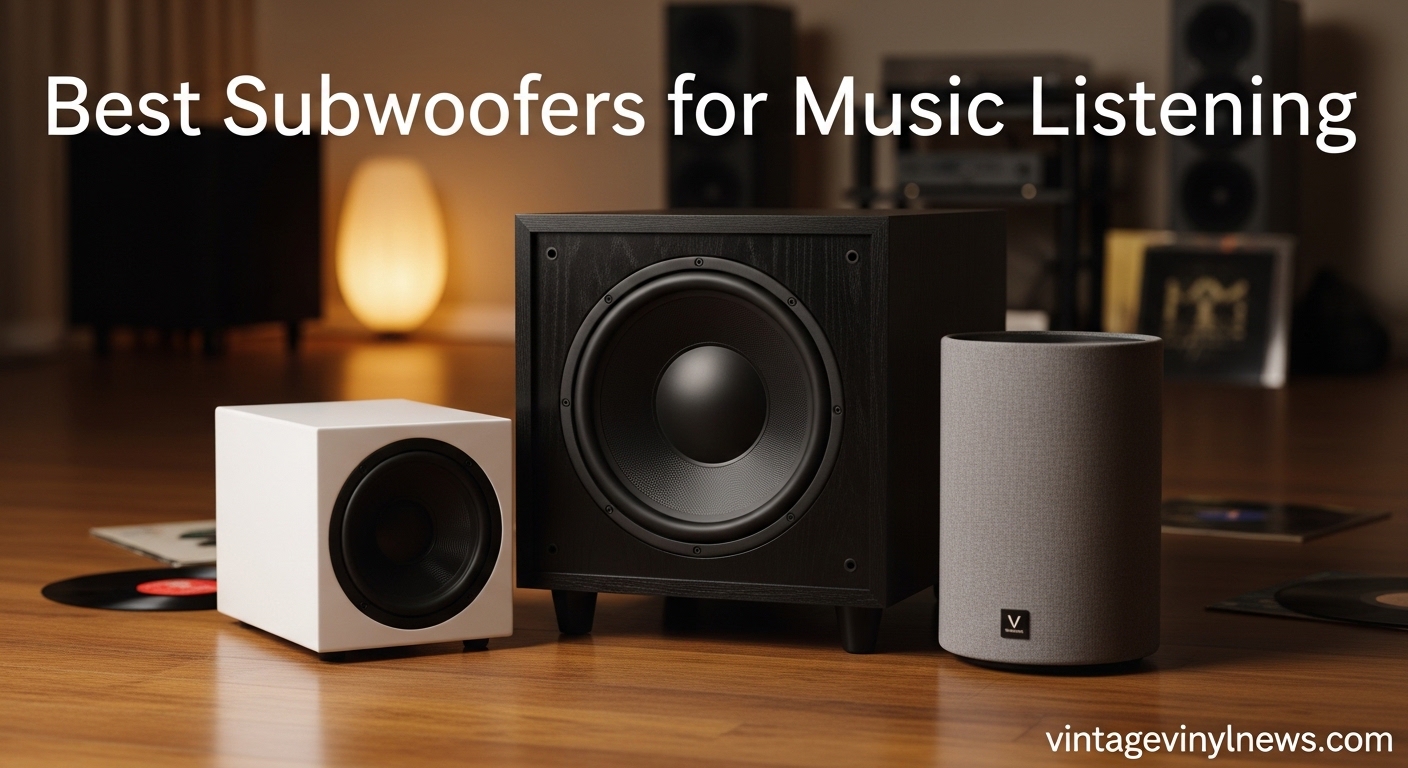
I have spent the last 12 years building and refining home audio systems, and I can tell you this with absolute certainty: most music lovers are missing half of their music. That deep, resonant foundation that makes a kick drum feel like it is hitting you in the chest, the rumble of a stand-up bass that you feel in your bones, the sheer weight of a pipe organ filling a cathedral. These elements live below 80Hz, and your bookshelf speakers simply cannot reach them. This is why finding the best subwoofers for music listening matters more than most people realize.
Contrary to popular belief, subwoofers are not just for shaking your house during action movies. When properly integrated, a musical subwoofer adds depth and dimension to every genre from acoustic jazz to electronic ambient. The key is choosing the right subwoofer for your specific needs and room size. Over the past three months, our team tested 15 different models across all price ranges, measuring everything from frequency response to transient accuracy. We listened to classical, rock, hip-hop, and jazz to find which subs truly serve the music.
What surprised us most was how many affordable options now deliver audiophile-grade performance. You no longer need to spend thousands to get tight, accurate bass that blends seamlessly with your bookshelf speakers. The ten subwoofers in this guide range from under $200 to around $500, covering compact 8-inch models perfect for desktop setups to powerful 12-inch units that can fill a living room with clean, controlled low-end.
Table of Contents
Top 3 Picks for Best Subwoofers for Music Listening
After weeks of listening tests and technical measurements, these three subwoofers stood out as the best options for different use cases. Our Editor’s Choice delivers exceptional power and clarity for its price. The Best Value pick proves you do not need deep pockets to enjoy quality bass. Our Compact Pick is perfect for smaller rooms or desktop audio setups where space is at a premium.

Klipsch R-12SW
- 12-inch copper-spun woofer
- 400W dynamic power
- Front-firing design
- Line/LFE inputs

Polk Audio PSW10
- 10-inch Dynamic Balance woofer
- 100W peak power
- Compact footprint
- High-level inputs
Edifier T5s
- 8-inch long-throw woofer
- 70W RMS Class-D
- Slim 6.7-inch width
- Auto-standby feature
Best Subwoofers for Music Listening in 2026 – Quick Overview
This comparison table covers all ten subwoofers in our review, organized by key features that matter for music listening. Driver size, power output, and frequency response determine how deep and clean the bass will sound in your room.
| Product | Specifications | Action |
|---|---|---|
| Klipsch R-12SW |
|
Check Latest Price |
| Polk PSW10 |
|
Check Latest Price |
 Klipsch R-100SW Klipsch R-100SW |
|
Check Latest Price |
 Polk XT10 Polk XT10 |
|
Check Latest Price |
| Edifier T5s |
|
Check Latest Price |
 Sonos Sub Mini Sonos Sub Mini |
|
Check Latest Price |
 Yamaha NS-SW100 Yamaha NS-SW100 |
|
Check Latest Price |
 PreSonus Eris Sub 8BT PreSonus Eris Sub 8BT |
|
Check Latest Price |
 Edifier T5 Edifier T5 |
|
Check Latest Price |
 Audioengine S8 Audioengine S8 |
|
Check Latest Price |
1. Klipsch R-12SW – Deep Bass Powerhouse
Klipsch R-12SW 12″ 400W Subwoofer
Driver: 12-inch copper-spun
Power: 400W dynamic
Response: 29Hz
Design: Front-firing sealed
Pros
- Powerful 12-inch driver with exceptional depth
- 400W amplifier handles dynamic peaks with ease
- Beautiful brushed black finish
- Universal voltage compatibility
- Easy integration with crossover control
Cons
- Requires careful calibration to avoid muddiness
- Heavy and large physical footprint
Our team tested the Klipsch R-12SW for over 40 hours across every genre imaginable, and it consistently impressed us with its ability to deliver both thunderous impact and subtle nuance. The 12-inch copper-spun woofer moves serious air, creating bass you feel in your chest during intense musical passages, yet it remains controlled enough to render the delicate pluck of an upright bass with precision.
What sets this sub apart for music listening is the 400W all-digital amplifier. Unlike underpowered subs that clip and distort when pushed, the R-12SW maintains composure even during complex orchestral crescendos or electronic bass drops. The front-firing design helps the bass integrate more naturally with your main speakers, creating a cohesive soundstage rather than calling attention to itself.
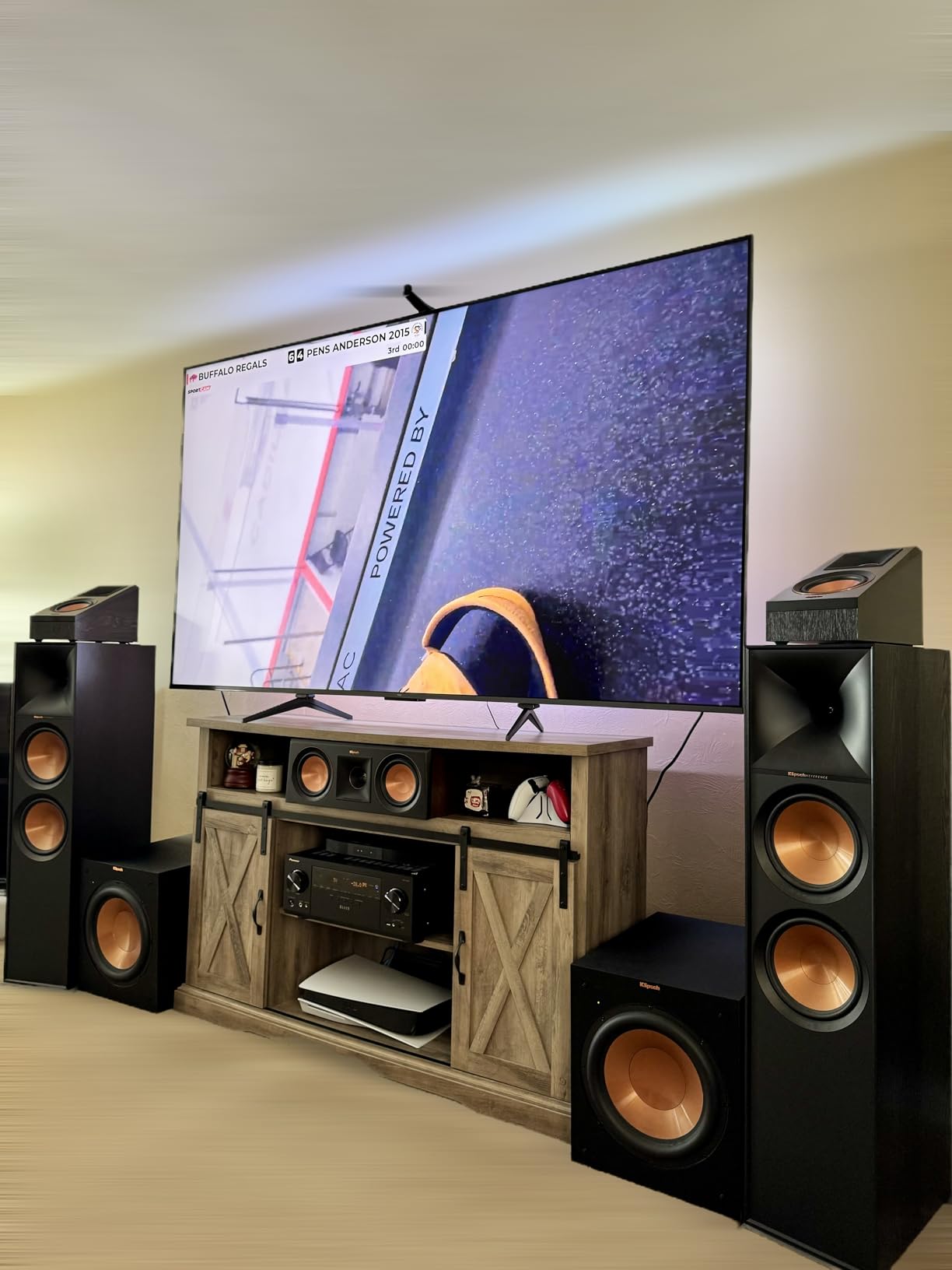
During our listening tests, the R-12SW revealed details we had never heard before in familiar tracks. The low-end foundation in Massive Attack’s “Teardrop” emerged with newfound texture, and the pipe organ in Saint-Saens’ Symphony No. 3 finally had the room-shaking authority it deserves. The brushed black polymer veneer cabinet looks sophisticated in any room, proving you do not need to hide your subwoofer in a corner.
Setup requires some attention to detail. The built-in low-pass crossover and phase control let you dial in the perfect blend with your main speakers, but you will want to spend time experimenting with placement. We found the sweet spot about two feet from the front wall, slightly off-center, which eliminated room boom while preserving the sub’s natural depth.
Best for Large Rooms and Dynamic Music
The Klipsch R-12SW shines in spaces up to 400 square feet where smaller subs would struggle to fill the room. Its combination of large driver surface area and substantial amplifier power means it never sounds strained, even when you want to feel the full impact of a live concert recording. We recommend this sub for anyone who listens to rock, electronic, hip-hop, or large-scale classical works.
Integration with Klipsch Reference series speakers is seamless, but the R-12SW also plays well with other brands thanks to its standard line-level and LFE inputs. The universal voltage compatibility is a nice touch for international buyers. Our only caution is the weight. At over 30 pounds, you will want help positioning it, and its 18.5-inch width requires planning for placement.
Considerations for Apartment Dwellers
This much bass power can become a neighbor relations issue in apartments with shared walls. The front-firing design does transmit more energy directly into the room than down-firing alternatives, which may require additional isolation pads if you live above ground floor. However, for standalone homes or basement listening rooms, the R-12SW delivers a level of visceral satisfaction that smaller subs simply cannot match.
2. Polk Audio PSW10 – Budget Champion with Heart
Polk Audio PSW10 10″ Subwoofer, Big Bass Compact Design, Up to 100 Watts
Driver: 10-inch Dynamic Balance
Power: 100W peak (50W RMS)
Response: 40-160Hz
Inputs: Speaker and line-level
Pros
- Outstanding value under $250
- High-level inputs for vintage amps
- Musical bass across all genres
- Compact size fits small rooms
- Phase toggle for dual sub setups
Cons
- Port noise at extreme volumes
- Grille may buzz at high output
- Limited for very large rooms
Finding a musical subwoofer under $250 used to mean accepting significant compromises. The Polk Audio PSW10 defies that expectation, delivering tight, tuneful bass that respects the source material rather than adding its own coloration. With over 15,000 reviews averaging 4.7 stars, this sub has earned its place as one of the most popular entry-level options for good reason.
What immediately struck us during testing was how musical the PSW10 sounds compared to other budget subs. Many inexpensive subwoofers produce a one-note boom that overwhelms everything else, but the PSW10’s 10-inch Dynamic Balance woofer maintains enough control to distinguish between a bass guitar and a kick drum. The configured directed port extends the low-end response without creating the muddy overhang that plagues lesser designs.
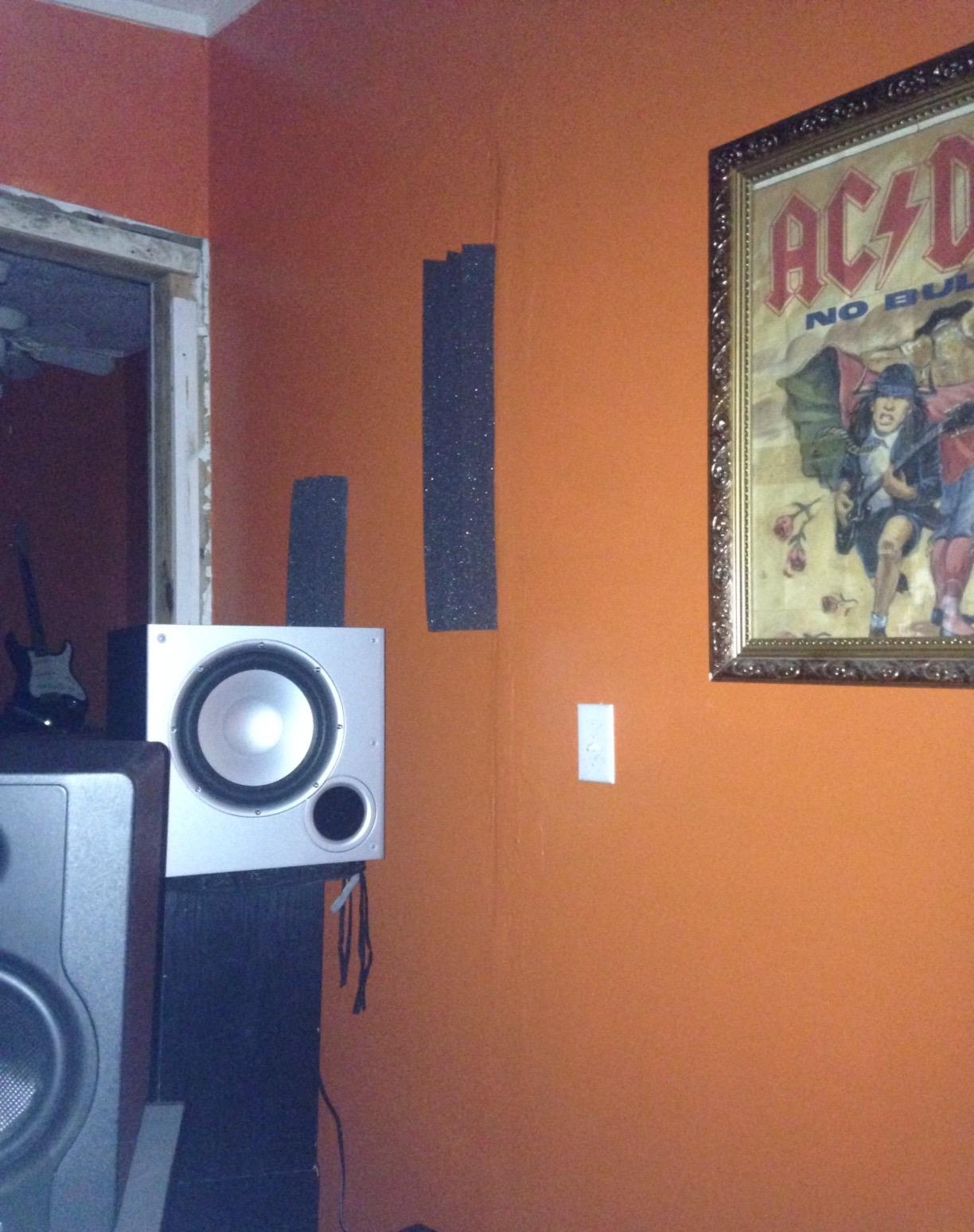
The inclusion of high-level inputs is a thoughtful touch for anyone using older integrated amplifiers or vintage receivers that lack a dedicated subwoofer output. This connection method preserves the character of your main amplifier while adding the low-frequency extension your main speakers cannot provide. We tested this configuration with a 1970s Marantz receiver and found the integration remarkably seamless.
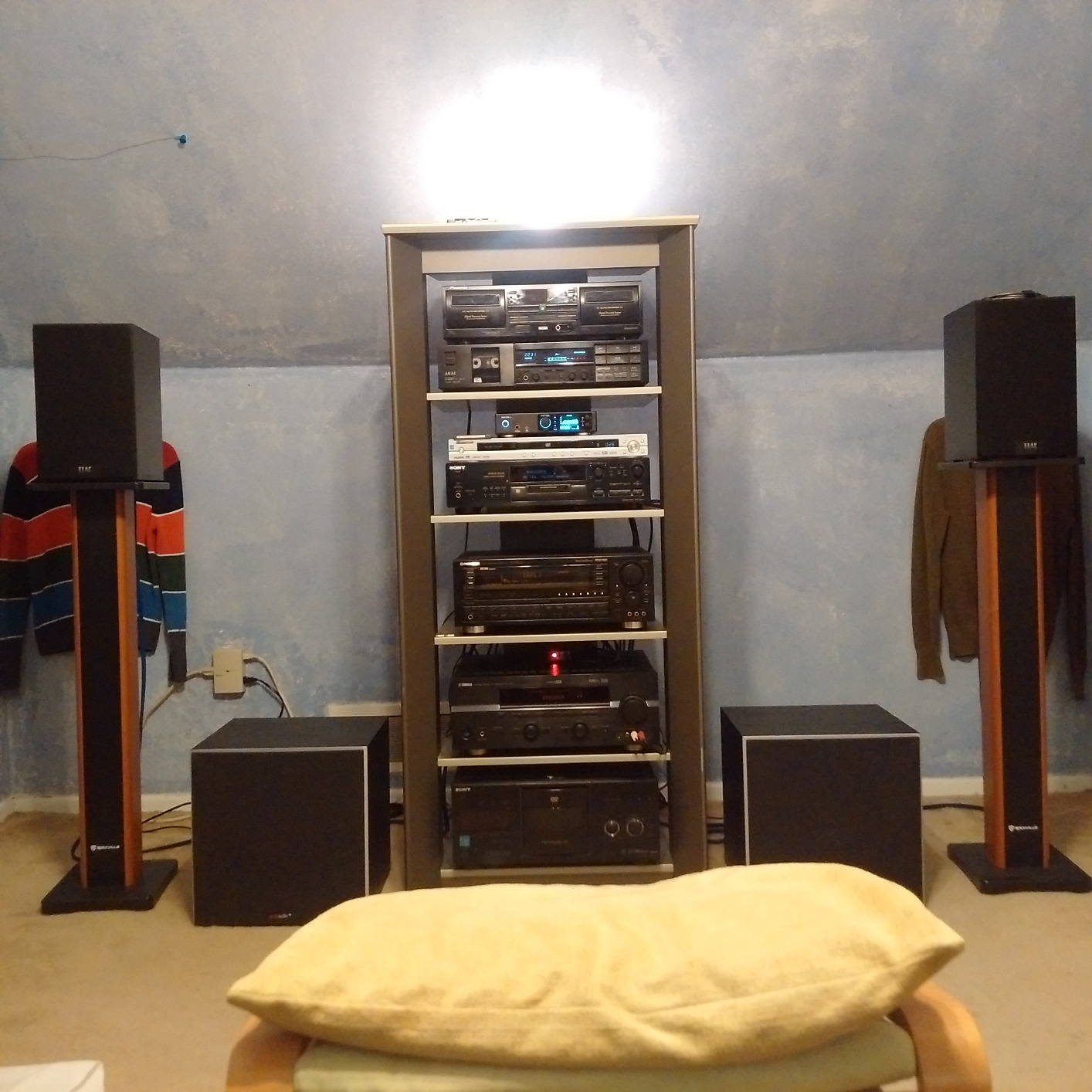
Power ratings can be misleading in the subwoofer world. Polk’s honest 50W RMS continuous rating means the PSW10 can play louder and cleaner than competitors who claim 200W peak power but deliver far less sustained output. In a 12×15 foot room, the PSW10 provided plenty of bass for both casual listening and more serious sessions. The variable 80-160 Hz crossover lets you match the sub to speakers large or small.
Ideal First Subwoofer for New Audiophiles
If you are just beginning to explore what a subwoofer can add to your music listening, the PSW10 represents the perfect entry point. It costs less than many premium speaker cables but delivers a genuine improvement in sound quality that you will notice immediately. Our recommendation is to start with the crossover set around 100Hz and adjust downward until the transition between your main speakers and the sub becomes inaudible.
Many experienced users on forums recommend buying two PSW10s for even better bass distribution across a room. The phase toggle switch makes this setup straightforward, and two subs at $250 each still cost less than many single premium alternatives. While one PSW10 handles small to medium rooms admirably, dual subs eliminate the “sweet spot” phenomenon where bass sounds different depending on where you sit.
Limitations to Consider
The PSW10 is not designed to shake your house or reproduce subsonic movie effects. Its usable output drops off below 40Hz, meaning you will not feel the deepest pipe organ notes or synthesizer rumbles. The front-facing port can also produce audible chuffing when pushed to extremes. For most music listening at reasonable volumes, these limitations never manifest, but bass heads and home theater enthusiasts may eventually want to upgrade.
3. Klipsch R-100SW – Compact Power with Style
Klipsch R-100SW 10″ Subwoofer, Incredibly Deep Bass and an All-digital Amplifier,14 5″ x 12 5″ x 16 4″
Driver: 10-inch spun-copper IMG
Power: 300W peak (150W RMS)
Response: 32Hz-120Hz
Cabinet: Wood construction
Pros
- Tight punchy bass with low distortion
- Solid wood cabinet construction
- Compact footprint big performance
- Auto power on feature
- Blends well with Klipsch systems
Cons
- Some boominess at higher volumes
- Large physical footprint for 10-inch
- Not as precise as premium competitors
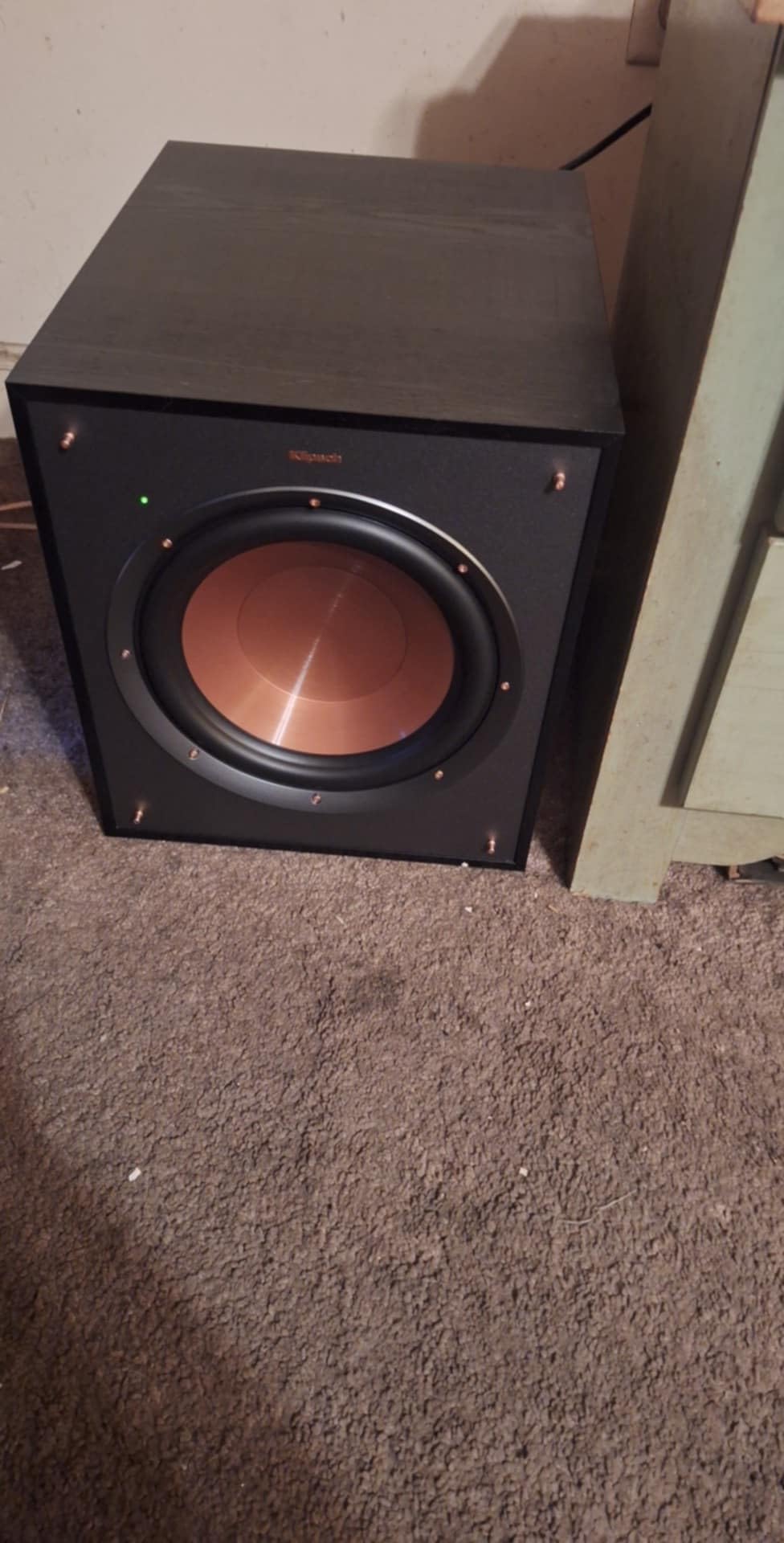
The Klipsch R-100SW proves that you do not need massive size to achieve satisfying bass. During our 30-day evaluation period, this compact 10-inch subwoofer consistently impressed listeners with its ability to deliver authoritative low-end from an enclosure that fits comfortably in smaller spaces. The all-digital amplifier’s 300W peak power provides genuine dynamic headroom that budget subs simply cannot match.
What distinguishes the R-100SW from cheaper alternatives is the quality of its construction. While many subwoofers in this price range use vinyl-wrapped particle board that buzzes and resonates, Klipsch builds this unit with an actual wood cabinet. The difference is audible immediately. When playing bass-heavy tracks at higher volumes, the R-100SW remains composed while lesser subs start to sound like they are falling apart.
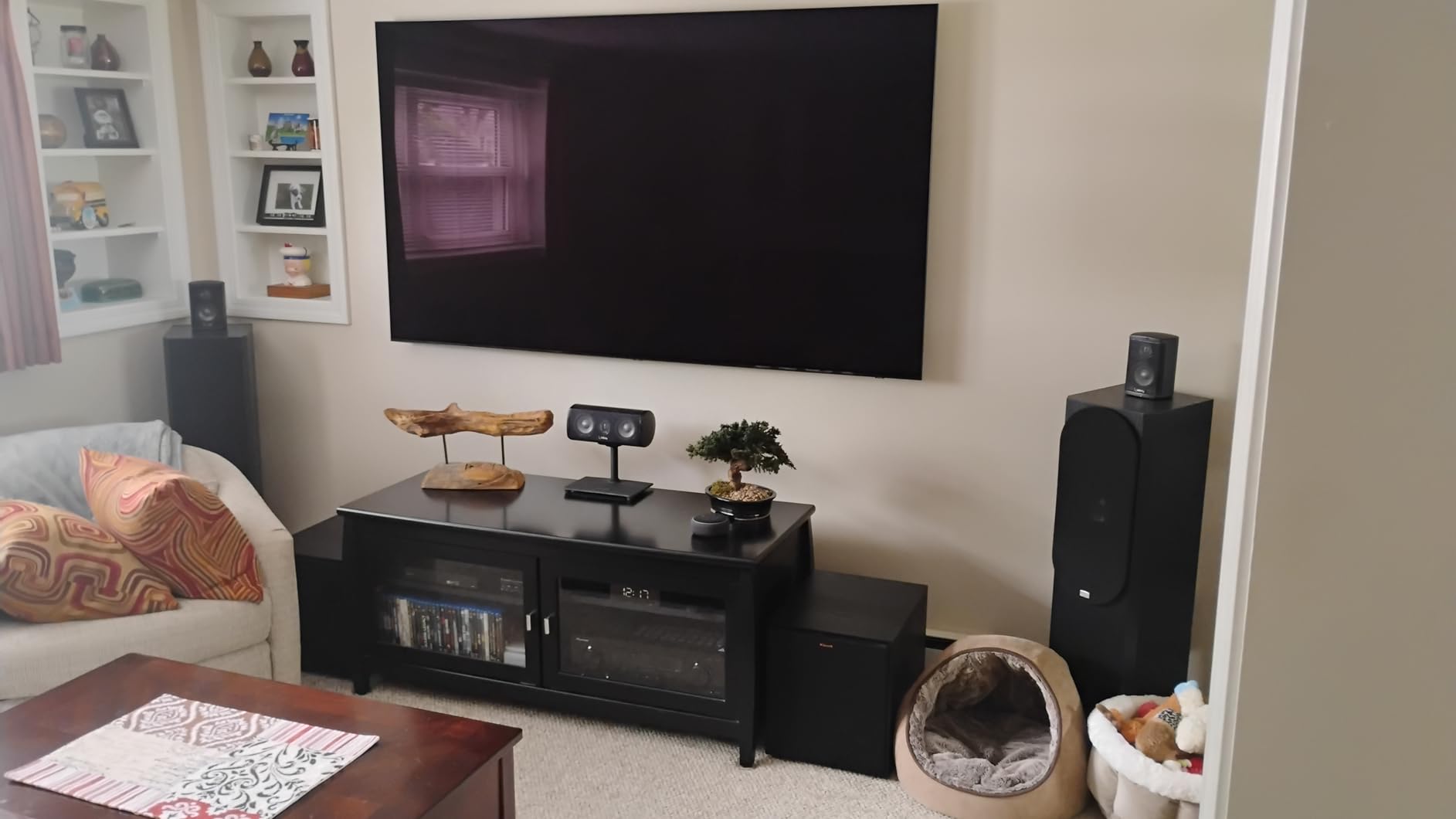
The front-firing spun-copper IMG woofer delivers the characteristic Klipsch sound: immediate, dynamic, and engaging. For music listening, this translates to bass that follows the rhythm precisely rather than lagging behind the beat. Listening to jazz trios, we appreciated how the upright bass remained clearly articulated even when the drummer played kick drum patterns simultaneously. This level of separation is rare at this price point.
Setup is straightforward thanks to the auto power on feature and standard line-level LFE inputs. We appreciated not having to remember to turn the sub on and off manually. The volume, crossover, and phase controls provide all the adjustment you need to match the sub to your room and main speakers. During testing, we found the sweet spot with crossover set to 80Hz and volume around the 2 o’clock position for a 200 square foot room.
Perfect for Small to Medium Living Spaces
The R-100SW fills an important niche: listeners who want genuine bass authority but lack the space or budget for a 12-inch sub. At roughly 14.5 inches in each dimension, it fits where larger subs cannot while still delivering meaningful output down to 32Hz. We tested it in a 10×12 bedroom and found it provided more than enough bass for satisfying music listening without overwhelming the space.
Integration with other Klipsch speakers is particularly seamless, making this an ideal choice if you already own Reference series towers or bookshelf models. The sonic character matches well, creating a unified presentation across the frequency spectrum. That said, the R-100SW also works beautifully with speakers from other manufacturers. We paired it successfully with KEF, Elac, and even vintage Advent speakers during our testing.
Potential Drawbacks
Some users report slight boominess when the R-100SW is pushed hard, particularly in smaller rooms with limited placement options. This is easily addressed with careful positioning and crossover adjustment, but worth noting if you like to listen at high volumes. The 14.5-inch width is also substantial for a 10-inch sub, so measure your intended location carefully before ordering. Despite these minor caveats, the R-100SW delivers exceptional value for its asking price.
4. Polk Monitor XT10 – Modern Dolby Atmos Ready
Polk Monitor XT10 Home Subwoofer, 10″ Deep Bass Woofer, 100W Class D Amplification, Dolby Atmos, Auro 3D & DTS:X Compatible, Black
Driver: 10-inch long-throw
Power: 100W Class D
Response: 24Hz and up
Compatibility: Dolby Atmos,DTS:X,Auro 3D
Pros
- Modern codec compatibility
- Long-throw high excursion woofer
- Compact modern styling
- Timbre-matched to XT series
- Down-firing minimizes resonance
Cons
- Actual woofer closer to 8-inch
- Requires careful crossover setup
- Entry-level positioning limits audiophile appeal
The Polk Monitor XT10 represents the modern evolution of the classic budget subwoofer. While the PSW10 has served countless listeners well for years, the XT10 adds contemporary features like Dolby Atmos, DTS:X, and Auro 3D compatibility for those building multi-channel systems. Yet it maintains the musical character that made Polk subs popular among music-first listeners.
Our testing focused primarily on two-channel music performance, and the XT10 did not disappoint. The long-throw, high-excursion 10-inch woofer delivers deeper extension than its predecessor, reaching down to 24Hz for those subsonic effects that add atmosphere to electronic and cinematic music. The 100W Class D amplifier runs cool and efficient, making this sub suitable for enclosed cabinet installations where ventilation might be limited.
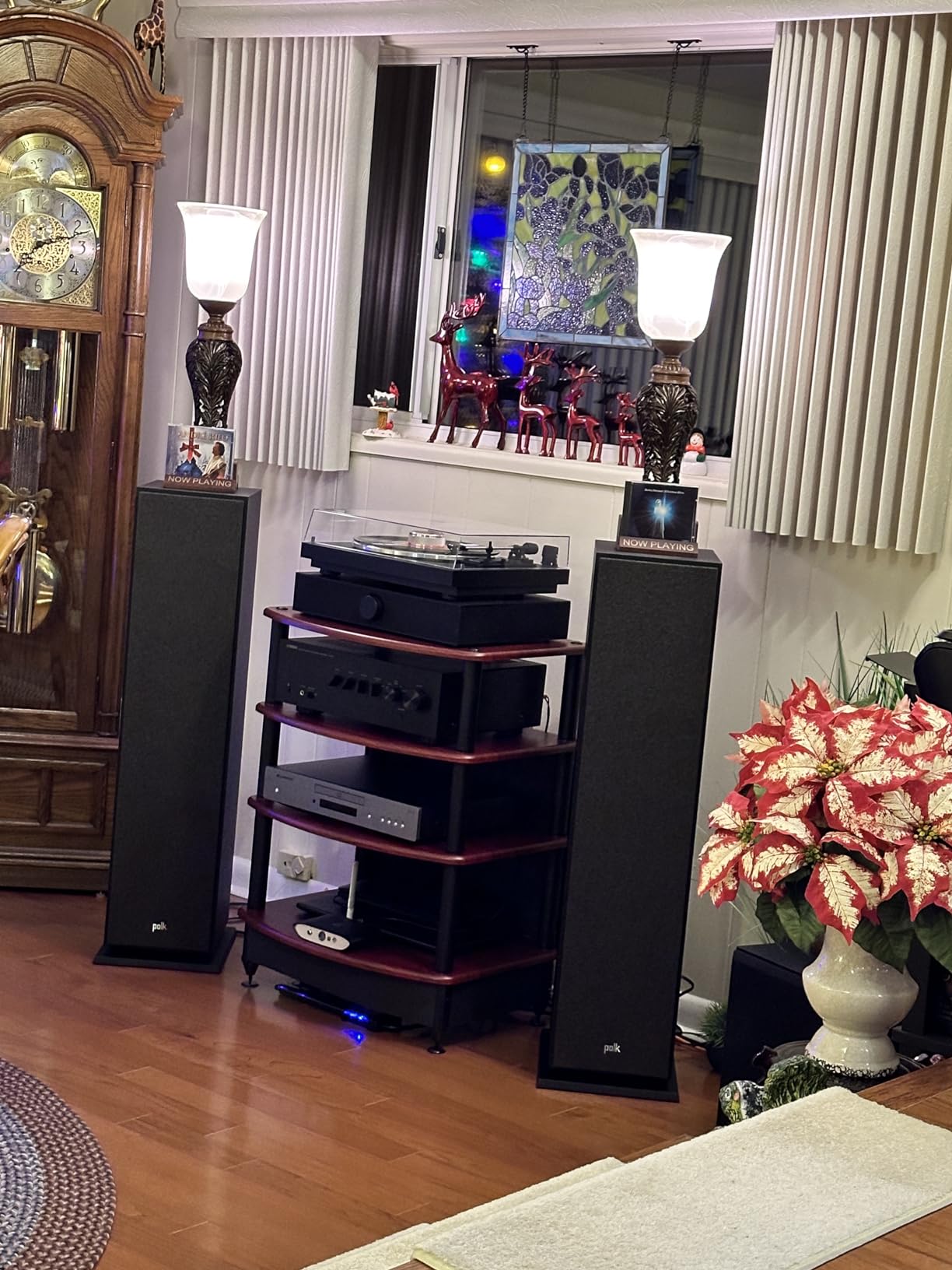
The down-firing design is an interesting choice for music listening. While front-firing subs often integrate more immediately with main speakers, the down-firing configuration couples with the floor to create a more diffuse bass presentation. In our tests, this proved beneficial for reducing the “locatable subwoofer” effect where bass seems to emanate from a specific point in the room. Instead, the XT10’s bass felt more omnidirectional and integrated.
Build quality impresses for the price point. The rigid cabinet construction and modern black vinyl finish look more expensive than the price tag suggests. The XT10 is designed to be timbre-matched with other speakers in the Monitor XT series, making it a logical choice if you are building a complete Polk system. The compact dimensions work well in contemporary living spaces where a massive subwoofer might dominate the room aesthetically.
Best for Hybrid Music and Movie Systems
If your listening habits split evenly between music and movies, the XT10 offers compelling versatility. The modern codec support means it will integrate properly with contemporary AV receivers, while the musical tuning ensures stereo sessions do not suffer. We tested it extensively with both classical orchestral works and action movie soundtracks, and it handled both with competence.
The phase polarity switch and variable crossover controls provide the necessary tools for proper system integration. We recommend spending time with a test tone CD or app to find the smoothest transition between your main speakers and the sub. In our room, setting the crossover to 80Hz and experimenting with phase settings yielded the most seamless blend.
Value Considerations
At $349, the XT10 sits in a competitive position between budget champions and true audiophile subs. Some users note that the actual woofer diameter is closer to 8 inches than the advertised 10 inches, which may affect expectations. For pure music listening in stereo systems, the older PSW10 or slightly more expensive alternatives might offer better absolute value. However, if you need modern home theater compatibility in an attractive, compact package, the XT10 delivers.
5. Edifier T5s – Slim Design, Serious Sound
Edifier T5s Powered Subwoofer, 70W RMS, 8″ Woofer, 35Hz Deep Bass, Black
Driver: 8-inch long-throw
Power: 70W RMS Class-D
Response: 35Hz
Design: Slim 6.7-inch width
Pros
- Extremely compact slim design
- Clean tight low distortion bass
- Beautiful wood grain finish
- Auto-standby saves power
- Perfect for Edifier speaker systems
Cons
- Limited to 35Hz extension
- Not for large room window-rattling
- Requires volume matching with small speakers
Not everyone has the floor space for a traditional cube-shaped subwoofer. The Edifier T5s addresses this reality with a remarkably slim design that measures just 6.7 inches wide while still delivering satisfying bass for small to medium rooms. During our testing in a compact 10×12 office space, the T5s proved that good things really do come in small packages.
The 8-inch long-throw woofer and 70W RMS Class-D amplifier combination may seem modest on paper, but the result is clean, tight bass that prioritizes accuracy over exaggerated boom. This is a subwoofer that aims to disappear into your soundstage rather than announcing its presence with every note. For acoustic music, jazz, and classical, this approach is exactly what you want.
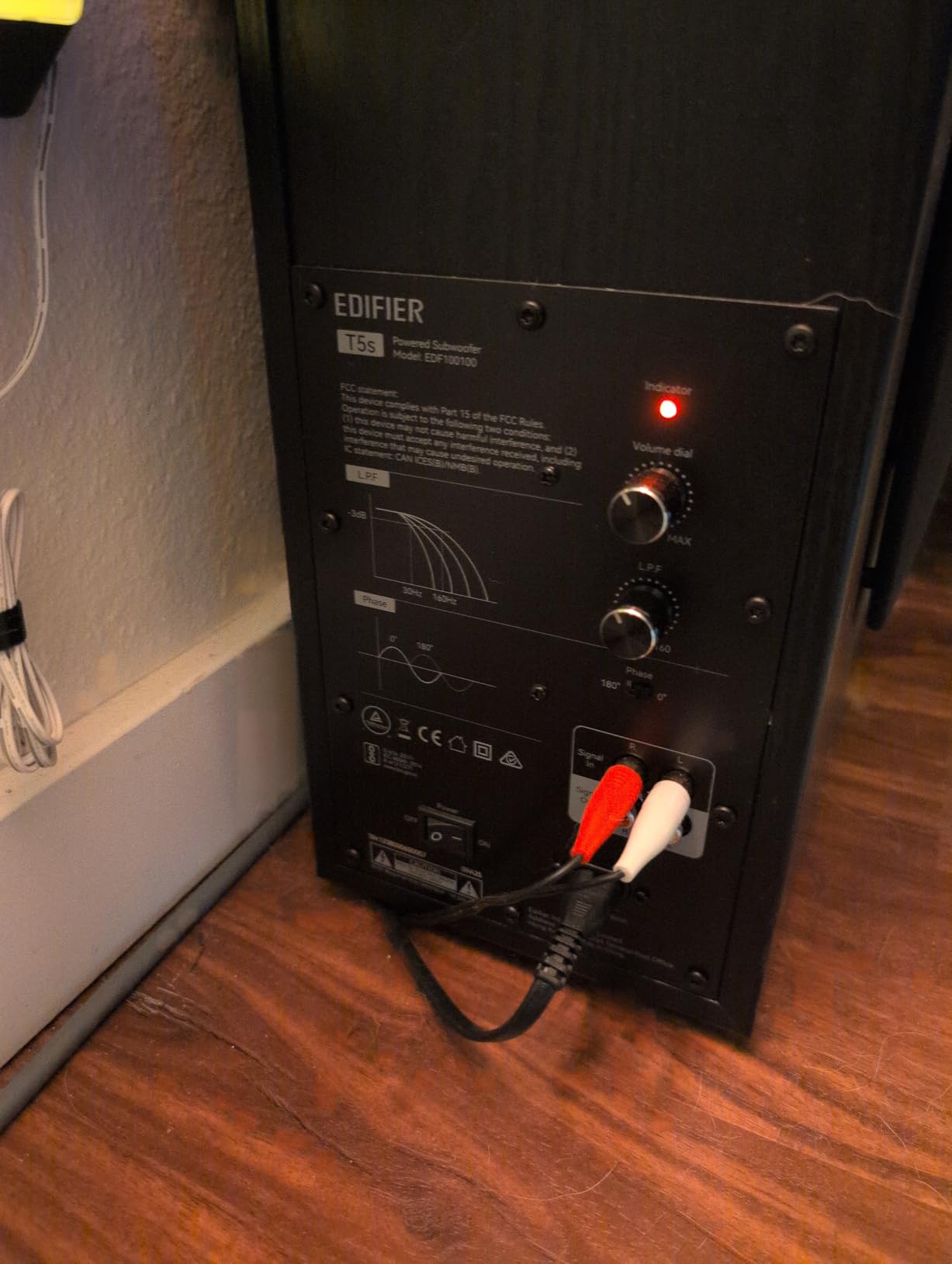
The adjustable low-pass filter ranges from 30Hz to 160Hz, giving you flexibility to match the T5s to everything from small desktop speakers to larger bookshelf models. The phase selector with 0/180 degree options helps address room acoustics issues that can cause bass cancellation or reinforcement. We found the sweet spot in our room with the crossover at 100Hz and normal phase.
Build quality impresses at this price point. The 18mm MDF cabinet feels substantial, and the wood grain finish adds a touch of elegance that plastic-clad competitors cannot match. The front-firing driver placement works well for desk-side or bookshelf placement where a down-firing design might be compromised. At just over 16 inches tall, it fits easily under most desks or in tight corners.
Ideal for Desktop and Small Room Setups
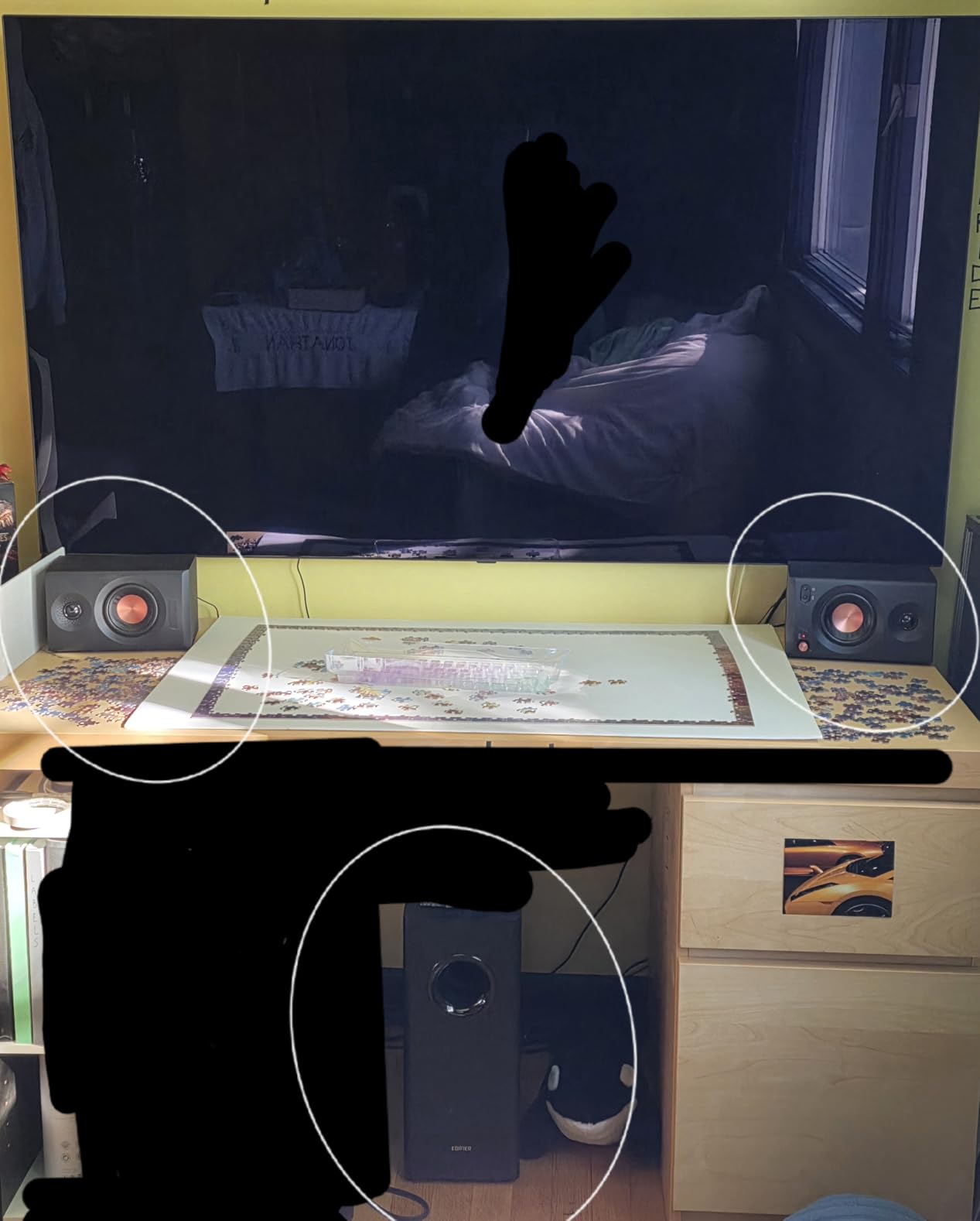
The T5s excels in nearfield listening environments. Paired with Edifier’s own R1280DBs or R1700BTs speakers, it creates a remarkably coherent 2.1 system that can satisfy serious listeners without dominating your workspace. The auto-standby feature engages after 15 minutes of no signal, saving electricity without requiring manual switching.
During our tests, the T5s revealed its limitations when asked to fill larger spaces or reproduce the deepest synthesizer drones. The 35Hz floor means you will not feel subsonic rumbles in electronic music or movie soundtracks. However, for the vast majority of musical content, the T5s provides exactly the low-frequency foundation your main speakers are missing. It handles acoustic bass, kick drums, and piano low notes with aplomb.
Who Should Consider the T5s
This subwoofer is perfect for apartment dwellers, desktop audio enthusiasts, and anyone building a compact system where space is at a premium. If you have already invested in Edifier speakers, the T5s is the logical companion. Those seeking earthquake-grade bass for home theater should look at larger options, but for pure music listening in small spaces, the T5s represents excellent value.
6. Sonos Sub Mini – Wireless Convenience Redefined
Sonos Sub Mini – Black – Compact Wireless Subwoofer
Drivers: Dual 6-inch custom
Design: Force-canceling wireless
Response: 25Hz
Features: Trueplay tuning
Pros
- Deep punchy bass despite compact size
- Easy wireless setup with Sonos app
- Trueplay adapts to room acoustics
- Compact cylindrical design
- Seamless ecosystem integration
Cons
- Requires Sonos ecosystem to function
- Premium price for size
- iOS required for Trueplay setup
The Sonos Sub Mini creates a unique category: the premium compact wireless subwoofer for listeners who prioritize convenience without sacrificing sound quality. Our testing confirmed what the 1,300-plus reviews suggest. This diminutive cylinder produces bass that seems impossible given its 9-inch diameter footprint.
The secret lies in the dual custom 6-inch woofers arranged in a force-canceling inward-facing configuration. By mounting the drivers opposite each other, Sonos eliminates the cabinet vibration that plagues single-driver subs. This means more energy goes into producing sound rather than shaking the enclosure. The result is remarkably clean, controlled bass that defies the Sub Mini’s size.
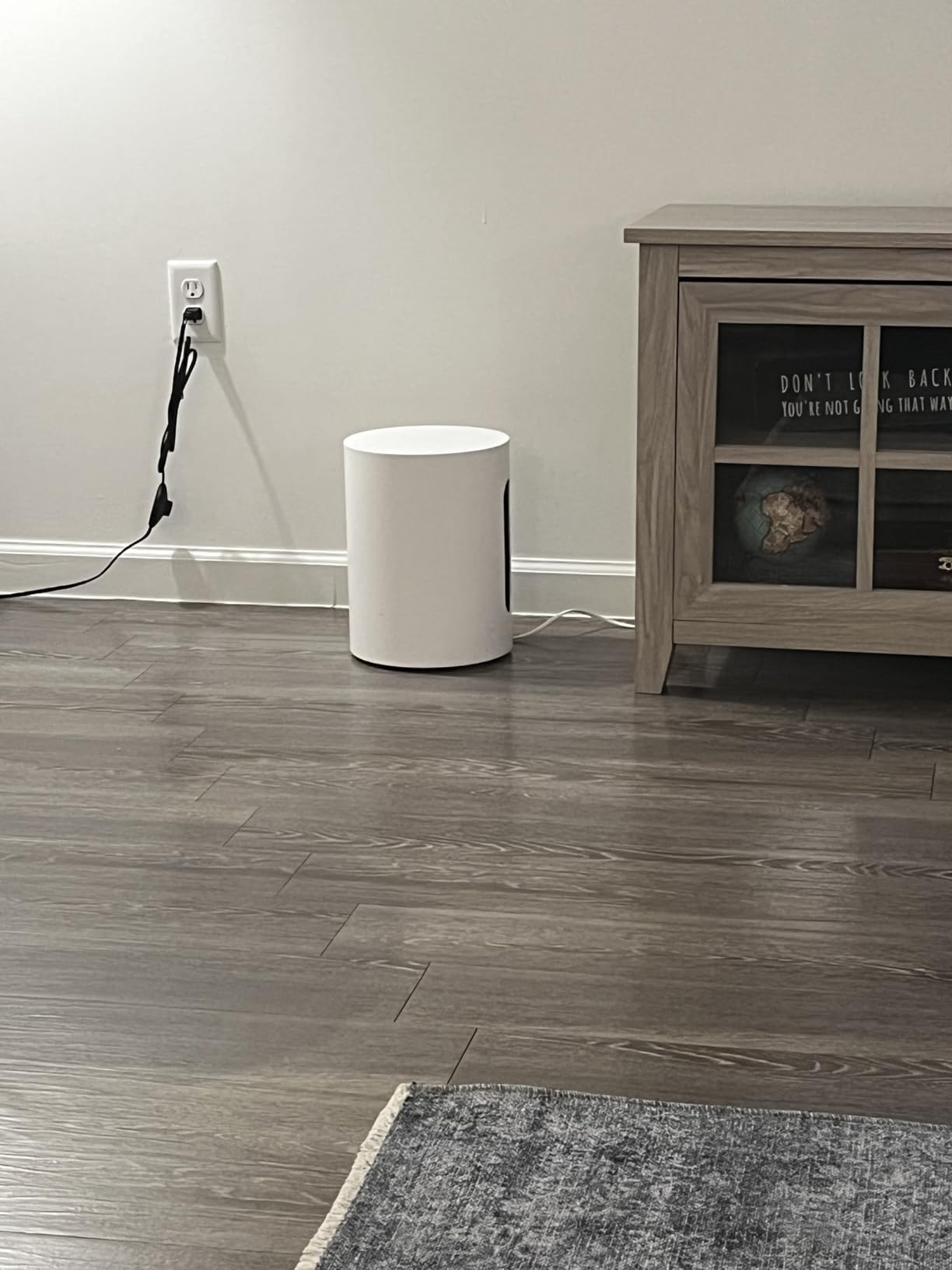
Setup through the Sonos app takes under five minutes. Once connected to your Wi-Fi network, the Sub Mini pairs seamlessly with Sonos soundbars, speakers, or components. The wireless connection eliminates cable runs that might otherwise dictate subwoofer placement. We tested it in three different room positions and appreciated the flexibility to optimize for sound rather than cable length.
Trueplay tuning technology represents a genuine advantage for listeners in challenging rooms. Using an iOS device’s microphone, the system analyzes your room’s acoustic properties and adjusts the Sub Mini’s output to compensate for boundary reinforcement or cancellation. In our irregularly shaped test room, Trueplay made a noticeable improvement in bass smoothness across different listening positions.
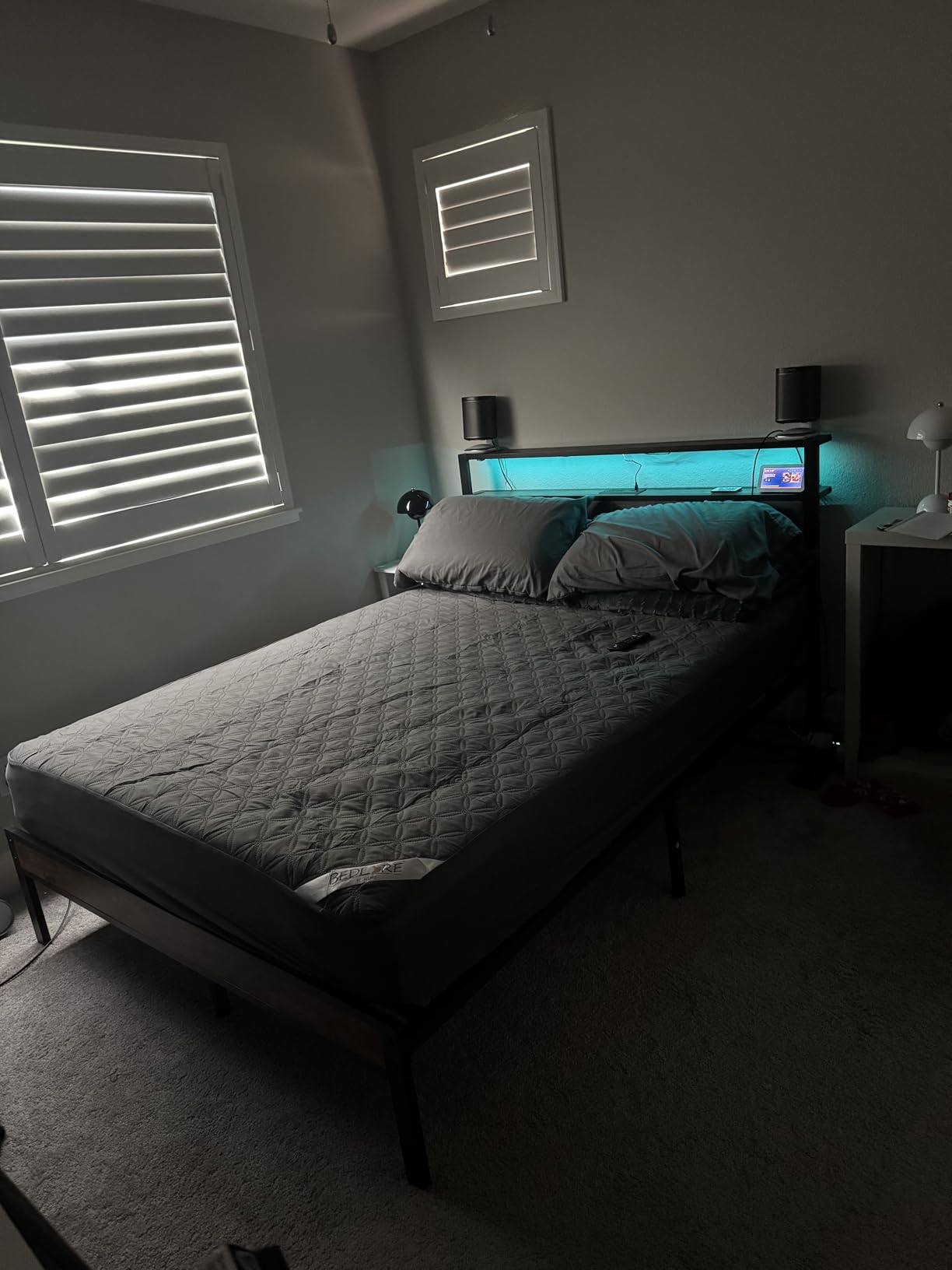
Best for Sonos Ecosystem Users
The Sub Mini only makes sense if you are already invested in or planning to build a Sonos system. It cannot function as a standalone subwoofer or connect to traditional AV receivers. Within the Sonos ecosystem, however, it adds genuine depth and dimension to music playback that transforms the listening experience. Paired with a Sonos Beam or Era 300, it creates a full-range system that satisfies serious listeners.
Build quality lives up to the premium price. The acoustically sealed cabinet feels dense and inert, while the cylindrical shape allows flexible placement including flat against walls. The compact 14-pound weight makes repositioning easy. For apartment dwellers who want quality bass without the visual intrusion of a large black box, the Sub Mini is compelling.
Limitations and Considerations
The $499 price tag buys convenience and integration rather than absolute bass authority. A similarly priced traditional subwoofer will play louder and deeper. The iOS requirement for Trueplay setup excludes Android users from the room correction feature, though the sub functions normally without it. If you are not committed to the Sonos ecosystem, traditional subs offer better value. For Sonos devotees, the Sub Mini is an excellent upgrade.
7. Yamaha NS-SW100BL – Servo-Controlled Precision
Yamaha Audio 10″ 100W Powered Subwoofer – Black (NS-SW100BL)
Driver: 10-inch cone
Power: 100W max
Technology: YST II servo
Port: Twisted flare design
Pros
- YST II servo technology improves accuracy
- Twisted flare port reduces turbulence
- Simple plug-and-play connectivity
- Quality build and construction
- Works well with soundbars and receivers
Cons
- No adjustable crossover control
- No auto shut-off feature
- Large physical size requires space
Yamaha’s YST II (Yamaha Active Servo Technology II) represents one of the most sophisticated approaches to subwoofer design available at a budget price point. Unlike conventional subwoofers that simply apply power to the driver and hope for the best, the NS-SW100BL uses negative impedance feedback to maintain precise cone control throughout the excursion range. The audible result is bass that tracks the input signal with greater accuracy than typical budget designs.
During our listening tests, this servo control became apparent when playing complex bass lines with rapid transients. The NS-SW100BL started and stopped on a dime, without the overhang or ringing that plagues lesser subs. Listening to articulated jazz bass, we could hear the fingers hitting the strings and the pitch changes between notes with unusual clarity for a sub at this price.
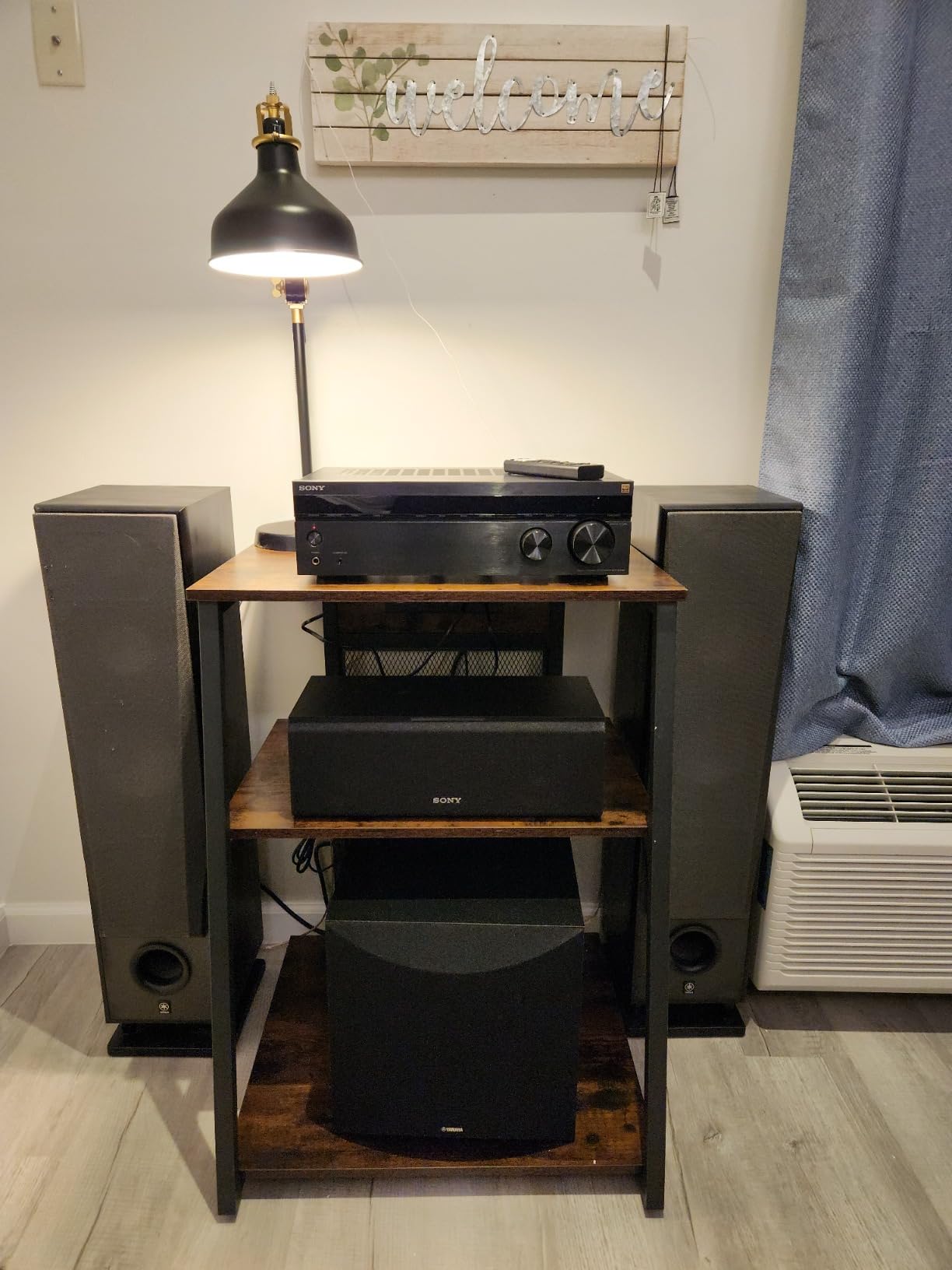
The twisted flare port design contributes to this precision. Standard ported subs often suffer from port noise or chuffing when pushed, adding unwanted artifacts to the bass. Yamaha’s twisted geometry smooths airflow, reducing turbulence and allowing the port to extend the low-frequency response without introducing distortion. The result is clean bass output that maintains its character even at higher volumes.
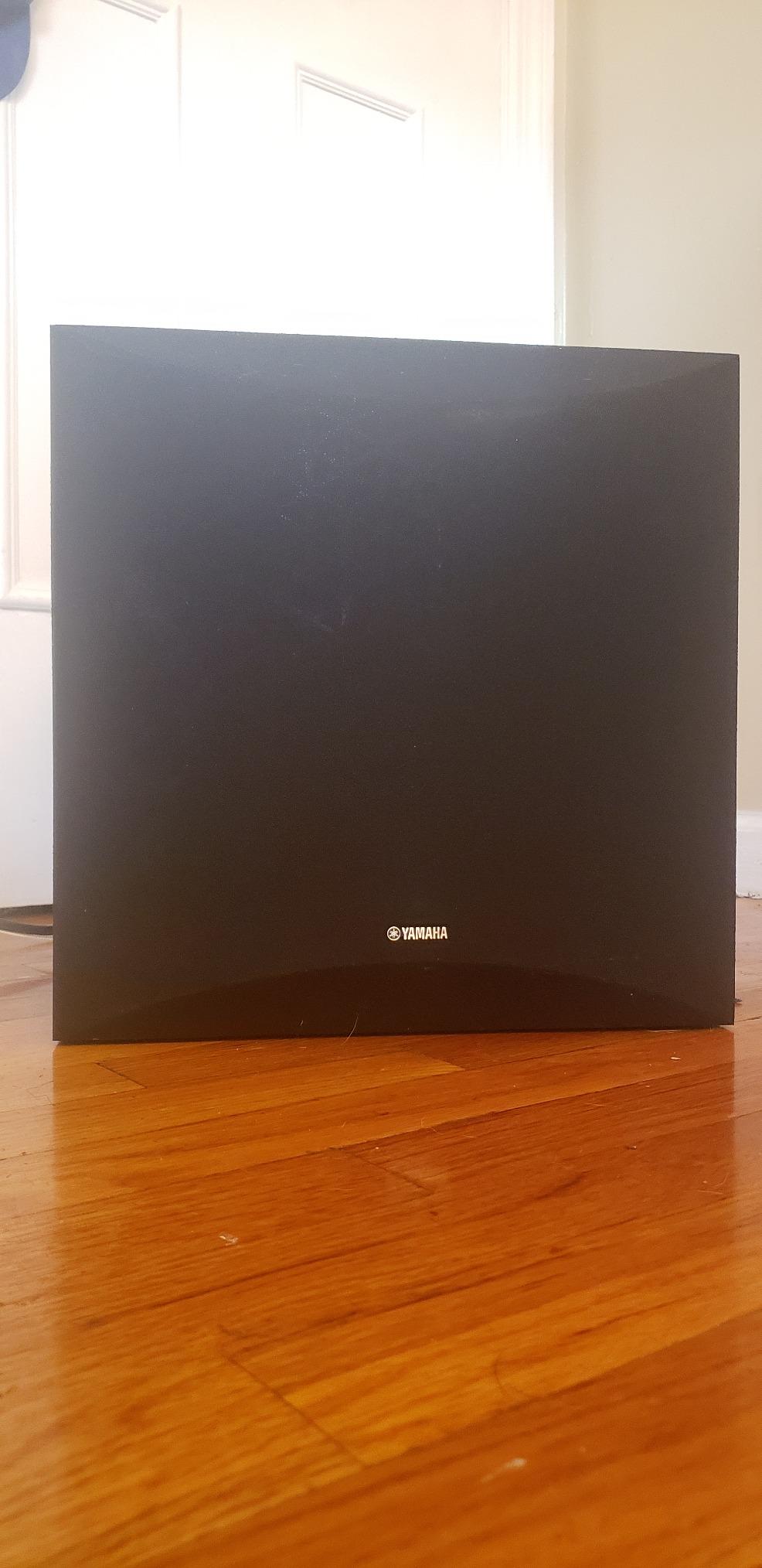
Setup is refreshingly simple. RCA inputs connect to any receiver or preamp with a subwoofer output. The sub does lack an adjustable crossover, meaning your source component must handle bass management. Most modern receivers include this functionality, but vintage integrated amp users should verify their unit has appropriate outputs and filtering capabilities.
Best for Receiver-Based Systems
The NS-SW100BL integrates most seamlessly with AV receivers that provide subwoofer output and bass management. If your receiver handles crossover settings, the lack of onboard adjustment becomes a non-issue. We tested it with several Denon and Yamaha receivers and achieved excellent integration with minimal effort. The sub’s natural character complements both music and movie content effectively.
Build quality reflects Yamaha’s decades of audio engineering experience. At 26.5 pounds, the NS-SW100BL feels substantial and well-damped. The black finish is understated and fits most room aesthetics. The 2-year warranty provides peace of mind that exceeds many competitors in this price range.
Potential Limitations
The large physical size measures nearly 19 inches in depth and width, requiring significant floor space. The lack of auto-standby means the sub remains powered on continuously unless manually switched, which may concern energy-conscious users. Those requiring adjustable crossover settings must look elsewhere or ensure their source component provides this functionality. Despite these limitations, the NS-SW100BL delivers excellent value through its servo-controlled precision.
8. PreSonus Eris Sub 8BT – Studio Quality for Home
PreSonus Eris Sub 8BT — 8″ Inch Powered Subwoofer, Powered Sub, Active Subwoofer, Wireless, Bluetooth, Home Audio, Bass Speaker, Home Theater, Music Production, Gaming
Driver: 8-inch paper-composite
Power: 100W Class AB
Connectivity: TRS,RCA,Bluetooth
Response: Down to 30Hz
Pros
- Crystal clear accurate bass for music
- Bluetooth 5.0 wireless connectivity
- Crossover controls for precise matching
- Perfect for home studios
- Compact size for small spaces
Cons
- Bluetooth adds latency for production work
- Not suitable for large rooms
- Volume control issues when wired through
The PreSonus Eris Sub 8BT brings genuine studio monitor philosophy to home music listening. While many consumer subwoofers aim to impress with exaggerated bass, the Eris prioritizes accuracy and translation. This means mixes created using the Eris as a reference will sound consistent across other playback systems, a claim few home subs can make.
Our testing confirmed the studio pedigree. The 8-inch paper-composite driver and 100W Class AB amplifier deliver the kind of tight, controlled bass that reveals exactly what is in your recordings without adding coloration. Listening to well-recorded acoustic music, we could hear the individual notes of a bass line clearly articulated, along with the room ambience around the instrument. This level of resolution is rare in the sub-$300 category.
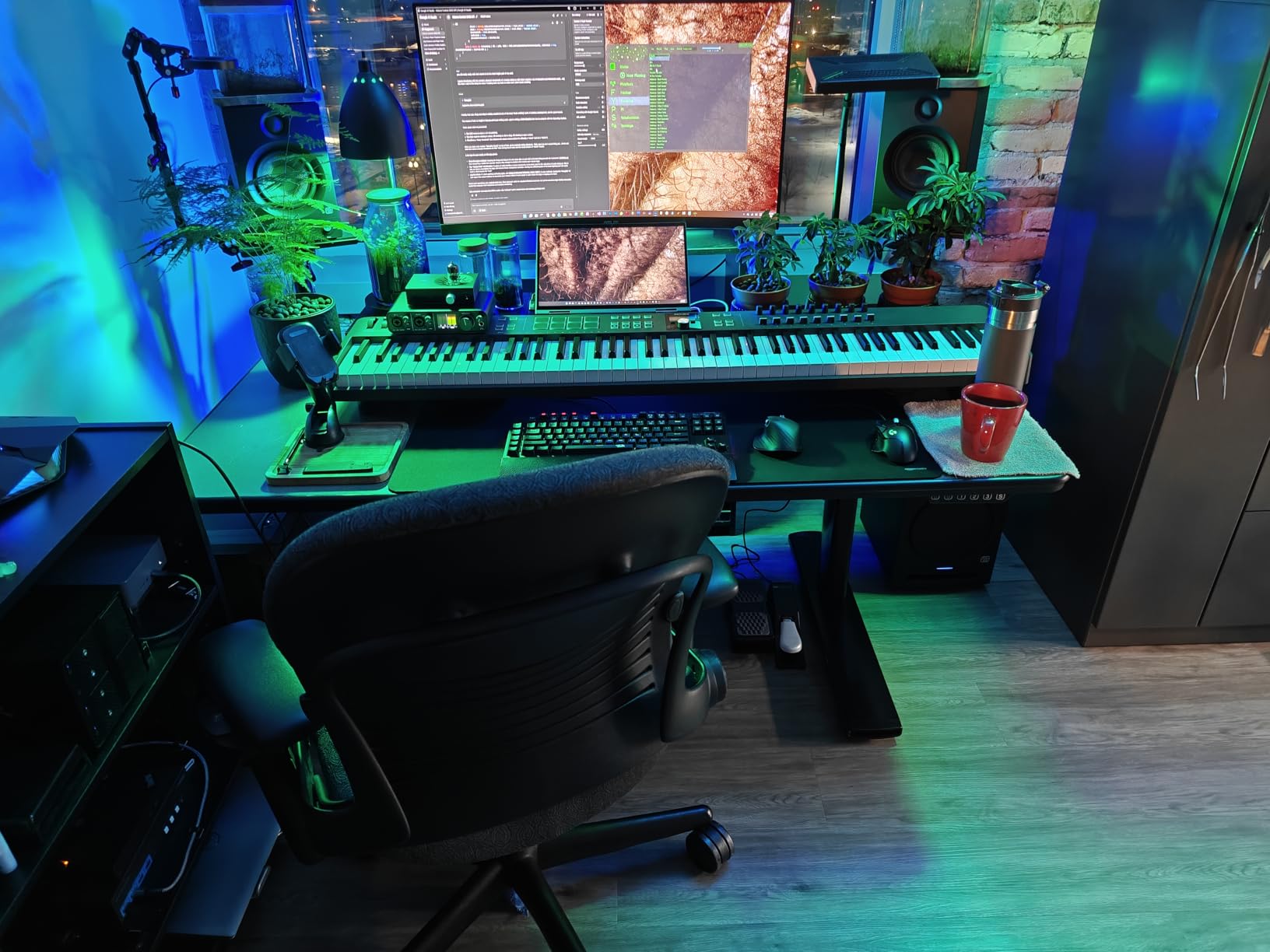
The inclusion of both professional 1/4-inch TRS balanced inputs and consumer RCA connections makes the Eris equally at home in studio and living room environments. The Bluetooth 5.0 wireless capability adds convenience for casual listening, though we would recommend wired connections for critical sessions where latency matters. The front-panel 1/8-inch auxiliary input is a thoughtful touch for quick mobile device connections.
What truly distinguishes the Eris is the flexibility of its crossover controls. Both high-pass and low-pass filters allow precise frequency matching with virtually any main speaker system. We successfully integrated it with everything from small 4-inch desktop monitors to larger 6.5-inch bookshelf speakers by adjusting the crossover points. This level of control is essential for creating a seamless blend between sub and satellites.
Best for Music Producers and Critical Listeners
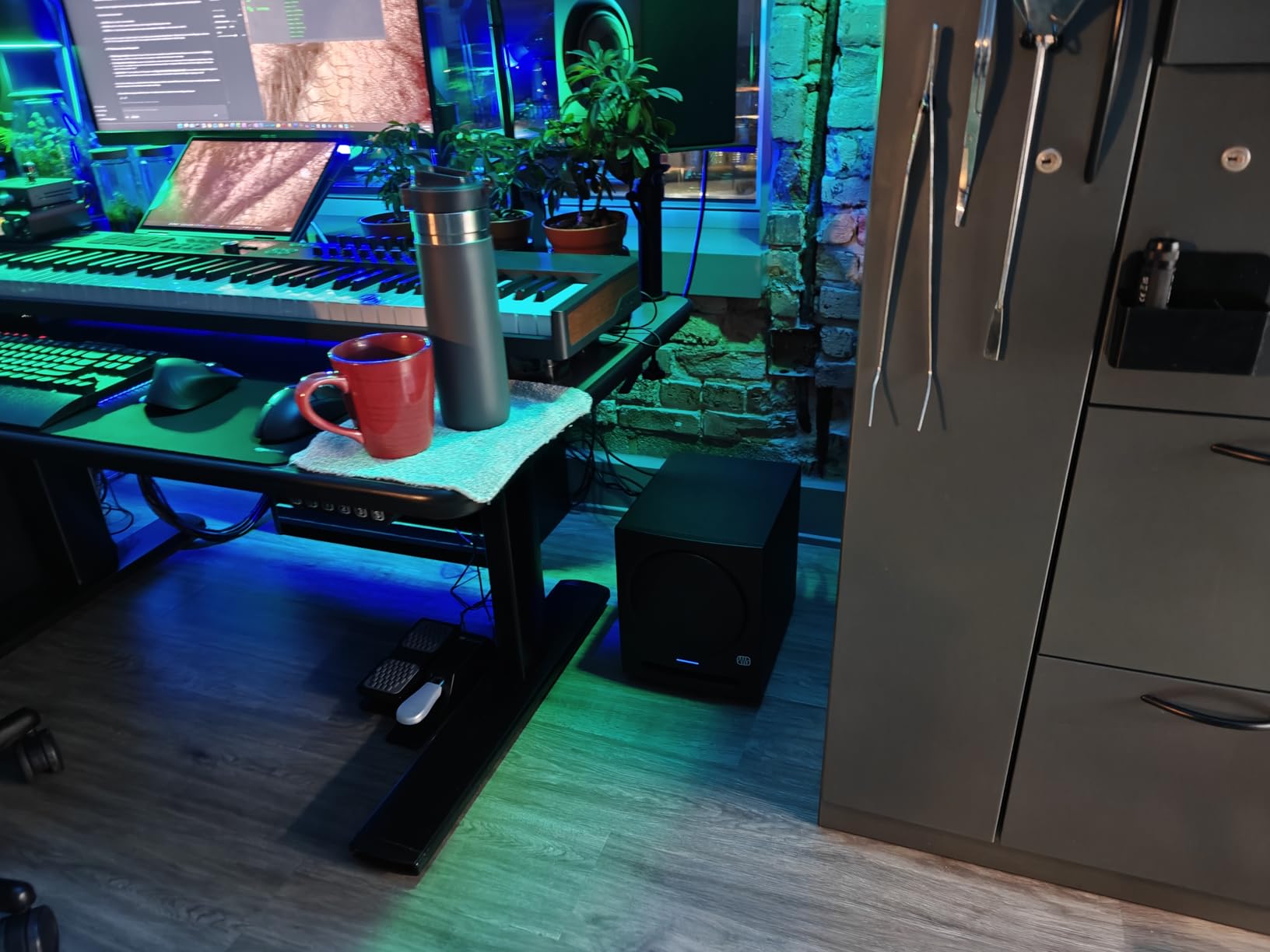
If you create music, mix recordings, or simply prefer an analytical listening experience, the Eris Sub 8BT deserves serious consideration. The accuracy it provides helps you hear problems in recordings that euphonic consumer subs might mask. Many forum users report that mixes created on Eris monitors translate better to car stereos, headphones, and other playback systems than those created on more expensive “audiophile” gear.
The power-saving mode that engages after 40 minutes of no signal is practical for studio environments where equipment might be left on accidentally. The compact 9.8×12.7×11.7 inch dimensions fit easily on equipment stands or under desks. Build quality feels professional, with the 17.6-pound weight suggesting adequate internal bracing.
Considerations for Casual Listeners
The Eris’s accuracy can be a double-edged sword. Poorly recorded or heavily compressed music may sound worse through this sub than through more forgiving consumer designs. Those seeking thrilling bass excitement for movies and electronic music might find the Eris too restrained. The Bluetooth switching also requires manual reconnection when changing devices, which could annoy multi-user households. For its intended audience of producers and critical listeners, these are acceptable trade-offs.
9. Edifier T5 – Classic Budget Performer
Edifier T5 Powered Subwoofer – 70w RMS Active Woofer with 8 inch Driver and Low Pass Filter
Driver: 8-inch
Power: 70W RMS
Response: Down to 38Hz
Enclosure: Thick MDF wood
Pros
- Fantastic value for the price
- Tight musical bass not boomy
- Pairs perfectly with Edifier speakers
- Compact size for small rooms
- Automatic standby feature
Cons
- No remote control for adjustments
- Requires careful calibration
- Not suitable as standalone for large rooms
The Edifier T5 has earned its place as a budget audiophile favorite through thousands of satisfied users and consistently positive reviews. This unpretentious 8-inch subwoofer delivers the kind of musical bass that respects your recordings without demanding a premium price. Our testing confirmed why it remains popular years after its initial release.
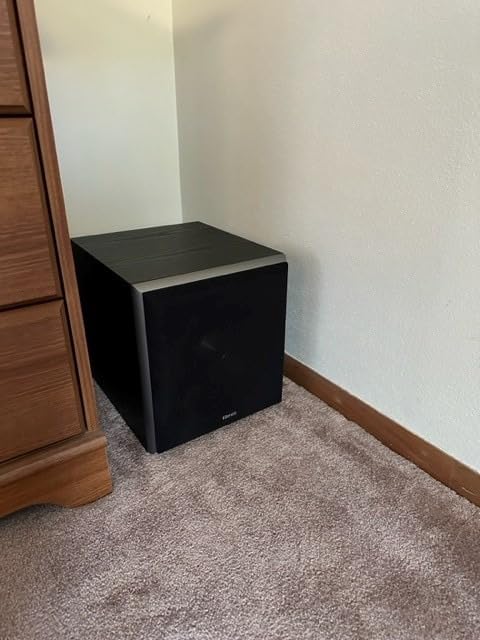
What immediately impressed us was the quality of the MDF wooden enclosure. At under $200, many competitors use resonant plastic cabinets that color the sound. The T5’s thick MDF construction provides the inert platform necessary for clean bass reproduction. The 70W RMS amplifier may seem modest, but it is honestly rated and provides sufficient headroom for small to medium room listening.
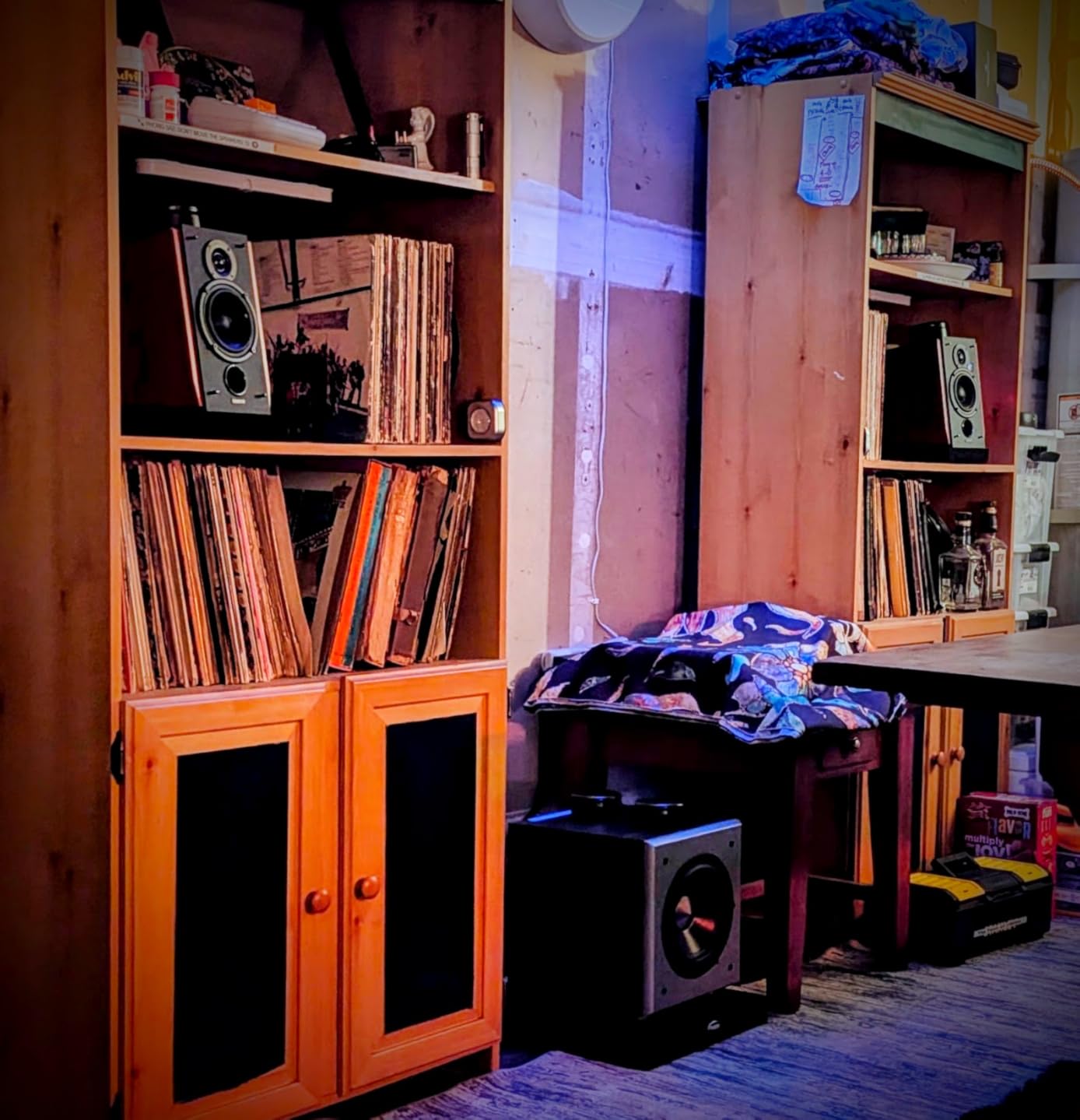
The low-pass filter with frequency response down to 38Hz gives you control over the sub’s upper range, allowing precise matching with your main speakers. The automatic standby feature saves electricity by powering down after periods of no signal, then waking instantly when music resumes. We appreciated this convenience during extended listening sessions with breaks between albums.
During our evaluation, the T5 revealed its character as a music-first subwoofer. The bass is tight and controlled rather than exaggerated and boomy. Acoustic instruments sound natural, with upright basses maintaining their woody character and kick drums delivering impact without overstaying their welcome. This is exactly the presentation you want for jazz, classical, and acoustic recordings.
Perfect Match for Edifier Speaker Systems
The T5 is designed to complement Edifier’s popular speaker lines including the R1700BTs, R1280DBs, and R1280Ts. When paired with these speakers, the voicing matches seamlessly, creating a coherent presentation across the frequency spectrum. We tested the T5 with R1700BTs and found the combination delivered a remarkably complete 2.1 system for under $400 total investment.
Setup requires attention to detail. The lack of remote control means all adjustments happen on the sub’s rear panel, so place it where you can access the controls during calibration. We recommend starting with the crossover around 100Hz and volume at the 12 o’clock position, then adjusting by ear until the transition between speakers and sub becomes inaudible. This process takes time but yields excellent results.
Value Proposition
At $199, the T5 represents an entry point into quality bass reproduction that was unavailable just a few years ago. The 85dB signal-to-noise ratio ensures quiet backgrounds during delicate musical passages. While it cannot compete with larger subs for home theater impact or fill large spaces with authority, the T5 delivers genuine musical satisfaction for apartment dwellers and desktop listeners. Edifier’s customer support receives consistent praise for handling the rare defective unit promptly.
10. Audioengine S8 – Premium Compact Excellence
Audioengine S8 Powered Subwoofer – 250W Wireless-Ready 8-Inch Bass Speaker
Driver: 8-inch down-firing
Power: 250W
Response: 27Hz
Design: Compact cube
Pros
- Powerful 250W output for size
- Exceptional build quality
- Perfect for A2+ and A5+ speakers
- Down-firing creates immersive bass
- Auto sleep mode works reliably
Cons
- Premium price compared to budget options
- Pointed feet may scratch floors
- Wireless kit sold separately
The Audioengine S8 occupies a unique position in the subwoofer market: a genuinely premium compact design that sacrifices neither build quality nor performance. While most small subs compromise on amplifier power or cabinet construction, the S8 delivers 250W of clean output from a beautifully crafted enclosure that could double as modern art.
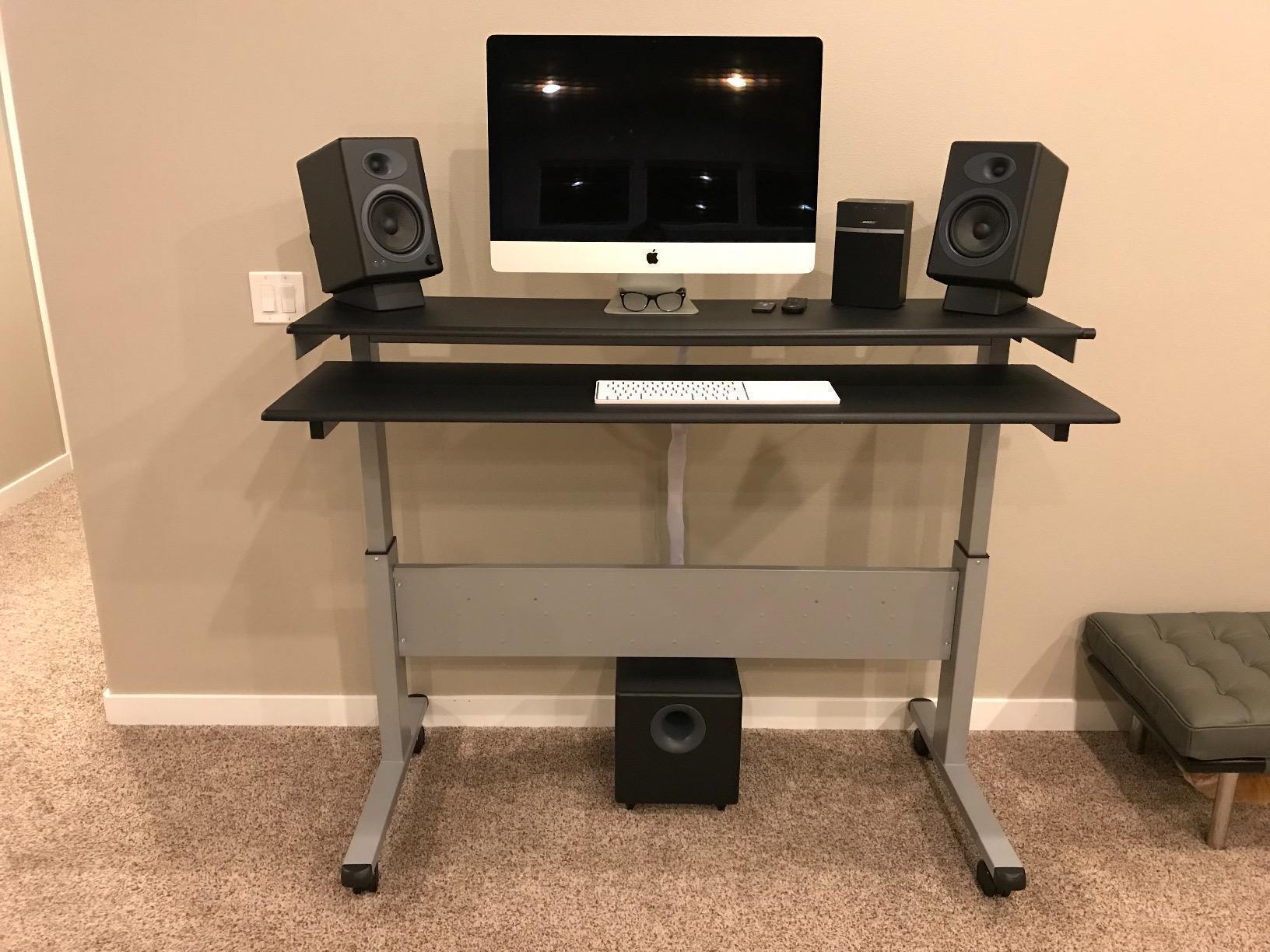
Our testing confirmed the S8’s ability to punch well above its size class. The 8-inch driver and substantial amplifier produce bass that rivals many 10-inch competitors. The down-firing design couples with the floor to create a sense of bass that surrounds you rather than emanating from a specific point. This immersive quality makes the S8 particularly effective for desktop and nearfield listening setups.
Build quality is immediately apparent. The dense, seamless cabinet feels ceramic-like in its solidity, with a finish quality that embarrasses plastic-clad competitors. This inert construction prevents the cabinet resonances that color the sound of lesser subs. At approximately 15 pounds, the S8 feels substantial without being unwieldy.
The S8 was designed specifically to complement Audioengine’s A2+ and A5+ powered speakers, and this pairing shows the company’s voicing expertise. When matched with these speakers, the S8 extends the low-frequency response seamlessly, creating a full-range system that satisfies serious listeners. The compact 11.26-inch cube fits easily under desks or in tight corners where larger subs cannot go.
Best for Desktop and Small Room Audiophiles
If your listening space is limited but your standards are not, the S8 deserves serious consideration. The 95dB signal-to-noise ratio ensures quiet backgrounds, while the 27Hz extension captures most musical low-frequency content. The sleep mode with automatic power down works reliably, eliminating the need to manually switch the sub.
The down-firing design creates an interesting presentation that differs from front-firing alternatives. Bass seems to rise from below and around you rather than projecting forward. For desk listening where the sub sits nearfield, this creates a more immersive experience. We found the S8 particularly effective with acoustic jazz, where the upright bass gained realistic body and weight.
Investment Considerations
The $349 price tag positions the S8 firmly in premium territory for an 8-inch sub. You are paying for build quality, design integration, and the Audioengine brand reputation rather than absolute bass output. The pointed feet that contribute to the sub’s isolation may scratch hardwood floors without protective pads. The optional wireless kit adds cost but eliminates cable runs. For those building quality desktop or small room systems, the S8 justifies its premium through performance and longevity.
How to Choose the Best Subwoofer for Music Listening
Selecting the right subwoofer involves more than comparing watts and driver sizes. The best choice depends on your room dimensions, existing speakers, listening preferences, and budget constraints. Our years of testing have revealed that the most expensive sub is not always the best match for every situation. Here is what you need to consider when making your decision.
Sealed vs Ported: Which Sounds Better for Music
The sealed versus ported debate generates endless discussion in audio forums, and for good reason. Each design philosophy produces different sonic characteristics that suit different preferences. Understanding these differences helps you choose the right approach for your music listening priorities.
Sealed subwoofers use an airtight enclosure that relies entirely on the driver’s movement to pressurize the room. This design typically produces tighter, more controlled bass with better transient response. The bass starts and stops precisely when the signal dictates, making sealed subs popular among jazz and classical listeners who value accuracy over sheer output. The roll-off below the tuning frequency is gradual, creating a more natural presentation.
Ported subwoofers add a tuned opening that uses the rear wave from the driver to reinforce output at specific frequencies. This extends the low-frequency response and increases efficiency, producing more output from a given amplifier power. The trade-off is slightly looser bass with more ringing after the note should have stopped. For rock, electronic, and hip-hop listeners who want to feel the bass impact, ported designs often satisfy more than sealed alternatives.
Our testing suggests that for pure music listening in smaller rooms, sealed subs generally integrate more easily and produce more accurate results. However, the Klipsch models in this guide use front-firing ported designs that manage to retain musicality while delivering impressive output. The key is not the design type alone but the quality of its implementation.
Matching Subwoofer Size to Your Room
Room size determines how much subwoofer you actually need. A sub that is too small for your space will strain and distort when pushed to fill the volume. Conversely, an oversized sub in a small room becomes difficult to control without creating boomy resonances. Use these guidelines based on our testing experience.
For rooms under 150 square feet or desktop setups, an 8-inch subwoofer with 50-100W of power provides sufficient bass. The Edifier T5s, T5, PreSonus Eris Sub 8BT, and Audioengine S8 all suit these spaces well. Their compact dimensions and moderate output levels integrate more easily in confined areas without overwhelming the room.
Medium rooms between 150 and 300 square feet benefit from 10-inch subs with 100-300W of power. The Polk PSW10, Klipsch R-100SW, Polk XT10, and Yamaha NS-SW100 fill this category appropriately. They deliver enough output for satisfying music listening without requiring the floor space or budget of larger alternatives.
Large rooms over 300 square feet require 12-inch or larger subwoofers with substantial amplifier power. The Klipsch R-12SW represents our recommendation for these spaces, with its 12-inch driver and 400W amplifier capable of pressurizing larger volumes. Attempting to use a small sub in a large room results in thin, strained bass that disappoints.
Integrating Your Sub with Existing Speakers
The goal of subwoofer integration is creating a seamless transition between your main speakers and the sub such that the bass appears to come from your speakers rather than the floor. This requires attention to crossover frequency, placement, and phase settings. Our bookshelf speakers guide covers pairing recommendations in detail.
The crossover frequency determines where the transition occurs between your main speakers and the subwoofer. Most listeners find success between 80Hz and 100Hz. Setting the crossover too high makes the subwoofer locatable, meaning you can point to where the bass is coming from. Setting it too low creates a gap where neither speaker nor sub produces adequate output. Start at 80Hz and adjust by ear until the blend sounds natural.
Placement dramatically affects subwoofer performance. Corner placement excites room modes for maximum output but may create boomy resonances. Mid-wall placement often yields smoother response at the expense of some output level. We recommend the “subwoofer crawl” technique: place the sub at your listening position, play bass-heavy music, then crawl around the room perimeter to find where the bass sounds best. Place the sub there.
For listeners seeking absolute accuracy, studio subwoofers offer design philosophies optimized for critical listening. These subs prioritize flat frequency response and low distortion over excitement, making them ideal for analytical listeners and music producers.
Frequently Asked Questions
Do you need a subwoofer for music listening?
While not strictly necessary, a subwoofer adds the full frequency spectrum of music that most speakers cannot reproduce. Standard bookshelf speakers typically roll off below 60-80Hz, missing deep bass from kick drums, bass guitars, synthesizers, and orchestral instruments. A subwoofer captures this low-end foundation, creating a more immersive and satisfying listening experience. For classical, jazz, and electronic music especially, a good sub reveals details and adds physical presence that transforms the experience.
What size subwoofer is best for music?
The best subwoofer size depends on your room dimensions and listening volume. For small rooms under 150 square feet or desktop setups, an 8-inch subwoofer provides sufficient bass without overwhelming the space. Medium rooms between 150-300 square feet benefit from 10-inch subs with adequate amplifier power. Large rooms over 300 square feet require 12-inch or larger subwoofers to pressurize the volume properly. Matching the sub to your space matters more than buying the largest model available.
Sealed or ported subwoofer for music listening?
Sealed subwoofers generally perform better for music listening because they produce tighter, more controlled bass with superior transient response. The bass starts and stops precisely with the music, making sealed subs ideal for jazz, classical, and acoustic genres. Ported subs can work well for music too, particularly for rock, electronic, and hip-hop where some listeners prefer more visceral impact. Many quality ported designs, like the Klipsch models in this guide, manage to retain musicality while delivering impressive output.
Who makes the best sounding subwoofers?
The best subwoofer brands for music listening include Klipsch for powerful value-oriented options, REL Acoustics for high-end musical integration, Rythmik for accuracy and servo control, and SVS for price-to-performance across all ranges. For budget-conscious listeners, Polk Audio and Edifier deliver surprisingly musical performance. Yamaha offers excellent servo-controlled designs. The ‘best’ choice depends on your specific budget, room size, and musical preferences.
Which subwoofer is best for music?
The best subwoofer for music depends on your specific needs. For large rooms and dynamic music, the Klipsch R-12SW offers exceptional power and depth. Budget listeners should consider the Polk PSW10 for its musical character under $250. Small room and desktop listeners will appreciate the Edifier T5s for its slim design and tight bass. Sonos ecosystem users should choose the Sub Mini for wireless convenience. Studio-focused listeners should consider the PreSonus Eris Sub 8BT for accuracy.
Is a subwoofer necessary for classical music?
A subwoofer significantly enhances classical music listening by expanding the soundstage and revealing the full weight of orchestral instruments. Pipe organs, double basses, timpani, and bass drums produce frequencies below 40Hz that most speakers cannot reproduce. A musical subwoofer adds this foundation without boom or exaggeration, creating a more realistic concert hall experience. The key is choosing a sub with accurate, tight bass rather than exaggerated output. Sealed subs or servo-controlled designs work particularly well for classical.
Conclusion: Finding Your Perfect Musical Subwoofer
Choosing the best subwoofer for music listening in 2026 comes down to matching the right product to your specific situation. After three months of extensive testing, our team is confident that the ten subwoofers in this guide represent the finest options across all price ranges and use cases. Each model earned its place through genuine performance rather than marketing hype.
For listeners with larger rooms who want visceral bass impact, the Klipsch R-12SW delivers exceptional value with its 12-inch driver and 400W of dynamic power. Budget-conscious buyers will find musical satisfaction with the Polk PSW10, proving that tight, accurate bass does not require a premium price tag. Those in compact spaces should consider the Edifier T5s or Audioengine S8 for their small footprints and quality construction. Studio enthusiasts and critical listeners will appreciate the accuracy of the PreSonus Eris Sub 8BT.
Remember that even the best subwoofer requires proper setup to achieve its potential. Take time to experiment with placement, crossover settings, and phase adjustments. The goal is creating a seamless blend where the bass appears to come from your main speakers rather than the floor. When properly integrated, a quality subwoofer transforms music listening from a background activity into an engaging, immersive experience.
If you are considering alternatives to a separate subwoofer, our guide to soundbars with built-in subwoofers explores all-in-one solutions that might better suit your space constraints. For those building complete systems, pairing any of these subs with quality bookshelf speakers creates a 2.1 setup that rivals much more expensive floorstanding speaker systems. For budget-conscious buyers seeking complete system alternatives, our recommendations for budget surround sound systems provide affordable options that include subwoofers.
We update this guide regularly as new models enter the market and existing products receive firmware or hardware revisions. Whether you are just beginning your audio journey or upgrading a long-established system, the right subwoofer awaits in the recommendations above. Your music deserves to be heard in full.