
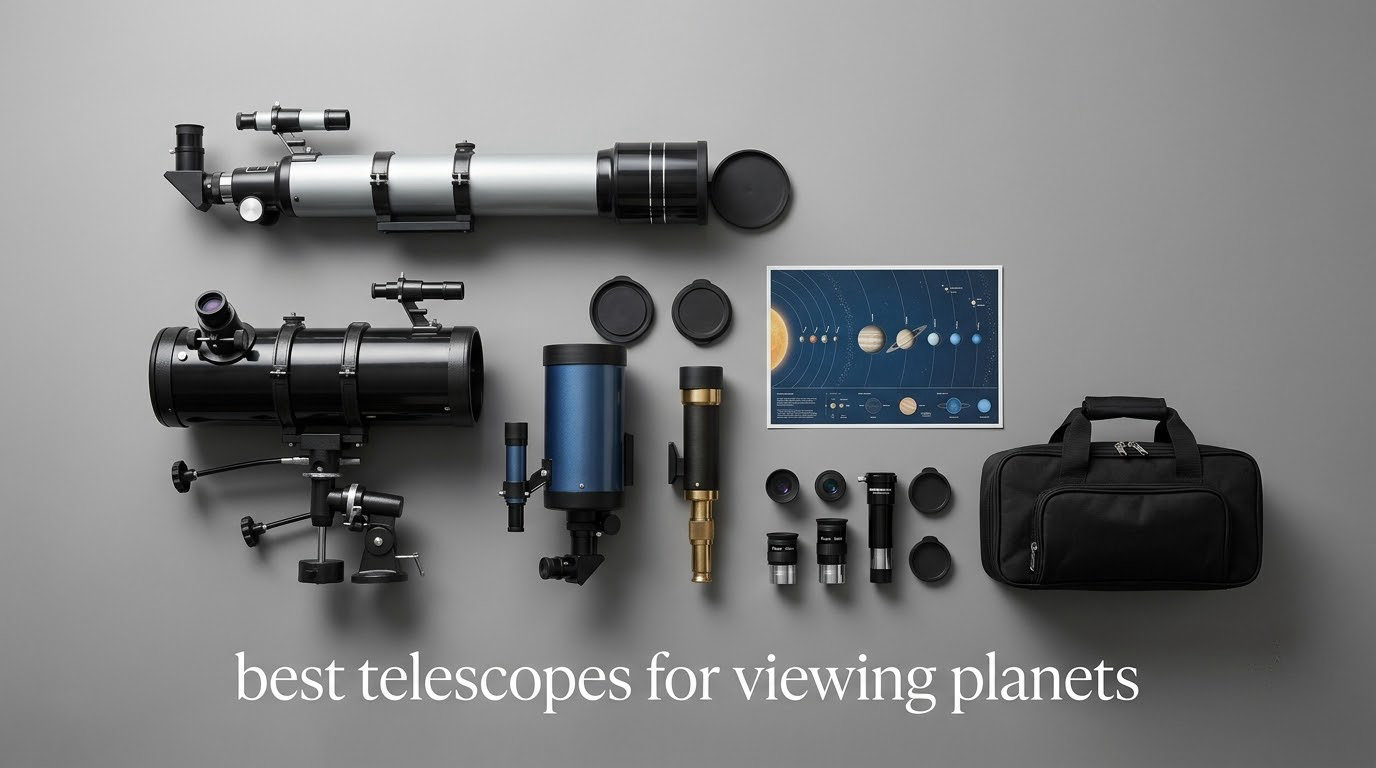
The Celestron AstroMaster 70AZ is the best telescope for viewing planets if you want one affordable scope that shows Saturn’s rings and the Moon cleanly, the Celestron AstroMaster 130EQ is the best value for beginners who want more aperture on Jupiter’s cloud bands, and the Celestron NexStar 8SE is the best premium pick for anyone who wants automated GoTo pointing at 2032mm of focal length.
Most telescope roundups rank scopes on light-gathering power for galaxies and nebulae. Planets need the opposite. They are small, bright targets, so what matters is magnification you can actually hold steady, optics that stay sharp at high power, and a mount that does not wobble when you touch the focuser.
That is why a 900mm achromatic refractor on a plain alt-azimuth tripod can outperform a much larger fast-focal-ratio reflector on a shaky mount for planetary work. We compared aperture, focal length, focal ratio, mount behaviour and eyepiece packages across ten scopes, and ranked them on what you can realistically see on Saturn, Jupiter, Mars and Venus rather than on catalogue specifications.
One honest note before we start: two of the ten picks below are smart, app-controlled telescopes. We kept them because buyers ask for them constantly, but both are astrographs rather than planetary instruments, and we say so plainly in each review. The short version: a good manual scope will show you Cassini’s Division, a smart telescope will show you a small bright disc.
Table of Contents
Top 3 Picks for Planetary Viewing In 2026
Celestron AstroMaster 70AZ
- 70mm fully coated achromatic refractor
- 900mm focal length
- Altazimuth mount with panhandle
- Red dot finder plus 20mm and 10mm eyepieces

Celestron AstroMaster 130EQ
- 130mm Newtonian reflector
- 650mm focal length at f/5
- German equatorial mount with slow-motion knobs
- 20mm and 10mm eyepieces included

Celestron NexStar 8SE
- 8 inch Schmidt-Cassegrain optics
- 2032mm focal length
- Computerized GoTo with SkyAlign
- StarBright XLT coating
Best Telescopes for Viewing Planets at a Glance (October 2026)
Every scope below is listed in the order we recommend it, with the specs that actually drive planetary performance. Focal length divided by your eyepiece focal length gives you magnification, so those two numbers tell you whether a scope can reach useful power on Jupiter.
| Product | Specifications | Action |
|---|---|---|
| Celestron AstroMaster 70AZ Refractor |
|
Check Latest Price |
| Celestron AstroMaster 130EQ Reflector |
|
Check Latest Price |
| Celestron NexStar 8SE Schmidt-Cassegrain |
|
Check Latest Price |
 Gskyer 130EQ Reflector Gskyer 130EQ Reflector |
|
Check Latest Price |
 Dianfan 150EQ Reflector Dianfan 150EQ Reflector |
|
Check Latest Price |
 Sky-Watcher Classic 200 8-Inch Dobsonian Sky-Watcher Classic 200 8-Inch Dobsonian |
|
Check Latest Price |
 DWARFLAB Dwarf 3 Smart Telescope DWARFLAB Dwarf 3 Smart Telescope |
|
Check Latest Price |
 ZWO Seestar S30 Pro Smart Telescope ZWO Seestar S30 Pro Smart Telescope |
|
Check Latest Price |
 MEEZAA 150EQ Reflector MEEZAA 150EQ Reflector |
|
Check Latest Price |
 DWARFLAB Dwarf Mini Smart Telescope DWARFLAB Dwarf Mini Smart Telescope |
|
Check Latest Price |
If you already own a telescope and just need glass for it, our guide to the best telescope eyepieces for planetary viewing covers the focal lengths that actually matter. If you are still deciding between optical designs, the best reflector telescopes breakdown is worth a read too.
1. Celestron AstroMaster 70AZ Refractor: Best Telescope for Viewing Planets Overall
Celestron AstroMaster 70AZ Refractor Telescope for Moon & Planet Viewing
70mm coated achromatic
900mm focal length
Manual alt-az panhandle
10.8 pounds
Pros
- 900mm of focal length gives real magnification on a small aperture
- No collimation and no polar alignment to learn
- Quick tool-free assembly from a few key parts
- Red dot finder plus 20mm and 10mm eyepieces included
Cons
- 70mm aperture limits fine planetary detail
- Red dot finder is coarse and tricky to align
- Manual alt-az mount needs repeated re-aiming
This is the scope we recommend first for most people reading this page. The 900mm focal length is the number that matters. With the included 10mm eyepiece you get 90x magnification, and with the 20mm you get 45x, which is a sensible range for a first look at the Moon and a decent look at Jupiter’s moons.
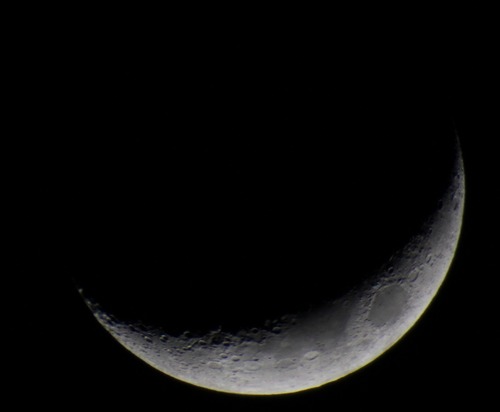
What you will actually see: a bright, sharply outlined Moon with visible craters and maria, the four Galilean moons shifting position over an hour, and the rings of Saturn as a distinct shape rather than a blob. Venus shows its phases. Mars will look like a small orange disc, honest at this aperture.
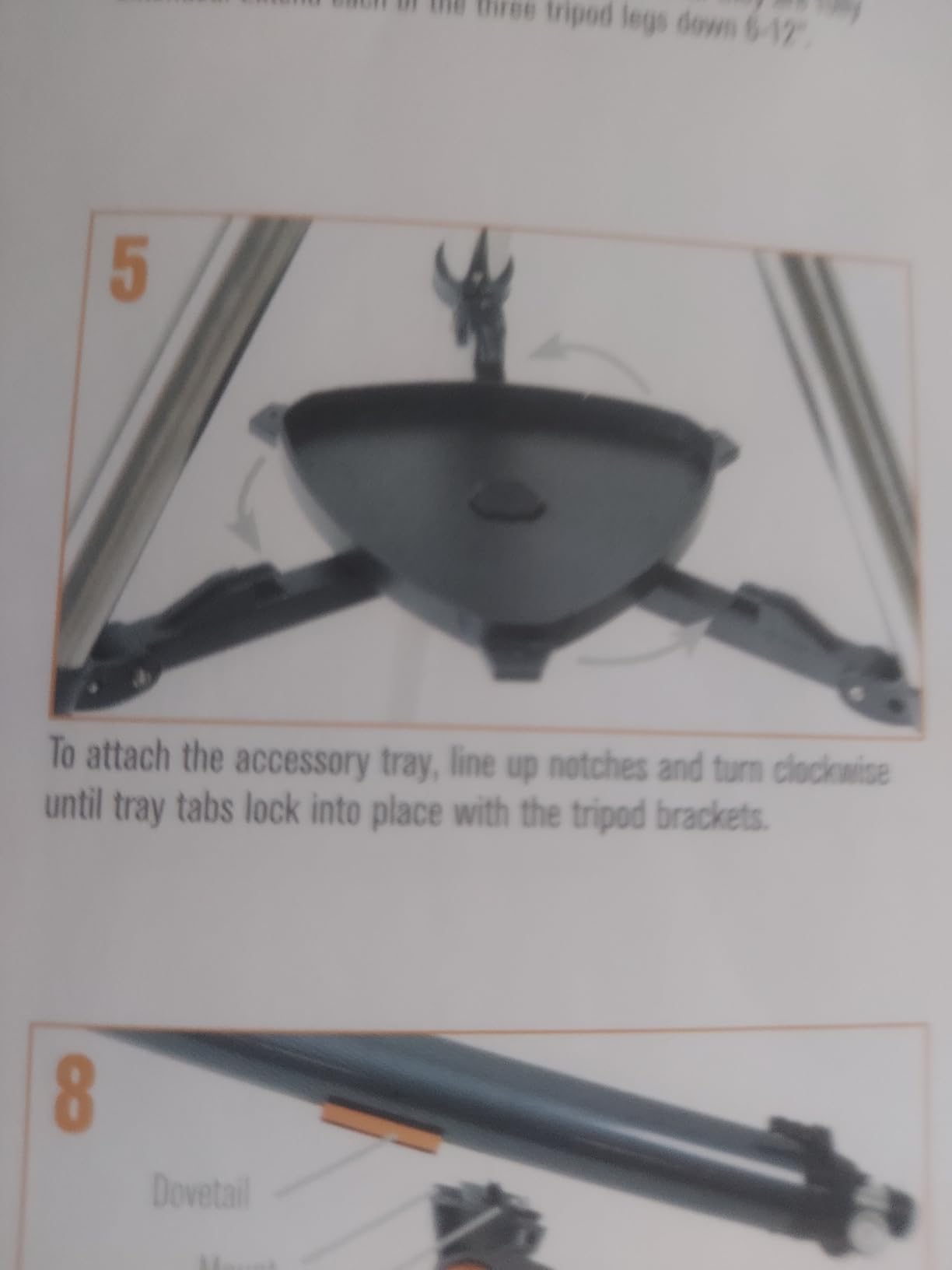
The refractor design does a lot of the work here. There is no mirror to collimate, so the first session has no fiddly alignment ritual standing between you and the Moon. Contrast on a doublet at moderate power is genuinely good, which is why achromatic refractors keep showing up in planetary discussions even though they gather less light than reflectors of the same size.
It also doubles as a daytime scope. The erect image diagonal means a neighbour’s chimney looks the right way up, which matters more than most buyers expect when the weather is bad and you want to test the setup in daylight.
What 900mm of focal length does for planetary detail
Magnification is just focal length divided by eyepiece focal length. At 900mm, a 10mm eyepiece gives 90x and a 5mm gives 180x. A 70mm aperture is rated at roughly 140x of useful magnification using the common 50x-per-inch rule, so 90x sits comfortably inside the range where the image still holds together.
That is the practical benefit of a long focal length on a small aperture. You reach useful power without needing a barlow, and you stay below the point where the image turns to mush. For a beginner, that is a much better place to start than a wide-field scope that maxes out at 30x.
Who should skip the 70mm aperture
If your priority is Jupiter’s cloud bands, Mars surface markings at opposition, or separating the Cassini Division, aperture wins and this scope is at the wrong end of the trade. Jupiter’s belts become obvious in the 70mm, but you are not going to see festoons or oval storms. Mars at a favourable opposition is bright but small, and detail is limited.
The other honest limit is the mount. It is a manual alt-azimuth, which means every few minutes you nudge the panhandle to recentre. That is mildly annoying at low power and genuinely irritating at high power on a target like Saturn. Steady hands and patience fix it; a motorised mount does not come with this one.
2. Celestron AstroMaster 130EQ Reflector: Budget Pick Telescope for Planets
Celestron AstroMaster 130EQ Telescope for Deep-Sky Beginners
130mm coated Newtonian
650mm focal length
German equatorial mount
17 pounds
Pros
- 130mm aperture shows visible Jupiter banding and lunar detail
- German equatorial mount with slow-motion knobs tracks far better than alt-az designs
- Tool-free assembly with beginner-friendly instructions
- 20mm and 10mm eyepieces plus finder included
Cons
- Light steel tripod is shaky when fully extended
- Newtonian mirrors need periodic laser collimation
- Red dot finder is hard to align precisely
This is the step-up pick, and the one we would actually recommend to a family with kids aged ten and up. The 130mm aperture is a real jump from a 70mm refractor, and it is where Jupiter stops being four dots and starts being a striped disc.
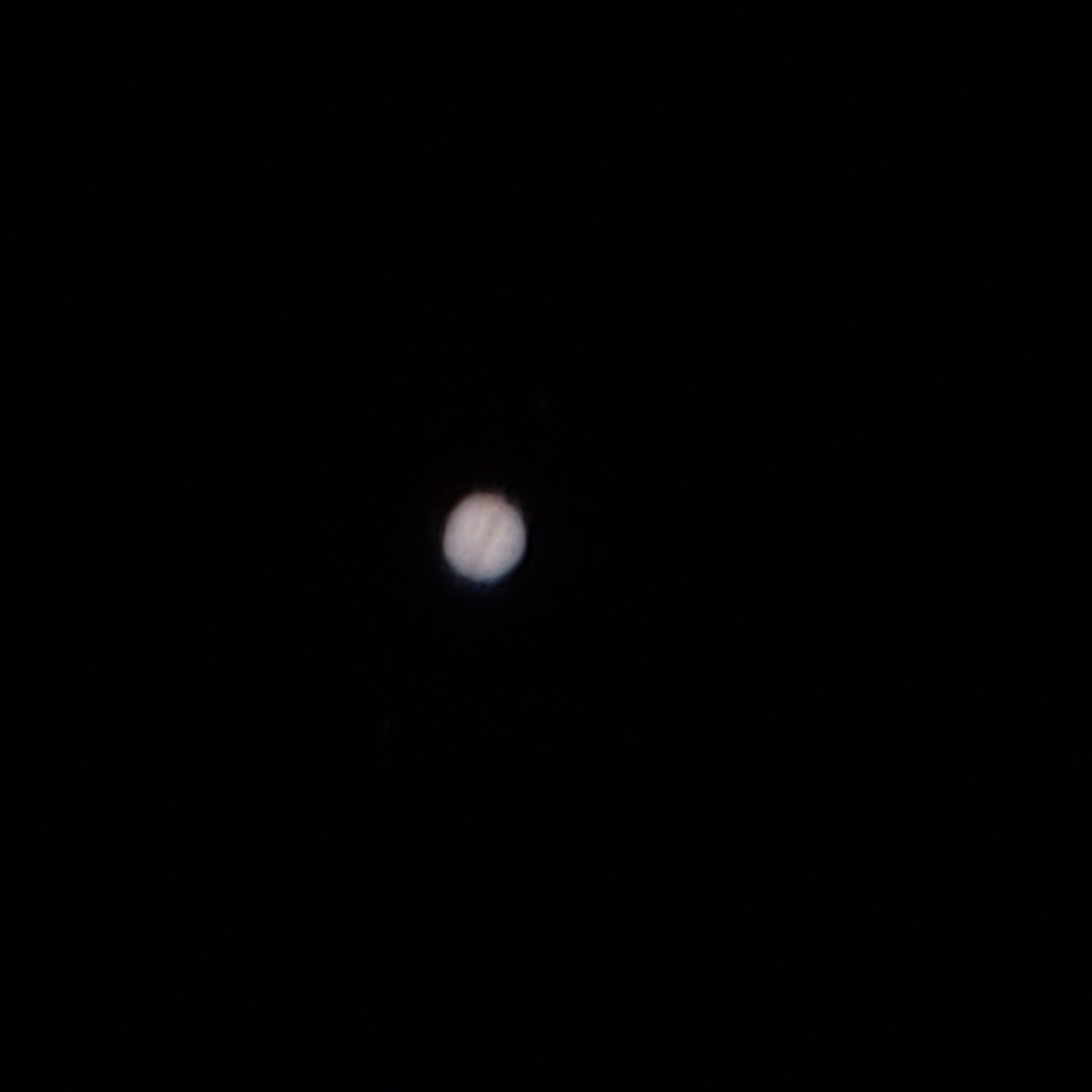
What you will actually see: Saturn with the ring gap beginning to resolve, Jupiter with two or three cloud belts and the four moons strung out in a line, the Moon with a terminator that shows craters in sharp relief, and Mars as a small disc that shows a hint of darker surface markings near opposition. Venus phases are obvious.
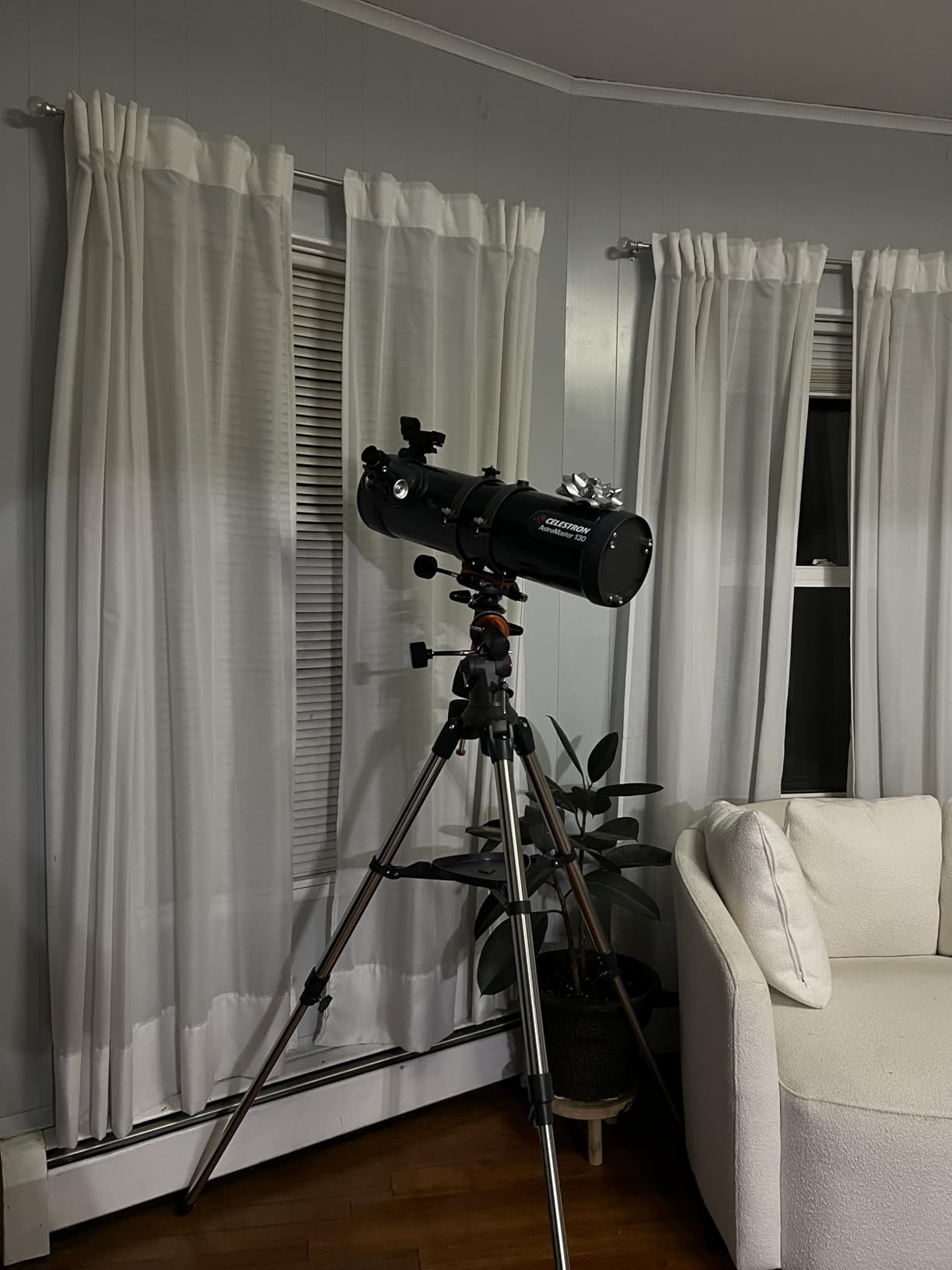
The German equatorial mount is the underrated part of this package. Those two slow-motion knobs let you nudge in right ascension and declination to follow a drifting planet, which removes the single most common frustration new Dobsonian-style observers report. Once you have used slow-motion controls, going back to re-centring by hand feels worse than it used to.
It is also a genuinely usable deep-sky scope, which matters because the Moon and planets are not visible every clear night. Members of astronomy forums consistently describe scopes like this as the sensible first reflector for that reason, and the pattern shows up repeatedly in discussions about upgrading from a small refractor.
One thing to plan for: Newtonian mirrors lose collimation. You will need a laser collimator, and the first time you align it is a twenty-minute job with a YouTube tutorial. After that it is a two-minute check. It is not a reason to avoid the design, but it is a real maintenance commitment that a refractor does not have.
Why the equatorial mount matters more than the aperture
At high magnification the Earth’s rotation pushes a planet out of the field of view in a couple of minutes. An alt-az mount fixes this with a joystick-like panhandle. A German equatorial gives you two slow-motion cables and a hand wheel, so you can keep a planet centred without disturbing the whole tube.
That is why this scope holds together at 130x when a 150mm scope on a weaker mount does not. For planetary work, mount rigidity and fine control are worth more than a few extra millimetres of aperture.
What to watch out for before you buy
The tripod is the weak point. Owners report it being shakier at full extension, and it needs a minute to settle after each adjustment. There is a simple fix that costs nothing: hang a weight from the accessory tray, or point the scope at a slightly lower altitude while the legs are still in place.
The second watch-out is the supplied 10mm eyepiece. At 650mm it gives 65x, which is on the low side for a 130mm aperture that can handle roughly 260x. A 6mm or a short-focal-length Barlow will take you to the range where the extra aperture actually pays off.
3. Celestron NexStar 8SE: Best Premium Schmidt-Cassegrain for Planets
Celestron NexStar 8SE Computerized Telescope – Schmidt-Cassegrain
8 inch StarBright XLT optics
2032mm focal length
Computerized single fork GoTo
25mm eyepiece included
Pros
- 8 inch aperture resolves fine lunar detail and Jupiter cloud bands
- GoTo mount with 40000 plus object database removes star chart hunting
- SkyAlign sets up in minutes with no polar alignment
- Compact tube in a single fork arm is easy to move
Cons
- Single fork arm can vibrate and spoil high power images
- Only a 25mm eyepiece supplied so planetary detail needs more glass
- Batteries and accessories such as a PowerTank not included
This is the pick for anyone who wants to point at a planet rather than find it. The NexStar+ hand control carries a database of more than 40000 objects, and SkyAlign gets the mount aligned by centring three bright stars or planets. No polar alignment, no star charts, no learning the sky before you can enjoy it.
What you will actually see: this is the first scope in our list where Saturn’s Cassini Division is straightforwardly visible, Jupiter shows a handful of distinct belts plus the Great Red Spot when it is on the disc, and the Moon at high power becomes a landscape rather than a texture. Mars near opposition shows real surface contrast.
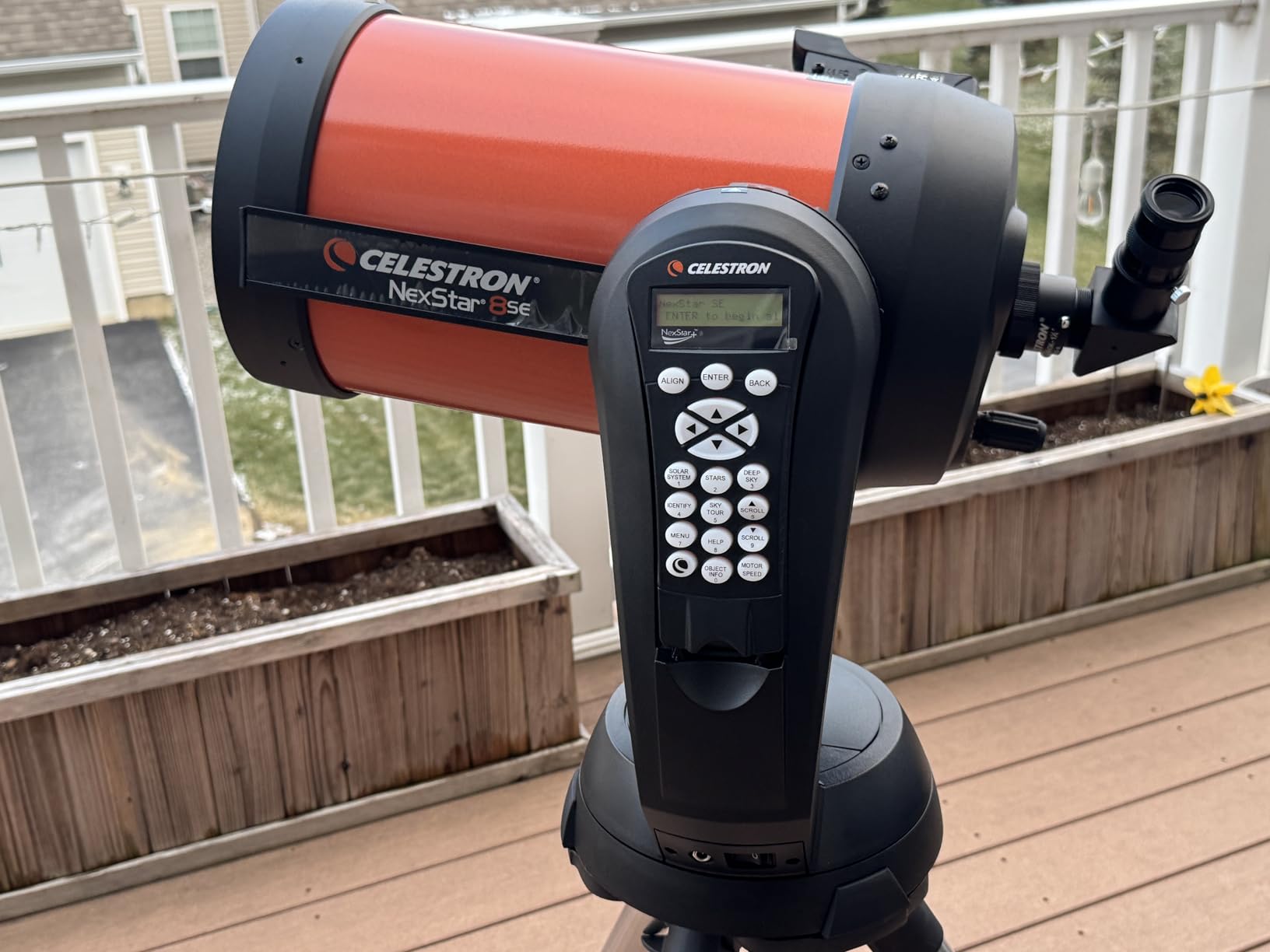
At 2032mm focal length the magnification options are wide open. The supplied 25mm eyepiece gives 81x, which is a good wide starting view, and 9mm or 6mm eyepieces take you to 225x and 338x. For an 8 inch aperture the useful limit is around 400x, so the tube has headroom that the supplied glass does not use.
The Schmidt-Cassegrain design is a good planetary compromise in other ways too. It has a long focal length in a short physical tube, it collimates in minutes if it ever drifts, and the coated mirrors hold contrast well against a background of city sky glow, which matters more for planets than it does for deep-sky objects.
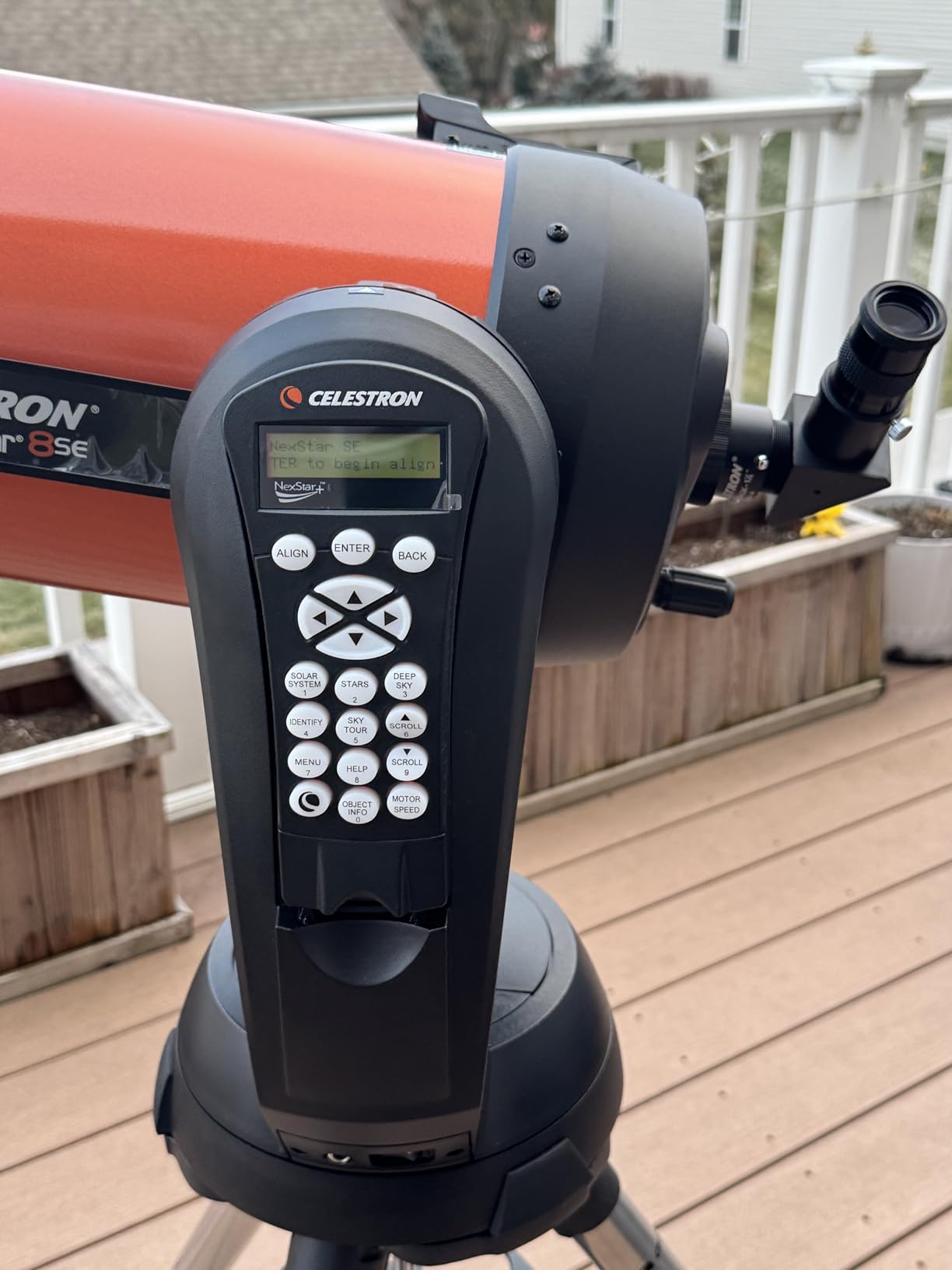
How much magnification the 8 inch aperture really supports
The common rule is that useful magnification runs to about 50x per inch of aperture, which puts 400x as the practical ceiling for an 8 inch scope. Past that the image is simply magnified empty space, and turbulence makes it worse rather than better. Forum advice on this is consistent: do not push past the limit chasing bigger numbers.
Getting to 200x to 300x is where this scope earns its cost, and that is a magnification range the 130mm and 150mm reflectors in this list cannot reach cleanly.
Where the fork arm gets in the way
The single fork arm design keeps the package compact, and owners praise how easy the whole thing is to move. It also introduces vibration. Push the eyepiece gently at high power and the scope shivers, and the planet boils for a few seconds afterwards. A vibration damping pad and light touches solve most of it.
The other limitation is the bare accessory package. One 25mm eyepiece is not a planetary kit. Budget for a 9mm and a 6mm Plossl, and expect to add a power supply, because eight AA batteries are fine for an evening but not great for a long session.
4. Gskyer 130EQ Reflector: Best Accessory Package for Planetary Observers
Gskyer 130EQ Professional Astronomical Reflector Telescope
130mm all-glass optics
650mm focal length at f/5
German EQ-130 mount
30.1 pounds
Pros
- 130mm aperture gives bright clear views of the Moon and planets
- Three eyepieces plus a 3x Barlow included for immediate high power
- German equatorial mount enables precise tracking across the sky
- Bluetooth remote pairs with a phone without an app download
Cons
- 30.1 pound package is awkward to carry and set up alone
- 307x claimed magnification far exceeds what this aperture can use
- No fine focus control for high power planetary work
The Gskyer 130EQ is the pick if the deciding factor is what arrives in the box. Three eyepieces and a 3x Barlow is a genuinely unusual amount of glass for a first telescope, and it means you can reach 195x on day one without buying anything else.
What you will actually see: Saturn clearly ringed, Jupiter with visible banding and the Galilean moons, a detailed Moon, and Mars as a small orange disc. At 130mm the aperture is the same as the AstroMaster 130EQ, so the view is comparable. The difference is in the accessories and the finish, not the optics.
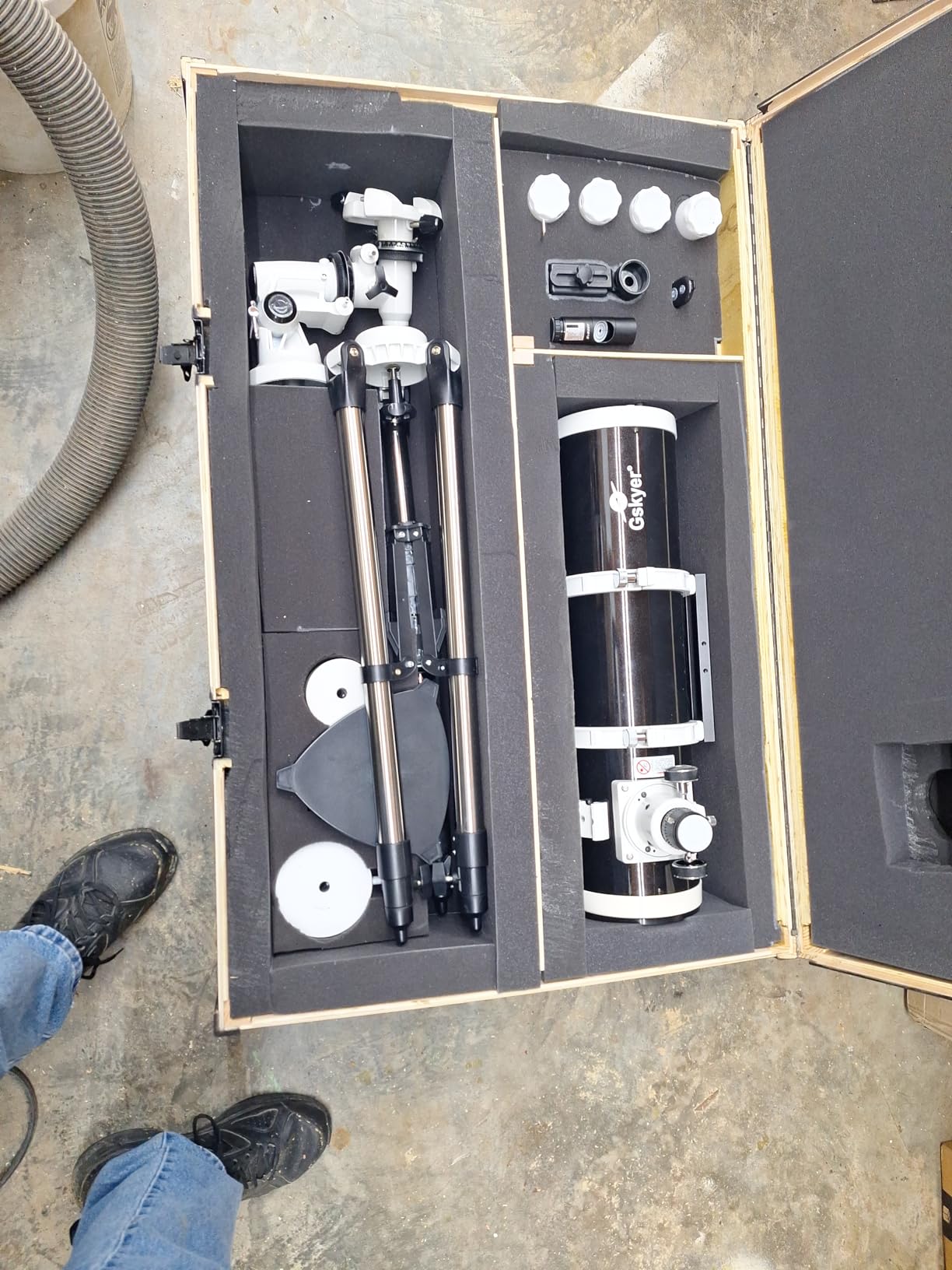
The 650mm focal length at f/5 is fast for planetary work. Fast focal ratios are prized for deep-sky because they produce brighter images, but for planets a slightly slower design usually gives a cleaner one. That said, with good eyepieces and steady seeing, the difference is smaller than most listings suggest.
The Bluetooth remote is a nice touch for lunar and phone photography. It pairs with iPhone or Android without an app download, so you can trigger a shutter while your hands stay off the tube. That is more useful for the Moon than for planets, where long exposures are a different discipline entirely.
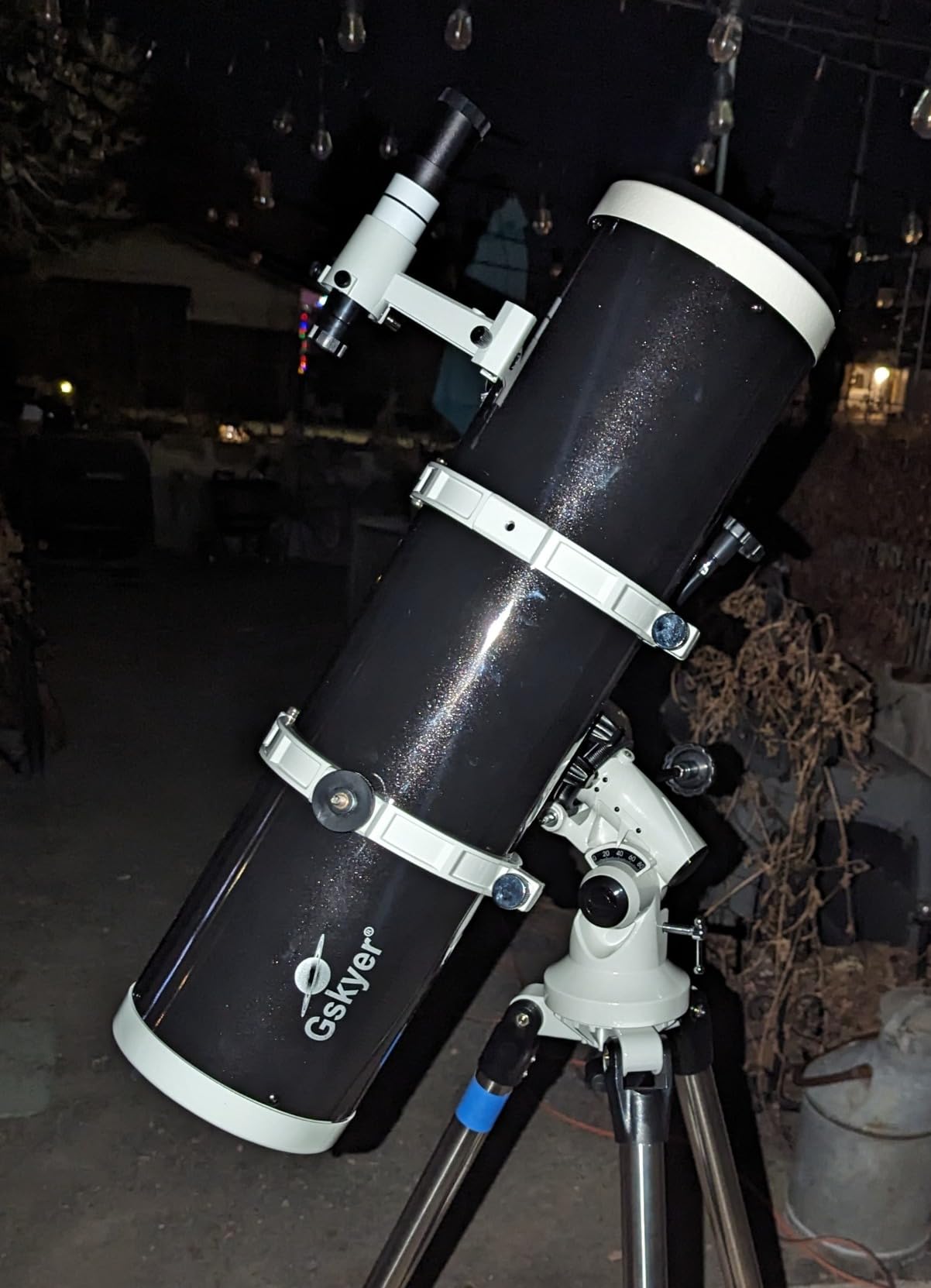
Whether the bundled eyepieces save you money
They do, with one caveat. A 3x Barlow triples magnification but also triples any alignment error in the eyepiece, so the cheapest eyepiece in the pack will look worse at 195x than a decent 9mm at 142x. Our advice is to use the Barlow selectively and treat the third eyepiece as a spare.
For anyone who wants to compare options before committing, our planetary eyepiece guide is written around the focal lengths that matter for scopes like this one.
Where the specification sheet oversells
The listed magnification of 307x is a number you will not use. A 130mm aperture has a useful limit near 260x, and in practice atmospheric turbulence on an average night means anything beyond 200x is a shimmering mess. This is the marketing-vs-reality gap forum users complain about most often, and it is worth mentally discounting.
The 30.1 pound weight is the other real constraint. That is a two-person job out of the car, and it is the main reason this scope ranks below the Celestron 130EQ despite the richer accessory bundle. If you have stairs, a lift or a small flat, think carefully before committing.
5. Dianfan 150EQ Reflector: Best Budget Telescope for Bigger Planets
Dianfan 150EQ Professional Astronomy Telescope for Adults High Powered
150mm coated aperture
650mm focal length
Pre-assembled equatorial mount
14 kg
Pros
- 150mm aperture delivers sharp bright views of lunar craters and seas
- Pre-assembled German-style equatorial mount with slow-motion cables
- Setup takes roughly 20 minutes for a first-time buyer
- Carry bag phone adapter moon filter and red dot finder included
Cons
- Maximum 130x magnification is modest for resolving fine planetary detail
- Manual focus only with no motorized tracking
- Daytime terrestrial views are inverted
The Dianfan 150EQ pairs the largest aperture we found at this tier with a mount that arrives pre-assembled. A 150mm mirror gathers meaningfully more light and resolves more detail than a 130mm, which is why it holds up better on Jupiter’s belts and on Mars near opposition.
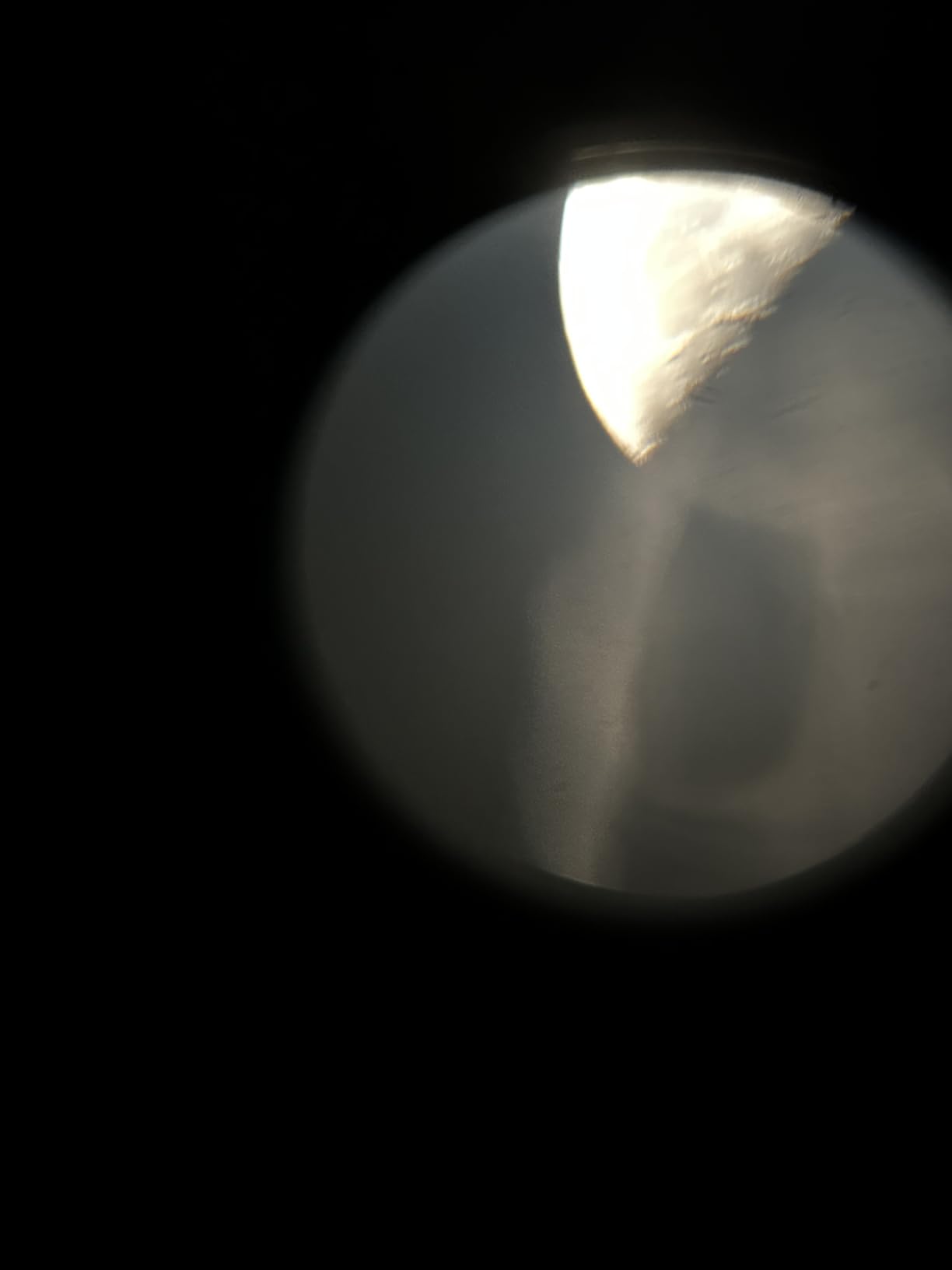
What you will actually see: a bright Moon where craters stand out with real shadow, Jupiter with banding and the moons visible, Saturn with the ring gap suggested, and a decent first view of the brighter deep-sky objects when the planets are not up. It is a capable all-rounder for the price tier.
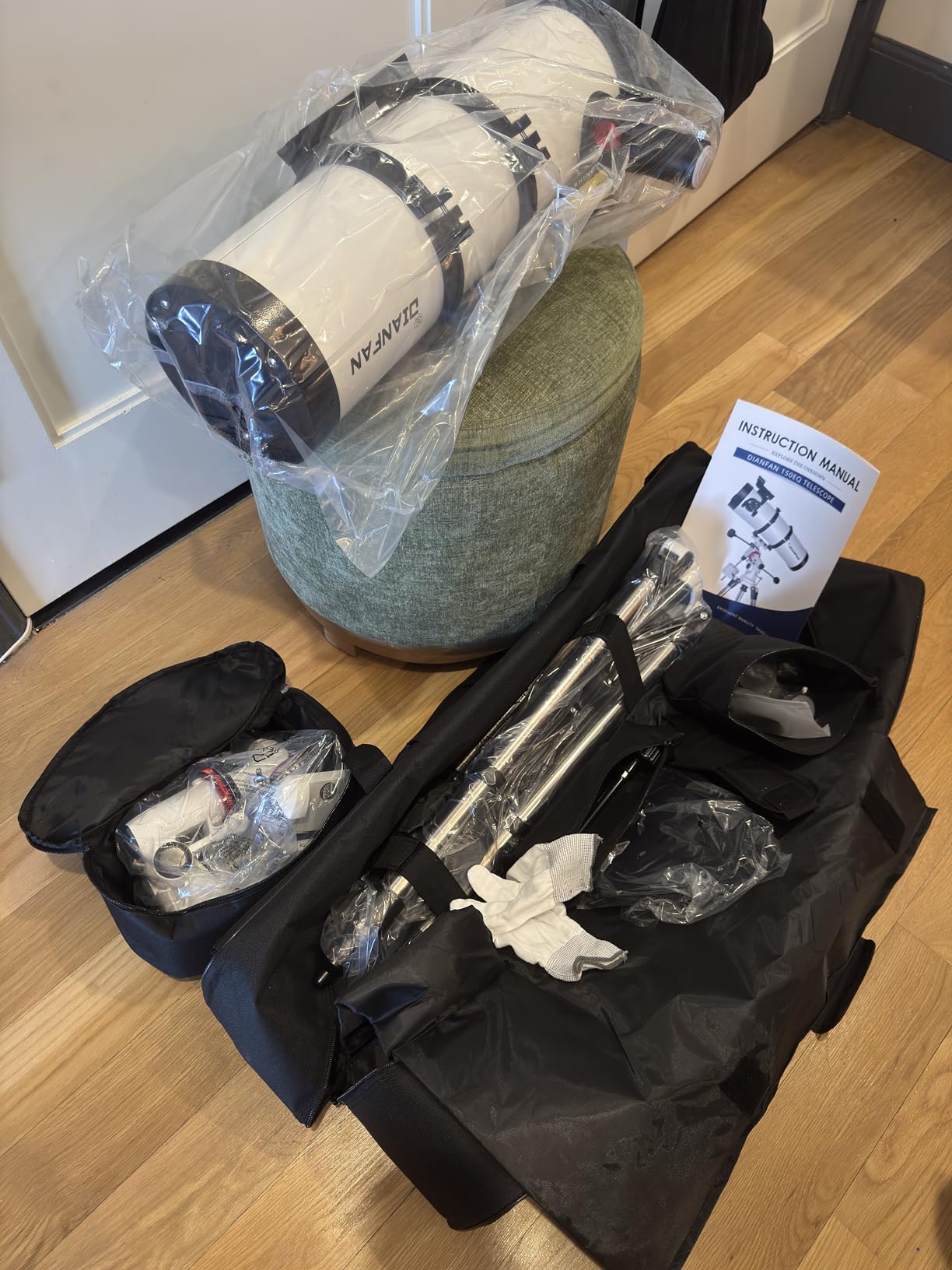
Users report roughly twenty minutes from opening the box to first light, which is exactly what you want from a first reflector. Newtonian collimation is still part of the deal, but a pre-assembled mount means one less assembly headache on a clear evening. The German-style equatorial head with slow-motion cables gives smooth, precise tracking of a drifting planet.
The accessory bundle is unusually complete for this tier. A carry bag sized to the tube, a phone adapter, a moon filter and a red dot finder all come in the box. The moon filter is a nice touch for planetary and lunar work because it reduces glare on a bright target.
What 130x of magnification means on a 150mm aperture
This is the tension in the design. The magnification range tops out at 130x with the 2x Barlow, but a 150mm aperture can usefully carry around 300x. You have light and resolution available that the supplied glass will not let you reach. A 5mm eyepiece on a 650mm tube gives 130x, and a 2mm gives 325x if you want to chase it.
Realistically, adding a 6mm and a 4mm eyepiece would put most of the aperture’s potential within reach. Until then, treat this as a wide, bright, comfortable scope rather than a high-power one.
What the inverted daytime view costs you
The mirror reverses the image horizontally, which is why the star diagonal included with most Newtonians exists. This package does not include one, so daytime views through the eyepiece are inverted both ways. For a child pointing a scope at the neighbour’s garden gnome at midday, that generates questions. It does not affect astronomical observing at all.
The absence of motorized tracking is the more relevant limitation for planets. Manual equatorial tracking with slow-motion cables works, and the cables are included, but you are adjusting by hand for the whole session. If you want the planet to stay put while you change eyepieces, budget for a tracking upgrade later.
6. Sky-Watcher Classic 200 Dobsonian: Best Aperture for Planets
Sky-Watcher Classic 200 Dobsonian 8-inch Telescope – Solid-Tube – Simple, Traditional Design – Easy to Use, Perfect for Beginners, White (S11610)
8 inch parabolic primary
1200mm focal length
Altazimuth Teflon bearing base
45 pounds assembled
Pros
- 8 inch aperture gives bright high-contrast views with real planetary detail
- Dobsonian design needs no alignment procedure
- Patented tension control handles allow fine movement without perfect balancing
- Complete with a 2 inch Crayford focuser and two wide-angle eyepieces
Cons
- Largest and heaviest option here and the least portable
- Altazimuth base with no tracking so planets drift out of field
- 25mm and 10mm eyepieces give low magnification for the aperture
Everything else on this list is a compromise in one direction or another. The 8 inch Dobsonian is a compromise only in size. If you have the space and the help to move it, this is where you get the most planetary detail per unit of money, and it is the recommendation that comes up most often in beginner forums.
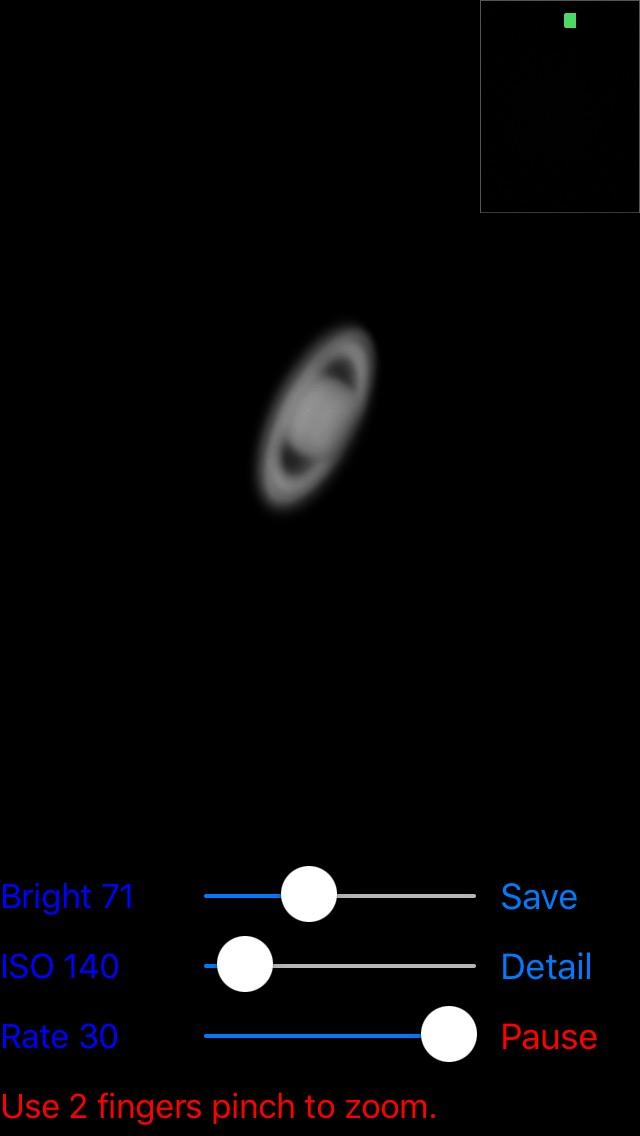
What you will actually see: Saturn with the Cassini Division clearly separated, Jupiter showing multiple belts, festoons at the edges and the Great Red Spot when it is turned toward you, Mars with recognisable surface markings near opposition, and a Moon that rewards every increase in magnification.
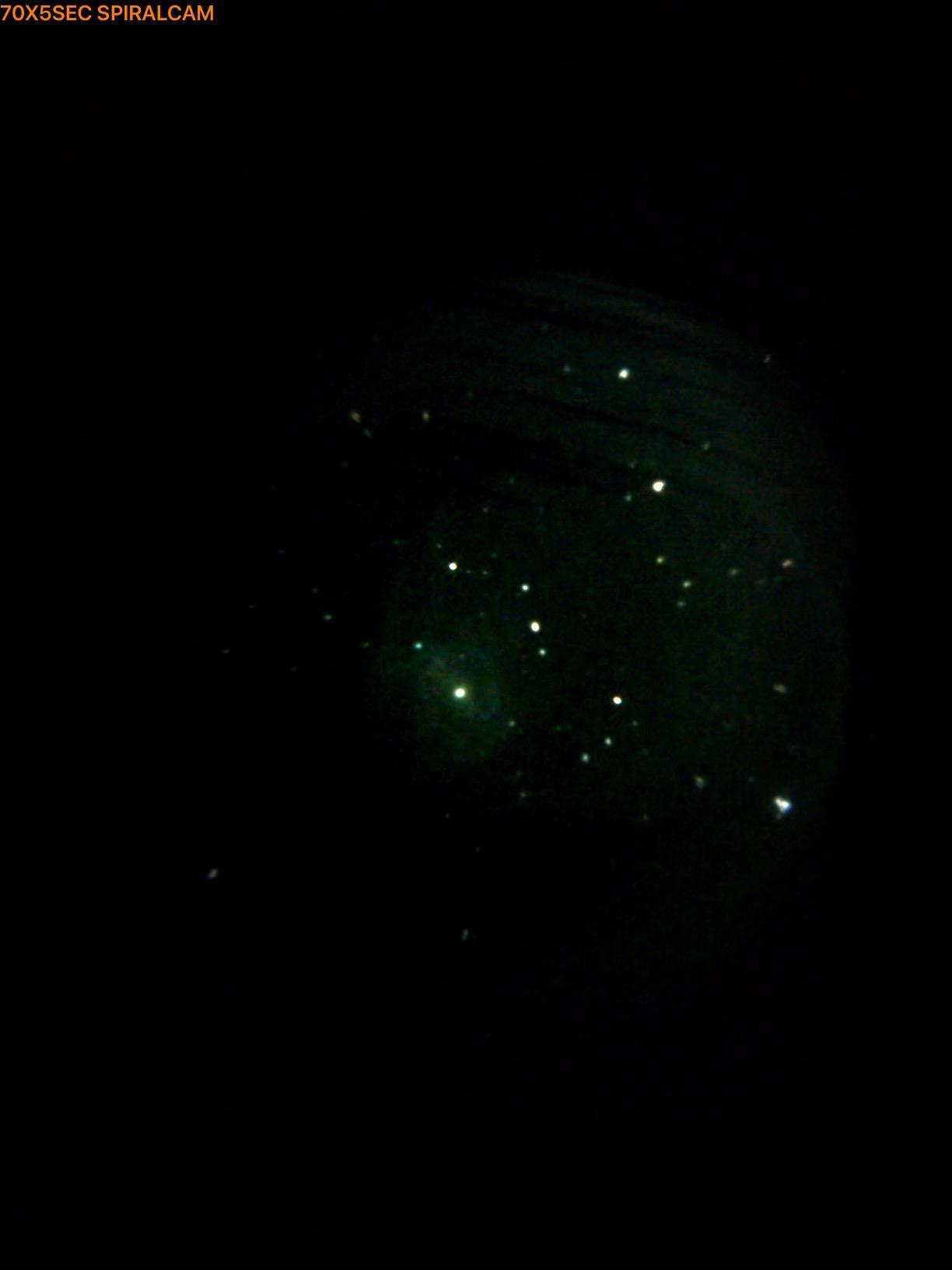
At 1200mm focal length with the 10mm eyepiece you get 120x, and a 6mm Plossl takes you to 200x. The 2 inch Crayford-style focuser matters more than it sounds: it accepts 2 inch barrels, so you are not restricted to the supplied wide-angle glass when you want to go serious.
The Teflon bearings and tension control handles are the quality-of-life details that make a Dobsonian pleasant rather than frustrating. The handles let you move the tube in small controlled increments without hunting for a balance point, and the azimuth bearings glide rather than grind. It is a design that has barely changed in decades because it works.
Why aperture is the whole argument for a Dobsonian
Resolution scales with aperture. The 8 inch primary resolves detail that the 130mm and 150mm reflectors above physically cannot, and on a night of steady seeing that difference shows as a crisp, high-contrast image with fine structure rather than a soft blob. Saturn is the target where the difference is most obvious and most worth it.
Deep-sky benefit is a bonus. The coating is specified at 94 percent reflectivity, which is excellent, and the faintest stellar magnitude of 14.2 means galaxies down to a reasonable size are within reach. You are not sacrificing anything for the planetary focus.
When a Dobsonian is the wrong purchase
Portability is the issue. At 45 pounds fully assembled, split as a 20 pound tube and a 25 pound base, this is a two-person job and it does not fit in most flats. If you live in an apartment with no garden, or you plan to take the scope to dark-sky sites, this is the wrong pick regardless of how good the optics are.
There is also no tracking. A Dob moves in two axes, so a planet drifts out of a high-power field in a few minutes and you nudge it back. That is manageable and many observers never notice, but if you want to sit on Jupiter for an hour, plan to touch the tube regularly. And the supplied 25mm and 10mm eyepieces are wide-angle designs chosen for the low-power use case, so expect to buy a 9mm or 6mm before you see the aperture’s full potential.
7. DWARFLAB Dwarf 3 Smart Telescope: Best Portable Pick for Planets on the Go
DWARFLAB Dwarf 3 Smart Telescope, App-Controlled Astrophotography Camera
35mm class optics
3 pound 1.35kg body
Alt-az auto-tracking with GoTo
4K capture
Pros
- Weighs only 3 pounds and fits a standard backpack
- App-driven auto-tracking and GoTo remove the learning curve
- Produces finished images in minutes with no PC required
- Dual lens system handles both deep space and night skies
Cons
- 35mm class optics give limited true planetary detail at high power
- Focus and framing are fixed by the app so fine adjustments are not possible
- Internal battery limits long sessions without external power
We are including this one because the smart telescope category has become a genuine recommendation trend in amateur astronomy forums, and you will encounter it. What you get is a 3 pound astrograph that fits in a backpack and produces an image in minutes, not a planetary instrument.
What you will actually see: a small, bright, correctly coloured disc of the Moon, the Moon’s phases, and planets as unresolved points of light that are noticeably brighter and steadier than they are with the naked eye. Pointing at Jupiter shows a bright point, not a disc with moons.
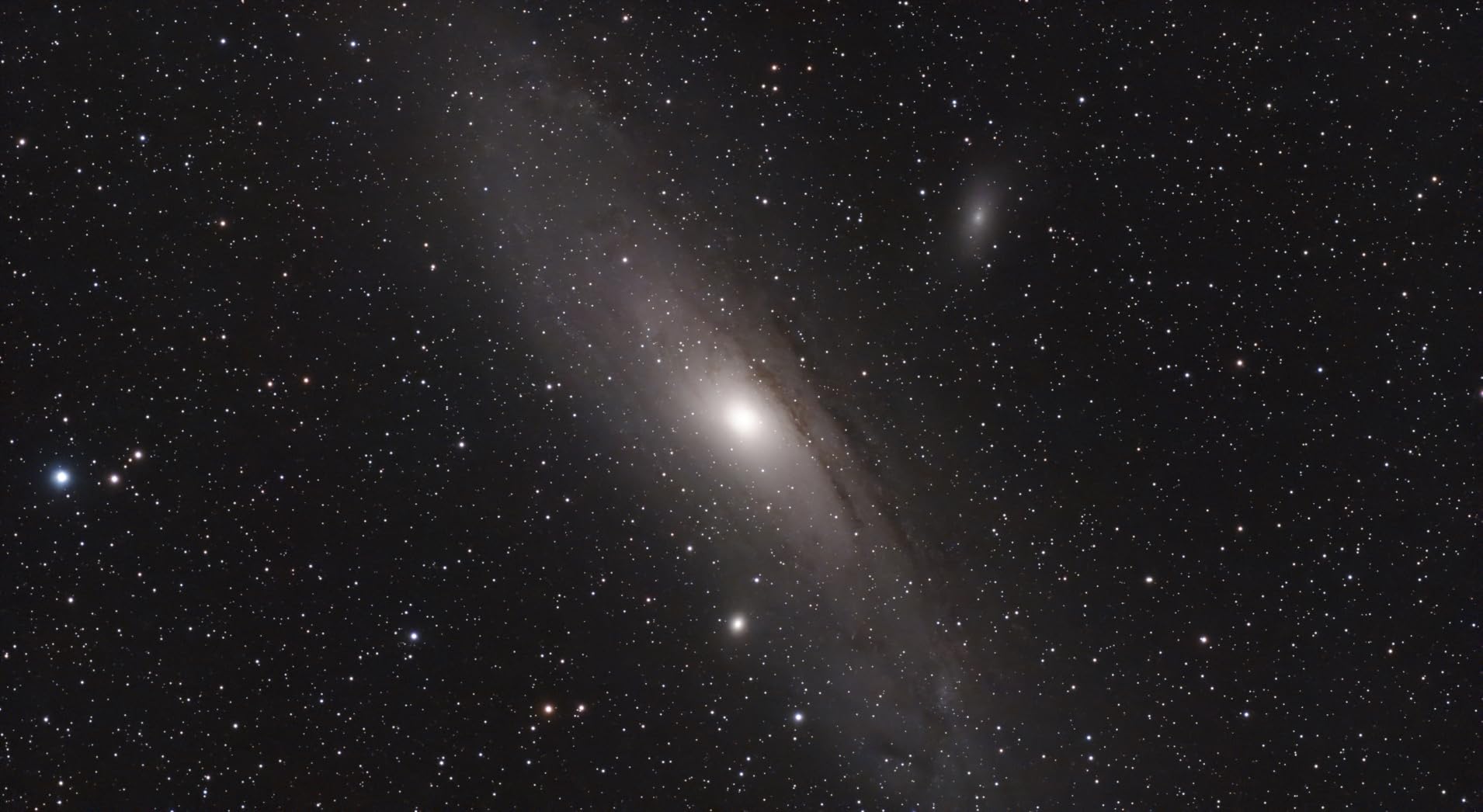
Where the Dwarf 3 wins is everything around the observing. Auto-tracking with alt-az and equatorial modes means no polar alignment, no star hopping and no eyepiece changes. The one-touch cloud processing in the DWARFLAB app stacks and cleans the frames for you, which removes the single hardest part of astrophotography.
Owners give it very high ratings, with roughly three quarters of reviews at five stars, and the praise concentrates on portability and the speed from cold start to finished image. That is a fair summary of what it is designed to do.
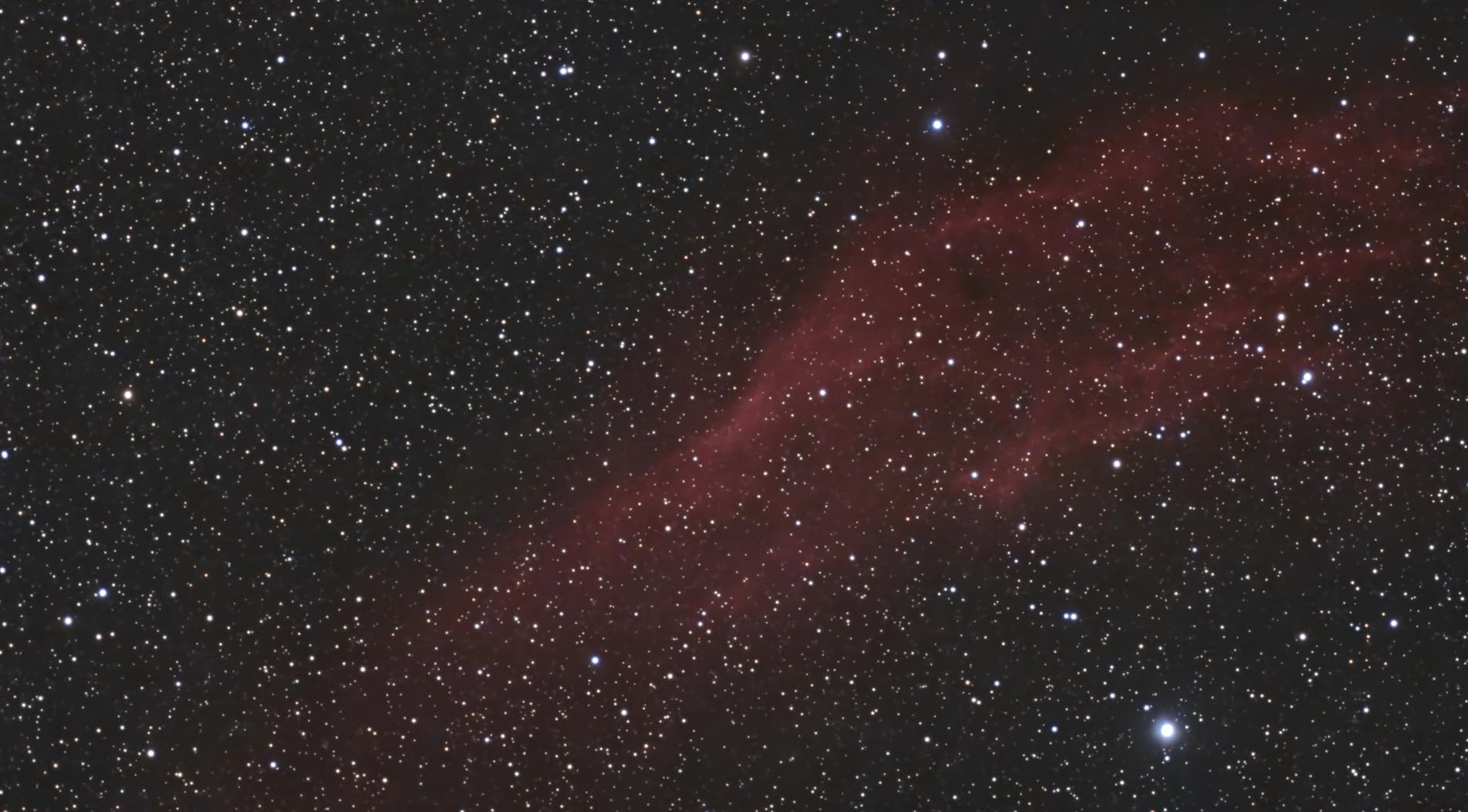
Why a 35mm aperture limits you on planets
A 35mm aperture is one third the light-gathering area of a 130mm scope and far smaller than the 8 inch Dob. On a planet, that translates to a dot rather than a resolved disc. Jupiter’s moons are beyond it. Saturn’s rings are beyond it. The realistic planetary use here is lunar and wide-field, plus confirming that a bright planet is there before you point a real telescope at it.
There is a second limit. Focus and framing are set by the app, so you cannot make the fine adjustments that planetary imaging needs. Planetary work rewards a fixed, precisely tracked setup and long subframes; this is a wide-field capture system doing a different job.
Who should buy the Dwarf 3
Buy it if you want astrophotography with no learning curve, if you travel to dark-sky sites with a carry-on budget, or if you want to share the sky with a child who will lose interest in collimation. Its dual lens system also handles wildlife and landscapes in daylight, which broadens its use well beyond the night sky.
Do not buy it as your only telescope if the planets are the reason you are here. Pair it with a manual refractor or reflector, and treat the smart scope as the thing that gets you out of the house. If you want a manual reflector comparison for the pairing, our reflector telescope guide covers the designs at different price points.
8. ZWO Seestar S30 Pro: Best Smart Telescope for Light-Polluted Skies
ZWO Seestar S30 Pro Smart Telescope, App-Controlled Astrophotography
30mm apochromatic optics
160mm focal length
Alt-az mount with EQ mode
3.64 pounds
Pros
- Apochromatic optics and built-in light pollution filters suit urban skies
- Automatic GoTo and tracking allow imaging on a first night out
- One-tap modes for the Moon nebulae galaxies and star trails
- Compact 3.64 pound body with anti-dew protection
Cons
- Positioned for deep-sky imaging and not intended for planetary observation
- 160mm focal length and 30mm aperture limit resolution on small targets
- Must stay stationary during deep-sky imaging sessions
The S30 Pro is the most capable smart telescope on this list, and the least suited to planets. ZWO positions it for wide-field and deep-sky astrophotography, and reviewers are consistent about that. We include it because it is heavily reviewed and frequently recommended for beginners, and because the built-in light pollution filters are genuinely interesting for urban observers.
What you will actually see: a well-exposed image of the Moon, wide star fields, the Milky Way arcing over a foreground silhouette, and integrated mosaics of larger deep-sky objects after stacking. Planets appear as bright points. The Moon mode is the closest thing here to planetary work.
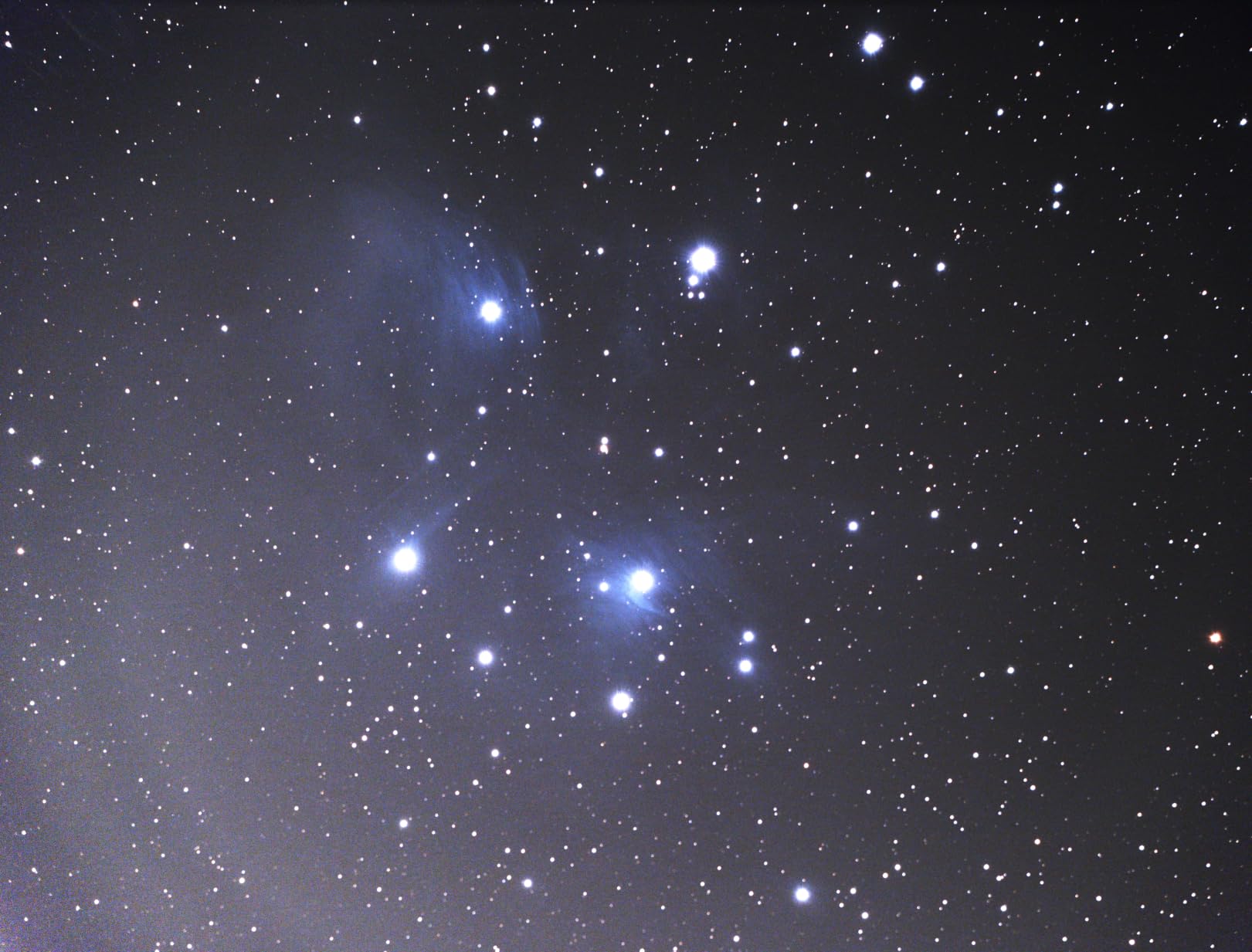
Those light pollution filters are the feature that matters most if you observe from a city or a bright suburban garden. Because the filters are built in, you do not need to know what a light pollution filter is or buy a separate accessory to use one. The apochromatic optics hold colour well on bright targets, which is where cheap optics usually tint everything yellow.
Owners report strong results even under significant sky glow, with roughly three quarters of reviews at five stars. Automatic GoTo, anti-dew protection and equatorial mode support longer sessions, and the whole unit weighs 3.64 pounds with the tripod included.
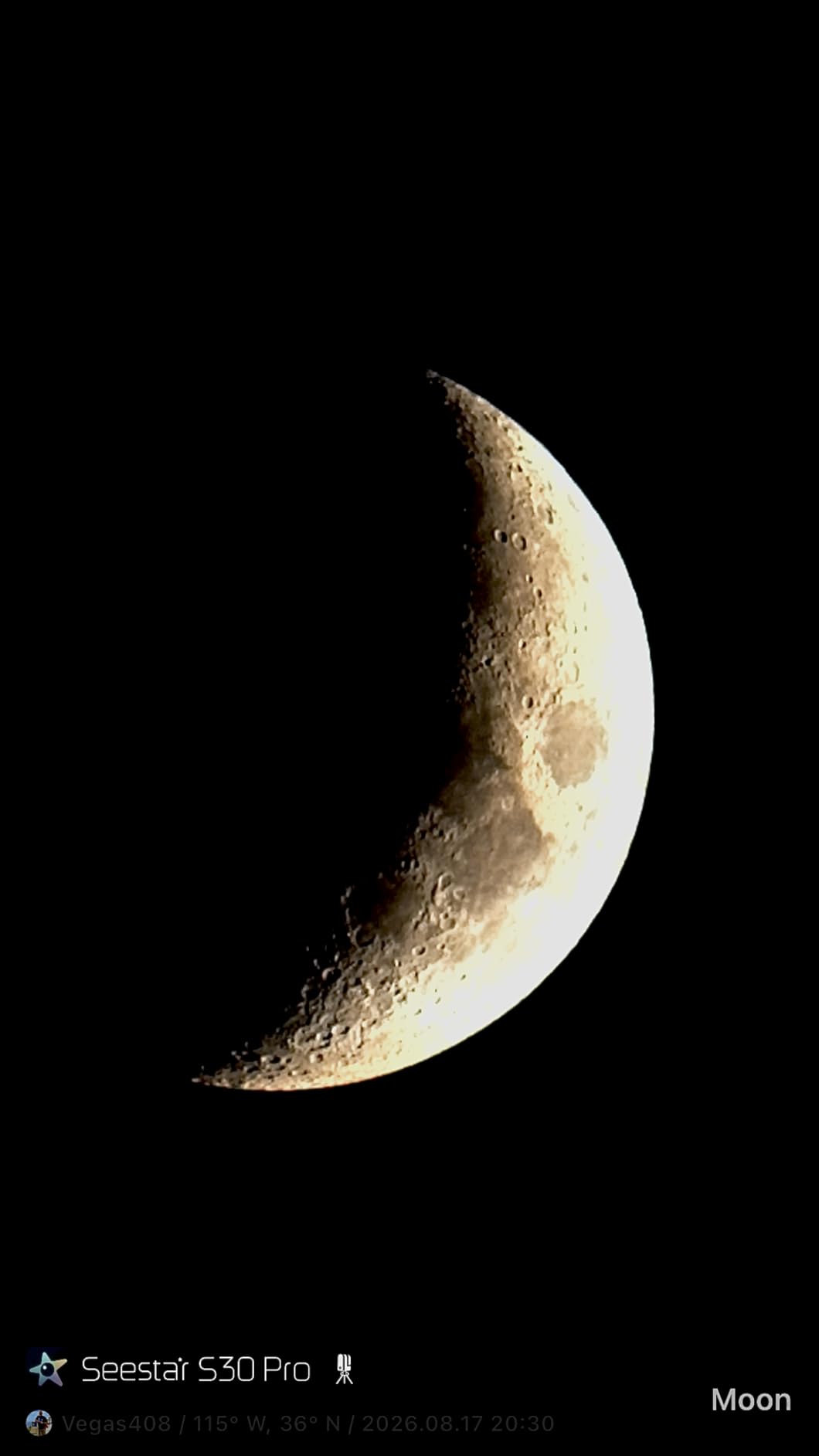
Why 160mm of focal length is wrong for planets
This is worth stating plainly because the product is often discussed alongside planetary observing. A 160mm focal length is a wide-field number. With a typical eyepiece you would sit below 60x, and the design has no eyepiece interface for the high-power work that planetary viewing requires. The manual focus and auto focus options control the camera, not an eyepiece.
The honest framing is that a smart telescope of this class is a camera on a tracking mount. If your goal is to see Cassini’s Division, it is not the tool.
Where it genuinely earns its place
If you live somewhere with heavy light pollution and have no car, no garden and no patience for collimation, this is a strong choice. It solves the two things that most often stop people: you cannot see a galaxy with your eyes from where you live, and you do not want to learn a mechanical skill before you get a result.
It also pairs well with a manual scope. A small refractor for the Moon and planets at the table, the S30 Pro for the deep sky from a balcony, covers both halves of the sky without a large instrument.
9. MEEZAA 150EQ Reflector: Best First Assembly for New Owners
MEEZAA Telescope, 150EQ Newtonian Reflector Telescope for Adults Astronomy Beginners, Professional Astronomical Telescopes with Equatorial Mount, Tripod, Phone Adapter, Moon Filter and Large Carry Bag
150mm aperture
650mm focal length
German equatorial mount
Equipped with carry bag
Pros
- 150mm aperture shows Jupiter and Saturn clearly on the supplied eyepieces
- German equatorial mount with slow-motion knobs gives smooth manual tracking
- Arrives aligned with a pre-lubed mount and color-coded instructions
- Carry bag moon filter phone adapter and finder all included
Cons
- Entry level Kellner eyepieces usually need replacing
- Plastic focuser and a phone holder that is hard to align
- Many assembly pieces and heavy enough to need two people
The MEEZAA 150EQ is the pick if the biggest worry is the first ninety minutes. The mirrors arrive already collimated and the mount pre-lubed, and the instructions are colour-coded. That removes the two things that make people give up on a first Newtonian.
What you will actually see: the Moon with crisp craters and clear shadow terminator, Jupiter with the Galilean moons, Saturn with its rings, and a wide range of deep-sky objects on the same nights the planets are not cooperating. It sits alongside the Dianfan 150EQ as the other large-aperture option at this tier.
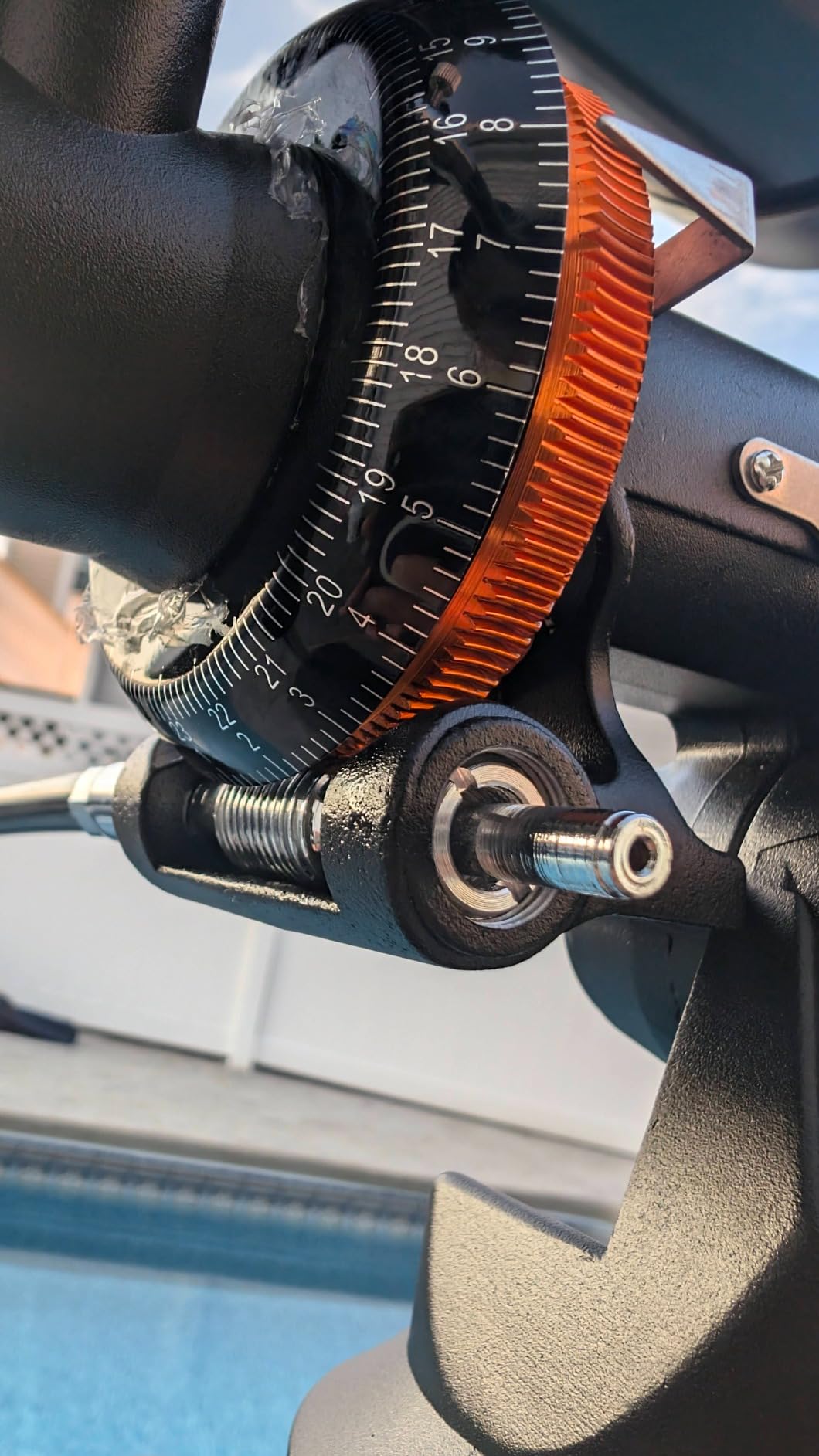
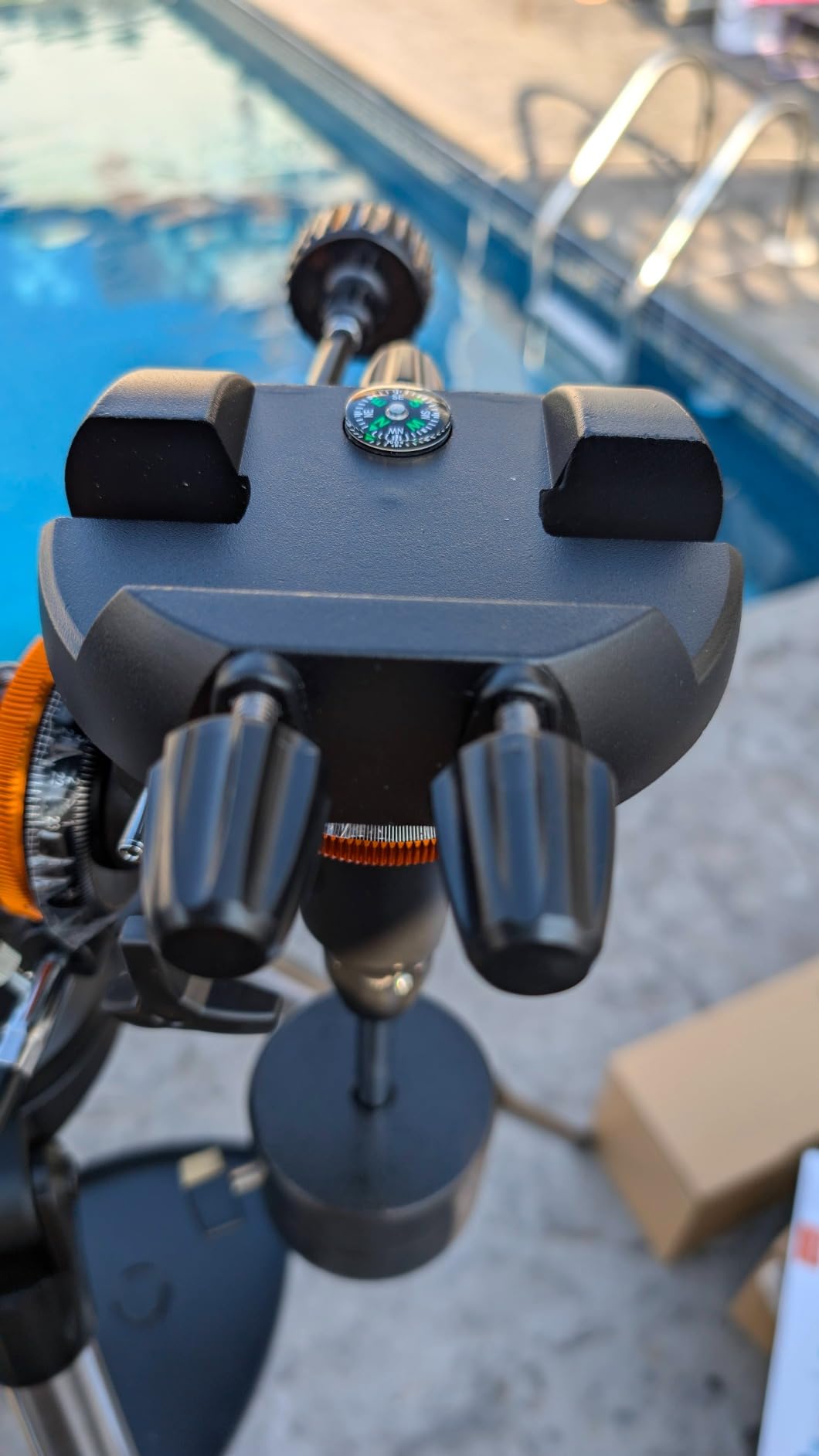
The German equatorial mount with precision dials and slow-motion knobs is the feature owners praise most. For planetary work, the ability to nudge a planet back to centre without disturbing the whole optical tube is what separates a pleasant session from a frustrating one. At 650mm focal length the two supplied eyepieces plus a 2x Barlow give a 26x to 130x range.
That range is the honest limitation. A 150mm aperture can carry around 300x usefully, and 130x leaves a lot on the table. The fix is a couple of shorter-focal-length eyepieces, which is a modest outlay on top of the scope.
Why pre-collimation is worth paying for
Newtonian collimation is the first thing that stops new owners. The mirrors are out of alignment when they leave the factory, and a new owner has to learn a procedure with a laser tool before the view looks right. This one arrives aligned, which means the first view is a good view.
Collimation still drifts after transport, so keep a laser collimator on the shopping list. But you will not need it to enjoy the first night, and that changes the whole feel of buying a first telescope.
Where the budget shows
The Kellner eyepieces are the weakest link. Reviewers consistently note that swapping them out is worthwhile, and also that a swap knocks the target out of focus, which means refocusing between every change. Start with a single better eyepiece rather than a full set, and get used to changing it less often.
The plastic focuser is the other place the price shows. It works, but it lacks the smooth, fine helical feel of a metal Crayford, and at high power you will be turning it more gently than you would like. Assembly is a genuine chore with many small pieces, and the weight means two people. Budget thirty minutes and a second pair of hands.
10. DWARFLAB Dwarf Mini Smart Telescope: Best Pocket-Sized Setup
DWARFLAB Dwarf Mini Smart Telescope – 1.85lb Portable Astronomy Telescope
30mm aperture
150mm focal length
1.85 pounds all-in-one
Equatorial mode
Pros
- Pocket-sized at 1.85 pounds and set up in minutes with no star hopping
- Plate solving and auto GoTo reliably find and track targets
- Equatorial mode with up to 90 second exposures plus light pollution filters
- Stacked and processed images on a first clear night
Cons
- Not suited to planetary detail which appears as small round circles
- Low sensor resolution limits enlargement and small targets
- Internal battery limits runtime without a power bank
The Dwarf Mini is the smallest and lightest thing on this list at 1.85 pounds, all in one, and it gets you to a finished image in about three minutes from a cold start. If you want to show someone what a galaxy looks like without carrying a Dobsonian to a car park, this does it.
What you will actually see: the Moon as a recognisable disc with visible craters and maria, star clusters and brighter deep-sky objects that are invisible to the naked eye, and planets as steady points rather than discs. Reviewers are clear that it is an astrograph and not a planetary scope, and that detail on planets simply is not there.
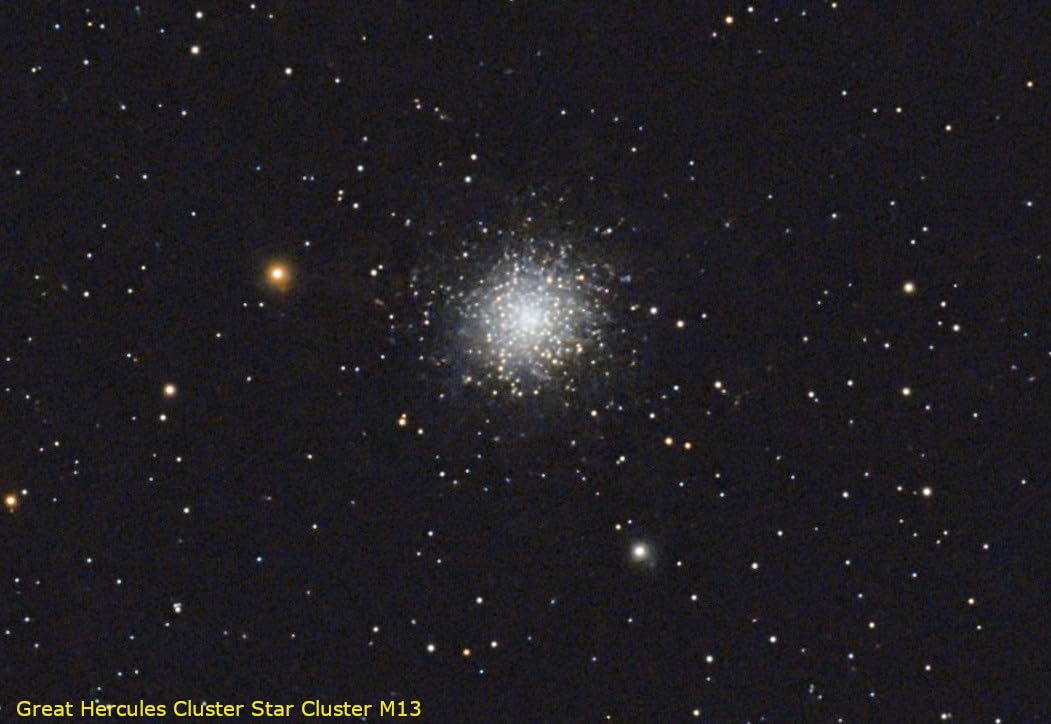
Plate solving and automatic GoTo with full 360 degree pivot rotation are the features that make it work from a picnic table. You point the app at the sky, it identifies where you are pointing, and it tracks. The equatorial mode supports single-frame exposures up to 90 seconds with built-in light pollution filters, which is a meaningful upgrade over straight alt-az tracking.
At 1.85 pounds it fits in a daypack, and reviewers recommend pairing it with a fluid-head tripod and a power bank for longer sessions. The internal dark-frame shutter and cloud processing with mega-stacking across sessions mean you can build up an image over several evenings rather than losing everything to a single bad night.
Where a 30mm aperture stops working
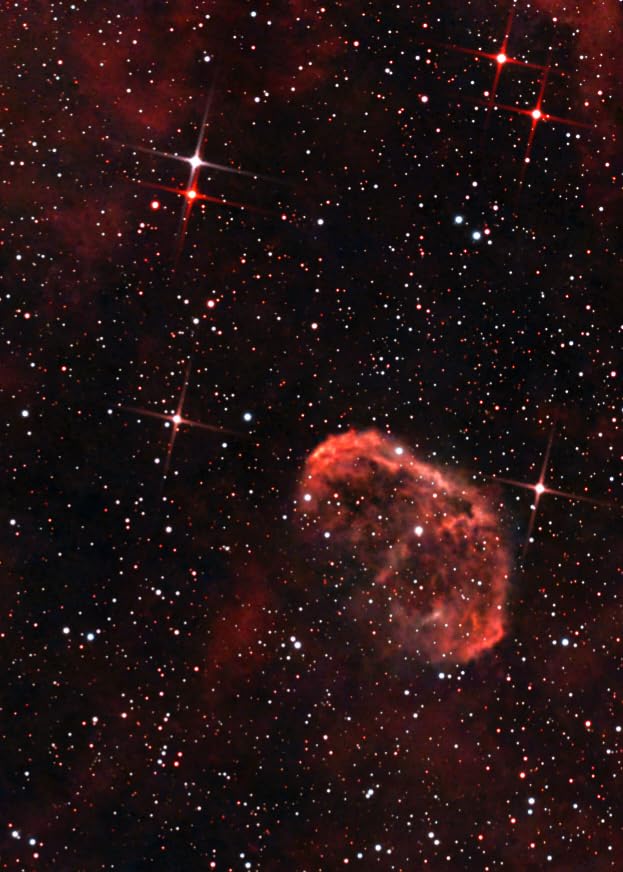
Thirty millimetres is a wide-field aperture. The field of view of 2.45 degrees is ideal for fitting the Andromeda galaxy or a large open cluster in frame, and completely wrong for splitting a planet. There is no high-magnification mode to reach for, so planetary detail is simply not available on this instrument.
Sensor resolution is the second limit. A 1/2.8 inch Sony IMX662 sensor is very good for a device this small, and its low-noise capture is a genuine strength for long integrations. But the pixels are large, so small targets do not enlarge well and large prints are out of reach.
Whether a smart telescope is right for a beginner
Our view, informed by how these turn up in forum recommendations, is that smart telescopes solve a real problem for some people and create a different one for others. They solve the pointing problem, the finding problem and the processing problem instantly. They create the expectation gap, because a small sensor does not resolve what a 130mm mirror resolves.
If your interest is specifically planets, spend the money on aperture and a stable mount. If your interest is the night sky more broadly and your time is limited, the Dwarf Mini is a genuinely good way to find out whether you enjoy it before you buy something large.
How to Choose a Telescope for Planets
Aperture, focal length and mount rigidity are the three numbers that decide whether a telescope is good at planets. Here is how to think about each one, and where beginners most often go wrong.
Optical design: refractor, reflector, or catadioptric
A refractor uses a lens, a Newtonian reflector uses a mirror, and a Schmidt-Cassegrain uses a mirror inside a compact tube. For planets, all three can work well, and the differences are more about maintenance and portability than about final image quality at the same aperture and focal length.
Refractors give the least maintenance and high contrast, with no collimation to perform. They are the easiest place to start and the best choice for the Moon and for smaller apertures. Reflectors deliver more aperture for less money, which is why they dominate value picks, but they need periodic laser collimation. Catadioptrics pack a long focal length into a short tube, which makes them the most portable serious option.
Aperture: how big do you actually need to be?
Aperture is the single most important number on the spec sheet. It controls light gathering, and more importantly it controls resolution, which is what turns a bright dot into a disc with structure.
70mm: Moon in detail, Jupiter’s four moons, Saturn as a ringed shape, Venus phases. No bands, no ring gap.
130mm: Jupiter’s cloud bands become visible, the Moon is excellent, Mars shows a plain disc.
150mm: better Jupiter banding, first hint of Mars surface contrast, Saturn’s ring gap suggested.
200mm: Saturn’s Cassini Division, multiple Jupiter belts, the Great Red Spot, recognisable Mars surface markings.
This is the honest answer to what size telescope you need to see Saturn’s rings: almost any of them. The rings appear at 60mm. What changes with aperture is how much detail is inside that image, and that is what you are really buying.
Focal length and useful magnification
Focal length is the distance light travels inside the tube, and it determines how much magnification you get from a given eyepiece. Magnification equals the telescope’s focal length divided by the eyepiece’s focal length, so a 900mm scope with a 10mm eyepiece gives 90x, and a 650mm scope with the same eyepiece gives 65x.
Longer focal length is better for planets because it gets you to useful magnification without a barlow, and because it produces a narrower, more forgiving field where aberrations show up less. A scope in the f/6 to f/10 range is a good planetary compromise, which is why so many of the picks on this list sit there.
The ceiling is roughly 50x per inch of aperture, which puts 300x on a 6 inch scope and 400x on an 8 inch scope. Going past that does not add detail. It magnifies turbulence, and the image turns grainy and boiling. This is the most common mistake in the hobby, and experienced observers warn about it constantly.
Mount rigidity beats everything else
The most repeated complaint in every telescope forum is a wobbly mount. A large aperture on an unstable mount is worse than a smaller aperture on a stable one, because at high power the vibration is what you see rather than the planet. Many forum members put it simply: buy the biggest aperture you can get on a mount that does not wobble.
Look for a metal tripod rather than a thin steel one, a base that does not flex when you turn the focuser, and fine control. Slow-motion knobs on an equatorial mount, or tension control handles on a Dobsonian, let you recentre a drifting planet without shaking the whole instrument.
Eyepieces and Barlow lenses
Included eyepieces are the quiet reason many buyers feel short-changed. A typical kit comes with a 25mm and a 10mm, which on a 1200mm Dobsonian gives 48x and 120x, which is not enough to use an 8 inch aperture properly.
Add one 9mm and one 6mm Plossl. Those two lenses plus a 2x Barlow cover the useful magnification range for most scopes here. A Barlow doubles magnification without changing the optical design, and it is the cheapest upgrade available to a new owner. Longer barlows give more magnification with better quality than a cheap short one.
Seeing versus aperture
On a night of poor atmospheric turbulence, a larger scope can genuinely look worse than a smaller one. Turbulence smears fine detail, and the bigger aperture that would otherwise resolve more just picks up more of the shimmer. This is the single most under-discussed fact in beginner telescope buying.
The practical advice is to learn to read seeing conditions. Nights with steady, still air over a cool landscape give the best planetary results. A night after a hot day, or one with wind, is a night for the Moon and doubles rather than fine planetary detail. Aperture sets your ceiling. Seeing decides how close you get to it on any given night.
Collimation for Newtonian reflectors
If you buy a Dobsonian or a Newtonian on an equatorial mount, collimation is part of the deal. It means adjusting three secondary mirror screws and a primary mirror until the reflections line up. Laser collimators make it a five-minute job, and you will need to check every few months and after any transport.
The fear of collimation stops more people than the cost does. It is a fifteen-minute learning curve on a YouTube video, and the scope looks dramatically better afterwards. Buy a laser collimator with the telescope rather than avoiding the design.
Observing from a light-polluted city
Planets are the best targets from urban skies. They are bright, they sit high above the worst of the horizon glow, and light pollution washes out faint galaxies without touching them. This is why a refractor in a city can outperform a much larger scope in the countryside for planetary work on a bad night.
A red light for reading charts preserves your dark adaptation, and letting the tube reach ambient temperature before you start matters more in the city where the temperature difference between indoors and out is large. If you travel, a small refractor and a tabletop mount are a genuinely capable planetary kit that fits in a car boot.
What to avoid
Skip department-store refractors with plastic mounts and thin coatings sold at very low price points. Forum consensus treats them as a waste of money for planetary work, and they are the reason a surprising number of adults believe planets are small fuzzy dots that need a very expensive scope to see properly.
Also be sceptical of magnification claims in the hundreds printed on retail listings. Check the aperture and divide the focal length by the eyepiece focal length yourself. A listing claiming 300x on a 130mm reflector is telling you about an accessory, not about a view you will have.
Frequently Asked Questions
What type of telescope is best for seeing planets?
A reflector or catadioptric with an aperture of at least 130mm on a stable mount is the strongest choice for planets. A 70mm achromatic refractor on a steady alt-azimuth mount is the easiest place to start and shows Saturn’s rings and Jupiter’s moons clearly. Whichever design you choose, mount rigidity matters more than extra aperture, because vibration destroys planetary detail at high power.
Which smart telescope is best for observing planets?
The ZWO Seestar S30 Pro is the strongest smart telescope overall, with apochromatic optics and built-in light pollution filters for urban skies, but it is built for wide-field and deep-sky imaging rather than planetary detail. The DWARFLAB Dwarf 3 is the most portable at 3 pounds. For genuine planetary detail from a phone-controlled setup, pair either one with a small manual refractor.
What size telescope to see Saturn’s rings?
Any telescope with an aperture of 60mm or more will show Saturn’s rings as a shape. A 70mm refractor reveals the ring gap as a dark line at moderate magnification, a 130mm reflector makes the Cassini Division begin to resolve, and an 8 inch Dobsonian makes it obvious. Aperture determines how much detail is inside the view, not whether the rings appear at all.
How powerful of a telescope do you need to see the planets?
Magnification equals focal length divided by eyepiece focal length, and useful magnification runs to about 50 times the aperture in inches. A 900mm focal length scope with a 10mm eyepiece gives 90x, which is enough to see the Moon, Jupiter’s four moons and Saturn’s rings. Beyond roughly 140x on a 70mm aperture you are magnifying turbulence rather than detail.
Do I need a refractor or a reflector for planets?
A refractor needs no collimation and gives high contrast with no maintenance, which makes it the easier first choice. A reflector gives more aperture for the same money and shows more planetary detail, but it needs periodic laser collimation. Most experienced observers own both eventually, starting with whichever design appeals to them and adding the other later.
What focal ratio is best for planetary viewing?
Longer focal ratios around f/7 to f/10 give cleaner planetary images because optical aberrations are easier to control and the field is narrower. Fast ratios such as f/4 to f/5 are better for deep-sky light gathering. Most of the scopes recommended here sit in the f/5 to f/6.5 range, which is a workable compromise for both uses.
The Verdict on the Best Telescopes for Viewing Planets
The Celestron AstroMaster 70AZ is our pick for the best telescopes for viewing planets in 2026 because 900mm of focal length, no collimation and a tool-free setup get you to a good view of the Moon and Saturn faster than anything else here. If you can carry more weight and want Jupiter’s cloud bands, step up to the Celestron AstroMaster 130EQ for the best value, or save for the Sky-Watcher Classic 200 if space is not an issue. The Celestron NexStar 8SE is the pick when you would rather point at a planet than find it.
Whichever one you choose, add a 9mm and a 6mm eyepiece, learn to read seeing conditions, and go out on a night when the air is still. That combination will get you more out of any of these telescopes than any accessory ever will.