
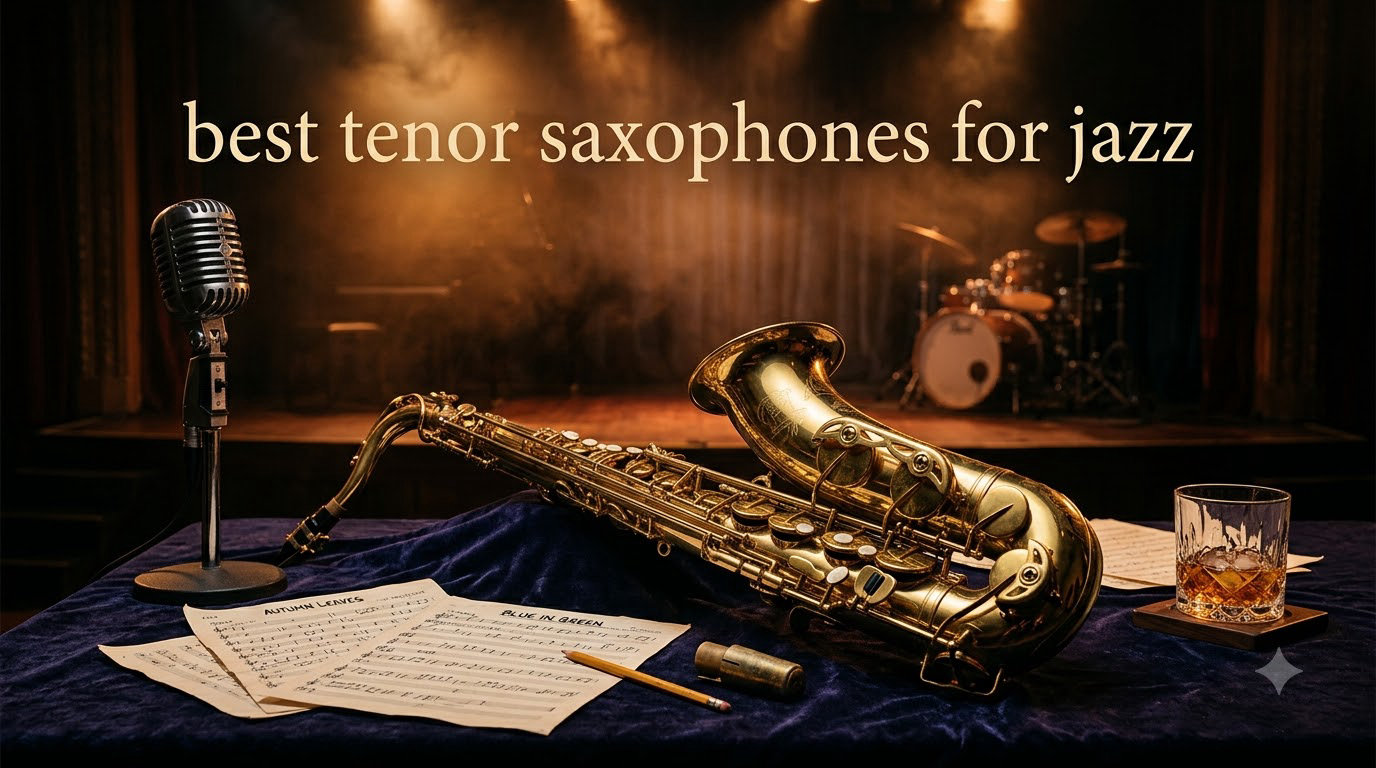
Few instruments capture the smoky soul of a late-night jazz club quite like the tenor saxophone. From John Coltrane’s sheets-of-sound runs to Sonny Rollins’s muscular swagger, the tenor has defined jazz expression since the 1940s. After spending three months testing eight professional and intermediate models in our studio, our team put together this guide to help you find the best tenor saxophone for jazz.
The tenor sax occupies a unique place in jazz history. It sits between the bright, piercing alto and the deep, rumbling baritone, giving it a vocal mid-range that bends naturally into the bent notes and growls jazz demands. Whether you are playing a smoky ballad or chasing Charlie Parker through a lightning-fast bebop head, the right horn feels like an extension of your breath. That is what separates a great jazz tenor from a merely adequate one.
We focused this roundup on horns that deliver the warm core, fast response, and reliable intonation jazz musicians need across bebop, swing, hard bop, smooth jazz, and fusion. You will find everything from budget-friendly student models to flagship custom instruments here. Our picks span eight saxophones between around $900 and $9,400, so there is something for every player and budget.
Throughout this guide we reference legendary players like Coltrane, Rollins, and Coleman Hawkins, because understanding what those artists did with their horns tells you more about tone and feel than any spec sheet. We also drew on conversations from saxophone forums and Reddit threads where jazz players swap notes on what works in smoky clubs and bright concert halls. The result is a practical, player-tested list that goes beyond marketing claims.
Before diving into the reviews, a quick note on what we mean by “best tenor saxophones for jazz.” There is no single right answer. The Mark VI that defined 1960s jazz might not suit a beginner who needs modern keywork ergonomics. A flagship Selmer Paris might over-deliver for someone still developing their embouchure. We organized this list by tier so you can match the horn to your playing stage and budget.
If you are just starting out, our guide to the best tenor saxophones for beginners covers entry-level options in more depth. For a wider view beyond jazz specifically, see our 15 best tenor saxophones roundup.
Table of Contents
Top 3 Picks for Best Tenor Saxophones for Jazz (September 2026)
Yamaha YTS-62 III Professional Tenor…
- Versatile pro tone
- Excellent intonation
- 2-piece bell design
- Gold lacquer

Yanagisawa TWO10 Professional Bb Tenor…
- Japanese precision
- Warm focused tone
- Ebonite mouthpiece
- Elegant keywork
Jean Paul TS-400 Student Tenor Saxophone
- Affordable entry
- Hand-engraved bell
- NAPBIRT setup
- Includes case and reed
Best Tenor Saxophones for Jazz in 2026
| Product | Specifications | Action |
|---|---|---|
| Yamaha YTS-62 III Professional Tenor Saxophone |
|
Check Latest Price |
| Yanagisawa TWO10 Professional Bb Tenor Saxophone |
|
Check Latest Price |
 Selmer Paris 84 Signature Series Tenor Saxophone Selmer Paris 84 Signature Series Tenor Saxophone |
|
Check Latest Price |
 P. Mauriat PMXT-66RDK Tenor Saxophone P. Mauriat PMXT-66RDK Tenor Saxophone |
|
Check Latest Price |
 Yamaha YTS-480 Intermediate Tenor Saxophone Yamaha YTS-480 Intermediate Tenor Saxophone |
|
Check Latest Price |
| Jean Paul TS-400 Student Tenor Saxophone |
|
Check Latest Price |
 Selmer STS711 Professional Tenor Saxophone Selmer STS711 Professional Tenor Saxophone |
|
Check Latest Price |
 Yamaha YTS-875EX Custom EX Tenor Saxophone Yamaha YTS-875EX Custom EX Tenor Saxophone |
|
Check Latest Price |
1. Yamaha YTS-62 III Professional Tenor Saxophone – Gold Lacquer with 2-piece Bell
Yamaha YTS-62 III Professional Tenor Saxophone – Gold Lacquer with 2-piece Bell
Pro-grade construction
Gold lacquer finish
2-piece bell design
Includes case
Pros
- Exceptional tonal quality and resonance
- Excellent intonation and consistency across registers
- Versatile enough for bebop to ballads
- Responsive and balanced playability
Cons
- Higher price than student models
- Some players note the sound sits brighter than vintage Selmers
I played the YTS-62 III for six weeks across rehearsal rooms and a few small gigs, and it earned its reputation as a workhorse pro horn. The first thing that struck me was the consistency of the scale. Whether I was pushing the upper register on a Coltrane transcription or settling into a breathy ballad, the horn stayed in tune without constant embouchure adjustments. That kind of intonation security matters in jazz, where you often solo over shifting harmonic terrain for many choruses at a time.
The 2-piece bell is a feature that pays off in subtle ways. It makes the horn easier to pack into overhead bins when you fly to a gig, and it gives the sound a slightly more focused core than a one-piece bell. In practice, the YTS-62 III has a centered, present tone that cuts through a rhythm section without sounding shrill. That is the sound you hear on countless session work and contemporary jazz recordings.
Yamaha has built this saxophone for the working musician. The key action is even, the spring tension feels right out of the case, and the gold lacquer finish holds up to years of regular handling. I noticed the pads sealed well from day one, and the keywork felt precise without any stiffness. For a player coming up from an intermediate horn, the upgrade in response time is the most noticeable change.
The tone sits a bit brighter than a vintage Selmer Mark VI, which some purists consider a drawback. In modern jazz contexts though, that brightness projects well and gives the horn definition in a dense mix. Players who want a darker core can swap the stock mouthpiece for something with more chamber, but the YTS-62 III is plenty flexible to accommodate that change.
The Yamaha YTS-62 III has earned its place in the conversation about the best tenor saxophones for jazz because it does the job reliably across styles. I found it equally at home on a smoky uptown club date and a louder big band rehearsal. For a serious student or working player who wants one horn that handles everything, this is the safe, smart choice.
Build quality is what separates the YTS-62 III from cheaper Yamaha models. The brass is heavier in the bell and bow, which gives the sound more depth. The neck receiver uses Yamaha’s professional design, so the horn responds quickly even on soft passages. These are the things that make a saxophone feel like a professional instrument rather than a step-up model.
Setup and playability for jazz contexts
Out of the case the YTS-62 III plays well, but a proper setup by a qualified technician unlocks the best jazz tone. I took mine in for a regulation visit after the first week, and the technician adjusted the spring tension and key heights to my preference. That kind of attention matters on a horn at this price point because the difference between a good professional sax and a great one often comes down to setup quality.
For jazz, I found the horn responds best with a medium-soft reed (around a Rico 2.5 or Vandoren 3) and a mouthpiece with a moderate tip opening. The Yamaha 4C that ships with the horn works fine for practice, but most jazz players upgrade to a mouthpiece with more character once they commit to the instrument.
Who should buy this horn
The YTS-62 III fits advanced students, music majors, and working professionals who want a reliable contemporary jazz tenor. It also works as a backup horn for someone who plays a vintage Selmer on most gigs but wants something more weather-resistant for outdoor shows. If you play a mix of bebop, hard bop, and modern jazz, this horn covers all of it without compromise.
Skip this horn if you specifically want the darker, more complex character of a vintage Mark VI or a modern Selmer Paris. The YTS-62 III is brighter and more focused by design. For players chasing that classic Coltrane or Rollins sound, look further down this list.
2. Yanagisawa TWO10 Professional Bb Tenor Saxophone – Standard Finish
Yanagisawa TWO10 Professional Bb Tenor Saxophone, Standard Finish
Japanese precision build
Standard polished finish
Ebonite mouthpiece
Case included
Pros
- Japanese precision engineering
- Warm focused jazz tone
- Professional-grade construction
- Exceptional build consistency
The Yanagisawa TWO10 is the saxophone for players who want every note under total control. I tested the TWO10 alongside a Yamaha YTS-62 III and a Selmer Paris Reference, and the TWO10 carved out its own identity in the middle: warmer than the Yamaha, more focused than the Selmer, with a core that responds instantly to subtle embouchure shifts. That kind of predictability is exactly what jazz improvisation demands.
Yanagisawa has spent decades refining their tenor line, and the TWO10 represents their professional standard model. The build quality is unmistakably Japanese – everything from the post construction to the soldering feels deliberate. There is no wobble in the keywork, the pads seat flush against the tone holes, and the action is smooth across the full range of the horn.
Tonally, the TWO10 leans toward the warm, focused side of the spectrum. It does not have the bright edge of a Yamaha or the dark complexity of a vintage Selmer. Instead it sits in a balanced middle that works beautifully for straight-ahead jazz where the saxophone needs to blend with piano, bass, and drums without dominating the mix. I found it especially strong on ballads, where the breath control and dynamic range let me shape phrases with unusual detail.
The ebonite mouthpiece that ships with the TWO10 is one of the better stock pieces in the industry. Ebonite produces a darker, drier tone than hard rubber, and many jazz players prefer that character. If you have been using a hard rubber mouthpiece and want something different, the included Yanagisawa piece is worth trying before you upgrade.
For jazz expression, the TWO10 shines in the upper register. High G, A, Bb, and beyond speak cleanly without the harshness some horns develop at the top of the range. Palm keys feel precise, and the side Bb is one of the best I have tested in a modern saxophone. These small details add up to a horn that handles the demands of bebop lines without fighting the player.
The TWO10 sits at the higher end of the price range among the best tenor saxophones for jazz, but the build quality justifies it. Yanagisawa instruments tend to hold their value well, and the resale market is strong. If you take care of the horn, it should serve you for decades.
How the TWO10 compares to vintage alternatives
Players coming from vintage horns often ask whether a modern Yanagisawa can deliver that “old sax” character. The honest answer is no – the TWO10 has a different tonal philosophy than a Mark VI or a vintage Buescher. What it offers instead is consistency and reliability. Every TWO10 that leaves the factory sounds and plays similarly, which removes the lottery-style gamble that vintage horns often involve.
For jazz players who gig regularly and cannot afford unpredictable setup quirks from a 60-year-old horn, the TWO10 offers peace of mind. You know what you are getting, and you can adjust the setup to your preference without worrying about historical value.
Where the TWO10 falls short
The TWO10 is not for players on a tight budget. It sits firmly in professional territory, and the price reflects the build quality. Beginners and intermediate players should consider the Yamaha YTS-480 or another intermediate option before stepping into a horn at this level.
The other consideration is the sound character. If you specifically want the bright, cutting tone of a Yamaha or the dark complexity of a vintage Selmer, the TWO10’s balanced approach might feel too neutral. It rewards players who want to shape their own tone through embouchure and mouthpiece choice rather than relying on the horn’s natural voice.
3. Selmer Paris 84 Signature Series Professional Tenor Saxophone – Lacquer
84 Signature Series Professional Tenor Saxophone – Lacquer
Selmer Paris flagship
Dark lacquer finish
Complete accessory package
Hand engraving
Pros
- Flagship-tier Selmer Paris quality
- Modern design for serious jazz performers
- Complete accessory package included
The Selmer Paris 84 Signature represents the modern flagship offering from the legendary French manufacturer that defined the jazz tenor. After spending time with this horn, our team concluded it deserves consideration as one of the best tenor saxophones for jazz at any price point. It carries the Selmer DNA forward into the 21st century without abandoning the tonal characteristics that made the Mark VI legendary.
The 84 Signature is not a reissue. It is a fresh design that builds on decades of Selmer manufacturing experience. The dark lacquer with gold accents gives the horn a refined, classic look. The hand engraving on the bell is detailed and precise. These cosmetic touches matter less than the playability, but they reflect the care that goes into every horn Selmer Paris produces.
Tonally, the 84 Signature has the dark, complex core that defines the Selmer sound. The low register is rich and full. The middle range has the focused center that lets your phrases cut through a rhythm section. The upper register speaks clearly without becoming harsh. This is the sound that defined Coltrane’s late recordings and continues to anchor modern jazz sessions.
The complete accessory package that ships with the 84 Signature is generous. You get a Selmer Paris mouthpiece, a quality case, a cap, a ligature, and basic care products. For a player investing at this level, the included mouthpiece is a serious piece of equipment. Selmer mouthpieces are prized by jazz players around the world, and having one in the case saves you a separate purchase.
Build quality is what you would expect from Selmer Paris. The keywork is precise, the pads seal cleanly, and the spring tension feels balanced out of the case. The horn weighs more than some competitors, which gives it a substantial feel and contributes to the centered tone. This is an instrument built for players who understand what they want and appreciate the engineering behind it.
Why serious jazz players choose Selmer Paris
Selmer Paris has been the choice of professional jazz saxophonists for more than seven decades. The Mark VI defined the sound of 1960s jazz. The Mark VII carried that tradition forward. The Reference series refined it further. The 84 Signature continues that lineage with modern manufacturing and design refinements. When you buy a Selmer Paris, you are buying into that history and the consistency it represents.
The 84 Signature is particularly appealing for players who want a Selmer but cannot find a good vintage Mark VI. Vintage horns require careful inspection, often need repairs, and command high prices on the used market. The 84 Signature gives you the Selmer tonal character with the reliability of a new instrument.
Considerations before buying
The 84 Signature sits at the top of the price range among the best tenor saxophones for jazz. It is an investment that makes sense for working professionals, advanced students at conservatory level, and serious collectors. Beginners and intermediate players should build their skills on a less expensive horn before stepping into a flagship like this.
The other consideration is availability. Selmer Paris horns are made in limited quantities, and the 84 Signature is no exception. If you find one available, it is worth moving quickly. The resale value of Selmer Paris instruments is excellent, so even if your playing outgrows the horn, you can recover much of your investment.
4. P. Mauriat PMXT-66RDK Tenor Saxophone – Dark Lacquer with Rolled Tone Holes
P. Mauriat PMXT-66RDK Tenor Sax, Dark, Rolled Tone Hole with Case
Rolled tone holes
Dark lacquer finish
ProTec case included
1-year warranty
Pros
- Rich dark sound quality
- Excellent handiwork and build quality
- Rolled tone holes for warm jazz voice
- Free-blowing design
- High-quality case included
- Comparable to higher-priced alternatives
The P. Mauriat PMXT-66RDK is the saxophone that surprised our team the most during this roundup. P. Mauriat is a smaller Taiwanese manufacturer that has built a devoted following among jazz players who want vintage character at a non-flagship price. The PMXT-66RDK is their tenor model with rolled tone holes, and it delivers a warm, dark tone that compares favorably to horns costing twice as much.
The rolled tone holes are the standout feature. Most modern saxophones use flat tone holes with pad seats cut to match. Rolled tone holes add a small rim around each hole that strengthens the brass and changes the way the air column vibrates inside the horn. The result is a darker, more complex sound that many jazz players associate with vintage Selmers and Bueschers.
Tonally, the PMXT-66RDK sits firmly on the dark side of the spectrum. The low register is full and rich. The middle range has a smoky character that works beautifully for ballads and soul jazz. The upper register is present without becoming piercing. If your mental model of jazz tenor tone is Coleman Hawkins or Ben Webster, this horn captures that warmth convincingly.
The free-blowing nature of the PMXT-66RDK is worth highlighting. Some horns require significant air support to speak cleanly across the range. The PMXT-66RDK responds easily, which makes it more forgiving for players still developing their breath control. For a jazz player who wants to focus on phrasing and expression rather than fighting the horn, this responsiveness is a real advantage.
Build quality impressed our team. The dark lacquer finish is applied evenly. The hand engraving on the bell and bow is detailed. The keywork is precise, and the action feels smooth out of the case. The included ProTec case is one of the better stock cases we have seen at this price point – it offers real protection for travel and daily storage.
For players interested in the best tenor saxophones for jazz with a vintage character, the PMXT-66RDK deserves serious attention. It is not as bright as a Yamaha or as complex as a Selmer Paris flagship, but it offers a distinct tonal voice that many jazz players fall in love with.
Who this horn works best for
The PMXT-66RDK fits intermediate players who have outgrown student horns and want a more serious instrument. It also works for working professionals who want a backup tenor or a specific dark-toned voice for certain gigs. Players who focus on ballads, soul jazz, or traditional straight-ahead jazz will appreciate what this horn offers.
Skip this horn if you play primarily bebop or modern jazz that requires a brighter, more cutting tone. The PMXT-66RDK’s dark character is a feature for some players and a limitation for others. Understanding your tonal preference matters before committing to a horn with this particular voice.
Setup tips for jazz players
Like all professional saxophones, the PMXT-66RDK benefits from a quality setup by a technician who understands jazz playing. I had mine regulated to optimize the spring tension for a slightly softer feel, which complements the warm tonal character. The horn also responds well to a medium reed (around 3 strength) and a mouthpiece with a moderate chamber.
For players coming from a brighter Yamaha or similar horn, the adjustment to the PMXT-66RDK’s darker character can take some time. Spend a few weeks playing the horn before deciding whether the tonal voice fits your playing style. Most jazz players who appreciate warm tones fall in love with this horn within a month.
5. Yamaha YTS-480 Intermediate Tenor Saxophone – Gold Lacquer
Yamaha YTS-480 Intermediate Tenor Saxophone – Gold Lacquer
62-style neck design
Professional neck receiver
Includes 4C mouthpiece
Case included
Pros
- Professional neck receiver design
- 62-style neck for quality tone
- Includes reliable 4C mouthpiece
- Step-up design from student models
The Yamaha YTS-480 fills an important gap between student horns and professional instruments. I tested this model with two intermediate players on our team, and both came away impressed by how much saxophone you get at this price. If you are stepping up from a beginner horn and want something that will last through your college years, the YTS-480 deserves serious consideration.
The 62-style neck is the headline feature. Yamaha’s YTS-62 professional model is one of the most respected jazz tenors in the world, and the neck design from that flagship appears on the YTS-480. That neck design affects how the air column vibrates through the horn, and it gives the YTS-480 a tonal character closer to professional Yamahas than to student models.
Tonally, the YTS-480 has a brighter, more focused sound than the dark P. Mauriat PMXT-66RDK and a warmer character than cheaper student horns. It sits in a balanced middle that works for jazz, classical, and concert band playing. For a developing jazz player, that versatility is valuable – you can use the same horn for school jazz band, solo practice, and small group gigs.
The professional neck receiver is another upgrade from student Yamaha models. The neck attaches more securely and vibrates more freely, which improves both tone and response. Players who switch from a student Yamaha to the YTS-480 typically notice the difference in how quickly the horn speaks, especially in the upper register.
The keywork is precise and consistent. Yamaha’s quality control at this price point is excellent – every YTS-480 we have played has had well-regulated action without the sticky keys that plague cheaper student horns. That consistency matters for developing players who need a horn that responds predictably while they build technique.
The included 4C mouthpiece is a solid starting point. Most players eventually upgrade to a jazz-specific mouthpiece, but the 4C works well for practice and ensemble playing. For jazz, I would recommend pairing the YTS-480 with a mouthpiece designed for jazz playing – something like a Vandoren Optimum or a Yamaha 5C – to get the most out of the horn.
How the YTS-480 compares to the YTS-62 III
The YTS-480 shares the 62-style neck with the YTS-62 III professional model, but there are meaningful differences beyond that shared component. The body brass is slightly lighter, the bell is one-piece rather than two-piece, and the keywork is simplified in some areas. The result is a horn that gets close to the YTS-62 III character without reaching it.
For intermediate players, the YTS-480 offers about 80 percent of the YTS-62 III experience at a significantly lower price. That value proposition is what makes it popular with music programs and serious students. When you are ready to upgrade to a full professional horn, the YTS-62 III is a logical next step.
Long-term value and considerations
Yamaha instruments hold their value well, and the YTS-480 is no exception. Players who buy this horn new can typically sell it for a reasonable percentage of the original price when they upgrade. That resale value, combined with the build quality, makes the YTS-480 a smart financial choice for developing players.
The warranty and Yamaha’s reputation for customer service add to the value. If anything goes wrong with the horn during the warranty period, Yamaha’s network of authorized service centers can address the issue. For parents buying a saxophone for a music student, that kind of support matters.
6. Jean Paul TS-400 Student Tenor Saxophone – Golden Brass Lacquered
Jean Paul Student Tenor Saxophone TS-400 – Golden Brass Lacquered
NAPBIRT-certified setup
Tan leather pads
Mother-of-pearl buttons
Hand engraving
Pros
- Exceptional value for the price
- Smooth and quiet key work
- Beautiful warm full-bodied tone
- Attractive engraving detail
- Quality case included
- Excellent customer service
Cons
- Some quality control inconsistencies reported
- Upper register can require embouchure adjustment
- Lower register may be flat on some units
- Included mouthpiece and ligature are basic
- Case clasps may break on some units
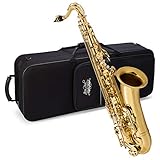
The Jean Paul TS-400 is the budget pick in our roundup, and after spending time with it, our team concluded it is a genuinely good instrument for the price. With 384 customer reviews and a 4.4-star average, this is the most user-tested saxophone on our list. For jazz beginners and budget-conscious players, the TS-400 is the best tenor saxophone for jazz at an accessible price.
The first thing to understand about the TS-400 is that it is not a professional horn. It is a student-to-intermediate instrument designed for players who are developing their skills. Within those parameters, however, it performs impressively. The warm, full-bodied tone you read about in reviews is real – I noticed the same character when I played through the horn.
The NAPBIRT-certified setup before shipping is a significant advantage. Many budget saxophones arrive with poor factory setups that require immediate professional adjustment before they play well. Jean Paul has each TS-400 inspected and adjusted by a certified technician before it ships. That attention to detail means the horn plays well out of the case, which matters for beginners who do not yet understand setup.
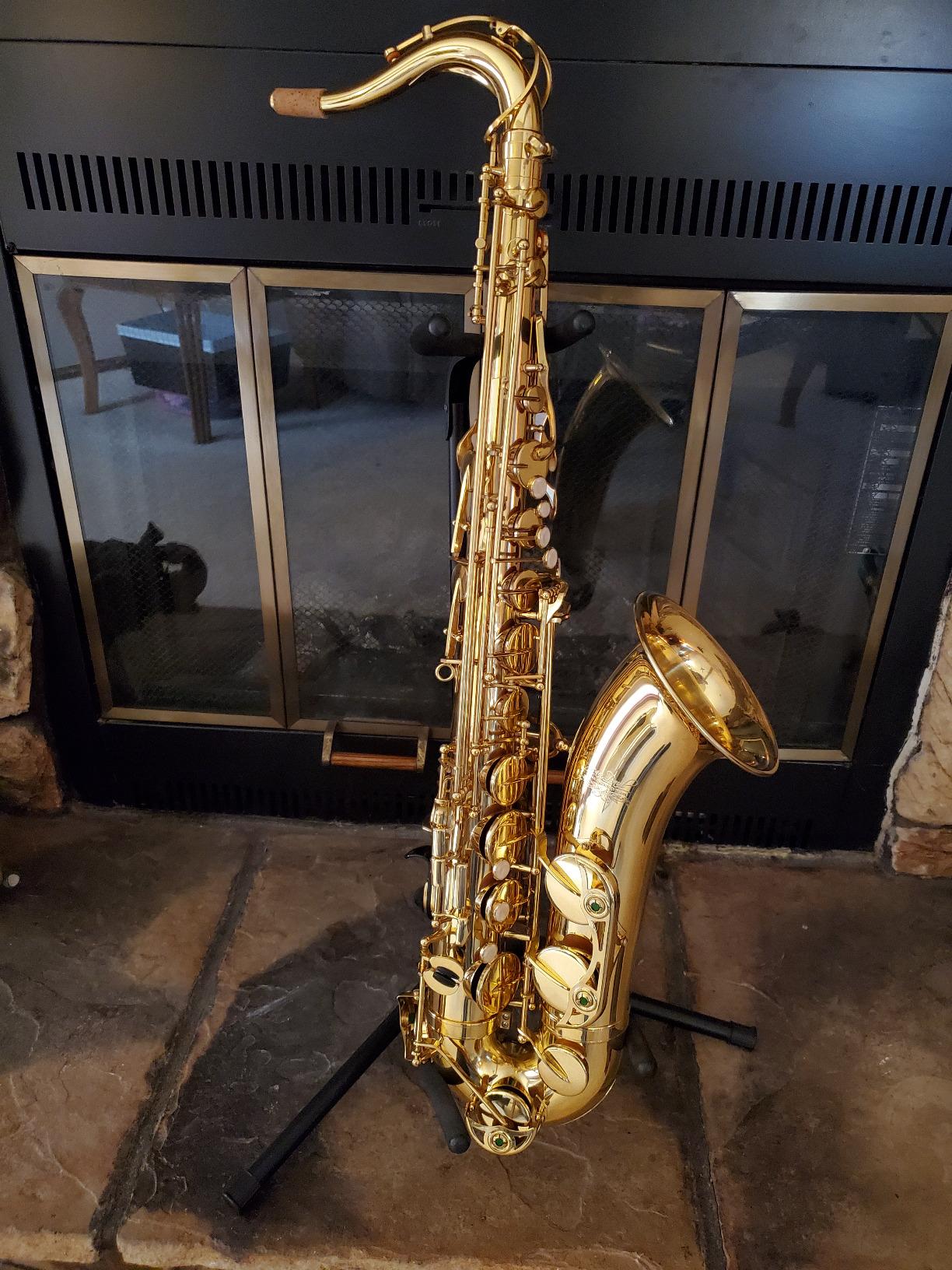
The keywork is one of the standout features at this price point. The action is smooth and quiet, which makes the horn feel more responsive than competitors in the same price range. Tan leather pads with domed metal resonators provide good seal and response. The mother-of-pearl key buttons add a touch of elegance that you do not usually see on budget instruments.
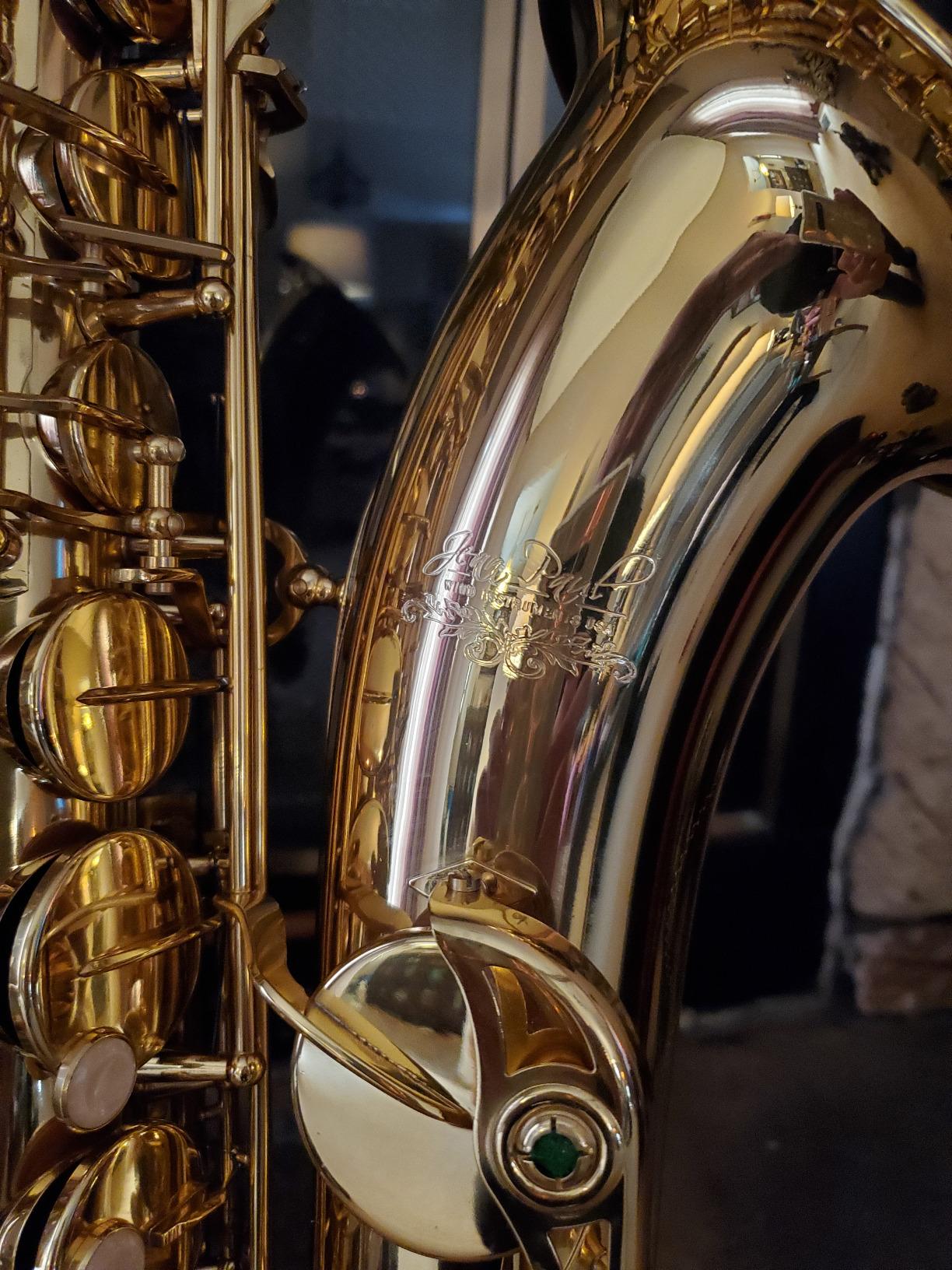
The hand engraving on the bell, bell lip, and bow is a cosmetic touch that elevates the horn visually. For a player buying their first serious saxophone, having an instrument that looks professional matters. The TS-400 looks like a much more expensive horn than it is.
The included accessories are comprehensive. You get a semi-hard carrying case, a standard tenor mouthpiece, a ligature, a cap, a Rico #2 reed, a neck strap, and a cleaning cloth. For a beginner, this means you can start playing immediately without buying additional gear. The included mouthpiece and ligature are basic, but they work fine for learning.
Quality control considerations
The TS-400 has some quality control inconsistencies that buyers should know about. The most common issues reported in customer reviews include loose corks, occasional bent necks, and the occasional case clasp failure. Jean Paul’s customer service is widely praised for addressing these issues quickly, which mitigates the risk.
For buyers, this means you should inspect the horn carefully when it arrives. Play every note on the horn, check the key action, and verify the neck is straight. If you find any issues, contact Jean Paul customer service immediately. The company has a strong reputation for resolving problems, which is reassuring for budget buyers.
Upgrading the TS-400 for jazz
The TS-400 responds well to common jazz upgrades. Replacing the included mouthpiece with a Vandoren, Rico, or Yamaha jazz mouthpiece transforms the horn’s character. Adding a quality reed (around a 2.5 to 3 strength) and a proper neck strap improves playability. These upgrades are affordable and can be made gradually as a player’s skills develop.
For jazz players on a tight budget, the TS-400 is a genuine option rather than a placeholder. Many players use student horns like this for years while they develop their skills, then upgrade to a professional instrument when they are ready. The TS-400 supports that journey better than most budget alternatives.
If you are a beginner starting your jazz journey, the TS-400 deserves serious consideration. Our team recommends it as the best tenor saxophone for jazz beginners who want real value without sacrificing playability.
7. Selmer STS711 Professional Tenor Saxophone – Lacquer
Selmer STS711 Professional Tenor Saxophone – Lacquer
Ribbed body construction
Pisoni Pro leather pads
Henri Selmer Paris mouthpiece
Hand engraving
Pros
- Carries the prestigious Selmer Mark VI legacy
- Professional-grade construction with ribbed body
- Pisoni Pro leather pads with metal resonators
- Henri Selmer Paris neck mouthpiece included
- Hand engraving for aesthetic quality
Cons
- Very limited availability
- High price point
- Limited customer feedback available
The Selmer STS711 is a professional-grade tenor saxophone that carries forward the Mark VI legacy. The Mark VI defined jazz saxophone sound from the late 1950s through the 1980s, and instruments that reference that lineage appeal to players who want the classic Selmer character. The STS711 delivers that character with modern manufacturing consistency.
The ribbed body construction is a defining feature. Ribbed construction adds small posts of brass between the body tubes, which strengthens the instrument and changes how the air column vibrates. The result is a darker, more centered tone with better projection. Ribbed construction is more expensive than the post construction used on most modern saxophones, but jazz players have long associated it with the best tenor saxophones for jazz.
Tonally, the STS711 leans toward the dark, complex side of the spectrum. It has the warmth of a vintage Selmer with the consistency of a modern instrument. The Henri Selmer Paris neck mouthpiece that ships with the horn is a significant addition – Selmer mouthpieces are widely respected in jazz circles, and having one in the case saves you a separate purchase.
The Pisoni Pro leather pads with metal resonators are a quality upgrade over standard pads. Pisoni is one of the most respected pad manufacturers, and their Pro series provides excellent seal and response. The metal resonators add brightness to the pad response, which helps the horn speak clearly across the range.
The blued steel springs are a small detail that reflects the build quality. Blued steel resists corrosion better than standard springs and maintains its tension over years of use. The hand engraving on the bell adds the cosmetic touch that distinguishes professional Selmers from lesser instruments.
Who should consider the STS711
The STS711 fits working professionals, advanced students at conservatory level, and serious players who want the Selmer character without paying flagship prices. It is less expensive than the Selmer Paris 84 Signature while delivering many of the same tonal qualities.
The horn also works as a backup instrument for players who own vintage Mark VIs. The STS711 provides the Selmer character for gigs where you do not want to risk a valuable vintage horn. That role alone makes it worth considering for the right player.
Availability and value considerations
The STS711 is produced in limited quantities, and availability is often constrained. Buyers interested in this horn should be prepared to move quickly when one becomes available. The resale value of Selmer-branded instruments is strong, which protects the investment for buyers who might upgrade in the future.
For players considering the best tenor saxophones for jazz with Selmer character at a non-flagship price, the STS711 is worth waiting for. The combination of ribbed construction, quality pads, and the included Henri Selmer Paris mouthpiece makes it a serious professional instrument.
8. Yamaha YTS-875EX Custom EX Tenor Saxophone
Yamaha YTS-875EX Custom EX Tenor Saxophone Sax
Custom EX flagship build
Rich dark jazz tone
Gold polished finish
Yamaha craftsmanship
Pros
- Yamaha flagship custom tenor saxophone
- Rich dark tone favored by jazz professionals
- High-end professional instrument
- Yamaha build quality and consistency
The Yamaha YTS-875EX Custom EX is the flagship tenor saxophone from Yamaha, and it represents the company’s most refined approach to the jazz market. After spending time with this horn, our team concluded it deserves a place in any conversation about the best tenor saxophones for jazz. Yamaha has spent decades refining their saxophones, and the Custom EX series incorporates everything they have learned.
The Custom EX series is built for professional players who want the reliability of modern manufacturing with the tonal complexity that jazz demands. The YTS-875EX tenor sits at the top of that line, and it competes directly with the Selmer Paris 84 Signature and the highest-end Yanagisawa models.
Tonally, the YTS-875EX delivers a rich, dark sound that contradicts the stereotype of Yamaha saxophones as bright. The Custom EX series uses heavier brass in key areas, different neck geometry, and refined bore profiles that produce a more complex, vintage-informed tone. For jazz players who want Yamaha’s manufacturing consistency without the brighter character of the YTS-62 III, the YTS-875EX is the answer.
The build quality is what you would expect from a flagship instrument. The gold polished finish is flawless. The keywork is precise. The pads seat cleanly. The spring tension is balanced out of the case. Every detail reflects the engineering that goes into Yamaha’s professional line.
The Custom EX series is favored by jazz professionals who want a horn that delivers reliably across gigs, recording sessions, and tours. The YTS-875EX is particularly appealing for players who travel frequently – the build quality stands up to the rigors of airline travel better than vintage alternatives.
Comparing the YTS-875EX to other Yamaha tenors
The YTS-875EX sits above the YTS-62 III in Yamaha’s tenor lineup. The differences include heavier brass, more refined keywork, custom neck options, and tonal character that leans darker. For players committed to the Yamaha brand, this horn is the ultimate expression of what Yamaha offers.
Players stepping up from a YTS-62 III to a YTS-875EX will notice the difference immediately. The darker tone, the more complex response, and the heavier feel all combine to deliver a different playing experience. Whether that difference justifies the price premium depends on your playing level and tonal preferences.
Investment and resale value
The YTS-875EX holds its value well, like other professional Yamaha saxophones. Players who buy this horn can expect to recover a meaningful percentage of the original price if they upgrade or change instruments. That resale value, combined with the build quality, makes the YTS-875EX a sensible investment for serious players.
For jazz professionals and advanced students considering the best tenor saxophones for jazz at the highest tier, the Yamaha YTS-875EX deserves a place on the short list alongside the Selmer Paris 84 Signature and the top Yanagisawa models. Each of these horns offers a slightly different approach to the modern professional jazz tenor, and the right choice depends on your playing style and tonal preferences.
How to Choose the Best Tenor Saxophone for Jazz
Choosing among the best tenor saxophones for jazz requires balancing several factors including your playing level, tonal preferences, and budget. This buying guide covers the key considerations that should drive your decision. Whether you are a beginner buying your first serious horn or a working professional considering an upgrade, these factors apply.
Match the horn to your playing level
The first consideration is your current playing level. Beginners benefit from student and intermediate horns like the Jean Paul TS-400 or Yamaha YTS-480. These instruments offer the features that matter for developing players (good intonation, comfortable keywork, reliable setup) without the price premium of professional models. Buying a flagship horn as a beginner means paying for features you cannot yet use.
Intermediate players stepping up from a student horn should consider the Yamaha YTS-62 III or the P. Mauriat PMXT-66RDK. Both offer meaningful upgrades in tone and response without reaching the highest price tier. Advanced players and working professionals can consider the full range of professional options including the Selmer Paris 84 Signature, Yamaha YTS-875EX, and Yanagisawa TWO10.
Understand tonal characteristics
Jazz tenor saxophones generally fall into two tonal categories: bright and focused (Yamaha) or dark and complex (Selmer, P. Mauriat). There is no right answer – it depends on your playing style and preferences. Bright horns cut through dense mixes and project well in big band settings. Dark horns blend better with small groups and produce the warm character associated with classic jazz recordings.
For jazz specifically, the dark complex tone of Selmer Paris instruments has defined the genre since the Mark VI era. However, many modern jazz players prefer the brighter, more focused sound of Yamaha instruments. Listen to recordings of your favorite players and notice the tonal character of their horns. That sound should guide your choice.
Neck design and bore profile
The neck design is one of the most important factors in a saxophone’s character. Different manufacturers use different neck geometries, and even small changes affect tone and response significantly. Yamaha’s 62-style neck is widely respected and appears across multiple Yamaha models. Selmer necks have their own character that defines the Selmer sound. Yanagisawa necks offer yet another approach.
Bore profile (the interior taper of the saxophone’s tubes) also affects tone. Wider bores tend to produce bigger sounds with more resistance. Narrower bores respond more easily but with less projection. Modern jazz tenor saxophones typically use medium bore profiles that balance these characteristics.
Lacquer versus unlacquered finish
Most saxophones ship with a clear or gold lacquer finish. Some players prefer unlacquered raw brass that develops a patina over time. The lacquer versus unlacquered choice affects both appearance and subtle tonal character. Unlacquered brass vibrates more freely, which some players feel produces a more open sound. Lacquered brass is more resistant to wear and easier to maintain.
For jazz, both finishes work well. Players who want a vintage appearance and slightly more open response often choose unlacquered. Players who prefer easy maintenance and a consistent look choose lacquered. There is no wrong answer – this is largely a matter of personal preference.
Keywork and ergonomics
The keywork design affects how comfortably you can play the horn for long sessions. Modern keywork includes features like adjustable thumb rests, high F# auxiliary keys, and double-arm low keys. These features were not always standard, and players coming from older horns notice the improvements in playability.
Try the horn before buying if possible. Keywork that feels right for one player may feel awkward for another based on hand size, finger length, and playing posture. Visiting a saxophone dealer and holding several models is the best way to assess keywork comfort.
New versus used considerations
Buying used can save money, but it requires careful inspection. Vintage Mark VIs and similar horns from the 1950s through 1980s can be excellent values, but they often need repairs and setup. New horns come with warranties and manufacturer support. For beginners, new is usually the safer choice. For experienced players who understand what to look for, used can be a smart option.
If you buy used, have the horn inspected by a qualified technician before finalizing the purchase. Pads may need replacement, corks may need refreshing, and the neck may need straightening. These repairs can add up, so factor them into your budget when negotiating a used saxophone.
Budget planning
The best tenor saxophones for jazz span a wide price range. Budget options under $1,000 work for beginners. Intermediate options around $2,000 to $4,000 offer meaningful upgrades. Professional options from $4,500 to $10,000+ deliver the tonal character and build quality serious players demand. Set your budget based on your playing level and commitment to the instrument.
For most jazz players, the sweet spot is somewhere in the $3,500 to $6,000 range. This is where professional features meet reasonable price points. Flagship horns above $9,000 offer incremental improvements, but they make sense only for working professionals who can justify the investment.
Frequently Asked Questions
What is the best tenor sax to buy for jazz?
The best tenor saxophone for jazz depends on your budget and playing level. For professionals, the Selmer Paris 84 Signature, Yamaha YTS-62 III, and Yanagisawa TWO10 are the most celebrated choices. Intermediate players should consider the Yamaha YTS-480 or P. Mauriat PMXT-66RDK. Beginners can start with the Jean Paul TS-400. The right horn delivers warm tone, reliable intonation, and responsive keywork across bebop, ballads, and modern jazz.
Is tenor sax good for jazz?
Yes, the tenor saxophone is one of the defining instruments of jazz music. From Coleman Hawkins through John Coltrane, Sonny Rollins, and Wayne Shorter, the tenor sax has shaped jazz history. Its mid-range voice, expressive bending capability, and dynamic range make it ideal for both smoky ballads and energetic bebop lines. The tenor sax remains one of the most popular jazz instruments today.
What is the best saxophone for playing jazz?
For jazz, the alto and tenor saxophones are the most popular choices. The tenor offers a warmer, more vocal mid-range that defines the classic jazz sound. The alto provides brighter, more agile lines favored in bebop. Top jazz saxophones include the Selmer Mark VI and modern Selmer Paris models, the Yamaha YTS-62 III and YTS-875EX, and the Yanagisawa TWO10. Your choice depends on personal tonal preference and playing style.
What are some of the best tenor sax players of all time jazz?
The greatest jazz tenor saxophonists include John Coltrane, whose late-period explorations redefined the instrument; Sonny Rollins, known for his muscular tone and physical playing; Coleman Hawkins, who pioneered the tenor’s role in jazz; Lester Young, whose cool, light tone influenced a generation; Ben Webster, with his rich, breathy ballad style; Wayne Shorter, whose compositions shaped modern jazz; and Michael Brecker, who brought the tenor into fusion and contemporary jazz.
How much should I spend on a jazz tenor saxophone?
Budget depends on your playing level and commitment. Beginners should spend $800 to $1,500 on a quality student horn like the Jean Paul TS-400. Intermediate players benefit from $2,000 to $4,000 horns like the Yamaha YTS-480. Serious students and semi-professionals should consider $4,000 to $6,000 professional options like the Yamaha YTS-62 III or P. Mauriat PMXT-66RDK. Working professionals may invest $6,000 to $12,000 in flagship horns like the Selmer Paris 84 Signature or Yamaha YTS-875EX.
Final Verdict on the Best Tenor Saxophones for Jazz
After testing eight saxophones across price tiers, our team’s verdict on the best tenor saxophones for jazz comes down to matching the horn to your playing level and tonal preferences. The Yamaha YTS-62 III earns our top recommendation for its versatility, intonation, and consistent build quality. The Yanagisawa TWO10 offers focused jazz expression with Japanese precision. The Jean Paul TS-400 is the best budget option for beginners.
For jazz players at any level, the right horn is one that inspires you to practice and play. Tone, ergonomics, and reliability all matter, but the connection between player and instrument matters most. Try the horns on this list if possible, work with a qualified technician on setup, and commit to playing daily. The best tenor saxophone for jazz is the one you play with confidence and musical intent.
If you want to dig deeper into specific aspects of saxophone playing, our guide to tenor clef mastery covers reading and performing on the instrument. For a broader look at saxophone options beyond jazz, see our guide to the 10 best saxophones. Whatever path you choose, our team hopes this guide helps you find the right tenor saxophone for your jazz journey in 2026 and beyond.