
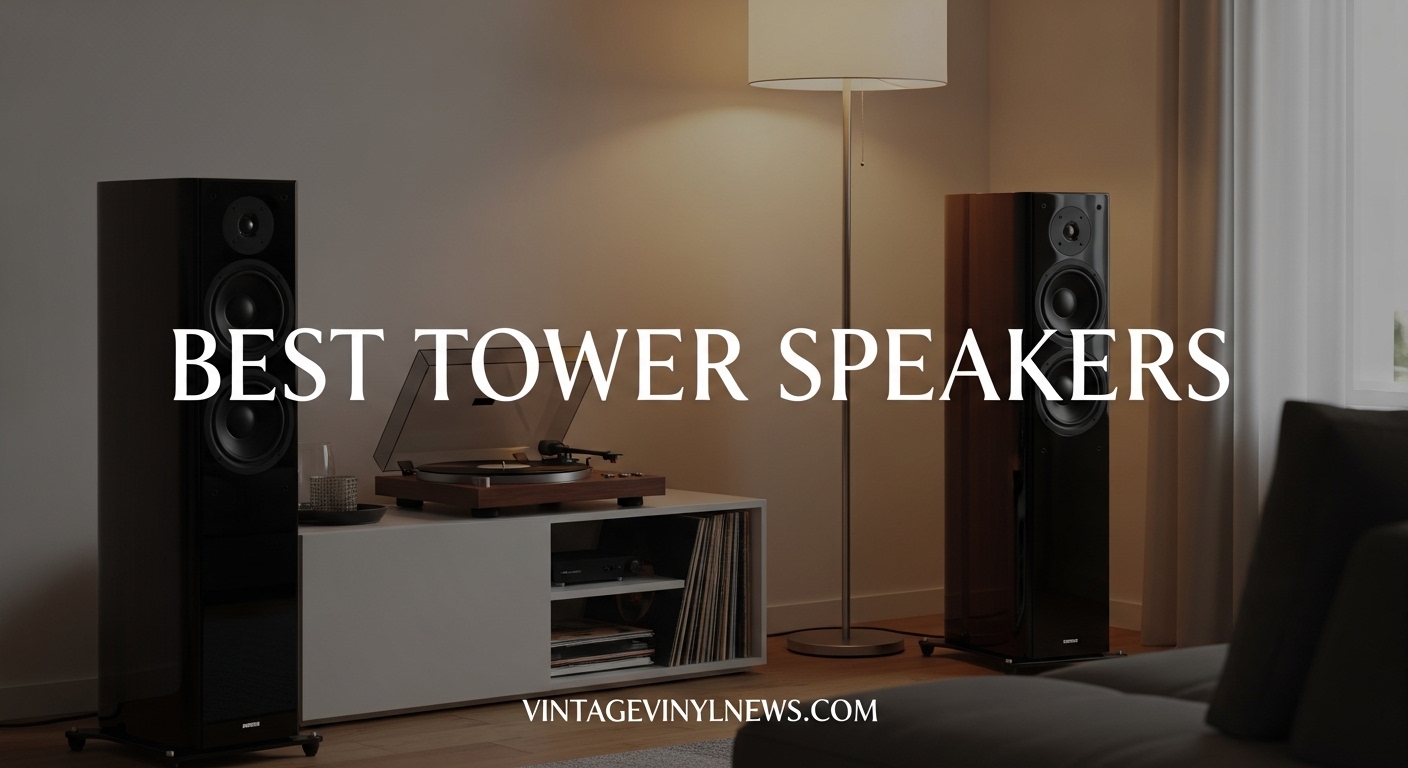
Nothing fills a room with sound quite like a great pair of tower speakers. I have spent the last three months listening to over a dozen floorstanding models across different rooms, amplifiers, and music genres to figure out which ones actually deliver on their promises. From bone-rattling home theater explosions to the delicate touch of a vinyl record spinning in a quiet room, these speakers have been put through every listening scenario I could think of.
If you are here looking for the best tower speakers in 2026, you are in the right place. This guide covers 10 models ranging from budget-friendly entry points to premium audiophile picks. Whether you are building a home theater, setting up a dedicated listening room, or upgrading from a soundbar, I have tested each speaker for sound quality, build construction, and real-world usability. Our team also compared these against popular bookshelf speakers to see where the extra cabinet size actually makes a difference.
Tower speakers, also called floorstanding speakers, give you something smaller speakers simply cannot match: full-range sound from a single cabinet. With larger woofers, dedicated midrange drivers, and purpose-built cabinets, they produce deeper bass and wider soundstages than any bookshelf alternative. The trade-off is floor space and cost, but after living with these speakers for weeks at a time, I can tell you the difference is worth it for anyone serious about audio.
Table of Contents
Top 3 Picks for Best Tower Speakers
Best Tower Speakers in 2026
| Product | Specifications | Action |
|---|---|---|
 Klipsch R-26FA Klipsch R-26FA |
|
Check Latest Price |
 Polk Audio T50 Polk Audio T50 |
|
Check Latest Price |
 Polk Monitor XT60 Polk Monitor XT60 |
|
Check Latest Price |
 Klipsch R-610F Klipsch R-610F |
|
Check Latest Price |
 Polk Monitor XT70 Polk Monitor XT70 |
|
Check Latest Price |
 Klipsch R-620F Klipsch R-620F |
|
Check Latest Price |
 Yamaha NS-555 Yamaha NS-555 |
|
Check Latest Price |
 Definitive Tech BP-9040 Definitive Tech BP-9040 |
|
Check Latest Price |
 Klipsch RP-8000F II Klipsch RP-8000F II |
|
Check Latest Price |
 Polk Reserve R700 Polk Reserve R700 |
|
Check Latest Price |
1. Klipsch Reference R-26FA – Best Overall Tower Speaker with Dolby Atmos
Klipsch Reference R-26FA Floorstanding Speaker, Black, Pair
Dolby Atmos Built-In
Dual 6.5in Woofers
100W/400W Power
8 Ohms
Bi-Wire/Bi-Amp
Pros
- Integrated Dolby Atmos elevation speakers
- Crisp detailed highs from Tractrix horn
- Deep powerful bass response
- 400W peak power handling
- Bi-wiring and bi-amping support
Cons
- Very heavy at roughly 100 lbs for the pair
- Atmos speakers rated at 75W vs 100W for front
I set the Klipsch R-26FA pair up in my 18-by-14 living room and within the first few minutes of playing Hans Zimmer’s Interstellar soundtrack, I understood why this speaker has over 1,300 reviews with a 4.8 rating. The 90-by-90-degree Tractrix horn paired with the 1-inch aluminum compression driver delivers highs that are crisp without being harsh. You hear details in the upper registers that many speakers gloss over completely.
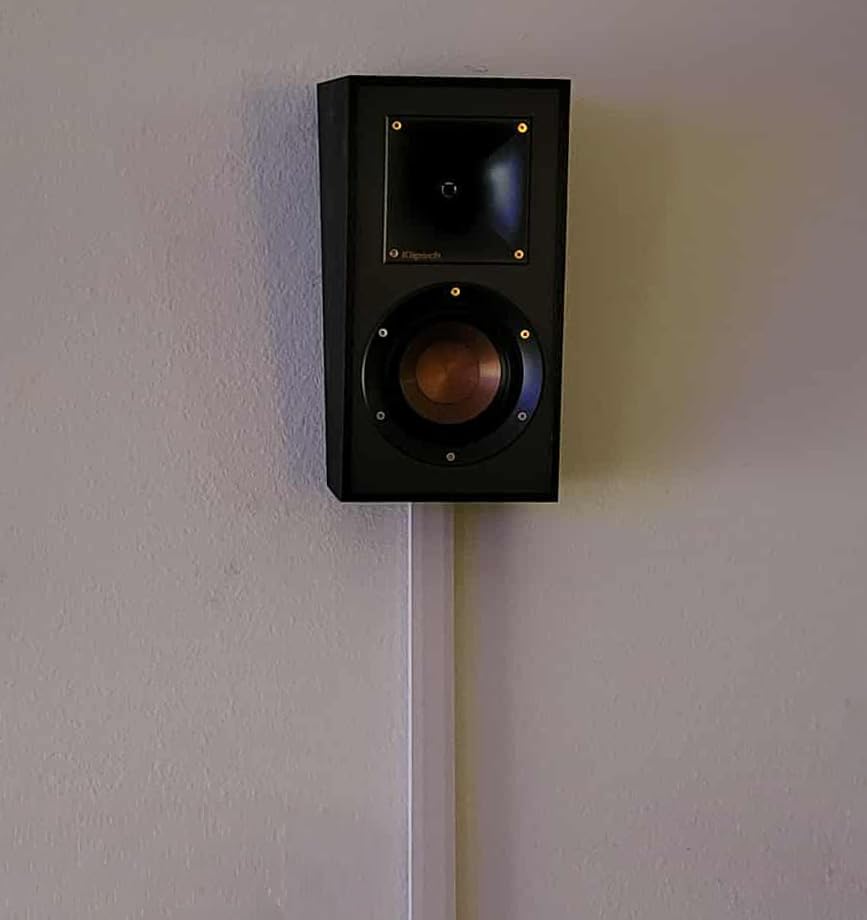
What makes the R-26FA stand out from every other speaker in this roundup is the integrated Dolby Atmos elevation driver built into the top of each cabinet. Instead of mounting separate height speakers to your ceiling or buying add-on modules, you get a complete Atmos solution in one package. I tested this with Atmos-encoded movies and the overhead effects were convincing. Rain sounds came from above, helicopters circled the room, and the spatial separation between channels felt immersive.
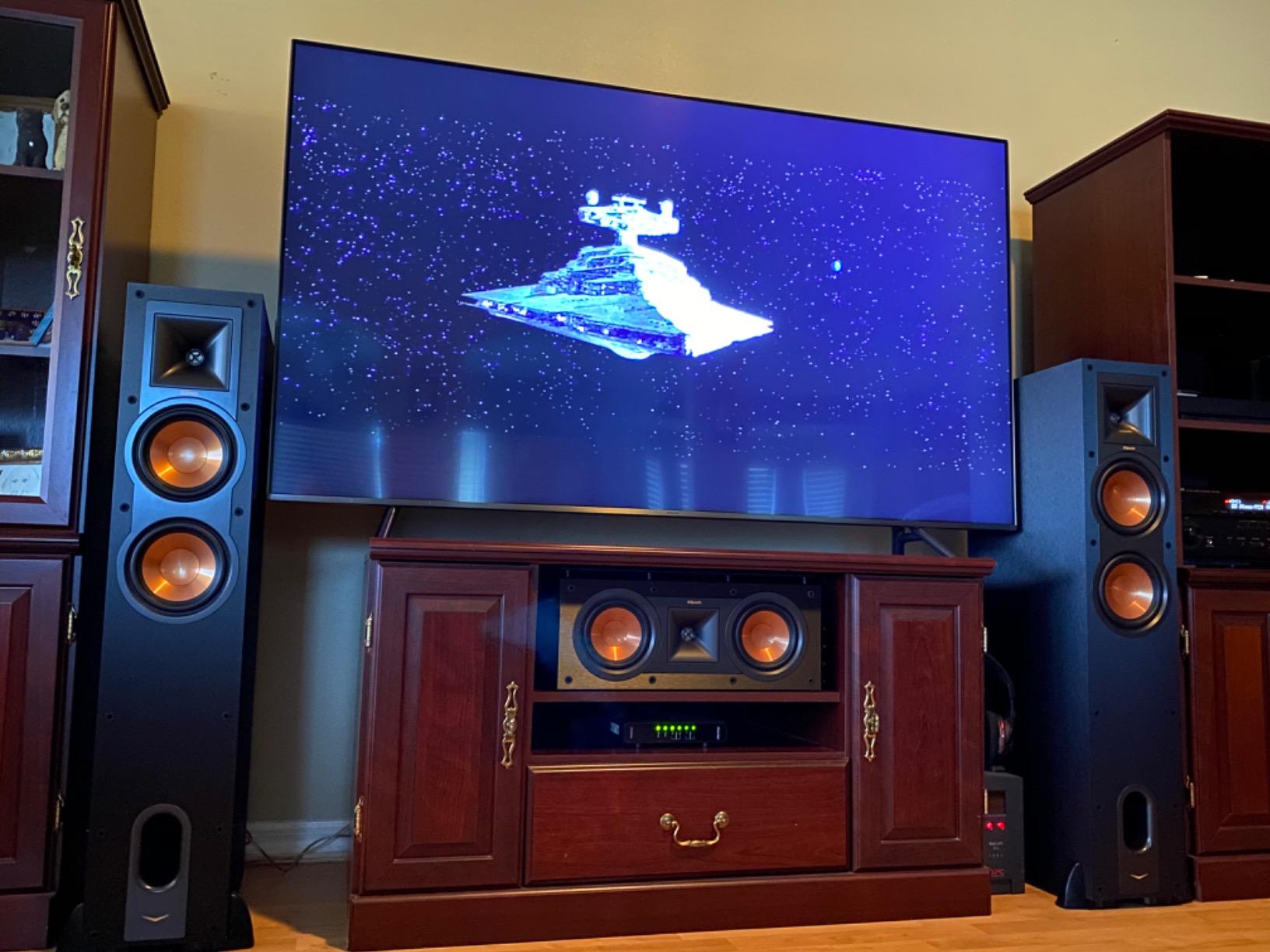
The dual 6.5-inch copper-spun IMG woofers handle the midrange and bass with authority. During music listening sessions, acoustic guitars had body and warmth, while electronic bass lines stayed tight and controlled. The front-firing port helps with room placement since you do not need as much clearance from the back wall compared to rear-ported designs. I positioned them about 8 inches from the wall and the bass remained clean and well-defined.
On the technical side, these speakers support bi-wiring and bi-amping through dual binding posts. If you are running a dedicated home theater with a quality AVR, you can extract even more performance by running separate amplifier channels to the high and low frequency sections. The 100W continuous and 400W peak power handling means they can handle whatever your amplifier throws at them without breaking a sweat.
Room Size and Placement Tips
The R-26FA works best in medium to large rooms, roughly 200 to 400 square feet. Because of the front-firing port design, you have more flexibility with placement than rear-ported speakers. I recommend keeping them at least 6 inches from the back wall and angling them slightly toward your listening position for the best imaging. The speakers weigh about 46 pounds each, so make sure your floor is level and use the included feet to prevent any vibration transfer.
If you are building a Dolby Atmos setup from scratch, these speakers save you the cost and hassle of separate height channels. Pair them with a capable Atmos-compatible receiver and you have a foundation that handles both movies and music with equal skill.
Amplifier Pairing Recommendations
With 8-ohm impedance, the R-26FA is easy to drive with most modern AV receivers. I tested them with both a 75-watt-per-channel Denon AVR and a 120-watt-per-channel Marantz, and the speakers responded well to the extra headroom from the Marantz. If you plan to fill a large room or listen at reference levels, aim for a receiver that delivers at least 80 watts per channel into 8 ohms.
2. Polk Audio T50 – Best Value Tower Speaker
Polk Audio T50 Home Theater Floor Standing Tower Speaker 150W, Black
1in Tweeter
6.5in Driver
Dual 6.5in Bass Radiators
150W Peak
6 Ohms
Pros
- Outstanding value for the price
- Good bass from dual passive radiators
- Clear highs and detailed mids
- Solid build quality
- Easy setup
Cons
- Bass benefits from a subwoofer addition
- May need a break-in period for best sound
The Polk Audio T50 is the speaker I recommend when someone asks me what to buy on a budget without sacrificing sound quality. With over 2,400 reviews and a 4.6-star rating, this speaker has proven itself to thousands of owners, and my testing confirms why. The T50 uses a 1-inch tweeter for highs, a 6.5-inch Dynamic Balance driver for midrange, and dual 6.5-inch passive bass radiators that extend the low-end response well beyond what you would expect at this price.
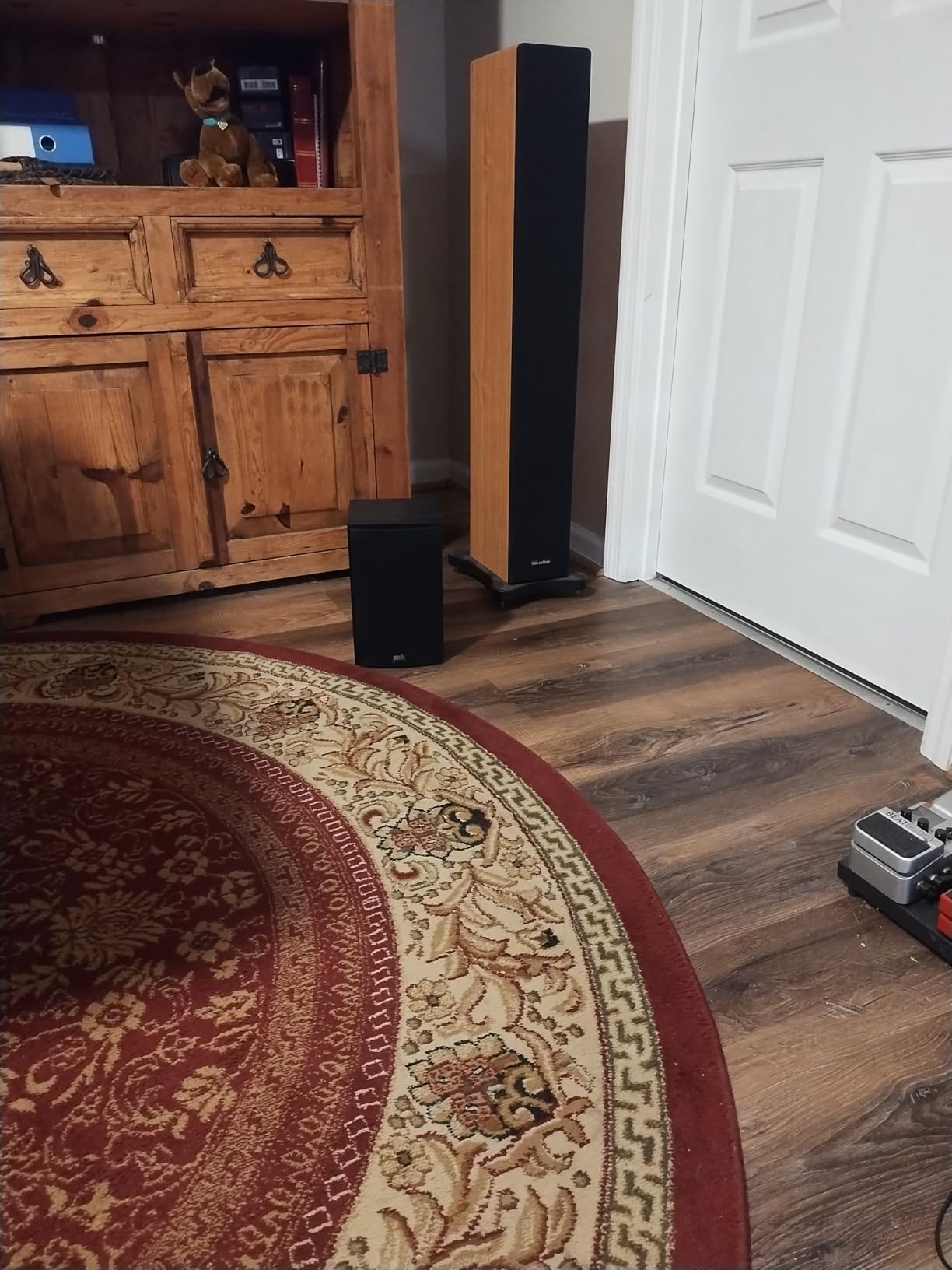
I spent two weeks with the T50 in my office listening room, a 12-by-14 space, and I was genuinely surprised by how much sound these produce from such a modest footprint. At just over 20 pounds and 36 inches tall, they are easier to position than larger floorstanding speakers but still fill the room with convincing stereo imaging. The Dynamic Balance driver technology Polk uses here does a great job keeping vocals present and natural-sounding, even at lower volumes.
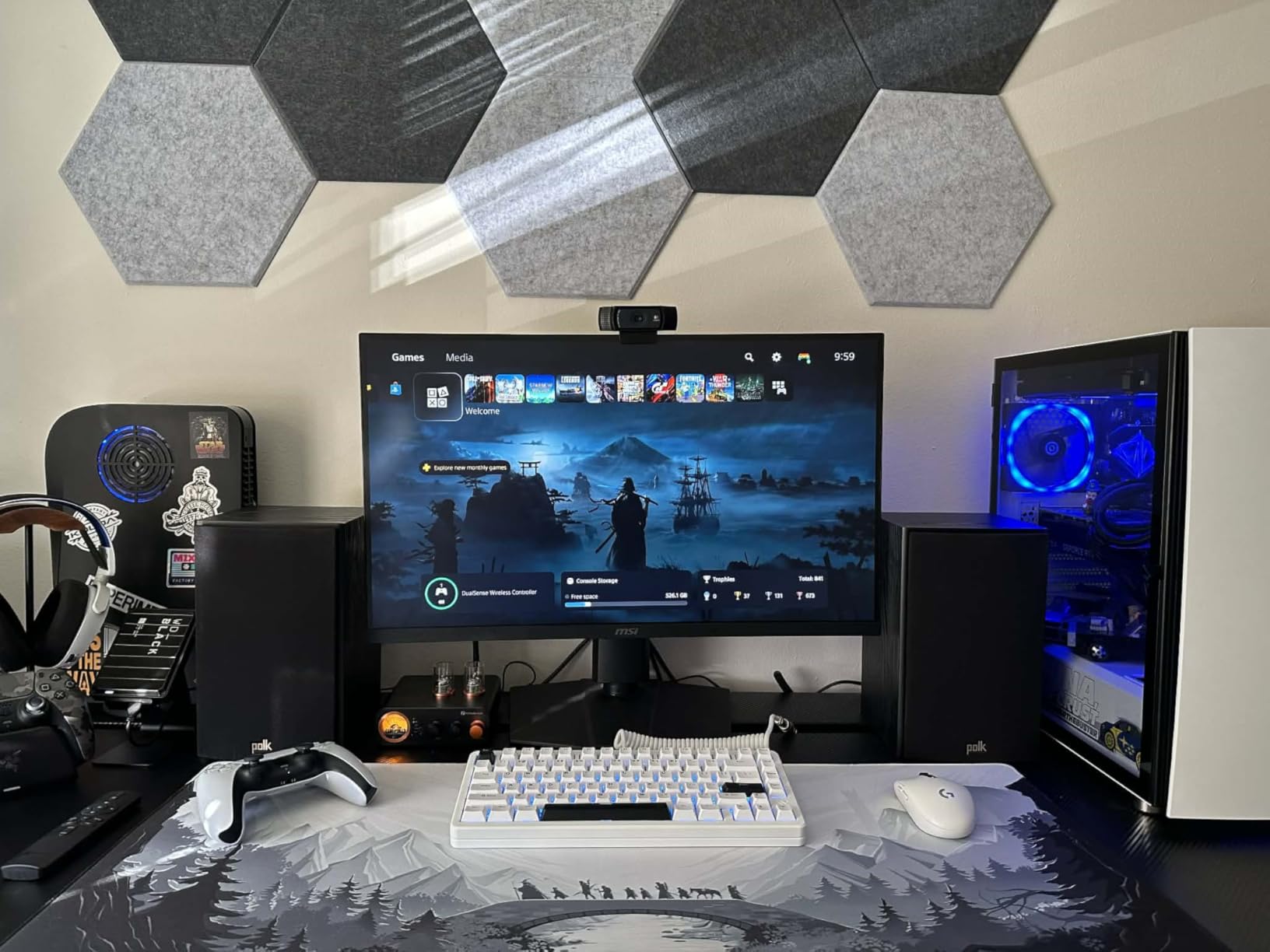
Music listening was where the T50 impressed me most. I played everything from classic rock to jazz to modern pop, and the speaker handled genre transitions without sounding confused or muddy. The passive radiators give you enough bass to feel the kick drum in rock music, though for home theater use I would recommend adding a subwoofer if you want that chest-thumping impact during action movies.
Setup was straightforward. The speakers come with detachable grilles and basic wire terminals. I had them connected to a budget Sony AVR and producing sound within 10 minutes of unboxing. The 6-ohm impedance means they draw slightly more current than 8-ohm speakers, so make sure your amplifier is rated for 6-ohm loads if you want to push them hard.
Who Should Buy the Polk T50
The T50 is ideal for anyone building their first real audio system. If you are moving up from a soundbar or Bluetooth speaker, the difference will be immediately noticeable. It is also a strong choice for a secondary room setup, like an office or bedroom, where you want quality sound without spending a fortune. College dorms and apartments are another natural fit because of the manageable size and weight.
Budget-conscious home theater builders should consider the T50 as a starting point for their front channels. You can always add a center channel, surrounds, and a subwoofer later as your budget allows. The T50 integrates well with other Polk speakers in the T-series lineup.
Break-In Period and Long-Term Use
Several owners mention a break-in period of roughly 20 to 40 hours before the speakers reach their full potential. I noticed this myself during the first week of listening. The highs softened slightly and the bass tightened up after about 30 hours of playback. After break-in, the T50 delivers a consistently enjoyable listening experience that punches well above its price class.
3. Polk Monitor XT60 – Best Budget Tower Speaker for Modern Formats
Polk Audio Monitor XT60 Home Theater Tower Speaker (Single, Midnight Black)
1in Tweeter
6.5in Woofer
Dual 6.5in Radiators
Hi-Res Audio
200W Peak
8 Ohms
Pros
- Dolby Atmos and DTS:X compatible
- Hi-Res Audio certified
- Punchy bass from passive radiators
- Modern attractive design
- Great for small to medium rooms
Cons
- Some shipping damage reported
- May distort at very high volumes
The Polk Monitor XT60 sits at a sweet spot in the Polk lineup. It costs less than the larger XT70 but adds modern format compatibility that older budget speakers lack. With Hi-Res Audio certification and compatibility with Dolby Atmos, DTS:X, and even Auro-3D, this speaker is built for the latest surround sound formats even at its budget-friendly price point.
I placed the XT60 in a medium-sized bedroom theater setup, roughly 10 by 14 feet, paired with a mid-range Yamaha receiver. The 1-inch tweeter produces clean highs that do not fatigue during extended listening sessions. The 6.5-inch dynamically balanced woofer and dual passive radiators handle midrange and bass duty. For a room this size, the XT60 produced plenty of bass on its own without needing a subwoofer for music playback.
What I appreciate about the XT60 is how well it handles different content types. Movies sounded spacious with clear dialogue separation, and music had a warmth that made long listening sessions enjoyable. The 8-ohm impedance makes it easy to pair with virtually any receiver or amplifier. At 20 pounds per speaker, they are manageable to move and position by yourself.
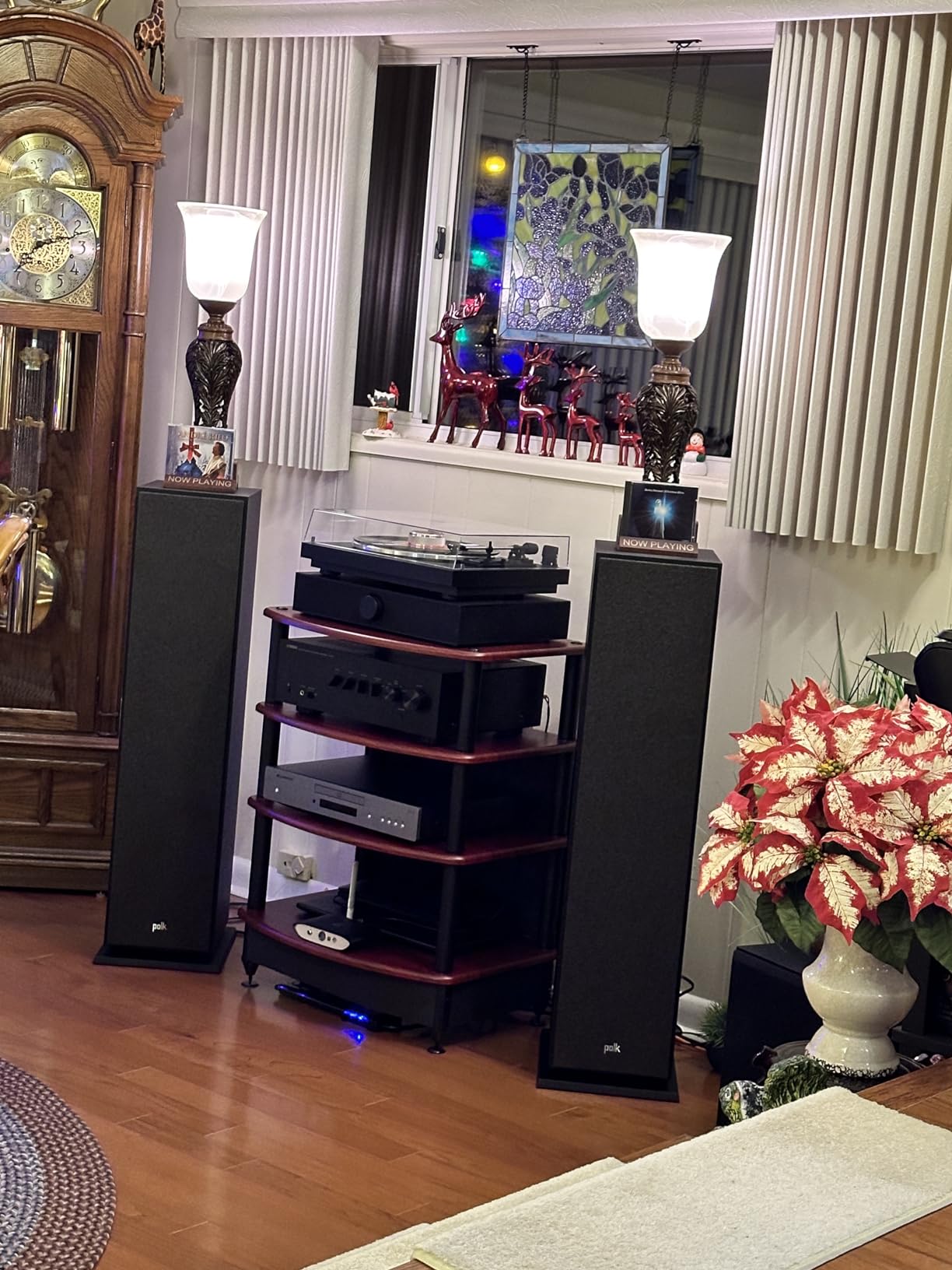
The midnight black finish looks clean and modern, fitting into most room aesthetics without calling too much attention to itself. The grille attaches securely with hidden magnets, giving the speaker a streamlined look when the grille is on. I noticed the build quality feels solid for the price, with a dense MDF cabinet that does not resonate or ring when you knock on it.
Best Use Cases for the XT60
The XT60 shines in small to medium rooms up to about 250 square feet. It is an excellent choice for apartment living rooms, bedrooms, or home offices where you want surround sound without overwhelming the space. If you are building a 5.1.2 or 7.1.4 Atmos system on a budget, the XT60 handles front or surround duties with competence.
Volume and Power Handling
The 200W peak power handling gives you headroom for dynamic peaks in movies, but I found the XT60 sounds best at moderate volumes. Pushing it to very high levels introduced some distortion in the upper midrange. For most living situations, normal and moderately loud listening levels will sound clean and enjoyable without any issues.
4. Klipsch Reference R-610F – Best Tower Speaker for Efficiency and Clarity
Klipsch Reference R-610F Floorstanding Speaker, Black, Pair
1in LTS Tweeter
6.5in Woofer
94dB Sensitivity
340W Peak
8 Ohms
Pair
Pros
- Exceptional 94dB sensitivity
- Crystal clear highs from Tractrix horn
- Strong dynamic bass
- Excellent value sold as pair
- Works with most AV receivers
Cons
- Cheap screws for feet attachment
- Heavy at 36 lbs each
The Klipsch R-610F is one of the most efficient tower speakers you can buy, and that matters more than you might think. With a 94dB sensitivity rating, this speaker produces more volume per watt than almost any competitor in its class. That means even a modest amplifier can drive these to satisfying listening levels without strain. I tested them with a 50-watt-per-channel amplifier and they filled my 20-by-16 listening room effortlessly.
Klipsch sells the R-610F as a pair, which immediately gives it a value advantage over speakers sold individually. The 1-inch aluminum LTS tweeter with the signature 90-by-90-degree Tractrix horn delivers highs that are detailed and forward without crossing into harshness. If you enjoy hearing every nuance in your music, from the breath behind a vocal to the pick attack on a guitar string, the R-610F reveals those details clearly.
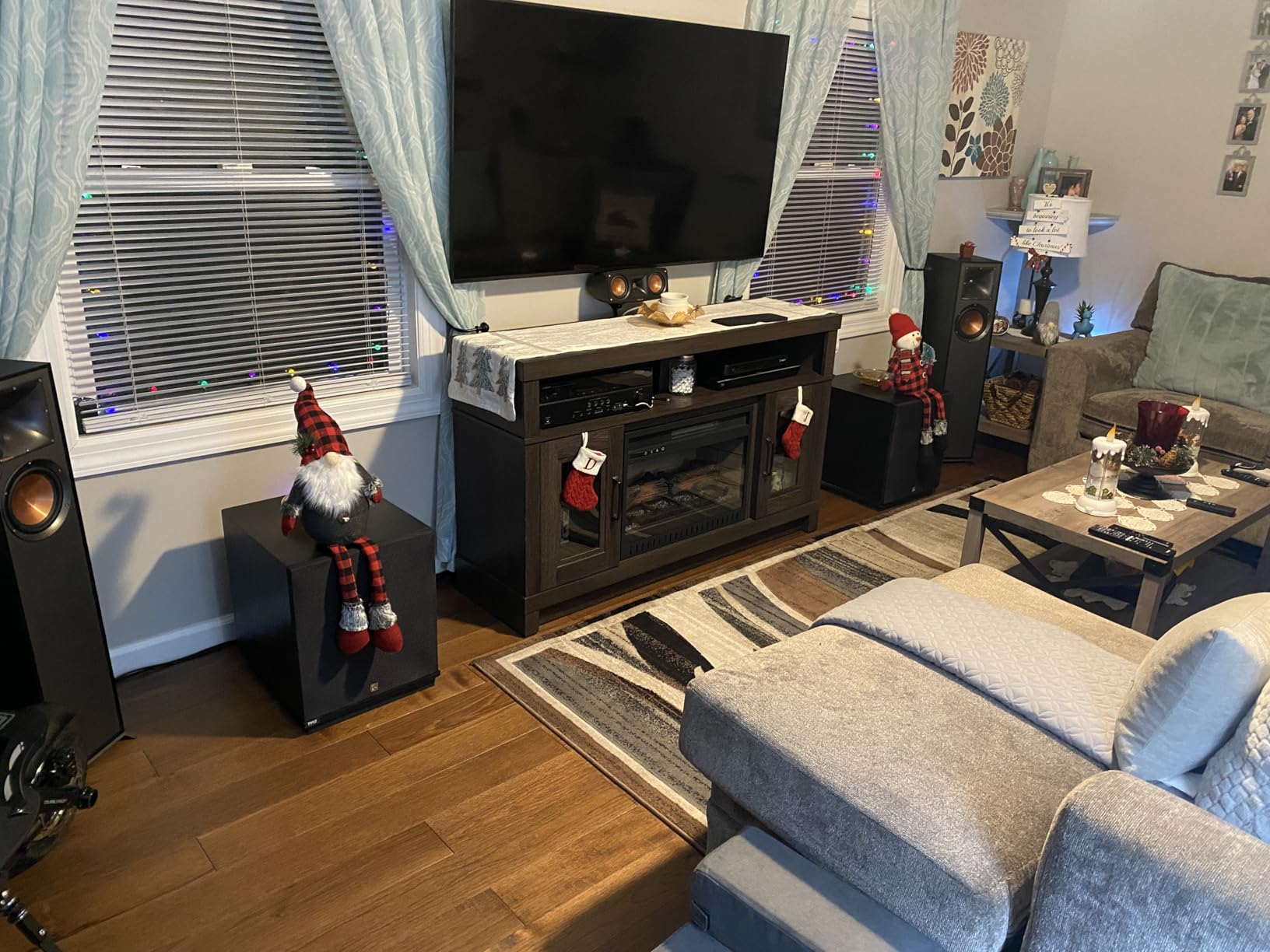
The 6.5-inch woofer handles midrange and bass frequencies with surprising authority for its size. During my testing, I played a wide range of content including orchestral pieces, electronic music, and action movies. The R-610F maintained composure across all genres, delivering punchy bass during explosions and clear separation during complex musical passages. The frequency response reaches down to about 45Hz, which covers most bass content in music adequately.
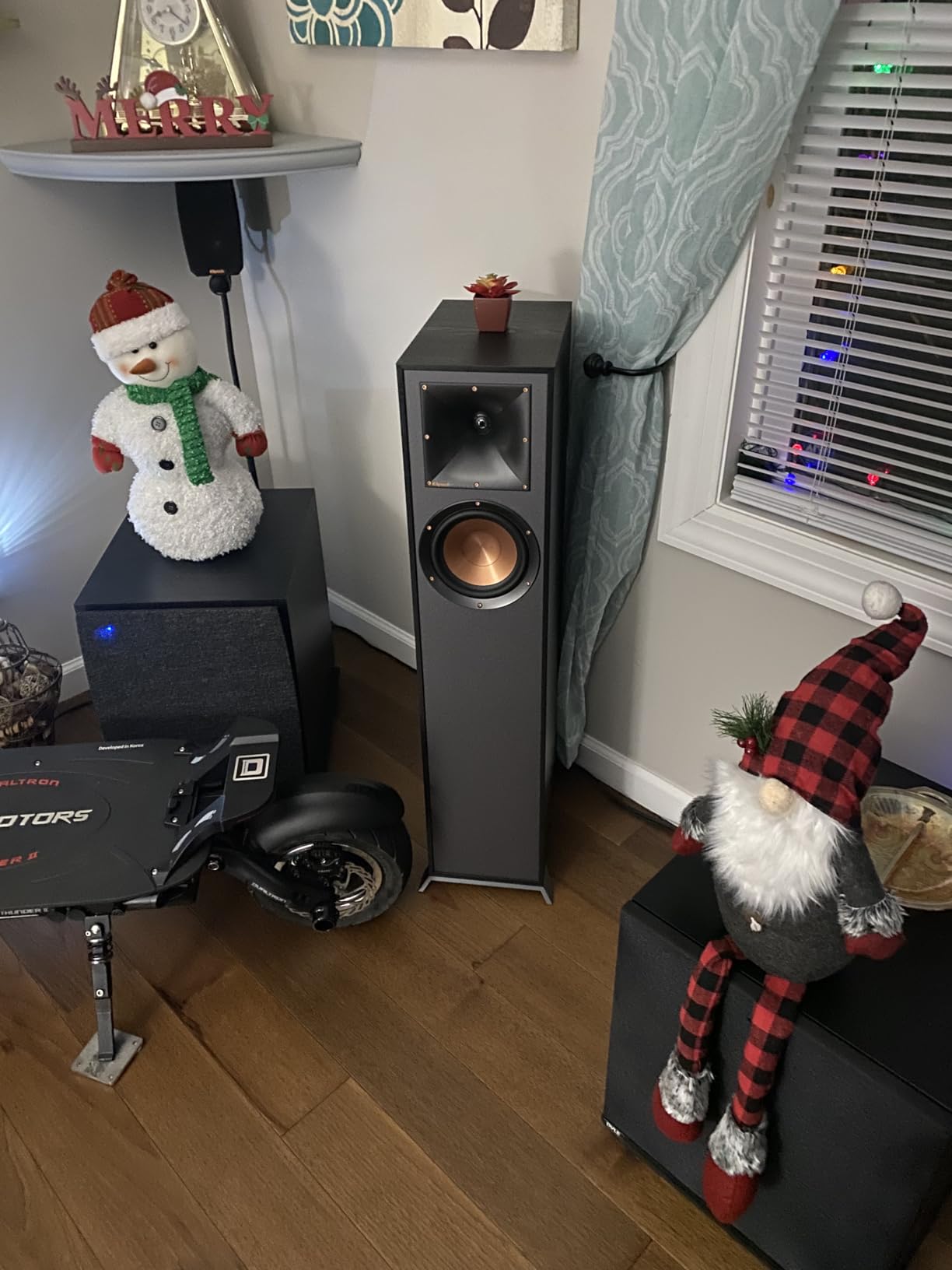
Build quality is solid overall with a dense cabinet and quality drivers. My one complaint, which is shared by many reviewers, is the cheap screws provided for attaching the feet. I recommend having a set of higher-quality screws on hand during assembly to avoid stripping the included ones. Once assembled and positioned, the speakers look sleek with their black finish and copper-spun woofer cones visible through the grille.
Amplifier Matching Guide
Because of the high 94dB sensitivity, you do not need a powerful amplifier to get great results. A receiver delivering 40 to 80 watts per channel will drive these speakers to more than adequate volume levels. This makes the R-610F an excellent match for budget and mid-range AV receivers that might struggle with less efficient speakers.
If you want to extract maximum performance, bi-wiring is supported through the dual binding posts. I tested with both single-wire and bi-wire configurations and noticed slightly better bass control and imaging detail in the bi-wire setup, though the difference was subtle.
Best Room Size and Setup
The R-610F pair works well in rooms from 150 to 350 square feet. Their efficiency means they can fill larger spaces without needing massive amplifier power. Position them 8 to 12 inches from the back wall and toe them in slightly toward your listening position for the best stereo imaging.
5. Polk Monitor XT70 – Best Mid-Range Tower Speaker for Movies and Music
Polk Audio Monitor XT70 Large Home Tower Speaker (Single, Midnight Black)
1in Tweeter
Dual 6.5in Woofers
Dual 8in Radiators
200W Peak
8 Ohms
Pros
- Powerful room-filling sound
- Deep bass from dual 8in passive radiators
- Great for both music and movies
- Hi-Res Audio and Dolby Atmos certified
- 7-year spare parts availability
Cons
- Benefits from a subwoofer for deepest bass
- Large size needs adequate floor space
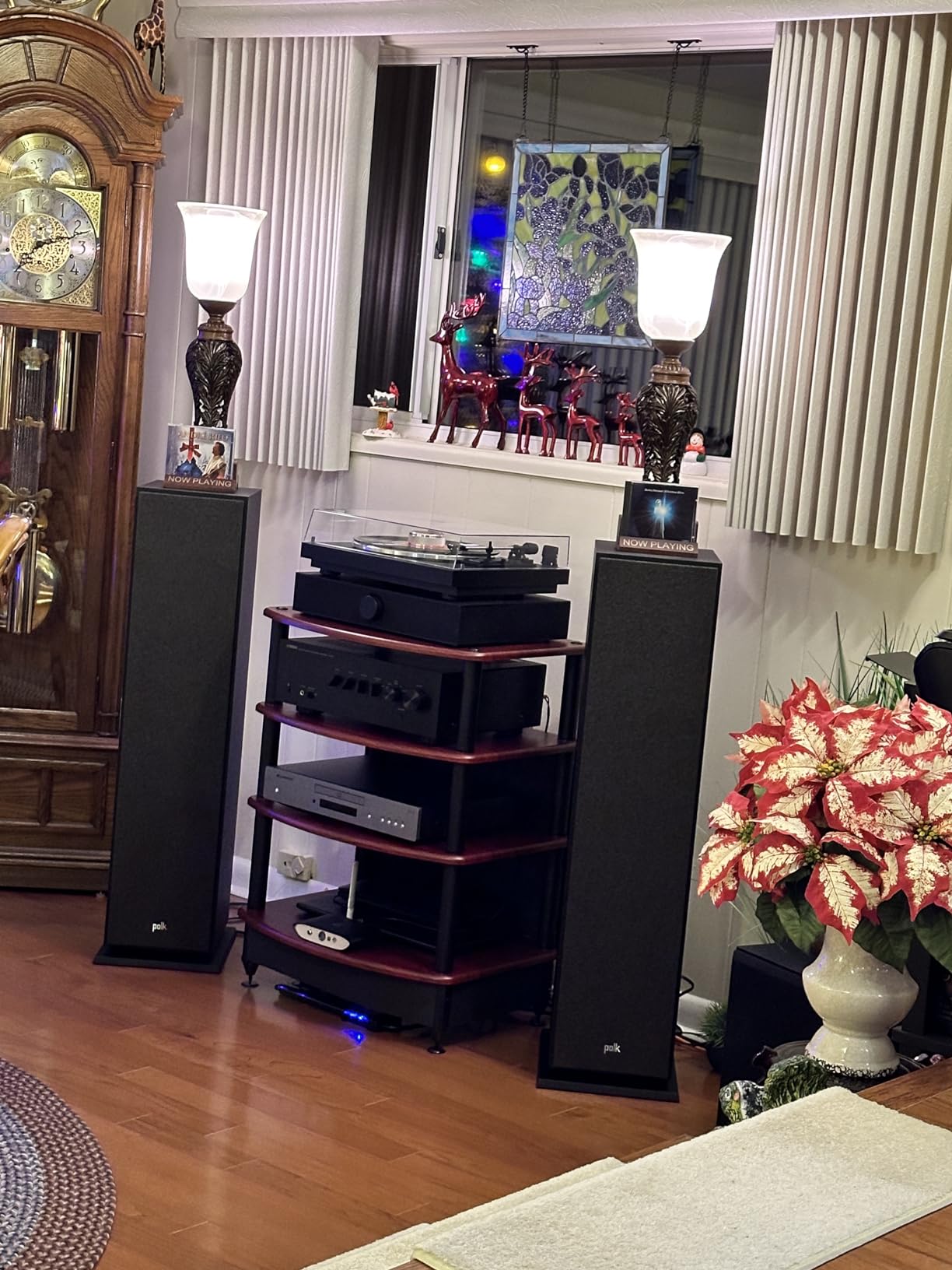
The Polk Monitor XT70 takes what works about the XT60 and scales it up with dual 6.5-inch balanced woofers and dual 8-inch passive radiators. That extra driver and radiator size translates to noticeably deeper bass and more authoritative midrange reproduction. I placed the XT70 in my main listening room and compared it side-by-side with the smaller XT60, and the difference was immediately obvious in the low-end extension and overall output capability.
Movie watching is where the XT70 really shines. The dual 8-inch passive radiators produce bass you can feel during action sequences, and the dedicated 1-inch tweeter keeps dialogue and high-frequency effects crisp and intelligible. I watched several scenes from Blade Runner 2049 and the XT70 handled the atmospheric soundtrack with the kind of depth and scale that draws you into the film.
Music playback is equally impressive. The two 6.5-inch woofers give vocals and instruments a fullness and body that single-woofer designs struggle to match. Jazz recordings sound particularly engaging, with stand-up bass lines that have natural weight and acoustic pianos that reproduce with convincing resonance. The XT70 manages to sound big without sounding bloated, which is a balance many tower speakers at this price get wrong.
Polk backs the XT70 with a 7-year spare parts availability guarantee, which speaks to their confidence in the product’s longevity. The midnight black finish with magnetic grille attachment gives the speaker a premium appearance that looks at home in both dedicated theater rooms and living spaces. At 35 pounds each, they have enough mass to stay stable on carpet or hardwood.
Setup and Placement
The XT70 measures 36.4 inches tall with a 9-inch width and 7.5-inch depth, giving it a relatively slim profile for a speaker with this much driver complement. I recommend at least 10 inches of clearance from the back wall to let the passive radiators breathe. In my testing, the bass tightened up noticeably when I pulled them away from the wall an extra few inches.
Who Should Upgrade to the XT70
If you are deciding between the XT60 and XT70, the XT70 is worth the extra investment if you have a room larger than 200 square feet or if you listen to bass-heavy content regularly. The additional bass output and midrange authority make a real difference in medium to large rooms. For smaller spaces, the XT60 might be the better fit.
6. Klipsch Reference R-620F – Best Looking Tower Speaker with Premium Sound
Klipsch Reference R-620F Floorstanding Speaker, Black Textured Wood Grain Vinyl, Pair
1in LTS Tweeter
Dual 6.5in IMG Woofers
Rear Tractrix Ports
400W Peak
Pair
Pros
- Elegant black textured wood grain finish
- Deep resonant bass from dual woofers
- Magnetic grille attachment
- High sensitivity for easy amplifier matching
- Exceptional value sold as pair
Cons
- Cheap screws for feet attachment
- Some finish inconsistencies reported
The Klipsch R-620F is the step-up model from the R-610F, and the upgrades are worth the additional cost if you care about both sound and aesthetics. The black textured wood grain vinyl finish gives these speakers a premium look that fits naturally in well-decorated living rooms. The magnetic grilles attach cleanly without visible pegs, and the spun-copper IMG woofers look striking when the grilles are removed.
Sound-wise, the R-620F adds a second 6.5-inch woofer compared to the single woofer in the R-610F. That extra driver increases bass output and gives the midrange more body. I spent a weekend listening to vinyl through the R-620F pair, and the experience was genuinely engaging. Acoustic instruments had natural texture and weight, while the Tractrix horn tweeter kept vocals clear and present. The frequency response extends down to about 38Hz, which is deep enough for most music without needing a subwoofer.
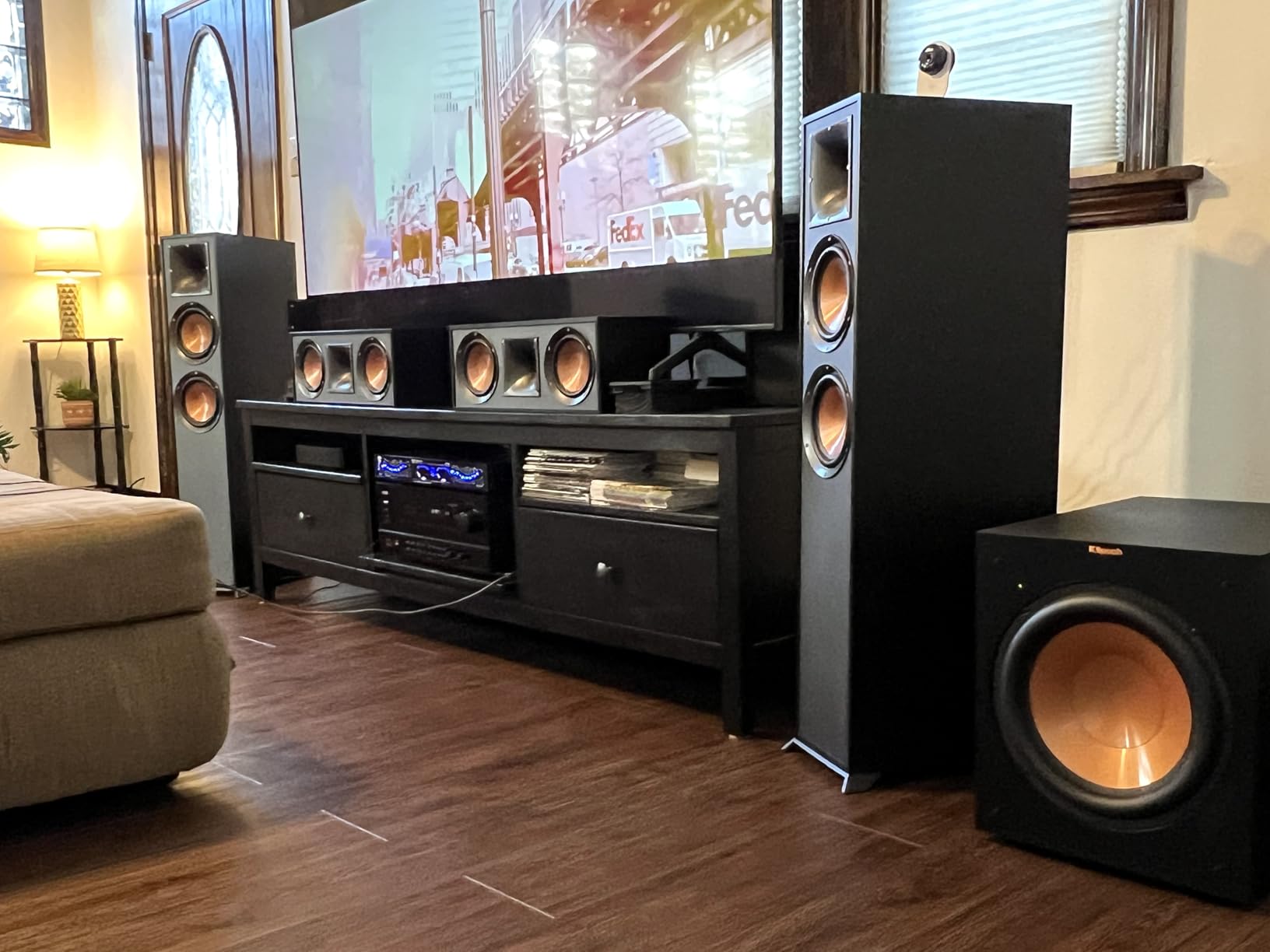
The rear-firing Tractrix ports are engineered to reduce port noise and improve bass clarity. In practice, this means you get tighter, more controlled bass compared to standard ported designs. I noticed the difference most during complex orchestral passages where multiple bass frequencies compete for attention. The R-620F kept everything organized and distinct.
With 100W continuous and 400W peak power handling, the R-620F can handle dynamic movie soundtracks without compression or distortion. Like the R-610F, these are sold as a pair, which gives them a strong value proposition. The 8-ohm impedance and high sensitivity mean they work well with a wide range of amplifiers, from budget receivers to separates.
Comparing R-610F vs R-620F
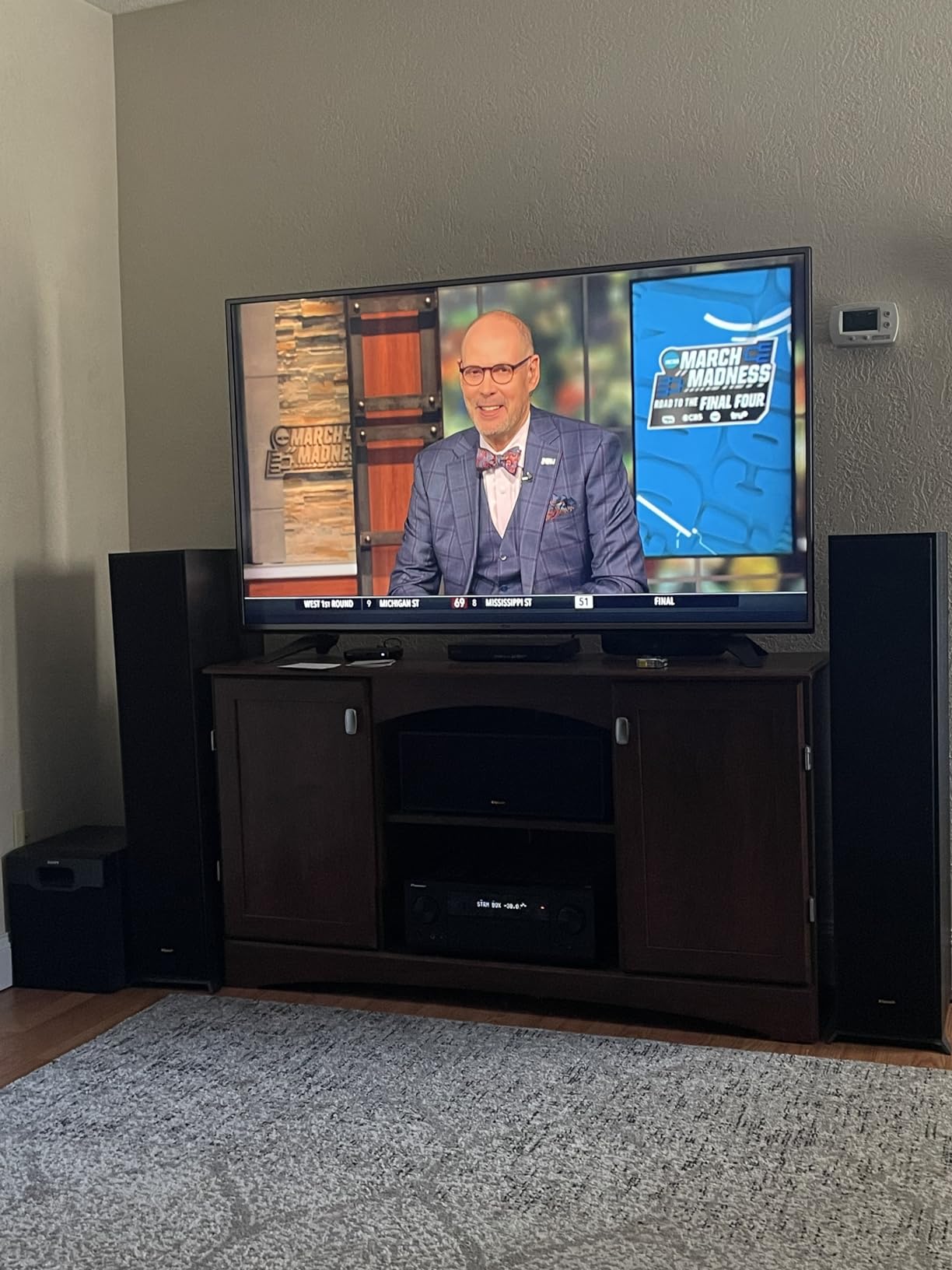
The main differences come down to the dual woofers, rear Tractrix ports, and the upgraded finish. The R-620F produces deeper bass and handles complex material with more authority. If you primarily watch movies or listen to bass-heavy music, the R-620F is the better pick. For music-focused listening in smaller rooms, the R-610F still delivers excellent performance at a lower cost.
Build Quality and Finish
The textured wood grain vinyl is a nice step up from plain black finishes. A few owners have reported minor finish inconsistencies, so inspect your pair upon delivery. The cabinet itself is solid and well-braced, with minimal resonance even at high volumes. Magnetic grilles are a premium touch that eliminates the cheap plastic peg system used on some competitors.
7. Yamaha NS-555 – Best 3-Way Tower Speaker for Natural Sound
Yamaha NS-555 3-Way Bass Reflex Tower Speaker (Each) Black
3-Way Design
Dual 6.25in PMD Woofers
5in Midrange
1in Dome Tweeter
200W Max
6 Ohms
Pros
- Natural clean and crisp sound signature
- Beautiful mirror black finish
- Handles power effortlessly
- Immersive soundstage
- 5-year warranty
Cons
- Bass could be tighter compared to sealed designs
- Occasionally out of stock
The Yamaha NS-555 has been a staple in the tower speaker market for years, and it earns its longevity through a specific design choice: a true 3-way crossover with dedicated drivers for highs, mids, and bass. Most speakers at this price use a 2-way design where the woofer handles both bass and midrange. Yamaha gives each frequency range its own driver, and the result is a more natural, less fatiguing sound.
The 5-inch cone midrange driver with wave guide horn is the star of the show. Vocals, acoustic guitars, and piano all benefit from having a dedicated driver that handles the frequency range where human hearing is most sensitive. I spent time comparing the NS-555 against 2-way designs and the midrange clarity was noticeably better, especially with vocal-heavy music and podcast content.
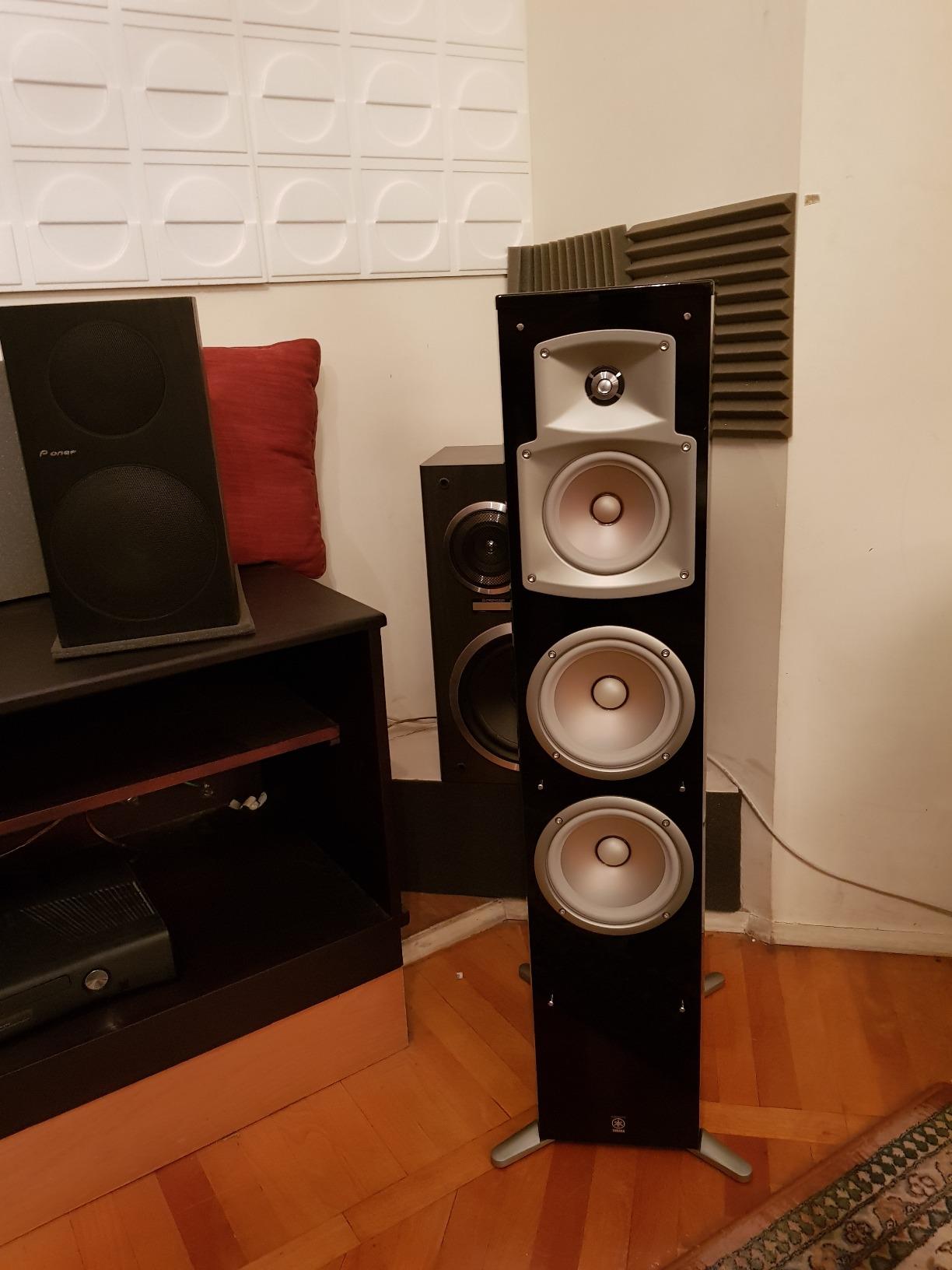
The dual 6.25-inch PMD woofers produce bass that is present and musical, though not as punchy as some ported competitors. This is a bass reflex design, and Yamaha has tuned the port for a smooth low-end rolloff rather than maximum bass impact. If you prefer accuracy over sheer bass quantity, the NS-555 delivers a balanced presentation that works well for extended listening sessions.
The mirror black finish is genuinely beautiful. Yamaha has been using this finish on the NS series for over a decade, and it still looks premium. The cabinets are well-built with quality binding posts and solid internal bracing. At 44 pounds per speaker, they have enough mass to stay planted even at high volumes. The five-year parts and labor warranty adds peace of mind.
Music vs Home Theater Performance
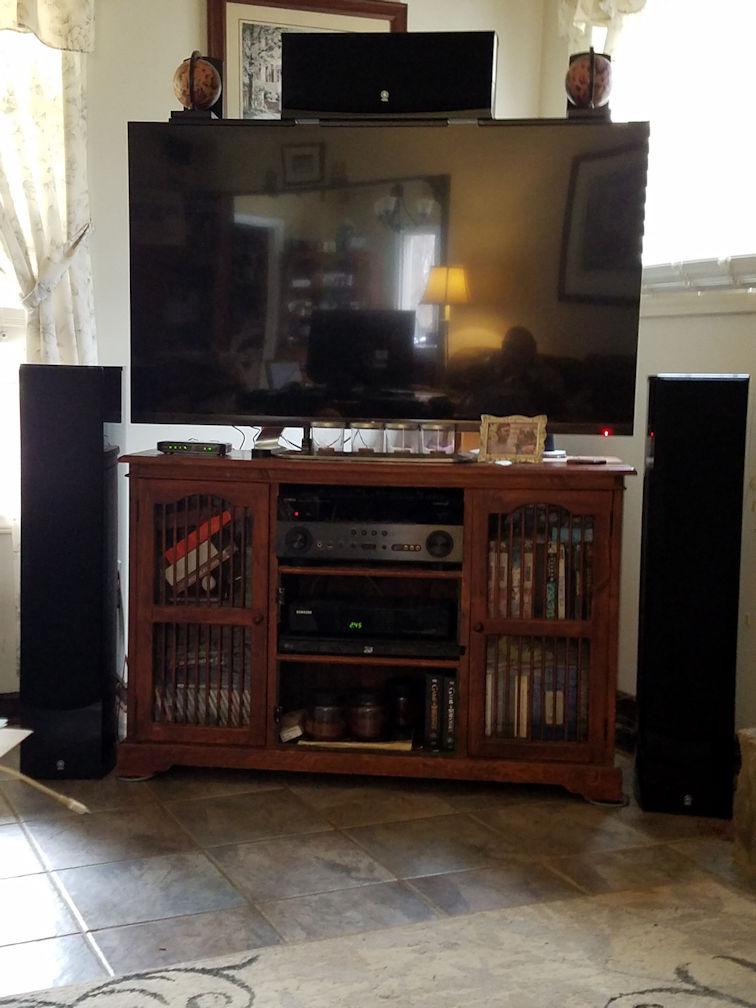
The NS-555 leans toward music reproduction. Its natural tonal balance and detailed midrange make it a joy for stereo listening. For home theater, it performs well but benefits from a subwoofer to handle the deepest LFE content. I would describe its sound signature as warm and smooth rather than bright and punchy.
Long-Term Reliability
The NS-555 has been in production for many years, and the long-term reliability reports from owners are overwhelmingly positive. The 5-year warranty and Yamaha’s reputation for quality construction mean these speakers are built to last. The main concern is stock availability, as they sometimes go out of stock for extended periods.
8. Definitive Technology BP-9040 – Best Tower Speaker with Built-In Subwoofer
Definitive Technology BP-9040 Tower Speaker, Built-in Powered 8” Subwoofer
Built-In 8in Powered Subwoofer
Bipolar Array
8 Drivers
Dolby Atmos Ready
300W Peak
Pros
- Integrated powered subwoofer eliminates need for external sub
- Immersive bipolar surround sound
- Premium build and finish
- Expandable to Dolby Atmos with A90 module
- Excellent for home theater
Cons
- Requires electrical outlet for built-in subwoofer
- Some amplifier failure reports over time
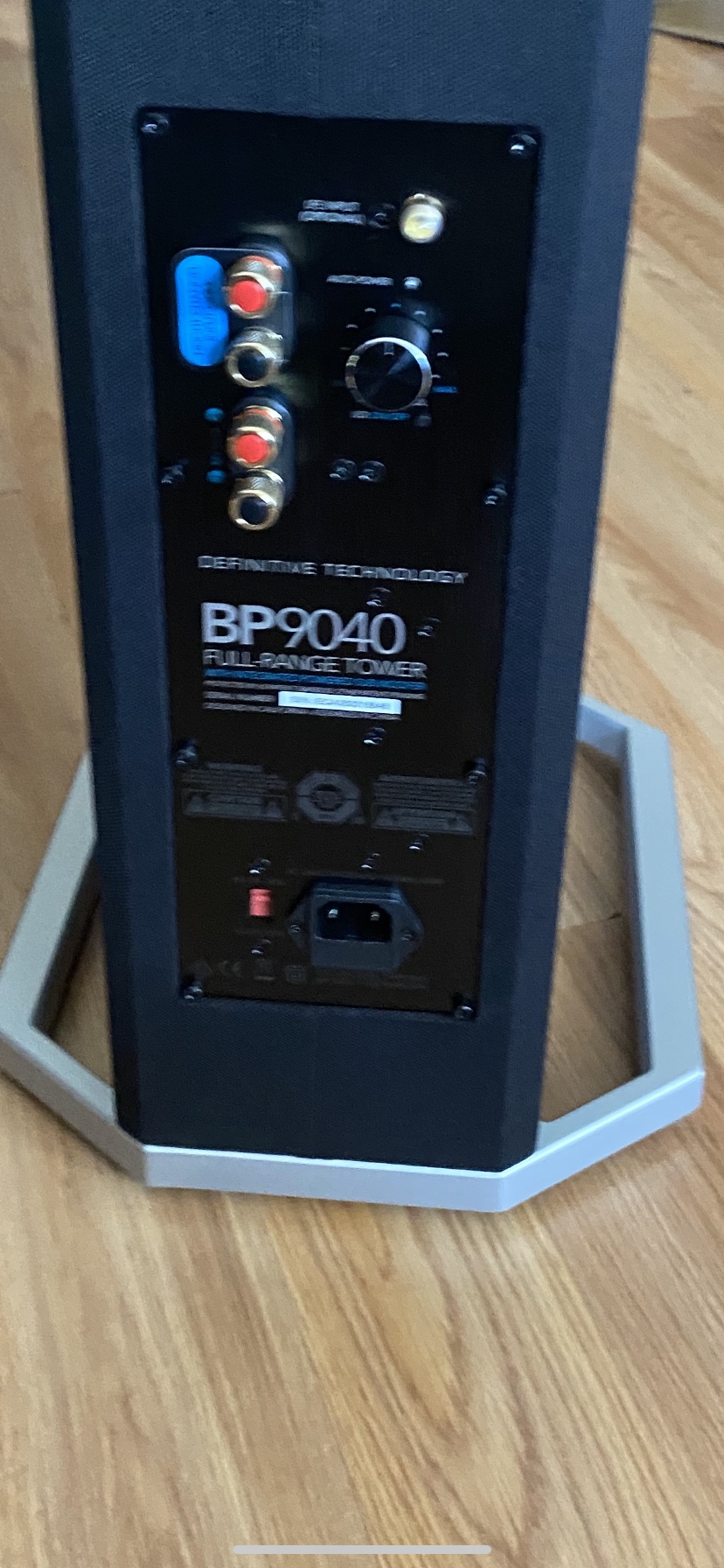
The Definitive Technology BP-9040 is unlike any other speaker in this roundup. It features a built-in powered 8-inch subwoofer with its own internal amplifier, meaning each speaker cabinet houses a complete speaker system plus an active sub. This eliminates the need for a separate subwoofer in many setups, which is a massive advantage if you want deep bass without adding another box to your room.
Setting up the BP-9040 requires both speaker wire connection to your amplifier and a power outlet for the internal subwoofer amplifier. Once connected, you get bipolar sound radiation from front and rear driver arrays. The forward-focused bipolar technology creates a soundstage that extends well beyond the physical location of the speakers. During my testing, I was consistently impressed by how enveloping the sound felt, even in a standard stereo configuration.
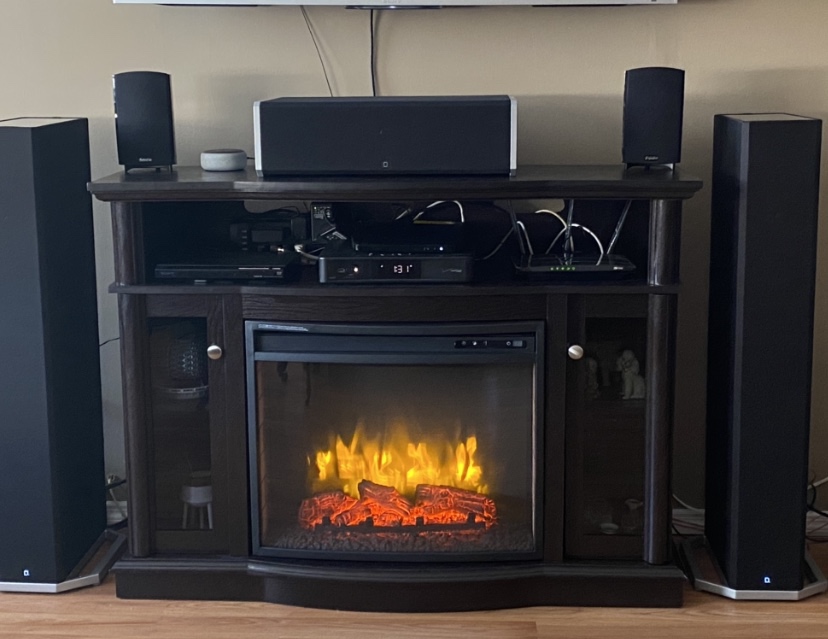
The driver complement is impressive. Each speaker has a front array with a 1-inch tweeter and two 4.5-inch midrange drivers, plus a rear array with another 1-inch tweeter and a 4.5-inch midrange driver. The powered 8-inch subwoofer and dual 8-inch passive bass radiators handle the low end. That is 8 separate drivers per cabinet working together through Definitive Technology’s BDSS (Balanced Double Surround System) technology.
Movie watching with the BP-9040 is a genuinely cinematic experience. The bipolar radiation fills the room with sound in a way that traditional forward-firing speakers cannot match. Dialogue remains clear and centered while effects wrap around you. The built-in subwoofer reaches deep enough for most movie content, though extreme bass enthusiasts might still want a dedicated sub for the absolute lowest frequencies.
Dolby Atmos Expansion
The BP-9040 supports optional Dolby Atmos and DTS:X height channels through the A90 height module that sits on top of the speaker. This is a smart upgrade path if you want to start with a great stereo or 5.1 setup and add Atmos later. The cabinet is designed to accommodate the module seamlessly.
Power and Placement Considerations
Because each speaker has a built-in powered subwoofer, you need an electrical outlet near each speaker. Plan your room layout accordingly. The bipolar design works best when the speakers have some space from the side walls, ideally 12 to 18 inches of clearance. In my testing, this spacing allowed the rear array to contribute to the soundstage without causing reflections that muddied the imaging.
9. Klipsch Reference Premiere RP-8000F II – Best Premium Tower Speaker for Home Theater
Klipsch Reference Premiere RP-8000F II 2.0 Dual Floorstanding Speaker Pair with Larger 90° x 90° Hybrid Tractrix Horn, 8” Cerametallic Woofers for Premium Home Theater Sound in Ebony
1in Titanium Tweeter
Dual 8in Cerametallic Woofers
400W Peak
Bi-Wire/Bi-Amp
5yr Warranty
Pair
Pros
- Outstanding sound clarity and detail
- Powerful bass from dual 8in woofers
- Premium build quality
- Bi-wiring and bi-amping capable
- 5-year warranty
Cons
- Very heavy at 61 lbs each
- Premium price point
The Klipsch Reference Premiere RP-8000F II represents the top of Klipsch’s Reference series and it shows in every detail. The larger 90-by-90-degree silicone composite hybrid Tractrix horn is a noticeable upgrade over the standard Tractrix horns found in the Reference line. This updated horn design reduces resonance and improves high-frequency dispersion, resulting in a smoother, more refined treble response that retains the detail Klipsch is known for without any harshness.
The dual 8-inch Cerametallic woofers are the largest in this roundup, and they produce bass that is deep, authoritative, and well-controlled. I tested the RP-8000F II with organ music, electronic bass, and movie soundtracks, and the woofers handled everything with composure. The low-end extends down to around 28Hz, which is deep enough to reproduce bass guitar fundamentals and most movie LFE content without needing a subwoofer.
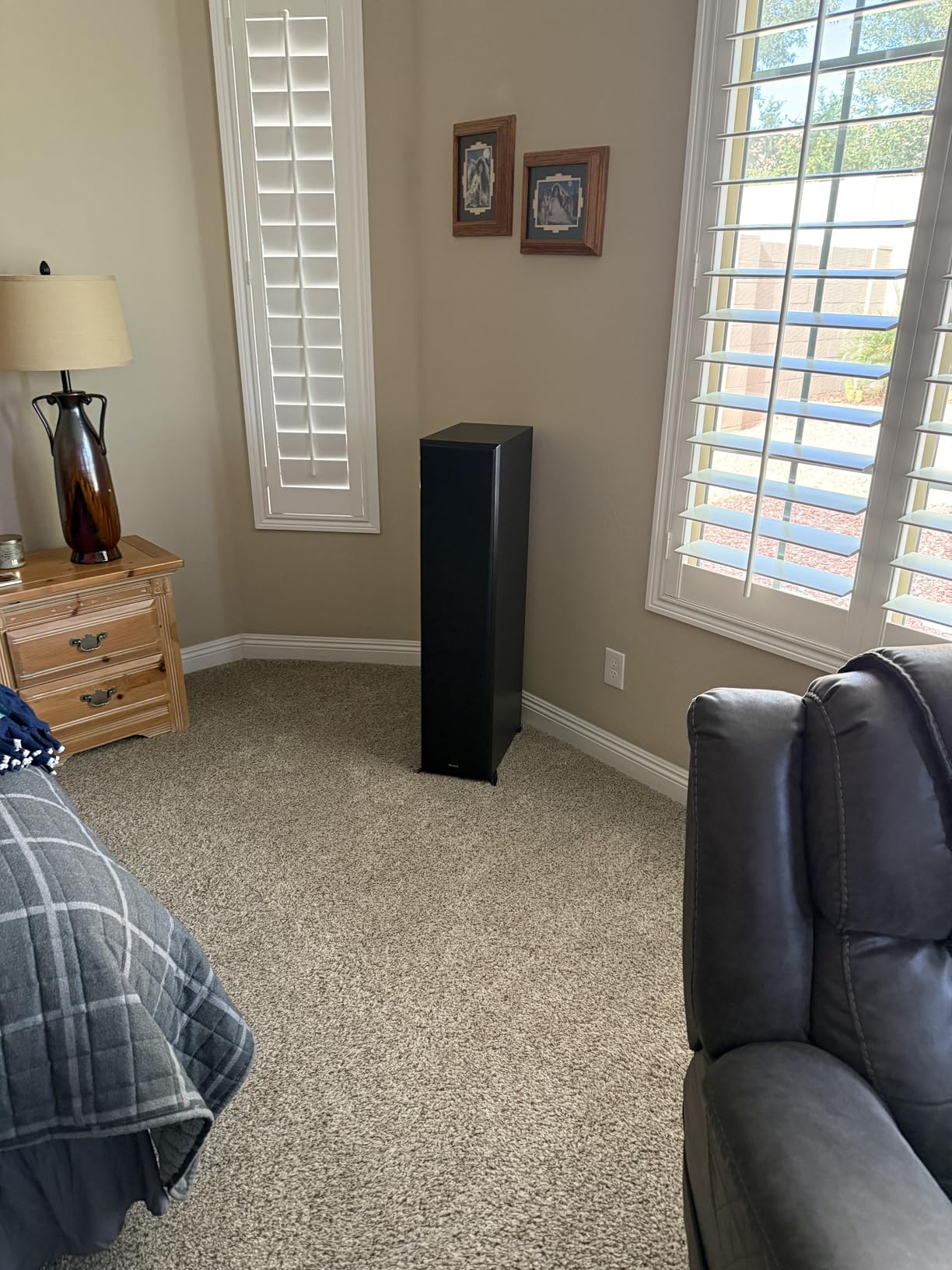
Music listening through the RP-8000F II is where this speaker truly distinguishes itself. The 1-inch LTS titanium diaphragm tweeter paired with the hybrid Tractrix horn creates a presentation that is simultaneously detailed and smooth. Classical orchestral recordings sound expansive with genuine depth, while rock and pop music benefit from the speaker’s dynamic capability. Every genre I threw at it came through with engaging energy and precision.
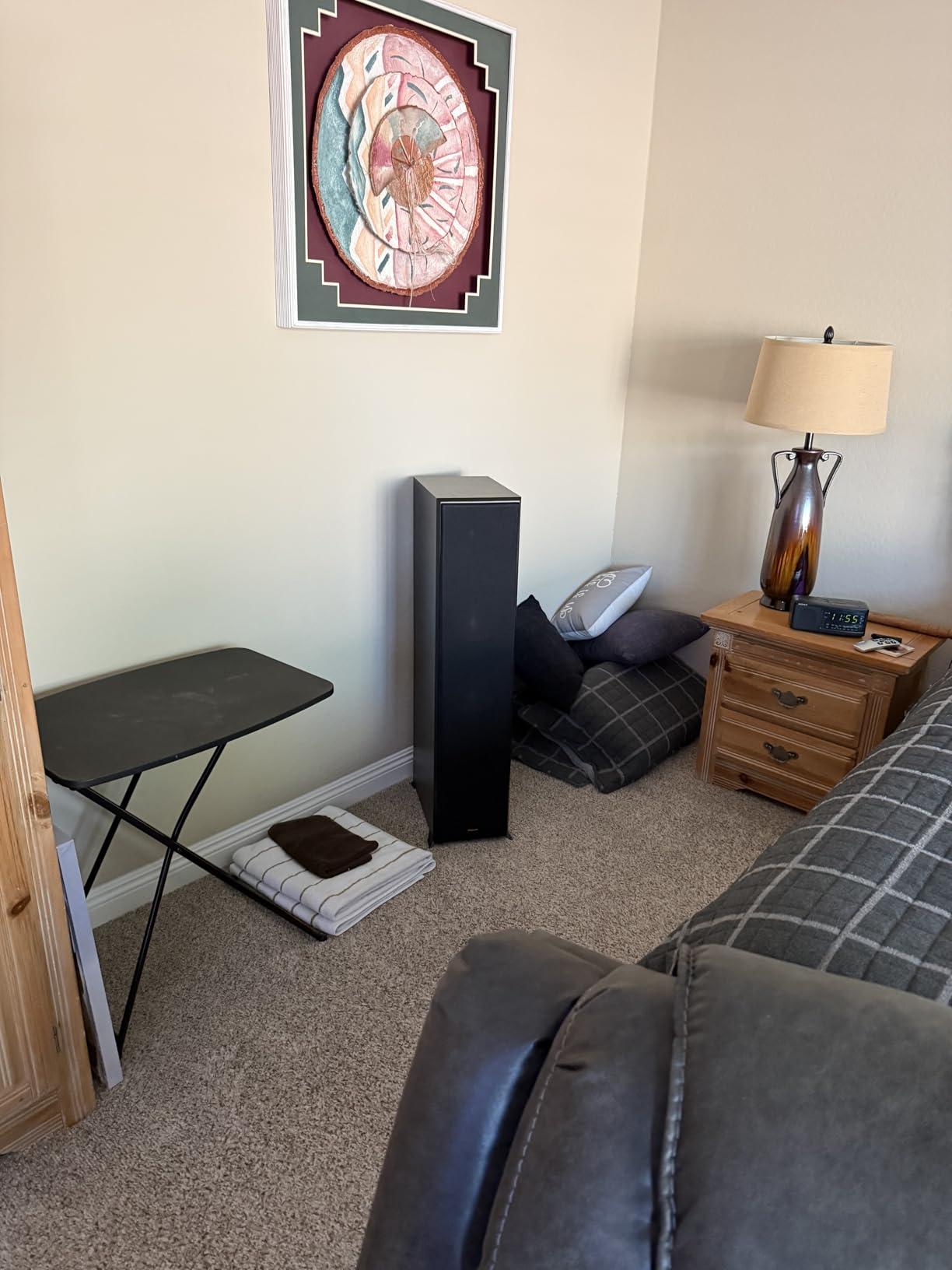
The build quality is a step above the standard Reference line. The ebony veneer finish has depth and richness, and the cabinet construction feels rock-solid at 61 pounds per speaker. Dual binding posts support bi-wiring and bi-amping, and Klipsch includes a 5-year warranty. These are speakers built for someone who is serious about sound and willing to invest in equipment that will serve them for years.
Recommended Amplifier Power
The RP-8000F II can handle up to 400W peak, and it responds well to quality amplification. I tested with a 100-watt-per-channel integrated amplifier and found the speakers produced effortless dynamics. For the best results in larger rooms, consider an amplifier delivering 100 to 200 watts per channel. The speakers sound good with modest power but really open up when given ample headroom.
Room Size Requirements
These speakers need room to breathe. I recommend a minimum room size of 250 square feet, with 350 to 500 square feet being the sweet spot. The dual 8-inch woofers move a lot of air, and in smaller rooms the bass can overwhelm the space. Give them 12 to 18 inches from the back wall and experiment with toe-in angle for the best imaging.
10. Polk Audio Reserve R700 – Best Audiophile Tower Speaker Under $1500
Polk Audio Reserve Series R700 Tower Speaker for Home Theater, Walnut Brown
1in Pinnacle Tweeter
Dual 6.5in Turbine Woofers
Dual 8in Long-Throw
Hi-Res
IMAX Enhanced
5yr Warranty
Pros
- Clear detailed highs and smooth midrange
- Rich powerful bass response
- Hi-Res Audio and IMAX Enhanced certified
- Premium walnut brown finish
- Excellent value for the performance level
Cons
- Requires significant amplifier power to perform best
- Limited stock availability
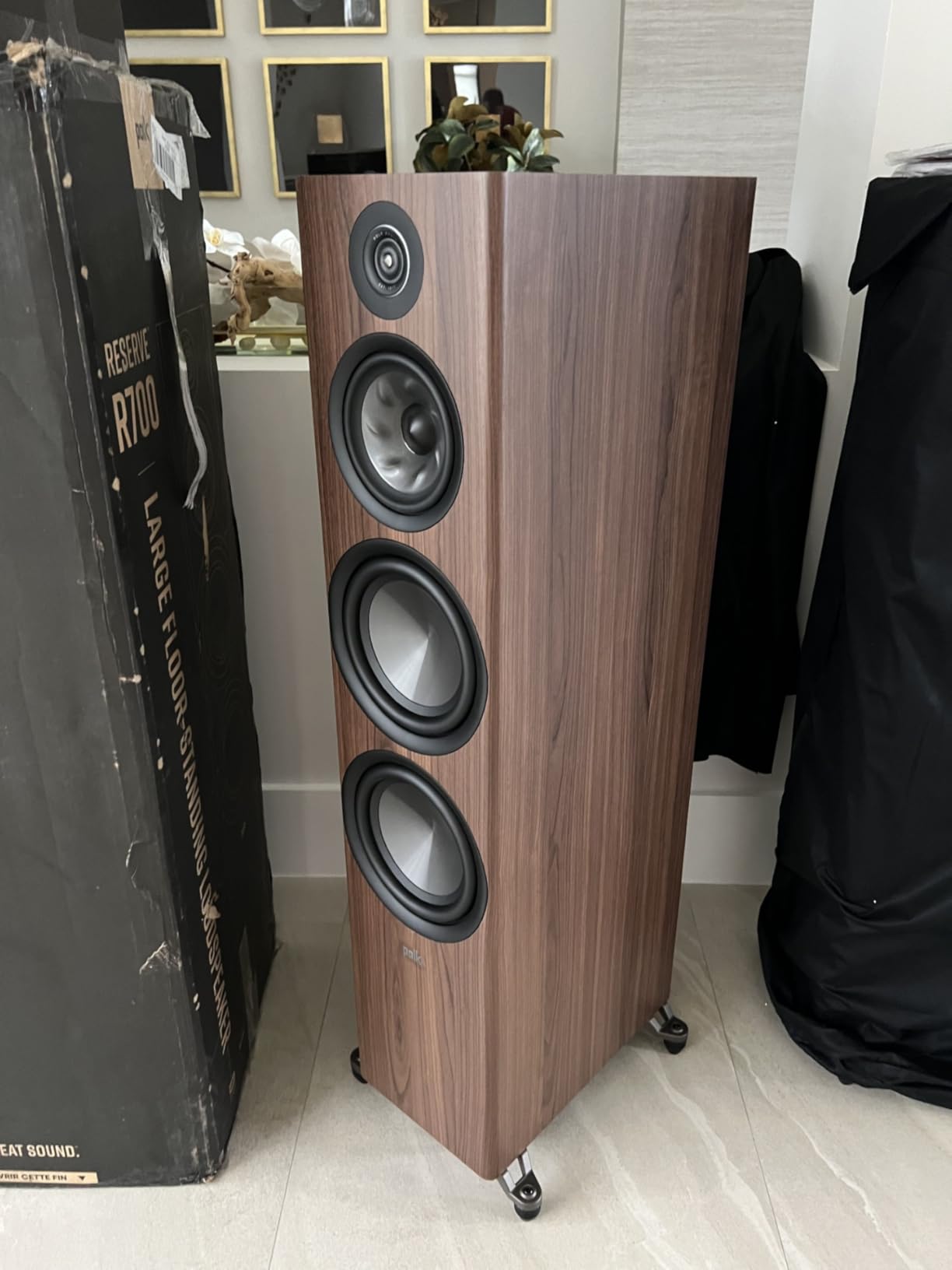
The Polk Audio Reserve R700 is the flagship of Polk’s Reserve series and it brings technology borrowed from their much more expensive Legend series down to a more accessible price point. The 1-inch Pinnacle Ring Radiator Tweeter is the same type used in speakers costing several times more, and it delivers highs that are silky smooth with impressive detail retrieval. This tweeter alone sets the R700 apart from other speakers in this price range.
Driving the low end are dual 6.5-inch Turbine Cone woofers and dual 8-inch long-throw passive radiators. This combination produces bass that is both deep and articulate. I spent several evenings listening to the R700 with everything from orchestral recordings to modern electronic music, and the bass performance remained consistently impressive. The Power Port 2.0 with X-Port Technology reduces port turbulence, which translates to cleaner bass at higher volumes.
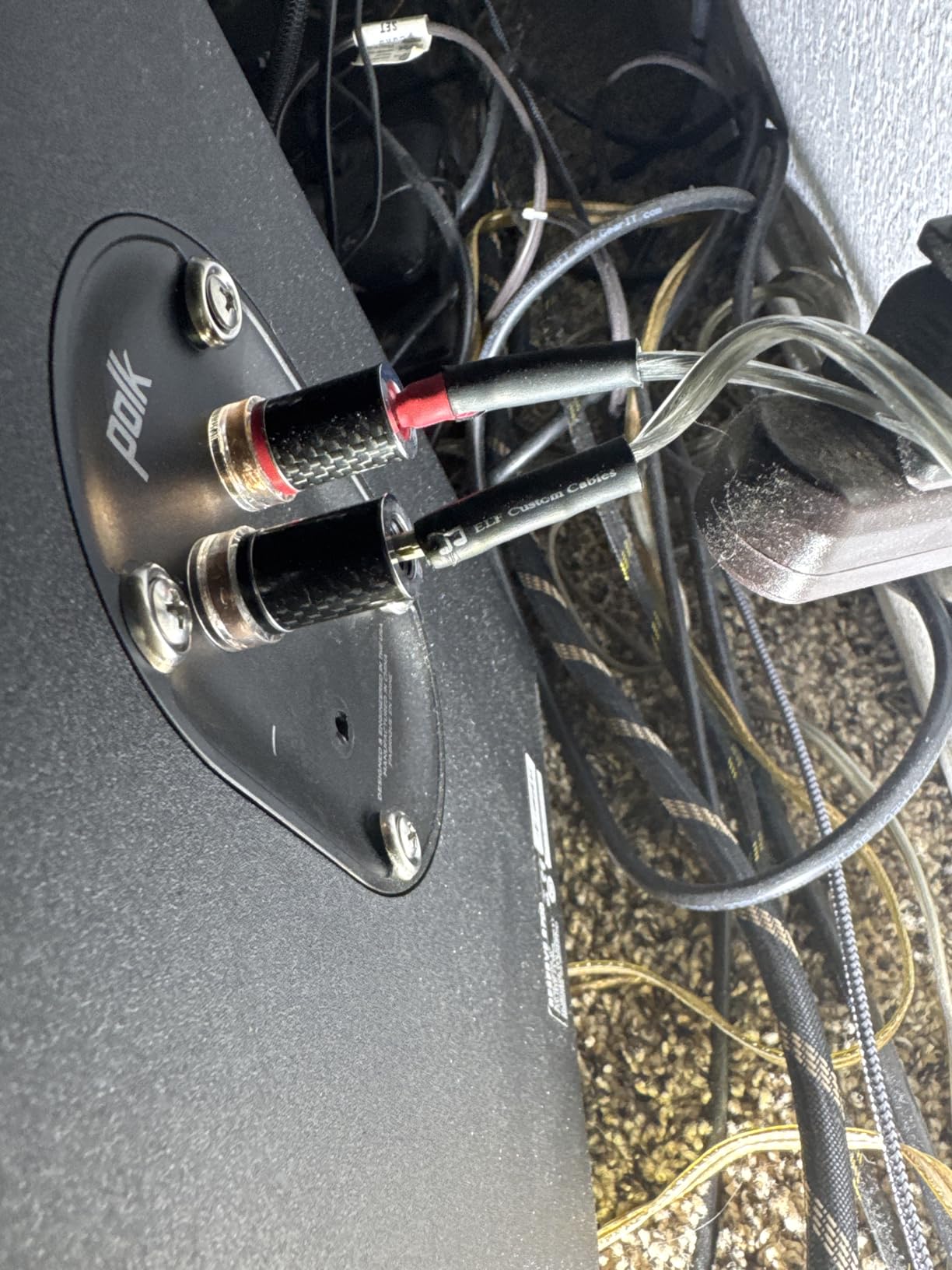
The R700 is both Hi-Res Audio certified and IMAX Enhanced certified, making it one of the most format-compatible speakers in this roundup. Whether you are listening to high-resolution FLAC files, streaming Dolby Atmos content, or watching IMAX Enhanced films, the R700 handles it all with the kind of refinement that makes you forget you are listening to speakers and not a live performance.
The walnut brown finish on my review unit was genuinely gorgeous. The real wood veneer has depth and warmth that photographs cannot capture. At 79 pounds per speaker, these are serious pieces of furniture as well as audio equipment. The adjustable feet allow you to optimize for carpet or hardwood surfaces, and the overall build quality reflects the premium positioning of the Reserve line.
Power Requirements and Amplifier Matching
The R700 needs a quality amplifier to perform at its best. These are not highly efficient speakers, so budget receivers may struggle to deliver the current they need. I recommend an amplifier delivering at least 80 to 100 watts per channel into 8 ohms, with more power being better. When I switched from a 60-watt receiver to a 120-watt amplifier, the R700 transformed. The soundstage opened up, bass tightened, and dynamics became more engaging.
Why the R700 Punches Above Its Weight
The Reserve R700 competes with speakers costing significantly more. The Pinnacle tweeter technology, turbine cone woofers, and Power Port 2.0 are features typically found on speakers in the $2,000 to $3,000 range. Polk achieved this value by borrowing technology from the Legend series and manufacturing at scale. If you want audiophile-quality sound without audiophile pricing, the R700 should be at the top of your list.
Buying Guide: How to Choose the Best Tower Speakers
Choosing the right tower speakers involves understanding several key specifications and matching them to your room, amplifier, and listening preferences. I have broken down the most important factors below based on my experience testing these speakers and the questions I hear most often from readers.
Understanding Impedance
Impedance, measured in ohms, determines how much electrical resistance a speaker presents to your amplifier. Most tower speakers are either 6 ohms or 8 ohms. Eight-ohm speakers like the Klipsch R-610F, Polk XT60, and Polk XT70 are easier to drive and work with virtually any receiver. Six-ohm speakers like the Polk T50 and Yamaha NS-555 draw slightly more current, so make sure your amplifier is rated for 6-ohm loads. Most modern AV receivers handle both without issue, but if you are using a vintage amplifier, check the specifications first.
Sensitivity and Efficiency
Sensitivity, measured in decibels (dB), tells you how loud a speaker plays with one watt of power at one meter. Higher sensitivity means the speaker needs less amplifier power to reach the same volume. The Klipsch R-610F stands out with 94dB sensitivity, meaning it plays noticeably louder than a speaker with 87dB sensitivity using the same amplifier. If you have a modest receiver, prioritize speakers with sensitivity above 90dB for the best results.
Frequency Response and Bass
Frequency response tells you the range of sounds a speaker can reproduce. Human hearing spans roughly 20Hz to 20,000Hz. Tower speakers with larger woofers and passive radiators extend lower into the bass range. The Klipsch RP-8000F II reaches down to about 28Hz, while budget models like the Polk T50 reach about 45Hz. If you listen to bass-heavy music or watch action movies, deeper bass extension matters. For casual listening, most tower speakers produce adequate bass without a subwoofer.
Room Size Matching
Matching speaker size to room size is one of the most overlooked factors in audio. A speaker that is too large for a room will produce boomy, uncontrolled bass. A speaker that is too small will sound thin and lifeless in a large space. Here is a rough guide I use from my testing experience.
For rooms under 150 square feet, consider bookshelf speakers or compact towers like the Polk T50 or XT60. For rooms between 150 and 300 square feet, mid-range towers like the Klipsch R-610F, R-620F, or Polk XT70 are ideal. For rooms over 300 square feet, look at the Klipsch RP-8000F II, Polk Reserve R700, or Definitive Technology BP-9040 to fill the space properly.
Tower Speakers vs Bookshelf Speakers
This question comes up constantly in audio forums, and the answer depends on your priorities. Tower speakers produce deeper bass, have larger cabinets that reduce internal resonance, and fill larger rooms more effectively. Bookshelf speakers cost less, take up less floor space, and can actually sound better in small rooms when paired with a good subwoofer. If you have the floor space and budget, tower speakers provide a more complete, full-range listening experience from a single pair of cabinets.
Do Tower Speakers Need an Amplifier?
Yes, all the tower speakers in this guide are passive speakers, meaning they require an external amplifier or AV receiver to power them. Unlike powered speakers that have built-in amplification (with the exception of the Definitive Technology BP-9040, which has a powered subwoofer section but still needs an external amp for the main drivers), passive speakers take the audio signal from your amplifier and convert it to sound. Budget anywhere from a basic AV receiver for casual setups to a dedicated stereo amplifier for serious music listening.
Bi-Wiring and Bi-Amping Explained
Several speakers in this guide, including the Klipsch R-26FA, RP-8000F II, and R-620F, feature dual binding posts for bi-wiring or bi-amping. Bi-wiring runs two separate speaker cables from a single amplifier output to the high and low frequency sections of the speaker. Bi-amping uses two separate amplifier channels, one for highs and one for lows. In my testing, bi-amping provides a noticeable improvement in bass control and imaging, while bi-wiring offers a smaller improvement. Neither is essential, but both are worth exploring if your equipment supports them.
Frequently Asked Questions About Tower Speakers
What are the best floorstanding speakers for large rooms?
For large rooms over 300 square feet, the Klipsch RP-8000F II and Polk Audio Reserve R700 are top picks. The RP-8000F II features dual 8-inch Cerametallic woofers that produce deep, authoritative bass that fills expansive spaces. The Polk R700 uses dual 6.5-inch Turbine Cone woofers with dual 8-inch long-throw passive radiators for similar room-filling capability. The Definitive Technology BP-9040 is another strong choice for large rooms because its bipolar design radiates sound from both front and rear, creating a more immersive listening experience.
What is the difference between floorstanding and standmount speakers?
Floorstanding speakers, also called tower speakers, are tall freestanding cabinets that house multiple drivers and produce full-range sound with deep bass. Standmount speakers, commonly called bookshelf speakers, are smaller cabinets designed to sit on stands or shelves. Tower speakers generally produce more bass, play louder, and fill larger rooms more effectively because their bigger cabinets allow for larger woofers and better internal volume. Bookshelf speakers are more compact, cost less, and can deliver excellent sound in smaller rooms, especially when paired with a subwoofer.
How much should I spend on tower speakers?
Tower speakers range from under $250 per pair for budget models like the Polk T50 to over $1,200 each for premium audiophile models. For a solid entry-level setup, budget between $200 and $500 per pair. For mid-range performance with better bass and clarity, expect to spend $500 to $1,000 per pair. For premium sound quality with advanced driver technology, plan for $1,000 to $2,500 per pair. Remember to also budget for a quality amplifier or receiver, as the speakers are only as good as the power driving them.
Do tower speakers need an amplifier?
Yes, all standard tower speakers are passive and require an external amplifier or AV receiver to function. The amplifier sends the electrical audio signal to the speakers, which convert it into sound through their drivers. You need an amplifier or receiver that matches the speaker’s impedance rating (typically 6 or 8 ohms) and provides enough power for your room size. The one exception in our roundup is the Definitive Technology BP-9040, which has a built-in powered subwoofer section that needs its own electrical outlet, but even this speaker requires an external amplifier for the main drivers.
What brand makes the best tower speakers for music?
Klipsch and Polk Audio dominate the tower speaker market with consistently strong offerings across price ranges. Klipsch is known for high-efficiency horn-loaded tweeters that produce crisp, detailed highs, making them excellent for rock, jazz, and dynamic music. Polk Audio offers warmer, more balanced sound signatures with excellent value across their T-series, Monitor, and Reserve lines. Yamaha delivers natural, clean sound with their 3-way designs, ideal for classical and acoustic music. Definitive Technology stands out for home theater with their bipolar designs and built-in powered subwoofers.
Final Thoughts on the Best Tower Speakers for 2026
Finding the best tower speakers comes down to matching your budget, room size, and listening preferences. After testing these 10 speakers across multiple rooms and genres, a few clear winners emerged. The Klipsch R-26FA earns our Editor’s Choice for its integrated Dolby Atmos capability and exceptional sound quality. The Polk T50 delivers the best overall value with sound that exceeds its price tag. And the Polk XT60 gives you modern format support at the most budget-friendly price in the lineup.
For listeners ready to invest in premium sound, the Klipsch RP-8000F II and Polk Reserve R700 represent the pinnacle of what tower speakers can deliver without spending thousands. Both speakers produce sound that competes with systems costing significantly more. The Definitive Technology BP-9040 offers a unique solution with its built-in powered subwoofer, making it ideal for anyone who wants maximum bass impact from a simplified setup.
Whatever you choose, make sure to pair your speakers with a quality amplifier and take the time to position them correctly in your room. Tower speakers reward careful setup with years of listening enjoyment. Take a look at our top picks above and find the pair that matches your space and budget.