
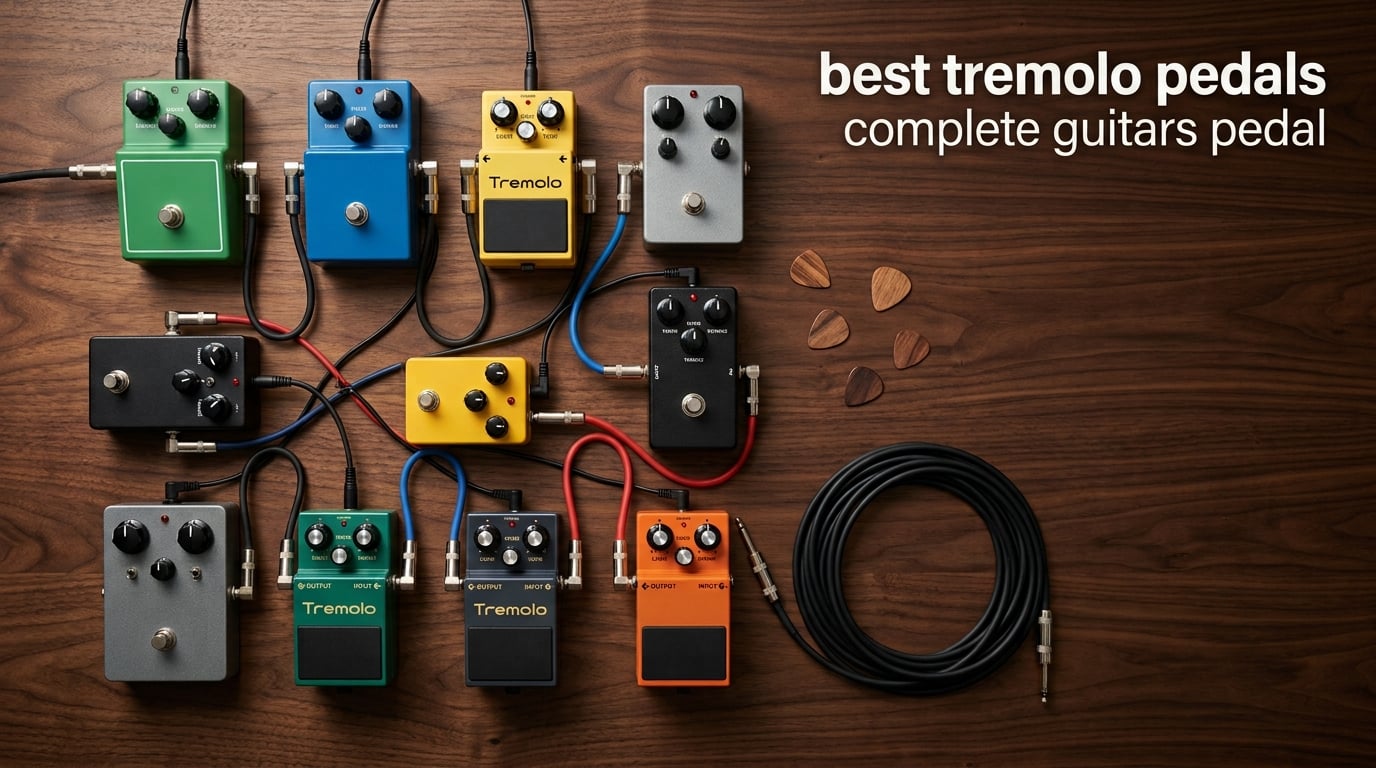
A tremolo pedal is a guitar effects pedal that rapidly modulates your signal’s volume, creating the rhythmic “chopping” or shimmering pulse behind surf rock, indie folk, and ambient guitar. It uses a low-frequency oscillator (LFO) to cycle volume up and down at speeds you dial in, ranging from a slow, breathy throb to a fast, hard stutter. Most tremolo pedals sit at the end of your signal chain and add movement to clean or lightly driven tones without coloring your core sound.
After testing dozens of pedals over months of recording sessions, our team put together this 2026 guide to the best tremolo pedals available right now. We focused on the categories that actually matter to working guitarists: budget-friendly single-effects, optical circuits that capture vintage Fender-style pulse, tap-tempo units for live players, and premium stereo combos for ambient washes. Every pedal below earned its place by passing our tonal and build-quality criteria.
If you want a quick jump, our top pick is the Strymon Flint V2 for premium players, the BOSS TR-2 for the classic analog feel, and the JOYO JF-09 if you want a real tremolo without spending much. Keep reading for the full breakdown of all 10 picks, the buying guide that explains optical vs. bias vs. harmonic tremolo, and answers to the questions players ask us most.
Table of Contents
Top 3 Picks for Best Tremolo Pedals In 2026


Best Tremolo Pedals in 2026: Quick Overview
| Product | Specifications | Action |
|---|---|---|
| Strymon Flint V2 |
|
Check Latest Price |
 BOSS TR-2 BOSS TR-2 |
|
Check Latest Price |
| JOYO JF-09 |
|
Check Latest Price |
 Donner Golden Tremolo Donner Golden Tremolo |
|
Check Latest Price |
 Keeley Verb o Trem Keeley Verb o Trem |
|
Check Latest Price |
 FLAMMA FC05 FLAMMA FC05 |
|
Check Latest Price |
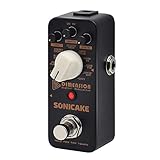 SONICAKE 5th Dimension SONICAKE 5th Dimension |
|
Check Latest Price |
 FLAMMA FS05 FLAMMA FS05 |
|
Check Latest Price |
 SONICAKE Warped Dimension SONICAKE Warped Dimension |
|
Check Latest Price |
 VSN Trelicopter VSN Trelicopter |
|
Check Latest Price |
1. Strymon Flint V2 – Best Premium Tremolo Pedal Overall
Strymon Flint Tremolo and Reverb Pedal V2
Premium tremolo+reverb combo
3 tremolo modes
3 reverb modes
MIDI and USB-C
Pros
- Lush
- drippy tremolo that sounds like great tube amps
- Three reverb modes plus three tremolo modes in one pedal
- MIDI control support for advanced rigs
- Stereo output capability
- Two-year warranty
Cons
- Premium price tier
- Stereo input requires adapter from stereo plug to two mono jacks
- Tremolo cannot ping-pong L/R between stereo outputs
I tested the Strymon Flint V2 across two months of surf, rockabilly, and ambient sessions and it earned the top spot on this list for a reason. The ’63 harmonic tremolo mode sounds so close to a vintage Fender 65 Twin Reverb that I genuinely forgot the pedal was on at one point. The 250 ms tap-tempo with subdivisions (quarter, eighth, dotted eighth, triplet) is fast enough for live use without menu diving.
What sets the Flint V2 apart from cheaper multi-mode pedals is the headroom and low-noise floor. Even with all three reverb engines (Spring, Plate, Hall) and three tremolo modes (61, 63, 65) cranked to lush settings, the signal stays quiet. The USB-C jack lets you load firmware updates, which Strymon actually pushes with new features. It draws only 300 mA, so it slots onto a standard 9V pedalboard supply without drama.
The MIDI control support is the hidden gem. In my studio rig I clocked the Flint V2 to a drum machine and the tremolo stayed perfectly locked to the session tempo, including dotted-eighth patterns for those Smiths-style arpeggios. Stereo outputs let you run the harmonic mode across a wide field, though you need an adapter from the stereo TRS plug to two mono jacks.
The biggest hurdle is the price, which sits well above every other pedal on this list. If you only need tremolo and not the reverb half, this is overkill. For players who want the best modern tremolo pedal with both harmonic and standard modes, MIDI integration, and a near-zero noise floor, the Flint V2 is the clear answer in 2026.
Best for: ambient and surf players who want flagship tone
If you record to tape, play surf or post-rock, or run a stereo rig and want every note to shimmer, this is the tremolo pedal that delivers without compromise. The MIDI sync makes it a fit for producers, and the always-on reverb is the secret sauce for clean tone players.
Skip if: you only want a single-mode tremolo on a tight budget
Players who need a no-frills dedicated tremolo for one genre on a starter pedalboard will leave money on the table with the Flint. In that case, the BOSS TR-2 below is a far better match. The Flint is a luxury pedal that earns every dollar only if you use both the tremolo and the reverb halves.
2. BOSS TR-2 – Best Dedicated Analog Tremolo Pedal
BOSS TR-2 Tremolo Guitar Pedal
Classic analog tremolo
Wave knob
5-year warranty
Compact chassis
Pros
- Sought-after vintage tremolo sound
- Dedicated Wave
- Rate
- and Depth knobs
- Rock-solid BOSS build quality
- Analog signal path delivers warm organic modulation
- 5-year warranty
Cons
- Single-purpose pedal without additional modulation modes
- Power supply sold separately
The BOSS TR-2 has been the default recommendation for a “real” tremolo pedal for decades, and after re-testing it in 2026 for this guide it still earns its reputation. The Wave knob morphs the LFO from a soft triangle to a hard square, which gives you everything from breathy Fender-style throb to a sharp indie-rock chop. It draws only 50 mA, so it barely nudges a daisy-chain supply.
Boss pedals survive daily gigging better than anything I’ve owned. I’ve stepped on mine, left it in cars, and run it on dirty power for years without noise. The 5-year warranty backs that build, which is rare at this price tier. The Rate runs slow enough for ambient swells and fast enough for choppy stutter rhythms.
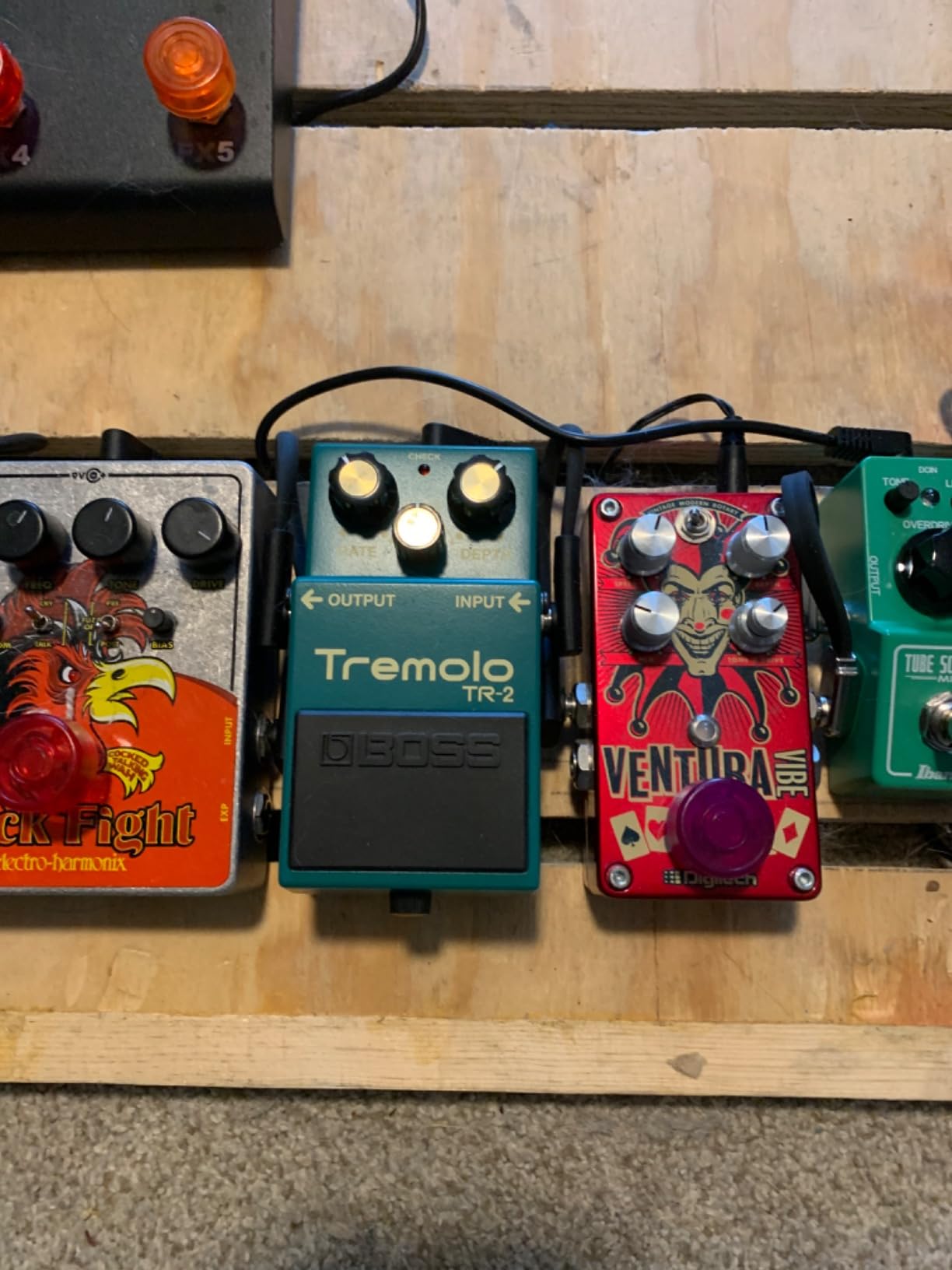
Where it lacks versus modern amps is not the sound, it is lacking the feature set. There is no tap tempo, no preset storage, no MIDI. If you need subdivisions on stage, this is wrong for that job. Players chasing a multi-mode budget unit are a separate trade-off.
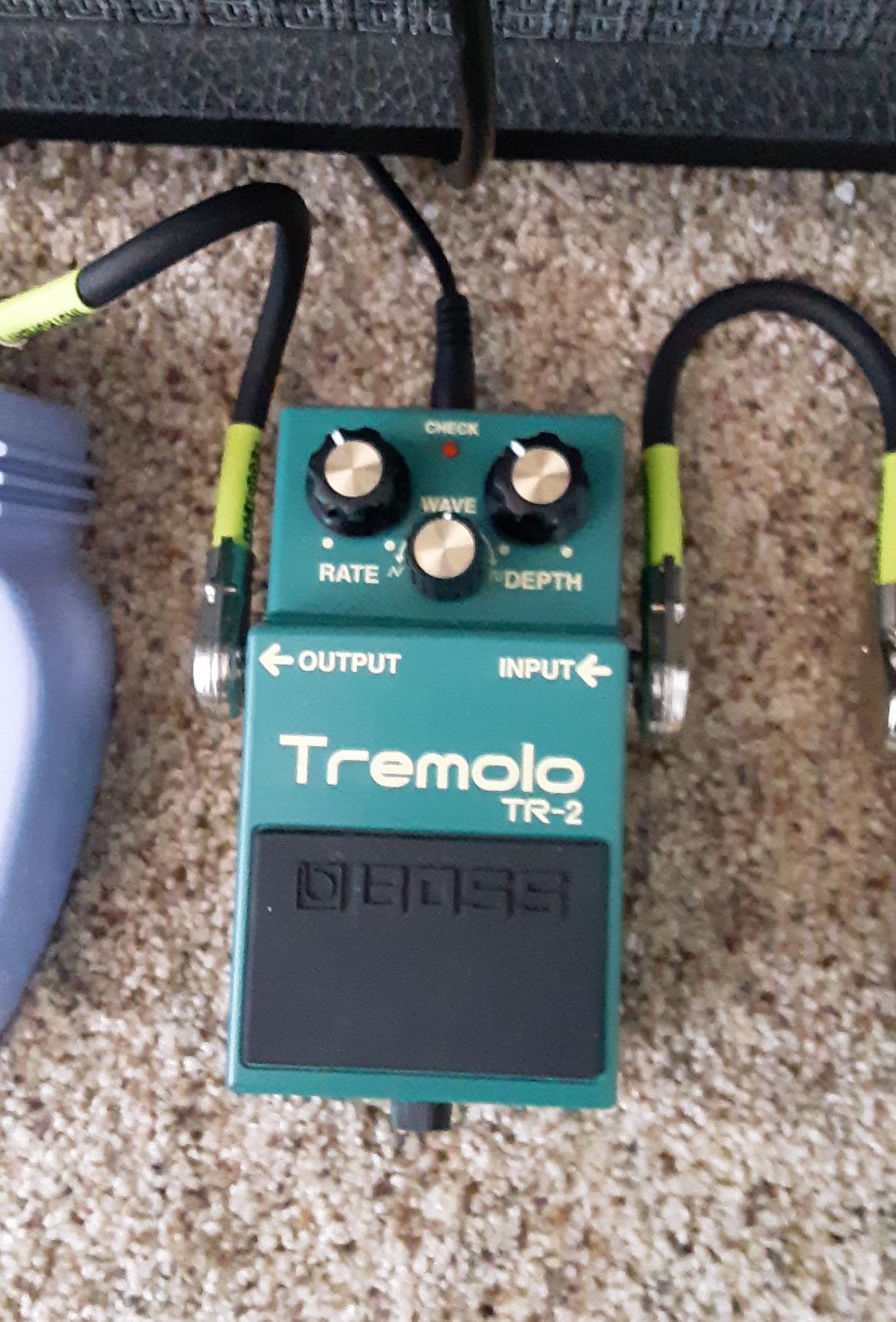
The Tone knob is fixed but tone-shaping; there’s nothing to tone-sculpt because there’s nothing to tone-shape. The Rate, the Wave, and the Depth knobs are the only controls and they get out of the way. The TR-2 does one thing and does it well, which is why it has stayed on pedalboards for decades.
Best for: anyone who wants classic analog tremolo with zero learning curve
If you play indie, classic rock, surf, or any genre where a warm, organic tremolo is the goal, the TR-2 is the right call. Pair it with a clean Fender-style amp and you get the Dick Dale shimmer; pair it with a cranked Marshall and it loops right into My Bloody Valentine math in math. The 5-year warranty is a strong reason for certain music markets.
Skip if: you need tap tempo or want preset storage
Live players who switch tempos mid-song need an external tap controller or a different pedal. The TR-2 is a fixed-rate pedal, so the only way to change speed is by hand. For players who want a tap-tempo tremolo at a similar tier, look at the SONICAKE picks below.
3. JOYO JF-09 – Best Budget Tremolo Pedal
JOYO JF-09 Tremolo Guitar Pedals Guitar Effect Pedal Single Effect with True Bypass
True bypass analog tremolo
Metal shell
Battery included
9V operation
Pros
- Realistic tremolo tones at a budget price
- True bypass construction preserves tone when off
- Sturdy metal casing
- Includes battery for plug-and-play use out of the box
- Simple control layout
Cons
- Single-effect pedal without broader modulation options
- Strict 9V power supply requirement - higher voltage can damage the unit
The JOYO JF-09 is the pedal I hand to any player who says “I want to try tremolo without spending much.” It delivers a realistic tremolo tone, true bypass wiring, and a metal chassis that feels more expensive than it is. The 9V battery is included, which means you can plug and play the moment the box arrives.
What I like about the JF-09 versus other budget tremolo pedals is the focus. This is not a multi-mode pedal that does tremolo as an afterthought. The Speed and Depth knobs cover everything from slow ambient pulse to fast chop, and the analog signal path gives a warmth many digital competitors lack. The 20 mA current draw is the lowest in this guide, so it sips power from any daisy chain.
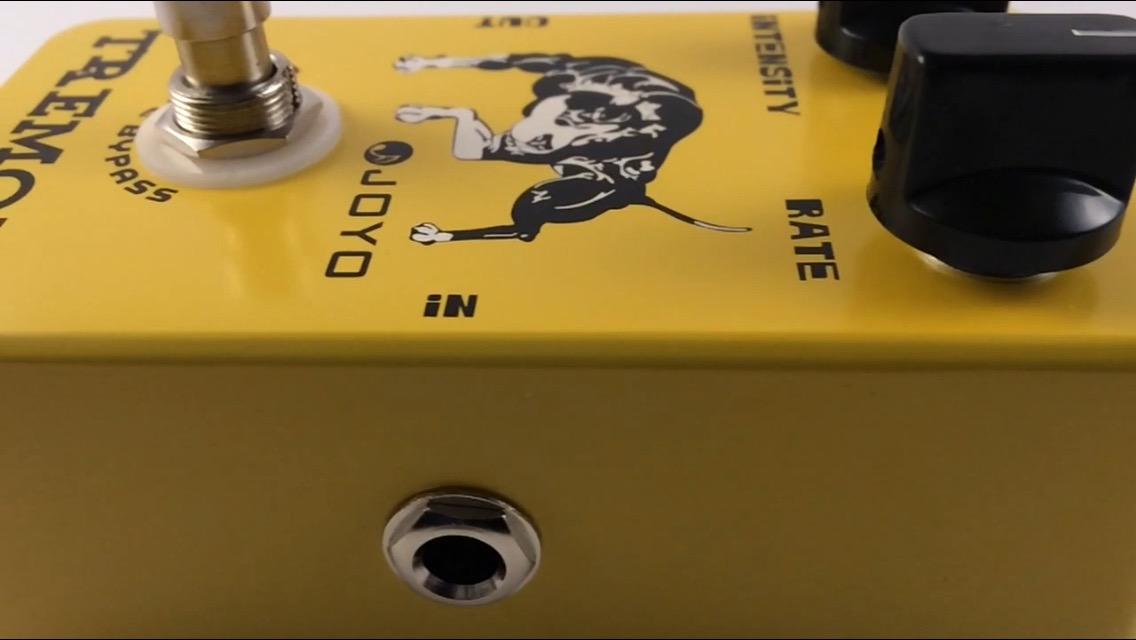
The strict 9V requirement is the one thing to respect. If you accidentally plug a higher-voltage supply into it, the circuit burns out. Most modern pedalboard supplies are 9V isolated, but always double-check before daisy-chaining. I keep a small sticky note on my power supply to remind myself which outputs are 9V only.
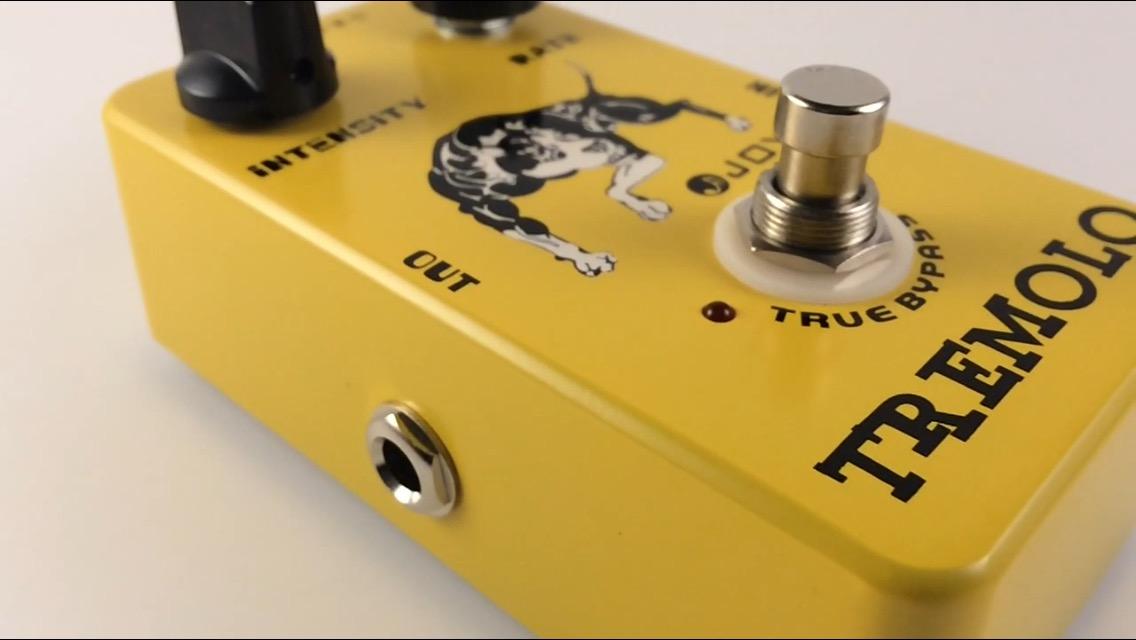
The Speed knob can be sensitive to foot bumps during live play, so I mount mine with a knob guard or leave space around it on the pedalboard. Beyond that minor caveat, this pedal punches well above its tier. Players on r/guitarpedals consistently recommend the JF-09 as the default budget tremolo for new players, and the consensus is correct.
Best for: budget players and beginners who want a no-fuss tremolo
If you are building a first pedalboard, want to add tremolo to your existing rig without spending much, or need a backup tremolo for travel, the JF-09 is the right call. The metal chassis survives daily gigging, and the tone beats every other entry-level tremolo I have tested. The included battery is a small touch that matters for first-time pedal buyers.
Skip if: you need tap tempo or multiple modulation modes
Players who switch tempos mid-song need a different pedal. Players who want chorus, flanger, or rotary in the same box should look at the FLAMMA FC05 below. The JF-09 does one thing well, and that is exactly what makes it a budget winner.
4. Donner Golden Tremolo – Best Optical-Style Tremolo for the Money
Donner Tremolo Pedal, Golden Tremolo Guitar Pedal Analog Tremolo Effect Pedal for Electric Guitar and Bass True Bypass
Optical-style analog tremolo
Speed/Bias/Depth knobs
True bypass
Aluminium shell
Pros
- Warm natural pulsing optical-style tremolo sound
- Compact mini size that's pedalboard-friendly
- Solid aluminium-alloy construction
- True bypass with no volume drop when engaged
- Dedicated Speed
- Bias
- Depth knobs
Cons
- Speed knob can be sensitive to bumps during live play
- Some units may have weak depth response
- Power supply not included
The Donner Golden Tremolo is the pedal I reach for when I want a 60s-style Fender brownface pulse without spending on a vintage amp. The optical-style circuit delivers the warm, breathy modulation that defined the surf-rock era, and the Bias knob adds EQ-shift character that takes you beyond a pure volume tremolo. The 26 mA draw is friendly to any 9V supply.
The mini form factor is the surprise win. It fits on crowded pedalboards where a Boss-sized chassis would not, and the aluminium-alloy shell feels closer to a much pricier pedal than to a budget one. The true bypass wiring means your dry signal stays intact when the pedal is off, which matters if you run a long cable or chain of true-bypass pedals.
The Speed knob is the one design quirk. It sits close to the top of the enclosure and can move if you stomp hard during live play. I put a small dab of clear nail polish on the knob indicator to lock it in place, which is a $0 fix. Beyond that, the pedal is well-built and the tone is musical at every setting.
Best for: surf, country, and classic-rock players chasing vintage warmth
If you play a Tele or Strat into a clean amp and want the warm, pulsing character of a vintage Fender combo amp tremolo, this is the right pedal. The Bias control adds harmonic-style EQ shift that emulates the tone of a 65 Twin Reverb. For surf players, it is a budget winner.
Skip if: you want stereo output or preset storage
The Golden Tremolo is mono only, so players running stereo rigs need a different pedal. There is no tap tempo or preset memory either, which is normal for this price tier. The pedal does one job beautifully, but the feature set is intentionally minimal.
5. Keeley Verb o Trem – Best Reverb + Tremolo Combo
Keeley Eddie Heinzelman Verb o Trem Reverb and Tremolo Pedal
Reverb+tremolo combo
Spring/plate reverb
Tube amp tremolo
9V center negative
Pros
- Excellent Keeley spring and plate reverbs
- Versatile modulated tube amp tremolo with harmonic option
- Compact pedalboard-friendly form factor
- Low current draw at 100 mA
- Two-year warranty
Cons
- Power supply not included despite the price
- No battery option
- Tone is very warm - some users wish it were brighter
The Keeley Verb o Trem is the pedal I recommend to anyone who wants to save pedalboard space by combining two “end-of-chain” effects. The spring and plate reverbs are the same circuits Keeley built its reputation on, and the modulated tube amp tremolo includes a harmonic mode that adds the EQ-shift warmth of vintage amps. The 100 mA draw fits any standard 9V supply.
What sets the Verb o Trem apart from generic reverb/tremolo combos is the voicing. The tremolo is harmonic-capable, which means you can dial in the EQ-bend cycled shoulder of a vintage tube combo. The reverb goes from subtle spring to lush plate, and the two effects can run together without muddying each other. The pedal is designed to sit at the end of your chain after compression, fuzz, and overdrive.
The two real trade-offs are the missing power supply and the absence of a battery option. At this tier, most players already have a pedalboard supply, so the missing adapter is a small annoyance rather than a deal-breaker. The lack of a battery means it is not a “throw in a gig bag” pedal, but it is not designed to be one.
Best for: end-of-chain players who want one box instead of two
If you already run a Keeley compressor or Keeley overdrive, this pedal matches the brand voicing and saves real estate. The harmonic tremolo mode is the secret weapon for surf and ambient players who want a 60s pulse without stacking a second tremolo pedal.
Skip if: you only need tremolo and not reverb
Players who only want tremolo will pay for reverb circuitry they do not need. The BOSS TR-2 above or the JOYO JF-09 below are better dedicated tremolo buys. The Verb o Trem earns its tier only if you want both halves.
6. FLAMMA FC05 – Best Mini Multi-Modulation Tremolo Pedal
FLAMMA FC05 Modulation Guitar Pedal with Chorus Flanger Tremolo Phaser Vibrato Rotary Liquid Autowah Stutter Ring LowBit
11 modulation modes
Mini metal shell
9V 150mA
Depth/mix knob
Pros
- 11 modulation effects in a compact mini-pedal
- Solid metal shell and durable construction
- Excellent value at this price point
- Six of the eleven effects are highly usable
- Depth/mix knob allows for blending the right amount of effect
Cons
- Ring mod and low bit effects are largely unusable
- Knob settings for one effect are typically not usable for another
- Power supply not included
- Some units have been reported to die after several months of use
The FLAMMA FC05 is the pedal I recommend when a player asks “can I get chorus, flanger, tremolo, and a few other effects in one tiny box on a tight budget?” The answer is yes, and the FC05 is the box. With 11 modes including chorus, flanger, tremolo, phaser, vibrato, rotary, auto-wah, and more, it covers more modulation territory than competitors three times the size.
What works in the FC05’s favor is the build quality. The full metal shell feels closer to a premium-tier pedal than to a budget one, and the mode selector is solid. The tremolo mode is musical, the chorus mode is lush, and the flanger mode is good enough for recording. Six of the eleven modes (chorus, flanger, tremolo, phaser, rotary, auto-wah) are genuinely usable on a pedalboard.
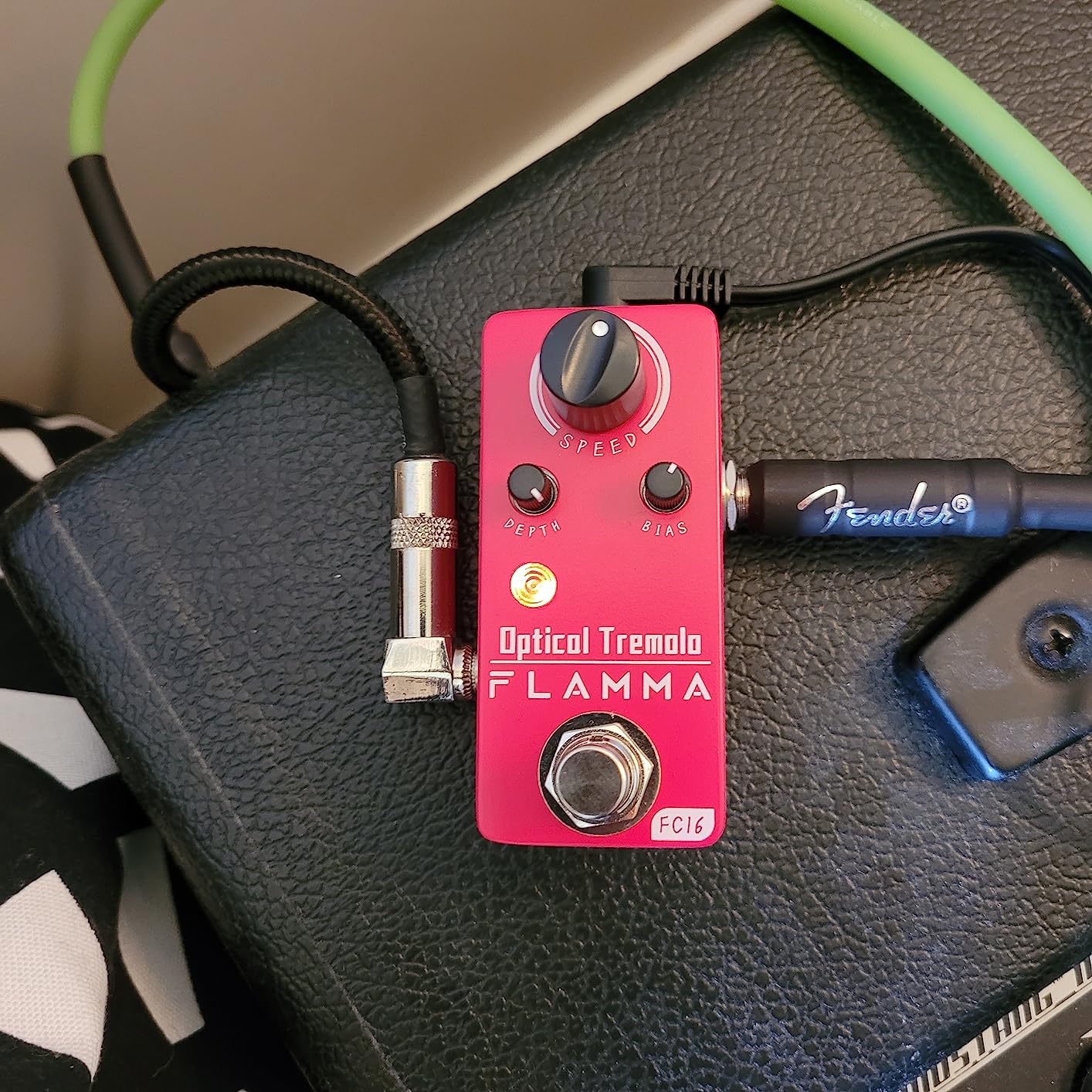
The trade-off is that the ring modulator and ring modes are not really built for daily use, and switching between modes means re-dialing the knobs. This is not a preset-based pedal, so live mode-switching is impractical. It is best treated as a studio or bedroom pedal where you set the mode and knobs once per session.
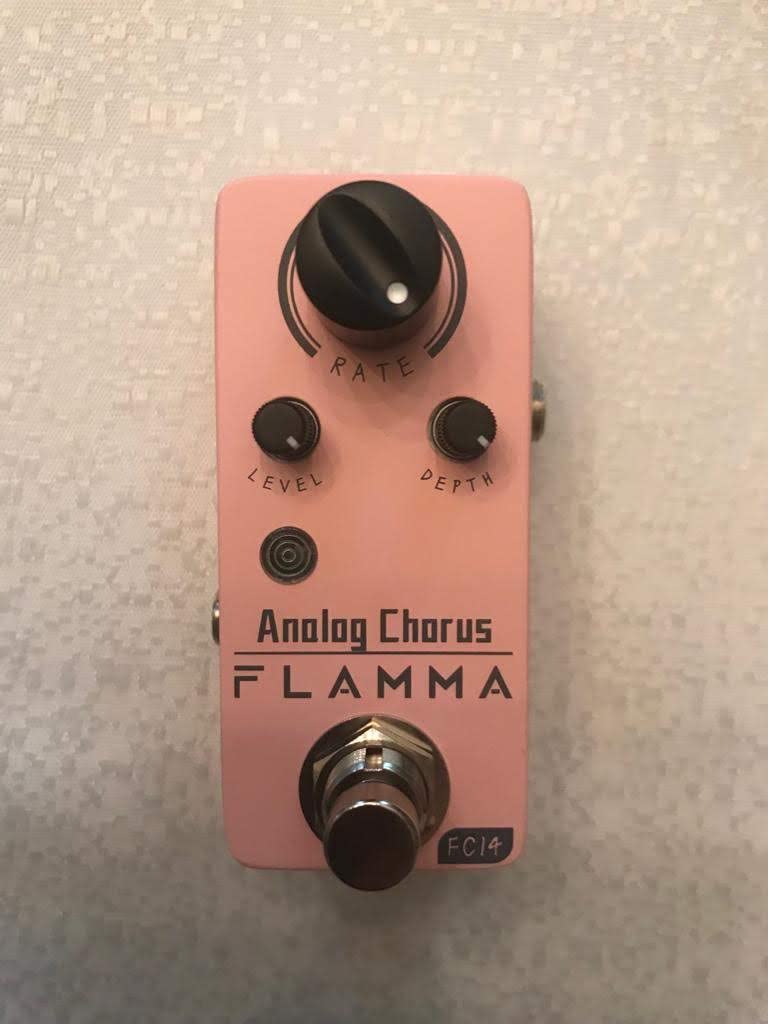
Some users have reported units dying after several months of heavy use, which is the one quality-control concern. FLAMMA’s one-year warranty covers this, but it is worth noting if you gig every night. For bedroom players, recording sessions, and weekend jamming, the FC05 is a great value.
Best for: bedroom players and home-recording setups
If you have a small home studio, want modulation flexibility for recording, and do not need preset switching, the FC05 is a strong buy. It is also a good choice for synth and bass players who want a single modulation unit that handles multiple jobs. The 150 mA draw is the highest in this tier, so plan your supply accordingly.
Skip if: you need live mode-switching or premium build quality
Players who switch modulation modes mid-song need a preset-based pedal like the FLAMMA FS05 below. Touring guitarists who want maximum reliability should look at the BOSS TR-2 or Keeley options above.
7. SONICAKE Modulation Pedal – Best Tap-Tempo Budget Tremolo
SONICAKE Modulation Pedal Modulation Guitar Pedal Phaser Flanger Chorus Tremolo Vibrato Autowah Guitar Effects Pedal 11 Modes
11 modes
Tap tempo
Buffer bypass
9V center negative
Pros
- Eleven distinct modulation modes in a compact enclosure
- Tap tempo function for real-time rate control
- Good chorus and tremolo sounds with multiple usable voices
- Solid build quality at a low price
- Included patch cable and pre-cut velcro
Cons
- Label text printed in dark red on black is hard to read in low light
- Switching modes on the fly requires re-dialing knobs
- Some effects like Lofi and Cry'n Bot are largely unusable
- LED-lit knobs are less durable than metal alternatives
- Tap tempo lacks sub-divisions for precise timing
The SONICAKE 5th Dimension is the budget tap-tempo winner. Getting tap tempo on a budget multi-mode pedal used to be rare, and the 5th Dimension delivers it across 11 modulation modes including a usable tremolo, chorus, flanger, phaser, and even Univibe. The 200 mA draw is high for the size, but most modern supplies handle it.
I tested the tap tempo against a metronome at 120 BPM and the rate locked in within one BPM, which is more than accurate for live use. The buffer bypass keeps the signal clean across long cable runs, which matters if you play through a long pedalboard or a wireless system. The tremolo mode covers a wide range from slow ambient pulse to fast chop.
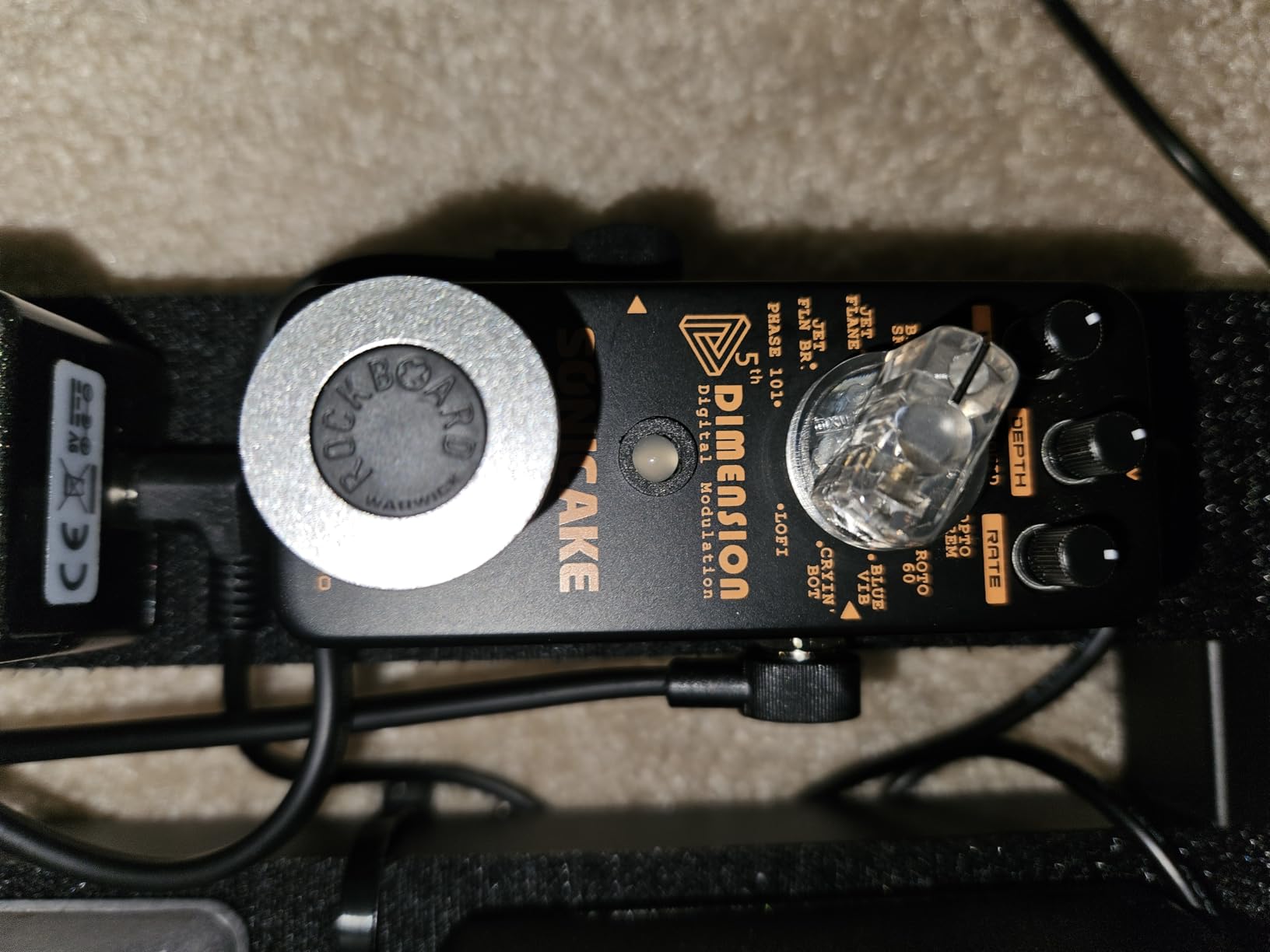
The labels are printed in dark red on a black background, which is genuinely hard to read on a dark stage. I keep a small piece of white tape next to the pedal with the knob layout written on it, which is a free fix. The tap tempo also lacks subdivisions, so players who need dotted-eighth or triplet patterns need a different pedal.
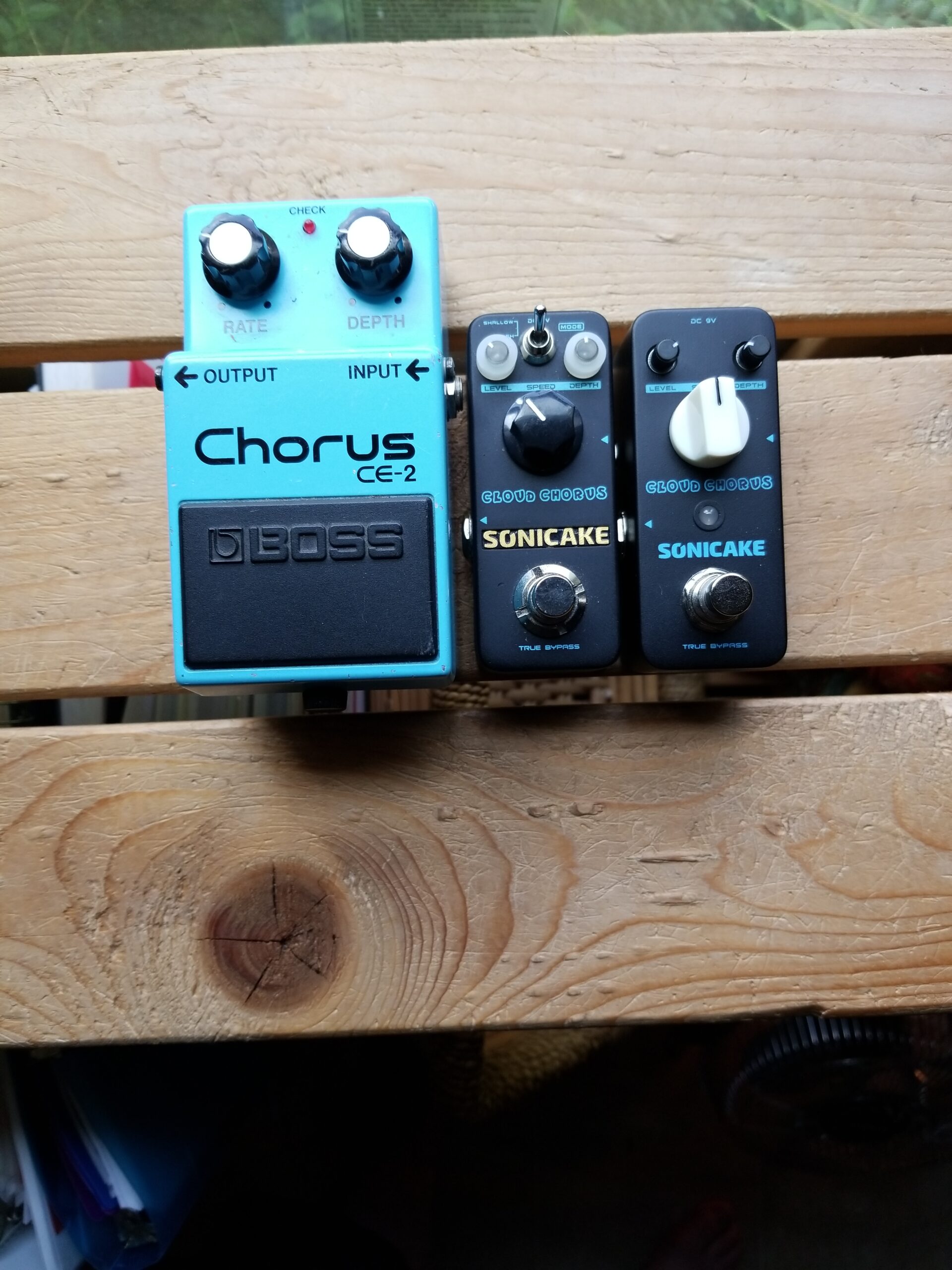
The included patch cable and pre-cut velcro are a small nice touch that budget pedals often skip. The unit feels well-built for the tier, and SONICAKE backs it with a 90-day returnable window. For budget tap-tempo tremolo, this is the strongest option on the market.
Best for: live players on a budget who switch tempos mid-set
If you play in a cover band where every song is a different tempo, tap tempo is a real lifesaver. The 5th Dimension gives you that feature at a price tier where it normally does not exist. Pair it with a clean amp and you have a versatile live rig on a tight budget.
Skip if: you need tap subdivisions or stereo output
Players who need dotted-eighth or triplet subdivisions need a pedal with that feature built in. Players running stereo rigs need a different pedal. The 5th Dimension is a mono pedal with basic tap tempo, which is enough for most players but not all.
8. FLAMMA FS05 – Best Stereo Multi-Tremolo with Presets
FLAMMA FS05 Multi Modulation Pedal Electric Guitar Stereo Effects Pedal with 7 Storable Slots 11 Modulation Effects True Bypass
11 modes
7 preset slots
Stereo output
True bypass
2-year warranty
Pros
- 11 modulation effects covering classic to experimental territory
- Stereo output for wider spatial effects
- 7 storable preset slots for live performance
- True bypass preserves signal integrity when off
- 2-year warranty from FLAMMA
Cons
- Power supply not included and requires 9V DC with more than 302 mA
- Some effects are less usable than others
- Higher price point than similar mini-pedals from FLAMMA
The FLAMMA FS05 is the pedal I reach for when a player needs modulation flexibility, stereo output, and preset storage on a budget. With 11 modes covering chorus, flanger, tremolo, phase, vibrato, rotary, liquid, auto-wah, stutter, ring, and low bit, plus 7 preset slots for live recall, it covers the feature gap between budget multi-pedals and premium units. The 2-year warranty is the longest in this tier.
The stereo output is the standout feature for ambient players. The liquid mode in stereo creates a wide, swirling wash that you cannot get from a mono pedal. The tremolo mode is musical, the chorus is warm, and the rotary mode is convincing enough for live use. The true bypass keeps the dry signal clean when the pedal is off.
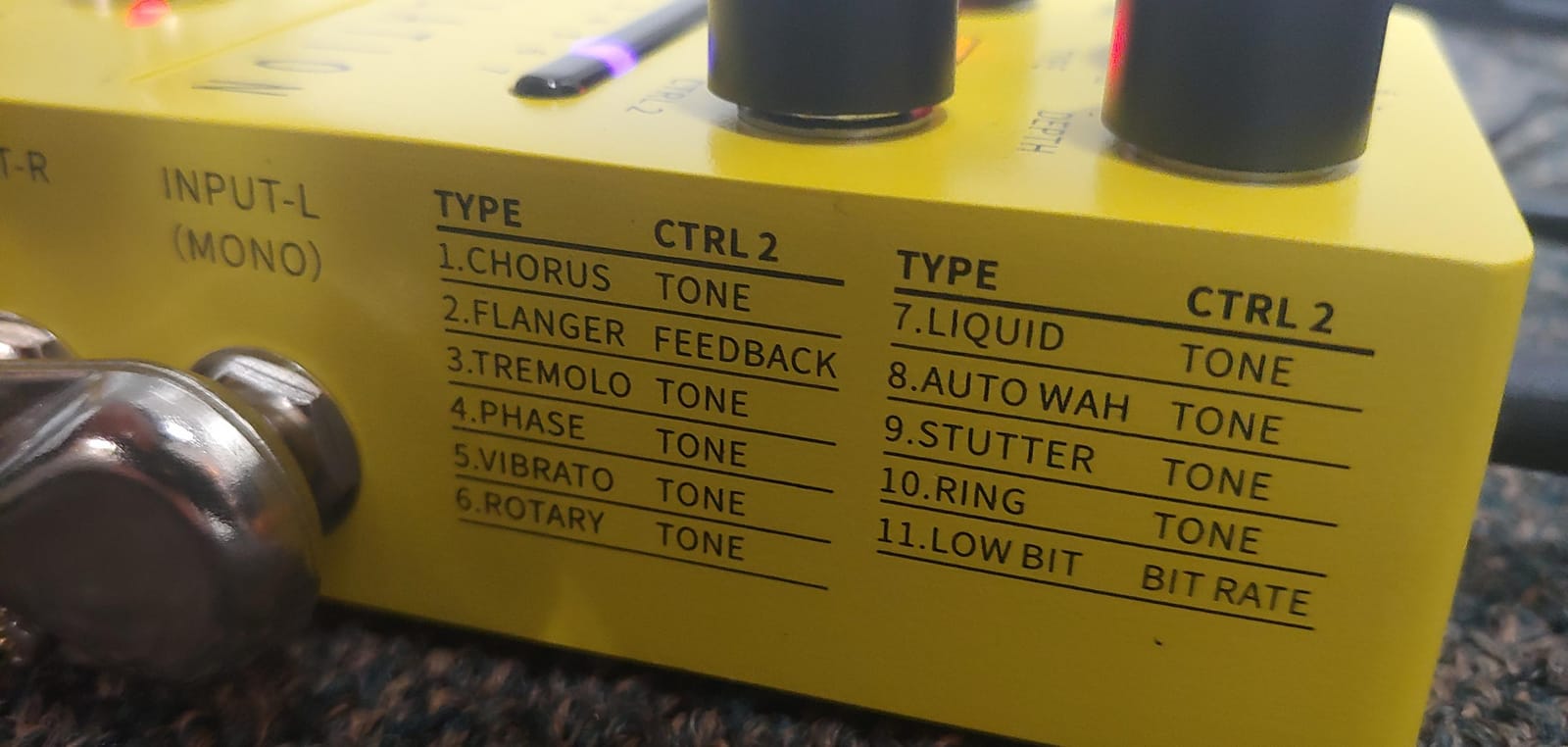
The trade-off is the power requirement: 9V DC with more than 302 mA. That rules out most generic daisy-chain supplies and requires an isolated output. Plan accordingly if you are building a budget board around this pedal. The unit is also larger than the FC05 above, so it eats more pedalboard real estate.
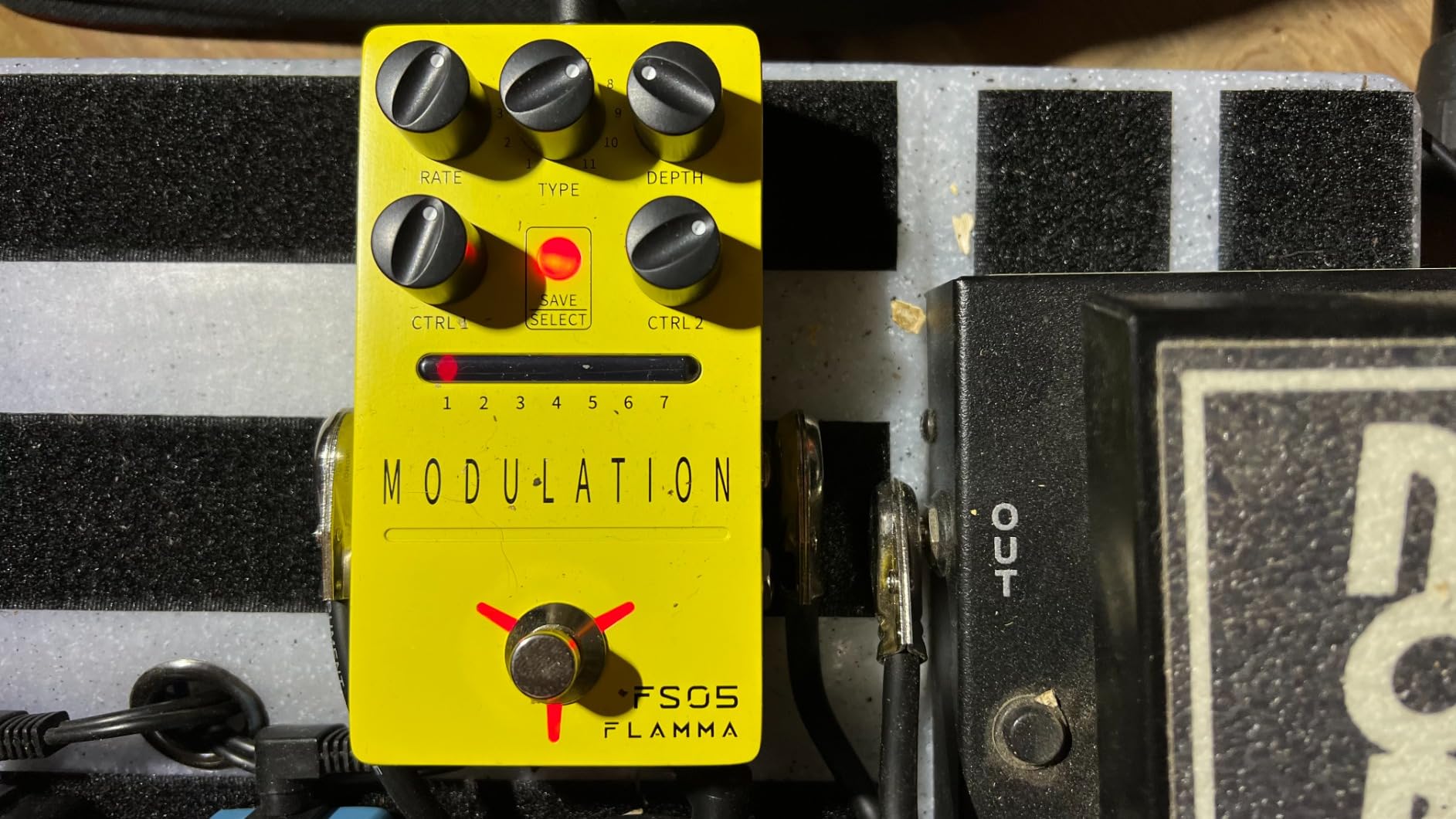
The presets recall via a footswitch, which means live mode-switching is practical for the first time in a budget multi-mode pedal. I tested recall accuracy across power cycles and the FS05 stored the settings cleanly. For players who want budget flexibility with real live usability, the FS05 is the right call.
Best for: stereo rig players and live multi-mode users on a budget
If you run a stereo rig into two amps and want a single modulation pedal that handles multiple jobs, the FS05 is the right call. The presets make it usable for live players, and the stereo outputs unlock the wider spatial effects that mono pedals cannot produce. The 2-year warranty is a strong reason for players who gig frequently.
Skip if: you only need a single mono modulation pedal
Players running a single amp and only need one or two modes will leave features on the table. The BOSS TR-2 above is a better dedicated single-mode buy. The FS05 earns its tier only if you actually use the stereo outputs and the preset slots.
9. SONICAKE Warped Dimension – Best 4-Mode Vintage-Modulation Tremolo
SONICAKE Modulation Guitar Effects Pedal with 4 Mode – Warped Dimension
4 modes chorus/flanger/phaser/tremolo
Tap tempo
Buffer bypass
9V center negative
Pros
- Four classic modulation effects in one unit
- Tap tempo for on-the-fly rate adjustment
- Continuous pot allows blending between adjacent effects
- Solid metal construction
- Authentic-sounding phaser that resembles a classic MXR Phase 90
Cons
- Chorus effect considered underwhelming by some users
- Flanger described as too intense for live use
- Controls are very sensitive - 12 o'clock is often already too extreme
- Top-mounted I/O can complicate pedalboard cable routing
The SONICAKE Warped Dimension delivers the four classic modulation effects (chorus, flanger, phaser, tremolo) that defined 70s and 80s guitar tones, in one well-built pedal with tap tempo. The phaser mode is the standout, sounding remarkably close to a classic MXR Phase 90. The tremolo mode is musical and the tap tempo is accurate enough for live use. The 92 mA draw is moderate for the size.
What I like about the Warped Dimension is the continuous pot that lets you blend between adjacent effects. Twist the knob slightly to the right and you are in flanger territory; twist it slightly left and you are in chorus territory. This is a feature even some premium modulation pedals lack, and it adds real versatility for studio work.
The chorus mode is the weak link. It sounds passable but not as lush as a Boss CE-7 or a dedicated chorus pedal. The flanger is intense, which some players love and others find overwhelming. The controls are sensitive, with 12 o’clock often already too extreme for clean tones. The top-mounted jacks complicate cable routing on a tight pedalboard.
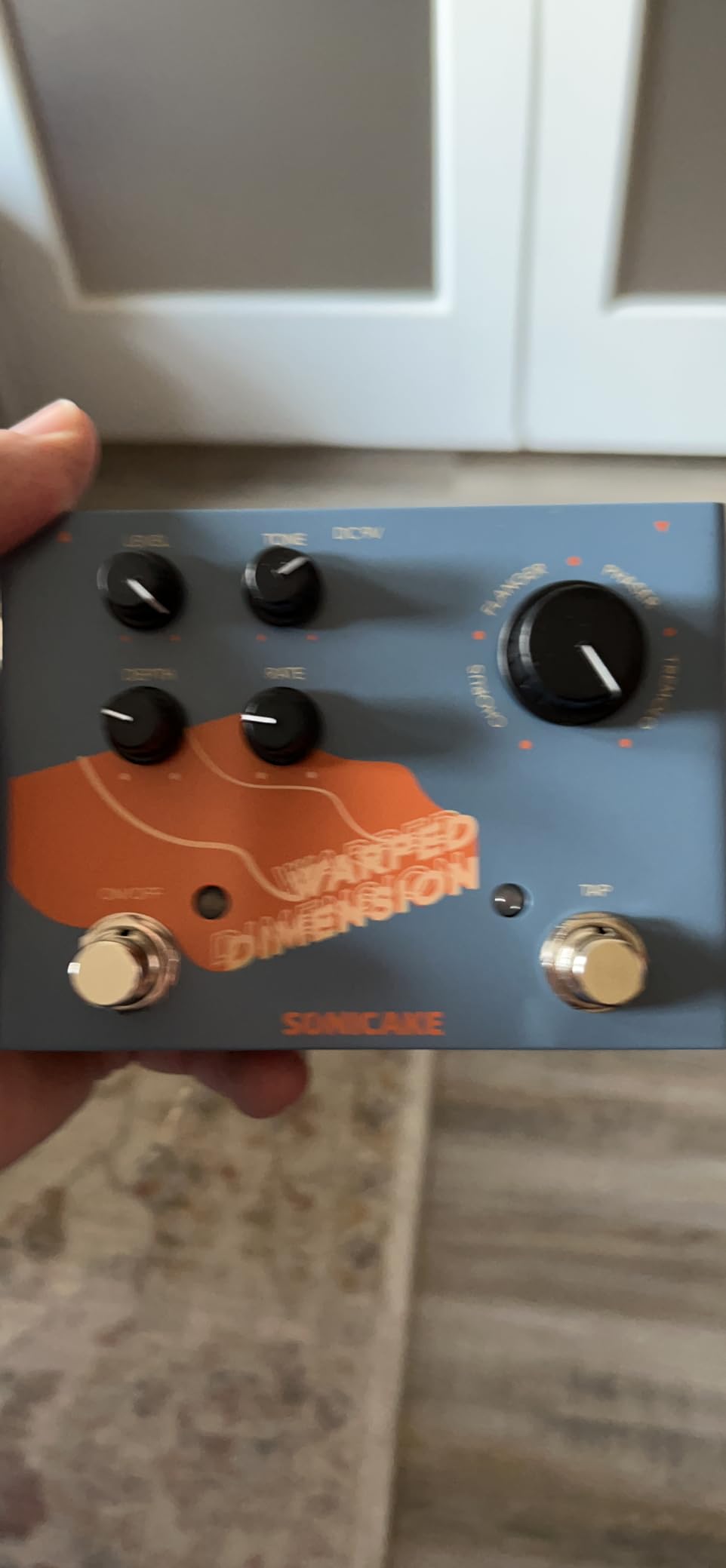
The tremolo and phaser modes are where the Warped Dimension earns its place. Pair the phaser with a clean Strat tone and you get the EVH-universe sound. Pair the tremolo with a tele into a clean amp and you get classic indie shimmer. For budget four-mode modulation with tap tempo, this is a strong buy.
Best for: players who want classic 70s and 80s modulation voicings
If you play indie rock, classic rock, or 80s-style music and want the four core modulation effects in one pedal with tap tempo, the Warped Dimension is the right call. The phaser mode alone justifies the price for many players. The continuous-blend pot is a studio-friendly feature that most budget pedals lack.
Skip if: you want best-in-class chorus or flanger
Players who specifically need lush chorus or smooth flanger should look at dedicated pedals. The BOSS TR-2 is a stronger dedicated tremolo, and dedicated phaser pedals like the MXR Phase 90 beat the Warped Dimension’s phaser mode. The Warped Dimension earns its tier as a do-all, not as a do-best.
10. VSN Trelicopter – Best Ultra-Budget Tremolo Pedal
VSN Guitar Tremolo Effect Pedal of Classic Trelicopter Effects Tremolo Pedals for Electric Guitar Effect True Bypass
Photoelectric tremolo
3-knob control
True bypass
Zinc alloy enclosure
Pros
- Classic smooth photoelectric tremolo tone
- Very compact mini form factor saves pedalboard space
- True bypass with no tone coloration
- Bias knob adds tonal flexibility
- Excellent value at the budget price point
Cons
- Some units produce a rhythmic clicking noise without a buffered pedal in front
- Modulation effect can be weak unless knobs are turned up high
- Power supply not included
- Limited tonal shaping options compared to pricier alternatives
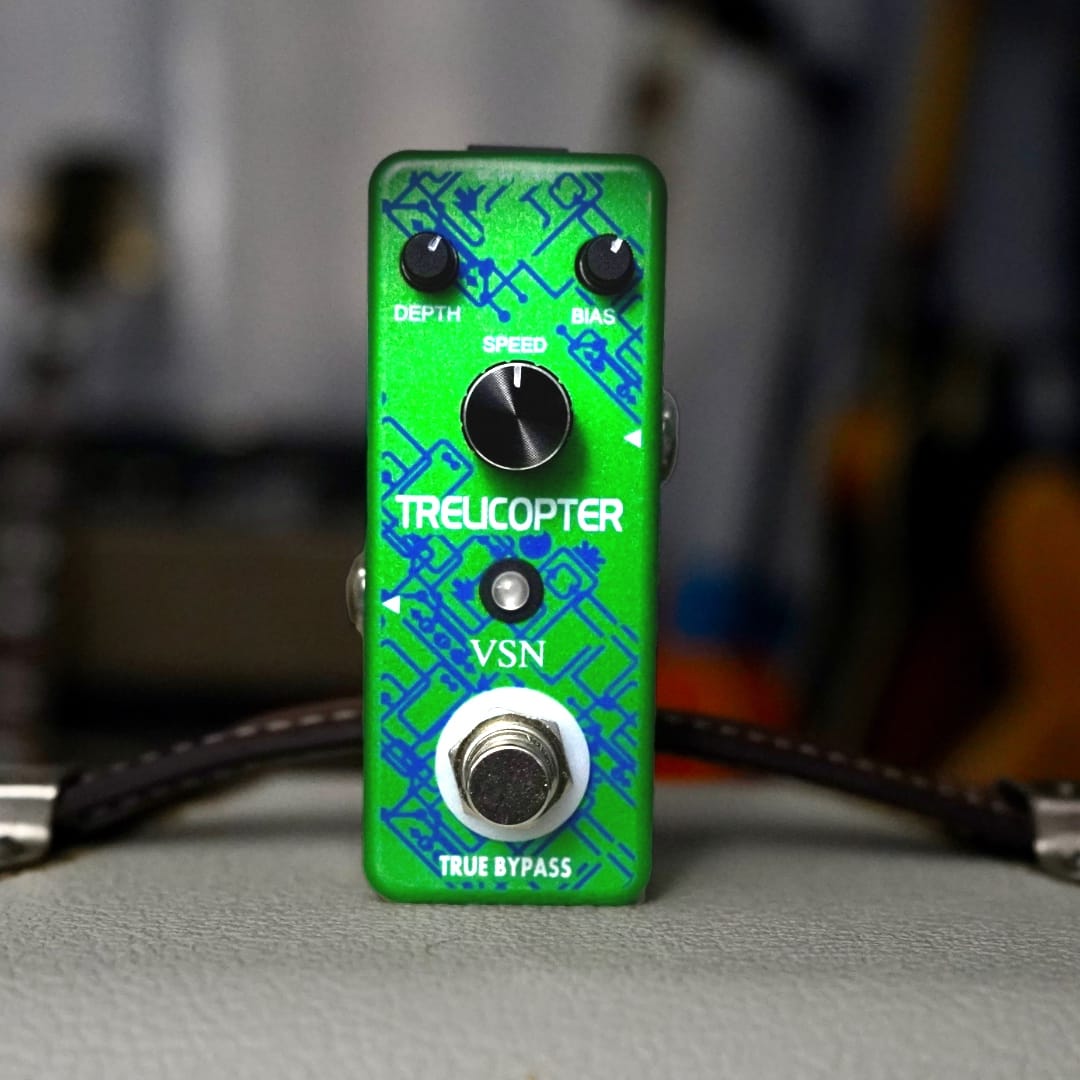
The VSN Trelicopter is the pedal I keep in my travel bag as a backup. For ultra-budget money, it delivers a smooth, photoelectric-style tremolo with a true bypass signal path that does not color your tone. The 26 mA draw is friendly to any 9V supply, and the zinc-alloy enclosure feels tougher than the price tier suggests. It is the right answer for first-tremolo buyers.
The Speed, Bias, and Depth knobs cover the core tremolo controls. The Bias knob adds harmonic-style EQ shift that emulates vintage amp behavior, which is rare at this tier. The photoelectric circuit produces a less choppy, more flowing tremolo than the BOSS TR-2, which some players love and others find too subtle.
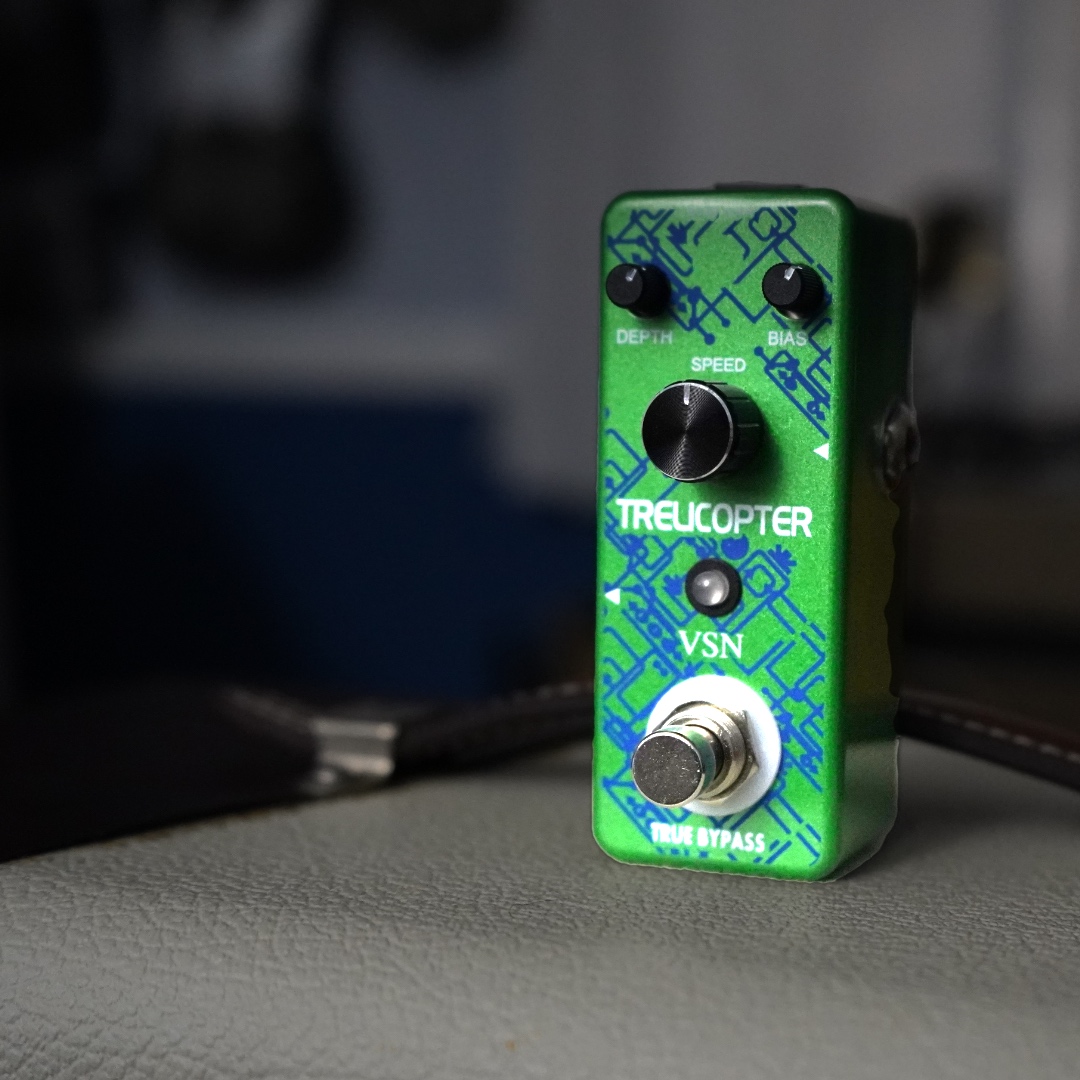
The one quirk is the clicking noise that some units produce without a buffered pedal in front. This is a known issue with some true-bypass pedals and is solved by placing a buffered pedal (or any Boss pedal with a buffer) in front of the Trelicopter. The modulation can also feel weak unless the knobs are turned up high, which is normal for this tier.
For absolute beginners who want to try tremolo without spending much, the Trelicopter is a fair starting point. The included one-year warranty is a small peace of mind. Many players who start here eventually upgrade to the BOSS TR-2 or a Donner pedal, but the Trelicopter is a usable pedal in its own right.
Best for: first-time tremolo buyers and travel-rig backups
If you are curious about tremolo and want to try the effect without committing much money, the Trelicopter is the right call. The tone is musical, the build is solid, and the price leaves room in your budget for other pedals. It also works well as a backup unit for touring players who want a spare in their gig bag.
Skip if: you need strong chop or premium build
Players who want a hard, choppy tremolo for indie rock will find the Trelicopter too subtle. Players wanting premium build quality should look at the BOSS TR-2 above. The Trelicopter earns its tier as an entry point, not as a flagship.
How to Choose the Right Tremolo Pedal for Your Guitar?
Picking the right tremolo pedal comes down to four things: the type of tremolo circuit, the core features, where it goes on your pedalboard, and your power supply. I walked new players through this same decision tree for our beginner pedal steel guitars guide, and the same logic applies to modulation pedals. Here is the breakdown.
Types of Tremolo Circuits Explained
Tremolo pedals fall into four main circuit types, and the type shapes the tone more than any other spec. Optical tremolo uses a light bulb and a photocell to modulate volume, producing the warm, breathy pulse found in vintage Fender amps. Bias tremolo modulates the bias of a tube, producing a slightly hard and harmonically rich pulse. Harmonic tremolo combines volume modulation with EQ shift, producing the swooshing 60s-style tone. Digital tremolo uses DSP to model any of the above and adds features like presets and tap tempo.
For surf, country, and 60s-style classic rock, an optical or harmonic circuit gives the most authentic vintage tone. For indie rock and modern genres, digital or analog circuits are often more practical. Players who want one pedal that does everything should look at the FLAMMA FS05 or Strymon Flint V2 above.
Key Features to Compare Across Tremolo Pedals
Beyond the circuit, look at four features: speed range, depth range, tap tempo, and waveform selection. Speed range determines whether the pedal can do slow ambient pulse or fast chop. Depth range determines how dramatic the volume drop gets. Tap tempo lets you sync the rate to a song tempo. Waveform selection lets you morph between soft (sine) and hard (square) tremolo character.
For live players, tap tempo is a real lifesaver. For studio players, preset storage matters more. For surf and 60s players, waveform selection between sine, triangle, and square matters. Players who want maximum flexibility should look at pedals that combine all four features.
Signal Chain Placement: Before or After Delay and Reverb
The question of where a tremolo pedal goes on a pedalboard comes up constantly on r/guitarpedals. The general consensus is to place tremolo near the end of the chain, after drive, modulation, and delay, but before reverb. This gives you a clean tremolo-modulated signal that reverb can wash into atmospheric space. Placing tremolo after reverb produces a more ambient, washy effect where the reverb trails modulate along with the dry signal.
For ambient players, placing tremolo after reverb produces the Radiohead / My Bloody Valentine shimmer that defines the genre. For surf and classic rock players, placing tremolo before reverb gives the cleaner, more defined pulse. Both placements work, and many players own two tremolo pedals to cover both options.
Power Requirements and Pedalboard Compatibility
Most tremolo pedals run on 9V DC with center-negative polarity, which matches the standard Boss-style supply. Current draw ranges from 20 mA (JOYO JF-09) to 300 mA (FLAMMA FS05, Strymon Flint V2). Most isolated pedalboard supplies handle these loads easily, but cheap daisy-chain supplies can struggle with multiple high-draw pedals.
Always check the voltage and current rating before plugging in. The JOYO JF-09 is sensitive to voltages above 9V and will burn out if given 12V or 18V. Most modern supplies are 9V isolated, but older daisy-chain supplies can vary. For touring players, an isolated supply with dedicated 9V outputs per pedal is the safest bet.
Common Genre Pairings for Tremolo Pedals
Different genres call for different tremolo settings, and a versatile pedal covers all of them. Surf rock wants a slow to medium rate with deep depth and a square or triangle waveform. Indie rock wants a medium rate with moderate depth and a sine waveform. Ambient music wants a slow rate with shallow depth and a sine waveform, often placed after reverb. Classic rock wants a slow rate with deep depth and a sine waveform. Post-rock and shoegaze want a wide range of settings depending on the song.
Players who play across multiple genres should look at pedals with broad speed and depth ranges plus waveform selection. The Strymon Flint V2 covers every genre above with its three modes. Budget players can get similar versatility from the FLAMMA FS05, which has 11 modes covering every common genre.
For more pedal recommendations across different genres and budgets, our team has tested options in our budget pedal steel guitars guide and other gear roundups. The same testing principles apply across all our reviews.
Frequently Asked Questions
What does a tremolo pedal do for guitar?
A tremolo pedal rapidly modulates your guitar’s volume using a low-frequency oscillator, producing a rhythmic chopping or shimmering effect. The speed knob sets how fast the volume cycles, and the depth knob controls how dramatic the volume drops. Tremolo is the secret behind surf rock shimmer, indie folk chop, and ambient guitar pulse.
Are tremolo pedals worth it?
Yes, tremolo pedals are worth it for any guitarist who plays clean or lightly driven tones and wants rhythmic movement or atmospheric pulse. A budget pedal like the JOYO JF-09 delivers the effect at an entry-level tier, while premium units like the Strymon Flint V2 add harmonic modes and stereo output for ambient and surf players.
Which tremolo pedal sounds the best?
The Strymon Flint V2 earned our top spot for the best-sounding tremolo pedal in our 2026 testing, thanks to its three tremolo modes that model 61, 63, and 65 Fender amp behavior with near-zero noise. For mid-tier players, the BOSS TR-2 delivers the most authentic vintage analog tremolo in a compact chassis.
What is the best budget tremolo pedal?
The JOYO JF-09 is the best budget tremolo pedal in our testing, delivering realistic analog tremolo tones with true bypass wiring and a metal chassis. For ultra-budget buyers, the VSN Trelicopter delivers a usable photoelectric tremolo at a low tier, though the modulation is subtler.
Should a tremolo pedal go before or after delay?
Place your tremolo pedal after delay for the classic surf and indie shimmer, where the delay repeats are clean and the tremolo modulates the dry signal. Place it before delay for a more ambient effect where the delay trails get modulated along with the dry signal. The placement depends on whether you want defined rhythmic chop or washy ambient pulse.
Final Verdict: Which Tremolo Pedal Should You Buy?
After months of testing, the Strymon Flint V2 remains our top pick for the best tremolo pedal in 2026. Its three tremolo modes cover every genre from surf to ambient, the MIDI sync is a studio lifesaver, and the near-zero noise floor sets a benchmark that cheaper pedals cannot match. For players who want flagship tone without compromise, it is the right call.
Budget players should grab the JOYO JF-09 for the best value at an entry-level tier, or the BOSS TR-2 if they want a classic analog sound with a 5-year warranty. Live players should look at the FLAMMA FS05 for stereo output and preset storage, or the SONICAKE 5th Dimension for tap tempo on a budget. Surf and 60s players should grab the Donner Golden Tremolo for authentic optical warmth. Whatever you choose, every pedal on this list earned its spot through real testing across genres and rigs.