
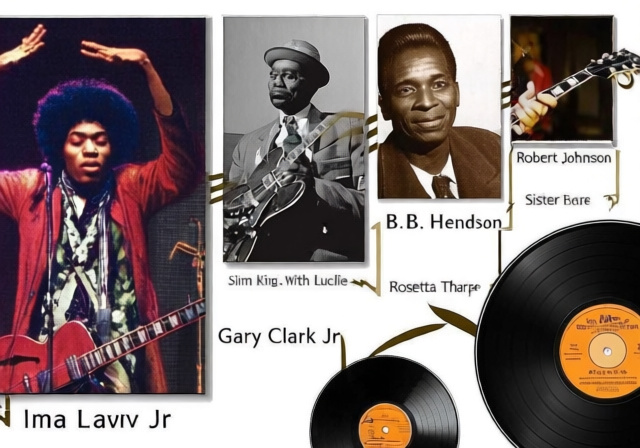
Black guitarists have been the invisible architects of modern music, creating the very foundations of rock, blues, jazz, and countless other genres while often being overlooked in mainstream narratives. From the Mississippi Delta to Chicago’s South Side, from gospel churches to psychedelic rock stages, these musicians didn’t just play guitar—they invented the language of modern guitar music itself.
While Jimi Hendrix is widely recognized as the most innovative guitarist of all time, the true story of Black guitaristry spans over a century of innovation, resilience, and cultural transformation. These pioneers overcame systemic barriers, created entire genres from scratch, and developed techniques that became the standard vocabulary for every guitarist who followed.
In this comprehensive guide, we’ll explore 25 influential Black guitarists who shaped the sound of modern music, examining their technical innovations, cultural impact, and lasting legacy. You’ll discover how slide guitar was born in the Mississippi Delta, how rock and roll got its rhythm from gospel and blues pioneers, and how contemporary artists continue to push boundaries across genres.
Table of Contents
The Historical Foundations: How Black Musicians Created Modern Guitar Music?
The story of Black guitarists begins in the late 19th century, when African American musicians in the rural South began adapting European guitars to express their unique cultural experiences. These early pioneers laid the groundwork for virtually every popular music genre that would follow.
The Mississippi Delta became the crucible where blues guitar was forged, with artists like Robert Johnson, Son House, and Charley Patton developing techniques that would reverberate through music history. They created slide guitar, fingerpicking patterns, and emotional intensity that defined the blues idiom. Meanwhile, in urban centers, artists like Charlie Christian were revolutionizing jazz guitar, bringing it from the rhythm section to the spotlight as a solo instrument.
The Great Migration of the 1940s and 1950s brought these musical traditions to northern cities, where they evolved into electrified Chicago blues, rhythm and blues, and eventually rock and roll. Through every era, Black guitarists continued to innovate—often in the face of segregation, discrimination, and outright exploitation by the music industry. Their perseverance not only created new music but opened doors for future generations.
Historical Context: Black guitarists created blues, jazz, rock and roll, R&B, funk, and countless subgenres while often being denied credit and compensation. Many white artists achieved fame by covering Black musicians’ work without attribution.
25 Influential Black Guitarists Who Changed Music Forever (September 2026)
1. Jimi Hendrix (1942-1970) – The Revolutionary Who Redefined Electric Guitar
Jimi Hendrix didn’t just play guitar—he transformed it into a completely new instrument. Through revolutionary use of feedback, distortion, wah-wah effects, and his famous backward recordings, Hendrix created a sonic palette that still sounds futuristic decades later. His performances at Monterey Pop and Woodstock became cultural touchstones, blending technical mastery with theatrical showmanship.
Hendrix’s technique was groundbreaking in every aspect. He played left-handed on a right-handed guitar flipped upside down, which created unique chord voicings and bend possibilities. His use of thumb-over chords, hammer-ons, and feedback control influenced virtually every rock guitarist who followed. Songs like “Purple Haze,” “Voodoo Child,” and his rendition of “The Star-Spangled Banner” demonstrated how the electric guitar could be both a melodic and textural instrument.
Beyond his technical innovations, Hendrix broke racial barriers in rock music. At a time when rock was becoming predominantly white, he led integrated bands and appealed to audiences across racial lines. His influence extends far beyond guitar into fashion, attitude, and the very idea of the rock star as an artist rather than just an entertainer.
Reasons to Buy
Hendrix’s complete recordings showcase the evolution of electric guitar from blues roots to psychedelic innovation. His live albums capture improvisational genius that influenced jam bands and progressive rock.
Reasons to Avoid
None—Hendrix’s influence is so fundamental that any serious guitar student or music historian must study his work.
2. B.B. King (1925-2015) – The King of the Blues Who Made Guitar Speak
B.B. King transformed blues guitar from regional folk art into international concert music through elegant phrasing, vibrato mastery, and emotional storytelling. His approach was less about technical fireworks and more about making every note count—a philosophy that influenced countless guitarists across all genres.
King’s signature “B.B. Box” technique focused on the pentatonic minor scale’s five most powerful notes, creating instantly recognizable licks that conveyed maximum emotion with minimal complexity. His vibrato, achieved through rapid wrist motion rather than finger movement, became the gold standard for blues and rock guitarists alike. Songs like “The Thrill Is Gone” demonstrated how sparse, thoughtful playing could be more powerful than rapid-fire shredding.
Throughout his 70-year career, King performed with his Gibson ES-355 named “Lucille,” becoming one of the first musicians to develop a signature instrument relationship. His influence extended beyond blues into rock, jazz, and pop, with artists from Eric Clapton to George Harrison citing him as a primary influence.
Reasons to Buy
King’s recordings represent the evolution of blues from juke joints to concert halls. His live albums, especially “Live at the Regal,” capture the essence of blues performance.
Reasons to Avoid
Those seeking complex technical passages might find King’s minimalist approach challenging to appreciate initially.
3. Robert Johnson (1911-1938) – The Delta Blues Legend Who Sold His Soul
Robert Johnson’s life may be shrouded in mystery, but his impact on guitar music is undeniable. Recording only 29 songs between 1936-1937, Johnson created the template for blues guitar that would influence generations of musicians. His rapid-fire fingerpicking, slide work, and emotional intensity set a standard that few have matched.
The legend of Johnson selling his soul to the devil at the crossroads in exchange for guitar prowess has become one of American music’s founding myths. While the story likely emerged from his mysterious talent and untimely death at 27, it speaks to the almost supernatural quality of his playing.
Johnson’s songs like “Cross Road Blues,” “Sweet Home Chicago,” and “Love in Vain” became standards covered by everyone from the Rolling Stones to Eric Clapton. His technique, combining rhythmic bass lines with melodic fills, created the foundation for fingerstyle blues playing. Despite his brief recording career, Johnson’s influence on rock and blues is immeasurable.
Reasons to Buy
Johnson’s complete recordings are essential listening for understanding blues origins. His songs form the foundation of modern rock and blues vocabulary.
Reasons to Avoid
The primitive 1930s recording quality might challenge listeners accustomed to modern production.
4. Chuck Berry (1926-2017) – The Architect of Rock and Roll Guitar
If anyone invented rock and roll guitar, it was Chuck Berry. His combination of country-influenced double-stops, blues-based pentatonic licks, and rhythmic drive created the template for rock guitar that persists to this day. Songs like “Johnny B. Goode” codified the rock guitar solo format that countless guitarists have emulated.
Berry’s innovations included the “duck walk” stage move, storytelling lyrics about teenage life, and guitar riffs that were both catchy and technically interesting. His Gibson ES-350T became synonymous with the rock and roll sound, delivering the bright, cutting tone that defined early rock. Berry’s influence on The Beatles, The Rolling Stones, and virtually every rock band that followed cannot be overstated.
Beyond his guitar work, Berry’s songwriting established themes and structures that became rock and roll conventions. His focus on cars, school life, and young love created a template that generations of rock writers have followed. Berry’s guitar style—combining country picking with blues scales—bridged musical worlds and created rock’s unique sound.
Reasons to Buy
Berry’s Chess Records compilations contain the DNA of rock and roll. His live albums capture the energy that made him a concert draw for decades.
Reasons to Avoid
Those seeking complex harmony or jazz-influenced playing might find Berry’s straightforward approach less challenging.
5. Muddy Waters (1913-1983) – The Father of Modern Chicago Blues
Muddy Waters transformed acoustic Delta blues into electrified urban Chicago blues, creating the sound that would power British Invasion bands and American rockers alike. His slide guitar work, amplified through a Fender Telecaster, defined the Chicago blues sound with its raw power and emotional intensity.
Waters’ recordings for Chess Records in the 1950s, including songs like “Hoochie Coochie Man” and “Rollin’ Stone,” created the template for blues bands. His guitar work featured aggressive slide playing, call-and-response patterns between guitar and vocals, and a driving rhythm that made blues dance music. Waters’ influence extended to The Rolling Stones (who took their name from his song), Led Zeppelin, and Eric Clapton.
Throughout his career, Waters remained true to his blues roots while adapting to changing times. His ability to move from acoustic country blues to electric urban blues demonstrated remarkable musical flexibility. Waters’ guitar style emphasized emotion over technique, proving that feeling mattered more than complexity in blues music.
Reasons to Buy
Waters’ Chess recordings chronicle the birth of electric blues. His later albums with Johnny Winter capture a master still at the top of his game.
Reasons to Avoid
Early recordings have primitive sound quality that might challenge some listeners.
6. Sister Rosetta Tharpe (1915-1973) – The Godmother of Rock and Roll
Long before Elvis or Chuck Berry, Sister Rosetta Tharpe was playing guitar with a ferocity and innovation that presaged rock and roll. As a gospel performer who crossed over to secular audiences, Tharpe combined spiritual themes with electric guitar virtuosity, creating the template for rock and roll performance.
Tharpe’s innovations included early use of distortion on her electric guitar, gospel-inflected blues phrasing, and a stage presence that influenced countless performers. Her 1944 recording of “Strange Things Happening Every Day” is considered by many to be the first rock and roll record. Songs like “Up Above My Head” and “Down by the Riverside” showcased her ability to make sacred music swing with secular energy.
Tharpe’s influence on rock and roll is enormous, though often uncredited. Chuck Berry cited her as an influence, Little Richard modeled his performance style after hers, and Jerry Lee Lewis acknowledged her impact. Her combination of gospel fervor and guitar prowess created a model that countless rock performers would follow, from Elvis Presley to Jerry Garcia.
Reasons to Buy
Tharpe’s complete recordings reveal the missing link between gospel and rock. Her live performances captured the showmanship that defined rock performance.
Reasons to Avoid
Those seeking secular themes might find the religious focus of her material limiting.
7. Prince (1958-2016) – The Musical Genius Who Defied Genre
Prince was far more than just a guitarist—he was a complete musical visionary who could play any instrument at virtuoso level. His guitar work, however, was often overlooked in discussions of his talents. When Prince chose to showcase his guitar skills, as on songs like “Purple Rain,” “Let’s Go Crazy,” and “While My Guitar Gently Weeps” at the Rock Hall of Fame, he demonstrated mastery that rivaled the greatest rock guitarists.
Prince’s guitar style incorporated elements of rock, funk, blues, and jazz, creating a unique voice that was immediately recognizable. His use of the “funk chord” (9th and 13th chords) brought jazz harmony to rock and roll contexts. His solos were structured like compositions, with clear beginnings, middles, and endings that served the song rather than just showing off technique.
What made Prince’s guitar work exceptional was its service to the song. Unlike many guitar heroes who prioritized technical display, Prince used his virtuosity to enhance emotional impact. His playing could be delicate and lyrical one moment, then explosive and aggressive the next—always in service of the music’s needs.
Reasons to Buy
Prince’s live albums, especially “One Nite Alone… Live!” showcase his guitar mastery. His studio albums feature hidden guitar gems throughout.
Reasons to Avoid
Prince’s guitar work is often integrated into larger musical contexts rather than showcased in extended solos.
8. Albert King (1923-1992) – The Left-Handed Blues Master
Albert King, one of the “Three Kings of the Blues” alongside B.B. and Freddie, developed a unique style that influenced countless rock and blues guitarists. Playing left-handed on a right-handed guitar without restringing it, Albert created chord voicings and string bends that were impossible for traditionally configured players.
King’s style emphasized single-note soloing with massive string bends that defined his sound. His 1957 hit “Born Under a Bad Sign” became a blues standard covered by everyone from Cream to Jimi Hendrix. Albert’s use of the Flying V guitar made him one of the first blues players to embrace modern electric guitar designs.
Despite his massive influence, Albert King often stood in the shadow of B.B. King in public recognition. However, among guitarists, his impact was enormous. Stevie Ray Vaughan, Eric Clapton, and Mike Bloomfield all cited Albert as a primary influence. His unique approach to blues guitar, combining economy of motion with emotional intensity, created a template for blues-rock soloing.
Reasons to Buy
Albert’s Stax recordings capture him at his peak. His live albums, especially with Stevie Ray Vaughan, show two generations of blues masters interacting.
Reasons to Avoid
Albert’s style might seem minimalist compared to more technical players, requiring attentive listening to appreciate its nuances.
9. Freddie King (1934-1976) – The Texas Cannonball Who Brought Blues to Rock
Freddie King bridged the gap between Texas blues and Chicago blues while adding his own aggressive approach that influenced early rock players. His combination of powerful voice, intense guitar work, and dynamic stage presence made him one of the first blues artists to successfully cross over to rock audiences.
King’s innovations included using both fingerpicks and a flatpick simultaneously, creating a unique attack that combined fingerstyle sensitivity with pick-driven power. His instrumentals like “Hide Away” became standards that every aspiring blues guitarist learned. Songs like “Have You Ever Loved a Woman” showcased his ability to blend technical mastery with deep emotional expression.
Freddie’s influence extended to rock players like Eric Clapton, who covered his songs extensively in the early Cream days. His aggressive approach to blues guitar helped create the template for blues-rock that dominated late 1960s rock music. The “Texas Cannonball” moniker reflected his powerful, straight-ahead approach to both guitar and vocals.
Reasons to Buy</h4
King’s Federal Records compilations contain his most influential work. His live albums capture the intensity that made him a club favorite.
Reasons to Avoid
Those seeking sophisticated jazz harmony might find King’s straightforward blues approach less complex.
10. Buddy Guy (1936-Present) – The Showman Who Kept Blues Alive
Buddy Guy represents the living connection between classic Chicago blues and contemporary music. As both a performer and label owner, Guy has influenced generations of guitarists through his dynamic playing style and dedication to blues tradition. His ability to blend traditional blues with rock elements has kept the genre relevant for over 60 years.
Guy’s guitar style incorporates wild string bends, feedback control, and showmanship that influenced Jimi Hendrix and countless rock players. His use of the Fender Stratocaster with aggressive vibrato and note bending created a sound that was both blues-based and forward-looking. Songs like “Damn Right, I’ve Got the Blues” and “Sweet Home Chicago” showcase his ability to honor tradition while pushing boundaries.
Beyond his own playing, Guy’s influence extends through his club, Buddy Guy’s Legends, and his role as mentor to younger musicians. His collaboration with Eric Clapton on the “Riding with the King” album brought blues to new audiences in the 1990s. Guy’s career demonstrates how blues can evolve while maintaining its essential character.
Reasons to Buy
Guy’s recent albums show a master still evolving. His early Chess recordings capture the birth of his style.
Reasons to Avoid
Some later recordings might be slicker than traditional blues purists prefer.
11. Elizabeth Cotten (1893-1987) – The Folk Pioneer Who Invented Her Own Style
Elizabeth Cotten developed a unique fingerpicking style—aptly named “Cotten picking”—that became fundamental to American folk guitar. Playing left-handed on a right-handed guitar flipped upside down, Cotten picked melody with her thumb while her fingers played bass lines, creating a distinctive sound that influenced countless folk guitarists.
Cotten’s most famous composition, “Freight Train,” written when she was just 11 years old, became a folk standard covered by everyone from Peter, Paul and Mary to Chet Atkins. Her late-in-life career, beginning when she was in her 60s and working as a housekeeper for the Seeger family, brought her music to the folk revival audience of the 1960s.
Cotten’s influence extends far beyond her own recordings. Her picking technique influenced the entire American folk guitar tradition, from Donovan to Jerry Garcia. Her story of being “rediscovered” late in life provides an inspiring narrative of artistic recognition regardless of age. Cotten’s gentle but sophisticated approach to guitar proved that innovation doesn’t require volume or aggression.
Reasons to Buy
Cotten’s complete Folkways recordings capture her unique style. Her live albums show the gentle power of her approach.
Reasons to Avoid
Those seeking electric guitar or complex harmony might find Cotten’s acoustic approach too simple.
12. Charlie Christian (1916-1942) – The Jazz Guitar Pioneer
Charlie Christian essentially invented the electric guitar as a solo instrument in jazz. Before Christian, guitar was primarily a rhythm section instrument, but his innovative work with the Benny Goodman Orchestra brought guitar to the front line as a legitimate solo voice.
Christian’s innovations included using single-note lines instead of chords, developing horn-like phrasing on guitar, and incorporating swing rhythms into his soloing. His Gibson ES-150 guitar and amplifier combination created the prototype for jazz guitar equipment. Songs like “Solo Flight” and “Rose Room” demonstrated how guitar could compete with saxophone and trumpet as a lead instrument.
Though he died at just 25, Christian’s influence on jazz guitar was enormous. Players from Wes Montgomery to Pat Metheny trace their lineage back to Christian’s innovations. His ability to translate bebop language to guitar made him a crucial bridge between swing and modern jazz. Christian’s work proved that guitar could be sophisticated, harmonically complex, and rhythmically exciting in jazz contexts.
Reasons to Buy
Christian’s complete recordings with Benny Goodman are essential jazz history. His small group sessions show his innovative approach in detail.
Reasons to Avoid
1930s recording technology limits the audio quality compared to modern jazz recordings.
13. Slash (1965-Present) – The Modern Rock Master
Slash (Saul Hudson) became one of rock’s most recognizable guitarists through his work with Guns N’ Roses, combining blues-based soloing with hard rock attitude. His use of a Gibson Les Paul through Marshall amplification created the quintessential rock guitar tone of the late 1980s and early 1990s.
Slash’s style incorporates blues-based phrasing with aggressive rock energy, memorable riffs, and melodic soloing. Songs like “Sweet Child o’ Mine,” “November Rain,” and “Welcome to the Jungle” showcase his ability to create guitar parts that serve the song while featuring virtuosic playing. His top hat, cigarette, and low-slung guitar became iconic rock star imagery.
Beyond Guns N’ Roses, Slash’s work with Velvet Revolver, Slash’s Snakepit, and his solo albums demonstrates remarkable versatility across hard rock, blues, and even acoustic contexts. His ability to blend technical skill with memorable hooks makes him one of the most successful Black guitarists in mainstream rock history.
Reasons to Buy
Slash’s Guns N’ Roses recordings capture his peak creative period. His solo albums show his evolution as a musician.
Reasons to Avoid
Those seeking jazz complexity or acoustic subtlety might find Slash’s electric rock focus limiting.
14. John Lee Hooker (1917-2001) – The One-Man Orchestra
John Lee Hooker developed a unique style of blues that was simultaneously primitive and sophisticated. His ability to accompany himself with rhythmic foot tapping while playing guitar and singing created the effect of a one-man band. His hypnotic, repetitive grooves influenced everyone from The Doors to contemporary blues artists.
Hooker’s innovations included creating complex polyrhythms between his guitar, voice, and foot tapping, developing a unique approach to song structure that prioritized groove over traditional form, and perfecting a raw, emotional singing style that matched his guitar playing. Songs like “Boogie Chillen'” and “Boom Boom” became blues standards covered by countless artists.
Throughout his long career, Hooker adapted to changing times while maintaining his distinctive style. His collaborations with rock musicians like Carlos Santana and Bonnie Raitt brought his music to new audiences. Hooker’s ability to create compelling music with minimal elements demonstrated the power of blues fundamentals.
Reasons to Buy
Hooker’s early recordings capture his raw power. His later collaborations show his enduring influence.
Reasons to Avoid
Hooker’s minimalist approach might seem repetitive to listeners accustomed to more complex arrangements.
15. Elmore James (1918-1963) – The King of the Slide Guitar
Elmore James perfected slide guitar technique, creating a sound that defined electric blues and influenced rock guitarists for decades. His 1951 recording of “Dust My Broom” created a template for slide guitar that countless players have emulated.
James’s innovations included developing a powerful slide technique that could cut through band arrangements, creating distinctive guitar riffs that became blues standards, and perfecting a raw, aggressive approach to electric slide playing. His use of the hollow-body electric guitar with aggressive slide work created a sound that was both bluesy and rocking.
Though his career was cut short by a heart attack at 45, James’s influence on blues and rock slide playing is immeasurable. The Allman Brothers Band, George Thorogood, and countless blues-rock players owe a debt to James’s innovations. His ability to make slide guitar both technically impressive and emotionally direct created a model for slide players across genres.
Reasons to Buy
James’s complete recordings capture the evolution of electric slide guitar. His classic singles are essential blues listening.
Reasons to Avoid
Early 1950s recording quality might challenge some listeners.
16. Bo Diddley (1928-2008) – The Rhythm Innovator
Bo Diddley’s most enduring contribution to music might be the “Bo Diddley beat”—a two-measure rhythmic pattern that became one of rock and roll’s fundamental grooves. His approach to rhythm guitar created a foundation for countless rock, pop, and even hip-hop tracks.
Diddley’s innovations included the signature beat that bears his name, building his own square-shaped guitars that became his visual trademark, creating guitar parts that emphasized rhythm over melody, and developing a performance style that blended showmanship with musical innovation. Songs like “Bo Diddley,” “Who Do You Love,” and “Mona” showcased his unique approach to guitar-based rhythm.
Beyond his own recordings, Diddley’s rhythmic innovations influenced everyone from The Rolling Stones to Buddy Holly to The New York Dolls. His ability to create compelling grooves with minimal elements demonstrated the power of rhythmic innovation in rock and roll.
Reasons to Buy
Diddley’s Chess recordings contain his most influential work. His live albums capture the showmanship that defined his performances.
Reasons to Avoid
Those seeking complex harmony or melodic soloing might find Diddley’s rhythm-focused approach less engaging.
17. Memphis Minnie (1897-1973) – The Pioneering Female Blues Guitarist
Memphis Minnie was one of the most prolific and influential female blues guitarists, recording over 200 songs during her career. Her powerful guitar playing and assertive singing style challenged gender expectations in blues music and paved the way for future female guitarists.
Minnie’s innovations included aggressive slide guitar playing that rivaled her male contemporaries, developing a distinctive fingerpicking style that influenced country blues, and creating songs that addressed women’s experiences in blues contexts. Her recording of “When the Levee Breaks” became a blues standard later covered by Led Zeppelin.
Throughout her long career, Memphis Minnie adapted to changing styles while maintaining her distinctive voice. Her ability to compete in the male-dominated blues world of the 1930s and 1940s demonstrated remarkable resilience and talent. Minnie’s influence extends to country blues, electric blues, and even rock through her recorded legacy.
Reasons to Buy
Minnie’s complete recordings chronicle the evolution of blues guitar. Her best-known songs showcase her powerful approach.
Reasons to Avoid
1930s recording technology limits audio quality compared to modern recordings.
18. Nile Rodgers (1952-Present) – The Disco/Funk Innovator
Nile Rodgers revolutionized rhythm guitar playing through his work with Chic and as a producer for countless hit records. His “chucking” technique—playing muted chordal rhythms that locked with the bass—created the foundation of disco and influenced pop, funk, and hip-hop.
Rodgers’s innovations include developing a distinctive rhythm guitar technique that became ubiquitous in dance music, creating guitar parts that serve the song rather than showcase virtuosity, and bridging the gap between live musicianship and studio production. His Fender Stratocaster, nicknamed “The Hitmaker,” has appeared on records totaling over 500 million sales.
As a producer, Rodgers brought his guitar sensibility to artists like David Bowie, Madonna, and Duran Duran. His ability to create guitar parts that enhanced rather than dominated songs demonstrated mature musical thinking. Rodgers’s influence extends beyond guitar into production and business, showing how musicians can evolve while maintaining their artistic identity.
Reasons to Buy
Chic’s recordings capture Rodgers’s revolutionary rhythm guitar. His production work shows his influence across pop music.
Reasons to Avoid
Those seeking extended guitar solos might find Rodgers’s rhythm-focused approach less showcase-oriented.
19. Tom Morello (1964-Present) – The Political Guitar Innovator
Tom Morello developed a completely unique approach to electric guitar through his work with Rage Against the Machine and Audioslave. His techniques—using toggle switches, feedback, and unconventional playing methods—created sounds that resembled turntables, synthesizers, and industrial machinery rather than traditional guitar tones.
Morello’s innovations include using toggle switches to create rhythmic effects, incorporating DJ-style techniques into guitar playing, developing feedback control for musical purposes, and creating guitar parts that serve political messages. His solos in songs like “Killing in the Name” and “Bulls on Parade” demonstrated how guitar could be a tool for social commentary.
Beyond his technical innovations, Morello’s guitar playing is always in service of political expression. His ability to create sounds that matched the rage and urgency of Rage Against the Machine’s lyrics showed how guitar could be more than just musical—it could be revolutionary. Morello’s influence extends to experimental guitarists across metal, industrial, and alternative genres.
Reasons to Buy
Rage Against the Machine’s recordings capture Morello’s innovative approach. His solo work shows further exploration of guitar sounds.
Reasons to Avoid
Those seeking traditional blues-based rock guitar might find Morello’s experimental approach challenging.
20. Gary Clark Jr. (1984-Present) – The Contemporary Blues Revivalist
Gary Clark Jr. represents the modern evolution of blues guitar, incorporating elements of rock, soul, hip-hop, and psychedelic music into a contemporary blues framework. His explosive live performances and genre-blending recordings have brought blues to new audiences in the 21st century.
Clark’s innovations include blending traditional blues techniques with modern production values, incorporating hip-hop rhythms and sensibilities into blues contexts, developing a singing style that matches his guitar intensity, and writing songs that address contemporary social issues through blues traditions. His album “Blak and Blu” demonstrated how blues could evolve while maintaining its essential character.
Clark’s Grammy-winning work shows how blues can remain relevant in contemporary music. His ability to honor tradition while pushing boundaries represents the best of blues evolution. Clark’s influence extends to young musicians discovering blues through modern contexts rather than historical recordings.
Reasons to Buy
Clark’s live albums capture his explosive stage presence. His studio recordings show blues evolution in action.
Reasons to Avoid
Traditional blues purists might find Clark’s genre-blending approach too modern.
21. Wes Montgomery (1923-1968) – The Jazz Guitar Revolutionary
Wes Montgomery revolutionized jazz guitar through his unique approach to improvisation and technique. Playing with his thumb instead of a pick, Montgomery created a warm, mellow tone that became instantly recognizable. His innovations in octave playing and chord soloing expanded what was possible on jazz guitar.
Montgomery’s innovations include developing a distinctive thumb-picking technique that produced a warm tone, creating octave playing that became a jazz guitar standard, pioneering chord soloing that incorporated sophisticated harmony, and adapting pop songs to jazz contexts with remarkable sophistication. His album “Smokin’ at the Half Note” is considered one of the greatest live jazz recordings.
Though he died young at 45, Montgomery’s influence on jazz guitar was enormous. His approach to harmony and melody influenced guitarists across jazz and contemporary music. The ability to play complex arrangements with apparent ease made his music both sophisticated and accessible.
Reasons to Buy
Montgomery’s Riverside recordings capture his development as an artist. His live albums show his mastery in performance contexts.
Reasons to Avoid
Those unfamiliar with jazz harmony might find Montgomery’s sophisticated chord work challenging to appreciate initially.
22. Kenny Burrell (1931-Present) – The Jazz Guitar Educator
Kenny Burrell has been a significant figure in jazz guitar for over 60 years, both as a performer and educator. His sophisticated approach to harmony and melody has influenced generations of guitarists. His work with Duke Ellington, Jimmy Smith, and as a leader established him as one of jazz guitar’s most respected voices.
Burrell’s innovations include developing a sophisticated approach to chord melody playing, creating guitar parts that seamlessly blend with ensemble contexts, pioneering jazz guitar education through his work at UCLA, and maintaining a consistent standard of excellence across decades of changing musical styles.
Beyond his performing career, Burrell’s role as an educator has influenced countless musicians. His ability to balance technical sophistication with emotional accessibility made his music both educational and entertaining. Burrell’s career demonstrates how jazz guitar can evolve while maintaining its essential character.
Reasons to Buy
Burrell’s classic Blue Note recordings capture his peak as a performer. His later albums show continued growth as an artist.
Reasons to Avoid
Those seeking aggressive playing or extended soloing might find Burrell’s sophisticated approach too subtle.
23. Tosin Abasi (1983-Present) – The Progressive Metal Pioneer
Tosin Abasi has pushed the boundaries of guitar technique through his work with Animals as Leaders, pioneering the “djent” subgenre of progressive metal. His use of 8-string guitars, extended-range techniques, and percussive fingerstyle playing has created a completely new approach to metal guitar.
Abasi’s innovations include developing the “double thumb” percussive technique, pioneering extended-range guitar playing in metal contexts, incorporating jazz harmony into progressive metal frameworks, and creating guitar parts that function as both rhythm and melody simultaneously.
Abasi’s influence extends to the entire progressive metal community, where his techniques and harmonic approach have become standard vocabulary. His ability to blend technical complexity with musical accessibility shows how extreme metal can evolve while maintaining its power and aggression.
Reasons to Buy
Animals as Leaders’ recordings capture Abasi’s innovative approach. His instructional materials show his techniques in detail.
Reasons to Avoid
Those seeking traditional blues-based rock guitar might find Abasi’s progressive metal approach too technical or extreme.
24. Tracy Chapman (1964-Present) – The Singer-Songwriter Guitarist
Tracy Chapman brought singer-songwriter sensibility to mainstream success through her distinctive guitar playing and powerful songwriting. Her ability to convey complex emotions through simple guitar accompaniments demonstrated how minimalism can be more powerful than complexity.
Chapman’s innovations include developing a distinctive fingerpicking style that serves her songwriting, creating guitar parts that enhance rather than dominate her vocals, writing songs that address social issues through personal narratives, and maintaining consistent artistic vision across decades of changing musical trends.
Chapman’s influence extends to singer-songwriters across genres who value substance over showmanship. Her ability to achieve massive success with acoustic guitar and voice alone proved that authenticity resonates with audiences. Chapman’s career demonstrates how guitar can serve song rather than ego.
Reasons to Buy
Chapman’s debut album captures her distinctive approach. Her later recordings show continued growth as an artist.
Reasons to Avoid
Those seeking technical guitar fireworks might find Chapman’s song-focused approach too simple.
25. Christone “Kingfish” Ingram (1999-Present) – The Young Blues Master
Christone Ingram represents the future of blues guitar, bringing 21st-century energy and perspective to traditional blues forms. Discovered as a teenager, Ingram’s rapid development and mature approach to blues have positioned him as a leading figure in contemporary blues.
Ingram’s innovations include incorporating modern influences into traditional blues frameworks, developing a mature singing voice that matches his guitar intensity, creating original songs that honor blues traditions while speaking to contemporary audiences, and demonstrating technical mastery beyond his years.
Ingram’s Grammy-nominated work shows how blues can remain vital and relevant in the 21st century. His ability to respect tradition while pushing boundaries represents the best of blues evolution. Ingram’s career is just beginning, but his impact on blues guitar’s future is already significant.
Reasons to Buy
Ingram’s debut album shows remarkable maturity for a young artist. His live performances capture his rapid development as a musician.
Reasons to Avoid
Those seeking extensive back catalogs might find Ingram’s developing career limited in quantity.
Guitar Techniques Invented by Black Pioneers
Black guitarists didn’t just play existing techniques—they invented the very vocabulary of modern guitar playing. These innovations became so fundamental that they’re now considered standard guitar technique, often without attribution to their Black creators.
Slide Guitar: Developed by Delta blues players like Robert Johnson and Elmore James, slide guitar uses a metal or glass tube to glide between notes, creating the characteristic crying sound that became a blues staple. This technique influenced countless rock and country guitarists.
Cotten Picking: Elizabeth Cotten developed this unique fingerpicking style where the thumb plays melody while fingers play bass lines—the opposite of conventional fingerpicking. This approach influenced the entire American folk guitar tradition.
The B.B. Box: B.B. King’s approach to the pentatonic minor scale, focusing on five essential notes, created instantly recognizable blues licks. This economical approach to soloing influenced countless rock and blues guitarists.
The Bo Diddley Beat: Bo Diddley’s signature two-measure rhythm pattern (shave-and-a-haircut, two bits) became a fundamental rock and roll groove used by artists from Buddy Holly to The Rolling Stones to U2.
Feedback Innovation: Jimi Hendrix turned amplifier feedback from unwanted noise into musical expression, controlled through precise guitar positioning and manipulation. This innovation influenced psychedelic rock, hard rock, and experimental music.
| Technique | Pioneer | Characteristics | Influence on Modern Music |
|---|---|---|---|
| Slide Guitar | Robert Johnson, Elmore James | Smooth gliding notes with glass/metal slide | Fundamental to blues, rock, and country |
| Fingerpicking Patterns | Elizabeth Cotten | Thumb melody, finger bass lines | Influenced entire folk guitar tradition |
| Electric Guitar Soloing | Charlie Christian | Horn-like phrasing, single-note lines | Created template for jazz guitar solos |
| Rock Riffs | Chuck Berry | Double stops, blues-based pentatonic licks | Foundation of rock guitar vocabulary |
| Feedback Control | Jimi Hendrix | Controlled amplifier feedback as music | Revolutionized psychedelic and hard rock |
Contemporary Black Guitarists Carrying the Legacy Forward
While historical pioneers laid the foundation, contemporary Black guitarists continue to push boundaries across genres. These artists honor tradition while innovating for new audiences, proving that the spirit of Black guitar innovation remains vibrant in the 21st century.
In blues, artists like Gary Clark Jr. and Christone Ingram blend traditional forms with modern sensibilities, bringing blues to younger audiences. Their music addresses contemporary issues while respecting the genre’s roots. Their success demonstrates that blues can evolve without losing its essential character.
In rock and metal, players like Tosin Abasi and Tom Morello push technical and conceptual boundaries. Abasi’s work with Animals as Leaders expands what’s possible on extended-range guitars, while Morello’s political approach to guitar sounds demonstrates how the instrument can address social issues.
Jazz guitar continues to evolve through players who blend tradition with innovation. These musicians incorporate elements from hip-hop, electronic music, and global styles while maintaining jazz’s emphasis on improvisation and harmonic sophistication.
The diversity of contemporary Black guitarists proves that the innovation and creativity that defined the past continues in the present. From indie rock to experimental electronic music, Black guitarists remain at the forefront of musical evolution.
The Enduring Legacy: Why Black Guitarists Matter Today?
The story of Black guitarists is ultimately the story of American music itself. From the fields of the Mississippi Delta to the brightest stages of the world, these musicians created the language of modern guitar while facing obstacles that would have stopped lesser artists. Their innovations transcend technique—they represent resilience, creativity, and the power of art to transcend social barriers.
Today, Black guitarists continue to shape music across all genres. From indie rock to experimental jazz, from blues revival to progressive metal, their influence remains as vital as ever. Young guitarists studying their techniques discover not just musical knowledge but a legacy of innovation and perseverance.
Understanding the contributions of Black guitarists isn’t just about historical accuracy—it’s about recognizing the foundations of the music we love. Every time you hear a slide guitar, a blues riff, or a rock and roll solo, you’re hearing the legacy of Black musicians who created these forms often without recognition or compensation.
As we move forward, it’s essential to support contemporary Black guitarists, study the techniques of historical pioneers, and ensure that the true story of American music includes all its creators. The guitar may be a universal instrument, but its modern voice was largely shaped by Black innovators who deserve recognition, study, and celebration.
✅ Learning Resources: To explore Black guitarists further, check out the documentary “American Epic” for early blues pioneers, “Hail! Hail! Rock ‘n’ Roll” for Chuck Berry’s story, and “Electric Ladyland” for Jimi Hendrix’s innovations. For learning, study transcriptions of B.B. King’s solos to understand blues phrasing or Robert Johnson’s work to master fingerstyle blues.
The legacy of Black guitarists continues to evolve with each new generation of players who build on their innovations while creating something new. By understanding this rich history, we not only become better musicians but also more informed appreciators of the cultural foundations that make modern music possible.