
Greetings, music enthusiasts! Today, I am delighted to embark on a journey with you through the enigmatic world of music theory.
In this series of blog posts, we will delve into the inner workings of various musical elements and dissect them piece by piece, equipping you with the knowledge and skills needed to become a master musician.
Our first stop is on one of the most fascinating yet elusive chords in music – the C diminished triad.
Now, you may be wondering what exactly a diminished triad is and why it holds such intrigue in the realm of music theory.
Throughout this article, we will explore the concept thoroughly and provide you with a solid foundation for understanding and utilizing this chord in your own compositions or improvisations.
Together, we will demystify this musical puzzle, unravel its complexities, and arm ourselves with the tools necessary to add depth and complexity to our musical creations. So without further ado, let us dive into mastering the C diminished triad!
Table of Contents
What is a C Diminished Triad?
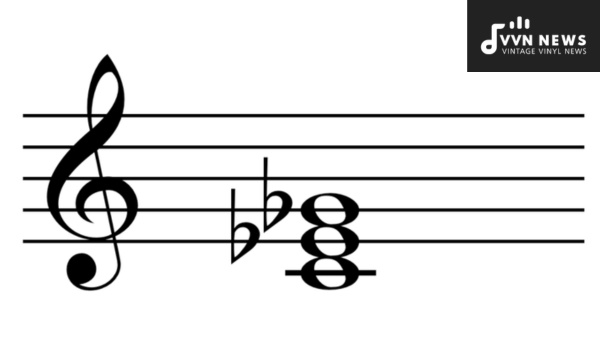
A C diminished triad is a chord consisting of three different notes – C, Eb, and Gb. It is called “diminished” because it has a unique tonal quality that sets it apart from major or minor chords.
This chord is characterized by its dark and tense sound, creating an intriguing atmosphere in the music.
The C diminished triad contains a flatted third (Eb) and a flatted fifth (Gb), giving it a distinct tonal color that evokes mystery and tension.
In terms of notation, the symbol for a C diminished triad is “C°” or “Cdim.” This chord can be written in Roman numerals as “I°” or “idiom,” indicating its diminished quality within the context of a musical progression.
Understanding the structure and functions of the C diminished triad will open up new possibilities for your musical creations.
The Difference Between C Diminished and Other Triads

When comparing the C diminished triad to other types of triads, such as major or minor chords, several key differences arise. Let’s dive into these distinctions:
- Tonality: The C diminished triad has a distinct tonal quality that sets it apart from major or minor chords. It carries a darker and more tense sound due to its flatted third (Eb) and flatted fifth (Gb). In contrast, major chords have a more uplifting and bright sound, while minor chords convey a sense of sadness or melancholy.
- Structure: The structure of the C diminished triad differs from major and minor triads. While major chords consist of a root note, a major third, and a perfect fifth, and minor chords utilize a flat third, the diminished triad features both a flat third and flat fifth. Therefore, the structure of the C diminished triad can be represented as follows: C – Eb – Gb.
- Function: Each type of chord serves different musical purposes. Major chords are often associated with stability and resolution, lending a sense of conclusiveness in musical progressions. Minor chords add emotional depth by introducing tension but still possess certain qualities of stability. On the other hand, the diminished triad creates an intense tension that demands resolution due to its unstable nature.
These differences will allow you to incorporate the C diminished triad effectively in your compositions or improvisations.
Also Read: A Sharp Diminished Triad [Discover This Unique Chord]
How is the C Diminished Triad Constructed?
To understand how the C diminished triad is constructed, we need to examine its intervallic structure.
An interval is the distance between two notes, measured by the number of steps on a musical scale.
In the case of a C diminished triad, we start with the root note (C) and build additional notes using specific intervals.
- Start with the C as the root note.
- The second note in the triad is found by moving three-half steps above the root. This results in Eb (E flat), which becomes the flatted third.
- Next, we take the third note by moving an additional three-half steps above Eb. This brings us to Gb (G flat), which becomes the flatted fifth.
- The final result is a C diminished triad composed of C, Eb, and Gb.
We construct a C diminished triad by stacking two minor thirds on top of each other—starting with a root note, adding a flatted third, and then adding another flatted third to yield a flatted fifth.
Also Read: B Diminished Triad [Master This Unique Guitar Chord]
How to Play the C Diminished Triad on Piano?

Playing the C diminished triad on the piano is a relatively straightforward process once you understand its structure and finger placement.
Here’s a step-by-step guide to help you master this chord:
Understanding the Structure
The C diminished triad consists of three notes – C, Eb, and Gb. To form this chord, we take the root note (C) and stack a minor third (Eb) and a diminished fifth (Gb) above it.
Finger Placement
To play the C diminished triad on the piano, place your right hand in its default position. Position your thumb on C, your middle finger on Eb, and your pinky finger on Gb. Keep your hand relaxed and maintain proper posture while playing.
Practice Technique
When playing the C diminished triad, it’s crucial to maintain evenness of tone and accuracy in fingering.
Start by practicing each note individually until you can play them cleanly without any hesitation or strain.
Invoking Musical Context
While practicing the C diminished triad, experiment with different rhythms and dynamics to bring out its distinct character.
Use it in different musical contexts such as chord progressions or improvisations to explore its potential for creating tension or adding color to your compositions.
By following these steps and practicing diligently, you’ll soon be able to confidently play the C-diminished triad on the piano.
Keep exploring and experimenting with this chord in different musical situations to unlock its full potential. Best of luck on your musical journey.
Also Read: G Diminished Triad [Guide To Unique Guitar Chords]
How to Play the C Diminished Triad on Guitar?
Playing the C diminished triad on the guitar might seem like a daunting task at first, but with a little practice and guidance, you’ll be able to tackle it with ease. Let’s break it down step by step:
Understanding the Fingering
Before we begin, let’s familiarize ourselves with some basic guitar terminology. Each finger is assigned a number: the index finger is 1, the middle finger is 2, the ring finger is 3, and the pinky finger is 4.
Positioning your Fingers
To play the C diminished triad on the guitar, position your fingers as follows:
- Place your index finger (1) on the third fret of string five (A).
- Next, place your middle finger (2) on the fourth fret of string four (D).
- Finally, place your ring finger (3) on the fourth fret of string three (G).
Strumming or Picking
Once your fingers are in position and comfortable, you can either strum all six strings or pick individual strings starting from string five (A) to string one (high E).
Memorizing and Practicing
To truly master playing the C diminished triad on guitar, it’s important to memorize this fingering pattern. Practice transitioning to and from other chords using this shape to improve your fluency.
By following these steps and practicing regularly, you’ll be able to confidently play the C diminished triad on guitar.
Unlocking this chord opens up a world of musical possibilities as you explore different progressions and experiment with creating unique sounds.
Different Inversions in C Diminished Triad

Inversions play a crucial role in shaping the sound and voicing of chords, including the C diminished triad.
By rearranging the order of its notes, we can create different inversions that provide unique tonal qualities and make our music more interesting.
Let’s explore the three possible inversions of the C diminished triad.
First Inversion: Eb-Gb-C
The first inversion of the C diminished triad swaps the root note (C) with the next highest note (Eb), resulting in an Eb-Gb-C chord.
This inversion offers a fresh perspective by placing a different note at the bass, giving it a distinct harmonic flavor.
Second Inversion: Gb-C-Eb
In the second inversion, we move the second note (Eb) to an upper position so that Gb becomes our bass note. The resulting chord is Gb-C-Eb. This inversion brings a new sonic texture to our composition and can serve as a transition or resolution point for increased tension or suspense.
Also Read: G Sharp Diminished Triad [Explore Unique Guitar Chords]
Third Inversion: C-Eb-Gb
The third inversion flips both the notes, making C-Eb-Gb our chord structure. Here, Gb takes precedence as the highest-pitched note, introducing another layer of variation to our musical arrangement.
By incorporating these inversions into your compositions or improvisations, you can add depth and complexity to your music while maintaining coherence within the context of using a C-diminished triad.
Common Progressions Involving the C Diminished Triad
When it comes to utilizing the C diminished triad in musical progressions, there are a variety of options available. Let’s explore some of the common progressions that incorporate this mysterious chord:
- Diminished Leading Tone Progression: One popular progression involves using the C diminished triad as a leading tone to resolve to a major or dominant chord. For example, you can precede a D minor chord with a C diminished triad, creating tension and resolution in your composition.
- Diminished Chord Substitution: In some cases, you can substitute a major or dominant chord with the C diminished triad to add color and intrigue to your progressions. For instance, instead of playing an F major chord, try using a C diminished triad in its place.
- Diminished Chord Cycle: Another approach is to create a cycle of diminished chords by transposing the C diminished triad up by minor thirds. This creates a haunting and cyclical progression that can add depth and complexity to your music. You can experiment with this concept by playing the C diminished triad, then moving up by minor thirds (Eb diminished triad, Gb diminished triad, A diminished triad), and so on.
- Modal Interchange: The C diminished triad can also be used as part of modal interchange in harmonic progressions. By borrowing chords from parallel modes or related keys, you can introduce unexpected harmonic flavors into your compositions.
Remember to experiment with these progressions and listen attentively to how they affect the mood and atmosphere of your music.
The key is to explore different combinations and find what resonates with you creatively.
Also Read: A Flat Minor Triad [Guide to Unusual Guitar Chords]
FAQs About C Diminished Triad
Can you explain the difference between a diminished triad and other triads?
Unlike major or minor triads, a diminished triad is characterized by a flatted third and a flatted fifth. This gives it a unique tonal quality that creates tension and adds drama to musical compositions.
How is the C diminished triad constructed?
The C diminished triad consists of three notes: C, Eb, and Gb. These notes are derived from the C major scale by lowering the third and fifth degrees of the scale.
How do I play the C diminished triad on the piano?
To play a C diminished triad on the piano, simultaneously press down the keys for C, Eb, and Gb. This will create that distinct dark and tense sound characteristic of this chord.
Can I play the C diminished triad on a guitar?
Absolutely! On a guitar, you can play a C diminished triad by placing your index finger on the 8th fret of the sixth string (C), your middle finger on the 9th fret of the fourth string (Gb), and your ring finger on the 9th fret of the third string (Eb).
What are some common progressions involving the C diminished triad?
The C diminished triad often functions as a passing chord in various progressions. It commonly resolves to a major or minor chord, adding tension and creating an interesting harmonic movement. Experiment with incorporating it into progressions like I-IV-V or ii-V-I to add complexity to your compositions.
Conclusion
Mastering the C diminished triad opens up a world of musical possibilities. By understanding its unique structure and tonal qualities, you can add depth and tension to your compositions or improvisations.
Remember to experiment with different inversions and progressions involving the C diminished triad to fully explore its potential. Whether you’re a pianist or guitarist, incorporating this intriguing chord into your music will undoubtedly captivate audiences and elevate your musical prowess.