
With music, we find joy, solace, and an expressive outlet for our emotions. It’s an integral part of our lives that binds us together in a way words often cannot.
One elementary component of music is the scale – a progression of notes in an ascending or Descending order.
Among the plethora of scales crowding the musical spectrum, one that uniquely interests me is the C Minor Blues Scale.
It’s fascinating how five simple notes can transform into something magical when put into practice—the C Minor Blues Scale.
It resonates with a rich depth and soulful quality that sets it apart from its counterparts.
If you’re belting out a sorrowful ballad on your guitar or creating an enchanting piano piece, this scale will add that extra touch of profundity to your melody.
Let’s embark on this thrilling journey into the intriguing world of the C Minor Blues Scale together!
Table of Contents
What are C Minor Blues Scale?
The C Minor Blues Scale is a specific type of music scale that originates from blues music.
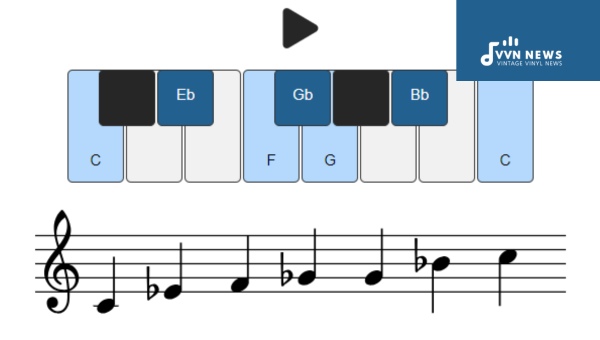
The scale is constructed from six specific notes in the following sequence: C – Eb – F – Gb – G – Bb – C.
It plays a crucial role in many forms of music, including blues and jazz, and can evoke an intense, moody feeling that is associated with the genre.
Creating melodies using this particular scale can bring about the ‘blue notes’ or ‘worried’ sound related to its namesake style.
The key of C Minor is often utilized because it’s an easy key for many instruments to play, particularly guitar and piano.
What are the Different Positions of the C minor Blues Scale?

When it comes to playing the C minor Blues Scale on various instruments, different positions and patterns can be used.
These positions are essentially different ways of playing the same notes but in different octaves or across other strings of an instrument.
These positions can help you navigate your instrument’s fretboard more easily and provide you with options for playing the scale in other areas.
1. First Position:
The first position of the C minor Blues Scale is often referred to as the “root position” because it starts on the root note, which is C in this case.
This position is commonly played on guitar and involves using open strings and fretted notes on the lower strings.
Here is a common fingering pattern for the first position of the C minor Blues Scale on guitar (starting from C):
- E|—————–3—6—
- B|————-3—6——-
- G|———3—5———–
- D|—–3—5—————
- A|-3—5——————-
- E|————————–
In this position, you start by placing your index finger on the 3rd fret of the A string (C), and then proceed to play each subsequent note with your fingers following the tablature above.
2. Second Position:
The second position of the C minor Blues Scale involves shifting up a few frets from the first position.
This allows you to play higher-pitched notes while retaining a similar fingering pattern. It adds variety and range to your playing.
Here is a common fingering pattern for the second position of the C minor Blues Scale on guitar:
- E|———————-8–12–
- B|——————8–11——
- G|————–8–10———-
- D|———-8–10————–
- A|——8–10——————
- E|–8–12———————-
In this position, you start by placing your index finger on the 8th fret of the low E string (C) and then follow the finger placements as indicated in the tablature above.
Also Read: D Flat Major Scale [The Tools Of Music Theory]
3. Third Position:
The third position of the C minor Blues Scale is another variation that allows you to play even higher notes on the guitar.
It involves a shift further up the fretboard, resulting in a different sound and range.
Here is a common fingering pattern for the third position of the C minor Blues Scale on guitar:
- E|———————-15–18–
- B|——————15–18——
- G|————–14–17———-
- D|———-15–17————–
- A|——15–17——————
- E|–15–18———————-
In this position, you start by placing your index finger on the 15th fret of the low E string (C) and then follow the finger placements as indicated in the tablature above.
4. Fourth Position:
The fourth position involves moving back down towards lower frets but on different strings.
This provides an alternate pattern and allows for more versatility when playing melodies using the C minor Blues Scale.
Here is a common fingering pattern for the fourth position of the C minor Blues Scale on guitar:
- E|————————13—17—
- B|——————–13—16——-
- G|————–12—15————-
- D|———14—15—————–
- A|-13—16————————-
- E|———————————-
In this position, you start by placing your index finger on the 13th fret of the A string (C) and then follow through with your fingers following the tablature above.
5. Fifth Position:
The fifth position of the C minor Blues Scale provides another option for playing the scale on different areas of the guitar fretboard.
This position adds variety and allows for different phrasing and melodic possibilities.
Here is a common fingering pattern for the fifth position of the C minor Blues Scale on guitar:
- E|—————–8—11—
- B|————-8—11——-
- G|———8—10———–
- D|—–8—10—————
- A|-8—11——————-
- E|————————–
In this position, you start by placing your index finger on the 8th fret of the low E string (C) and then proceed to play each subsequent note with your fingers following the tablature above.
So there you have it – five different positions or patterns for playing the C minor Blues Scale on guitar.
Each position offers a unique sound and allows for exploration and creativity within the scale.
Practice these positions individually, and then try connecting them to create seamless flowing melodies across the fretboard.
Also Read: E Flat Major Scale [Master This Essential Musical Tool]
How to Play the C Minor Blues Scale on Guitar
Playing the C Minor Blues Scale on the guitar is a fantastic way to add some bluesy flair to your guitar playing.
The scale is relatively easy to learn and can be a great starting point for exploring the world of blues and improvisation.
Here’s a step-by-step guide to help you get started:
the Notes
Before diving into playing the scale, it’s essential to notes make up the C Minor Blues Scale.
The scale consists of the following notes: C – Eb – F – Gb – G – Bb – C.
Familiarize Yourself with Finger Positions
Positioning your fingers correctly on the guitar fretboard is crucial for playing any scale smoothly.
Here’s a breakdown of how to position your fingers for each note on the scale:
- Index finger (1st fret) on the 3rd string for C
- Pinky finger (4th fret) on the 3rd string for Eb
- Index finger (1st fret) on both 2nd and 4th strings for F
- Ring finger (3rd fret) on both 5th and 6th strings for Gb
- Middle finger (2nd fret) on both 5th and 6th strings for G
- Index finger (1st fret) on both 1st and 4th strings for Bb
Practice ascending and descending
Start by playing the scale ascending, going from the lowest note (C) to the highest note (C).
Once you are comfortable with that, practice descending from high to low.
Repeat this exercise until you can smoothly play through all seven notes.
Also Read: A Flat Major Blues Scale [Open New Doors In Your Music]
Experiment with Different Rhythms
To truly master playing the C Minor Blues Scale, it’s essential to experiment with different rhythms.
Try playing the scale using various patterns, such as triplets, swing rhythms, or syncopation. This will add depth and complexity to your playing.
Incorporate Bends and Vibratos
One of the defining characteristics of blues guitar playing is the use of bends and vibrato techniques.
Experiment with bending specific notes of the C Minor Blues Scale to add a touch of emotion and flair.
Practice adding subtle vibrato to sustain notes and create a more expressive sound.
By following these steps and practicing regularly, you’ll gradually become more comfortable with playing the C Minor Blues Scale on guitar.
The Intricacies of the C Minor Blues Scale

The C Minor Blues Scale is a remarkable musical scale that possesses a unique set of intricacies.
These intricacies are key to fully harnessing the expressive power of this scale. Let’s explore each aspect in detail.
The Structure of the C Minor Blues Scale
The scale consists of six distinctive notes: C, Eb, F, Gb, G, and Bb. These notes combine to create a rich and haunting sound.
The presence of the ‘blue’ note (the flattened fifth or Gb in this case) is what gives the scale its signature melancholic vibe.
Also Read: G Sharp Major Blues Scale [Boost Your Sonic Expression]
Musical Characteristics
The C Minor Blues Scale has several noteworthy characteristics that make it truly exceptional:
- Tonal Center: The scale revolves around the tonal center of C Minor, providing a sense of stability and grounding for improvisation or composition.
- Bluesy Feeling: The inclusion of ‘blue notes’ (flatted third and fifth) gives the scale its distinct bluesy feel, allowing for expressive playing and emotional depth.
- Bends and Slides: Incorporating bends and slides in your playing can further enhance the bluesy quality of this scale, adding subtle nuances and variations to your melodies.
- Versatility: While primarily associated with blues music, the C Minor Blues Scale finds applications in various genres such as rock, pop, funk, and jazz.
Practical Applications
Now that we have the structure and characteristics, let’s explore how to put this knowledge into practice:
- Improvisation: The C Minor Blues Scale serves as an excellent foundation for improvisation over songs in the key of C Minor or any blues-based compositions. It allows you to create soulful solos by exploring different combinations and patterns within the scale.
- Composition: If you are a songwriter or composer, incorporating elements from the C Minor Blues Scale can add depth and emotion to your compositions. Experiment with using fragments of the scale as motifs, building tension and releasing it at strategic moments.
- Transposing: The beauty of scales is their ability to be transposed to different keys. Understanding the structure and intervals of the C Minor Blues Scale allows you to easily transpose it to any desired key, expanding your musical palette.
Practicing the C Minor Blues Scale
To fully master the intricacies of this scale, practice is crucial. Here are some tips for effective practice:
- Repetition: Start by playing the scale up and down in various positions on your instrument. This helps train your muscle memory and familiarizes you with the specific intervals.
- Play along with backing tracks: Utilize backing tracks or play-along recordings in C Minor to improvise using the scale. This will develop your ear and allow you to explore different melodic ideas within a musical context.
- Slow practice: Focus on precision and clarity by practicing slowly. Gradually increase your speed as you become more comfortable with the scale.
Expanding your musical vocabulary with scales like the C Minor Blues Scale opens up a world of creative possibilities.
Embrace its unique characteristics, experiment, and let your emotions guide your musical expression.
Also Read: G Major Blues Scale [Expand Your Harmonic Possibilities]
Popular Songs Using the C Minor Blues Scale
The C Minor Blues Scale has been embraced by countless musicians and has found its way into numerous popular songs across various genres.
Let’s explore some iconic songs that utilize the C Minor Blues Scale and how they incorporate its unique characteristics:
“Hoochie Coochie Man” by Muddy Waters
This blues classic, originally recorded by Muddy Waters in 1954, showcases the raw power of the C Minor Blues Scale.
The opening riff is based on the scale’s distinctive pattern, creating a captivating and soulful sound.
As you listen to this song, pay attention to how the musicians use the scale to create tension and release, adding depth and emotion to the performance.
“Sweet Home Chicago” by Robert Johnson
Another blues standard that features the C Minor Blues Scale prominently is “Sweet Home Chicago” by Robert Johnson.
This timeless track showcases the versatility of the scale as it seamlessly intertwines with Johnson’s expressive guitar playing and vocals.
The use of this scale helps create a melancholic yet energetic atmosphere that perfectly captures the essence of blues music.
“Stairway to Heaven” by Led Zeppelin
Moving into a different genre, Led Zeppelin’s iconic “Stairway to Heaven” incorporates elements of blues rock and features sections where the C Minor Blues Scale shines through.
Pay close attention to Jimmy Page’s guitar solo during the song’s climax – his improvisations, built around this scale, are a masterclass in creating emotion through music.
“All Along The Watchtower” by Jimi Hendrix
Jimi Hendrix revolutionized guitar playing with his innovative use of scales and techniques, and “All Along The Watchtower” is no exception.
In this song, Hendrix blends elements of blues with his signature psychedelic rock sound, utilizing the C Minor Blues Scale to incredible effect in his solos.
“The Thrill Is Gone” by B.B. King
“The Thrill Is Gone,” performed by B.B. King, is an iconic blues ballad that showcases both King’s soulful voice and impeccable guitar skills.
The C Minor Blues Scale plays a vital role in capturing the heart-wrenching emotions of lost love, making this song a must-listen for anyone interested in exploring this scale further.
These are just a few examples, but the C Minor Blues Scale has been used far and wide in music history.
As you listen to these songs, pay attention to how the artists incorporate the scale into their melodies, solos, and overall musical arrangements.
Experiment with playing these songs on your chosen instrument, and you will begin to develop a knowledge of how this scale creates its unique sound.
Also Read: F Sharp Major Blues Scale [Discover New Routes In Music]
FAQ About C Minor Blues Scale
What are the different positions or shapes of the C Minor Blues Scale on the guitar?
The C Minor Blues Scale can be played in five different positions on the guitar, allowing for versatility and convenience in playing various melodies and solos.
How do I play the C Minor Blues Scale on the piano?
To play the C Minor Blues Scale on the piano, you would play the notes C, Eb, F, Gb, G, and Bb individually or in combination to create melodic patterns and improvisations.
Can I use the C Minor Blues Scale in genres other than blues music?
Absolutely! While it is most commonly associated with blues music, you can also incorporate the C Minor Blues Scale into other genres like rock, jazz, and funk to add a touch of soulful expression to your playing.
Are there any tips for effectively using the C Minor Blues scale in my improvisations?
One tip is to practice playing phrases or licks using this scale slowly at first and gradually increase your speed. Additionally, learning from blues recordings by iconic artists can help you gain insight into their unique approaches to soloing using this scale.
Can I transpose the C Minor Blues Scale to other keys?
Yes! Once you have a good grasp of the C Minor Blues Scale, you can transpose it to any key by shifting all the notes up or down according to your desired tonality. This opens up endless possibilities for creativity and exploration in your musical compositions and improvisations.
Conclusion
The C Minor Blues Scale is a powerful and versatile musical tool that can add depth and emotion to your compositions.
Whether you’re a beginner or an experienced musician, exploring the unique characteristics of the C Minor Blues Scale can open up a world of possibilities in your playing.
Remember to practice regularly and experiment with different variations and improvisations.
By incorporating this scale into your musical repertoire, you can create captivating melodies that capture the essence of blues music.
So go ahead, embrace the magic of the C Minor Blues Scale, and let your musical journey begin!