
Hey there! Have you ever wondered about the fascinating world of music theory? If you’re a musician or someone who wants to deepen their understanding of music, then this blog post is for you.
Today, we will be delving into the intriguing subject of C Sharp diminished triads – a fundamental aspect of chord construction and harmony. So, get ready to explore all about C Sharp diminished triads and enhance your musical knowledge!
To begin our musical journey, let’s first understand what a diminished triad is. In simple terms, a triad refers to a three-note chord that consists of two stacked thirds.
A diminished triad specifically consists of a root note, a minor third interval, and another minor third interval stacked on top.
It has a distinct sound that creates tension and adds color to music compositions. Now that we have an overall idea, let’s dive deeper into the world of C Sharp’s diminished triads.
Table of Contents
What is C Sharp Diminished Triad?
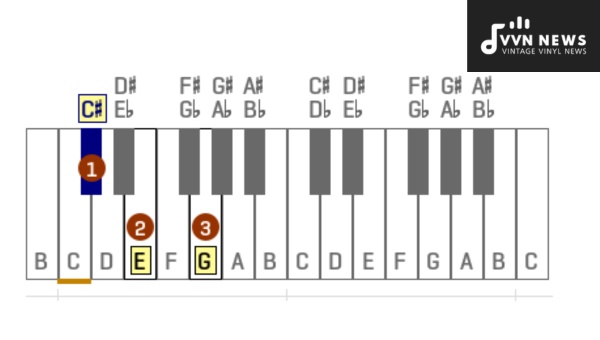
A C Sharp diminished triad is a specific chord made up of three notes: C#, E, and G. It is constructed by taking the root note of C#, adding a minor third interval (three half steps), and then adding another minor third interval above that. The result is a chord with a unique sound that adds tension and color to musical compositions.
The C# diminished triad is often represented by the symbol “C#dim” or “C#°”. It can be played on various instruments, such as the piano, guitar, or any other instrument capable of playing chords.
Understanding and recognizing this triad is essential for musicians to create complex harmonies and progressions in their music compositions.
Triad Basics: Major, Minor, and Diminished

Triads are the foundation of harmonic music, and understanding their basic structures is crucial for any musician. There are three main types of triads: major, minor, and diminished.
Major Triads
Major triads have a bright and uplifting sound associated with happy or positive emotions. They consist of a root note (e.g., C), a major third interval (e.g., E), and a perfect fifth interval (e.g., G).
The interval between the root note and the third is four half steps, while the interval between the root note and the fifth is seven half steps.
Minor Triads
In contrast to major triads, minor triads have a darker or sadder sound. They consist of a root note (e.g., A), a minor third interval (e.g., C), and a perfect fifth interval (e.g., E).
The intervals in a minor triad are reversed compared to major triads: three half steps between the root note and the third, followed by seven half steps between the root note and the fifth.
Diminished Triads
Diminished triads have an intriguing dissonant quality that creates tension in the music. These triads consist of a root note (e.g., Bb), a minor third interval (e.g., Db/D#), and another minor third interval stacked on top (e.g., Fb/E).
This results in two stacked minor thirds. It’s important to note that diminished chords occupy an essential role in music compositions’ harmonic progressions as they add complexity and variety.
These basic triad structures are fundamental for musicians looking to enhance their chordal knowledge, create interesting harmonies, or analyze pieces of music.
With this knowledge under your belt, you’ll be well-equipped to delve into more complex chord constructions down the road.
Also Read: A Sharp Diminished Triad [Discover This Unique Chord]
Structure of the C Sharp Diminished Triad
The C Sharp diminished triad consists of three notes: C#, E, and G. Let’s break down the structure of the triad:
- Root: The root note is C#, which serves as the foundation of the chord. It establishes the tonality and gives the chord its name.
- Minor Third Interval: Moving up from the root note, we find E, which is separated by a minor third interval (three half steps). This note adds a unique flavor to the chord.
- Another Minor Third Interval: Continuing up from E, we reach G, which is another minor third interval (three half steps) above E. This completes the structure of the triad.
In terms of music theory notation, you will often see this chord written as “C#dim” or “C#°”. It’s important to note that each note in the triad serves a specific purpose in creating harmonically rich compositions.
Understanding this structure will enable you to incorporate C Sharp diminished triads effectively into your musical arrangements and explore their potential for adding tension and color to your compositions.
Fingering Patterns for Different Instruments
When it comes to playing the C# diminished triad on various instruments, each instrument has its own unique fingering patterns. Let’s explore some of the common instruments and their respective fingerings for the C# diminished triad:
Piano:
As a pianist, you have the advantage of playing all three notes of the C# diminished triad at once. Here’s how to do it:
- Place your right thumb on C#.
- Put your middle finger on E.
- Position your fifth finger on G.
And just like that, you are playing a C# diminished triad on the piano!
Guitar:
On a guitar, you have the flexibility to play the C# diminished triad in different positions and inversions across the fretboard. Here is a common fingering pattern for playing a C# diminished triad in root position:
- Place your first finger (index) on the 9th fret of the 6th string (C#).
- Use your third finger (ring) to press down on the 11th fret of the 5th string (E).
- Position your fourth finger (pinky) on the 12th fret of the 4th string (G).
This fingering allows for easy transition between chords and adds an interesting sound to your guitar playing.
Wind Instruments:
For wind instruments such as flute, saxophone, or trumpet, playing chords can be challenging due to their monophonic nature. However, you can still create an arpeggio effect by playing each note of the C# diminished triad consecutively.
- On a flute, start with C#, then play E and G rapidly in succession.
- On a saxophone or trumpet, use a similar technique by fingering each note one at a time in quick succession.
By using these techniques, you can create the illusion of playing the C# diminished triad on wind instruments.
Bass:
On a bass guitar, the C# diminished triad can be played using a pattern similar to the guitar. Here’s how:
- Place your first finger on the 4th fret of the 3rd string (C#).
- Use your third finger to press down on the 6th fret of the 2nd string (E).
- Position your fourth finger on the 7th fret of the 1st string (G).
By following this pattern, you can easily play the C# diminished triad on a bass guitar and add depth to your basslines.
These fingering patterns are just starting points. Feel free to explore different positions and inversions across your instrument’s range to find what works best for you.
Also Read: D Sharp Minor Pentatonic Scale [Inject Drama Into Your Melodies]
Common Uses in Composition and Songwriting

When it comes to composition and songwriting, the C Sharp diminished triad can be a powerful tool to add tension, drama, and complexity to your music. Here are some common ways it is utilized:
- Chromatic Movement: The C# diminished triad is often used in chromatic movements where each note moves by a half step. This creates a sense of instability and anticipation, leading to resolution in the following chords.
- Modulations: The diminished triad is an excellent choice for modulations, which involve changing the key or tonal center of a piece. By utilizing the C# diminished triad as a pivot chord, you can smoothly transition between keys.
- Dominant Function: In functional harmony, the C# diminished triad can function as a dominant chord leading to another chord or key. By resolving the tension it creates, you can create strong melodic and harmonic movements.
- Passing Chords: The C# diminished triad can act as a passing chord between two other chords. Its distinctive sound can add interest and create smooth transitions.
- Tritone Substitution: The C# diminished triad is often substituted for another dominant seventh chord in jazz compositions. This substitution utilizes the tritone interval found within the C# diminished chord to create tension and resolution.
- Modal Interchange: Modal interchange involves borrowing chords from related keys or modes. You can use the C# diminished triad as a borrowed chord from parallel or relative scales to add complexity and color to your compositions.
- Film Scores: Diminished chords are commonly used in film scoring to create suspenseful or mysterious atmospheres. The C Sharp diminished triad can impart a sense of unease or tension that enhances dramatic scenes.
- Jazz Harmony: Jazz musicians frequently incorporate diminished chords into their improvisations and chord progressions. By incorporating the C# diminished triad, you can infuse your jazz compositions with interesting and intricate harmonic language.
Understanding the commonly used applications of the C Sharp diminished triad in composition and songwriting opens up a world of possibilities for creating captivating melodies and harmonies.
Experiment with these techniques to add depth, tension, and intrigue to your musical compositions.
Also Read: F Sharp Major Scale [Add Unique Tones To Your Musical Palette]
Resolving the C Sharp Diminished Triad in Harmonic Progressions
Resolving a chord means moving from a state of tension to a state of stability. In the case of the C Sharp diminished triad, it is commonly used as a passing chord or as a chord that leads to another chord in harmonic progressions.
Let’s explore some ways to resolve the C# diminished triad and create harmonic movement in your music.
- Resolution to a Major Chord: One common resolution for the C# diminished triad is to resolve it to a major chord with the same root note or its relative major. For example, you can resolve C#dim to an E major or G# major chord. This creates a smooth transition from tension to stability.
- Resolution within Diminished Harmony: Another option is resolving the C#dim to another diminished chord. For instance, you can resolve it to an F# diminished chord by moving the G note down half a step. This adds complexity and tension to your harmonic progressions.
- Using Inversions for Smooth Transitions: When resolving the C Sharp diminished triad, consider using inversions (rearranging the order of notes) for smoother transitions between chords. Experiment with different inversions and listen for unique melodic movements.
- Creating Chromatic Movement: The C Sharp diminished triad is an excellent tool for creating chromatic movement in your music. You can use it as a passing chord between two chords that are a half step apart, adding depth and richness to your compositions.
- Experiment with Voicings: Explore different voicings of the C# diminished triad on your instrument of choice (e.g., piano, guitar). Each instrument has unique opportunities for voicing chords which can contribute to interesting resolutions and musical textures.
These are just some ideas on resolving the C Sharp diminished triad in harmonic progressions. As a musician, feel free to experiment, trust your ears, and let your creativity guide you in creating exciting chord progressions that include the C# diminished triad.
Songs Featuring the C Sharp Diminished Triad

The C# diminished triad is a versatile chord that has been used in various songs across different genres.
Here are a few notable examples where the C# diminished triad plays a significant role in creating tension and adding an interesting twist to the music:
- “Michelle” by The Beatles – In this beloved Beatles song, the C# diminished triad is featured prominently in the iconic opening chords of the song. It adds a touch of sophistication and intrigue to the melody.
- “Nobody’s Fault But Mine” by Led Zeppelin – This blues-inspired rock anthem showcases the C# diminished triad during the guitar solos, adding an edgy and intense flavor to the music.
- “I Put a Spell On You” by Nina Simone – In this soulful jazz rendition, Nina Simone incorporates the C# diminished triad in her piano accompaniment, creating a haunting and mysterious atmosphere.
- “No Surprises” by Radiohead – This introspective alternative rock ballad by Radiohead uses the C# diminished triad to bring out a sense of melancholy in its chord progressions.
- “Rhapsody in Blue” by George Gershwin – This iconic orchestral composition features sections where the C# diminished triad makes appearances, adding dramatic tension to Gershwin’s fusion of classical and jazz elements.
- “Smoke Gets in Your Eyes” by The Platters – This timeless classic from The Platters highlights the beauty of lush vocal harmonies that utilize chords like the C# diminished triad to create emotional depth and richness.
- “The Entertainer” by Scott Joplin – As one of Joplin’s most famous ragtime compositions, it showcases syncopated rhythms and intricate melodies that incorporate chords like the C# diminished triad.
By exploring songs that use the C# diminished triad, you can gain insights into how different artists and composers incorporate this chord to evoke specific emotions and moods.
Listening to these songs can also inspire you when creating your own music and experimenting with the C# diminished triad in your compositions.
Also Read: F Sharp Major Chords [Boost Your Guitar Skills Today]
FAQs About C Sharp Diminished Triad
Can you explain the sound of a C Sharp diminished triad?
The C# diminished triad has a distinct sound that creates tension and adds color to music compositions.
What are the intervals that make up a C Sharp diminished triad?
A C Sharp diminished triad is built by stacking two minor thirds on top of each other, resulting in the notes C#, E, and G.
How can I play a C Sharp diminished triad on the piano?
To play a C# diminished triad on the piano, place your thumb on C#, your middle finger on E, and your pinky finger on G.
What are some common uses of the C Sharp diminished triad in songwriting?
The C# diminished triad is often used to add tension and create harmonic movement in certain sections of compositions or to transition between different chords.
Can you suggest any songs that feature the use of a C Sharp diminished triad?
Some examples of songs that incorporate the C# diminished triad include “Purple Haze” by Jimi Hendrix and “Eleanor Rigby” by The Beatles.
Conclusion
The C Sharp diminished triad is a powerful addition to any musician’s repertoire. Understanding its structure and incorporating it into your compositions can greatly enhance the depth and complexity of your music.
By utilizing this chord, you can create tension, add color, and craft unique harmonic progressions. Whether you’re a pianist, guitarist, or any other musician, experimenting with the C Sharp diminished triad can unlock new possibilities in your musical journey. So why not give it a try and see how this intriguing triad can elevate your musical creations?