
If you’ve ever been stumped when trying to play C sharp minor chords on your guitar or piano, this post is for you.
We’ll break down everything you need to know about this essential chord and offer some tips for making it sound just right.
Every musician, irrespective of their level of expertise, should be familiar with the C sharp minor chord as it adds depth and diversity to compositions in an extraordinary way.
In the heartland of music composition lies the mighty chord, the building block that connects melody and harmony.
Let’s focus today on one particularly poignant note configuration – the C sharp minor chord.
It has a sad, delicate sound that can add layers of complexity to your compositions.
Prepare yourself for a deep dive into its theory and practice in this enlightening read.
Table of Contents
What are C Sharp minor chords?
C Sharp minor chords are a collection of three individual notes that create a specific sound or mood when played together.
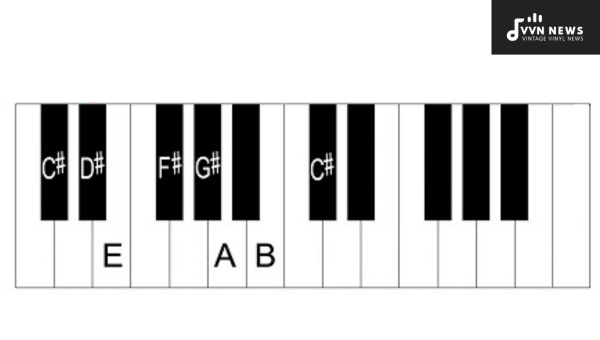
In the key of C Sharp minor, the chords are built off the C#, E, and G# notes. These three notes form what is known as the C Sharp minor triad,
which is the basic building block for chord progressions in this key. Understanding how to play these chords is essential for any musician or songwriter looking to create music in the key of C Sharp minor.
Let’s explore how to form and play these chords on various instruments like the piano or guitar, as well as their use in creating emotional and captivating melodies.
Key Characteristics of C Sharp Minor Chords

C Sharp minor chords possess unique characteristics that contribute to their distinct sound and emotional impact. Here are some key features of C Sharp minor chords:
- Sad and Melancholic: C Sharp minor chords produce a melancholic and introspective quality in music. This somber tone creates a sense of sadness, yearning, and introspection, making it ideal for expressing deep emotions in compositions.
- Complex Intervals: The chord intervals within C Sharp minor chords are made up of a root note (C#), a minor third (E), and a perfect fifth (G#). These intervals contribute to the dark and evocative nature of the chords.
- Tension and Resolution: C Sharp minor chords can create tension within a musical piece, particularly when used before resolving to other harmonies, such as the tonic chord or dominant chord in the key. This tension adds depth and interest to musical progressions.
- Versatile Use: The versatility of C Sharp minor chords allows them to be used in various genres, including classical, jazz, blues, rock, and pop. Their emotive quality makes them suitable for expressing a wide range of emotions in different musical contexts.
- Modal Harmonies: C Sharp minor is associated with several modes such as Aeolian (natural minor), Dorian (minor with raised sixth), Phrygian (minor with lowered second), and others. Exploring these modal harmonies can offer additional color and variation within the key.
These key characteristics of C Sharp minor chords, musicians can effectively harness their emotional power to create captivating compositions that resonate with listeners on a profound level.
Also Read: B Minor Chords [Maximize Your Musical Skills Today]
Use of C# minor chords in music?
C# minor chords are widely used in various genres of music due to their emotional and expressive nature. They can evoke feelings of melancholy, intensity, and even introspection. Understanding their use and application can add depth and complexity to your compositions. Here are some key points to consider when exploring the use of C# minor chords in music:
- Pop and rock music: C# minor chords often find a home in pop and rock genres, adding a darker and moody feel to songs. Artists like Coldplay, Radiohead, and Adele have utilized C# minor chords to create impactful ballads with intense emotional performances.
- Alternative music: C# minor chords also make frequent appearances in alternative music. The alternative genre embraces experimentation and unique chord progressions, making C# minor a popular choice for musicians looking to convey a sense of tension or turbulence.
- Heavy metal and hard rock: In heavy metal and hard rock, the aggressive sound is often enhanced by the use of C# minor chords. These chords bring a powerful and dark tonality to songs, contributing to the overall intensity of the music.
- Film scores: Composers for film scores frequently incorporate C# minor chords into their compositions to evoke specific moods or atmospheres. From suspenseful moments to heart-wrenching scenes, these chords can reinforce the emotional impact of a film.
- Modal interchange: C# minor chords can also be used as borrowed chords from other related keys, resulting in modal interchange within a song or composition. This technique adds variety and interest by introducing new harmonic flavors.
- Chord progressions: Experimenting with different chord progressions that incorporate C# minor can yield captivating results. The relative key of E Major is commonly used alongside C# minor for its harmonic relationship.
The use of C# minor chords in different genres and contexts, you can enhance your musical compositions and connect with your audience on a deeper emotional level. Whether you’re writing a heartfelt ballad, a hard-hitting rock anthem, or scoring a film, the versatility of C# minor chords allows for endless creative possibilities.
Also Read: F Sharp Minor Chords [Music Theory Demystified]
How do you create seventh chords in C sharp minor?

Seventh chords add depth and complexity to a musical piece, and they are commonly used in a variety of genres. Creating seventh chords in C Sharp minor follows a specific formula that can be applied to any key. Let’s break down the steps:
- Start with the triad: The basic triad for C Sharp minor consists of C#, E, and G#. Take this triad as your foundation.
- Determine the seventh note: To create a seventh chord, you need to add the seventh note of the C Sharp minor scale. In this case, it is B.
- Build the seventh chord: Combine the original three notes with the newly added B. As a result, you have created a C Sharp minor seventh chord (C#, E, G#, B).
- Optional variations: There are different types of seventh chords that can be altered by changing the quality of one or more notes. For example, you can create a C Sharp minor major seventh chord by raising the B note to B#.
- Utilizing different inversions: Inversions are alternative voicings of chords where a different note is played as the lowest note instead of the root note. Experimenting with inversions can add an interesting flavor to your music.
By following these steps and understanding their application in other keys as well, you’ll master creating seventh chords in C Sharp minor and be able to incorporate them into your compositions effectively.
To further enhance your understanding and practice, I recommend referring to chord charts or consulting online resources that provide visual representations and audio samples for each chord variation mentioned above.
How does ear training help with C Sharp minor chords?
Ear training is an essential skill for any musician, and it plays a crucial role in mastering chords in C Sharp minor. Developing your ear allows you to recognize and identify different chord qualities, including minor chords, by their characteristic sound. Let’s explore how ear training can help you with C Sharp minor chords.
Understanding chord quality
When learning chords in C Sharp minor, it is important to be able to distinguish between major and minor chords.
Ear training helps you develop an instinctive understanding of the difference in sound between major and minor chords.
By training your ear to recognize the unique qualities of a C Sharp minor chord, you’ll be able to play it more accurately and confidently.
Recognizing chord progressions
Ear training also enables you to identify common chord progressions in the key of C Sharp minor.
As you develop your ear, you’ll start to pick up on the consistent patterns and movements found within this key. This knowledge is invaluable when it comes to creating or improvising melodies over these progressions.
Transcribing music
Transcribing music by ear is a valuable exercise for any musician. When transcribing songs or compositions in C Sharp minor, ear training allows you to accurately pinpoint the specific guitar or piano voicings used for each chord.
This level of detail helps you recreate the original piece with greater accuracy and authenticity.
Also Read: E Minor Chords [Complete Guide With Tips & Tricks]
Improvisation
Finally, ear training opens the door to improvisation and creativity within the key of C Sharp minor.
With a well-trained ear, you can spontaneously create melodies and harmonies that complement the chords being played. This ability adds depth and uniqueness to your musical performances.
Incorporating ear training into your practice routine will greatly enhance your mastery of C Sharp minor chords. By honing your ability to recognize chord qualities, identify common progressions, transcribe music by ear, and improvise with confidence, you will become a more accomplished and expressive musician.
Common Chord Progressions in C Sharp Minor
Understanding common chord progressions in C Sharp minor will greatly enhance your ability to create expressive and captivating music. Below are a few commonly used chord progressions in this key:
- C#m – A – E – B: This progression is often referred to as the “four-chord” progression and can be found in countless popular songs. It provides a sense of resolution and is commonly used in pop, rock, and folk music.
- C#m – F#m – G#m: This progression utilizes all three chords within the key of C Sharp minor. It creates a melancholic and introspective mood, often heard in ballads or slow-tempo songs.
- C#m – G#m – F#m – E: This progression has a unique sound due to the use of the minor iv (G#m) chord. It is commonly found in contemporary R&B and soul music.
- C#m – D#dim – F#: This progression makes use of a diminished chord (D#dim), which adds tension and depth to the song. It can be heard in jazz, blues, or experimental genres.
These common chord progressions in C Sharp minor will help you create music that resonates with your audience on an emotional level. These progressions provide a solid foundation for songwriting and open up endless possibilities for creating captivating melodies and harmonies.
Chord inversions of C Sharp minor
Chord inversions are different ways of playing a chord by changing the order of the notes.
In C Sharp minor, three primary chord inversions give your music a unique and dynamic sound.
- 1st inversion: The 1st inversion of the C Sharp minor chord is made by moving the root note (C#) up an octave. The new order of notes becomes E – G# – C#. This inversion creates a smooth and flowing sound, perfect for adding movement in your music.
- 2nd inversion: To form the 2nd inversion, take the 1st inversion and move the second note (G#) up an octave as well. The new order of notes is G# – C# – E. This inversion has a darker and more mysterious sound, adding depth to your compositions.
- Root position: The root position is created by playing the original chord in its standard form — C# – E – G#. This is the most common way to play C Sharp minor and provides a solid foundation for any musical piece.
By incorporating these chord inversions into your compositions, you can create more interesting and dynamic progressions that capture the listener’s attention and evoke various emotions.
Experiment with these inversions to add complexity and depth to your music in C Sharp minor.
Also Read: Guide Of Piano Chords [Unlock Your Musical Potential Today]
C Sharp Minor Piano Chords
Playing chords on the piano can be a rewarding and essential skill for any musician. Here, we will explore the C Sharp minor chords on the piano, offering you a comprehensive guide to playing these versatile and emotive chords.
To form the C Sharp minor triad on the piano, we start with the C# note as our root. Using the black key to the right of middle C, we play this note with our thumb.
Next, we skip two white keys and place our middle finger on E, which is our second note in the chord.
Then we skip another two white keys and play G# with our pinky finger. This completes the C Sharp minor triad.
Here is a breakdown of how to play each chord inversion:
- Root position chord: C# – E – G#
- Position your thumb on C#
- Place your middle finger on E
- Use your pinky finger for G#
- First inversion chord: E – G# – C#
- Start with your thumb on E
- Use your middle finger for G#
- Play C# with your pinky finger
- Second inversion chord: G# – C# – E
- Begin with your thumb on G#
- Use your middle finger for C#
- Lastly, play E with your pinky finger
Practicing and memorizing these chord shapes will allow you to effortlessly incorporate them into your piano playing in various musical contexts.
The best way to master chords is through consistent practice and repetition.
Read More: Mastering Chords In A Minor [Improve Your Composition Skills]
C Sharp Minor Guitar Chords

Playing chords on the guitar in the key of C Sharp minor is a skill that can open up a world of musical possibilities.
Here, I will break down the essential C Sharp minor chords for guitarists, allowing you to quickly grasp and apply these chord shapes in your playing.
Open Position Chords
The open position chords in C Sharp minor are based on the E shape and A shape barre chord forms.
For example, the E major shape moved up to the 4th fret gives us the C#m chord in open position. Similarly, using the A major shape with a barre at the 9th fret gives us another voicing for C#m.
Barre Chords
To create fuller-sounding C Sharp minor chords, you can use barre chord shapes. The most common barre chord shape for C Sharp minor is based on the E form barre chord at the 9th fret.
By barring across all six strings at the 9th fret and forming an E minor shape, you create a movable C#m chord.
Power Chords
Power chords are another option for playing C Sharp minor on guitar. These two-note chords consist of just the root note and its fifth interval.
To play a power chord in C Sharp minor, place your index finger on the 4th fret of the A string and your ring finger or pinky finger on the 6th fret of the D string.
Slash Chords
In addition to standard triads, you can also experiment with slash chords to add more variety and color to your playing.
A slash chord is when a different note other than the root is placed in the bass or lowest note position of a chord. For example, playing G#/C# creates a G# major over C# bass sound.
Read More: Chords In G Flat Major [Essential Guide For Musicians]
FAQ About C Sharp Minor
What are some common chord progressions in C Sharp Minor?
In C Sharp Minor, some common chord progressions include the i-iv-v, i-iv-VII, and i-VI-III-VII progressions. These progressions create a melancholic and reflective sound that is commonly found in various genres of music.
Can I use C Sharp Minor chords in pop or rock music?
Absolutely! C Sharp Minor chords can be used in various genres, including pop and rock music. Many popular songs incorporate the emotional and haunting sound of C Sharp Minor to add depth and intensity to their melodies.
How do I create seventh chords in C Sharp Minor?
To create seventh chords in C Sharp Minor, you will add the seventh note of the scale to the triad. For example, the C# minor seventh chord would consist of the notes C#, E, G#, and B.
What are chord inversions in C Sharp Minor?
Chord inversions refer to rearranging the order of notes within a chord. In C Sharp Minor, you can experiment with different inversions by changing the position of the root note (C#), third (E), and fifth (G#) within the triad.
Can I transpose C Sharp Minor chords to other keys?
Yes, you can transpose C Sharp Minor chords to any key by shifting their positions up or down the fretboard or keyboard. This allows you to incorporate the unique sound of C Sharp Minor into different musical contexts and explore new creative possibilities.
Conclusion
Mastering chords in C Sharp Minor is an essential skill for any musician or songwriter.
By understanding the fundamental chord shapes and progressions in this key, you will be able to create captivating and emotional melodies.
Whether you are playing the piano or guitar, practicing chord inversions and exploring common progressions will help you unlock the full potential of C Sharp Minor.
Remember to incorporate ear training techniques to develop a better sense of melody and harmony. So grab your instrument and start exploring the beautiful world of chords in C Sharp Minor!