
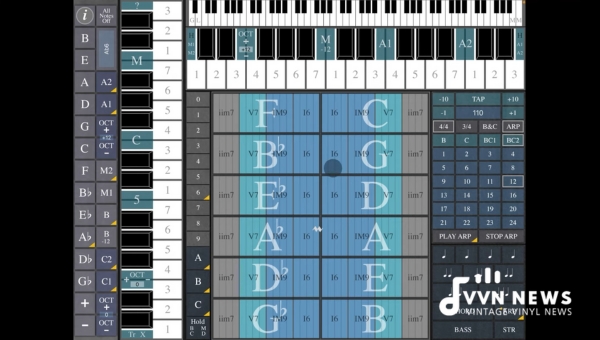
Navigating the intricate maze that surrounds music theory can feel complex. That’s especially true when identifying the chord progressions that best suit your composition.
This is where chord maps – how to choose chord progressions, come into play. It may sound intimidating, but trust me, there’s a method to the madness.
Chord maps are like a musical GPS, providing invaluable guidance as you chart your course through the harmonic terrain.
They comprise pre-charted pathways that connect different chords and display how they interact with each other in a clear diagram.
Using chord maps to choose chord progressions will simplify your songwriting process and enhance the flow and structure of your music.
We’ll delve deeper into how they work and how you can make them work for your compositions.
Table of Contents
What is Chord Progressions?
Chord Progressions are a series of musical chords played in a sequence. They serve as the harmonic backbone of a piece of music.
Chord progressions use different combinations and orders of chords to evoke particular feelings or moods and are crucial in creating tension, resolution, and advancement in music.
The most common chord progression in Western music is the “I-IV-V” progression, which represents a shift from the first (I) to the fourth (IV) to the fifth (V) note in a key’s scale.
Also Read: Musical Modes Explained [What Are They & How Do I Use Them?]
The Foundational Role of Chords in Music

Chords form the building blocks of music composition. Comprised of two or more notes played simultaneously, chords add depth and dimension to melodies.
They establish the harmonic framework that guides the song’s tonal structure.
- Defining Key and Mood: Chords are crucial in determining the key or scale in which a piece of music operates, eventually setting its mood and ambiance.
- Building Tension and Release: Chords help create tension and release throughout a composition by using dissonance (tension) and unity (freedom).
- Supporting Melodies: Each chord progression bridges the melody, providing support that accents the expressive quality of your musical story.
Understanding chords is not merely about memorizing shapes or positions on an instrument; it’s about understanding how these elements interact within a song to create emotional resonance with listeners.
All About Chord Maps
A chord map is a tool that visually represents chord relationships within a particular key.
It’s essentially a musical roadmap that aids musicians, especially composers, to navigate the inner workings of major or minor scales.
What is a Chord Map?
A chord map, also known as a chord wheel or circle of fifths, is a visual tool that allows musicians to identify potential chord progressions quickly.
Essentially, it’s a circular diagram showing the relationships between major and minor scales and their corresponding chords.
The essential elements of a chord map are:
- The outer circle represents the twelve unique keys in tonal music.
- The inner ring displays the corresponding minor key for each major key.
- Arrows or lines connecting chords that usually sound good together.
To use a chord map:
- Start from any point on the outer circle.
- Moving clockwise (to your right) gives you dominant chords (fifths).
- Moving counter-clockwise (to your left) gives you fourths/subdominants.
- To find related minor chords, look at the key directly across from a primary key.
For example, if you start at C Major and move one step clockwise, you’ll find G Major, which commonly follows C in chord progressions.
I’m sure this already got your interest piqued!
Benefits of Using Chord Maps in Music Composition
Chord maps offer numerous benefits, particularly for novice songwriters or those new to music theory.
Let’s try convincing reasons to start incorporating them into your compositions.
- Ease of Use: Chord maps simplify an otherwise complex process by visually displaying relationships between chords.
- Inspiration: By showing all possible options, they inspire creativity and experimentation with new progressions.
- Transposition: It’s easier than ever to transpose your songs into different keys—rotate the map!
- Music Theory Understanding: Lastly, but most importantly – they’re an excellent tool for better understanding chord structure and relationships within keys.
Chord maps can make the tricky business of songwriting more navigable by offering insights into how notes correlate and offer exciting musical possibilities.
Now that you have insight into how helpful these enchanting little diagrams are let’s move toward more practical applications!
Also Read: Common Mistakes With Mix Bus Compression & How To Avoid Them
Digging Deeper into Major and Minor Scale Progressions

As we delve further into the world of music, let’s talk about two fundamental scales – Major and Minor, and understand their contribution to chord progressions.
Concepts of Major Scale and its Impact on Composition
A “scale” is a set of musical notes ordered by pitch or frequency.
The Major scale is often called the “happy” sounding scale, known for producing chord progressions that resonate with uplifting, joyous, or triumphant emotions.
Major scales are built from a series of whole and half steps in the following pattern: full, complete, half, full, real, whole, half.
For instance, let’s look at the C Major Scale:
C - D - E - F - G - A - BThis foundation underpins countless popular songs across various genres. It gives a composition a certain airiness which is excellent for targeting positive emotions.
Essence of Minor Scale and its Use
On the contrary to major scales’ jubilant character, you’ve got your minor scales, which are typically thought of as the more “melancholic” or emotionally potent scales.
Minor scales follow this pattern: whole-half-whole-whole-half-whole-whole.
An example would be the A minor scale:
A - B - C - D - E- F- GMinor scale chord progressions infuse songs with more somber tones, producing deep emotional responses.
They offer serious tones that work well on meaningful subjects like melancholy ballads or meditative pieces. Adding minor chords can bring diversity to a song to modulate moods or express various aspects of human emotions.
With these foundations in mind, we can create chord progressions! Your progression will dictate your melody’s path – think major for pleasant, melodious routes or minor for exploring more profound emotional landscapes.
Once you understand how chords relate on broader levels across major and minor scales’ structures, navigating through your music creation process becomes significantly more straightforward.
Remember that while these rules provide foundations, they are not confining laws.
Feel free to explore outside pre-established routes – creativity thrives in uniqueness!
Let these tools serve not as authoritative commands but as guiding lanterns that light up your creative pathways toward musical mastery.
Also Read: Basic Song Structure Essentials For Beginners [2026 Guide]
Popular Chord Progressions
There are myriad chord progressions made famous by countless hits throughout the years.
Let’s dive into some of the most popular ones:
The I-IV-V Progression
Also known as the “base” progression. It finds its roots in blues and early rock ‘n’ roll. This chord cycle generates a catchy, upbeat sound that’s suitable for a wide range of music styles.
Example:
- In the key of C: C (I) – F (IV) – G (V)
The II-V-I Progression
This chord progression is commonly used in jazz music and often incorporated into turnarounds – a short series of chords that lead back to the beginning of a section.
Example:
- In the key of C: Dm7 (ii) – G7 (V) – Cmaj7 (I)
The vi-IV-I-V Progression
As one of the most famous chord progressions used in contemporary pop music, this cycles through chords vi, IV, I, and V continuously to create an emotional effect.
Example:
- In the key of C: Am (vi) – F(IV)- C(I)- G(V)
The I-IV-vi-V Progression
Another popular progression employed in numerous pop hits conveys a sense of tension and release.
Example:
- In the key of C: C(I)- F(IV)- Am(vi)- G(V)
Remember, while learning these and other progressions is valuable, don’t feel constrained by them. Play with different combinations to create unique sounds that express your creative voice.
How to Choose the Right Chord Progressions

When it comes to choosing the correct chord progression, it primarily depends on the mood you want your music piece to exude.
Here are some valuable steps I take when embarking on this process:
- Identify the Tone: Primary keys usually create a cheerful or exciting mood, whereas minor keys tend more toward sadness or introspection.
- Start with Simple Progressions: If you’re a beginner, I’d suggest starting your journey with the basic chord progressions (I-IV-V, II-V-I, I-V-vi-IV), and gradually moving onto advanced ones as you get comfortable.
- Experimentation is Key: Don’t be afraid to experiment. Arranging chords in different sequences often leads to beautifully surprising results.
- Follow Other Musicians: Analyze chord progressions from songs in your preferred genre and try reproducing them.
- Use Chord Maps: Chord maps can guide your composition by visually presenting compatible chords stemming from your chosen key.
- Chorus & Verse: Do you want separate chord progressions for the choir and verse? Consider having distinct yet complementary advancements to differentiate these sections for added interest.
There are no ‘wrong’ chord progressions – only what does or doesn’t resonate with you musically.
Also Read: All 23 Types Of Guitar Pedals [How To Choose Guitar Pedals?]
FAQs About chord progressions
What is a chord progression?
A chord progression refers to a sequence of chords played in a specific order, forming the harmonic backbone of a piece of music.
Why are chord progressions important in songwriting?
Chord progressions play a crucial role in establishing your song’s emotional tone and narrative structure, serving as the foundation upon which melodies and lyrics can be built.
What is a chord map?
A chord map is a visual representation or diagram illustrating the relationships between various chords and showing possible progressions to guide your composition process.
Can I only use popular chord progressions for my music?
No, you can create your unique progressions. While popular chord progressions serve as excellent starting points, exploring different sequences will add diversity and originality to your music.
How does using major or minor scales affect my music composition?
Significant scales often produce uplifting, bright compositions, while minor scales provide a darker, melancholic vibe. Combining both can build complexity and depth in your musical narratives.
Conclusion
It’s no secret that an aptly chosen chord progression can spell the difference between an average tune and a memorable masterpiece.
To create compelling music, understanding how we can effectively utilize chord maps to determine ideal chord progressions is paramount.
They offer a visual guide to harness the power of harmony, sequence chords logically, and evoke specific moods in your compositions.
As you continue exploring and experimenting with chord maps, you’ll uncover new pathways to expand your musical landscape and make your songwriting journey all the more fulfilling.