
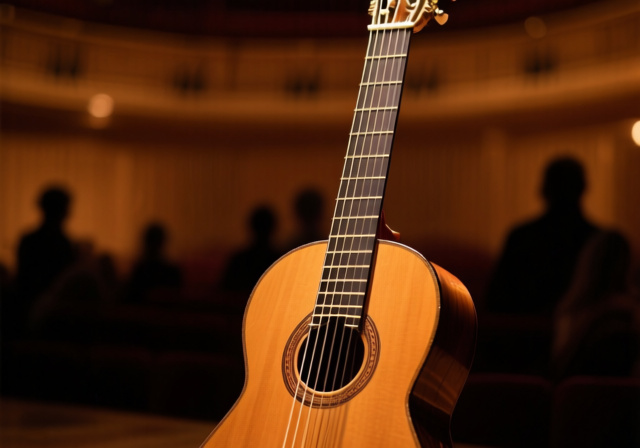
The classical guitar has evolved from a humble folk instrument to a respected concert hall mainstay, thanks to the virtuosos who transformed its capabilities and expanded its repertoire. These pioneering musicians elevated the guitar’s status, commissioned new works, and developed techniques that continue to influence players today.
While declaring one guitarist as definitively “the best” remains subjective, Andrés Segovia is widely recognized as the father of modern classical guitar for his role in establishing the instrument as a serious concert vehicle and inspiring generations of performers.
From the romantic composers of the 19th century to today’s technical virtuosos, classical guitarists have consistently pushed the boundaries of what’s possible on six nylon strings. Their contributions span original compositions, groundbreaking transcriptions, technical innovations, and teaching legacies that continue to shape the classical guitar world.
This comprehensive guide explores 18 of the most influential classical guitarists across different eras, examining their unique contributions, technical innovations, and lasting impact on the instrument’s development. Whether you’re a classical music enthusiast, a guitar player seeking inspiration, or simply curious about these remarkable musicians, understanding their stories provides valuable insight into the classical guitar’s rich heritage.
For those inspired to explore the instruments these masters played, our guide to the best classical guitars can help you understand the tools of their trade.
Table of Contents
The Evolution of Classical Guitar Performance
Classical guitar’s journey from folk tradition to concert stage represents one of music’s most remarkable transformations. In the 19th century, the guitar primarily existed in salons and homes rather than concert halls, with performers adapting techniques from other instruments to create its unique voice.
The instrument’s physical development paralleled its musical evolution. Early guitars were smaller with gut strings, limiting their projection and tonal palette. Innovations in construction, including the fan-bracing system developed by Antonio de Torres in the 1850s, created the louder, more resonant instrument that could compete in concert settings.
Technical foundations emerged during this period, with players like Fernando Sor and Mauro Giuliani establishing the fingerstyle approach that remains fundamental to classical guitar today. Their compositions and teaching methods created the technical vocabulary that later virtuosos would expand upon.
The transition from gut to nylon strings in the 1940s represented another significant milestone, providing greater consistency, durability, and tonal possibilities. This innovation, combined with improved recording technology, helped guitarists reach wider audiences and establish the classical guitar as a respected solo instrument.
Throughout this evolution, certain guitarists stood as transformational figures who fundamentally changed how the instrument was perceived, taught, and performed. These pioneers created the foundation upon which all subsequent classical guitarists would build.
The Pioneers Who Shaped Classical Guitar (September 2026)
The late 19th and early 20th centuries witnessed the emergence of guitarists who would establish the classical guitar as a legitimate concert instrument. These pioneers developed techniques, expanded repertoire, and created educational frameworks that continue to influence guitarists today.
Francisco Tárrega (1852-1909) – The Father of Modern Technique
Francisco Tárrega revolutionized classical guitar technique through his innovative approach to right-hand fingering and tone production. His compositions, particularly “Recuerdos de la Alhambra” with its revolutionary tremolo technique, expanded the guitar’s expressive possibilities and remain concert staples today.
Tárrega’s teaching methodology, documented through his students and published exercises, established foundational principles of classical guitar technique that remain essential. His approach to seating position, hand placement, and tone production created the technical framework upon which modern classical guitar playing is built.
Beyond his technical innovations, Tárrega transcribed numerous works for guitar, adapting pieces from Bach, Chopin, and other composers to expand the instrument’s repertoire. These transcriptions demonstrated the guitar’s capability to render complex music and inspired future generations of arrangers.
Tremolo: A classical guitar technique where a single melody note is repeated rapidly in succession using three fingers (typically a-m-i), creating the illusion of sustained melody while accompaniment continues.
Andrés Segovia (1893-1987) – The Concert Pioneer
Andrés Segovia single-handedly transformed the classical guitar from a salon instrument to a concert hall staple. Through his international performances, teaching, and collaborations with composers, Segovia established the guitar as a serious concert instrument worthy of the world’s greatest stages.
Segovia’s technical innovations included refined tone production, expanded dynamic range, and unprecedented musical expressiveness. His transcriptions of Bach and other classical composers demonstrated the guitar’s versatility and helped establish a core repertoire for the instrument.
Perhaps most importantly, Segovia commissioned works from prominent composers including Heitor Villa-Lobos, Mario Castelnuovo-Tedesco, and Federico Moreno Torroba. These compositions expanded the guitar’s repertoire significantly and inspired other composers to write for the instrument.
Segovia’s masterclasses influenced generations of guitarists, and his recordings brought classical guitar to mass audiences. While some modern players critique aspects of his technique by contemporary standards, his historical importance in establishing classical guitar as a concert instrument remains unquestioned.
Fernando Sor (1778-1839) – The Classical Composer
Fernando Sor bridged the Classical and Romantic eras as both a virtuoso performer and prolific composer. His “Method for the Spanish Guitar” (1830) remains one of the most important pedagogical works in the guitar’s history, systematically explaining technique, harmony, and musical interpretation.
Sor’s compositions, including his famous theme and variations on “Magic Flute” melodies, demonstrate sophisticated musical understanding and technical mastery. His approach to harmony and counterpoint elevated guitar music beyond simple accompaniment to complex musical expression.
As a performer, Sor toured extensively throughout Europe, introducing the guitar to new audiences and demonstrating its capabilities as a solo instrument. His success helped establish the guitar’s credibility in musical circles that had previously dismissed it as a folk or salon instrument.
Mauro Giuliani (1781-1829) – The 19th Century Virtuoso
Mauro Giuliani was the 19th century’s most celebrated guitar virtuoso, known for his extraordinary technical prowess and prolific compositional output. His three guitar concertos represent some of the earliest major works for guitar and orchestra, helping establish the instrument in larger musical contexts.
Giuliani’s technical innovations included advanced arpeggio patterns and right-hand fingerings that expanded the guitar’s possibilities. His studies and exercises remain essential for developing classical guitar technique, particularly in areas of scale work and finger independence.
Beyond his compositions, Giuliani was a celebrated performer in Vienna’s musical circles, collaborating with Beethoven and other prominent musicians. His success helped establish the guitar as a respectable instrument in classical music’s most important cultural centers.
Agustín Barrios (1885-1944) – The Latin American Pioneer
Agustín Barrios Mangoré was a Paraguayan virtuoso who combined exceptional technical skill with profound musical sensitivity. His compositions, including “La Catedral” and “Una Limosna por el Amor de Dios,” blend classical forms with Latin American folk influences, creating a unique musical voice.
Barrios was one of the first classical guitarists to record extensively, preserving his interpretations for future generations. His performances were noted for their emotional intensity and technical precision, inspiring audiences throughout Latin America and beyond.
Despite his talent, Barrios struggled for recognition during his lifetime, partly due to prejudices against Latin American musicians in classical music circles. Posthumously, his works have gained recognition as essential contributions to the guitar repertoire.
20th Century Virtuosos and Innovators
The mid-20th century witnessed the emergence of guitarists who built upon Segovia’s foundation while developing their own distinctive approaches to interpretation, technique, and repertoire. These performers expanded the guitar’s audience through recordings, commissioned new works, and pushed technical boundaries.
Julian Bream (1933-2020) – The Renaissance Revivalist
Julian Bream was instrumental in reviving interest in Renaissance and Baroque music for plucked instruments. As both a guitarist and lutenist, Bream’s scholarship and performances brought forgotten works to modern audiences, expanding the guitar’s historical repertoire significantly.
Bream’s interpretations were noted for their intellectual rigor and emotional depth. He approached each work with intense historical research while maintaining his own distinctive musical voice, creating performances that were both authentic and personally expressive.
Bream commissioned numerous works from prominent British composers including Benjamin Britten, William Walton, and Malcolm Arnold. These compositions helped establish a distinct English repertoire for classical guitar and inspired other composers to write for the instrument.
His extensive discography brought classical guitar to mass audiences, and his masterclasses influenced generations of players. Bream’s emphasis on chamber music and collaboration with other instrumentalists expanded the guitar’s role beyond solo performance.
John Williams (b. 1941) – The Technical Virtuoso
John Williams is renowned for his extraordinary technical precision and musical versatility. His flawless execution and clear, intelligent interpretations have set standards for classical guitar performance that continue to influence players today.
Williams’s repertoire spans from Renaissance music to contemporary compositions, including significant contributions to Latin American guitar music. His interpretations of Heitor Villa-Lobos and other South American composers have been particularly influential, bringing these works to international attention.
Beyond his classical career, Williams’s collaborations with other musicians, including the fusion group Sky, demonstrated the guitar’s versatility across genres. These projects helped bridge classical and popular music, expanding the guitar’s audience beyond traditional classical circles.
Williams’s teaching and recordings have influenced countless guitarists, and his commitment to expanding the guitar’s repertoire through commissions and new arrangements continues to shape the instrument’s development. When exploring technique development, our guitar strings guide provides valuable information on equipment choices that affect tone production.
Narciso Yepes (1927-1997) – The 10-String Guitar Pioneer
Narciso Yepes expanded the guitar’s possibilities through his development of a 10-string guitar design. These additional strings extended the instrument’s range and enhanced its ability to render lute and Baroque guitar music more authentically.
Yepes’s interpretations of Rodrigo’s “Concierto de Aranjuez” set standards for this cornerstone of the guitar repertoire. His approach emphasized clarity, precision, and historical authenticity, particularly in Spanish and Baroque music.
Beyond his technical innovations, Yepes was a dedicated scholar who researched historical performance practices. His approach combined academic rigor with musical expressiveness, creating performances that were both historically informed and emotionally compelling.
Christopher Parkening (b. 1947) – The American Classical Guitar Pioneer
Christopher Parkening established classical guitar as a serious pursuit in America through his performances, recordings, and teaching. As one of Segovia’s most prominent American students, Parkening carried forward his mentor’s legacy while developing his own distinctive approach to interpretation.
Parkening’s performances are noted for their beautiful tone and emotional warmth. His interpretations of Romantic repertoire, particularly works by Tárrega and Sor, have been especially influential in establishing interpretive standards for this music.
Beyond performing, Parkening has been a dedicated teacher, establishing guitar programs and mentoring numerous successful students. His work helped establish classical guitar as a legitimate field of study in American universities and conservatories.
Paco de Lucía (1947-2014) – The Flamenco Innovator
While primarily known as a flamenco guitarist, Paco de Lucía’s influence extends to classical guitar through his extraordinary technical innovations and musical synthesis. His development of nuevo flamenco expanded both genres’ possibilities and inspired classical guitarists to explore new technical approaches.
De Lucía’s technical innovations, particularly in right-hand speed and rhythmic complexity, pushed boundaries that classical guitarists continue to explore. His collaborations with classical musicians, including John Williams, demonstrated the connections between flamenco and classical traditions.
His compositions, while rooted in flamenco tradition, incorporate elements from classical, jazz, and Latin American music, creating a unique synthesis that transcends genre boundaries. This musical openness has inspired classical guitarists to explore diverse influences in their own work.
Modern Masters of Classical Guitar
Contemporary classical guitarists continue to expand the instrument’s possibilities through technical innovation, new repertoire, and creative approaches to interpretation. These performers combine virtuosic technique with musical intelligence, pushing the boundaries of what’s possible on the classical guitar.
Ana Vidović (b. 1980) – The Technical Virtuoso
Ana Vidović is celebrated for her extraordinary technical precision and musical maturity. Her performances combine flawless execution with deep musical understanding, creating interpretations that are both technically impressive and emotionally compelling.
Vidović’s repertoire spans from Renaissance music to contemporary compositions, with particular strength in Romantic and early 20th-century works. Her interpretations of Villa-Lobos and Barrios have been especially noted for their technical brilliance and musical insight.
Her international career has brought classical guitar to diverse audiences, and her recordings serve as benchmarks for technical achievement. Young guitarists particularly admire her clarity of tone and precision of execution, which set high standards for technical development.
David Russell (b. 1953) – The Grammy-Winning Interpreter
David Russell is renowned for his beautiful tone and sensitive musical interpretations. His Grammy-winning recording of “Aire Latino” highlighted his expertise in Latin American guitar music, bringing lesser-known works to international attention.
Russell’s approach to interpretation emphasizes musical clarity and emotional authenticity. Whether performing Baroque suites or contemporary compositions, he brings intelligence and warmth to his readings, creating performances that speak directly to audiences.
Beyond performing, Russell has been influential in expanding the guitar’s repertoire through his arrangements and commissions. His commitment to musical education has also inspired numerous students through his masterclasses and workshops.
Russell’s exploration of tone production and sound quality offers valuable insights for players seeking to develop their own sonic identity. Understanding how different equipment choices affect tone is essential, and our guide to acoustic guitar EQ can help players refine their sound.
Sharon Isbin (b. 1956) – The Contemporary American Pioneer
Sharon Isbin has established herself as one of America’s leading classical guitarists through her performances, recordings, and educational initiatives. As founder of the Juilliard School’s guitar department, she helped establish classical guitar as a legitimate field of study in America’s most prestigious music institutions.
Isbin’s repertoire spans from early music to contemporary compositions, with numerous works written specifically for her. Her collaborations with composers including John Corigliano and Joseph Schwantner have expanded the guitar’s contemporary repertoire significantly.
Beyond performing, Isbin has been influential in promoting classical guitar through her Grammy-winning recordings and media appearances. Her work has helped bring the classical guitar to broader audiences and inspired a new generation of American guitarists.
Xuefei Yang (b. 1977) – The Asian Virtuoso
Xuefei Yang represents the globalization of classical guitar, bringing Asian perspectives to the instrument’s interpretation and repertoire. Her performances combine technical brilliance with musical sensitivity, creating interpretations that honor both Western classical traditions and Eastern aesthetic sensibilities.
Yang’s international career has helped establish classical guitar in Asia, inspiring a new generation of players from diverse cultural backgrounds. Her repertoire includes both standard classical works and compositions that reflect her cultural heritage, creating fascinating cross-cultural musical dialogues.
Her success in international competitions and concert venues has demonstrated that excellence in classical guitar transcends cultural boundaries, helping to establish the instrument as truly universal in its appeal and possibilities.
Women Who Shaped Classical Guitar History
While often overlooked in historical accounts, women have made significant contributions to classical guitar performance and pedagogy. These pioneering guitarists overcame social barriers to establish themselves as virtuosic performers and influential teachers.
Ida Presti (1924-1967) – The French Virtuoso
Ida Presti was celebrated for her extraordinary technical abilities and musical sensitivity. Her performances were noted for their power and precision, challenging perceptions of women’s capabilities as guitarists during her era.
Presti’s duo with Alexandre Lagoya established guitar duo performance as a serious concert genre. Their arrangements and interpretations expanded the guitar’s chamber music possibilities and inspired numerous subsequent ensembles.
Despite her career being cut short by her untimely death at age 42, Presti’s recordings and compositions continue to influence guitarists. Her technical innovations and musical interpretations remain benchmarks for excellence in guitar performance.
Maria Luisa Anido (1907-1996) – The Argentine Pioneer
Maria Luisa Anido was a pioneering Argentine guitarist who achieved international recognition during an era when few women performed as concert soloists. Her interpretations of Spanish and Latin American music were particularly influential, bringing regional repertoire to global audiences.
Anido’s teaching career influenced generations of South American guitarists, helping establish strong classical guitar traditions throughout the continent. Her compositions and arrangements expanded the guitar’s repertoire with distinctive Latin American character.
Her success in European and American concert venues helped establish that gender was no barrier to technical excellence in classical guitar performance, opening doors for subsequent generations of women guitarists.
Sharon Isbin (b. 1956) – The Contemporary Pioneer
Sharon Isbin’s contributions extend beyond her performing career to include significant educational and institutional innovations. As the first guitar professor at Juilliard, she established classical guitar as a legitimate discipline in America’s most prestigious music conservatory.
Isbin’s Grammy-winning recordings have brought classical guitar to diverse audiences, and her media appearances have helped normalize women’s presence in classical guitar performance. Her success has inspired countless young women to pursue classical guitar studies.
Beyond performing and teaching, Isbin has commissioned numerous works from prominent composers, expanding the guitar’s contemporary repertoire. Her dedication to new music has helped ensure the instrument’s continued evolution and relevance in contemporary musical life.
The Evolution of Classical Guitar Technique
Classical guitar technique has evolved significantly from the folk traditions of the 19th century to the sophisticated methods of today. This evolution reflects both technical innovations and changing musical aesthetic demands across different historical periods.
The fundamental technique of fingerstyle playing, using fingertips rather than picks, was established by early pioneers like Sor and Giuliani. Their approach to right-hand fingerings created the foundation for modern classical guitar technique, though their methods were less systematic than contemporary approaches.
Tárrega’s innovations in seating position, hand placement, and tone production represented the first major technical revolution. His approach to right-hand technique, including the use of rest strokes and alternating fingers, created the template for modern classical guitar playing.
⚠️ Important: Classical guitar technique requires careful attention to posture and hand position to prevent injury and develop optimal tone quality. Proper instruction from qualified teachers is essential for technical development.
Segovia refined and expanded these techniques, adding greater dynamic range and expressive possibilities. His approach to tone production and musical phrasing established new standards for classical guitar performance that influenced generations of players.
Contemporary technique continues to evolve, with increased emphasis on efficiency, ergonomics, and tonal variety. Modern players often incorporate elements from other guitar traditions while maintaining the fundamental classical approach established by earlier pioneers.
For those interested in exploring modern instruments that facilitate these techniques, our Cordoba C7 CD review examines a popular choice among serious students and professionals.
Frequently Asked Questions
Who is the best classical guitarist?
While declaring one guitarist as definitively “the best” remains subjective, Andrés Segovia is widely recognized as the most influential for establishing classical guitar as a concert instrument. Contemporary virtuosos like John Williams and Ana Vidović are noted for technical precision, while others like Julian Bream are celebrated for musical scholarship and interpretation.
What does it mean to be a classically trained guitarist?
Classical training means learning traditional fingerstyle technique, reading music notation, understanding music theory, and studying the historical repertoire. It typically involves formal education with qualified teachers, mastery of specific technical exercises, and development of interpretive skills based on historical performance practices.
Who are the top classical guitarists today?
Leading contemporary classical guitarists include Ana Vidović, David Russell, Sharon Isbin, Xuefei Yang, and Miloš Karadaglić. These performers combine technical virtuosity with musical intelligence, expanding the repertoire through new commissions and creative interpretations of established works.
How long does it take to become proficient at classical guitar?
Developing basic classical guitar competency typically takes 2-3 years of consistent practice with proper instruction. Advanced proficiency requires 5-10 years of dedicated study, while professional-level mastery may need 10-15 years or more. Progress depends on practice quality, natural aptitude, and the quality of instruction received.
Final Recommendations
The classical guitar’s evolution from folk instrument to concert staple represents one of music’s most inspiring stories of artistic transformation. The guitarists profiled in this article each contributed uniquely to this journey, developing techniques, expanding repertoire, and inspiring audiences worldwide.
For those inspired to explore classical guitar further, begin by listening to recordings of these masters. Pay attention to their distinctive approaches to tone production, phrasing, and interpretation. Consider studying with a qualified teacher who can guide your technical development using time-tested methods.
The classical guitar continues to evolve today, with new generations of players building on this rich heritage while exploring fresh musical possibilities. Whether as performers, composers, or enthusiastic listeners, we all participate in this ongoing musical tradition that spans centuries and cultures.
Remember that the journey of classical guitar mastery is as rewarding as the destination. Each guitarist mentioned here spent years developing their art, and their dedication continues to inspire and influence players around the world. Their legacy reminds us that with patience, persistence, and passion, we too can discover the profound musical satisfaction that classical guitar offers.