
Diving into the world of music theory can be quite a journey, particularly when it comes to learning scales. These little sets of notes form the backbone of our music, coloring melodies, harmonies, and chords with their particular hues.
A great example is the D harmonic minor scale. This unique scale is more than just a sequence of pitches; it’s a fascinating chapter in the annals of classical and contemporary music.
You might be wondering exactly why the D harmonic minor scale holds such a distinct position in music theory. Well, its unique sound character gives an intriguing twist to compositions that other standard minor scales simply cannot provide.
From our favorite pop tunes to spine-chilling movie scores, this scale has made its mark across multiple genres. Now let’s delve into what makes this key so unique, interesting, and essential to know music on a deeper level.
Table of Contents
Intervals in the D Harmonic Minor Scale
In terms of music theory, an interval refers to the distance between two notes.

Knowing your intervals is crucial in navigating your way around any scale. The following outlines the specific intervals that make the D Harmonic Minor scale:
- D to E: The interval from D to E (the first to second note) is a whole tone.
- E to F: From E to F (second to third note), we have a semitone.
- F to G: Between F and G (third to fourth note), there’s another whole tone.
- G to A: Going from G to A (fourth note up to the fifth), you grasp another whole tone.
- A to Bb: Moving from A up Bb (fifth note up towards the sixth), there is a semitone lapse again.
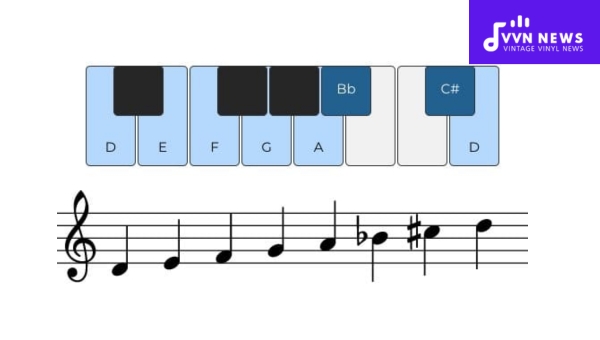
- Bb – C#: Here at Bb – C#(sixth-seventh note) lies an exceptional three-semitone jump or one-and-a-half step known as an augmented second, which essentially gives the scale its particular flavor.
- C# – D: This narrates our journey back home from C# back up top-notch D(seventh-octave degree). That encompasses two semitones or the equivalent full tone.
To easily identify these intervals on your instrument, look for changes from natural notes (A, B, C, D, E, F & G) into flats or sharps like [B-flat] and [C-sharp].
These changes signify either a semitone or augmented second move in this unique key signature of harmonic minor scale structure.
Also Read: E Major Triad [Master This Staple Of Music Composition]
How is a Harmonic Minor Scale Formulated?
The harmonic minor scale is assembled by taking a natural minor scale and raising the 7th note by a half-step. If we’re discussing the D harmonic minor scale, it would start with a D natural minor scale.
The notes of this scale are D, E, F, G, A, B♭ and C. To construct the D harmonic minor scale, elevate the seventh note (C) by half-step to C#, creating the full sequence: D – E – F – G – A – B♭ – C#.
This signature jump from B♭ to C# gives the harmonic minor its recognizable and captivating sound!
Scale Degrees of D Harmonic Minor
To unravel the beauty of the D Harmonic Minor scale, you need to be familiar with its scale degrees.

The harmonic minor scale is structured with seven different notes before it returns to the first note, completing an octave.
With D as our root note or 1st degree, the following degrees unfold as such:
- 1st degree – D: This is our home base or tonic. The entire scale revolves around this pitch.
- 2nd degree – E: Also known as the supertonic, it’s a whole step up from the tonic.
- 3rd degree – F: Called the mediant, it’s interesting because it sits right between D (tonic) and A (dominant).
- 4th degree – G: Known as the subdominant. It has this title because it’s one below the Dominant 5th.
- 5th degree – A: Referred to as dominant due to its reign over other tones in defining tonality.
- 6th degree – Bb: This one is known as submediant. It’s notable for being a half step lower than our leading tone.
- 7th degree – C#: This special note here is called the leading tone for its strong pull towards our tonic—D.
Once more, we return to D—completing a journey teeming with intrigue and riveting musical potential.
Each of these degrees brings its unique flavor to music compositions, pushing them beyond generality into spaces where originality and creativity thrive.
Also Read: F Sharp Major Triad [Enhance Your Musical Compositions]
Modes based on the D Harmonic Minor scale?
Now, let’s proceed to explore the modes that originate from the D harmonic minor scale.
These modes are interesting as they show how a single scale can take many different forms that vary subtly in flavor based on the degrees or steps they start from.
Here’s a deeper look into the specifics of these seven modes:
1. D Aeolian #7
This mode stays true to its roots within the key of D harmonic minor, starting and ending in D.
With only one note differing from a conventional Aeolian mode, it gears up an extra kick to your songs with its raised 7th degree (C# instead of a C natural).
2. E Locrian #6
The second mode, E Locrian #6, begins on E and ends on the subsequent E note within the same scale.
This variant has a unique character due to its raised 6th degree (C# instead of a C natural) which sets it apart from regular Locrian modes.
3. F Ionian #5
Our third stop is F Ionian #5. Originating from F and ending on following F, it resembles closely to an Ionian mode, except for one noticeable change – this time it’s the enhanced 5th degree (C# instead of a C natural).
4. G Altered Dorian
Next in line is G Altered Dorian which starts and concludes with G notes in our range of interest.
What sets this one apart is an altered 4th (the C# instead of a C natural) causing our ears to perk up slightly when hearing this variation.
5. A Phrygian Dominant
A Phrygian Dominant is comparable to conventional Phrygian mode but with an altered 3rd degree (the G sharp/A flat rather than usual G) providing more melodic opportunities for improvisation or composition.
Starting from an A note and concluding at the next A, it is a popular choice of artists striving to bring out a more exotic taste in music.
6. B Lydian #2
The penultimate mode from our scale is B Lydian #2. It starts and ends on B, taking us on a journey filled with anticipation due to its augmented 2nd (C# instead of C natural), adding a dollop of tension to musical sequences.
7. C# Super Locrian bb7
Ending with a flourish is C# Super Locrian bb7. It starts and ends on the note C#, and its trademark lowered 7th degree (C natural instead of D) thrusts us into an otherworldly tonal experience full of dissonance and tension.
Each one of these modes carries its unique character and mood onto the same set of degrees offered by our specific scale: the D Harmonic Minor Scale.
This versatility underlines the importance these seven modes hold in expanding artistic creativity in music creation across various genres.
Also Read: Phrygian Mode [Adding Exotic Flair To Your Musical Compositions]
Playing D Harmonic Minor on Guitar and Piano
Learning to play the D Harmonic Minor scale on both guitar and piano can increase your musical versatility and deepen your knowledge of the instrument.

Let’s embark on a brief but intensive guide that will take us through playing this intriguing scale.
Playing D Harmonic Minor on Guitar
Playing the D harmonic minor scale on guitar may initially seem intimidating to fledgling students.
It’s considerably simpler when you break it down meticulously.
First Position:
The beauty of guitar frets is that they offer visual horizontal and vertical patterns for scales – a godsend when you’re navigating your fingers across them.
- Start with your index finger (referred to as 1) on the open D string.
- Use your middle finger (2) for the E note on the second fret.
- The third finger (3) plays F on the third fret.
- Your pinky (4) is perfect for reaching to G on the fifth fret
- Transitioning to A found on the open A string.
- B flat is placed right on A’s first fret—serenade this using your index finger.
- Glide over to C# at the fourth fret with your pinky
- Lastly, strum D at the open D-string.
Take time to master this pattern, move up and down these notes until they feel fluid under your fingers, remember practice makes perfect.
Playing Harmonic Minor Scale on Piano
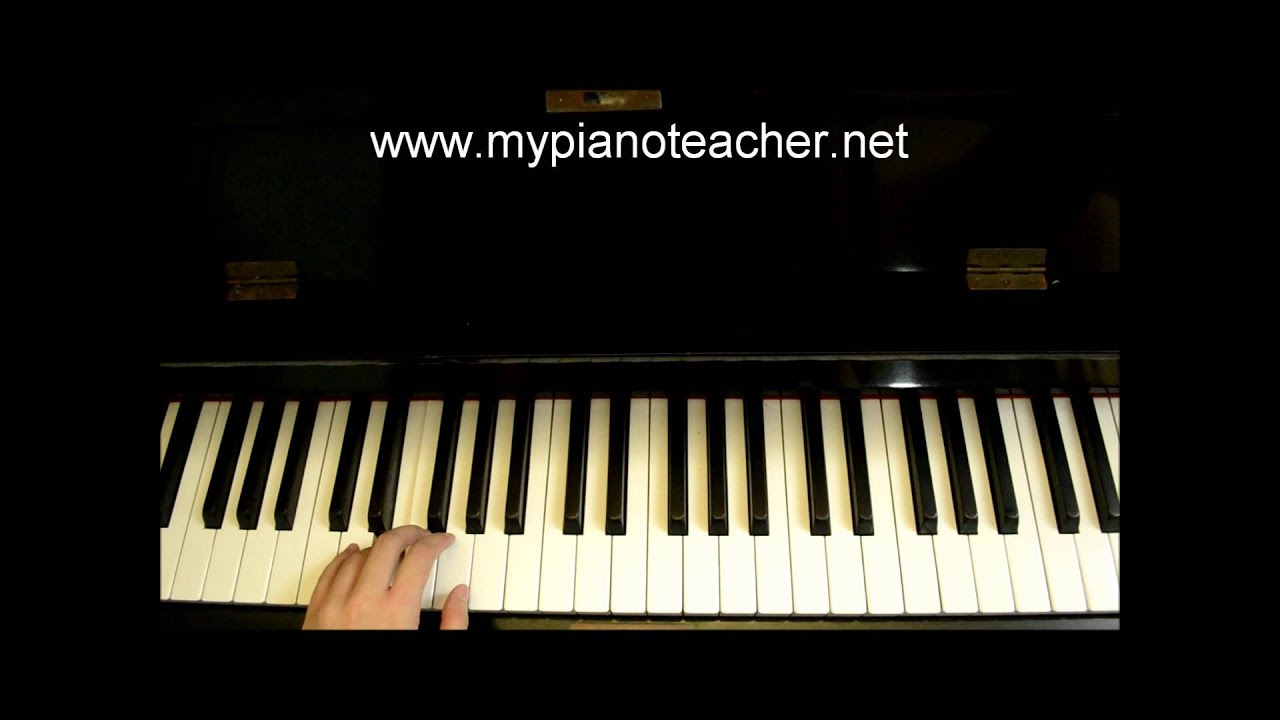
A piano offers a visually linear representation of music and its scales, which can be beneficial when learning new scales like our friend, D Harmonic minor.
For this scale:
- Start from D using your thumb (notated as 1).
- Next is E; glide over using your index finger (2).
- F can be played by 3 – also known as your middle finger)
- For G and A use 1 (thumb) and then 2
- Reach B-flat with three – sounds confusing? Not once you get used to it!
- Your Thumb then curls under to hit C#
7 Finally repeat D but an octave higher than where we began.
Get familiar with this pattern. Engage in repetitive exercises until the notes flow effortlessly through your hands.
Key Signature of the D Harmonic Minor Scale
The key signature for the D harmonic minor scale includes one flat, which is B flat. It means that every time you play a B note in this scale, it should be played as B flat instead of a regular B.
The distinctive sound of the D harmonic minor scale comes from the inclusion of this flattened sixth note combined with a natural seventh.
This creates an exotic and somewhat tenser sound, particularly when you play or hear the interval between these two notes.
It’s these intricate details that make it vital to comprehend key signatures – they truly set the stage for your journey through any musical piece.
Also Read: Harmony In Music [Enhance Your Compositions With These Tips]
How is D Harmonic Minor Displayed in Different Clefs?
Comprehending the D Harmonic Minor Scale goes beyond just knowing the notes and their sequence.

It is crucial to visualize how it appears in different clefs for practical applications.
The Treble Clef
Regarded as the ‘G Clef’, treble clef carries higher pitches and is commonly used in music for instruments like piano, guitar, violin, flute, and voice parts for high singers.
When it comes to portraying the D Harmonic Minor scale on treble clef, we start with ‘D’ on line four of the staff (count from below), followed by E, F, G, A, B flat (represented by a flat symbol before the note), C sharp(using a sharp symbol before note) and finally resolving on D one octave above.
The Bass Clef
Alternatively branded as ‘F Clef’, bass clef concerns pitches that lie below middle C. A majority of bass guitars, cellos, trombones, and male voices primarily use it.
On this clef, for enlisting the D harmonic minor scale notes starting from open ‘D’, we descend to the next line where we find ‘E’.
After marking ‘F’ on the first space from the bottom of the staff sheet, ascend upwards onto ‘G’, followed by ‘A’ on successive lines respectively.
Descend onto the third space for B flat; leap high onto the top line of the staff sheet marking C sharp finally rounding up at D double octave below the starting point.
The Alto & Tenor Clefs
Often utilized in viola music or trombone music is another pair of interesting clefs – namely Alto and Tenor.
Both are referred to as C-Clefs, these notate where middle C sits within the five-line staff.
Implementing a similar approach we applied previously in both Treble and Bass clefs will enable you to represent D harmonic minor in these clefs with ease.
You will discover that it’s treble, bass, alto, or tenor clef, the notes of the D Harmonic Minor Scale remain consistent.
The entire process essentially revolves around starting with ‘D’, following the sequence of half and whole-step intervals distinctive of harmonic minor scale; incorporating flat on B and sharp on C allows us to journey seamlessly through diverse realms of treble, bass, alto, and tenor clefs.
Each clef caters to different families of instruments or voice types dependent upon range, thus reciprocating the magical essence of D harmonic minor in its unique ways.
Chords Associated with D Harmonic Minor
When it comes to chords derived from the D harmonic minor, you’ll find a broad palette of tones. Below is a breakdown of each chord in this scale.
- D minor(Maj7): Composed of the notes D, F, A, and C#. This chord, the tonic (i), establishes the key setting for compositions.
- E diminished7: This chord comprises E, G, Bb, and Db forming a subdominant(ii) sound.
- F major: The F, A, and C chords create an overall mediant (III) tone.
- G minor: With notes G, Bb, and D this sound blends perfectly as the subdominant (iv).
- A major: The dominant V chord includes A, C#, and E which brings life to melodies.
- Bb augmented: Made up of Bb, D, and F#, this note combination gives your music some character.
- C# dim7: Offering sounds of confusion or sadness in music.
Boldly experiment with these chords to breathe new life into your compositions.
As you do so, you’ll be immersing yourself in the profound depths of music theory more fully.
Also Read: A Minor Scale [Unlock The Mysteries Of Musical Composition]
FAQs
What is the main characteristic of the D Harmonic Minor Scale?
The key feature of the D Harmonic Minor Scale is its raised seventh note, which creates a unique, ‘exotic’ sound that distinguishes it from other minor scales.
How does the D Harmonic Minor Scale compare to the D Major scale?
Unlike the usual major scale, which has an upbeat and happy feel, the D Harmonic Minor scale creates a somewhat melancholy yet intriguing musical atmosphere.
Can I use chords from other scales when playing in D Harmonic minor?
Sure! Although each scale has its associated chords, creative experimentation is always welcomed in music. Their sonic relationship can aid in avoiding dissonance.
Why do some contemporary musicians avoid using harmonic minor scales such as D Harmonic Minor?
While not exactly avoided, these scales are used strategically due to their unique tonal properties which can lend a very specific atmosphere to the composition.
Is it harder to play the D harmonic minor scale than other minor scales on musical instruments such as guitar or piano?
It might be challenging initially due to its unusual note sequence but with practice, you would find it as convenient as any other scale.
Also Read: D Sharp Major Pentatonic Scale [A Bright And Positive Tone]
Conclusion
The D Harmonic Minor scale proves to be not only a valuable tool for composers and performers but also a fascinating subject for learners. Its unique tonal qualities and applications across multiple genres have cemented its place in music history.
Undoubtedly, diving into the nuances of this scale can enhance your musical knowledge and broaden your sonic palette.
Whether you’re jotting down a new melody or improvising an intense solo, with practice and patience, this scale can be a powerful ally in your musical journey.