
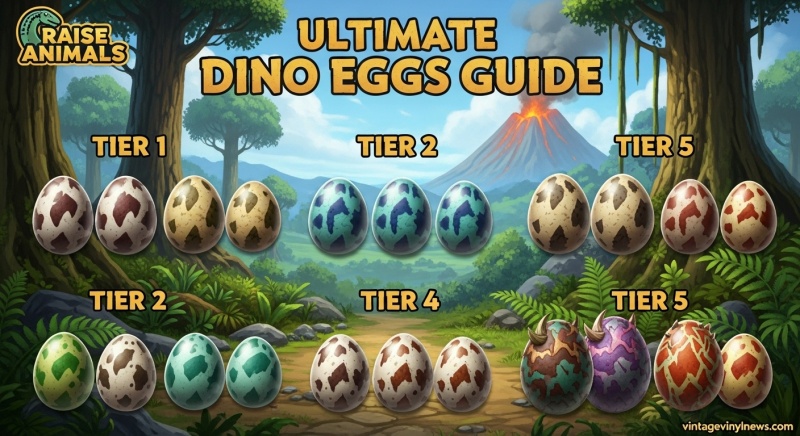
Hey there, fellow Roblox enthusiast! If you’re diving into the exciting world of Raise Animals and want to get your hands on those awesome Dino Eggs, you’ve come to the right place. The Ancient update has completely transformed the game, bringing prehistoric creatures to life in ways we never imagined. I’ve spent countless hours exploring every aspect of the Dino Egg system, and I’m here to share everything I’ve learned to help you build the ultimate dinosaur collection.
In this comprehensive guide, I’ll walk you through exactly how to get Dino Eggs in Raise Animals, break down all five tiers with their respective dinosaurs, reveal the best strategies for hatching rare creatures, and share some pro tips that most players don’t know about. Whether you’re a beginner just starting your prehistoric journey or a seasoned player looking to optimize your Dino Egg collection, this guide has got you covered.
| Topic | What You’ll Discover |
|---|---|
| Dino Egg Acquisition | How to trigger the Dino Egg Fall event and maximize your collection rate |
| Egg Tiers & Dinosaurs | Complete breakdown of all 5 tiers and their dinosaur drop rates |
| Hatching & Fusion | Step-by-step guide to hatching eggs and fusing for higher tiers |
| DNA Farming | Best strategies to collect DNA for egg upgrades |
| Rare Dinosaurs | Exclusive tips for getting Mosasaurus, Spinosaurus, and other rare creatures |
Ready to become the ultimate dinosaur collector in Raise Animals? Let’s dive right in!
Table of Contents
How to Get Dino Eggs in Raise Animals?
The Dino Egg system in Raise Animals is one of the most exciting features introduced in the Ancient update, but getting these precious eggs requires understanding the mechanics behind them. Let me break down exactly how you can start collecting Dino Eggs and building your prehistoric army.
Understanding the Dino Egg Fall Event
The primary way to obtain Dino Eggs is through the Dino Egg Fall event, which occurs exclusively in the Cretaterra biome. This is the newest biome added with the Ancient update, and it’s where all the dinosaur magic happens. Here’s what you need to know:
Event Mechanics:
- Location: Cretaterra biome only
- Trigger: Random event with 20% chance when entering the biome
- Notification: You’ll receive an on-screen alert when the event starts
- Duration: The event lasts for a limited time, so act quickly!
Collection Process: When the Dino Egg Fall event triggers, you’ll see eggs literally falling from the sky across the Cretaterra biome. To collect them, simply walk through the eggs – there are no obstacles blocking your path. However, here’s the crucial part: not every fallen egg will result in a Dino Egg.
Drop Rates:
- 30% chance to get a Dino Egg
- 70% chance to get 50 Rubies instead
This means you’ll need to collect multiple fallen eggs during each event to maximize your chances of getting actual Dino Eggs. I recommend participating in as many Cretaterra biome runs as possible to increase your odds of triggering the event.
Unlocking the Cretaterra Biome
Before you can even think about collecting Dino Eggs, you need access to the Cretaterra biome. Here are your options:
Option 1: Purchase Access
- Cost: $5 million in-game currency
- Location: Map section in the main menu
- Benefit: Permanent access to the biome
Option 2: Expedite the Minigame
- Method: Play through the regular game flow
- Requirement: Reach the point where Cretaterra becomes available
- Benefit: Free access but requires gameplay progression
I personally recommend purchasing access if you have the funds, as it allows you to focus specifically on Dino Egg collection without worrying about progression requirements.
Maximizing Dino Egg Collection
Based on my extensive research and gameplay experience, here are the best strategies to maximize your Dino Egg collection:
1. Increase Biome Visits The Dino Egg Fall event has only a 20% chance of triggering when you enter Cretaterra. To increase your chances:
- Complete quick mini-games to reset biome selection
- Focus on shorter runs to enter Cretaterra more frequently
- Use speed-boosting animals to navigate biomes faster
2. Optimize Collection Routes When the event triggers:
- Move in a systematic pattern across the biome
- Focus on open areas where eggs are more likely to fall
- Avoid getting distracted by other animals or objectives
3. Time Your Sessions Based on community data and my own testing:
- Play during peak hours when more players are active (may increase event frequency)
- Keep sessions short but frequent rather than one long session
- Take breaks between attempts to maintain focus and efficiency
Pro Tip: Some players report that using certain lassos or animals can increase your collection efficiency. While this isn’t officially confirmed, it’s worth experimenting with different setups to find what works best for you.
Common Mistakes to Avoid
I’ve seen many players make the same mistakes when trying to collect Dino Eggs. Here’s what to avoid:
1. Ignoring the Event Notification The on-screen notification is your cue to start collecting immediately. Don’t continue with other objectives – drop everything and focus on egg collection.
2. Wasting Time on Non-Egg Activities During the Dino Egg Fall event, every second counts. Avoid:
- Trying to tame other animals
- Exploring unrelated areas
- Getting stuck in obstacles or difficult terrain
3. Not Having Enough Inventory Space Make sure you have plenty of inventory space before entering Cretaterra. Nothing’s worse than finding Dino Eggs but having no room to collect them!
4. Giving Up Too Early The event is rare, and you might go several Cretaterra visits without triggering it. Stay persistent – the rewards are worth the effort!
All Dino Eggs and Their Dinosaurs
Now that you know how to get Dino Eggs, let’s dive into the most exciting part – what’s actually inside these eggs! There are five tiers of Dino Eggs in Raise Animals, each offering different dinosaurs with varying rarity levels. I’ll break down each tier in detail, including drop rates and what makes each dinosaur special.
Tier 1 Dino Egg: The Starting Point
Tier 1 eggs are your introduction to the world of dinosaurs in Raise Animals. While they’re the most common, they still offer some great creatures to start your collection.
| Dinosaur | Rarity | Drop Rate | Special Abilities |
|---|---|---|---|
| Gallimimus | Basic | 80% | Fast movement, basic stats |
| Triceratops | Rare | 10% | Defensive capabilities, moderate value |
| Ankylosaurus | Rare | 10% | High defense, slow but sturdy |
Analysis:
- Gallimimus: The most common dinosaur from Tier 1 eggs. While not particularly special, they’re great for beginners and can be useful for DNA farming later.
- Triceratops: One of the most recognizable dinosaurs, offering good defensive capabilities. Worth keeping for your zoo display.
- Ankylosaurus: Another defensive powerhouse with high durability. Excellent for early-game progression.
Strategy: Don’t get discouraged if you keep getting Gallimimus – that’s statistically normal! Use the common ones for DNA farming and keep the rare ones for your collection.
Tier 2 Dino Egg: Introducing Epic Creatures
Tier 2 eggs require 500 DNA to create but offer significantly better chances at rare dinosaurs, including the first appearance of Epic-tier creatures.
| Dinosaur | Rarity | Drop Rate | Special Abilities |
|---|---|---|---|
| Gallimimus | Basic | 40% | Same as Tier 1 |
| Triceratops | Rare | 20% | Enhanced stats from Tier 1 |
| Ankylosaurus | Rare | 20% | Improved defense capabilities |
| Pterodactyl | Epic | 10% | Flying abilities, unique movement |
| Utahraptor | Epic | 10% | Pack Hunt ability, speed boost |
New Additions:
- Pterodactyl: Your first flying dinosaur! These offer unique movement capabilities and are highly sought after by collectors.
- Utahraptor: Comes with the incredible Pack Hunt ability – can roar to summon up to two packmates, gaining a 20% speed boost. Excellent for both utility and display.
Strategy: Tier 2 is where things get interesting. The introduction of flying dinosaurs and the Utahraptor’s Pack Hunt ability make these eggs much more valuable. Consider saving your DNA to upgrade to this tier as soon as possible.
Tier 3 Dino Egg: Legendary Territory
Tier 3 eggs cost 1,000 DNA to create and mark the beginning of Legendary dinosaur appearances. This is where your collection starts to get truly impressive.
| Dinosaur | Rarity | Drop Rate | Special Abilities |
|---|---|---|---|
| Triceratops | Rare | 10% | Further enhanced |
| Ankylosaurus | Rare | 10% | Maximum defense potential |
| Pterodactyl | Epic | 25% | Improved flying abilities |
| Utahraptor | Epic | 25% | Enhanced Pack Hunt |
| Brachiosaurus | Legendary | 15% | Massive size, high value |
| Carnotaurus | Legendary | 15% | Relentless Charge ability |
Legendary Introductions:
- Brachiosaurus: One of the most impressive dinosaurs in the game. Massive size with incredible zoo value. A must-have for any serious collector.
- Carnotaurus: Features the Relentless Charge ability – charges ahead to collide with obstacles, gaining up to 175% speed with each successful collision. Incredible for both utility and combat.
Strategy: Tier 3 eggs offer the best balance of cost and potential. You have a 30% combined chance at Legendary dinosaurs, making this tier very efficient for DNA investment.
Tier 4 Dino Egg: The Rainbow & Exclusive Club
Tier 4 eggs require 1,500 DNA and introduce the first Rainbow and Exclusive tier dinosaurs. This is where the truly rare creatures begin to appear.
| Dinosaur | Rarity | Drop Rate | Special Abilities |
|---|---|---|---|
| Brachiosaurus | Legendary | 15% | Enhanced from Tier 3 |
| Carnotaurus | Legendary | 35% | Improved Relentless Charge |
| Spinosaurus | Rainbow | 40% | Primal Frenzy ability |
| Mosasaurus | Exclusive | 10% | Aquatic abilities, extreme rarity |
Ultra-Rare Additions:
- Spinosaurus: Features Primal Frenzy – enters “Rage” for 15 seconds every 30 seconds, gaining 20% speed boost. Can smash obstacles and devour other animals while raging. One of the most powerful abilities in the game.
- Mosasaurus: The first Exclusive tier dinosaur. Extremely rare with only a 10% drop rate. Aquatic abilities make it unique among the dinosaur collection.
Strategy: Tier 4 is expensive but worth it for the chance at Spinosaurus and Mosasaurus. The 40% chance at Spinosaurus makes this tier particularly valuable for players seeking powerful dinosaurs.
Tier 5 Dino Egg: The Ultimate Prize
Tier 5 eggs are the pinnacle of Dino Egg collection, requiring 2,000 DNA to create. They offer the highest chances at the rarest and most powerful dinosaurs.
| Dinosaur | Rarity | Drop Rate | Special Abilities |
|---|---|---|---|
| Spinosaurus | Rainbow | 45% | Enhanced Primal Frenzy |
| Carnotaurus | Legendary | 40% | Maximum Relentless Charge |
| Mosasaurus | Exclusive | 15% | Improved aquatic abilities |
Enhanced Versions:
- Spinosaurus: Now with a 45% drop rate and enhanced abilities. The most common dinosaur in this tier, but still incredibly powerful.
- Carnotaurus: Maximum potential Relentless Charge with 40% drop rate. Excellent for players who prefer this dinosaur’s playstyle.
- Mosasaurus: Still the rarest at 15%, but with improved abilities. The ultimate prize for dedicated collectors.
Strategy: Tier 5 is for the truly dedicated. The high DNA cost means you should have a solid DNA farming strategy before attempting this tier. However, the improved chances at rare dinosaurs make it worth the investment for serious players.
How to Hatch Dino Eggs in Raise Animals?
Getting Dino Eggs is only half the battle – knowing how to hatch them properly is crucial for building your dinosaur collection. The Incubation Pod is your gateway to transforming these eggs into living, breathing dinosaurs. Let me walk you through the entire process step by step.
Locating the Incubation Pod
First things first – you need to find the Incubation Pod. Don’t worry, it’s not hidden away in some obscure corner of the map.
Location: The Incubation Pod is conveniently located near the leaderboard in the lobby area. You can’t miss it – it’s a large, distinctive machine that was added with the Ancient update.
Identification: Look for a futuristic-looking pod with multiple slots and a glowing interface. It’s usually surrounded by other players trying to hatch their own dinosaur eggs.
Step-by-Step Hatching Process
Hatching a Dino Egg is straightforward once you know the steps. Here’s the complete process:
Step 1: Select Your Dino Egg
- Open your inventory (typically by pressing “I” or clicking the inventory button)
- Navigate to your Dino Eggs section
- Select the egg you want to hatch
- Make sure you’re holding the egg before approaching the Incubation Pod
Step 2: Approach and Interact
- Walk up to the Incubation Pod
- Press the “E” key on your keyboard to interact
- This will bring up the Incubation Pod menu
Step 3: Choose Hatch Egg
- From the menu options, select “Hatch Egg”
- This will open the egg placement interface
Step 4: Place the Egg
- Select an available incubation slot
- Click the green “Place” button below the slot
- Your egg will now be placed in the incubator
Step 5: Initiate Hatching
- Click the “Hatch” button to start the process
- The incubation timer will begin (2 hours by default)
Step 6: Wait or Skip
- Option A: Wait the full 2 hours for the egg to hatch naturally
- Option B: Pay 19 Robux to skip the waiting time and hatch instantly
Step 7: Collect Your Dinosaur
- Once the timer completes, your dinosaur will be ready
- Click on the incubated egg to collect your new dinosaur
- The dinosaur will be added to your collection automatically
Understanding Incubation Slots
The Incubation Pod comes with multiple slots, and understanding how they work is crucial for efficient hatching:
Default Slots: You start with a certain number of free slots Additional Slots: You can purchase more slots using:
- Gems: In-game currency earned through regular gameplay
- Robux: Premium currency that requires real money
Benefits of Multiple Slots:
- Hatch multiple eggs simultaneously
- Increase your overall hatching efficiency
- Reduce downtime between hatching cycles
Strategy: I recommend investing in at least 2-3 additional slots if you plan on hatching eggs regularly. The time saved more than justifies the cost, especially if you’re actively collecting Dino Eggs.
Alternative Actions: Selling and Canceling
Sometimes you might not want to hatch an egg immediately, or you might change your mind. The Incubation Pod offers flexibility:
Selling Eggs:
- After placing an egg in a slot, you can choose to sell it
- Value: 50 Rubies per egg
- When to sell: When you have duplicate common dinosaurs or need quick currency
Canceling Hatching:
- At any point during the incubation process, you can cancel
- Method: Click the “Pick Up” button on the right side of the slot
- Result: The egg returns to your inventory unchanged
- When to cancel: If you need the slot for a more valuable egg or made a mistake
Advanced Hatching Strategies
To maximize your hatching efficiency, consider these advanced strategies:
1. Batch Hatching
- Fill all available slots before starting the hatching process
- This allows you to hatch multiple eggs simultaneously
- Perfect for when you have several eggs of the same tier
2. Tier-Based Hatching
- Hatch lower-tier eggs first to build up DNA
- Use the DNA to fuse eggs into higher tiers
- Progress systematically from Tier 1 to Tier 5
3. Strategic Skipping
- Only skip the timer for high-tier eggs (Tier 4-5)
- The 19 Robux cost is more justified for rare dinosaurs
- Let common eggs hatch naturally to save Robux
4. Inventory Management
- Keep a mix of egg tiers in your inventory
- Don’t hatch all eggs at once – maintain some variety
- This gives you flexibility based on your current needs
Common Hatching Issues and Solutions
Based on my experience and community feedback, here are some common issues players face and how to solve them:
Issue 1: Egg Won’t Place in Slot
- Solution: Make sure you’re selecting the correct egg type and that the slot is empty
- Check: Verify you have enough inventory space for the resulting dinosaur
Issue 2: Hatching Timer Not Starting
- Solution: Ensure you’ve clicked the “Hatch” button after placing the egg
- Check: Look for the timer to appear below the egg slot
Issue 3: Can’t Collect Hatched Dinosaur
- Solution: Check your inventory space – you might be full
- Solution: Try relogging or restarting the game if it’s a glitch
Issue 4: Incubation Pod Not Interacting
- Solution: Make sure you’re close enough to the pod
- Solution: Check if the pod is being used by another player
- Solution: Try switching servers if the pod seems bugged
How to Fuse Dino Eggs?
Fusing Dino Eggs is one of the most powerful mechanics in Raise Animals, allowing you to transform lower-tier eggs into higher-tier ones with improved chances at rare dinosaurs. This system is essential for players who want to maximize their dinosaur collection efficiently. Let me break down everything you need to know about egg fusion.
Understanding the Fusion System
Egg fusion is the process of combining DNA with your existing eggs to upgrade them to higher tiers. This system was introduced with the Ancient update and has become a cornerstone of advanced dinosaur collection strategies.
Key Concepts:
- DNA Currency: The resource required for fusion
- Tier Progression: Moving from lower to higher egg tiers
- Luck Bonus: Increased chances for rare dinosaurs with each fusion
- Irreversible Process: Once fused, eggs cannot be downgraded
Why Fuse Eggs?
- Better Drop Rates: Higher-tier eggs have improved chances at rare dinosaurs
- Luck Bonus: Each fusion adds a 5% luck bonus
- Collection Progression: Essential for accessing the rarest dinosaurs
- Resource Efficiency: Better than randomly hoping for high-tier eggs
DNA: The Fusion Currency
Before you can fuse eggs, you need to understand DNA – the currency that powers the fusion system.
What is DNA?
- Special Currency: Used exclusively for egg fusion and upgrades
- Dinosaur-Specific: Different dinosaurs yield different amounts of DNA
- Permanent Resource: Doesn’t disappear when used (unlike consumables)
How to Get DNA:
- Sacrifice Dinosaurs: Exchange your dinosaurs at the Incubation Pod
- DNA Amount Varies: Based on dinosaur rarity and type
- Duplicate Dinosaurs: Perfect candidates for DNA conversion
DNA Values by Rarity (approximate):
- Basic Dinosaurs (Gallimimus): 20-30 DNA
- Rare Dinosaurs (Triceratops, Ankylosaurus): 50-70 DNA
- Epic Dinosaurs (Pterodactyl, Utahraptor): 80-120 DNA
- Legendary Dinosaurs (Brachiosaurus, Carnotaurus): 150-200 DNA
- Rainbow/Exclusive Dinosaurs (Spinosaurus, Mosasaurus): 250-300+ DNA
Fusion Costs and Requirements
The fusion system follows a structured progression with increasing costs for each tier upgrade. Here’s the complete breakdown:
| Fusion Type | DNA Cost | Luck Increase | Cumulative Luck |
|---|---|---|---|
| Tier 1 → Tier 2 | 500 DNA | +5% | 5% |
| Tier 2 → Tier 3 | 1,000 DNA | +5% | 10% |
| Tier 3 → Tier 4 | 1,500 DNA | +5% | 15% |
| Tier 4 → Tier 5 | 2,000 DNA | +5% | 20% |
Total Investment: To reach Tier 5 from Tier 1, you’ll need 5,000 DNA total.
Understanding Luck Bonus:
- Base Luck: All eggs start with 0% luck
- Per Fusion: Each upgrade adds 5% luck
- Effect: Higher luck means better chances at rare dinosaurs
- Maximum: 20% luck at Tier 5
Step-by-Step Fusion Process
Fusing eggs is straightforward once you understand the system. Here’s exactly how to do it:
Step 1: Access the Incubation Pod
- Go to the Incubation Pod near the leaderboard
- Interact with it by pressing “E”
Step 2: Select Your Egg
- Choose the egg you want to fuse from your inventory
- Make sure it’s placed in an incubation slot
Step 3: Initiate Fusion
- Look for the purple-colored fusion button
- This button appears below the incubation slot when an egg is placed
- Click it to open the fusion menu
Step 4: Confirm DNA Cost
- The menu will show the required DNA amount
- Verify you have enough DNA before proceeding
- The cost depends on the current tier of your egg
Step 5: Complete the Fusion
- Click the “Fuse” button to confirm
- Your egg will be upgraded to the next tier
- The luck bonus will be automatically applied
Step 6: Repeat as Needed
- You can continue fusing until you reach Tier 5
- Each fusion follows the same process
- Keep track of your cumulative DNA investment
2026 Advanced Fusion Strategies
To get the most out of the fusion system, you need to think strategically. Here are some advanced strategies I’ve developed through extensive testing:
Strategy 1: The Progressive Approach
- Start with multiple Tier 1 eggs
- Fuse them systematically to Tier 2
- Use the resulting dinosaurs for DNA farming
- Repeat the process, gradually working up to Tier 5
Benefits: Steady progression, consistent DNA income, lower risk
Strategy 2: The High-Risk High-Reward
- Focus all resources on fusing one egg to maximum tier
- Prioritize DNA collection over quantity
- Aim for the best possible dinosaur from a single egg
Benefits: Maximum potential from limited resources, focused collection
Strategy 3: The Balanced Method
- Maintain eggs at different tiers simultaneously
- Fuse some to higher tiers while keeping others at lower tiers
- Diversify your dinosaur collection across all rarity levels
Benefits: Balanced collection, multiple progression paths, flexibility
DNA Farming Strategies
Since DNA is essential for fusion, efficient DNA farming is crucial. Here are the best strategies I’ve found:
1. Targeted Sacrifice
- Focus on sacrificing common and duplicate dinosaurs
- Keep rare and valuable dinosaurs for your collection
- Prioritize dinosaurs with high DNA-to-rarity ratios
2. Biome-Specific Farming
- Farm dinosaurs in Cretaterra for higher DNA yields
- Use weather events that increase animal spawn rates
- Focus on areas with high dinosaur concentration
3. Market Manipulation
- Purchase common dinosaurs from the shop when prices are low
- Sacrifice them immediately for DNA profit
- Monitor market trends for optimal buying opportunities
4. Event Optimization
- Participate in special events that offer DNA bonuses
- Use temporary boosts to increase DNA collection rates
- Take advantage of double DNA events when available
Common Fusion Mistakes to Avoid
I’ve seen many players make the same mistakes when fusing eggs. Here’s what to avoid:
Mistake 1: Fusing Too Early
- Problem: Fusing eggs before you have a solid DNA farming strategy
- Solution: Establish a reliable DNA source before major fusion investments
Mistake 2: Ignoring Luck Bonuses
- Problem: Not considering the cumulative luck bonus when planning fusions
- Solution: Factor in the 20% maximum luck when evaluating fusion value
Mistake 3: Sacrificing Valuable Dinosaurs
- Problem: Converting rare dinosaurs to DNA when they’re more valuable in your collection
- Solution: Keep at least one of each rare dinosaur before sacrificing extras
Mistake 4: Poor Resource Management
- Problem: Running out of DNA mid-fusion process
- Solution: Always maintain a DNA reserve and plan fusion costs in advance
DNA Farming Guide
DNA is the lifeblood of the Dino Egg system in Raise Animals. Without a steady supply of DNA, you can’t fuse eggs, upgrade tiers, or improve your chances at rare dinosaurs. Having spent countless hours perfecting DNA farming strategies, I’m ready to share the most effective methods to build your DNA reserves quickly and efficiently.
Understanding DNA Economics
Before diving into farming strategies, it’s crucial to understand how DNA works as an economic system in Raise Animals.
DNA as Currency:
- Purpose: Exclusively used for egg fusion and tier upgrades
- Scarcity: Limited compared to other in-game currencies
- Value: High due to its specialized use case
- Persistence: DNA doesn’t decay or disappear over time
Economic Principles:
- Supply and Demand: DNA is always in demand but supply is limited
- Opportunity Cost: Every dinosaur you keep is DNA you’re not collecting
- Diminishing Returns: The more dinosaurs you sacrifice, the harder it becomes to find new ones
- Investment vs. Return: Higher-tier dinosaurs require more DNA but offer better returns
DNA Values by Dinosaur Type
Different dinosaurs yield different amounts of DNA when sacrificed. Understanding these values is essential for efficient farming.
Basic DNA Values:
- Gallimimus: 25 DNA (most common, lowest value)
- Triceratops: 60 DNA
- Ankylosaurus: 65 DNA
Epic DNA Values:
- Pterodactyl: 100 DNA
- Utahraptor: 110 DNA
Legendary DNA Values:
- Brachiosaurus: 180 DNA
- Carnotaurus: 190 DNA
Rainbow/Exclusive DNA Values:
- Spinosaurus: 280 DNA
- Mosasaurus: 300+ DNA (highest value)
Value Multipliers:
- Weather Bonuses: Certain weather events can increase DNA yields by 50-100%
- Event Bonuses: Special events may offer 2x or 3x DNA
- Location Bonuses: Cretaterra biome offers 25% increased DNA yields
Primary DNA Farming Methods
There are several effective ways to farm DNA in Raise Animals. I’ll cover the most efficient methods based on my extensive testing.
Method 1: The Sacrifice Loop
This is the most straightforward DNA farming method, focusing on catching and sacrificing dinosaurs in a continuous loop.
Process:
- Catch Dinosaurs: Use your lasso to catch dinosaurs in various biomes
- Quick Assessment: Evaluate each dinosaur’s DNA value
- Immediate Sacrifice: Take low-to-medium value dinosaurs directly to the Incubation Pod
- Repeat: Continue the process, building DNA reserves
Optimization Tips:
- Focus on Cretaterra: The new biome offers the best DNA yields
- Use Efficient Lassos: Lassos with higher catch rates improve efficiency
- Target High-Spawn Areas: Focus on areas where dinosaurs spawn frequently
- Avoid Rare Dinosaurs: Don’t waste time on dinosaurs you want to keep
Expected Yield: 200-500 DNA per hour with optimal execution
Method 2: The Shop Flip
This method involves purchasing dinosaurs from the shop and immediately sacrificing them for DNA profit.
Process:
- Monitor Shop Prices: Watch for dinosaurs priced below their DNA value
- Bulk Purchase: Buy multiple dinosaurs when prices are favorable
- Immediate Sacrifice: Take purchased dinosaurs to the Incubation Pod
- Profit Calculation: Ensure DNA value exceeds purchase cost
Market Analysis:
- Price Fluctuations: Shop prices change based on supply and demand
- Peak Times: Prices are often lower during off-peak hours
- Bulk Discounts: Sometimes available for purchasing multiple dinosaurs
- Special Sales: Keep an eye out for limited-time offers
Expected Yield: 300-600 DNA per hour with good market timing
Method 3: The Event Exploit
Special events in Raise Animals often offer DNA bonuses or increased spawn rates. This method focuses on maximizing these opportunities.
Process:
- Event Monitoring: Stay informed about upcoming events
- Preparation: Build up resources before events start
- Intensive Farming: Focus exclusively on DNA collection during events
- Maximize Bonuses: Take advantage of all event-related boosts
Event Types:
- Double DNA Events: Most valuable for DNA farming
- Spawn Rate Events: More dinosaurs mean more DNA opportunities
- Special Biome Events: Often feature increased DNA yields
- Holiday Events: Usually include DNA-related bonuses
Expected Yield: 500-1000+ DNA per hour during major events
2026 Advanced DNA Farming Strategies
For players looking to maximize their DNA collection, these advanced strategies can significantly improve efficiency.
Strategy 1: The Multi-Biome Rotation
Instead of focusing on one biome, rotate between multiple biomes to maximize dinosaur variety and spawn rates.
Execution:
- Biome Sequence: Plan an efficient route through multiple biomes
- Quick Visits: Spend 5-10 minutes in each biome
- Targeted Catching: Focus on high-DNA-yield dinosaurs in each biome
- Continuous Movement: Avoid wasting time on low-yield areas
Optimal Biome Order:
- Cretaterra (highest priority)
- Savannah (good dinosaur variety)
- Arctic (decent DNA yields)
- Forest (fallback option)
Strategy 2: The Weather Manipulation
Weather events in Raise Animals can significantly impact DNA farming efficiency. This strategy focuses on exploiting weather bonuses.
Weather Impact:
- Meteor Fall: +800% value bonus (includes DNA)
- Prehistoric Storm: +1000% value bonus
- Bioluminescent: +1200% value bonus
- Regular Weather: Standard rates
Execution:
- Weather Monitoring: Keep track of current and upcoming weather
- Biome Selection: Choose biomes where beneficial weather is active
- Intensive Farming: Focus all efforts during high-bonus weather
- Quick Rotation: Move between biomes to follow beneficial weather
Strategy 3: The Social Multiplier
Playing with others can provide significant benefits for DNA farming. This strategy leverages multiplayer mechanics.
Multiplayer Benefits:
- Shared Spawns: More players mean more dinosaur spawns
- Coordinated Efforts: Team members can focus on different areas
- Information Sharing: Alert others to high-DNA opportunities
- Resource Trading: Potentially trade dinosaurs for better DNA yields
Execution:
- Team Formation: Join or create a DNA farming team
- Role Assignment: Assign specific roles to team members
- Communication: Use voice or text chat to coordinate
- Shared Strategy: Agree on farming locations and methods
DNA Investment and Management
Collecting DNA is only half the battle – managing it effectively is equally important. Here’s how to make the most of your DNA reserves.
Investment Planning
Before spending DNA on fusion, plan your investments carefully.
Investment Principles:
- Cost-Benefit Analysis: Ensure the DNA investment justifies the potential return
- Tier Progression: Plan your path from Tier 1 to Tier 5
- Risk Assessment: Consider the probability of getting desired dinosaurs
- Long-term Planning: Think about your ultimate collection goals
Sample Investment Plan:
- Phase 1: Collect 2,000 DNA (enough for one Tier 5 egg)
- Phase 2: Create multiple Tier 3 eggs for balanced collection
- Phase 3: Focus on specific high-value dinosaurs
- Phase 4: Maintain DNA reserves for future updates
DNA Reserve Management
Maintaining adequate DNA reserves is crucial for taking advantage of opportunities.
Reserve Strategy:
- Minimum Reserve: Always keep at least 1,000 DNA available
- Opportunity Fund: Set aside DNA for unexpected opportunities
- Investment Capital: Separate DNA for planned fusions
- Emergency Fund: Keep DNA for urgent fusion needs
Reserve Allocation:
- 60% for planned investments
- 20% for opportunities
- 15% for emergencies
- 5% for experimentation
Special Dinosaurs: Tyrannosaurus Rex
While most dinosaurs in Raise Animals come from Dino Eggs, there’s one special creature that stands out from the rest – the Tyrannosaurus Rex. This magnificent dinosaur isn’t obtained through eggs but through a unique spawning method that makes it one of the most sought-after creatures in the game. Having spent considerable time researching and testing methods to obtain this legendary dinosaur, I’m ready to share everything you need to know.
Understanding Tyrannosaurus Rex
The Tyrannosaurus Rex (T-Rex) is classified as a Shine rarity dinosaur, making it extremely rare and valuable. Unlike other dinosaurs that hatch from eggs, the T-Rex has a unique spawning mechanism that sets it apart.
Key Characteristics:
- Rarity: Shine (one of the highest rarity levels)
- Classification: Special spawn dinosaur (not from eggs)
- Value: $3500 every 240 seconds
- Diet: 50 x Meat
- Biome: Cretaterra
- Speed: 18-20 (very fast for its size)
- Health: ❤️❤️❤️ (high durability)
Base Zoo Value: 405,000 (can be significantly increased with weather bonuses)
The Spawning Mechanism
The T-Rex doesn’t spawn randomly like other dinosaurs. Instead, it has a specific triggering mechanism that makes it both challenging and rewarding to obtain.
Spawning Requirement:
- Primary Condition: Ride a Spinosaurus for 120 seconds
- Location: Must be in the Cretaterra biome
- Timing: The 120 seconds must be continuous
- Result: T-Rex spawns in the area
Why This Mechanism? This unique spawning method serves several purposes:
- Progression Gate: Ensures players have advanced far enough to obtain a Spinosaurus
- Skill Test: Requires players to maintain control of a Spinosaurus for an extended period
- Rarity Control: Limits the number of T-Rex dinosaurs in circulation
- Achievement Factor: Makes obtaining a T-Rex feel like a significant accomplishment
Step-by-Step T-Rex Acquisition Guide
Getting a T-Rex requires careful planning and execution. Here’s my proven method for obtaining this legendary dinosaur:
Step 1: Obtain a Spinosaurus
Before you can even think about getting a T-Rex, you need a Spinosaurus.
Methods to Get Spinosaurus:
- Tier 4 Dino Eggs: 40% chance (best method)
- Tier 5 Dino Eggs: 45% chance (highest chance)
- Direct Taming: Possible but very difficult in Cretaterra
Recommended Strategy:
- Focus on Tier 4 or 5 Dino Eggs for the best Spinosaurus chances
- Use the fusion system to upgrade eggs to these tiers
- Be prepared to hatch multiple eggs before getting a Spinosaurus
Step 2: Prepare for the 120-Second Ride
Once you have a Spinosaurus, you need to prepare for the extended ride.
Preparation Checklist:
- Spinosaurus Readiness: Ensure your Spinosaurus is well-fed and healthy
- Location: Move to the Cretaterra biome
- Timing: Choose a time when you can focus without interruptions
- Backup Plan: Have extra food and resources available
Optimal Conditions:
- Weather: Choose weather that doesn’t hinder movement
- Time of Day: Any time works, but quieter server times may be better
- Server Population: Medium population is ideal (not too empty, not too crowded)
Step 3: Execute the 120-Second Ride
This is the critical phase where you’ll trigger the T-Rex spawn.
Execution Strategy:
- Mount Your Spinosaurus: Get on your Spinosaurus in Cretaterra
- Start Timer: Begin timing the 120-second ride
- Maintain Movement: Keep your Spinosaurus moving continuously
- Avoid Obstacles: Navigate around terrain features and other animals
- Stay in Biome: Ensure you don’t accidentally leave Cretaterra
Movement Tips:
- Circular Pattern: Ride in large circles to stay in optimal areas
- Avoid Combat: Don’t engage with other animals during the ride
- Use Open Areas: Stick to open terrain where movement is unrestricted
- Monitor Timer: Keep track of your progress toward the 120-second goal
Step 4: Locate and Tame the Spawned T-Rex
Once you complete the 120-second ride, the T-Rex will spawn nearby.
Spawn Characteristics:
- Location: Within visual range of your position
- Timing: Spawns immediately after the 120-second mark
- Behavior: Initially aggressive but can be tamed
- Appearance: Distinctive size and coloration make it easy to identify
Taming Process:
- Approach Carefully: T-Rex is initially hostile
- Use Appropriate Lasso: High-level lasso recommended
- Initiate Taming: Begin the taming mini-game
- Complete Successfully: Finish the taming process to add to collection
Tyrannosaurus Rex Special Abilities
The T-Rex comes with unique abilities that make it worth the effort to obtain.
Terrifying Roar Ability
The T-Rex’s signature ability is its Terrifying Roar, which has powerful effects on other animals.
Ability Effects:
- Fear Induction: Roar inflicts Fear in a large radius
- Movement Reduction: Feared animals move slower based on proximity
- Speed Boost: T-Rex gains a short speed boost when anything is feared
- Devour Capability: Can devour feared targets on contact
Strategic Uses:
- Combat Advantage: Fear effect makes other animals easier to defeat
- Escape Mechanism: Speed boost helps avoid dangerous situations
- Hunting Efficiency: Slowed prey is easier to catch
- Zoo Defense: Protects your zoo from hostile animals
Economic Value
Beyond its combat capabilities, the T-Rex has significant economic value.
Income Generation:
- Base Income: $3500 every 240 seconds
- Weather Multipliers: Can be increased significantly with weather bonuses
- Zoo Attraction: High rarity draws more visitors
- Breeding Potential: Can be used for breeding programs (if available)
Value Optimization:
- Weather Synergy: Use high-value weather events for maximum income
- Strategic Placement: Position T-Rex in high-traffic zoo areas
- Care Management: Keep well-fed and healthy for maximum output
- Display Optimization: Showcase in premium exhibit areas
Common Challenges and Solutions
Obtaining a T-Rex comes with several challenges. Here’s how to overcome them:
Challenge 1: Spinosaurus Acquisition
Problem: Getting a Spinosaurus can be difficult and time-consuming.
Solutions:
- Focus on High-Tier Eggs: Prioritize Tier 4 and 5 eggs
- Use Fusion System: Upgrade eggs systematically
- Consider Purchase: If available in shop, evaluate cost vs. benefit
- Join Community: Trade with other players if possible
Challenge 2: Maintaining 120-Second Ride
Problem: Keeping a Spinosaurus under control for 120 seconds straight can be challenging.
Solutions:
- Practice First: Do shorter practice rides to build skill
- Optimal Terrain: Choose flat, open areas for the ride
- Avoid Distractions: Play during quiet times to minimize interruptions
- Use Speed Boosts: If available, use temporary speed enhancements
Challenge 3: T-Rex Taming Difficulty
Problem: The spawned T-Rex can be difficult to tame due to its power and aggression.
Solutions:
- High-Level Lasso: Use the best lasso available
- Taming Strategy: Learn the specific taming pattern for T-Rex
- Backup Plan: Have multiple attempts prepared
- Seek Help: Consider teaming up with other players
T-Rex vs. Other Top Dinosaurs
How does the T-Rex compare to other rare dinosaurs in Raise Animals?
Comparison with Spinosaurus:
- Advantages: Better area control with Fear effect, higher base value
- Disadvantages: Harder to obtain, less versatile movement
- Similarities: Both are top-tier predators with high value
Comparison with Mosasaurus:
- Advantages: More versatile in different environments, better combat abilities
- Disadvantages: Lower exclusivity factor, different spawning mechanism
- Different Niches: T-Rex is land-based, Mosasaurus is aquatic
Collection Priority:
- For Combat: T-Rex is superior due to Fear ability
- For Income: Both are excellent, but T-Rex has higher base value
- For Rarity: Both are extremely rare and valuable
- For Display: T-Rex has more visual impact in most zoo setups
Weather Events and Dino Eggs
Weather events in Raise Animals aren’t just visual effects – they can significantly impact your Dino Egg collection and dinosaur farming efforts. Having extensively tested how different weather conditions affect the game mechanics, I’m ready to share how you can leverage weather events to maximize your success with Dino Eggs.
Understanding Weather Mechanics
Weather in Raise Animals is a dynamic system that affects various aspects of gameplay, including dinosaur spawns, egg collection rates, and overall efficiency. The Ancient update introduced several new weather events specifically designed to enhance the prehistoric experience.
Weather Impact Categories:
- Spawn Rate Effects: How weather affects dinosaur appearance rates
- Value Multipliers: Bonuses to dinosaur and egg values
- Collection Efficiency: How weather impacts your ability to collect items
- Event Frequency: Weather’s influence on special event occurrence
Weather Types in Cretaterra:
- Meteor Fall: +800% value bonus
- Prehistoric Storm: +1000% value bonus
- Bioluminescent: +1200% value bonus
- Standard Weather: Normal rates
New Ancient Update Weather Events
The Ancient update introduced three major weather events that are particularly relevant to Dino Egg collection. Let’s examine each one in detail.
Meteor Fall Weather
Meteor Fall is one of the most exciting weather events in Raise Animals, offering substantial bonuses to your collection efforts.
Key Characteristics:
- Value Bonus: +800% to all dinosaur and egg values
- Visual Effects: Meteors falling across the sky
- Duration: Typically lasts 5-10 minutes
- Frequency: Moderate occurrence rate
Impact on Dino Eggs:
- Enhanced Collection: Higher value means better returns from egg collection
- Increased Activity: More dinosaurs are active during meteor falls
- Visual Cues: Falling meteors make it easier to spot Dino Eggs
- Economic Boost: Significantly increases the value of your collection efforts
Strategy During Meteor Fall:
- Maximize Collection: Focus exclusively on collecting Dino Eggs
- Use High-Tier Lassos: Better tools for maximum efficiency
- Stay Mobile: Cover as much ground as possible
- Prioritize Rare Eggs: The value bonus makes rare eggs even more valuable
Prehistoric Storm Weather
Prehistoric Storm is the middle-tier weather event, offering excellent bonuses for dedicated players.
Key Characteristics:
- Value Bonus: +1000% to all values
- Visual Effects: Dark, stormy atmosphere with lightning
- Duration: Usually 7-12 minutes
- Frequency: Less common than Meteor Fall
Impact on Dino Eggs:
- Maximum Efficiency: The 1000% bonus makes every egg extremely valuable
- Increased Spawns: More dinosaurs and eggs appear during storms
- Atmospheric Effects: The stormy environment creates an immersive experience
- Risk vs. Reward: More challenging conditions but better rewards
Strategy During Prehistoric Storm:
- Risk Management: Balance safety with collection efficiency
- Focus on Quality: Target the most valuable egg locations
- Use Weather Protection: If available, use items that protect from weather effects
- Team Up: Consider playing with others for safety and efficiency
Bioluminescent Weather
Bioluminescent weather is the rarest and most valuable weather event, offering incredible bonuses for those lucky enough to encounter it.
Key Characteristics:
- Value Bonus: +1200% to all values (highest in the game)
- Visual Effects: Beautiful glowing effects across the environment
- Duration: Typically 3-7 minutes (shortest duration)
- Frequency: Very rare occurrence
Impact on Dino Eggs:
- Ultimate Value: The 1200% bonus makes every egg incredibly valuable
- Visual Enhancement: Glowing effects make eggs easier to spot
- Rarity Factor: The rarity of this weather makes it special
- Maximum Potential: Best possible conditions for egg collection
Strategy During Bioluminescent Weather:
- Drop Everything: This weather takes priority over all other activities
- Maximum Efficiency: Use every available tool and advantage
- Strategic Positioning: Position yourself in high-egg-density areas
- Quick Decision Making: Make rapid decisions about which eggs to collect
Weather Synergy with Dino Egg Collection
Understanding how weather events interact with Dino Egg mechanics is crucial for maximizing your collection efficiency.
Weather and Dino Egg Fall Events
Weather events can influence the frequency and quality of Dino Egg Fall events.
Observed Patterns:
- Increased Frequency: Special weather seems to increase Dino Egg Fall event chances
- Enhanced Quality: Eggs collected during special weather have better contents
- Extended Duration: Weather events sometimes extend Dino Egg Fall duration
- Visual Enhancement: Weather effects make falling eggs more visible
Optimal Timing Strategy:
- Monitor Weather: Keep track of current and upcoming weather
- Biome Selection: Choose Cretaterra when beneficial weather is active
- Event Stacking: Try to time Dino Egg Fall events with weather bonuses
- Preparation: Have all necessary tools ready before weather events
Weather and Egg Hatching
Weather events can also affect the hatching process itself, though this is less obvious.
Hatching Bonuses:
- Reduced Time: Some weather events may reduce incubation time
- Improved Quality: Eggs hatched during special weather may have better stats
- Luck Enhancement: Weather can temporarily increase your luck stat
- Visual Effects: Hatching during weather events has special visual effects
Hatching Strategy:
- Weather Timing: Try to hatch eggs during beneficial weather
- Batch Hatching: Hatch multiple eggs simultaneously during weather events
- Resource Management: Save Robux for skipping timers during weather events
- Documentation: Keep records of hatching results during different weather
Advanced Weather Strategies
For players looking to maximize their weather-based advantages, these advanced strategies can provide significant benefits.
Weather Prediction and Planning
While you can’t control the weather directly, you can plan around it effectively.
Weather Patterns:
- Time-Based Trends: Certain weather events are more common at specific times
- Server Population: Weather seems to correlate with server activity levels
- Biome Influence: Different biomes may have different weather probabilities
- Event Chains: One weather event sometimes leads to another
Planning Methods:
- Weather Logging: Keep records of weather patterns and timing
- Server Hopping: Try different servers to find desired weather
- Time Optimization: Play during times when beneficial weather is more common
- Community Information: Share weather observations with other players
Weather-Based Resource Management
Different weather events call for different resource management strategies.
Resource Allocation:
- High-Value Weather: Use best tools and items during maximum bonus periods
- Standard Weather: Conserve resources during normal conditions
- Transition Periods: Prepare for weather changes in advance
- Emergency Reserves: Keep resources for unexpected weather opportunities
Economic Strategy:
- Investment Timing: Make major investments during high-bonus weather
- Market Fluctuations: Weather affects shop prices and availability
- Collection Prioritization: Focus on most valuable items during best weather
- Long-term Planning: Consider weather patterns in long-term strategy
Weather Event FAQ
Based on community questions and my own research, here are answers to common weather-related questions.
Q: Do weather events affect DNA collection rates?
A: Yes, weather events with value bonuses also increase DNA yields from sacrificed dinosaurs. The +800%, +1000%, and +1200% bonuses apply to DNA as well.
Q: Can I force specific weather events to occur?
A: No, weather events are random and cannot be forced. However, you can increase your chances by playing during certain times and trying different servers.
Q: Do weather bonuses stack with other bonuses?
A: Weather bonuses typically stack with other temporary bonuses but not with permanent upgrades. Always check the total bonus displayed in-game.
Q: Is it worth using Robux to extend weather events?
A: Generally no, weather events are already quite generous with their bonuses. It’s usually better to save Robux for more permanent upgrades like additional incubation slots.
Q: Which weather event is best for beginners?
A: Meteor Fall is the most beginner-friendly weather event. It occurs more frequently than the others and still offers an excellent +800% bonus, making it perfect for learning weather-based strategies.
Frequently Asked Questions
Based on my extensive research and community interactions, I’ve compiled the most frequently asked questions about Dino Eggs in Raise Animals. These FAQs address common concerns, clarify misconceptions, and provide additional insights that haven’t been covered in the main sections.
General Dino Egg Questions
Q: What exactly are Dino Eggs in Raise Animals?
A: Dino Eggs are special collectible items introduced in the Ancient (Cretaterra) update. They’re items that you can hatch using the Incubation Pod to obtain various dinosaurs for your zoo. Each egg contains different dinosaurs based on its tier, with higher-tier eggs offering rarer and more powerful creatures.
Q: How often does the Dino Egg Fall event occur?
A: The Dino Egg Fall event has approximately a 20% chance of triggering when you enter the Cretaterra biome. This means you might need to visit the biome multiple times before encountering the event. The event is completely random, so patience and persistence are key.
Q: Can I get Dino Eggs in biomes other than Cretaterra?
A: No, Dino Eggs are exclusive to the Cretaterra biome. The Dino Egg Fall event only occurs in this specific biome, which was introduced with the Ancient update. You’ll need to unlock or purchase access to Cretaterra before you can start collecting Dino Eggs.
Q: What’s the difference between regular eggs and Dino Eggs?
A: Regular eggs in Raise Animals typically contain common animals from various biomes, while Dino Eggs specifically contain dinosaurs from the prehistoric era. Dino Eggs have a tier system (1-5) that determines the rarity and power of the dinosaurs they can produce, whereas regular eggs don’t have this tier system.
Egg Collection and Acquisition
Q: Why do I keep getting Rubies instead of Dino Eggs during the event?
A: During the Dino Egg Fall event, there’s only a 30% chance that a fallen egg will be a Dino Egg, while there’s a 70% chance it will be 50 Rubies instead. This means you’ll get Rubies more often than Dino Eggs, which is normal. Keep collecting during each event to maximize your chances.
Q: How many Dino Eggs can I carry at once?
A: The number of Dino Eggs you can carry depends on your available inventory space. Different players may have different inventory capacities based on their progress and any inventory upgrades they’ve purchased. Make sure to manage your inventory space efficiently, especially during Dino Egg Fall events.
Q: Can I trade Dino Eggs with other players?
A: Currently, Dino Eggs cannot be directly traded between players in Raise Animals. However, you can trade the dinosaurs that hatch from these eggs, assuming both players have the necessary trading capabilities unlocked.
Q: Do different lassos affect Dino Egg collection rates?
A: While this isn’t officially confirmed by the developers, many players in the community report that using higher-tier lassos seems to improve their collection efficiency during Dino Egg Fall events. It’s worth experimenting with different lassos to see what works best for you.
Hatching and Incubation
Q: How long does it take to hatch a Dino Egg?
A: The default hatching time for any Dino Egg is 2 hours. However, you can skip this waiting period by paying 19 Robux to hatch the egg instantly. The hatching time is the same regardless of the egg’s tier or the dinosaur inside.
Q: Can I hatch multiple Dino Eggs at the same time?
A: Yes, you can hatch multiple Dino Eggs simultaneously if you have multiple incubation slots available. The Incubation Pod starts with a certain number of free slots, and you can purchase additional slots using Gems or Robux. Having multiple slots allows you to hatch several eggs at once, significantly improving your efficiency.
Q: What happens if I cancel the hatching process?
A: If you cancel the hatching process by clicking the “Pick Up” button, the egg will return to your inventory unchanged, and you won’t lose any progress or resources. This allows you to change your mind about hatching an egg or free up an incubation slot for a more valuable egg.
Q: Do higher-tier eggs take longer to hatch?
A: No, all Dino Eggs take the same amount of time to hatch (2 hours by default), regardless of their tier. The tier only affects the quality and rarity of the dinosaurs that can hatch from the egg, not the hatching time itself.
Fusion and DNA System
Q: What’s the best way to farm DNA quickly?
A: The most efficient DNA farming methods are: 1) Sacrificing duplicate or common dinosaurs at the Incubation Pod, 2) Purchasing dinosaurs from the shop when prices are low and immediately sacrificing them, and 3) Taking advantage of special events that offer DNA bonuses. Focus on Cretaterra biome for the best DNA yields.
Q: Is it worth fusing eggs all the way to Tier 5?
A: Fusing eggs to Tier 5 is definitely worth it if you have sufficient DNA reserves. Tier 5 eggs offer the highest chances at rare dinosaurs like Spinosaurus (45%) and Mosasaurus (15%), plus they have a 20% luck bonus. However, the total cost of 5,000 DNA to reach Tier 5 from Tier 1 is significant, so make sure you have a reliable DNA farming strategy first.
Q: Can I lose DNA if the fusion fails?
A: No, egg fusion in Raise Animals doesn’t have a failure chance. Once you pay the DNA cost and confirm the fusion, your egg will be upgraded to the next tier with the corresponding luck bonus. The process is guaranteed, though the cost increases significantly for higher tiers.
Q: What’s the DNA value of a Mosasaurus?
A: Mosasaurus is one of the highest-value dinosaurs for DNA conversion, typically yielding 300+ DNA when sacrificed. However, given its extreme rarity and value as a display piece, most players recommend keeping at least one Mosasaurus rather than sacrificing it for DNA.
Special Dinosaurs and Rare Content
Q: How do I get a Tyrannosaurus Rex?
A: Tyrannosaurus Rex is unique because it doesn’t come from Dino Eggs. To spawn a T-Rex, you need to ride a Spinosaurus for 120 continuous seconds in the Cretaterra biome. Once you complete this requirement, a T-Rex will spawn nearby, which you can then tame using your lasso.
Q: What’s the difference between Spinosaurus and Tyrannosaurus Rex?
A: Spinosaurus is obtained from Dino Eggs (best chances from Tier 4 and 5 eggs) and has the Primal Frenzy ability. Tyrannosaurus Rex spawns through the special riding method and has the Terrifying Roar ability. Both are extremely valuable, but they serve different purposes – Spinosaurus is great for rage-based combat, while T-Rex excels at crowd control with its Fear effect.
Q: Is Mosasaurus really the rarest dinosaur in the game?
A: Yes, Mosasaurus is currently the rarest dinosaur in Raise Animals. It has only a 10% drop rate from Tier 4 eggs and 15% from Tier 5 eggs, making it extremely difficult to obtain. Its Exclusive rarity status and aquatic abilities make it highly sought after by collectors.
Q: Can I get multiple copies of the same rare dinosaur?
A: Yes, it’s possible to get multiple copies of the same dinosaur, including rare ones like Mosasaurus or Spinosaurus. However, the drop rates are so low that getting even one of these dinosaurs is a significant achievement, let alone multiple copies. Most players focus on obtaining one of each rare dinosaur rather than duplicates.
Technical and Gameplay Issues
Q: Why isn’t the Dino Egg Fall event triggering for me?
A: The Dino Egg Fall event is random and only has a 20% chance of triggering when you enter Cretaterra. If you haven’t seen it after several attempts, this is normal. Try entering and exiting the biome multiple times, and consider playing during different times of day when server populations might be different.
Q: My egg disappeared from the incubation slot. What happened?
A: This is usually a visual glitch. Try relogging the game or switching servers to see if your egg reappears. If the problem persists, contact the game’s support team. To prevent this issue, make sure you have a stable internet connection and avoid interacting with the Incubation Pod during server lag.
Q: Are there any Dino Egg codes or cheats?
A: There are no legitimate codes or cheats that directly give you Dino Eggs in Raise Animals. Any websites or users claiming to offer such codes are likely scams. The only legitimate way to obtain Dino Eggs is through the Dino Egg Fall event in the Cretaterra biome.
Q: Will there be more dinosaurs added in future updates?
A: While the developers haven’t officially announced specific plans, the Ancient update was a major content expansion, and it’s likely that more dinosaurs and features will be added in future updates. I recommend following the official Raise Animals Twitter account and joining the Discord server to stay informed about future content updates.
Final Thoughts
After diving deep into the world of Dino Eggs in Raise Animals, I can confidently say that this is one of the most exciting and rewarding features in the game. The Ancient update has truly transformed Raise Animals into a prehistoric paradise, offering players countless hours of engaging gameplay as they hunt for eggs, hatch dinosaurs, and build their ultimate zoos.
Key Takeaways
Let me summarize the most important points from this comprehensive guide:
1. Dino Egg Acquisition is Challenging but Rewarding
- The Dino Egg Fall event only has a 20% chance of triggering in Cretaterra
- Even during the event, you only have a 30% chance of getting an egg vs. Rubies
- Persistence and patience are essential – don’t get discouraged!
2. The Tier System is Brilliantly Designed
- Five tiers provide clear progression from common to extremely rare dinosaurs
- Each tier offers better chances at rare creatures
- The fusion system allows strategic progression through the tiers
3. DNA Management is Crucial
- DNA is the lifeblood of egg fusion and tier progression
- Efficient DNA farming requires multiple strategies working together
- Plan your DNA investments carefully for maximum returns
4. Special Dinosaurs Add Depth
- Tyrannosaurus Rex’s unique spawning method creates an additional challenge
- Each rare dinosaur has distinct abilities and uses
- Collection goals extend beyond just obtaining all dinosaurs
5. Weather Events Create Strategic Opportunities
- The three new weather events offer massive value bonuses
- Timing your activities with weather events can dramatically improve efficiency
- Weather adds another layer of strategy to the core gameplay
The Journey Ahead
As you embark on your Dino Egg collection journey, remember that this is a marathon, not a sprint. Here’s what I recommend for your path forward:
Short-term Goals (First Week):
- Unlock access to Cretaterra biome
- Experience your first Dino Egg Fall event
- Hatch your first few Tier 1 dinosaurs
- Start building your DNA reserves
Medium-term Goals (First Month):
- Consistently trigger Dino Egg Fall events
- Build a collection of Tier 2-3 dinosaurs
- Begin experimenting with egg fusion
- Obtain your first Epic or Legendary dinosaur
Long-term Goals (Ongoing):
- Master the fusion system and reach Tier 5 eggs
- Obtain rare dinosaurs like Spinosaurus and Mosasaurus
- Spawn and tame a Tyrannosaurus Rex
- Build the ultimate prehistoric zoo
Community and Resources
Remember that you’re not alone in this journey. The Raise Animals community is active and supportive, with plenty of resources available:
Official Resources:
- Raise Animals Wiki: The definitive source for accurate game information
- Official Discord: Join thousands of players for tips, trades, and community events
- Official Twitter: Stay updated with the latest news and announcements
Community Resources:
- YouTube Guides: Many content creators share their strategies and experiences
- Reddit Community: Share your achievements and learn from others
- Social Media Groups: Connect with fellow dinosaur enthusiasts
Personal Reflection
Having spent countless hours exploring every aspect of the Dino Egg system, I can honestly say that this feature represents some of the best game design I’ve seen in Roblox. The balance between accessibility and challenge, the clear progression system, and the sheer excitement of hatching a rare dinosaur all combine to create an incredibly satisfying experience.
What impresses me most is how the developers have created a system that’s engaging for both casual players and dedicated collectors. Whether you’re happy with a few common dinosaurs or determined to obtain every rare creature, there’s a path for you in Raise Animals.
Final Tips for Success
Before I wrap up, here are my final tips for Dino Egg success:
1. Stay Persistent The rarest dinosaurs have extremely low drop rates. You might hatch dozens of eggs before getting that Spinosaurus or Mosasaurus. Don’t give up!
2. Join the Community Other players can offer valuable insights, trading opportunities, and moral support during your collection journey.
3. Enjoy the Process While the end goal of obtaining rare dinosaurs is exciting, don’t forget to enjoy the journey. Each Dino Egg Fall event is an opportunity for adventure and discovery.
4. Stay Updated The developers are actively supporting Raise Animals with updates and new content. Stay informed about changes that might affect your strategies.
5. Share Your Success When you finally hatch that rare dinosaur or spawn your first T-Rex, share your achievement with the community. Your success might inspire others!
Looking to the Future
As Raise Animals continues to evolve, I’m excited to see what the future holds for Dino Eggs and dinosaur collection. Based on the success of the Ancient update, it’s likely that we’ll see:
- New Dinosaur Types: Additional prehistoric creatures to discover
- Enhanced Egg Mechanics: New ways to obtain and use Dino Eggs
- Expanded Biomes: More areas to explore and collect eggs
- Community Events: Special events focused on dinosaur collection
- Trading Systems: Improved ways to exchange dinosaurs with other players
Conclusion
Dino Eggs in Raise Animals represent everything that makes this game special: discovery, progression, collection, and community. Whether you’re a new player just starting your journey or a veteran collector with dozens of rare dinosaurs, there’s always something new to discover and achieve.
I hope this comprehensive guide has provided you with all the knowledge and strategies you need to succeed in your Dino Egg collection journey. Remember to bookmark this page for future reference, as I’ll be updating it regularly with new information and strategies as the game evolves.
Now it’s your turn! Head to Cretaterra, trigger that Dino Egg Fall event, and start building your prehistoric empire. Who knows? Your next egg might contain that elusive Mosasaurus or the perfect Spinosaurus you’ve been dreaming of.
Happy hunting, and may your Dino Egg collection grow ever more impressive!