
Eric Johnson is a Grammy-winning guitarist from Austin, Texas, renowned for his technical precision and distinctive tone, best known for ‘Cliffs of Dover’. His meticulous approach to tone crafting has made him one of the most influential guitarists of our time.
What makes Eric Johnson’s gear special is his legendary attention to detail and his unique ability to blend vintage equipment with modern technology to create one of the most recognizable guitar tones in modern music.
Having studied his playing for over 15 years and analyzed dozens of his interviews, rig rundowns, and performances, I’ve compiled the most comprehensive guide to his complete setup that covers everything from his favorite guitars to the exact settings on his amplifiers.
This article will walk you through every piece of equipment Eric Johnson uses, explain how he routes his signal chain, and provide practical insights for guitarists looking to understand or replicate elements of his signature sound.
Table of Contents
Eric Johnson’s Electric Guitar Collection
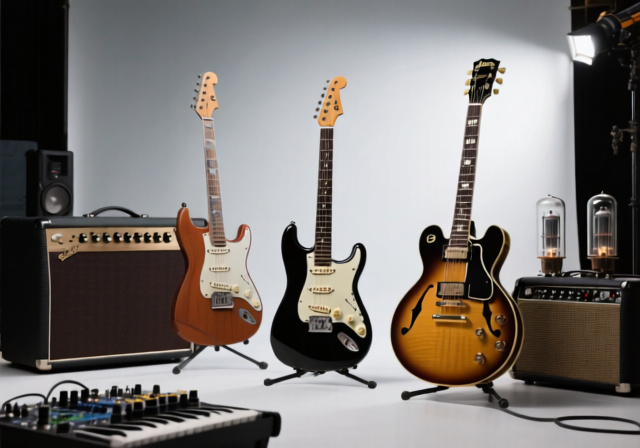
Eric Johnson’s guitar collection is legendary among guitar enthusiasts, with vintage Fender Stratocasters being the cornerstone of his sound. His primary instruments span multiple eras and manufacturers, each chosen for specific tonal characteristics and playing feel.
What guitars does Eric Johnson use? His main electric guitars include vintage Fender Stratocasters from 1954 and 1957, a 1964 Gibson ES-335 in cherry red, and various Les Paul models. Each guitar has been carefully selected and often modified to meet his exacting standards.
The 1954 Fender Stratocaster nicknamed “Virginia” holds special significance in Johnson’s collection. This guitar was used to record “Cliffs of Dover” and features a DiMarzio HS-2 pickup in the bridge position, replacing the stock single-coil to reduce noise while maintaining that classic Strat tone.
Johnson’s 1957 Stratocaster is another crown jewel in his collection. This guitar became the template for his Fender signature model and features Seymour Duncan Antiquity pickups that replicate the sound of aged vintage pickups. The guitar’s distinctive soft V neck profile and 12-inch radius fingerboard contribute to Johnson’s effortless playing style.
Does Eric Johnson use humbuckers? Yes, particularly in his Gibson ES-335 from 1964. This semi-hollow body guitar provides the warm, rich tones Johnson uses for his jazz-influenced passages and rhythm parts. The ES-335’s center position delivers a unique quacky sound that complements his Stratocaster tones perfectly.
For heavier passages and certain lead tones, Johnson occasionally turns to Gibson Les Paul models, particularly from 1959. These guitars provide the thick, saturated tones that contrast beautifully with his cleaner Stratocaster sounds.
In recent years, Johnson has collaborated with Fender to create his signature Stratocaster model. This guitar incorporates many of the features Johnson values in his vintage instruments, including custom-wound pickups, a select alder body, and the distinctive neck profile he prefers.
Amplifiers That Shape Eric Johnson’s Iconic Tone
Eric Johnson’s amplifier setup is as crucial to his sound as his guitars. He employs multiple amplifiers simultaneously to achieve his layered tones, with different amps serving specific purposes in his overall sound.
The Marshall Plexi amplifier forms the foundation of Johnson’s lead tone. He primarily uses 1969 Marshall Super Bass 100W heads and 50W Plexi models, which provide the singing sustain and rich harmonic content that defines his lead sound. These amps are typically paired with Marshall 4×12 cabinets loaded with Celestion speakers.
For clean rhythm tones, Johnson relies on Fender Twin Reverb amplifiers. He uses vintage Blackface models from 1963-1967 as well as modern ’68 Custom reissues. Johnson runs his Twin Reverbs in stereo, often with JBL D120F speakers for their distinctive clean response and enhanced high-frequency detail.
What amp did Eric Johnson use on Cliffs of Dover? For the iconic recording, Johnson primarily used a Marshall Plexi for lead sections and a Fender Twin Reverb for clean rhythm parts. The combination created the dynamic range and tonal complexity that makes the recording so compelling.
Johnson’s Twin Reverb settings are remarkably consistent: Bright switch on, Volume around 3, Treble at 4.5, Midrange at 9, and Bass at 9. These settings provide the clean, articulate foundation that supports his intricate playing style.
In addition to Marshall and Fender amplifiers, Johnson has used boutique amps including Dumble Steel String Singer (which was replaced by a Dumble Overdrive Special after a fire) and Two Rock Traditional Clean heads. These high-end amplifiers provide additional tonal options and have become part of his sound in different periods.
For those looking to find the best guitar amps to replicate Johnson’s tones, modern alternatives like the Suhr Badger 30 or Friedman Small Box can approximate the Marshall Plexi character, while Fender’s ’68 Custom Twin Reverb offers an accessible path to his clean tones.
Eric Johnson’s Complete Effects Pedalboard
Eric Johnson’s pedalboard is a carefully curated collection of effects that work together to create his signature tones. Unlike many guitarists who stack numerous pedals, Johnson uses a relatively small number of high-quality effects units.
Does Eric Johnson use a Tube Screamer? Yes, the Ibanez Tube Screamer TS-808 is an essential part of his pedalboard. Johnson uses it primarily for power chords and as a lead boost, placing it after his fuzz pedal in the signal chain for optimal response.
The Echoplex EP-3 tape delay is perhaps the most crucial effect in Johnson’s setup. This vintage unit provides the warm, organic delay that’s integral to his lead sound. Johnson places the Echoplex before his overdrive pedals, a technique that contributes to his singing lead tones and smooth sustain.
For fuzz tones, Johnson uses a Dunlop Fuzz Face, featuring BC183 silicon transistors. His signature model includes custom knobs and a distinctive hammertone finish. The Fuzz Face provides the psychedelic, saturated tones Johnson uses for certain lead passages and textural elements.
The B.K. Butler Tube Driver is another essential component of Johnson’s lead sound chain. This tube overdrive pedal provides the thick, singing sustain that characterizes many of his most famous solos. Johnson carefully adjusts the level and drive settings to achieve his signature lead tone.
For clean rhythm tones, Johnson employs an Electro-Harmonix Deluxe Memory Man, which provides analog delay, chorus, and vibrato effects. This pedal creates the lush, spacious tones heard in many of his rhythm parts.
Johnson also uses a TC Electronic SCF Stereo Chorus Flanger for modulation effects, and a Boss DD-2 Digital Delay for his dirty rhythm sounds. A ToadWorks Barracuda Flanger appears in his rig for specific songs like “House Burning Down.”
Modern guitarists looking for compressor pedals to replicate Johnson’s tone might consider options like the Keeley Compressor or the MXR Dyna Comp, though Johnson himself uses compression sparingly compared to many players.
Understanding Eric Johnson’s Signal Chain
Eric Johnson’s signal chain is one of the most discussed aspects of his setup, and for good reason. The specific order of his effects and how he routes them through his amplifiers is crucial to achieving his signature tones.
Johnson uses three distinct signal paths: clean, rhythm, and lead. Each path serves specific purposes in his overall sound and allows him to switch between dramatically different tones during performances.
The clean signal path typically runs from his guitar into a wah pedal, then directly to his Fender Twin Reverb amplifiers. This path provides the pristine, articulate clean tones Johnson uses for his more delicate passages and rhythm parts.
For rhythm tones, Johnson’s signal chain includes wah, Echoplex, overdrive pedals, and then into his amplifiers. This path provides the slightly dirty, compressed tones that still retain clarity and articulation.
The lead signal chain is the most complex, featuring wah, Echoplex, Fuzz Face, Tube Screamer, Tube Driver, and then into his Marshall amplifiers. This precise ordering creates the thick, singing lead tones that define Johnson’s sound.
The critical aspect of Johnson’s signal chain is the placement of the Echoplex before his overdrive pedals. This configuration allows the delay repeats to be distorted along with his playing, creating the seamless, sustained lead tones he’s famous for.
Johnson also uses a stereo setup for his clean tones, running two Fender Twin Reverbs simultaneously. This creates a wide, spacious sound that contrasts with his mono lead tones.
Understanding this signal chain is essential for anyone looking to replicate Johnson’s tones. The specific ordering of effects and the separation of clean, rhythm, and lead paths are as important as the individual pieces of gear themselves.
Eric Johnson’s Acoustic Guitar Setup (September 2026)
While primarily known for his electric playing, Eric Johnson’s acoustic guitar setup is equally refined and contributes to his overall musical palette.
Johnson’s primary acoustic guitar is a Martin D-45, featuring scalloped bracing and distinctive snowflake inlays. This high-end acoustic provides the rich, complex tones Johnson requires for his acoustic arrangements and songs.
For amplifying his acoustic guitars, Johnson uses a Barbera Soloist Saddle Pickup system. This pickup provides a natural acoustic sound that preserves the character of his Martin guitar while allowing him to perform in larger venues.
Johnson also owns and plays other acoustic guitars, including a Martin MC-40 with the same Barbera pickup system. These guitars appear on his albums and in live performances when acoustic tones are required.
The attention to detail Johnson applies to his electric gear extends to his acoustic setup as well. He carefully selects strings, picks, and amplification methods to ensure his acoustic tones meet his exacting standards.
Strings, Picks, and Essential Accessories (September 2026)
The details of Eric Johnson’s setup extend to his choice of strings, picks, and other accessories that contribute to his signature tone.
Johnson uses GHS Eric Johnson Nickel Rockers strings in gauge .010 .013 .018 .026 .038 .050. These strings provide the balanced tension and tone Johnson prefers for his playing style and technique.
His pick of choice is the Dunlop Eric Johnson Classic Jazz III. This smaller, thicker pick provides the precision and attack Johnson requires for his intricate playing style.
Johnson pays attention to every detail of his setup, including the cables he uses. He prefers high-quality cables that preserve the integrity of his signal and minimize noise and tone loss.
For those looking to replicate Johnson’s tone, starting with his preferred strings and picks can make a significant difference. These choices affect attack, sustain, and overall tone characteristics.
Frequently Asked Questions
What guitars does Eric Johnson use?
Eric Johnson primarily uses vintage Fender Stratocasters from 1954 and 1957, a 1964 Gibson ES-335, and various Les Paul models. His 1954 Stratocaster nicknamed “Virginia” was used on “Cliffs of Dover” and features a DiMarzio HS-2 pickup in the bridge position.
Does Eric Johnson use a Tube Screamer?
Yes, Eric Johnson uses the Ibanez Tube Screamer TS-808 in his pedalboard. He places it after his fuzz pedal in the signal chain and uses it primarily for power chords and as a lead boost. The Tube Screamer is an essential component of his rhythm and lead tones.
What amp did Eric Johnson use on Cliffs of Dover?
For “Cliffs of Dover,” Eric Johnson used a Marshall Plexi amplifier for lead sections and a Fender Twin Reverb for clean rhythm parts. The combination of these two amplifiers created the dynamic range and tonal complexity that makes the recording so distinctive.
Does Eric Johnson use humbuckers?
Yes, Eric Johnson uses humbuckers in his Gibson ES-335 and occasionally in Les Paul models. The 1964 Gibson ES-335 with its humbucking pickups provides warm, rich tones that Johnson uses for jazz-influenced passages and rhythm parts, complementing his single-coil Stratocaster sounds.
How does Eric Johnson set up his Echoplex?
Eric Johnson places his Echoplex EP-3 before his overdrive pedals in the signal chain. This positioning allows the delay repeats to be distorted along with his playing, creating the seamless, sustained lead tones he’s famous for. The echo level and repeat rate settings are crucial to his sound.
Can I get Eric Johnson’s tone without vintage gear?
Yes, while vintage gear contributes to Johnson’s authentic tone, modern alternatives can approximate his sound. Options like Strymon Timeline for delay, Wampler Tumnus for Tube Driver sounds, and Fender ’68 Custom Twin Reverb amplifiers can provide similar characteristics at more accessible price points.
Final Recommendations
Eric Johnson’s gear represents one of the most meticulously crafted guitar tones in modern music. His attention to detail, from his choice of vintage instruments to his precise signal chain routing, demonstrates the level of refinement required to achieve his signature sound.
For guitarists looking to incorporate elements of Johnson’s tone into their playing, focus on understanding the principles behind his gear choices rather than simply acquiring the same equipment. The separation of clean, rhythm, and lead signal paths, the careful ordering of effects, and the attention to touch dynamics are all essential elements of his approach.
Whether you’re seeking to replicate his exact tones or simply learn from his approach to tone crafting, Eric Johnson’s gear and setup offer valuable insights into the art of creating distinctive, expressive guitar sounds.
For more guitar guides and equipment reviews, explore our comprehensive coverage of best electric guitars and amplifiers to find the perfect gear for your playing style.