
Navigating the world of music theory can sometimes feel like learning an entirely new language.
Among the various symbols and notations, the flat sign holds significant importance.
Its simple yet powerful presence on a piece of sheet music has the ability to alter the pitch of a note, leading to a symphony of rich and nuanced melodies.
Understanding this element is key for anyone looking to deepen their comprehension or refine their skills in playing music.
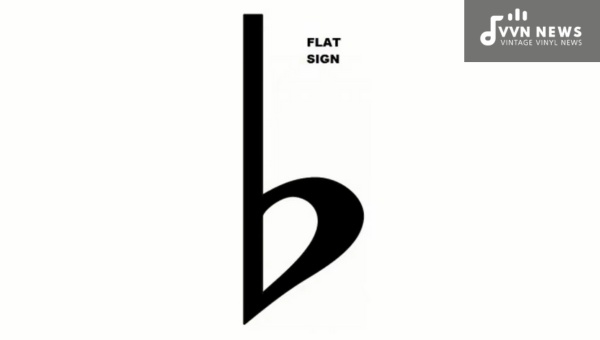
Unmistakable in its appearance, similar to a lowercase ‘b’, the flat sign instructs musicians to lower the pitch of a note by one half-step.
For instance, if you’re playing the piano and encounter this symbol beside a note, you know immediately that you need to shift your finger to the next key down on the keyboard that is flat in pitch – but there’s more to it than just playing notes correctly.
Acknowledging and interpreting these signs accurately can be transformative for your musical expression, adding depth and character to your performances.
Table of Contents
What is a Flat Sign in Music?
In music notation, a flat sign (♭) is an indication to lower the pitch of a note by one semitone (also called a half step).
This sign is placed before a note head and affects all the following notes of the same pitch within the measure unless canceled by a natural sign.
When visualized on a piano, playing the note immediately to the left of your intended note replicates the effect of this symbol.
Essentially, it transforms a “natural” note into its flat counterpart. For example, an “E♭” is played one key lower than an “E” on a piano, altering both its pitch and tonal expression.
How Does a Flat Alter a Note?

In music notation, when you spot a flat sign—resembling a lowercase ‘b’—you’re being instructed to lower the pitch of the note it accompanies by one semitone (also known as a half-step).
This adjustment is essential for achieving the correct melody and harmony. Here’s a more detailed look:
- Lowering Pitch: A flat reduces the note’s pitch so that it sounds one chromatic step lower. For example, if B is played flat, you would play B♭ instead.
- Key Signature Influence: Flats can be part of the key signature, dictating that certain notes are automatically played flat throughout an entire piece unless otherwise indicated.
- Accidentals: Occasionally, flats are used as accidentals, temporary alterations that only affect the measure they appear in.
Flat signs are integral to musical diversity, allowing composers and performers to explore beyond major scales and create music rich with emotional range.
Also Read: B Flat Minor Pentatonic Scale [Create Emotive Music In Minutes]
What’s the Difference Between Sharp and Flat Notes?
In music, a sharp note signifies a half step higher in pitch, while a flat note indicates a half step lower.
These alterations can have subtle yet profound effects on the melody and harmony of a composition.
Pitch Direction
- Sharp Notes (^♯) – When you see this sign, raise the natural note’s pitch by a semi-tone.
- Flat Notes (♭) – Oppositely, this symbol means to decrease the pitch by one semi-tone.
A natural note is the white keys on a piano without any sharps or flats.
Visual Notation
In written music:
- A sharp looks like a hashtag (#); think of it nudging the note up.
- A flat resembles a lowercase ‘b,’ visually pulling the note down.
Key Signatures
The impact of sharps and flats extends beyond individual notes—they dictate the overall key signature that frames the piece.
Not every song strictly uses sharp or flat keys, but their presence sets an underlying structure for musicians to follow.
Accidental Usage
Sharps and flats can be used as accidentals—temporary changes within a measure that do not affect the key signature as a whole.
It’s essential to understand these modifications when interpreting sheet music.
Ultimately, whether you encounter sharps or flats will largely depend on the musical context, including factors such as genre and historical era.
Sharps elevate your notes slightly while flats lower them down, both adding richness to our musical world.
What Does a Flat Sign Look Like in Notation?

A flat sign appears as a stylized lowercase ‘b’ and is placed directly before a notehead on the staff.
Its role is to gently inform the musician to lower that particular note by one semitone. In notated music, you’ll find it nestled on the same line or space as the note it affects, clearly signaling the change in pitch.
Contrastingly bold yet intricate, the flat sign commands attention without disrupting the flow of the musical narrative.
Recognizing this symbol is essential for performers who wish to honor the composer’s intentions and navigate their harmonic landscape with precision.
Also Read: A Flat Minor Pentatonic Scale [Unleash Subtle Tension In Your Music]
What is a Key Signature’s Role?
The key signature of a piece of music determines the key and informs the musician about which notes will be sharply raised or flatly lowered throughout the score.
It’s like a map that sets the stage for where you’re going musically, without cluttering every measure with accidentals (sharp, flat, and natural signs).
A key signature is located at the beginning of a staff, right after the clef symbol, and it applies globally to all occurrences of the specified notes within an entire piece or until it’s altered by a new key signature.
Each key signature has its unique set of sharps or flats — for example, G major has one sharp (F#), while F major has one flat (Bb).
Understanding key signatures allows musicians to more easily read complex scores by immediately knowing what ‘language’ they’re speaking in terms of tonality.
With this essential knowledge, you’re equipped to fluidly navigate through melodies and harmonies that resonate beautifully within their designated musical landscape.
How Do Accidentals Affect a Measure?

Accidentals are pivotal in music, altering pitches within a measure. When a flat, sharp, or natural sign appears, it instantly changes the note it precedes. Here is what happens:
- Pitch Modification: An accidental raises or lowers the pitch of the designated note by a half-step.
- Temporary Change: This effect persists throughout the measure where it appears, but reverts in the following unless restated.
- Harmony and Dissonance: By tweaking pitches, accidentals can create tension or harmony, pivotal for musical expression.
- Key Signature Override: They can temporarily override keys, introducing chromaticism and variety.
Hence, within a single measure, accidentals wield transformative power over melody and harmony, shaping musical narratives with subtle pitch alterations.
Also Read: G Flat Minor Pentatonic Scale [Interesting Tones For Your Music]
Enharmonic Equivalents in Composition
In the realm of music composition, the concept of enharmonic equivalents might seem like a small detail, but it plays a crucial role in both understanding and creating music.
Enharmonic equivalents are basically two notes that sound the same but are written differently.
This occurs due to the chromatic nature of Western music, where a single pitch can be represented by multiple note names.
For example, the note C♯ (C sharp) and D♭ (D flat) are enharmonically equivalent.
Despite their different names and appearances on sheet music, when played, they produce the exact same pitch on most tempered instruments.
Utilizing Enharmonic Equivalents
Composers use enharmonic equivalents for various reasons:
- Modulation: When changing keys in a composition, it might be necessary to pivot using enharmonic to ease into the new key smoothly.
- Simplifying Notation: At times, using enharmonic equivalents can make complex passages easier to read for musicians.
- Expressive Purposes: Choosing particular spellings can influence the emotional or theoretical interpretation of a piece.
Impact on Composition
The thoughtful use of harmonics is essential for composers aiming to maximize musical expressiveness and readability.
It allows more flexibility when writing chord progressions or modulating between keys because it provides alternative ways to represent pitches that fit better within certain harmonic contexts.
Understanding harmonics also aids musicians when communicating about music—especially in genres like jazz where improvisation requires quick thinking about scales and chords.
Knowing that F♭ is an enharmonic equivalent of E natural can change how a musician approaches a solo or composes a melody.
Also Read: E Flat Minor Blues Scale [Infuse Your Tunes With Moody Blues]
FAQs About the Flat Sign-in Music
What exactly does a flat sign do to a note?
A flat sign lowers the pitch of a note by one semitone, also known as a half step.
Can you encounter multiple flats on one note?
Yes, you can. Consecutive flats lower the pitch by an additional semitone for each flat added.
Is it possible to have flats in any type of music genre?
Absolutely, flats appear across all genres, from classical to jazz to pop.
What happens if I see a flat sign in front of a bar line?
This signifies the introduction of a new key signature, which will apply flats to specific notes throughout the piece.
Are there instruments that don’t use flat signs?
Virtually all Western instruments utilize flat signs; however, some non-chromatic percussion instruments may not need them due to their limited pitches.
Conclusion
Embracing the flat sign in music allows you to play with a palette of sounds, infusing your pieces with emotive qualities and complexity.
Whether you’re sight-reading a new piece or improvising, understanding flats and their role in key signatures can enrich your musical journey.
Always remember that each symbol on your sheet music, no matter how small, carries weight in crafting the melody that resonates with both you and your audience.