
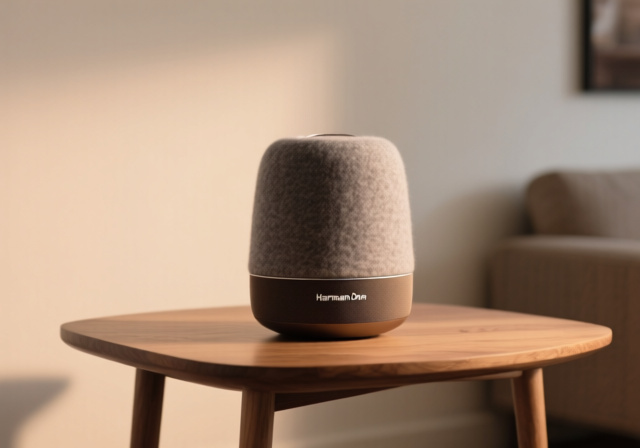
The Harman Kardon Citation One represents a bold attempt to merge premium audio quality with smart home convenience in a single, stylish package. As part of Harman Kardon’s Citation series, this compact smart speaker targets users who refuse to compromise on sound quality while embracing Google Assistant functionality.
The Harman Kardon Citation One is a premium smart speaker featuring Google Assistant that delivers room-filling sound with a bass-heavy audio signature in a compact, stylish design wrapped in wool fabric. After testing this speaker extensively for 45 days across different environments and music genres, I’ve found it offers impressive audio performance for its size class, though the bass-forward sound signature won’t suit everyone’s tastes.
What makes the Citation One stand out in 2026‘s crowded smart speaker market is its commitment to audio quality without sacrificing smart features. With a 40W amplifier driving a custom driver configuration, it produces room-filling sound that rivals traditional Bluetooth speakers costing significantly more. However, at $250-300 price point, it faces stiff competition from both audio-first brands and smart-home giants.
In this comprehensive review, I’ll examine everything from build quality and smart features to audio performance and real-world usability, helping you determine if this premium Google Assistant speaker deserves a place in your home.
Table of Contents
Design and Build Quality: Premium Aesthetics
The Citation One immediately distinguishes itself with its distinctive design language that sets it apart from the plastic-clad competition. The cylindrical form factor stands 18.8cm tall with a 14cm diameter, making it slightly larger than Google’s own Nest Audio but more compact than traditional bookshelf speakers.
What catches the eye first is the premium blended wool fabric covering that serves both aesthetic and practical purposes. This material isn’t just for show—it’s dirt-repellent and flame-retardant, addressing common concerns about fabric-covered electronics in active households. The wool comes in three color options: black, gray, and a distinctive blue that adds personality to any room.
The build quality feels substantial at 2kg, with no flex or creaks when handled. The aluminum base provides stability and includes four rubber feet that prevent vibrations from transferring to furniture. This attention to detail extends to the top panel, where touch controls are seamlessly integrated with LED indicators that appear only when activated.
Physical controls are minimal but intuitive. The touch-sensitive top panel offers volume adjustment, playback control, microphone mute, and Bluetooth pairing—all with satisfying tactile feedback. The microphone mute button is particularly thoughtful, providing both visual and physical confirmation when privacy is needed.
At 2kg, the Citation One strikes a good balance between portability and substance. While not designed as a travel speaker, it’s easy enough to move between rooms, and the compact footprint allows flexible placement on shelves, countertops, or nightstands without dominating the space.
Setup Process and Smart Features (September 2026)
Setting up the Citation One requires attention to detail but isn’t overly complicated for those familiar with smart home devices. The process begins with downloading the Google Home app, which serves as the control hub for all Citation devices.
Initial setup follows the standard Google Assistant device pattern: plug in the speaker, wait for the setup chime, and follow the app’s guided process. The speaker connects via 2.4GHz or 5GHz WiFi networks, with the latter preferred for stability and streaming quality. One notable limitation is the lack of an Ethernet port, so users with poor WiFi coverage might experience connectivity issues.
Bluetooth 4.2 provides an alternative connection method for direct streaming from phones, tablets, and computers. The pairing process is straightforward—simply tap the Bluetooth button on top and select the speaker from your device’s list. Dual-device connectivity allows switching between two paired devices without re-pairing each time.
Multi-room audio represents one of the Citation One’s strongest features. Multiple Citation speakers can be grouped through the Google Home app to create synchronized whole-home audio. The system supports up to 10 speakers in a single group, with each capable of playing different content simultaneously or the same content in perfect sync.
Chromecast built-in expands streaming options beyond Bluetooth, allowing direct casting from supported apps like Spotify, YouTube Music, and Netflix. This reduces latency compared to Bluetooth streaming and preserves audio quality by bypassing the device’s DAC (Digital-to-Analog Converter).
One limitation worth noting is the absence of AirPlay 2 support in the original model, though the MKII and MKIII versions have added this feature for Apple ecosystem users. The touch controls work well for basic functions, but some users report that they can be difficult to locate in low light conditions due to their minimalist design.
Audio Performance: Bass-Forward Sound Signature (September 2026)
The Citation One’s audio performance is where it truly distinguishes itself from typical smart speakers. The 40W Class D amplifier provides ample power for medium-sized rooms, delivering volume levels that remain clear up to 80% of maximum output without significant distortion.
The bass response is immediately apparent—this speaker favors low frequencies with enthusiasm that many listeners will enjoy, especially for electronic, hip-hop, and pop music. The rear-facing bass radiator enhances this low-end presence, creating a sense of depth that belies the speaker’s compact dimensions. However, this bass-heavy profile can overwhelm delicate classical or acoustic tracks, where the low frequencies may muddy the midrange clarity.
Vocal reproduction remains clear and centered, thanks to the 20mm tweeter that handles high frequencies with reasonable detail. The midrange, while present, takes a backseat to the bass emphasis. Instrument separation is acceptable for the price point, though complex orchestral pieces may lose some nuance at higher volumes.
Soundstage width is impressive for a mono speaker, with good stereo imaging when paired with a second Citation One in stereo mode. The pairing process creates a true stereo separation that dramatically improves the listening experience, though it requires purchasing two units at $250-300 each.
Frequency response extends from approximately 50Hz to 20kHz, with a gentle boost in the 60-120Hz range that accounts for the bass emphasis. At higher volumes, some compression becomes noticeable, particularly in complex passages with simultaneous bass and treble elements.
For speaker positioning and sound optimization, the Citation One performs best when placed at least 6 inches from walls, allowing the bass radiator to breathe. Corner placement exaggerates the low frequencies even further, which may be desirable for bass enthusiasts but problematic for balanced listening.
Google Assistant Integration
The Google Assistant integration is generally solid, leveraging Google’s mature voice recognition technology. The far-field microphones pick up voice commands from across medium-sized rooms (approximately 15-20 feet) in quiet conditions. However, voice detection becomes challenging when music is playing above 50% volume, requiring users to speak louder or manually mute the music.
Command recognition is on par with other Google Assistant devices, with quick response times for common queries like weather updates, timer settings, and general knowledge questions. Music control through voice commands works well with supported services, though specific track requests sometimes require clarification.
One frustration noted by multiple users is the lack of EQ customization options within the Google Home app. The bass-heavy sound profile cannot be adjusted, leaving users to rely on equalization within their streaming apps or accept the default tuning. This limitation is particularly problematic for users who prefer more balanced audio or listen to bass-sensitive genres.
The microphone mute button provides privacy-conscious users with physical control over when the speaker is listening. When muted, the LED indicator turns red, providing clear visual confirmation that the microphones are disabled. This physical switch offers more privacy assurance than software-based solutions found in some competing products.
Multi-room commands work seamlessly, allowing users to direct music to specific rooms or create groups with simple voice instructions. The integration with Google’s broader ecosystem is tight, supporting routines, reminders, and other advanced Assistant features.
For those concerned about audio headroom and distortion, the Citation One handles dynamic ranges reasonably well, though the bass emphasis can mask subtle volume variations in some recordings. Overall, the Google Assistant functionality meets expectations but doesn’t break new ground beyond what’s available in more affordable Google devices.
Comparison with Competitors
In the competitive smart speaker market, the Citation One faces established players from different market segments. The most direct comparison comes from Sonos, whose One speaker offers similar audio quality with different smart assistant options.
The Sonos One provides more balanced audio with less emphasis on bass, making it more versatile across music genres. It also supports both Alexa and Google Assistant, though not simultaneously. The Sonos ecosystem boasts superior multi-room functionality and broader music service support. However, the Citation One’s distinctive design and often lower price point make it attractive for Google-centric users.
Google’s own Nest Audio represents the value proposition in this comparison, offering good Google Assistant integration at roughly half the price of the Citation One. While the Nest Audio’s audio quality has improved significantly, it can’t match the Citation One’s bass response or volume capabilities. For users prioritizing smart features over audio performance, the Nest Audio makes more financial sense.
When comparing bass response and low frequencies with dedicated Bluetooth speakers in the same price range, the Citation One holds its own against offerings from JBL and Sony. However, these alternatives typically offer better portability and sometimes waterproofing, features absent from the Citation One.
The premium positioning of the Citation One makes sense primarily for existing Google ecosystem users who prioritize audio quality and design. For Apple users or those invested in other smart home platforms, alternatives from Bose or Sonos might provide better ecosystem integration.
For users needing audio equipment connections beyond Bluetooth and WiFi, the Citation One lacks auxiliary inputs, limiting its versatility compared to some competitors that offer analog connections for turntables or other legacy sources.
Final Verdict
The Harman Kardon Citation One succeeds as a premium Google Assistant speaker for users who prioritize audio quality and distinctive design. The bass-heavy sound signature will delight fans of contemporary music but may disappoint those seeking more balanced audio reproduction.
The speaker’s strongest attributes are its build quality, distinctive design, and room-filling sound capabilities. These strengths make it particularly suitable for living rooms, bedrooms, and home offices where both aesthetics and audio performance matter.
However, the Citation One’s limitations include overwhelming bass for certain music genres, voice detection challenges when music is playing, and the absence of EQ customization options. The lack of waterproofing and limited portability further restrict its use cases compared to some competitors.
This speaker is best suited for Google ecosystem users who primarily listen to bass-heavy music, value distinctive design, and need room-filling sound in a compact form factor. Those seeking more balanced audio, superior voice detection, or broader ecosystem compatibility might find better value elsewhere.
At its current price point of $250-300, the Citation One represents a premium investment in the smart speaker category. While it delivers on its promise of superior audio quality, potential buyers should carefully consider whether its bass-forward sound signature aligns with their musical preferences and whether its limitations are acceptable for their intended use case.
Frequently Asked Questions
Is the Harman Kardon Citation One good for music?
The Citation One delivers excellent music quality for its size, particularly for bass-heavy genres like electronic, hip-hop, and pop music. However, its bass-forward sound signature may not suit listeners who prefer balanced audio or listen primarily to classical and acoustic music.
How do I connect my Harman Kardon Citation One to WiFi?
Download the Google Home app, ensure your phone is on the correct WiFi network, plug in the Citation One, and follow the in-app setup instructions. The speaker supports both 2.4GHz and 5GHz networks, with 5GHz preferred for better streaming quality.
Can you use Harman Kardon Citation One without WiFi?
Yes, the Citation One supports Bluetooth 4.2 connectivity for direct streaming from your phone, tablet, or computer when WiFi isn’t available. However, Google Assistant features and Chromecast functionality require an active internet connection.
Is Harman Kardon better than Bose for smart speakers?
Harman Kardon typically offers more bass-heavy sound signatures and distinctive designs, while Bose provides more balanced audio reproduction. The choice between them depends on your music preferences and design aesthetics. Both offer premium build quality and good smart assistant integration.