
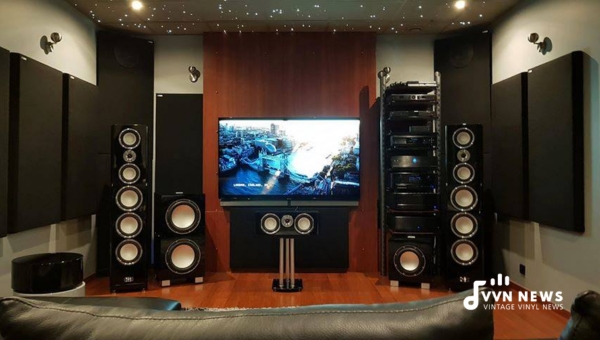
It’s a delightful Saturday morning. I’ve got a hot coffee cup sitting before me, the sun casting an orange hue across my home office, and my fingers are itching to share with you what I’ve uncovered in my deep dive into the art of setting up the perfect listening room.
It’s incredible how to set up your listening room can effectively transform your music experience.
I consider myself a lifetime student of music and acoustics. Now, armed with newfound knowledge and years of personal experience, I feel eager to help those who dare to tread the path less traveled – the one that takes them beyond just hearing music to truly experiencing it.
But first, we need a listening room that does justice to our auditory adventures. Preparing such a haven for music lovers involves understanding space, sound physics, furniture placement, or, in simpler terms – mix position setup.
Even the slightest changes can result in impressive improvements.
Table of Contents
Understanding “Mix Position”

First things first, what is a Mix Position? Simply put, the mix position is the central seat or place where you, the listener, would be positioned in the room to experience the best sound.
While this might seem like common sense, it is more technical than you might think. The mix position directly affects sound waves and how they interact with your room’s surfaces before reaching your ears.
How Important is Mix Position?
To put it succinctly, the importance of mix position cannot be overstated. Sound waves are vibrant; they bounce around your listening room.
Wall type, furniture placement, and listener positioning can either dampen or amplify these reflections resulting in considerable changes in what you hear.
That initial bass thump you experience when the drummer kicks? Or that soulful harmony by the choir’s alto section?
These sweet spots can be lost or distorted if your mix position isn’t accurate. So yes, knowing where to place yourself within a room can improve your sound perspective significantly!
Identifying Your Room’s Mix Position
Now, let’s discuss identifying a suitable mix position in your listening room. Start by considering your room’s dimensions – length, width, and height. Ideal rooms for audio playback are rarely perfect squares; some say rectangular spaces are better.
You’ll need to conceptualize an invisible line along the room’s long axis from one end to another: this line represents all potential mix positions. Now note where speakers would generally sit on this line: not too backward near any walls (to avoid extreme bass buildups) and not too forward (to fend off distortion from early echoes).
Moreover, avoid places where ceiling height varies dramatically, which might cause acoustic anomalies. Remember to consider natural light sources as glaring sunlight could interfere with equipment or create unwanted reflections.
Also Read: How To Structure The First Flute Lesson? [Expert Advice]
How to Setup Your Listening Room?

Setting up a listening room is a systematic process, not just throwing speakers around and spinning some tracks. The position of your speakers can considerably affect the quality of sound you experience. How do we correctly arrange our speaker monitors? Let’s delve deeper.
Arranging Your Speaker Monitors
Your speaker monitor setup plays a crucial role in your audio experience. With technicalities like room symmetry, avoiding the ‘halfway bass null’, and implementing the ’38 percent rule’, let’s navigate this complex yet fascinating process.
Role of Room Symmetry
Our setup must have symmetry in any listening environment, particularly left-to-right symmetry. Why? For stereo imaging.
For two speakers to create an illusion of directionality and audial depth, they need to be placed symmetrically within the room. Imagine a line dividing your room into two equal parts from the front to back. Ideally, in audio setups with two speakers, each space would mirror each other on either side of this axis.
Avoiding the Halfway Bass Null
Bass null? What’s that you ask? This is where certain frequencies (usually bass frequencies) disappear or diminish at specific locations within your room- an anomaly caused by sound wave interference when an original wave and its reflected counterpart come together destructively.
When designing your mix position, avoid placing your listening spot directly halfway between two parallel walls or exactly at the center of your room as these ethereal ‘bass nulls’ can occur at these spots.
Applying the 38 Percent Rule
And now we arrive at my personal favorite – The ’38 percent rule’. Ever wondered where is the best place to sit for optimal bass response? Research points us towards sitting such that our ears are about 38% from either wall in our listening room.
The mathematical specifics may sound daunting but trust me, this rule will help immensely when setting up a prime listening area with well-balanced bass response and less prominent ‘bass nulls’.
Tweaking and testing different arrangements according to these guidelines can help optimize the acoustics in any given space while offering unique insights into the captivating world of sound physics.
After all,the joy of listening lies in what you hear and how you hear it! So noise-isolate those windows if you must but remember – music is art; science just helps us appreciate it better.
Also Read: F Sharp Minor Pentatonic Scale [How To Use In Your Compositions]
Finding the Right Head Position in the Room
Understanding and establishing the correct head position within your audio sanctuary is akin to finding the perfect star alignment. It’s a bit scientific, but it dramatically alters your listening perspective.
Creating an Equilateral Triangle Between Your Head & Speakers
Once you’ve identified your room’s mix position and managed your speaker monitors effectively, creating an equilateral triangle between your head and speakers is the next crucial step.
Why equilateral, you ask? Here’s where geometry meets acoustics – to provide an evenly distributed sound field for ideal perception of stereo imaging.
While setting up:
- Calculate Distances: Measure the distance between your two speakers. Your head should be equal to each speaker, creating that coveted equilateral triangle.
- Ensure Linearity: Both Speakers should directly face you, ensuring that the sound waves from each one reach both of your ears simultaneously.
- Watch Your Height: Make sure that tweeters (the part of the speaker producing high-frequency sound) align with your ear height when seated. This improves sound imaging and detail because higher-frequency sounds are more directional.
Not only does this balanced spatial relationship between listener and speakers ensure “perfect phase coherence,” it also aids in achieving impressive tonal balance and broad stereo imaging.
Remember, while these guidelines offer a quick-start solution for most listeners in most rooms – every space has its peculiar characteristics that can dictate minor changes or tweaks in alignment.
Acoustic Treatment of Your Room
Careful tuning of space goes beyond simply moving furniture and speakers – we need to consider the acoustics. If you’ve ever spoken in an empty room, you would understand how untreated surfaces can cause echoes or impact the clarity and quality of sound. Acoustic treatment is designed to control, not completely deaden, these reflections.
Acoustic Treatment Essentials
For a sophisticated listening room setup, addressing the three main elements of acoustics are Absorption, Diffusion, and Bass Trapping.
- Absorption: Absorbing materials soak up sound energy, preventing it from bouncing all over your room. This helps reduce echoes and background noise for clearer sound.
- Diffusion: Diffusers evenly distribute sound throughout the room rather than allowing it to bounce off walls and create hotspots or dead zones.
- Bass Traps: Low-end frequencies tend to accumulate in corners, causing what we call ‘standing waves’. Bass traps are used here to prevent excessive bass build-up.
Also Read: Dorian Mode [Major Scale’s Lesser-Known Sibling Explained]
Choosing Acoustic Materials
When selecting acoustic materials for your listening room:
- Foam panels: Ideally suited for absorption as they come in various densities and thicknesses that handle different frequency ranges.
- Diffusers: Typically made from wood or hard plastic – they can significantly improve overall sound quality by spreading sounds evenly.
- Bass traps: Generally made of denser foam or fiberglass designed to handle lower frequencies.
Applications may vary depending on your specific acoustic needs and the design considerations of your listening space.
Location and Application of Acoustic Materials
When it comes to placement:
- Install absorption panels at reflection points on walls or ceilings where sound bounces off directly towards the mix position.
- Install diffusion devices directly opposite the listening position if a flat surface is present.
- Finally, add Bass Traps on horizontal corners where walls meet ceilings or floors, as these spots are prone to bass frequency build-up.
The right mix between these elements will depend on your room dimensions, speaker type, and listening preferences. So feel free to experiment with different placements until you find what works best for you!
Getting your room’s acoustics just right calls for methodical attention toward understanding its characteristics and carefully selecting and placing acoustic materials.
But trust me when I say that the rewards are well worth it! Once that’s done, sit back in your armchair, press play on your favorite piece…and welcome home to this harmonious haven you created!
Building our little utopia isn’t as difficult as one might think – a little understanding of acoustical treatment essentials can go a long way in creating our perfect musical paradise!
Fine-Tuning Your Listening Room Setup

Now that we’ve got the basics laid down let’s delve deep into adjustments and improvements for better sound quality. You don’t need to be an audio engineer to pull this off. A little bit of intuitive tweaking can go a long way here.
Adjustments and Improvements for Better Sound Quality
First, let’s ensure that no piece of furniture hinders the sound waves produced by your speakers. Keep any high-back chairs, tables, or other potential obstacles out of your speakers’ line of sight.
Try to experiment with the angles at which you place your monitors. If things still don’t feel right after setting up an equilateral triangle between your position and the speakers, adjust accordingly—make sure you’re not seated too close or too far away from the speakers.
A secret sauce I swear by is fine-tuning my subwoofer’s phase control settings. This is an excellent tool for ensuring uniform bass distribution across the room. Don’t hesitate to play around with it until you strike audio gold!
Lastly, fine-tuning your room’s acoustics is where things come together (pun intended!). You can dramatically boost sound quality by strategically placing diffusers and absorbers in critical locations around your room.
Common Mistakes & How to Avoid Them
Here are some prevalent mistakes I often see:
- Lack of symmetry – Ensure both sides of the room are similar in shape and decoration.
- Using untreated materials – Aim to use materials designed specifically for acoustic treatment.
- Illumination errors – Always opt for dimmable lights so they don’t disturb sensitive audio equipment.
- Misplaced equipment – Make sure none of your gear interferes with another; if possible, keep wiring hidden yet accessible.
By honing on these details and minimizing these common errors during setup, you’ll find yourself enveloped in a harmonious listening space not just acoustically but aesthetically as well.
Also Read: B Major: The Scale And Chords [Guide To This Beautiful Key]
FAQ About mix position
What is a mix position?
A mix position refers to the optimal spot within a listening room where sound from the speakers blend and balance perfectly.
How can I find the perfect location for my speaker setup?
You can identify the best location for your speakers by applying the 38 percent rule, ensuring room symmetry, and avoiding halfway bass null.
How important is room symmetry in a listening room setup?
Room symmetry is critical as it ensures sound waves bounce identically from each side, which helps to retain sound clarity and prevent echoes or distortions.
What does acoustic treatment involve?
Acoustic treatment involves modifying a room to enhance its sound quality by using specific materials that absorb, diffuse or reflect audio waves.
Can I fine-tune my listening room setup once everything is placed according to principles?
Yes, adjusting your equipment can help refine the overall audio output. Shift speakers or seating arrangements slightly as needed, play with different volumes and observe changes in sound quality.
Conclusion
Amplifying your audio experience is within reach. Perfecting your mix position and setting up your listening room is a game-changer.
At first glance, it might seem like an unachievable task, but with a little systematic application and an understanding of fundamental sound principles, you will certainly see vast improvements.
Throughout this journey, remember that each room has its unique acoustic character – tailor solutions to suit the specifics of your space. It’s time for you to transform every note into a symphony.