
Have you ever found yourself trying to learn a new song only to realize it’s just out of your vocal range? Or perhaps you’re an instrumentalist looking to play a piece that better fits the timbre of your instrument.
That’s where the magic of transposition comes into play. Learning how to transpose down an octave can be a real game-changer, enabling you to adjust musical pitches so that they are more suited to your needs or the context of your performance.
Transposing music might seem daunting if you’re doing it for the first time, but fear not. It’s a skill that, once mastered, will greatly enhance your musical flexibility and understanding.
Whether you’re reading sheet music or playing by ear, knowing how to transpose down an octave will make a significant difference in how you approach music.
In this article, I’ll walk you through the steps to achieve this with confidence and ease so you can continue making music that’s truly yours.
Table of Contents
What is an Octave in Music Theory?
In music theory, an octave is the interval between one musical pitch and another with double its frequency.
The term is derived from the Latin word ‘octavus,’ which means eighth. When I play a note and then play another note that’s an octave higher, I’m essentially traversing eight diatonic pitch steps on a scale, landing on a note that sounds harmonically related to the first but that vibrates at twice the rate.
This ‘doubling’ effect creates a sense of completeness or return.
Octave intervals are pivotal in constructing scales and melodies, forming the foundation upon which musical structures are built.
For instance, if you start on a middle C (C4) on a piano and count up eight white keys (including starting and ending notes), you reach the next C (C5)—this span is an octave.
This relationship holds true across all instruments and clefs; regardless of starting pitch, an octave spans eight scale degrees, connecting two notes with frequencies in a 2:1 ratio.
Also Read: 25 Best Hip-Hop Producers [Behind The Beats Of The Hits]
How Do Different Clefs Affect Octave Transposition?

When you’re diving into the world of octave transposition, understanding the role of clefs is like getting a master key to unlocking musical notation.
Clefs serve as guideposts that dictate the pitch range for the staff lines on sheet music.
There are several clefs, but let’s focus on the most prevalent ones: treble, bass, alto, and tenor.
Treble Clef
The treble clef, also known as the G clef, spirals around the second line from the bottom.
This line represents G4, which is above middle C (C4) on a piano. When transposing down an octave in this clef, every note moves down to its corresponding position but remains within the staff or moves below it.
For example, a G on the second line would become the G below the staff.
Bass Clef
Conversely, with bass clef or F clef—which dots around the second line from the top representing F3—the same principle applies.
Notes are shifted an entire octave lower so that they align with their new pitch level. A note sitting on this line would step down an octave to a ledger line or space below.
Alto and Tenor Clefs
The alto and tenor clefs—also known as C clefs—are unique because they center around middle C (C4).
In the alto clef, this note sits on the middle line of staff; in the tenor clef, it’s set up to be one ledger line above that.
To transpose down an octave here means moving notes so that their positions reflect their new octaves appropriately.
Getting your bearings with how each clef impacts octave transposition can liberate your musical exploration and open up new territories for vocalists and instrumentalists alike.
Also Read: 15 Home Studio Must-haves For Comfort & Productivity
What Are the Steps to Transpose Down an Octave?
Transposing down an octave can open up new possibilities whether you’re arranging music, composing, or simply trying to match a piece to your vocal range.
By moving a melody or a chord progression down an octave, you essentially shift every note down 12 half-steps or 12 piano keys on a keyboard.
This maintains the integrity of the music while setting it in a lower register. Below are detailed steps to guide you through this process.
Identify Starting Pitch and Notation
Firstly, pinpoint the starting pitch of the music piece. Ensure you’re familiar with reading musical notation if you’re working from sheet music.
Understand Octave Intervals
Recognize that an octave encompasses eight notes in a scale, starting and ending on notes of the same name.
For example, C-to-C or G-to-G. Remember that lowering an octave means you’re looking for the same note name at a lower pitch.
Locate The Corresponding Lower Note
On sheet music, move each note exactly one line or space lower if within a staff and two ledger lines lower if already on ledger lines in treble clef.
Consider Any Key Signatures and Accidentals
When transposing, maintain all accidentals (sharps, flats) relative to their position within the original octave.
Don’t neglect any existing sharps or flats dictated by the key signature—you must carry these over when moving down an octave.
Adjust Clefs If Necessary
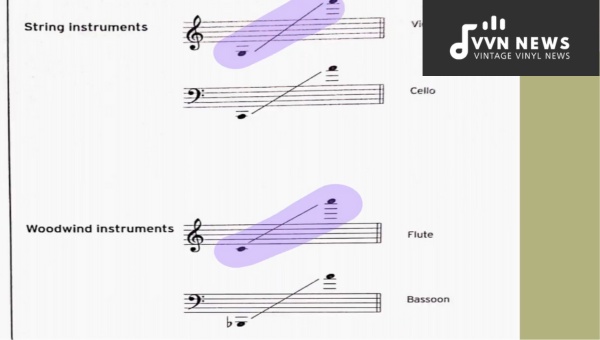
Sometimes when transposing instruments with different ranges like bassoon or cello into treble clef instruments like flute or violin, it’s not just about moving notes but also potentially changing the clef—from bass to treble clef.
Utilize Transposition Tools If Available
For those less familiar with manual transposition, consider using digital tools such as notation software where you can select all notes and move them en masse down by selecting “Transpose Down” followed by “Octave.”
By following these methodical steps, you’ll find that shifting music down an octave isn’t just practical – it can also unlock more comfortable playing fields for various instruments and voices.
Also Read: How To Sample Like The East Coast Producers
How to Transpose Down an Octave in Alto and Tenor Clef

Transposing music down an octave might seem like a puzzle with clefs like Alto and Tenor that are less familiar to some musicians.
However, the process remains consistent across all clefs. Let’s break it down for these particular clefs, which are pivotal for viola, cello, and some brass players.
Alto and Tenor Clefs
Alto and Tenor are both C clefs, meaning the middle line of the staff is middle C (C4). In Alto Clef, this is the third line; in Tenor Clef, it’s the fourth.
Step-by-Step Transposition Process
- Identify Your Starting Note: Before anything else, determine the note you’re beginning within your current clef. Remember that in Alto Clef, this may be a note on the third line (middle C), whereas in Tenor Clef, it’ll be a note lying on the fourth line.
- Shift Each Note Visually: Imagine moving each note you see down to the next space or line beneath it. This visual drop translates your music down exactly one octave on paper.
- Adjust Your Key Signature: If you’re transposing for an instrument tuned to Alto or Tenor Clef, remember that moving notes down by an octave can affect accidental placements within your key signature.
Practical Tips When Shifting Octaves
- Use manuscript paper to rewrite your transposed music if doing so by eye is challenging.
- In Alto Clef, a jump from any line to its subsequent space below takes you from E down to F; apply this logic across the staff.
- For Tenor Clef large steps within ledger lines might confuse; proceed methodically from known positions as anchor points.
By following these steps prudently—with attention to detail—you’ll swiftly become adept at maneuvering music through octaves no matter the clef involved.
Also Read: How To Start Producing Music As A Beginner?
Common Mistakes to Avoid When Transposing Octaves
Transposing music down an octave might sound straightforward, but it’s easy to slip up if you’re not careful. Here are some pitfalls to watch out for:
- Overlooking Key Signatures: When transposing, every note moves down an octave, including those affected by the key signature. Be vigilant about maintaining the integrity of sharps and flats; they transpose along with the notes.
- Ignoring Accidentals: Don’t forget that accidentals must be copied exactly as they are. An accidental not carried over is a common blunder that can alter the entire harmony.
- Clef Confusion: Ensure you’re clear on how each clef operates. Shifting notes down an octave in bass clef is different from doing the same in treble clef because of their respective positions on the staff. A note in one clef may not be represented by the same position in another after transposition.
- Octave Displacement: It’s tempting to move everything down to the next line or space on the staff, but this isn’t accurate. Moving a note directly one octave lower drops it from a line to its corresponding space, or vice versa—not just to the next available spot on the staff.
Double-check your work and keep these potential mistakes at bay to ensure your transposed music resonates accurately and beautifully with your intended octave shift.
Also Read: 30 Music Production Tips And Tricks For Beginners 2026
FAQs About Transposing Down an Octave
What is transposing in music?
Transposing in music refers to moving a collection of notes up or down in pitch by a consistent interval.
Do I need special software to transpose music down an octave?
No, you don’t necessarily need software; transposing can be done manually on sheet music or by ear.
Can transposing down an octave change the key of the piece?
Yes, transposing any interval can change the piece’s key unless you compensate with appropriate accidentals.
Is it possible to transpose any instrument down an octave?
While it’s possible to transpose music for any instrument, practical limitations like range may affect playability.
Will transposing down an octave affect the fingering on my instrument?
Absolutely, when you transpose music, you’ll often need to adjust your fingering to accommodate the new notes.
Conclusion
As you venture into transposing music down an octave, remember that it’s a skill honed with patience and practice.
Whether you’re adjusting a piece for singing, tweaking an instrument’s range, or simply exploring musical creativity, lowering the pitch by an octave can open up a whole new world of possibilities for your musical expressions.
Stay diligent in your efforts to get comfortable with this technique – before you know it, it’ll be second nature to you.
Keep experimenting and let your artistry shine through the notes that you choose.