
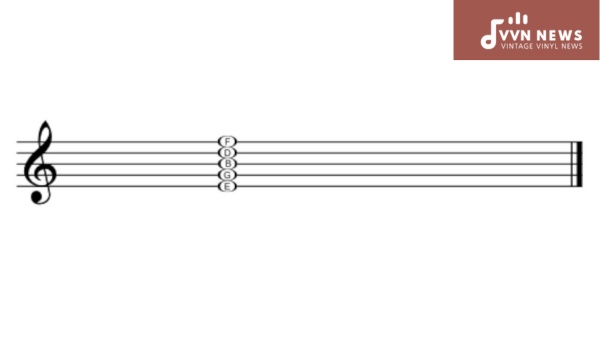
Understanding ledger lines is essential for anyone who aspires to read or write music.
These seemingly innocuous horizontal strokes play a crucial role in musical notation, allowing composers and musicians to extend the reach of the standard five-line staff.
Ledger lines grant us the ability to capture notes that exist beyond the boundaries of those primary lines and spaces, ensuring that every pitch has its place on the page.
In my journey navigating through sheets of music, I’ve come to appreciate how ledger lines serve as a bridge connecting the familiar territory of the staff to the higher and lower sounds that stir our emotions.
They’re not just an extension of the musical staff; they’re fundamental to fully expressing a composition’s potential.
you’re a budding musician or a seasoned maestro, recognizing and interpreting these lines is key to mastering your musical literacy.
Table of Contents
What Are Ledger Lines in Music Notation?
Ledger lines are horizontal lines that extend the range of the standard musical staff.
These additional lines appear above and below the five main staff lines when we encounter notes that soar too high or plunge too low for the fixed pitch spaces.
When you see a note placed on or between ledger lines, it signifies a pitch that is beyond the limits of the staff.
Each ledger line represents a single step in musical pitch, just as each space or line within the staff does.
Understanding these notations is crucial for interpreting the full spectrum of music accurately.
How Do Ledger Lines Extend the Staff?

When we encounter musical notes that soar above or plunge below the five-line staff, ledger lines are our lifesavers.
These additional lines serve as temporary extensions of the staff, allowing us to notate pitches that are beyond the normal range.
Imagine you’re climbing a ladder. The staff is your initial set of rungs, and ledger lines are those extra steps you add on when you need to reach higher or lower.
Each ledger line represents a step in pitch, just like the lines and spaces on the staff.
A note sitting right on a ledger line or snugly in a space between ledger lines translates into a specific pitch.
For example, if you see a note on one ledger line above the treble clef staff, that’s an A; two lines above is a C.
Using these extensions correctly is crucial because they maintain relative spacing between each line or space and continue the sequence of musical pitches without interruption.
So, as long as you know which note corresponds to which line on the main staff, you can easily decipher notes on ledger lines by counting upward or downward.
Also Read: D Flat Music Note [Cracking The Code Of Musical Notation]
Use of Ledger Lines
Ledger lines serve a pivotal role in the realm of music notation. Whether you’re looking at a grand piece by Beethoven or deciphering the chords of the latest pop song, ledger lines are the unsung heroes that bring the full range of musical pitch into clarity.
Expanding the Staff
Picture the standard five-line staff as a ladder; it has limited rungs. Without additional support, there’s only so much height you can achieve.
This is where ledger lines come in. They act as extra rungs, allowing notes to ascend or descend beyond this fixed structure.
For instance, middle C (C4) on a piano is often found just below the treble clef staff or just above the bass clef staff.
Given its position, it requires a single ledger line to be accurately represented. Yet what if we want to reach an A4, two whole steps above middle C? In this scenario, we would employ two ledger lines above the treble clef staff.
Essential for Range
Utilizing ledger lines effectively broadens an instrument’s playable and notatable spectrum.
Consider woodwind instruments like the flute or clarinet that have extensive ranges.
Notes that soar high above or dive below traditional staves would be lost without these extensions.
Practical Reading and Writing
When reading music with ledger lines, always remember that each line or space represents a step in the sequence of notes just as it does within the standard five-line staff.
Musicians quickly become adept at recognizing these steps and translating them into fingerings on their instruments.
In writing music with ledger lines, clarity is key. Too many ledger lines can make sheet music crowded and difficult to read during performance.
As such, composers often opt for octave signs or 8va notation (indicating to play an octave higher) when many ledger lines are necessary.
By understanding their purpose and how they extend melody and harmony on paper, ledger lines become less daunting they transform into critical tools enabling us to capture every nuance of musical expression effectively.
Also Read: B Flat Major Blues Scale Guide [Crack The Code To Blues Music]
Differences Between Ledger Lines for Treble and Bass Clefs

When we dive into the world of ledger lines, an interesting observation arises: while the fundamental concept behind using ledger lines in treble and bass clefs is the same, their application reveals key differences that musicians must grasp to read music accurately.
At its core, understanding each clef’s specific ledger line pattern is vital for a swift and precise interpretation of musical scores.
Treble Clef Ledger Lines
In the treble clef, often referred to as the G clef, ledger lines follow an upward continuation from the E note positioned on the top line of the staff.
For every step above this E, a corresponding ledger line is added. For instance, moving from E up to F requires a small leap onto a single ledger line just above the standard staff.
It’s fascinating to note that notes on treble clef ledger lines mirror those within the staff itself.
For example:
- The first ledger line is F (just like F at the bottom space).
- The space directly above that line is G (starting from G at the bottom line).
- This pattern continues upwards with A (second space), B (middle line), and so forth.
Essentially, it’s an extension of the pattern established within the five lines but reaching beyond them into higher pitches.
Bass Clef Ledger Lines
Conversely, bass clef, also known as F clef, sequences its notes downward, starting from A just below the bottom line of its staff. Following each step down requires additional ledger lines beneath.
The bass clef persists in mirroring its inner structure through these external ledger lines.
- The first ledger line below represents G.
- Further descending gives us an F.
- Continuing downwards will lead you to E (second top space), D (topmost line), etc., thus drawing out an extended map rooted in similar principles as its counterpart in higher octaves.
These intricacies ensure that whether our melodies soar high or plunge deep, they always have a precise notation system accompanying them, which is indispensable knowledge for any musician working across different ranges and repertoires.
Understanding these differences means comprehending how each set of notes relates specifically to either treble or bass registers.
How to Read and Write Notes on Ledger Lines
Reading and writing notes on ledger lines might seem challenging at first, but with a bit of practice, you’ll find it becomes second nature.
Let’s explore this crucial element of musical notation step by step.
Reading Notes on Ledger Lines
- Start With the Basics: Understand that each ledger line represents a continuation of the staff. Just as each line or space on the staff corresponds to a specific note, so does each ledger line and the spaces above and below it.
- Identify Your Clef: Know whether you’re reading in treble or bass clef as this determines your starting note. For example, the bottom line of the treble clef staff is an E, while it’s a G in bass clef.
- Counting Up or Down: For every step you move up or down from the staff, you alternate between a space and a line. The first ledger line above the treble clef staff is an A; going further up, the space just above that ledger line represents B.
- Interval Recognition: Learn to recognize intervals quickly—it helps to see how far away notes are from familiar lines or spaces on the staff without counting each individual note.
Writing Notes on Ledger Lines
- Maintain Proper Spacing: Ensure each ledger line is equally spaced from one another as they are an extension of your staff lines.
- Use Ledger Lines Sparingly: Write notes on ledger lines only when necessary if they fall outside those main five lines of your staff. If too many ledger lines are used, it might be time to change clefs or octaves for easier readability.
- Neatness Counts: When handwriting music, precision matters; make sure your ledger lines are straight, clear, and of consistent length, just long enough for the notehead to fit snugly above or below them without touching any adjacent notes’ ledger lines unless intended for chords.
By understanding where these additional lines fit relative to known pitches on your staff and how they create more possibilities for musical expression, reading and writing music with ledger lines doesn’t have to be intimidating.
It’s simply another fascinating aspect of making music accessible no matter its range.
Also Read: E Flat Minor Triad [How To Crack The Code Of Music Notation]
How Do Ledger Lines Affect Musical Interpretation?

When I first encountered ledger lines, I realized they weren’t just a test of my note-reading abilities; they held profound significance in musical interpretation.
The use of ledger lines can have a subtle yet powerful impact on how a piece is understood and performed.
Scope of Expression
Ledger lines enable composers to write music that spans beyond the five-line staff, allowing for greater melodic range and expressive depth.
As a result, performers can convey emotions that may not have been achievable within the confines of the staff alone.
Clarity in Complexity
In intricate passages, ledger lines provide clarity, distinguishing between notes that might otherwise be crowded with multiple octave signs or 8va notations.
This visual distinction helps musicians interpret complex sections with greater precision.
Dynamics and Articulation
High and low pitches accessed through ledger lines often suggest dynamic choices or articulation; high-flying melodies can imply fortissimo passages, while lower extensions might call for a more subdued pianissimo feel.
Technical Challenge
Notes on ledger lines can be more challenging to read, which requires musicians to be intimately familiar with their instrument’s range.
Accurately interpreting these notes demands skill and practice, thereby influencing the performance level required.
Understanding the implication of ledger lines leads to richer musical interpretation and more emotionally resonant performances.
Also Read: G Sharp Diminished Triad [Explore Unique Guitar Chords]
Alternatives to Using Ledger Lines
When composing or reading music, ledger lines are the traditional method for notating pitches that fall outside of the standard staff.
However, they can sometimes clutter the sheet, making it harder to read quickly, especially when there are multiple consecutive notes far above or below the staves.
I’ve explored and utilized some effective alternatives that can clear up this notational congestion.
8va and 15ma Notation
The ottava alta (8va) and quindicesima alta (15ma) notations are like a breath of fresh air for those suffocated by ledger lines.
When you place an “8va” above a series of notes, it means to play them an octave higher than written; similarly, a “15ma” instructs you to play two octaves higher.
Conversely, an “8vb” (or sometimes “8va bassa”) under the staff signals to play an octave lower.
With these instructions, musical passages maintain their position on the staff without the need for excessive ledger lines.
Clef Transposition
Sometimes, composers opt for clef transposition. If notes are consistently too high or low for comfortable reading within one clef, switching between treble and bass clef or employing alto or tenor clefs can minimize reliance on ledger lines.
For example:
- A part written primarily in high registers might temporarily switch from treble to soprano or mezzo-soprano clef.
- Low instruments such as bassoons or trombones often use tenor or bass clefs interchangeably.
Tablature and Chord Symbols
For guitarists and bassists, tablature presents an alternative that bypasses standard notation altogether, thus eliminating the need for ledger lines.
Chord symbols above a melody line can also offer keyboard players enough information to render ledger lines unnecessary in simpler pieces.
Modern Notation Software Capabilities
Noteworthy advancements in modern notation software provide dynamic workarounds for excessive ledger line usage.
These programs can automatically implement octave signs and adjust clefs when certain pitch thresholds are crossed.
This means less manual labor for composers aiming to prioritize readability.
By considering these alternatives to ledger lines, we ensure that our music remains as clear and legible as possible, an essential component in effective communication between composer and performer.
Also Read: G Minor Triad [Demystify This Common Guitar Chord]
FAQs about Ledger Lines
How are ledger lines different from the lines in a musical staff?
Ledger lines are short horizontal marks that extend the range of the staff when notes fall above or below the five standard lines.
Can ledger lines be used for both notes above and below the staff?
Yes, ledger lines can appear above and below the musical staff to represent notes beyond their normal range.
Is there a limit on how many ledger lines can be used for a single note?
There’s no official limit, but readability becomes difficult with too many; typically, more than three or four is best avoided.
Do all clefs use ledger lines in the same way?
While all clefs use ledger lines to extend their reach, their placement will differ depending on whether it is a treble, bass, or other clef.
Can I encounter ledger lines on any musical instrument?
Absolutely, as long as the instrument’s pitch range requires notes outside of the standard staff, you’ll encounter them.
Conclusion
Ledger lines extend the musical staff’s range, empowering composers and performers alike.
Their role in music notation is pivotal, allowing for the precise placement of notes that would otherwise be uncharted.
As you regularly encounter and practice with ledger lines, their reading and writing will become second nature to you.
So embrace them as your allies in the vast world of music notation, for they are the unsung heroes that ensure no note gets left behind.