
Music, in its purest form, is a language unto itself. It holds the power to convey emotions and transport us into realms we’ve yet to explore.
Within this audial universe, a key component that adds flavor to any musical composition is the Neapolitan chord.
Mention it to music enthusiasts and watch their eyes light up.
Consider the Neapolitan chord as a distinctive character in the plot of a riveting novel.
It adds a unique twist, elevating the narrative with its unpredictable touch. This chord isn’t an everyday option on your piano or guitar.
Yet, when applied correctly, it unveils new dimensions in a melody that are simply entrancing to listen to and marvel at.
Table of Contents
What Are Neapolitan Chords in Music Theory?
In the complex world of music theory, a Neapolitan chord is a triad built on the lowered second-scale degree, generally known as supertonic.
This chord sits in the major key and comprises three crucial elements:
- A flat second-scale degree
- A fourth-scale degree
- A minor sixth-scale degree
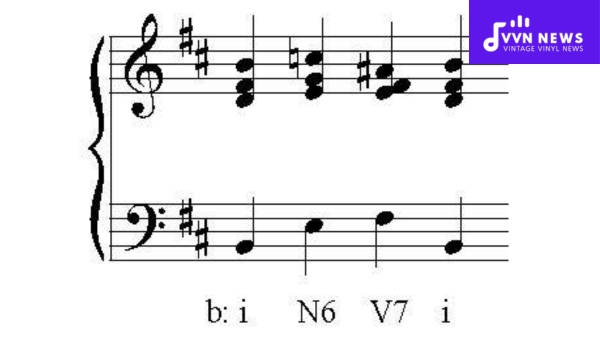
This unique composition is invariably played in the first inversion (with its third in the bass), rendering it an excellent pre-dominant harmony.
Essentially, it’s utilized for its distinct quality and the intense resolution it can provoke when progressing to the dominant or tonic chord.
It’s a fascinating tool in music composition that fosters unexpected depth and richness.
Also Read: Ear Training: Master Music Skills with Expert Techniques
Where Does the Neapolitan Chord Originate?
The intriguing world of music always leaves one mesmerized, and the history of the Neapolitan chord is no exception.
It has its roots in Naples, Italy, considered the jewel of Southern Italy. Consequently, it is named ‘Neapolitan,’ paying homage to its place of birth.

During the early 18th century, played extensively in operas and concerts in Naples, this chord made a significant impact on Western classical music composition with its peculiar yet mesmerizing sound.
Primarily utilized to make transitions smoother and add different flavors to compositions, its popularity spread across Europe gradually.
Today this unique chord holds an esteemed place in global music composition.
What Are the Characteristics of the Neapolitan Chord’s Sound?
To decipher and describe the sonic nature of the Neapolitan chord, it can be broken down into various distinctive features. Here are five key characteristics:
- It Features a Flat Supertonic: The Neapolitan chord generally comprises a major triad built on the lowered second degree (the supertonic) of the major or minor scale.
- Richness through Dissonance: This characteristic chord offers a rich dissonance, which creates an unsettling, suspenseful, and expressive sound compared to conventional harmonic structures.
- Utilization of Chromaticism: Incorporating chromaticism in melody lines creates unexpected twists in music. The Neapolitan chord manages to enhance this with its inherent chromatic nature.
- Archetypical Pre-Dominant Function: Pre-dominant chords in diatonic progressions usually prepare for a dominant-tonic resolution by producing tension. With its unique harmonic structure, a Neapolitan chord strengthens this pre-dominant effect.
- Functions as Color Chords: Known for its coloristic capabilities, when musicians subtly inject this intriguing chord into compositions, it gives an unexpected hue to an otherwise conventional melodic structure —making it truly unforgettable.
The essence of the Neapolitan chord’s sound lies in its distinctiveness and unpredictability, lending an edge to musical compositions that are hard to dismiss or ignore.
How is The First Inversion Utilized in Neapolitan Chords?
Utilization of the first inversion (notated as N6) plays a huge role in implementing Neapolitan chords effectively. Typically, a Neapolitan chord is comprised of the second scale degree, but is lowered by half a step.

When constructed in the root position, it takes on the structure of a major triad (alteration). With the first inversion employed, the chord takes on a new light.
Notice that in this variation, the third of the chord becomes its root. This shift creates an engaging tone that was buried in its root form.
To achieve this effect, you simply reorder your pitches so that the third note of your chord is now at the bottom.
For instance, if your Neapolitan chord was originally based on D-Flat Major (D-Flat, F, and A-Flat), transitioning to the first inversion would result in an F in the lead (F, A-Flat, and D-Flat).
The resulting sound brings an enchanting element of surprise into your composition while maintaining familiar tones that wouldn’t be perceived as jarring.
Also Read: A Guide Transposing Into The Alto C [Navigate Music Transposition]
What are the uses of the Neapolitan Chord?
The Neapolitan chord, typically denoted as N or ♭II, has its unique place within the musical tapestry.
Its traditional employment is to introduce a sense of harmonic departure, a shifting of gears.
This flat-second scale degree chord injects a dose of unexpected color, especially in classical compositions.
Unconventional Tonal Exploration
Musicians often deploy the Neapolitan to venture away from conventional tonality.
Its presence creates a strong tension that requires resolution, thus propelling musical narratives forward with new intrigue.
Pre-Dominant Function
The chord commonly serves a pre-dominant function; it prepares the ears for the coming dominant chord or harmonic progression.
For instance, you might see it precede the V (dominant) chord, ensuring a smooth yet surprising transition that heightens listener engagement.
Enhancing Musical Drama
Composers use it to enrich stories told by their pieces, harnessing its power to underscore dramatic moments or enhance an emotional climax. The bold shift produced by moving from the minor second interval often underscores a pivotal moment in a piece’s emotional landscape.
For example: In the key of C minor, the Neapolitan chord would be built on D♭ major.
When skillfully woven into a progression – perhaps transitioning into G major – it offers a poignant contrast that signals an important moment.
Indeed, this is merely scratching at its potential; exploring its possibilities could become an enriching endeavor for any aspiring composer or musician.
Also Read: E Minor Pentatonic Scale [How To Use In Your Music Composition]
How is a Neapolitan Chord Labelled?
In the fascinating realm of harmonic structures, Neapolitan chords stand out with their striking sound and are symbolized with distinctiveness in music notation.

To denote this chord, one commonly uses the letter “N”, sometimes in conjunction with its specific function within a key.
In sheet music, you might encounter it annotated as “♭II”, representing its position as a major chord built on the lowered second scale degree.
For instance, if you were working within C Major, the Neapolitan would be a D♭ major chord.
When looking for this harmonic player within a score or discussing its use, watch for these conventional labels.
Such markers provide clarity and consistency in communication among musicians and composers alike.
What is the Harmonic Function of a Neapolitan Chord?
The Neapolitan chord, typically denoted as N or ♭II, is a major chord built on the flattened second scale degree.
In classical harmony, its primary role is to introduce a sense of tension and unexpected color, which then resolves back into the familiar territory.
It serves as a subdominant, or pre-dominant, setting up the listener for the subsequent dominant chord.
Employing this exotic-sounding chord yields a dramatic shift in the tonal landscape.
It adds gravitas before resolving usually to the V (dominant) or i (tonic in minor keys) chords, creating an intriguing path that enriches the musical narrative.
The dissonance with the tonic note caused by its lowered root catches listeners’ ears, marking a poignant departure from conventional progressions before returning home.
Also Read: F Sharp Minor Pentatonic Scale [How To Use In Your Compositions]
How Can One Train Their Ears to Recognize Neapolitan Chords?
Developing an ear for Neapolitan chords involves active listening and some strategic exercises.

Here’s how you can hone your abilities to pick out these harmonic gems.
Familiarize yourself with the Sound
Begin by familiarizing yourself with the distinctive quality of a Neapolitan chord.
The flat second scale degree, which defines this chord, gives it a slightly dissonant yet colorful sound.
Listen intensively to recordings known for using these chords so that your ears can latch onto their unique flavor.
Practice Ear Training Exercises
Next, engage in targeted ear training exercises. These can involve:
- Identifying Neapolitan Chords: Use ear training apps or online resources where you can practice recognizing this specific chord within progressions.
- Singing Intervals: Acquaint yourself with singing the minor second interval—the key interval in a Neapolitan chord.
Apply Vocal Techniques
Vocalization is another powerful tool. Try to sing the bass note of a piece and then shift to the flat second scale degree aurally outlining the Neapolitan’s root position or its inversions.
Analyze Musical Pieces
Incorporate analysis into your practice. Examine sheet music and take note of where composers traditionally introduce Neapolitan chords—usually accompanying them with Roman numeral markings such as “♭II.”
Utilize Instrumentation
Playing these chords on an instrument solidifies recognition. Frequent encounters and repetition reinforce neural pathways associated with distinguishing Neapolitan chords among commonplace major and minor triads.
By integrating these steps into regular practice sessions, you’ll develop an intuitive sense for spotting Neapolitan chords effortlessly during passive listening or active performance.
Famous Examples of Neapolitan Chords in Music
The Neapolitan chord has left an indelible mark throughout music history. This enigmatic chord has been employed by composers to evoke an array of emotions and colors within their works.
Here are some notable instances where the Neapolitan chord can be heard, enhancing the listener’s experience:
- Ludwig van Beethoven: His hallmark work, “Symphony No. 9,” gracefully incorporates the Neapolitan chord in the Scherzo movement. It appears in a way that adds an unexpected yet delightful tension, resolving in true Beethoven fashion.
- Frédéric Chopin: In Chopin’s “Prelude in D Flat Major” (Raindrop Prelude), Op. 28, No. 15, there’s a subtle use of the Neapolitan that helps shape the piece’s introspective and melancholic mood—evident even to those with a nascent grasp of music theory.
- Wolfgang Amadeus Mozart: Mozart’s mastery of classical harmony is showcased through his “Piano Sonata No. 11.” The Andante grazioso movement seamlessly integrates the Neapolitan to create harmonic depth without ostentation.
- The Beatles: Their timeless classic “Here, There and Everywhere” off the album “Revolver” features a Neapolitan beneath its lush harmonies as Paul McCartney serenades with his evocative lyrics.
By familiarizing oneself with these pieces, one can discern how this intriguing chord shapes melodies and enriches harmonies across different eras and styles.
Also Read: How To Transpose Music? [Simplifying Key Changes In Songs]
FAQs
What is the main purpose of using Neapolitan Chords?
The main purpose of using a Neapolitan chord is to introduce a dramatic contrast in harmony, often serving as a pre-dominant to enhance a composition’s emotional depth.
Can Neapolitan Chords be found in modern music?
Yes, Neapolitan chords are not just historical artifacts; they can be found adding flair to modern genres like pop and jazz.
Are Neapolitan Chords difficult to play?
Neapolitan chords might seem unconventional at first, but with practice, they are as accessible as any other harmonic structure for musicians.
Do I need advanced music theory knowledge of Neapolitan Chords?
A basic knowledge of chords and scales is helpful, but you don’t need advanced theory to start incorporating Neapolitan chords into your music.
Is the Neapolitan chord limited to a specific key or scale?
No, the beauty of the Neapolitan chord lies in its versatility—it can be transposed and utilized within any key or scale.
Also Read: D Minor Triad [A Crucial Element In Music Composition]
Conclusion
The Neapolitan chord is an enriching journey into music’s depth. Its unique sound — dissonant yet compelling — infuses compositions with a taste of the unexpected.
By embracing its first inversion and learning to identify its place within harmonic structures, you can unlock new creative potentials in your compositions.
The Neapolitan chord might initially feel like a stranger, but once familiar, it becomes an invaluable ally in your musical storytelling.
Listen to classical pieces or modern songs; hear how they’re woven into the tapestry of music, and let it inspire your melodies.