
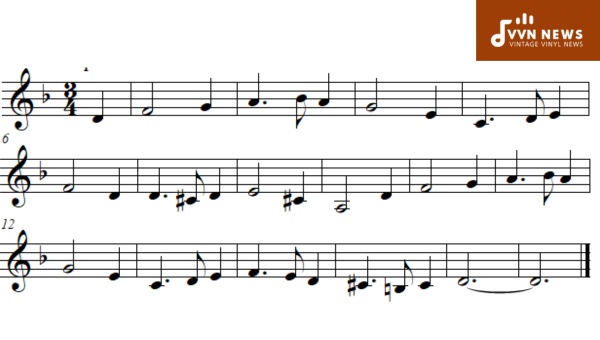
As a musician, I’ve come across numerous instances where I needed to transpose a piece of music to a different key.
One common transposition is from Eb (E-flat) to Bb (B-flat), which can seem daunting at first. However, understanding the concept of musical keys and the process of transposing can simplify this task.
In this article, I want to delve into the process of transpose Eb to Bb, breaking it down into manageable steps and providing useful insights for musicians looking to expand their repertoire.
Transposing from one key to another is an essential skill for any musician, as it allows us to play pieces originally written for one instrument in a key more comfortable or suitable for our instrument.
Transposing Eb to Bb is often necessary for instruments like clarinets and trumpets that are pitched in Bb.
By understanding the fundamentals of musical keys and applying simple rules and techniques, anyone can successfully transpose from Eb to Bb without much difficulty. So let’s explore this topic further and unlock this useful skill in our musical journey.
Table of Contents
What Is Transposition?
Transposition involves shifting a piece of music from one key to another while maintaining the same overall structure and relationships.
In music theory, a musical key is a set of notes or pitches that form the foundation for a composition. Each key has a specific collection of tones and semitones, which gives it a unique character and sound.
The process of transposing allows musicians to adapt a piece to better suit their instrument or vocal range.
It can also be used to accommodate different performers or to create variations of the original work. Transposition is an essential skill that allows musicians to explore different tonalities and expand their repertoire.
Why Transpose From Eb to Bb?

Transposing from Eb to Bb is a common practice for certain instruments like clarinets and trumpets.
These instruments are pitched in Bb, meaning that when they play a written C, it sounds like a concert Bb.
The process of transposing from Eb to Bb allows these instruments to play music originally written in the key of Eb without having to mentally adjust the notes while reading the sheet music. Here are a few reasons why transposing from Eb to Bb is necessary:
- Preferred Key: Some instruments, like the Bb clarinet, are designed to sound their best and most natural in the key of Bb.
- Compatibility: When playing in an ensemble or band with other instruments pitched in concert keys (like piano or guitar), transposing to match their pitch ensures everyone is playing in the same key.
- Ease of Reading: Transposing allows Bb instruments to read music written for other “concert” pitched instruments without having to mentally convert every note on the page.
Understanding how transposition works and being able to transpose from Eb to Bb opens up a wider range of sheet music that can be played on these instruments, allowing more versatility and opportunities for musicians.
Also Read: B Flat Minor Pentatonic Scale [Create Emotive Music In Minutes]
How Do You Transpose Music From Eb to Bb?
Transposing music from Eb to Bb might seem challenging at first, but with some practice and understanding of the process, it becomes quite manageable. Here are the steps to transpose a piece from Eb to Bb:
Step 1: Identify the Key Relationship
First, determine the relationship between the original key (Eb) and the desired key (Bb). In this case, Bb is a perfect fourth higher than Eb on the musical circle of fifths.
Step 2: Understand Interval Relationships
To transpose accurately, it’s crucial to understand interval relationships. For example, if you see a note in your original piece that is a major third above Eb, you would play a major third above Bb (which is D).
Step 3: Analyze Chord Progressions
Analyze the chord progressions of the piece you are transposing. Pay attention to any chord changes or modulations that occur throughout. This will help ensure that your transposition remains faithful to the original harmonic structure.
Step 4: Adjust the Pitch of Individual Notes
Starting from the first note of your original piece, adjust each note by moving up or down based on the interval relationship determined earlier. Keep in mind that accidentals (sharps, flats, and naturals) should be adjusted accordingly as well.
Step 5: Rewriting Sheet Music or Notating Changes
If you’re using sheet music, rewrite each note in its new transposed position. You can use music notation software or do it manually. Pay attention to key signatures and make sure they also reflect the new key of Bb.
Step 6: Practice and Review
Once you have finished transposing your music from Eb to Bb, take some time to practice playing it in this new key. Listen for accuracy and ensure that everything sounds correct. Make any adjustments if needed.
It’s important to note that transposing can also be done using music notation software, which can automatically transpose an entire piece for you.
Understanding how to transpose manually gives you a deeper understanding of the process and allows for more flexibility in making adjustments.
By following these steps and practicing transposing from Eb to Bb, you’ll develop a valuable skill that will open up a wide range of musical possibilities.
What Are the Challenges in Transposing From Eb to Bb?

While transposing from Eb to Bb may seem intimidating at first, understanding the challenges involved can help simplify the process. Here are some key challenges you may encounter and how to overcome them:
Difference in Key Signatures
- The key of Eb has three flats (Bb, Eb, Ab), while the key of Bb has two flats (Bb, Eb).
- When transposing from Eb to Bb, you need to adjust for this difference in key signatures by raising each note by a whole step.
Interval Adjustments
- Transposing involves changing the distance or interval between notes.
- In the case of transposing from Eb to Bb, each note needs to be raised by a whole step or two semitones.
- For example, an E natural in Eb would become an F natural in Bb.
Instrument-Specific Considerations
- Instruments like clarinets and trumpets are commonly pitched in Bb.
- When transposing these instruments, it’s important to consider their specific fingerings and instrument range.
- Some notes may need additional modifications or adjustments to ensure they fall within the playable range of the instrument.
Mental Shift
- Transposing requires a mental shift and familiarity with music theory concepts.
- It might take time and practice to develop confidence in transposing on the spot or quickly adapting music to a different key.
By understanding these challenges and practicing regularly, you can develop your skills in transposition from Eb to Bb.
Also Read: A Flat Minor Pentatonic Scale [Unleash Subtle Tension In Your Music]
Transpose from Bb to C using Software
Transposing music from one key to another can be a tedious task. However, with the help of software, the process can be simplified and more efficient. Here’s a step-by-step guide on how to transpose from Bb to C using software:
Step 1: Acquire Transposition Software
There are several transposition software options available, both free and paid. One popular choice is MuseScore, a free music notation program that offers transposition capabilities. Download and install the software on your computer or mobile device to begin the process.
Step 2: Import or Create the Music
Once you have MuseScore installed, you’ll need to import the sheet music you want to transpose from Bb to C. If you already have the music in a compatible digital format (e.g., PDF or MusicXML), import it into MuseScore. Alternatively, you can create a new document by manually inputting the notes in MuseScore.
Step 3: Select All Notes
In MuseScore, select all the notes that you want to transpose by clicking and dragging your cursor over them or using keyboard shortcuts (Ctrl+A on Windows or Cmd+A on Mac). This will ensure that all notes are included in the transposition process.
Step 4: Transpose Up Two Semitones
To transpose from Bb to C, we need to raise each note by two semitones (or steps). In MuseScore, go to the Edit menu, click on Transpose, and choose Up as the direction. Then enter “2” as the number of semitones. This will effectively shift all selected notes up by two semitones.
Step 5: Check for Errors
After transposing the music, it’s crucial to check for any errors or inconsistencies. Play through the transposed piece using MuseScore’s playback feature to ensure that the notes sound correct. Make any necessary adjustments or corrections if needed.
Step 6: Save and Export
Once you’re satisfied with the transposition, save your work in MuseScore’s proprietary format (.mscz) or export it to a commonly used format like PDF or MIDI. This will allow you to easily share and distribute the transposed music.
Transposing music from Bb to C using software eliminates the need for manual note-by-note adjustments, saving time and effort for musicians.
With programs like MuseScore, this process becomes accessible and efficient, allowing you to explore different keys and expand your musical repertoire. Give it a try and discover the convenience of digital transposition tools.
Also Read: B Flat Major Scale [Exploring This Warm & Mellow Key]
FAQs about Transposing from Eb to Bb
How do I know when I need to transpose a piece from Eb to Bb?
You will need to transpose a piece from Eb to Bb if you’re playing an instrument like clarinet or trumpet that is pitched in Bb.
What does it mean to transpose by a whole step?
Transposing by a whole step means shifting all the notes in the piece by two half steps or two semitones (e.g., from C to D).
Are there any specific rules for transposing from Eb to Bb?
Yes, when transposing from Eb to Bb, you need to move each note up a perfect fifth (7 half steps) or down a perfect fourth (5 half steps) on your instrument.
How can I remember the key signatures when transposing?
A helpful tip is to write out the major scale for both keys (Eb and Bb), comparing the key signatures. This will assist you in visualizing and remembering any accidentals or sharps/flats in each key.
Are there any resources or tools available for transposing sheet music easily?
There are various software programs and online apps specifically designed for transposing sheet music. These tools can make the process much quicker and more accurate, especially for complex pieces of music.
Conclusion
Transposing from Eb to Bb may initially seem intimidating, but with a solid understanding of musical keys and the process of transposition, it can be simplified.
By following the steps outlined in this article and practicing regularly, musicians can confidently transpose music from Eb to Bb on their instrument.
Remember that transposing is a valuable skill that opens up a world of possibilities and allows for greater musical versatility. Happy transposing!