
As an avid music enthusiast or perhaps a burgeoning recording artist, you’ve probably heard about the concept of reference tracks and wondered how to effectively use these nuggets of musical gold.
Let’s talk about how to use reference tracks. The term ‘reference track’ might sound highly technical or somewhat arcane to most ears.
However, I assure you that once you grasp their value and learn how they can drastically refine your musical output – it’s impossible not to use them.
These secret weapons could be the game-changer in your journey from a good artist to a great one.
The aim is not to replicate but to steer your art toward greatness by learning from those who’ve already claimed it.
Creating high-caliber music each time can be demanding on your creative juices.
A blank canvas in any art form can be as daunting as exciting – music production is no different. This is where reference tracks come into play.
They serve as tried-and-true guidelines for your sonic exploration, helping you stay on course when carving out your unique soundscape amidst the limitless possibilities offered by today’s sophisticated production platforms.
Table of Contents
What are Reference Tracks?
A reference track, at its simplest, is a professionally produced song that serves as a kind of sonic benchmark for your music production or mixing efforts.
It’s a piece that you know sounds fantastic – empowering, rich, or clear – across a wide array of sound systems.
Whether playing it on a pristine pair of studio monitors or an old car stereo, it always sounds engaging and visceral.
These tracks become the bar you have set for yourself when sculpting your soundscape.
You prefer their highs or midranges, their dynamics, or perhaps how they treat silence in specific sections – their approach becomes your target.
Reference tracks act as a roadmap for those finding their way in music production. They guide you by providing professional standards to aspire toward and learn from.
Choosing reference tracks is personal and tactile – you become familiar with them due to repeated listening sessions on various systems, and they tend to be pieces that resonate with your genre or mood of preference.
Also Read: What Are Scratch Tracks? 2026 [Benefits of Scratch Track]
Significance of High-Quality Reference Tracks

High-quality reference tracks are a valuable asset in your music-production arsenal.
You might wonder – why wouldn’t any well-produced track suffice? Why specifically high-quality tracks? Let’s dive into this below:
- Professional Standards: High-quality reference tracks have been produced by some of the best professionals in the industry. They set the bar high, providing a benchmark for how great music should sound, thus raising your production quality.
- Ear Training: The consistent use of such tracks trains your ears over time. You develop a deep understanding of minute nuances and details in the music – from frequency balance and dynamics to overall aesthetic considerations, sequencing, and more.
- Improved Decision-making: As you familiarize yourself with these stellar benchmarks, you become quicker at making appropriate decisions during your production process. This efficiency can drastically reduce ambiguity and confusion, streamlining your workflow.
- Contextual Understanding: By referencing high-quality tracks, you gather insights into how certain elements fit into the larger picture. Different genres have unique stylistic nuances that can be better understood against the backdrop of high-quality reference pieces.
- Bridging Gaps: Lastly, using professionally mastered pieces as references can help you identify areas of improvement or gaps in your mixes that might not have been apparent otherwise.
While using reference tracks proves advantageous to aspiring music creators across different levels of experience, picking suitable ones aligned with your genre, style preference, or offered mood while being universally admired for their production finesse is crucial.
How To Use Reference Tracks?
Using reference tracks, you can better understand your piece’s sonic qualities compared to professional productions, improve consistency across your work, and gain valuable insights for a smoother overall production experience.
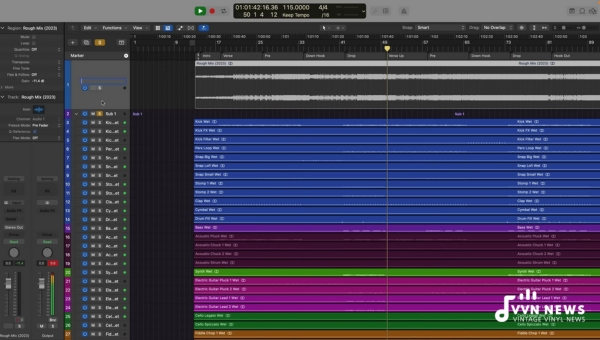
Add References to your Digital Audio Workstation (DAW)
A critical first step is adding your chosen reference tracks into your DAW. This allows for quick and seamless comparison with your mix.
Separately import the reference track at the bottom of the session. Ensure not to include it in any subgroup or master bus processing – you want to hear the raw unaltered sound in its original form.
Align Your References
When using more than one reference track, be aware that they have varying degrees of start times or silent sections before the song begins.
Subtle as it may seem, this plays a big part in crafting an immersive music experience.
Aligning these references helps create a coherent sonic landscape across different pieces under comparison. It helps bring consistency to how music unfolds throughout.
Change Your Signal Path
This very much ties into preserving the authenticity of your reference tracks.
When you listen to these professional pieces, they are not colored by any processing you apply on your master track – reverb, equalizer, compressor, et cetera.
Changing your signal path involves bypassing these effects and listening straight from the source.
Match The Volume
One crucial yet often overlooked detail is matching the volume between your mix and the reference track(s).
Human ears naturally lean towards louder music as it sounds ‘better.’ Ensuring their books match precisely creates a level playing field for objective analysis and assessment.
Implement Your References!
The final step involves active usage versus passive referencing. Countless comparisons serve a minimal purpose if their observations don’t translate into actions – alter EQ settings based on contrasts with references; tone down or amp up certain elements observed from their dynamics; notice how silence is used strategically and learn from it.
Reiterating the basic ground rule is essential – let reference tracks serve as guidelines, not strict blueprints.
The aim is not to reproduce an identical mix but to pinpoint and grasp the essence that makes them a hit in their own right and infuse your unique creation with those elements of success.
Top Reference Tracks for Mixing Applications

An outstanding reference track forms the backbone of the mixing process of your music.
Music professionals have widely acclaimed certain universally applauded pieces for their exceptional mixing techniques.
These can serve as enlightening points for your venture. A diverse mix (pun intended) of Indie, Pop, Rap, Rock, or EDM selections can provide much-needed guidance.
Below, we delve into some highly regarded reference tracks across various genres that offer a goldmine of learning for everyone:
Also Read: 30 Best Songs Of All Time [The Ultimate Playlist For Music Lovers]
1. “WHERE SHE GOES” – Bad Bunny
This track boasts the perfect blend of vocals and instrumentals, creating a flawless balance. It is an excellent reference for artists striving to tame peaks in the mix.
The variation in tempo is also relatively seamless, particularly remarkable for those wanting to play around with rhythm while keeping everything sounding synchronized and well-polished.
2. “Too Good” – Moonchild
Moonchild’s “Too Good” has a fantastic balance between higher and lower frequencies, achieved without harsh sibilance or overpowering elements.
It’s the perfect example of making every aspect stand out brilliantly within a space without overshadowing others – a great technique to practice for an impeccable production.
3. “The Drama” – Kesha
The vocal placement in Kesha’s “The Drama” carries enough weight and impact without hampering other components’ performance – an art to master.
This track lets one grasp how to deftly position vocals even amid high-energy instrumentals, maintaining a harmonious balance.
4. “Late Night Talking” – Harry Styles
For those looking to extract maximum depth from their work, Harry Styles’ “Late Night Talking” serves as an impressive guide!
The bass levels in this track have been tightly regulated not just throughout but within individual phrases, too, imparting a genuinely commendable depth and richness.
5. “How Does It Feel?” – BAYNK
BAYNK’s beautiful piece dictates how to use sound effects without making them sound disruptive or erratic.
Aspiring artists can learn about placing effects thoughtfully inside the mix; each effect complements the other rather than competing or causing dissonance.
6. “Goodbye Mr. Blue” – Father John Misty
An emotion-filled song, “Goodbye Mr.Blue,” exemplifies careful recording techniques for more intimate tracks. One can get inspired by how emotions are captured with vocal expressions and even breaths play significant roles!
7. “demon time (with BAYLI)” – Mura Masa
A track characterized by high energy further accentuated by electric beats—’Demon Time’ is fuel or inspiration for electrifying dancefloor-friendly tunes that guarantee feet moving!
8. “Chaise Longue”- Wet Leg
Artists who use drumming patterns to add an infectious rhythm should refer to Wet Leg’s cornerstone single ‘Chaise Longue.’ An interesting drum placement ensures it captivates listeners right from the start!
9. “Anti-Hero” – Taylor Swift
A fantastic breakup anthem with structure plays a prominent role—Swift powerfully anticipates your emotional response at each turn in ‘Anti-Hero.’ You’d be taking notes on sequencing events right away!
10. “Why We Speak” – Robert Glasper
Finally, we have ‘Why We Speak.’ This is your go-to reference track if you wish for unique storytelling techniques using spoken words or interviews instead of lyrics! Robert Glasper effortlessly embeds spoken narratives into his songs like puzzle pieces!
You’ll find many inspirations on mixing techniques: balancing varying elements harmoniously & much more in these reference tracks — about achieving clarity while still creating something unique & soul-reaching.
Also Read: Instrument Miking Techniques To Capture The Best Sound 2026
Techniques for Utilizing Reference Tracks
Now that you understand what reference tracks are and their importance, let’s delve into how to utilize them effectively.
Form a Pool of Reference Tracks
It’s beneficial to start by creating a collection or “pool” of reference tracks that resonate with your musical style or the mood you want to make.
This way, you always have an excellent range of masters at your fingertips when you dive into production.
Avoid using a single track for all mixing decisions, which could lead to a one-dimensional sound.
Instead, build an eclectic mix from various genres related to your own – each having unique elements that inspire you.
- Collect high-quality versions: It’s essential to ensure the files you collect are lossless versions (WAV, FLAC) rather than compressed (MP3). You need all the details possible.
- Treat it like a library: Organize your pool by genre, moods, and vibe – whatever helps you quickly find what you need when producing.
Adopt Native or Plugin-based Referencing Systems
Next comes integrating these track selections into your Digital Audio Workstation (DAW).
Several DAWs allow native referencing, but if yours doesn’t offer this feature, don’t fret. There are effective plugins available that can also facilitate this process.
- Native Referencing: If your DAW supports it – great! Create another audio track, import your references, and align them according to sections of your mix.
- Plugins: Invest in referencing plugins like Magic AB, Mastering The Mix REFERENCE, etc. They allow switching between references and your mix without interrupting workflow.
Also Read: What Is Audio Clipping? [Digital Clipping Vs Analog Clipping]
FAQs About Reference Tracks
What is a reference track?
A reference track is a professional song used as a standard to guide your music production or mixing.
What purpose does a reference track serve?
Using a reference track helps maintain consistency in your audio mix by providing you with reputable benchmarks for elements such as equalization, stereo width, dynamics, etc.
How should I choose my reference tracks?
Choose tracks that resonate with the genre or mood of your work and sound fantastic on any device or speaker system. These can include songs by artists whose sound you aspire to.
Can I use more than one reference track?
Absolutely! You’re not limited to one selection; using multiple reference tracks can give you a broader perspective and influence, leading to unique results.
Is it copying if I use a reference track?
No, utilizing a reference track isn’t copying; rather it’s about learning and understanding the process used in professional music production. It’s about looking at other artists’ high-quality work for motivation and inspiration, not replication.
Conclusion
Using reference tracks is an art in itself. As an artist, they provide a rich learning and inspiration source.
Carefully selecting and diligently using reference tracks can dramatically improve your music production skills.
Don’t be afraid to experiment with different tracks and other genres. The aim isn’t to replicate but to use these pieces as roadmaps on your musical journey.
Ultimately, understanding how to use reference tracks could be your golden ticket to crafting soundscapes that display technical mastery and creative brilliance. Keep striving, keep listening, and keep creating!