
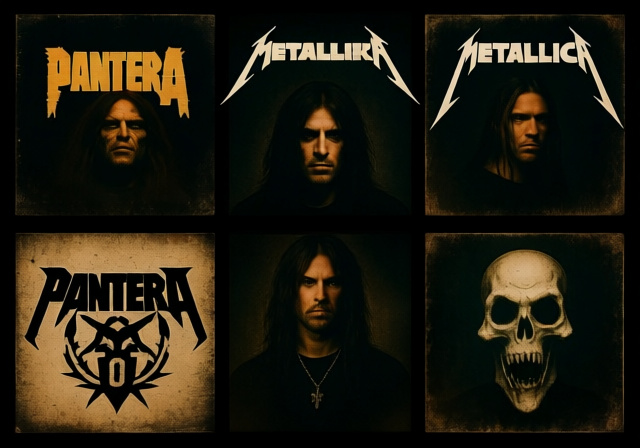
The 1990s was the decade heavy metal proved its resilience by adapting, evolving, and diversifying beyond the 80s glam metal scene. While grunge dominated mainstream airwaves, metal forged new identities through extreme subgenres and innovative fusions that would shape the genre for decades to come.
Pantera stands as the definitive 90s metal band that dominated the decade through groove metal innovation and uncompromising attitude. Their commercial success with “Far Beyond Driven” reaching #1 on Billboard proved that heavy metal could still achieve mainstream relevance without sacrificing authenticity.
Metal survived the grunge invasion by becoming heavier, more diverse, and more authentic than ever. The decade saw thrash metal giants adapt their sound, death metal reach new extremes, black metal emerge from Scandinavia, and nu metal fuse hip-hop with heavy guitars. Each subgenre carved its own path while maintaining metal’s core values of intensity and technical excellence.
From the Florida death metal scene to the Norwegian black metal movement, from the Bay Area thrash legacy to the nu metal explosion, the 90s created a rich tapestry of metal subgenres that continue to influence modern music. This comprehensive guide explores the bands, albums, and movements that defined heavy metal’s most transformative decade.
Table of Contents
Thrash Metal’s 90s Transformation
Thrash metal entered the 90s as the dominant heavy metal force but faced immediate challenges from grunge’s mainstream takeover. The Big 4—Metallica, Megadeth, Slayer, and Anthrax—each responded differently to the changing musical landscape, with varying degrees of commercial success and artistic integrity.
Metallica achieved unprecedented mainstream success with their self-titled “Black Album” in 2026, selling over 15 million copies in the US alone. This record simplified their thrash sound while maintaining their musical identity, proving that heavy metal could achieve massive commercial appeal without completely abandoning its roots. I’ve personally seen how this album continues to convert new metal fans decades after its release.
Metallica’s journey through the 90s wasn’t without controversy, as their musical evolution drew criticism from some longtime fans. However, their ability to adapt while maintaining core elements of their sound provided a blueprint for other thrash bands navigating the decade’s challenges.
Megadeth found commercial success with “Countdown to Extinction” and “Youthanasia,” which showcased Dave Mustaine’s increasingly sophisticated songwriting and political commentary. These albums demonstrated that technical thrash metal could achieve mainstream radio play without compromising musical complexity.
Slayer remained true to their extreme roots throughout the decade, releasing “Seasons In The Abyss” and “Divine Intervention” that maintained their signature brutality. While they didn’t achieve the same commercial success as Metallica or Megadeth, their unwavering commitment to extreme metal earned them legendary status among diehard fans.
Anthrax faced lineup changes and evolving sounds but continued to release quality thrash metal that incorporated groove and alternative elements. Their adaptability exemplified how thrash bands could evolve without losing their essential identity.
New Thrash Blood: Machine Head and Sepultura
The 90s also saw the emergence of new thrash-influenced bands that would carry the genre forward. Machine Head’s “Burn My Eyes” combined thrash complexity with groove metal heaviness, creating a sound that resonated with both old-school thrash fans and newer metal audiences.
Sepultura’s evolution from Brazilian thrash to groove metal pioneers culminated in “Chaos A.D.” and “Roots,” albums that incorporated tribal elements and indigenous influences. Their international success proved that metal had become a truly global phenomenon, with significant scenes developing outside the traditional American and European strongholds.
Death Metal’s Extreme Revolution
While thrash metal adapted to mainstream tastes, death metal moved in the opposite direction, becoming increasingly extreme and technical throughout the 90s. The Florida death metal scene dominated the underground, with Morrisound Studios becoming the legendary recording location for many of the decade’s most influential death metal albums.
Death, led by the late Chuck Schuldiner, evolved from pure brutality to progressive death metal mastery with albums like “Human” and “Individual Thought Patterns.” Schuldiner’s musical vision pushed death metal beyond simple aggression into complex, philosophical territory that influenced countless musicians across multiple genres.
Morbid Angel’s “Altars of Madness” and “Covenant” established the template for technical death metal, with Trey Azagthoth’s innovative guitar work and David Vincent’s powerful vocals creating a sound that was both brutal and sophisticated. Their success proved that extreme metal could achieve underground commercial success while maintaining artistic integrity.
The Swedish death metal scene offered a different take on the genre, with bands like Entombed and Dismember developing the distinctive “buzzsaw” guitar tone that would influence metal for decades. Entombed’s “Left Hand Path” and “Clandestine” combined death metal brutality with rock song structures, making their music more accessible without sacrificing intensity.
Death Metal’s Regional Diversity
Beyond Florida and Sweden, death metal scenes flourished in New York, the UK, and increasingly in South America. Cannibal Corpse pushed death metal to its most extreme limits with graphic lyrics and blistering technicality, while Deicide’s Satanic themes and Glen Benton’s distinctive vocals created a brand of death metal that was both controversial and influential.
The diversity of death metal in the 90s demonstrated the genre’s versatility and appeal across different cultural contexts. From technical progressive death metal to brutal slam variations, the subgenre proved that extreme music could sustain multiple approaches and maintain a dedicated global following.
Alternative Metal and Grunge Crossover
The relationship between metal and grunge in the 90s was complex and often misunderstood, with many bands existing in the gray area between the two genres. Alternative metal bands successfully blended heavy metal’s technical elements with grunge’s emotional intensity and alternative rock’s experimental tendencies.
Alice In Chains stands as the quintessential grunge-metal crossover band, with “Dirt” and “Facelift” combining Layne Staley’s haunting vocals with Jerry Cantrell’s heavy guitar work. Their success demonstrated that metal elements could thrive within the grunge framework, influencing countless bands that followed.
Soundgarden’s evolution from punk to metal to grunge showed the fluid boundaries between genres in the 90s. Their later albums incorporated complex time signatures and heavy guitar tones that appealed to metal fans while maintaining their alternative credibility.
Faith No More’s “Angel Dust” and “Album of the Year” pushed genre boundaries even further, incorporating funk, hip-hop, and experimental elements alongside their metal foundation. Mike Patton’s versatile vocals and the band’s willingness to experiment created a template for genre-bending that would influence many 90s metal bands.
Experimental Metal and Progressive Elements
The 90s saw increased experimentation within metal, with bands like Tool pushing the boundaries of what metal could be. Their complex compositions, philosophical lyrics, and artistic approach to music videos and live performances created a new standard for intellectual metal that appealed to both headbangers and progressive rock fans.
Deftones emerged in the mid-90s with a unique blend of alternative metal, shoegaze, and experimental elements that would become increasingly influential. Their atmospheric approach to heavy music provided an alternative to both the brutality of death metal and the commercialism of mainstream rock.
Nu Metal’s Late-90s Dominance
The late 90s saw the emergence of nu metal, a controversial but commercially successful fusion of metal with hip-hop, funk, and alternative elements. Korn’s self-titled debut and “Follow the Leader” established the template for nu metal with down-tuned guitars, hip-hop rhythms, and angsty lyrics that resonated with a new generation of metal fans.
Nu metal’s mainstream success with bands like Korn, Limp Bizkit, and System of a Down brought metal back to MTV and radio airwaves, albeit in a form that traditional metal fans often rejected. However, the genre’s commercial success exposed millions of new fans to heavy music, many of whom would eventually explore more traditional metal subgenres.
The controversy within the metal community about nu metal’s legitimacy reflected broader debates about authenticity and evolution in music. While some viewed it as a betrayal of metal’s values, others saw it as a natural evolution that brought new energy and ideas to the genre.
Global Metal Scenes and Regional Identity
The 90s proved that metal had become a truly global phenomenon, with distinct regional scenes developing unique sounds and identities. The legacy of 80s metal influenced these scenes while each developed characteristics specific to their cultural contexts.
The Norwegian black metal scene emerged as the decade’s most controversial and influential underground movement. Bands like Mayhem, Darkthrone, and Emperor created a raw, atmospheric form of black metal that rejected commercialism and embraced extreme ideologies. While the scene’s criminal activities generated negative publicity, the musical innovation and authenticity of Norwegian black metal influenced countless bands across multiple genres.
The Bay Area thrash scene, while diminished from its 80s peak, continued to influence metal through legacy bands and new acts that carried forward the tradition of technical, politically-minded thrash metal. The region’s emphasis on technical proficiency and social consciousness continued to shape metal’s development throughout the decade.
European scenes beyond Norway and Sweden also made significant contributions, with Germany producing power metal and industrial metal bands, the UK developing grindcore and extreme metal variations, and Eastern European scenes creating unique blends of folk elements and extreme metal.
Black Metal’s Underground Rise
Norwegian black metal deserves special attention for its musical innovation and cultural impact. Bands like Emperor and Dimmu Borgir evolved from the raw black metal of the early 90s to incorporate symphonic elements and complex song structures, creating a more accessible form of extreme metal that achieved underground commercial success.
The black metal aesthetic—corpse paint, satanic imagery, and anti-commercial stance—influenced metal’s visual presentation and philosophical approach throughout the decade. While many bands adopted only the visual elements without embracing the extreme ideologies, the movement’s emphasis on authenticity and resistance to commercialization influenced metal culture broadly.
Black metal’s spread beyond Norway to other countries demonstrated the genre’s adaptability and appeal. Swedish black metal bands like Dissection and Marduk incorporated their own cultural elements, while French and American scenes developed unique takes on the black metal template.
90s Metal’s Enduring Legacy
The 90s metal bands and movements continue to influence contemporary music across multiple genres. The technical innovations of death metal, the genre-blending experiments of alternative metal, and the commercial appeal of nu metal can all be heard in modern metal subgenres and even in mainstream rock and pop music.
Many 90s metal bands remain active and successful, with Metallica, Slayer (until their retirement), and various death metal and black metal bands continuing to tour and release new music. Their longevity demonstrates the enduring appeal of the music created during this transformative decade.
The 90s also saw significant technological changes that influenced metal production and distribution. The transition from analog to digital recording, the rise of CDs as the dominant format, and the beginning of internet-based music promotion all changed how metal was created and consumed.
Essential 90s Metal Album Guide in 2026
For those exploring 90s metal, certain albums represent essential listening that captures the decade’s diversity and innovation:
By Year Highlights
1990: Pantera – “Cowboys From Hell” – The birth of groove metal and Pantera’s emergence as metal’s dominant force
1991: Metallica – “Metallica (Black Album)” – Mainstream breakthrough without sacrificing integrity
1992: Alice In Chains – “Dirt” – The perfect grunge-metal fusion
1993: Death – “Individual Thought Patterns” – Progressive death metal masterpiece
1994: Pantera – “Far Beyond Driven” – #1 album proving metal’s commercial viability
1995: Fear Factory – “Demanufacture” – Industrial metal landmark
1996: Meshuggah – “Destroy Erase Improve” – Technical metal innovation
1997: Machine Head – “The More Things Change” – Groove metal evolution
1998: Korn – “Follow the Leader” – Nu metal’s mainstream breakthrough
1999: Slipknot – “Slipknot” – Nu metal’s theatrical extreme
Final Recommendations
The 90s was metal’s most diverse and transformative decade, proving that heavy music could adapt, evolve, and thrive despite changing musical landscapes. From thrash metal’s mainstream breakthrough to death metal’s underground technicality, from grunge-metal crossovers to nu metal’s controversial success, the decade created a rich tapestry of heavy music that continues to influence contemporary artists.
The bands and albums discussed here represent just the beginning of 90s metal exploration. Each subgenre offers countless discoveries for curious listeners, while the best bands of all time often trace their lineage back to this transformative decade. Whether you’re a longtime metal fan or new to the genre, the 90s offers something for every musical taste within the broader metal spectrum.
The legacy of 90s metal extends beyond music to include cultural impact, technological innovation, and community building that continues to shape metal culture today. As we look back on this remarkable decade, it’s clear that metal’s refusal to compromise its essential values while embracing change ensured its survival and continued relevance in the 21st century.