
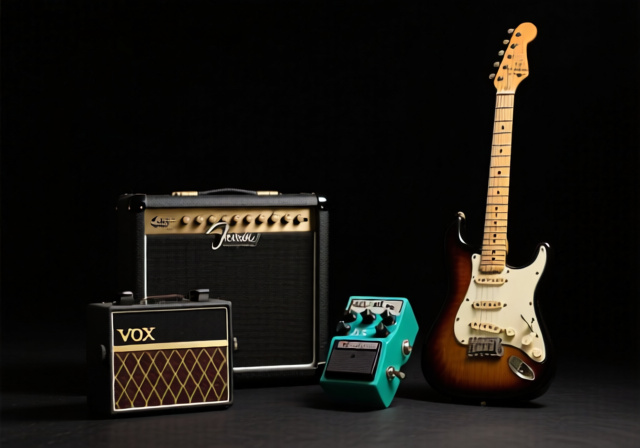
Jimi Hendrix didn’t just play guitar—he completely redefined what was possible with six strings, a few pedals, and a cranked amplifier. His revolutionary approach to guitar tone changed music forever, transforming the electric guitar from a rhythm instrument into a vehicle for sonic exploration.
What guitar did Jimi Hendrix play? Primarily, Hendrix played Fender Stratocasters flipped upside down for his left-handed playing, combined with Marshall amplifiers and essential effects like the Vox wah and Fuzz Face fuzz. His most famous guitar was a white 1968 Stratocaster played at Woodstock.
Hendrix’s gear wasn’t just equipment—it was an extension of his musical imagination. From his early days with cheap Danelectros to his iconic white Stratocasters, each piece of gear contributed to his legendary sound. In this comprehensive guide, we’ll explore every guitar, amplifier, and effect pedal that shaped the Hendrix sound.
You’ll discover not just what gear he used, but how he used it, why it mattered, and where his most famous instruments are today. Whether you’re a guitarist seeking to understand his tone or a music historian exploring rock evolution, this guide provides the complete picture of Hendrix’s revolutionary approach to guitar gear.
Table of Contents
The Early Guitar Journey: 1962-1966
Before the fame and fortune, Jimi Hendrix’s early guitar collection tells the story of a developing genius learning to work with whatever instruments he could afford. These early guitars, while less famous than his later Stratocasters, were crucial in developing his unique playing style and approach to sound.
Hendrix’s first guitar was a cheap acoustic that he reportedly played with a single string until his father bought him his first electric guitar—a Supro Ozark 1560s. This humble beginning would set the stage for his lifelong experimentation with different instruments and sounds.
Supro Ozark 1560s (1959-1961)
The Supro Ozark 1560s was Hendrix’s first electric guitar, purchased for around $89 from Myers Music Shop in Seattle. This small hollowbody guitar with a single pickup became his constant companion during his early development as a musician.
The Ozark featured a 16-inch hollow body, f-holes, and a single blade pickup mounted at an angle. This guitar taught Hendrix the basics of electric guitar playing, including how to control feedback and work with simple electronics—skills that would later define his revolutionary approach to guitar tone.
While playing in local Seattle bands like The Rocking Kings and The Velvetones, Hendrix learned to coax impressive sounds from this modest instrument. The Supro’s limitations actually helped develop his creative approach, forcing him to explore the full range of what was possible with basic equipment.
Danelectro Bronze Standard (1962)
After leaving the Army and beginning his professional career as a session musician, Hendrix acquired a Danelectro Bronze Standard. This unusual guitar featured a bronze-colored finish and a single lipstick pickup, giving it a distinctive appearance and sound.
The Danelectro was significantly different from the Supro, with its unique pickup construction and semi-hollow design. This guitar likely contributed to Hendrix’s understanding of how different pickup types and body constructions affect tone—knowledge that would prove invaluable in his later work.
During this period, Hendrix was developing his famous upside-down playing technique, having restrung right-handed guitars for left-handed play. The Danelectro’s symmetrical design made it relatively adaptable to this approach, allowing him to experiment with his distinctive style.
Epiphone Wilshire (1963-1964)
The Epiphone Wilshire represented a step up in quality for Hendrix during his time with the Isley Brothers. This solidbody guitar featured two P-90 pickups and a more professional build quality than his previous instruments.
The Wilshire’s dual-pickup configuration gave Hendrix more tonal options, allowing him to experiment with different pickup combinations and settings. This was likely his first experience with a guitar that offered significant tonal versatility, expanding his understanding of how pickup position affects sound.
It was during this period that Hendrix began to develop his signature rhythm playing style, blending chords with single-note runs and incorporating percussive elements. The Wilshire’s sustain and clarity likely contributed to this evolving technique.
Fender Stratocaster Beginnings (1966)
Hendrix’s first encounter with a Fender Stratocaster came in 1966, shortly before moving to London and forming The Jimi Hendrix Experience. While the exact details are debated, it’s clear that this was a pivotal moment in his musical development.
The Stratocaster’s distinctive tremolo system and three-pickup configuration opened up new possibilities for Hendrix’s playing style. The guitar’s ergonomic design and contoured body also made it more suitable for his increasingly physical performance style.
These early guitars, while less celebrated than his later instruments, were essential stepping stones in Hendrix’s development. Each instrument taught him something new about tone, playability, and musical expression—lessons that would culminate in his revolutionary approach to the Stratocaster.
Fender Stratocasters: Hendrix’s Primary Weapon
The Fender Stratocaster became synonymous with Jimi Hendrix, and for good reason. This iconic guitar, often played upside down and restrung for his left-handed style, became the perfect vehicle for his musical innovations. More than just his favorite guitar, the Stratocaster was the tool that allowed Hendrix to fully realize his sonic vision.
Hendrix didn’t just play the Stratocaster—he completely reimagined what it could do. From the feedback-rich solos of “Voodoo Child” to the clean, expressive tones of “Little Wing,” his exploration of the Stratocaster’s possibilities expanded the language of electric guitar forever.
The Woodstock Stratocaster (1968)
Perhaps Hendrix’s most famous guitar, the white 1968 Stratocaster played at Woodstock Festival has achieved legendary status. This guitar, purchased from Manny’s Music in New York City for approximately $300, was used for what many consider Hendrix’s most iconic performance.
The Woodstock Strat featured an Olympic White finish, rosewood fingerboard, and the distinctive large headstock design of late-1960s Fenders. Hendrix had customized it with his preferred string gauge and setup, and it showed the wear of heavy touring and use.
During the Woodstock performance, this guitar produced some of Hendrix’s most memorable sounds, including the legendary rendition of “The Star-Spangled Banner.” The guitar’s ability to produce everything from clean, bell-like tones to searing, feedback-drenched solos showcased Hendrix’s complete mastery of the instrument.
Today, the Woodstock Strat resides at the Museum of Pop Culture (MoPOP) in Seattle, where it remains one of the most visited exhibits. Its cracked finish and worn fretboard tell the story of Hendrix’s intense playing style and the historic performance that made it famous.
Black Beauty Stratocaster (1967-1968)
The “Black Beauty” was Hendrix’s primary guitar during the recording of “Electric Ladyland” and the Axis: Bold as Love era. This black 1968 Stratocaster with maple fingerboard became his go-to instrument for both studio recording and live performances.
The Black Beauty was notable for its distinctive appearance and sound. The black finish with white pickguard created a striking visual contrast that became part of Hendrix’s stage image. Tonally, the maple fingerboard provided slightly brighter tones compared to his rosewood-board Strats.
This guitar was used on numerous classic recordings, including “Voodoo Child (Slight Return),” “All Along the Watchtower,” and “Crosstown Traffic.” Its versatility made it perfect for the wide range of sounds Hendrix was exploring during this period.
Tragically, the Black Beauty was stolen from Hendrix’s New York apartment in 1968 and never recovered. Its disappearance remains one of rock music’s great mysteries, with guitar enthusiasts still speculating about its whereabouts decades later.
Monterey Pop Festival Stratocaster (1967)
The red Stratocaster played at the Monterey Pop Festival represents another iconic moment in Hendrix’s career. This guitar was at the center of one of rock’s most legendary performances, culminating in Hendrix’s famous guitar burning finale.
This sunburst-finish Stratocaster with rosewood fingerboard was typical of Hendrix’s preferred setup during the early Experience years. The guitar had been heavily modified and customized to his specifications, including his preferred string gauge and pickup height adjustments.
The Monterey performance established Hendrix as a major force in rock music, with the guitar burning ceremony becoming one of the most iconic images in music history. This performance demonstrated not just Hendrix’s musical innovation but also his theatrical approach to live performance.
The remains of this guitar were saved by Hendrix’s roadie, Tappy Wright, and later given to Frank Zappa. Zappa reportedly restored the guitar and used it for years before donating it to the Rock and Roll Hall of Fame, where it remains on display.
The “Love” or “Angel” Stratocaster (1968)
This psychedelic-painted Stratocaster became one of Hendrix’s most visually distinctive instruments. Painted by Hendrix and his girlfriend at the time, the guitar featured colorful designs including flowers, hearts, and other symbols that reflected the psychedelic era.
The Angel Strat was used during the Band of Gypsys period and can be seen in photos from the Fillmore East performances. Its unique appearance made it an instant favorite with audiences and photographers, while its sound remained consistent with Hendrix’s preferred Stratocaster tone.
This guitar demonstrated Hendrix’s artistic approach to all aspects of his performance, including the visual presentation of his instruments. The personalized paint job made the guitar uniquely his, reflecting both his artistic sensibilities and the spirit of the time.
Like many of Hendrix’s guitars, the Angel Strat has had an interesting journey since his death, passing through various collections and serving as a tangible connection to his artistic legacy.
Left-Handed Modifications and Setup
Hendrix’s approach to playing left-handed with right-handed guitars was more than just a necessity—it became an integral part of his unique sound. The reversed orientation affected not just the guitar’s appearance but also its tone and playability.
When Hendrix flipped a Stratocaster, the pickup positions were reversed relative to his picking hand. This meant that the bridge pickup was in a different position relative to his picking hand, creating a slightly different tonal character compared to a standard left-handed guitar.
The reversed headstock also affected the string tension and feel, with the longer string length for the lower strings creating different harmonic characteristics. This subtle change likely contributed to Hendrix’s distinctive tone and playing style.
Hendrix also preferred heavier string gauges than many players of his era, typically using sets ranging from .010 to .046 or even heavier. This combination of heavy strings and aggressive playing style gave his sound its characteristic sustain and presence.
These unique adaptations to left-handed playing demonstrate how Hendrix turned necessity into innovation, using the altered guitar geometry to create his signature sound rather than being limited by it.
The Amplification Revolution: Marshall and Beyond
Hendrix’s relationship with amplifiers was as innovative as his approach to guitars. He didn’t just use amplifiers to make his guitar louder—he used them as instruments in their own right, pushing them to their limits and beyond to create revolutionary sounds.
From the clean, chimey tones of early Fender amps to the roaring, saturated Marshall stacks that defined his sound, Hendrix’s amplifier evolution parallels his musical development. His understanding of how to use amplification to expand guitar possibilities changed music forever.
Marshall Super 100 JTM45/100 (1966-1970)
The Marshall Super 100 became Hendrix’s signature amplifier, the cornerstone of his legendary sound. These 100-watt heads, combined with Marshall 4×12 cabinets, created the powerful, saturated tone that defined the Jimi Hendrix Experience.
Hendrix typically used multiple Marshall stacks, including two full stacks of Super 100 heads with matching 4×12 cabinets. This massive wall of sound allowed him to achieve the incredible volume levels needed for his feedback-rich solos and experimental techniques.
The Marshall’s distinctive tone came from its EL34 power tubes and simple circuit design, which broke up smoothly when pushed hard. This natural overdrive, combined with Hendrix’s aggressive playing style and effects pedals, created the thick, singing sustain that became his signature sound.
Hendrix’s use of multiple amps wasn’t just for volume—it created a richer, more complex sound through the interaction between different amplifier circuits and speakers. This approach to amplification as a textural element influenced countless guitarists who followed.
Early Amplifiers: Fender and Supro (1962-1965)
Before discovering Marshall amplifiers, Hendrix used a variety of smaller amps during his early career. These included Fender Twin Reverbs, Supro Thunderbolts, and other models that were commonly available to working musicians of the era.
The Fender Twin Reverb was particularly important during Hendrix’s session musician period. Its clean, powerful tone and onboard reverb made it versatile for different musical situations, from R&B to early rock and roll experimentation.
These early amplifiers taught Hendrix the fundamentals of how different amp designs affect tone and response. The contrast between the clean, powerful Fenders and the grittier, more compressed Supro amps likely influenced his later preference for amplifiers that could cover a wide tonal range.
Even after achieving fame with Marshall stacks, Hendrix occasionally used Fender amplifiers in the studio, particularly when cleaner tones were needed. This flexibility in choosing amplification for specific musical needs demonstrates his sophisticated approach to guitar tone.
Sunn and Sound City Amplifiers (1969-1970)
During the Band of Gypsys period, Hendrix experimented with different amplifiers including Sunn and Sound City models. These American-made amplifiers offered different tonal characteristics from his usual Marshall setup, providing new sonic possibilities.
The Sunn 100s heads were particularly notable for their clean power and tight low-end response. These amplifiers, combined with Hendrix’s evolving playing style, contributed to the funkier, more rhythmically complex sound of the Band of Gypsys.
Sound City amplifiers, with their distinctive British design but different circuit topology from Marshall, offered yet another tonal option. Hendrix’s willingness to experiment with different amplifiers even at the height of his fame shows his continuous search for new sounds.
These amplification experiments during his final period demonstrate Hendrix’s ongoing musical evolution. Even after establishing his signature sound, he continued to explore new tonal possibilities and push the boundaries of guitar amplification.
Studio Amplification Techniques
In the recording studio, Hendrix and engineer Eddie Kramer developed innovative approaches to guitar amplification that went beyond simply miking a speaker cabinet. These techniques created the distinctive sounds heard on classic albums like “Electric Ladyland” and “Axis: Bold as Love.”
One of their signature techniques was using multiple microphones at different distances from the amplifier. Close miking captured the direct sound, while room mics added space and ambiance. This multi-microphone approach created a rich, three-dimensional guitar sound.
Kramer and Hendrix also experimented with different microphone types and placements, sometimes using unusual techniques like placing microphones inside the speaker cabinet or using ambient mics to capture the room’s natural reverb.
For certain tracks, they used Leslie speakers and other rotating speaker effects to create swirling, psychedelic sounds. This innovative approach to recording guitar amplification expanded the possibilities of studio guitar and influenced countless recordings that followed.
These studio techniques show how Hendrix’s approach to amplification extended beyond live performance to include creative use of recording technology as part of his musical palette.
Effects Pedals: Crafting the Psychedelic Sound
Hendrix was a pioneer in using effects pedals to expand the electric guitar’s sonic possibilities. His innovative approach to effects helped create the psychedelic sound that defined his music, and his guitar pedal order and signal chain became a model for countless guitarists who followed.
From the expressive sweep of the wah pedal to the otherworldly sounds of the Octavia, Hendrix’s use of effects was always musical and purposeful. He didn’t just use effects for novelty—he integrated them into his playing to create new forms of musical expression.
Vox V846 Wah Pedal
The Vox wah pedal was perhaps Hendrix’s most recognizable effect, featured prominently in songs like “Voodoo Child (Slight Return)” and “Up from the Skies.” His expressive use of the wah pedal made it an essential tool for his musical vocabulary.
Hendrix didn’t just use the wah for its typical rhythmic effect—he treated it as an extension of his instrument, using it to shape notes and create vocal-like expressions. His control of the pedal was incredibly nuanced, allowing him to achieve everything from subtle filtering to dramatic sweeps.
The wah pedal was typically placed first in Hendrix’s signal chain, before the fuzz and distortion effects. This placement allowed the wah to dynamically control the fuzz distortion, creating more interactive and expressive results than the reverse order.
Hendrix’s wah technique influenced generations of guitarists, establishing the pedal as a standard tool for expressive playing. His ability to integrate the wah into his phrasing and musical ideas demonstrated his complete mastery of the effect.
Dallas Arbiter Fuzz Face
The Fuzz Face was Hendrix’s primary distortion pedal, essential to his signature saturated tone. This simple germanium transistor fuzz created the thick, singing sustain that characterized his lead playing and rhythm work.
Hendrix used various versions of the Fuzz Face throughout his career, preferring units with specific germanium transistors that produced the smooth, warm distortion he favored. He often used multiple Fuzz Face units, keeping backups because of their temperature-sensitive nature.
The Fuzz Face was typically placed after the wah in Hendrix’s signal chain, creating the classic wah-fuzz combination that defined his sound. This order allowed the wah to filter the fuzz signal, creating more dramatic and expressive tonal changes.
Hendrix’s use of the Fuzz Face went beyond simple distortion—he controlled the pedal’s output and tone knobs extensively while playing, creating dynamic and expressive variations in his sound. This real-time manipulation of the effect was part of his innovative approach to guitar electronics.
Roger Mayer Octavia
The Octavia, designed by Roger Mayer specifically for Hendrix, was one of his most innovative effects. This unique pedal combined octave doubling with fuzz distortion, creating the psychedelic, otherworldly sounds heard on songs like “Purple Haze” and “Are You Experienced.”
The Octavia’s design added a signal one octave above the original note, creating a thick, rich texture that was unlike any other guitar effect available at the time. This octave-up effect, combined with fuzz distortion, expanded the guitar’s harmonic range and sonic possibilities.
Hendrix used the Octavia selectively but effectively, typically for specific sections of songs where he wanted to create dramatic, psychedelic effects. The pedal’s distinctive sound became an essential element of his more experimental recordings.
The collaboration between Hendrix and Mayer on the Octavia demonstrated Hendrix’s hands-on approach to creating new sounds. Rather than simply using existing effects, he worked with engineers to develop tools that could realize his sonic vision.
Shin-ei Uni-Vibe
The Uni-Vibe was Hendrix’s favorite modulation effect, creating the swirling, phase-shifting sounds heard on “Machine Gun” and “Bold as Love.” This pedal, which simulated the rotating speaker effect of a Leslie cabinet, became an essential part of his psychedelic sound palette.
Hendrix typically used the Uni-Vibe for slow, atmospheric effects rather than the faster rotary simulation sounds. This approach created the dreamy, spacey textures that characterized his more experimental recordings and live performances.
The Uni-Vibe was typically placed later in Hendrix’s signal chain, after the fuzz and distortion effects. This placement allowed it to modulate the already-distorted signal, creating more complex and interactive modulation effects.
Hendrix’s control of the Uni-Vibe’s speed and intensity was extremely musical, with the effect becoming an integral part of his phrasing and expression rather than just a background texture.
Additional Effects and Signal Chain
Beyond his primary effects, Hendrix occasionally used other pedals and experimented with different signal chain configurations. These additional effects, while less prominent, contributed to the overall complexity of his sound.
Hendrix sometimes used the Octavia octave pedal in combination with other effects, creating layered sounds with multiple octave intervals. He also experimented with various fuzz and distortion pedals, including models from Arbiter, Vox, and other manufacturers.
His typical signal chain was: guitar → wah pedal → fuzz/overdrive → octave pedal → Uni-Vibe/vibrato → amplifier. This order created the most interactive and expressive results, with each effect influencing the response of subsequent pedals.
Hendrix also experimented with stereo effects and dual amplifier setups in the studio, creating wide, spacious guitar sounds. These innovative approaches to effects and signal chain design expanded the possibilities of electric guitar recording.
The sophistication of Hendrix’s effects setup and signal chain demonstrates his understanding of guitar electronics and his commitment to exploring new sonic territories.
Acoustic Guitars: The Unplugged Side
While Jimi Hendrix is primarily known for his revolutionary electric guitar work, his use of acoustic guitars provides important insights into his musical development and approach to songwriting. These instruments, though less prominent in his recorded output, were essential tools in his creative process.
Hendrix’s acoustic playing demonstrated his deep understanding of guitar fundamentals and his ability to create compelling music with minimal equipment. These performances reveal the depth of his musicality beyond the electric innovations for which he’s primarily remembered.
Epiphone FT-79 (Early 1960s)
The Epiphone FT-79 acoustic guitar was one of Hendrix’s early instruments, used during his development as a musician and songwriter. This vintage acoustic, with its distinctive sunburst finish and warm tone, was likely his primary tool for practicing and developing his early song ideas.
The FT-79’s traditional dreadnought body shape produced a rich, full sound that was well-suited to the blues and folk music that influenced Hendrix’s early playing. The guitar’s mahogany back and sides and spruce top created the balanced tone characteristic of quality acoustic instruments of this era.
During this period, Hendrix was developing his fingerstyle technique and learning to accompany himself while singing. The FT-79 would have been an ideal instrument for this work, providing the volume and projection needed for performance while maintaining the nuanced touch required for delicate playing.
This acoustic guitar represents an important but often overlooked aspect of Hendrix’s musical development, providing the foundation for his later electric innovations.
Zemaitis 12-String Acoustic (1967-1968)
The Zemaitis 12-string acoustic guitar became Hendrix’s preferred acoustic instrument during the Experience era. This unique instrument, with its distinctive metal inlays and ornate design, was used for songwriting and occasional performances.
Tony Zemaitis, the luthier who built this guitar, was known for his innovative designs and custom instruments. The 12-string configuration provided a rich, chorus-like sound that expanded Hendrix’s harmonic palette and influenced his approach to arranging.
Hendrix used this 12-string for developing song ideas and practicing fingerpicking techniques. The instrument’s extended range and rich tuning possibilities likely influenced his approach to chord voicings and harmonic movement.
The Zemaitis 12-string can be heard on some acoustic recordings and demos from this period, revealing a more intimate side of Hendrix’s playing that contrasted with his explosive electric work.
Martin D-45 (Late 1960s)
The Martin D-45 represented Hendrix’s high-end acoustic acquisition, featuring premium materials and construction. This top-tier acoustic guitar would have provided the best possible tone and playability for his acoustic playing and songwriting.
The D-45, Martin’s flagship model, features East Indian rosewood back and sides, Adirondack spruce top, and elaborate abalone inlays. This combination of premium materials creates a rich, complex tone with exceptional projection and clarity.
Hendrix likely used this guitar for serious songwriting work and possibly for some recordings. The instrument’s superior tone and playability would have made it an inspiring tool for developing new musical ideas.
The presence of such a high-quality acoustic guitar in Hendrix’s collection demonstrates his commitment to having the best possible tools for his musical expression, regardless of the musical context.
Acoustic Performances and Recordings
While Hendrix’s acoustic performances were relatively rare compared to his electric work, they provide important insights into his musical approach. These performances demonstrate his versatility and deep understanding of guitar fundamentals.
One notable acoustic performance was his rendition of “Hear My Train A Comin'” on a 12-string acoustic, captured in the documentary “Jimi Hendrix.” This performance showcases his sophisticated fingerstyle technique and ability to create compelling music with minimal equipment.
Studio acoustic tracks like the demo version of “Angel” reveal Hendrix’s approach to arranging and songwriting. These recordings demonstrate his ability to create complete musical statements using just voice and acoustic guitar.
Hendrix’s acoustic playing, while less documented than his electric work, was clearly an essential part of his musical process. These performances and recordings provide valuable insights into his creative methods and musical thinking.
Performance Gear by Era: The Evolution
Hendrix’s live performances featured different gear configurations depending on the era and specific musical requirements. From the early Experience days to the final Band of Gypsys performances, his stage setup evolved to match his changing musical direction and technical requirements.
These performance-specific gear configurations show how Hendrix adapted his equipment to different musical contexts, always seeking to expand the possibilities of live guitar performance and create new sonic experiences for his audiences.
Monterey Pop Festival Setup (1967)
The Monterey Pop Festival performance marked Hendrix’s American debut and featured a relatively simple but effective gear setup. This configuration established the foundation for his subsequent live performances and created one of rock’s most legendary moments.
For Monterey, Hendrix used a sunburst Fender Stratocaster (the one he would famously burn), a Marshall amplifier setup, and his essential effects pedals. The amplifier configuration likely included a Marshall head and 4×12 cabinet, providing sufficient power for the festival environment.
The effects setup included a Vox wah pedal, Dallas Arbiter Fuzz Face, and potentially an Octavia pedal. This minimalist but powerful setup allowed Hendrix to create the full range of sounds needed for his performance, from clean rhythm tones to saturated, psychedelic solos.
The famous guitar burning at the end of this performance wasn’t just theatrics—it symbolized Hendrix’s complete mastery of the instrument and his willingness to destroy his tools in the pursuit of artistic expression.
Fillmore East Performances (1968)
The Fillmore East shows during the “Electric Ladyland” period featured Hendrix’s most refined and powerful live setup. These performances demonstrated his complete command of both his instrument and his amplification system.
For these shows, Hendrix typically used multiple Marshall stacks, including two full stacks of Super 100 heads with matching cabinets. This massive setup provided the incredible volume and headroom needed for his increasingly experimental live performances.
The effects setup had expanded to include the Vox wah, Fuzz Face, Octavia, and Uni-Vibe pedals. This comprehensive effects array allowed Hendrix to create the wide range of psychedelic sounds featured in his later recordings.
Hendrix was also experimenting with stereo effects and multiple amplifier configurations during this period, creating more complex and spatial guitar sounds. These innovations pushed the boundaries of live guitar performance and influenced countless musicians who followed.
Band of Gypsys Configuration (1969-1970)
The Band of Gypsys period featured a different approach to live performance, with gear adapted to the more rhythmically focused and funk-influenced music. This configuration showed Hendrix’s continued evolution as a musician and performer.
For the Band of Gypsys shows, Hendrix used Sunn amplifiers in addition to or instead of his usual Marshall setup. The Sunn amps provided tighter low-end response and cleaner power, better suited to the funkier material and different playing approach.
The effects setup was refined for this material, with continued use of the wah and fuzz pedals but potentially different modulation effects. The Uni-Vibe remained important, but its use was adapted to the new musical context.
This gear configuration demonstrated Hendrix’s willingness to adapt his equipment to different musical requirements, showing his sophisticated understanding of how amplification and effects contribute to overall sound and musical approach.
Final Touring Setup (1970)
Hendrix’s final touring setup in 1970 represented the culmination of his live performance innovations. This configuration included refinements to his amplifier and effects systems based on years of touring and experimentation.
The amplifier setup likely continued to use Marshall stacks but potentially with modifications based on Hendrix’s evolving requirements. His understanding of amplification had grown to the point where he could specify exact modifications to achieve his desired sound.
The effects setup included his essential pedals but may have featured additional or different effects based on his most recent experiments. Hendrix was always seeking new sounds and ways to expand his musical vocabulary.
This final gear configuration showed Hendrix at the height of his powers as a live performer, with complete mastery of his equipment and the ability to create virtually any sound he could imagine.
Where Are They Now? Current Locations of Famous Guitars
The current locations of Hendrix’s most famous guitars remain a topic of great interest to music historians and fans. These instruments, having passed through various collections and institutions, continue to serve as tangible connections to Hendrix’s musical legacy.
Tracking these guitars provides insights into their provenance and the ongoing appreciation for Hendrix’s contributions to music. Their current homes in museums and private collections ensure their preservation for future generations.
Museum of Pop Culture (MoPOP), Seattle
The Museum of Pop Culture in Seattle houses several of Hendrix’s most famous guitars, including the iconic Woodstock Stratocaster. This instrument, perhaps Hendrix’s most recognizable, remains one of the museum’s most popular exhibits.
The MoPOP collection also includes other Hendrix instruments and memorabilia, providing comprehensive coverage of his career and musical development. These artifacts are displayed with detailed context and historical information.
The museum’s location in Hendrix’s hometown of Seattle provides an appropriate setting for these instruments, connecting them to the city where Hendrix first developed his musical vision and style.
Rock and Roll Hall of Fame, Cleveland
The Rock and Roll Hall of Fame houses the remains of the Monterey Pop Festival Stratocaster, including the burned portions saved by Hendrix’s roadie Tappy Wright. This guitar represents one of rock’s most legendary performance moments.
The Hall of Fame’s display includes detailed information about the guitar’s history and the famous Monterey performance, providing context for visitors about this pivotal moment in music history.
The preserved remains of this guitar serve as a powerful reminder of Hendrix’s theatrical approach to performance and his willingness to push boundaries in all aspects of his art.
Private Collections and Auctions
Several Hendrix guitars remain in private collections, occasionally appearing at high-profile auctions. These instruments, when they change hands, command extraordinary prices that reflect their historical significance and provenance.
Notable auction sales include Hendrix’s first Stratocaster, which sold for over $300,000, and various other instruments that have passed through major auction houses like Christie’s and Julien’s.
The presence of Hendrix guitars in private collections demonstrates the ongoing appreciation for his musical legacy and the value placed on artifacts connected to his career and innovations.
Authentication and Provenance
The authentication of Hendrix guitars has become increasingly sophisticated, with experts using detailed analysis to verify the provenance of instruments claimed to have been owned or played by Hendrix.
Authentication methods include analysis of photographs from Hendrix’s performances, examination of wear patterns and modifications, and documentation from roadies and technicians who worked with Hendrix.
This careful authentication process ensures that genuine Hendrix instruments are properly preserved and documented while preventing the proliferation of false claims about guitar ownership and use.
Frequently Asked Questions
What guitar was Jimi Hendrix buried with?
Despite popular myths, Jimi Hendrix was not buried with a guitar. He was buried at Greenwood Cemetery in Renton, Washington, and while he was laid to rest with his favorite purple Fender Stratocaster nearby, the guitar itself was not placed in the casket.
Why did Jimi Hendrix play guitars upside down?
Hendrix played left-handed but found left-handed guitars difficult to obtain and expensive. He learned to play right-handed guitars flipped upside down and restrung for left-handed playing. This approach accidentally created his unique tone, as the reversed pickup positions and headstock geometry affected the sound.
What amplifier did Hendrix use at Woodstock?
At Woodstock, Hendrix used Marshall Super 100 amplifiers with multiple 4×12 cabinets. His setup included at least two Marshall heads driving speaker cabinets, creating the powerful sound needed for the festival environment. This Marshall configuration was essential to his legendary performance.
Did Jimi Hendrix use a Big Muff pedal?
There’s no definitive evidence that Hendrix used a Big Muff pedal during his lifetime. The Big Muff was introduced in 1969, and Hendrix primarily used the Dallas Arbiter Fuzz Face and Roger Mayer Octavia for his distortion and octave effects. Any association with the Big Muff likely came after his death.
What happened to Jimi Hendrix’s Black Beauty Stratocaster?
The Black Beauty Stratocaster was stolen from Hendrix’s New York apartment in 1968 and has never been recovered. This black 1968 Stratocaster was one of Hendrix’s primary instruments during the recording of “Electric Ladyland” and remains one of rock’s great missing artifacts.
How many guitars did Jimi Hendrix destroy?
While the exact number is unknown, Hendrix famously destroyed guitars at Monterey Pop Festival, the 1967 Monterey International Pop Festival, and occasionally during other performances. However, these destructive moments were relatively rare and theatrical rather than routine. Most of his guitars were preserved and remain important historical artifacts.
Hendrix’s Enduring Legacy
Jimi Hendrix’s approach to guitar gear continues to influence musicians more than 50 years after his death. His innovations in amplification, effects usage, and guitar technique expanded the possibilities of electric guitar and created new musical languages that continue to evolve.
From the modern guitar amps that attempt to recreate his Marshall tone to the countless pedals inspired by his effects setup, Hendrix’s gear legacy lives on in the equipment used by guitarists today.
Perhaps most importantly, Hendrix showed that gear should serve musical vision rather than limit it. His willingness to modify, customize, and push his equipment to its limits continues to inspire musicians to explore new sonic territories and expand the boundaries of what’s possible with guitar and amplification.
As we continue to discover new details about his gear and techniques, Hendrix’s musical legacy grows richer, providing endless inspiration for musicians seeking to create their own revolutionary sounds.