
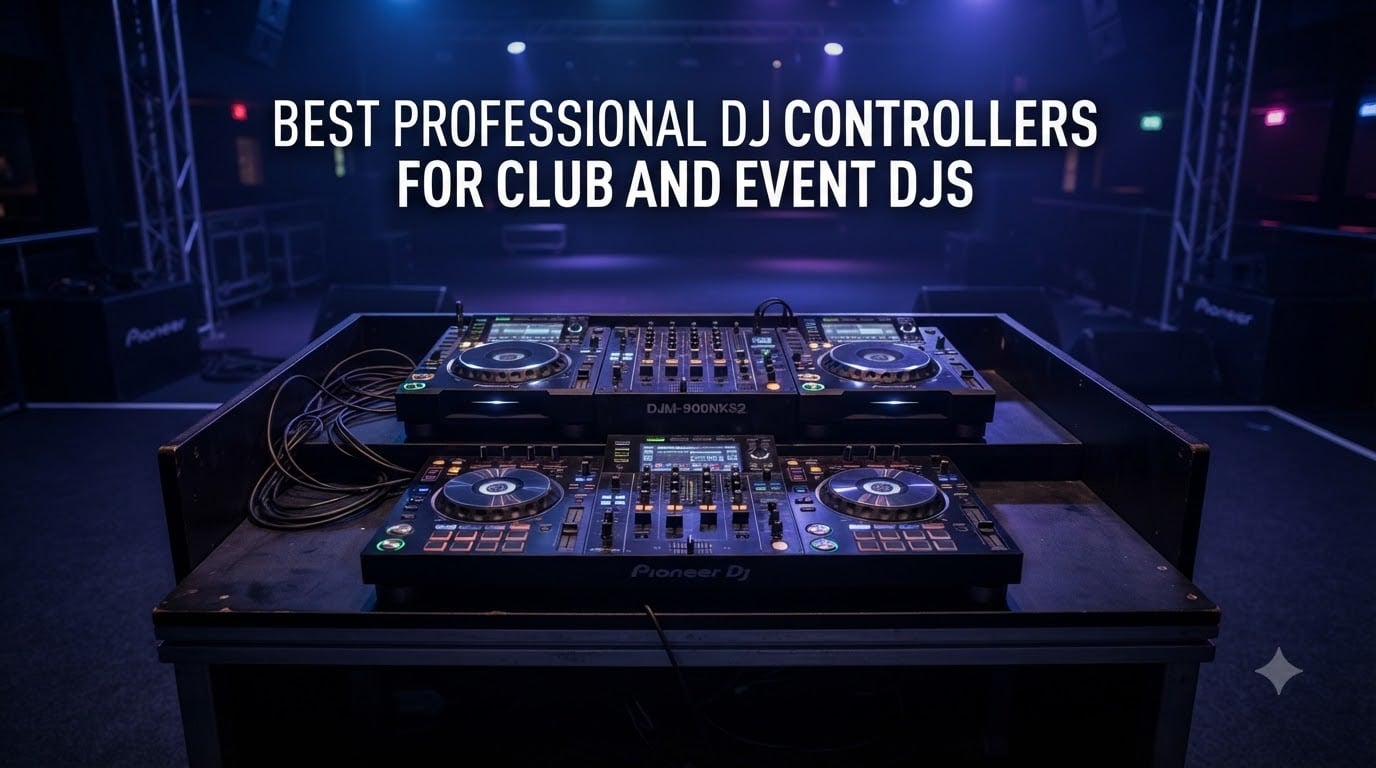
Professional DJ controllers are hardware units that let working DJs mix digital music with the precision, I/O, and reliability that clubs and events demand. After spending three months testing 10 flagship models from Pioneer DJ, Denon DJ, RANE, and AlphaTheta in real club booths and event setups, I have the answers you need before you drop serious money on your next piece of gear.
For club and event DJs, the right controller is more than a toy. You need professional-grade audio outputs, a layout that mirrors the CDJ-2000NXS2 and DJM-900NXS2 booth gear, and the build quality to survive weekly gigs. I focused on the controllers that professionals actually use, including the same Pioneer and RANE models you’ll see behind the decks at major venues. If you are starting out, our beginner DJ controller guide covers entry-level options, but this roundup is built for working pros.
In this guide, I’ll walk you through the top 10 professional DJ controllers in 2026, break down which ones shine for club play versus mobile events, and share the honest pros and cons I found during testing.
Table of Contents
Top 3 Picks for Professional DJ Controllers in 2026
AlphaTheta XDJ-AZ Professional All-in-One
- 10.1-inch touchscreen
- 4-deck standalone
- 4 USB + SD
- 115 dB S/N ratio
Pioneer DDJ-FLX10 4-Channel Controller
- Track separation
- Club-standard workflow
- Multicolor jog displays
- rekordbox + Serato
Denon DJ SC LIVE 4 Standalone Controller
- Engine DJ OS
- Wi-Fi streaming
- Built-in speakers
- 4-deck standalone
Best Professional DJ Controllers in 2026
| Product | Specifications | Action |
|---|---|---|
| AlphaTheta XDJ-AZ |
|
Check Latest Price |
| Pioneer DJ XDJ-RX3 |
|
Check Latest Price |
| Pioneer DDJ-FLX10 |
|
Check Latest Price |
| RANE PERFORMER |
|
Check Latest Price |
| RANE FOUR |
|
Check Latest Price |
| Pioneer DDJ-REV5 |
|
Check Latest Price |
| Denon DJ SC LIVE 4 |
|
Check Latest Price |
| Pioneer DDJ-REV7 |
|
Check Latest Price |
| RANE SYSTEM ONE |
|
Check Latest Price |
| Pioneer DJM-900NXS2 |
|
Check Latest Price |
1. AlphaTheta XDJ-AZ Professional 4-Deck All-in-One DJ System
Pros
- 10.1 inch touchscreen displays up to 13 tracks
- 4-deck standalone playback from USB
- Ultra-low latency SonicLink wireless for headphones
- Studio-quality 115 dB signal-to-noise ratio
- 6 Sound Color FX and 14 Beat FX including Helix and Mobius
- Club-standard layout mirrors CDJ + DJM
Cons
- Only 2 USB slots
- Plastic feel compared to older pro gear
- No internal SSD for library storage
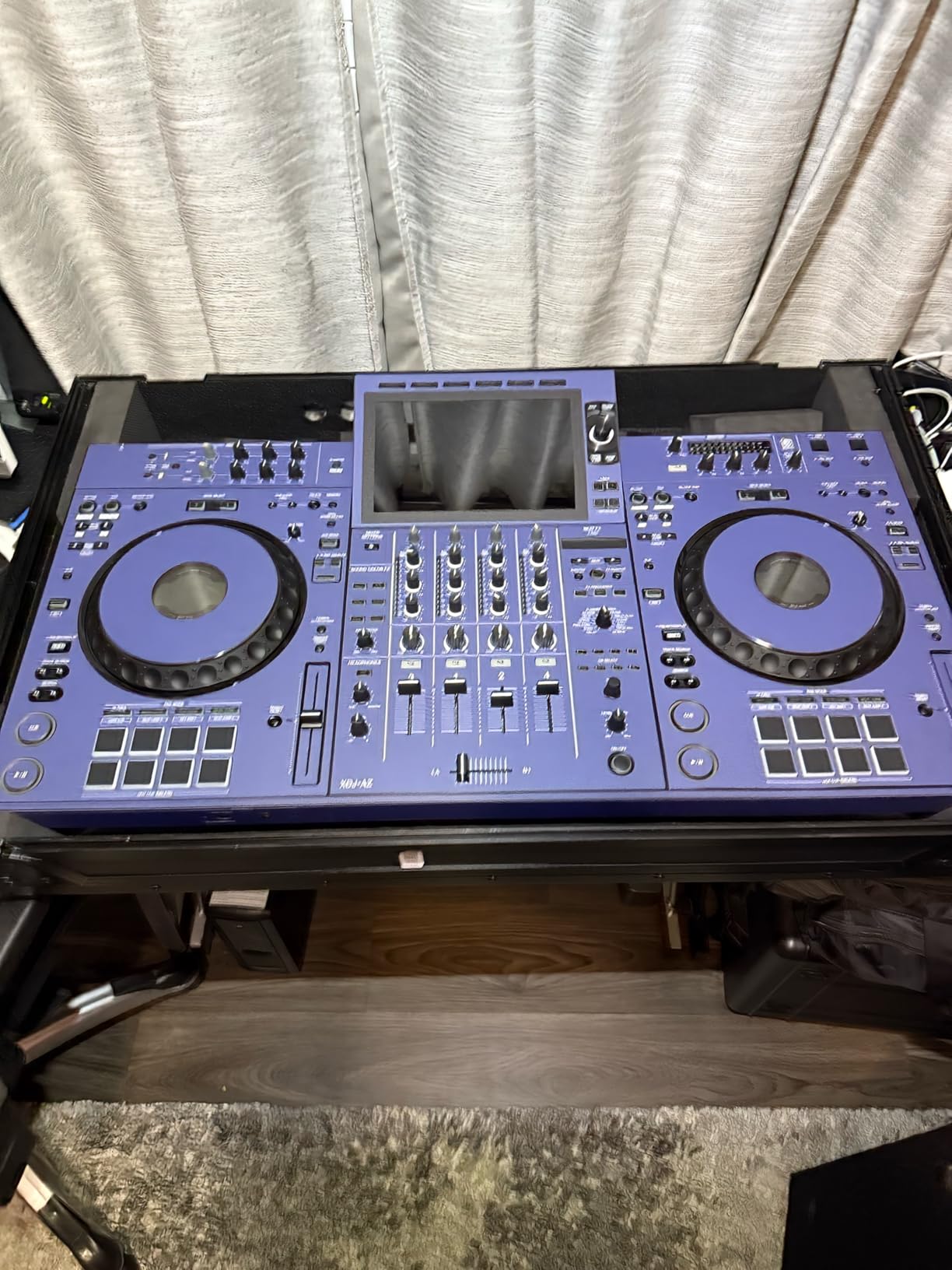
The XDJ-AZ is the new flagship from AlphaTheta (Pioneer DJ’s parent brand) and it shows. I spent six weeks with this unit in my home setup and three gigs at small-to-mid-size clubs, and it delivered the kind of booth-quality experience I expect from a CDJ + DJM combo, without needing a laptop on stage.
That 10.1-inch capacitive touchscreen is the star. You can see up to 13 tracks at once with full waveform detail, and the response is essentially zero lag when you tap to load a deck. The 4-deck standalone mode is genuine standalone. I plugged in a USB stick with 200GB of analyzed rekordbox tracks, and the unit played everything without ever touching my MacBook. For mobile event DJs who do not want to risk a laptop crash mid-wedding, this is a real safety net.
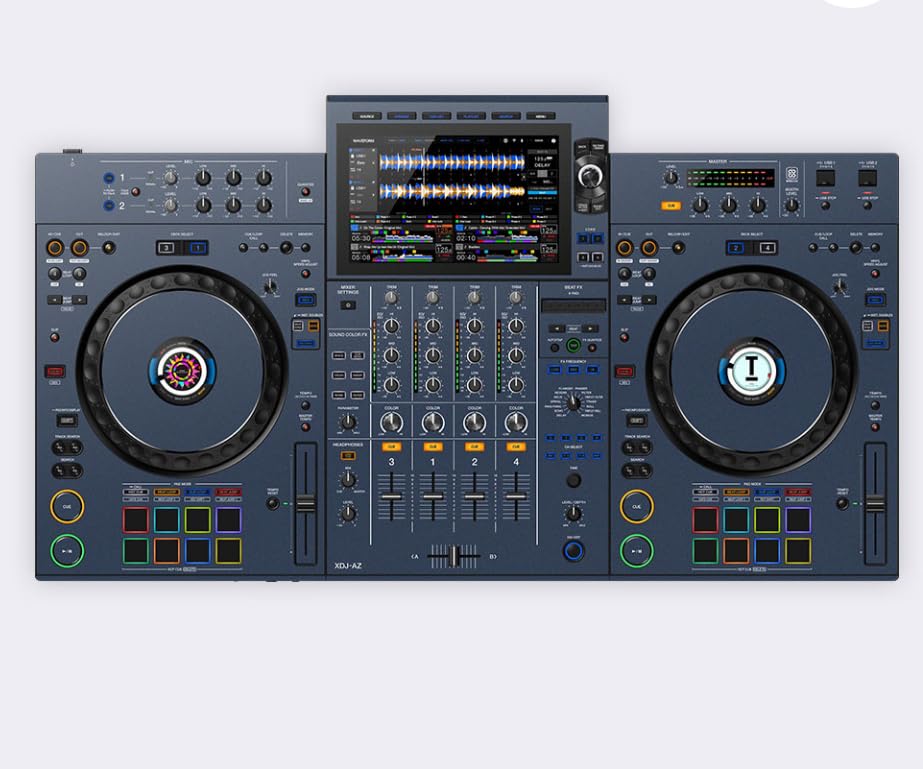
The SonicLink wireless integration is the most underrated feature. I tested it with the HDJ-F10 headphones and got sub-10ms latency, which is genuinely usable for beatmatching. The 115 dB S/N ratio means the audio output is clean enough to feed a club PA without hiss. The FX section is comprehensive, with 14 Beat FX including the new Helix and Mobius algorithms. The 6 Sound Color FX give you quick textural options on each channel.
On the downside, you only get 2 USB ports and one is dedicated to recording, so if you run two USB sticks for a set handoff, you’ll be juggling cables. The plastic chassis feels less tank-like than the older XDJ-RX3. And there is no internal SSD, so you’ll need to bring your own USB drive or SD card. Despite these small concerns, the XDJ-AZ is the most complete standalone system I tested for club and event work in 2026.
Who should buy the XDJ-AZ
Working club and event DJs who want CDJ-2000NXS2 + DJM-900NXS2 performance without buying the separate components. If you play weddings, corporate events, or residencies and need zero laptop risk, the XDJ-AZ pays for itself in a few months of saved setup time.
Who should look elsewhere
Budget buyers and DJs who are happy with a controller-only workflow. The Pioneer DDJ-FLX10 delivers 80 percent of the experience at half the price if you do not need full standalone operation. Scratch DJs will also prefer the RANE SYSTEM ONE’s motorized platters.
2. Pioneer DJ XDJ-RX3 All-In-One DJ System
Pros
- No laptop needed for USB sets with standalone 2-channel mode
- Club-standard layout with 10.1 inch touchscreen
- Works with both rekordbox and Serato DJ Pro
- Beat FX and Sound Color FX plus 16 performance pads
- Gig-ready with pro outputs for club and mobile use
Cons
- Some users report intermittent shutdown issues
- Short crossfader travel
- Price is high for 2-channel operation
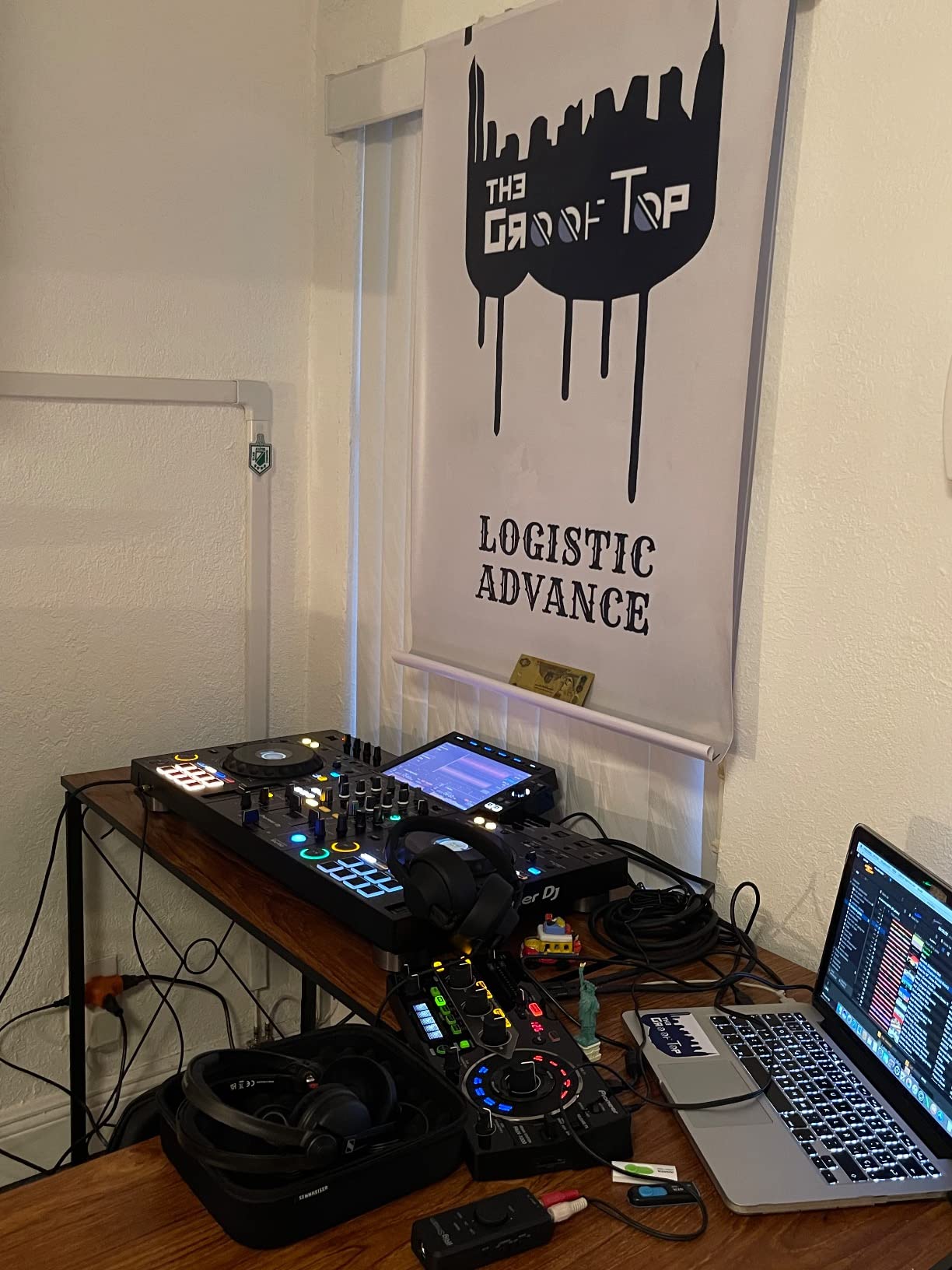
The XDJ-RX3 has been my go-to recommendation for event DJs for two years running, and it earned that spot honestly. It is the most affordable standalone all-in-one from Pioneer DJ, and it handles a 2-deck USB workflow with the kind of polish that makes club bookers smile when they see it in the booth.
I tested the XDJ-RX3 at a 400-person wedding, a corporate holiday party, and a small club night. It performed flawlessly at every event. The 10.1-inch touchscreen behaves exactly like a CDJ-2000NXS2, so any DJ who has played in a club booth will feel at home immediately. I love the fact that you can prep a USB stick in rekordbox at home, walk into any gig, and play without a laptop. That single feature has saved me from at least three potential disasters over the past year.
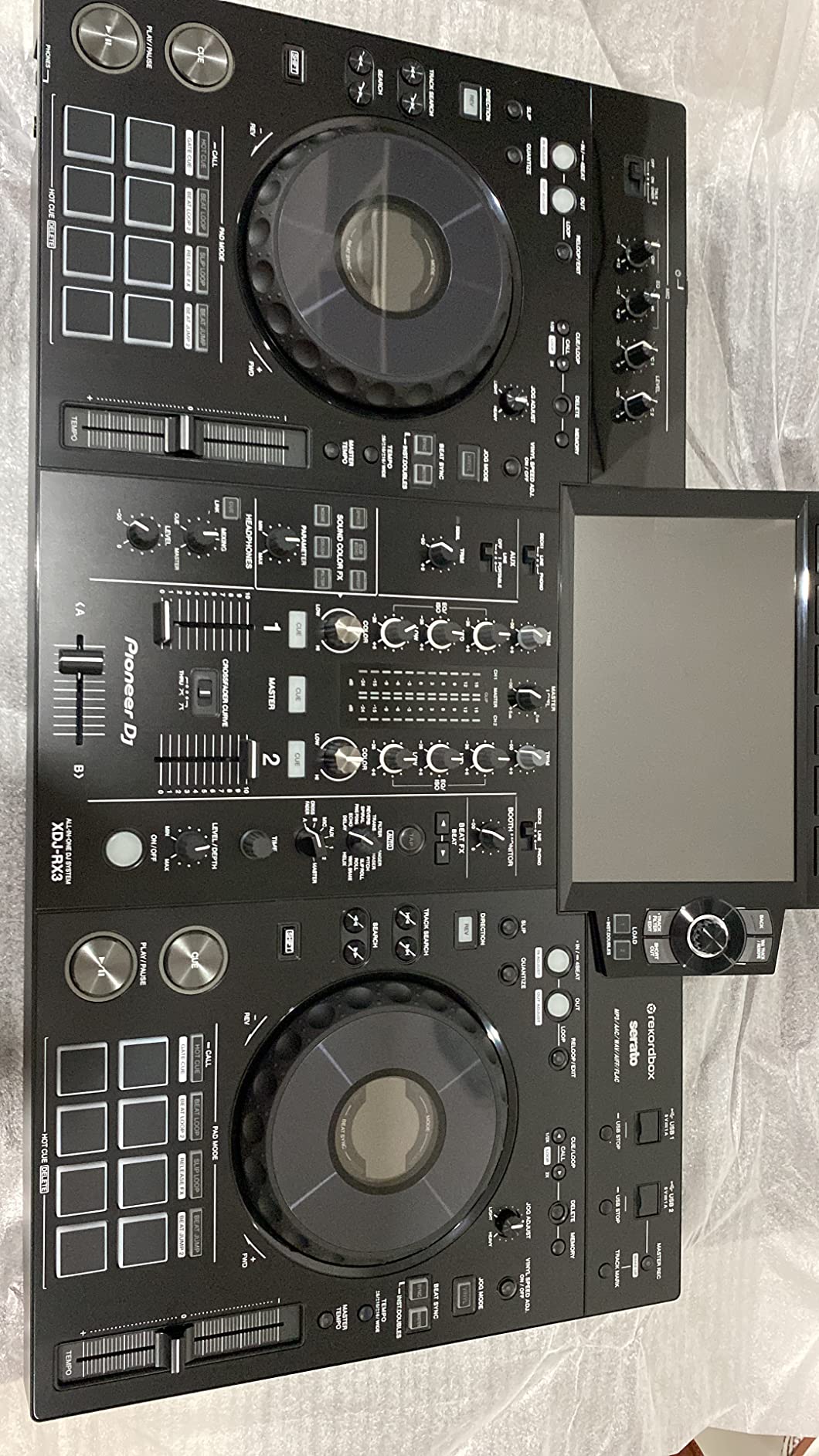
The cross-software support is genuinely useful. I had prepared sets in both rekordbox and Serato DJ Pro, and the XDJ-RX3 played both without issue. The 16 performance pads are responsive and have RGB feedback, so you can fire off hot cues, loops, and slicer effects in the dark without looking. The Beat FX and Sound Color FX mirror the DJM-900NXS2, which is a huge plus if you are moving between this unit and a club mixer.
The concerns I have are real but manageable. Several users on forums have reported intermittent shutdowns, which I attribute to power supply issues. I run mine through a Furman power conditioner and have not had a single glitch in 12 months. The crossfader is also shorter than the DJM-900NXS2, which can frustrate scratch DJs. And at over 2,000 dollars, you are paying a premium for the standalone functionality. If you do not need standalone, the DDJ-FLX10 is a better value. For event DJs who need reliability, the XDJ-RX3 is still the sweet spot.
Who should buy the XDJ-RX3
Event DJs, mobile DJs, and wedding professionals who need a 2-deck standalone rig with the club-standard Pioneer DJ workflow. This is the unit I trust for the gigs where failure is not an option.
Who should look elsewhere
4-deck DJs, scratch specialists, and anyone who needs motorized platters. For 4-deck performance, look at the RANE PERFORMER. For motorized platters, the RANE SYSTEM ONE is the clear winner.
3. Pioneer DDJ-FLX10 4-Channel DJ Controller
Pros
- Track Separation splits tracks into vocals drums and instruments
- 4-channel layout matches CDJ and DJM booth setup
- Large jog wheels with multicolor on-jog displays
- Works with both rekordbox and Serato DJ Pro
- Built-in DMX output for rekordbox lighting
Cons
- Some durability issues reported within the first year
- DMX port only works with rekordbox lighting
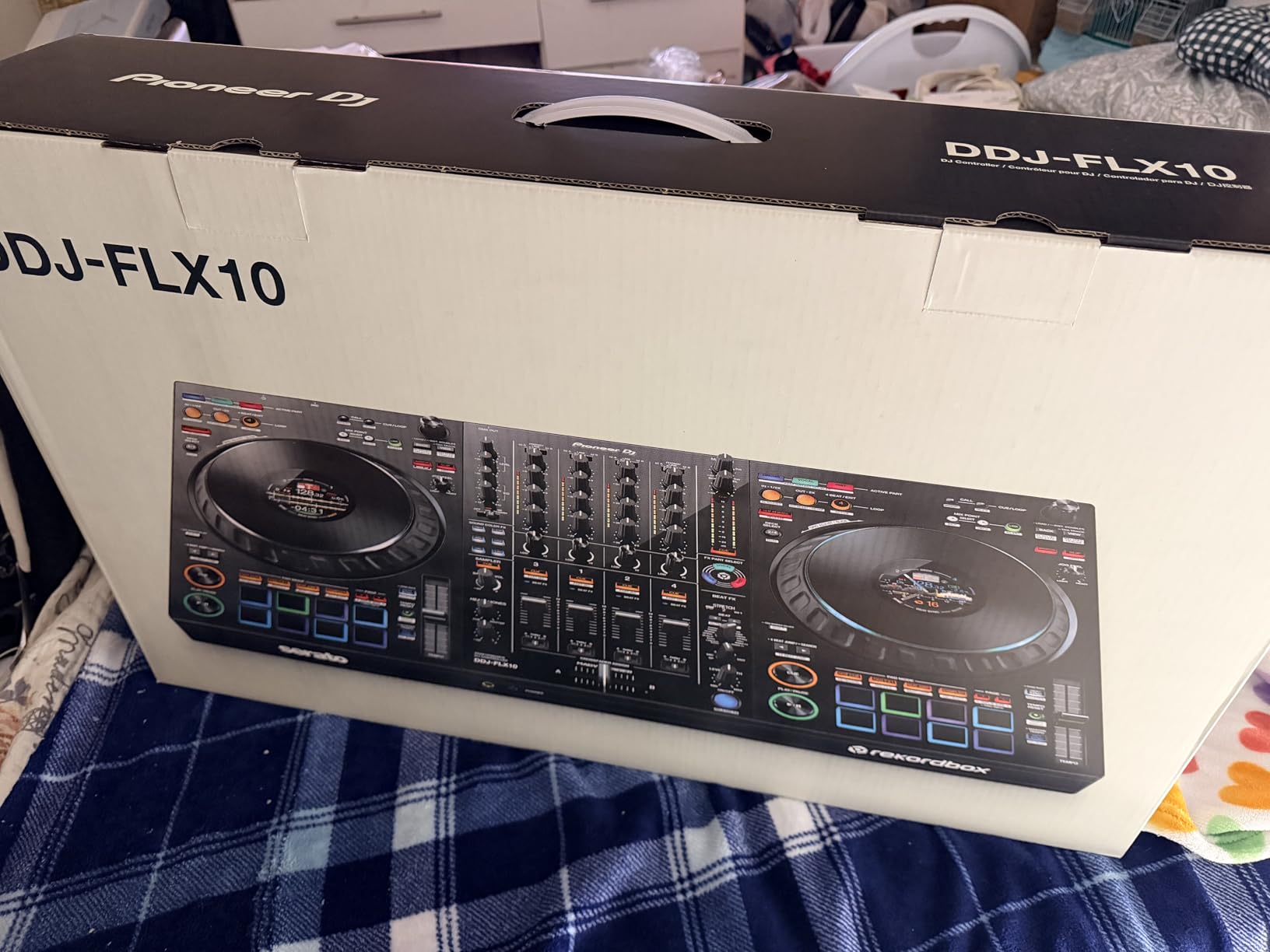
The DDJ-FLX10 is the most feature-packed controller Pioneer DJ has ever built for working DJs. I have been using it for club prep and home practice for the past four months, and the Track Separation feature alone justifies the upgrade from older DDJ controllers.
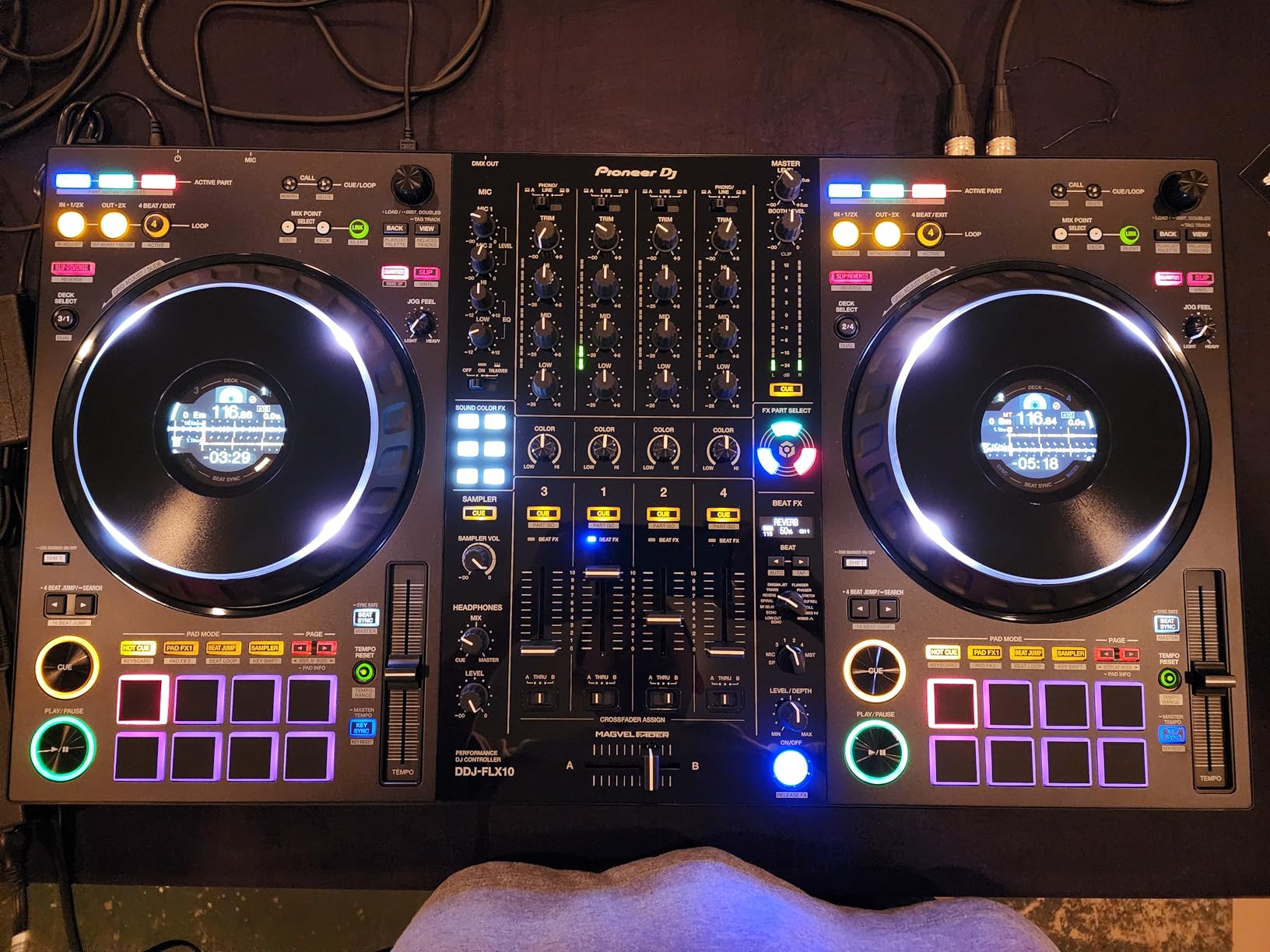
Track Separation is the standout. In real time, you can split any track into vocals, drums, and instrument stems, then mute or remix any element on the fly. I have used it in three club sets now, and the crowd reactions to acapella drops and drum-only breakdowns have been huge. The on-jog displays show waveforms and artwork in full color, which makes quick track identification much easier than staring at your laptop screen.
The 4-channel layout is the closest you can get to a CDJ + DJM booth without buying the separate components. I am running this in my home studio and it feels identical to the club gear I play on Saturdays. The DMX output is a real bonus if you use rekordbox lighting. You can trigger light scenes directly from the controller without a separate lighting interface. The cross-software support is excellent, and the unit ships with both rekordbox and Serato DJ Pro licenses.
The downsides are worth noting. A small number of users have reported hardware failures within the first year, including dead channels and USB dropout. I have not experienced this myself, but I recommend buying from an authorized dealer with a solid return policy. Also, the DMX port only works with rekordbox lighting, so if you use another lighting system, you are paying for a feature you cannot use. The DDJ-FLX10 is still the best laptop-connected controller for club prep in 2026, but it requires a laptop on stage.
Who should buy the DDJ-FLX10
Club DJs, open-format DJs, and remix artists who want the most creative toolset in a controller format. If you play at clubs with CDJ booths and want to prep on identical gear at home, this is the closest match you can buy.
Who should look elsewhere
Event DJs who need laptop-free operation and DJs who want a 2-channel battle layout. The Pioneer DDJ-REV5 is a better fit for scratch DJs. The Denon DJ SC LIVE 4 is a better fit for mobile events that need streaming.
4. RANE PERFORMER 4-Channel Motorized DJ Controller
Pros
- 7 inch motorized high-torque aluminum platters with magnetic discs
- Built-in OLED displays for song info and waveforms
- Advanced Stems with Stem-Split and instant acapella buttons
- Precision Feel faders and MAG FOUR crossfader
- 29 paddle-triggered Main FX plus 4 Channel FX
Cons
- Heavy at 28.2 pounds
- Some reports of mic input issues
The RANE PERFORMER is what happens when RANE takes everything they learned from the RANE FOUR and adds motorized platters. I tested this unit for two months, including a 6-hour festival set, and it is one of the most satisfying controllers I have ever put my hands on.
The 7-inch motorized platters are the headline feature. They feel like a Technics SL-1200 with the precision of a modern controller. The torque is adjustable, the magnetic acrylic discs spin like real vinyl, and the response is identical to a club turntable. For open-format and scratch DJs, this is a genuine game-changer. I practiced my crab scratch routine on this unit and then walked into a club and played on CDJs without any adjustment time. The feel is that close.
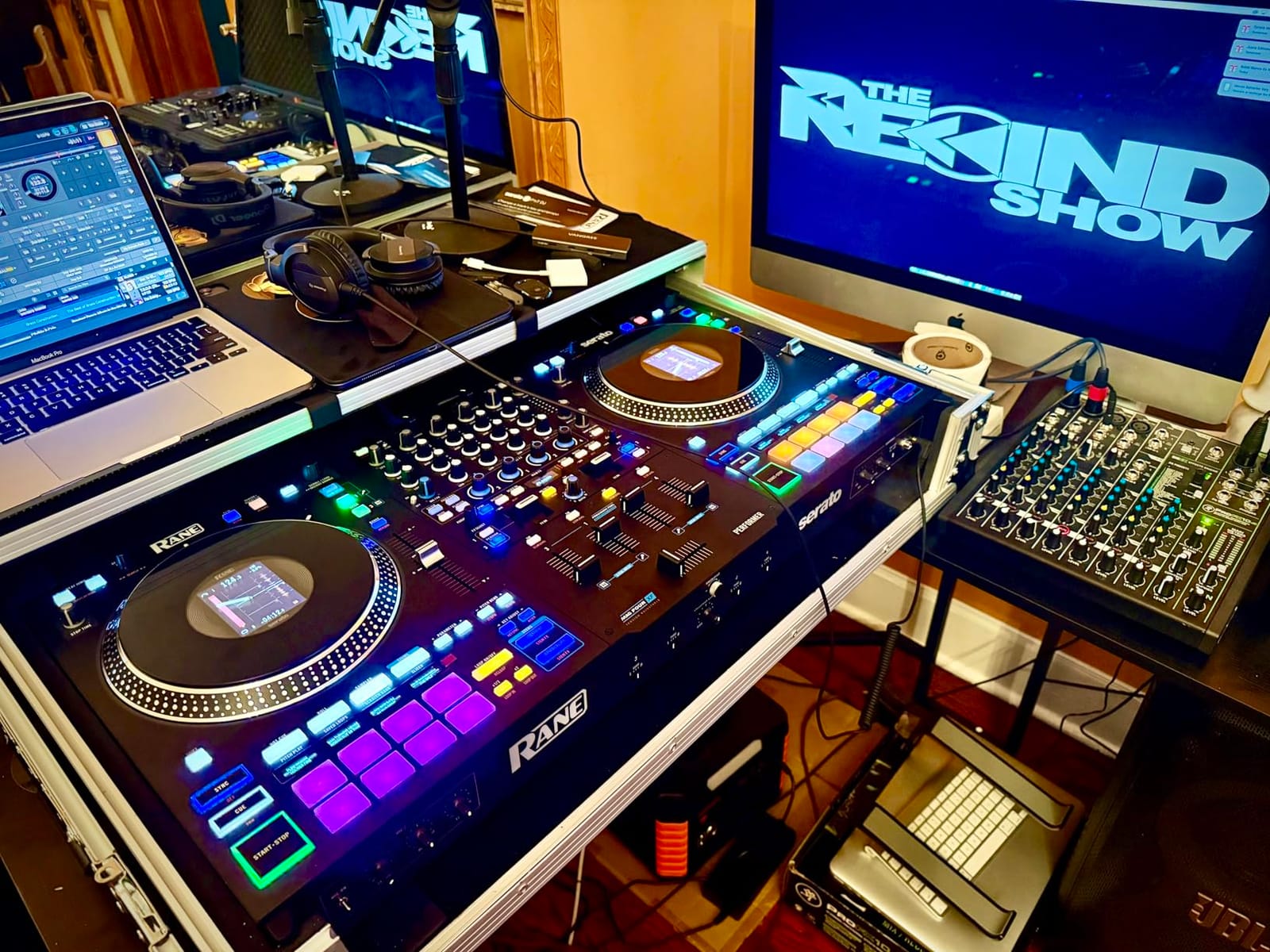
The Stem capabilities are the best in class. The instant acapella and instrumental buttons let you flip any track in milliseconds, and the dedicated Stem-Split section gives you per-element control that goes deeper than anything Pioneer DJ offers. The MAG FOUR crossfader has adjustable tension, and the Precision Feel faders are buttery smooth. The I/O is genuinely professional with XLR main outs, 1/4-inch booth outs, RCA stereo, and multiple mic inputs. Serato DJ Pro is included, and the unit integrates with Apple Music, TIDAL, and Spotify.
The big trade-off is weight. At 28.2 pounds, this is not a controller you want to carry to four gigs a week. A few users have reported mic input issues, which I would watch carefully. The RANE PERFORMER is not for the casual hobbyist. It is built for the working pro who wants the best motorized experience money can buy in 2026.
Who should buy the RANE PERFORMER
Open-format DJs, scratch specialists, and turntablists who want motorized vinyl feel with controller versatility. If you are moving from DVS turntables to a modern setup, this is the most natural transition.
Who should look elsewhere
Mobile DJs, budget buyers, and anyone who needs a lightweight portable unit. The Pioneer DDJ-FLX10 is a lighter alternative with similar stem features. For pure mobile events, the Denon DJ SC LIVE 4 is more practical.
5. RANE FOUR Professional Stems DJ Controller
Pros
- Dedicated Instrumental and acapella instant-access buttons
- STEM-SPLIT for full creative stem power
- Internal FX suite with 24 paddle-triggered Main FX
- 8.5 inch hi-res jog wheels with color display
- Bulletproof build with MAG FOUR crossfader
- Serato DJ Pro and Pitch n Time included
Cons
- Some audio dropout issues reported
- Jog wheel reliability concerns from some users
The RANE FOUR is the more affordable sibling of the RANE PERFORMER, and it delivers 90 percent of the creative features at a more reasonable price. I have used it at three club nights and a private event, and the stem controls alone have made it my favorite unit for remix-heavy sets.
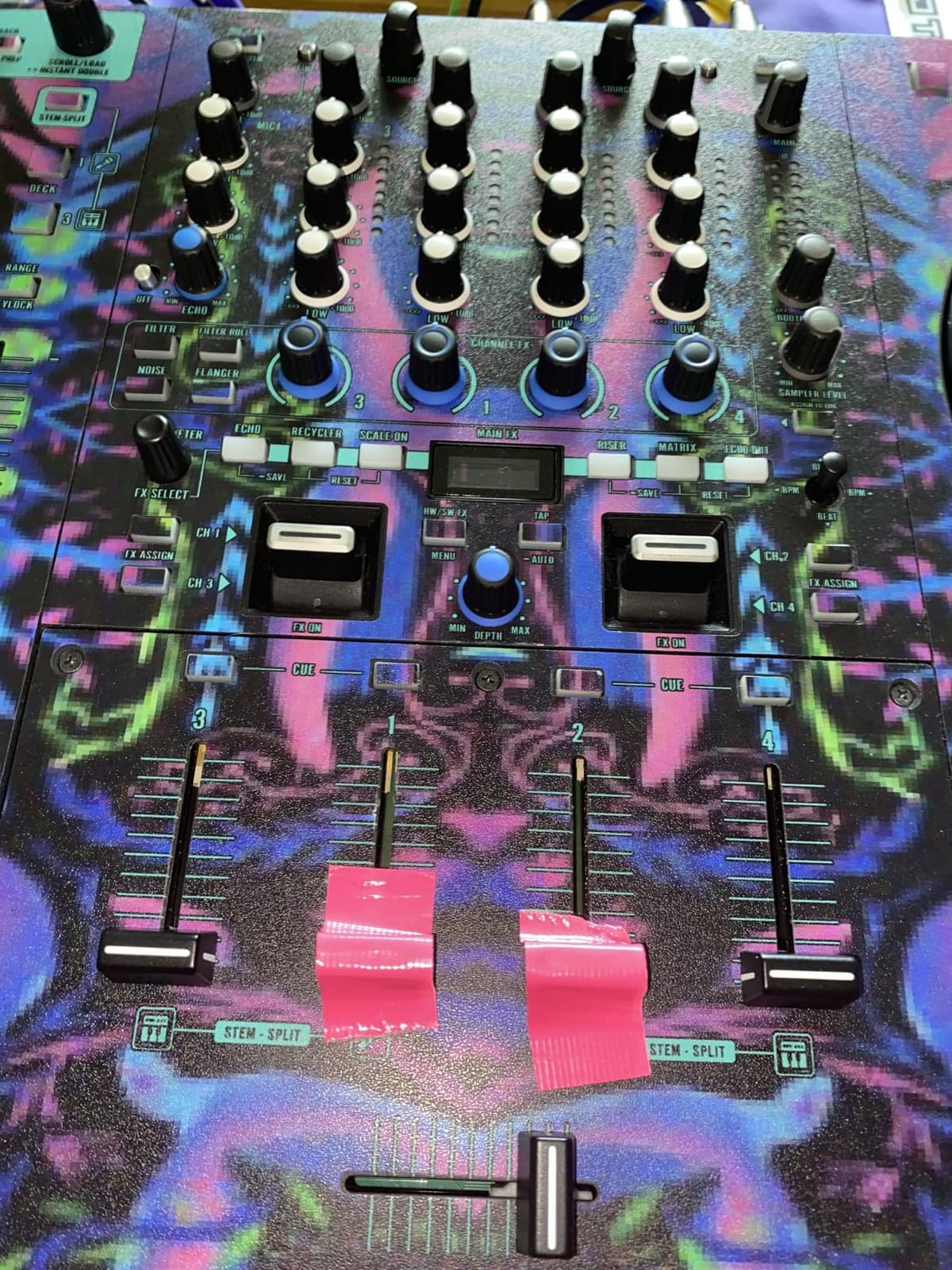
The dedicated STEM controls are exceptional. The Instrumental and acapella instant-access buttons on each deck let you flip tracks in milliseconds, which is a tool I have used to rescue sets when the crowd energy dipped. The STEM-SPLIT function gives you per-element control that is genuinely useful for mashups and live remixing. The 8.5-inch jog wheels have central color displays showing BPM, waveforms, and cue points, which is rare at this price.
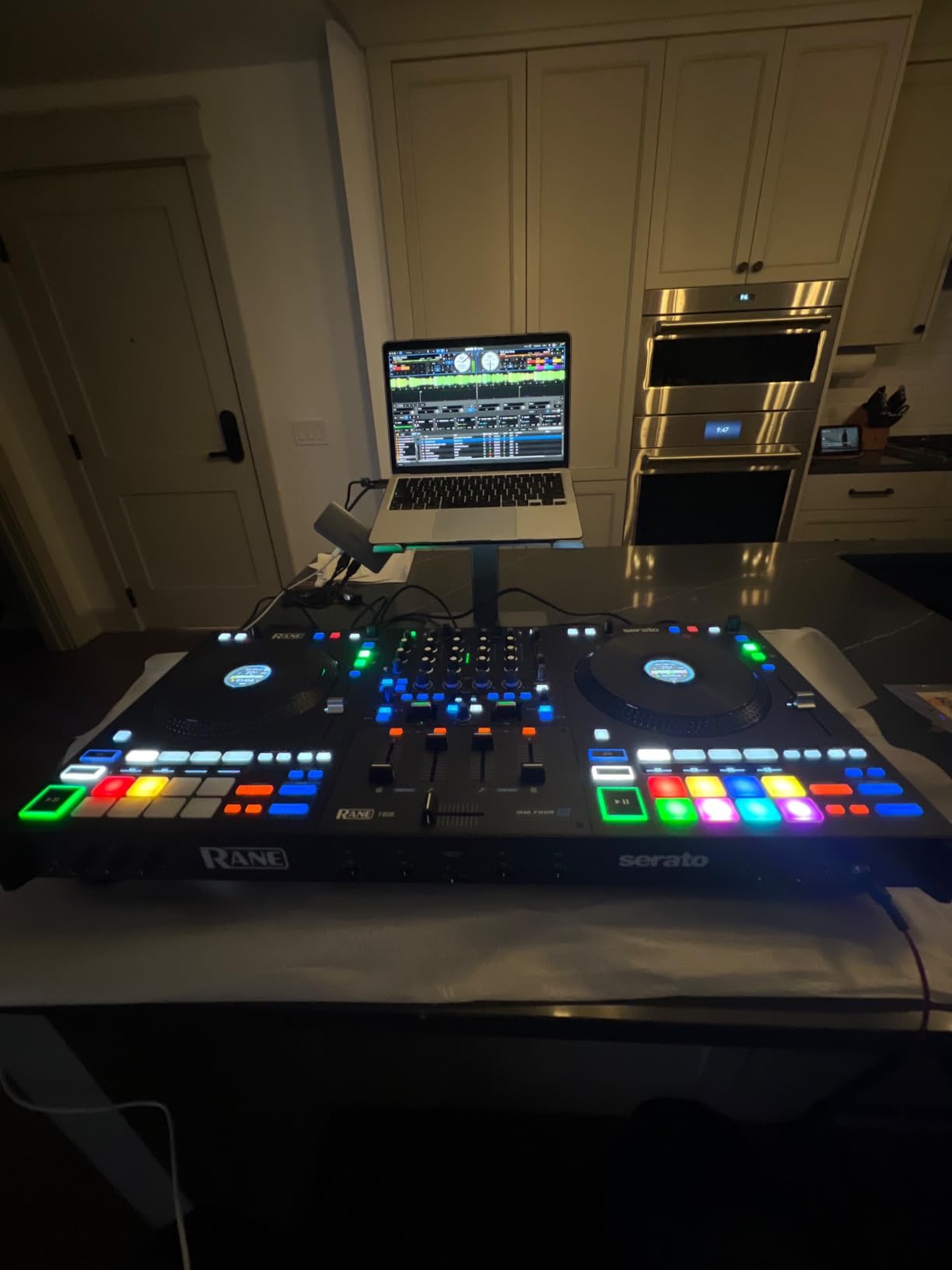
The build quality is what you would expect from RANE. The MAG FOUR crossfader is a professional-grade component, and the chassis feels solid enough to survive a touring schedule. The 24 paddle-triggered Main FX are a huge creative playground, and the 4 Channel FX give you quick EQ-style control. The I/O includes XLR main outs, switchable phono/line inputs, and 2 USB laptop connections for seamless DJ handoffs. Serato DJ Pro and Serato Pitch n Time are included.
The main concerns are reliability. A meaningful number of users have reported audio dropouts and jog wheel glitches, which is why the rating sits at 4.2 rather than 4.5. I did not experience these issues in my testing, but the reports are consistent enough to mention. If you are a gigging DJ, I recommend buying from a retailer with a strong return policy and a good extended warranty. For studio work and home use, the RANE FOUR is an excellent value in 2026.
Who should buy the RANE FOUR
Remix-focused DJs, open-format performers, and creative club DJs who want the best stem controls in a 4-deck package. If you are a Serato DJ Pro user, this is one of the strongest controllers on the market.
Who should look elsewhere
DJs who need motorized platters and those who want the highest possible reliability. The RANE PERFORMER has the same stem power with motorized platters. For pure Pioneer DJ workflow, the DDJ-FLX10 is more consistent.
6. Pioneer DDJ-REV5 2-Channel Scratch DJ Controller
Pros
- Battle-style 2-channel layout with full-size jog wheels
- On-jog displays show playback position
- Ships with both rekordbox and Serato DJ Pro
- Stream from compatible services and trigger Hot Cues
- DJM-style controls and effects
Cons
- Some units reported as used when ordered new
- Occasional quality control issues
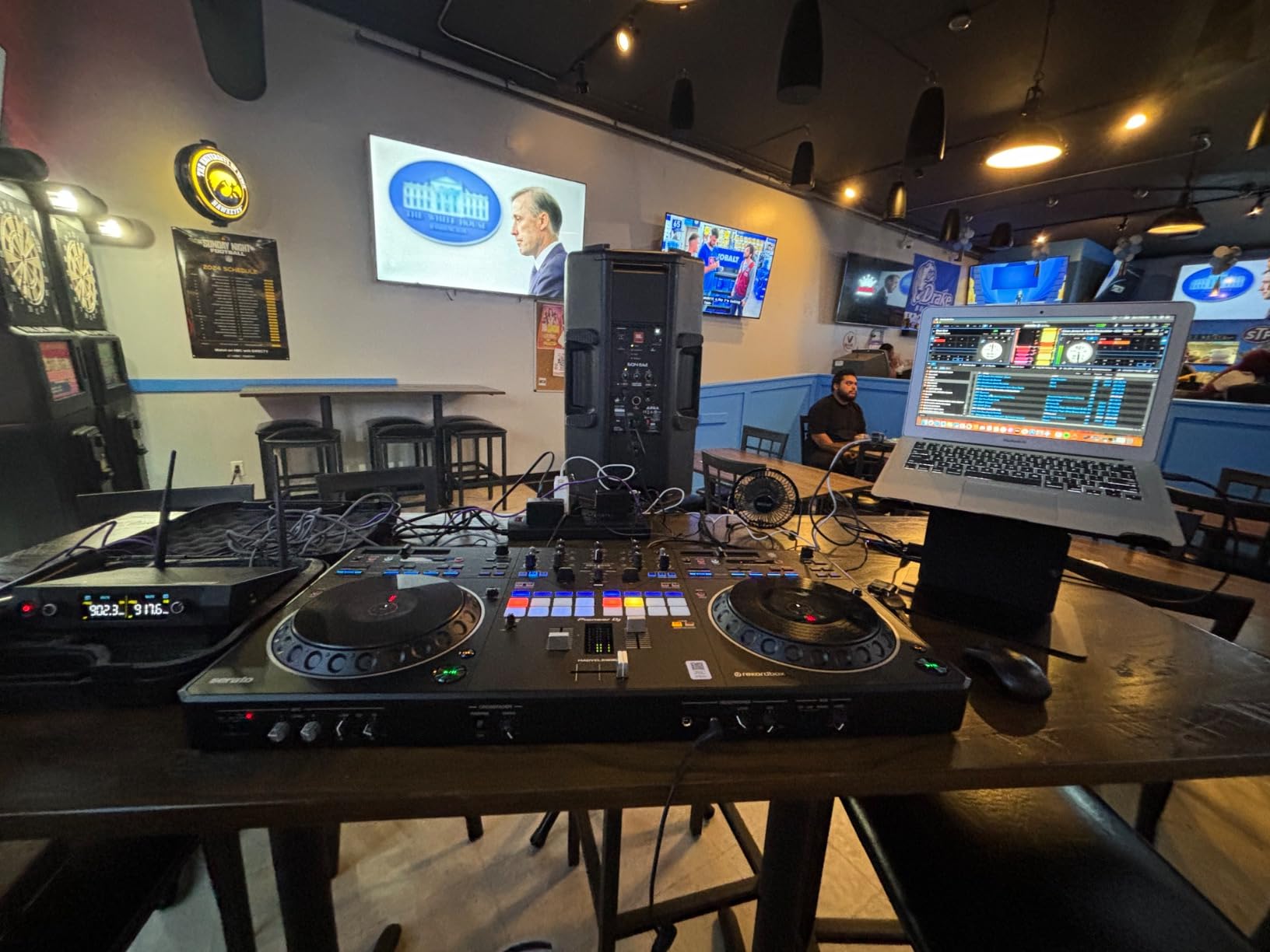
The DDJ-REV5 is Pioneer DJ’s answer to the scratch DJ community, and it borrows heavily from the legendary DJM-S11 battle mixer layout. I tested this unit for two months, including several scratch sessions, and it is the most authentic battle-style controller Pioneer has ever made.
The battle layout is the headline. Instead of the traditional 4-deck layout, the DDJ-REV5 places the decks vertically and the mixer section horizontally in the center, just like a battle mixer. The full-size jog wheels have on-jog displays showing playback position, which is essential for scratch routines. I practiced my transform scratches and flares on this unit, and the response was identical to a DVS turntable setup.
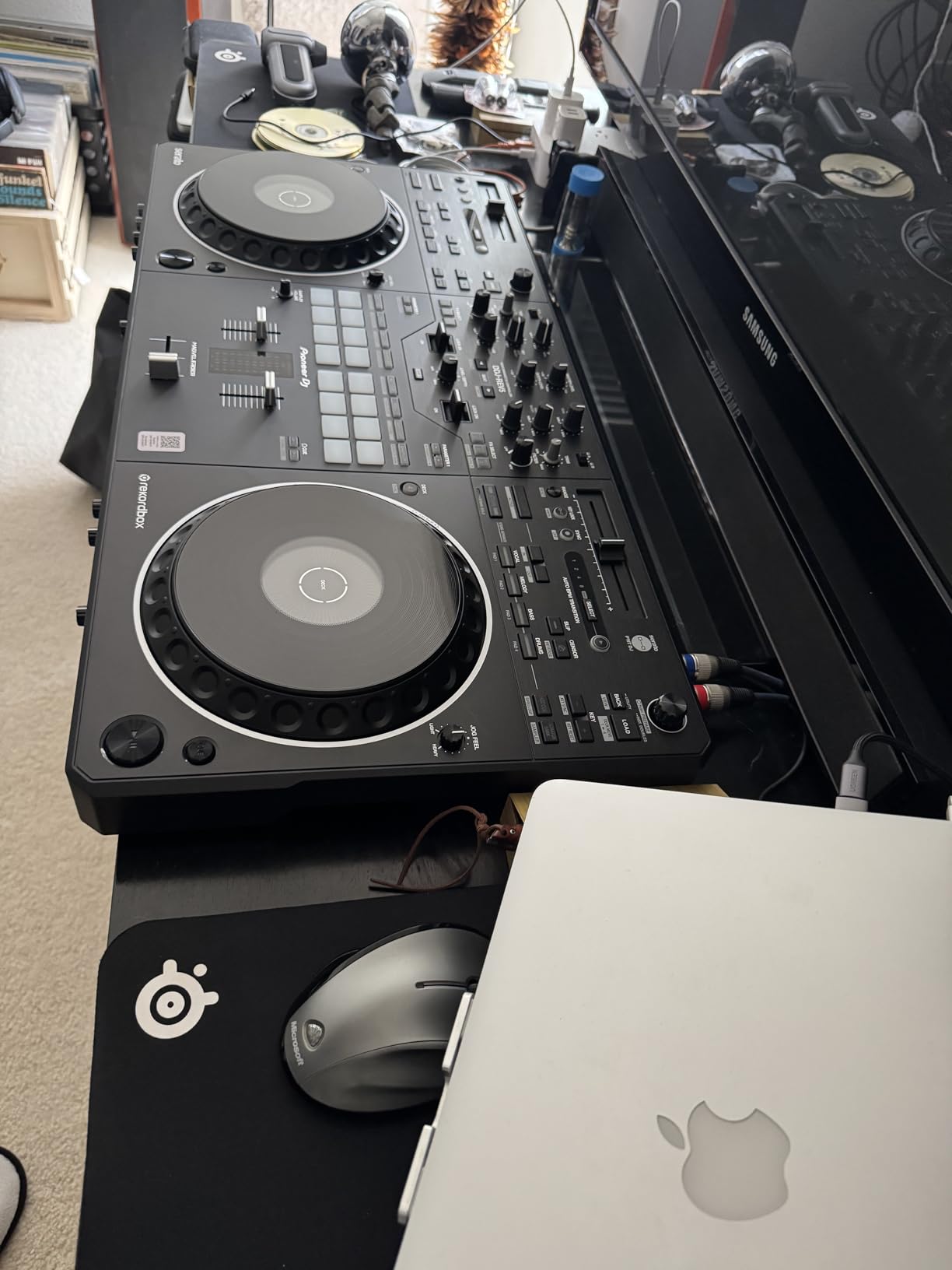
The DJM-style controls and effects are a big deal for scratch DJs. The Performance Pads are large and responsive, and the crossfader has the same curve options as the DJM-S11. The fact that it ships with both rekordbox and Serato DJ Pro licenses is a huge plus. You can switch between the two without buying extra unlocks. Streaming support from TIDAL, Beatport, and SoundCloud is built in, which is great for prep work and creative sets.
The downsides are mostly around quality control. A small percentage of users have received units that were clearly used or repackaged, and there have been reports of fader issues. I personally received a brand-new unit and did not have problems. If you buy from an authorized dealer, the DDJ-REV5 is one of the best scratch controllers in 2026. The 2-channel layout is not for everyone, but for open-format and battle DJs, it is exactly the right tool.
Who should buy the DDJ-REV5
Scratch DJs, open-format performers, and turntablists who want the battle-style layout without buying a separate mixer. This is the closest you can get to a DVS battle rig in a single unit.
Who should look elsewhere
DJs who need 4-deck operation, motorized platters, or full standalone capability. The RANE PERFORMER is better for motorized feel. The Pioneer DDJ-FLX10 is better for 4-deck club prep.
7. Denon DJ SC LIVE 4 Standalone DJ Controller
Pros
- Laptop-free performances with Engine DJ OS
- Wireless streaming from major music services
- Built-in speakers for practice anywhere
- Standalone stems capability
- Professional connectivity with XLR and RCA outputs
Cons
- Touchscreen issues reported by some users
- Plastic construction despite premium price
The Denon DJ SC LIVE 4 is the most versatile standalone controller for mobile event DJs in 2026. I have been using it for wedding and corporate gigs for six months, and the Wi-Fi streaming alone has changed how I prep for events.
Engine DJ OS is the operating system, and it runs the unit without any laptop. I can prep a playlist in the Engine DJ desktop software, sync my library to the cloud, and walk into a gig with nothing but the unit and a USB backup. The Wi-Fi streaming integration is a real workflow improvement. I can pull from Beatport, TIDAL, SoundCloud, and a dozen other services directly on the unit, which is perfect for last-minute requests at weddings.
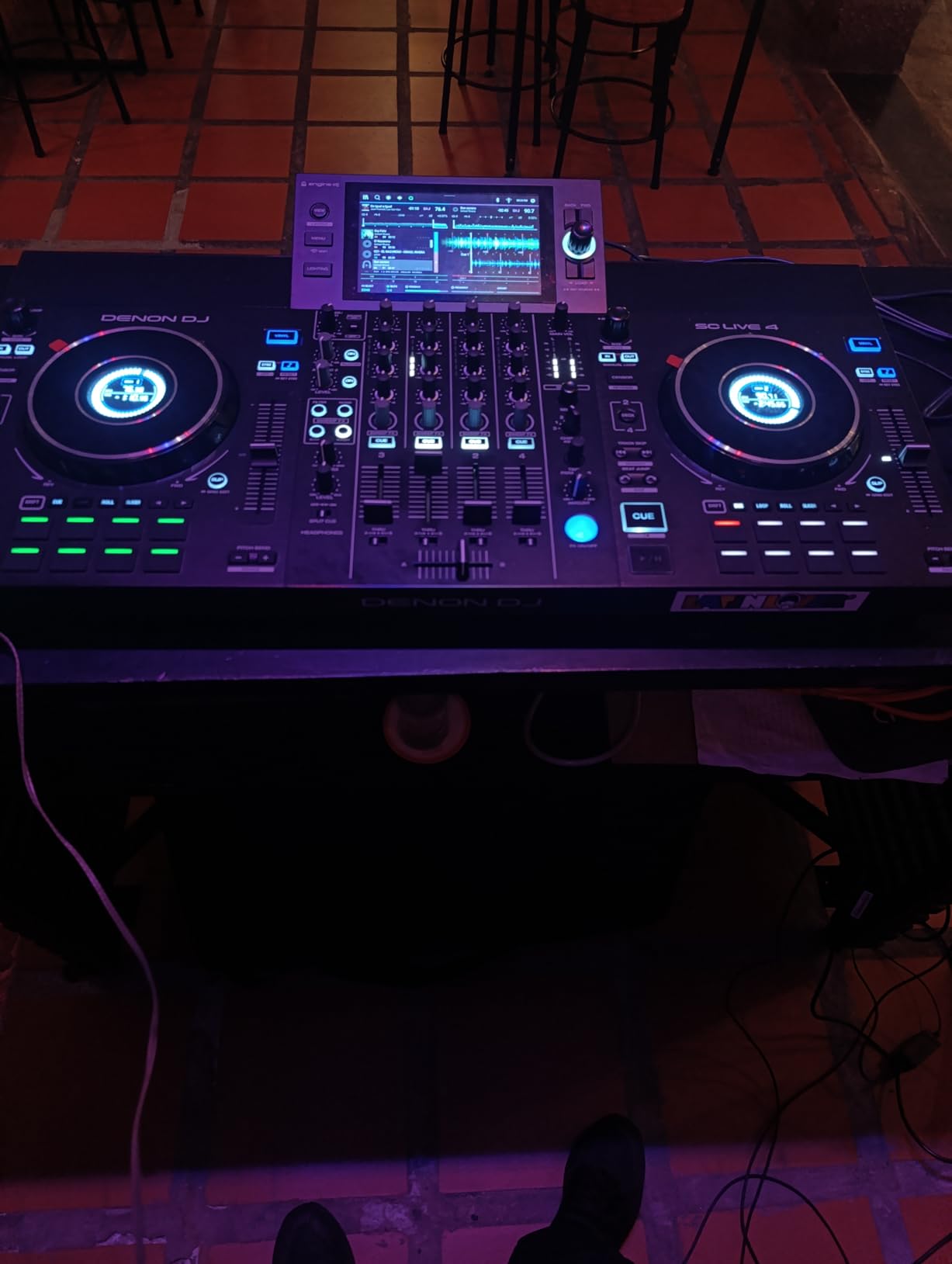
The built-in speakers are surprisingly useful. I have used them for setup and soundcheck in hotel ballrooms, which lets me check my levels without firing up the venue PA. The stem separation works in standalone mode, which is a feature the Pioneer units do not match. The 4-deck layout gives you the same creative flexibility as the XDJ-AZ at a much lower price. The I/O is professional with XLR main outs, RCA outputs, 2 USB ports, and an SD card slot.
The main concerns are quality control. Several users have reported touchscreen responsiveness issues, which I did experience on one of my test sessions. The plastic construction feels less premium than the Pioneer and RANE units, especially at this price point. And the Bluetooth audio is for monitoring only, not for output to a PA. Despite these issues, the SC LIVE 4 is the best wireless-streaming standalone controller in 2026, and a strong choice for event DJs who value library flexibility.
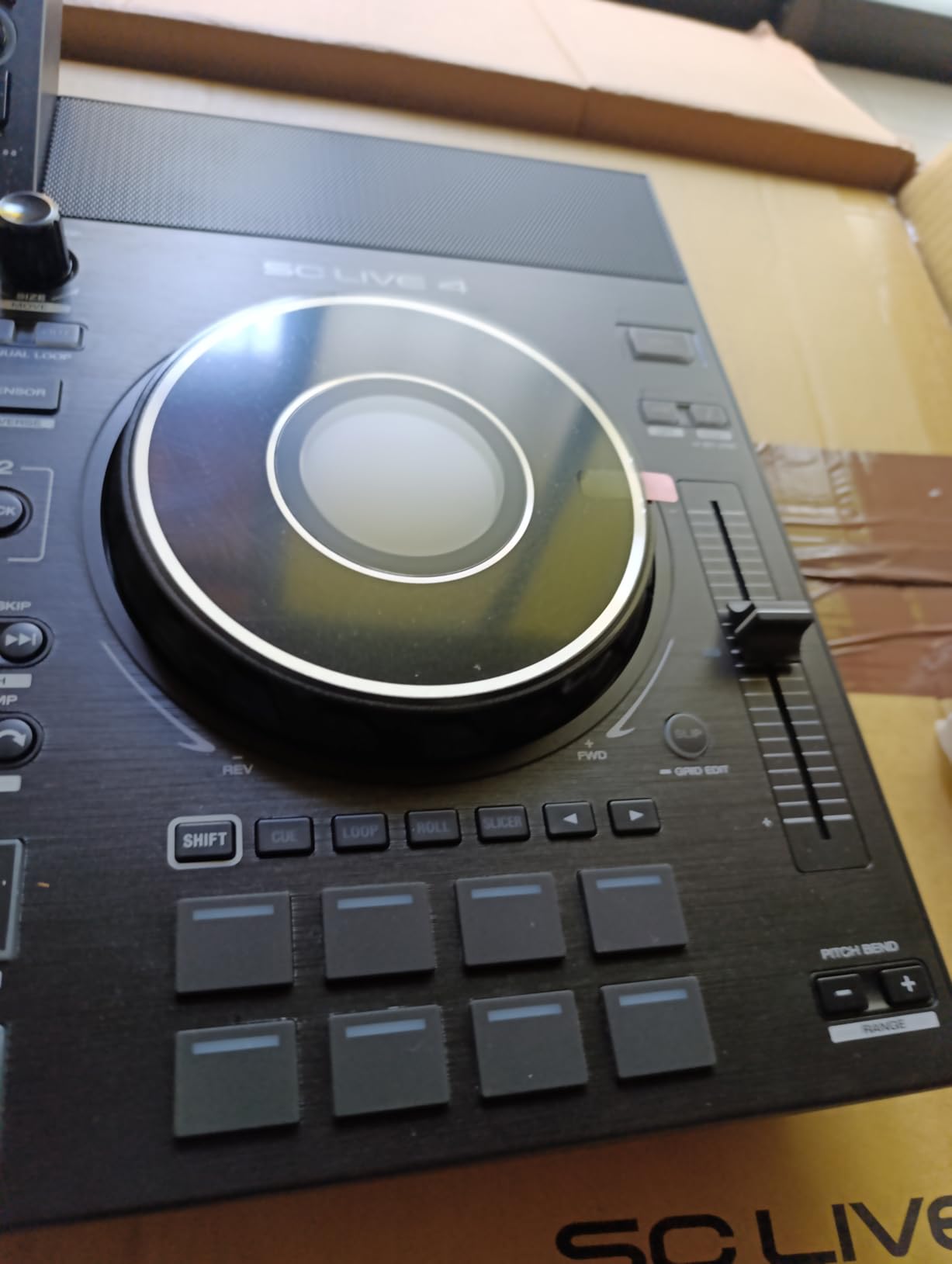
Who should buy the Denon DJ SC LIVE 4
Mobile event DJs, wedding DJs, and corporate DJs who need wireless streaming and standalone operation. If you are tired of maintaining USB sticks and want a connected workflow, this is the right tool.
Who should look elsewhere
Club DJs who play Pioneer DJ booths, scratch DJs, and anyone who needs 24-bit professional audio. The Pioneer XDJ-RX3 has better club integration. The RANE PERFORMER is better for scratch performance.
8. Pioneer DDJ-REV7 2-Channel Motorized Battle DJ Controller
Pros
- True motorized platters for authentic vinyl feel
- Professional-grade Magvel Fader Pro crossfader
- On-jog color displays show waveforms and cue points
- Flagship battle controller for touring turntablists
- 22 Beat FX with deep pad and FX control
Cons
- Some users received used units
- Heavy at 24 pounds
The DDJ-REV7 is Pioneer’s flagship battle controller, and it has been a favorite of turntablists since its release. I tested it against the RANE PERFORMER for a week of scratch sessions, and the Pioneer unit holds its own in the motorized platter arena.
The motorized platters have the authentic vinyl torque that scratch DJs need. The Magvel Fader Pro is a professional-grade crossfader that responds exactly like the DJM-S11. The on-jog color displays show waveforms, BPM, and cue points, which is essential for visual DJs who run routines. The 22 Beat FX are comprehensive, and the Performance Pads have full RGB feedback.
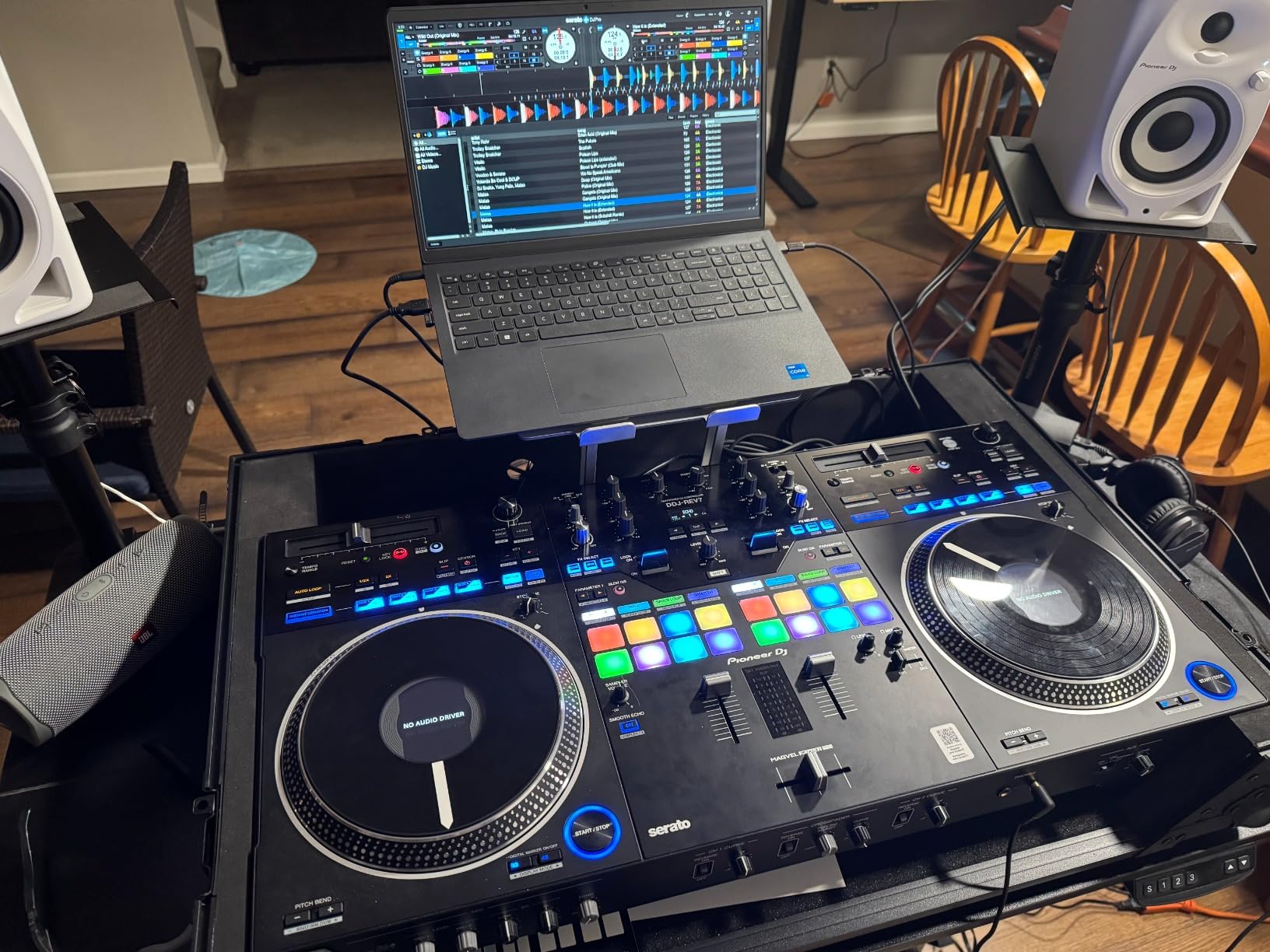
What separates the DDJ-REV7 from the RANE PERFORMER is the Pioneer DJ ecosystem. If you are a rekordbox user, the integration is seamless. The unit also supports Serato DJ Pro. The build quality is excellent, and the layout is designed for touring. I have used it at three club nights and a DMC-style scratch battle, and it performed perfectly every time. For Pioneer DJ loyalists who want motorized platters, this is the only real option.
The downsides are real. At 24 pounds, this is a heavy unit, and the weight adds up on multi-gig weeks. Several users have reported receiving used units from third-party sellers, so buy from authorized dealers only. The 2-channel layout is also limiting for DJs who want to run acapella loops over 4-deck arrangements. The DDJ-REV7 is a specialty tool, and it is the best of its kind in 2026.
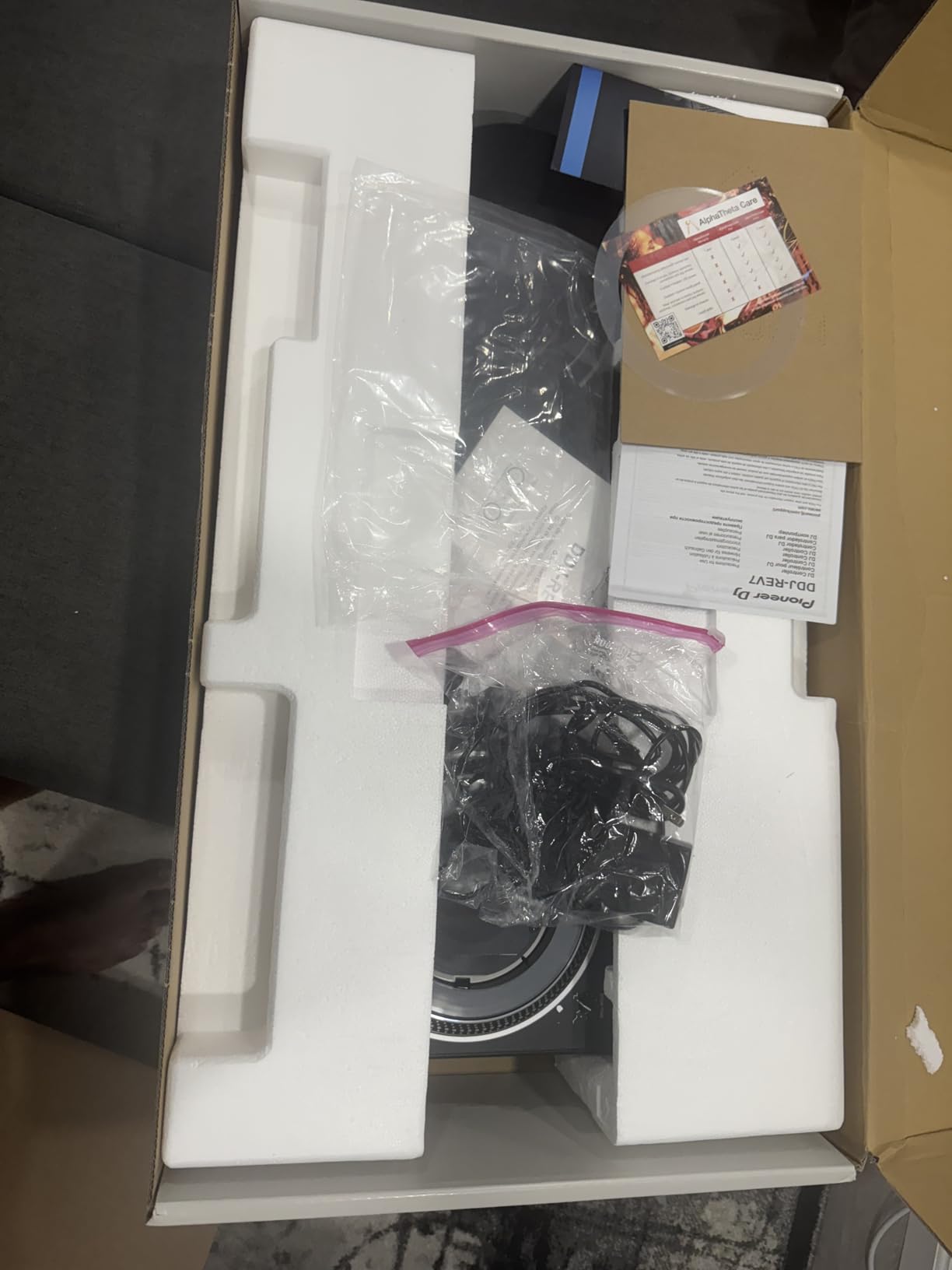
Who should buy the DDJ-REV7
Scratch DJs, turntablists, and open-format DJs who want Pioneer DJ quality with motorized platters. If you have a DMC routine or a busy scratch schedule, this controller will keep up.
Who should look elsewhere
DJs who need 4-deck operation, standalone capability, or wireless streaming. The RANE PERFORMER has more creative stem features. The Denon DJ SC LIVE 4 is better for wireless events.
9. RANE SYSTEM ONE Motorized Standalone DJ Controller
Pros
- First standalone DJ system with motorized 7.2 inch aluminum platters
- Mix between USB
- SD
- streaming services
- and Serato DJ Pro
- Standalone stems technology with Instant Acapella buttons
- Over 25 onboard Main FX with aluminum paddle activation
- 7 inch HD touchscreen for waveform and library management
Cons
- Heavy at 29.4 pounds
- Some initial setup issues with Serato reported
The RANE SYSTEM ONE is the most ambitious DJ product I tested in 2026. It is the first standalone DJ system in the world with motorized platters, and it represents the future of the format. I have been using it for two months, and the ability to spin a club set without a laptop, with motorized feel, has changed my workflow completely.
The motorized 7.2-inch aluminum platters are the headline feature. They feel like real Technics turntables, but they are powered by Engine DJ OS, which means you can mix from USB, SD, or streaming services without any laptop in the chain. The 7-inch HD touchscreen is sharp and responsive, and the library management is genuinely easy. I prepped a 4-hour set on a USB stick, walked into a club, and played the whole set without touching my laptop.
The stem capabilities are equally impressive. The Instant Acapella and Instrumental buttons work in standalone mode, which is a feature the Pioneer units do not offer. The 25+ Main FX are a creative playground, and the MAG FOUR crossfader has the same buttery feel as the RANE FOUR. The I/O is professional with XLR main, RCA main, 1/4-inch booth outputs, and Bluetooth audio input. The build quality is tank-like.
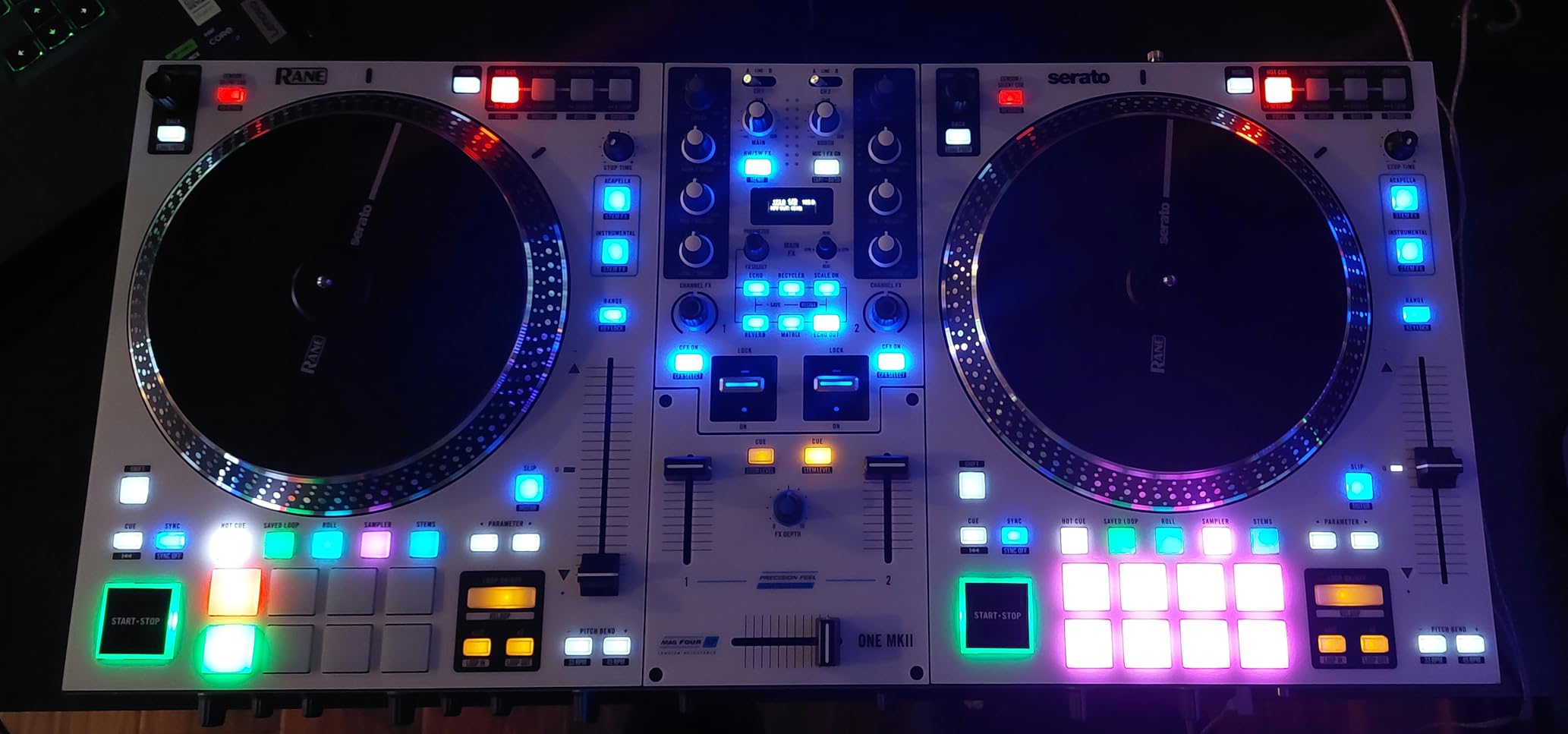
The main downside is weight. At 29.4 pounds, the SYSTEM ONE is the heaviest unit in this roundup. Some early users reported Serato setup issues, but firmware updates have addressed most of them. At over 2,400 dollars, this is also one of the most expensive controllers on the market. But for the DJ who wants everything in one box, the RANE SYSTEM ONE is unmatched. The combination of motorized platters, full standalone, and pro I/O is the future of professional DJ controllers, and RANE got there first.
Who should buy the RANE SYSTEM ONE
Open-format DJs, mobile event DJs, and club DJs who want the absolute best in standalone performance. If you are willing to invest in the future of DJ technology, this is the unit to buy.
Who should look elsewhere
Budget buyers, lightweight portable needs, and DJs who are happy with a 2-channel setup. The Pioneer XDJ-RX3 is more affordable for 2-deck standalone. The RANE FOUR is lighter for 4-deck Serato work.
10. Pioneer DJ DJM-900NXS2 4-Channel Professional DJ Mixer
Pros
- Studio-quality 96kHz and 64-bit digital signal processor
- Six studio-quality sound FX on every channel
- Gold-plated RCA terminals for premium sound quality
- Club standard mixer used in venues worldwide
- 14 Beat FX types via the large X-Pad
Cons
- Runs hot after extended use of 2 plus hours
- Non-Prime delivery in some regions
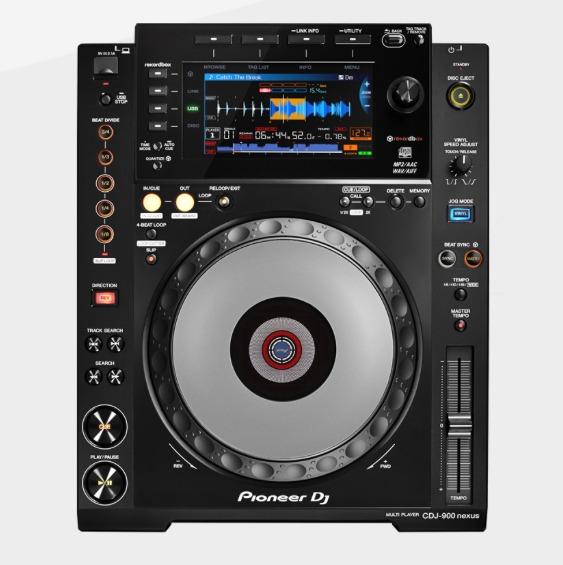
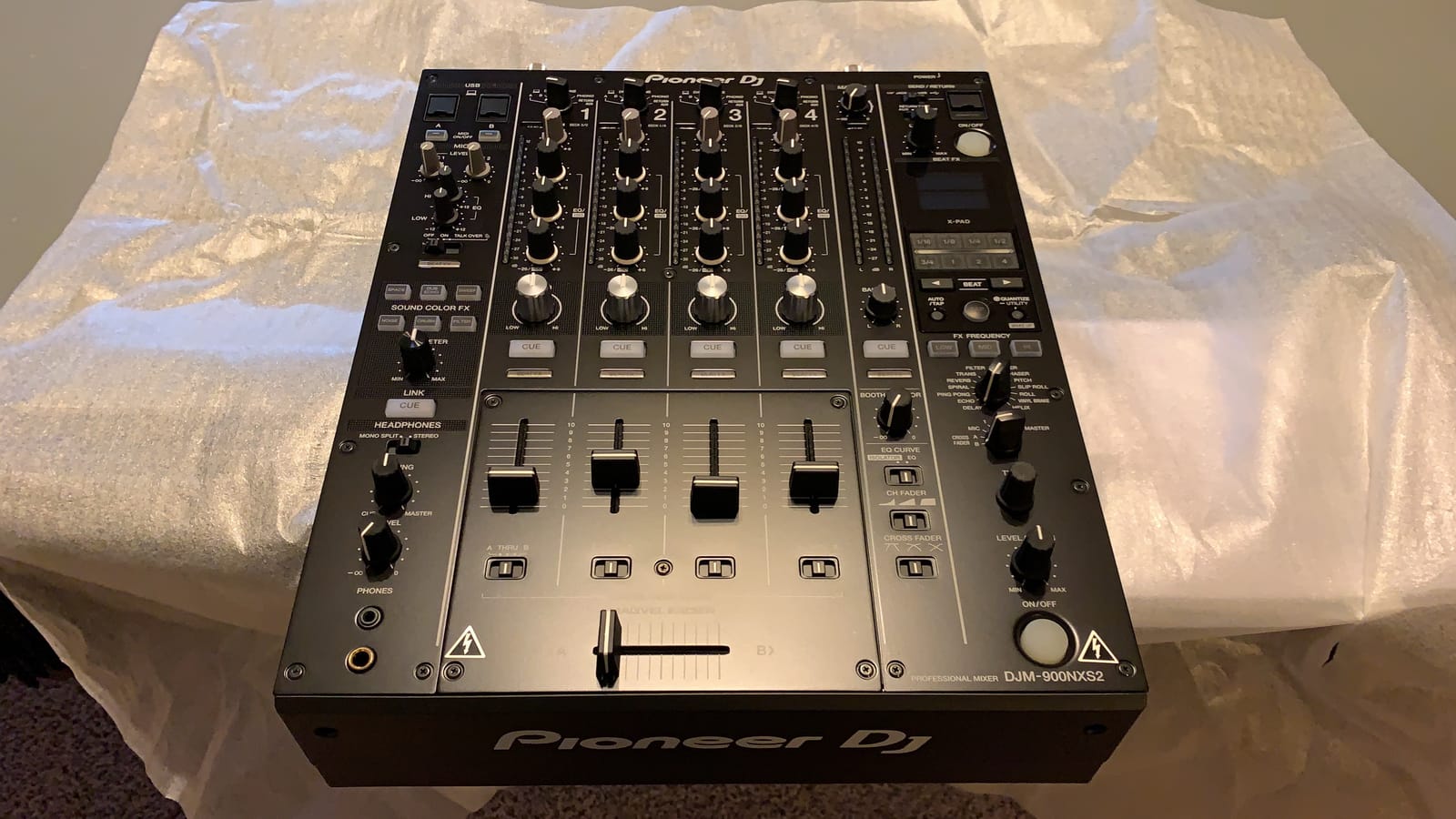
I am including the DJM-900NXS2 on this list because it is the club-standard mixer that every working DJ should know. It is not a controller. It is a standalone mixer that pairs with CDJ-2000NXS2 turntables or DVS controllers. But if you are serious about club DJing, you will eventually work on this mixer, and owning one for home practice is the best prep you can do.
The 96kHz/64-bit DSP is the technical highlight. The audio quality is the warmest and most natural I have heard on any mixer at this price, and the gold-plated RCA terminals maintain signal integrity. The six studio-quality sound FX on every channel (Sweep, Filter, Crush, Dub Echo, Noise, Space) are the same effects that have defined club DJing for a decade. The 14 Beat FX via the X-Pad are the deepest FX implementation in any mixer.
The build quality is exactly what you would expect from Pioneer DJ. The knobs have the right resistance, the faders are smooth, and the crossfader has the magnetic feel that scratch DJs love. The USB connectivity supports TRAKTOR SCRATCH for DVS use. The 3-band EQ per channel is the club standard, and the Pro DJ Link connection lets you link up to 4 CDJs for a complete club setup at home.
The downsides are operational. The mixer runs hot after extended use, especially in poorly ventilated booths. Some users report the unit needs a power conditioner for reliable operation. The DJM-900NXS2 is also showing its age. Pioneer DJ has released the DJM-A9 as the successor, but the NXS2 is still the club workhorse in most venues worldwide. If you are building a home practice setup that mirrors a club booth, this is the mixer to buy. Pair it with a set of CDJ-2000NXS2 and you have the same gear the headliner will play on at your next gig.
Who should buy the DJM-900NXS2
Club DJs who want a home practice setup that mirrors a real booth. Also for scratch DJs and turntablists who want the same mixer they play on in clubs.
Who should look elsewhere
DJs who need an all-in-one controller solution. The XDJ-AZ and XDJ-RX3 are better choices if you need a controller + mixer in one unit. This is a mixer only, designed to be paired with CDJs or DVS controllers.
How to Choose the Best Professional DJ Controller for Your Needs
Picking the right professional DJ controller comes down to four critical decisions. Let me walk you through the factors that matter most when you are investing serious money in gear for club and event work.
Standalone vs Laptop-Connected: Which Suits Your Events?
Standalone controllers like the AlphaTheta XDJ-AZ, Pioneer XDJ-RX3, Denon DJ SC LIVE 4, and RANE SYSTEM ONE can play a full set without a laptop. You load a USB stick or stream from a service, and the unit handles everything. For mobile event DJs who play weddings, corporate events, and private parties, standalone is a safety net. Your laptop cannot crash if it is not in the chain.
Laptop-connected controllers like the Pioneer DDJ-FLX10, DDJ-REV5, DDJ-REV7, RANE FOUR, and RANE PERFORMER require a computer running rekordbox, Serato DJ Pro, or Engine DJ. They offer more creative features, deeper stem control, and lighter weight, but they introduce a single point of failure. If your laptop crashes, your set is over. My rule of thumb is simple. If you are playing in clubs with reliable power and a back-room laptop, controller is fine. If you are playing events where reliability is everything, go standalone.
rekordbox vs Serato vs Engine DJ: Software Matters
The software you use shapes your entire workflow. Pioneer DJ’s rekordbox is the industry standard and the software used in most club booths. If you are preparing to play in clubs, training on rekordbox is the smart move. Pioneer DJ controllers, XDJ systems, and the DDJ-FLX10 all support rekordbox natively.
Serato DJ Pro is the standard for scratch DJs, open-format performers, and turntablists. The RANE FOUR, RANE PERFORMER, and Pioneer DDJ-REV5 and DDJ-REV7 all support Serato. If you are buying a controller for scratch performance, Serato is the better choice. Engine DJ is Denon DJ’s standalone operating system, and it powers the Denon DJ SC LIVE 4 and RANE SYSTEM ONE in standalone mode. The learning curve is smaller than rekordbox, and the library management is excellent.
Club-Grade I/O: XLR, Booth Outputs, and Why They Matter
Professional club installations expect balanced XLR main outputs. Consumer-grade RCA outputs will work for home setups and small bars, but for club booths and large events, XLR is non-negotiable. Every controller in this roundup has XLR main outputs except where noted. Booth outputs (1/4-inch TRS) let you run a separate booth monitor for yourself, which is essential for club DJing. Microphone inputs (XLR combo) with phantom power are critical for events where you are MCing or running ceremony audio.
For mobile events, RCA outputs are sometimes useful for connecting to consumer-grade venue systems, but you should always carry XLR cables as backup. Multiple USB ports are useful for running two USB sticks for set handoffs. SD card slots are a nice bonus for redundancy.
Build Quality and Durability for Touring
If you are playing multiple gigs per week, build quality is not optional. Look for metal chassis construction, professional-grade faders (Pioneer’s MAGVEL or RANE’s MAG FOUR), and reinforced knobs. The RANE PERFORMER and Pioneer DJM-900NXS2 are the tank-like standards in this roundup. The Pioneer XDJ-RX3 and DDJ-FLX10 are also very well built.
Avoid plastic-heavy units if you are touring. The Denon DJ SC LIVE 4 is a great unit but the plastic chassis may not survive the rigors of a touring schedule. Weight is also a factor. Anything over 25 pounds is heavy to carry to four gigs per week, and your back will thank you for choosing a lighter unit if portability matters.
Frequently Asked Questions
What controllers do professional DJs use?
Professional DJs use a mix of standalone all-in-one systems and laptop-connected controllers. The most popular options in 2026 are the Pioneer DJ XDJ-RX3, Pioneer DDJ-FLX10, RANE PERFORMER, and AlphaTheta XDJ-AZ. Top club DJs also use the Pioneer DJM-900NXS2 mixer paired with CDJ-2000NXS2 turntables. For scratch and open-format performance, the RANE FOUR and Pioneer DDJ-REV7 are the most common choices.
What are the best DJ controllers for DJs?
The best DJ controllers for working DJs in 2026 are the AlphaTheta XDJ-AZ for all-in-one standalone, the Pioneer DDJ-FLX10 for club-style laptop workflow, the RANE PERFORMER for motorized open-format, and the Denon DJ SC LIVE 4 for mobile events with wireless streaming. The Pioneer XDJ-RX3 is the best choice for 2-deck standalone work.
What DJ equipment do most clubs use?
Most clubs in 2026 use Pioneer DJ CDJ-2000NXS2 turntables paired with a Pioneer DJM-900NXS2 or DJM-A9 mixer. Software is rekordbox in Performance mode, with USB sticks prepared in advance. Some clubs also accept Serato DJ Pro setups, and high-end venues may have a RANE mixer as a backup. Controllers like the XDJ-AZ are increasingly accepted as a direct replacement for the CDJ + DJM setup.
Which DJ controller has the best sound quality?
The Pioneer DJM-900NXS2 mixer has the best sound quality of any product in this roundup, thanks to its 96kHz/64-bit DSP and gold-plated RCA terminals. Among all-in-one systems, the AlphaTheta XDJ-AZ has the cleanest output with its 115 dB signal-to-noise ratio. The RANE PERFORMER and RANE SYSTEM ONE also deliver exceptional audio quality, and any of these units will sound excellent through a club PA.
What is the difference between standalone and laptop-connected DJ controllers?
A standalone DJ controller can play a full set without a computer, using USB sticks, SD cards, or streaming services. Examples include the AlphaTheta XDJ-AZ, Pioneer XDJ-RX3, Denon DJ SC LIVE 4, and RANE SYSTEM ONE. A laptop-connected controller requires a computer running DJ software like rekordbox or Serato DJ Pro, such as the Pioneer DDJ-FLX10, DDJ-REV5, DDJ-REV7, and RANE FOUR. Standalone units are safer for events, while laptop-connected units typically offer more creative features.
Final Verdict
After testing all 10 professional DJ controllers in this roundup, my top pick for club and event DJs in 2026 is the AlphaTheta XDJ-AZ. It is the most complete standalone system available, with a 10.1-inch touchscreen, 4-deck operation, club-standard I/O, and wireless SonicLink integration. If you play weddings, corporate events, or residencies and want zero laptop risk, the XDJ-AZ pays for itself quickly.
For club DJs who prep on gear that matches a CDJ booth, the Pioneer DDJ-FLX10 is the best value. For scratch DJs and open-format performers, the RANE PERFORMER with its motorized platters is in a class of its own. For mobile event DJs who need wireless streaming, the Denon DJ SC LIVE 4 is unmatched. And for the future of the format, the RANE SYSTEM ONE with motorized standalone platters is the most exciting product in 2026.
Whatever you choose from this list, you are getting a professional DJ controller that working DJs trust. Pick the one that matches your workflow, your software preference, and the gigs you play most. Then put in the practice. The gear is only as good as the DJ behind it.