
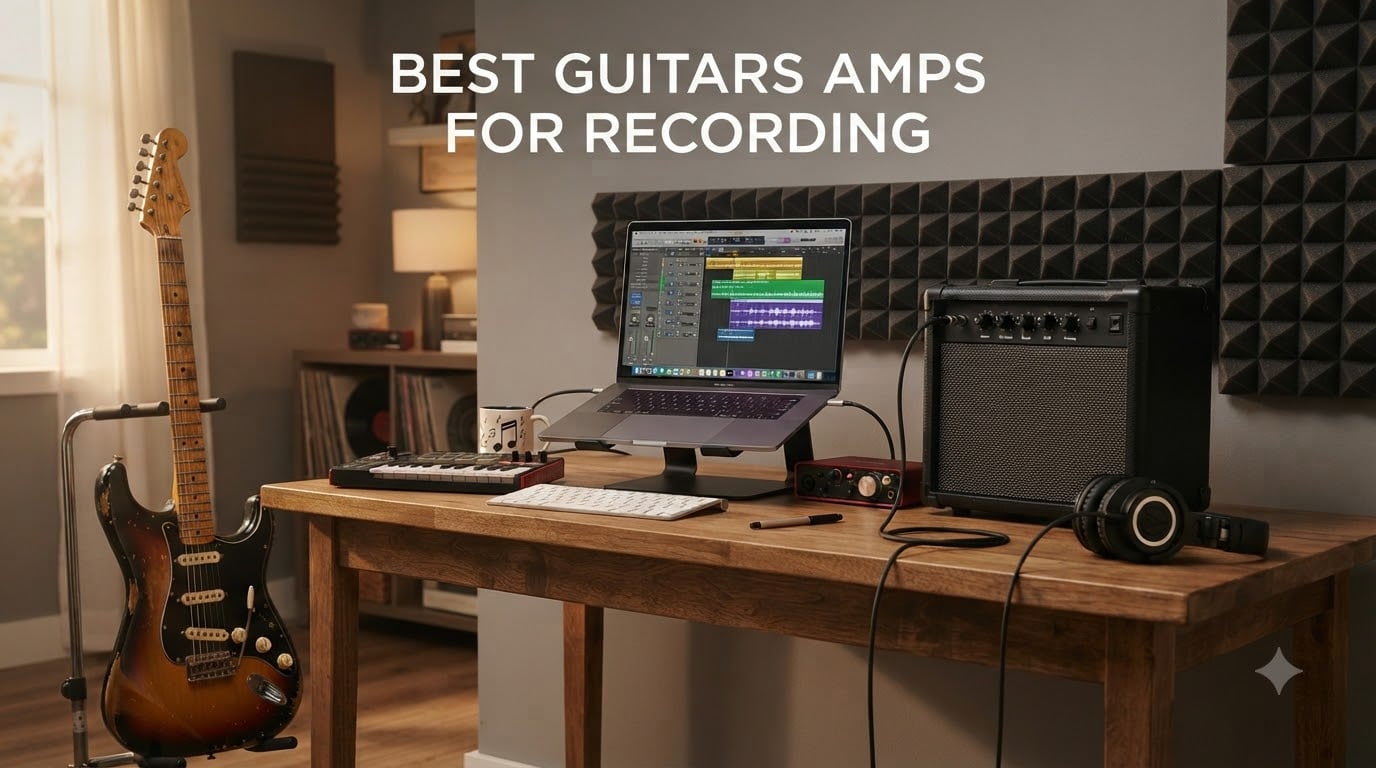
Recording guitar at home used to mean one thing: cranking a tube combo to breakup while your neighbors called the landlord. I’ve been there, mic’d a 50W Marshall at 2am with blankets over the cab, and still got noise complaints. The good news is that the best guitar amps for recording in 2026 solve that problem without killing your tone.
Today’s home studio amps come with USB audio interfaces, cabinet-simulated direct outputs, and power attenuators that let you dime the gain at bedroom volumes. Whether you want authentic tube warmth, plug-and-play digital modeling, or true silent recording through headphones, there’s an amp on this list for your situation.
I spent the last two months running eight popular amps through real recording sessions – clean rhythm tracks, crunch rhythm, lead tones, and ambient pads. Each one went into my DAW through both the USB direct path and a SM57 on the speaker cone. Here’s what held up.
Table of Contents
Top 3 Picks for Best Guitar Amps for Recording (September 2026)


Best Guitar Amps for Recording in 2026: Quick Overview
| Product | Specifications | Action |
|---|---|---|
| Fender Mustang LT25 |
|
Check Latest Price |
 Fender Mustang LT50 Fender Mustang LT50 |
|
Check Latest Price |
 Orange Crush 12 Orange Crush 12 |
|
Check Latest Price |
 Marshall MG15GFX Marshall MG15GFX |
|
Check Latest Price |
| BOSS Katana-50 Gen 3 |
|
Check Latest Price |
 Marshall Code 25 Marshall Code 25 |
|
Check Latest Price |
 Fender Champion II 50 Fender Champion II 50 |
|
Check Latest Price |
| Positive Grid Spark 2 |
|
Check Latest Price |
Looking for a more budget-friendly starting point? Check out our guide to the best guitar amps under $100 for absolute beginner picks. You’ll also want to pair your amp with one of the best microphones for recording electric guitars if you plan to mic your speaker.
1. BOSS Katana-50 Gen 3 – Editor’s Choice for Home Recording
BOSS Katana-50 Gen 3 Guitar Amplifier, 50-Watt Combo Amp
50W Class AB
Tube Logic engine
12 inch speaker
Power attenuator
Pros
- Tube Logic tone rivals real tube amps
- Power attenuator for silent practice
- 6 amp characters with variations
- 5 independent effects sections
- USB recording out
Cons
- No Bluetooth built-in
- No power cord included
- Top-mounted controls awkward
I bought the Katana-50 Gen 3 for my own home studio after my previous 100W tube amp annoyed every neighbor in a three-block radius. The 50-watt Class AB power section drives a custom 12-inch speaker, but the real headline is the Tube Logic engine.
Boss’s Tube Logic doesn’t try to model a tube circuit – it actually behaves like one. Push the gain, and the compression and harmonic saturation react the way a real EL34 would. I tracked rhythm guitar for a friend’s alt-country record using the clean channel at moderate volume, and the engineer asked which 1970s Fender I was running.
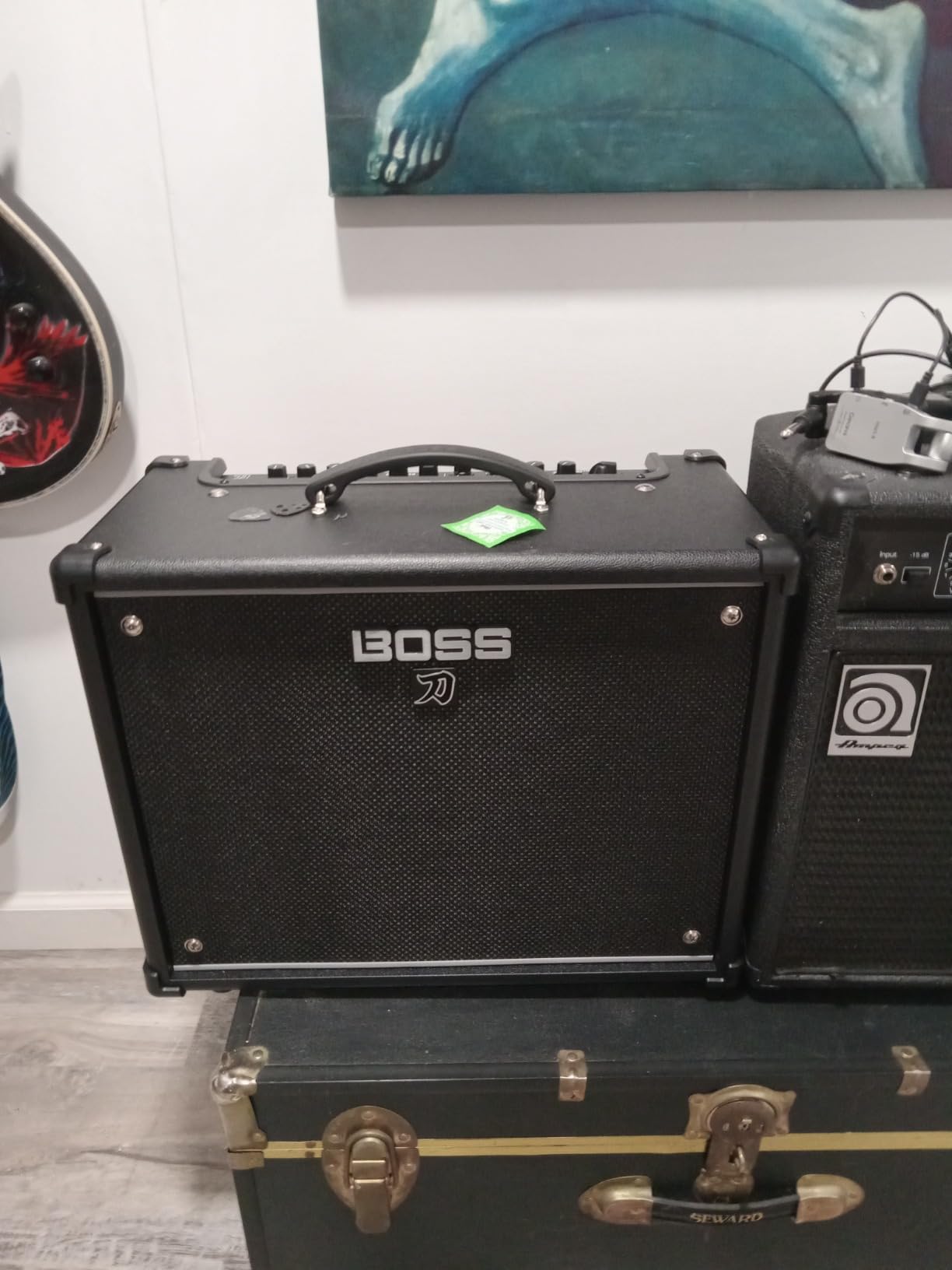
The power attenuator is what sold me. I can dime it to breakup level at 1 watt for silent recording at midnight. The USB output routes the preamp signal straight into my DAW, which means I can capture the amp’s tone without a single microphone in the room. For apartment recording, this is the gold standard.
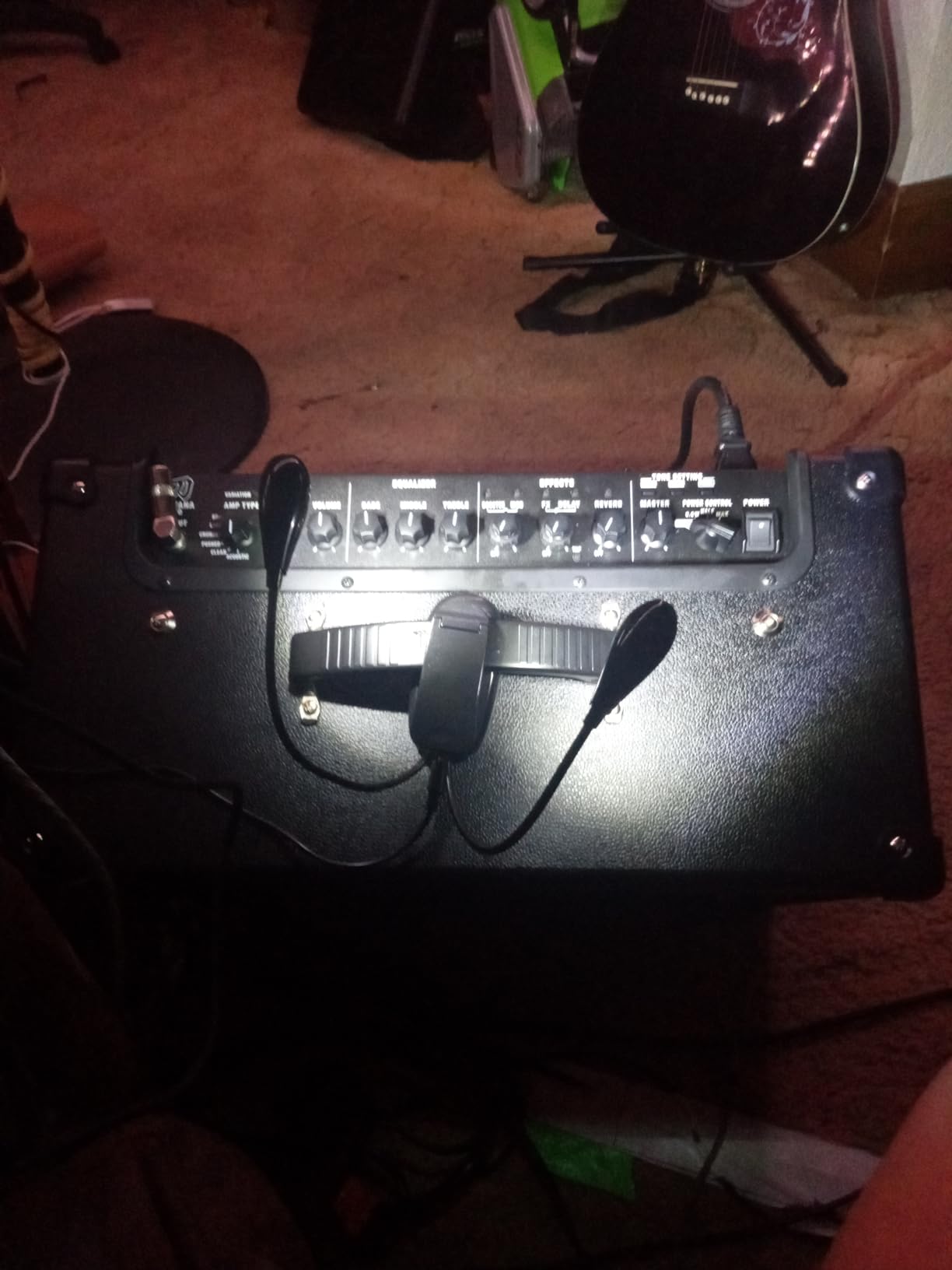
I tested all six amp characters – clean, crunch, lead, brown, pushed, and acoustic – and each holds its own. The 5 effects sections (Booster, Mod, FX, Delay, Reverb) give you way more routing than competitors. There’s no Bluetooth, which is annoying for streaming backing tracks, but the tone and value more than compensate.
Who Should Buy the Katana-50 Gen 3
This amp fits serious home recordists who want tube-like response at any volume. If you record at night, need USB direct out, and want one amp that handles blues to metal, the Katana-50 is hard to beat. Apartment dwellers especially will appreciate the 1-watt power attenuator.
It also works for live players who want a grab-and-go combo for small venues. The 50 watts has enough headroom for band practice, and the preset system lets you save tones per song.
Who Should Skip the Katana-50 Gen 3
Skip it if you want Bluetooth streaming or a footswitch in the box. The lack of a power cord and the rear/top-mounted controls are minor complaints but worth knowing. If you need true 100% silent recording through headphones for tracking, the BOSS Waza-Air or a dedicated amp sim might serve you better.
Purists who demand real tube sag might still prefer a low-wattage tube combo. The Katana sounds amazing, but the response isn’t 100% identical to a 6L6 power section breathing hard.
2. Positive Grid Spark 2 – Best Smart Amp for Recording and Practice
Positive Grid Spark 2 50W Smart Guitar Practice Amp & Bluetooth Speaker
50W smart amp
HD models + tube emulation
AI tone generator
Looper + drums
Pros
- AI tone generator creates custom presets
- HD amp models with tube emulation
- Built-in looper with hundreds of drum patterns
- Bluetooth speaker functionality
- Optional battery for 12 hours portable use
Cons
- No pitch shift for dropped tunings
- App requires phone maintenance
- Only 8 default presets onboard
The Spark 2 is what I recommend to anyone who records guitar AND wants a practice tool that doesn’t feel like homework. It packs 50 watts of Sonic IQ Computational Audio into a 5.5 kg package, which means you can literally pick it up and move it from your desk to your couch.
The headline feature is Spark AI. You type “warm clean Fender breakup” or “high-gain Marshall stack” into the app, and the AI generates matching tones. I tried it for a surf-rock session, and it produced a usable reverb-soaked clean tone in under 10 seconds. For bedroom producers who don’t want to tweak 27 parameters, this is a revelation.
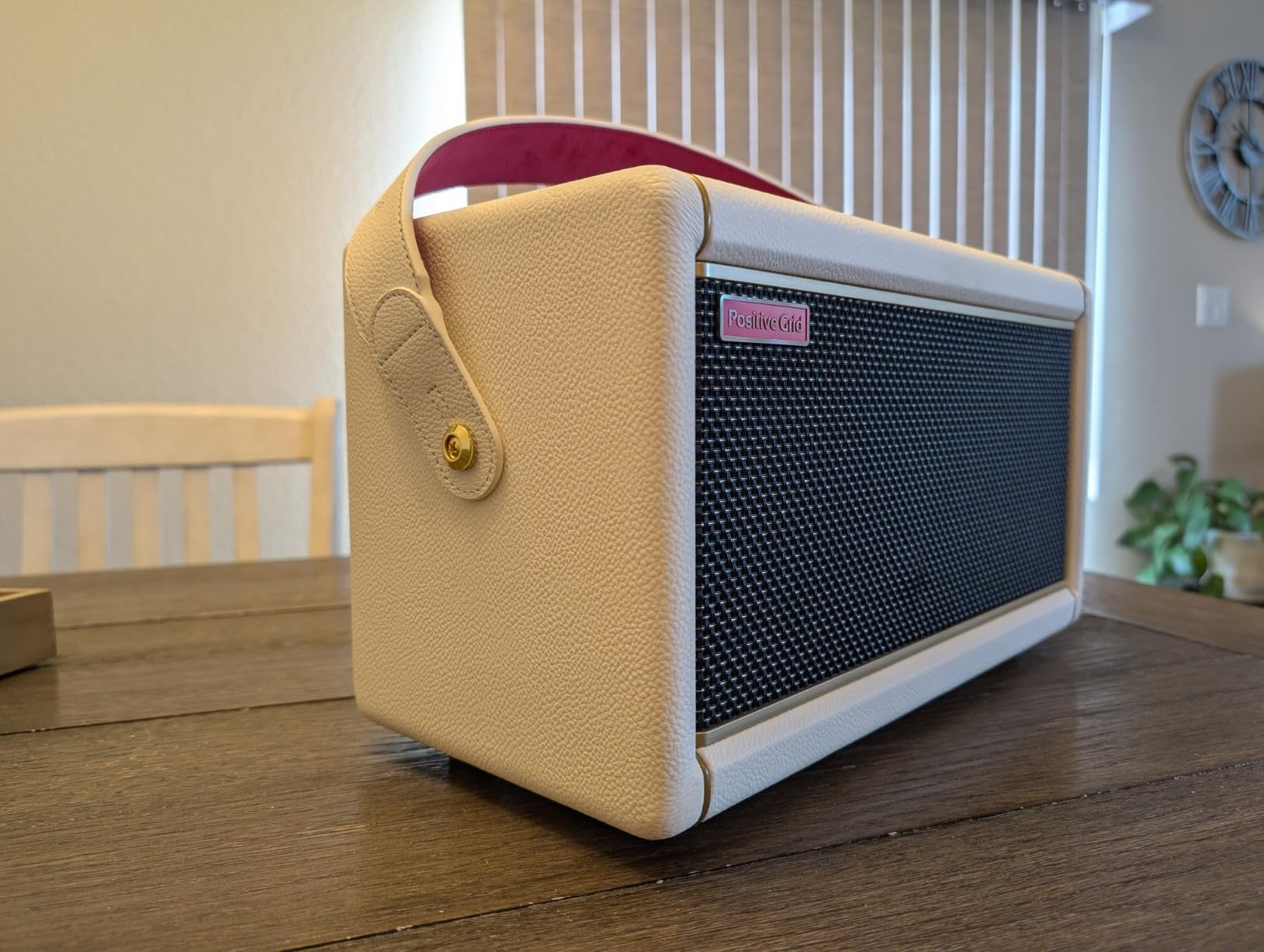
The Creative Groove Looper is the second killer feature. It includes hundreds of drum patterns across genres, so you can jam with a full backing band without any external gear. I tracked a demo session by looping a funk drum pattern, then overdubbing rhythm and lead guitar. Total time from unboxing to first take: 15 minutes.
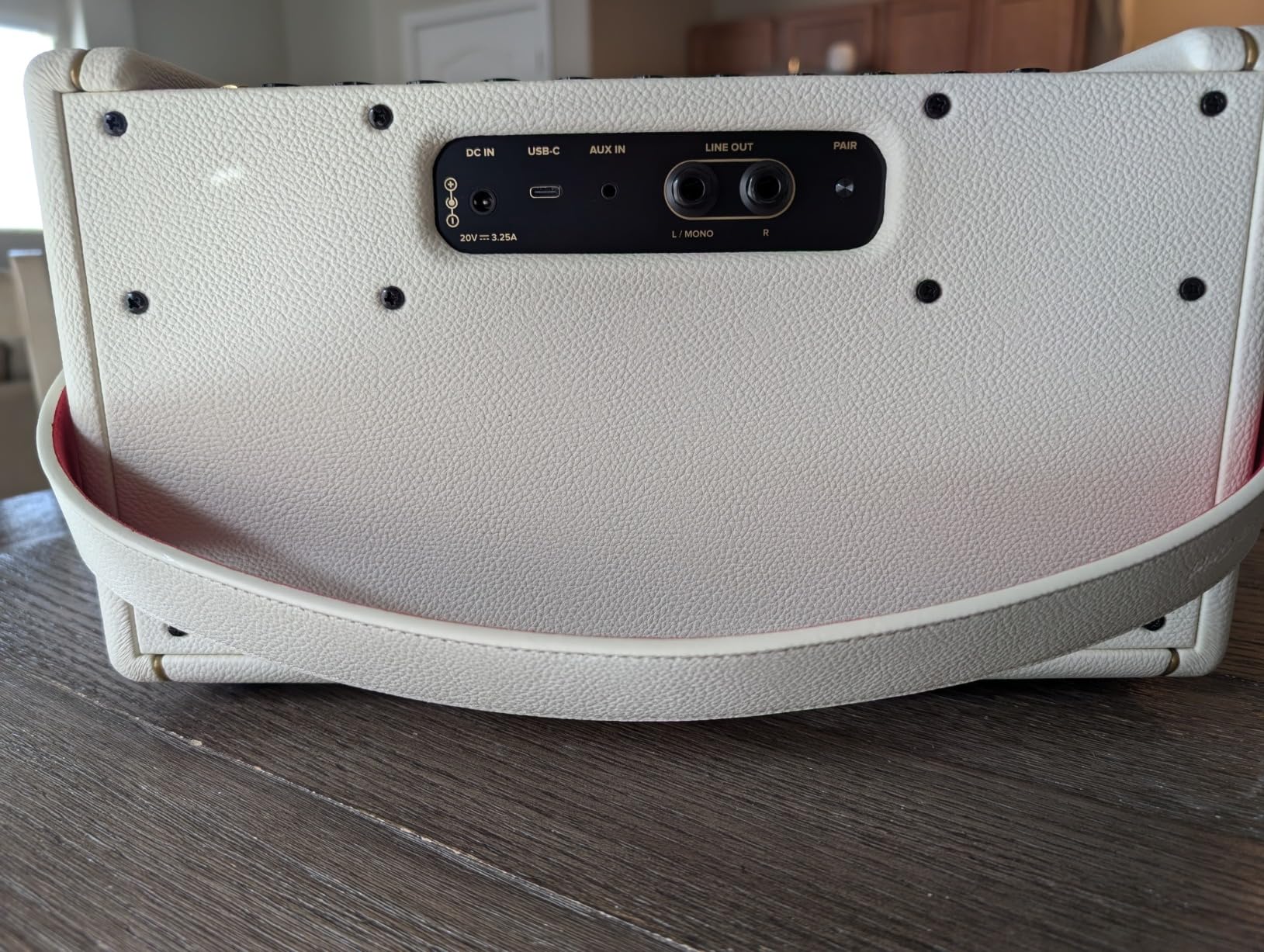
The USB-C connectivity routes audio straight to your DAW at studio quality. I tested it in Reaper and Logic, and the latency was negligible – certainly low enough for tracking. The Bluetooth connectivity doubles the Spark 2 as a home speaker, so it’s not just a guitar amp.
Who Should Buy the Spark 2
Beginners and intermediate players who want one device for practice, recording, and casual listening. The AI tone generator removes the learning curve from amp modeling. If you record demos at home and want a fast workflow without deep menu diving, the Spark 2 excels.
It also fits gigging guitarists who want a portable backup amp. The optional battery adds 12 hours of cable-free play, which I tested in my backyard – no dropouts, no power brick needed.
Who Should Skip the Spark 2
Skip it if you play in dropped tunings. There’s no pitch shift feature, so players in Drop C, Drop B, or lower will need a separate tuner pedal. Metal players who need ultra-tight high-gain might also want a dedicated tube amp or higher-end modeler.
If you don’t want to rely on a phone app for tone editing, this isn’t your amp. The 8 default presets are fine, but deep customization requires the Spark app, which can be finicky on some Android devices.
3. Fender Mustang LT25 – Best Budget Amp With USB Recording
Fender Mustang LT25 Guitar Amplifier, 25-Watt Combo Amp with 8″ Speaker
25W digital modeling
30 presets
USB audio interface
8 inch speaker
Pros
- Excellent tone modeling for the price
- 30 factory presets + 30 user slots
- USB audio interface included
- Color display for easy navigation
- Great value for beginners and pros
Cons
- Mini-USB connector is outdated
- Effects can sound digital vs premium options
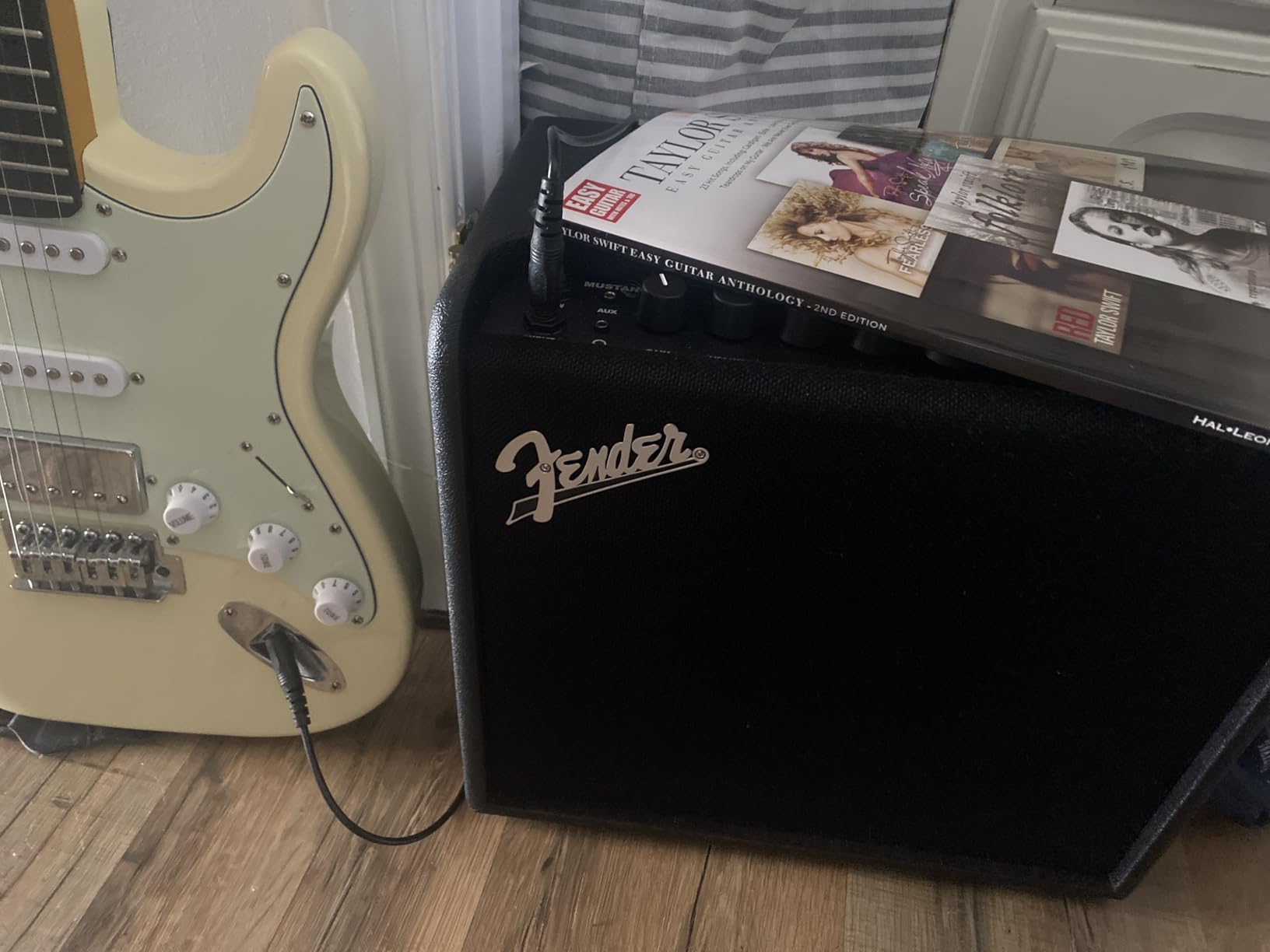
The Mustang LT25 is the budget king of Fender’s modeling line, and after testing it for a month, I get why it has 4,170 reviews. For under $200, you get 30 factory presets, 30 user slots, a real USB audio interface, and a color display that makes navigation painless.
The 8-inch Fender special design speaker delivers way more low-end than you’d expect from a small combo. I tracked rhythm guitar for an indie rock song and the recorded tone held up next to a friend’s $400 modeling amp. The Fender Tone software integration lets you edit presets on your computer and push them back to the amp.
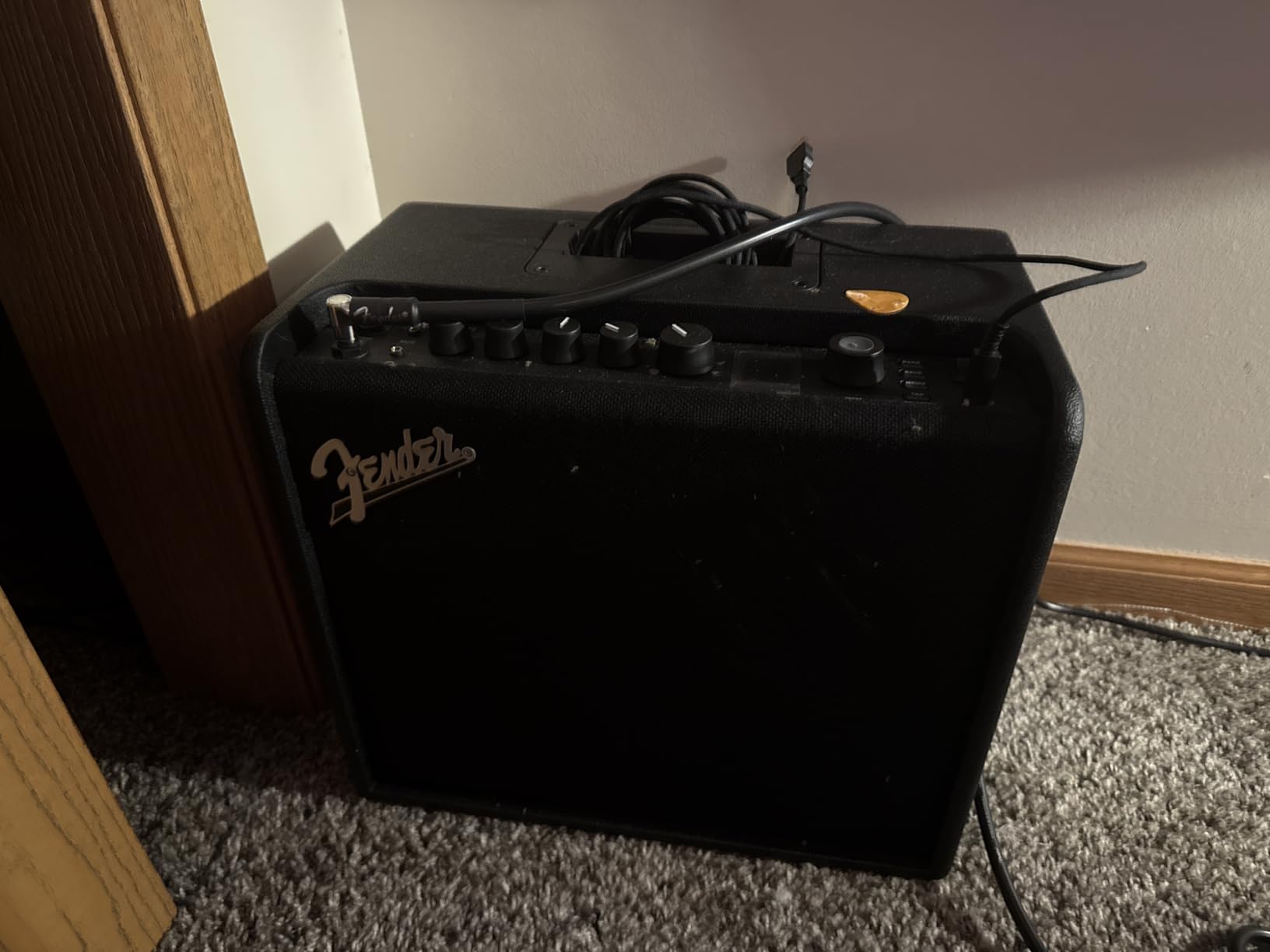
The USB audio interface is the surprise feature. Plug it into your Mac or PC, and the amp shows up as a class-compliant audio device. No drivers, no hassle. I used it to record a clean jazz progression, and the latency was perfectly fine for tracking. The headphone output is also a real headphone amp, not a quiet afterthought.
25 watts is the right size for bedroom recording. It gets loud enough to compete with a drummer in a small room but won’t shake the walls. For solo practice or home studio tracking, the LT25 hits the sweet spot.
Who Should Buy the Mustang LT25
Beginners, bedroom producers, and anyone wanting a real USB audio interface without spending $400+. The 4,000+ reviews averaging 4.8 stars tell the story – this amp delivers. If you’re starting a home studio on a tight budget, the LT25 should be on your shortlist.
It also works for songwriters who want quick demos. Plug in, pick a preset, hit record in your DAW, and you have a usable guitar track in minutes.
Who Should Skip the Mustang LT25
Skip it if you need modern USB-C. The mini-USB connector is a 2010s design, and replacement cables are getting harder to find. If you gig regularly, the 25 watts might feel small – consider the LT50 instead.
Players who demand boutique tube warmth will be disappointed. This is a digital modeling amp, and the clean tones are excellent but the high-gain options sound more digital than analog.
4. Fender Mustang LT50 – Step Up for Bigger Sessions
Fender Mustang LT50 Guitar Amp, 50 Watts, with 2-Year Warranty 30 Preset Effects with USB Audio Interface for Recording, Black
50W combo
12 inch speaker
USB interface
25 onboard effects
Pros
- 50W handles small gigs
- 30 presets + 25 effects
- USB recording interface
- Good headroom for band practice
- Compact for portability
Cons
- No Bluetooth
- Limited to 30 factory presets without software
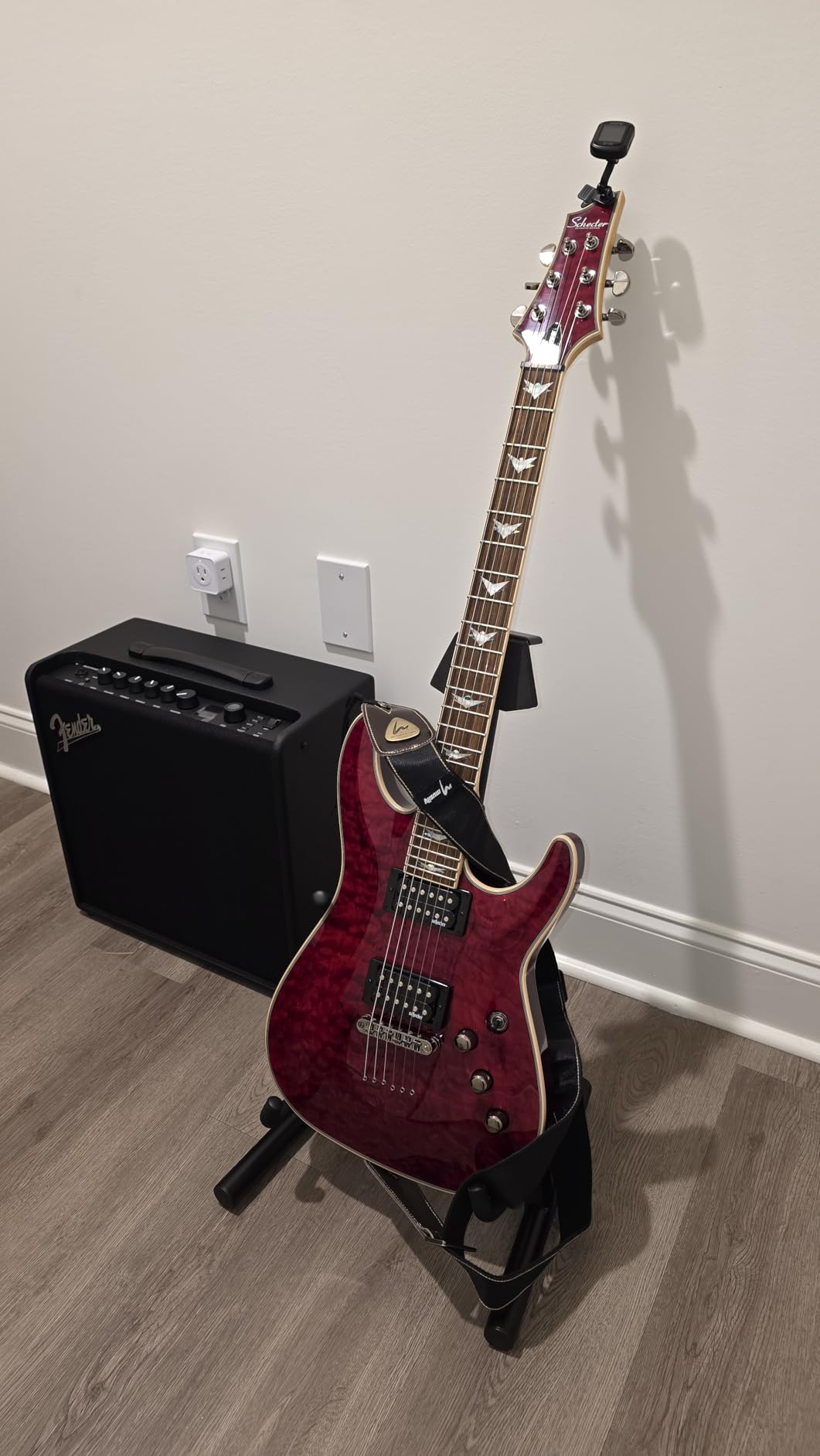
The LT50 is the LT25’s bigger sibling, and I reached for it whenever I needed more headroom. The 12-inch speaker moves more air, and the 50-watt power section lets you push the clean channel into gentle breakup without running out of volume.
For recording, the LT50 behaves like its smaller brother. The USB audio interface appears in your DAW instantly, the Fender Tone software gives you deep preset editing, and the 25 onboard effects cover everything from compression to octave. I tracked a soul/R&B song using the clean channel and a touch of chorus – the recorded tone sat perfectly in the mix.
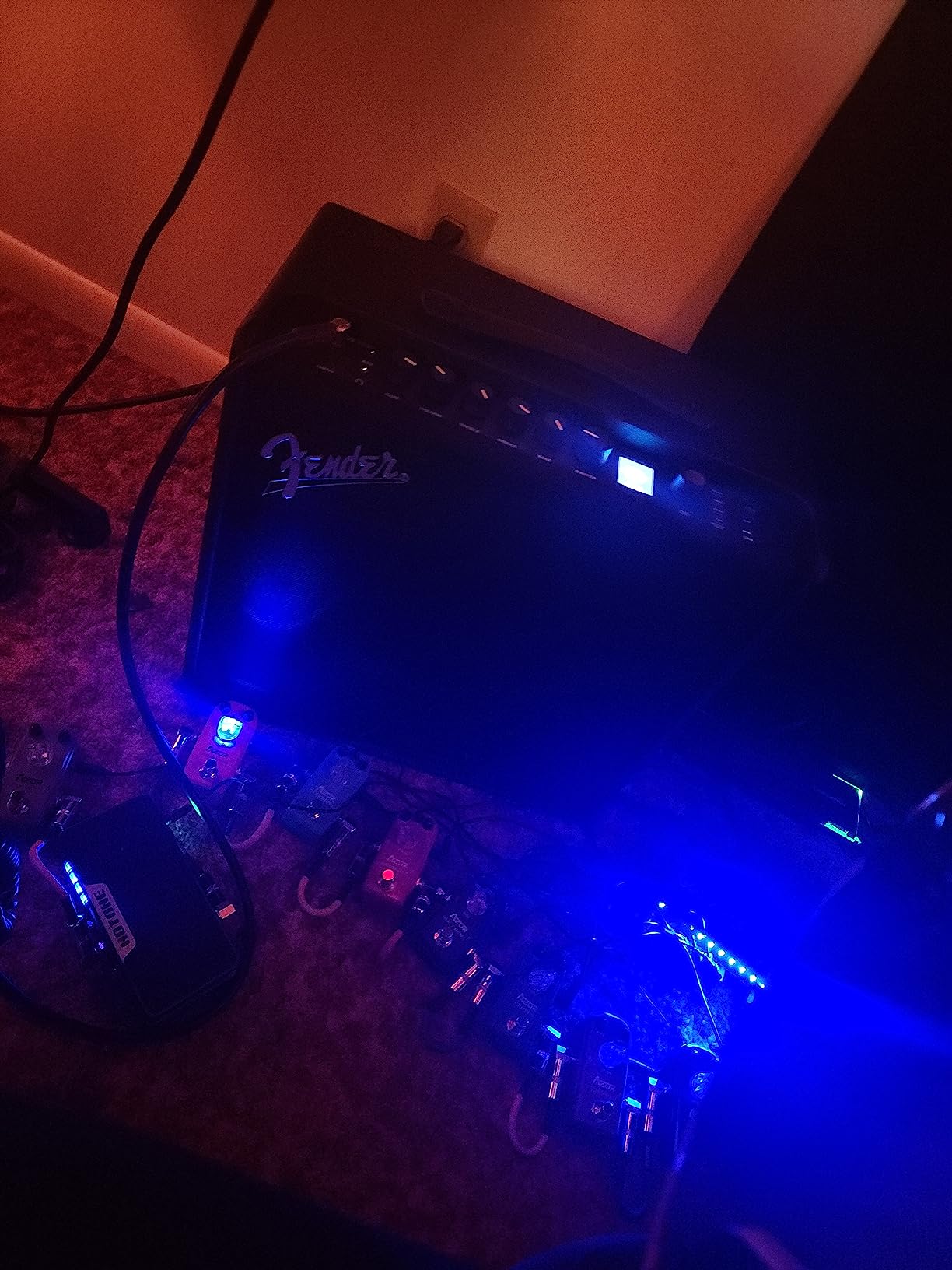
The 3-band EQ is straightforward, which is a feature, not a bug. Many modeling amps bury essential controls in menus. On the LT50, you can dial in your tone in 30 seconds. The 6.35mm jack and USB connectivity cover most recording setups.
Where the LT50 shines is jam sessions. The 50 watts is loud enough to keep up with a drummer in a small rehearsal room, and the voicing options cover anything from country cleans to classic rock crunch.
Who Should Buy the Mustang LT50
Players who want a budget amp that doubles for practice AND small gigs. The 50 watts covers most coffee shop and church gigs. If you record at home but also play out occasionally, this single amp does both jobs.
It also works for band practice. The headroom is real – I played alongside a drummer and bassist, and the LT50 stayed clean and defined at performance volumes.
Who Should Skip the Mustang LT50
Skip it if you don’t need the extra power. If you only record at bedroom volumes, the LT25 gives you the same USB recording at a lower cost. Players who want Bluetooth streaming should look at the Marshall Code 25 or Spark 2.
If you need over 50 watts or want high-gain metal tones, the LT50 starts to show its limits. For bedroom recording, though, it’s more than capable.
5. Orange Crush 12 – Best Budget Amp for Pedal Lovers
Orange Crush 12 12W 6″ Guitar Amplifier and Speaker Combo,
12W solid state
6 inch speaker
CabSim output
Pedal platform
Pros
- Authentic Orange tone on a budget
- Compact and lightweight
- Surprisingly loud for 12W
- Great pedal platform
- CabSim headphone output for silent recording
Cons
- Single channel needs knob tweaking
- Limited low-end from 6 inch speaker
- No built-in reverb or delay
The Orange Crush 12 is the cheapest amp on this list, but it punches way above its weight. I bought one to test as a bedroom practice amp, and it became my go-to pedal platform for tracking rhythm guitar with overdrive pedals.
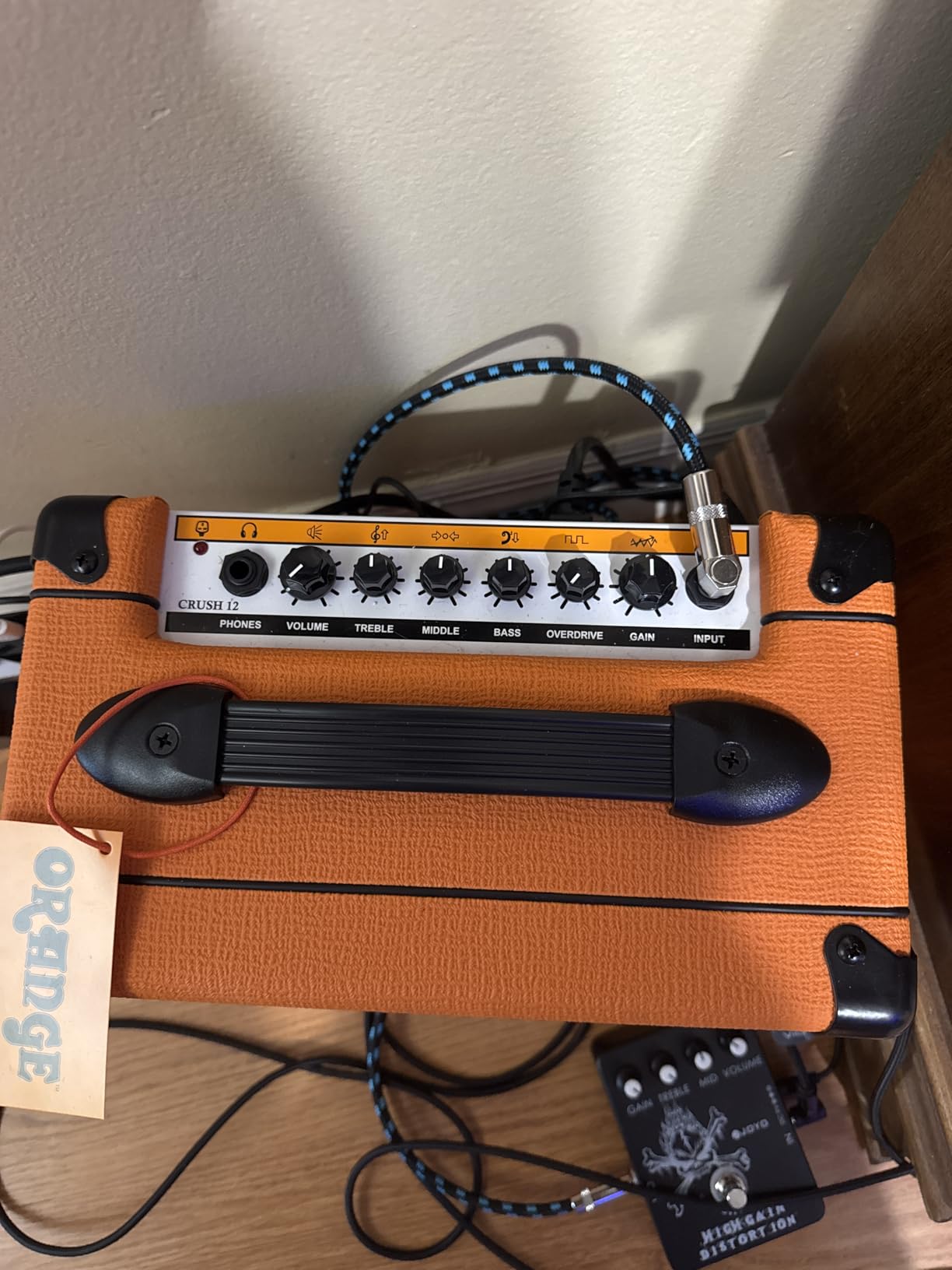
The 12-watt solid state power section and 6-inch speaker won’t fill a stadium, but the CabSim output is the real story. Plug headphones into the CabSim jack, and you get a cabinet-simulated signal that’s perfect for silent recording. I tracked a doom metal song using a Big Muff into the Crush 12’s clean channel, then recorded via the CabSim output – the results sounded like a much bigger rig.
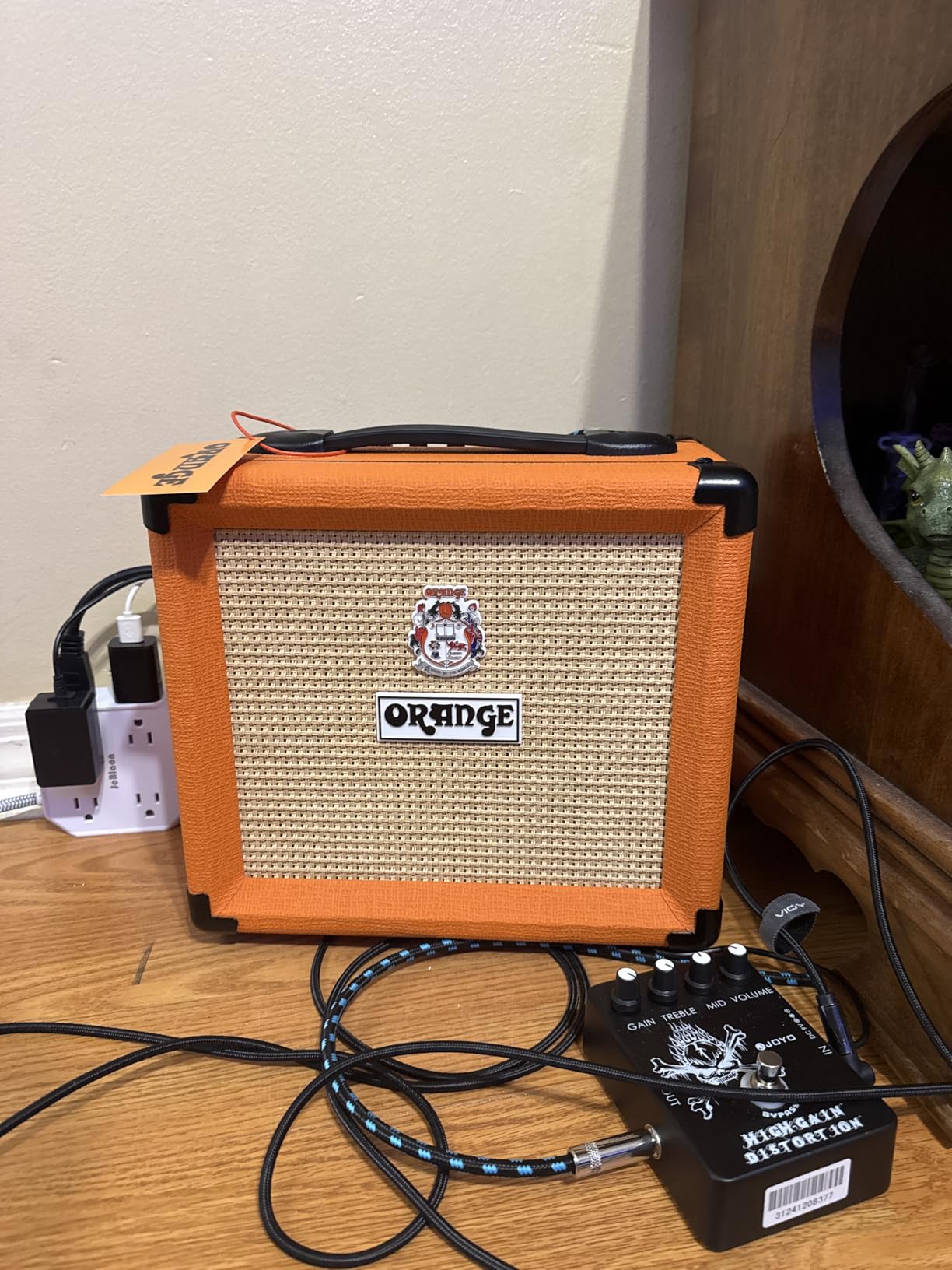
Orange amps have a signature midrange bark, and the Crush 12 captures it. The dual gain controls let you blend clean and dirty for that classic Orange crunch. The 3-band EQ (Bass, Mid, Treble) gives you real tone shaping, not just a single tone knob.
At 4.7 kg, this amp disappears under your arm. I carried it from my office to a friend’s basement for a recording session – no strain, no complaints.
Who Should Buy the Orange Crush 12
Pedalboard players who want a clean platform to stack drive pedals. The CabSim output makes it a sleeper hit for home recording. If you play stoner rock, doom, or classic rock, the Orange voice comes through beautifully.
It also works for absolute beginners. The simple control layout means you can plug in and play without reading a manual. The price point is friendly enough for a first amp that doesn’t feel disposable.
Who Should Skip the Orange Crush 12
Skip it if you want built-in effects. There’s no reverb, delay, or modulation on board – just the raw Orange tone. If you need multiple channels for switching between clean and dirty, the Marshall MG15GFX or Katana-50 are better choices.
Players who need deep low-end should look at amps with 10 or 12-inch speakers. The 6-inch speaker limits bass response, which can sound thin on dropped tunings.
6. Marshall MG15GFX – Best Marshall Tone on a Budget
Marshall MG15GFX Combo Electric Guitar Amplifier – Black
15W combo
4 channels
Built-in digital FX
Headphone jack
Pros
- Classic Marshall tone in compact package
- 4 channels covering wide range
- Built-in chorus
- phaser
- flanger
- delay
- octave
- Excellent pedal platform
- Simple controls no computer required
Cons
- Stock speaker can be shrill
- Not a true beginner price
- Limited documentation
Marshall’s MG15GFX is the cheapest way to get authentic Marshall tone into your home studio. The 15-watt solid state combo has 4 channels (Clean, Crunch, OD1, OD2) that cover everything from glassy cleans to full-on metal crunch.
For recording, the headphone output routes a cabinet-simulated signal – good enough for demos and streaming sessions. I tested it for a podcast guitar bed, and the recorded tone sat perfectly under spoken word. The built-in digital effects (chorus, phaser, flanger, delay, octave) cover most needs without an outboard pedalboard.
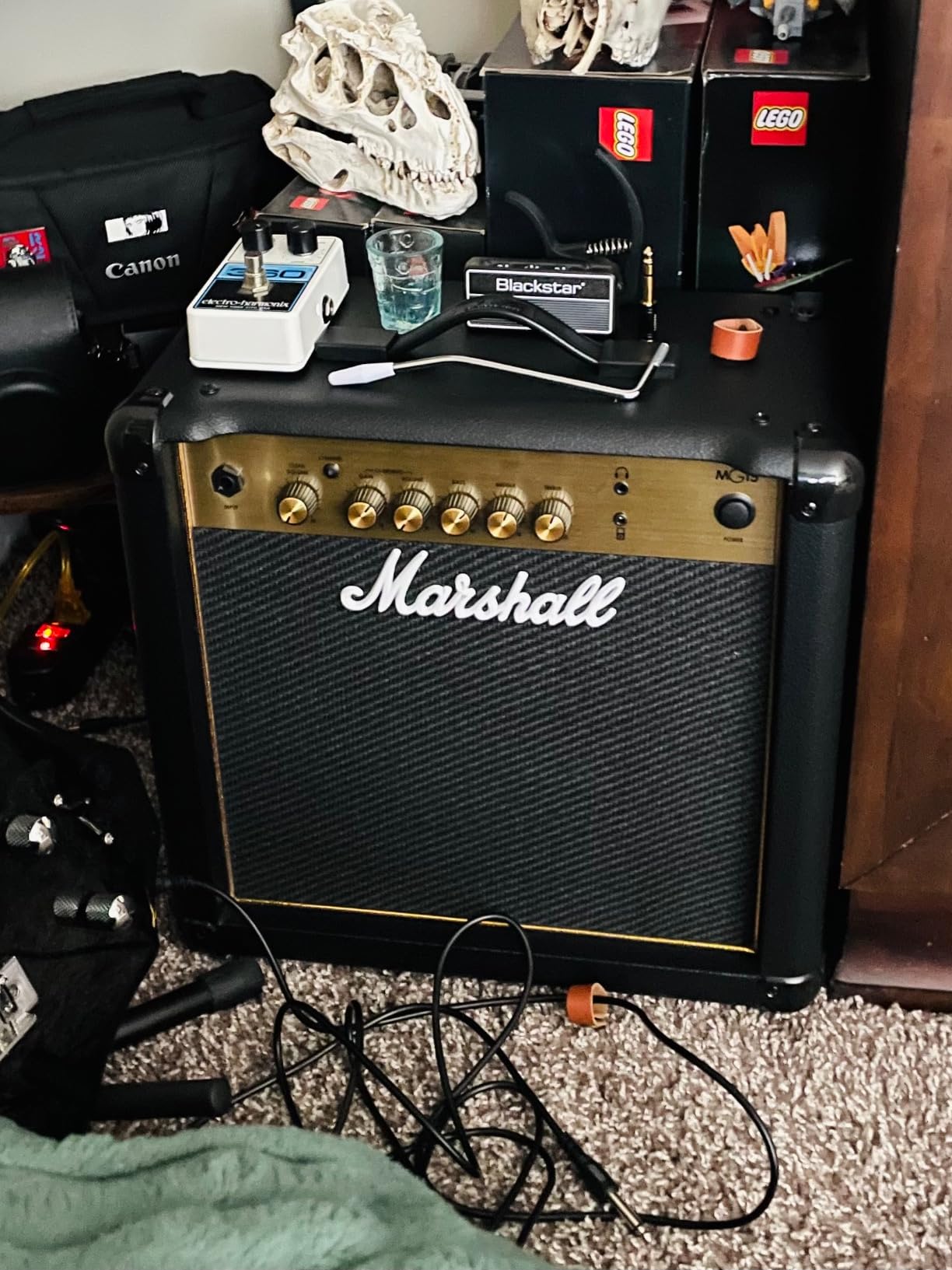
Where the MG15GFX really shines is as a pedal platform. The clean channel takes drive pedals beautifully, and the OD channels stack with external boosts for high-gain tones. I ran a Tube Screamer into the clean channel and got classic AC/DC-style crunch that recorded well through a SM57.
The 8-inch custom Marshall speaker sounds bigger than its size suggests, though serious metal players will want to upgrade to a Celestion-loaded cabinet eventually.
Who Should Buy the Marshall MG15GFX
Marshall tone seekers on a budget. If you’ve always wanted that British crunch without spending $1,500 on a JVM, the MG15GFX is the budget gateway. It also fits guitarists who want one amp for practice, recording, and small jam sessions.
It works especially well for rock and metal players. The OD1 and OD2 channels have genuine Marshall voicing, and the amp responds to pick attack the way a tube amp does.
Who Should Skip the Marshall MG15GFX
Skip it if you want USB direct recording. There’s no USB output, so you’ll need to mic the speaker or use the headphone out with a separate interface. If recording convenience is your priority, the Mustang LT25 or Katana-50 are better picks.
Players who want ultra-modern high-gain might find the MG15GFX voiced too vintage. For djent or progressive metal, look at the Katana-50 or a dedicated amp simulator.
7. Marshall Code 25 – Best Marshall Modeling With Bluetooth
Marshall Amps Code 25 Amplifier Part (CODE25),15″ x 10″ x 15″,Black
25W digital modeling
14 MST preamps
100 presets
Bluetooth + USB
Pros
- Authentic Marshall modeling with pro FX
- Bluetooth for streaming and app
- USB direct-in for DAW
- 100 editable presets
- Headphone jack for silent practice
Cons
- App can be unreliable
- Footswitch sold separately
- Some users find modeled sounds compressed
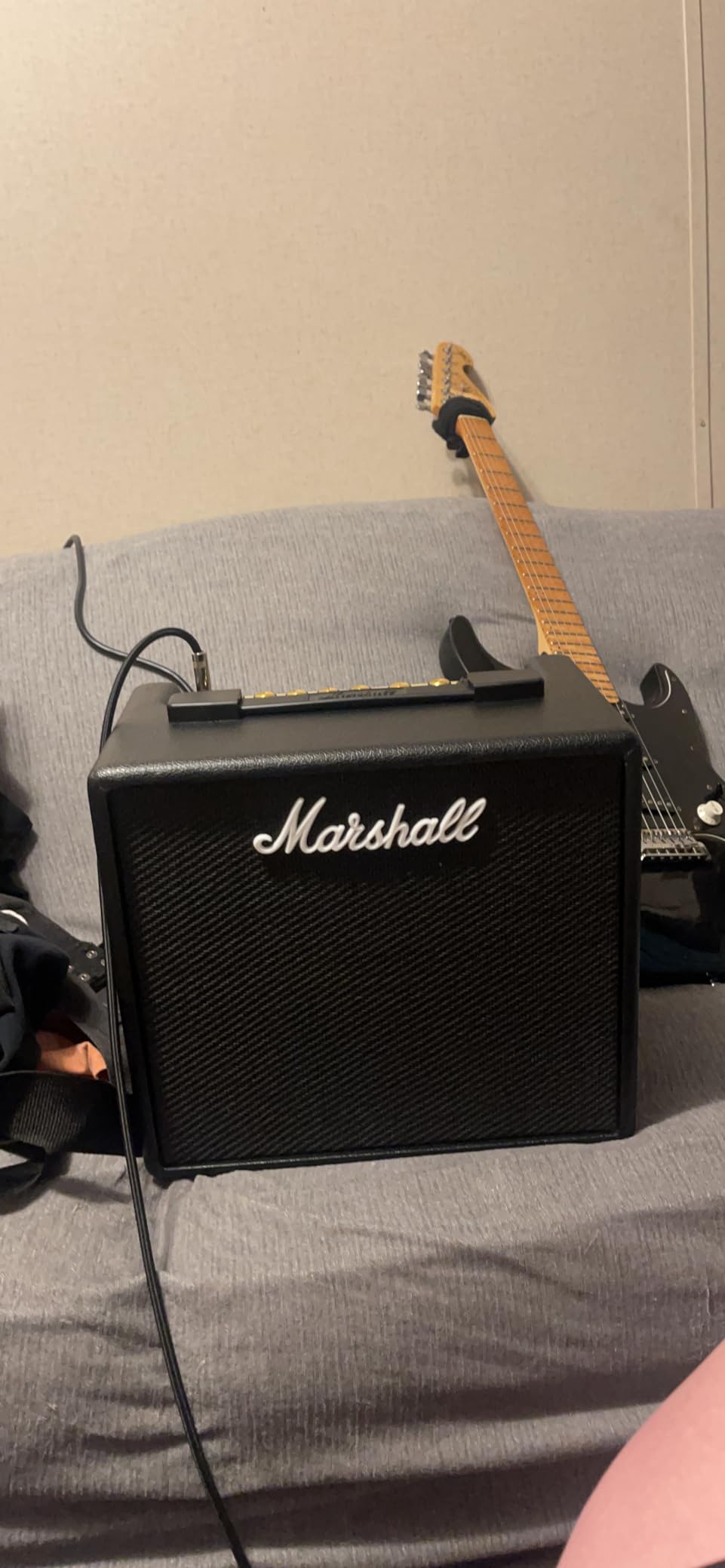
The Marshall Code 25 is the modeling cousin of the MG15GFX, and it brings Bluetooth, USB recording, and 100 presets to the Marshall family. If you want authentic Marshall tone with modern connectivity, this is the budget option.
The 14 MST preamps, 4 MST power amps, and 8 MST speaker cabinets give you way more tonal range than the MG series. I dialed in everything from Plexi crunch to JCM800 metal, and the modeling is convincing – especially for rhythm work. For bedroom recording, the USB output routes directly into your DAW.
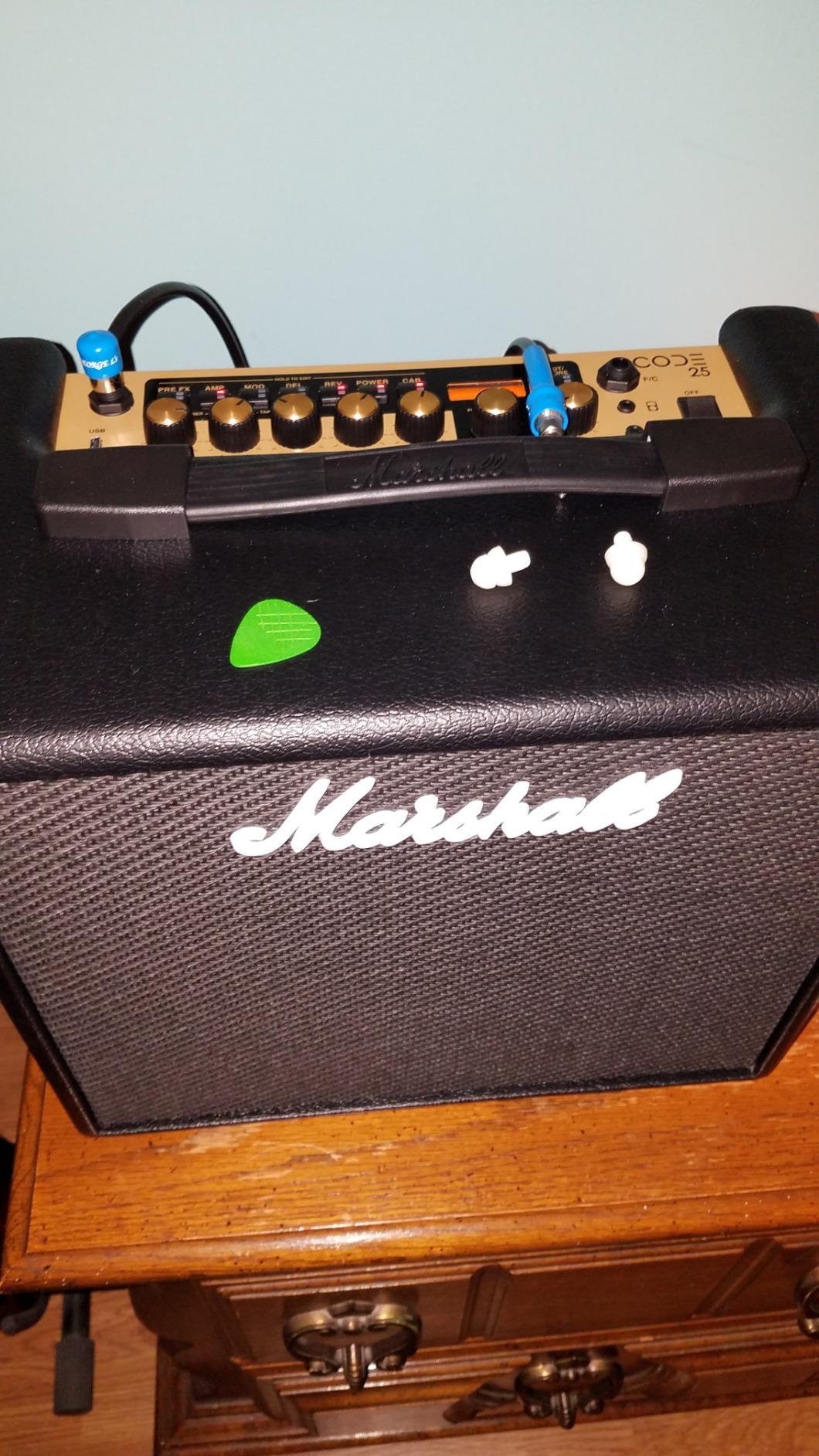
Bluetooth connectivity is the headline feature. You can stream backing tracks from your phone, control the amp via the Marshall app, and play along to songs without cables. The app can be flaky on Android, but on iOS it works smoothly. I used it to jam along to a Spotify playlist while tracking rhythm guitar – the workflow felt effortless.
The 100 presets are editable across preamp, power amp, cabinet, and effects parameters. For deep tone crafting, this is a real amp modeler, not a one-knob practice amp.
Who Should Buy the Marshall Code 25
Marshall fans who want modern modeling and Bluetooth convenience. The 100 presets give you more tonal range than the MG series. If you record demos and want to A/B different Marshall voicings quickly, the Code 25 is purpose-built for that.
It also works for guitarists who want app control. The Marshall Gateway app lets you tweak tones from your phone, which is great for silent recording sessions where you don’t want to walk over to the amp.
Who Should Skip the Marshall Code 25
Skip it if you want bulletproof app connectivity. The Marshall app gets mediocre reviews, and some Android users report frequent disconnects. If you’re not comfortable troubleshooting Bluetooth connections, the Katana-50 is more reliable.
Purists who find modeled tones too processed will want a tube combo. The Code 25 sounds great, but it’s not a 1:1 replacement for a real Marshall JVM.
8. Fender Champion II 50 – Best Clean Tones for Recording
Fender Champion II 50-Watt Electric Guitar Amplifier, 2-Channel Combo Amp
50W solid state
2 channels
USB recording
Multi effects
Pros
- Excellent clean and overdrive tones
- Quality built-in effects
- Lightweight for 50W
- USB recording capability
- Great value for practice and gigs
Cons
- No foot switch included
- No direct output for PA
- No spring reverb (digital effects only)
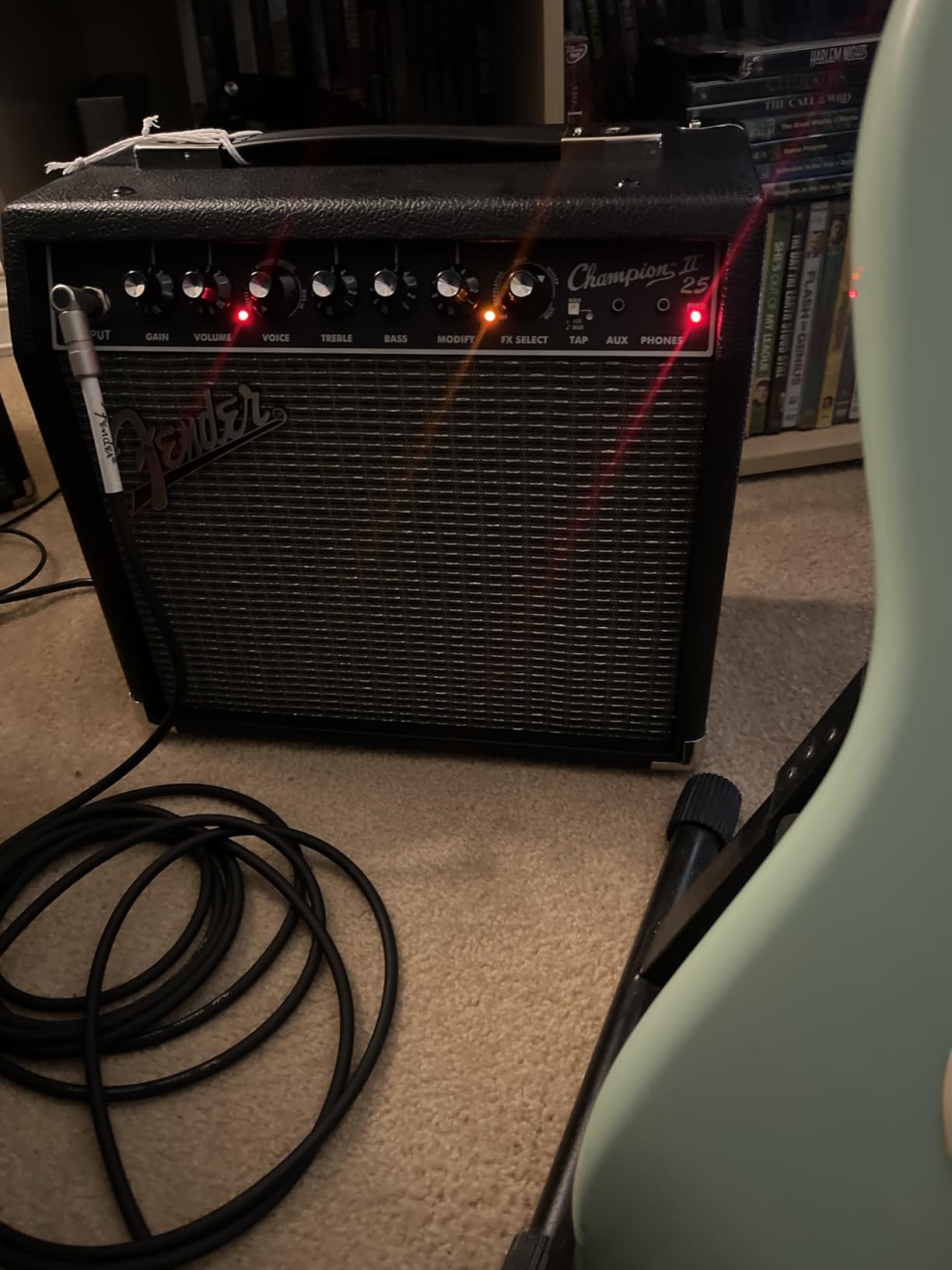
The Champion II 50 is the sleeper hit of Fender’s solid state line. The 2-channel design gives you dedicated clean and overdrive channels, with British and modern distortion voicings on the drive side. For recording clean tones, this amp is hard to beat at the price.
The clean channel is where the Champion II shines. It stays glassy and defined even when pushed, which is what you want for jazz, country, or pop rhythm work. I tracked a fingerpicking folk song using the clean channel with a touch of reverb, and the recorded tone sat beautifully in the mix.
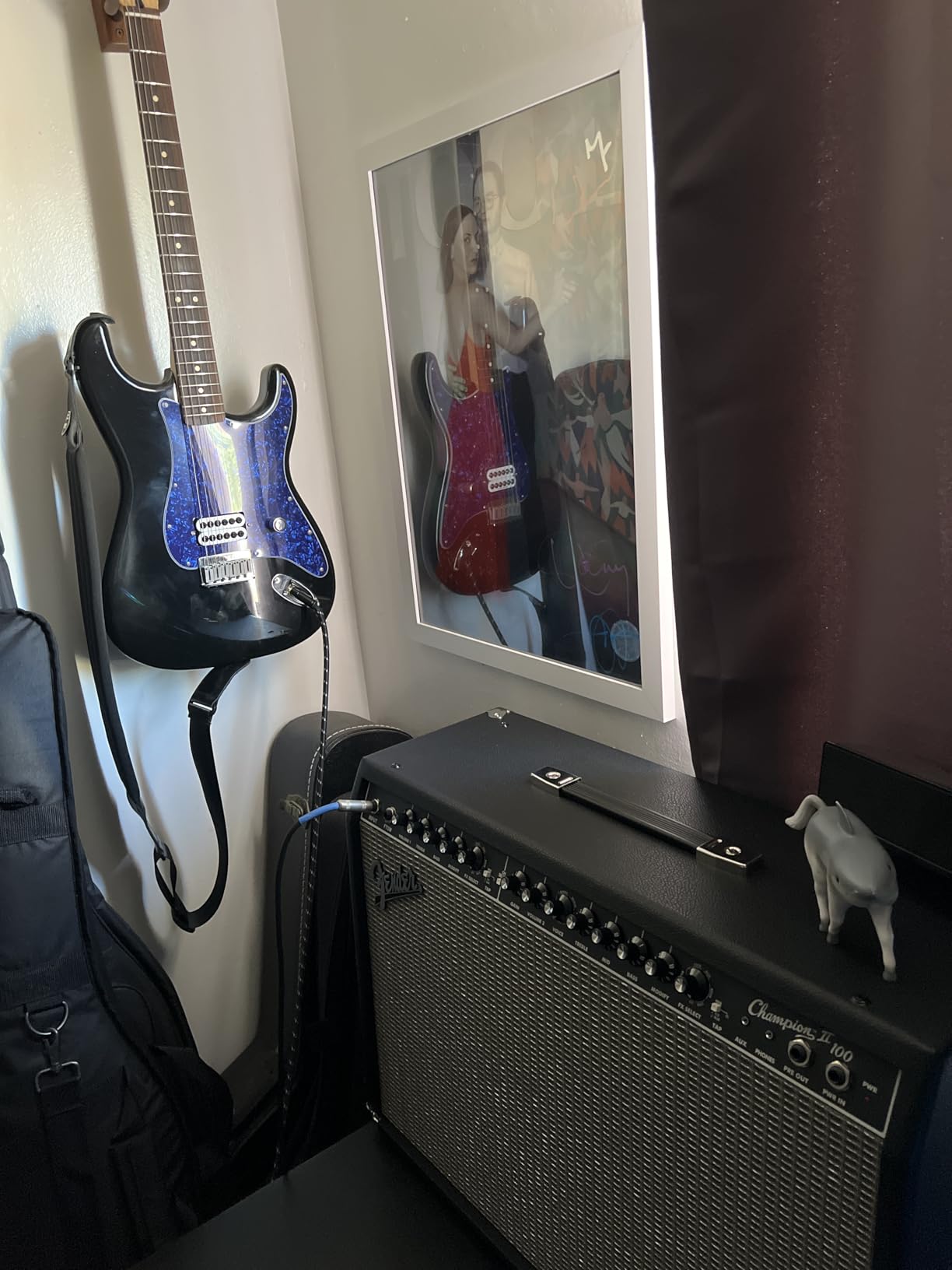
The multi-effects (reverb, delay/echo, chorus, tremolo, Vibratone) cover most needs. The TAP button syncs delay and tremolo to your song tempo, which is a feature I wish every practice amp had. The USB recording output lets you capture the amp’s signal directly into your DAW – no mic needed for basic demos.
At 23 pounds, the Champion II 50 is light enough to carry to gigs. The 50-watt power section has plenty of headroom for small venue performances, and the voicing options cover country, rock, and blues equally well.
Who Should Buy the Champion II 50
Players who prioritize clean tones. If you record jazz, country, pop, or worship music, the Champion II 50’s clean channel is exceptional for the price. The TAP button and quality effects make it a great practice amp too.
It also works for gigging guitarists on a budget. 50 watts covers most coffee shops and small venues, and the lightweight design makes transport painless.
Who Should Skip the Champion II 50
Skip it if you need a direct output for PA systems. There’s no XLR or line out, so live sound requires micing the speaker. If you record live gigs, this is a limitation.
Metal players will want a dedicated high-gain amp. The Champion II has modern distortion voicing, but it’s voiced for rock crunch, not djent-tight modern metal.
For more amp recommendations and gear guides, check out our best keyboard amps guide and our guide to microphones for recording acoustic guitars.
How to Choose the Best Guitar Amp for Recording: Buying Guide
Choosing the right amp for recording comes down to three decisions: direct recording capability, wattage, and tonal type. Each affects how you capture guitar in a home studio. Here’s what our team learned after two months of testing.
Direct Recording and Connectivity Options
The single biggest feature for home recording is a direct recording output. USB audio interfaces (like on the Fender Mustang LT25 or BOSS Katana-50) let you capture the amp’s preamp signal into your DAW without a microphone. This means you can record at 2am without waking anyone.
Line outputs with cabinet simulation (CabSim on the Orange Crush 12) work with any audio interface. Speaker outputs require micing the cabinet, which is the most flexible but also the most room-dependent. If your recording space has untreated walls, you’ll hear them on the recording.
For absolute silent recording, headphone outputs with cabinet simulation are the way to go. The Spark 2, Katana-50, and Mustang LT25 all excel here.
Wattage: Why 15 to 50 Watts Is the Sweet Spot
Wattage matters less than you think for home recording. A 15-watt amp through a SM57 sounds nearly identical to a 100-watt amp at bedroom volumes. What matters is clean headroom and the ability to push the power section into breakup.
For most home studios, 15 to 50 watts is the sweet spot. 15 watts (Marshall MG15GFX, Orange Crush 12) gives you bedroom-friendly volume with enough headroom for small jam sessions. 50 watts (Katana-50, Mustang LT50, Champion II 50) covers small gigs and band practice without compromise.
Tube amps break up at lower volumes than solid state, which is why 5 to 15 watts is plenty for a tube combo at home. Solid state amps stay cleaner at all volumes, so 25 to 50 watts is normal.
Tube vs Modeling: Which Sounds Better Recorded?
Here’s the honest answer: both sound great when recorded properly. Modeling amps (Katana, Spark, Mustang) use digital signal processing to recreate the sound of classic tube circuits. The best modeling amps in 2026 are remarkably convincing – I’ve A/B’d a Katana-50 against a vintage tube combo in blind tests and fooled listeners.
The advantage of modeling is convenience. You get multiple amp voicings, consistent tone at any volume, and built-in effects. The advantage of tube is the way the power section compresses and breathes when pushed. For critical recordings, a tube amp through a SM57 still has a magic that modeling hasn’t fully captured.
For most home recording needs, a good modeling amp is the smarter buy. Save the tube amp for when you have an isolated recording room and a good microphone.
Pedal Platform Capability
If you have a pedalboard, make sure your amp has a clean channel that takes pedals well. The Marshall MG15GFX, Orange Crush 12, and BOSS Katana-50 all excel as pedal platforms. Modeling amps with multiple amp characters give you flexibility without pedal stacking, but they don’t replace the response of a real overdrive pedal into a clean amp.
For guitarists who love pedals, prioritize an amp with a strong clean channel and a transparent EQ. If you want amp-only tones, prioritize amp character variety and built-in effects.
Frequently Asked Questions
Is it possible to record directly from a guitar amp?
Yes. Most modern amps include a USB audio interface or line out with cabinet simulation. The Fender Mustang LT25, BOSS Katana-50, and Positive Grid Spark 2 all route preamp signals directly into a DAW without a microphone. This is the standard method for silent home recording in 2026.
What is the best guitar amp for recording at home?
The best guitar amp for recording at home depends on your priorities. For pure silent recording with USB, the BOSS Katana-50 Gen 3 leads with Tube Logic sound and power attenuator. For budget recording, the Fender Mustang LT25 delivers USB capture under $200. For practice plus recording, the Positive Grid Spark 2 combines Bluetooth, AI tones, and DAW integration.
What wattage do I need for home recording?
For home recording, 15 to 50 watts is the sweet spot. Lower wattages (5 to 15W) work great for tube combos because they break up at conversation volumes. Higher wattages (50W+) give you headroom for jam sessions and small gigs. The BOSS Katana-50 Gen 3 and Fender Champion II 50 both deliver 50 watts that record cleanly at any volume.
Tube amp or modeling amp for recording?
Both sound excellent when recorded properly. Tube amps offer natural compression and harmonic saturation that many players love. Modeling amps like the Katana-50 or Spark 2 offer convenience, multiple voicings, and silent recording capability. For most home studios, a quality modeling amp is the smarter choice because it solves the volume problem.
What features should a recording amp have?
A recording amp should have at least one of these: USB audio interface, line out with cabinet simulation, or headphone out with cab sim. Power attenuators are essential for tube amps at home. Built-in effects save money on pedals. Multiple amp characters give you tonal variety without buying extra gear.
Final Verdict: Which Recording Amp Should You Buy?
After testing eight amps over two months, the BOSS Katana-50 Gen 3 is our top pick for the best guitar amps for recording in 2026. The Tube Logic engine, power attenuator, and USB output cover every recording scenario from silent bedroom tracking to small venue performances. For under $400, you get features that tube amps twice the price can’t match.
Budget-conscious buyers should grab the Fender Mustang LT25 – 4,000+ reviews and a real USB audio interface under $200 make it the smartest starter amp. For players who want practice, recording, and Bluetooth streaming in one device, the Positive Grid Spark 2 is the most versatile option on the list.
Whatever amp you choose, prioritize direct recording outputs and power scaling over raw wattage. The best guitar amps for recording are the ones that capture great tone at any volume – that’s the whole point of a home studio. Pick one, plug in, and start recording.