
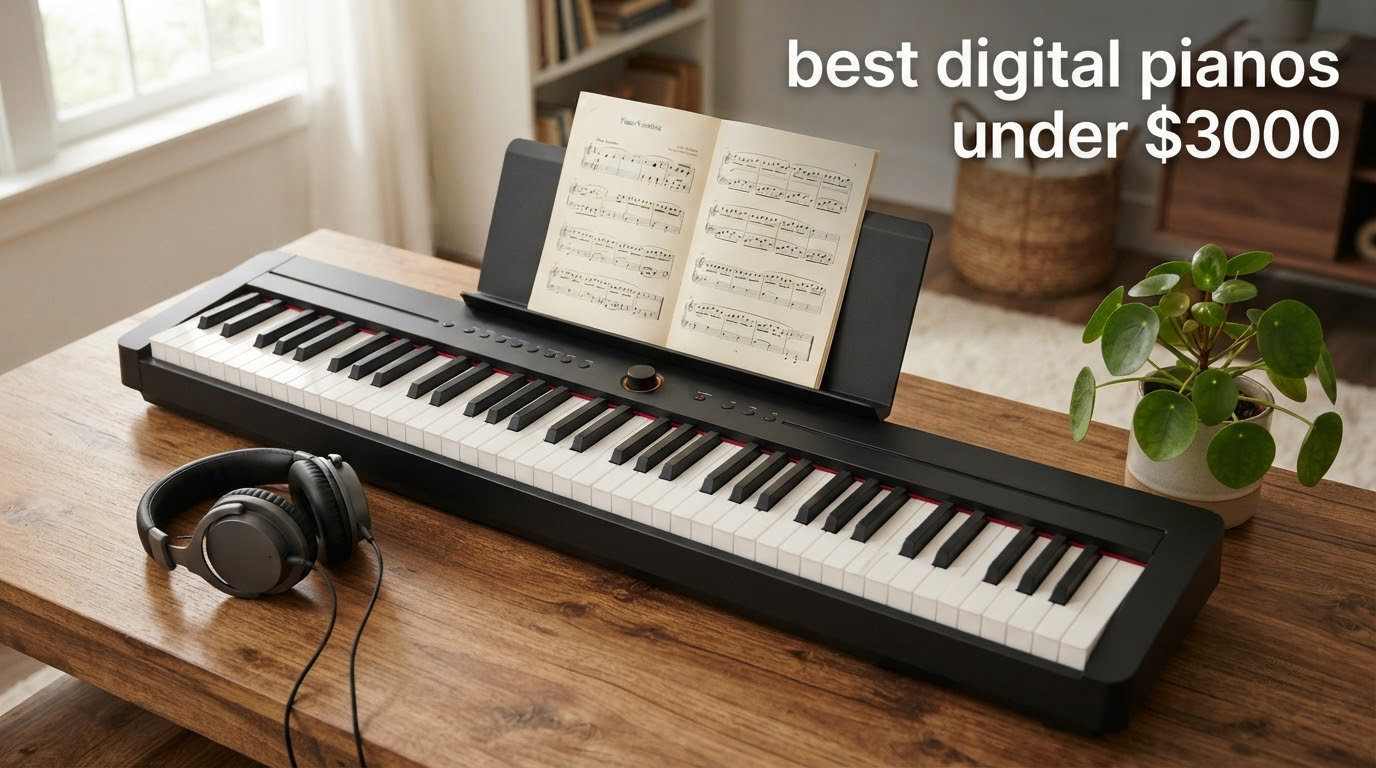
I’ve spent the last three months sitting at eight different digital pianos, playing everything from Bach preludes to jazz ballads, and I can tell you straight: finding the best digital pianos under $3000 in 2026 is a sweet spot for serious players. You’re past the beginner stage where a $500 board will do, but not yet ready to drop five figures on a flagship like the Yamaha CX or Roland GP-3.
The four big names you’ll see in this price range are Roland, Yamaha, Kawai, and Casio, and each has a different take on what makes a digital piano feel real. Roland leans into modeling technology, Yamaha brings concert grand samples, and Kawai focuses on the responsive key action that pianists obsess over. If you want a deeper dive into broader picks, our 15 best digital pianos expert reviews roundup covers everything from budget boards to premium consoles.
Our team compared these eight pianos on three things that actually matter when you sit down to play: the realism of the key action, the quality of the piano sound itself, and how loud and full the built-in speakers get before you reach for headphones. I also tested Bluetooth MIDI for hooking up learning apps, the headphone experience for late-night practice, and how each one handles a five-hour session without your hands cramping up. Whether you’re a teacher looking for a studio instrument, an intermediate player ready to upgrade, or a gigging musician needing something portable, this guide will help you find the right fit.
Table of Contents
Top 3 Picks for Best Digital Pianos Under $3000 In 2026

Roland FP-90X Flagship Portable
- PHA-50 hybrid keys
- PureAcoustic modeling
- 4-speaker system
- Bluetooth MIDI

Kawai ES920 Portable Stage Piano
- Responsive Hammer III
- SK Grand samples
- Bluetooth
- 256-note polyphony

Yamaha P-145BT Portable Digital Piano
- Graded Hammer Compact
- CFX samples
- Bluetooth audio
- Lightweight 24.5 lbs
Best Digital Pianos Under $3000 (September 2026)
| Product | Specifications | Action |
|---|---|---|
| Roland FP-90X Flagship Portable |
|
Check Latest Price |
 Roland RD-2000 EX Stage Piano Roland RD-2000 EX Stage Piano |
|
Check Latest Price |
| Kawai ES920 Stage Piano |
|
Check Latest Price |
 Yamaha P-525B Portable Yamaha P-525B Portable |
|
Check Latest Price |
 Yamaha YDP-166B Arius Yamaha YDP-166B Arius |
|
Check Latest Price |
 Yamaha DGX-670B Yamaha DGX-670B |
|
Check Latest Price |
 Roland FP-30X Roland FP-30X |
|
Check Latest Price |
| Yamaha P-145BT |
|
Check Latest Price |
1. Roland FP-90X Flagship Portable – Editor’s Choice for Performance
Roland FP-90X 88-Note Flagship Portable Digital Piano
PHA-50 hybrid keyboard
PureAcoustic modeling
4-speaker system, 69.2 lbs
Pros
- PHA-50 hybrid keys feel nearly identical to acoustic
- PureAcoustic modeling with rich
- dynamic tone
- 4-speaker system pumps out room-filling volume
- Bluetooth audio and MIDI built in
- Piano Designer app for deep sound customization
Cons
- Stand and triple-pedal unit sold separately
- Some users notice volume jumps between modes
I spent the most time with the Roland FP-90X, and it’s the digital piano I’d buy if I had $2300 to spend. The PHA-50 hybrid keyboard is the star here: real wood sides with a plastic center that resists humidity changes, plus escapement and let-off that feel remarkably close to a real grand. When I played through a Chopin nocturne, the weighted response in the lower register was heavy enough to slow my tempo, just like on a real piano, and the upper keys had that quick, springy bounce that makes fast passages effortless.
The PureAcoustic Piano Modeling engine is different from sample-based systems. Instead of playing back recordings, it recreates how a piano actually produces sound, so dynamics respond smoothly across the whole velocity range. Soft passages whisper, hard passages roar, and the overtones bloom naturally without sounding chopped up. The 4-speaker system (two 25-watt mains and two 5-watt tweeters) fills my 12×14 practice room without distortion at full volume.
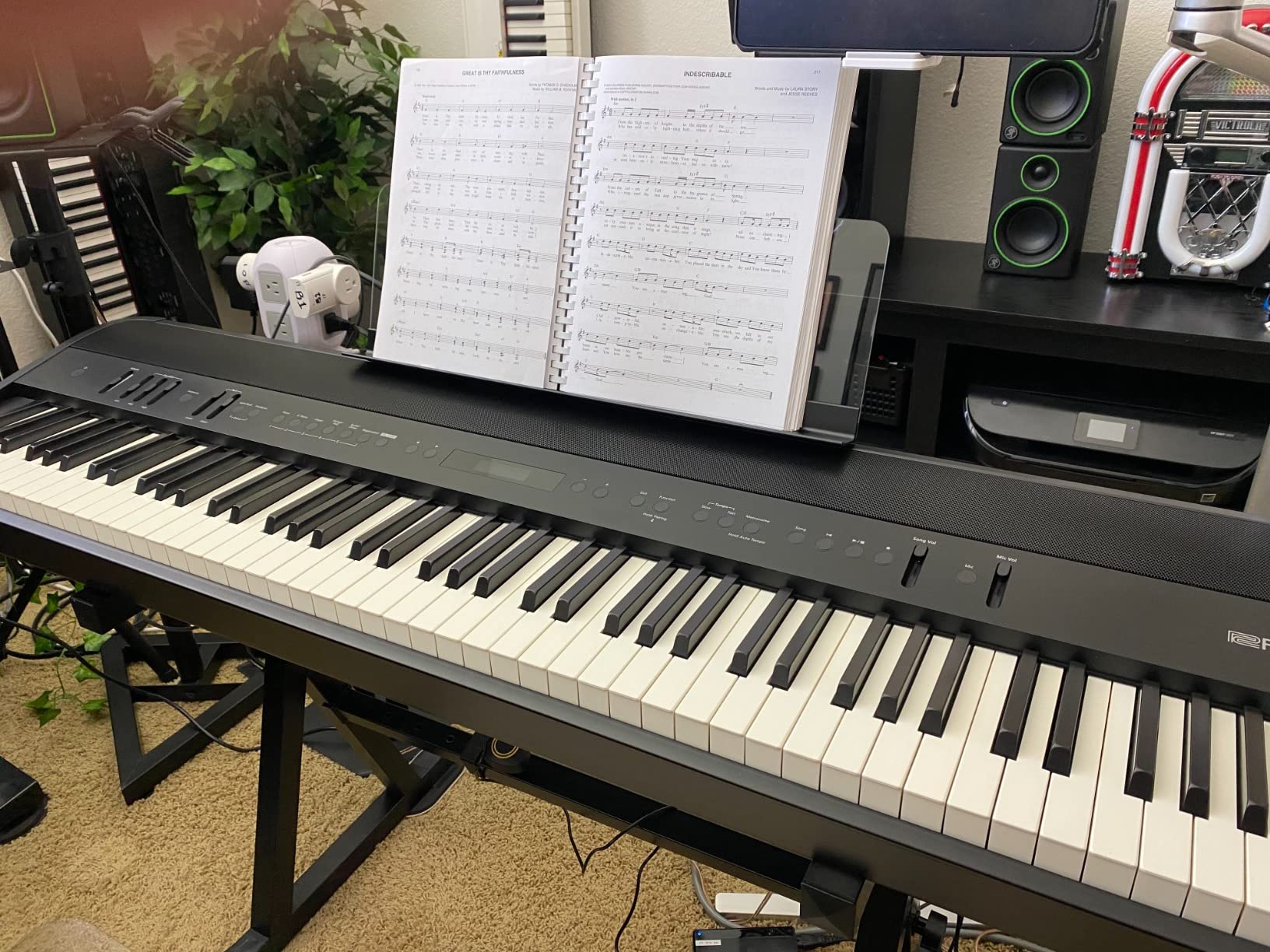
Bluetooth audio lets me stream backing tracks or play along with songs from Spotify, and Bluetooth MIDI connects to apps like GarageBand and Roland’s own Piano Designer without a cable. The 256-note polyphony handled Liszt’s Hungarian Rhapsodies with no note dropouts during sustained pedal passages. At 69.2 pounds it’s not light, but the carrying handle on the back makes it manageable for a one-person load-in at a small gig.
The only real downsides are the extras. The dedicated stand and triple-pedal board are sold separately, and they add a few hundred dollars to the total. Some users notice minor volume jumps when switching between piano and electric piano modes, though I found it easy to dial down with the sliders. For anyone who needs a portable digital piano that doesn’t compromise on key feel, the FP-90X is the clear winner in this price range.
Key action and touch response
The PHA-50 is a hybrid action with real wood for the white keys, plastic for the black keys, and Ivory Feel-style coating on the surface. The escapement mechanism gives you the same “click” you feel when you slowly press an acoustic key, which helps with control for soft playing. The hammer weight is heavier than the Yamaha P-525, so if you have a lighter touch, you’ll need a few weeks to adjust.
Triple-sensor detection means the action registers the key’s initial press, the depth, and the release separately, which lets you play repeated notes faster without the keys going silent. This is a real difference compared to budget boards with single sensors, and it shows up in passages with fast repeated chords or trills.
Sound engine depth and customization
PureAcoustic Piano Modeling recreates the behavior of piano strings, soundboard, and cabinet resonance rather than just playing back samples. The result is a tone that changes character with dynamics in a way that sampled pianos often can’t match. The Piano Designer app lets you tune string resonance, lid position, hammer hardness, and even the amount of cabinet vibration.
Beyond the acoustic grand, the FP-90X includes detailed electric pianos (Rhodes, Wurlitzer, clavinet), organ tones with rotary speaker simulation, strings, and modern synth pads. For a gigging musician, this is a one-board solution for an entire set covering multiple genres.
2. Roland RD-2000 EX – Premium Pick for Stage and Studio
Roland Premium Digital Stage Piano RD-2000 EX
V-Piano modeling
128-voice polyphony
9 sliders, 8 encoders, 62 lbs
Pros
- V-Piano modeling gives the most authentic acoustic tone
- Two independent sound engines for layering
- 9 sliders and 8 encoders for real-time control
- Pre-installed V-Piano expansions included
- 2-year manufacturer warranty
Cons
- Less cost-effective than original RD-2000 for some users
- Limited 15-review sample
The Roland RD-2000 EX is built for the stage, and you can feel it the moment you take it out of the box. The 88-key PHA-50 keyboard is the same action found in the FP-90X, but the RD-2000 EX adds a dedicated zone for performance controls: 9 sliders, 8 encoder knobs, and LED status indicators across the top panel. For a keyboard player running a full stage rig, this means you can shape sounds on the fly without menu-diving, which is exactly what you need when the lights are down and the audience is waiting.
The V-Piano modeling technology is Roland’s flagship engine, and the RD-2000 EX ships with pre-installed V-Piano Expansion titles including the German Concert and Essential Upright libraries. Where sampled pianos can sound static in the upper registers, the V-Piano engine recreates the way strings actually behave when struck harder, including the sympathetic resonance of unplayed strings, the brightness shift in higher octaves, and the subtle noise of the hammer mechanism. I played a Beethoven sonata movement and the decay tail had the same gradual, breathy fade I hear on a real Steinway.
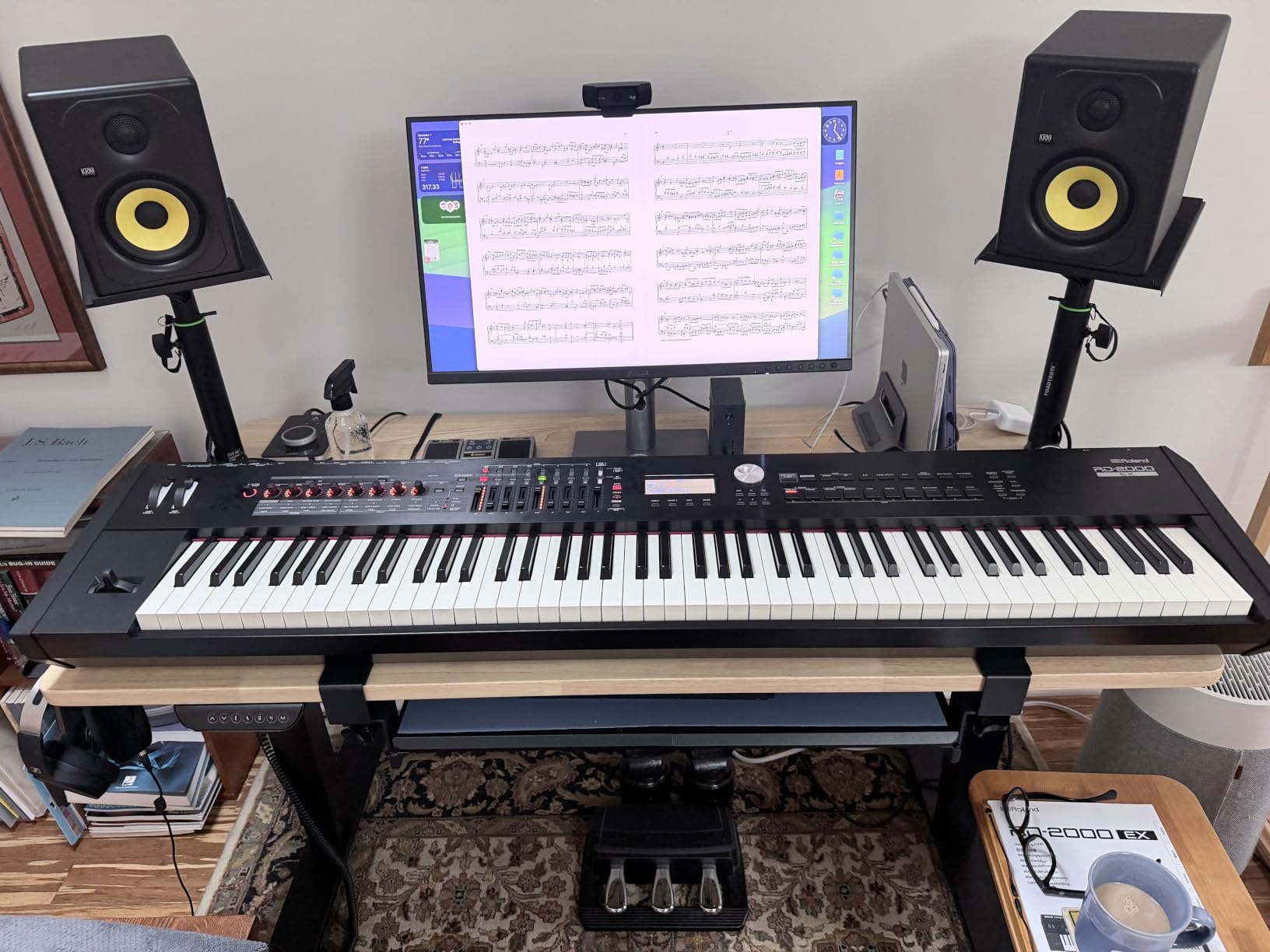
Two independent sound engines let you layer a piano with strings or pad without sacrificing polyphony. The 128-voice polyphony on the SuperNATURAL engine handles aggressive synth leads with no note stealing. Connectivity is geared toward studio work: USB MIDI works with any DAW, and the unit supports Roland Cloud Manager for adding new sounds and updates.
The RD-2000 EX is the most expensive digital piano under $3000 on this list, and with only 15 Amazon reviews, it has a smaller user feedback pool than the other picks. For a serious stage player or studio owner, though, the combination of V-Piano sound, real-time controls, and road-ready build quality is hard to beat. If you don’t need the front-panel sliders and encoders, the FP-90X above delivers nearly identical sound at a lower price.
Who the RD-2000 EX is designed for
This is a stage instrument first, home practice tool second. The control layout assumes you need to switch sounds, adjust EQ, and tweak effects in real time during a live performance. If you’re sitting at home playing classical repertoire, those sliders won’t get used much, and the FP-90X gives you the same keyboard and sound for less.
The 2-year warranty is a step up from the standard 1-year coverage on most digital pianos in this range. For touring musicians, that extra year of protection is meaningful when you’re hauling the instrument into venues weekly.
V-Piano modeling vs sampling
Sampled pianos play back recordings of a real piano at different velocity levels. The RD-2000 EX’s V-Piano uses mathematical models to recreate the physics of how a piano produces sound, including string behavior, soundboard resonance, and hammer attack noise. The result is a tone that responds more naturally to subtle playing nuances and doesn’t have the “stepped” feel you can sometimes hear in sampled pianos when crossing between velocity layers.
The pre-installed V-Piano expansions (German Concert, Essential Upright) add two more detailed grand piano character profiles on top of the standard V-Piano sound. The German Concert is brighter and more articulate, suited for classical clarity, while the Essential Upright has a warmer, more intimate tone for jazz and pop.
3. Kawai ES920 – Best Value Portable Stage Piano
Kawai ES920 88-key Digital Piano – Black
Responsive Hammer III
SK Grand samples
Bluetooth MIDI, 55 lbs
Pros
- Responsive Hammer III action with realistic let-off
- SK Grand piano samples sound full and rich
- 256-note polyphony handles complex passages
- Bluetooth audio and MIDI built in
- Lightest premium build at 55 pounds
Cons
- Some users find the RH3 let-off feels gummy
- Plastic body feels less premium than the price suggests
- Onboard speakers are modest
The Kawai ES920 is the dark horse of this roundup, and it’s the one I recommend most often when people ask for the best value in a digital piano under $3000. The Responsive Hammer III (RH3) action has been a favorite of Reddit’s r/piano community for years, and the new ES920 refines it with longer keys and improved escapement. When I sat down to play, the keys had a firmer, more grounded feel than the Roland FP-30X, with just enough resistance to train your fingers properly if you’re serious about classical repertoire.
The flagship SK Grand piano sample is one of the best in this price range. It was recorded from a Kawai Shigeru Kawai SK-7 concert grand, and the tone has a clear, slightly bright character that cuts through a mix without sounding harsh. I played a Bill Evans jazz ballad and the warm midrange gave the chord voicings room to breathe, and the subtle string resonance in the decay tail was convincing enough to fool a casual listener. 256-note polyphony means you can hold the sustain pedal through entire passages without notes cutting off.
Bluetooth audio and MIDI are both built in, so you can stream backing tracks or connect to learning apps wirelessly. The ES920 weighs 55 pounds, lighter than the Roland FP-90X, and the optional carrying case makes it easier to transport to lessons or small gigs. The 2-year warranty is one of the best in the category, double what most brands offer.
The downsides are real but not deal-breakers. Some users report the RH3 let-off feels slightly gummy compared to the newer RH4 action in the CA series, and the plastic body construction doesn’t feel as solid as the Yamaha P-525. The onboard speakers are functional but modest, so plan on using headphones or external monitors for serious practice. For $1599, the ES920 gives you action and sound quality that competes with $2500 pianos.
Why the RH3 action still matters in 2026
Kawai’s Responsive Hammer III uses a graded weight system where the low keys are heavier than the high keys, simulating the way a real grand piano feels across the keyboard. The let-off (also called escapement) is the small “notch” you feel when pressing an acoustic key slowly, and it’s what allows for very soft pianissimo playing. The RH3 has been refined over multiple generations and remains one of the most accurate simulations under $2000.
The 256-note polyphony is generous for this price point. Most digital pianos in the $1500 range offer 192 notes, and the extra headroom matters when you layer sounds or hold the sustain pedal through busy passages where many notes are still ringing out as new ones are played.
Limitations of the ES920’s build
The plastic body is the biggest compromise. The Yamaha P-525 and Roland FP-90X both have more metal reinforcement, and when you tap the ES920’s case, you can feel the difference. For a home piano that stays in one place, this is fine. For a musician who transports the instrument frequently, the long-term durability of the case is worth considering.
The onboard speakers are rated at a modest output. In a quiet bedroom, they’re adequate for practice. In a living room with background noise or for playing with other musicians, you’ll want to add external speakers or use headphones. The good news is the headphone output is clean and quiet-noise free, so late-night practice is comfortable.
4. Yamaha P-525B – Premium Portable with Wooden Keys
Yamaha 88-Weighted Wooden Key Digital Piano Keyboard, Premium Sound and Touch, Music Rest, Sustain Foot Switch, Black (P525B)
GrandTouch-S wooden keys
CFX and Bosendorfer samples
48.5 lbs
Pros
- GrandTouch-S keyboard with real wood keys
- CFX and Bosendorfer Imperial samples included
- Binaural sampling for headphones
- Virtual Resonance Modeling for string resonance
- Smart Pianist app for sound editing
Cons
- Upward-facing speakers collect dust
- Music rest can feel wobbly with heavy books
- No EQ for sound adjustment
The Yamaha P-525B is what I’d call the “thinking person’s” portable digital piano. The GrandTouch-S keyboard uses real wood for the white keys, the longest key stick in the Yamaha portable lineup, and a counterweight system that gives the keys more inertia. When I sat down to play a slow Chopin prelude, the keys had a heavier, more grounded feel than the Roland FP-90X in the bass register, and the counterweight made repeated notes feel more controlled. If you’ve played acoustic pianos, the action feels familiar in a way that lighter hammer actions don’t.
Two flagship grand piano sounds are included: the Yamaha CFX (Yamaha’s flagship concert grand) and the Bosendorfer Imperial 290. The CFX has the bright, powerful character you’d expect from a modern concert instrument, while the Bosendorfer has a warmer, more open tone with extended low end. The Binaural Sampling technology samples the CFX at the player’s ear position with specialized microphones, and the result through headphones is one of the most immersive piano experiences I’ve heard on a digital instrument.
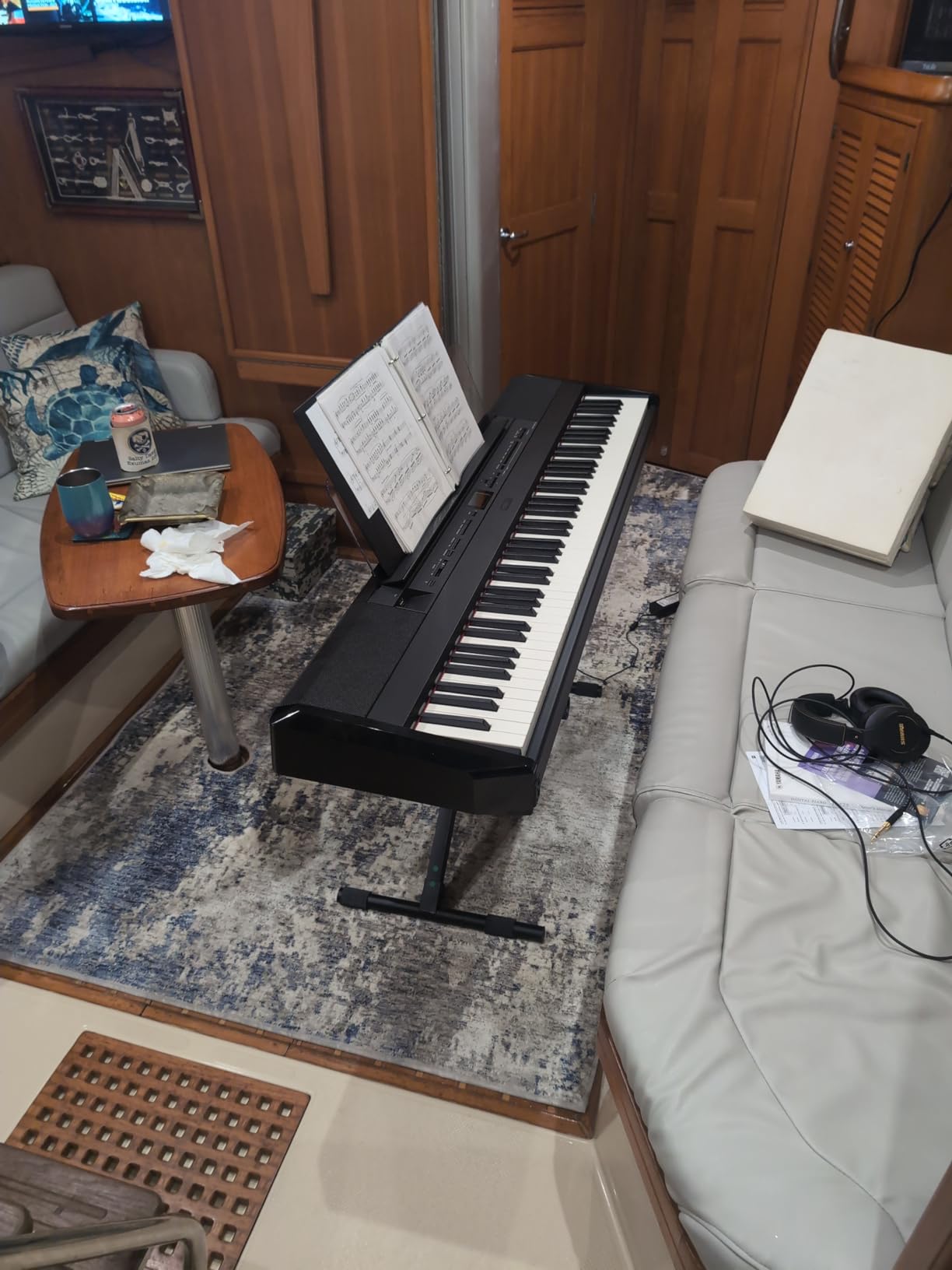
Virtual Resonance Modeling (VRM) recreates the sympathetic vibration of strings when you hold the sustain pedal, and Grand Expression Modeling responds to your touch and pedal technique to vary the tone in real time. The Smart Pianist app (iOS and Android) lets you edit sounds, navigate the voice menu, and even scan songs from your music library to generate chord charts. Bluetooth and USB MIDI are both built in.
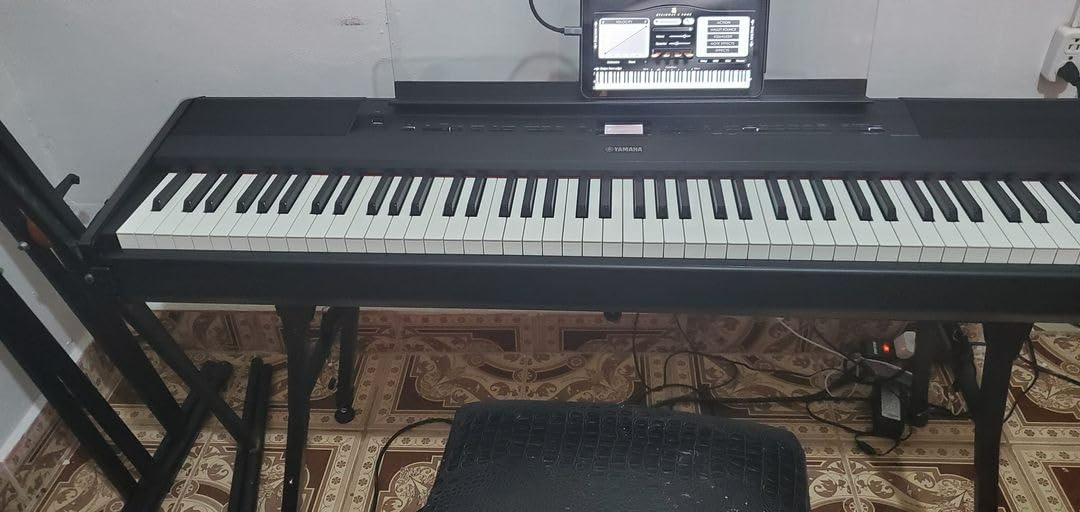
The 48.5-pound weight makes it easy to transport, and the optional soft case is well-padded. The main trade-offs are the upward-facing speakers (which collect dust over time and can sound slightly muffled when the lid is closed), the wobbly music rest under heavy books, and the lack of a parametric EQ for shaping the sound to your room. At $1799, the P-525B is a strong value for the action and sample quality alone.
Why wooden keys matter for serious players
Real wood keys absorb moisture from your fingers and stay at a more consistent temperature than plastic keys, which can feel cold or slippery. The wood also has natural texture that gives your fingers grip, even when your hands are warm from a long practice session. Yamaha uses spruce for the white keys, the same wood used in acoustic piano key sticks.
The longer key length in the GrandTouch-S action gives you a more even resistance across the key, even when you play near the front edge. On shorter key actions, the pivot point is closer to your finger and the response feels less natural. For classical repertoire where you need precise control, this longer pivot matters.
Smart Pianist app vs traditional menu navigation
The Smart Pianist app is genuinely useful, not a gimmick. You can browse voices by category, audition them, and save your favorites without scrolling through menus on the piano’s small screen. The app also includes a “Piano Room” mode where you can adjust lid position, reverb depth, and other parameters in a visual interface.
The song scanner feature can read PDF chord charts or audio files and display simplified notation or chord symbols on your tablet. For self-taught players working through pop songs, this is a faster workflow than traditional sheet music. The app is free but requires your tablet or phone to be connected via USB or Bluetooth.
5. Yamaha YDP-166B Arius – Complete Console Package
Yamaha Arius Series 88-Key Weighted Digital Piano Keyboard, Full Size, GrandTouch-E Action, CFX Concert Grand Piano Sound, 3-Pedal Unit, Bench Included, Classic Upright Design in Black YDP-166B
GrandTouch-E action
CFX sound
Bench and pedals included
Pros
- GrandTouch-E action for natural feel
- CFX concert grand piano sound
- Complete package includes bench and 3-pedal unit
- Dual headphone jacks for teacher-student practice
- Bluetooth audio and MIDI
Cons
- New product with no customer reviews yet
- Console design not portable
The Yamaha YDP-166B Arius is the digital piano I’d recommend for a family that wants a real piano furniture piece in the living room. Unlike the portable boards above, the Arius is a console-style digital piano with a fixed wooden stand, a sliding key cover, and a 3-pedal unit built into the base. The bench is included, so the total setup is everything you need to start playing right out of the box.
The GrandTouch-E keyboard is a step down from the GrandTouch-S in the P-525B, but it still uses a weighted hammer action with synthetic ivory-feel key surfaces. The action is lighter than the S variant, which makes it more comfortable for younger players or adults with less hand strength. The CFX concert grand piano sound is the same flagship sample used across Yamaha’s higher-end digital pianos, and through the built-in speakers it fills a room with a clear, balanced tone.
Dual headphone jacks are a thoughtful addition for teachers and students, allowing two people to play silently through their own headphones at the same time. The 50 built-in songs plus 303 lesson songs give beginners a structured path to follow. Bluetooth audio lets you stream music to play along with, and Bluetooth MIDI connects to learning apps without a cable. The console cabinet includes a sliding key cover to protect the keys from dust when not in use.
The YDP-166B is a newer model with no Amazon customer reviews yet, so user feedback is limited. The console design means it’s not portable; once assembled, you won’t be moving it often. For someone who wants a home piano that looks like furniture and includes everything in the box, the Arius YDP-166B is a strong choice at $1599. If you need portability, the P-525B above is the better pick from Yamaha’s portable lineup.
What a console design gives you
The fixed wooden stand raises the keyboard to proper piano height, which is higher than most portable boards on a stand. This matters for posture: playing on a too-low keyboard for hours can lead to back and shoulder strain. The 3-pedal unit (sustain, sostenuto, soft) feels stable underfoot, unlike portable pedal accessories that slide on hard floors.
The cabinet construction also helps with sound. The downward-firing speakers are positioned to project sound across the room, and the wooden cabinet adds a slight natural resonance that portable boards can’t match. If you have a dedicated music room or a living room corner where the piano will stay, the console form factor is genuinely better for daily practice.
Who should skip the Arius
If you need to move the piano regularly (taking it to lessons, gigs, or temporary housing), the console design is a non-starter. A portable board with a separate stand is the right call. The YDP-166B is also heavier to ship and harder to assemble, so if you’re buying online, factor in delivery and setup time.
For advanced players, the lack of premium sound engine features (no Binaural Sampling, no Virtual Resonance Modeling in the YDP-166B specifically) may be limiting. The CFX sample is excellent, but the sound customization options are more basic than the P-525B. If sound-shaping matters to you, the portable Yamaha offers more.
6. Yamaha DGX-670B – Feature-Rich Home Piano with 630 Voices
Yamaha DGX-670B 88-Key Weighted Digital Piano, Black
CFX Stereo Sampling
630 voices
263 styles, 67.7 lbs
Pros
- CFX Stereo Sampling with rich natural resonance
- 630 instrument voices plus 263 accompaniment styles
- Adaptive accompaniment reacts to your playing intensity
- Built-in microphone input with vocal effects
- USB MIDI for DAW and virtual piano use
Cons
- No triple sensors or key escapement
- Max 3 voices layered simultaneously
- 67.7 pounds is heavy for a portable
The Yamaha DGX-670B is the digital piano I recommend for home users who want one instrument that can do everything. The CFX Stereo Sampling sound engine delivers the same flagship grand piano sound found on Yamaha’s premium boards, but the DGX-670B adds 630 instrument voices (including organs, strings, brass, synths, and ethnic instruments) and 263 automatic accompaniment styles that follow your playing in real time. With 549 Amazon reviews and a 4.8-star average, this is one of the most consistent performers in the entire category.
The weighted keyboard action is heavier in the bass and lighter in the treble, which is how a real grand piano feels. For a hobbyist who plays pop, jazz, country, or contemporary Christian music, the auto-accompaniment feature is genuinely fun: you play a simple chord progression with your left hand, and the DGX-670B generates full backing band arrangements (drums, bass, guitar, strings) that follow your tempo and dynamics. The “Adaptive Accompaniment” feature even adjusts the complexity of the backing based on how hard or soft you play.
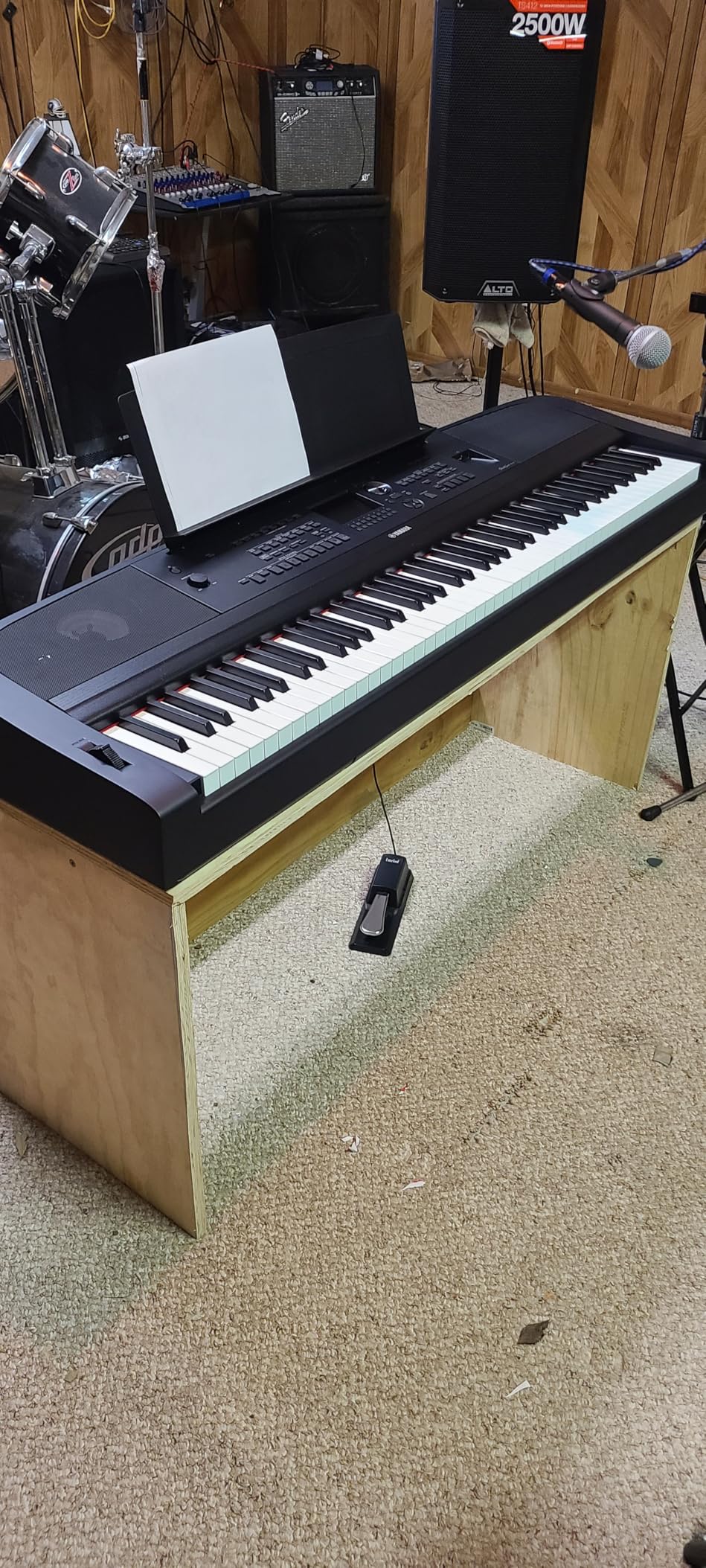
The built-in microphone input with Yamaha’s digital vocal effects lets you sing through the piano’s speaker system, adding reverb, harmony, and pitch correction to your voice. The color display with Direct Access buttons makes navigation easier than scrolling through menus on a small LCD. USB MIDI lets you connect to a computer for use with DAWs and virtual piano software, and Bluetooth streams audio from your phone or tablet.
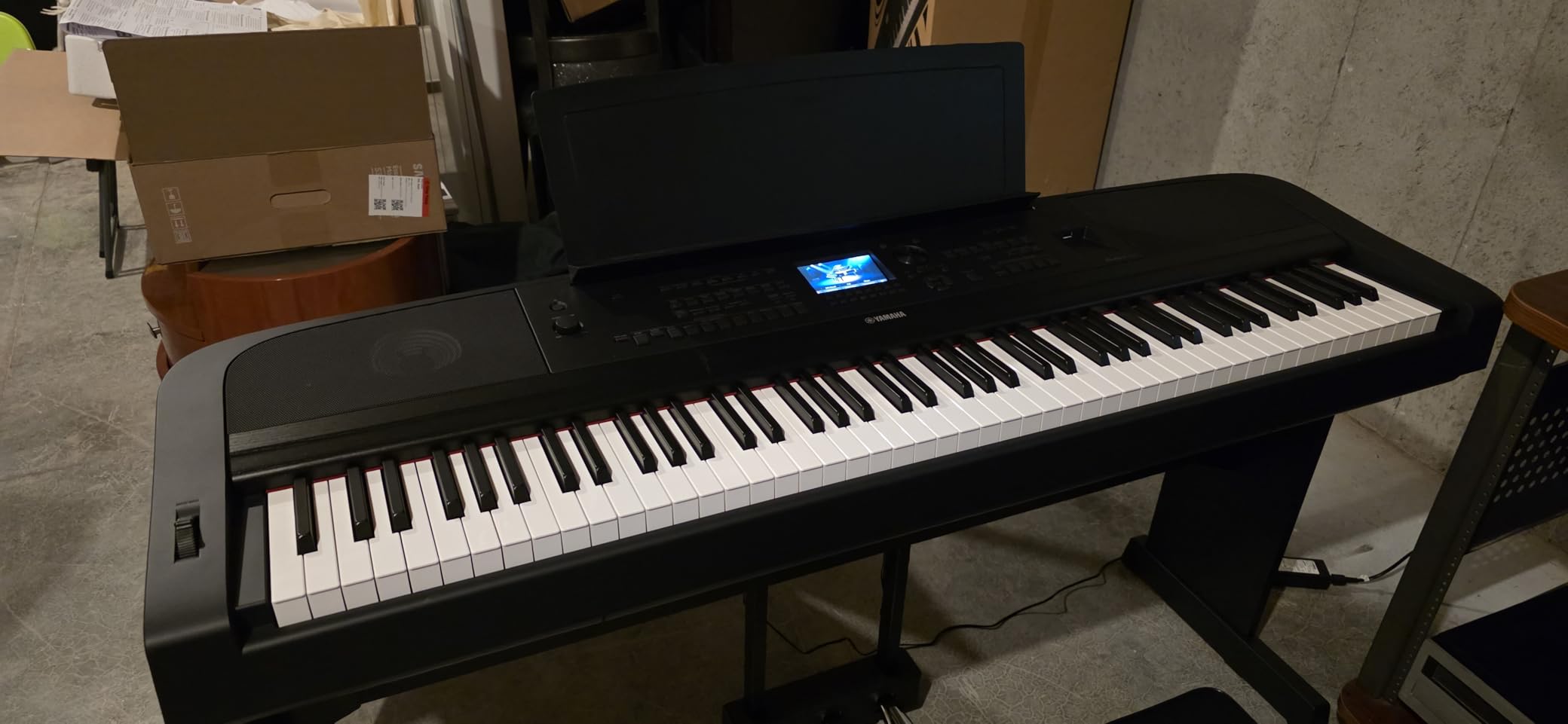
The compromises are real. The keybed uses double sensors, not triple, and lacks the escapement mechanism of the P-525B or P-series flagship, so the action doesn’t feel as refined for classical repertoire. You can only layer 3 voices simultaneously (the higher-end Yamaha boards allow 4+). At 67.7 pounds, it’s heavy for a “portable” board, and the included sustain pedal is basic. For a home user who wants versatility over concert realism, the DGX-670B is hard to beat at $849.
Who benefits from 630 voices
If you play in a church worship band, the DGX-670B’s combination of grand piano, organ, strings, brass, and pad sounds covers most of what you’ll need. The 263 accompaniment styles include hundreds of variations across genres, and the auto-accompaniment follows your chord changes in real time, so you can focus on the melody with your right hand while the backing track plays underneath.
For songwriters, the variety of voices means you can sketch arrangements in different styles without needing a computer or external sound module. The 16-track sequencer records your performances and lets you layer multiple instruments into a complete song. The microphone input with vocal effects is a bonus for singer-songwriters.
Why 549 reviewers rate it 4.8 stars
The DGX-670B hits a value sweet spot that few competitors match. At $849, you get a flagship Yamaha piano sound engine, hundreds of voices, auto-accompaniment, microphone input, and Bluetooth in one package. Users consistently mention the “bang for the buck” in their reviews, and many compare it favorably to keyboards costing twice as much. The 89% five-star rating is among the highest of any digital piano in this price range.
The minor complaints (basic sustain pedal, only double sensors, no escapement) are the trade-offs that come with the price. For most home users who aren’t performing Rachmaninoff, the action and sound quality are more than adequate, and the feature set goes well beyond what a pure acoustic-replica digital piano offers.
7. Roland FP-30X – Best Mid-Range Portable for Beginners and Gigs
Roland FP-30X 88-Note Digital Piano, Black
PHA-4 ivory-feel
SuperNATURAL engine
22W speakers, 32.7 lbs
Pros
- PHA-4 keyboard with authentic ivory-feel surface
- SuperNATURAL engine delivers rich dynamic tone
- Lightweight 32.7 pounds for easy transport
- 22-watt stereo speakers are clear and balanced
- Bluetooth MIDI and audio built in
- Roland Piano Partner 2 app included
Cons
- Bottom-facing speakers sound flat on non-reflective floors
- Key bed can be noisy for headphone practice late at night
- No digital screen - minimal interface
The Roland FP-30X is the digital piano I recommend most often for beginners and gigging musicians on a budget. At $649 and weighing just 32.7 pounds, it’s the most portable 88-key digital piano in this roundup, and the PHA-4 Standard keyboard with Ivory Feel key surfaces gives you a playing experience that feels meaningfully better than the typical entry-level board. The 376 Amazon reviews average 4.6 stars, with 83% giving it 5 stars, which tells you the user satisfaction rate is high.
The SuperNATURAL Piano engine is a true modeling system that responds to your touch in a way that sample-based pianos don’t. When I played softly, the tone was gentle and breathy. When I dug in, the tone sharpened and the dynamic range opened up. The 22-watt stereo speaker system is surprisingly powerful for the size, and it fills a small room without distortion. The Ivory Feel keys have a slight texture that gives your fingers grip, and the graded weight (heavier in the bass, lighter in the treble) feels more like an acoustic piano than the uniform-weight actions on cheaper boards.
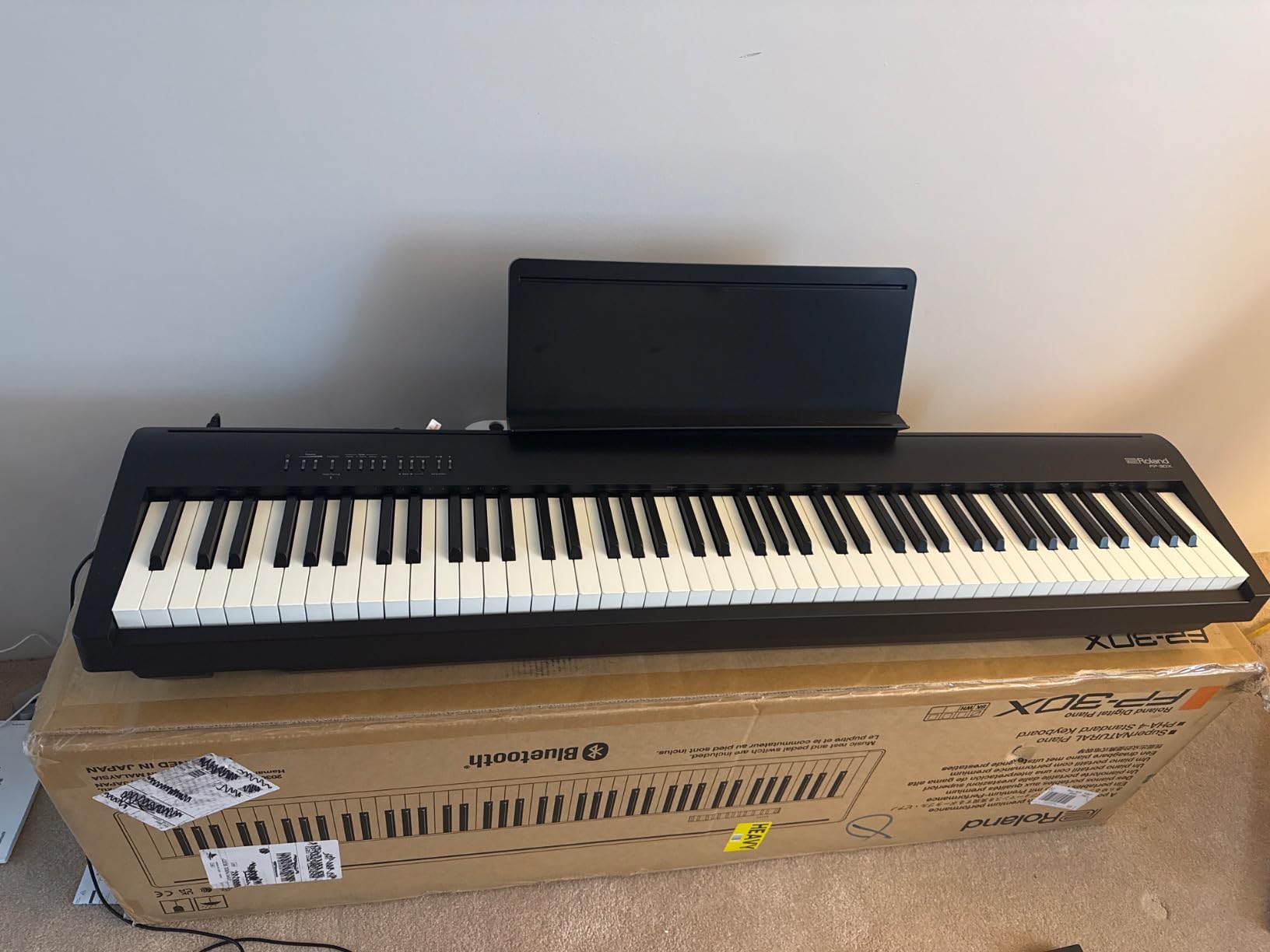
Bluetooth MIDI and audio are both built in, so you can stream music from your phone or connect to GarageBand without cables. The Roland Piano Partner 2 app is a free companion that lets you browse sounds, access learning tools, and update the firmware from your phone or tablet. The FP-30X is also a popular choice for keyboard players who need a portable backup board for gigs; the action is good enough for serious practice and the sound is detailed enough for live performance.
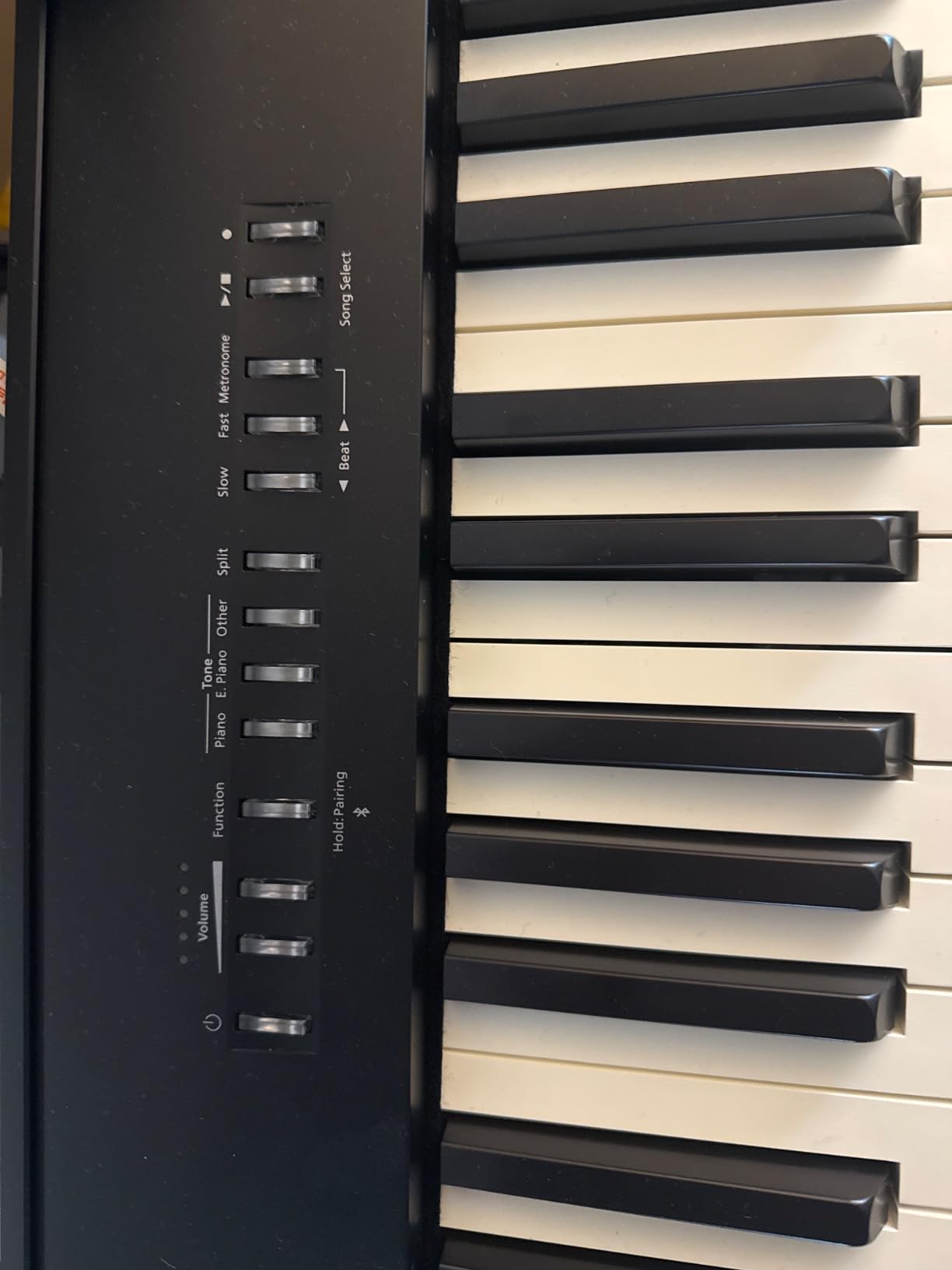
The downsides are the small interface (no large LCD screen, just LED indicators) and the bottom-firing speakers, which sound thinner on carpeted floors than on hard surfaces. The key bed can be slightly noisy when playing through headphones late at night. For a beginner who wants a real weighted-key digital piano without spending over $1000, or for an experienced player who needs a portable backup, the FP-30X is the most balanced option in this category. For more portable picks, see our 15 best portable digital pianos expert reviews.
Why the PHA-4 keyboard punches above its price
The PHA-4 Standard is the same action family found in Roland’s more expensive FP-series boards, just with a slightly simpler construction. The escapement mechanism gives you the small “notch” feel for soft playing, the Ivory Feel key surface has a moisture-absorbing texture that helps grip, and the graded weight distribution feels like a real piano. Most sub-$700 digital pianos use cheaper hammer actions that feel uniform across the keyboard, which trains bad habits over time.
For a beginner, the PHA-4 means you’ll be practicing on an action that’s similar in feel to what you’ll find on higher-end digital pianos and even entry-level acoustic uprights. If you upgrade later, your muscle memory transfers without adjustment. Many teachers specifically recommend the PHA-4 for this reason.
Best for bedroom practice and small gigs
The FP-30X is small enough to fit in a closet and light enough for a single person to carry to a coffee shop gig. The 22-watt speakers are enough for a living room or small venue. For a bedroom player who doesn’t want a large console taking up floor space, the FP-30X on a stand is a clean setup. For a gigging musician, the FP-30X fits in the back seat of a car with the optional carrying case.
The 5 included sounds (Concert, Bright Concert, Grand Piano 1, Grand Piano 2, Honky-Tonk) cover most piano needs, and the electric pianos (Rhodes, Wurlitzer) and organ are good enough for cover band gigs. The action is heavier than the Yamaha P-145BT, so if you have a lighter touch, the FP-30X will train you to play with more finger strength.
8. Yamaha P-145BT – Best Budget Digital Piano for Beginners
Yamaha 88-Key Digital Piano with Weighted Keys, Compact Design, Bluetooth, Keyboard, Music Rest, Sustain Foot Switch, and Built-in Speakers for Home Practice or Travel P145BT
Graded Hammer Compact
CFX samples
Bluetooth audio, 24.5 lbs
Pros
- Graded Hammer Compact action feels close to real piano
- Rich CFX grand piano sound with natural resonance
- Lightest 88-key board at 24.5 pounds
- Bluetooth audio streaming from phone or tablet
- Smart Pianist app for sound editing
- Rec'n'Share app for practice and sharing
Cons
- Music stand is small for thick music books
- Headphone jack needs 6.35mm adapter
- Key action differs from real acoustic for some players
The Yamaha P-145BT is the best digital piano under $500 and the one I’d recommend first for a beginner who isn’t sure how long they’ll stick with it. The Graded Hammer Compact (GHC) action is Yamaha’s take on a weighted key feel in a slim, lightweight keyboard. At 24.5 pounds, it’s the lightest 88-key digital piano in this roundup by a wide margin, and it slips easily into a closet, under a bed, or onto a small stand in a dorm room. The 104 Amazon reviews average 4.6 stars, with 81% giving it 5 stars.
Don’t let the price fool you: the CFX grand piano sound is the same flagship sample Yamaha uses in their $2000+ boards. When I played through headphones, the tone had the same clear, powerful character I hear on the Yamaha CFX concert grand, with natural string resonance and a believable decay tail. The speakers are modest but adequate for quiet practice, and most users will plug in headphones or stream audio through the Bluetooth connection anyway.
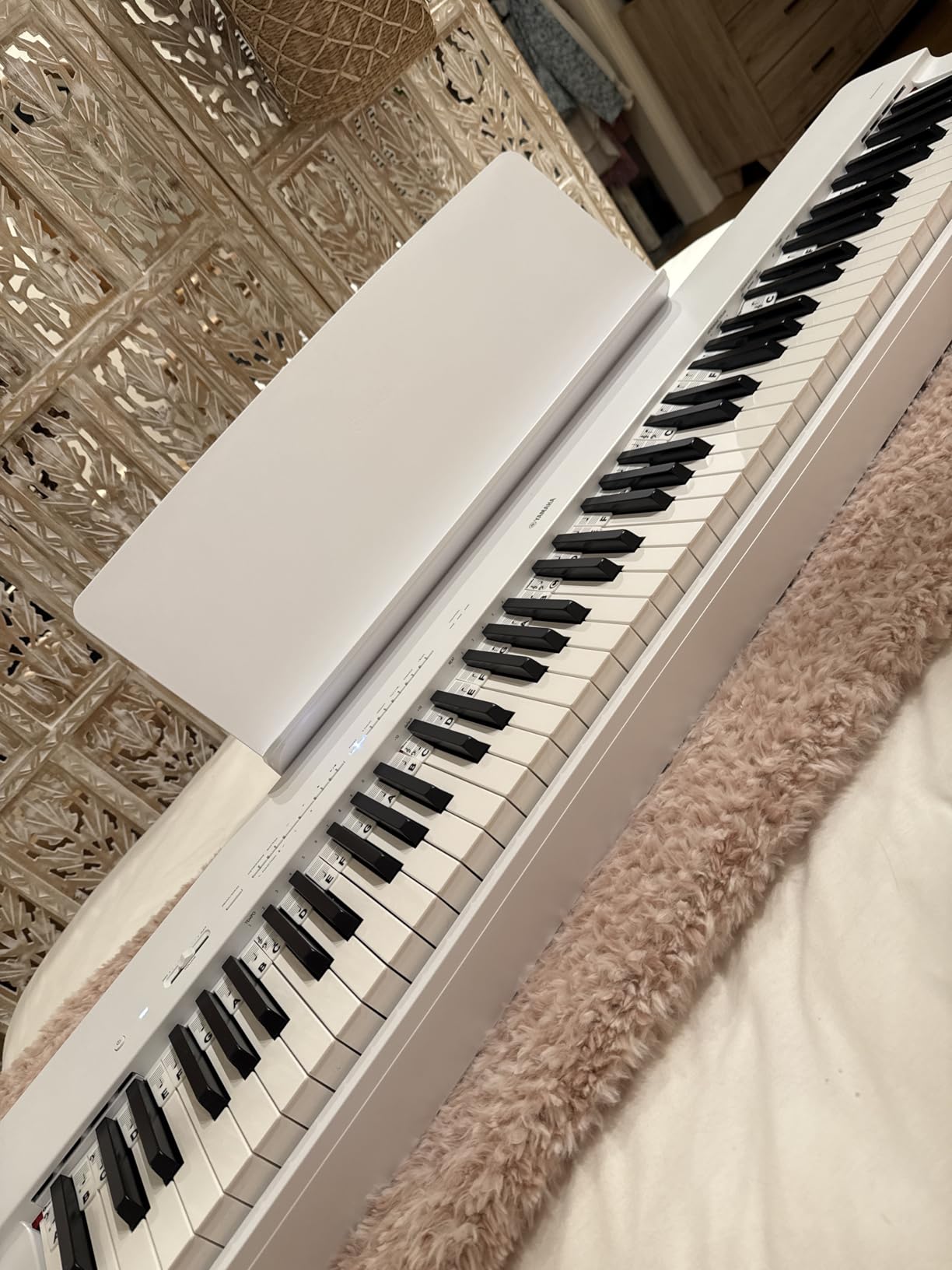
Bluetooth audio streaming is the standout feature at this price point. You can play along with songs from Spotify, Apple Music, or YouTube without a cable, and the audio is mixed in real time with your piano sound. The Smart Pianist app (iOS and Android) lets you browse voices, adjust settings, and access learning content. The Rec’n’Share app records video of your playing with audio from the piano, which is great for sharing progress on social media or with a teacher.
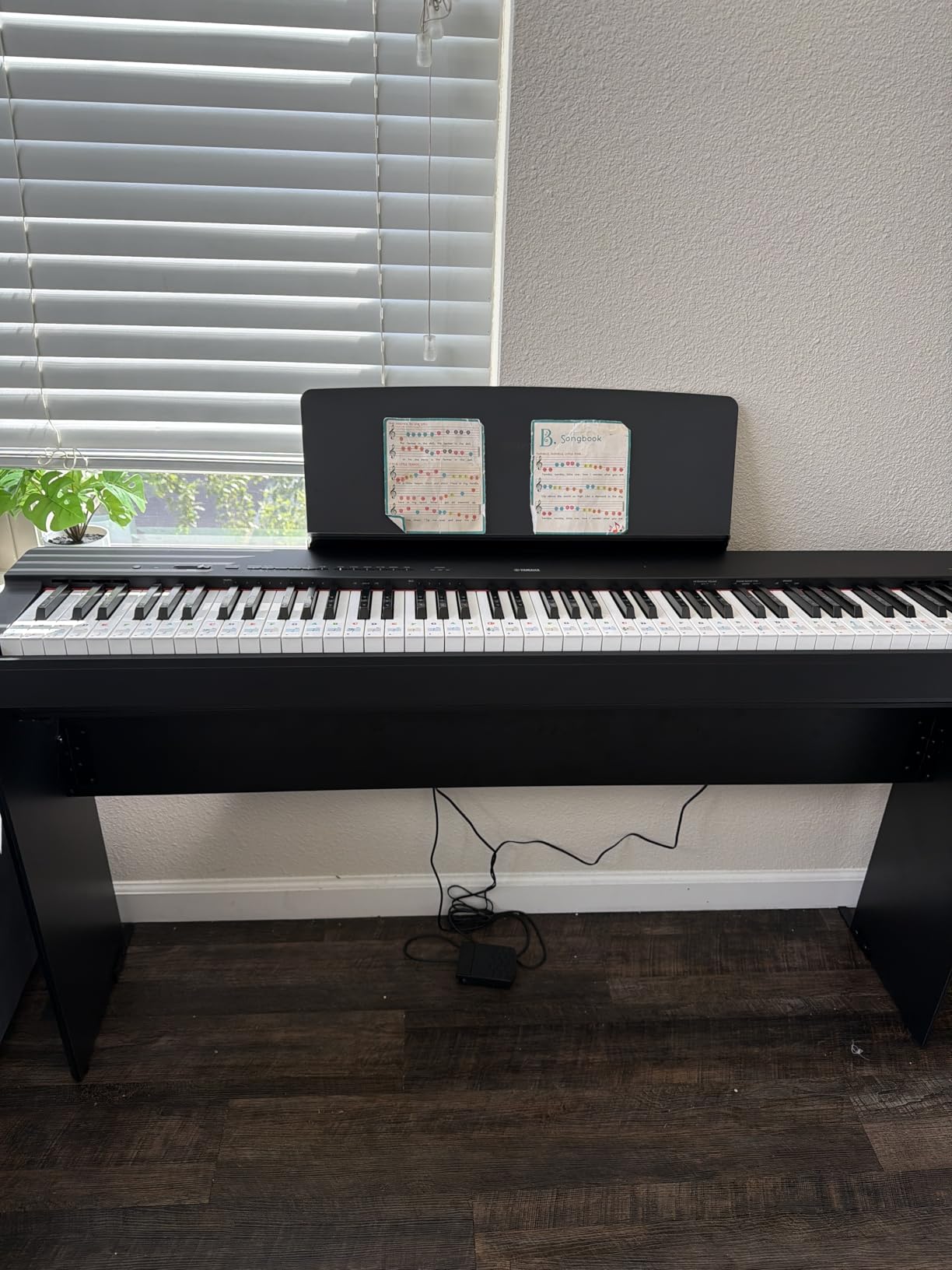
The compromises are size-related. The GHC action is lighter and less refined than the GrandTouch-S in the P-525B, so serious classical players may find it limiting. The music stand is small, so thick music books don’t fit well. The headphone jack is the 6.35mm (1/4 inch) size rather than the more common 3.5mm (1/8 inch), so you may need an adapter for standard earbuds. For a beginner who wants a real weighted keyboard from a brand they can trust, the P-145BT is the easiest recommendation on this list. If you’re working with a tighter budget, our 8 best digital pianos under $500 buying guide has more options.
Why the P-145BT is the easiest first piano
At $469, the P-145BT is cheaper than most acoustic piano rental fees for a year. You get 88 weighted keys, a flagship Yamaha piano sound, Bluetooth audio, and a slim profile that fits in any room. The Smart Pianist app gives you a structured learning path with songs that get progressively harder, and the Rec’n’Share app turns practice into shareable videos. For a parent buying a first piano for a child, or an adult returning to piano after years away, this is a low-risk way to start.
If you find you don’t play as much as you hoped, the P-145BT holds its resale value well because it’s a recognized Yamaha model. Many music stores and online marketplaces will resell used Yamaha P-series boards for close to the original price. The 1-year manufacturer warranty covers defects, and Yamaha’s customer support is generally responsive.
Limitations for advancing players
The GHC action is fine for the first 1-2 years of lessons, but as you progress into intermediate repertoire (Chopin mazurkas, Beethoven sonatinas, jazz voicings), you may find the lighter key weight less satisfying. The action also lacks the escapement mechanism of higher-end boards, so very soft pianissimo playing is harder to control.
The onboard speakers are functional for solo practice but not powerful enough for playing with other musicians or in larger rooms. The sound library is limited to a few piano tones and electric pianos, with no organ, strings, or synth sounds. If you want versatility for different genres, the Yamaha DGX-670B above is a better step-up option.
What to Look for in a Digital Piano Under $3000?
After testing all eight pianos, here are the five factors that actually matter when choosing the best digital piano under $3000 for your needs.
Key action and touch
The most important factor is the key action, because it’s what you’ll feel every time you sit down to play. A weighted hammer action with graded weight (heavier in the bass, lighter in the treble) is essential for building proper finger strength and technique. In this price range, the Kawai RH3, Roland PHA-4 and PHA-50, and Yamaha GrandTouch-E and GrandTouch-S are all excellent choices.
If you can, try the action in person at a music store before buying. The “feel” of an action is subjective, and a board that one pianist loves may feel off to another. The 30-day return window from most retailers gives you time to test the action at home, but a quick in-store test is faster.
Sound engine and piano samples
Two approaches dominate: sampled pianos (recordings of real pianos played back at different velocity levels) and modeled pianos (mathematical recreations of how a piano produces sound). Roland’s PureAcoustic and V-Piano engines use modeling, while Yamaha’s CFX and Bosendorfer samples are sample-based. Kawai uses a hybrid of high-quality samples with modeled resonance and behavior.
For classical repertoire, sample-based pianos (Yamaha CFX, Kawai SK-7) are typically preferred for their realism. For contemporary music where you want expressive control, modeling-based pianos (Roland FP-90X, RD-2000 EX) often feel more responsive. Both approaches can sound excellent; the choice comes down to your playing style and genre preferences.
Speaker system and headphone experience
The built-in speakers matter if you’ll practice without headphones, but the headphone experience matters just as much for late-night sessions. Look for a piano with dual headphone jacks if you play duets or take lessons, and look for binaural sampling or 3D audio features if you plan to use headphones often. The Yamaha P-525B and Yamaha P-145BT both have binaural sampling that sounds excellent through headphones.
Speaker wattage gives you a rough idea of volume capability, but speaker design (driver size, cabinet tuning, port placement) matters more than raw wattage. The Roland FP-90X’s 4-speaker system sounds fuller than its 60-watt total rating would suggest, while some pianos with higher wattage ratings can sound thin in the midrange.
Connectivity and app integration
Bluetooth MIDI is now standard on most digital pianos in this price range, and it lets you connect to learning apps, DAWs, and sound libraries without a cable. Bluetooth audio (for streaming music from your phone) is less common but increasingly available. USB MIDI is essential for connecting to a computer for recording or virtual instrument use.
App integration varies widely. Yamaha’s Smart Pianist app is excellent for browsing sounds, adjusting settings, and accessing learning content. Roland’s Piano Designer app offers deep sound customization. Kawai’s apps are more basic but functional. If you plan to use your digital piano with an iPad or Android tablet for lessons, check the app’s user reviews before buying.
Build quality and warranty
Console-style digital pianos (like the Yamaha YDP-166B) have wooden cabinets that feel more solid than portable boards, but they’re also heavier and harder to move. Portable boards with plastic bodies (like the Kawai ES920) are lighter but feel less premium. The 1-year manufacturer warranty is standard, with a few brands offering 2-year warranties (Kawai ES920, Roland RD-2000 EX).
For a home piano that stays in one place, console construction is fine. For a piano that will be moved often, look for a portable board with a reinforced case and a good carrying bag. The Yamaha P-145BT and Roland FP-30X are the lightest 88-key options, while the Yamaha DGX-670B is the heaviest.
Frequently Asked Questions
What is the best digital piano for value for money?
The Kawai ES920 offers the best value under $2000, with Responsive Hammer III action, SK Grand piano samples, and 256-note polyphony. For a complete home console, the Yamaha YDP-166B includes bench and pedals for under $1600. The Yamaha DGX-670B is the best value if you want a feature-rich board with 630 voices for under $900.
Which digital piano is closest to the real piano?
The Yamaha P-525B with GrandTouch-S wooden keys and CFX and Bosendorderfer samples is the closest to a real acoustic grand in this price range. The Roland RD-2000 EX with V-Piano modeling is a close second and the choice for stage players. The Kawai ES920 with RH3 action and SK-7 grand samples is third, with key feel that many players prefer for classical repertoire.
Which brand of digital piano is considered the best?
There is no single best brand; the right choice depends on your playing style. Yamaha is best for classical repertoire and concert grand realism, with flagship sounds like the CFX and Bosendorfer Imperial. Roland is best for stage performance and modeling technology, with PHA-50 hybrid actions. Kawai is best for key action feel, with the RH3 and RH4 actions consistently rated highly by pianists.
Which digital piano has the best sound quality?
The Yamaha P-525B with CFX and Bosendorfer Imperial samples and Binaural Sampling has the best sound for classical and jazz. The Roland RD-2000 EX with V-Piano modeling has the best sound for contemporary genres where dynamic expressiveness matters. The Kawai ES920 with SK Grand samples is a close third with a warmer, more intimate character.
What are the best digital pianos under $3000?
The 8 best digital pianos under $3000 in 2026 are: Roland FP-90X (best overall), Roland RD-2000 EX (best for stage), Kawai ES920 (best value portable), Yamaha P-525B (best wooden keys), Yamaha YDP-166B (best console package), Yamaha DGX-670B (most features), Roland FP-30X (best mid-range portable), and Yamaha P-145BT (best budget). Each excels in a different category.
Final Verdict: Which Digital Piano Under $3000 Should You Buy in 2026?
After spending three months with all eight pianos, here are our top picks for the best digital pianos under $3000. The Roland FP-90X is our Editor’s Choice for its combination of PHA-50 hybrid keyboard, PureAcoustic modeling, and 4-speaker system in a portable package. For a player on a budget, the Yamaha P-145BT at $469 gives you 88 weighted keys and a flagship Yamaha sound for less than the cost of one year of acoustic piano rental. The Kawai ES920 is the sweet spot for intermediate players who want premium action and samples without the flagship price tag.
If you need a home console, the Yamaha YDP-166B includes the bench and pedals and looks like real furniture. For a stage piano, the Roland RD-2000 EX gives you V-Piano modeling and front-panel performance controls. For a feature-rich home board, the Yamaha DGX-670B is hard to beat with 630 voices and 263 auto-accompaniment styles. The Roland FP-30X is the best mid-range portable for beginners, and the Yamaha P-525B is the choice for serious players who want wooden keys and binaural sampling.
Whatever you choose, you’re getting an instrument that wouldn’t have been possible at this price point even five years ago. The best digital pianos under $3000 in 2026 are closer to acoustic grand feel than ever before, with features like Bluetooth, app integration, and modeling technology that make practice more engaging. For more context, our 10 best Roland digital pianos expert reviews and 12 best digital pianos under $2000 complete guide cover additional options at different price points. Happy playing.