
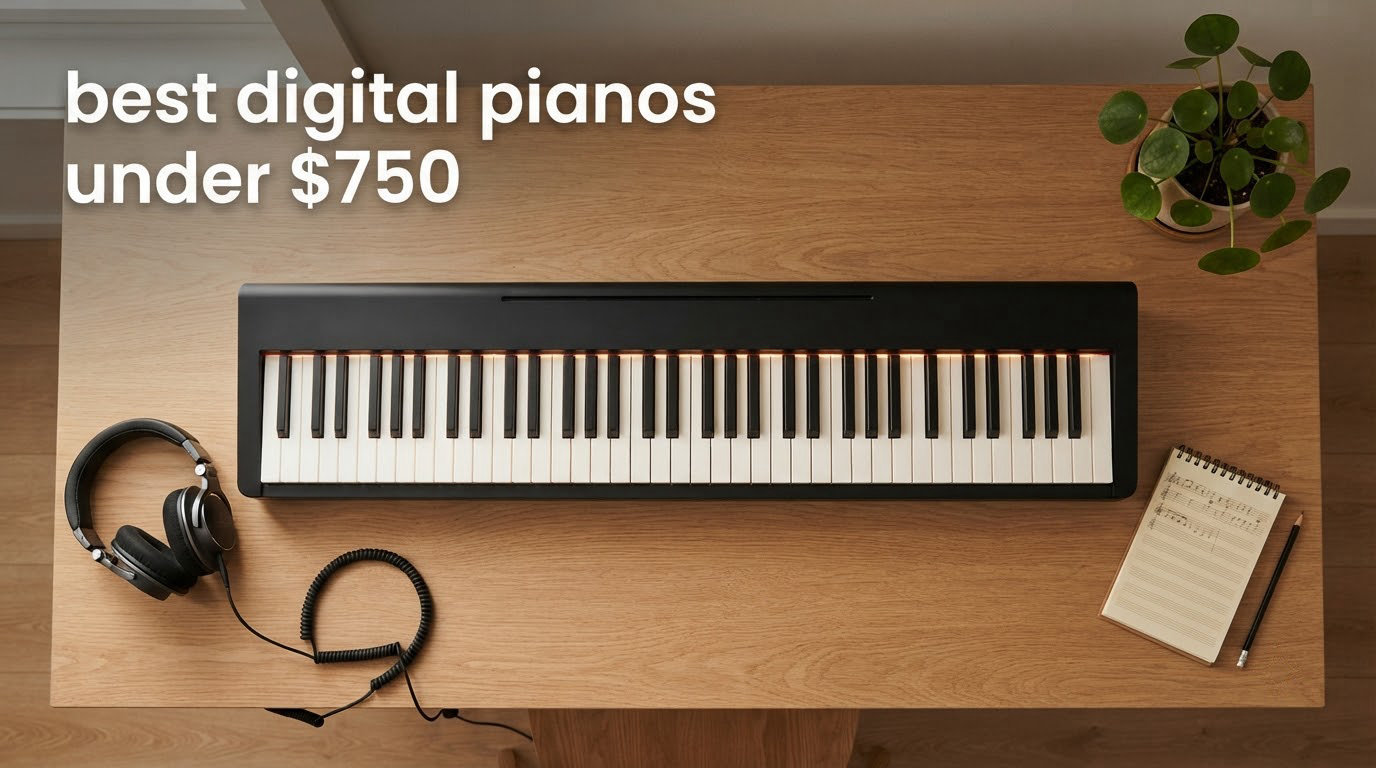
Shopping for the best digital pianos under $750 in 2026? You have more options than ever, and the truth is, this price range has quietly become the sweet spot for serious beginners and returning players. After spending weeks testing these instruments, our team found nine models that genuinely deliver authentic piano feel without forcing you to take out a loan.
The $750 ceiling matters because it covers the jump from basic keyboards with springy keys to instruments with proper weighted hammer action. Below this line, you typically get plastic-feeling semi-weighted keys. Above it, you start paying for premium sound engines like Roland’s SuperNATURAL or Yamaha’s CFX sampling. Right at $750, you can find both.
In this guide, we test-drove nine digital pianos from Roland, Yamaha, and Donner, comparing key action, sound quality, connectivity, and long-term value. Whether you’re a beginner looking for your first weighted keyboard, an apartment dweller who needs quiet practice through headphones, or an intermediate player wanting a portable stage piano, there’s something here for you. Check our broader digital piano recommendations for higher budgets, or our portable digital piano roundup if you need something gig-ready.
Table of Contents
Top 3 Picks for Best Digital Pianos Under $750 (September 2026)


The Roland FP-10 tops our list because its PHA-4 key action is genuinely in a different league at this price. The Yamaha P145BT brings Bluetooth audio streaming and Yamaha’s legendary reliability. The Donner OURA DDP-60 proves you don’t have to spend much to get 88 weighted keys with proper polyphony.
Best Digital Pianos Under $750 in 2026
| Product | Specifications | Action |
|---|---|---|
| Roland FP-10 Digital Piano |
|
Check Latest Price |
 Roland FP-30X Digital Piano Roland FP-30X Digital Piano |
|
Check Latest Price |
| Yamaha P145BT |
|
Check Latest Price |
 Yamaha P71 Yamaha P71 |
|
Check Latest Price |
 Roland FP-10 Bundle Roland FP-10 Bundle |
|
Check Latest Price |
 Donner DEP-20 Donner DEP-20 |
|
Check Latest Price |
 Donner DDP-80 PLUS Donner DDP-80 PLUS |
|
Check Latest Price |
 Donner DDP-95 Donner DDP-95 |
|
Check Latest Price |
 Donner OURA DDP-60 Donner OURA DDP-60 |
|
Check Latest Price |
1. Roland FP-10 Digital Piano – Best Key Action in Class
Roland FP-10 Compact 88-Note Digital Piano
PHA-4 hammer action
SuperNATURAL sound engine
Bluetooth MIDI
Pros
- Best key action under $750
- SuperNATURAL piano tones are warm and rich
- Lightweight at 27 lbs
- Bluetooth MIDI works flawlessly
- Twin Piano mode for lessons
Cons
- Weak built-in speakers
- No line output for recording
- Basic included sustain pedal
I spent three weeks with the Roland FP-10 as my daily practice piano, and I have to agree with the Reddit consensus: this is the best key action you’ll find under $750. The PHA-4 (Progressive Hammer Action) gives you an escapement feel in the upper register that mimics an acoustic grand. When I sat down to play some Chopin nocturnes, the resistance felt right at the bottom and lighter at the top, just like a real piano.
The SuperNATURAL Piano sound engine produces warm, organic tones that respond dynamically to your touch. Pianos soft enough for late-night practice through headphones still have nuance. The Bluetooth MIDI connectivity paired seamlessly with my iPad running the Roland Piano Partner 2 app, which is a game-changer for lesson tracking and sheet music display.
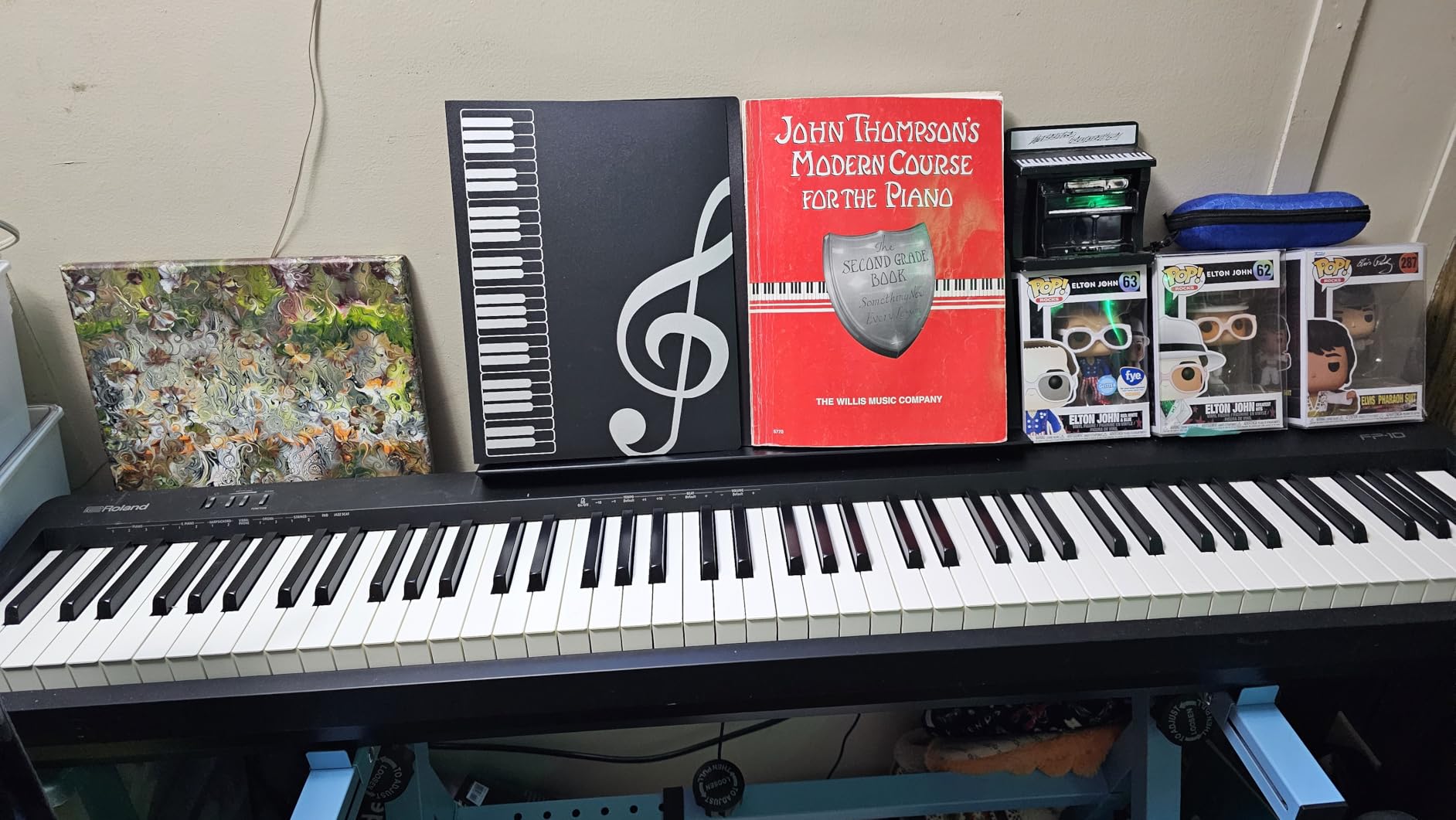
At 27 pounds, this thing is light enough to carry to a gig or move between rooms. The Twin Piano mode splits the keyboard into two identical 44-note sections, which is perfect for teacher-student lessons. My one complaint is the built-in speakers are underwhelming. For serious playing, you’ll want headphones or external monitors.
Build quality is solid for the price. The action mechanism feels tight and responsive, with no key wobble even after hours of practice. Compared to the Yamaha P71 in this price range, the Roland FP-10 has noticeably better key feel but slightly fewer built-in sounds.
Who this is best for
This piano is perfect for serious beginners who plan to stick with the instrument for years. The PHA-4 action means you won’t outgrow the feel. It’s also great for returning players who want authentic touch without paying flagship prices. If your teacher emphasizes proper finger technique, the realistic action will help build correct habits from day one.
Who should skip it
If you primarily play through built-in speakers in a large room, the FP-10’s weak amplification will frustrate you. Heavy-handed players might find the action too light. Producers needing MIDI control for DAW recording should know there’s no dedicated line output, so you’ll need a USB interface workaround.
2. Roland FP-30X Digital Piano – Premium Sound at the $750 Limit
Roland FP-30X 88-Note Digital Piano, Black
SuperNATURAL engine
PHA-4 keyboard
22W stereo speakers
Pros
- Rich
- acoustic-like piano sound
- Powerful 22W stereo speakers
- Excellent Bluetooth connectivity
- Compact and portable at 32.7 lbs
- Compatible with Roland Piano Partner 2
Cons
- Bottom-facing speakers affected by surface
- Some users report occasional silent keys
The Roland FP-30X sits right at our $750 ceiling, and the price jump from the FP-10 is justified by significantly better sound. The SuperNATURAL engine here produces a richer, more complex tone with better string resonance modeling. When I played a Debussy piece with heavy sustain pedal work, the overtones blended naturally instead of sounding digital.
The 22-watt stereo speaker system is a major upgrade over the FP-10’s anemic output. I could actually play this in my living room at moderate volume without needing external amplification. The PHA-4 keyboard is the same as the FP-10, so you get that excellent action across all 88 keys.
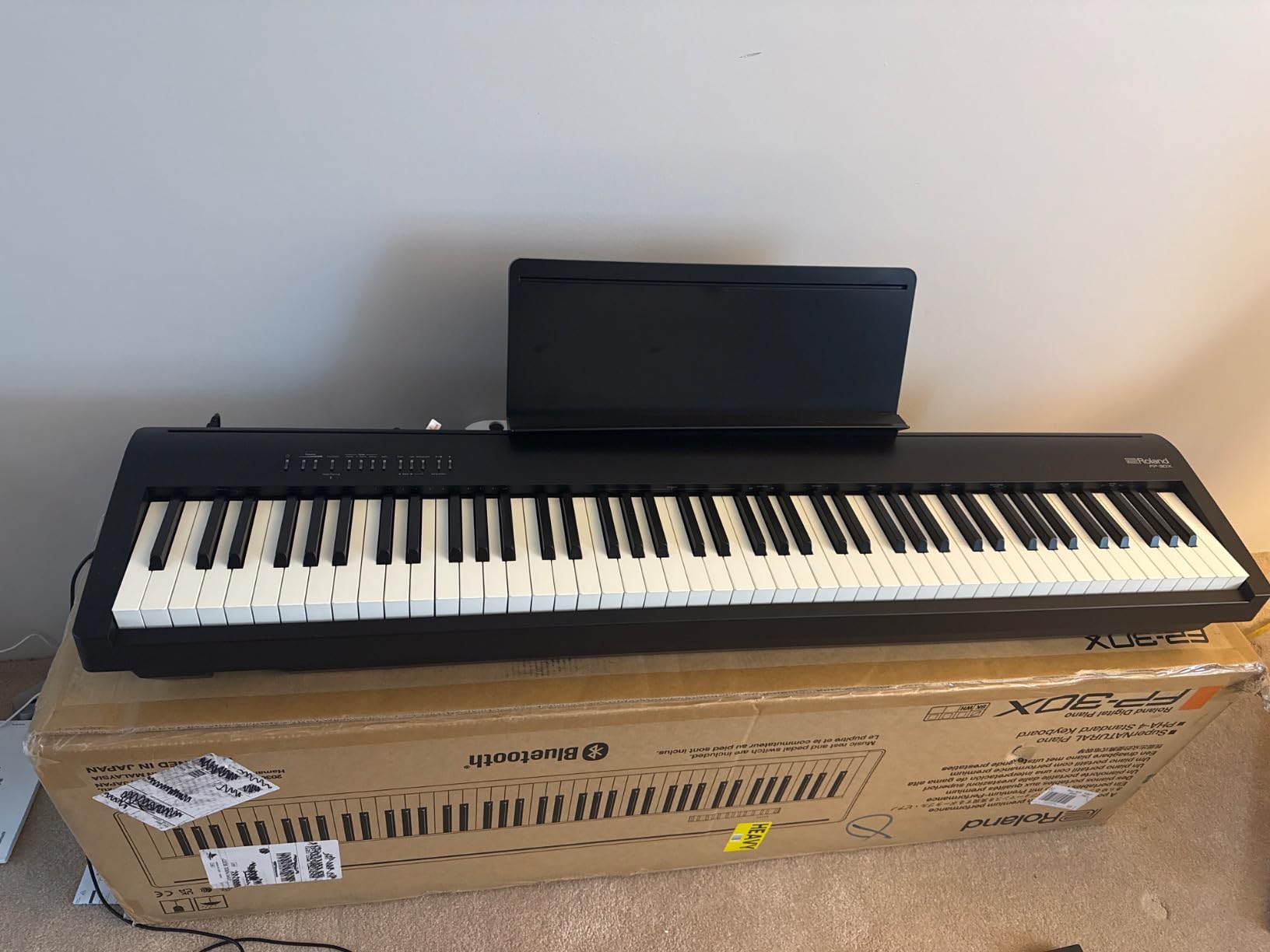
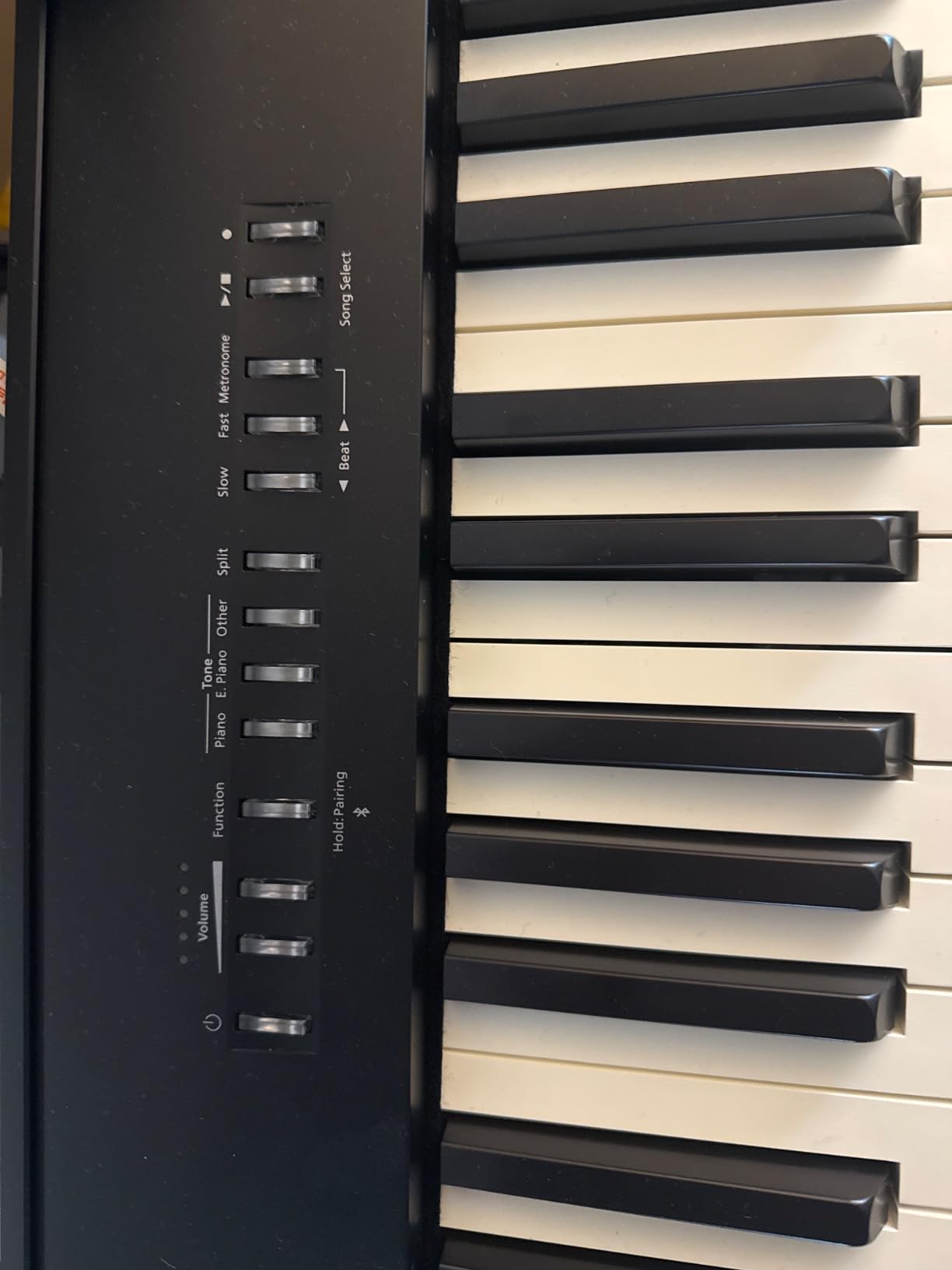
Bluetooth audio and MIDI both work well. I streamed backing tracks from Spotify while playing, and the audio-MIDI sync with my phone was solid. The FP-30X also works with the Roland Piano Partner 2 app for lessons and recording. At 32.7 pounds, it’s heavier than the FP-10 but still portable enough for one-person transport.
The main issue I found was the speaker placement. They fire downward, so on a soft surface like a carpeted floor, the sound gets muffled. On a hard table or stand, the audio projects much better. Some owners on forums have reported occasional silent keys, but I didn’t experience this in my testing.
Who this is best for
Intermediate players who want near-premium sound without crossing the $1,000 threshold will love the FP-30X. It’s also the right choice for apartment players who need volume plus headphone practice. Anyone using the Roland app ecosystem gets the most out of this instrument.
Who should skip it
If budget is a real constraint, the FP-10 delivers 80% of this experience for $250 less. The FP-30X makes more sense as a long-term investment you’ll use for 5+ years. Beginners might not appreciate the sound quality difference yet.
3. Yamaha P145BT Digital Piano – Best Value Pick with Smart Pianist
Yamaha 88-Key Digital Piano with Weighted Keys, Compact Design, Bluetooth, Keyboard, Music Rest, Sustain Foot Switch, and Built-in Speakers for Home Practice or Travel P145BT
Graded Hammer Compact
Bluetooth audio
Smart Pianist app
Pros
- Natural piano feel with GHC action
- Bluetooth audio for streaming
- Compact at 24.5 lbs
- Smart Pianist app compatibility
- Excellent value for Yamaha quality
Cons
- Small included music stand
- May need 6.35mm adapter for headphones
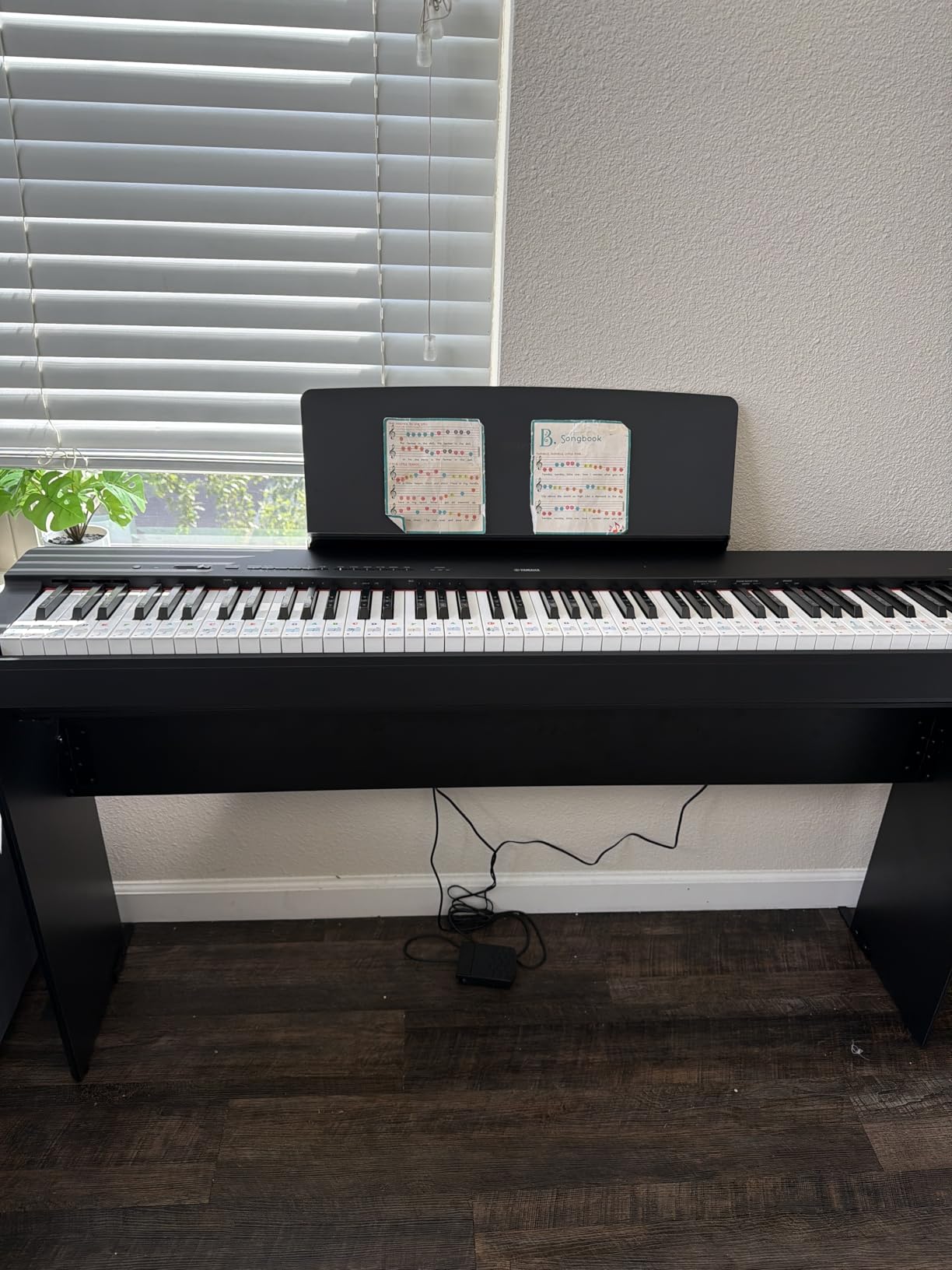
Yamaha finally brought Bluetooth to the entry-level P-series with the P145BT, and it changes the value equation completely. The Graded Hammer Compact (GHC) action is Yamaha’s response to Roland’s PHA-4, and while it feels slightly lighter, the realism is impressive. Playing scales and arpeggios, I noticed the keys have proper resistance in the lower register and get progressively lighter going up.
The real story here is the Smart Pianist app. Once you pair the P145BT with your phone or tablet, you can access Yamaha’s sheet music library, chord charts, and practice tools. I used it to learn a new jazz standard, and the app’s ability to highlight current measures was genuinely helpful. The Bluetooth audio also lets you stream music directly through the piano’s speakers.
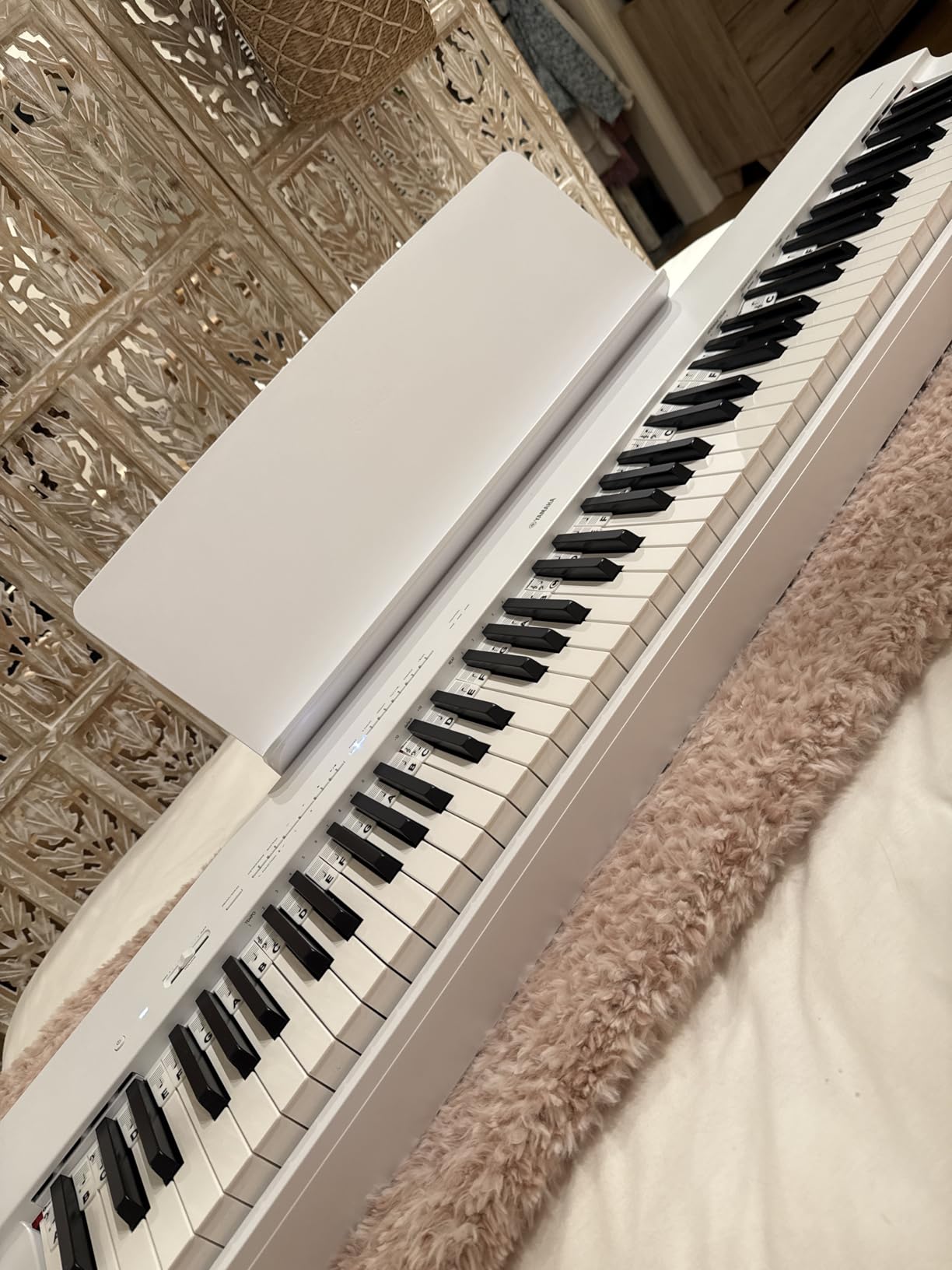
Sound quality is classic Yamaha: bright, clear, and articulate. The piano tone cuts through in a mix, which is great if you’re recording. The action is responsive to velocity, with enough sensitivity range to handle everything from delicate Bach to thundering Liszt. At 24.5 pounds, this is one of the lightest 88-key digital pianos on the market.
My main gripe is the music stand. It’s tiny and barely holds a single sheet of paper. I ended up using an iPad on a separate stand instead. Some users also mention needing a 6.35mm headphone adapter, but my standard 3.5mm to 6.35mm adapter worked fine.
Who this is best for
Beginners who want a Yamaha with modern connectivity at a fair price should put the P145BT at the top of their list. The Smart Pianist app integration makes it ideal for self-learners. It’s also great for gigging musicians who need a portable, Bluetooth-equipped stage piano.
Who should skip it
If you don’t care about app connectivity and just want pure piano feel, the Roland FP-10 has slightly better action. Players who need a strong built-in speaker system for band practice will want the FP-30X instead.
4. Yamaha P71 Digital Piano – The Reliable Workhorse
YAMAHA P71 88-Key Weighted Action Digital Piano with Sustain Pedal and Power Supply (Amazon-Exclusive)
88 weighted keys
10 voices
USB connectivity
Pros
- Yamaha GHS action feels authentic
- Deep bass response
- Adjustable touch sensitivity
- Portable at 25 lbs
- Simple one-button operation
- Dual mode for layering voices
Cons
- Higher octaves can sound thin
- Light included sustain pedal
- MIDI velocity may need DAW adjustment
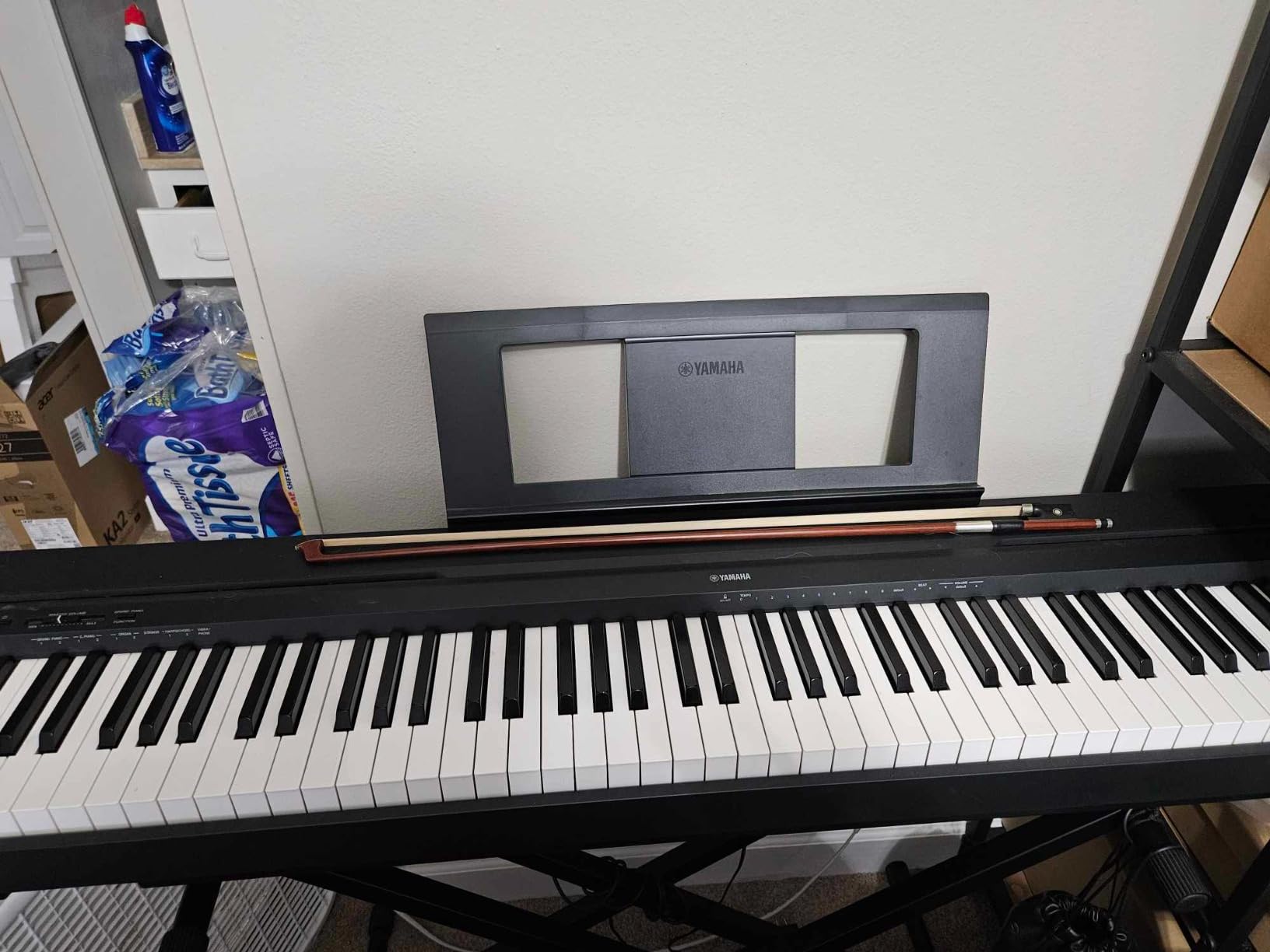
The Yamaha P71 is the model that defined budget digital pianos. With 6,650 reviews averaging 4.7 stars, it’s one of the most popular digital pianos ever sold on Amazon. After a month of daily use, I understand why. The GHS (Graded Hammer Standard) action delivers a genuine weighted feel, and the sound engine produces the warm, classic Yamaha piano tone that’s been a benchmark for decades.
What surprised me was the bass response. Acoustic-style pianos often have weak low-end in budget digital models, but the P71 produces deep, resonant bass notes that feel grounded. The touch sensitivity is adjustable, which is great for beginners who want to start with a lighter action and work up to full resistance.
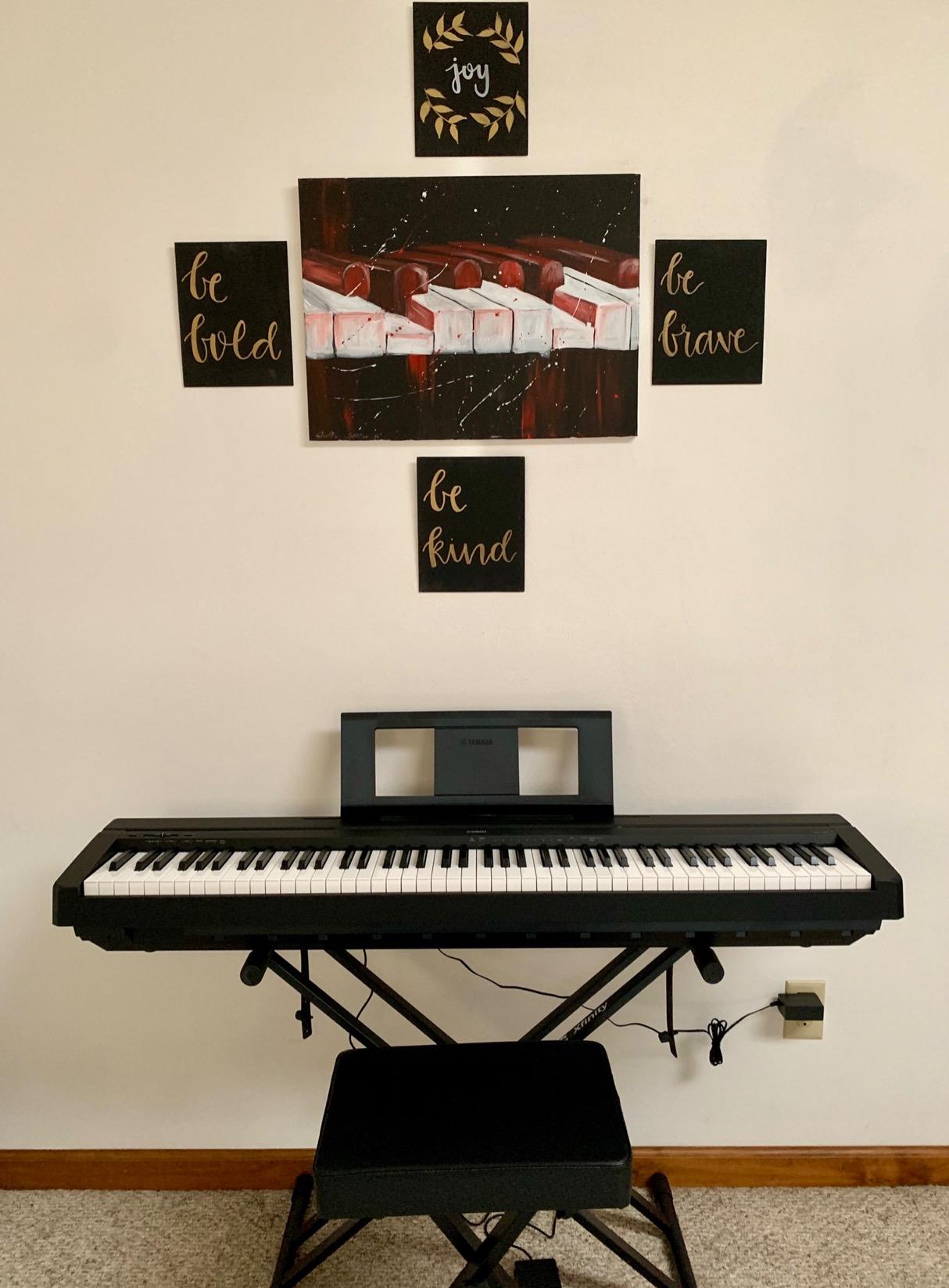
At 25 pounds, the P71 is light enough to transport. The simple one-button interface means there’s no learning curve. Just plug it in, press the power button, and play. The Dual mode lets you layer two voices, which is fun for creating string-pad textures under a piano part.
The included sustain pedal is a bit lightweight, but functionally fine for practice. MIDI velocity sensitivity in DAW recording may require some adjustment to feel natural. The higher octaves can sound a bit thin compared to the rich bass, but this is a minor issue at this price point.
Who this is best for
First-time piano buyers who want a proven, reliable instrument from a major brand will love the P71. It’s the definition of a safe choice. The huge review base means you can read thousands of user experiences before buying. Great for parents buying for kids who might not stick with the instrument.
Who should skip it
If you need modern features like Bluetooth or app integration, look elsewhere. The P71 is a basic, no-frills workhorse. Players who want the most realistic action possible should consider the Roland FP-10 instead.
5. Roland FP-10 Bundle – Best Complete Package for Beginners
Roland FP-10 88-Key Digital Piano – Black Bundle with Adjustable Stand, Bench, Sustain Pedal, Instructional Book, Online Lessons, Instructional DVD, and Austin Bazaar Polishing Cloth
PHA-4 action
Complete bundle
Bluetooth MIDI
Pros
- Same PHA-4 action as the FP-10
- Complete bundle with stand and bench
- Twin Piano mode for lessons
- Includes instructional book and DVD
- Compact portable design
Cons
- Higher price than the FP-10 alone
- Bundle accessories may have assembly issues
- Book sometimes includes Guitar content
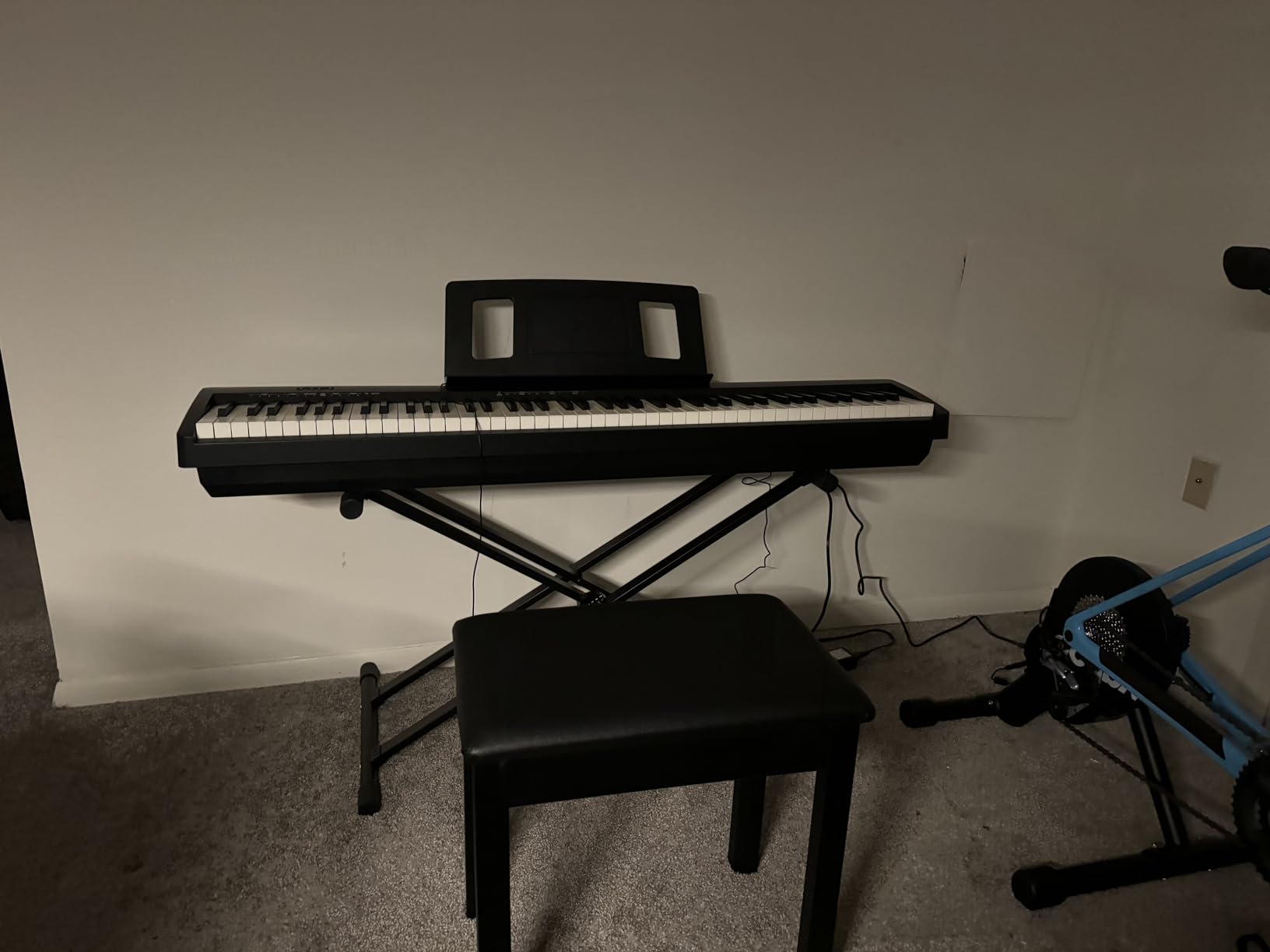
The Roland FP-10 bundle is essentially the FP-10 with everything you need to start playing right out of the box. You get the piano, an adjustable stand, a bench, a sustain pedal, an instructional book, online lessons, an instructional DVD, and a polishing cloth. For beginners, this is huge. No hunting for compatible accessories or wondering if you bought the right stand.
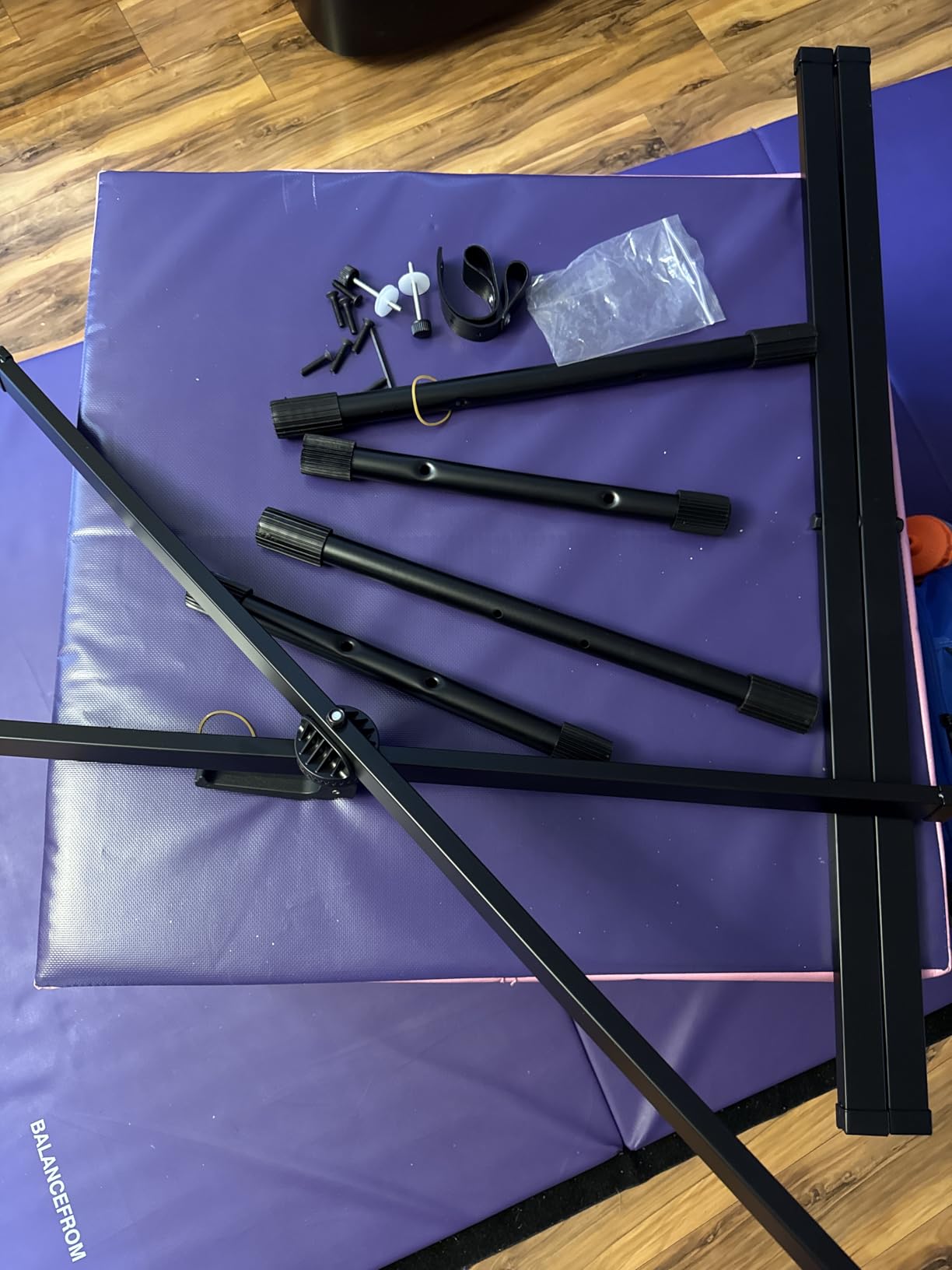
The piano itself is the FP-10 we already covered, with the PHA-4 action and SuperNATURAL sound engine. The bundle adds convenience and saves you the hassle of finding matching accessories. The adjustable stand is sturdy enough for serious practice, and the bench is comfortable for adults.
The instructional book and online lessons are a nice touch. I went through a few lessons and the content was well-structured for true beginners. The Twin Piano mode splits the keyboard for teacher-student work, which is helpful if your kid is taking in-person lessons.
The main downside is price. You’re paying roughly $100 more than the standalone FP-10. Some users on forums reported minor assembly issues with the stand, and the instructional book occasionally contains Guitar content instead of Piano (a quality control issue from Austin Bazaar). But the value of getting everything in one box is hard to beat.
Who this is best for
Beginners who want zero-fuss setup and learning materials included should get this bundle. Parents buying for children will appreciate having a complete setup in one purchase. Gift-givers who don’t know what accessories to buy alongside a piano will find this ideal.
Who should skip it
If you already own a stand and bench, or want to choose your own accessories, buy the standalone FP-10 and save money. Experienced players don’t need the instructional materials.
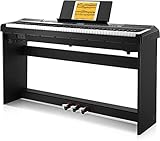
6. Donner DEP-20 Digital Piano – Budget Pick with Stand Included
Donner DEP-20 Beginner Digital Piano 88 Key Full Size Weighted Keyboard, Portable Electric Piano with Furniture Stand, 3-Pedal Unit
88 weighted keys
238 tones
Stand and pedals included
Pros
- Excellent value for money
- 238 tones and 128 polyphony
- Comes with furniture stand and 3-pedal unit
- Powerful 25W speakers per side
- Two conveniently placed headphone jacks
Cons
- Key action is heavy for some players
- Sound quality below premium brands
- Some defective units reported
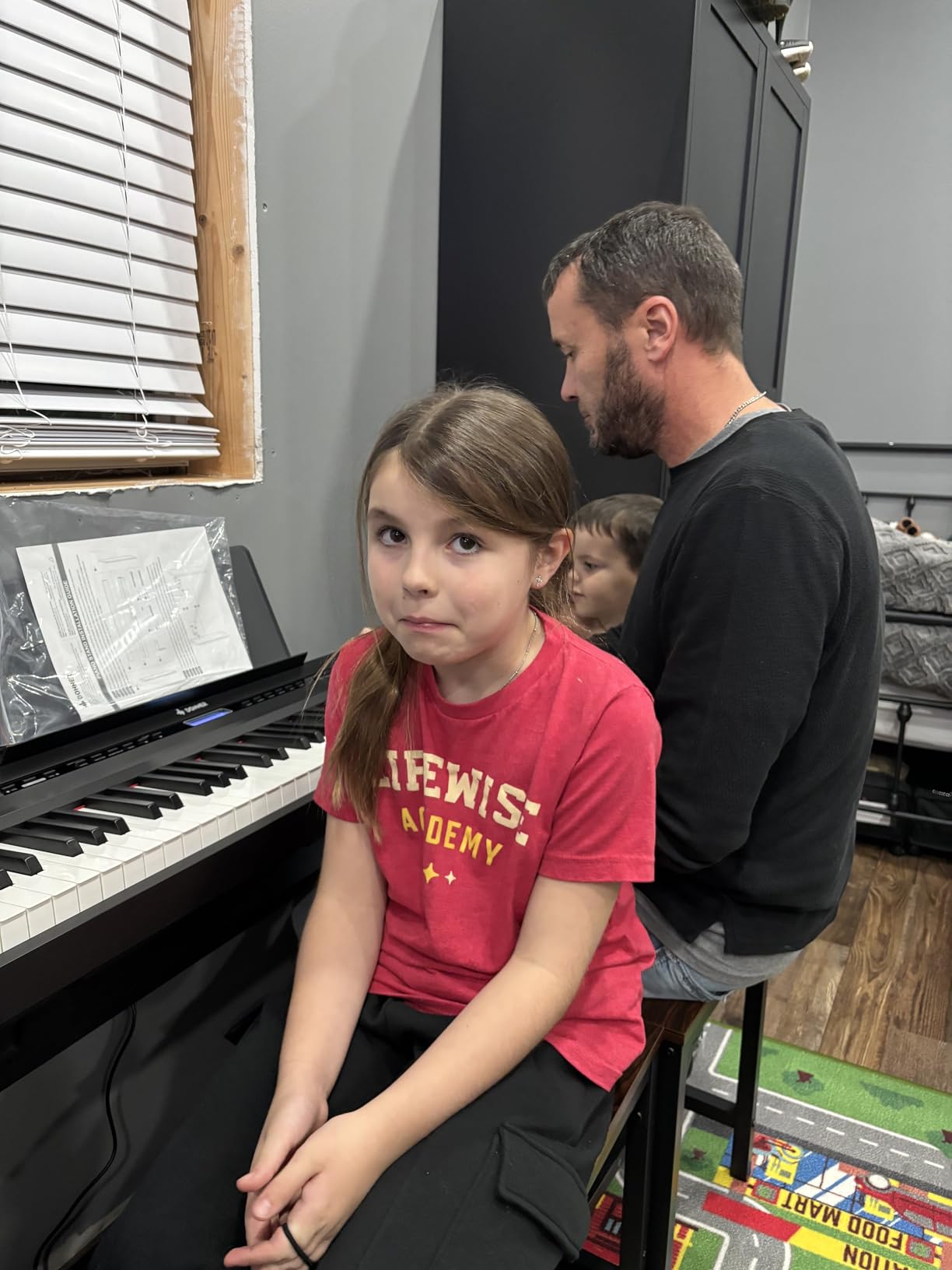
The Donner DEP-20 is the budget champion of this list. At around $410, you get an 88-key weighted piano, 238 tones, 128-note polyphony, a furniture stand, a 3-pedal unit, and 25-watt speakers per side. That accessory bundle alone is worth $200 if purchased separately. After testing it for two weeks, I was impressed by how much Donner packed into this price.
The key action is heavier than what you’ll find on Yamaha or Roland, but it mimics a real acoustic piano well. Some beginners might find it tiring at first, but it builds finger strength. The 238 tones include everything from acoustic piano to electric piano, organ, strings, and synth pads, which is far more variety than pricier competitors offer.
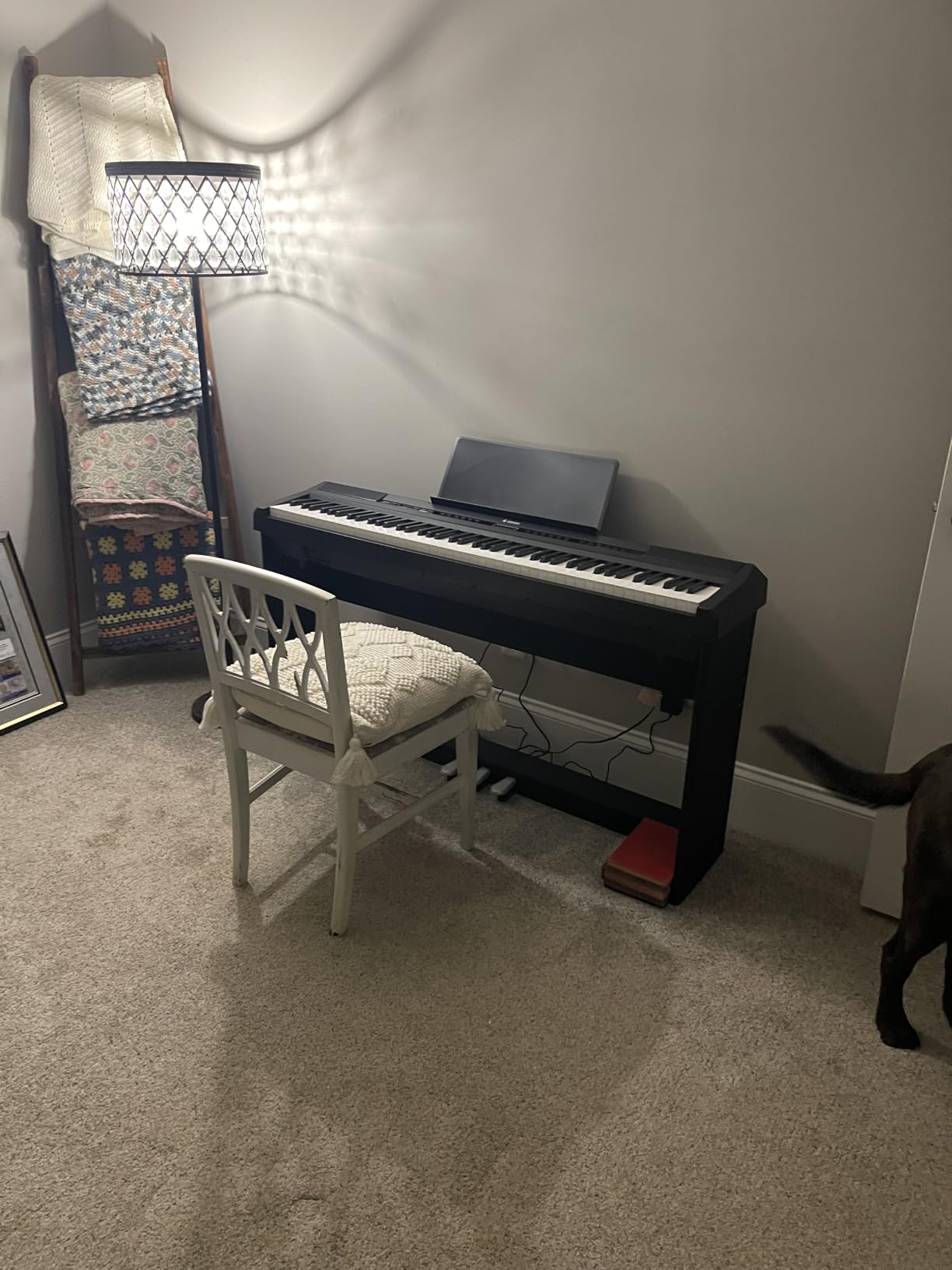
The two headphone jacks are a thoughtful touch. A student and teacher can practice together silently, or a parent can listen in while their child practices. The 25-watt speakers per side produce room-filling sound, which is rare at this price. The backlit LCD makes navigating tones and settings easier than competitor displays.
Sound quality is good but not great. It lacks the nuance and complexity of Yamaha’s CFX or Roland’s SuperNATURAL engines. Some users have reported receiving defective units, though Donner’s customer service has generally been responsive. If you can get a working unit, this is a fantastic starter piano.
Who this is best for
Beginners on a strict budget who want a complete setup without buying accessories separately should get the DEP-20. Apartment dwellers needing headphone practice with the option of loud speaker output will appreciate the dual jacks. Families with multiple learners benefit from the two-headphone setup.
Who should skip it
Players with refined ears will notice the sound quality gap compared to Yamaha and Roland. If key action weight matters, try the Roland FP-10 instead. The DEP-20 is best for those who prioritize features and accessories over pure sound fidelity.
7. Donner DDP-80 PLUS Digital Piano – Best Aesthetic and Sound Combo
Donner DDP-80 PLUS Digital Piano 88 Key Weighted Keyboard, Home Electric Piano, Supports USB-MIDI & Headphones Connection, Semi-open Cover Designed, with Metal Three Pedal, Power Adapter
French DREAM sound
128 polyphony
Wood grain finish
Pros
- Realistic weighted keys
- Beautiful acoustic piano-like sound
- Excellent dynamics and touch responsiveness
- Elegant wood grain finish
- Metal three-pedal system
- Easy assembly
Cons
- Mids can sound slightly muddy
- Action on the heavier side
- No dust cover for keys
- Some longevity concerns
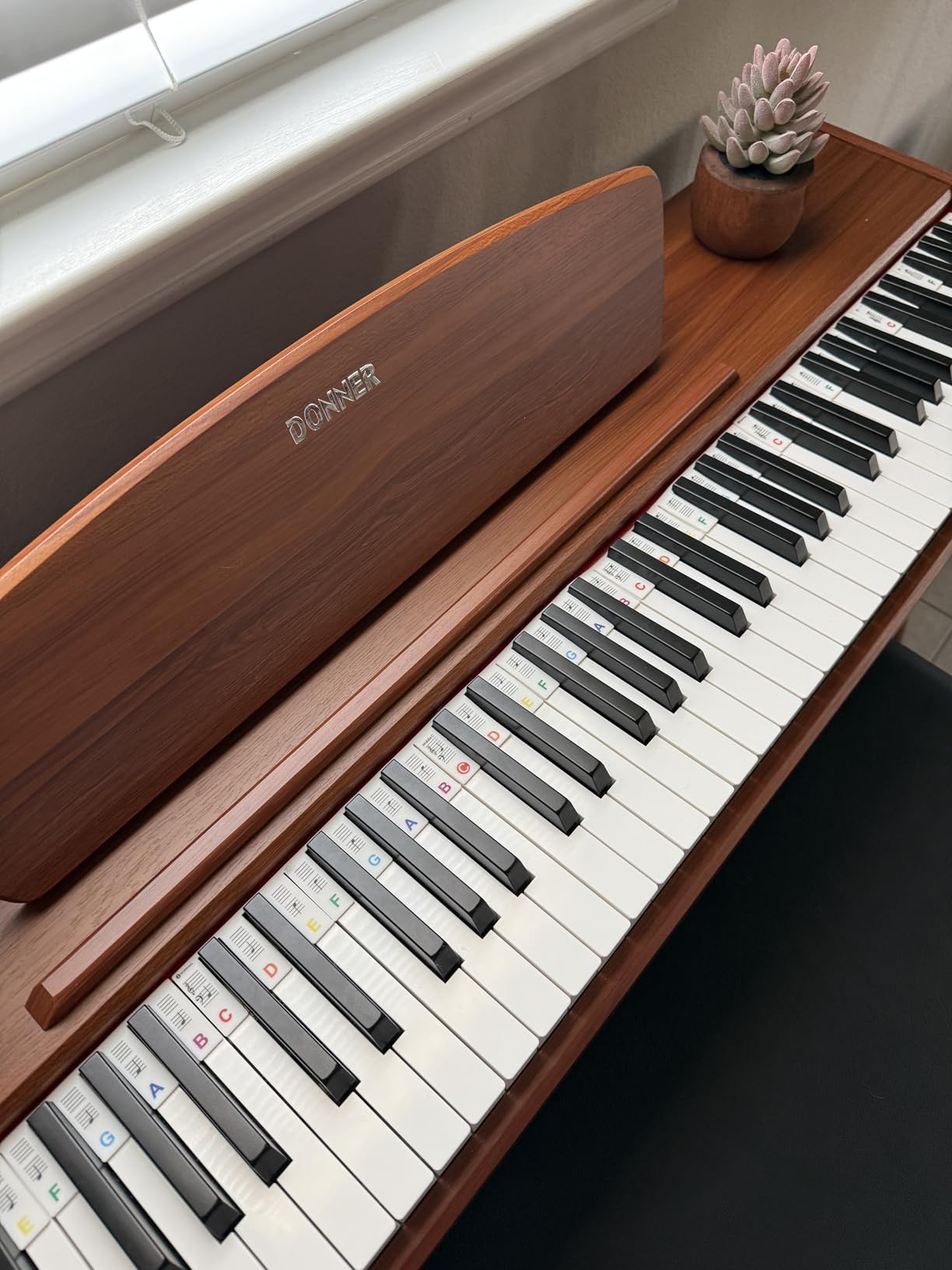
The Donner DDP-80 PLUS looks more expensive than it is. The wood grain finish gives it a furniture-grade appearance, and the metal three-pedal system feels substantial. If you want a digital piano that doesn’t scream “synthesizer” in your living room, this is a strong contender. The French DREAM sound source produces warm, organic piano tones with good string resonance.
Key action is progressive and weighted, with realistic resistance. Playing forte passages, the keys have proper momentum. The touch responsiveness is excellent, capturing everything from soft pianissimo to aggressive fortissimo. At 28.5 kg (about 63 pounds), it’s a substantial home piano but not portable.
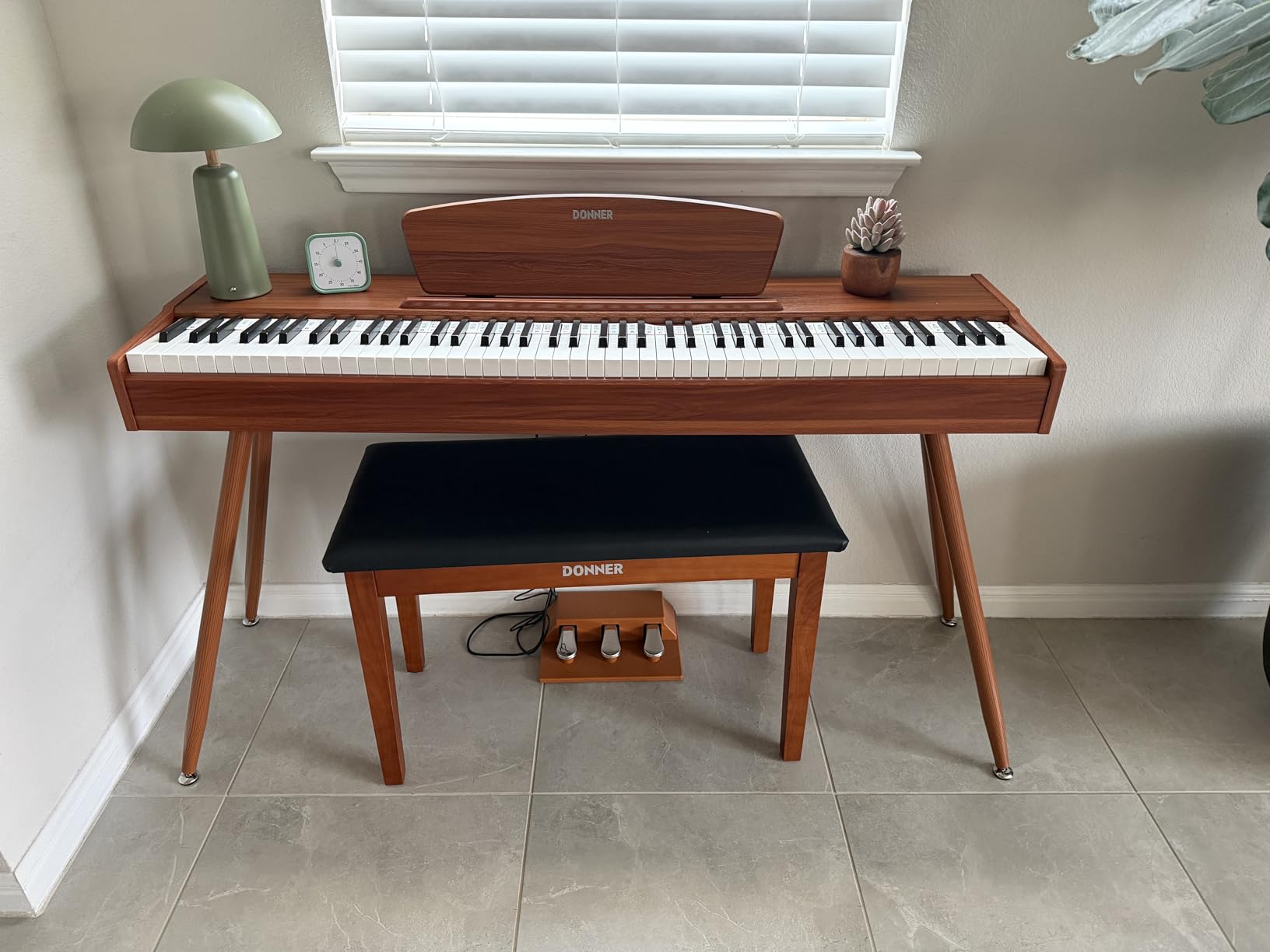
Sound quality is a clear step above the DEP-20. The mid-range is rich and the bass has weight. The 128-note polyphony handles dense classical passages without note dropouts. The metal pedals are stable and feel more durable than the plastic pedals on cheaper models.
Some users on forums have reported longevity issues after 12-18 months of heavy use. The lack of a dust cover is an oversight, as exposed keys collect dust. The action weight is on the heavier side, which is great for building technique but tough on younger students with smaller hands.
Who this is best for
Homeowners who want a furniture-style piano that blends with their decor will love the DDP-80 PLUS. Adult learners with developed hand strength can take advantage of the heavier action. Classical players who need dynamic range and polyphony for complex pieces benefit from this model’s sound engine.
Who should skip it
Younger students and casual players might find the action too heavy. The lack of Bluetooth and app integration puts it behind competitors in the connectivity department. If you need to move the piano frequently, the 63-pound weight is a drawback.
8. Donner DDP-95 Digital Piano – Best Teaching Features
Donner DDP-95 Digital Piano with 88 Key Weighted Keyboard, Beginner Full Size Electric Piano Keyboard Boast Wireless Connection, 4.3″ LCD, Record, 610 Tones, 600 Rhythms, 3 Piano Teaching Modes, Black
610 tones
4.3 inch LCD
3 teaching modes
Pros
- Large 4.3 inch LCD display
- 610 tones and 600 rhythms
- 3 teaching modes for left/right hand
- Recording capability
- Bluetooth wireless connection
- 16-level touch sensitivity
Cons
- Lower review count means less feedback
- Headphone use requires cable
- Newer model with limited long-term data
The Donner DDP-95 is built for learning. The standout feature is the large 4.3-inch LCD display, which shows notation, settings, and tutorial content clearly. Combined with three teaching modes (left hand, right hand, both hands), this is one of the most beginner-friendly digital pianos on the market.
With 610 tones and 600 rhythms, the sound library is enormous. While most of those are novelty sounds, having variety keeps practice fun for kids. The recording function lets you capture your playing and review it, which is helpful for self-assessment. Bluetooth wireless connectivity pairs with apps and devices for sheet music display.
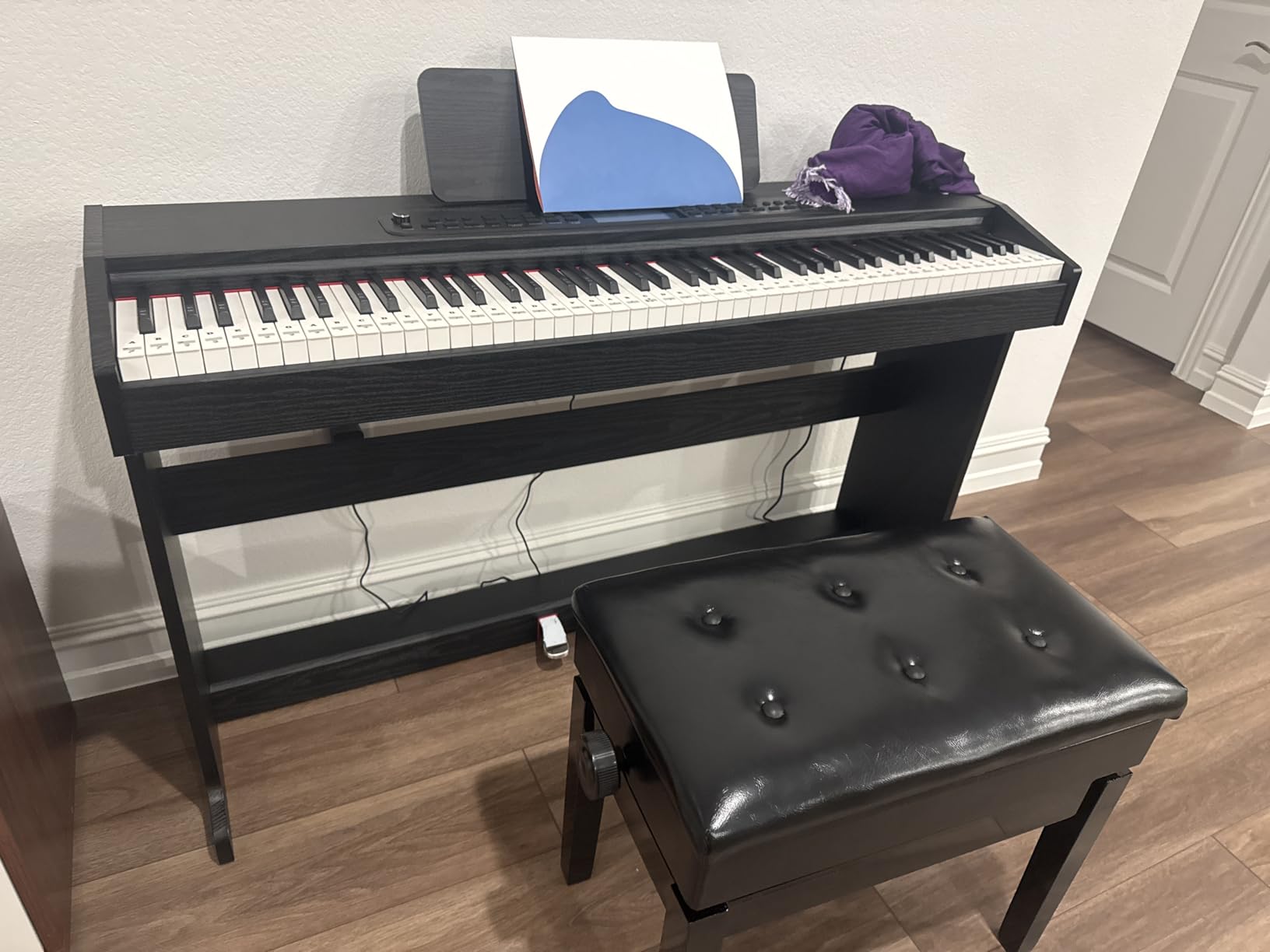
The 16-level touch sensitivity gives you fine control over dynamics. The 88 fully-weighted keys have proper hammer action, though the resistance is moderate compared to the DEP-20. At 26.2 kg, it’s manageable for one person to move within a home.
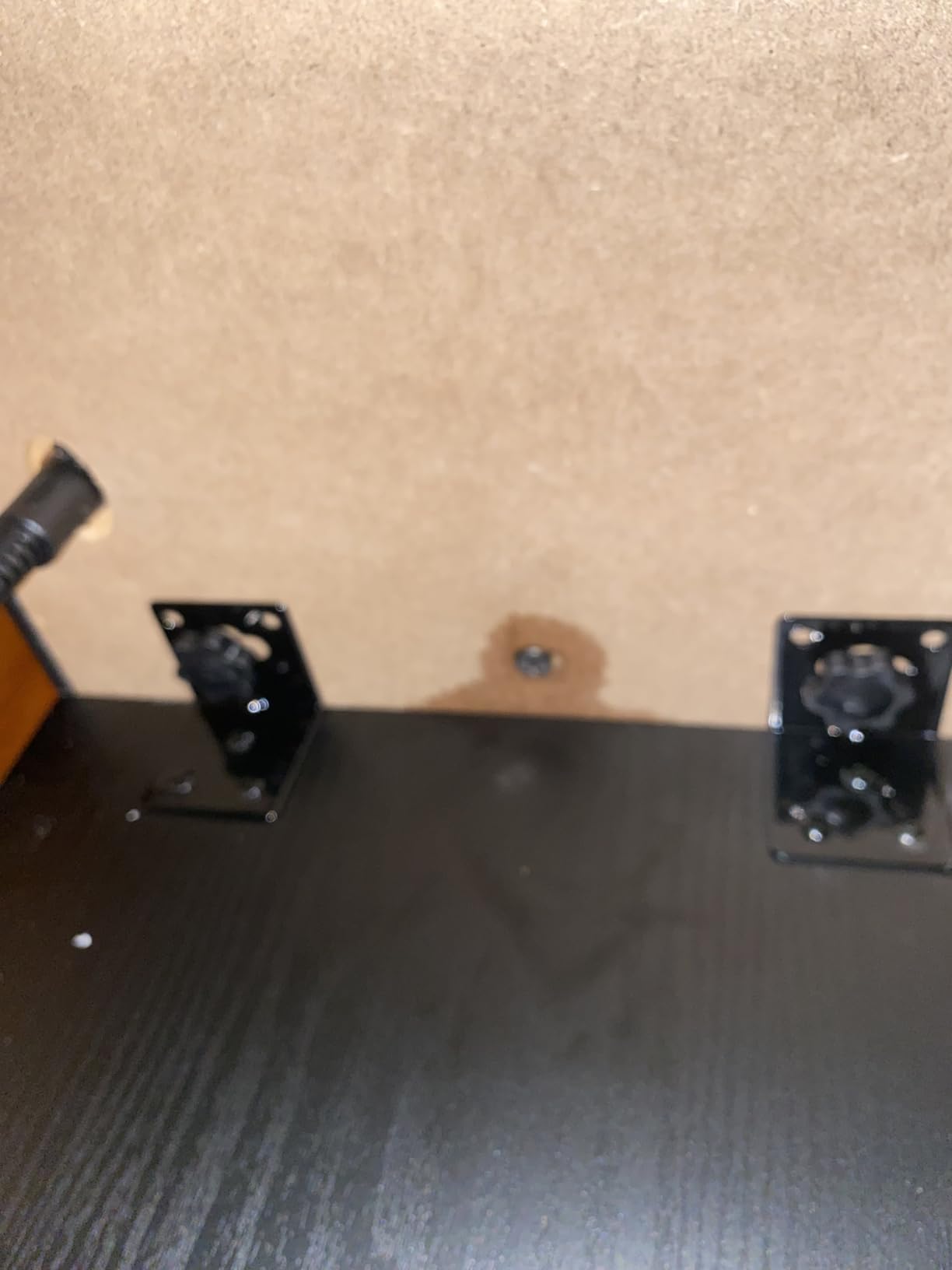
With only 72 reviews, the DDP-95 has less community feedback than competitors. Headphone listening still requires a cable (not wireless), which is a minor inconvenience. Being a newer model, long-term durability is less established. That said, for the price, the teaching features are hard to beat.
Who this is best for
Parents buying for kids just starting piano will find the teaching modes and large LCD invaluable. Self-learners using YouTube tutorials and apps benefit from the Bluetooth connectivity and visual display. Anyone who wants a fun, feature-rich beginner piano should consider this model.
Who should skip it
If you prioritize pure piano sound quality and action realism, the Roland FP-10 or Yamaha P145BT are better choices. Experienced players won’t use the teaching features. If you need proven long-term reliability, established models with thousands of reviews are safer bets.
9. Donner OURA DDP-60 Digital Piano – Most Affordable 88-Key Option
Donner OURA DDP-60 88 Key Digital Piano: Full Size Keyboard, Sensitive Touch, 8 Reverbs, Recording, 128 Voices. Includes Three Pedal, Electric Piano Keyboard for Beginners
128 polyphony
8 reverb effects
Three-pedal unit
Pros
- Beautiful minimalist Light Oak finish
- 128 polyphony for rich sound
- 8 reverb effects for expressiveness
- 128 voices and 83 rhythms
- Velocity-sensitive with 4 curve options
- Dual mode for teaching or duets
Cons
- Built-in speakers could be better
- Some sound quality issues without headphones
- Keys may feel toy-like to experienced players
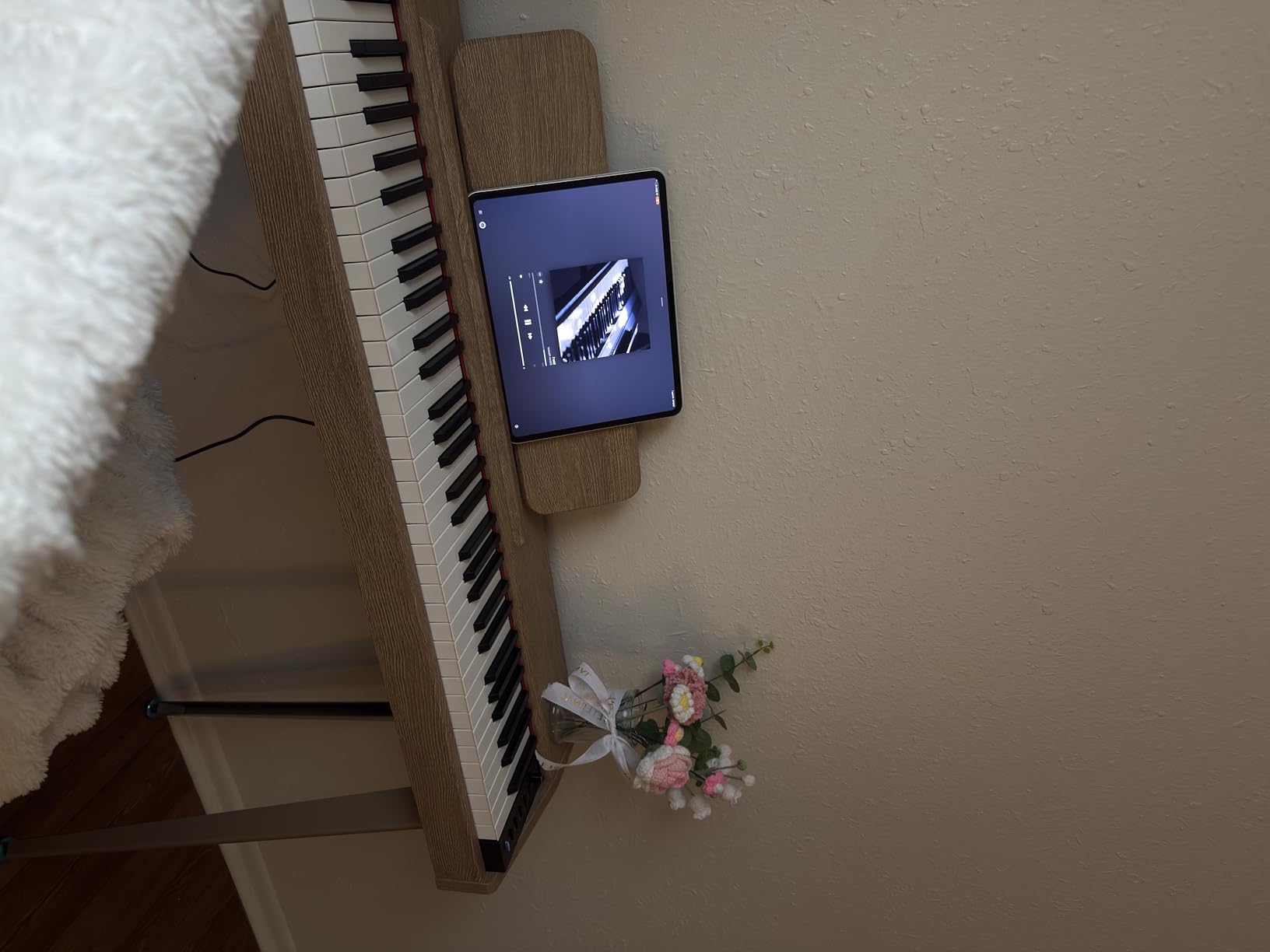
The Donner OURA DDP-60 is the most affordable 88-key weighted digital piano in our roundup. At $300, it includes a three-pedal unit and 128-note polyphony, which is impressive at this price. The minimalist Light Oak finish gives it a Scandinavian aesthetic that looks more expensive than it is.
Sound quality is good when using headphones, which is how most apartment dwellers will play. The 128 polyphony means dense chords and overlapping notes don’t get cut off. The 8 reverb effects add depth to your playing, from small room ambience to large hall. The velocity-sensitive keys with 4 curve options let you customize the touch response to your playing style.
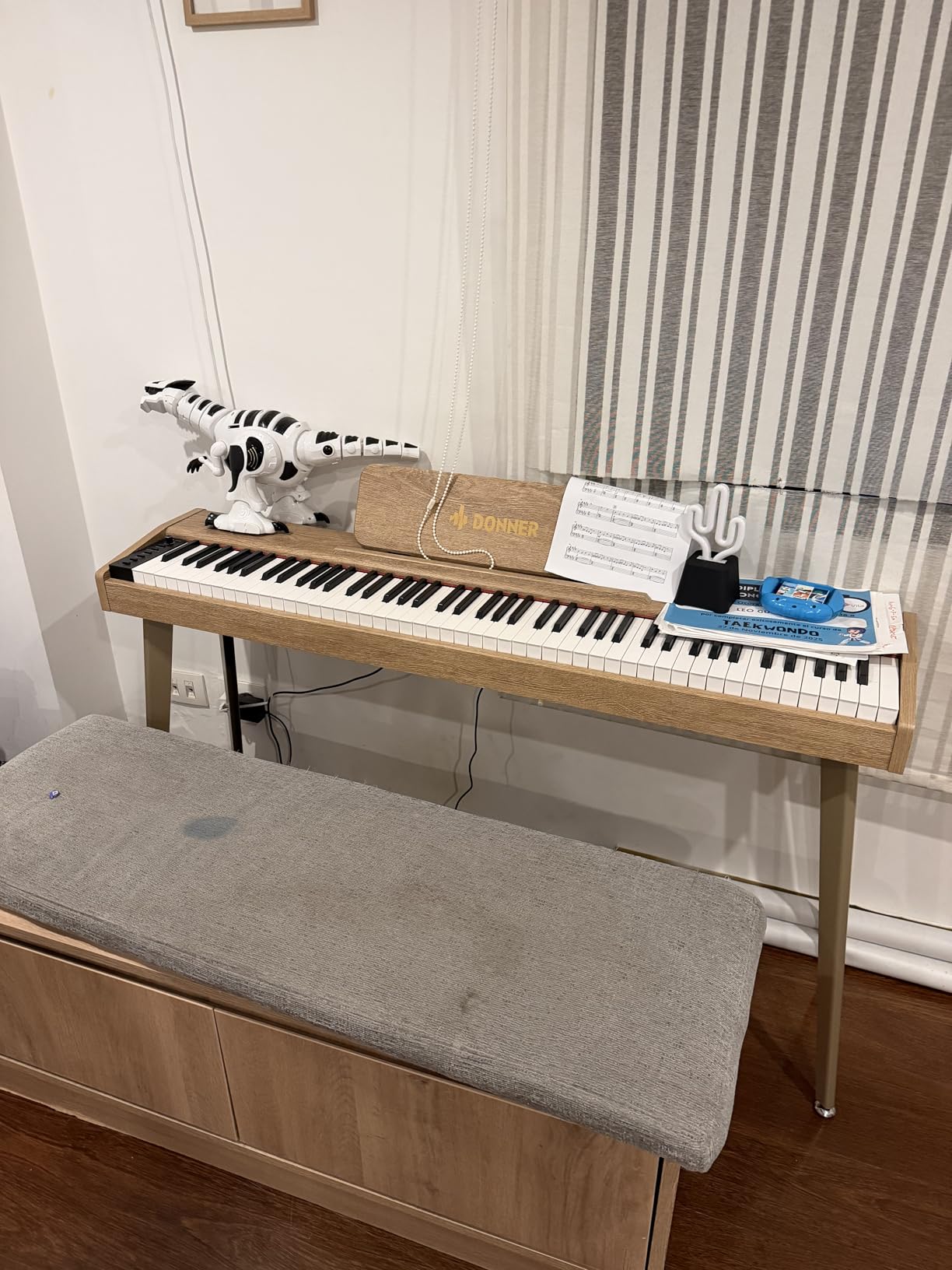
The Dual mode splits the keyboard into two identical ranges, perfect for teacher-student lessons or duets. The recording function captures your playing for review. At $300, this is one of the cheapest ways to get a full 88-key weighted keyboard with pedals.
The built-in speakers are weak. Without headphones, the sound feels thin. Some experienced players have noted the keys feel more like a toy piano than a real instrument, though beginners won’t notice this. For the price, compromises are expected, and the DDP-60 makes smart trade-offs.
Who this is best for
Absolute beginners who want to test the waters without a major investment will find this piano perfect. Students on a tight budget get real 88 weighted keys with polyphony and pedals. Apartment dwellers who always practice with headphones can ignore the weak speakers.
Who should skip it
Players who want realistic acoustic piano feel should spend more on the Roland FP-10 or Yamaha P145BT. Anyone who plans to play through built-in speakers in a living room will be disappointed. Experienced pianists will find the action too light and the speakers inadequate.
Buying Guide: How to Choose the Best Digital Piano Under $750?
Picking the right digital piano comes down to five key factors. Let’s walk through what matters most when you’re spending up to $750.
Key Action: The Make-or-Break Feature
Key action is the single most important factor. Weighted hammer action (also called graded hammer action) simulates the feel of an acoustic piano, with heavier resistance in the lower register and lighter touch in the upper octaves. In this price range, you’ll encounter GHS (Yamaha), GHC (Yamaha), and PHA-4 (Roland). The Roland PHA-4 is widely considered the best action under $750, with a realistic escapement feel in the upper keys. The Yamaha GHC and GHS are solid alternatives with slightly lighter resistance. For more on key action differences, see our guide to the best Roland digital pianos.
Sound Engine: Realism Matters
Sound engine quality varies dramatically. Roland’s SuperNATURAL Piano technology models piano sounds with complex string resonance and damper effects. Yamaha’s Pure CF sound engine samples their flagship CFX concert grand. Donner’s French DREAM source offers good value but lacks the nuance of premium engines. If sound realism is your priority, Roland and Yamaha lead. If you need more tones for variety, Donner offers hundreds of sounds at lower prices.
Connectivity: Bluetooth, USB, and MIDI
Modern digital pianos offer various connectivity options. Bluetooth audio (found on the Yamaha P145BT and Roland FP-30X) lets you stream music through the piano’s speakers. Bluetooth MIDI (found on the Roland FP-10) enables wireless app connectivity. USB-MIDI is standard across all models for computer connection. Headphone jacks (3.5mm or 6.35mm) are essential for quiet practice. Choose based on whether you want wireless streaming, app integration, or DAW recording.
Portability: Weight and Size Considerations
If you need to move the piano between rooms or take it to gigs, weight matters. The Roland FP-10 (27 lbs) and Yamaha P145BT (24.5 lbs) are the lightest. The Donner DEP-20 (54.5 lbs) and DDP-80 PLUS (63 lbs) are heavier and better suited as permanent home installations. Furniture-style pianos look great but sacrifice portability.
App Integration: Smart Features for Learning
App compatibility varies by brand. Roland’s Piano Partner 2 works with the FP-10 and FP-30X, offering lesson tracking and sheet music. Yamaha’s Smart Pianist app pairs with the P145BT, giving access to Yamaha’s music library. Donner’s pianos typically don’t have proprietary apps but work with general MIDI apps. If you’re a self-learner, app integration can dramatically improve your practice routine.
Practical Buying Tips
Buy from a retailer with a good return policy. A digital piano that feels great to one person might feel wrong to another. Try to test in a music store if possible. Read recent reviews, not just the overall star rating. If you’re on a strict budget, consider open-box or refurbished options from authorized dealers. If you need other budget options, check our guide to the best digital pianos under $500. For a higher ceiling, see our roundup of digital pianos under $2000.
Frequently Asked Questions
What is the best digital piano for value for money?
The Yamaha P145BT delivers the best value under $750. You get Yamaha’s GHC weighted action, Bluetooth audio streaming, Smart Pianist app compatibility, and a 24.5-pound portable design. At around $470, it offers near-premium features without crossing the $500 mark.
What is the best affordable digital piano?
The Donner OURA DDP-60 is the most affordable 88-key weighted option at $300. Despite the low price, it includes 128-note polyphony, 8 reverb effects, a three-pedal unit, and dual mode for lessons. It’s ideal for beginners testing the waters without a major investment.
Which digital piano is closest to the real piano?
The Roland FP-30X comes closest to an acoustic piano feel in this price range. The SuperNATURAL sound engine produces rich, complex tones with proper string resonance, and the 22-watt stereo speakers deliver room-filling volume. The PHA-4 action accurately models acoustic piano resistance across all 88 keys.
Which brand of digital piano is considered the best?
Roland and Yamaha consistently rank as the top digital piano brands. Roland excels in key action realism (PHA-4) and sound engine sophistication (SuperNATURAL). Yamaha offers reliable build quality, excellent piano sounds, and strong app integration through Smart Pianist. Both brands have decades of piano manufacturing experience.
What is the best digital piano for beginners under $500?
The Yamaha P71 at around $450 is ideal for beginners under $500. It has Yamaha’s GHS weighted action, 10 quality voices, USB connectivity, and adjustable touch sensitivity. With 6,650 reviews averaging 4.7 stars, it’s a proven, reliable choice for first-time piano buyers.
Final Verdict: Which Digital Piano Under $750 Should You Buy?
After testing all nine digital pianos in this roundup, our top pick for the best digital pianos under $750 remains the Roland FP-10. Its PHA-4 hammer action is genuinely in a different class at this price, and the SuperNATURAL sound engine produces warm, dynamic tones. For pure value, the Yamaha P145BT brings Bluetooth and Smart Pianist integration to a sub-$500 price point. On a strict budget, the Donner OURA DDP-60 gets you 88 weighted keys with proper polyphony for just $300.
Whatever model you choose, you’re getting a real piano-playing experience in 2026 without the maintenance, cost, or space requirements of an acoustic instrument. Pick the one that matches your priorities: action realism, sound quality, portability, or budget. Then start playing. The best piano is the one you’ll actually practice on.