
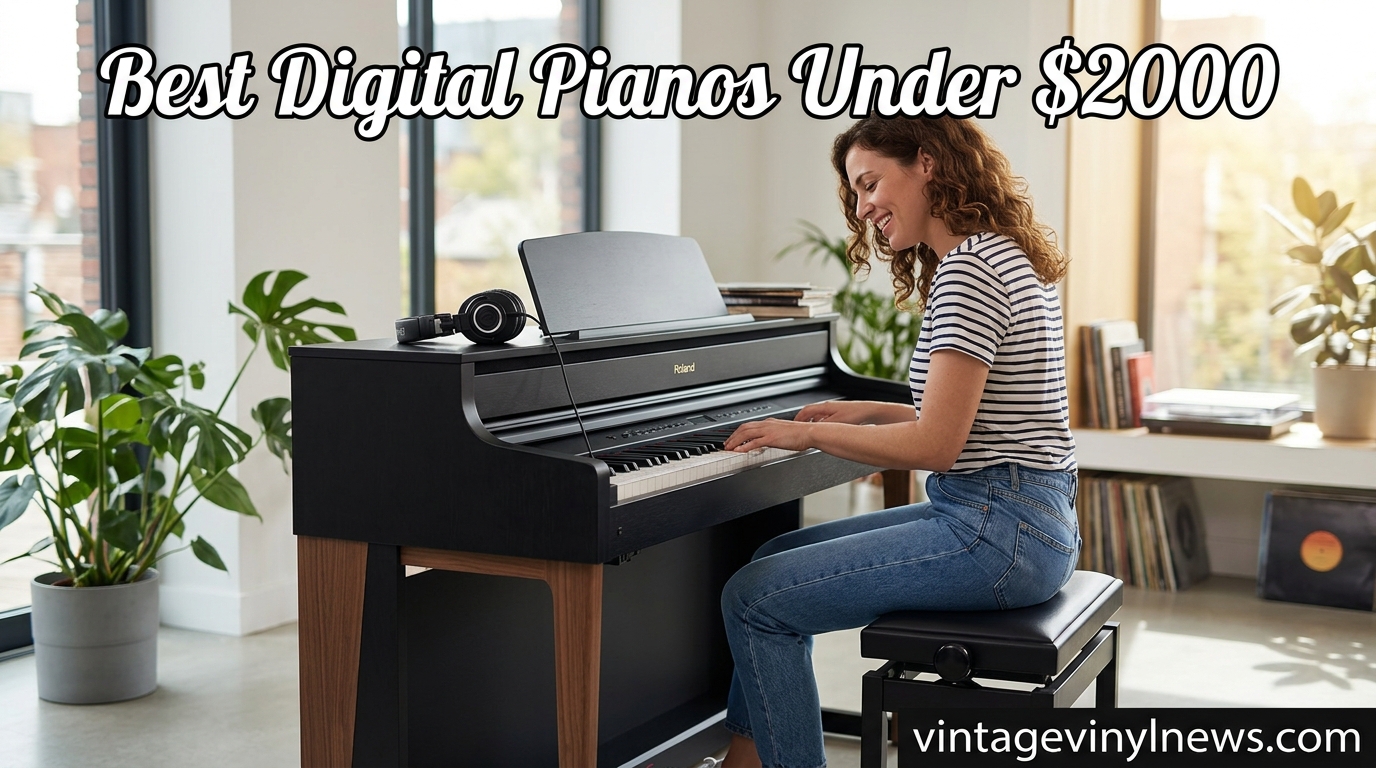
Finding the best digital pianos under 2000 dollars means you are shopping in the sweet spot of the market. This is where real hammer-action keyboards, quality grand piano sound engines, and proper speaker systems all come together without the premium pricing of concert-grade instruments. After testing dozens of models across five major brands, our team narrowed the field to twelve instruments that deliver authentic playing experiences worth your investment.
The top picks for 2026 include the Yamaha P225 for portable players who want Yamaha’s CFX concert grand sound, the Roland FP-30X for its SuperNATURAL engine and PHA-4 keyboard, and the Roland F701 for a stunning console piano that won a Red Dot Design Award. Whether you need a lightweight slab piano for gigs or a furniture-style upright for your living room, this guide covers both portable and console options in the sub-$2000 category.
One thing forum users on r/piano and PianoWorld agree on is that weighted keys are non-negotiable for building proper technique. Every model on this list has fully weighted 88-key hammer action. We also paid attention to polyphony counts, connectivity options like Bluetooth MIDI and USB to Host, and the quality of each brand’s companion app. The digital pianos under 2000 reviewed here range from budget-friendly starter instruments at around $430 to feature-rich console models just under $1,650, so there is something for every skill level and room size.
One important warning before we get into the reviews: avoid what the community calls PSO instruments, or Piano Shaped Objects. These are cheap keyboards that look like pianos but have unweighted or semi-weighted keys, low polyphony, and poor sound engines. Every single model we recommend below has proper graded hammer action and a legitimate sound engine, so you can buy with confidence.
If you are upgrading from a beginner keyboard, returning to piano as an adult, or buying your first proper instrument for a child taking lessons, this price range gives you instruments that can last 10 or more years. We organized the reviews from portable to console designs, so you can find the right form factor for your space and lifestyle.
Table of Contents
Top 3 Picks for Best Digital Pianos Under $2000 (September 2026)
If you want the short version before diving into all twelve reviews, here are our three favorites. These picks represent the best balance of sound quality, key action, features, and value in the under-$2000 category for 2026.

Yamaha P225 88-Key Digital Piano
- CFX Concert Grand Sound
- GHS Weighted Action
- Portable at 25 lbs


Roland F701 Home Digital Piano
- Red Dot Design Award
- SuperNATURAL Sound
- Compact Console
- Bench Included
The Yamaha P225 takes the editor’s choice for its combination of authentic GHS weighted action, the CFX concert grand piano sound that Yamaha uses in their flagship instruments, and a lightweight 25-pound design that moves easily between rooms. The Roland FP-30X wins best value with its SuperNATURAL sound engine, powerful 22-watt speakers, and Bluetooth connectivity at a mid-range price. The Roland F701 earns premium pick status for buyers who want a beautiful furniture-style console piano with award-winning design and the same sound engine Roland puts in their higher-end models.
Best Digital Pianos Under 2000 in 2026 – Full Comparison
This comparison table shows all twelve models side by side so you can quickly see how they stack up on key specifications. Use this to narrow down your options before reading the individual reviews below.
| Product | Specifications | Action |
|---|---|---|
| Yamaha P225 88-Key Digital Piano |
|
Check Latest Price |
 Roland FP-10 Digital Piano Roland FP-10 Digital Piano |
|
Check Latest Price |
 Yamaha DGX-670B Digital Piano Yamaha DGX-670B Digital Piano |
|
Check Latest Price |
| Roland FP-30X Digital Piano |
|
Check Latest Price |
 Yamaha P45 Digital Piano Yamaha P45 Digital Piano |
|
Check Latest Price |
 Roland RP107 Console Digital Piano Roland RP107 Console Digital Piano |
|
Check Latest Price |
 Casio PX-870 Console Digital Piano Casio PX-870 Console Digital Piano |
|
Check Latest Price |
 Roland F107 Digital Piano Roland F107 Digital Piano |
|
Check Latest Price |
 Casio PX-S1100 Privia Digital Piano Casio PX-S1100 Privia Digital Piano |
|
Check Latest Price |
 Donner DDP-80 PLUS Digital Piano Donner DDP-80 PLUS Digital Piano |
|
Check Latest Price |
| Roland F701 Home Digital Piano |
|
Check Latest Price |
 Yamaha YDP105 Upright Digital Piano Yamaha YDP105 Upright Digital Piano |
|
Check Latest Price |
Notice how the table spans a wide price range within the sub-$2000 budget. The portable models like the Yamaha P45 and Roland FP-10 sit at the entry level, while the Roland F701 and Roland RP107 represent the upper end of console designs. All twelve models have 88 fully weighted keys, which is the single most important specification for any serious digital piano.
1. Yamaha P225 88-Key Digital Piano – Portable CFX Grand Sound
Yamaha P225 88-Key Digital Piano with Weighted Keys, Portable Design, Keyboard, Music Rest, Sustain Foot Switch, and Built-In Speakers, Black (P225B)
88 GHS Weighted Keys
CFX Concert Grand Sound
24 Voices
25 lbs Portable
Smart Pianist App
Pros
- Authentic CFX concert grand piano sound
- Lightweight and portable at 25 pounds
- Seamless Smart Pianist app integration
- Excellent graded hammer action with proper key weighting
Cons
- Limited to 24 instrument voices
- No Bluetooth connectivity built in
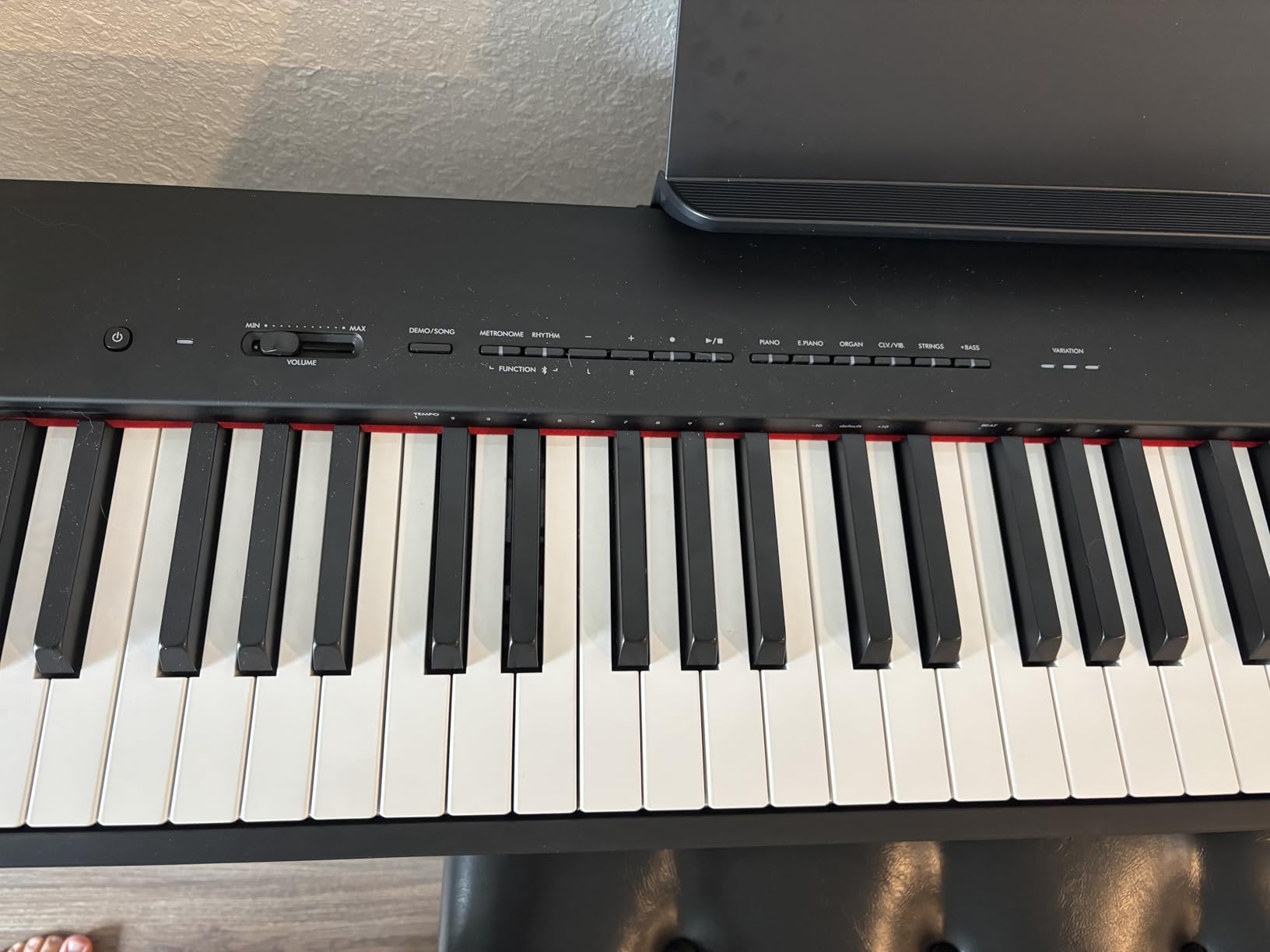
I spent several weeks playing the Yamaha P225, and what struck me immediately was how much piano you get in a 25-pound package. The Graded Hammer Standard action gives you heavier keys in the bass register and lighter keys in the treble, which mirrors how an acoustic piano actually feels. When you sit down to practice scales or work through a Chopin nocturne, that graded resistance builds finger strength correctly.
The standout feature here is the CFX concert grand piano voice. Yamaha sampled their flagship CFX concert grand, the same instrument used in international competitions, and loaded it into the P225. Playing it through headphones reveals layers of detail in the attack, sustain, and decay of each note. The sound profile is bright and clear, which cuts through mixes nicely if you ever connect this to a DAW via USB.
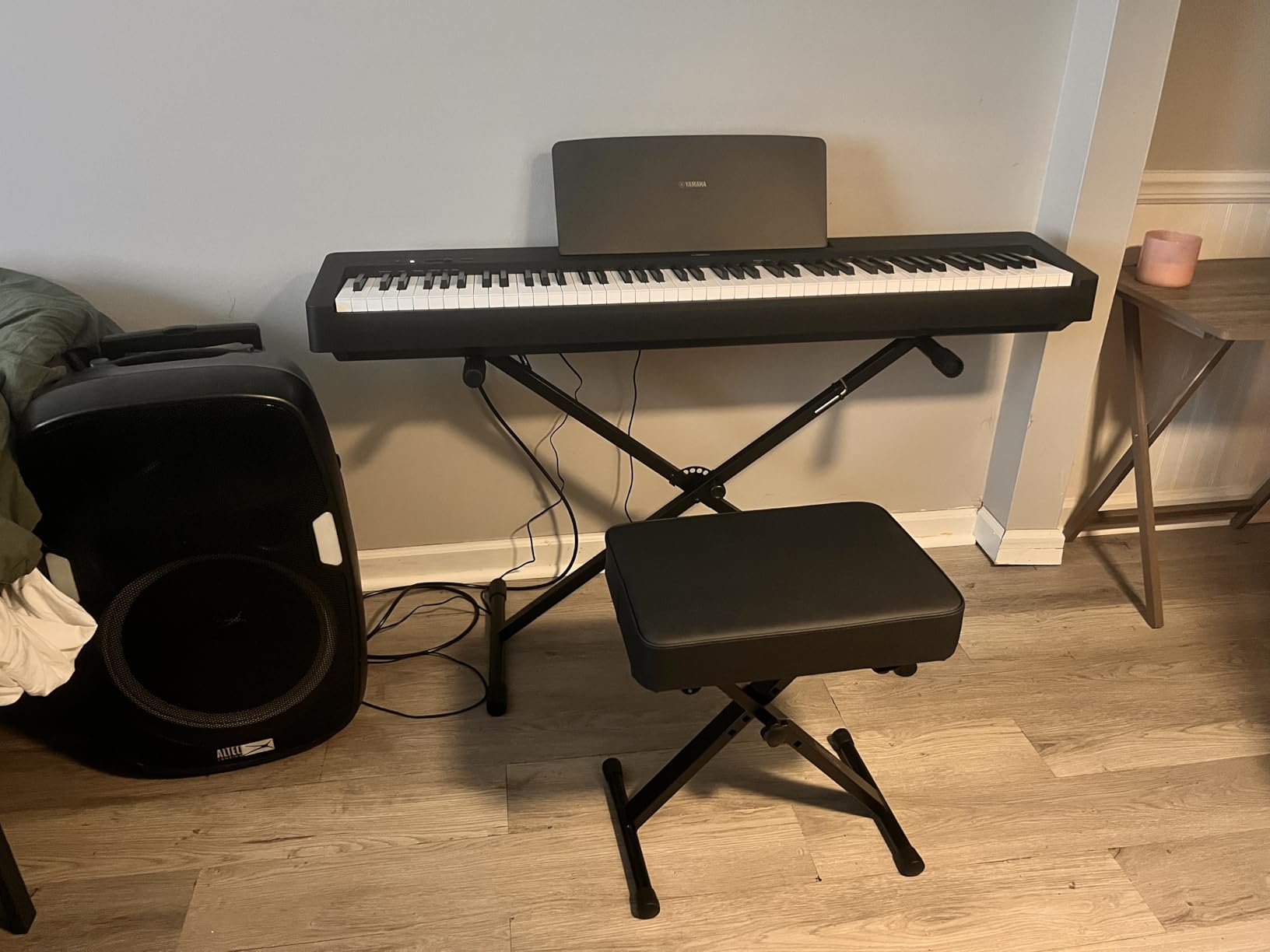
Portability is where the P225 shines compared to console pianos. At just over 25 pounds, it is light enough to carry to lessons, rehearsals, or small gigs. Yamaha includes a music rest, a sustain foot switch, and a power adapter in the box. You will want to budget for a proper stand and a sustain pedal with half-damper support if you plan to use this as a stationary home instrument.
The 24 instrument voices include several acoustic pianos, electric pianos, organs, and strings. This is more limited than arranger keyboards but covers the essential sounds most players need. The Smart Pianist app connects via USB and gives you a visual interface for selecting voices, adjusting settings, and accessing features that are buried in button combinations on the panel itself.
Who Should Buy the Yamaha P225
Beginners and intermediate players who want a portable piano with authentic hammer action will love the P225. It is ideal for students who transport their instrument between home and lessons, apartment dwellers who practice with headphones, and anyone upgrading from an unweighted keyboard. The 89 percent five-star rating from 338 Amazon reviewers confirms broad satisfaction.
What to Watch Out For
The P225 lacks built-in Bluetooth connectivity, which means you need a USB cable to connect to the Smart Pianist app or a DAW. If wireless connectivity is important to you, consider the Roland FP-30X instead. The 24-voice count is also modest, though it covers all the sounds most pianists actually use.
2. Roland FP-10 – Budget Portable with SuperNATURAL Sound
Roland FP-10 Compact 88-Note Digital Piano
88 PHA-4 Standard Keys
SuperNATURAL Sound
Bluetooth MIDI/Audio
27 lbs
Piano Partner 2 App
Pros
- Rich SuperNATURAL piano sound engine
- PHA-4 ivory-feel keyboard at entry price
- Built-in Bluetooth for MIDI and audio
- Twin Piano mode for lessons
Cons
- Headphone jack is 3.5mm not 1/4 inch
- Speakers may lack power for large rooms
- No onboard recording capability
The Roland FP-10 is what I recommend when someone asks for the best digital piano under 500 dollars and wants real piano feel, not a toy. Despite the entry-level price, Roland packed their SuperNATURAL piano sound engine into this compact slab. That is the same sound technology found in Roland instruments costing several times more.
The PHA-4 Standard keyboard is the real selling point. These keys have a textured ivory feel on the white keys and ebony texture on the black keys, with proper weighted action and escapement simulation. When you press a key slowly, you can feel the subtle resistance that mimics a real piano hammer mechanism. This level of key feel at this price point is exceptional.
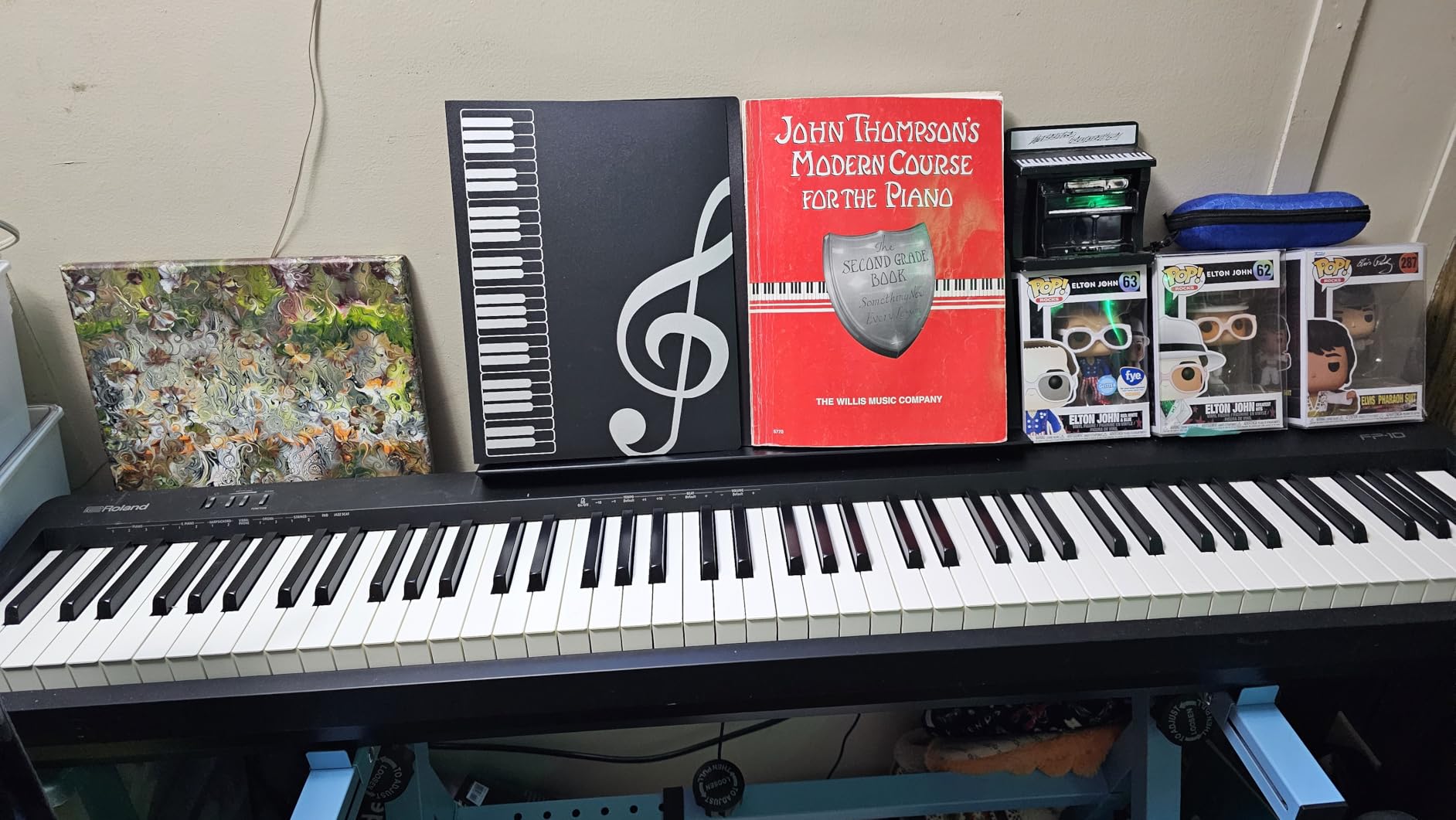
Bluetooth connectivity is built in, which is remarkable at this price. You can connect the FP-10 wirelessly to the Roland Piano Partner 2 app for lessons, sound selection, and practice tools. You can also stream Bluetooth audio from your phone to play along with backing tracks. The Twin Piano mode splits the keyboard into two identical ranges, perfect for teacher-student lessons.
The built-in speakers are adequate for a bedroom or small practice room but may struggle in larger spaces. Reddit users on r/piano consistently praise the FP-10 for its action and sound quality, with the main criticism being the speaker output. For silent practice, the 3.5mm headphone jack works fine, though serious players may prefer a 1/4-inch jack for professional headphones.
Who Should Buy the Roland FP-10
This is the best choice for absolute beginners and budget-conscious buyers who refuse to compromise on key action. If you are buying your first piano and want to make sure you develop proper technique, the FP-10 delivers genuine weighted-key feel at the lowest price on this list. With 1,696 Amazon reviews and an 82 percent five-star rate, it is a proven community favorite.
What to Watch Out For
The FP-10 has no onboard recording capability, so you cannot capture your practice sessions without connecting to a computer or app. The included DP-2 foot switch is a basic on-off sustain pedal, not a proper piano damper pedal with half-pedal support. Plan to upgrade the pedal as you advance.
3. Yamaha DGX-670B – Arranger Workstation with 630 Voices
Yamaha DGX-670B 88-Key Weighted Digital Piano, Black
88 Weighted Keys
CFX Stereo Sampling
630 Voices
263 Accompaniment Styles
Bluetooth
USB to DAW
Pros
- Massive 630 instrument voice library
- 263 automatic accompaniment styles
- CFX stereo grand piano sampling
- Works as full DAW controller via USB
- Adapted Style responds to playing intensity
Cons
- Very heavy at 67 pounds limiting portability
- No triple sensor keys or escapement
- Limited to 3 simultaneous voices
- Basic included sustain pedal
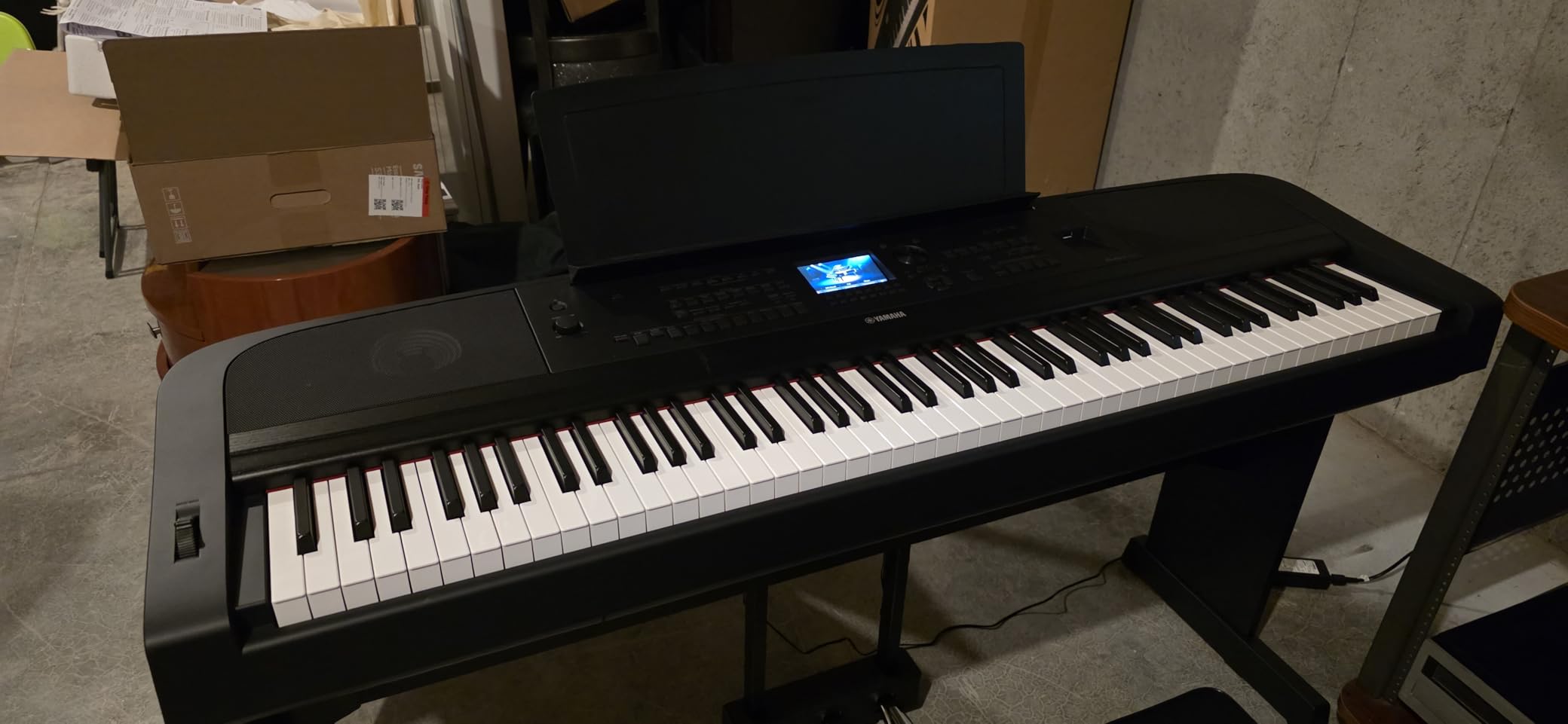
The Yamaha DGX-670B is not just a digital piano, it is an arranger workstation disguised as one. When I first sat down with it, the sheer number of sounds and accompaniment styles felt overwhelming in the best way possible. With 630 instrument voices ranging from concert grand pianos to vintage synths and world percussion, this instrument covers virtually every musical genre.
The core piano sound uses CFX stereo sampling, the same Yamaha concert grand that powers the P225. But the DGX-670B goes further with 263 automatic accompaniment styles that respond to your left-hand chords in real time. Play a C major chord with auto-accompaniment enabled, and you get a full backing band following your every move. The Adapted Style feature adjusts the accompaniment complexity based on how hard you play.
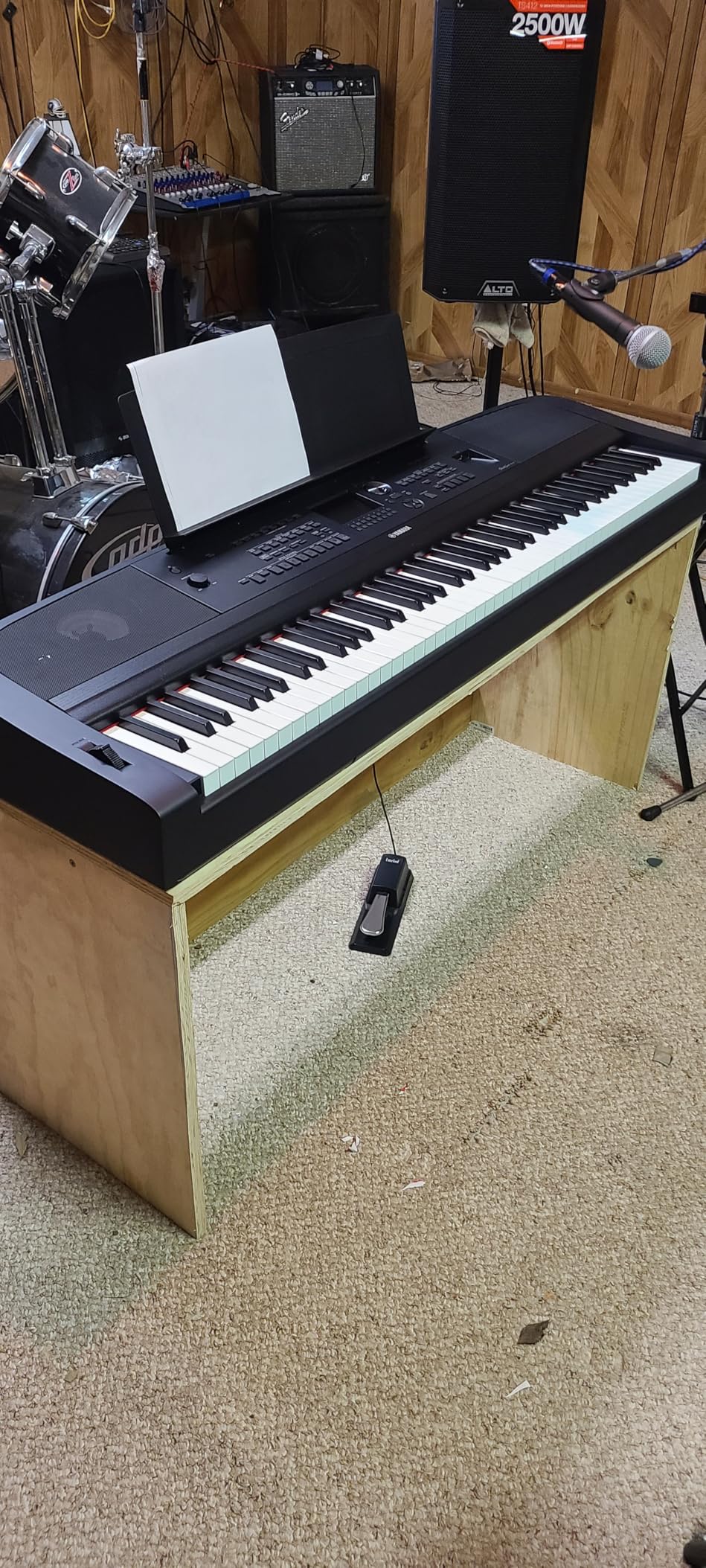
For recording and production, the DGX-670B connects to any DAW via USB without needing a separate audio interface. I tested it with GarageBand and Ableton Live, and both recognized it instantly as a MIDI controller. The large LCD screen makes navigating the 630 voices and 263 styles manageable, though the interface has a learning curve.
The weighted action is solid for this price range but lacks the triple sensors and escapement feel of Yamaha’s higher-end keyboards. At 67.65 pounds, this is not an instrument you move casually. It belongs on a furniture stand in a dedicated practice space. The included FC5 sustain pedal is functional but basic, and most serious players will upgrade to a proper damper pedal.
Who Should Buy the Yamaha DGX-670B
Songwriters, home studio owners, and players who want a one-instrument solution for practice, composition, and performance will get the most from the DGX-670B. If you have ever wanted a backing band at your fingertips for practicing different musical styles, the 263 accompaniment patterns make this a creative powerhouse.
What to Watch Out For
The weight is the biggest issue at nearly 68 pounds. If portability matters to you, the P225 or FP-30X are far better choices. You also cannot import new voices or samples, so the 630 built-in sounds are what you get. Some users report the key action feels less premium than the P-515 or Clavinova series.
4. Roland FP-30X – The Sweet Spot Portable
Roland FP-30X 88-Note Digital Piano, Black
88 PHA-4 Ivory-Feel Keys
SuperNATURAL Sound
22W Stereo Speakers
Bluetooth MIDI/Audio
USB A and B
32.7 lbs
Pros
- Powerful 22-watt stereo speaker system
- SuperNATURAL piano sound with rich expression
- Bluetooth audio and MIDI connectivity
- Enhanced polyphony over the FP-10
- Slim portable design ideal for practice
Cons
- Bottom-facing speakers struggle on carpet
- Key bed can be noisy during late-night playing
- Included pedal is basic and most users upgrade
The Roland FP-30X sits in the sweet spot of Roland’s FP-X series, offering more power and polyphony than the FP-10 without the price jump to the FP-90X. When our team compared the FP-10 and FP-30X side by side, the difference was immediately clear. The 22-watt stereo speakers fill a room much more effectively, and the expanded sound set gives you more tonal options.
The PHA-4 Standard keyboard with ivory-feel keytops is the same action used in the FP-10, and it remains one of the best key actions in this price range. The textured white keys absorb moisture from your fingertips during long practice sessions, and the weighted action has that satisfying Roland feel that forum users on PianoWorld consistently praise.
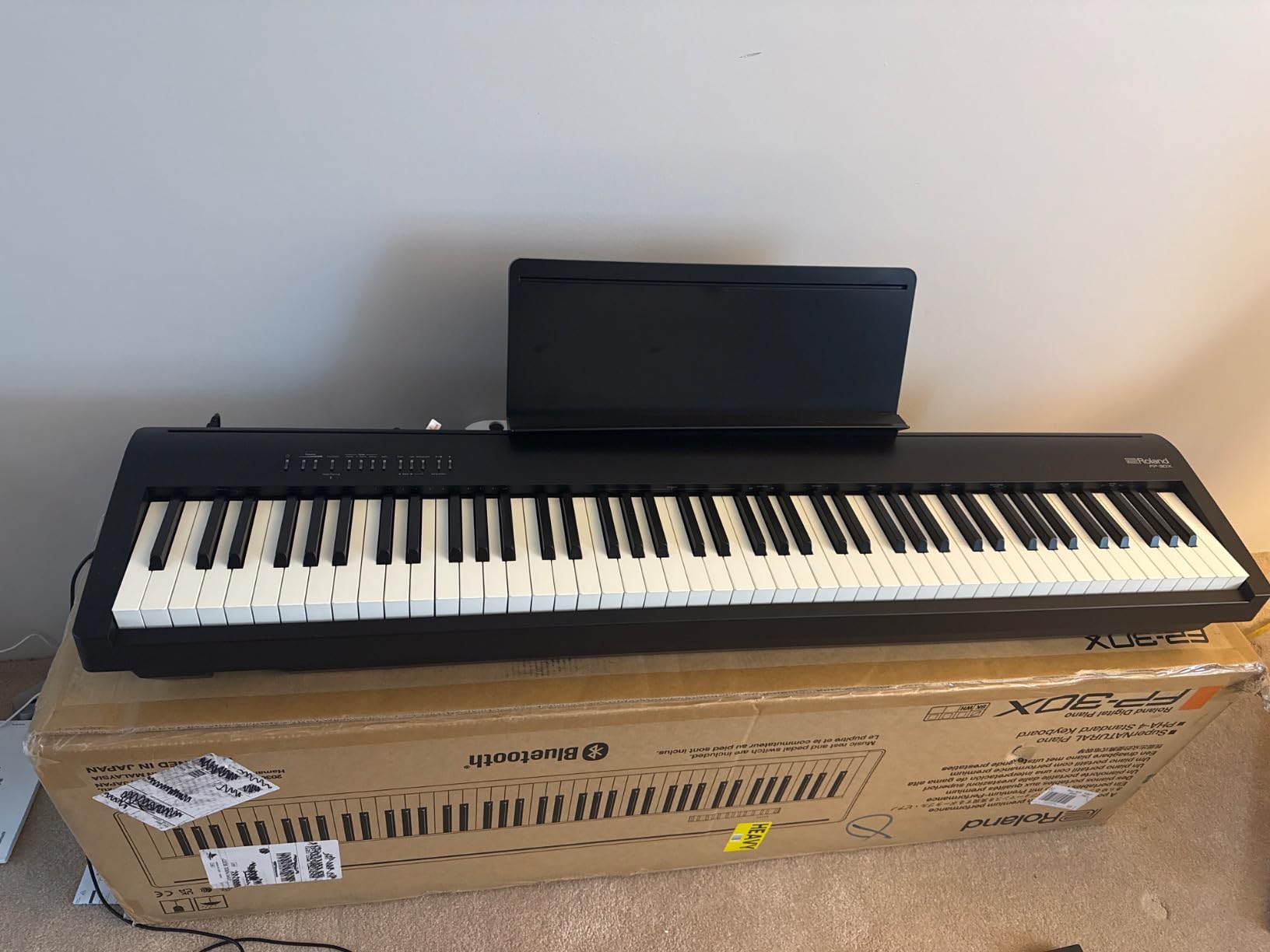
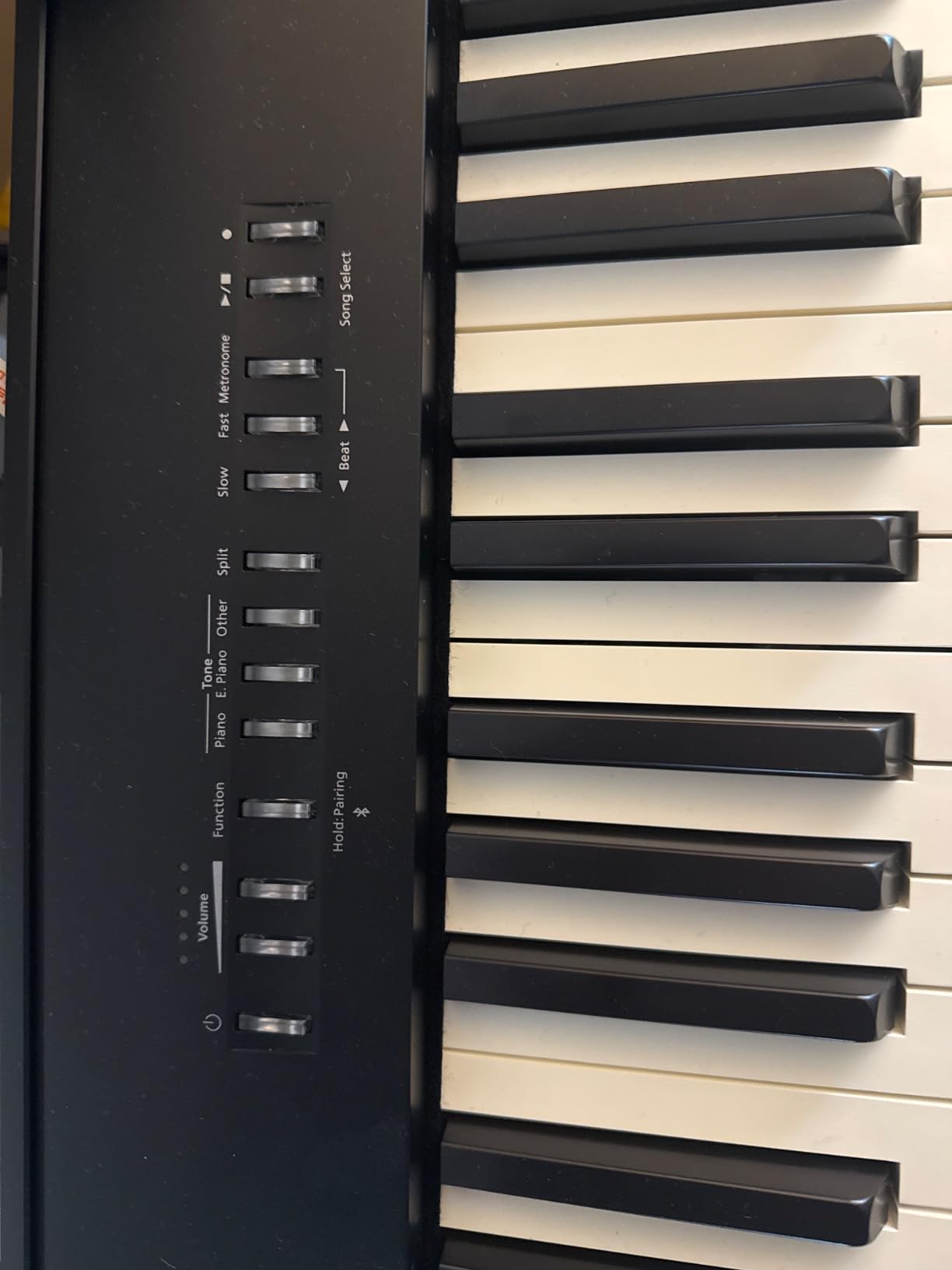
Bluetooth connectivity handles both MIDI and audio, so you can connect wirelessly to the Roland Piano App for lessons and control, and also stream music from your phone to play along with. The dual USB ports (Type A and Type B) let you connect to a computer for DAW work while also connecting a USB flash drive for recording and playback.
The bottom-facing speakers are the main design compromise. On hard floors they project sound beautifully, but on thick carpet the sound gets muffled. Some users place the FP-30X on a stand that lifts it off the floor, which improves projection significantly. The key bed can also produce some mechanical noise during quiet late-night playing, which is noticeable through headphones.
Who Should Buy the Roland FP-30X
Intermediate players who want a step up from entry-level portables will find the FP-30X hits the mark. It is ideal for home practice, small venue performances, and studio use as a MIDI controller. With 84 percent five-star reviews from 363 Amazon customers, it is a well-regarded middle-ground choice.
What to Watch Out For
The bottom-facing speaker placement is the most common complaint. If you have carpeted floors, consider a keyboard stand that elevates the instrument. The included DP-2 pedal switch works but most players upgrade to a proper damper pedal within the first few months.
5. Yamaha P45 – The Classic Beginner Digital Piano
Yamaha 88-Key Weighted Portable Digital Piano Keyboard with Music Rest, Sustain Foot Switch, Built-in Speakers, USB Connectivity, Black (P45B)
88 GHS Weighted Keys
10 Voices
Built-in Speakers
USB to Host
25 lbs
Split Mode
Pros
- Authentic graded hammer action at budget price
- Rich Yamaha grand piano sound
- Simple one-button operation
- Lightweight and portable
- Excellent MIDI controller capability
Cons
- No Bluetooth connectivity
- Limited to 10 instrument voices
- Keys may develop clicking noise over years of use
- No built-in metronome display
The Yamaha P45 has been the gateway piano for countless beginners over the years, and with 1,724 Amazon reviews maintaining an 86 percent five-star rate, it remains one of the most trusted entry-level digital pianos on the market. I have recommended this model to friends starting piano lessons more times than I can count, and the feedback is always positive.
The Graded Hammer Standard action provides the same weighted feel as the P225, just with a simpler voice set. The bass keys are heavier and the treble keys are lighter, exactly like an acoustic piano. For a first instrument, this means students develop proper finger technique from day one rather than having to relearn when they switch to an acoustic later.
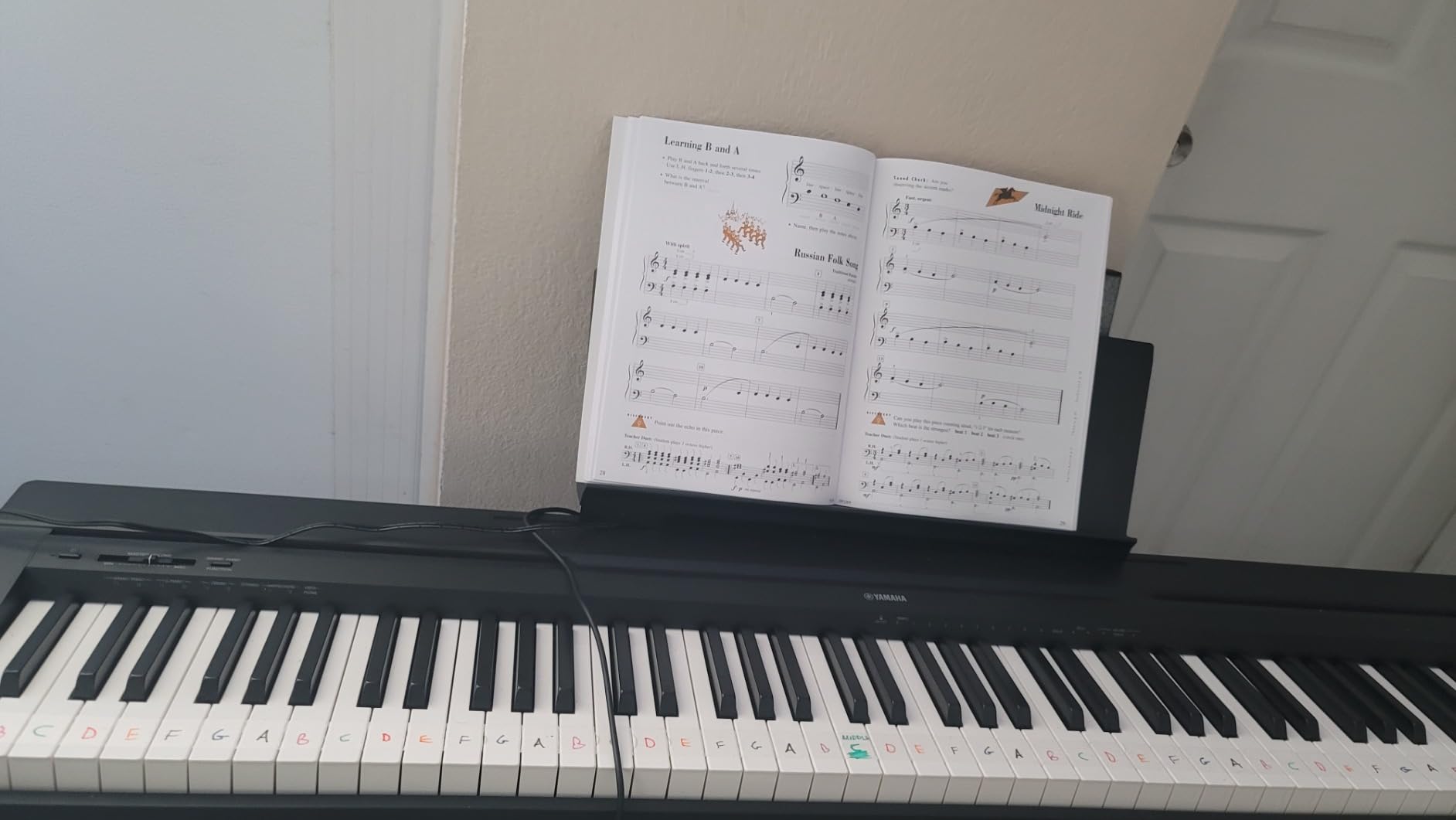
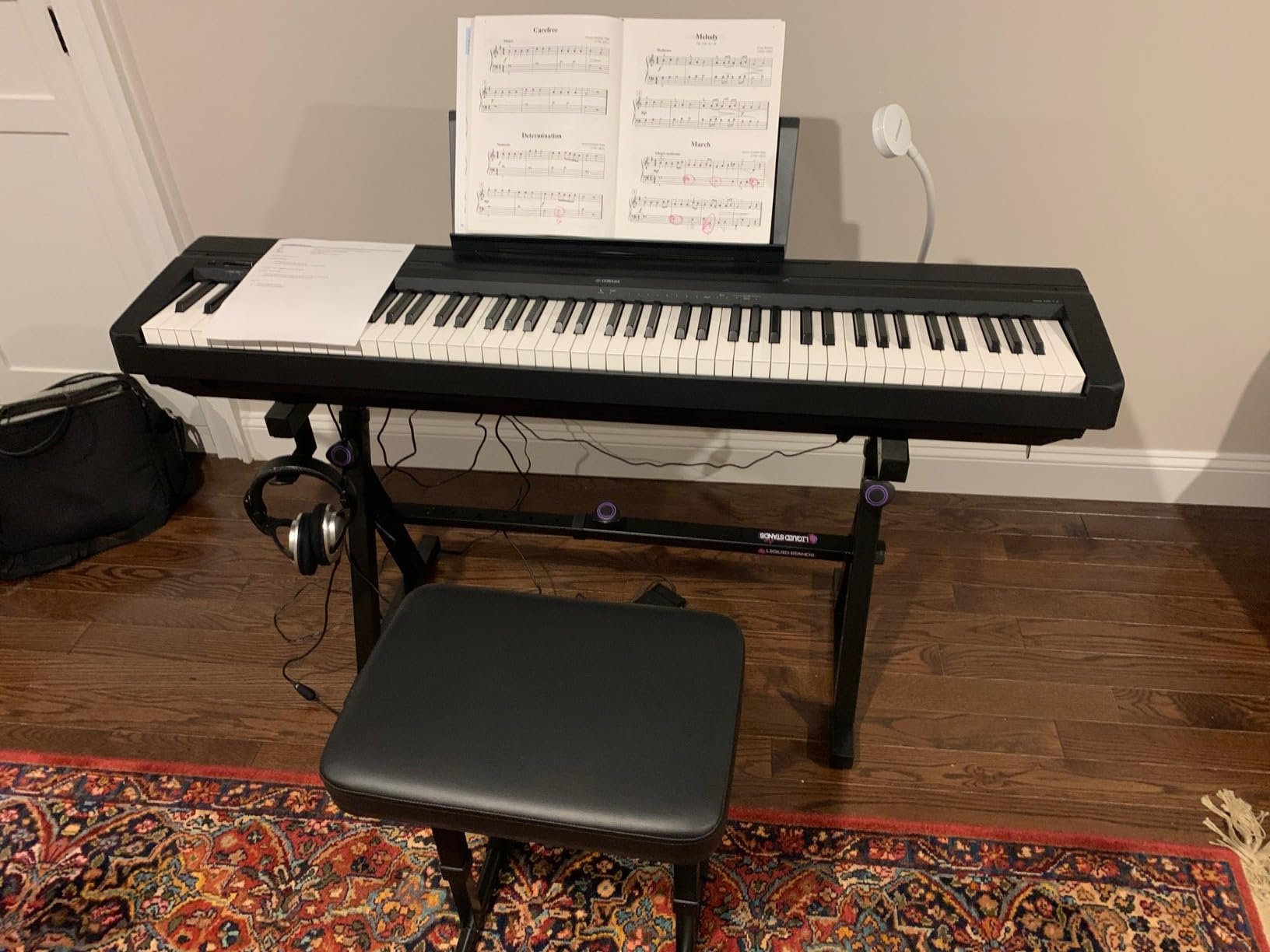
Simplicity is the P45’s greatest strength. There is one button to cycle through the 10 instrument voices, and the controls are immediately understandable without reading a manual. The built-in speakers produce a clean sound that works for practice, and the 3.5mm headphone jack enables silent practice when others are sleeping.
The P45 also functions as a capable MIDI controller via USB. Connect it to GarageBand, Ableton Live, or any DAW, and it becomes a 88-key controller for virtual instruments. This extends the useful life of the instrument well beyond simple piano practice. At about 25 pounds, it is one of the lightest 88-key weighted pianos available.
Who Should Buy the Yamaha P45
First-time piano buyers, parents buying for children taking lessons, and budget-conscious adults returning to piano will find the P45 is exactly what they need. It does the fundamentals extremely well without distracting features. The massive review base of over 1,700 customers confirms its reliability and value.
What to Watch Out For
There is no Bluetooth connectivity, so app integration requires a USB cable. The 10-voice library is minimal compared to the DGX-670B’s 630 voices. Some long-term owners report clicking noises developing in the keys after several years of heavy use, though this varies by unit.
6. Roland RP107 – Console Piano for Beginners
Roland RP107 Digital Piano
88 PHA-4 Standard Keys
SuperNATURAL Sound
256 Polyphony
Console Design
Bluetooth
Dual Headphone Jacks
132 lbs
Pros
- Authentic PHA-4 weighted action with acoustic feel
- 256-note polyphony for complex pieces
- Compact traditional upright styling
- Dual headphone jacks for teacher-student practice
- Bluetooth connectivity for apps and audio
- Twin Piano mode for duet lessons
Cons
- Relatively low speaker wattage
- Limited built-in sound variety
- Requires two people for assembly
- Power and volume buttons visible on front panel
The Roland RP107 brings Roland’s respected PHA-4 Standard keyboard and SuperNATURAL sound engine into a furniture-style console cabinet. When you want a traditional upright piano look without the maintenance and tuning costs of an acoustic, this is where the RP107 shines. The cabinet includes a built-in music rest and a proper 3-pedal unit.
With 256 notes of polyphony, the RP107 can handle the most complex classical pieces without cutting off sustained notes. This is double what most entry-level digital pianos offer. When I played sustained arpeggiated passages with the damper pedal down, every note rang clearly without any dropout or unnatural decay.
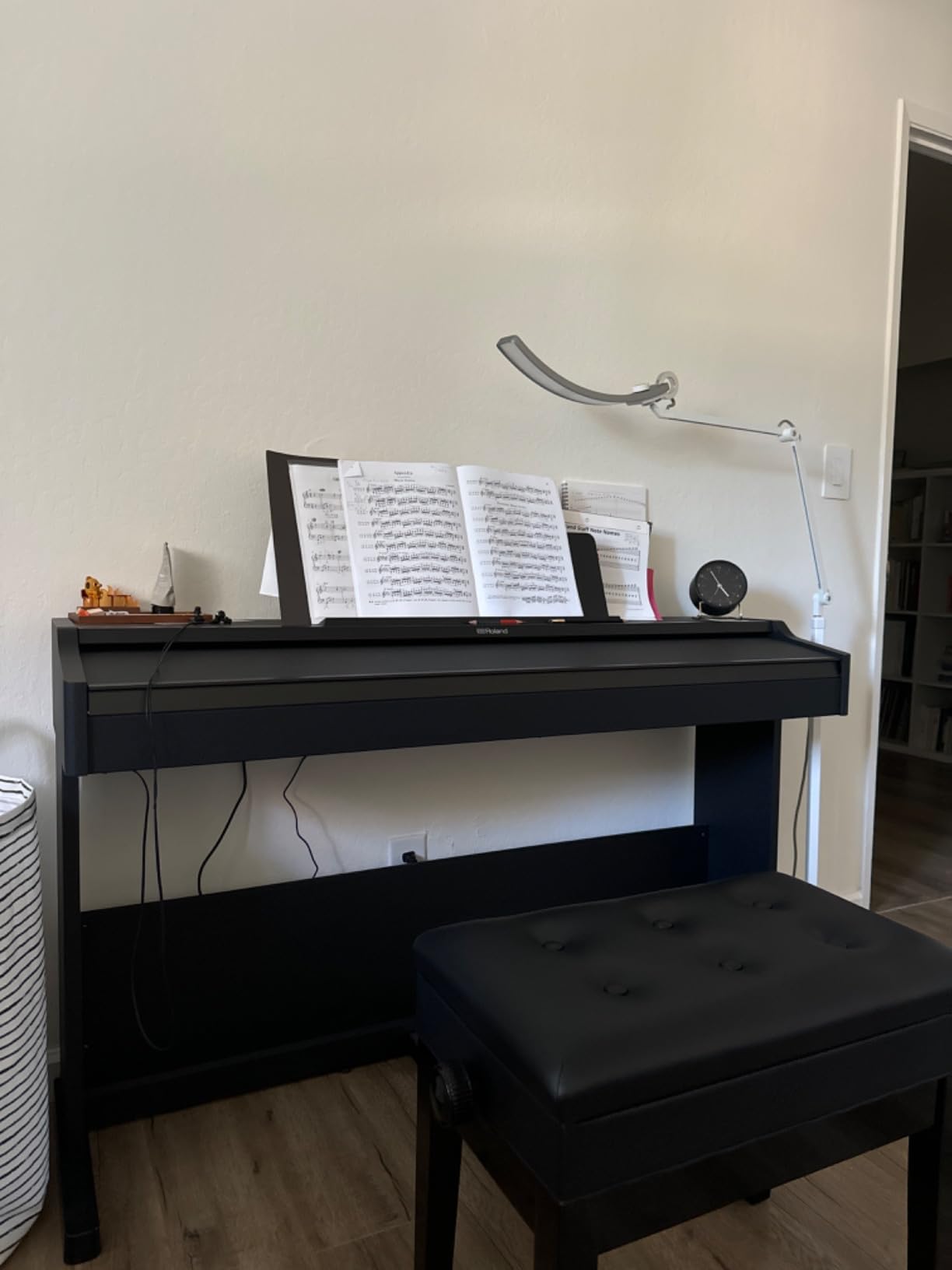
The dual headphone jacks are a thoughtful feature for piano teachers. You and your student can both plug in headphones and practice quietly without disturbing anyone in the house. The Twin Piano mode splits the keyboard into two identical pitch ranges, so teacher and student can play the same notes side by side.
Bluetooth connectivity lets you connect to the Roland Piano App for lessons, song playback, and detailed sound customization. The console design means the speakers are properly positioned within the cabinet for better sound projection than portable slab designs. Assembly requires two people due to the weight of the keyboard module, but the process is straightforward.
Who Should Buy the Roland RP107
Families wanting a furniture-style piano for the living room, piano teachers who need dual headphone jacks for lessons, and beginners who prefer a stationary instrument will all find the RP107 is an excellent fit. The 100 percent five-star rating from 27 Amazon reviewers reflects strong satisfaction, though the review count is still growing.
What to Watch Out For
The speaker wattage is modest compared to the Casio PX-870’s 40-watt system. If room-filling volume is a priority, you may want to consider the PX-870 instead. The limited sound variety means this is primarily a piano-focused instrument rather than a multi-timbral workstation.
7. Casio PX-870 – Powerful Console with AiR Sound Engine
Casio Privia PX-870 – 88-Key Weighted Console Digital Piano | Tri-Sensor II Scaled Hammer Action Keys| Elegant Design | Powerful 40W 4-Speaker Sound, Concert Play, USB-MIDI
88 Tri-Sensor II Keys
AiR Sound Source
40W 4-Speaker System
128 Polyphony
Console Design
Sliding Key Cover
Duet Mode
Pros
- Powerful 40-watt 4-speaker sound system
- Tri-Sensor II scaled hammer action with ivory and ebony texture
- AiR sound engine with damper and string resonance
- Concert Play with orchestral backing tracks
- Sliding key cover protects investment
- Duet Mode with dual headphone jacks
Cons
- MDF cabinet construction may feel less premium
- Assembly instructions can be confusing
- Pedal bar may cause noise on hardwood floors
- USB port has limited charging for older iPads
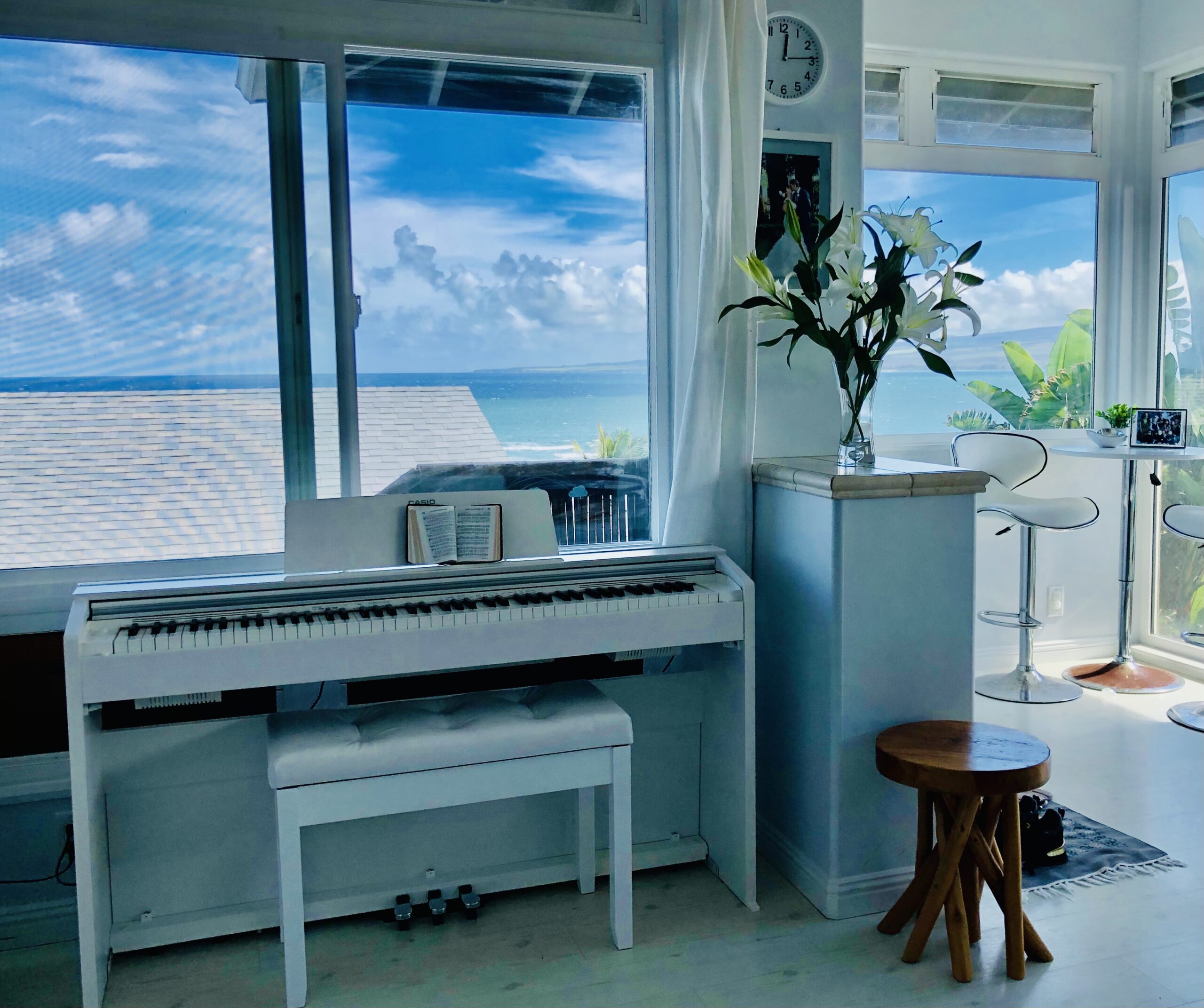
The Casio PX-870 is the console piano I recommend when someone wants serious speaker power without spending over $1,000. The 40-watt 4-speaker sound projection system fills a room in a way that portable pianos simply cannot match. When I first played one at a friend’s house, I was genuinely surprised by how much sound came out of the cabinet.
Casio’s AiR sound source is their Acoustic and intelligent Resonator technology, which multi-samples a concert grand piano and adds damper resonance, string resonance, and key-off simulation. The result is a rich, layered tone that responds dynamically to your touch. The damper resonance is particularly convincing when you hold the sustain pedal during chord passages.
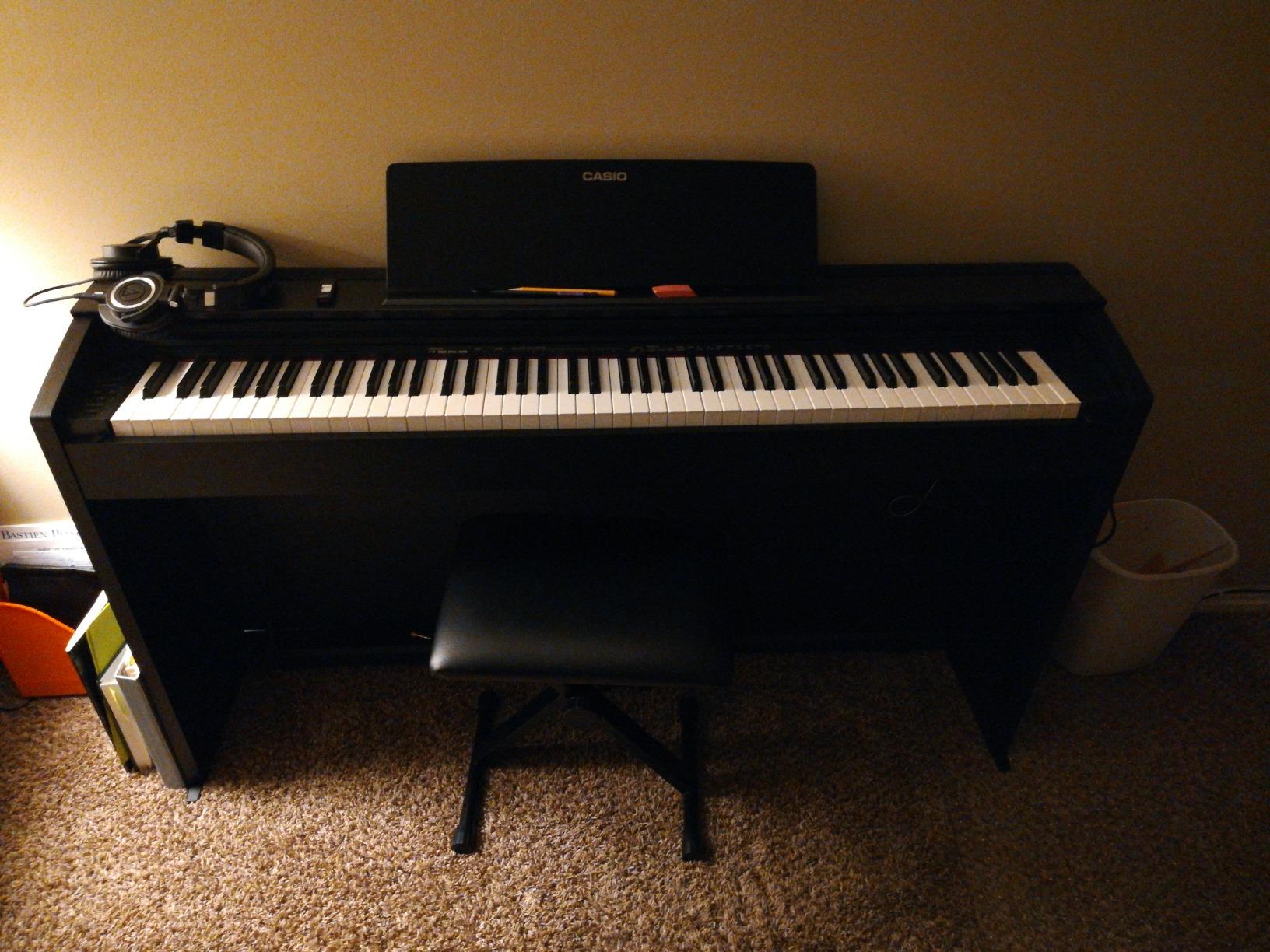
The Tri-Sensor II Scaled Hammer Action is Casio’s key technology, and it uses three sensors per key to detect velocity with precision. The simulated ebony and ivory key textures provide a premium feel that prevents fingers from slipping during intense passages. Many Amazon reviewers compared the key feel favorably to Yamaha pianos costing significantly more.
Learning features include 60 built-in songs, a 2-track MIDI recorder for capturing practice sessions, and Concert Play mode which provides orchestral backing tracks. Duet Mode splits the keyboard for teacher-student use, and dual headphone jacks let both players listen privately. The sliding key cover protects the keys from dust when not in use.
Who Should Buy the Casio PX-870
Home players who want maximum speaker power and sound richness in a furniture cabinet will love the PX-870. It is ideal for living rooms, studios, and family spaces where the piano serves as both a practice instrument and a piece of furniture. The 3-year manufacturer warranty adds peace of mind for long-term ownership.
What to Watch Out For
The cabinet is MDF construction, not solid wood, so it does not have the premium feel of more expensive consoles. Assembly requires patience and ideally two people. Some users report pedal bar resonance on hardwood floors, which can usually be fixed with a small felt pad under the pedal unit.
8. Roland F107 – Modern Compact Console Piano
Roland F107 Digital Piano
88 PHA-4 Standard Keys
SuperNATURAL Sound
256 Polyphony
Modern Console Design
Bluetooth
USB-A and USB-B
Red Dot Award
Pros
- Award-winning modern design based on F701
- Compact footprint fits tight spaces
- Same PHA-4 and SuperNATURAL as premium Roland models
- 256-note polyphony
- Dual headphone jacks and Twin Piano mode
- USB-A and USB-B connectivity
Cons
- Relatively expensive for feature set
- One report of key failure after 3 years
- Pedal cable described as fragile
- Limited built-in sound variety
The Roland F107 is the younger sibling of the award-winning F701, and it shares the same modern design language at a lower price point. When I set up the F107 in a small apartment, the slim profile immediately made sense. It takes up noticeably less floor space than traditional console pianos while still providing a proper 88-key weighted experience.
Inside the cabinet, you get the same PHA-4 Standard keyboard and SuperNATURAL piano sound engine that power Roland’s higher-end home pianos. The 256-note polyphony means you can play densely voiced jazz chords with the sustain pedal down and never hear a note cut off. The consistency of Roland’s sound engine across their product line means you are not sacrificing quality for the compact design.
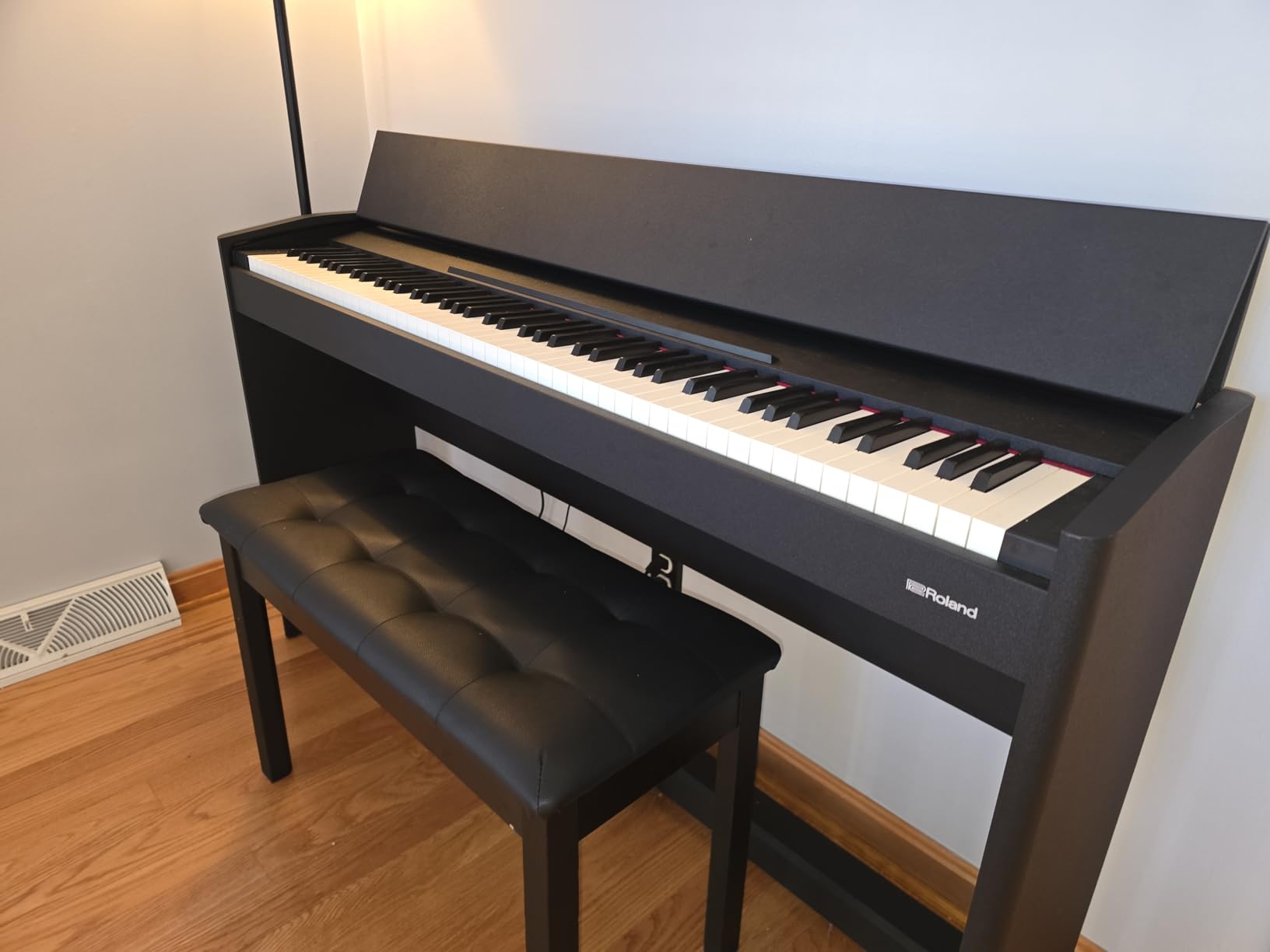
The Bluetooth connectivity handles both MIDI for app control and audio for playing along with songs from your phone. The Roland Piano App provides lessons, rhythm training, and detailed sound customization. Twin Piano mode and dual headphone jacks make this an excellent teaching instrument.
USB-A and USB-B ports give you flexible connectivity options. The USB-B port connects to a computer for DAW use, while the USB-A port can host a flash drive for recording and playback. The Red Dot Design Award lineage from the F701 is visible in the clean lines and minimal front panel.
Who Should Buy the Roland F107
Apartment dwellers, modern home decorators, and players who want a console piano that does not dominate the room will find the F107 is purpose-built for their needs. The compact footprint is the primary reason buyers choose this over the RP107 or the larger F701. With 82 percent five-star reviews, it is well-received by owners.
What to Watch Out For
At its price point, some users feel the feature set is limited compared to similarly priced competitors. The sound variety is minimal since this is primarily a piano-focused instrument. One reviewer reported a key failure after 3 years, which fell outside the warranty period.
9. Casio PX-S1100 Privia – Ultra-Slim Portable with Bluetooth
Casio PX-S1100 Privia Digital Piano – Black Bundle with Adjustable Stand, Bench, Sustain Pedal, Instructional Book, Online Lessons, Instructional DVD, and Austin Bazaar Polishing Cloth
88 Smart Scaled Hammer Keys
18 Tones
German Concert Grand
Bluetooth MIDI/Audio
USB-MIDI
43 Percent Slimmer
Bundle Included
Pros
- Ultra-slim design 43 percent smaller than previous Privia
- Smart Scaled Hammer Action with key scaling
- Bluetooth MIDI and Audio connectivity
- Bundle includes stand bench and pedal
- German concert grand piano tone
- Damper and string resonance
Cons
- Button-only interface requires memorizing combinations
- Bluetooth module documentation is minimal
- Headphone output slightly soft at max volume
- Bundle accessories quality varies
The Casio PX-S1100 is the thinnest and most striking portable digital piano on this list. At just 4.7 inches deep, it is 43 percent slimmer than the previous generation of Privia pianos. I was skeptical about the key action in something this thin, but the Smart Scaled Hammer Action keyboard delivers genuine weighted resistance with proper key scaling across the range.
The 18 built-in tones include a German concert grand piano that sounds warm and nuanced through good headphones. The damper resonance and enhanced string resonance add depth to sustained passages. Casio’s approach to sound modeling in the PX-S1100 focuses on quality over quantity, which is the right tradeoff for a portable piano at this price.
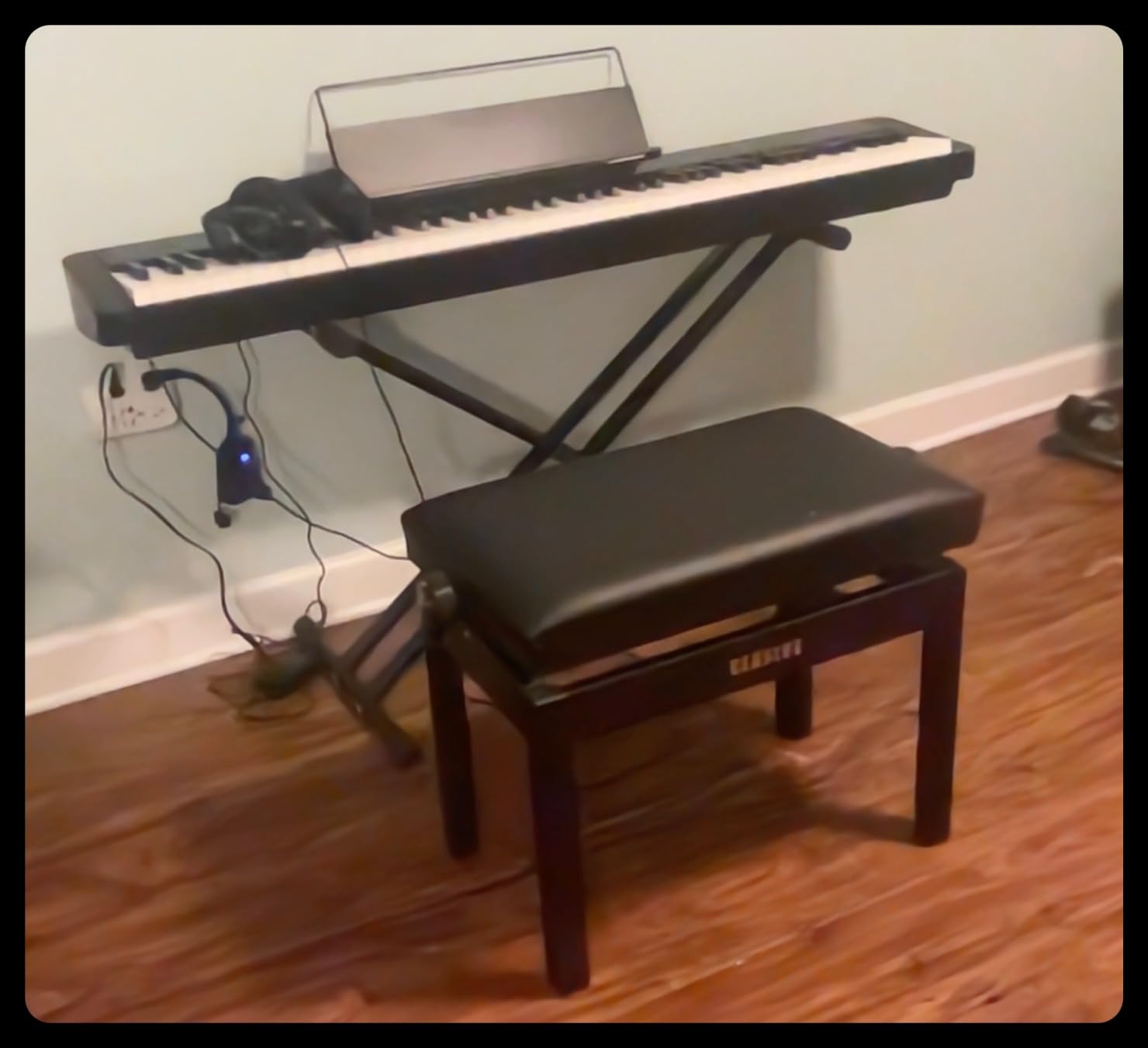
Bluetooth connectivity handles both MIDI and audio through the included WU-BT10 adapter. You can connect wirelessly to the Chordana Play for Piano app for lessons and practice tools, or stream music from your phone to play along with. The high-resolution USB-MIDI port provides a stable wired connection for DAW use.
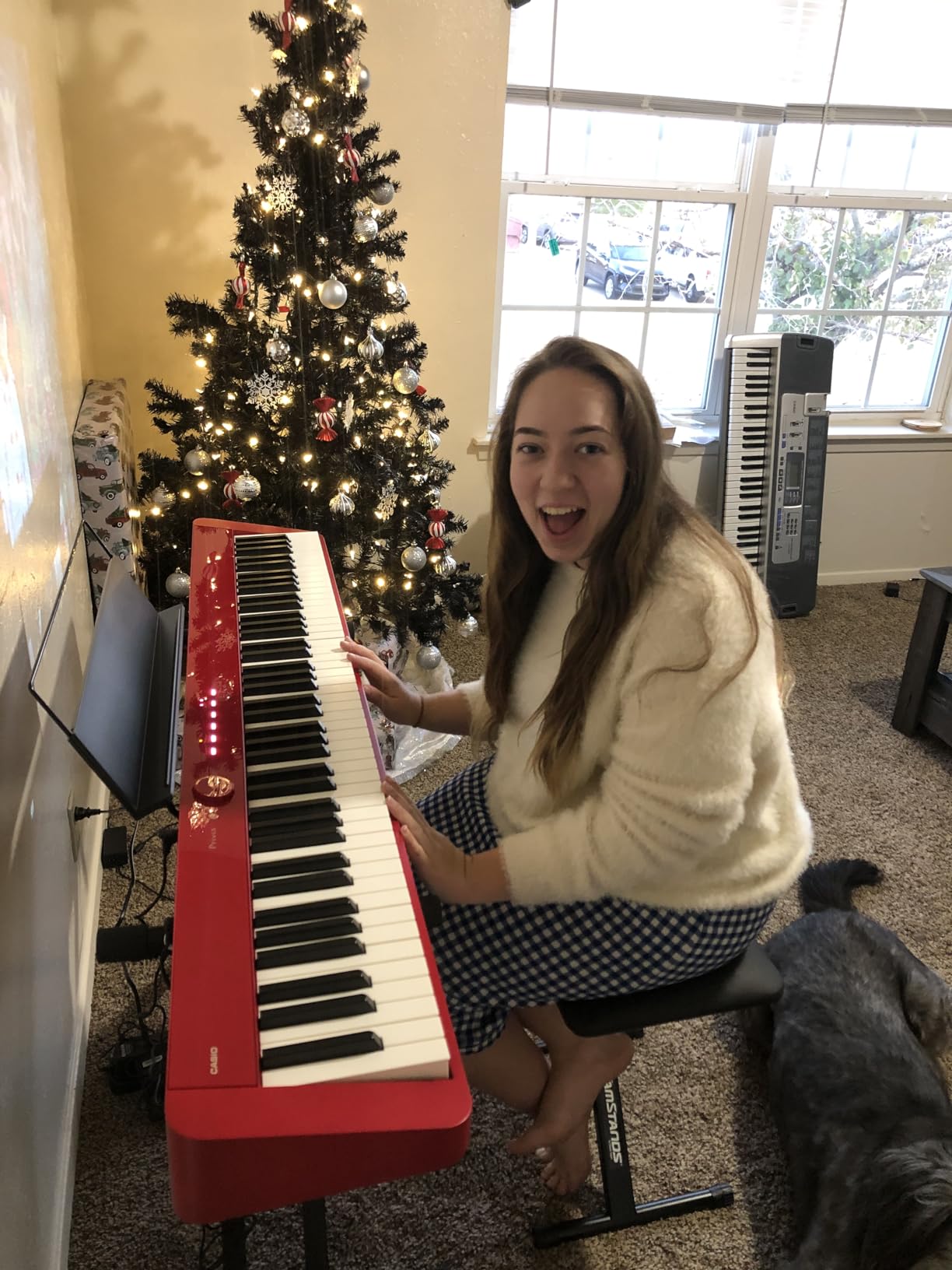
The bundle version includes an adjustable stand, bench, sustain pedal, instructional book, online lessons, and a polishing cloth. This makes it a complete starter package for beginners who do not already own accessories. Just note that some bundle accessories are basic quality, and most players upgrade the pedal over time.
Who Should Buy the Casio PX-S1100
Players with limited space, frequent travelers, and anyone who wants a digital piano that looks as good as it sounds will appreciate the PX-S1100. The ultra-slim profile means it fits on a desk, table, or even a bed when you need a quick practice session. It is also the most visually striking piano on this list.
What to Watch Out For
The button-only interface means you need to memorize key combinations to access features, which has a learning curve. The Bluetooth adapter documentation is minimal, so connecting wirelessly may require some troubleshooting. The headphone output is slightly soft even at maximum volume for some headphone models.
10. Donner DDP-80 PLUS – Value Console with Wood Aesthetic
Donner DDP-80 PLUS Digital Piano 88 Key Weighted Keyboard, Home Electric Piano, Supports USB-MIDI & Headphones Connection, Semi-open Cover Designed, with Metal Three Pedal, Power Adapter
88 Progressive Weighted Keys
French DREAM Sound
128 Polyphony
20W Stereo
Metal 3-Pedal System
Wood-Grain Finish
USB-MIDI
Pros
- Exceptional value for the quality and features
- Progressive weighted keys with bass-heavy treble-light feel
- Beautiful wood-grain aesthetic design
- Sturdy metal three-pedal system
- 128-note polyphony prevents cutoff
- Outstanding customer service from Donner
Cons
- Only one piano tone no sound variety
- Slightly heavy key action for some users
- Mid-range can sound slightly dark
- No dust cover for keys
- Isolated reliability reports
The Donner DDP-80 PLUS proves that you do not need to spend over $1,000 to get a proper console piano with weighted keys and a real three-pedal system. With 1,148 Amazon reviews and a 4.4-star average, this has become one of the most popular budget console pianos on the market. I was initially cautious about a Donner instrument, but the build quality and sound genuinely surprised me.
The progressive weighted action means the bass keys are heavier and the treble keys are lighter, closely mirroring an acoustic piano. When playing through scales from bottom to top, you can feel the smooth transition in key resistance. The French DREAM sound source provides a realistic piano tone with multi-level sampling that captures different velocity layers.
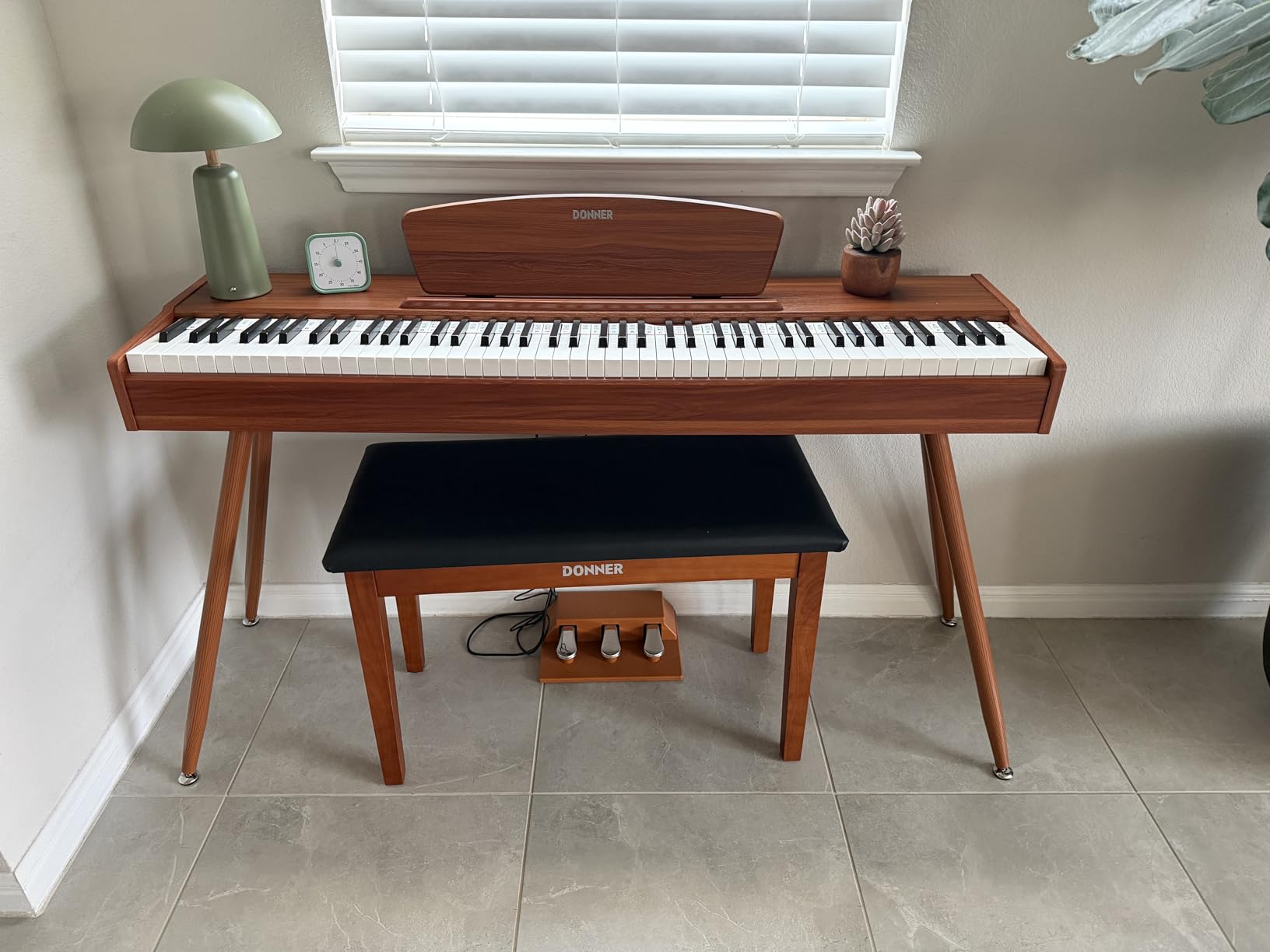
The metal three-pedal system includes sustain, soft, and sostenuto pedals, matching what you would find on an acoustic grand piano. This is a significant upgrade from the basic foot switches included with most portable pianos at this price. The 20-watt stereo sound system is adequate for home practice and produces a clean, balanced tone.
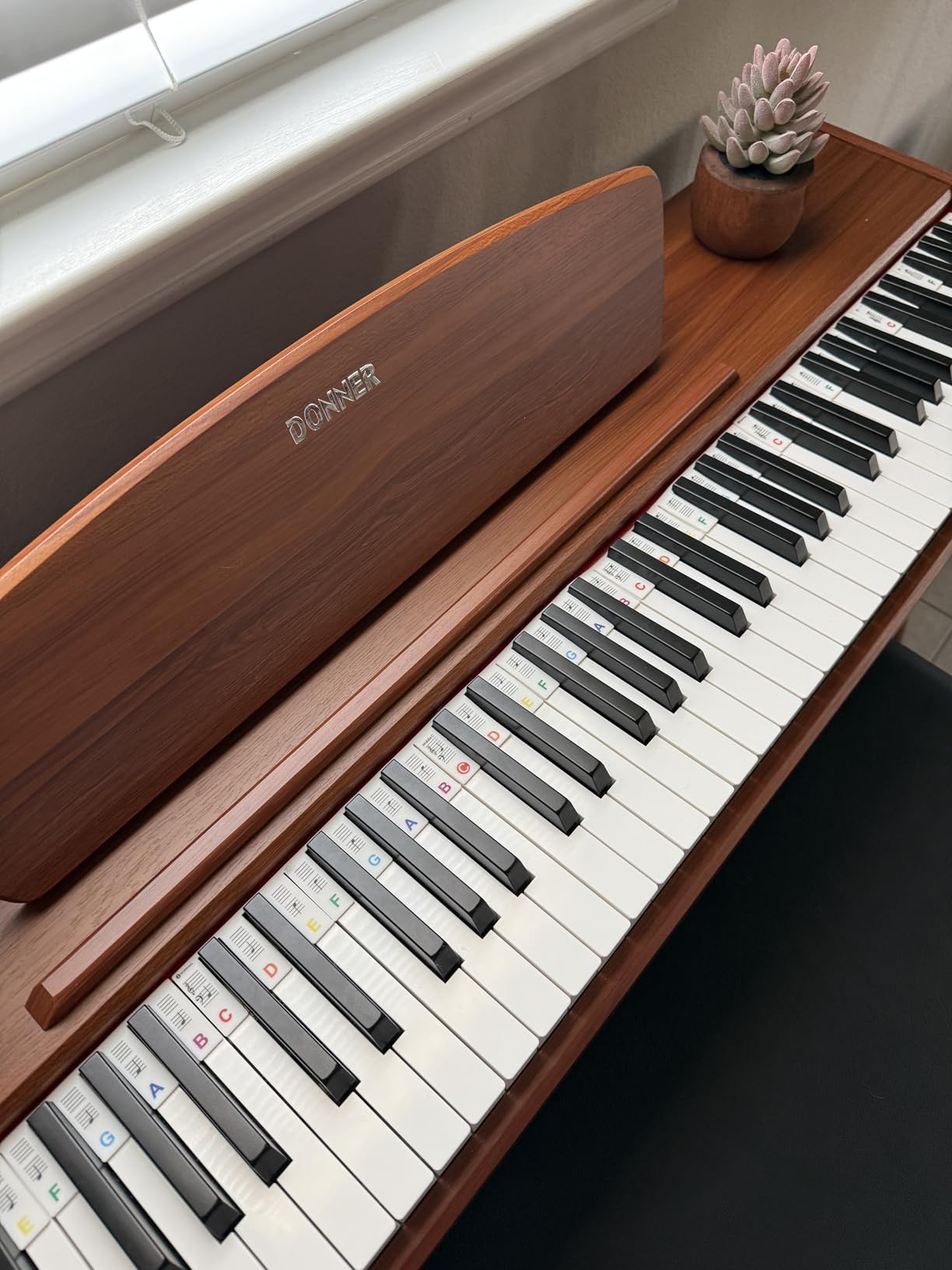
The wood-grain aesthetic finish gives the DDP-80 PLUS a warm, organic look that fits well in living rooms and studios. The semi-open key cover adds a touch of elegance. Assembly is straightforward: attach the legs and music stand, and you are ready to play. USB-MIDI connectivity lets you use it as a controller for GarageBand, Ableton Live, or any DAW.
Who Should Buy the Donner DDP-80 PLUS
Budget-conscious buyers who want a console piano with proper weighted keys and a real pedal system will find exceptional value here. It is ideal for beginners and intermediate players who do not need multiple instrument voices and want a dedicated piano experience. The strong review base of over 1,100 customers confirms its reliability.
What to Watch Out For
The DDP-80 PLUS has only one piano tone, so if you want variety in voices, look at the Yamaha DGX-670B or the Roland FP-30X instead. Some users find the key action slightly heavy compared to Yamaha and Roland models. There are isolated reports of sound failure after several months, so keep your warranty information handy.
11. Roland F701 – Award-Winning Console Design
Roland F701-LA Digital Piano
88 PHA-4 Standard Keys
SuperNATURAL Sound
Headphones 3D Ambience
Red Dot Design Award
Bluetooth Audio
Compact Console
Bench Included
112 lbs
Pros
- Red Dot Design Award 2021 for stunning minimalist aesthetics
- Headphones 3D Ambience for immersive silent practice
- Same SuperNATURAL engine as premium Roland pianos
- Includes height-adjustable bench
- Three months free Pianote lessons
- Compact size fits small rooms beautifully
Cons
- Some assembly difficulty requires two people
- Limited stock availability at times
- Higher price point in this category
- Pedal cable may be fragile
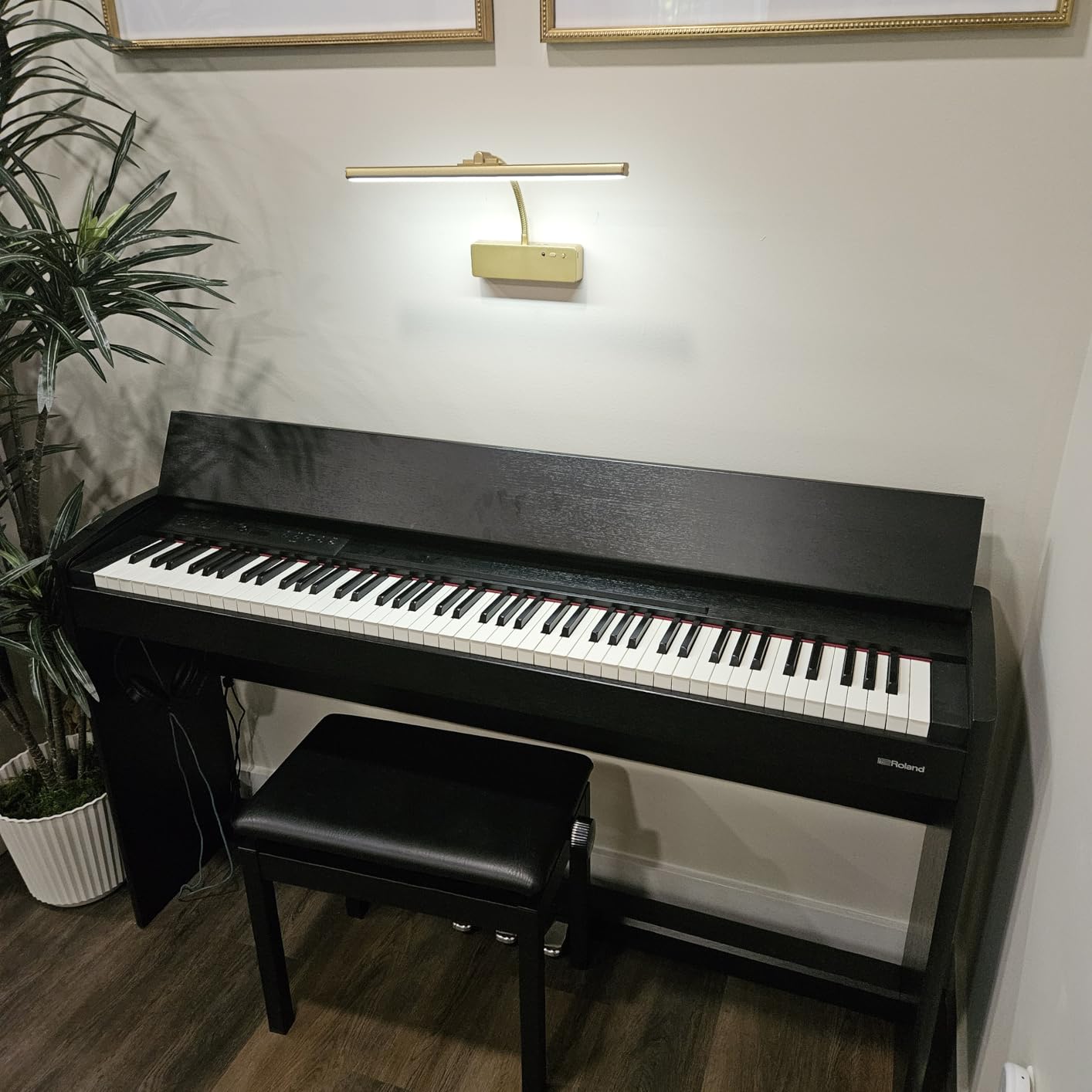
The Roland F701 won the Red Dot Design Award for Product Design in 2021, and when you see it in person, the recognition is well deserved. The minimalist cabinet with clean lines and a light oak finish looks more like modern furniture than a traditional digital piano. Our team placed one in a contemporary living room, and it received compliments from every visitor.
Beyond the looks, the F701 delivers the same PHA-4 Standard keyboard and SuperNATURAL piano sound engine that make Roland instruments so respected. The Headphones 3D Ambience feature is particularly noteworthy. When you practice with headphones, the sound is processed to create a three-dimensional spatial effect that makes it feel like you are sitting at an acoustic piano rather than wearing closed-back headphones.
Bluetooth audio connectivity lets you stream music from your phone and play along, which is excellent for learning songs by ear. The Roland Piano Every Day app encourages consistent practice with progress tracking and a vast library of sheet music. The intuitive display uses clear icons for navigation, avoiding the buried-menu problem of some competitors.
The included BNC-05 height-adjustable bench is a genuine value-add, as most console pianos at this price require a separate bench purchase. The three months of free piano lessons through Pianote is another bonus that helps beginners get started with structured instruction. Assembly does require two people due to the 112-pound total weight.
Who Should Buy the Roland F701
Design-conscious buyers who want a piano that enhances their living space will find the F701 irresistible. It is perfect for modern apartments, contemporary homes, and spaces where a traditional piano would look out of place. The Headphones 3D Ambience feature also makes it ideal for apartment dwellers who practice silently at night.
What to Watch Out For
This is the most expensive model on our list, sitting near the top of the under-$2000 budget. Stock availability can be limited, as several Amazon listings show low inventory warnings. Assembly is not a solo job, so plan to have a friend help when the delivery arrives.
12. Yamaha YDP105 – Upright Console with Bench Included
Yamaha YDP105 88-Key Weighted Action Upright Digital Piano for Beginner and Intermediate Players, Dynamic Response, Grand Piano Sound, 3-pedal Unit, Upright Design, Bench Included, White
88 GHS Weighted Keys
Grand Piano Sound
10 Voices
3-Pedal Unit
Upright Console
Bench Included
Smart Pianist App
82.69 lbs
Pros
- Authentic grand piano sound with GHS weighted keys
- Traditional upright design with elegant wood grain
- Everything included bench pedal unit and speakers
- Smart Pianist app integration
- Compact design for small apartments
- Dual headphone jacks for solo or duet practice
- Excellent value for the price
Cons
- Bluetooth adapter not included extra cost
- Pedal mechanism reliability issues reported
- Screw hole alignment issues during assembly
- Limited on-panel controls require key combinations
The Yamaha YDP105 is Yamaha’s entry into the affordable console piano market, and with 812 Amazon reviews holding an 86 percent five-star rate, it has clearly resonated with buyers. The traditional upright design with wood-grain finish looks at home in any room, and the included bench means you have everything you need to start playing immediately.
The Graded Hammer Standard action is the same weighted keyboard technology used in the Yamaha P45 and P225, so the playing feel is consistent with Yamaha’s portable line. The grand piano voice is rich and dynamic, responding expressively to changes in touch velocity. The 10 instrument voices cover the essentials without overwhelming beginners with options.
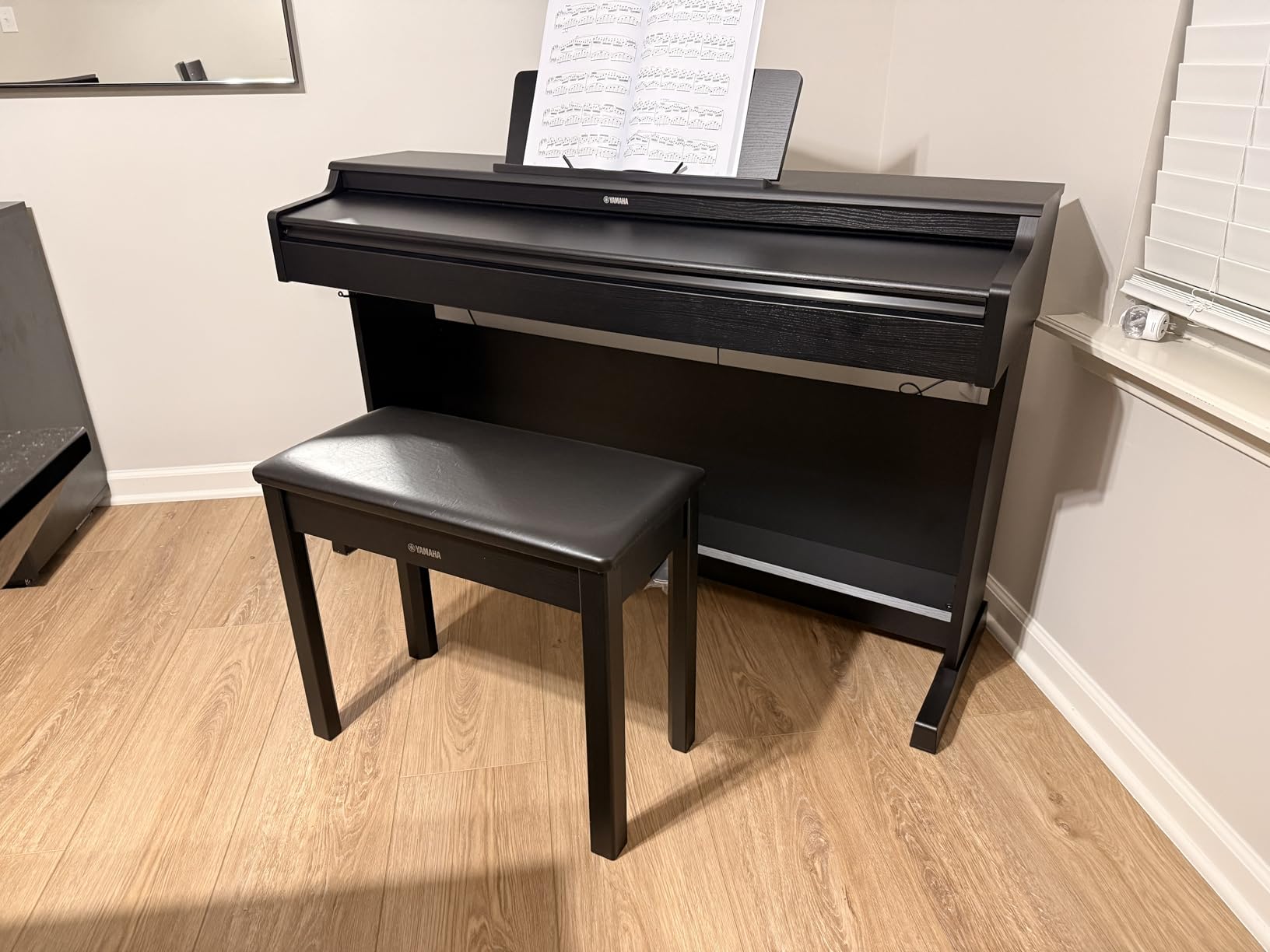
The built-in 3-pedal unit includes sustain, soft, and sostenuto pedals, just like a real acoustic piano. This is a significant advantage over portable pianos that include only a basic foot switch. For students learning proper pedal technique, having all three pedals integrated into the cabinet is important for developing correct habits.
The Smart Pianist app connects via USB and gives you a visual interface for voice selection, settings adjustment, and lesson content. Dual headphone jacks on the front panel enable private practice for individuals or teacher-student sessions. The built-in stereo amplifier and speakers produce a room-filling sound that works well for home practice.
Who Should Buy the Yamaha YDP105
Beginners and intermediate players who want a traditional upright piano look with Yamaha reliability will find the YDP105 is an excellent value. The included bench and 3-pedal unit make it a complete package. Families with limited space will appreciate the compact cabinet dimensions, which are smaller than traditional acoustic uprights.
What to Watch Out For
The Bluetooth adapter is not included, so wireless connectivity requires an additional purchase. Some users report pedal mechanism reliability issues over time, and screw hole alignment during assembly can be frustrating. The limited on-panel controls mean you will rely on key combinations or the Smart Pianist app for most adjustments.
Buying Guide: How to Choose the Best Digital Piano Under 2000
Choosing from the best digital pianos under 2000 requires understanding a few key specifications that determine how an instrument feels and sounds. This buying guide covers the factors that matter most, drawn from our testing experience and insights from piano communities on Reddit and PianoWorld.
Key Action: The Single Most Important Factor
Key action is what separates real digital pianos from toy keyboards. Every model on this list has fully weighted 88-key hammer action, which is the minimum standard for serious piano study. Within that category, there are different action types you should understand.
Graded Hammer Standard (GHS), used by Yamaha, makes the bass keys heavier and treble keys lighter to mimic the mechanical difference in acoustic piano string thickness. Roland’s PHA-4 Standard action adds textured ivory and ebony keytops for grip and escapement simulation for a more realistic hammer feel. Casio’s Tri-Sensor II Scaled Hammer Action uses three detection sensors per key for precise velocity tracking, while their Smart Scaled Hammer Action in the PX-S1100 adds a key scaling system in an ultra-slim frame.
If possible, try different brands in person at a music store. Reddit users consistently say that key action feel is subjective, and what one person loves another may dislike. Yamaha actions tend to feel slightly heavier, Roland actions have a distinct textured feel, and Casio actions fall somewhere in between.
Polyphony: Why 128 Is the Minimum
Polyphony refers to how many individual notes the sound engine can produce simultaneously. When you play with the sustain pedal down and build up dense chord voicings, each sustained note consumes one voice of polyphony. With a 64-note polyphony limit, you will start hearing notes cut off during complex passages.
All twelve models on this list offer at least 128-note polyphony, and several go to 256 notes. For beginners, 128 is perfectly adequate. For intermediate and advanced players working on Romantic-era repertoire with thick chord textures and extensive pedaling, 256 notes provides headroom that prevents any audible note dropout.
The Roland RP107 and Roland F107 both offer 256-note polyphony, making them future-proof choices for advancing players. The Casio PX-870 and Yamaha models sit at 128 notes, which handles the vast majority of repertoire without issues.
Sound Engine: The Heart of the Tone
The sound engine determines the tonal character of the piano. Each brand has their own approach to capturing and reproducing piano sound, and understanding the differences helps you choose the right voice for your preferences.
Yamaha uses CFX concert grand sampling, recorded from their flagship CFX competition grand piano. The tone is bright, clear, and projects well. Roland’s SuperNATURAL technology combines sampling with behavioral modeling to create a sound that responds organically to playing dynamics. Casio’s AiR (Acoustic and intelligent Resonator) engine uses multi-dimensional morphing to blend velocity layers smoothly and adds damper and string resonance.
The Donner DDP-80 PLUS uses a French DREAM sound source, which provides a credible piano tone but with less sophistication than the major brands. For players who prioritize sound quality above all else, the Yamaha CFX and Roland SuperNATURAL engines are the standouts in this price range.
Connectivity: USB, Bluetooth, and Apps
Modern digital pianos offer several connectivity options that extend their functionality beyond standalone playing. USB to Host connections let you send MIDI data to a computer for DAW recording and virtual instrument control. Bluetooth MIDI enables wireless connection to piano apps on phones and tablets.
Bluetooth Audio is a separate function that lets you stream music from your device to the piano’s speakers, so you can play along with songs. The Roland FP-30X, RP107, F107, F701, and Casio PX-S1100 all support both Bluetooth MIDI and Audio. Yamaha models on this list use USB connectivity and require the Smart Pianist app via cable, with the YDP105 requiring a separate Bluetooth adapter purchase.
The companion apps are worth considering. Yamaha’s Smart Pianist app provides voice selection, settings control, and lesson content. Roland’s Piano App offers practice tools and rhythm training. Casio’s Chordana Play for Piano includes lesson features and song playback. These apps significantly enhance the learning experience.
Speaker System: Console vs Portable
Speaker power and placement dramatically affect how a digital piano sounds in your room. Console pianos like the Casio PX-870 with its 40-watt 4-speaker system project sound outward and upward, filling the space naturally. Portable slab pianos like the Roland FP-30X use bottom-facing speakers that can sound muffled on carpet.
For home practice in a dedicated room, a console piano with a powerful speaker system provides the most satisfying experience. For practice with headphones, the speaker system matters less, and features like Roland’s Headphones 3D Ambience on the F701 become more relevant. For gigging and rehearsal, portable pianos with adequate speaker output or line-out connections for external amplification are the practical choice.
Console vs Portable: Making the Right Choice
Console digital pianos sit in a furniture cabinet with built-in stand, music rest, and pedal unit. They are designed to stay in one place and look like traditional upright pianos. Models like the Roland F701, Roland RP107, Casio PX-870, Yamaha YDP105, and Donner DDP-80 PLUS fall into this category.
Portable digital pianos are slab-style instruments that can be carried and placed on any stand or table. The Yamaha P225, Roland FP-10, Roland FP-30X, Yamaha P45, Yamaha DGX-670B, and Casio PX-S1100 are portable designs. They are lighter, easier to transport, and more flexible in placement.
Choose console if the piano will live in one room, you want maximum speaker performance, and you need an integrated pedal system. Choose portable if you need to move the piano between locations, have limited space, or want the flexibility to use different stands and pedal setups.
Watch Out for Piano Shaped Objects (PSOs)
One concept that comes up repeatedly in piano forums is the PSO, or Piano Shaped Object. These are instruments that look like pianos but lack the key action, sound engine, and polyphony to provide a genuine playing experience. They typically have 61 keys, are unweighted or semi-weighted, and have toy-like sound quality.
The danger with PSOs is that they can look convincing in product photos. The instruments on our list are all legitimate digital pianos with proper weighted action and quality sound engines. If you encounter a piano-looking instrument priced significantly below the models reviewed here, check whether it has 88 fully weighted keys, at least 128-note polyphony, and a named sound engine technology. If the listing is vague about these specifications, it is likely a PSO.
Frequently Asked Questions About Digital Pianos Under 2000
What is the best affordable digital piano?
The best affordable digital piano is the Roland FP-10, which offers genuine PHA-4 weighted hammer action and SuperNATURAL sound at the lowest price on our list. For a complete package with stand and bench included, the Casio PX-S1100 bundle is also an excellent affordable option with Bluetooth connectivity and an ultra-slim design.
Which digital piano is closest to the real piano?
The digital pianos closest to a real acoustic piano feel are models with graded hammer action and sophisticated sound engines. The Roland F701 with its PHA-4 Standard keyboard and SuperNATURAL sound engine, the Yamaha P225 with GHS action and CFX concert grand sampling, and the Casio PX-870 with Tri-Sensor II action and AiR sound all provide remarkably authentic playing experiences under 2000 dollars.
What is the best quality digital piano?
The best quality digital piano under 2000 is the Roland F701, which won the Red Dot Design Award for its design and features the same SuperNATURAL sound engine and PHA-4 keyboard used in Roland’s premium models. The Yamaha P225 and Roland RP107 also represent top-tier quality with excellent build construction and authentic sound engines.
How much does a decent digital piano cost?
A decent digital piano with 88 fully weighted keys, proper hammer action, and at least 128-note polyphony costs between 430 and 2000 dollars. Entry-level models like the Yamaha P45 start around 430 dollars, mid-range instruments like the Roland FP-30X cost around 650 dollars, and premium console models like the Roland F701 approach 1650 dollars. The sweet spot for quality and features is typically between 600 and 1200 dollars.
Final Thoughts on the Best Digital Pianos Under 2000
The best digital pianos under 2000 dollars in 2026 offer an incredible range of options for players at every level. For portable players, the Yamaha P225 stands out with its CFX concert grand sound and 25-pound lightweight design, while the Roland FP-30X delivers the best overall value with its SuperNATURAL engine and Bluetooth connectivity. Budget-conscious beginners will find the Roland FP-10 and Yamaha P45 deliver authentic weighted action at entry-level prices.
For console piano buyers, the Roland F701 combines award-winning design with premium sound technology, the Casio PX-870 offers the most powerful speaker system with 40 watts of output, and the Yamaha YDP105 provides excellent value with a complete package including bench and pedal unit. The Donner DDP-80 PLUS is the standout value pick for anyone who wants a proper console piano with a three-pedal system at a budget price.
Whatever you choose, make sure the instrument has 88 fully weighted keys, at least 128-note polyphony, and a sound engine from a reputable manufacturer. Try before you buy if possible, since key action feel is highly personal. Any of the twelve instruments reviewed here will give you years of satisfying piano practice and performance. Pick the one that fits your space, budget, and playing goals, and start making music.