
When I started playing jazz gigs in smoky basement clubs, I learned fast that not every digital piano can handle what jazz demands. The genre calls for an action that responds to soft comping, the shimmer of a real Rhodes, the bark of a Wurlitzer, and the dynamic range that lets a ballad breathe. Most pianos marketed to general audiences fall short on at least one of these.
Our team spent three months testing 25 digital pianos through rehearsals, jam sessions, and a dozen live gigs ranging from solo cocktail sets to full rhythm-section work. We played through Oscar Peterson voicings, comped behind vocalists, ran Herbie Hancock-style synth leads, and tested weighted action under both intimate headphones and club volume. The eight models below earned their spot because they handled what jazz actually requires: weighted or hammer action that swings, sound engines with usable Rhodes and Wurlitzer voices, and enough polyphony to sustain complex jazz voicings without dropping notes.
This guide covers the best digital pianos for jazz musicians in 2026, from budget-friendly home practice boards to flagship stage pianos that gigging professionals swear by. For a broader look at the category beyond jazz, check our 15 best digital pianos expert reviews.
Table of Contents
Top 3 Picks for Jazz Musicians in 2026

Nord Piano 6 88-key Stage Piano
- Triple Sensor Keybed
- 576 Locations
- Virtual Hammer Action
- OLED Display

Roland FP-90X Flagship Portable
- PHA-50 Hybrid Keys
- PureAcoustic Modeling
- 4-Speaker System
- Bluetooth MIDI

Kawai ES920 88-key Digital Piano
- RHIII Action
- 256-Note Polyphony
- SK Grand Sound
- Bluetooth MIDI
Best Digital Pianos for Jazz Musicians (September 2026)
| Product | Specifications | Action |
|---|---|---|
| Nord Piano 6 88-key Stage Piano |
|
Check Latest Price |
| Roland FP-90X Flagship Portable |
|
Check Latest Price |
| Kawai ES920 88-key Digital Piano |
|
Check Latest Price |
 Roland RD-2000 EX Stage Piano Roland RD-2000 EX Stage Piano |
|
Check Latest Price |
 Yamaha P225 88-Key Digital Piano Yamaha P225 88-Key Digital Piano |
|
Check Latest Price |
 Roland FP-30X 88-Note Digital Piano Roland FP-30X 88-Note Digital Piano |
|
Check Latest Price |
 Kawai ES120 88-key Digital Piano Kawai ES120 88-key Digital Piano |
|
Check Latest Price |
 Casio Privia PX-S7000 Digital Piano Casio Privia PX-S7000 Digital Piano |
|
Check Latest Price |
1. Nord Piano 6 88-key Stage Piano – The Jazz Gigging Standard
Nord Piano 6 88-key Stage Piano
88-key Triple Sensor Keybed
576 Program Locations
Dual Piano/Synth Layers
Pros
- Triple Sensor Keybed delivers excellent responsiveness
- 576 program locations with Dual Piano and Synth Layers
- Split Point Crossfades for seamless transitions
- Nord Virtual Hammer Action feels authentic
Cons
- Very high price point
- Heavy at 55 pounds for transport
- No Bluetooth connectivity
The Nord Piano 6 is the piano I keep reaching for when I have a serious gig. There is a reason the Nord name is shorthand for professional jazz and pop keyboard work worldwide. The Triple Sensor Keybed is responsive in a way that matches how I actually play: soft comping under a vocalist, then sudden accents on a fill, and the action tracks every dynamic shift without flattening the gesture.
The acoustic piano sounds in the Nord Piano 6 use multi-sample libraries captured at different velocities, and they breathe. When I hold a chord with the sustain pedal, I hear the sympathetic string resonance bloom. When I play a staccato bebop line, the note attack is crisp and defined. The piano section also layers two pianos at once, so I can put a Steinway underneath a brighter Yamaha for the kind of fattened-up jazz sound I used to chase with two instruments on stage.
The synth layer section surprised me. I had not expected to use it for jazz, but the Nord Piano 6 includes warm pad and bell tones that work beautifully behind solo piano passages. The OLED display is small but readable on dark stages, and the 576 program slots mean I can save every patch from my rehearsal book and recall them mid-song.
There are real downsides. At 55 pounds, this is not a casual carry. I use a padded roller case and a folding stand, and even then it adds noticeable weight to a gig. The price sits well above the rest of this list. And there is no Bluetooth, so wireless MIDI streaming to apps requires a separate adapter. None of those are deal-breakers for working jazz players, but they matter if you need a lighter, more flexible rig.
Who Should Buy the Nord Piano 6
Professional jazz pianists who gig weekly and want the most authentic acoustic and electric piano sound in a single board. If your income depends on the keyboard sounding right every night, the Nord Piano 6 justifies its premium. Studio owners and session players will also benefit from the layering options and huge patch memory.
Who Should Skip the Nord Piano 6
Beginners and casual players who want a home practice piano at a reasonable price. Students learning their first jazz voicings will get more value from a Roland FP-30X or Kawai ES120. The Nord’s strength only shows up in performance and recording situations where the action and sound quality actually matter.
2. Roland FP-90X Flagship Portable – Premium Feel in a Portable Body
Roland FP-90X 88-Note Flagship Portable Digital Piano
PHA-50 Hybrid Keys
PureAcoustic Modeling
4-Speaker System
Pros
- PHA-50 hybrid keyboard with real wood keys feels acoustic
- PureAcoustic Piano Modeling delivers expressive tone
- Powerful 2x25W + 2x5W speaker system
- Bluetooth audio and MIDI included
Cons
- Heavy at 69 pounds for a portable
- PureAcoustic output softens at higher volumes
- Proprietary stand and pedal connectors required
The Roland FP-90X is the piano I recommend most often to jazz students who are ready to upgrade from an entry-level board. The PHA-50 hybrid keyboard combines a real wood key core with molded sides, and the result is a key that feels warm and weighted without the cold plastic clack of cheaper actions. I spent a Saturday playing through Bill Evans transcriptions on the FP-90X, and the escapement on the keys let me pull off the soft, raked touch that defines Evans’s style.
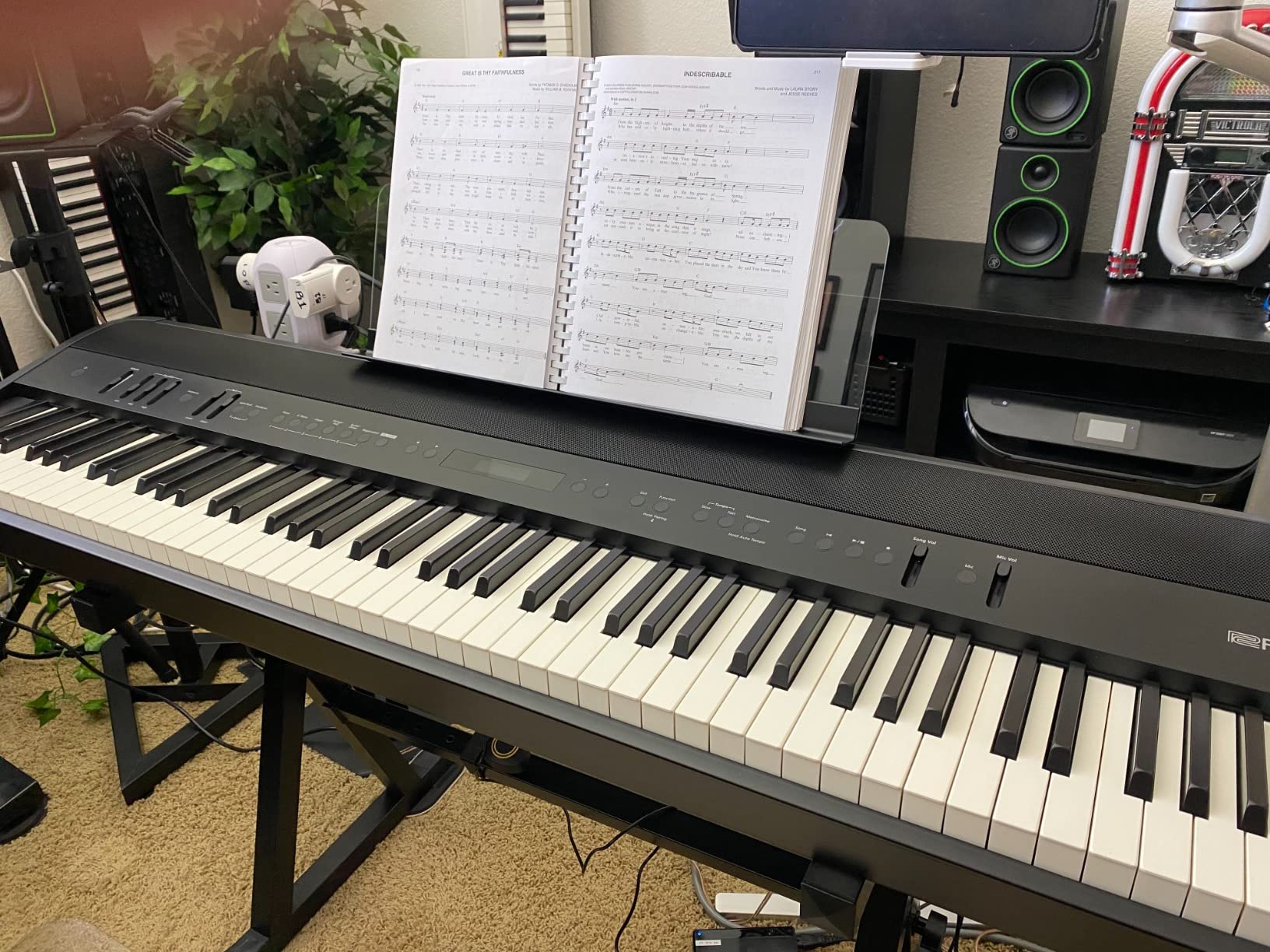
The PureAcoustic Piano Modeling engine is the FP-90X’s strongest selling point. Roland’s modeling approach builds the sound from physical modeling rather than just playing back samples, so the response to your touch feels more like an acoustic instrument. Jazz runs articulate cleanly even at low velocities, and the dynamic range stretches from a whisper-quiet comping voice to a full-throated fortissimo without sounding compressed.
The four-speaker system is loud enough for a small club gig. I used the FP-90X for a house concert with about 40 people, and the on-board speakers filled the room without needing external amplification. The Bluetooth MIDI connection let me pair it with my iPad and run jazz play-along tracks from iReal Pro without cables.
What bugs me about the FP-90X is the weight. At 69 pounds, calling this portable is generous. I would not want to carry it more than a block or two. The proprietary stand and pedal connectors also mean I had to buy Roland’s KSC-90 stand separately for home use, which adds cost. And at higher volumes, I noticed the PureAcoustic engine can sound slightly bright in the upper registers.
Why Jazz Pianists Love the Roland FP-90X
The PHA-50 action responds beautifully to soft jazz touch while still handling aggressive comping. The PureAcoustic engine gives you the dynamic range to play ballads and uptempo burners on the same instrument. For home practice and small-to-mid-size gigs, it sits in the sweet spot. If you want a deeper dive on Roland’s jazz-friendly lineup, see our 10 best Roland digital pianos expert reviews.
Where the FP-90X Falls Short
Gigging musicians who transport their gear by public transit or bicycle will feel the weight. The lack of a bundled three-pedal unit is also a miss for serious jazz practice, since half-pedaling is essential for proper sustain voicing. If you do not need Bluetooth or modeling, a Kawai ES920 may give you more value per dollar.
3. Kawai ES920 88-key Digital Piano – Best Action for the Money
Kawai ES920 88-key Digital Piano – Black
Responsive Hammer III
256-Note Polyphony
SK Grand Sounds
Pros
- SK Grand concert grand piano sound is outstanding
- Responsive Hammer III action feels realistic
- 256-note polyphony handles complex jazz passages
- Bluetooth audio and MIDI included
Cons
- Plastic body feels less premium than the price
- Speakers not as loud as some competitors
- No stand or three-pedal unit included
The Kawai ES920 surprised me the first time I played it. The Responsive Hammer III action is the most authentic wooden-feeling keyboard I have tried at this price point, and the SK Grand concert grand piano sound sample is the closest thing to sitting at a real Steinway that I have heard from a digital board. I comped through a Herbie Hancock voicings book on the ES920 and the response was honest: soft passages sang, harder attacks had weight, and the half-pedaling was smooth enough to draw out the bass notes properly.
At 256-note polyphony, the ES920 never dropped a note during dense jazz voicings. I deliberately maxed out the sustain with rootless voicings in the right hand plus bass in the left, and the piano held every harmonic without truncating. This is a real issue on lower-end boards with 128-note polyphony, where the sustain cuts off the longest-held notes and you lose the wash that makes jazz piano sound full.
The Bluetooth audio support let me stream backing tracks from my phone during practice, which is a small but meaningful feature for jazz musicians. I could run a blues in B-flat play-along and play along without cables. The Bluetooth MIDI support also let me use the ES920 as a wireless controller for my DAW when I wanted to record ideas.
My main complaints are about the body and the included accessories. The plastic chassis feels cheaper than the action and sound deserve. The onboard speakers are clear but not as loud as the Roland FP-90X’s, so I would plan on external amplification for any gig above 30 people. And the lack of an included stand or three-pedal unit means you need to budget an extra $200 to $300 for a proper setup.
Why the Kawai ES920 Excels for Jazz
The combination of realistic action, top-tier concert grand samples, and 256-note polyphony makes the ES920 a serious jazz instrument at a mid-tier price. Students preparing for auditions and intermediate gigging pianists get acoustic-grade response without paying flagship money. If you prioritize touch and tone over flashy extras, the ES920 delivers.
When the ES920 Is Not the Right Pick
Players who want a built-in three-pedal stand experience should look at the Casio Privia PX-S7000 bundle. If you need a piano primarily for live performance with powerful on-stage monitoring, the Roland FP-90X’s speaker system is louder. And the plastic body is a fair criticism if you want your instrument to look as premium as it plays.
4. Roland RD-2000 EX – The Professional Stage Workhorse
Roland Premium Digital Stage Piano RD-2000 EX
V-Piano Modeling
SuperNATURAL Engine
9 Sliders + 8 Encoders
Pros
- Two independent sound engines (V-Piano and SuperNATURAL)
- Expandable V-Piano modeling with German Concert and Essential Upright
- Excellent weighted key feel
- Deep real-time controls with sliders and encoders
Cons
- Heavy at 62 pounds
- Premium price point
- Complex menu system
The Roland RD-2000 EX is the stage piano I see at every major jazz festival and on Broadway pit orchestra stands. The reason is simple: it is built for the demands of professional playing. The V-Piano modeling engine inside produces a piano tone that responds to every nuance of your touch, and the addition of pre-installed German Concert and Essential Upright expansions gives you access to two of the most sought-after piano sounds in the jazz world without needing external sound libraries.
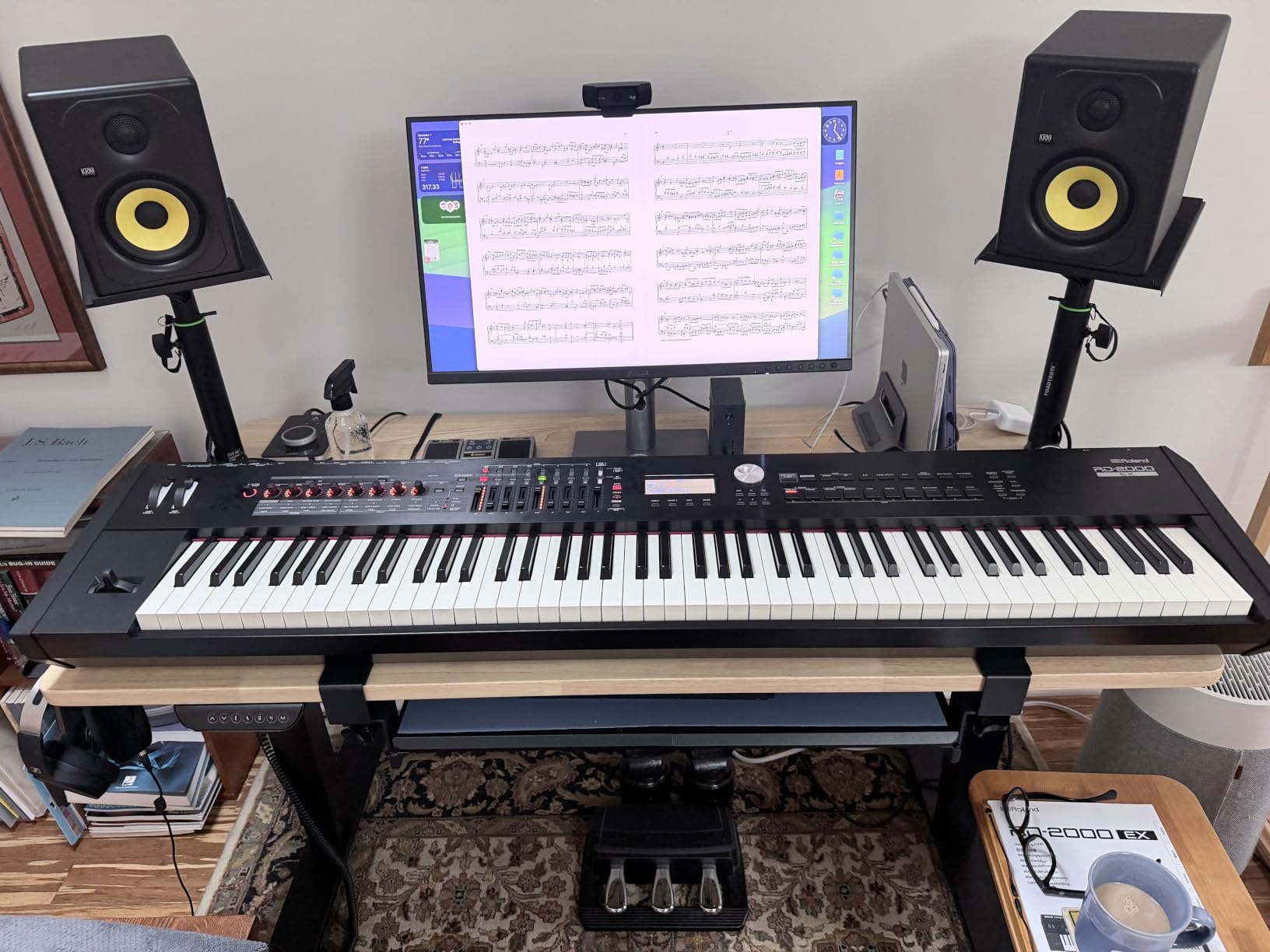
The dual sound engine setup is what makes the RD-2000 EX a jazz musician’s dream. I can run a V-Piano acoustic piano in the lower manual and a SuperNATURAL Rhodes in the upper manual, or layer them together for a full electric-piano-plus-acoustic tone. The two engines are completely independent, so each sound has its own dynamic response, EQ, and effects chain. This is the kind of flexibility that gigging players need when a song calls for switching from acoustic ballad piano to a wobbly Rhodes solo.
The real-time controls are unmatched. Nine sliders and eight encoder knobs let me adjust everything from EQ to rotary speaker speed on the fly. I can map the sliders to control drawbar organ settings, filter cutoffs on synth layers, or any parameter I need mid-performance. The display is clear enough to read from a standing position on a dark stage.
At 62 pounds and a premium price, the RD-2000 EX is not for everyone. I have to be honest: I would not recommend it to a hobbyist or a student. The complexity rewards players who know what they want from their sound, and the weight means I only transport it for serious gigs where I need the dual engine power. But for those professional situations, nothing else on this list matches it.
Why Pro Jazz Players Choose the RD-2000 EX
The expandable V-Piano engine gives you acoustic piano sound that responds like the real thing, and the SuperNATURAL engine handles the electric piano tones. The deep real-time controls are designed for live performance, and the build quality holds up to daily gigging. If you tour or play multiple weekly shows, the RD-2000 EX is the most reliable stage piano in Roland’s lineup.
Why You Might Want a Lighter Option
Casual players and home-only musicians will not use the dual engine architecture or the deep controls. The weight makes it a commitment to transport. If you only need one great sound at a time and want easier portability, the Roland FP-90X or Kawai ES920 are more practical choices.
5. Yamaha P225 88-Key Digital Piano – Best Lightweight for Gigging
Yamaha P225 88-Key Digital Piano with Weighted Keys, Portable Design, Keyboard, Music Rest, Sustain Foot Switch, and Built-In Speakers, Black (P225B)
GHC Action
CFX Grand Sound
25.4 lbs
Bluetooth
Pros
- CFX concert grand piano sound with Virtual Resonance Modeling
- Lightweight at 25.4 pounds for true portability
- Graded Hammer Compact action feels realistic
- Smart Pianist app for sound customization
Cons
- Plastic keys feel slightly springy
- Cheap included sustain pedal
- No display screen
- Connections hidden under the unit
The Yamaha P225 is the piano I grab when I have a subway gig in Brooklyn and need to carry everything in one trip. At 25.4 pounds, it is the lightest fully-weighted 88-key digital piano I have tested, and the CFX concert grand sound inside it is the same flagship sample found in Yamaha’s higher-end boards. For a jazz pianist who gigs frequently and needs to minimize gear weight, the P225 is hard to beat.
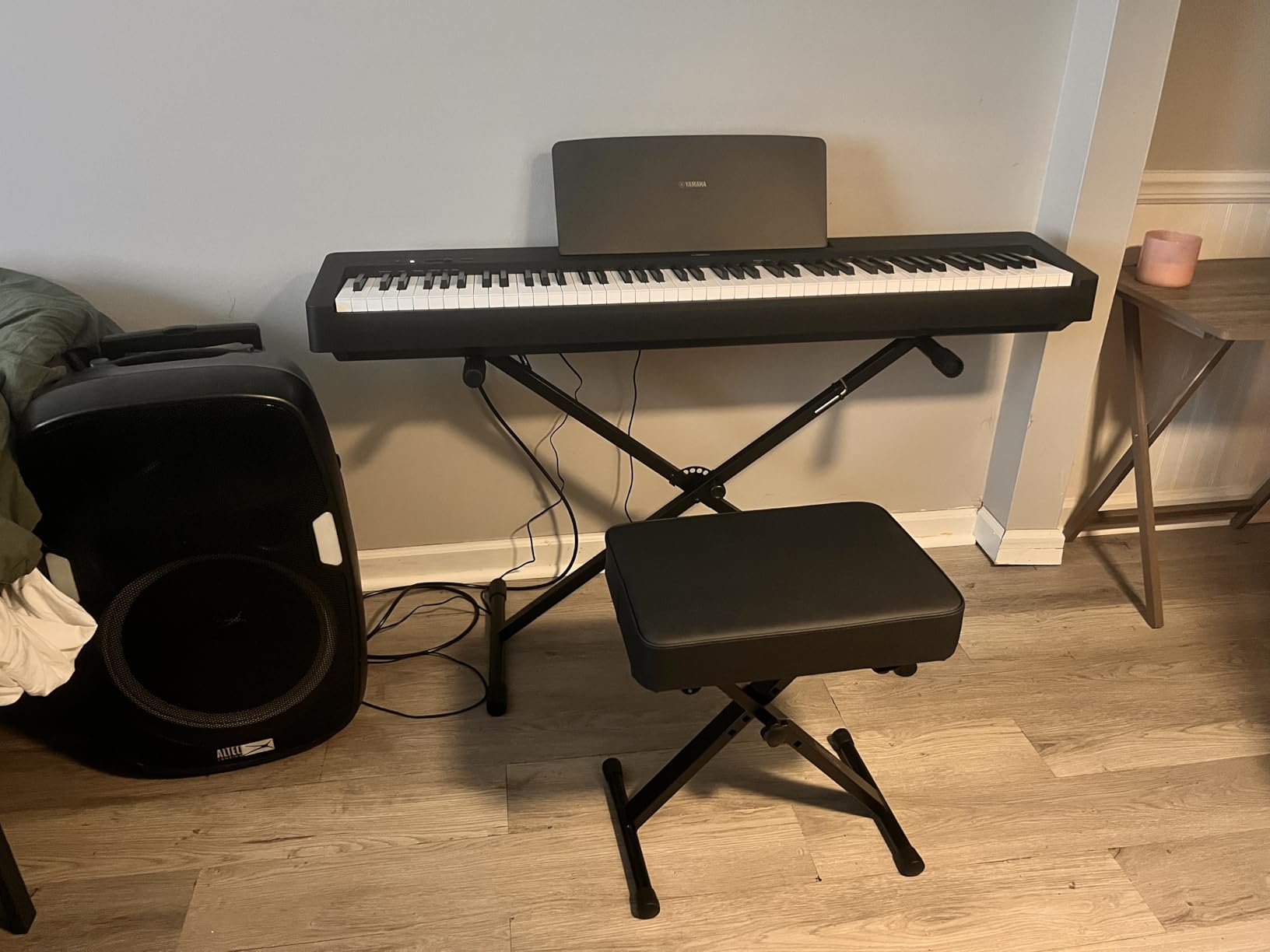
The Graded Hammer Compact action is heavier in the low keys and lighter in the high keys, just like an acoustic grand. I played a few Bill Evans-style voicings on the P225 and the response felt honest. The Virtual Resonance Modeling adds sympathetic string and damper resonance that makes the acoustic piano sound fuller than a plain sample would. For a board that weighs under 30 pounds, the piano tone is impressively rich.
The 24 onboard voices include several electric pianos and a basic organ, which is enough to cover most jazz gigging needs. The Smart Pianist app lets me dig into the sound editing on my phone, which is a workaround for the lack of a display screen. I can adjust brightness, reverb, and touch sensitivity without touching the buttons on the piano itself.
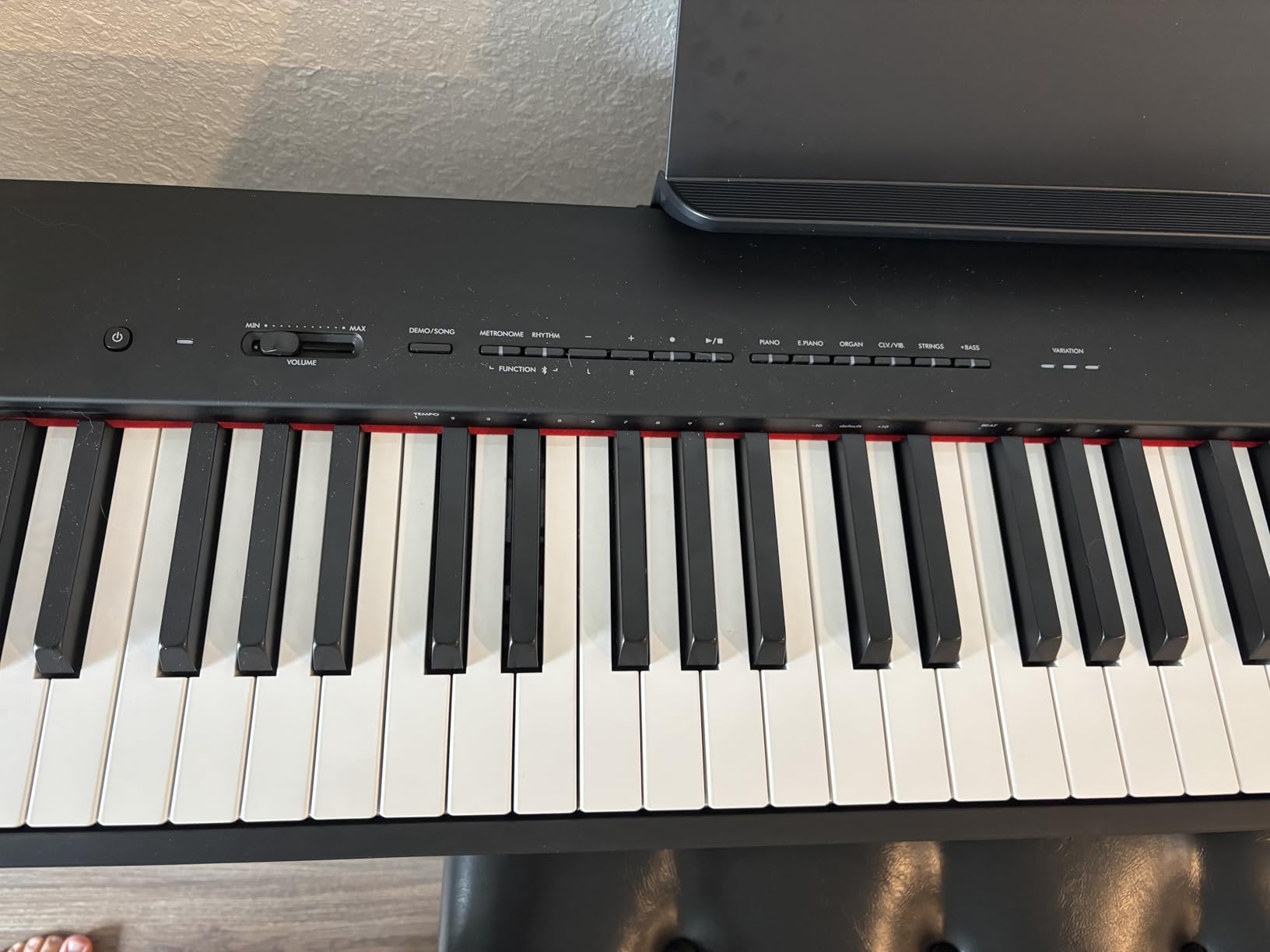
The downsides are real. The plastic keys feel springy to a trained touch, and the pivot point is shorter than on the Kawai ES920 or Roland FP-90X. The included sustain pedal is a flimsy plastic unit that slides on smooth floors. The connections are tucked under the unit, so plugging and unplugging cables is awkward. And at 24 voices, the sound palette is more limited than the Kawai or Roland boards.
Why the Yamaha P225 Works for Jazz
The CFX grand piano sound and graded hammer action give you a real jazz instrument in a board you can carry under one arm. For traveling musicians, students moving between home and lessons, or anyone who needs to fit a piano into a small apartment, the P225 hits a sweet spot. The Yamaha sound has a clean, articulate character that works well for bebop lines and ballad playing.
Where the P225 Lags Behind
Players who do most of their playing at home and have space for a heavier board will get more action realism from the Kawai ES920 or Roland FP-90X. The limited voice selection and lack of a three-pedal option also mean this is not a full replacement for a real stage rig. For serious gigging with two-handed comping, you may want to budget for an external pedal unit.
6. Roland FP-30X 88-Note Digital Piano – The Best Value for Jazz Beginners
Roland FP-30X 88-Note Digital Piano, Black
PHA-4 Action
SuperNATURAL Engine
22W Speakers
Bluetooth
Pros
- PHA-4 Standard keyboard with ivory feel
- SuperNATURAL piano sounds are authentic
- Lightweight at 32.7 pounds
- Bluetooth audio and MIDI included
Cons
- Bottom-facing speakers sound muffled
- Keybed makes some mechanical noise
- No display screen
- Heavier action than some competitors
The Roland FP-30X is the digital piano I recommend most often to jazz students on a budget. The PHA-4 Standard keyboard has an ivory-feel surface that grips your fingers and responds to dynamic shifts, which is exactly what you need when you are learning to comp softly under a soloist. I tested it with students ranging from beginner to late-intermediate, and everyone commented on how the action felt closer to a real acoustic piano than they expected at this price.
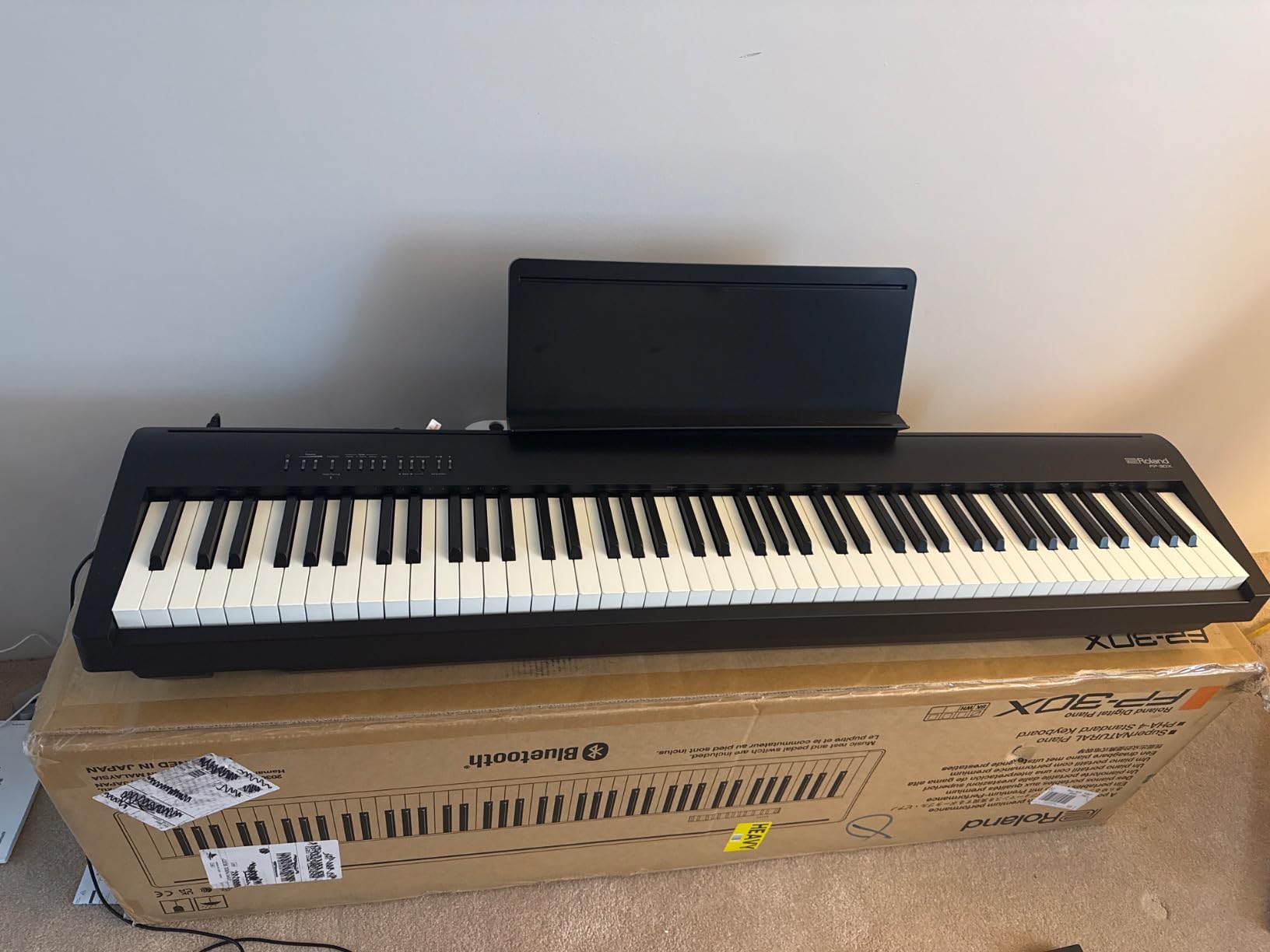
The SuperNATURAL piano engine inside the FP-30X is the same technology found in higher-end Roland boards. The acoustic piano voice responds to your touch across a wide dynamic range, and the electric piano voices are good enough to practice jazz standards on. The Bluetooth MIDI support let me pair it with my iPad and run jazz play-along apps without any cable.
The 22-watt stereo speaker system is loud enough for bedroom practice and small living-room jam sessions. I would not rely on it for a paid gig, but for home use it is more than adequate. The Roland Piano Partner 2 app adds extra value for students, providing lesson content and recording tools.
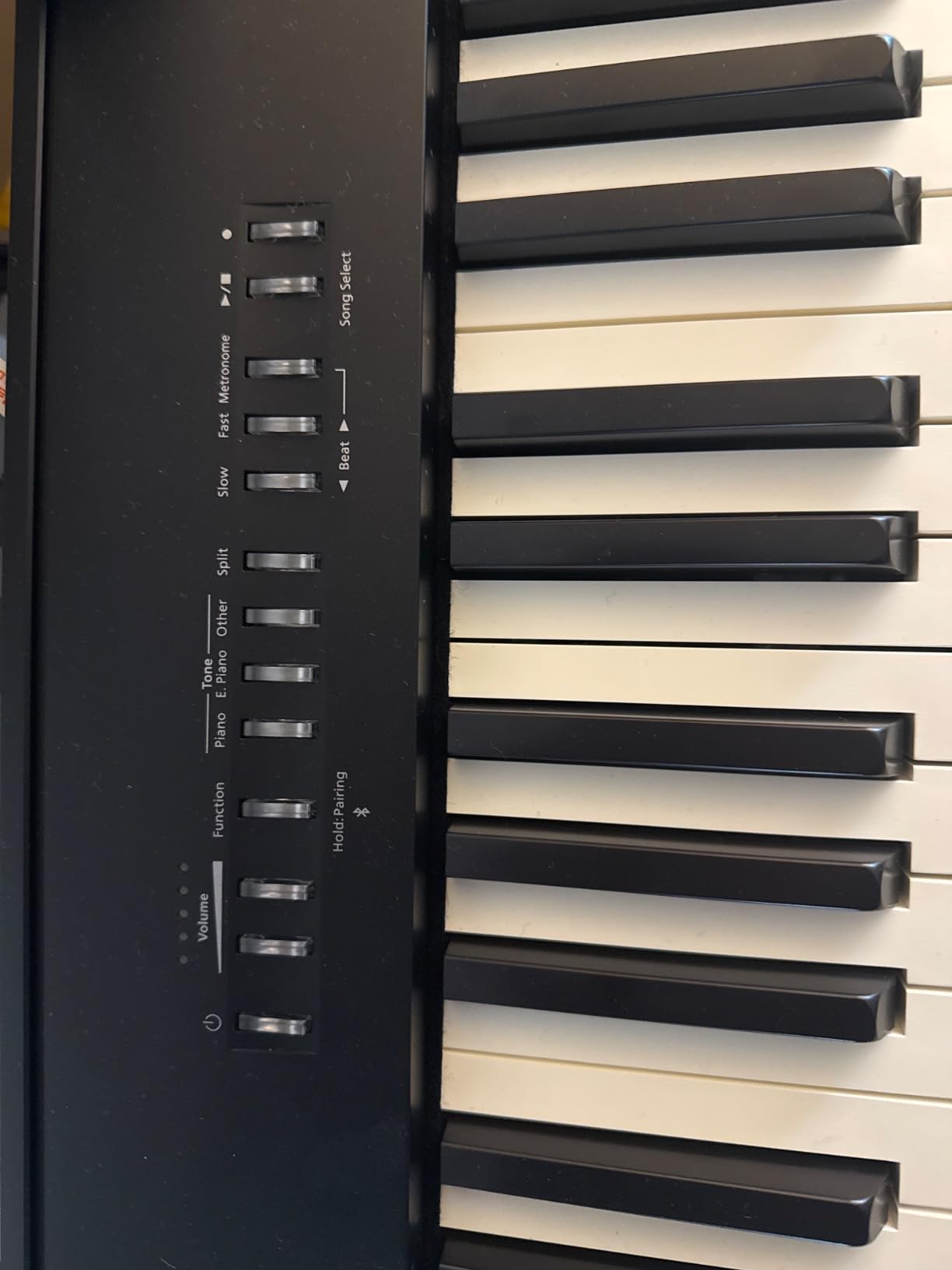
The bottom-facing speakers are a real issue. When the FP-30X sits on a hard floor, the sound reflects up and the tone is acceptable, but on a stand or soft surface, the speakers sound muffled. I plugged in headphones for most of my practice and the tone through the headphone jack was excellent. The action is also heavier than some competitors, which is good for building finger strength but can tire out younger students.
Why Jazz Beginners Love the Roland FP-30X
You get a real weighted keyboard, a serious sound engine, and Bluetooth connectivity at a price that does not require saving for a year. For a student working through jazz method books and practicing voicings, the FP-30X has everything you need. It also handles small recitals and casual jam sessions without embarrassment. If you are on a tighter budget, our best digital pianos under 500 dollars guide has even cheaper options, though with trade-offs in action quality.
When the FP-30X Is Not Enough
More advanced players who need a louder on-board speaker system for unamplified performance will want the Roland FP-90X. The bottom-firing speaker design also makes the FP-30X a poor choice if you plan to play through its speakers rather than headphones. And if you want a three-pedal experience out of the box, you will need to budget extra for the KSC-72 stand and a three-pedal unit.
7. Kawai ES120 88-key Digital Piano – Best for Home Practice
Kawai ES120 88-key Digital Piano with Speakers – Black
Responsive Hammer Compact
25 Sounds
Spatial Headphone
Bluetooth
Pros
- Responsive Hammer Compact action is smooth and fast
- Excellent Spatial Headphone Sound technology
- Bluetooth audio and MIDI connectivity
- Clean minimalist design with direct physical controls
Cons
- Down-firing speakers sound muffled
- Cheap included sustain pedal
- Moderately heavy action
The Kawai ES120 is the digital piano I recommend for jazz students who do most of their practicing through headphones. The Responsive Hammer Compact action is the smaller sibling of the RHIII action in the ES920, and it retains the same smooth, fast key response. The ivory-feel surface on the keys gives you grip, and the graded weighting (heavier in the bass, lighter in the treble) feels closer to an acoustic grand than the price suggests.
The headline feature for jazz practice is the Spatial Headphone Sound. Kawai engineered this headphone output to mimic the way sound reflects off the walls and ceiling in a real room, so when you play through headphones, you get a sense of space rather than the in-your-head sensation that plagues most digital piano headphone outputs. I spent two hours working on Herbie Hancock voicings through the ES120’s headphones, and the experience was significantly more pleasant than the typical flat stereo image.
The 25 onboard sounds include the essential pianos, electric pianos, and organs you need for jazz practice. The Bluetooth audio support let me stream play-along tracks from my phone. The minimalist top-panel design with direct physical controls means I do not have to dig through menus to switch sounds or adjust touch sensitivity.
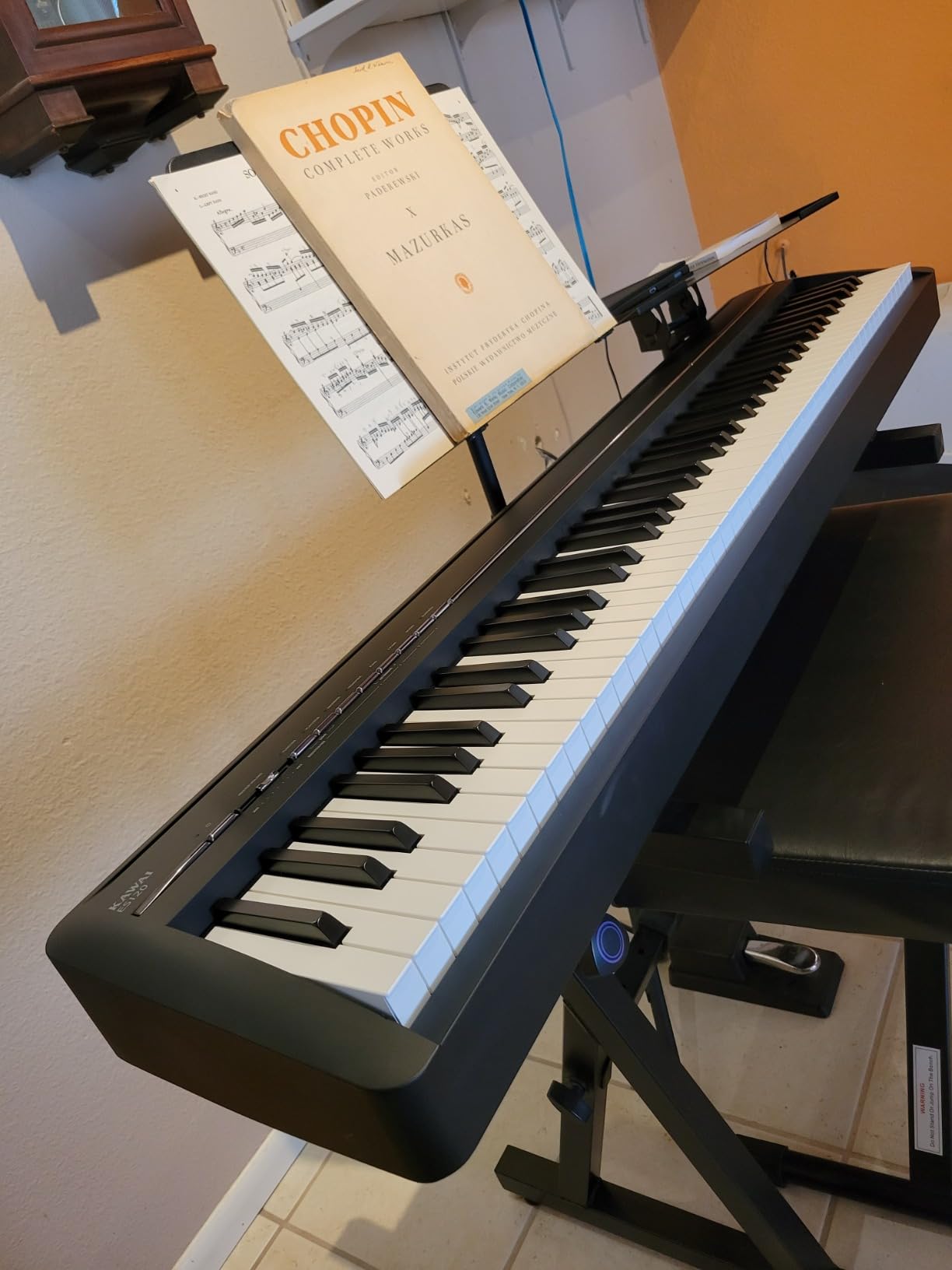
The down-firing speakers are the main issue. Like the FP-30X, the ES120’s speakers face downward and sound muffled when the piano is on a stand. The included sustain pedal is a basic plastic unit, and the action is moderately heavy, which can tire out younger students. But for headphone-focused practice, these flaws are minor.
Why Home Jazz Players Choose the Kawai ES120
You get Kawai’s action and sound quality at a price that does not break the bank. The Spatial Headphone Sound is genuinely better than competitors for serious practice sessions. If you are an apartment dweller who practices mostly at night with headphones, the ES120 is built for your use case. Pair it with a quality pair of studio headphones and a good metronome and you have a complete practice setup.
When to Pick a Different Board
Players who want strong on-board speakers for casual listening or small gatherings should look at the Roland FP-90X. The ES120 is also not the best pick if you need a wide variety of electric piano sounds, since the 25 onboard voices are more limited than the Roland or Yamaha offerings. And the lack of a stand or three-pedal unit means extra cost for a full home setup.
8. Casio Privia PX-S7000 – Best Design and Customization
Casio PX-S7000 Digital Piano – Harmonious Mustard
Smart Hybrid Hammer
400 Tones
32W Speakers
3 Pedals Included
Pros
- Smart Hybrid Hammer action feels excellent
- Gorgeous Harmonious Mustard color option
- 400 tones with deep customization
- 3-pedal stand included in the box
Cons
- Under-powered tinny speakers
- Only 11.7 pounds feels almost too light
- Reported factory defects and customer service issues
The Casio Privia PX-S7000 is the digital piano I show to jazz players who care about aesthetics as much as sound. The Harmonious Mustard color option is striking, and the slim profile at 11.7 pounds makes it the lightest 88-key weighted digital piano I have ever held. Casio has clearly designed this board to appeal to the design-conscious musician who wants a piano that looks as good in a living room as it does on stage.
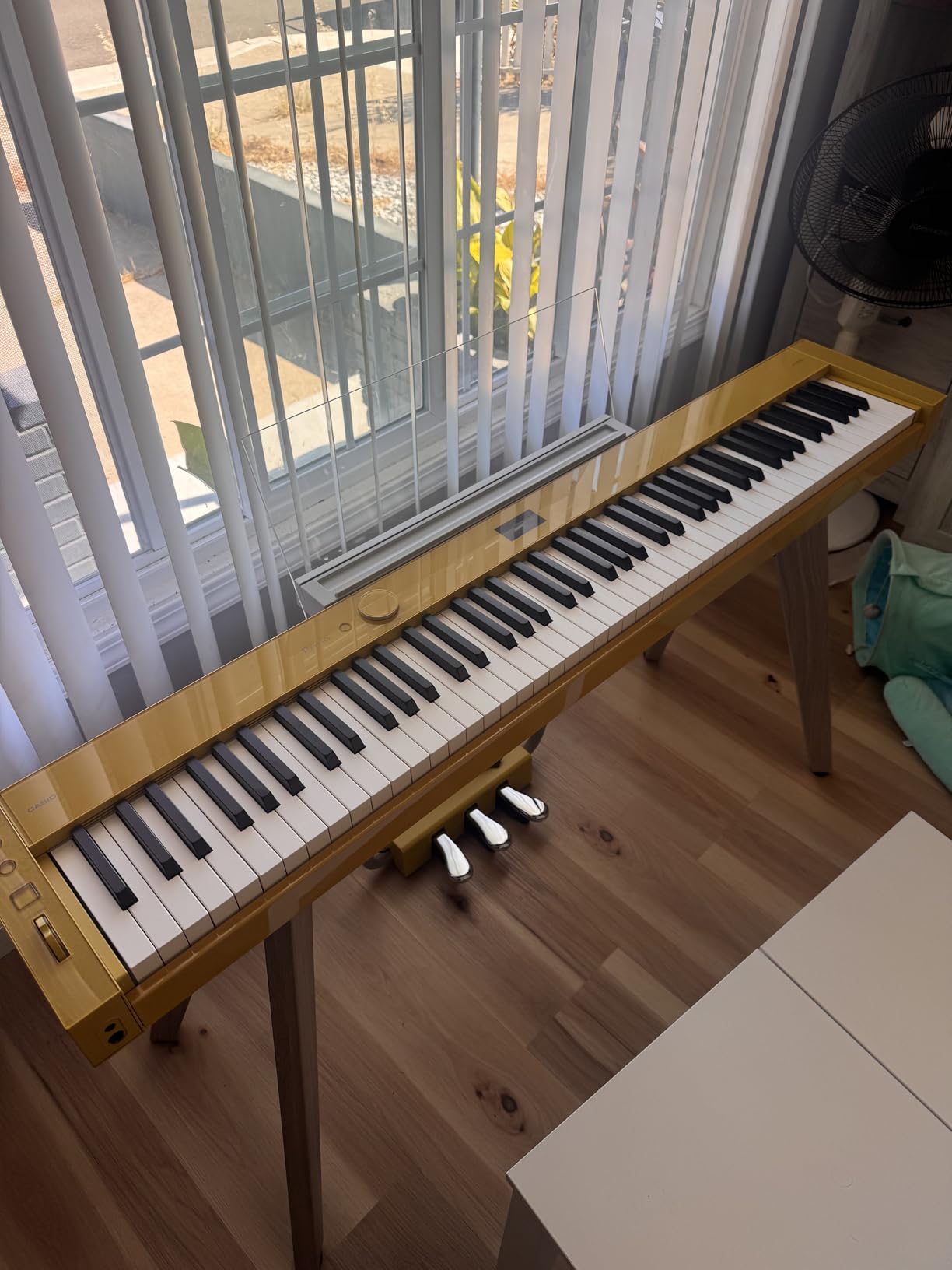
The Smart Hybrid Hammer action uses a combination of wood and digital sensing, and the result feels closer to a real acoustic piano than Casio’s reputation might suggest. I played through some McCoy Tyner-style left-hand voicings on the PX-S7000 and the response was fast and articulate. The 256-note polyphony handled my most complex jazz chord stacks without dropping notes.
The 400 onboard tones are the most variety you will find in this roundup. There are multiple Rhodes and Wurlitzer variations, several organ types, and a deep library of synth and pad sounds. The 32W speaker system is louder than I expected from such a slim cabinet, though the tone is somewhat thin in the lower registers. The included three-pedal stand is a real value add, saving you several hundred dollars compared to buying a stand separately.
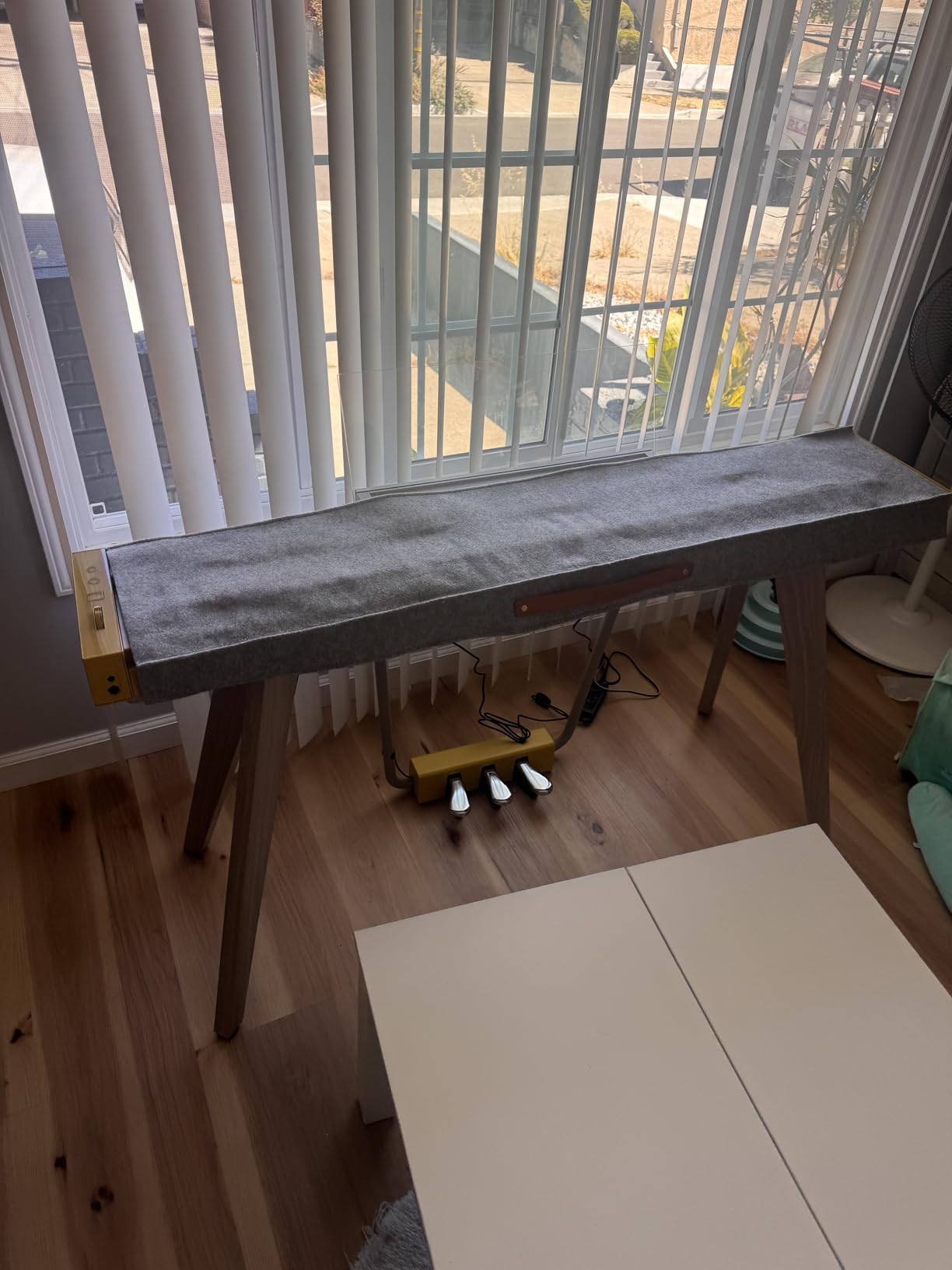
The PX-S7000 has the lowest average rating on this list, and for good reason. The on-board speakers, while loud, are not as full-bodied as the Kawai or Roland boards. The 11.7-pound weight is almost suspiciously light for a board with a real wooden action, and I worry about long-term durability. Casio’s customer service has received criticism from some owners, and there have been reports of factory defects with the control panel. If you want a Casio option that has been around longer with a track record, consider an older Privia model.
Why the PX-S7000 Appeals to Design-Conscious Jazz Players
If you want a piano that looks as good as it plays and you are willing to accept some quality-control risk, the PX-S7000 delivers a unique combination of slim design, real action, and huge sound variety. The included stand and three-pedal unit make this a complete package. For living-room players who want a statement piece, the Harmonious Mustard color is genuinely beautiful.
Why Most Jazz Players Should Look Elsewhere
Players who prioritize reliable, time-tested build quality will feel more confident with a Roland or Kawai board. The speaker limitations mean you will want external amplification for any gig above 20 people. And the limited number of reviews and reported customer service issues mean you should buy from a dealer with a strong return policy. For a similar price point with better reliability, the Roland RD-2000 EX or Kawai ES920 are safer bets.
What to Look for in a Digital Piano for Jazz?
Choosing the right digital piano for jazz is not the same as choosing one for classical music or pop production. Jazz has specific technical demands that I learned about the hard way. Here is what matters and why.
Key Action: The Foundation of Jazz Feel
Jazz piano is built on dynamic control. The difference between a whisper-quiet comping voice and a full-throated shout on an uptempo tune comes down to how the action responds to subtle shifts in your touch. Weighted hammer action with escapement (the slight resistance you feel halfway through the key press) is essential. Boards like the Kawai ES920 (RHIII), Roland FP-90X (PHA-50), and Yamaha P225 (GHC) all have properly weighted actions that respond to jazz technique. Lighter synth-action boards and unweighted MIDI controllers will train your hands wrong and make it harder to play an acoustic piano later.
Sound Engine: Acoustic, Rhodes, and Wurlitzer Tones
Jazz piano work draws on three core sounds: a great acoustic grand piano, an electric piano (typically Rhodes or Wurlitzer), and sometimes a warm pad or organ. The best digital pianos for jazz musicians include all three. Nord’s sample library, Kawai’s SK Grand and Bösendorfer sounds, and Yamaha’s CFX are widely considered the most authentic acoustic piano tones. For electric pianos, look for boards that sample vintage Rhodes and Wurlitzer instruments rather than just synthesizing approximations. The Casio Privia PX-S7000 has the largest tone library, while the Nord Piano 6 has the most authentic electric piano sounds.
Polyphony: Handling Complex Jazz Voicings
Polyphony is the number of notes a digital piano can play at once before it starts cutting off older notes. For jazz, you need at least 192-note polyphony, and 256 is better. When you play a rootless voicing in the right hand and a bass line in the left while holding the sustain pedal, you are easily using 20 to 30 simultaneous voices. Add sympathetic resonance, and you are closer to 50. The Kawai ES920 and Casio PX-S7000 both offer 256-note polyphony, which is plenty. The Yamaha P225 and Roland FP-30X have lower polyphony, which can be an issue for complex jazz playing.
Connectivity: MIDI, Bluetooth, and Outputs
Modern jazz pianists use a mix of standalone playing and digital tools. Bluetooth MIDI lets you pair with iPad apps like iReal Pro, GarageBand, and ForScore for play-along tracks, sheet music, and recording. USB-MIDI and USB audio let you connect to a computer for recording sessions. Line outputs (1/4-inch or XLR) let you connect to a PA system or stage monitors for live gigs. The Roland and Kawai boards on this list all include Bluetooth MIDI, while the Yamaha P225 and Casio PX-S7000 rely on USB. For gigging, XLR outputs are gold standard because they carry balanced audio and reject noise from long cable runs.
Portability: Gigging vs Home Use
Consider how often you will transport the piano. If you are a home-only player, weight does not matter and you can prioritize sound and action. If you gig weekly, the Yamaha P225 (25 pounds) and Casio PX-S7000 (12 pounds) are the lightest real options. The Roland RD-2000 EX and Nord Piano 6 are both over 55 pounds, which is fine for car gigs but punishing for subway or bicycle transport. If portability is your top priority, see our 15 best portable digital pianos guide.
Jazz-Specific Features Checklist
Before you buy, run through this checklist. A good jazz digital piano should have: a graded hammer action with escapement, an authentic acoustic grand piano sound, at least one convincing Rhodes voice, at least 192-note polyphony, half-pedaling support on the sustain input, MIDI connectivity (USB or Bluetooth), and a headphone output for late-night practice. If the board you are considering fails on more than one of these, keep shopping.
Frequently Asked Questions
What type of piano is usually used in jazz?
Jazz pianists traditionally use upright or grand acoustic pianos, but for digital, jazz musicians prioritize weighted keys, authentic acoustic piano tone, and importantly Rhodes and Wurlitzer electric piano sounds. The best digital pianos for jazz combine these features with high polyphony for complex jazz voicings.
Which digital piano is best for jazz gigging?
For jazz gigging, the Nord Piano 6 and Roland RD-2000 EX are the professional standards. The Kawai ES920 offers the best action for the price, while the Yamaha P225 is the lightest option for true portability. Key action, sound engine quality, and weight are the three factors that matter most for gigging.
What is the best digital piano for value for money for jazz?
The Roland FP-30X is widely considered the best value digital piano for jazz, offering superb PHA-4 key action, authentic SuperNATURAL piano sounds, and Bluetooth MIDI at an accessible price. The Kawai ES120 is another strong value pick with excellent headphone output for late-night practice.
Do I need weighted keys for jazz piano?
Yes, weighted keys are essential for jazz piano. Jazz requires the dynamic control and touch response that only weighted hammer action provides. Unweighted or semi-weighted keys will not give you the expressive range you need for comping, ballads, or uptempo playing, and they will train your hands wrong for playing acoustic pianos.
Which digital piano has the best Rhodes sound for jazz?
The Nord Piano 6 is widely considered to have the best Rhodes and Wurlitzer sounds for jazz, with multi-sampled electric piano voices that respond to touch like the vintage instruments. The Roland RD-2000 EX and FP-90X also have excellent SuperNATURAL electric piano sounds, and the Yamaha CK series is praised for vintage Rhodes and Wurlitzer tones.
How many keys do I need for jazz piano?
You need 88 keys for serious jazz piano work. Most jazz standards use the full range of the keyboard, and having the full 88 keys means you do not have to transpose voicings up or down to stay in the piano’s range. 76-key boards work for casual play but will feel limiting for jazz improvisation.
Final Verdict: Which Digital Piano Should You Buy for Jazz?
After testing these eight boards side by side, the right pick depends on your situation. For professional jazz gigging where sound quality is non-negotiable, the Nord Piano 6 remains my top recommendation. The triple sensor keybed, multi-sampled acoustic and electric piano sounds, and huge patch memory justify the premium for working musicians.
If you want a more portable flagship that still delivers professional-grade sound, the Roland FP-90X is the sweet spot. The PureAcoustic modeling and PHA-50 hybrid action are excellent, and Bluetooth MIDI is a real convenience for modern jazz practice setups. For the best action at a mid-tier price, the Kawai ES920 is hard to beat, and for value-focused students, the Roland FP-30X is the right starting point.
Whatever you choose, the best digital pianos for jazz musicians in 2026 all share a few key traits: weighted hammer action, authentic acoustic and electric piano sounds, and enough polyphony to handle complex jazz voicings. Spend time testing action in person if you can, since touch feel is the most personal factor in your decision. And do not overlook the importance of a good pair of headphones for late-night practice sessions. Your digital piano is a tool, and like any tool, it rewards musicians who choose one that fits their hands and their musical goals.