
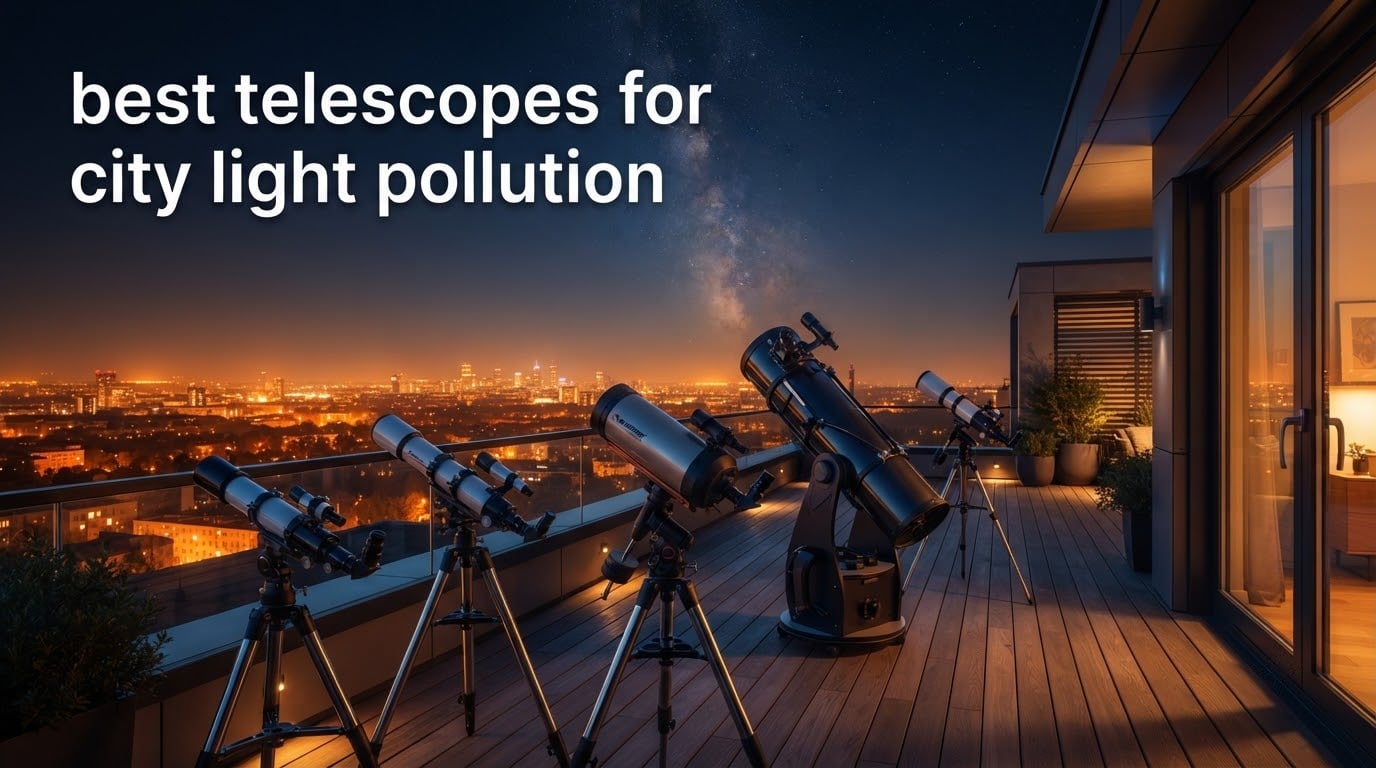
Yes, a telescope still works from a bright city or suburban sky, but it works on bright targets rather than faint ones. The Moon, the planets, double stars and open clusters all stay visible. What vanishes is contrast, not light. A big light bucket full of sky glow returns a washed-out grey image, so design and coatings decide whether a city session is worth doing at all.
That is the entire argument behind this roundup of the best telescopes for city light pollution in 2026. We compared eleven scopes that owners actually use from backyards, balconies and courtyards, then sorted them by the one thing that matters in a bright sky: how much usable contrast each one holds when the background is glowing. Plenty of popular advice on this topic is wrong, and plenty of it is very right, so we lay out both sides.
If you want the optical designs explained before you commit, our reflector telescope roundup goes deeper on optics. This page is built specifically around the urban problem, including the parts most roundups skip.
The short version of who should buy what: a sealed tube with strong multi-coatings is the safest bet under skyglow, a 200mm-class Dobsonian wins if you have a car and a garage, and a smart telescope is the only category here that fights skyglow directly in software. Start with the top three, then read the full entries to see which one matches your floor, your storage space and your tolerance for setup time.
Table of Contents
Top 3 Picks for City Light Pollution (October 2026)

Gskyer 70mm AZ Refractor
- 70mm fully coated objective
- 400mm focal length at f/5.7
- Altazimuth mount
- Carry bag and phone adapter
Gskyer 130EQ Reflector
- 130mm aperture
- 650mm at f/5 with German equatorial mount
- Three eyepieces and 3x Barlow

DWARFLAB Dwarf Mini
- 1.85 lb body
- EQ Mode with 90-second exposures
- Built-in light pollution filters and plate solving
Our first pick is deliberately modest. The Gskyer 70mm sits at the top of the reflector and refractor sales charts with more than 22000 reviews, and in a Bortle 8 sky it does something no bigger scope can do: it gets out of the way, stays cool, and shows a crisp Moon. The Gskyer 130EQ is the aperture-per-pound compromise, and the DWARFLAB Dwarf Mini is the only instrument in this list that is designed to photograph a light-polluted sky rather than fight it with glass.
Best Telescopes for City Light Pollution in 2026
| Product | Specifications | Action |
|---|---|---|
| Gskyer 70mm AZ Refractor |
|
Check Latest Price |
 Celestron AstroMaster 130EQ Celestron AstroMaster 130EQ |
|
Check Latest Price |
 Celestron StarSense LT 114AZ Celestron StarSense LT 114AZ |
|
Check Latest Price |
 Celestron StarSense DX 130AZ Celestron StarSense DX 130AZ |
|
Check Latest Price |
 Sky-Watcher Classic 200P Dobsonian Sky-Watcher Classic 200P Dobsonian |
|
Check Latest Price |
 MEEZAA 150EQ Newtonian MEEZAA 150EQ Newtonian |
|
Check Latest Price |
| DWARFLAB Dwarf Mini |
|
Check Latest Price |
 ZWO Seestar S30 Pro ZWO Seestar S30 Pro |
|
Check Latest Price |
 Sky-Watcher Skymax 102 Mak Sky-Watcher Skymax 102 Mak |
|
Check Latest Price |
| Gskyer 130EQ Reflector |
|
Check Latest Price |
 DWARFLAB Dwarf 3 DWARFLAB Dwarf 3 |
|
Check Latest Price |
Every scope below was judged against the same question: how much contrast survives a glowing sky. Weight, tube design and mount steadiness mattered as much as aperture, because a scope you cannot carry upstairs or set up in five minutes is a scope that never gets used.
1. Gskyer 70mm AZ Refractor – The Scope You Will Actually Use in the City
Gskyer Telescope, 70mm Aperture 400mm AZ Mount Astronomical Refracting Telescope for Kids Beginners – Travel Telescope with Carry Bag, Phone Adapter and Wireless Remote.
70mm fully coated objective
400mm f/5.7 focal length
Altazimuth mount
Manual focus
Pros
- Fully coated 70mm objective with bright views of the Moon and planets
- Two eyepieces plus a 3x Barlow for flexible magnification
- Carry bag and adjustable tripod make it easy to store and carry
- Phone adapter and wireless remote for simple snapshots
Cons
- 70mm aperture gathers very little light for faint deep-sky targets
- Manual altazimuth mount lets targets drift out of view
- Entry-level plastic accessories and finder quality
I keep coming back to this scope because of what it is not. It does not need collimation, it does not need a power bank, it does not need 20 minutes before you can look at anything, and at 400mm of focal length the whole optical tube is short enough to carry up a stairwell in one hand. In a Bortle 8 city that practicality is worth more to me than a spec sheet promising faint galaxies you will never see.
The optical tube is a 70mm achromatic refractor with fully coated glass, which matters more than it sounds. A sealed refractor is baffled by its own structure, so a streetlamp behind you does not scatter into the eyepiece the way it does in an open reflector tube. That is the main reason this little refractor holds contrast better from a bright backyard than several scopes with much larger apertures.
At 400mm focal length the magnification ceiling with the included eyepieces and 3x Barlow is modest, and that is correct for this topic. Over-magnifying a city sky just spreads the same photons thinner and gives you a dimmer, blurrier image. The sweet spot here is the Moon in detail, Jupiter’s four Galilean moons moving in and out of line, and the bright double stars that survive skyglow.
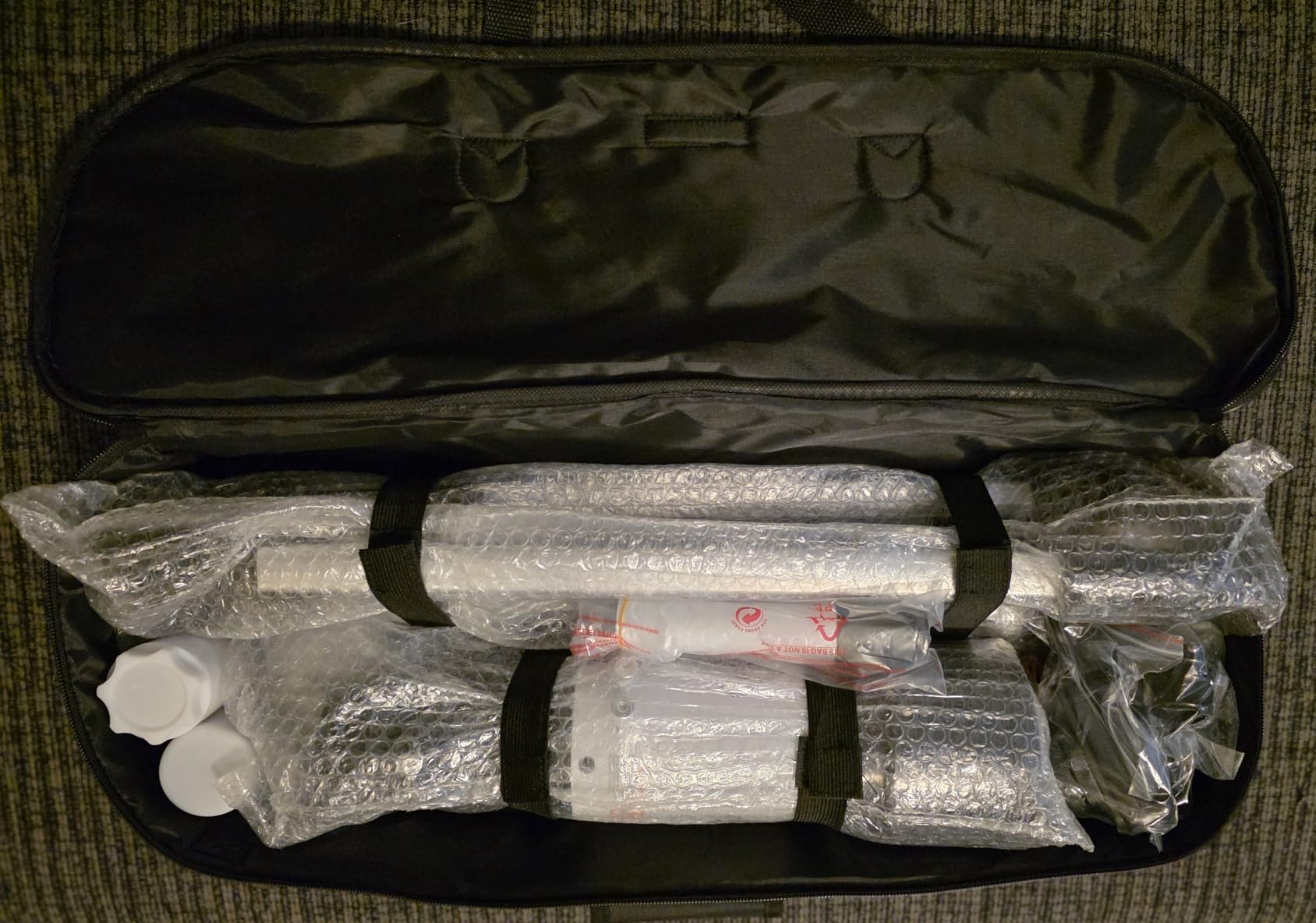
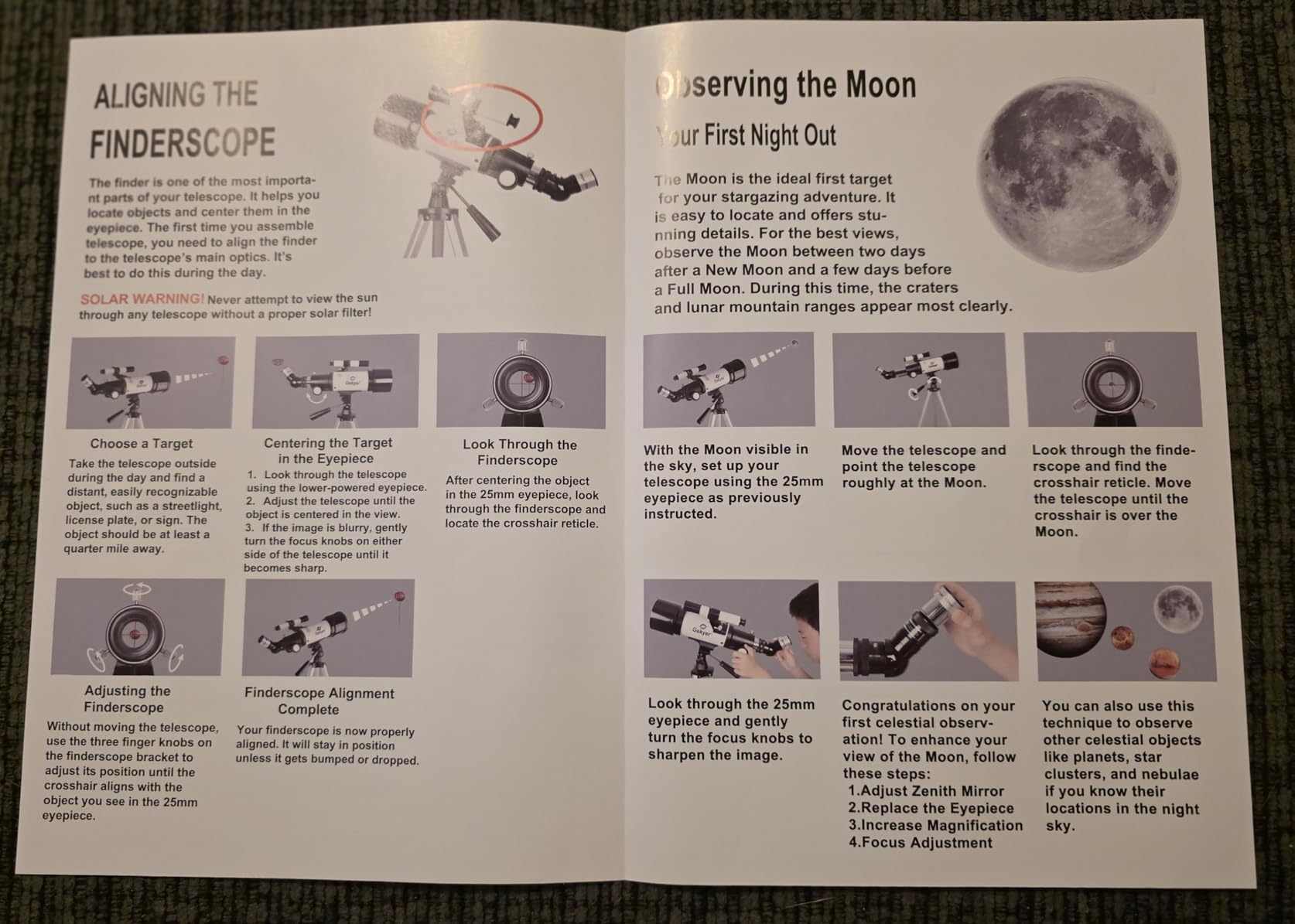
The finder is a 5×24 reflex unit with cross-hairs, which is crude but serviceable. The tripod adjusts in height and the whole kit folds into the included carry bag, so it can live in a closet between sessions instead of a garage. Reviewers describe the phone adapter and wireless remote as the easiest way to get a first image of the Moon, and the two included eyepieces plus the Barlow give enough range to keep a child interested for months.
What you give up is any hope of the deep sky. A 70mm aperture is a small light bucket, and under skyglow the light-polluted background is a large fraction of everything you gather. The Pleiades will show up as a small cluster of dots. The Orion Nebula will be a vague smudge if you are lucky. Anything fainter than that is a target for a different instrument, not a different eyepiece.
What this scope is good for in a bright sky
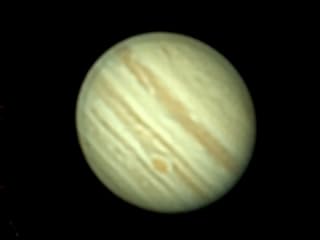
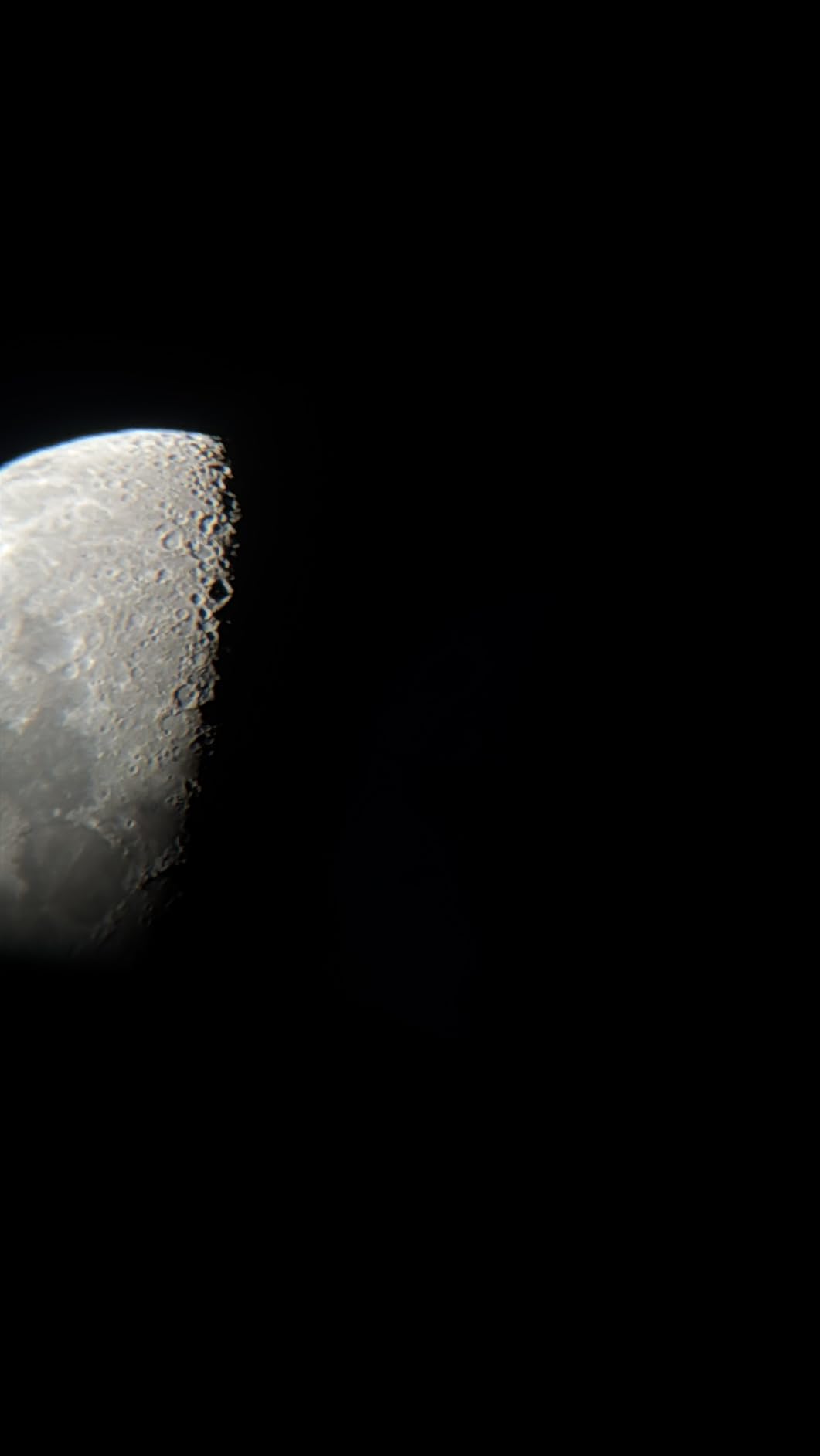
Lunar and planetary viewing is where it wins outright. The Moon is bright enough to swamp skyglow completely, so you get crisp terminator detail, craters along the shadow line, and a sense of texture that is genuinely rewarding even through a cheap eyepiece. Jupiter and Saturn hold up well enough that you will see the cloud bands and the ring system, provided you keep magnification moderate.
Double stars and bright open clusters are the second category. A scope this size can split a few of the showier doubles on a steady night, and a handful of nearby open clusters are bright enough to survive. If your city sessions run short because the weather or the hour is against you, that short list of reliable targets is exactly what you want.
Where it will disappoint you
Do not buy it hoping to see galaxies, and do not believe sellers who imply otherwise. The 70mm aperture cannot compete with a 130mm or 203mm light bucket on faint fuzz, and skyglow means the faint fuzz is what the city sky removes first. If deep-sky objects are the actual reason you want a telescope, this is the wrong instrument regardless of how charming it is.
The manual altazimuth mount is a second, quieter disappointment. Because nothing tracks the sky, targets drift steadily out of a narrow field of view and you will spend part of every session re-aiming. That is manageable on the Moon and frustrating on a faint object you just found. It is also the reason this scope is a genuine first telescope rather than a forever telescope.
2. Celestron AstroMaster 130EQ – Best Backyard Pick for Planets and Brighter Deep Sky
Celestron AstroMaster 130EQ Telescope for Deep-Sky Beginners
130mm Newtonian with SiO2 coatings
650mm focal length
German equatorial mount
17 lb
Pros
- 130mm aperture collects enough light for the brighter deep-sky objects
- German equatorial mount with slow-motion knobs allows smooth manual tracking
- Tool-free setup with only a few key parts
- 20mm and 10mm eyepieces plus StarPointer red dot finder included
Cons
- Newtonian mirrors need periodic collimation and a laser collimator is extra
- Tripod and mount can feel shaky with legs fully extended
- Not usable for astrophotography without modification
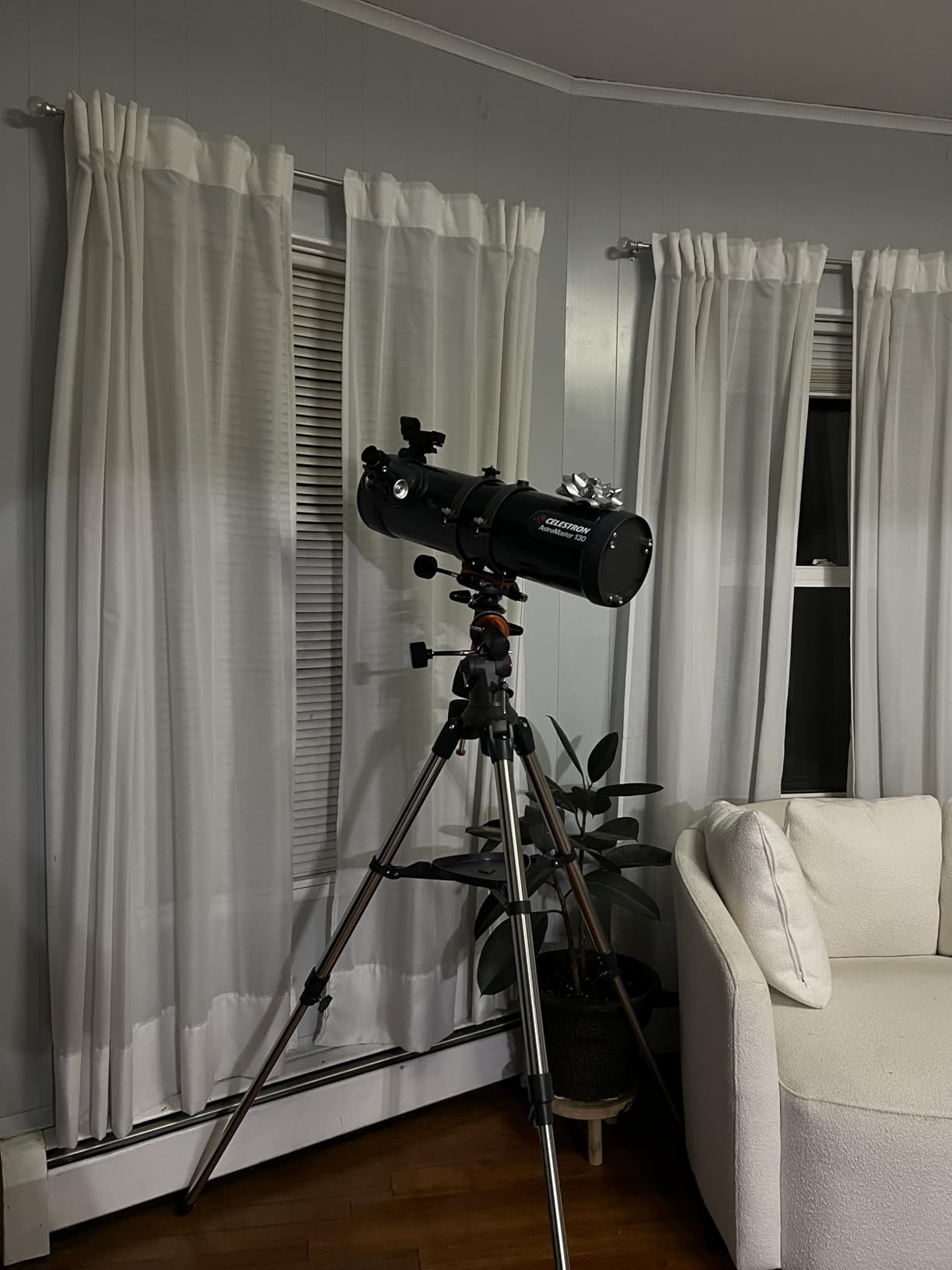
This is the scope the forum crowd keeps pointing city buyers toward, and the reason is simple. A 130mm mirror with aluminum and silicon dioxide coatings is a real light bucket for the money, and the German equatorial mount with slow-motion controls lets you nudge an object along without losing it entirely in the drift inherent to a manual mount.
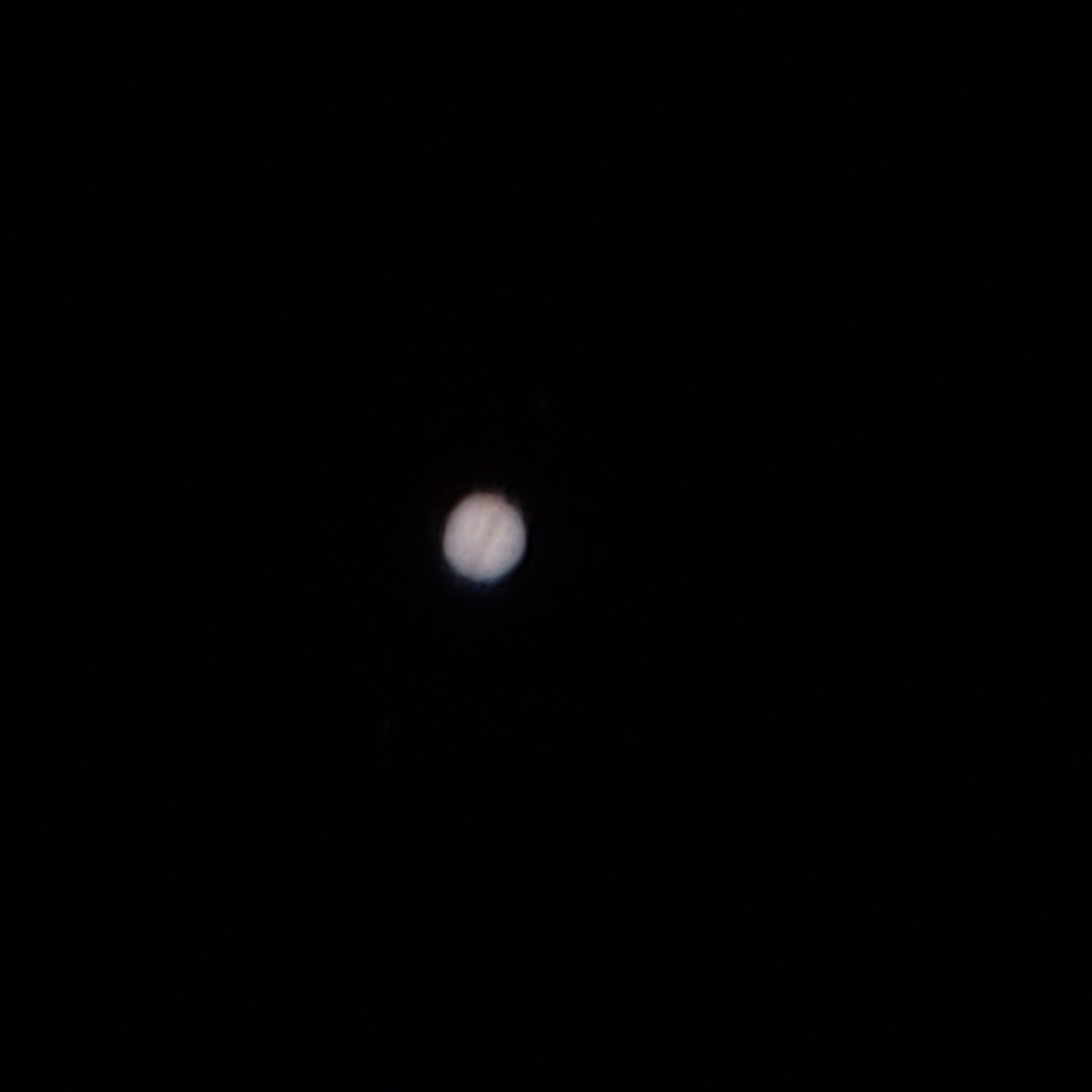
That tracking is the underrated part. In a Bortle 7 suburban backyard, an object sits in the eyepiece for a few minutes at a time on an altaz mount. On the AstroMaster 130EQ you can follow a target through a full planetary rotation of Jupiter, and reviewers consistently report crisp, bright views of the Moon, Jupiter and Saturn from this scope.
It is also a well-documented instrument. More than 3400 reviews averaging 4.3 stars means the failure modes are known rather than a surprise, and what experienced observers tend to like is the jump in brightness and detail compared with a department-store starter scope. The StarPointer red dot finder is genuinely useful under skyglow, because a red dot points at an object without needing a dark sky to see cross-hairs.
The weak points are all mechanical rather than optical. Owners note that the light steel tripod legs and the rough declination adjustment can feel shaky, especially with the legs fully extended, and in a city where heavy traffic shakes the ground that wobble arrives exactly when you are chasing a faint detail. Some buyers describe the 17 lb weight as manageable for a backyard but a genuine burden in a flat.
Collimation is the other recurring theme. This is a Newtonian, so the two mirrors need to be aligned, and a laser collimator is a separate purchase. Owners who took the extra step report the scope performing well, including faint galaxies such as M65 and M66 when the sky cooperated. If you will not collimate, this is the wrong scope and the Skymax 102 Mak further down is the right one.
When this is the right call in the city
Pick this if you have a yard, a patio or a ground-floor window and you want the most complete classic setup for the money. The 130mm aperture, the tracking mount and the bundled eyepieces cover the full range of city-appropriate targets: the Moon at any phase, the planets with real detail, and the brighter deep-sky objects that survive moderate skyglow.
It also suits anyone moving up from a small refractor who will not travel to dark sites. The extra aperture means you can see more from home, which keeps the hobby alive in a way that an under-apertured scope will not. A moon filter, which is not included, is the single most useful accessory for keeping lunar detail from washing out.
When it is the wrong call
Skip it if your observing spot is reached by stairs or a long walk, or if setup time is the limiting factor in your life. An equatorial mount is more involved to level than a simple altaz mount, and if you only get 20 minutes of clear sky on a weeknight, a 130mm Newtonian on an EQ mount loses to a much smaller table-top scope.
Skip it if your interest is astrophotography. Reviewers are consistent on this point, describing it as a visual instrument rather than a photography platform. It will not hold a tracked image through an EQ mount with an entry-level tripod, and attempting it produces streaked, frustrating results that have nothing to do with light pollution.
3. Celestron StarSense Explorer LT 114AZ – Guided Target Finding on a Suburban Sky
Celestron StarSense Explorer LT 114AZ Newtonian Smartphone Guided Telescope
114mm Newtonian with coated mirror
1000mm focal length
Phone-guided StarSense SkyTour
10.4 lb
Pros
- Patented StarSense technology turns a phone into a celestial navigation system
- App generates a curated list of tonight's best targets for your time and location
- High-reflectivity coatings on the 114mm mirror
- Altitude slow motion for smooth manual tracking
Cons
- 114mm aperture is small for faint deep-sky targets from bright skies
- Manual altazimuth mount still needs occasional re-centring
- Phone must stay mounted for guided pointing
The problem for most beginners in a city is not optics. It is finding things. You cannot star-hop in a Bortle 8 sky because you cannot see enough stars to hop between, which is why so many first telescopes gather dust. The StarSense LT 114AZ solves that specific problem by pointing the scope for you.
You attach a phone, and the patented StarSense sky-recognition technology plate-solves the view to identify exactly what you are looking at, then the app runs a guided SkyTour that slews to targets. Reviewers report that even complete beginners can find and centre an object in seconds, and the curated nightly list gives you targets appropriate to the current time and location instead of leaving you to guess.
Optically it is a 114mm Newtonian with high-reflectivity coatings on a 1000mm focal length, which is a long, slow design. That long focal length is an advantage in a city: at f/8.8 you get a narrower field of view, the sky background is magnified less per unit of zoom, and the image sits more comfortably for planetary work where magnification stays low.
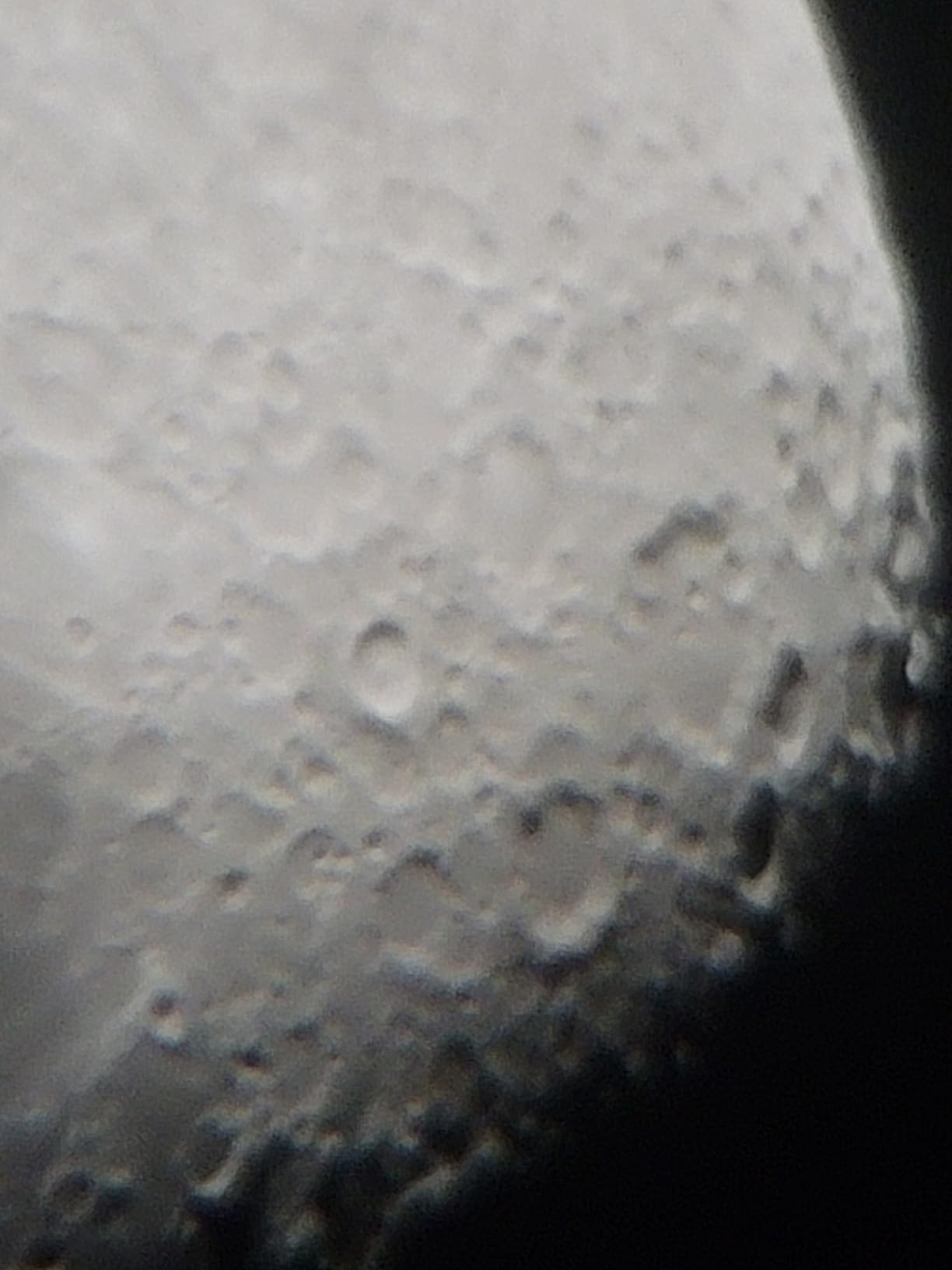
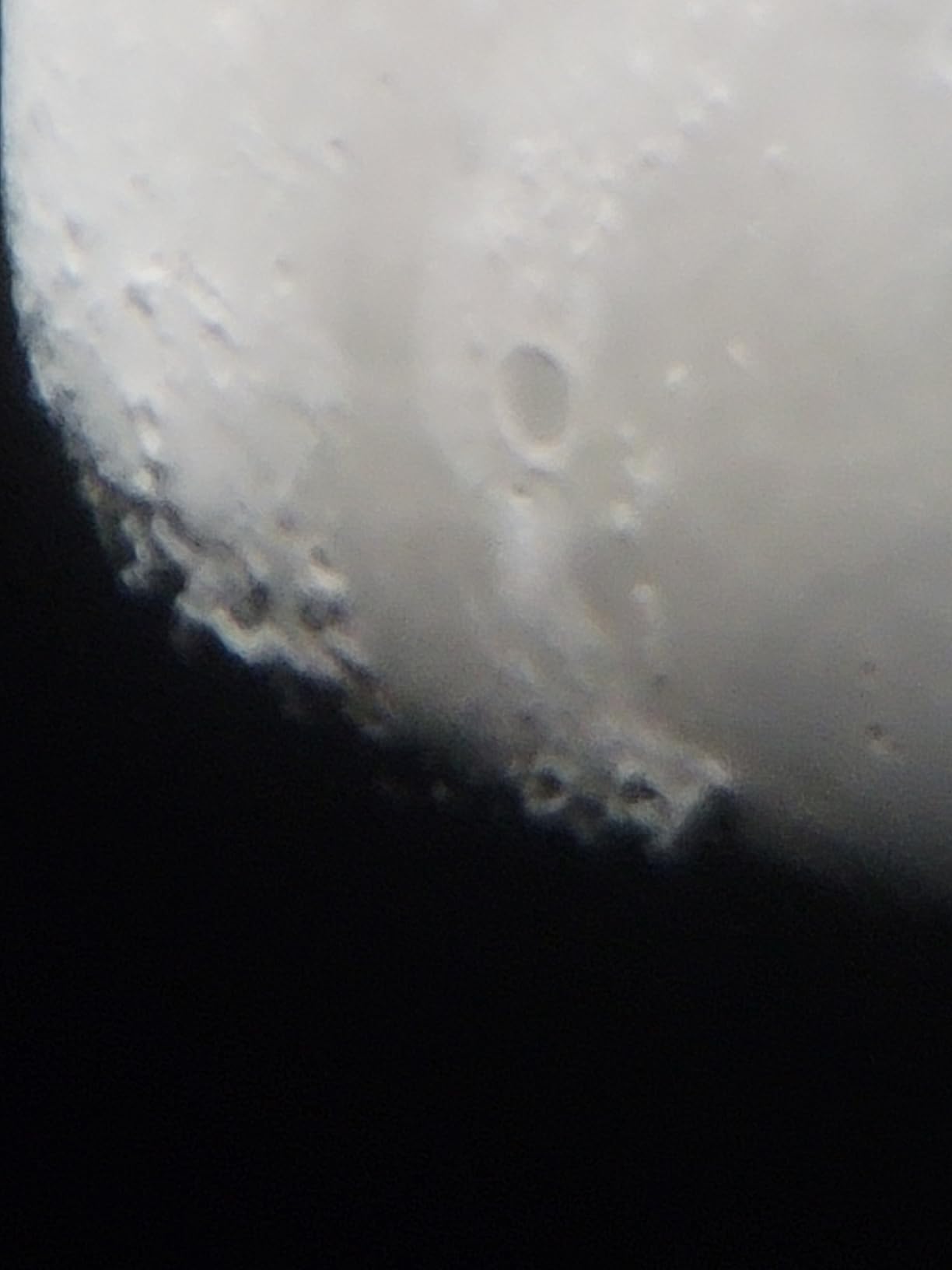
The honest limitation is the 114mm aperture. Reviewers describe the optics as sharp and vivid for the Moon, planets and brighter deep-sky favourites, and describe the aperture as on the small side for the faintest targets from light-polluted skies. That is the accurate framing. The scope shows you a smaller universe than a 130mm or 200mm would, and under skyglow the difference is not subtle.
The other constraint is that the guided pointing requires the phone in the cradle, and the mount is manual altazimuth with only altitude slow motion. A 2.04 degree field of view helps a lot, but high objects still need periodic re-centring. At 10.4 lb this is light enough to carry between rooms, which is more than can be said for several larger scopes here.
What this scope is good for in a bright sky
It is good for a beginner who would otherwise give up. If you cannot navigate the sky and your home sky shows only a handful of stars, an app that hands you a target list converts a failed first session into a successful one. The Moon alone will keep most new observers engaged for an evening.
It is also good for family observing, because the guided tour means an adult does not need to learn the sky before the children lose interest. For lunar and planetary work the long focal length helps, and the 25mm and 10mm eyepieces with the included 2x Barlow give a workable range for the objects that actually register under skyglow.
Where it will disappoint you
The 4.1 star average is not down to optics. It is down to a scope that is well matched to bright targets and quietly unsuited to faint ones. If you buy it for galaxies, you will be disappointed, and the disappointment will not be the app’s fault or the mount’s fault. It is aperture plus skyglow doing what they do.
It is also the least future-proof pick here. The StarPointer on the bigger DX model is a red dot finder that works without a phone, while this unit leans entirely on the phone cradle for guided pointing. If you want a scope that grows with you, a plain finder and a larger aperture will serve you better over the long term.
4. Celestron StarSense Explorer DX 130AZ – Guided Pointing With Real Aperture
Celestron StarSense Explorer DX 130AZ Smartphone Guided Newtonian Telescope
130mm parabolic mirror
650mm focal length
Altazimuth mount with dual-axis slow motion
18 lb
Pros
- 130mm parabolic primary shows the Orion Nebula and Andromeda when skies allow
- Dual-axis slow-motion controls make manual tracking smooth
- StarSense app plate-solves and points at targets in seconds
- Owners report good results under significant urban light pollution
Cons
- Flimsy tripod and plastic mount neck vibrate in wind or passing traffic
- Limited altitude clearance near the zenith
- Phone cradle can interfere with plate solving on some units
This is the LT 114AZ with a real light bucket, and for most city observers that is the correct version of the same idea. A 130mm parabolic primary with high-reflectivity coatings gathers enough light to reach the brighter Messier objects that a 114mm cannot, while the StarSense app handles the navigation problem that stops beginners before the optics ever get tested.
Several reviewers specifically describe successful deep-sky and planetary viewing from heavily light-polluted city and suburban yards with this scope, and experienced observers call the StarSense pointing accuracy better than some computerized GoTo mounts. For a beginner who cannot navigate, that reliability matters more than any specification, because a scope that points correctly is a scope that gets used.
The dual-axis slow-motion controls are a genuine upgrade over the LT model, which has altitude only. Being able to nudge in both directions means you can hold an object in view during planetary work without the awkward one-handed correction. The mount also runs without an external power source, so nothing electronic stops working halfway through a session.
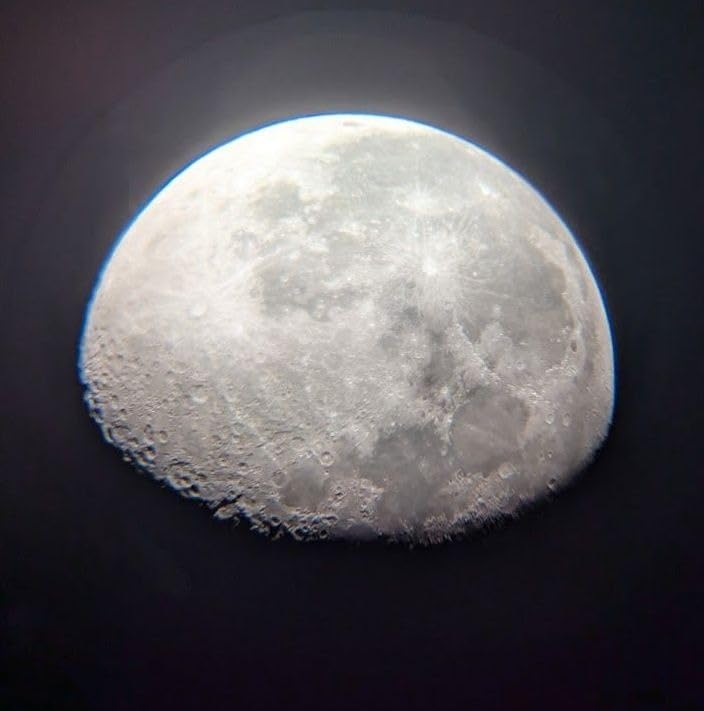
The mechanical complaints are the serious part of the feedback. Owners describe the tripod and plastic mount neck as flimsy, and they vibrate in light wind or when passing traffic shakes the ground. In a city, passing traffic is not an edge case, it is a constant, so the vibration arrives exactly when you are trying to resolve fine planetary detail.
There is also limited altitude clearance, which makes objects near the zenith genuinely awkward to view, and the phone cradle sometimes interferes with the app’s plate solving so the phone has to come off for a re-solve. A few units arrived with a dislodged primary mirror and replacement parts were hard to source, so inspect the mirror on arrival. At 18 lb it is also a two-person carry in a stairwell building.
When this is the right call in the city
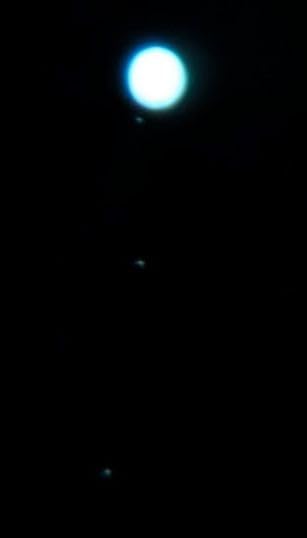
Choose it when you want the app-assisted experience but will not accept a 114mm aperture. The 130mm parabolic primary is the difference between seeing the Orion Nebula as a grey wash and seeing some shape in it, and reviewers name both the Orion Nebula and Andromeda as objects this scope reaches under good conditions.
It also suits someone who will grow into the hobby. Once you can point the scope yourself the app becomes optional, the included 25mm and 10mm eyepieces are a reasonable starting set, and the altazimuth mount is simple to operate. It is a sensible step up from a small refractor for someone whose real obstacle was the bright sky rather than the optics.
When it is the wrong call
The tripod is the deal-breaker for us in a city. A scope with 130mm of aperture on a mount that shakes under traffic vibration will disappoint you in a way that is easy to misdiagnose as light pollution. If you observe from a balcony where vibration is constant, solve the vibration first, or choose a Dobsonian base which sits on the floor and does not shake.
It is also not the scope for an apartment with a storage problem, and not the scope for someone who wants deep-space imaging. A Newtonian on this mount is a visual instrument. The StarPointer red dot finder is a real positive in a bright sky, but it is the last of its strengths at a glowing horizon.
5. Sky-Watcher Classic 200P Dobsonian – The Biggest Light Bucket in the Roundup
Sky-Watcher Classic 200 Dobsonian 8-inch Telescope – Solid-Tube – Simple, Traditional Design – Easy to Use, Perfect for Beginners, White (S11610)
203mm parabolic primary
faintest stellar magnitude 14.2
1200mm f/6
45 lb assembled
Pros
- 203mm aperture delivers the brightest and highest-contrast views in this roundup
- 94 percent reflective fully multi-coated borosilicate mirrors
- Patented tension control handles allow smooth movement without perfect balance
- Teflon bearings give smooth azimuth movement
Cons
- 45 pound assembled weight makes it the least portable option
- Manual non-tracking mount means objects drift and need re-aiming
- Bulky 49 inch dimensions are hard to transport in a small car
This is the answer the community gives most often when someone asks how to fight a bright sky, and the reasoning is straightforward. At 203mm with 94 percent reflective fully multi-coated borosilicate mirrors, this scope collects more light than anything else in the roundup by a wide margin, and the manufacturer rates it to a faintest stellar magnitude of 14.2 on transparent nights.
Aperture does not defeat skyglow, but it determines how much of the object sits above the glowing background. The faintest targets are a losing battle from a city no matter what you point at them. The next tier up, the bright nebulae and larger clusters, is a fight you can win with 203mm and lose with 114mm. That is why an experienced observer on r/telescopes described a Zhumell Dobsonian as showing the most visually, and why 8-inch Dobs are the default recommendation for suburban skies.
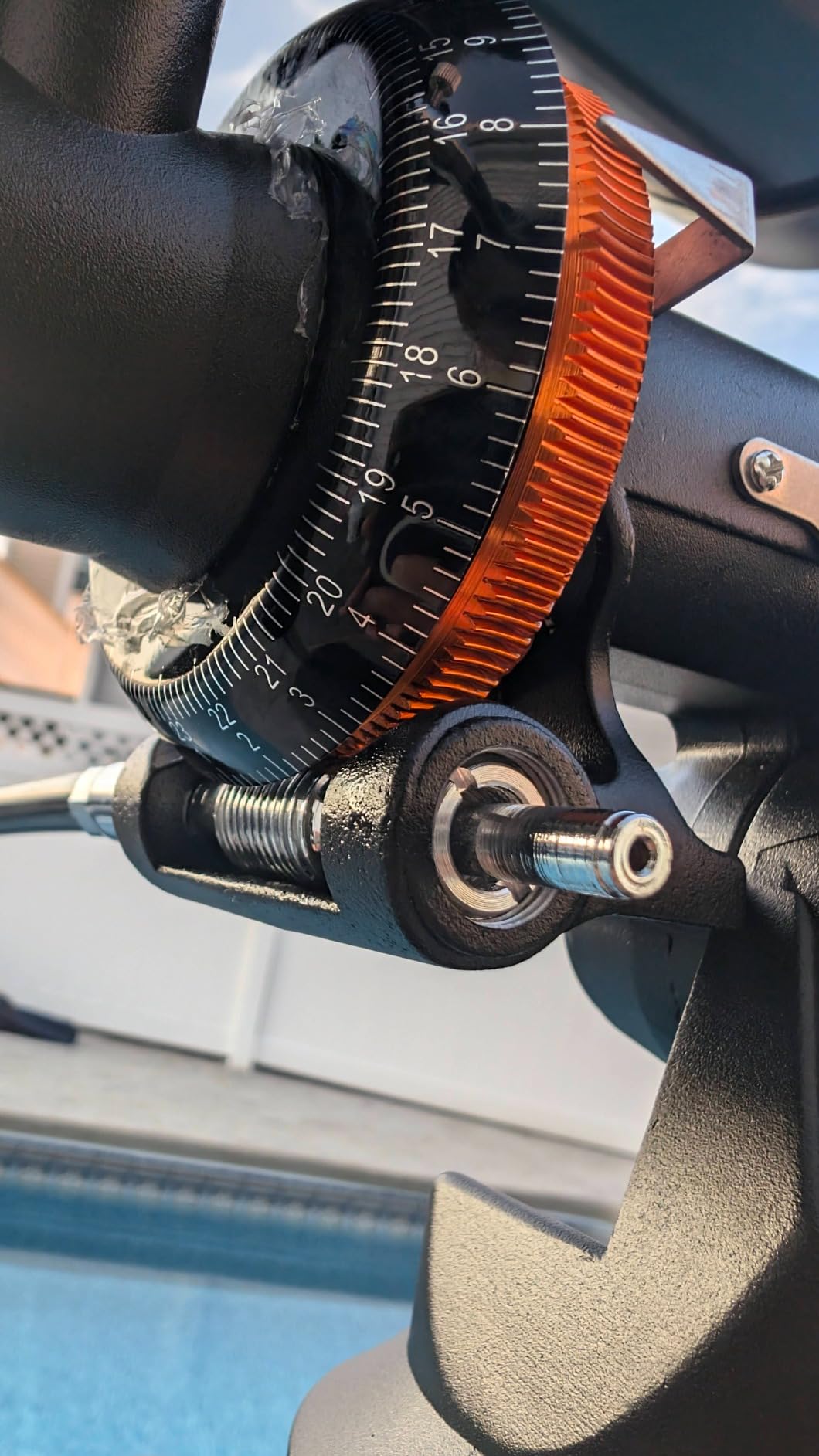
The mechanics are deliberately simple. It is a traditional Dobsonian design, so there is no polar alignment, no finder to align, no collimation in the usual sense, and no electronics to fail. The patented tension control handles let you move the tube while it is slightly out of balance, and the Teflon bearings make azimuth motion smooth enough to track an object manually with one hand.
The focuser is a 2-inch Crayford-style with a 1 1/4-inch adapter, and it comes with 25mm and 10mm super wide-angle eyepieces plus a 9×50 finder. That accessory list is unusually good at this level, and the wide-angle eyepieces help you find things in a wide field before you zoom in. Reviewers consistently credit the 8-inch aperture for resolving planetary detail and the largest deep-sky objects from urban backyards.
Be clear about the physics, though. A 45 pound assembled instrument, 20 pound tube and 25 pound base, is not an apartment telescope. It is a yard, driveway or garage scope, and the 49 inch overall dimensions mean you need a large car. If you cannot carry it out on a whim, its extra aperture becomes theoretical because it stays inside.
What this scope is good for in a bright sky
It is good for the tier of deep-sky objects that a 130mm cannot reach. Larger globular clusters, the better Messier nebulae, the brighter galaxies, and the dark-sky showpieces you would otherwise have to drive to see all become arguable targets rather than impossible ones. On a good night from a Bortle 6 backyard, a 203mm Dob is the closest you get to a dark-site experience without leaving home.
It is also good for people who hate fiddling. No alignment procedure, no phone, no app, no filter to thread. You point the tube, you look through the eyepiece, you move it. For an observer who has been put off by electronics and alignment routines, that simplicity is a genuine reason to choose it over anything else here.
When it is the wrong call
Skip it if you live in a flat, if you have no car, or if carrying 45 pounds is not something you want to do on stairs. This is the single most common way city buyers waste money, buying a large Dobsonian that lives in a cupboard because it never left the building.
Also skip it if you plan to do any imaging. A manual non-tracking altazimuth base on a 45 pound tube is not a photography platform, and drift is unavoidable. Its 4.0 star average also reflects an unusually heavy share of one-star feedback, and those reviews cluster around weight, bulk and the absence of motorized tracking rather than around the optics.
6. MEEZAA 150EQ – Equatorial Tracking With a Moon Filter Included
MEEZAA Telescope, 150EQ Newtonian Reflector Telescope for Adults Astronomy Beginners, Professional Astronomical Telescopes with Equatorial Mount, Tripod, Phone Adapter, Moon Filter and Large Carry Bag
150mm aperture
650mm focal length
German equatorial mount
26x to 130x magnification
Pros
- Large aperture and 650mm focal length give bright views of the Moon
- planets and deep space
- German equatorial mount with precision dials and slow-motion knobs
- Stainless steel tripod with accessory tray and carry bag
- Includes a moon filter that reduces lunar glare
Cons
- Included Kellner eyepieces are entry level and often upgraded
- Focuser and phone holder are all plastic
- Heavy and complex to assemble for a first-time user
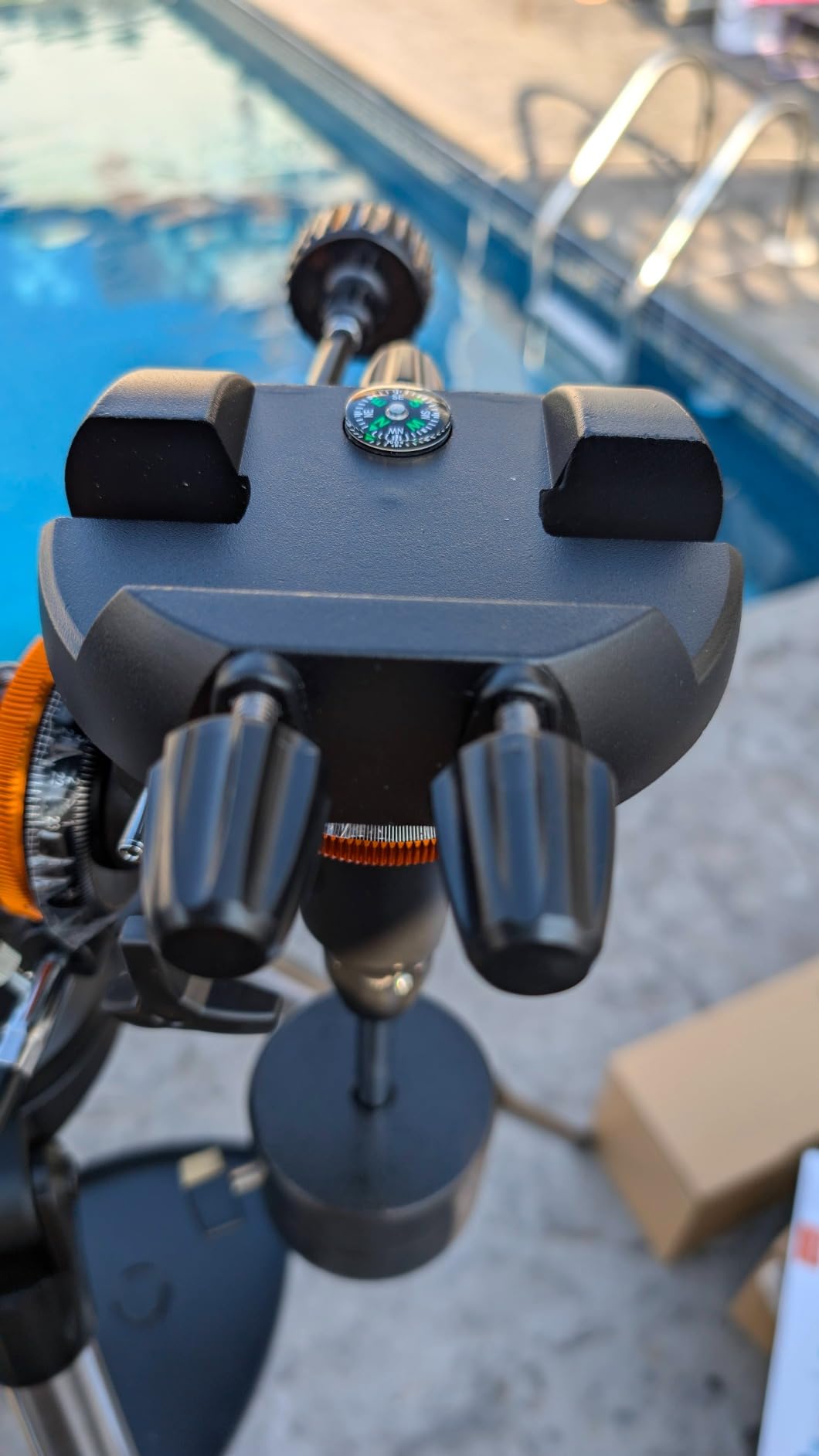
The MEEZAA 150EQ is the value pick for a specific situation: someone with a yard who wants equatorial tracking and a large aperture without paying for a name-brand mount. At 650mm focal length with a 150mm aperture, it sits between the 130mm and 200mm options, and the precision dials with slow-motion knobs let you track an object in both axes.
Owners treat it as a value light bucket and credit the aperture with resolving the Orion Nebula, Jupiter’s bands, the Pleiades and the Beehive cluster from a backyard with light pollution. That is a credible list for a scope at this level, and it is exactly the list of targets that survive skyglow. The stainless steel tripod is also worth noting, since tripods are where cheaper scopes cut corners first.
The included moon filter is the sleeper accessory in the box. Most beginners end up buying one within a month because a full Moon at high magnification under a bright sky blows out completely without one. Having it in the kit means your first lunar session will not be ruined.
Now the honest part. The supplied eyepieces are Kellner, and the most common advice in the reviews is to replace them with Plossl straight away. Cheap eyepieces scatter light internally, and scattered light is exactly the enemy in a light-polluted sky, so this is a more serious flaw here than it would be under dark skies.
The focuser and phone holder are also all plastic, which is normal at this level and not a deal-breaker, but the whole rig is described as heavy and complex to assemble for a first-time user. One reviewer reported measuring the primary at 130mm rather than the advertised 150mm, so if aperture is what you are paying for, check it on arrival. A laser collimator is not included for this Newtonian, either.
What this scope is good for in a bright sky
It is good for a suburban observer who wants the Moon, the planets and a decent shot at the brighter deep-sky objects with a scope that tracks. The 26x to 130x range across the included eyepieces and 2x Barlow covers planetary work and wide-field cluster hunting without any fiddling.
It also suits someone planning to grow into astrophotography. The German equatorial head is the traditional entry point to tracked imaging, so if that is where your interest is heading, this is one of the few analog scopes in the roundup that does not paint you into a corner.
When it is the wrong call
Skip it if you will not upgrade the eyepieces. In a bright sky the Kellner set works against you, and a scope shipped with optics that scatter light is a poor match for this particular problem. Budget for better eyepieces or choose a scope that includes a proper wide-angle set.
Skip it if assembly is going to defeat you. Assembly, collimation and equatorial setup are three separate learning tasks, and buying all three at once is how first-time observers end up with a telescope in a closet. The Gskyer 70mm or the Skymax 102 Mak ask far less of you on day one.
7. DWARFLAB Dwarf Mini – The Scope That Fights Light Pollution in Software
DWARFLAB Dwarf Mini Smart Telescope – 1.85lb Portable Astronomy Telescope
1.85 lb all-in-one body
150mm astrograph
Sony IMX662 sensor
Plate solving and EQ Mode
Pros
- Only 1.85 lb so it fits in a backpack for trips to darker skies
- Built-in light pollution filters in EQ Mode with exposures up to 90 seconds
- Plate solving and 360-degree pivot keep targets centred
- Cloud processing and automatic dark frame capture simplify stacking
Cons
- Sensor resolution is too low for large prints or fine planetary detail
- Planetary viewing shows only round discs with little surface detail
- EQ Mode needs a tripod and a power bank
This is the category nobody else in this roundup covers, and it is the one that most directly answers the light pollution question. The Dwarf Mini is not a visual telescope in the traditional sense. It is an astrograph with a built-in filter system, and the way it beats skyglow is by stacking many short exposures and letting software separate signal from background.
That is the mechanism that matters. Stacking does not make the sky darker, it improves the signal-to-noise ratio of the final image, which is a different kind of win from aperture. Astrophotographers under heavy skyglow routinely reach for narrowband filtering and lower gain settings to extract usable data from a bright background, and the Dwarf Mini builds exactly that into EQ Mode, which supports single-frame exposures up to 90 seconds with automatic dark frame capture from a built-in shutter.
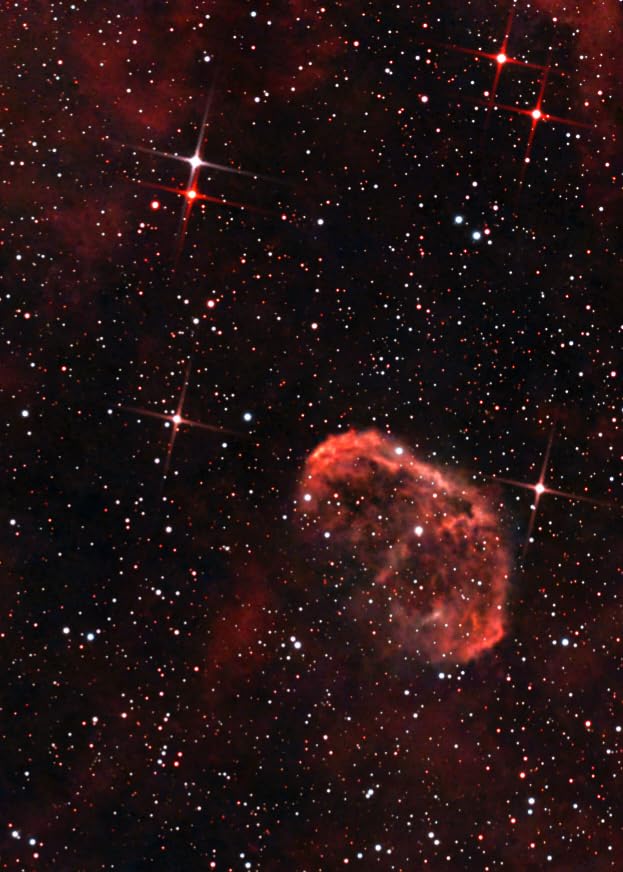
Reviewers who previously spent money on larger imaging rigs report stacking results from this small body that they could not get from a DSLR on a much larger Schmidt-Cassegrain, and several specifically credit it with usable images from Bortle 9 skies. The app takes you from opening the box to a first stacked image in about three minutes, which removes the learning curve that kills most city attempts.
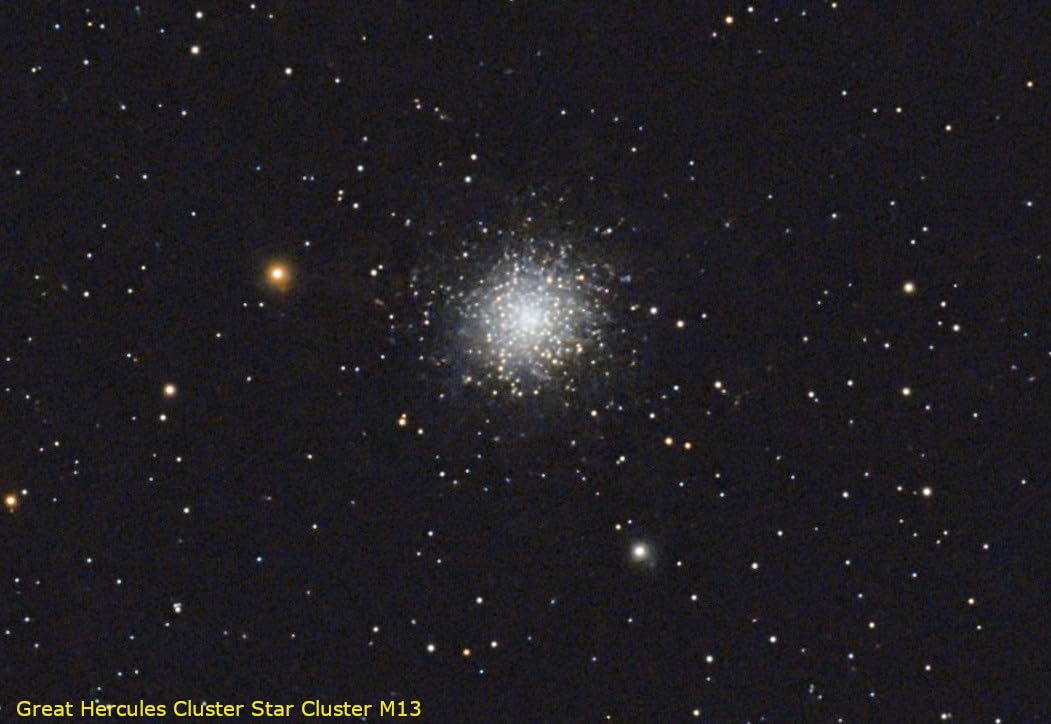
Physically it is the easiest instrument here to live with. At 1.85 lb it goes in a backpack, which means the one remedy that reliably beats skyglow, driving to a darker site, is actually available to you. You can observe from the balcony most nights and take the same device out on a weekend, and the mount supports both altazimuth and equatorial modes depending on what you are shooting.
Be clear about what it is not. The sensor is a Sony IMX662 at 1/2.8 inch with 2.9um pixels, which is plenty for a phone-sized image of the Moon, a big open cluster or a wide Milky Way band, and not enough for a large faint nebula filling a print. The same limit shows up visually: planets appear as round discs with little surface detail, because the objective is 30mm and the device was designed as an astrograph rather than a planet scope.
What this device is good for in a bright sky
It is good for producing finished images from skies where no visual scope will show you anything beyond the Moon and planets. The built-in light pollution filters plus the stacking workflow is what makes that possible, and it does it without a computer, a filter wheel, or a laptop you have to keep awake in the cold.
It is also good for introducing someone to astronomy in a city. A person who cannot see the Milky Way from home will be far more interested in a stacked image of a nebula than in being told they are looking at a grey smudge through an eyepiece. The body is small enough to live on a desk or a shelf rather than taking over a closet.
Where it will disappoint you
It will disappoint anyone who wants to look through it. There is no meaningful visual mode here, and 30mm of aperture is a small light bucket to begin with. If your interest is watching Jupiter’s cloud bands rotate over an evening, this is the wrong device and one of the analog scopes in this roundup is the right one.
EQ Mode also adds requirements at exactly the moment you might not want them. You need a tripod with a fluid head, and the internal battery runs for a limited number of hours, so a power bank makes sense for a long session. Some units also arrived with dust particles inside the lens or had WiFi connection trouble, so check the unit as soon as you open it.
8. ZWO Seestar S30 Pro – Best One-Tap Deep-Sky Imaging Under City Glow
ZWO Seestar S30 Pro Smart Telescope, App-Controlled Astrophotography
30mm apochromatic optics
160mm focal length
Built-in LP filters
Dual-camera 4K imaging
Pros
- Apochromatic optics reduce color distortion for sharper stars
- Built-in light pollution filters aimed at bright urban environments
- Dual-camera system delivers 4K-quality wide-field and deep-sky images
- One-tap modes for the Milky Way
- nebulae
- galaxies
- Moon and Sun with mosaic stitching
Cons
- Designed for deep-sky imaging and not for planetary observation
- Keen imagers will want manual control rather than one-tap modes
- A stable surface is required during deep-sky imaging
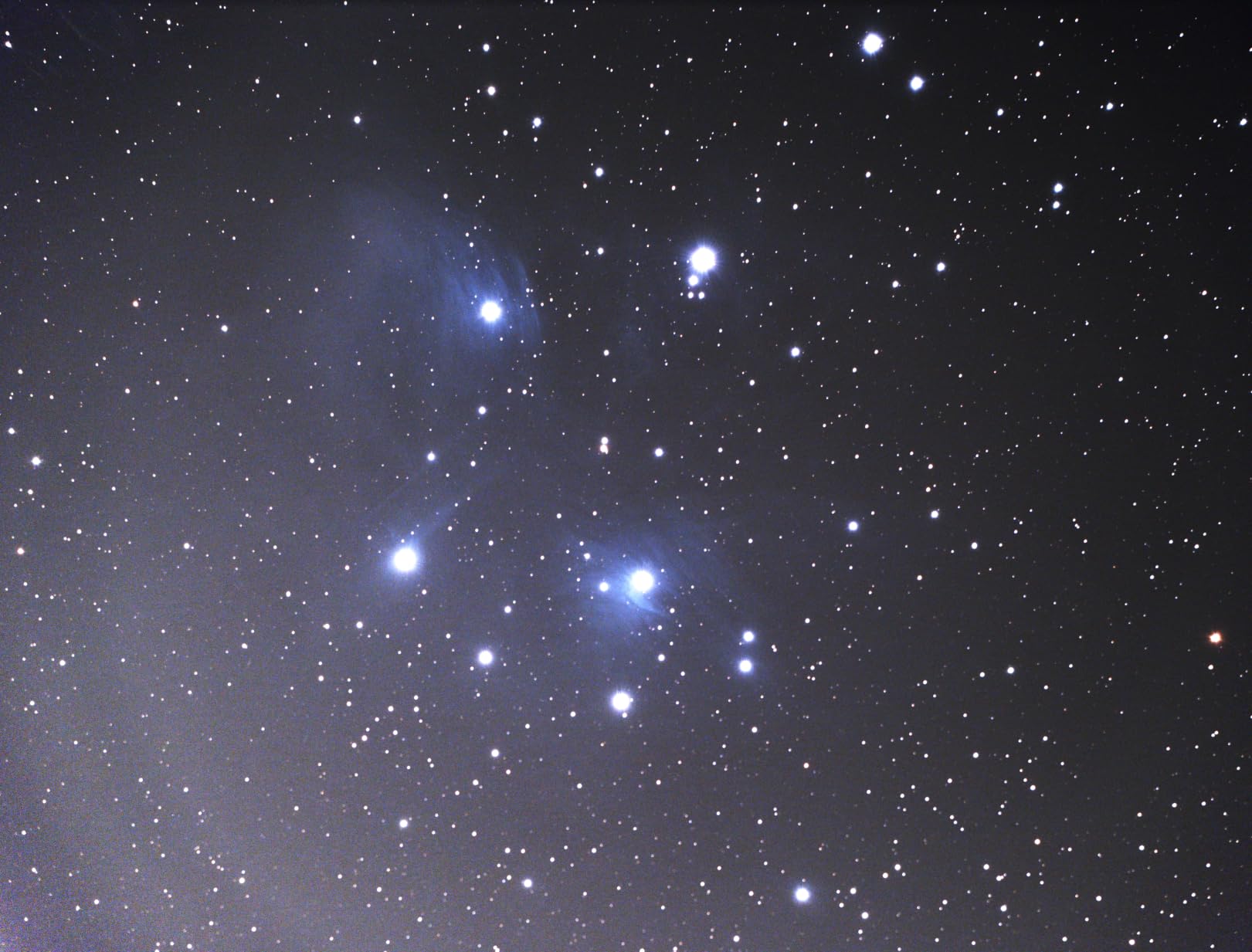
Where the DWARFLAB is a compact astrograph, the Seestar S30 Pro is a more capable one, and the reason it appears in a city-light-pollution roundup is the built-in light pollution filters combined with apochromatic optics. Buyers single out the urban-friendly package specifically, crediting the filters with usable deep-sky and Milky Way results under city glow.
The workflow is the selling point. One-tap modes capture the Milky Way, star trails, nebulae, galaxies, the Moon and the Sun with automatic mosaic stitching, and the app handles AI noise reduction and sky and foreground separation automatically. A finished image takes minutes, not a weekend of stacking and editing. For someone whose sky will never allow long faint integrations, that automation is the whole value proposition.
Apochromatic optics matter here in a specific way. Colour fringing around stars eats contrast, and in a bright sky you have less contrast to spend. At 160mm focal length with a 4.6 degree field of view and a fully multi-coated front element, the wide framing suits large structures, and reviewers consistently describe the images as sharp with good star colour.
It weighs 3.64 lb, has anti-dew protection, and supports long-session imaging, so it is still portable enough to take to a darker site when conditions allow. That matters because even a filtered device does better away from the city. There is a reflex finder and a two-year warranty, and the box includes a tripod, filter, quick start guide and USB-C cable.
The limitations are about scope rather than quality. It is built for deep-sky imaging and explicitly not for planetary observation, and at 30mm of aperture the visual side is minimal anyway. If you want to look at Jupiter through an eyepiece, this is the wrong device, and the ZWO range does not try to be.
What this device is good for in a bright sky
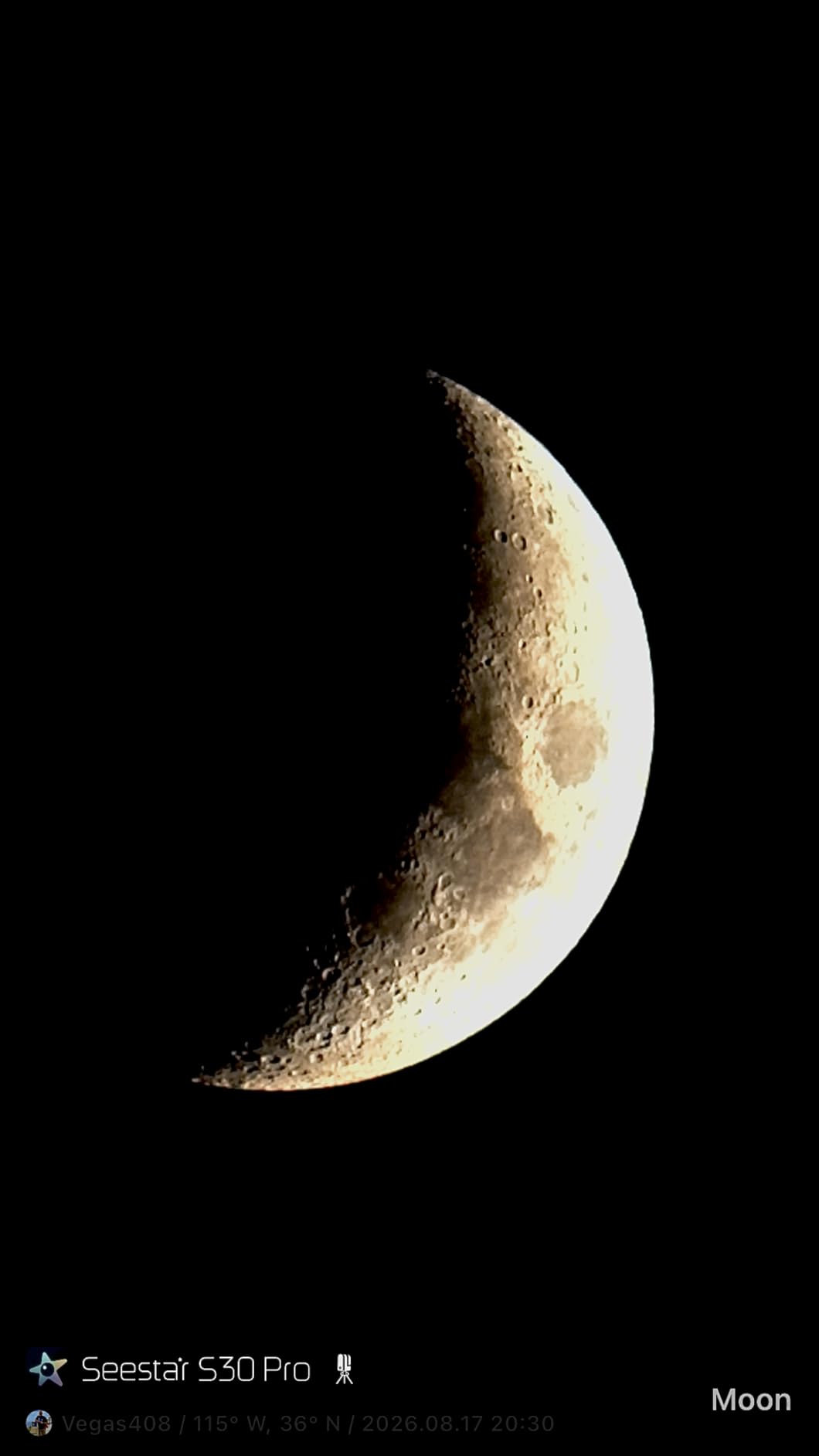
It is good for producing finished astrophotos of large, low-surface-brightness objects that a visual scope will never show you from a city. A wide Milky Way band, a large nebula, a bright galaxy field. The light pollution filters plus automatic stacking pull signal out of a bright background, which is a fundamentally different solution from gathering more photons through a bigger lens.
It is also good for sharing. The output is ready to post rather than needing a processing session, which matters if your motivation is showing people what is up there rather than learning image processing. Anyone who has photographed the same target from a dark site and a bright city can put the two side by side.
When it is the wrong call
Skip it if you want to look through the telescope, because it will not do that job. The main caveat repeated in the feedback is precisely this: it is a deep-sky imaging device, with planetary detail outside its design intent.
Skip it if you want full manual control on day one. The one-tap modes do most of the work, and experienced imagers tend to outgrow them quickly and wish for the manual settings. You will also need a genuinely stable surface during deep-sky imaging, since the device should stay stationary for tracking, and a wall or a table in a busy flat may not provide it.
9. Sky-Watcher Skymax 102 Mak – Best Contrast in a Bright Sky, and Only 4.6 Pounds
Sky-Watcher Skymax 102mm Maksutov-Cassegrain – Large Aperture Compound-Style Reflector Telescope
102mm Maksutov
1300mm focal length
94 percent reflective
Fully baffled tube, 4.6 lb
Pros
- Matched primary and secondary with a coated corrector plate deliver contrast-rich views
- Fully baffled tube prevents stray light from washing out the view
- 94 percent reflectivity aluminum and quartz-coated borosilicate primary
- Compact 4.6 lb tube with Vixen-style dovetail for photo tripods
Cons
- 102mm aperture is modest for the faintest deep-sky targets
- Tube only
- mount and tripod sold separately
- 1300mm focal length is on the long side for some targets
This is the highest-rated instrument in the group, and the reason reviewers give is not resolution, it is contrast. The fully baffled tube is the key feature under skyglow, because it physically prevents stray light from entering and washing out the view, which is the single most common complaint about budget scopes in a city.
Optical quality backs that up. An aluminum-coated borosilicate primary with a quartz overcoat reaches 94 percent reflectivity, and the corrector plate and secondary are matched to it. Reviewers specifically point to the baffled tube and the coatings as the reason views stay crisp against a bright suburban sky, and the 1300mm focal length is credited with sharp, detailed planetary images.
A Maksutov-Cassegrain is also completely collimation-free, sealed, and needs no maintenance. That combination is rare at any level, and under skyglow it is worth more than it would be under a dark sky, because you cannot afford optical problems that would be invisible on a rural site.
It weighs 4.6 pounds and measures 12.25 inches long, with a Vixen-style dovetail and 1/4-20 tripod threads. That means it bolts to a standard photographic tripod you may already own, which is the entire reason this scope fits into a small apartment. It comes with 10mm and 25mm eyepieces, a red-dot finder, a 90-degree star diagonal and a padded carrying bag.
That 90-degree star diagonal is worth mentioning specifically. Refracting at 90 degrees puts the eyepiece in a position that is far more comfortable when the object is high, which is most of the night from a city where the horizon is blocked by buildings. It is a small design decision that removes a real ergonomic problem.
What this scope is good for in a bright sky
It is good for the Moon and the planets at high magnification, which is where the long focal length and sealed baffling pay off most. A 1300mm focal length gives you comfortable magnification on Jupiter and Saturn without over-magnifying, and a bright suburban sky does not overwhelm a well-baffled tube the way it overwhelms an open one.
It is also the best apartment choice in the roundup by a distance. 4.6 lb, a compact tube, no collimation, no power, and it fits in the supplied bag. A forum suggestion we agree with is that a modest 90mm-class Maksutov with good coatings will show more planetary detail than a giant 10-inch scope struggling against the city glow.
When it is the wrong call
Skip it if galaxies are your goal. At 102mm this is a modest aperture, and the contrast advantage that makes it wonderful on planets does not create faint deep-sky objects. The main caveat in the feedback is exactly that, and at this size the sky rather than the instrument sets the limit.
Skip it if you want a one-box purchase. The tube only, mount and tripod are sold separately, so you will need a tripod at minimum. A 4.5 star average from 106 reviews is strong, but the review volume is the lowest in the group, so treat the consensus as thinner than the rating suggests and check the current specification before buying.
10. Gskyer 130EQ Reflector – The Aperture-Per-Pound Compromise
Gskyer 130EQ Professional Astronomical Reflector Telescope
130mm all-glass coated aperture
650mm focal length at f/5
German equatorial mount
30.1 lb
Pros
- 130mm aperture with coated optics gives brighter views of the Moon
- planets
- brighter galaxies and nebulae
- German equatorial mount tracks objects across the night sky
- Short 24 inch f/5 tube and toothless focusing base
- Three eyepieces and a 3x Barlow included
Cons
- Newtonian design requires occasional mirror collimation
- 30.1 lb weight makes it heavy to move between locations
- Equatorial mount is more complex for a first-time user
This is the middle path in the roundup, and for a lot of suburban observers it is the right one. A 130mm all-glass aperture with high transmission coatings roughly doubles the light gathered over a 70mm refractor, and owners consistently credit that step up for bright, clear views of the Moon, planets, and the brighter galaxies and nebulae that a small scope cannot touch.
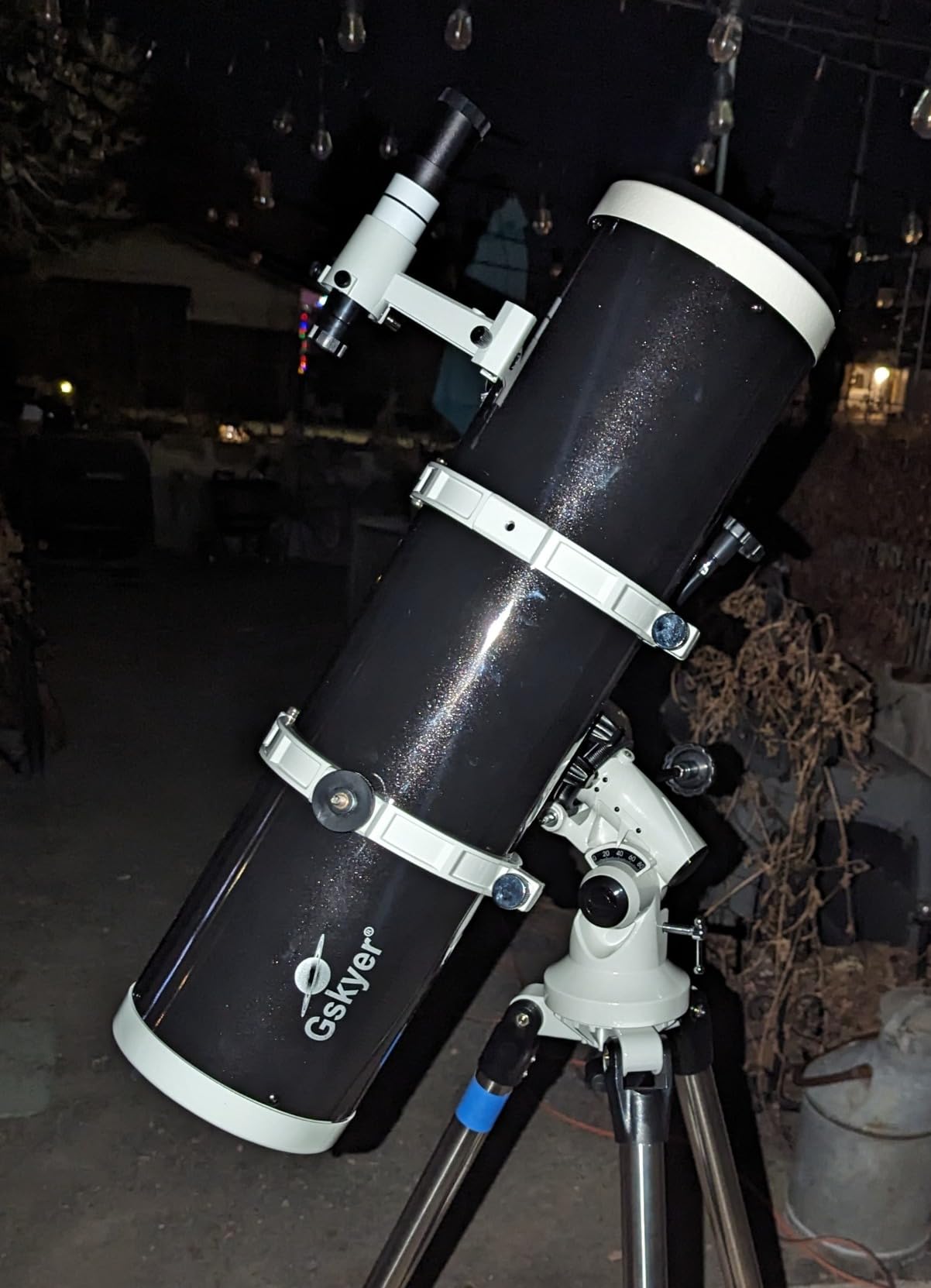
The German equatorial mount is credited with smooth tracking, which matters in a city because a target stays in the eyepiece long enough to actually look at. At f/5 on a 24 inch tube the whole thing is shorter than most 130mm scopes on taller mounts, and the toothless focusing base is a thoughtful touch for anyone refocusing between objects in the cold.
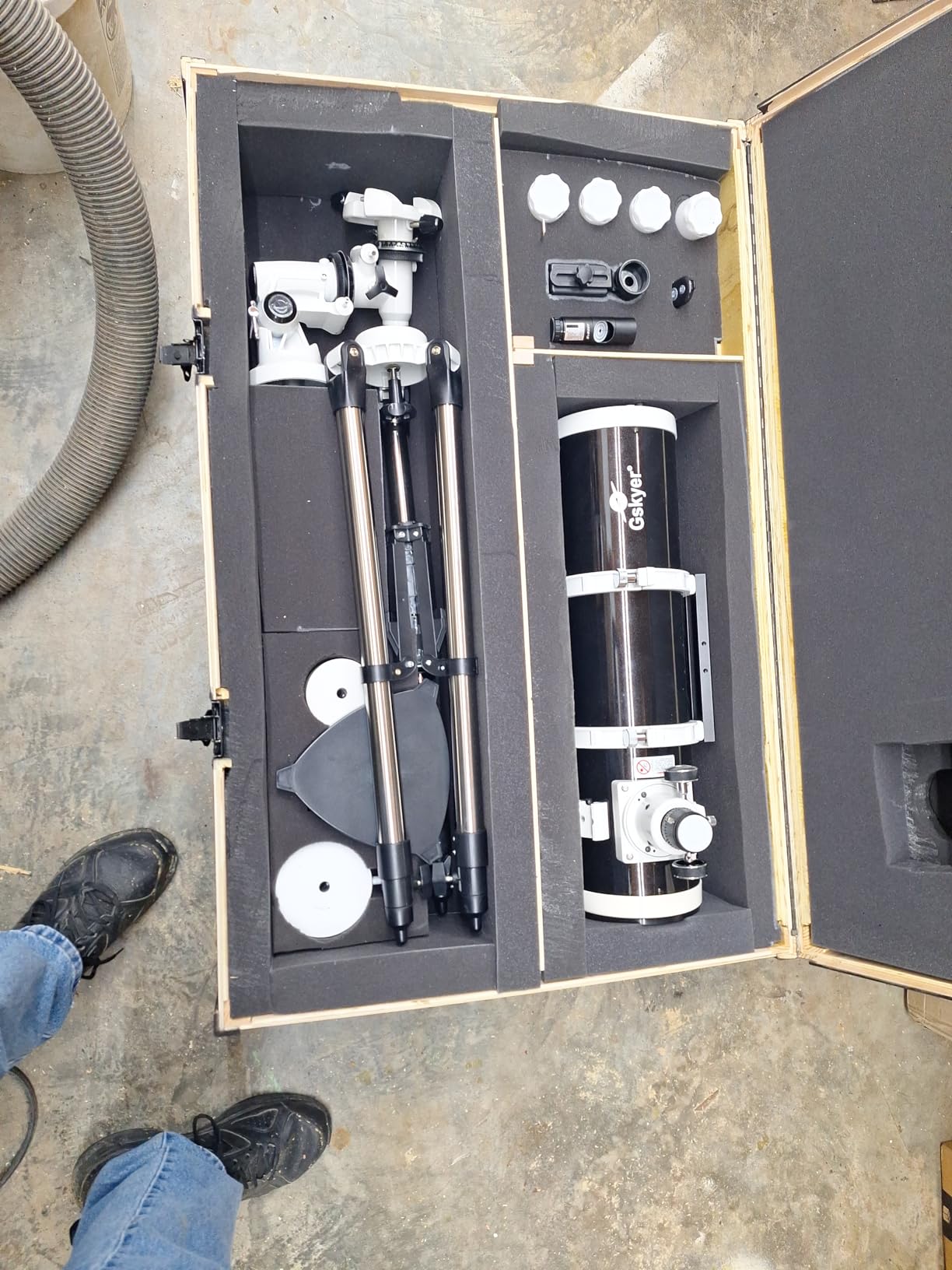
The accessory package is unusually generous. Three eyepieces, a 3x Barlow, a finderscope, an adjustable tripod and a Bluetooth wireless remote that pairs with a phone without any app download. For a first serious scope, arriving with that much kit means you are not replacing accessories in your second month, which is where a lot of new observers give up.
Two things to weigh. The 30.1 lb weight is the biggest single drawback in this roundup after the Dobsonian, and it is a genuine problem in a building with stairs. The other is that the accessory quality is entry level, so eyepiece upgrades are common, and as the Kellner experience shows, cheap eyepieces punish a bright sky more than a dark one.
Collimation is the third item on the list. Like every Newtonian here, it needs the mirrors aligned, and while that is a short learning curve, it is one more thing to do before the first session. If you want a 130mm light bucket with none of that, the two StarSense models use the same aperture with an altazimuth mount and an app that handles the pointing.
When this is the right call in the city
Choose it if you have a yard and you want a real upgrade from a small starter scope without committing to a large mount. The 130mm aperture is enough to reach the brighter Messier targets and larger open clusters through moderate skyglow, which is exactly the tier where city observers report getting their first taste of the deep sky.
It also suits anyone who wants to move toward astrophotography later. A German equatorial head is the standard entry to tracked imaging, so this is one of the few analog scopes here that does not limit where you can go next. The Bluetooth remote also makes it easy to trigger long exposures once you start experimenting.
When it is the wrong call
Skip it if storage is tight or stairs are involved. Thirty pounds plus a full-length tripod is a lot of gear to keep in a flat, and a scope that requires a car to reach the observing spot is a scope that quietly stops being used after a few weeks.
Skip it if you are a complete beginner who will not collimate. The failure mode is not a broken scope, it is a soft image that gets blamed on light pollution. Under skyglow you have very little margin for optical slop, which makes a factory-aligned sealed design a safer first purchase for most people.
11. DWARFLAB Dwarf 3 – Dual-Camera Portability for City and Dark Site
DWARFLAB Dwarf 3 Smart Telescope, App-Controlled Astrophotography Camera
3 lb portable smart telescope
35mm dual lens system
4K auto tracking with EQ mode
Cloud stacking
Pros
- 3 pound body fits a standard backpack for spontaneous trips to darker skies
- Dual imaging system pairs a telephoto lens with a wide-angle lens
- 4K auto tracking follows celestial objects automatically
- Cloud processing turns captures into finished images with no PC needed
Cons
- Output is aimed at social sharing rather than large prints
- Two-year warranty means parts may be harder to source in some regions
- Fixed field of view frames large deep-sky objects tightly
The Dwarf 3 is the DWARFLAB answer to a problem the Mini does not fully solve: framing. It carries a dual lens system, with a telephoto for deep space and wildlife and a wide-angle for Milky Way bands and star trails, so you can pull both a wide and a tight frame of the same night from one device.
That flexibility is what makes it the best dark-site travel option in the roundup. At 3 lb it fits in a standard backpack, which means the single most effective light pollution remedy, driving somewhere darker, becomes something you can do on an ordinary weeknight rather than a planned expedition. Auto GOTO, EQ mode and 4K tracking handle the pointing once you arrive.
The processing is cloud-based, so there is no computer in the loop at all. Reviewers describe the app getting beginners imaging in about two minutes, and the auto-tracking plus cloud stacking delivering finished images in minutes without a laptop. For a city observer, removing the computer removes the biggest reason people never get started.
It is an astrograph rather than a visual instrument, and it weighs in as such. A 35mm objective is small, the field of view is fixed by the sensor so large deep-sky objects are framed tightly, and the output is optimised for screens and social media rather than prints. The included magnetic filters, carrying bag, pouch, wipe cloth and USB-C cable make it a complete kit for travelling.
The two-year manufacturer warranty is a consideration outside the main market, since parts may be harder to source in some regions. That is a realistic concern for anything electronic, and worth weighing against the fact that a broken smart telescope is not repairable the way a broken reflector is.
What this device is good for in a bright sky
It is good for the same reason the Mini is good, and then some: filtered, stacked imaging that extracts usable signal from a glowing background without a long integration or a computer. The wide-angle lens is aimed squarely at the Milky Way and star trails, which is the one thing a city observer is most often told they cannot have.
It is also good for hybrid observing. Because it is 3 lb and self-contained, you can image the sky from a balcony on a weeknight and repeat the same target from a dark site, then put the two images side by side. Reviewers who compare sessions like this tend to be the most enthusiastic about the device.
When it is the wrong call
Skip it if you want to see planets through an eyepiece, and skip it if you want large, detailed prints. The field of view is fixed by the small sensor, so the biggest and closest targets are the ones it frames worst, which is a real limitation for anyone chasing a specific deep-sky object.
Skip it if you will be frustrated by one-button operation. The manual caveat in the feedback is that the app does most of the thinking, and experienced imagers generally want the manual settings. If your interest is learning the craft rather than collecting finished frames, an analog scope plus a camera is the better route.
What City Light Pollution Actually Does to Your View
Light pollution comes in two forms, and only one of them is the problem people expect. Ground glare is direct light from a streetlamp, a window or a security floodlight aimed at your balcony. You can partly block it with a blanket on a wall, and it is not what ruins faint objects. The real culprit is skyglow, the bright dome of scattered artificial light hanging over the city.
Skyglow does something specific and cruel to a telescope view. It raises the brightness of the background rather than dimming the target. That means you are not losing photons from the object. You are losing the difference between the object and the sky behind it, which is the same thing as losing contrast. A faint galaxy at Bortle 8 is not dimmer than the same galaxy at Bortle 4. It is drowned.
Bright point sources behave completely differently. Stars, the Moon and the planets concentrate their light into a tight beam, so adding aperture still adds visible brightness on those targets. A commenter on r/telescopes described the practical version of this neatly, saying the planets and Moon are easily viewed in light-polluted skies and that double stars are a personal favorite using only a 60mm scope. They were not wrong. Small aperture genuinely works on point sources.
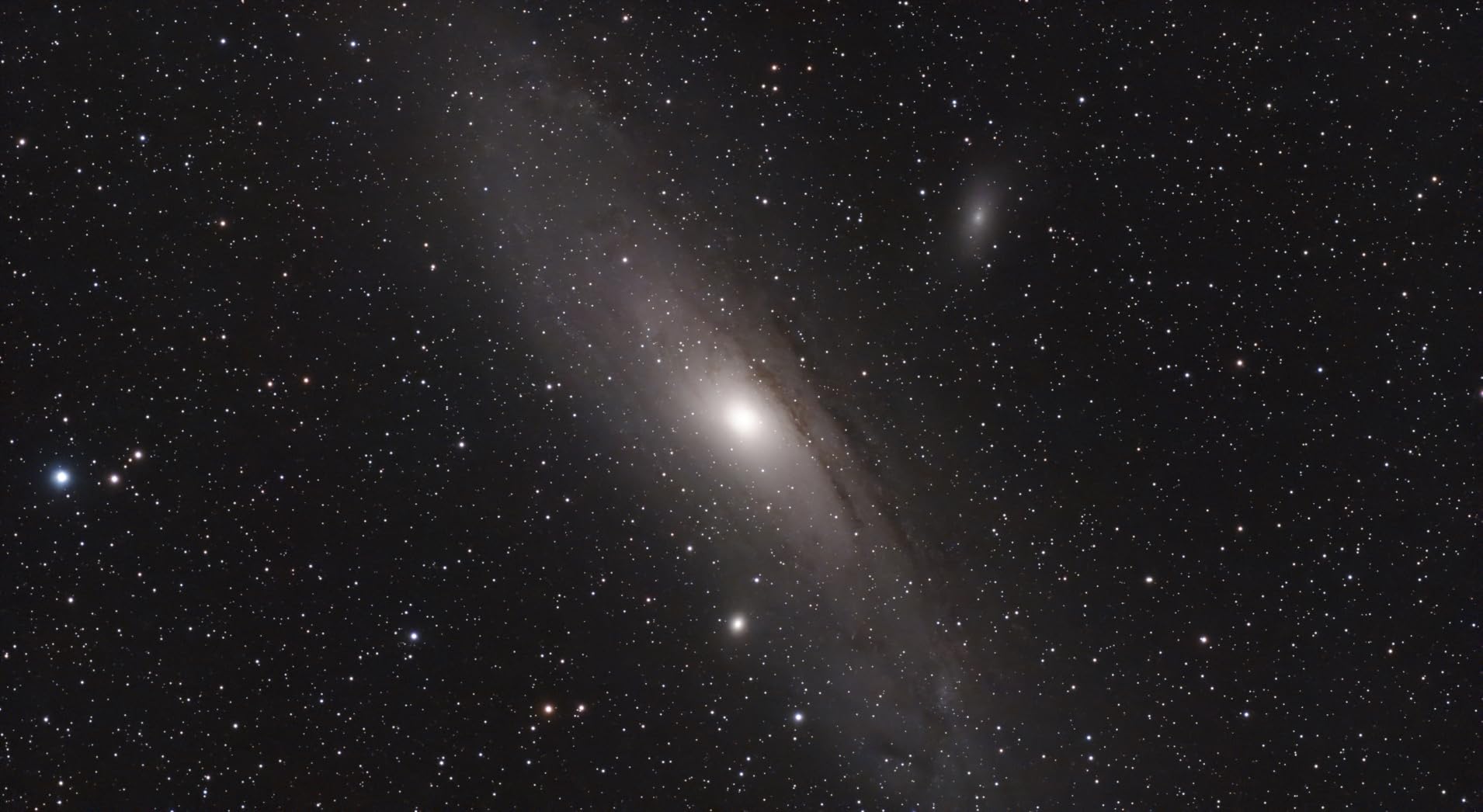
Low surface brightness is where the city wins. The Andromeda Galaxy, faint reflection nebulae and galaxies with low surface brightness can stay invisible no matter how much glass you point at them. The long-running observational comparison published by Telescopic Watch makes the point well: the same galaxy that looks like a small grey smudge in an 8-inch scope at Bortle 8 becomes a distinct oval with dust lanes visible as the sky darkens. The sky was the variable, not the telescope.
Which Telescope Design Wins in a Bright Sky
Sealed tubes beat open tubes in a bright sky. A Maksutov-Cassegrain or a refractor sits inside a closed, baffled barrel, so it sees only the patch of sky you point it at. A Newtonian reflector is an open tube, and in a city that openness is a liability, because any stray light that reaches the inside of the tube bounces around and lands in your eyepiece right where you are trying to spot a faint object.
That is the strongest argument in the urban case, and it is the one Gskyer makes in its own apartment-focused guide. It is not the whole argument, though. Aperture still matters, and a wide Newtonian on a stable mount will show you more faint fuzz than a small Mak. The real comparison is aperture plus baffling, not design alone.
A second factor is central obstruction. A Newtonian has a secondary mirror in the light path that blocks part of the incoming beam and creates the diffraction rings that soften planetary detail. A Maksutov-Cassegrain also has a secondary, but its corrector plate and shorter effective aperture do less damage to contrast, which is why Maks keep showing sharp planetary images in bright conditions. Refractors have no obstruction at all, though an achromatic doublet of this size will show some colour on bright targets.
Mount steadiness is the third factor and the one city observers underestimate. Passing traffic shakes cheap tripods, and a shaky image throws away the contrast you fought for. A Dobsonian base, by contrast, is a solid box sitting on the floor. In a city where the ground shakes and the wind comes off warm buildings, that matters more than the marketing suggests.
Do Light Pollution Filters Still Work?
Sometimes, and less than sellers claim. A UHC or O-III filter passes a narrow band of light and blocks the rest, which increases contrast between emission nebulae and the sky background. Against older sodium and mercury vapour street lighting, that worked well. Against modern white LED lighting, the gain drops a lot, because white LEDs emit across the full visible spectrum and there is no clean band to isolate.
The forum consensus is closer to blunt than the product pages are. One Cloudy Nights poster put it directly: there is not any telescope design that can overcome light pollution, and the filters do not work on star clusters or galaxies. Telescopic Watch goes further and argues that broadband light-pollution filters are essentially obsolete now, recommending instead that you drive somewhere darker.
Two practical notes. First, a UHC or O-III filter actively hurts the Moon and the planets, because those objects emit across the wavelengths the filter blocks. If your city sessions are mostly lunar and planetary, a neutral density moon filter is the useful one, and a moon filter ships with the MEEZAA 150EQ in this roundup. Second, for imaging, narrowband filters still do real work even under white LEDs, which is exactly what the built-in filters on the DWARFLAB and ZWO smart telescopes are built around.
If you want the fastest real improvement, it is not a filter. It is an observing habit change, and we cover the ones that pay off most in the checklist later in this guide.
Buying Guide: Matching a Telescope to Your Bortle Class
The Bortle scale runs from class 1 to class 9, where 1 is a truly dark site and 9 is an inner-city sky. Two things surprise people. First, is Bortle 4 good? Barely, by wilderness standards. It is a bright suburban sky that most people would call rural, and it is the lowest class at which the Milky Way becomes a striking object rather than a faint smear above the horizon.
Second, the drop from class 4 to class 6 to class 8 is faster than most descriptions suggest. A Bortle 7 or 8 suburban sky, which is where a huge number of people live, cuts your naked-eye limiting magnitude roughly in half compared with a class 4 site. That is why the deep sky disappears so abruptly for people who move from the countryside to a city.
So how much aperture should you buy? The honest answer is target-dependent, which is the resolution of the argument that runs through every observing forum. One camp says aperture is a myth in light-polluted skies. Another says it is a myth that more aperture is less effective. Both are half right, and the reconciliation is straightforward.
Aperture helps when the object is bright enough to leave the sky background. That means the Moon, the planets, the first-magnitude stars, and the brightest nebulae and clusters. Aperture does not help when the object is a faint smudge, because no amount of extra light pulls it above a background that brightened at the same time. One experienced Cloudy Nights poster called larger aperture a mixed blessing in light polluted skies, which is the most accurate one-sentence summary we have seen.
There is also a dealer-side caution worth taking seriously. The advice from Astronomics to readers who always observe from a light-polluted site is not to buy more aperture than your conditions will let you use. Applied to this roundup, that means a 200mm Dobsonian in a Bortle 8 flat is money spent on glass you will point at a wall.
Our practical rule, based on the classes above:
At Bortle 4 to 5, a 130mm to 200mm light bucket shows you most of the Messier list and earns its weight. At Bortle 6 to 7, a 130mm is the sweet spot for faint objects, and a 100mm Maksutov with strong baffling is the better instrument for planets. At Bortle 8 to 9, stop buying aperture for visual work and either settle for a small sealed scope or switch to imaging with filters.
Two more specs matter more than buyers expect. The first is eyepiece quality, because Kellner and cheap Plossl designs scatter light internally and make a bright sky much worse than it needs to be. The second is mount steadiness, because vibration destroys exactly the fine contrast you are trying to preserve. A UHC or O-III filter is the third priority, and only for emission nebulae.
If you are still deciding between designs, our computerized telescope guide covers the pointing options in more detail. And if your real interest is daytime observation rather than the night sky, the solar telescope roundup covers the filter requirements you will need there, which are a completely separate safety issue from anything discussed in this article.
Apartment and Balcony Checklist
Most city buyers fail on logistics rather than optics. Before you buy anything, run through these five questions.
Can you carry it? Stairs are the real constraint. Anything over about 15 pounds turns a spontaneous session into a planned one, and a planned session cancelled by weather never happens. The 4.6 pound Skymax and the 1.85 pound Dwarf Mini exist in this roundup for precisely this reason.
Can you set it up in five minutes? If a session needs 20 minutes of collimation and equatorial alignment, you will not do it on a weeknight. Sealed refractor and Maksutov designs need no setup beyond pointing, and a Dobsonian needs none at all.
Where does it live between sessions? A full-size tripod and tube stored assembled in a hallway is a scope that gets dismantled and never rebuilt. The Gskyer 70mm folds into its carry bag, and the Skymax 102 tube is 12 inches long.
Can you see past your horizon? In a flat, buildings often block the low sky, which removes the Moon when it is most useful. A long focal length with a 90-degree star diagonal, like the Skymax 102, is far more usable when the interesting objects sit high.
Can you keep the light out? A red flashlight for the chart, a jacket or blanket over your head to block streetlight glare, and any porch light you control switched off. Dark adaptation takes 20 to 30 minutes and a single car headlight ruins it, which is the largest waste of a city observing session.
One last habit, and it is free. The best window in a city is usually after midnight on a weeknight, when traffic thins and some lights switch off. Observers who time their sessions to that window report better results than those who go out early. Check a light pollution map for your exact address before deciding your sky is hopeless.
Frequently Asked Questions
Do telescopes work in light polluted areas?
Yes, but only on targets that outshine the glowing sky background. The Moon, the planets, the brightest stars, double stars and open clusters all stay visible through skyglow. What disappears is contrast, not target brightness, so faint galaxies and low-surface-brightness nebulae can be invisible no matter how much aperture you use.
What is the best type of telescope for stargazing in light polluted skies?
A sealed closed-tube design is the safest choice in a bright sky. Maksutov-Cassegrains and refractors physically block stray light and hold contrast better than open-tube Newtonians, whose interiors scatter ambient light into the eyepiece. A longer focal length also helps, because it keeps magnification moderate. Aperture still matters, but only up to what your Bortle class can use.
Can you see stars and nebulae in the city with a telescope?
Stars yes, nebulae selectively. Bright stars, double stars and the Moon are all comfortable targets from a city. A bright nebula like Orion can be glimpsed with a 100mm-class sealed scope on a good night, but faint galaxies stay invisible because their surface brightness is too low to rise above skyglow. Under a bright dome, the honest answer is that the deep sky needs a darker site.
What is a good light pollution filter for a telescope?
A UHC or O-III filter, used only on emission nebulae. These pass a narrow band of light and block the rest, raising contrast against the sky. Against modern white LED street lighting the gain is much smaller than it was against sodium and mercury vapour lamps. Never use one on the Moon or planets, which emit across the blocked wavelengths, and expect no help at all on star clusters or galaxies.
Which is better, a newtonian or refractor telescope, for city observing?
A refractor, for most city observers. Its sealed tube blocks stray light, it has no central obstruction, it needs no collimation, and it stays sharp in a bright sky. A Newtonian gathers more light per inch of aperture, which matters for brighter deep-sky objects, but it is an open tube that scatters ambient light and needs periodic collimation. Under skyglow the contrast advantage usually wins for beginners.
What aperture do I need to see Saturn’s rings in the city?
At least 70mm, and realistically 100mm or more for satisfying detail. Saturn is bright enough to punch through skyglow, so a long focal length and strong baffling matter more than aperture. A 4.6 pound 102mm Maksutov-Cassegrain on a steady tripod shows the rings and the Cassini Division well from a suburban or urban sky, provided you keep magnification moderate and let the image settle.
What Bortle level do you need to see the Milky Way?
You need class 4 or darker for a genuinely impressive Milky Way, and class 3 for the bright core and dark rifts. At class 5 to 6 the band is visible but washed out near the horizon. At class 7 and above, which describes most suburban and inner-city skies, you are seeing light pollution rather than galaxy structure. Check your class on a light pollution map before deciding your sky is unsuitable.
Should I buy a telescope if I live in a heavily light polluted city?
Yes, if your expectation is the Moon, planets, double stars and open clusters rather than faint galaxies. Those targets are barely affected by aperture and thrive in a bright sky. A sealed 100mm-class Maksutov or a small refractor covers them at low cost. If your goal is the deep sky, save the money and drive to a dark site instead, or buy a smart telescope with light pollution filters for imaging.
Conclusion
So is it worth buying a telescope for city light pollution? Yes, with the right expectations. The Moon, Saturn’s rings, Jupiter’s moons, the Orion Nebula on a good night and a long list of double stars are all there for you, and a telescope will show you things you cannot see with your eyes from the same doorstep.
Our best telescopes for city light pollution list, one last time. For most people in a bright sky, the Gskyer 70mm is the right first instrument because you will actually use it, and the Sky-Watcher Skymax 102 Maksutov is the best upgrade for planetary detail at 4.6 pounds. If you have a yard and want the next tier of deep-sky objects, the Celestron AstroMaster 130EQ is the complete setup. If you want to photograph the sky rather than look at it, the DWARFLAB Dwarf Mini and the ZWO Seestar S30 Pro are the two devices in 2026 built specifically to work under city glow.
One last piece of advice that no filter or accessory will improve on. Look up your Bortle class, be honest about how much you can carry up the stairs, and pick a target list you will actually see. A small scope pointed at the Moon from a Bortle 8 balcony at midnight beats a large one that never leaves the cupboard.