
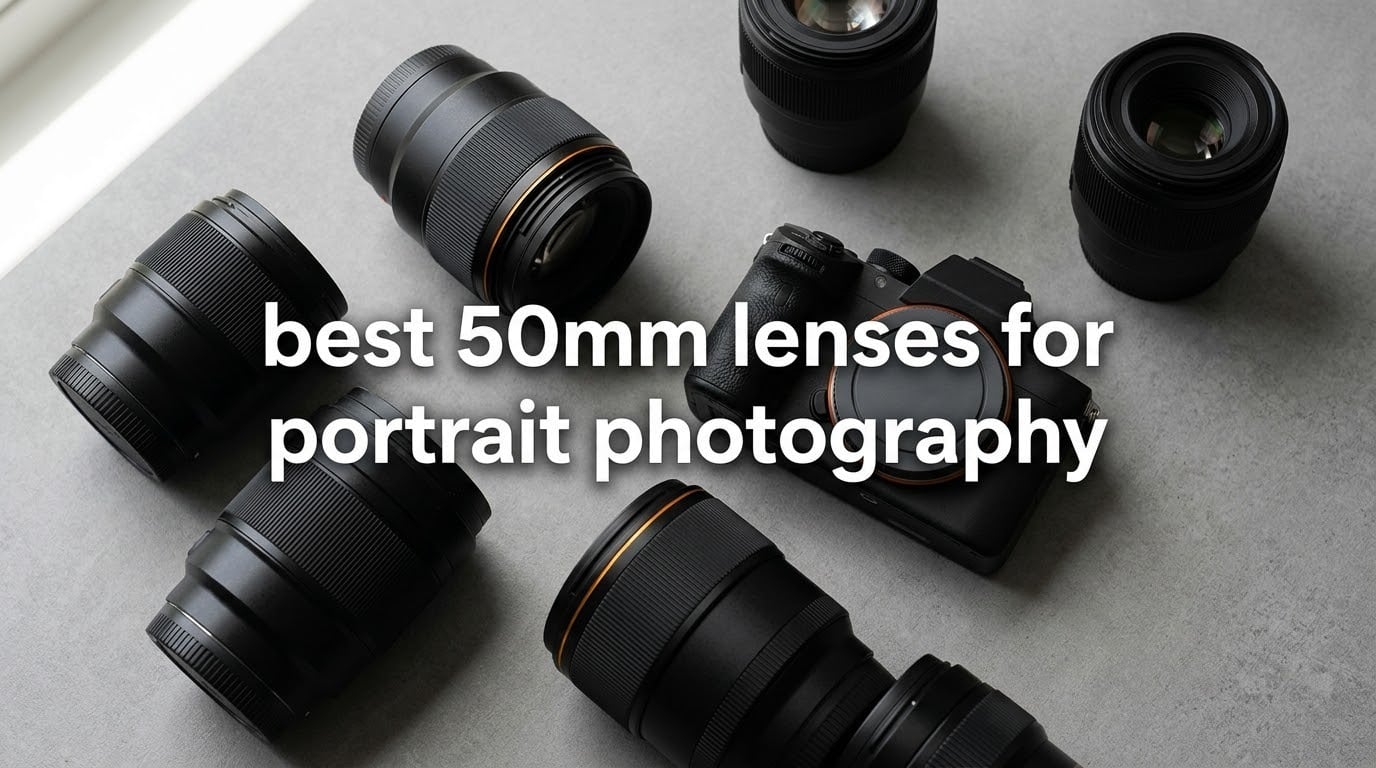
The 50mm prime has a reputation problem it never deserved. Ask ten working photographers for a portrait lens and most of them say 85mm, or 105mm, or a 56mm on APS-C. Ask the same ten whether a 50mm can do portraits and you get a shrug, usually followed by a claim that it distorts noses. Both answers come from the same misunderstanding: what matters is not the millimetre number on the barrel, it is the angle of view that focal length produces on the sensor you are actually shooting.
On a full-frame body, 50mm gives a natural, human-eye angle of view. That is why documentary and street photographers have carried one for a century. On an APS-C body the same lens crops to roughly an 80mm equivalent, which is squarely inside portrait territory. On Micro Four Thirds it lands near 100mm equivalent. One physical focal length, three very different portraits, and that single fact resolves most of the arguments you will read about the best 50mm lenses for portrait photography.
We spent the last several weeks comparing the ten 50mm primes below across Canon EF, Canon RF, Nikon F, Nikon Z, Sony E and Fujifilm X mounts. Every lens here was judged on the same four things: how it renders wide open, how it behaves stopped down, how the autofocus performs on a moving subject, and how it holds up in weather. We also read through thousands of owner reviews, because the pattern of complaints is more useful than the spec sheet.
What follows is a cross-mount roundup, not a single-brand guide. If you want the wider picture on focal length choices first, our guide to the best portrait lenses overall covers the short telephoto end of the spectrum in more detail.
Table of Contents
Top 3 Best 50mm Lenses for Portrait Photography (October 2026)

Canon EF 50mm f/1.8 STM
- 50mm f/1.8 STM prime
- Silent stepping motor AF
- 7 rounded aperture blades
- 160 g
- 0.35 m minimum focus

Nikon AF-S 50mm f/1.8G
- 50mm f/1.8 FX prime
- Silent Wave Motor AF
- Aspherical element
- 7 rounded blades
- 185 g
Canon EF 50mm f/1.4 USM
- 50mm f/1.4 aperture
- Ultrasonic motor AF
- 8 diaphragm blades
- Full-time manual focus
All 10 Lenses Compared Side by Side in 2026
| Product | Specifications | Action |
|---|---|---|
| Canon EF 50mm f/1.8 STM |
|
Check Latest Price |
| Nikon AF-S 50mm f/1.8G |
|
Check Latest Price |
| Canon EF 50mm f/1.4 USM |
|
Check Latest Price |
 Canon RF50mm F1.8 STM Canon RF50mm F1.8 STM |
|
Check Latest Price |
 Sony E 50mm F1.8 OSS Sony E 50mm F1.8 OSS |
|
Check Latest Price |
 YONGNUO YN50mm F1.8N YONGNUO YN50mm F1.8N |
|
Check Latest Price |
 Nikon NIKKOR Z 50mm f/1.8 S Nikon NIKKOR Z 50mm f/1.8 S |
|
Check Latest Price |
 Sigma 50mm F1.4 Art DG HSM Sigma 50mm F1.4 Art DG HSM |
|
Check Latest Price |
 VILTROX AF 50mm F1.4 Pro FE VILTROX AF 50mm F1.4 Pro FE |
|
Check Latest Price |
 Fujifilm XF50mmF2 R WR Fujifilm XF50mmF2 R WR |
|
Check Latest Price |
How We Chose These Lenses
Every candidate had to be a fixed 50mm prime available for a mount people actually own, with enough owner feedback to judge. That rules out prototypes, novelty rebrands and any lens whose listing is dominated by listing boilerplate rather than real user reports.
Four criteria decided the ranking. First, wide-open rendering, because portrait sessions rarely end up stopped down. Second, how quickly the lens becomes usable once you stop down one or two stops. Third, autofocus behaviour on a real subject, not a test chart. Fourth, physical robustness, since a lens that cannot handle rain is useless for the environmental portraits this focal length is good at.
We also record the flaws. The community consensus on photography forums is refreshingly blunt: an expensive lens cannot rescue poor posing or bad light. Several lenses below lose points for softness wide open and for missing weather sealing, and we have said so plainly rather than softening it. Our broader guide to the best cameras for portrait photography covers the bodies these lenses pair best with.
1. Canon EF 50mm f/1.8 STM: the Default First Portrait Prime
Canon EF 50mm f/1.8 STM Lens, Black, Compatible with Canon EOS DSLR Cameras
50mm f/1.8 on Canon EF
160 g
0.35 m minimum focus
7 rounded blades
49 mm thread
Pros
- Exceptional value for a fast prime
- Sharp and contrasty even at f/1.8
- Silent STM autofocus suits video
- Metal mount and 160 g weight
- Close focus at 0.35 m
Cons
- Soft corners wide open on full frame
- No stabilisation
- Not weather resistant
- 49 mm filter thread is an odd size
This is the lens I hand to anyone buying their first prime. It weighs 160 grams, it mounts on every Canon EOS body from entry DSLRs to full-frame, and it delivers a f/1.8 aperture that puts a soft background behind your subject without any fuss. The 7-blade diaphragm renders out-of-focus highlights as rounded shapes rather than hard polygons, which matters more for portraits than most spec lists suggest.
On an APS-C Canon body the same lens gives an 80mm equivalent, which is the configuration we see it used for the most. Wide open it holds detail in the centre of the frame and the transition to blur is smooth, though owners on full-frame bodies consistently note that the corners soften noticeably at f/1.8 and come back around f/2.8.

The stepping motor focuses quietly enough that continuous autofocus in video is genuinely usable, and there is full-time manual focus override when you want to pull focus by hand. Minimum focus is 0.35 m, closer than most rivals here, which lets you fill the frame with a head and shoulders without backing into the next room.
The trade-offs are honest ones. There is no stabilisation in the lens and no weather sealing, so it relies on a stabilised body if your camera has one. Focus is by wire rather than mechanical, which purists dislike but most people never notice. If you shoot Canon and you are building a kit one prime at a time, this is where you start.
Community consensus across photography forums is that this lens is not a compromise. The recurring advice is that a 50mm f/1.8 is entirely capable of paid portrait work and that upgrading from it is an aesthetic preference rather than a quality fix. We agree with that. For a deeper look at the format itself, our roundup of the best 50mm lenses for full-frame cameras covers how it behaves against the competition.

Is the Canon EF 50mm f/1.8 STM sharp enough for portraits?
Yes, at the centre of the frame, which is where the eyes sit. Centre sharpness at f/1.8 is already good, contrast is high and colour rendition is neutral enough to grade easily. Stop to f/2.8 and the edges tighten up considerably. Corner softness wide open is the main complaint in owner reviews, and on a full-frame body with a 24 mm sensor it is visible in files.
On APS-C, where the crop uses only the centre third, this weakness largely disappears. That is one of the strongest arguments for putting this lens on a smaller sensor body rather than a full-frame one.
When should you skip this lens?
Skip it if you shoot outdoors in rain or snow on a full-frame body and rely on the lens for protection. It is not sealed, and Canon did not design it for that. Also skip it if you need stabilisation for stills, since the lens offers none and the older EOS bodies do not have in-body stabilisation.
A second reason to look elsewhere is video with fast-moving subjects. The stepping motor is quiet but not especially quick, and it can hunt in dim conditions. For sports or active children, a faster ultrasonic motor is the better bet.
2. Nikon AF-S FX NIKKOR 50mm f/1.8G: Quiet, Sharp and Quietly Excellent
Nikon AF-S FX NIKKOR 50mm f/1.8G Lens with Auto Focus for Nikon DSLR Cameras
50mm f/1.8 on Nikon F
185 g
0.45 m minimum focus
7 rounded blades
58 mm thread
Pros
- Sharp centre-to-corner with an aspherical element
- Silent Wave Motor focuses fast and quietly
- Works on FX and DX bodies
- M/A instant manual override included
- Hood and case supplied in the box
Cons
- No stabilisation
- Not weather sealed
- 0.15x magnification is modest
- DX crop gives 75mm equivalent
This is the Nikon equivalent of the Canon f/1.8 STM and it edges it optically in several places. The aspherical element delivers even performance toward the frame edges, and the Silent Wave Motor is quicker than a typical stepping motor while staying quiet enough for video. The M/A switch gives instant manual override without leaving autofocus mode.
On a DX body the lens gives a 75mm equivalent field of view, which owner reviews describe as tight for interiors but ideal for head-and-shoulders work where you want distance from your subject. On FX it behaves as a normal lens with a 47 degree angle of view, suitable for environmental portraits where the surroundings matter.
Minimum focus is 0.45 m and maximum magnification 0.15x, which is enough for a tight headshot but not for detail shots of hands or fabric. The 58 mm filter thread is a common, inexpensive size, and the box includes a hood, front and rear caps and a soft case, which is generous at this level.
There is no stabilisation and no weather sealing, so this is a fair-weather and fair-light lens. Owners also mention the plastic barrel feels less substantial than it does once it is mounted. For a Nikon shooter on a budget, though, the optical result per unit of cost is very hard to argue with, and the review volume across more than ten thousand owners makes the quality picture unusually clear.

Does the Nikon 50mm f/1.8G work on DX crop bodies?
Yes, and it is arguably at its best there. The DX crop gives a 75mm equivalent, which puts you at a working distance that flatters facial proportions more than a 50mm equivalent view does. The downside is a narrower field of view, so small rooms become tight and you need to step back more for full-body frames.
Autofocus and aperture behaviour are unchanged by the crop. The only thing you lose is frame coverage, not image quality.
What are the real drawbacks of this lens?
Two come up repeatedly. The first is the lack of optical stabilisation, which matters for still subjects at slow shutter speeds but is a non-issue in daylight. The second is the 0.45 m minimum focus distance, which on a full-frame body means the closest full-body framing is not as tight as you might like for headshots.
There is also no aperture ring, so if you enjoy physical aperture control for video or for deliberate exposure changes, you will be using the command dial instead. That is a preference rather than a fault.
3. Canon EF 50mm f/1.4 USM: The Brightest Canon EF 50mm
Canon EF 50mm f/1.4 USM Standard and Medium Telephoto Lens for Canon SLR Cameras, Fixed
50mm f/1.4 on Canon EF
290 g
8 diaphragm blades
8 elements in 6 groups
58 mm thread
Pros
- Two-thirds stop more light than an f/1.8
- Ultrasonic motor is fast and near-silent
- Sharper once stopped down to f/2.8
- Full-time manual focus override
- Heavier and better-feeling build
Cons
- Soft wide open at f/1.4
- Chromatic aberration at fast apertures
- Vignetting wide open
- No stabilisation or weather sealing
The jump from f/1.8 to f/1.4 gains two-thirds of a stop of light and one additional depth-of-field stop. For indoor portraits that shoot at high ISO, that difference is real. The 8-blade diaphragm also produces a slightly rounder highlight shape than the 7-blade lenses on either side of it in this list.
Where this lens disappoints is wide open. Owner reviews are consistent: at f/1.4 the centre is usable but soft, with visible chromatic aberration and vignetting toward the edges. Stop down to f/2 or f/2.8 and it sharpens substantially, which is the setting most portrait shooters settle on permanently.

Autofocus is handled by an ultrasonic motor that is quick and quiet, with full-time manual focus override so you can rack focus without flipping a switch. The barrel weighs 290 grams and extends during focusing, which is a slight step down in build refinement compared with newer designs but nothing that affects results.
There is no stabilisation and no sealing. The minimum focus distance is 0.45 m. Our judgement is that this lens makes the most sense for a Canon photographer who already owns an f/1.8 and needs either the extra stop or the extra blade, rather than for someone starting out.

Should I step up from a 50mm f/1.8 to a 50mm f/1.4?
Only if you shoot in low light regularly or you specifically want the rendering and aperture character of f/1.4. For daylight portraits at f/2.8, both lenses deliver very similar files, and the f/1.8 is lighter, smaller and easier to carry.
The stronger upgrade argument on Canon is to an 85mm rather than to f/1.4, because compression changes the face. If your goal is a different look rather than more light, the focal length matters more than the aperture.
Who should avoid the Canon EF 50mm f/1.4 USM?
Avoid it if sharp wide-open files are non-negotiable for your work. This lens needs a stop of stopping down before it reaches its best corner performance, and anyone shooting at maximum aperture in a hurry will find it soft. It is also one of the heavier 50mm primes here at 290 grams, which adds up over a long wedding day.
The lack of weather sealing is the other practical concern for outdoor shooters in poor conditions.
4. Canon RF50mm F1.8 STM: The Small Mirrorless Nifty Fifty
Canon RF50mm F1.8 STM Lens
50mm f/1.8 on Canon RF
160 g
7 rounded blades
43 mm filter thread
Control ring
Pros
- Lightest full-frame option here at 160 g
- Compact and pocketable
- Sharp with pleasing bokeh at f/1.8
- Silent stepping motor
- 43 mm filters are inexpensive
Cons
- Soft corners wide open
- Relies on body stabilisation
- Not weather sealed
- Focus breathing is noticeable in video
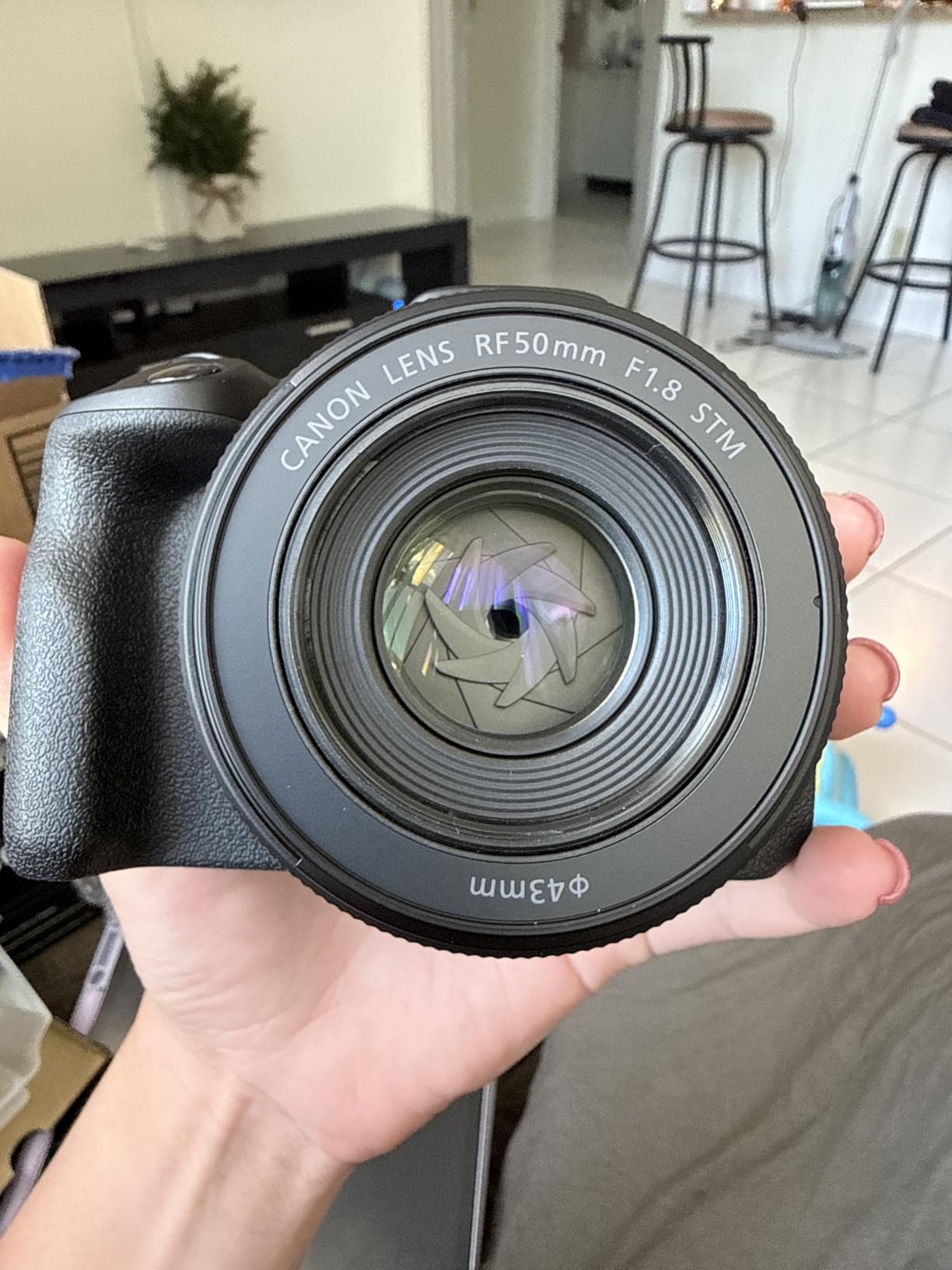
This is the RF-mount version of the classic nifty fifty and it solves a specific problem: Canon mirrorless bodies are small, and most fast primes on that mount are not. At 160 grams this lens disappears into a small bag, which matters if you are carrying a body, two batteries and a spare card rather than a full kit.
Image quality is good for its class. At f/1.8 the centre is sharp with attractive bokeh from the 7 rounded blades. Corner softness and corner chromatic aberration appear wide open and improve as you stop down. The 43 mm filter thread is the smallest here, which is a quiet saving if you buy filters.
A control ring on the barrel lets you change settings directly, which some shooters prefer over dials. Autofocus is driven by a stepping motor that is quiet, and there is a focus distance window on the barrel for manual work. Close-focus capability is good for headshots even though it is not a true macro lens.
Stabilisation comes from the camera body rather than the lens, and there is no sealing. On APS-C RF bodies such as the R10, R50 and R7, the effective view narrows to a 75mm equivalent, which is tight for interiors and for group shots but flattering for tight portraits.
Is a 50mm lens too short on APS-C mirrorless?
No. On an APS-C body a 50mm gives roughly a 75mm equivalent view, which many photographers consider the ideal portrait framing because you shoot from a comfortable distance and facial proportions look natural. The genuine limitation is coverage: indoors you will need to back up, and full-body frames require more room than on full frame.
If your work is mostly tight headshots and environmental portraits shot outdoors, the shorter distance is an advantage rather than a problem.
What do owners dislike about this lens?
Three things recur. Corner softness wide open, which matters on high-resolution bodies where the corners are used heavily. Focus breathing during video pulls, visible when refocusing at close range. And the absence of weather sealing, which is a genuine limitation for outdoor portrait work in poor conditions.
Manual focus is electronic rather than mechanical, so a traditional focus ring with hard stops does not exist on this model. That is the trade for the compact size.
5. Sony E 50mm F1.8 OSS: Stabilisation in a Pocket Portrait Lens
Sony – E 50mm F1.8 OSS Portrait Lens (SEL50F18/B), Black
50mm f/1.8 for Sony E APS-C
202 g
Optical SteadyShot
7 circular blades
49 mm thread
Pros
- Only lens here with built-in optical stabilisation
- Silent stepper autofocus
- Sharp with clean bokeh at f/1.8
- Light and compact for an APS-C kit
- Close focus at 0.39 m
Cons
- APS-C only
- 75mm equivalent is tight indoors
- Chromatic aberration in high contrast
- Sits at a premium for a crop-sensor lens
The defining feature of this lens is stabilisation. Optical SteadyShot inside a 50mm prime is rare, and for portrait work it is genuinely useful because you can shoot hand-held at shutter speeds two or three stops slower than you otherwise could. That directly reduces the ISO you need in dim rooms, which improves both noise and the background separation you can achieve.
It is built for Sony E APS-C bodies, where 50mm gives a 75mm equivalent view and a 32 degree angle of view. That is a genuine portrait focal length, and the compression on a head-and-shoulders frame is flattering without becoming telephoto-flat.
Optically it is sharp at f/1.8 with a circular 7-blade aperture that renders highlights smoothly. Minimum focus is 0.39 m with 0.16x magnification, useful for tight headshots. Autofocus is driven by a stepper motor that is quiet enough for video, and the aluminium body feels more refined than its weight suggests.
Chromatic aberration shows up in high-contrast backlit situations, which is exactly when you might be shooting into a window. There is no weather sealing, and the included hood is plastic. If you later move to a full-frame Sony body you will need a different lens entirely.
Does stabilisation matter for portrait photography?
It matters most for stationary subjects in dim light. Without it you may be forced to ISO 3200 or 6400 for a handheld frame at f/1.8; with it you can hold f/1.8 at ISO 800 and still look natural. Lower ISO means cleaner shadows and finer detail in skin tones, which matters when you are working close.
It does nothing for a moving subject, and it does not freeze motion. For portraits of children or in a dance shoot, stabilisation is irrelevant.
Who should skip the Sony E 50mm F1.8 OSS?
Skip it if you shoot full frame, because the 1.5 crop system cannot cover a 36 mm sensor and no full-frame option is offered. Skip it if you regularly shoot small interiors or groups, because the 75mm equivalent field of view is genuinely tight in a living room.
Some buyers also find the cost hard to justify against simpler f/1.8 primes, given that this lens is not sealed. For a dedicated portrait shooter on an a6000-series or a6700 body, though, the stabilisation alone justifies the choice.
6. YONGNUO YN50mm F1.8N: The Lowest-Cost Route Into a Fast Prime
YONGNUO YN50mm F1.8N Standard Prime Lens AF for Nikon F-Mount DSLR Cameras
50mm f/1.8 on Nikon F
204 g
7 diaphragm blades
58 mm filter thread
Focus distance window
Pros
- The lowest entry cost of any fast 50mm prime here
- Usable sharpness from f/2.8
- Metal mount and metal contacts
- Autofocus works on entry Nikon bodies
- Focus distance window for manual work
Cons
- Loud autofocus motor
- Soft at f/1.8 and hunts in low light
- No stabilisation or sealing
- No full-time manual focus override
This lens exists for one reason: to give a Nikon owner a f/1.8 prime without a large outlay. On paper the specification sheet matches the lenses costing several times more, and the metal mount and gold-plated contacts suggest better build than the price implies.
The catch is performance. It is soft wide open at f/1.8 and remains soft through roughly f/2.5, which is a real limitation for portrait work where you might want to run wide open. Most owners shoot it at f/2.8 or narrower, where the image quality becomes respectable and the f/1.8 maximum simply handles low light.

Autofocus works on Nikon bodies without a built-in motor, which broadens the cameras it can serve. It is also loud enough that video is not a sensible use case, and it can hunt in dim conditions. There is no full-time manual focus override, so you switch to manual first, and the focus distance window helps once you are there.
Some owners report that build quality varies from sample to sample, which is the usual trade at this level. For a beginner who wants to learn depth of field before investing more, or as a beater lens for a travel kit, that is a reasonable position for it to occupy.
Is this good enough for a beginner learning portraits?
Yes. A f/1.8 aperture teaches you the same lesson about depth of field as an expensive lens, at a fraction of the outlay. Once you stop down to f/2.8 the rendering is clean enough to judge focus, pose and light, which are the things that actually decide whether a portrait works.
The things it will not teach you well are video autofocus behaviour and low-light wide-open sharpness, because both are weak points here.
What are the compromises with this lens?
The loud motor is the one that affects daily experience most, particularly if you work around other people. Softness wide open means you will rarely shoot at the aperture the lens advertises. Missing weather sealing and stabilisation limit it to indoor and fair-weather use.
Buyers who need something that stays sharp at maximum aperture and focuses quietly should look at the first-party f/1.8 primes instead, which cost more but do not ask you to compromise on the fundamentals.
7. Nikon NIKKOR Z 50mm f/1.8 S: The Sealed S-Line Option
Nikon NIKKOR Z 50mm f/1.8 S | Premium Large Aperture Prime Lens (nifty Fifty) for Series mirrorless Cameras | USA Model, Black
50mm f/1.8 on Nikon Z
413 g
9 rounded blades
62 mm thread
Weather sealed
Pros
- Corner-to-corner sharpness wide open
- Weather sealed with fluorine front coating
- Silent stepping motor with excellent eye detection
- Internal focusing keeps the barrel still
- Minimal focus breathing for video
Cons
- Heaviest f/1.8 here at 413 g
- Long barrel with the hood fitted
- No aperture ring
- Relies on body stabilisation
This is the only 50mm on the list that is genuinely sealed, and the difference is not cosmetic. Reviews describe shooting in rain and cold with no issues, which removes the single biggest practical objection to using a fast prime outdoors. The fluorine coating on the front element also resists fingerprints and smears during handling.
Optically it is the strongest f/1.8 in this roundup at the frame edges. Sharpness is even from centre to corner wide open, with minimal chromatic aberration and distortion, and the 9 rounded blades produce a noticeably rounder bokeh than the 7-blade designs on the budget lenses.

Internal focusing means the front element does not rotate or extend, so the lens stays the same size and stays weather sealed while focusing. Autofocus is driven by a stepping motor that pairs very well with Nikon body eye detection, and focus breathing is minimal enough for video work at close range.
The cost is size and weight. At 413 grams with the hood fitted, it is about twice the mass of the Canon and Nikon f/1.8 primes and roughly as long as a 24-70mm zoom. There is no aperture ring, and stabilisation comes from the Z body rather than the lens.

Is weather sealing worth paying for?
If you shoot outdoors for a living, yes. Sealing protects the lens from rain, spray and dust, and it is the difference between a lens you can leave on the body outdoors and one you have to remove and bag every time a shower arrives. It also tends to signal a lens built to a higher standard internally.
If you mostly shoot indoors or in dry weather, sealing is nice to have rather than essential, and you can spend that money on a brighter aperture instead.
When is the 50mm f/1.8 S the wrong choice?
It is the wrong choice when weight is the priority. At 413 grams it changes what a small mirrorless kit feels like on a long walk. It is also the wrong choice if you enjoy a physical aperture ring, since this lens routes aperture control to the camera.
For a Nikon Z owner who shoots weddings, environmental portraits or anything outdoors in bad weather, it is very close to the ideal lens.
8. Sigma 50mm F1.4 Art DG HSM: Sharpness That Holds Wide Open
Sigma 50mm F1.4 Art DG HSM Lens for Nikon
50mm f/1.4 on Nikon F
815 g
9 rounded blades
77 mm thread
0.4 m minimum focus
Pros
- Very sharp at f/1.4 across the frame
- Nine rounded blades give smooth highlight rendering
- Ring-type ultrasonic motor with manual override
- Available in several mounts including Canon and Sony
- Colour and contrast are excellent
Cons
- Very heavy at 815 g
- 77 mm filters are expensive and large
- No stabilisation or weather sealing
- Some units need focus calibration via USB dock
This is the lens in the roundup that stays sharpest at its widest aperture, which is exactly what a portrait shooter working at f/1.4 wants. Unlike the Canon EF 50mm f/1.4, you are not compelled to stop down to get usable detail across the frame, and the 9-blade diaphragm renders out-of-focus points as clean circles.
The build feels substantial and the ring-type ultrasonic motor focuses quickly and quietly, with full-time manual focus override so you can rack focus without a switch. Colour rendition and contrast are strong, which means raw files need less correction than most.
Where it strains is physical. At 815 grams it is the heaviest lens here by a wide margin, and paired with a pro body it is a serious load over a full shooting day. The 77 mm filter thread is also the largest, which raises the cost of any filter you buy and requires a bigger lens pouch.
There is no stabilisation and no sealing. Some owners report that early units need focus calibration through the Sigma USB dock to work correctly with their bodies. This lens is also available in Canon, Sony and Sigma mounts, which makes it a workable cross-system option if you are not locked to one brand.

Is a heavier 50mm lens worth it for portraits?
Weight is a real cost over a long day, but sharpness is a permanent gain on every frame. If your portraits are made in a controlled setting rather than on location, the steady frame and corner detail usually outweigh the weight. If you are moving constantly, carrying a 70-200mm zoom or two bodies, an 815 g prime adds up fast.
Balance matters more than the raw number. A heavy lens on a light body feels worse than a lighter lens on a larger one, so pair it accordingly.
Which mount should you choose?
Optically the design is the same across mounts, so the difference is in autofocus behaviour and lens interchange with the rest of your kit. Owners sometimes report that the Canon version focuses more smoothly than others, so if you are choosing between mounts purely on handling, that is worth checking for your specific body.
Whichever mount you choose, the lens covers full frame and crops to roughly 75mm equivalent on APS-C bodies.
9. VILTROX AF 50mm F1.4 Pro FE: Flagship Glass on Sony E
VILTROX AF 50mm F1.4 Pro FE Lens for Sony E Mount, 50mm f/1.4 Auto Focus Portrait Prime Full Frame Lens with HyperVCM Motor Compatible with Sony Camera a7IV a7RV a9II a7CII ZVE1 A1 a6700 a6400
50mm f/1.4 for Sony E
11 aperture blades
15 elements in 11 groups
Weather sealed
0.45 m minimum focus
Pros
- Excellent centre-to-edge sharpness at f/1.4
- Eleven rounded blades for very smooth bokeh
- Metal body with weather sealing
- De-clickable aperture ring for video
- Customisable Fn button and USB-C firmware updates
Cons
- No built-in stabilisation
- Autofocus hunts more than first-party lenses
- Substantial weight
- Sold without official manufacturer warranty
This lens does something unusual for a third-party design: it competes optically with the flagship first-party 50mm primes while costing considerably less. The optical formula is ambitious, with 15 elements in 11 groups including three extra-low-dispersion elements, eight high-refractive elements and an ultrahigh-refractive aspherical element to control lateral colour.
The result is even sharpness from the centre to the corners at f/1.4, which removes the usual compromise on fast primes. The 11-blade aperture produces the roundest highlight rendering in this roundup, and the sealed metal body holds up outdoors.
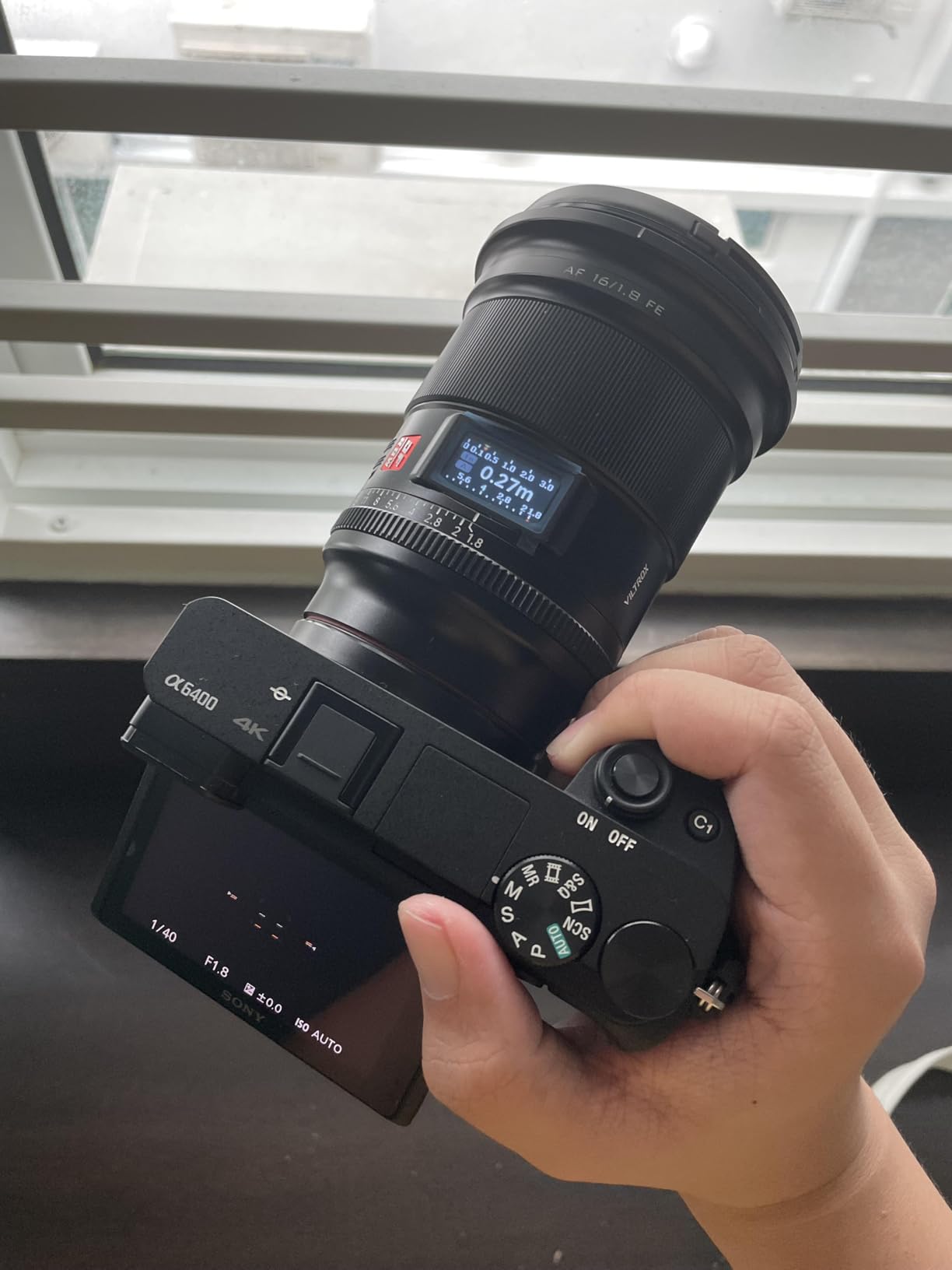
Two features set it apart from plain third-party glass. The aperture ring can be de-clicked for video, letting you change exposure without steps in the recording. And the customisable function button plus USB-C firmware port mean the lens can be updated and remapped rather than becoming obsolete.
The weaknesses are honest ones. Autofocus uses dual voice coil motors that are fast but hunt slightly more than first-party systems, particularly against low-contrast subjects. There is no stabilisation, so a stabilised body is required for still subjects at slow speeds. Owners also note the weight is substantial, and warranty cover runs through the seller rather than the manufacturer.
Is a third-party f/1.4 lens as good as a first-party one?
On optical performance at this focal length and aperture, frequently yes. Modern third-party designs reach the centre-to-corner sharpness that flagship first-party lenses were known for, and they often include features the first-party option lacks, such as a de-clickable aperture ring.
Autofocus is where the difference shows. First-party lenses generally track subjects more predictably and with less hunting, and they carry manufacturer warranty support. If your work depends on catching moving expressions, that reliability has value beyond the specification list.
Who should skip this lens?
Skip it if you shoot video with audio-critical sound levels and cannot tolerate any aperture noise, or if you rely on in-lens stabilisation with an unstabilised body. It is also a poor fit for anyone who values a light kit, given the weight.
For a Sony full-frame photographer who wants f/1.4 sharpness, sealed construction and video features without flagship first-party pricing, it is a genuinely strong option.
10. Fujifilm XF50mmF2 R WR: A Cold-Weather APS-C Portrait Prime
Fujifilm XF50mmF2 R WR Lens – Black
50mm f/2 on Fujifilm X
317 g
9 rounded blades
46 mm thread
0.39 m minimum focus
Pros
- Weather and dust resistant
- rated to operate down to -10 degrees
- Sharp with smooth 9-blade bokeh
- Silent linear motor autofocus
- Small 46 mm filters are inexpensive
Cons
- Slower f/2 maximum aperture
- No stabilisation
- Focus-by-wire manual focus
- Limited 0.15x magnification
Fujifilm built this lens for people who shoot outside. It is sealed against weather and dust, and rated to keep working down to minus ten degrees, which puts it alongside the Z 50mm f/1.8 S as one of only two sealed primes in this roundup. On an X body, 50mm gives a 76mm equivalent field of view, a classic portrait length.
The f/2 maximum aperture is the trade. You get one and a bit stops less light than an f/1.8 lens and a shallower maximum depth-of-field, which on APS-C means slightly less background blur. The counter-argument is that at 76mm equivalent you are already close to the background separation portrait photographers want.

Image quality is strong. Sharpness is good across the frame, and the 9 rounded blades render highlights smoothly with fewer visible polygon edges than 7-blade designs. The linear motor focuses fast and quietly with almost no audible noise, and minimum focus is 0.39 m with 0.15x magnification, good for tight headshots.
The 46 mm filter thread is the smallest here, which keeps filters cheap. There is no stabilisation, and manual focus is focus-by-wire with no hard mechanical ring, so manual shooters will want to check the screen rather than feel their way there. If you need f/1.8 on Fujifilm, this is not that lens.
Is f/2 fast enough for portraits?
On APS-C at a 76mm equivalent, yes for most situations. Outdoors and in bright rooms, f/2 is more than enough to isolate a subject. Indoors in dim light you will need to raise ISO, and the shallower maximum depth of field makes holding a whole group sharp at once harder than it would be at f/1.8.
If most of your portraits are environmental rather than studio, the extra depth of field at f/2 is often an advantage.
When does this lens miss the mark?
It misses the mark when low light is the priority, since there is no faster aperture and no stabilisation in the lens. Focal length of 50mm on APS-C also means a narrower field of view than a full-frame 50mm, so small indoor spaces require more distance.
For winter landscape-adjacent portraits, outdoor sessions and anyone who values a sealed, quiet, compact prime on X-mount, it remains one of the better choices available.
50mm Portrait Lens Buying Guide: Focal Length, Aperture and Focus
50mm or 85mm: which one makes a better portrait?
A 50mm gives a natural, context-rich view of your subject and forces you to work close, which suits environmental portraits, street-adjacent work and any session where the surroundings tell the story. An 85mm compresses the face, flattens perspective and lets you stand further back, which suits tight headshots, weddings and anything shot in a small room.
The frequently repeated claim that a 50mm distorts facial features is a misuse of a real principle. Perspective distortion comes from camera-to-subject distance, not from focal length. A 50mm used at arm’s length exaggerates noses the same way an 85mm used at arm’s length does. Step back and the distortion disappears regardless of which lens you mount. If you want our dedicated take, our guide to the best 85mm portrait lenses covers the longer end.
How far back do you stand for a 50mm portrait?
For a full-body frame on full frame, roughly 8 to 10 feet back. For a waist-up frame, about 5 to 6 feet. For head and shoulders, 3 to 4 feet gives comfortable working distance. On APS-C, where 50mm crops to roughly 75mm equivalent, every one of those distances shrinks by around a third, so full-body work needs about 6 feet and headshots work at roughly 2.5 to 3 feet.
These are starting points rather than rules. The variable that matters most is how much of the frame you want filled relative to your sensor, and lighting placement often forces you to a fixed position anyway.
What does each aperture step actually buy you?
From f/2.8 to f/1.8 you gain half a stop of light and a modest thinning of the depth of field. From f/1.8 to f/1.4 you gain another two-thirds of a stop and a further thinning. From f/1.4 to f/1.2 you gain a similar step again, at which point the light gain is often more useful for shutter speed than for blur.
The real difference is background rendering quality, not raw light. Lenses with more aperture blades, better spherical aberration control and cleaner wide-open performance render backgrounds that look smoother and more graduated. A 9-blade f/1.8 like the Nikon Z 50mm f/1.8 S can look more pleasing than a 7-blade f/1.4 wide open, which is why blade count matters alongside aperture number.
Focus shift: the fast-prime trap you should know about
Some fast 50mm primes shift their focus plane when you stop down. You focus at f/1.4 on an eye, switch to f/2.8 for depth of field, and the plane of focus has moved enough that the far eye softens. On very shallow depths of field this can be severe, which is why the problem shows up most on f/1.2 and f/1.4 designs and rarely on f/1.8 lenses.
Three mitigations work. Shoot at a single aperture once you have chosen it, rather than changing mid-session. Stop down a small amount before focusing, then restore your target aperture for the shot. And use the lens hood plus a slight reposition rather than relying on a huge aperture for isolation. If a lens in your mount is known for focus shift, check whether it has an electronic aperture control that can be geared down instead.
Five things to check before buying any fast 50mm prime
First, your sensor format and the resulting equivalent view, because a 50mm that flatters on APS-C feels cramped on full frame indoors. Second, whether you need stabilisation in the lens or can rely on in-body stabilisation. Third, minimum focus distance, if tight headshots are your main work. Fourth, weather sealing, if you shoot outdoors. Fifth, aperture blade count and focusing motor type, because they govern bokeh smoothness and video noise.
One last consideration: many of the sharpest 50mm primes are heavy, and a heavy lens changes how long you can shoot before your hands complain. If you already carry a body, a zoom and accessories, adding 800 grams of prime is a different decision from buying it as your only lens. Lighting matters just as much as glass, so if you have not sorted your light yet, our guide to the best continuous lighting kits for portrait photography is worth reading first.
Frequently Asked Questions
Can you take portraits with a 50mm lens?
Yes. A 50mm prime is a capable portrait lens on every sensor format. On full frame it gives a natural angle of view that suits environmental portraits, on APS-C it crops to roughly a 75mm or 80mm equivalent which is a classic portrait length, and on Micro Four Thirds it lands near 100mm equivalent. Pair it with a f/1.8 or faster aperture and you get strong subject separation from a compact, lightweight lens.
Is 50mm or 85mm better for portraits?
It depends on your space and your style. A 50mm gives a natural, context-rich view and works best when you can step back and include the surroundings, which suits environmental portraits and street work. An 85mm compresses the face, flattens perspective and lets you shoot from further away, which suits tight headshots, weddings and small indoor rooms. Neither distorts faces more than the other at equal camera distance.
Is 50mm enough for portraits?
For headshots, waist-up frames and environmental portraits, yes, and plenty of working photographers use nothing longer. It is short of the reach you want for full-body frames in a confined space or for very compressed headshots, where an 85mm gives more working distance. Many people use a 50mm as their everyday and street lens and add an 85mm later for studio work.
What lens do most portrait photographers use?
The most common portrait focal length is the short telephoto: 85mm on full frame, 56mm on APS-C and 60 to 75mm on Micro Four Thirds. A 50mm prime is the most common general-purpose fast lens, so it appears constantly in portrait work even though it is not the traditional portrait length. Its advantage is that it also handles street, travel and documentary assignments.
How important is aperture for portraits?
Aperture controls how thin your depth of field can get and how much light you gather. Going from f/2.8 to f/1.8 gains half a stop of light and a modest background blur improvement; going to f/1.4 or f/1.2 adds further steps. In practice the number matters less than rendering quality: more aperture blades and cleaner wide-open performance give smoother backgrounds than a faster lens with fewer blades.
What is the best lens for portrait photography?
For full frame, the Canon EF 50mm f/1.8 STM and the Nikon AF-S 50mm f/1.8G are the strongest starting points, with the Canon RF50mm F1.8 STM and Nikon NIKKOR Z 50mm f/1.8 S covering mirrorless. If you need more light or weather sealing, look at the Nikon Z 50mm f/1.8 S, the Fujifilm XF50mmF2 R WR or the VILTROX AF 50mm F1.4 Pro FE. For an 85mm, our dedicated portrait lens guide covers the longer end.
Which 50mm Portrait Lens Should You Buy?
The Canon EF 50mm f/1.8 STM is the one to buy if you want the most from the least, and it is our pick for the best 50mm lenses for portrait photography overall. Nikon shooters should start with the AF-S 50mm f/1.8G, which adds edge-to-edge sharpness and quieter focusing. Move up for more light and heavier glass with the Canon EF 50mm f/1.4 USM or the Sigma 50mm F1.4 Art, and go sealed and weather-ready with the Nikon NIKKOR Z 50mm f/1.8 S or the Fujifilm XF50mmF2 R WR.
Whichever you choose, check your camera body against our guide to the best cameras for portrait photography before you commit, because autofocus behaviour and available stabilisation change which of these lenses reaches its potential.