
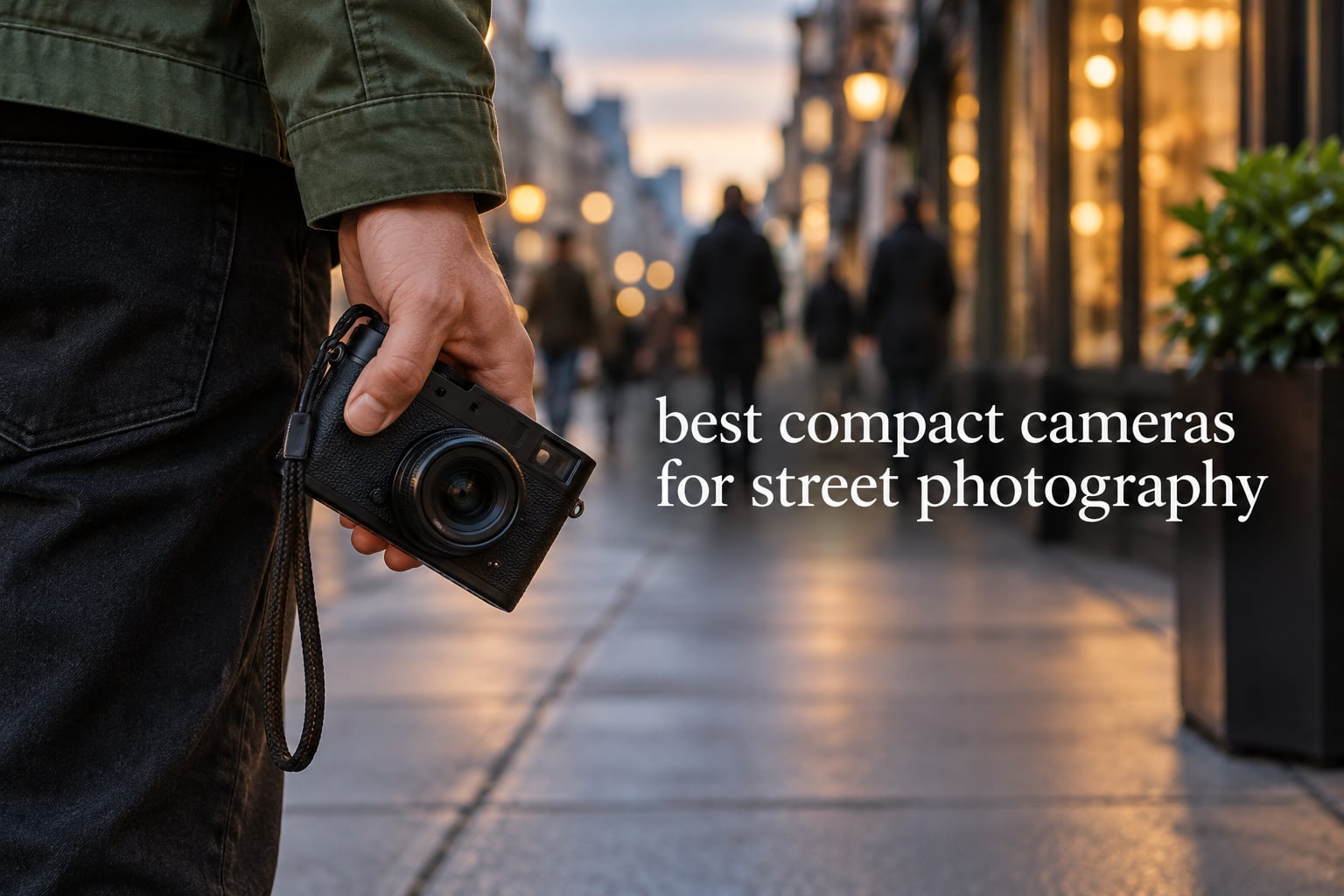
The best compact camera for street photography is the Ricoh GR IIIx. It pairs a 24.2MP APS-C sensor with a fixed 40mm equivalent f/2.8 lens, weighs 9.2 oz, and starts fast enough to catch a frame you had half a second to react to. Most street work is lost before composition even begins: the camera was too heavy to carry, or too slow to wake up. That is the whole argument for a compact.
Street photography is candid work done in public, usually within a couple of meters of strangers, usually without permission and usually without the subject noticing. A compact earns its place here for three reasons. It fits a jacket pocket so it is on your body every single outing. Its fixed lens means there is nothing to zoom or swap, so the frame happens now. And with manual dials, a near-silent shutter and zone focusing, you can raise the camera and shoot without a second of menu hunting.
We spent the last few months working through ten of the most capable small bodies on the market, weighing them for pocket fit, start-up time, high ISO behavior and how quietly they draw a frame. The list deliberately spans three sensor sizes, four focal lengths and a wide range of body sizes, because there is no single answer for street. There is only the answer for your street. If you want the shortest possible route to a good one, start with the [GR IIIx on our pocket camera guide](https://vintagevinylnews.com/best-pocket-cameras-for-street-photography/), then come back here for the long version.
Two things came up again and again in every street forum we read. The first is that discreetness is a preference, not a requirement. Plenty of working shooters say outright that nobody cares what camera you are holding, and that a rangefinder-style body is quiet enough. The second is that battery life matters more than any spec sheet admits, because a street day is eight hours of walking and small batteries die by hour three. We have kept both in mind throughout.
Table of Contents
Top 3 Picks for Best Compact Cameras for Street Photography in 2026
If you only read one section, read this one. These three cover the three genuinely different ways people shoot street, and each one wins on a different axis: pocketability, handling, or reach.
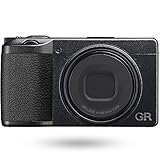
Ricoh GR IIIx
- 24.2MP APS-C sensor
- 40mm equivalent f/2.8
- Weighs 9.2 oz
- Snap focus and hybrid AF


These are the three compact cameras for street photography that we would hand to a working shooter today. The GR IIIx is the discreet one, the X100VI is the one you shoot with dials, and the RX100 VII is the one that lets you frame a face across a square without walking closer.
Best Compact Cameras for Street Photography Compared (October 2026)
Here is the full lineup side by side. Weight is the number most street shooters care about, because it decides whether the camera leaves the house. Focal length is given in 35mm equivalent terms, which is the only way to compare a fixed prime body with a zoom compact.
| Product | Specifications | Action |
|---|---|---|
| Ricoh GR IIIx |
|
Check Latest Price |
| Fujifilm X100VI |
|
Check Latest Price |
| Sony RX100 VII |
|
Check Latest Price |
 Canon G7X Mark III Canon G7X Mark III |
|
Check Latest Price |
 Panasonic LUMIX TZ99 Panasonic LUMIX TZ99 |
|
Check Latest Price |
 Fujifilm X10 Fujifilm X10 |
|
Check Latest Price |
 Nikon Z fc Kit Nikon Z fc Kit |
|
Check Latest Price |
 OM System E-M10 Mark IV OM System E-M10 Mark IV |
|
Check Latest Price |
 Nikon COOLPIX A Nikon COOLPIX A |
|
Check Latest Price |
 OM System OM-1 Mark II OM System OM-1 Mark II |
|
Check Latest Price |
Two entries in that table are not fixed-lens compacts in the classic sense. The Nikon Z fc and the OM System bodies take interchangeable lenses, and we included them because a lot of street shooters buying today are choosing an interchangeable-lens camera in a small body rather than a traditional point and shoot. Judge them on the same criteria anyway: can you get it out of a pocket and shoot before the moment passes.
1. Ricoh GR IIIx – the pocket body that changed street shooting
RICOH GR IIIx Premium Digital Compact Camera, 40mm Focal Length
24.2MP APS-C
40mm equivalent f/2.8
9.2 oz
Sensor-shift stabilization
Pros
- Genuinely pocketable at 9.2 oz
- APS-C depth of field at f/2.8
- Snap focus mode for instant candid frames
- Fast roughly 0.8 sec startup
- Film simulation recipes and deep customization
Cons
- Short battery life
- No built-in viewfinder
- No weather sealing
The GR IIIx is the camera that made me rethink what an always-carry camera should be. At 9.2 oz it is the lightest body on this list, and the fixed 40mm equivalent f/2.8 lens behind its 24.2MP APS-C sensor is the combination that makes it work. You get depth of field that lets you stand two meters from someone and still hold their face and the person behind them in focus.
Startup is where it wins for street. It wakes in roughly 0.8 seconds, which sounds trivial until you are tracking a stranger crossing a doorway. The hybrid AF with 101 points locks on quickly in decent light, and the snap focus mode gives you a set distance so focus never becomes the bottleneck at all. Set it, forget it, raise and shoot.
Customization is the quiet superpower. The GR has an add-on adapter that turns the body into a viewfinder camera for anyone who needs one, though it is an extra purchase. Film simulation recipes are shared heavily by owners, and several of them mimic classic color stocks closely enough that I edit less than I would on a neutral profile. The image character of the 40mm GR lens is genuinely distinct, with a rendering that stays pleasant even wide open.
Sensor-shift stabilization is a genuine bonus for handheld work at slower speeds, and macro capability gives you a close-range option when a street scene has small details worth filling the frame with. Image quality from the 24.2MP APS-C sensor holds up well at high ISO, which matters for night work. Video is 1080p only, and the fixed 3-inch OLED is hard to read in direct sun.
Why street shooters pick it
Because it disappears. There is no grip to signal that you are a photographer, and at 9.2 oz you will actually keep it in a pocket instead of a bag. The 40mm equivalent sits in the sweet spot for candid work, close enough to feel intimate and long enough to keep strangers from crowding the frame.
Reviewers repeatedly single out the film simulation recipes and the customization depth as the reasons this body feels personal. The ability to set a custom start-up behavior and a snap distance means the camera is ready to shoot the instant it leaves the pocket.
Where it falls short for street
Battery life is the one complaint that appears in almost every long-term review, and it is the practical one. Plan on carrying spare cells or charging in-body over a lunch break. The fixed screen is a limitation if you like to shoot from a low or high angle, since there is no tilt to help.
There is no weather sealing, so rain walks are a gamble, and the 1080p video limit will not matter for stills shooters but does rule it out for hybrid work. The customization menu also has a real learning curve, and dust can reach the lens mechanism over time.
2. Fujifilm X100VI – best for dials and a hybrid viewfinder
FUJIFILM X100VI Black
40.2MP APS-C
35mm equivalent f/2
480 g
Hybrid optical and electronic viewfinder
Pros
- Hybrid viewfinder gives frame and exposure info
- Top-plate dials for shutter ISO and exposure
- 20 film simulation modes
- 6-stop in-body stabilization
- Internal 4-stop ND filter
Cons
- Fixed 23mm lens with no zoom
- Single UHS-I card slot
- Battery drains with continuous EVF use
The X100VI is the camera I reach for when I want the act of taking a photograph to feel deliberate. The top-plate dials for shutter speed, ISO and exposure compensation mean every setting is a physical turn, which is faster than any menu when the light is changing on a city block. The hybrid optical and electronic viewfinder shows the frame lines, exposure information and a bright electronic image in one eyepiece.
At 40.2MP the sensor resolves far more detail than a street scene usually needs, which is a good problem because you can crop aggressively afterward and still have pixels. The 23mm f/2 lens gives a 35mm equivalent view that many working street shooters consider the classic framing. Six stops of in-body stabilization let you handhold at speeds where other compacts demand more ISO.
Twenty film simulation modes including the newer REALA ACE give you a finished look straight out of camera, and the internal 4-stop ND filter is genuinely useful in bright daylight or when you want a slower shutter for motion without overexposing. The tilting screen helps with waist-level framing, something a fixed screen cannot do. If you shoot video at all, 6.2K at 30p and 4K at 60p are class-leading for a body this size.
Autofocus uses 425 phase-detection points with AI subject detection, and it is fast and confident in daylight. File formats include RAW alongside JPEG, so the film simulations are a starting point rather than a dead end. The build feels substantial for its size, and the controls are well placed for right-handed shooting.
Why street shooters pick it
For the controls and the viewfinder. If you grew up on a film camera or want exposure decisions to be physical rather than menu-driven, the dials change how you shoot. The hybrid finder also lets you keep the camera at eye level and stay unnoticed, which screen-only compacts cannot do.
Reviewers consistently praise the film simulation modes and the sheer joy of the shooting experience. The hybrid viewfinder is regularly called the feature no other compact replicates, since the optical frame lines give an undistorted, lag-free view of the actual composition.
Where it falls short for street
The fixed 23mm lens is the central trade. You get one angle of view and a digital teleconverter at 1.4x and 2x if you need to tighten, but that is a crop rather than extra light. The single UHS-I card slot limits burst and video workflow for anyone shooting long events.
Battery drain with the electronic viewfinder used continuously is a documented complaint, so treat the spare battery as standard kit. There is no headphone jack, the menu system takes time to learn, and third-party lens support is limited compared with an interchangeable-lens body.
3. Sony RX100 VII – best for reach without changing lenses
Sony RX100 VII Premium Compact Camera 1.0-Type CMOS Sensor Black
20.1MP 1-inch stacked
24-200mm equivalent f/2.8-4.5
275 g
Pop-up OLED viewfinder
Pros
- 24-200mm equivalent reach in a pocket body
- 357 phase-detection AF points
- Real-time eye AF
- 20 fps blackout-free burst
- Pop-up EVF and tilting screen
Cons
- No weather sealing
- Small 1-inch sensor strains at high ISO
- Small controls and slippery grip
The RX100 VII is the answer when you photograph street from across a plaza rather than from two meters away. The 24-200mm equivalent zoom is the reason: you can frame a wide environmental scene and then tighten to a single face without moving your feet or missing the moment. In forum threads about moving from a phone to a dedicated street camera, reach is the most common request, and this body delivers more of it than anything else in this list.
Autofocus is the other headline. With 357 phase-detection points and real-time eye AF for humans and animals, tracking a subject through a crowd is reliable in a way smaller-sensor compacts are not. Burst runs at 20 fps blackout-free, and the stacked sensor keeps the viewfinder responsive while shooting.

The pop-up 2.36M dot OLED viewfinder is a genuine rarity at this size, and combined with the 3-inch tilting screen it gives you framing options a screen-only camera lacks. The Zeiss Vario-Sonnar holds up well through the range, with slight softness appearing at the wide corners. The camera produces good-looking files straight out of camera, with a wide dynamic range for its class.
For video, 4K at 30p with S-Log3, HLG and a microphone input make this a legitimate hybrid body, and a built-in pop-up flash covers indoor candid work. Wireless transfer to a phone is quick. The body is 275 g and measures a little over 100mm wide, so it is jacket-pocketable but not jeans-pocketable.
Why street shooters pick it
Because distance changes the picture. Working from further back with a longer equivalent focal length compresses backgrounds and removes your own shadow from the interaction, and the 8x zoom range lets you decide that per frame instead of per outing. Eye AF also means you can hand the camera to someone else and still get sharp candid results.
The pop-up viewfinder is the feature street shooters who dislike screen-only shooting point to first. Reviewers also praise the build quality and the responsive controls, and the eye AF is widely regarded as the most capable in this category.
Where it falls short for street
The 1-inch sensor is the hard limit. At high ISO the files get noisy sooner than the APS-C bodies here, and for night street work that is a real constraint. Reviewers also report an LCD adhesive failure appearing after two or more years on some units, so it is worth considering an extended warranty.
There is no weather sealing, the buttons are small and the body is slippery enough that many owners add a grip accessory. Battery life is short by CIPA standards, so spares are a must, and the movie button position draws accidental presses.
4. Canon PowerShot G7 X Mark III – best for dim streets and fast glass
Canon PowerShot G7X Mark III Digital Camera Lens Kit (Silver)
20.1MP 1-inch stacked
24-100mm f/1.8-2.8
372 g
Flip-up touchscreen
Pros
- Bright f/1.8 at the wide end
- 20 fps burst plus 30 fps RAW
- Intuitive menus and touch AF
- Good stills battery life
- Built-in pop-up flash
Cons
- No viewfinder
- Contrast AF is slower than phase-detect rivals
- 4K clips cut off after about 10 minutes
The G7X Mark III wins on one number that matters more than the rest for evening street work: f/1.8 at the wide end. That is roughly a full stop more light than most compacts in this list gather, and on a dim street or under a bridge it is the difference between a usable frame and a smeared one. The 24-100mm equivalent zoom keeps a short telephoto option for tighter candid work.
This is also the body most first-time street shooters land on, and the reason is handling. Canon’s menus are the friendliest here, the touchscreen makes focus placement obvious, and the flip-up screen opens to 180 degrees for shooting from the hip or low down. It is a camera you can hand to someone on a walk and they will get good frames.
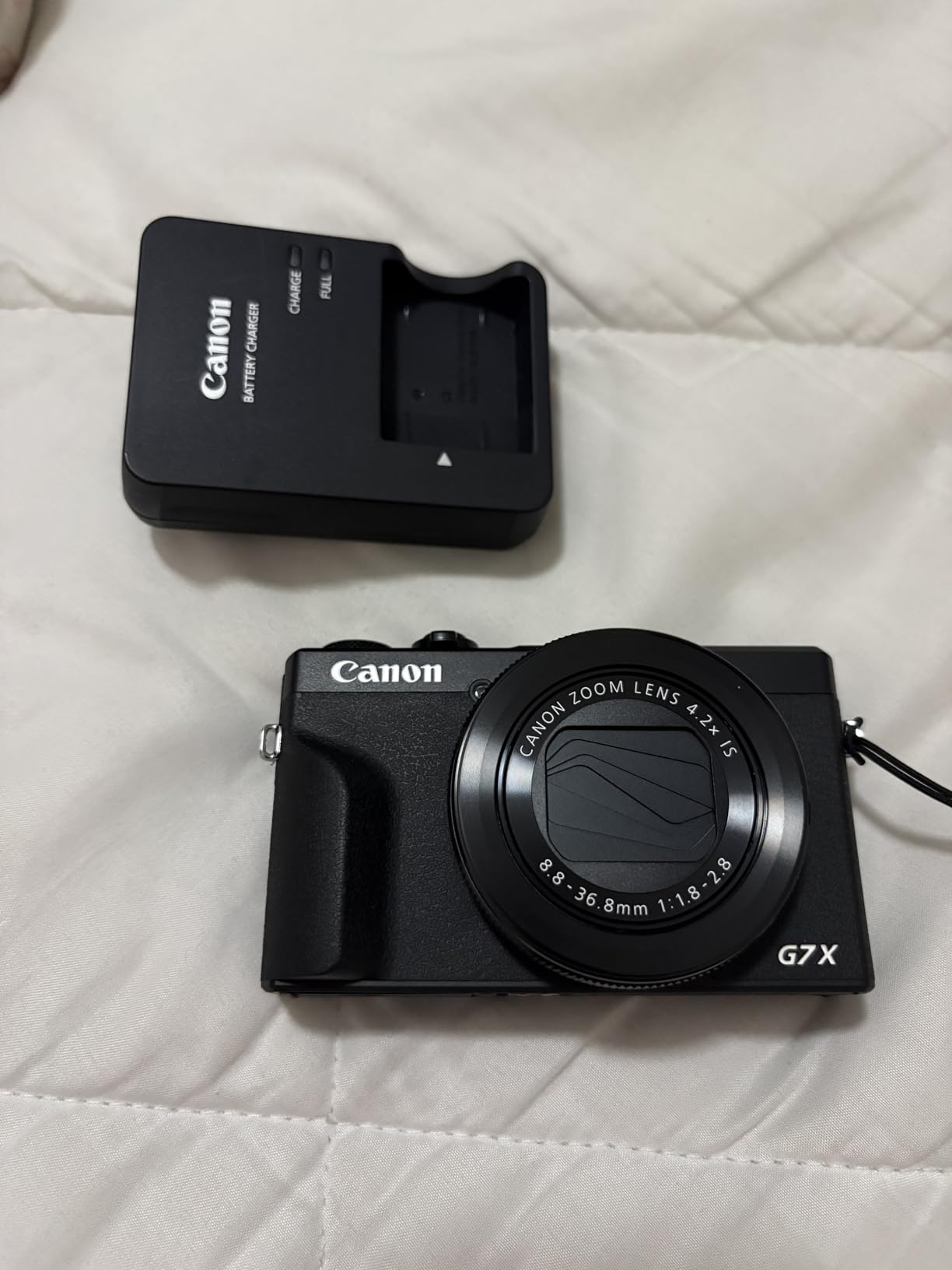
Burst performance is excellent for candid sequences at 20 fps, with a 30 fps RAW burst mode when you want to catch a gesture mid-motion. The DIGIC 8 processor produces Canon color that needs very little editing, and the 1.04M dot tilting screen is bright and responsive. Wi-Fi, Bluetooth and NFC make transferring a frame to a phone painless.
Video features are aimed at creators, with 4K at 30p, a microphone input, live streaming and vertical video recording for social formats. Battery life for stills is better than most compacts here. The 372 g body is a little heavier and deeper than the RX100, so pocket fit favors a coat rather than a jeans pocket.
Why street shooters pick it
For dim streets and beginners. The f/1.8 aperture means you can shoot at lower ISO and faster shutter speeds in exactly the conditions where candid frames fall apart on other bodies. The tilting flip screen also lets you compose without standing in an obvious shooting posture.
Reviewers single out the bright lens, the intuitive menus and the color science as the three reasons to pick it. The 20 fps burst is fast enough to give yourself ten chances at a moment, which is a candid-work advantage in its own right.
Where it falls short for street
There is no viewfinder at all, and street shooters who want to compose at eye level rule it out for that reason alone. Focus relies on contrast detection, which lags phase-detect systems when light drops or a subject turns away from you.
The 4K recording limit of roughly 10 minutes before the body runs warm is a real constraint for video. There is no weather sealing, no headphone jack, and the lens control ring cannot be remapped to manual focus, which limits the manual-focus techniques some street shooters prefer.
5. Panasonic LUMIX TZ99 – best entry-level reach
Panasonic LUMIX TZ/ZS99 Point and Shoot Camera, Compact Camera for Travel with 30x Zoom with 24-720mm Zoom Lens, and 4K Video/Photo, Great for Travel and Concerts, DC-TZ99 (Silver)
20.3MP 1/2.3-inch BSI
24-720mm equivalent
322 g
Built-in 0.21-inch EVF
Pros
- 30x optical zoom reach
- Built-in EVF at an entry-level price
- USB-C charging
- 4K Photo burst modes
- Tilting touchscreen
Cons
- Small 1/2.3-inch sensor limits low light
- No RAW capture
- No built-in flash
The TZ99 solves one street problem better than anything else here: how do I frame something that is far away without carrying a long lens. A 30x optical zoom gives 24-720mm equivalent coverage from a 322 g body, and the built-in electronic viewfinder is a genuine surprise at this tier. Most compacts in its class strip the viewfinder out to save cost.
For a beginner moving from a phone, this is a low-risk way to learn framing. Post Focus and Focus Stacking modes let you choose where focus lands after the fact, the 4K Photo mode extracts stills from video bursts, and the dedicated send button makes sharing a frame quick. USB-C charging means one cable for the camera and the phone.
The hybrid autofocus with 171 areas and depth-from-defocus technology tracks subjects competently in daylight, and the 5-axis hybrid optical stabilization keeps handheld video smooth. Bluetooth 5.0 and Wi-Fi are both both present. The 3-inch 1.84M dot tilting screen is bright and touch-responsive, and the body stays pocketable in a jacket.
There is a genuine ceiling here, and it is the sensor. At 1/2.3 inches with a native ISO range topping out at 3200, night street files get noisy fast, and there is no RAW capture at all, which removes your editing latitude. The aperture narrows to f/6.4 at the telephoto end, so reach and low light are in direct tension.

Why street shooters pick it
For reach on a budget. If your street work includes markets, crowds, and shooting across a square or up at a stage, having 30x of optical coverage in a pocket is worth more than a larger sensor you cannot use in the dark. The viewfinder lets you frame at eye level without holding the screen at arm’s length in sunlight.
Reviewers consistently call out the value, the USB-C convenience and the EVF as the reasons this body punches above its tier. For daylight travel and street, it does almost everything a much larger camera would ask of it.
Where it falls short for street
Small sensor, no RAW. That combination ends the discussion for anyone who edits files or shoots after dark, and it is why we placed this as an entry pick rather than a serious one. A built-in flash is also absent, which matters for covered or indoor candid spots.
The viewfinder is small with low magnification, there is no weather sealing, and battery life is modest at around 300 shots by CIPA. The advertised 60x figure is digital interpolation, not real optical reach, so judge the camera by the 30x.
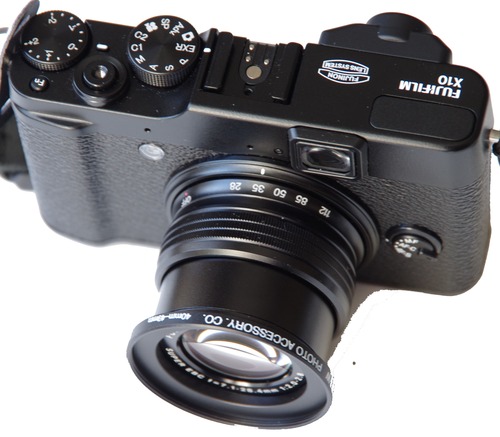
6. Fujifilm X10 – best for hands-on analog handling
Fujifilm X10 12 MP EXR CMOS Digital Camera with f2.0-f2.8 4x Optical Zoom Lens and 2.8-Inch LCD
12MP 2/3-inch EXR CMOS
28-112mm f/2.0-2.8
350 g
Optical viewfinder
Pros
- Tactile manual zoom ring
- Bright f/2.0 constant-aperture zoom
- Optical viewfinder
- EXR dynamic range and low-noise modes
- RAW plus in-camera processing
Cons
- Older-generation body with a small 2/3-inch sensor
- Slow autofocus by modern standards
- 1080p video only
The X10 is a decade-old camera and it still does something no other body on this list does: it gives you a real manual zoom ring under your fingers. You can frame, feel the focal length change, and shoot without touching a menu. For a street photographer who thinks in lenses rather than screens, that tactile loop is the whole appeal.
The optical viewfinder is the other draw. It has 85 percent coverage and 0.52x magnification, and paired with the analog dials it makes the camera feel like a small film body. The Fujinon 28-112mm f/2.0-f/2.8 keeps a bright aperture across the range, which is generous for a compact of its vintage.

The EXR sensor still has tricks worth using. Dynamic range expansion mode composites frames to hold highlight and shadow detail, and the low-noise mode averages frames for cleaner files. You can shoot RAW and process in-camera, and the classic Fujifilm color science needs very little work afterward. A built-in flash with a guide number around 7m covers indoor candid situations.
Be realistic about the compromises. Twelve megapixels is low for cropping, the 2/3-inch sensor struggles past ISO 3200, and contrast-detection autofocus is slow enough that moving subjects can slip. The fixed 2.8-inch LCD is small and has no touch, and video is 1080p only.
Why street shooters pick it
Because it is operated, not configured. The manual ring, the optical finder and the analog dials mean you make decisions with your hands at a pace that matches walking. If you learned on film, the muscle memory transfers directly, and the bright lens gives you shallow depth of field without a fast prime.
Reviewers note that the EXR modes genuinely help in high-contrast street scenes, and that the metal dials and build quality feel better than compacts half the price. The 4:3 frame ratio also suits vertical street compositions.
Where it falls short for street
Resolution and sensor size are the honest limits. At 12MP on a 2/3-inch sensor, high-ISO files are noisy and there is little room to crop, which costs you the safety net you want on a difficult frame. Autofocus is slow by any modern measure, and that hurts most in the dim, candid situations street shooters care about.
This is also an older-generation model that is harder to find new, so treat it as a deliberate choice for handling rather than a general-purpose street machine. The battery pack is also an older design, so check availability before you commit.
7. Nikon Z fc – best for retro styling with a modern sensor
Nikon Z fc with Special Edition Prime Lens | Retro-Inspired Compact mirrorless Stills/Video Camera with Matching 28mm f/2.8 Prime Lens | Nikon USA Model
20.9MP DX APS-C
28mm f/2.8 prime at 42mm equivalent
680 g with lens
0.39-inch EVF
Pros
- Dedicated shutter ISO and exposure dials
- 20.9MP APS-C sensor shared with the Z50
- Vari-angle touchscreen for low angles
- Z mount opens up further lenses
- High-resolution EVF
Cons
- No in-body stabilization
- Single UHS-I card slot
- Modest battery life
The Z fc is styled after a 1970s Nikon FM2, and that is not decoration. The shutter speed, ISO and exposure compensation dials are physical, top-mounted and turned with the same gesture a film photographer already has. Combined with a 20.9MP APS-C sensor, it delivers modern image quality with handling that rewards a deliberate approach.
The bundled Special Edition 28mm f/2.8 gives a 42mm equivalent view, which lands in the same natural street territory as the GR IIIx while giving you more depth of field control at the same framing. The vari-angle touchscreen is a genuine street asset, letting you compose from the hip or below eye level, and the 0.39-inch 2.36M dot EVF at 1.02x magnification is bright and sharp.

Autofocus uses 209 phase-detection points with eye detection, which is quick and reliable for moving subjects in daylight. The Z mount is the strategic advantage: the [prime lenses we recommend for street work](https://vintagevinylnews.com/best-prime-lenses-for-street-photography/) start at 18.5mm f/1.8 and cover wider, faster options without changing systems. Video includes 4K at 30p, a microphone jack and webcam mode.
The compromises are real. There is no in-body stabilization, so the f/2.8 prime means you need a reasonably fast shutter or high ISO. Battery life is modest at around 300 shots, there is a single UHS-I card slot and no headphone jack, and the body is far too large for a jeans pocket at 680 g with the lens attached.

Why street shooters pick it
For the dials and the flexibility. Unlike a fixed-lens compact, you can put on a wider or faster prime later without buying a new camera, which makes it a good one-camera answer for a street shooter whose style is still changing. If you like a 35mm or 40mm character, the NIKKOR Z 40mm f/2 is an easy pairing.
Reviewers highlight the sensor quality inherited from the Z50, the vari-angle screen for low shooting positions, and the styling that makes people curious rather than guarded. It is the one camera here that invites conversation, which some street photographers consider an advantage.
Where it falls short for street
It is not a pocket camera. At 680 g with the lens, this is a shoulder or neck carry, and that changes which moments you can reach. Lack of in-body stabilization compounds that, making low-light handheld work harder than it should be.
Only one control dial is dedicated, which limits how much you can adjust while shooting, and the menu system is not touch-optimized. Rolling shutter and a 1.5x crop appear in 4K, so treat the video as secondary for stills work.
8. OM System E-M10 Mark IV – best for stabilization on a budget
OM SYSTEM Olympus E-M10 Mark IV Silver Micro Four Thirds System Camera 20MP Sensor 5-Axis Image Stabilization 4K Video Wi-Fi
20MP Micro Four Thirds
Compact zoom kit lens
381 g body
5-axis IBIS rated 4.5 stops
Pros
- 4.5-stop 5-axis in-body stabilization
- 20MP sensor with good detail
- UHS-II card support
- Large pool of compact Micro Four Thirds primes
- Light 381 g body
Cons
- Contrast detection AF only
- No weather sealing
- Micro-USB with no charging while shooting
The E-M10 Mark IV solves a problem most compacts ignore: how do you keep the shutter fast when the light is not? Five-axis in-body stabilization rated at 4.5 stops is normally a feature of bodies costing several times more, and it means you can handhold at speeds that would otherwise force you to a noisy ISO. For street work at dusk, that is a straight upgrade in the number of usable frames.
The 20MP Micro Four Thirds sensor resolves enough detail for street frames and pairs with a wide range of small, fast primes. The 3-inch flip-down touchscreen has a dedicated selfie mode, and the 0.39-inch 2.36M dot EVF at 1.23x magnification is one of the sharper finders in a small body. At 381 g the body itself is light, even with a compact zoom attached.

Sixteen art filters with 31 variations plus an instant film simulation give you a look straight out of camera, and Live Composite, focus stacking and HDR are genuinely useful on high-contrast street scenes. Video covers 4K DCI and UHD at 30p with 5-axis stabilization. UHS-II card support is a step up from the single UHS-I slots common in this class, which matters for burst work.
Where it disappoints is autofocus, and this is the dealbreaker for some. There is no phase detection at all, only 121 contrast-detection points, and reviewers report hunting in low light or with adapted lenses. There is no weather sealing, the build is plastic rather than metal, and it uses Micro-USB with no charging while shooting.
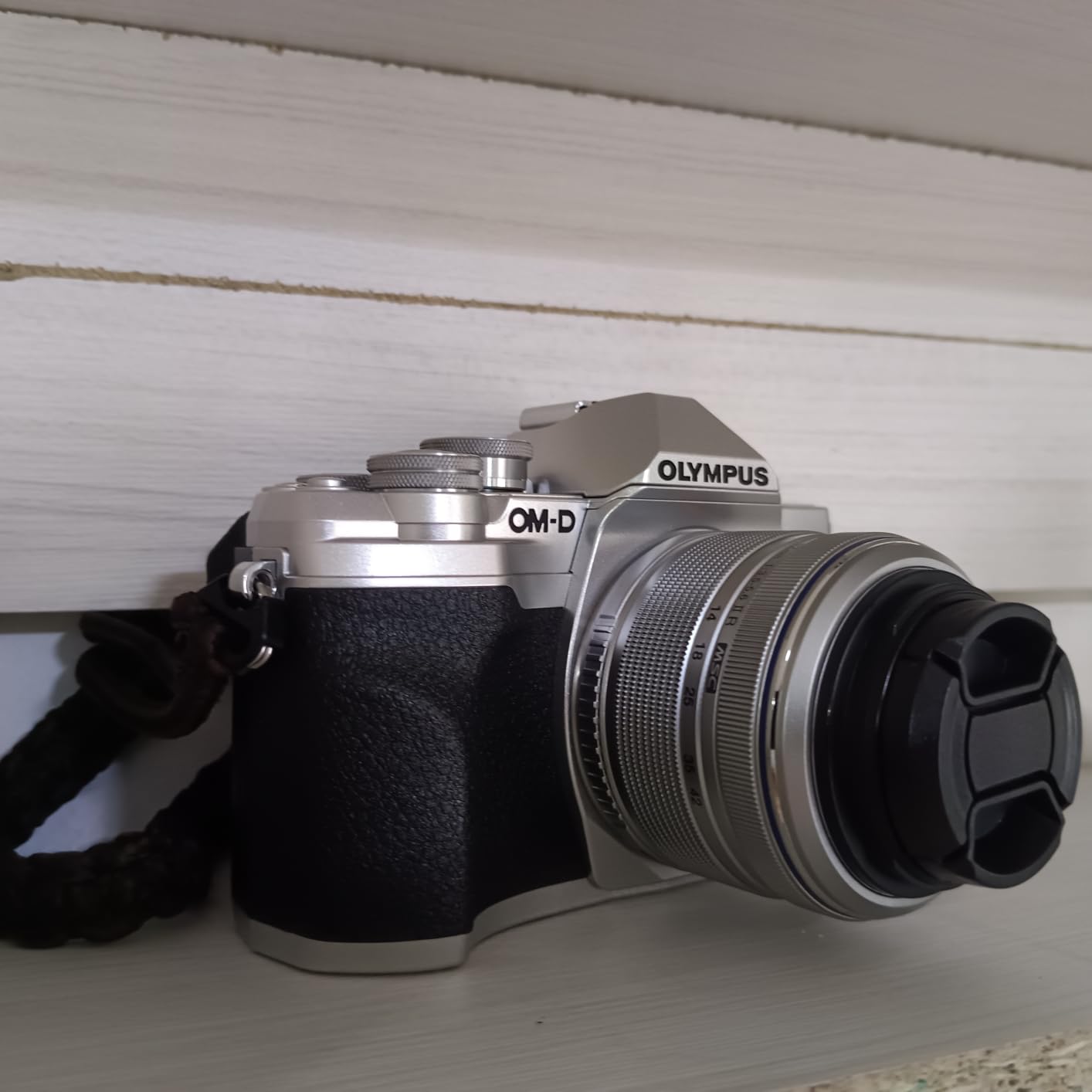
Why street shooters pick it
Stabilization plus lenses. In-body IS of this quality is normally found on larger bodies, and it pairs naturally with fast Micro Four Thirds primes, which let you work at 1/60s in poor light. If your street is dim, wet or moving, the extra stop or two is the difference between a sharp frame and a deleted one.
Reviewers call out the value most often, along with the high-resolution viewfinder and the large lens ecosystem. If you want a small, quiet, stabilized system that can grow, this is a strong place to start.
Where it falls short for street
Contrast-detection autofocus is the core problem. It is less confident in dim light and slower to lock on than phase-detect systems in the RX100 VII or the Z fc, and hunting AF is exactly what ruins a candid frame. If your street work is mostly at night, weigh this carefully.
There is no weather sealing, the menus are dated, the EVF auto-switching can be irritating, and 4K recording incurs a crop. The battery door uses a manual slide latch, which is a small irritation repeated daily.
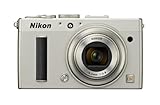
9. Nikon COOLPIX A – best for a discreet 28mm setup
Nikon COOLPIX A 16.2 MP Digital Camera with 28mm f/2.8 Lens (Black)
16.2MP APS-C sensor
Fixed 28mm equivalent f/2.8
300 g
Optional optical viewfinder
Pros
- APS-C sensor in a genuinely small body
- Sharp 28mm f/2.8 NIKKOR prime
- Snap focus mode for instant shooting
- 300 g weight
- RAW capture with good dynamic range
Cons
- No image stabilization
- Slow autofocus in low light
- Optical viewfinder sold separately
The COOLPIX A is the odd one out and that is exactly why it is here. It is a deliberately simple camera, and the simplicity is the point: no zoom, no mode dial to interpret, one angle of view. For a street shooter who works one distance and wants full control, that removes every decision between seeing something and shooting it.
The NIKKOR 28mm f/2.8 is sharp and renders pleasantly, giving shallow depth of field without needing a fast, expensive lens. RAW capture in NEF format preserves good dynamic range for editing, and the external controls for the main settings mean you are not scrolling through menus. Snap focus mode gives you a fixed distance for instant frames.
How the 28mm view changes your street
A 28mm equivalent is wider than most street shooters start with, and experienced ones often judge it too wide. That judgement is about context: at 28mm you include the surroundings, which means strangers notice you more easily and you have to be closer to fill the frame. Work it deliberately rather than as a compromise and the environmental quality is a strength.
The APS-C sensor is a genuine outlier here, giving you depth of field control that the 1-inch compacts cannot match, and the file quality at moderate ISO is clean. For daylight street and travel documentation, the output holds up better than the 2013 release date suggests.
Where it falls short for street
There is no image stabilization, so you are dependent on a fast shutter or a high ISO, and the contrast-detection autofocus is slow and struggles in low light. Those two together make night street work difficult. The optical viewfinder is an optional accessory rather than built in, which is an unusual cost decision.
Switching between photo and video takes several steps through the menus, continuous shooting is only 4 fps, and Wi-Fi needs a separate adapter, so budget for the connectivity add-on if you transfer frames often. This is a specialist tool, and you should buy it knowing that.
10. OM System OM-1 Mark II – best for rain, cold and fast moving subjects
OM SYSTEM Olympus OM-1 Mark II Micro Four Thirds System Camera M.Zuiko Digital ED 12-40mm F2.8 PRO II Lens kit Weather Sealed Design, (US Manufacturer Warranty)
20.4MP stacked BSI sensor
24-80mm equivalent f/2.8
590 g with lens
IP53 weather sealed
Pros
- IP53 weather sealing rated to -10C
- 1053 cross-type AF points with Pro Capture
- Seven stops of stabilization with PRO lenses
- Handheld 50MP high-res mode
- Dual UHS-II card slots
Cons
- Micro Four Thirds sensor smaller than APS-C
- No full auto mode so the learning curve is real
- High ISO noise above 6400
The OM-1 Mark II is the body here you can take into sustained rain and freezing conditions without thinking about it. Its IP53 sealing covers dust, splash and freeze down to minus 10C, and for street photographers who work outdoors in bad weather year round, that changes what is possible. The other cameras on this list have no weather sealing at all.
Speed is the second argument. The stacked BSI sensor drives Cross Quad Pixel AF with 1053 all-cross-type points and 100 percent coverage, and the Pro Capture feature buffers frames before you press the shutter. In practical terms, you press after the moment and still get the frame before it, which is the single most useful feature on this list for fast street subjects.
What the computational tools do for street
Handheld High-Res Shot composites frames into a 50MP image, which lets you raise the shutter speed for a sharp handheld frame and still have detail to crop. Live ND and Live GND simulate graduated filters, useful when a bright sky sits above a dark shopfront. Live Composite stacks multiple exposures, which turns long exposures of moving people into a single clean frame.
The bundled 12-40mm f/2.8 PRO II gives a constant f/2.8 across 24-80mm equivalent, and with Sync IS the stabilization reaches seven stops. The 5.76M dot OLED viewfinder at 1.48x magnification is the sharpest here, and the articulating 1.62M dot touchscreen is fully flexible. Video covers 10-bit 4K at 60p with OM-Log.
Where it falls short for street
It is not discreet. At 590 g with the lens and with a viewfinder housing on top, this announces itself, and it will not fit a pocket. That disqualifies it for the intimate close-range candid work most of this article is about, however capable it is.
There is no full auto mode, so the menus require real study before the camera is useful. The Micro Four Thirds sensor is smaller than APS-C and noise becomes visible above ISO 6400, which is a constraint at night. Battery life is reduced from the previous generation, so plan a spare battery for a long day out.
How to Choose a Compact Camera for Street Photography in 2026
Sensor size and focal length decide almost everything else. Work through these in order and the rest of the specification becomes a tiebreaker rather than the main question.
Choose the focal length from your working distance
Most street decisions are really decisions about how close you stand. A 28mm equivalent includes lots of surroundings and forces you nearer; a 40mm equivalent lets you hold a single figure without a long lens; a 50mm equivalent keeps you well back, which is calmer and less intrusive but requires a slower shutter or more light. Our [35mm prime lens guide](https://vintagevinylnews.com/best-35mm-prime-lenses-for-street-photography/) covers the middle of that range in more detail.
The community shorthand is that intrusiveness rises with focal length, and that is broadly true. Pick the longest lens you can comfortably fill a frame with, not the longest you can afford.
Decide what sensor size buys you
A 1-inch sensor is excellent in daylight and strained at night. APS-C gives you two stops more usable high ISO and shallower depth of field at the same framing, which matters when you are 1.5 meters from someone. Micro Four Thirds is a stop or so behind APS-C but pairs with the smallest and fastest primes available, and it stabilizes well. Full frame is not represented here because a body that fits a pocket and a full-frame sensor are rarely the same object.
Decide about the viewfinder
A viewfinder lets you compose at eye level, which reads as less intrusive than holding a screen out in front of you, and it works in bright sun. The X100VI, the RX100 VII, the X10, the E-M10 Mark IV and the Z fc have one. The GR IIIx and the G7X Mark III do not, and owners split sharply on whether that matters. If you can compose comfortably from the hip with a tilting screen, you do not need one.
Fixed prime or short zoom
A fixed lens removes a decision, which speeds you up. A short zoom lets you choose your framing per frame, which is invaluable when you cannot get closer. Street shooters moving from a phone often want the zoom; experienced shooters working at a fixed distance often prefer the prime. This is the subject of endless forum argument and the honest answer is that both are correct depending on how you move.
Pocket fit, weight and batteries
Measure your actual pocket before buying. The GR IIIx at 9.2 oz and the COOLPIX A at 300 g go into a jeans pocket. The X100VI, the RX100 VII, the TZ99 and the X10 need a jacket. The Z fc and the OM-1 Mark II are neck-and-shoulder carries at 680 g and 590 g, and no amount of marketing changes that. If you will not carry it, the camera does not exist, and small batteries mean carrying at least one spare for a full street day. If you are still choosing a first prime, our [street prime lens roundup](https://vintagevinylnews.com/best-lenses-for-street-photography-under-500/) is a reasonable next step.
What most street photographers actually carry
In practice, most working street photographers carry a Fujifilm X100-series body or a Ricoh GR body, and the same two lines dominate the forum consensus. Both give a fixed focal length, near-silent operation, physical or near-physical controls and a body that does not advertise itself. Outside those two, interchangeable-lens compact bodies are common for anyone who needs reach or a fast prime, and older generations of both hero lines are widely considered the value entry point. The [mirrorless street camera guide](https://vintagevinylnews.com/best-mirrorless-cameras-for-street-photography/) covers that group in more depth.
Moving from a phone
If you have been shooting street on a phone, the jump is mostly about control rather than quality. You gain real aperture control, RAW capture on most of these bodies, a viewfinder, physical dials and a shutter that does not announce itself. Keep your phone for backup and quick social frames; use the camera for the frames you want to print.
Street Shooting Settings Cheat Sheet
Settings matter less than readiness. The sequence below is a starting point that gets a frame on a walk, and then you adjust from there.
Set your zone first. Choose a distance you will mostly work at, set the lens to it, and pre-focus. On a street that means roughly 1.2 meters, which covers the most common candid interaction distance.
Stop down rather than shoot wide open. Around f/8 keeps foreground and background legible and reduces the focus tolerance you need. Shooting wide open throws the background out and makes missed focus obvious.
Use the electronic shutter for silence. It removes shutter noise entirely and stops any mechanical sound giving away the frame. Test the movement banding on fast motion before you rely on it.
Set ISO by hand. ISO 800 to 3200 covers daylight shade through a city at night. Check the noise level at your highest usable setting on the body you own, not the spec sheet.
Hold at least 1/250s. Below that, people moving through the frame blur. When light forces a slower speed, add stabilization or use the electronic shutter and accept some banding.
Turn the camera on before you need it, and keep the frame rate modest. Street frames are sequential, not sporting, and the most reliable way to catch the decisive moment is to watch for the gesture that precedes it.
Frequently Asked Questions
What is the best compact camera for street photography?
The Ricoh GR IIIx is the best compact for street photography because it combines a 24.2MP APS-C sensor with a fixed 40mm equivalent f/2.8 lens in a 9.2 oz body. It starts in roughly 0.8 seconds, offers snap focus for fixed-distance shooting, and has film simulation modes that need little editing. The Fujifilm X100VI is the alternative if you want a hybrid viewfinder and top-plate dials.
What camera do most street photographers use?
Most working street photographers use a Fujifilm X100-series or Ricoh GR body, and the same two lines dominate forum consensus. Both provide a fixed focal length, near-silent operation, dedicated or near-dedicated controls and a body that does not draw attention. Photographers who need reach or very fast glass more often choose a small interchangeable-lens body instead.
What is the best affordable camera for street photography?
For value, the Fujifilm X10 offers manual zoom handling, an optical viewfinder and a bright f/2.0 lens, while the OM System E-M10 Mark IV adds 4.5 stops of in-body stabilization and a large pool of compact primes. The Panasonic LUMIX TZ99 is the cheapest route to real focal length reach with a 30x optical zoom and a built-in viewfinder, though its small sensor has no RAW capture.
Is 50mm or 85mm better for street photography?
A 50mm equivalent suits most street work because it frames a person naturally from three to five meters and keeps enough context around them. An 85mm equivalent is a step further back, which is calmer and less intrusive, but it needs a fast lens and a fast shutter to work. Longer focal lengths also make the camera more visible, which some subjects react to.
What is the 20/60/20 rule in photography?
The 20/60/20 rule is a framing guideline: place the main subject so it occupies roughly 20 percent of the frame, position a secondary element across about 60 percent, and leave the remaining 20 percent as lead room or negative space. In street work it helps you stop filling every frame edge to edge and gives a subject somewhere to look or move toward.
Do I need a viewfinder for street photography?
You do not need one, but it helps. A viewfinder lets you compose at eye level, which reads as less intrusive than holding a screen out in front of you, and it stays usable in direct sunlight. Bodies like the Fujifilm X100VI, Sony RX100 VII, Fujifilm X10, OM System E-M10 Mark IV and Nikon Z fc include one, while the Ricoh GR IIIx and Canon G7X Mark III rely on the rear screen.
Is a fixed lens better for street photography than a zoom?
A fixed lens removes a decision, which makes you faster, and it is why the Fujifilm X100 series and Ricoh GR bodies are so popular for street. A short zoom lets you choose framing per frame, which matters when you cannot walk closer to a subject. Photographers who work at a consistent distance usually prefer the fixed lens; those who shoot across a square usually prefer the zoom.
Which Compact Camera Should You Buy for Street Photography?
The Ricoh GR IIIx is our pick as the best compact camera for street photography in 2026, and it wins on the combination that actually decides candid work: it fits in a jeans pocket, it starts fast, and it disappears when you raise it. If you want dials and an eye-level finder instead, the Fujifilm X100VI is the answer, and it will still be in your hand three years from now.
Work out from there. Shoot across a square and the Sony RX100 VII gives you reach no fixed lens can match. Shoot in dim streets and the Canon G7X Mark III buys you light with its f/1.8 aperture. Want stabilization and a lens ecosystem on a budget, the OM System E-M10 Mark IV fits. Handled a lot in rain, the OM-1 Mark II is the only sealed option here.
Whichever you choose, the camera that gets out of the pocket is the one that photographs street. Take two bodies, buy two spare batteries, and go shoot.