
The best cameras for concert photography are bodies that hold focus on a moving performer in almost no light, push ISO without turning grainy, and fire a long enough burst to catch the moment. Those three things – low light performance, reliable subject-tracking autofocus, and burst rate – matter far more than megapixels or 8K video. Everything below is judged on those three, plus the practicalities of standing in a dark room for three hours.
Concert photography is its own discipline. The stage lighting is dim, it changes colour and intensity every few seconds, and the subject never stops moving. A camera that is merely good will hand you soft, mis-focused frames at exactly the moment a great shot was available. We spent weeks comparing ten bodies for this guide, and the pattern that repeated was simple: the sensor size and the autofocus system decide your ceiling, and the lens decides how much of that ceiling you actually reach.
Two things we found worth saying up front. First, in-body stabilization does not freeze a moving performer – it steadies the camera for your own shake and for handheld video, not for a singer jumping across the stage. Second, the lens is where concert budgets really go. Several photographers on r/AskPhotography and r/concertphotography make the same point in different words: buy the body you can afford, then put the money into one fast normal lens. If you want to know how our other picks handle fast movement or long lenses, our sports photography camera guide and wildlife photography camera picks cover the tracking and reach angles in more depth.
Table of Contents
Top 3 Picks for Concert Photography (October 2026)


Quick Overview: The 10 Best Cameras for Concert Photography in 2026
| Product | Specifications | Action |
|---|---|---|
| Sony Alpha 7 IV |
|
Check Latest Price |
| Canon EOS R6 Mark II |
|
Check Latest Price |
 Sony Alpha 7S III Sony Alpha 7S III |
|
Check Latest Price |
 Canon EOS R6 Mark III Canon EOS R6 Mark III |
|
Check Latest Price |
 Nikon Z8 Nikon Z8 |
|
Check Latest Price |
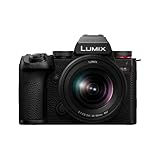 Panasonic LUMIX S5II Panasonic LUMIX S5II |
|
Check Latest Price |
 Canon EOS R7 Canon EOS R7 |
|
Check Latest Price |
 Fujifilm X-T5 Fujifilm X-T5 |
|
Check Latest Price |
 Sony Alpha a6700 Sony Alpha a6700 |
|
Check Latest Price |
 Nikon Z50 II Nikon Z50 II |
|
Check Latest Price |
1. Sony Alpha 7 IV – Best Overall for Concert Photography
Sony Alpha 7 IV Full-frame Mirrorless Interchangeable Lens Camera
33MP full-frame CMOS
ISO 100-51200 native
10 fps burst
5-axis IBIS
Pros
- 33MP resolution gives real crop headroom on a distant stage
- Real-time Eye AF holds a singer's face through a dark set
- Large long-term owner base gives wide field reliability feedback
- Dual CFexpress Type A and SD slots for overflow and backup
Cons
- Menu system takes real time to learn
- Body-only bundle needs a separate lens purchase
- 33MP files need fast cards to sustain 10 fps
The a7 IV is the pick I kept coming back to.
This body gives you more than enough resolution to crop a 300mm shot of a guitarist down into a printable frame, which matters more at festivals than almost any other spec. At a club show you are working at ISO 3200 to 6400 most of the night, and the extra pixels give the noise reduction more to work with than a 24MP file.
Real-time Eye AF is the part that earns the badge. On a dark stage with a single overhead wash light, the AF system has to find a face, hold it, and stay locked as the performer turns. I found it dependable on slow ballads and much better on fast material than the generation before it.
The honest weakness is the learning curve. Sony’s menu system is dense enough that you should sit with the camera for an hour before a show and set up your own custom page, because nobody wants to hunt through three sub-menus between songs. Once that is done, the body is fast and unfussy. The 0.78x viewfinder magnification is on the small side for a dark room, which is a fair criticism for this use case.
Video is a genuine strength rather than a checkbox. 4K 60p 10-bit 4:2:2 with full pixel readout, plus 7K oversampling for 4K 30p, means the same body covers a creator who is cutting concert clips alongside stills. If your work is half photo, half video, that is worth paying for.
Why it works from the pit and from the floor
At the pit you are shooting wide, close, and often upward, which is the hardest autofocus situation there is. A 24-70mm covers it, and the stabilization helps when you are braced against a barrier. From the floor at an arena, the 33MP sensor is what saves you, because you are cropping distance rather than light.
It is also the safest all-round answer because it is not a specialist body. You can take it to a wedding, a club, or a festival stage without changing how you shoot it.
Where it falls short
The body-only configuration means a first-time buyer is budgeting for a lens that is not in the box, and fast Sony primes are not cheap. The viewfinder is the other weak point: at 0.78x magnification with no extra brightness boost, framing a dark stage takes more effort than it should.
For a pure low-light specialist you will find a better answer further down this list, and for maximum burst reach you will find one there too. As a single all-purpose concert body, though, this is the one I would buy.
2. Canon EOS R6 Mark II – Best for Autofocus and Burst
Canon EOS R6 Mark II Mirrorless Camera (Body Only)
24.2MP full-frame CMOS
40 fps electronic
1/8000 sec shutter
6K oversampled 4K 60p
Pros
- Forty frames per second catches jump shots and drum fills
- Subject detection trained on people for confident stage tracking
- 120 fps viewfinder refresh keeps dark scenes visible
- Records Full-HD for hours without overheating
Cons
- SD cards only with no CFexpress slot
- Body-only bundle excludes a lens
- Canon's menu system feels dense to new users
This is the body to buy if the picture you want is the one frame in forty where a frontman leaves the stage. Forty frames per second on the electronic shutter gives you four or five chances at the same instant, and in a dark room that difference between one usable frame and five is the whole night.
Canon’s subject detection is the other reason it ranks this high. The system is trained to recognise people specifically rather than treating a face as a generic shape, and reviewers consistently call its tracking among the most confident in this class. Advanced head, face, eye and whole-body detection means it can hold a whole body, which is what you need when a guitarist is jumping rather than standing at a microphone.
There is a caveat about the electronic shutter worth understanding. When the stage lighting has fast-moving strobes or LED walls, an electronic sensor can band or distort those light sources. A mechanical or electronic-mechanical hybrid shooting mode sidesteps it at a lower frame rate, and on a 24.2MP sensor you have the resolution to afford a crop.
For hybrid creators, the 6K oversampled uncropped 4K up to 60 fps and the long Full-HD recording capability make this the most complete single body here. Dual Pixel CMOS AF II plus sensor-shift 5-axis stabilization round out a package that handles both formats without a second camera.
What pre-continuous shooting is worth to you
On a fast song you are often reacting a fraction of a second late. A high burst rate on the trigger is a partial fix. Canon’s pre-release behaviour captures frames before the button press, so the moment is already in the buffer by the time you realise it happened.
That buffer only helps if you can clear it. With SD card media rather than CFexpress, keep a fast UHS-II card in the primary slot and expect the buffer to fill in a long burst at full resolution.
Where it falls short
No CFexpress slot is the clearest limitation. It caps sustained write speed and means you cannot use the very fastest cards the format allows, which matters on a 40 fps body shooting full-resolution RAW.
Second, the menus. Canon has improved them considerably, but a first-time owner should still budget an evening of button-hunting before a show rather than discovering the settings in the doorway.
3. Sony Alpha 7S III – Best for Low Light and Hybrid Work
Sony Alpha a7S III Full-Frame Mirrorless Camera Body Black
12.1MP Exmor R sensor
ISO up to 409600
759-point hybrid AF
4K 120p 10-bit
Pros
- Clean files at ISO levels no other body here reaches
- 759-point Fast Hybrid AF with dependable tracking
- Records 4K 120p 10-bit 4:2:2 with full pixel readout
- 5-axis SteadyShot INSIDE stabilization
- No overheating in high ambient temperatures
Cons
- 12.1MP limits cropping and large printing
- Top frame rates need expensive V90 cards
- No internal RAW video recording
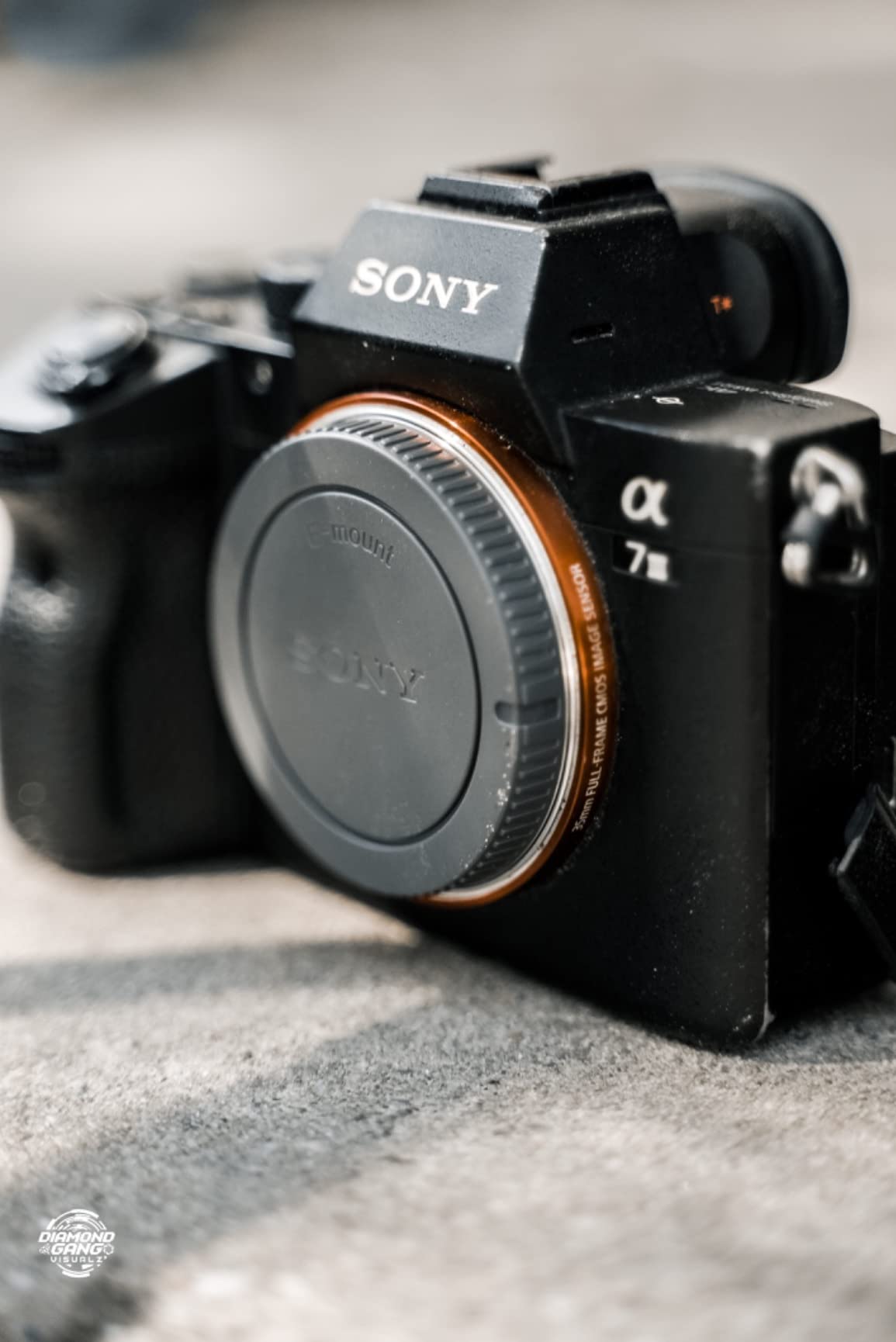
Everything about this camera is pointed at one problem: getting a clean image out of a dark room. The 12.1MP Exmor R sensor is physically large in pixels, which is why the ISO range extends to 409,600 and why the files stay usable at settings where other bodies here turn to mush. For a photographer who only ever shoots concerts, that resolution is a feature, not a compromise.
It is also the strongest video body in this group for concert work. 4K at 120 frames per second in 10-bit 4:2:2, with full pixel readout in every recording mode, means you can capture slow-motion stage movement without dropping to 8-bit. The S-Cinetone picture profile gives a cinematic look straight out of the camera.
In the field the 5-axis SteadyShot INSIDE system genuinely helps when you are shooting handheld video while walking, and it takes the edge off your own micro-movement on slow shutter speeds with a performer standing still. It will not stop a moving subject, and I want to be clear about that, because it is a common misunderstanding.
The BIONZ XR engine brings eight times the processing power of the previous generation, and owners report no overheating problems even in warm ambient conditions – useful for outdoor festival stages in summer.
When 12 megapixels is the right answer
Twelve megapixels is plenty for online galleries, press delivery, and printing at typical reproduction sizes. The real win is the pixel pitch: at ISO 6400 on a dark stage, those larger pixels gather light more efficiently than a denser 33MP or 45.7MP sensor can.
It is the pick for the pit photographer who is not cropping stage-wide shots, and for anyone whose concert work is as much motion footage as stills.
Where it falls short
If you want tight crops of a drummer from the back of a field, 12.1MP will disappoint. You are giving up resolution in exchange for light sensitivity, and that is the entire trade.
There is also no internal RAW video, and reaching the highest frame rates requires V90 media, which is the single most expensive part of owning this body.
4. Canon EOS R6 Mark III – Best for Handheld Low Light
Canon EOS R6 Mark III Body, Full-Frame Mirrorless Camera
32.5MP full-frame CMOS
Up to 8.5 stops of IS
40 fps with 20-frame pre-capture
1/16,000 sec
Pros
- Up to 8.5 stops of coordinated in-body stabilization for handheld low light
- Twenty frames of pre-continuous shooting before the press
- Register People Priority remembers specific faces
- CFexpress Type B and UHS-II SD dual slots
Cons
- CFexpress Type B cards are costly compared with SD media
- Body-only configuration needs a separate lens
- Newer generation carries a higher price than the R6 Mark II
The headline number here is 8.5 stops of coordinated in-body image stabilization at the centre of the frame, plus 7.5 stops at the periphery. That is a real working figure in a dark venue, because it lets you handhold at shutter speeds where you would previously have braced against something.
The other major upgrade over the previous generation is pre-continuous shooting. Up to 40 frames per second with 20 frames captured before you press the shutter means the burst has effectively started before you decide to take it. On a fast song with a jump shot, that is the difference between a reaction and a photograph.
One feature stands out for repeat concert work: Register People Priority. You register specific faces, and the camera raises their priority when several people are in frame. At a festival with a full stage, that is more useful than it sounds.
The 32.5MP full-frame sensor with DIGIC X processing gives a sensible middle ground between the a7 IV’s resolution and the a7S III’s extreme low-light ceiling, and the 1/16,000 second top shutter speed freezes fast movement cleanly.

What stabilization actually does on a stage
Coordinated control IS works with the lens optical stabilizer when one is fitted, and it lets you shoot handheld video while walking a pit without visible shake. For stills of a performer who is holding still between songs, the extra stops are genuinely useful.
For a performer in motion, none of it helps. Motion blur comes from the subject, not from your hands, and no amount of stabilization in the camera or the lens will stop it.
Where it falls short
The total cost of ownership climbs fast. CFexpress Type B cards are the most expensive media in this list, and a working photographer filling several cards across a festival weekend will feel it.
The review base on this listing is still small compared with the bodies above it, so long-term reliability data is thinner. It is also a body-only package, and the newer generation sits above the R6 Mark II in price for features that matter most to high-volume event work.
5. Nikon Z8 – Best for Burst Rate and Resolution
Nikon Z8 Mirrorless Camera Body Bundle
45.7MP BSI CMOS
120 fps continuous
All-electronic shutter
In-camera 8K UHD
Pros
- 45.7MP full-frame resolution with rich colour
- 120 frames per second continuous shooting
- Lowest rolling shutter distortion of an all-electronic design
- Deep-learning subject detection autofocus
- Includes the FTZ II adapter for older F-mount lenses
Cons
- Premium price for the category
- All-electronic shutter can distort very fast motion
- Bundled with an adapter rather than a lens
- Smaller review base than competing models
Nothing else here fires 120 frames per second. That figure is a full-resolution crop mode, but even the lower continuous rates are far beyond anything a concert photographer will ever fully use, which tells you how far ahead of the need this body sits.
The 45.7MP back-illuminated CMOS sensor is the highest resolution in this group, and combined with the 120 fps capability it means a jump shot can be captured and cropped hard later. In-camera 8K UHD recording means a hybrid creator is not compromising either format.
The all-electronic shutter design is both its strength and its weakness. It produces what the manufacturer describes as the least rolling shutter distortion available on such a design, which reduces the warped look you normally get on moving subjects. Banding under stage LED lighting can still appear, and a mechanical mode is worth keeping in the menu for strobe-heavy rooms.
File format flexibility is unusually good: RAW 14-bit, High Efficiency RAW, 10-bit HEIF, and JPEG 8-bit. HEIF at 10-bit is a sensible choice for a night of quick culling – smaller files, still recoverable shadow detail in coloured stage light.

When 120 fps is overkill in a good way
The practical use is pre-capture behaviour and confidence. If you are shooting a drummer at an outdoor festival in fading light and want a fast shutter, you have room to run 45.7MP files at high frame rates and still have a usable buffer.
Deep-learning subject detection handles people and animals, which covers the stage and the crowd. The FTZ II adapter in the bundle also opens up a large back catalogue of older F-mount glass, useful if you are building a kit slowly.
Where it falls short
Price is the first barrier for most people reading this, and it is the body that requires the least explanation of why it is better at concerts – it simply does more than you need.
Its 41-review listing is the thinnest sample here, and the all-electronic shutter can distort the fastest motion, which is precisely what happens when a singer whips a microphone cable at a stage edge.
6. Panasonic LUMIX S5II – Best Value Full-Frame Body
LUMIX S5II Full Frame Mirrorless Hybrid Camera for Photography & 6K Video
24.2MP full-frame CMOS
779-point phase hybrid AF
14+ stops V-Log
Dual card slots
Pros
- 779-point phase hybrid autofocus holds moving subjects with busy backgrounds
- Active I.S. hybrid stabilization supports walking shots
- Unlimited 6K 30p open gate recording with fan-assisted cooling
- Dual memory card slots and a broad L-mount lens ecosystem
- Compact 740 g body
Cons
- 9 fps continuous shooting is modest for action work
- Some users report unreliable continuous autofocus in demanding situations
- Custom settings do not persist reliably between power cycles
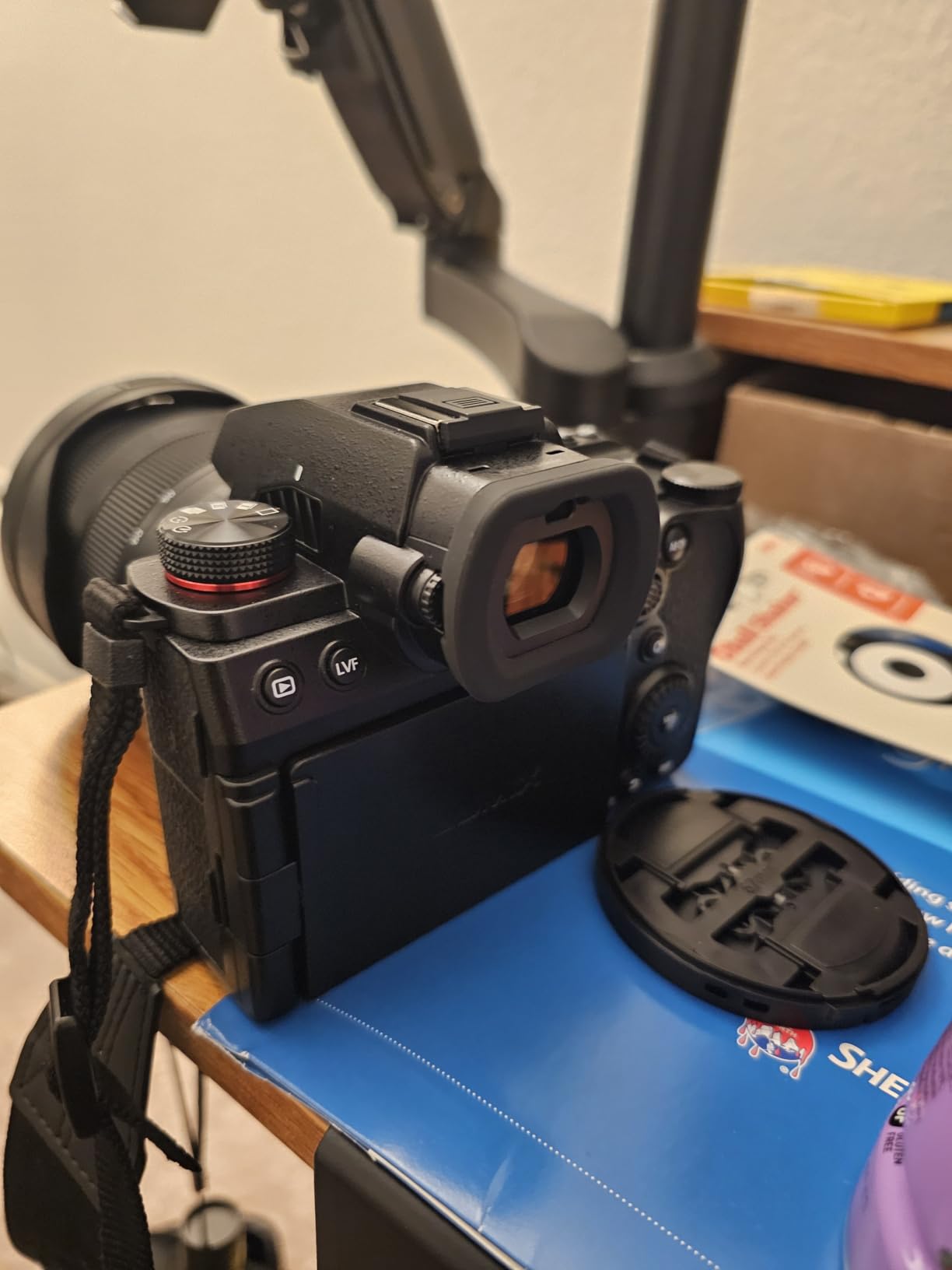
Forum threads on r/AskPhotography have long carried the Lumix S5 II forward as a strong value full-frame option, and that reputation holds up. The 24.2MP sensor with roughly twice the signal processing speed of the previous generation, plus 779 phase hybrid autofocus points with sticky subject detection, is a serious concert package that sits below the premium full-frame tier in this guide.
Where it separates itself is video. Unlimited 6K 30p open gate recording, made possible by a small fan and an efficient heat sink, means you can film an entire support act without the recorder giving up. 14 stops of V-Log and V-Gamut capture with a real-time LUT in-camera grading is a working colour pipeline, not a menu option.
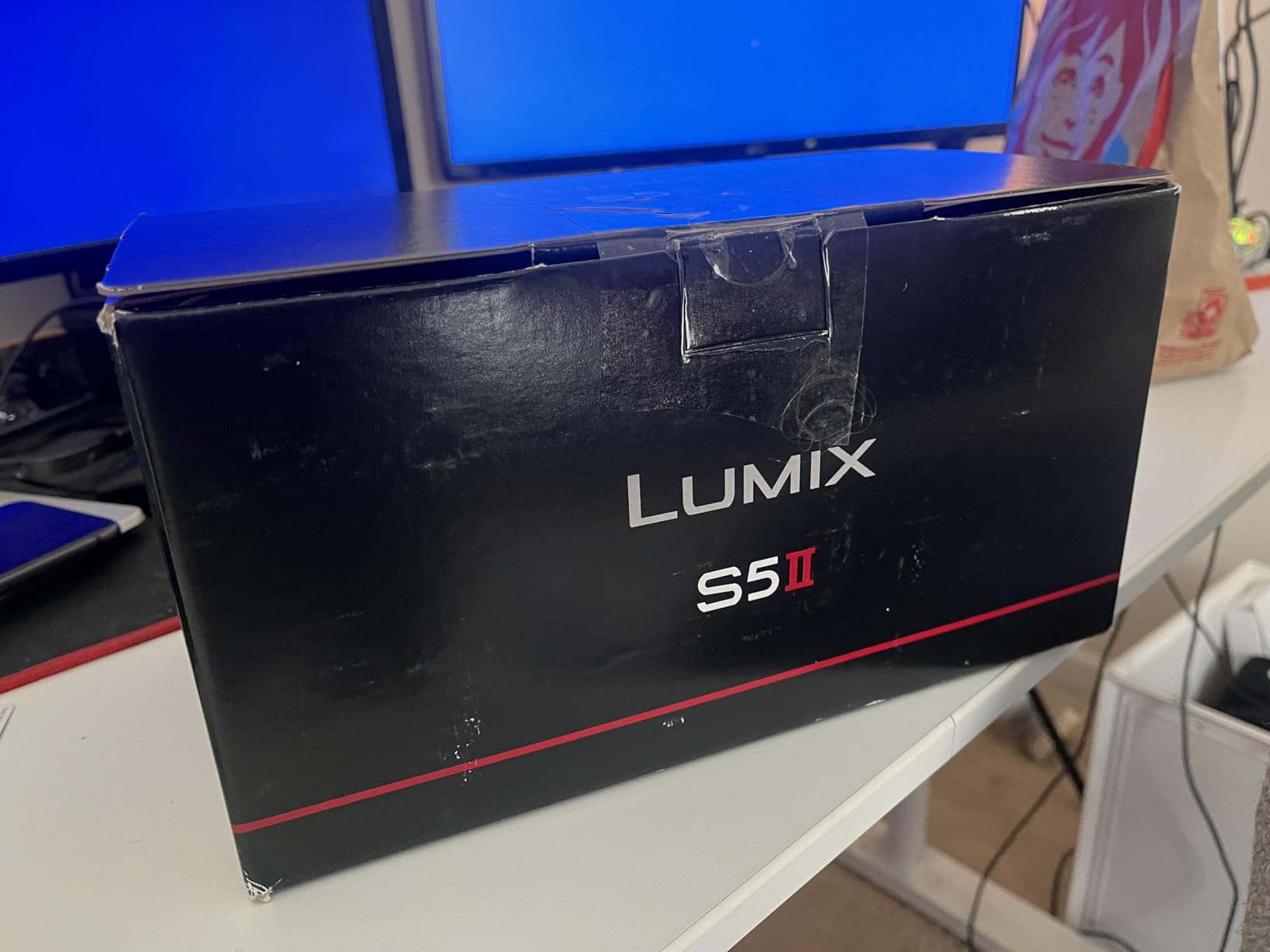
Two less obvious advantages matter at a venue. Active I.S. hybrid stabilization is specifically tuned for walking shots, so video from within a moving crowd is steadier than a body with stabilization designed mainly for static low light. And the L-mount takes Sigma, Leica, and Viltrox glass, which widens your fast prime options considerably.
Dual card slots mean you can mirror to a second card, which on a paid shoot is the difference between a night saved and a night lost to a card failure.
Where the L-mount ecosystem earns its keep
Third-party fast primes in L-mount are the practical reason this body appeals. A fast normal prime is the single lens that matters most at a club show, and having several manufacturers competing for that mount works in your favour on price and on choice.
Sticky subject detection plus 779 points across the frame is what makes it viable for a performer who is constantly moving relative to a cluttered stage background.
Where it falls short
Nine frames per second is the honest weakness. For a jump shot or a fast drum fill, you are leaving frames on the table compared with the Canon bodies here, and no amount of low-light skill replaces them.
Some owners report continuous autofocus dropping out in demanding situations, and custom settings that fail to persist between power cycles is a small but genuinely irritating bug to discover twenty minutes before doors.
7. Canon EOS R7 – Best for Reaching a Distant Stage
Canon EOS R7 Mirrorless Camera (Body Only)
32.5MP APS-C CMOS
1.6x crop reach
651 AF zones
RAW burst with pre-shooting
Pros
- 1.6x crop factor lets a short lens reach a distant stage
- Thirty frames per second electronic plus RAW burst with half-second pre-shooting
- 651 AF zones covering roughly 100 percent of the frame
- Compact body at 1.1 pounds with a vari-angle screen
Cons
- Smaller sensor surface than full frame at high ISO
- Body-only listing excludes a lens
- Video clips capped around 30 minutes
- Older-style menu layout versus newer Canon bodies
The R7 solves a specific concert problem: getting to the stage. The 1.6x crop factor means a 300mm behaves like a 480mm, so from the back of an outdoor field or the rear of a standing arena you can fill the frame with a performer without carrying a supertelephoto. That reach is a real budget saver, because long full-frame glass is the most expensive part of any concert kit.
The autofocus coverage is remarkable for the money. Up to 651 Dual Pixel CMOS AF II zones covering roughly 100 percent of both width and height, with Movie Servo AF subject detection, means almost anywhere the singer goes in the frame is a valid tracking position.
RAW Burst Mode with half a second of pre-shooting is a nice piece of insurance on a jump shot – press a fraction late and the frames before the press are already captured. Movie Servo AF with subject detection carries the same tracking into video.
The 1/16,000 second top mechanical shutter speed is unusually fast for this class, and 5-axis in-body image stabilization with auto-level technology helps with tilted horizons when you are shooting from the pit looking upward.
The crop factor trade-off in plain terms
Full-frame gathers more light; APS-C lets you reach further. At a club show ten feet from the stage, you want the light, so full frame wins. At a festival main stage fifty metres away, you want the reach, and the R7 with a mid-range telephoto beats a full-frame body with a short lens.
There is a second-order effect. On a crop sensor, a 50mm f/1.8 behaves like an 85mm on full frame – tighter framing, but you give up a stop of light and lose some low-light capability.
Where it falls short
The smaller sensor surface is the fundamental limit. At the ISO settings a dark club demands, full-frame files hold more recoverable detail, and that is the condition concerts are always in.
Video clips are capped around 30 minutes, which rules it out as a sole body for a full set of concert footage, and the listing is body-only so the lens is a separate line in the budget.
8. Fujifilm X-T5 – Best for Physical Controls and Still Detail
Fujifilm X-T5 Mirrorless Digital Camera Body – Black
40.2MP X-Trans 5 HR CMOS
Seven stops of IBIS
1/180,000 sec shutter
Dial-based controls
Pros
- Forty megapixel files with excellent detail across the frame
- Physical ISO
- shutter and exposure dials usable by feel in the dark
- Five-axis IBIS rated up to seven stops
- Top electronic shutter speed of 1/180000 second
- Film simulation JPEGs usable straight out of the camera
Cons
- Autofocus trails the fastest rivals in demanding tracking
- Pixel Shift Multi-Shot mode reported as unreliable
- Body feels cheaper and more brittle than the X-T4
- No battery grip option and small top dials are easy to bump
What separates this body in a pit is the top plate. Real dials for ISO, shutter speed, and exposure compensation mean you can change exposure with your hand on the lens and your eye on the performer, with no menu and no screen. On a stage where the light drops by two stops between songs, that is a genuine working advantage over touchscreens.
The 40.2MP X-Trans 5 HR sensor delivers detail that holds up when you crop a drummer shot, and native ISO now extends to 125 as the base. Five-axis IBIS rated at up to seven stops helps when you are working handheld at slower shutter speeds between songs.

The 3.69 million dot electronic viewfinder with 100 fps refresh is close to blackout-free for continuous shooting, and the 0.8x magnification is pleasant in a dark room. For a photographer delivering stills to a label or an artist, the film simulation JPEGs mean you can hand over something usable without a full edit.
Pixel Shift Multi-Shot mode combines 20 frames into a 160-megapixel file. For static stage detail – a pedalboard, a guitar headstock, a set riser – it is remarkable. Just do not build a night’s work around it.

Why dials matter more than they sound like they should
Screen-based controls require you to take your eye off the performer to confirm a change. A physical dial does not. In a pit, where the interesting moment is unpredictable and you may be jostled, that difference compounds over three songs and twenty sets.
The electronic shutter reaching 1/180,000 second also freezes things that would blur on any other body here, which is handy for a cymbal hit or a splash of water from a pedal.
Where it falls short
Autofocus is the reason this is not higher in the ranking. It is good, and subject detection covers a wide range of subjects, but reviewers are candid that it trails the fastest rivals in demanding tracking scenarios – precisely what a jump shot at the pit edge demands.
The body material feels cheaper and more brittle than the X-T4 it replaced, there is no battery grip option, and the small top dials are easy to bump when you are shoulder-to-shoulder with other photographers.
9. Sony Alpha a6700 – Best Compact APS-C for Long Nights
Sony Alpha a6700 APS-C Mirrorless Camera Body 26MP 4K Black
26MP APS-C Exmor R sensor
AI processor subject tracking
11 fps
14.5 ounces
Pros
- Weighs 14.5 ounces
- which matters across a long standing night
- Dedicated AI processor with real-time recognition for tracking
- 6K oversampled 4K 60p 10-bit plus 4K 120p high frame rate
- 759-point autofocus with eye and face detection
- Expanded ISO 100 to 32000
Cons
- Smaller sensor limits extreme low light versus full frame
- Body-only listing requires a separate lens
- Older-style menu system takes time to master
- Limited buffer depth versus higher-tier bodies
At 14.5 ounces this is the body you can carry for a full festival weekend without noticing it, and that weight matters more than any spec once you are on your feet for five hours in a field. The APS-C crop factor still gives you 1.5x reach, so it doubles as a small telephoto when you want to isolate a face across a crowd.
The dedicated AI processor is the headline feature. Real-time recognition handles subject tracking well enough that a performer moving through a mixed lighting rig stays held, and the 759-point autofocus array with eye and face detection covers the frame rather than clustering in the centre.

Video is where this body quietly outclasses its tier. 6K oversampled 4K at 60p in 10-bit 4:2:2, plus 4K 120p for slow motion, and recording capacity up to 120 minutes. If a concert creator wants a lightweight stills body that can also deliver usable footage, this is the pick.
Eleven frames per second is a middle-of-the-road burst rate – enough for a drummer’s stick pattern, not enough for a jump shot at full resolution.

When weight is the deciding factor
Long venue nights, standing room, and outdoor stages all add up. A body this small changes how many sets you shoot before your shoulder gives out, and it is far easier to keep a prime on it than to carry two full-frame bodies.
The articulating LCD also helps at odd angles, and the sensor-shift stabilization gives a little more headroom on slower shutter speeds.
Where it falls short
The APS-C sensor is the real ceiling. Compared to a full-frame body, high-ISO files in a dark room have less recoverable detail, and that is the exact condition of a small club.
Limited buffer depth relative to higher-tier bodies means a long burst slows down sooner, and the body-only listing means the lens is a separate purchase. If your budget is tight, the Nikon Z50 II below bundles lenses.
10. Nikon Z50 II with Two Lenses – Best Budget Starter Kit
Nikon Z50 II with Two Lenses | Compact mirrorless Stills/Video Camera with Easy Color presets and Wireless Photo Sharing | USA Model
20.9MP DX sensor
Two lenses included
4K UHD 60p
Built-in pop-up flash
Pros
- Only kit here that ships with two lenses
- covering 16-50mm and 50-250mm
- Built-in pop-up flash with Night Portrait mode
- 31 Picture Control presets for quick colour looks
- 4K UHD 60p plus in-camera 120p slow motion in Full HD
Cons
- Five frames per second is slow for fast-moving performers
- 1/4000 second top shutter speed caps action freezing
- 20.9MP leaves little crop headroom
- APS-C format limits extreme high-ISO quality
This is the only body in the guide that comes with glass in the box. The NIKKOR Z DX 16-50mm f/3.5-6.3 VR and the 50-250mm f/4.5-6.3 VR between them cover a stage from the pit to the back of a field, which answers the question that dominates the concert photography forums: what camera and lens kit gets me shooting tonight.
Both included lenses have stabilization, which takes some of the pressure off working at slow shutter speeds in dim rooms. The built-in pop-up flash with a Night Portrait mode is unusual at this level and, while you should not use flash at most shows, it is there for the situations where a venue permits it.
The 20.9MP DX sensor is several times larger than a phone sensor and the 1.5x crop factor gives the 50-250mm real reach. 31 built-in Picture Control presets plus custom and cloud downloads let you set a look quickly, and subject detection covers people, dogs, cats, birds, and vehicles with dedicated bird and airplane modes.
Nikon Snapbridge moves images to a phone during the night, which is how you show a subject their frame while it is still fresh.
How far the two included lenses actually get you
The 16-50mm is your wide and normal range – pit shots, crowd shots, full stage. On the DX format its 16mm end gives you roughly 24mm equivalent, wide enough to work in a cramped club.
The 50-250mm covers the mid and long range, so you can photograph a drummer’s hands or a singer’s face from a distance without buying another lens. Later, a fast normal prime is the first upgrade most people make.
Where it falls short
Five frames per second is the significant limit. If the goal is a jump shot frozen at the top of the arc, this body will frustrate you, and no setting compensates for a slow burst rate.
The 1/4000 second top shutter speed is also modest, and at 20.9 megapixels you have limited crop headroom when a distant performer is small in the frame.
What Actually Makes a Camera Concert-Capable
Five specifications decide how a body performs on a stage, and none of them is resolution. Here is the order I would weigh them in.
Low light performance. Judge this by high-ISO files rather than by the advertised ISO ceiling. Any full-frame body here will shoot a usable frame at ISO 6400. What separates them is whether the shadows in a face still hold detail, and whether colours survive the red wash that most stages run.
Autofocus that holds a moving subject. The number that matters is how far the tracking system works from the centre of the frame and how long it holds through a change of direction. Face and eye detection is close to mandatory now; a singer turning away from the crowd is half of every set.
Burst rate and buffer. Thirty frames per second or more gives you options on a jump shot. Buffer depth decides whether the burst is real or whether it slows after two seconds, which only matters if you are firing long.
Stabilization, understood properly. In-body stabilization steadies the camera against your hands. It does not stop a moving performer, and a marketing page that implies otherwise is misleading. Its real value here is handheld video while walking, and stills at shutter speeds you could not otherwise handhold.
Card slots and media speed. Two slots let you mirror to a backup, which matters more at a paid show than any single headline spec. A slow card turns a 40 fps burst into a 4 fps burst after a second.
Full-Frame vs APS-C vs Compact for Stage Light
Full-frame gathers more light from the same scene, which is the entire reason it is the right answer for a dark club. A 24MP full-frame sensor at ISO 6400 holds shadow detail that a 20.9MP APS-C sensor at the same setting does not, and in a venue lit by two coloured washes, that is the difference between a portrait and a silhouette.
APS-C works the other way. The crop factor is a multiplier on your focal length, so a 50mm frames like a 75mm and a 300mm frames like a 450mm. From the back of a festival field or the rear of a standing arena, that reach is worth more than the light you give up, and it saves you from buying supertelephoto glass.
Fixed-lens compacts solve a different problem entirely: access. Some venues at smaller clubs refuse entry to bodies with interchangeable lenses, and photographers on r/Concerts and r/canon keep raising this. A compact gets you through the door with no lens changes in the dark, and if you are shooting from the crowd rather than the pit, that often matters more than sensor format.
One crop-factor surprise catches nearly everyone. A 50mm f/1.8 on APS-C behaves like an 85mm on full frame: tighter framing, and one stop less light. If you are planning a fast prime for a club, budget for a lens one stop faster than you would on full frame.
For the wider view of how these formats handle different subjects, our portrait photography camera guide covers the low-light and shallow-depth-of-field priorities that overlap with stage work.
Concert Photography Settings and Technique
The method that works is unglamorous: open the aperture as wide as the lens allows, choose the fastest shutter speed that still exposes, and then raise ISO to reach it. Noise in a photograph is recoverable. Motion blur and a lost shot are not.
Start at the widest aperture. A fast prime wide open gives you the light and the shallow depth of field that separates a frontman from the backline. Stopping down to f/5.6 on a dark stage means an ISO you will regret.
Set the fastest shutter you can expose. For a singer standing at a microphone, 1/250s works. For a drummer or a jumping guitarist, 1/500s and 1/1000s are where you should live. The electronic shutter on a body like the Z8 or the R7 helps reach those speeds.
Set ISO last, as high as needed. There is no correct ISO number for concert photography – it is whatever gets you to the shutter speed you need at that aperture. On a full-frame body, ISO 3200 to 6400 is routine for a club. Convert to black and white later if a red or green wash makes the colour unrecoverable.
Use continuous autofocus with subject detection. Pick person or face detection, set the burst to high, and back-button focus on a performer near the lens. Do not waste a set re-acquiring; let the camera track and correct yourself.
On burst rate specifically, more is better up to a point, but the practical answer between 30 and 60 frames per second is simpler than the spec sheets make it sound. If your camera does 40 or more with a usable buffer, you have enough. The frames beyond that are insurance for a jump shot, not a requirement.
Photo Pit and Venue Access: What No Camera Fixes
The most common question on concert photography forums has nothing to do with megapixels: how do you actually get into the pit, and what are the rules once you are in it. Read your accreditation email before you travel. It will specify the photo pit, whether you can leave the floor, and whether you may shoot the soundcheck.
The first-three-songs rule appears at many venues. It means no photography for the opening three numbers, then shooting opens up. The first three songs are the band’s own choice about how the room looks and sounds, and most photographers treat it as non-negotiable regardless of what a venue’s policy technically allows.
Flash is effectively banned everywhere. It blinds the performer and everyone in the first twenty rows, and the room usually notices before security does. If a venue explicitly permits it, treat that as unusual rather than normal.
Two pieces of gear advice that cost nothing. Carry two bodies with different focal lengths mounted and ready, so you never change a lens in the dark. And bring hearing protection – a photo pit in front of a full backline is genuinely damaging over a full set, which is a far bigger risk to your kit than a bumped camera.
On the gear side, spare batteries and a formatted card in the same pocket matter more than any accessory. A card that fails after a burst-heavy set is the single most common way a great night is lost, and the fix is two minutes of preparation.
Frequently Asked Questions
What counts as a professional camera for concerts?
A camera counts as professional for concerts when it has a full-frame or large APS-C sensor that stays usable at high ISO, subject-recognition autofocus that holds a moving performer across the frame, and a burst rate of at least 15 to 30 frames per second with a usable buffer. Resolution matters far less than those three, and in-body stabilization does not stop performer motion.
How do you shoot concert photography?
Shoot in manual exposure with the widest aperture your lens allows, select the fastest shutter speed that still exposes – 1/250s for a static singer, 1/500s or 1/1000s for a drummer or jumping performer – and then set ISO to whatever reaches that shutter speed. Use continuous autofocus with person or face detection, burst shooting on high, and back-button focus on a performer near the lens. Avoid flash and treat noise as recoverable while motion blur is not.
What camera is best for event photography?
For event photography the priorities overlap with concerts but tilt toward buffer depth and card handling, because a long conference or wedding produces far more frames than a three-song set. The Canon EOS R6 Mark II and Canon EOS R6 Mark III handle sustained bursts well, while the Sony Alpha 7 IV and Panasonic LUMIX S5II cover the hybrid case where stills and video both have to be delivered from one body.
What is the best ISO setting for concert photography?
There is no single correct ISO for concert photography – use whatever reaches your chosen shutter speed at your widest aperture. On a full-frame body, ISO 3200 to 6400 is normal for a dark club, and the Sony Alpha 7S III is the body here built to push furthest beyond that. Shoot RAW so you can pull shadows back in post, and consider converting to black and white when a red or green stage wash makes colour unrecoverable.
What is the best shutter speed for concert photography?
Use the fastest shutter speed that still exposes. A singer standing at a microphone can be shot at 1/250s, while a drummer or a jumping guitarist needs 1/500s to 1/1000s. If you cannot reach that speed at your aperture, raise ISO rather than slowing the shutter – a noisy sharp frame is more useful than a clean frame of a blurred performer.
Do full-frame cameras help in low light concerts?
Yes, and it is the main reason to pay more. A full-frame sensor gathers more light than a crop sensor of the same generation, so at ISO 6400 in a dark club it holds more shadow detail and tolerates a coloured stage wash better. The compromise is reach, since APS-C crop factor lets a short lens frame a distant performer more tightly, which is why festival shooters often favour APS-C.
Do I need an f/1.4 lens for concert photography?
Not to begin with. Modern bodies handle high ISO well enough that an f/1.8 prime is genuinely sufficient, and most photographers start there. Buy f/1.4 when you specifically need the extra stop for a wide-open look or for very small venues. Remember that on APS-C a 50mm f/1.8 behaves like an 85mm on full frame, so budget for a faster lens if you shoot a crop sensor.
Conclusion
After working through all ten, the best cameras for concert photography come down to three bodies for most people. The Sony Alpha 7 IV is the all-round answer, with a 33MP full-frame sensor and dependable Real-time Eye AF. The Canon EOS R6 Mark II wins when the moment is unpredictable and you need forty frames per second. The Sony Alpha 7S III wins when the room is genuinely dark and you are pushing video as well as stills.
Below those, the Canon EOS R7 covers stage reach, the Panasonic LUMIX S5II is the value full-frame option with an unusually strong L-mount lens ecosystem, and the Nikon Z50 II is the only kit here that hands you two lenses and a flash in the box. Buy within your budget, carry it, and upgrade once you know which end of the venue you actually shoot from.
Before you commit, it is worth noting that picking the right venue matters as much as the body. Many of our readers coming from a stage interest also enjoy our concert ukulele guide for a very different kind of live performance gear.